
No-one wants to read an overly wordy blog (well, at least one member of my family doesn’t). So I am glad that the issues with the VPN, the laptop, the hotel WiFi AND my inability to save a first draft did for my first, purple prosy, attempt.
We left early Wednesday, walking to the station to catch the train into London. We chose trains because we thought that would avoid the aimless hours of sparkly, shiny, Aladdin’s cave shopping opportunities thrust upon witless air passengers – and the queuing at every stage of the journey. Instead, we spent an hour wedged into the cramped confines of the St Pancras international departure area.
And yes, there was queuing: for ticket checks, for baggage and passport checks, for expensive coffee, for boarding the train… However, less time was spent queuing and waiting than at any airport. So a win there.
But the whole thing is incredible. You have Victorian arches and tilework framing sleek, high-tech, high-speed trains that whisk you through tunnels out of London, across the marsh-lands north of the Thames, across Kent and back into a tunnel under the English Channel. Just one hour after you leave London and about 5 seconds after you think you have spent rather too long in the Chunnel, you emerge into the rolling countryside of northern France.
And that IS amazing.
Brussels-Midi was busy, a bit tatty and the monitors showing departures were confusing. Which were the platform numbers? Where were the column headings? Eventually we stumbled across an old-fashioned, analogue airport style departure board
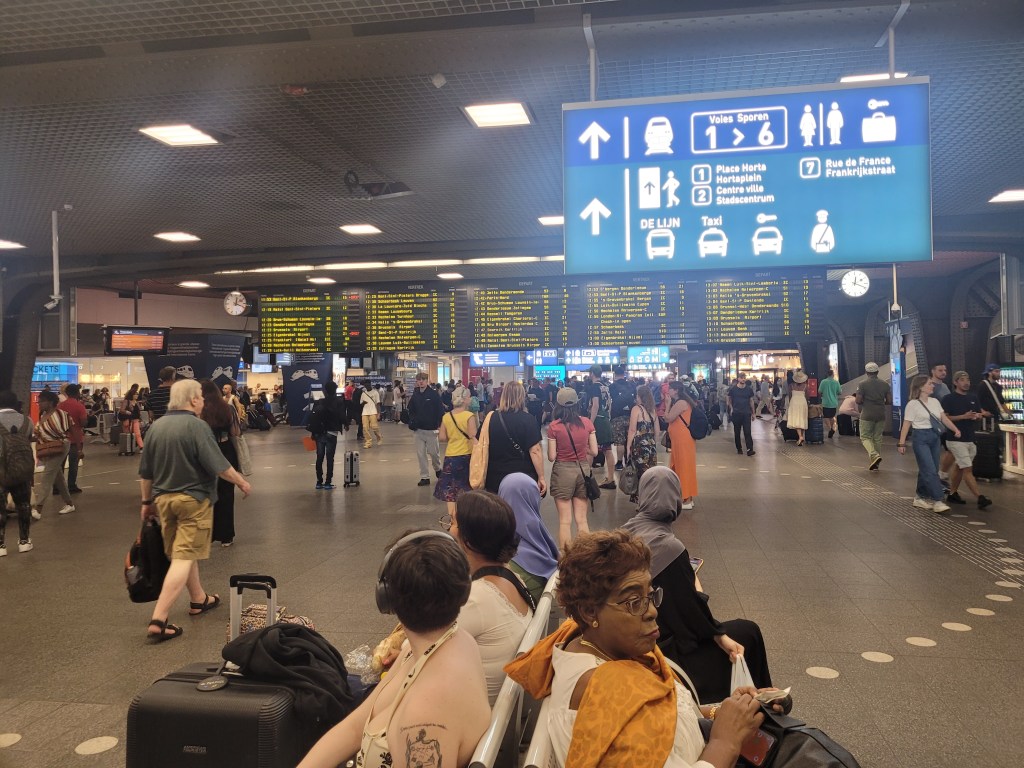
and we made it onto the train to Luxembourg. After the speed of the Eurostar, it seemed deathly slow. A cheerful announcer warned us about pickpockets (in three languages) and the air conditioning did not keep pace with the sun.
After leaving the rather dilapidated outskirts of Brussels, we trundled (slowly) through tangles of forest, extensive farmland (yes, it was rolling), more forest and past abandoned stations and curiously named fusion eateries:
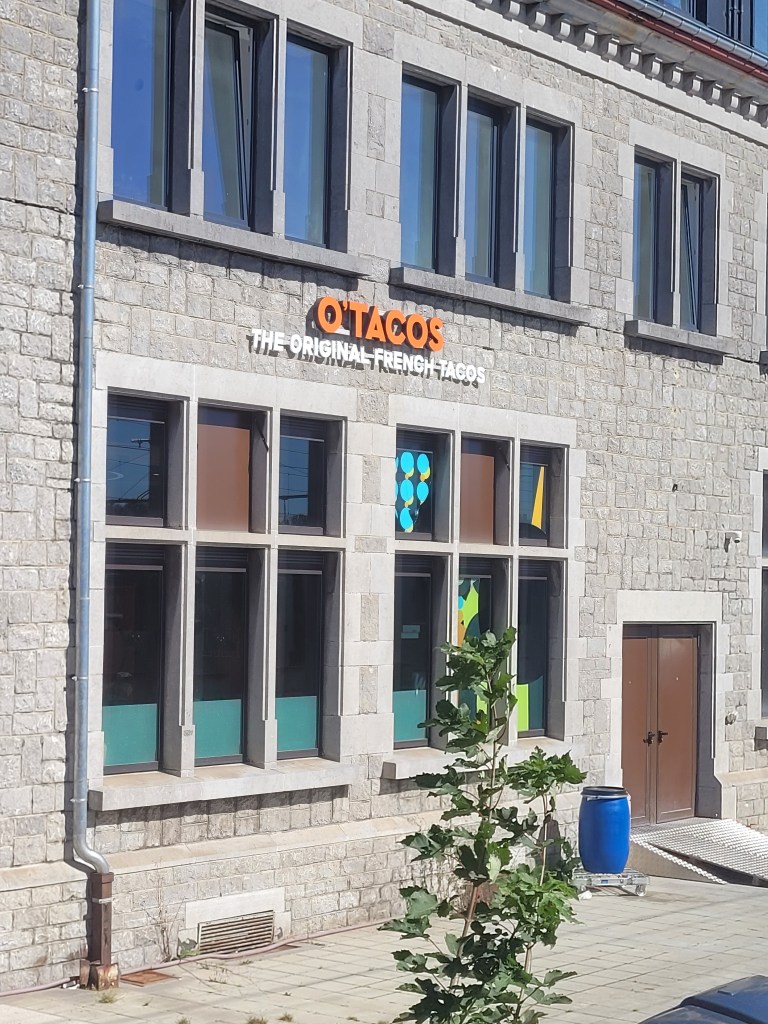
Luxembourg was a model of efficiency but I am grateful for Roger’s German O-level. This halted my incipient panic in its tracks when I couldn’t find our departure on the arrivals board. Funny that.
The train was a double-decker with wonderfully efficient air-conditioning. It rapidly became a little too efficient as we rolled through green forests, green fields, green pastures (there was a lot of green).
It was pretty, bucolic, prosperous and, well, green. Outside, the sun glittered off the odd pond, lush grass and solid-looking grey and white cattle. Inside, I refused to put on my fleece as it seemed an insult to the lovely weather.
Announcements were in French until we reached the German border and met the Moselle.
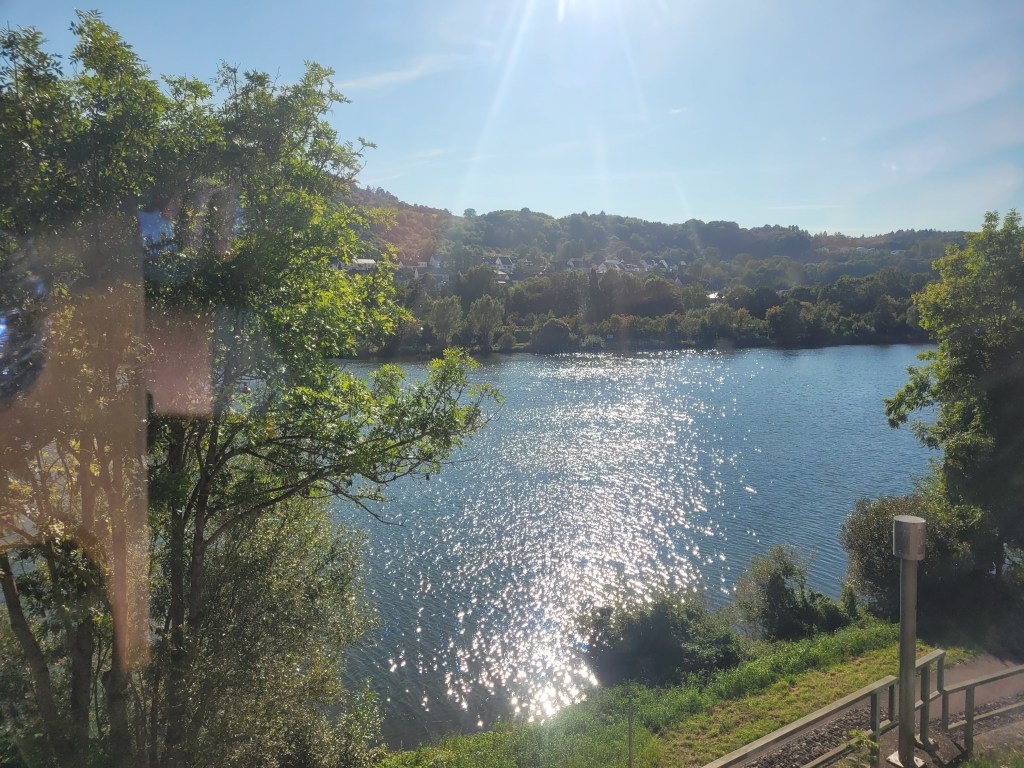
Then they changed to German. Fortunately ‘next stops’ were also flashed up on a monitor.
Vineyards started to appear:
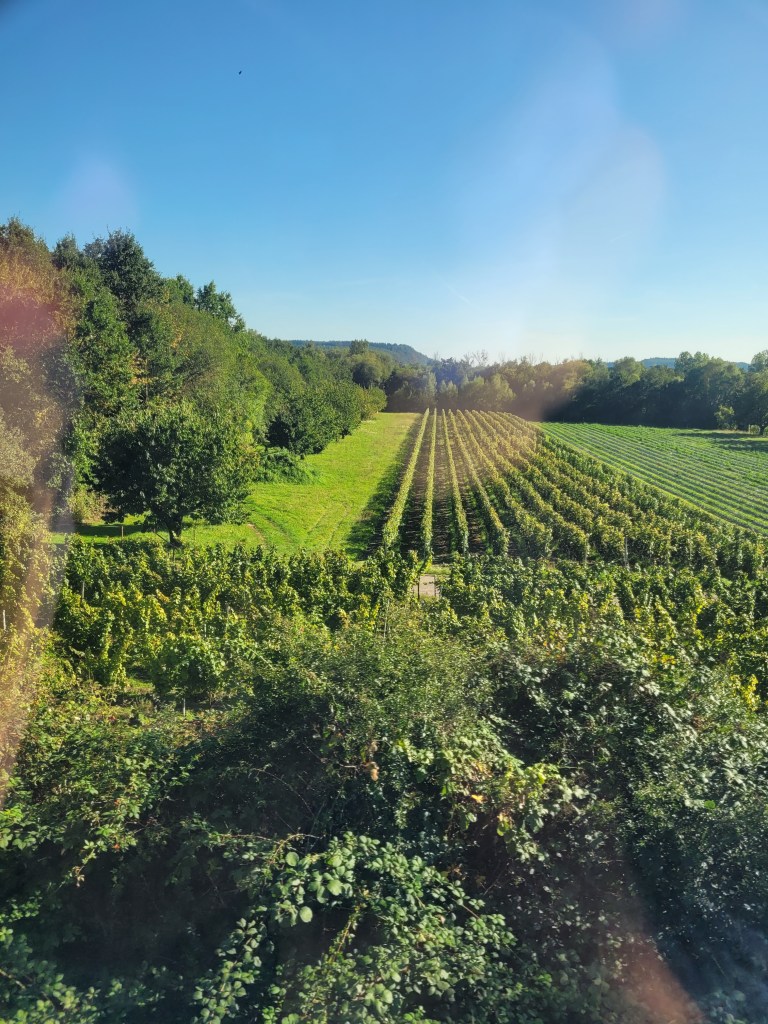
I was unreasonably excited at the sight of a vineyard planted on a steep slope, even though it was right behind an electricity sub-station with lots of spare parts piled at the foot of the slope. Apparently these are typical of the Moselle valley (the vineyards on the slopes, not the industrial debris).
Crossing the Moselle, we arrived in Trier,
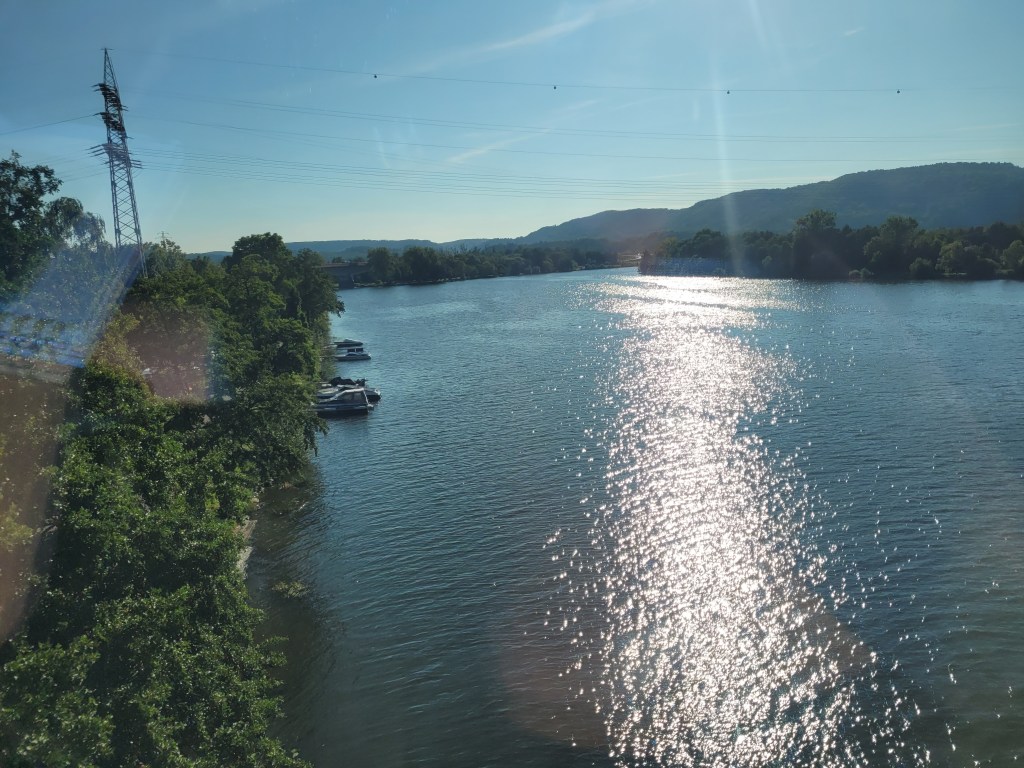
seven hours after leaving St Pancras, ten hours and five trains after leaving home.
 Retired? What now?
Leave a comment