We were in Verona for one full day (two nights) after arriving on a Sunday: on Mondays, most tourist sites are closed. This curtailed our site-seeing somewhat. It was also incredibly hot, which also affected our interest in climbing up anything for viewpoints (hills, towers, cupolas – to name but a few).
Verona is famous for several things, one of which is opera. They have a festival of opera (just finished) which takes place in the remains of the Roman ampitheatre in the centre of town. It is wonderfully atmospheric but rather an expensive tourist visit given that much of it has been reconstructed and there are few displays explaining what you are seeing. We both felt that the amphitheatre we saw in Nimes (France), which is a similar size, was more worthwhile.
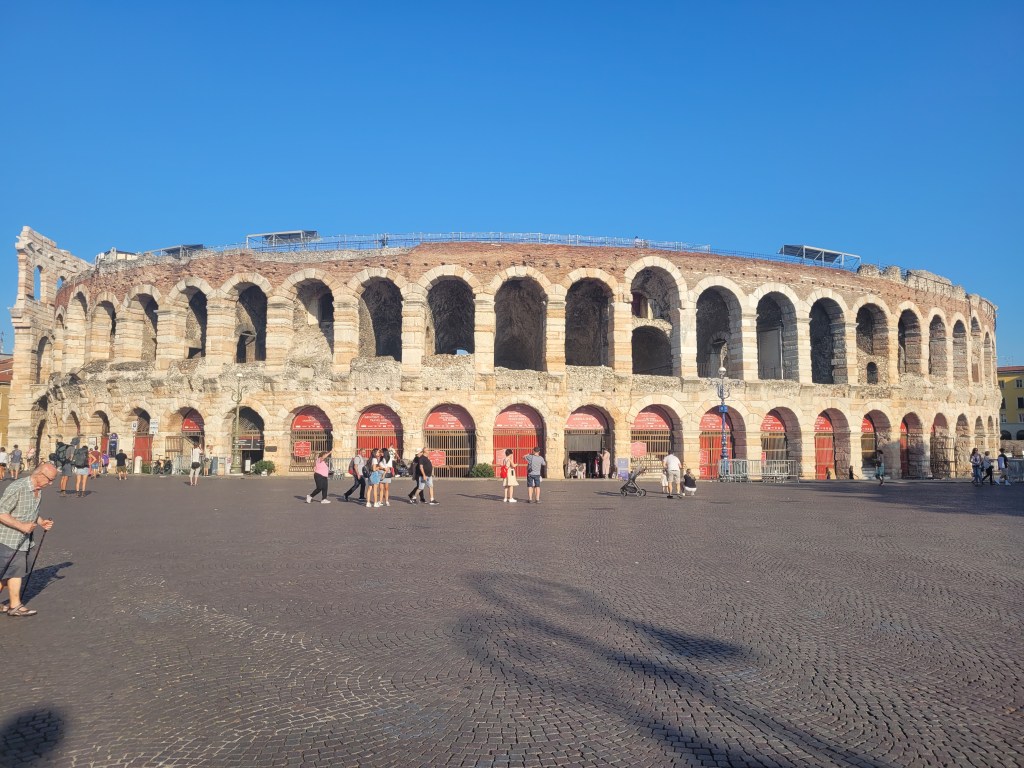
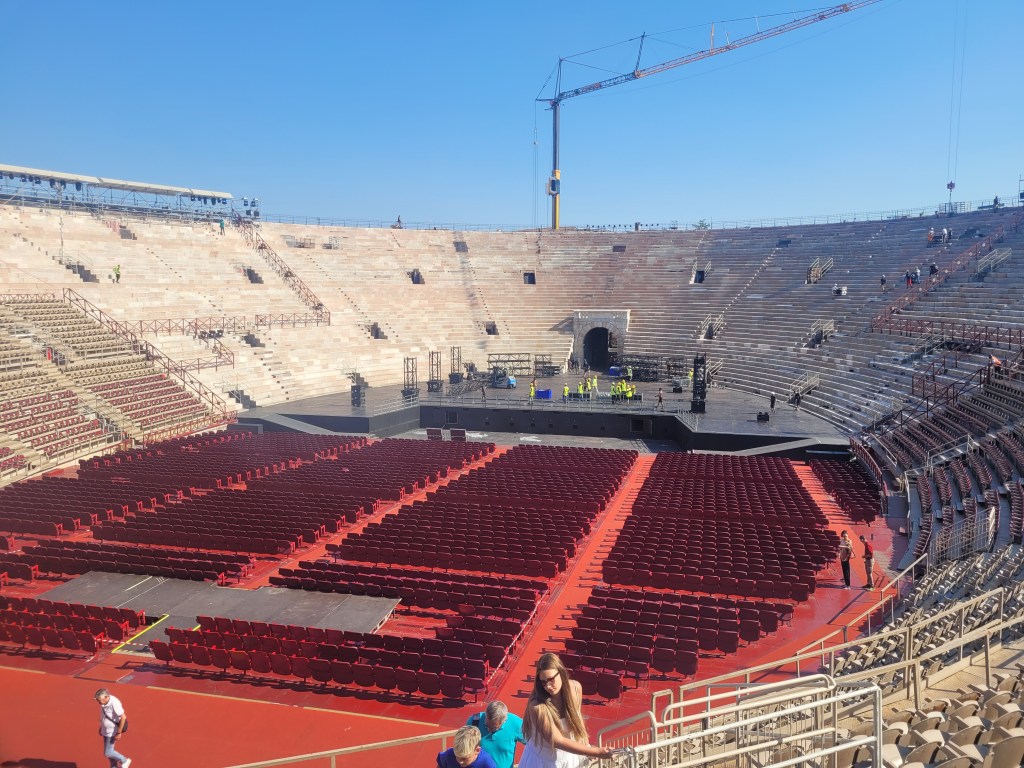
It is, however, an interesting place to see and we managed to sneak in a visit on Sunday (yes, it was closed on Monday) – the only official ‘tourist site’ we went to. They were striking the set – I think it was ‘Don Giovanni’. Yet another example of a building surviving due to being repurposed, although this festival was only started in 1936, as a project to celebrate 50 years of Guiseppe Verdi and the amphitheatre was rebuilt accordingly.
They do love their opera – at lunch we sat under chandeliers (outside) and heard Nessun Dorma in various iterations at least four times. We also heard some famous tenor’s version of ‘Walking in a Winter Wonderland’ – which was odd, given that it was over 26 degrees in the shade and we were eating pizza. But hey, let’s embrace the madness!
Verona sits on the banks of the river Adige, which tumbles it’s milky white (and slightly dirty looking) water down from the Italian Alps. In a fit of Romanticism, I briefly wondered if we might have seen some of this water while crossing the Bernina pass but was disabused of this notion after checking a map of the Adige. Geography is not my thing, clearly.
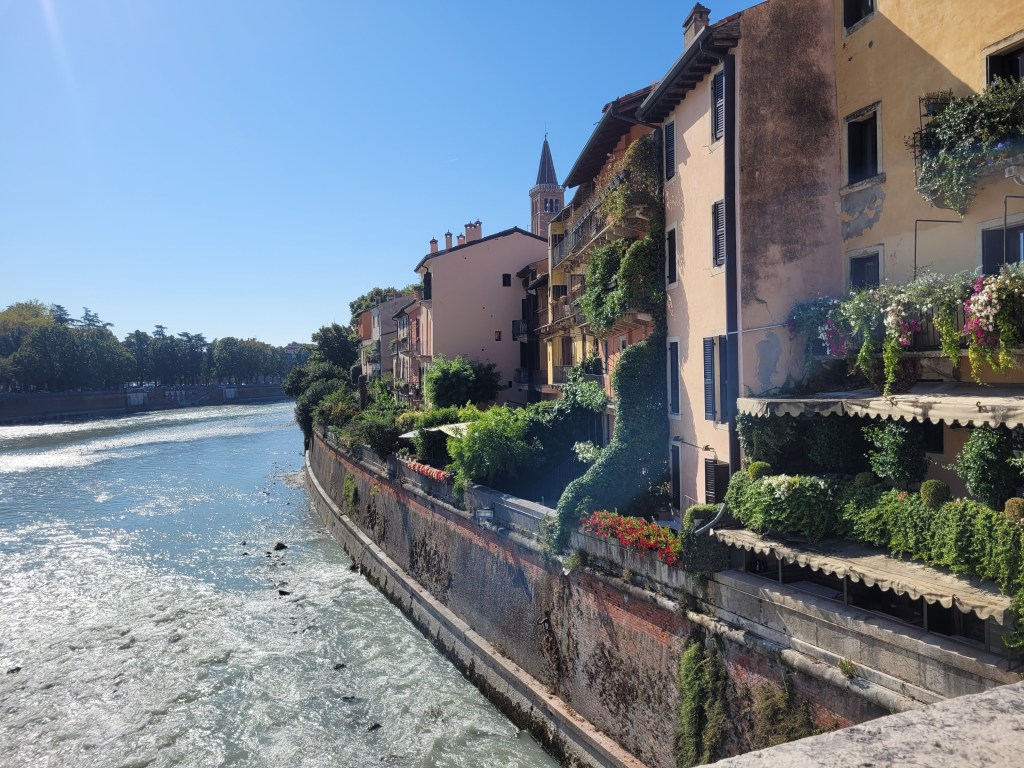
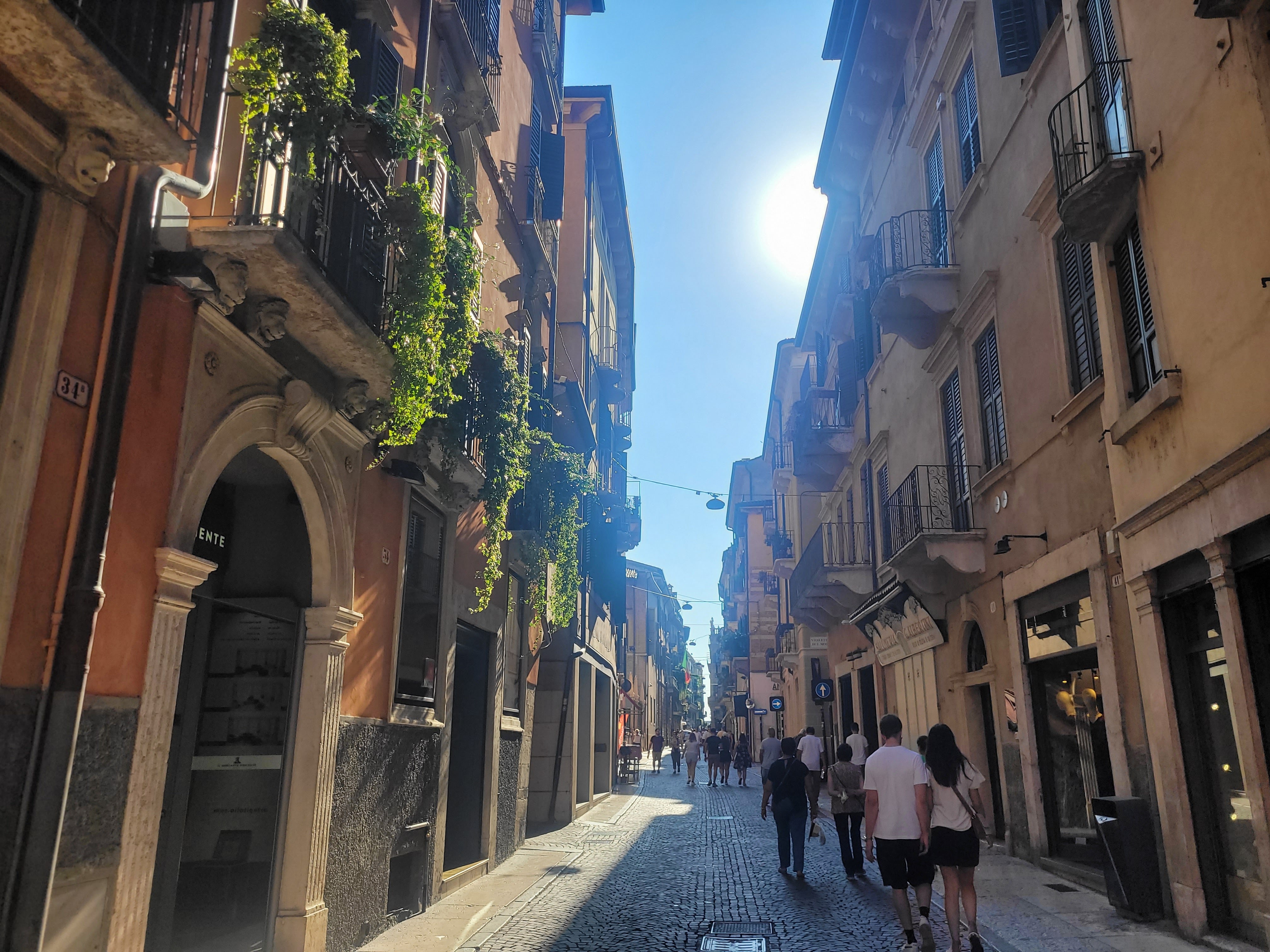
It is a wonderfully pretty place and what struck us most is the mixture of houses and the variety of colours – red, terracotta, yellow, cream, pink, pale, strong. Interestingly we never saw blue other than on shutters – and, only rarely, pistachio green.


This variation holds true in the more recent parts of town and in the historical centre. There is also a variety in the building materials, from brick (all kinds) to stucco – plain painted or decorated – and the ages and sizes:
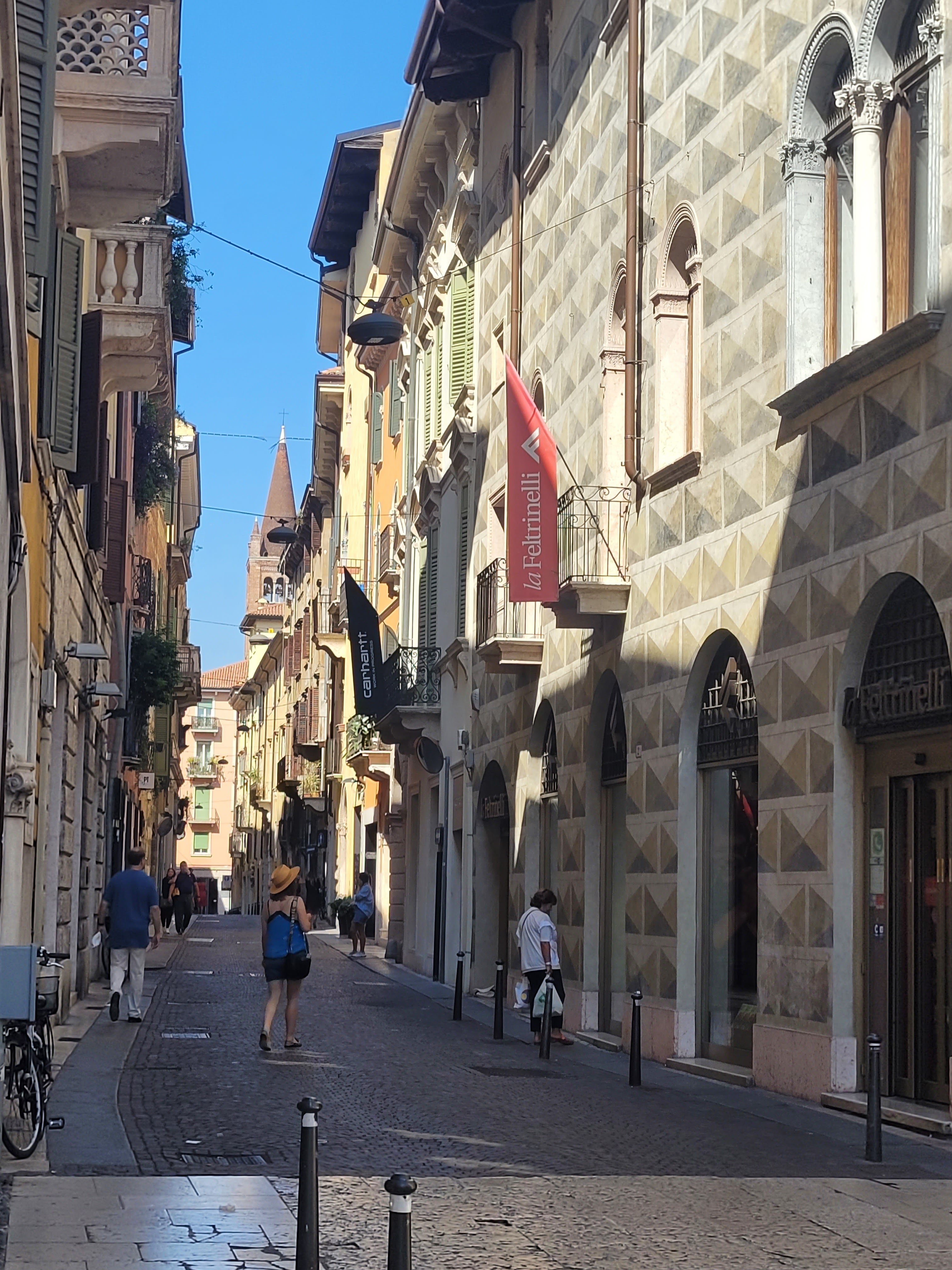
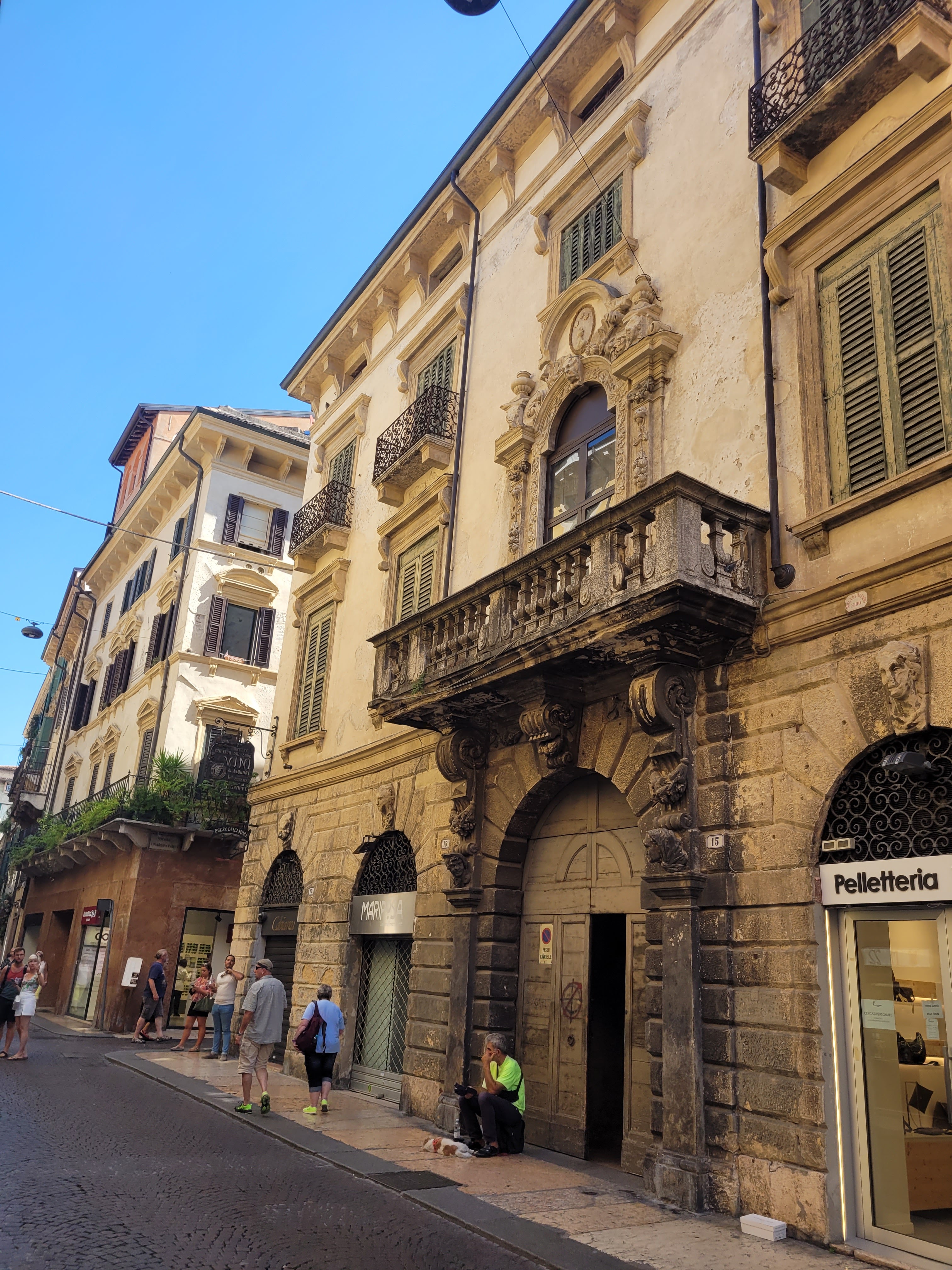
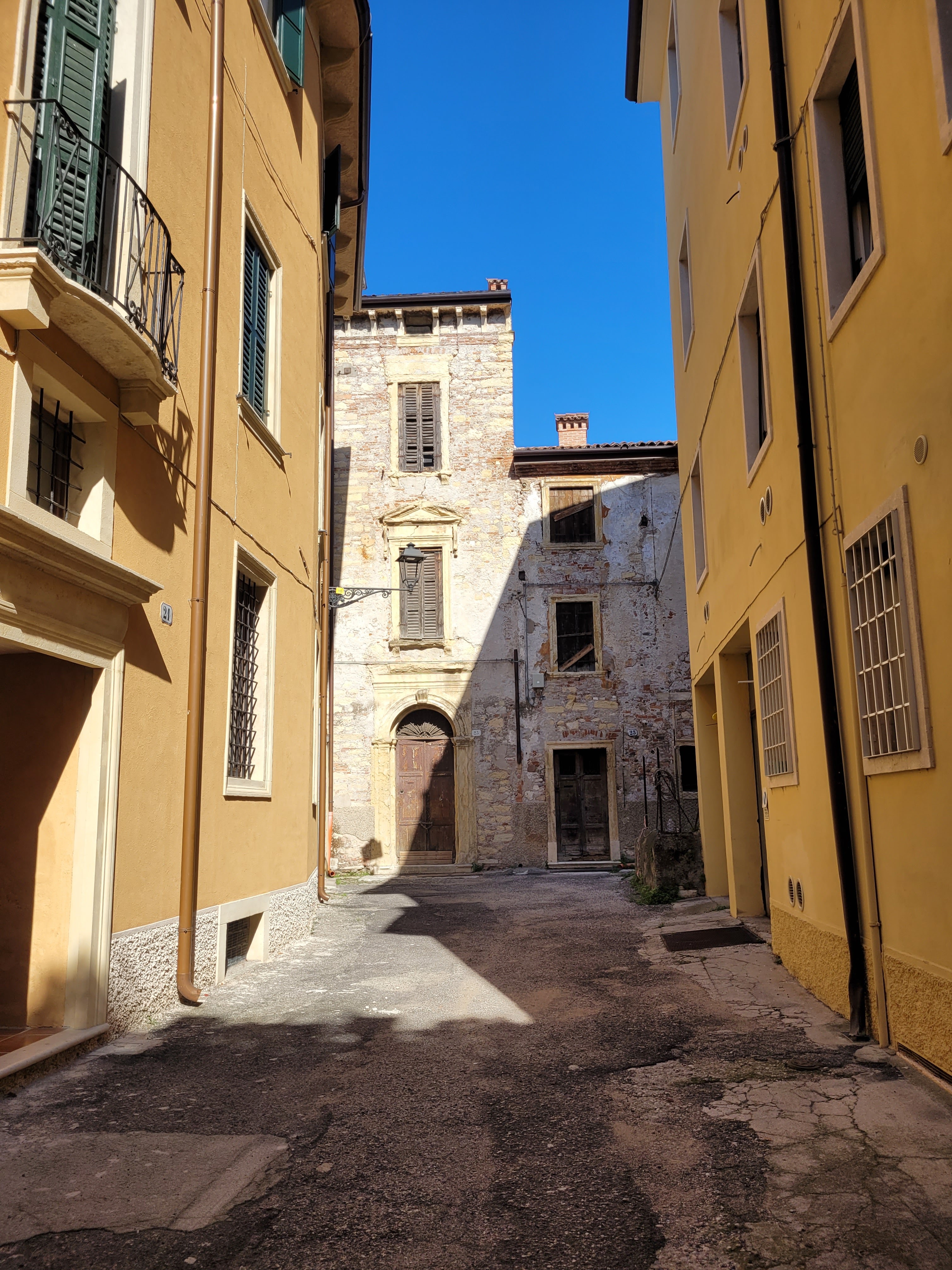
Sometimes the semi-derelict is cheek-by-jowl with the updated (or newer) and sometimes it’s just plain OLD:
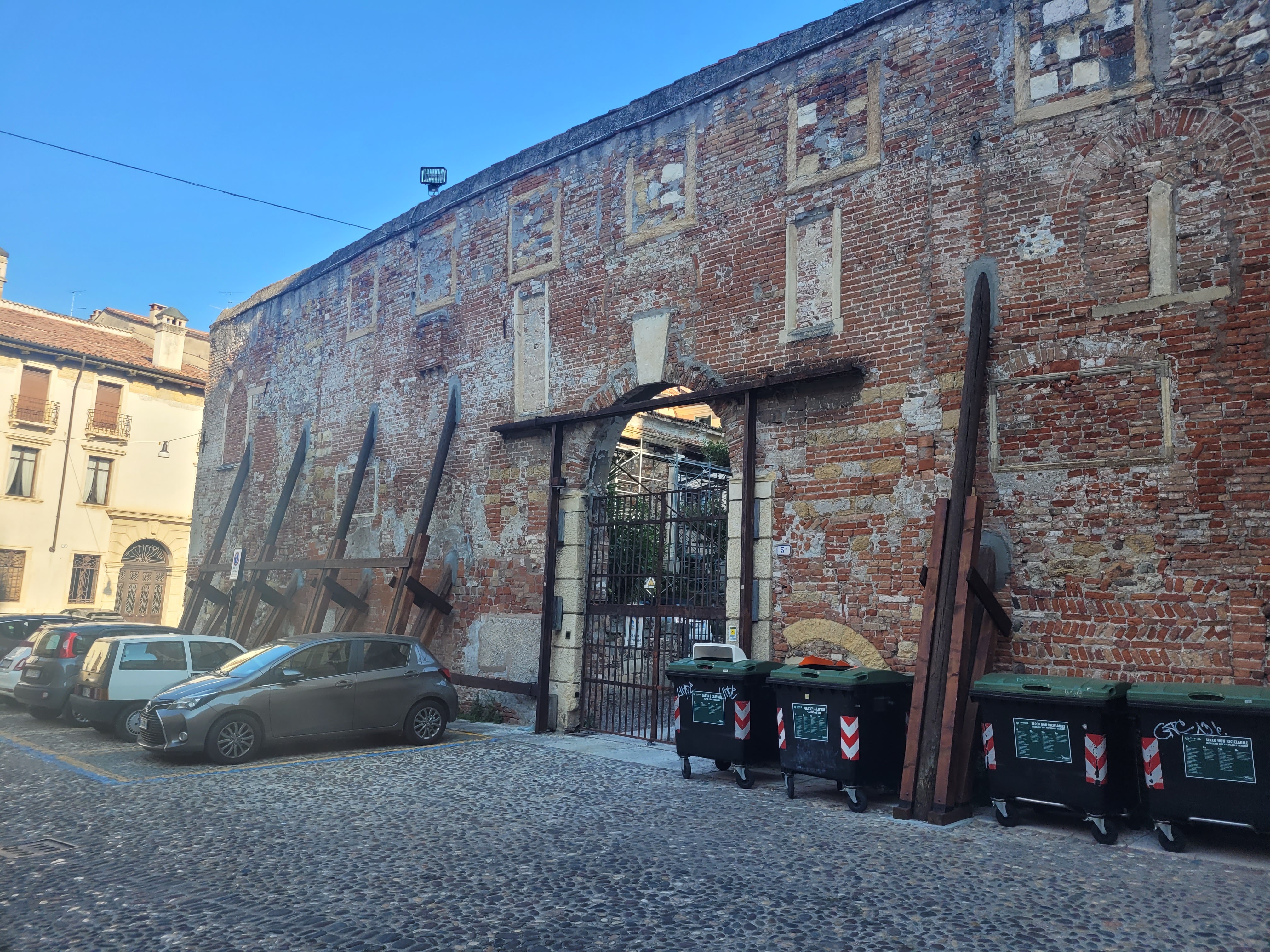
There is no indication of why this wall, which surrounds a carpark, should be so extensively propped up.
It makes for charming walks around the city.
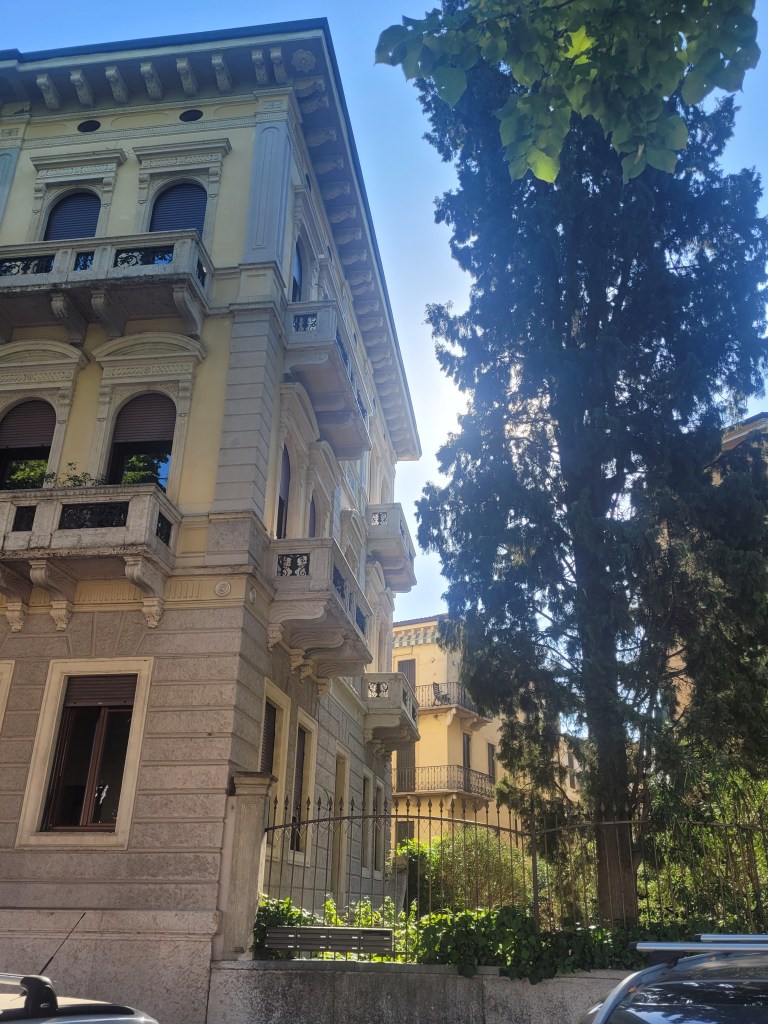
There are pretty streets with expensive and not-so-expensive shops, although in fairness most of the shops in the core of the historical centre are expensive (EXPENSIVE, expensive).

There are Roman remains (yes, the amphitheatre but also a theatre and other things).
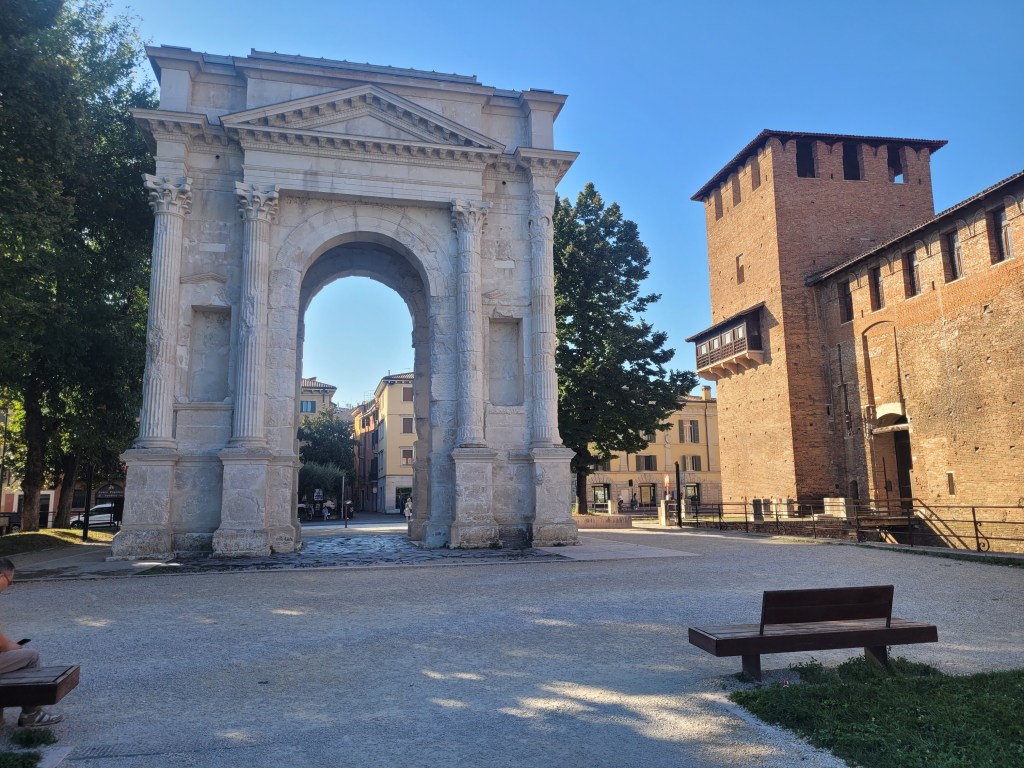
This is a rare example of a private arch erected by a Roman family to demonstrate wealth. It was knocked down by the French in the 19th century and reassembled (and moved) in the 20th.
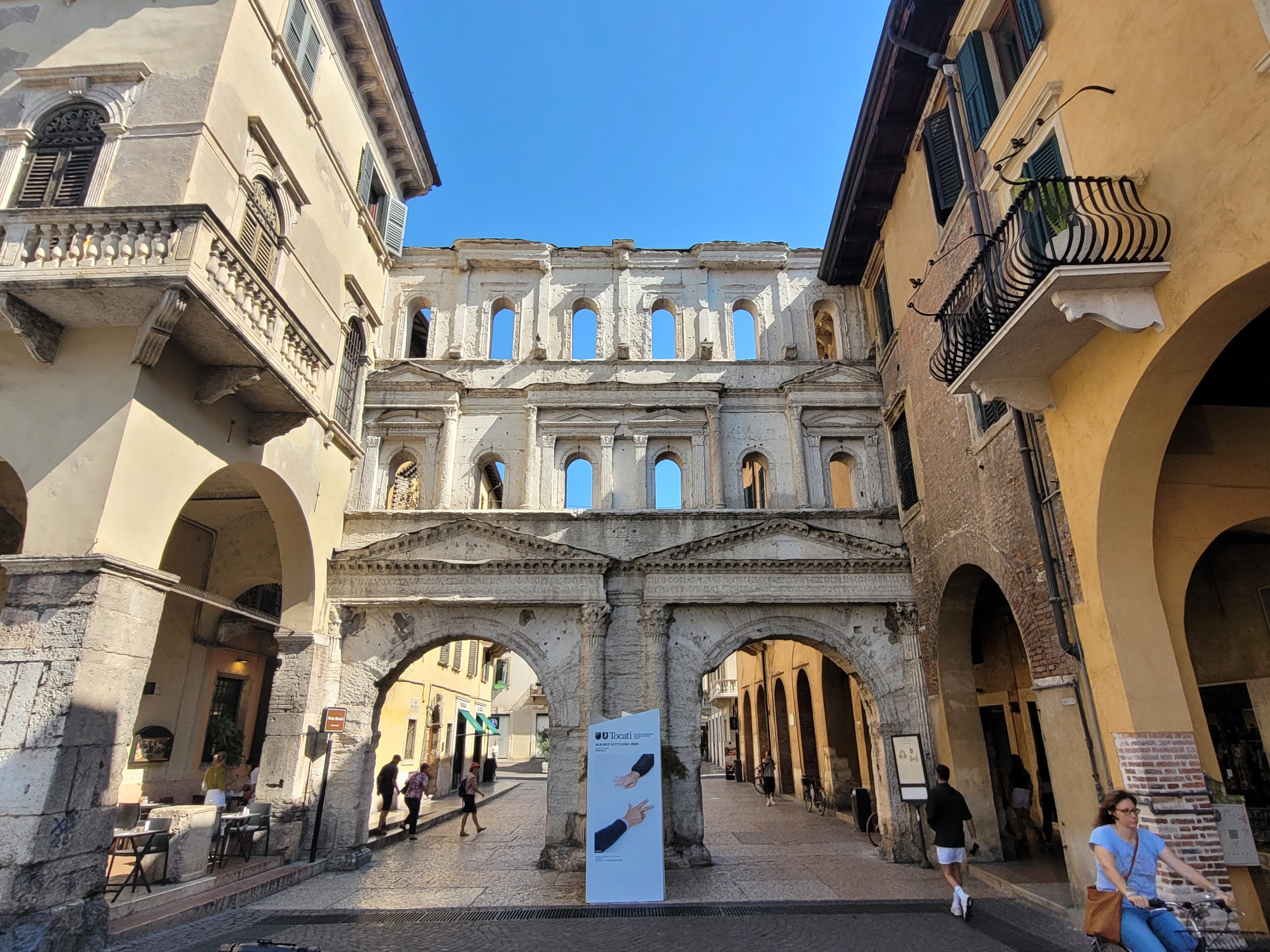
Porta Borsari (above – complete with authentic advert) was constructed in the first century BCE, and they think was matched by Porta Leoni (of which only scraps remain).
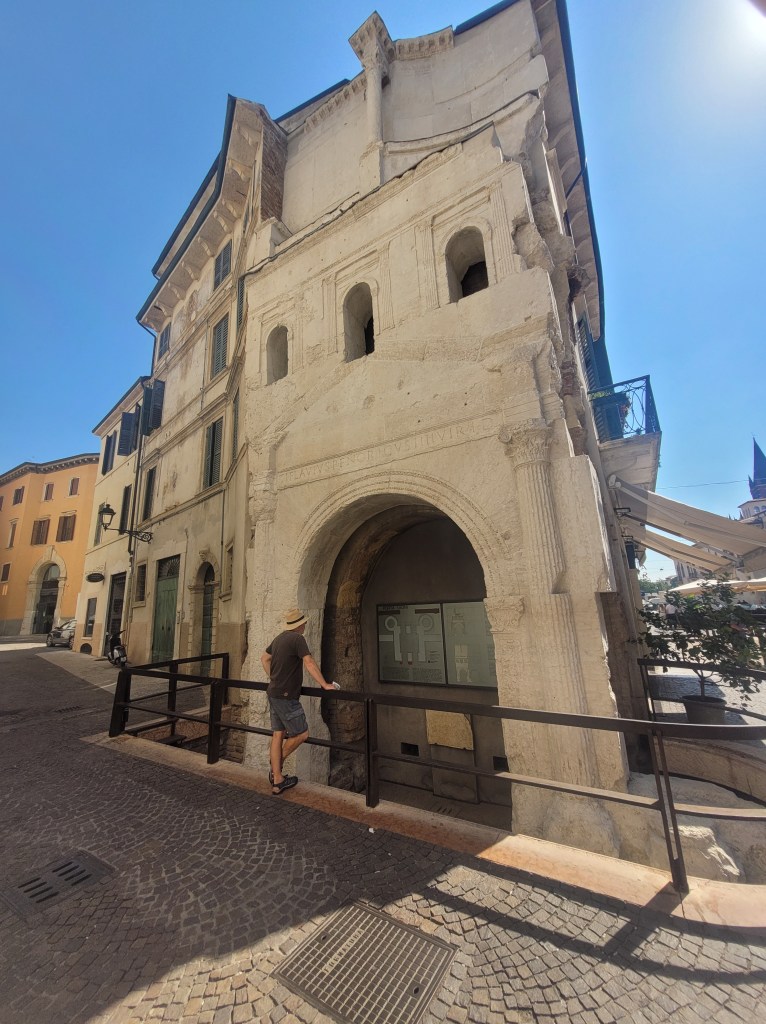
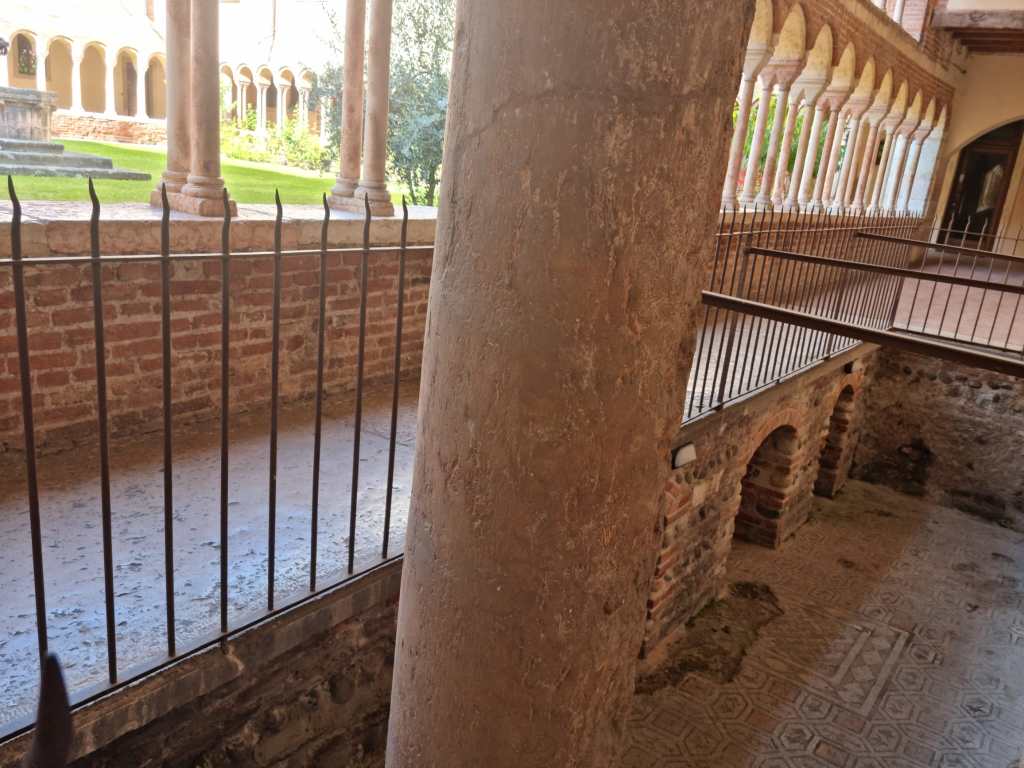
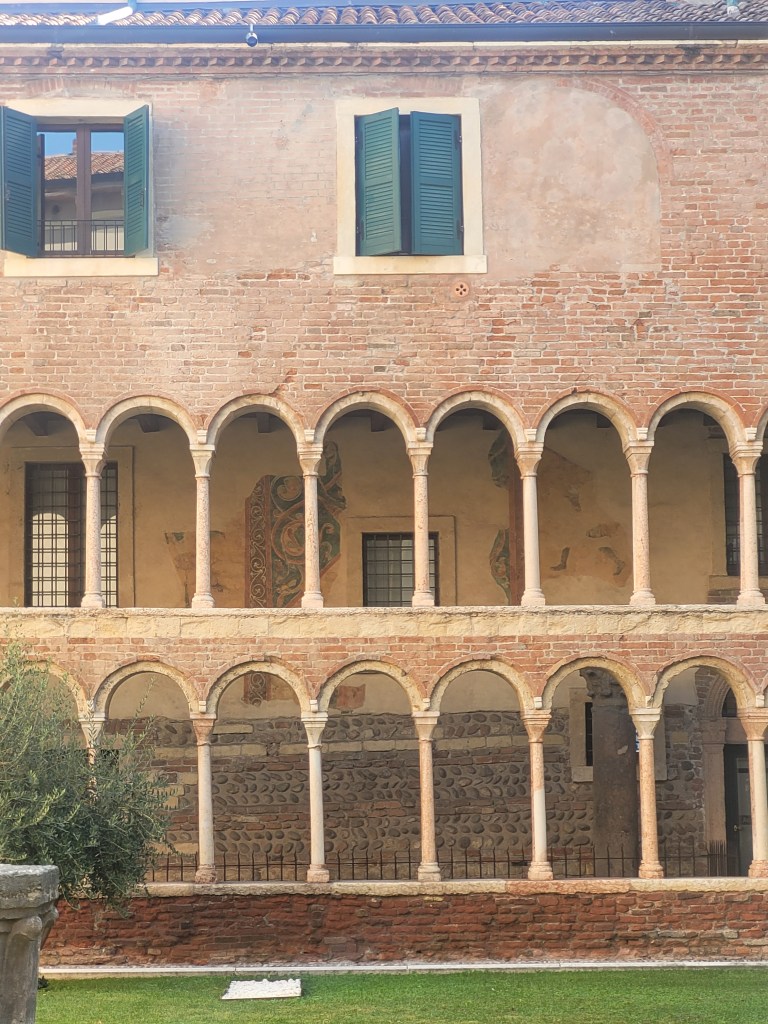
The Duomo complex is vast, with a long history. Our old friend Saint Helena, mother of Theodoric (remember her from Trier?) also pops up here. The remains of the mosaic floors from a fourth century church dedicated to Helena lie under a quiet cloister of the complex.
There are cupolas and towers and balconies – which leads me onto Verona’s other claim, although it pains me (really, it does). And that is (deep breath), Romeo and Juliet. Yes, I know the play is set here, and yes, I know that the names are based on two historical families who were at odds with each other (and yes, in Verona) in the 14th century. BUT! The tragedy is based on several different versions of said story (most importantly the Brooke version) and Juliet (or Guiletta if you prefer) probably didn’t exist. The balcony in ‘her’ house (and yes, it was the Capuleti house) was added much later (and Shakespeare never mentioned a balcony anyway) – shortly after 1905. Plus (and most importantly) I JUST WANT TO SLAP BOTH OF THEM. Such irritating teenagers.
The queues for the Juliet balcony were HUGE. I muttered imprecations as I fought my way through. Roger found the whole thing amusing and kept on saying ‘suspension of disbelief’.
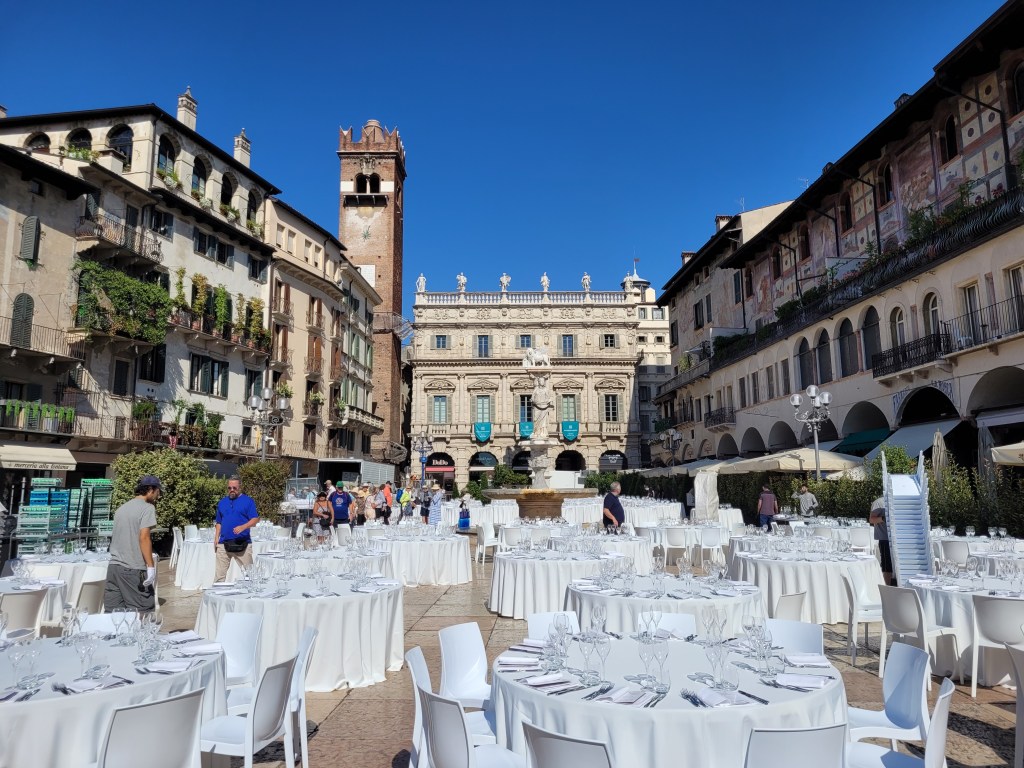
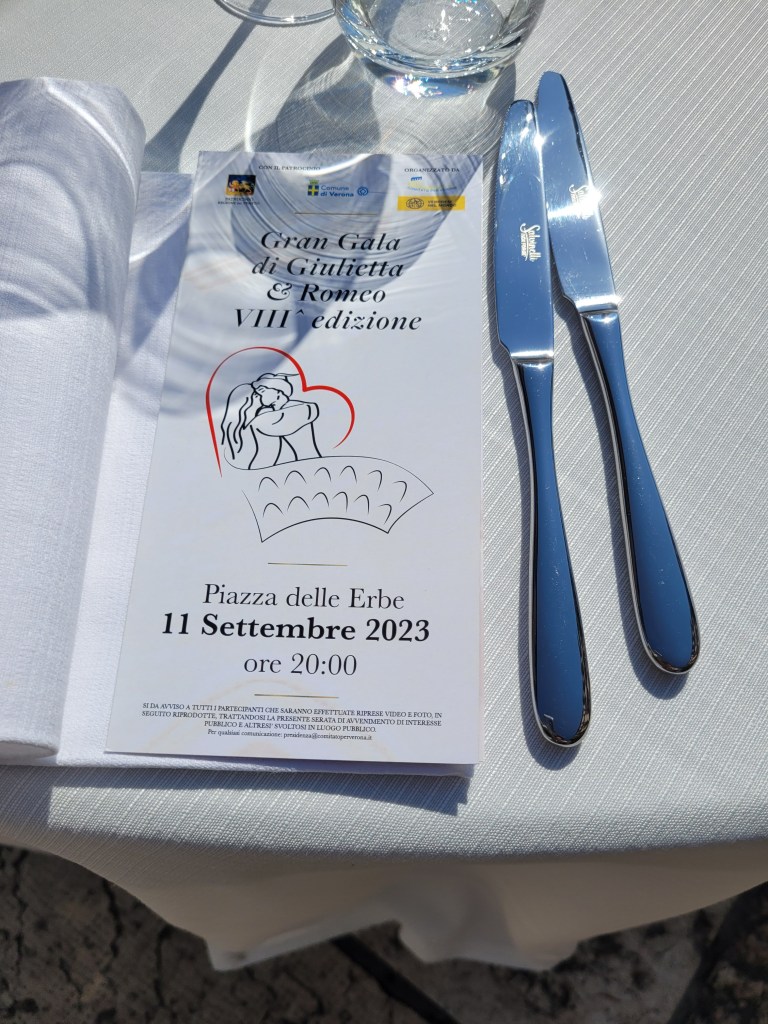
But Verona exploits this to the max: there was even a ‘Romeo and Juliet’ banquet in the Erbe Piazza:
I could go on and on about Verona – the piazzas, the bridges, the arches, the e-scooters and cyclists weaving their way through the crowds and shouting at pedestrians who (shock horror) get in their way. But there is too much. I will end with Castelvecchio, an impressive fortification built in the 13-14th centuries as a demonstration of power, might and general muscle-flexing.
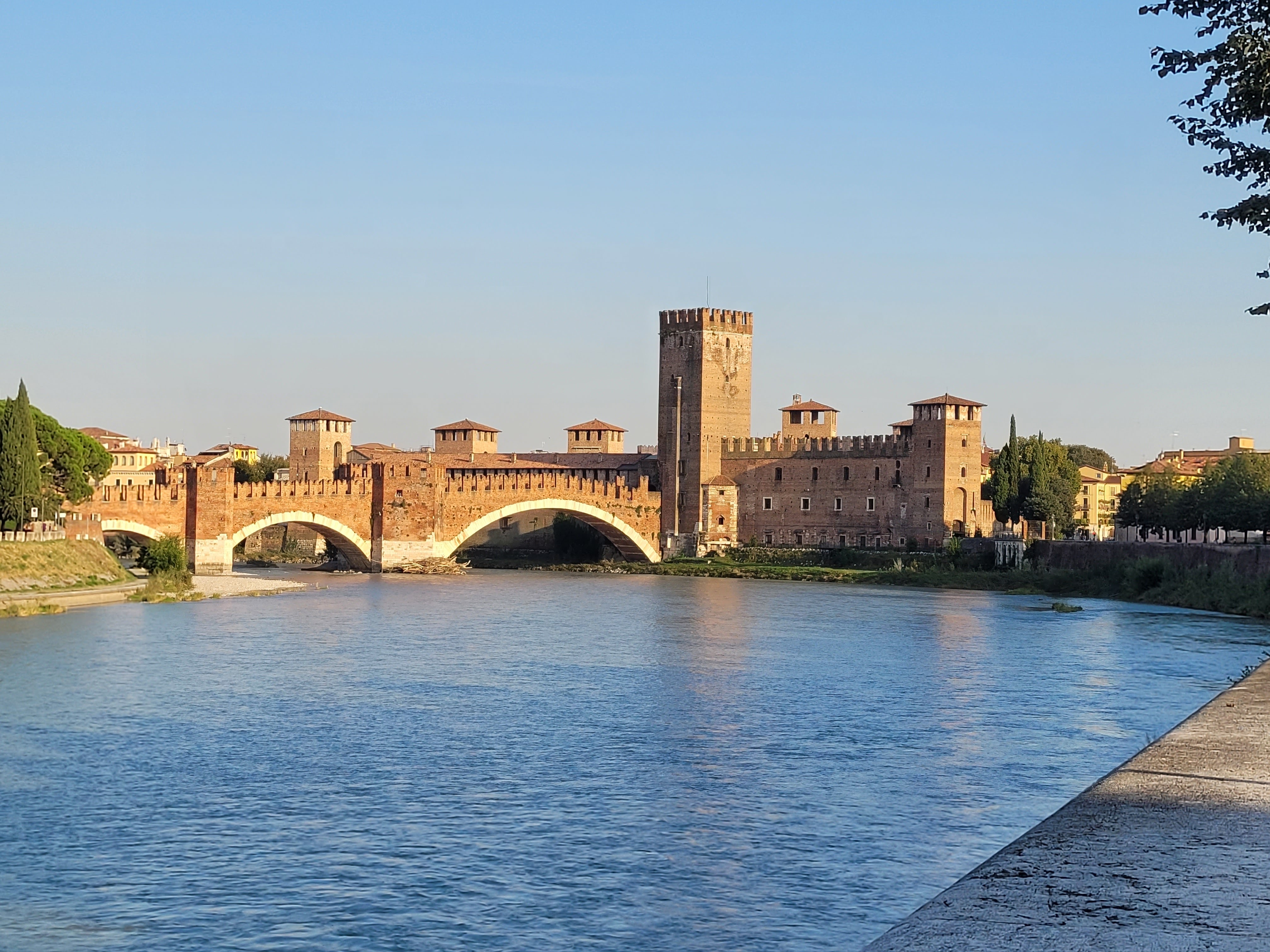

Next time we visit, we might do the opera (not Turandot!) but I will steadfastly refuse to visit Juliet’s balcony.
Ravenna next.
 Retired? What now?
Leave a comment