
It’s not that we violently disliked Florence, it just felt oppressive. The heat, the humidity, the crowds, the awful place we stayed…
So getting up betimes and heading for the train station felt like an escape. There were few people about and it felt cooler – but still smelt secondhand and stale.
At the station, we noticed that the trains had platforms on either side. One side was slightly higher and more polished, the other much rougher (dirtier) and with regular breaks in the level of the platform.
Guess which side you use to board the train? And guess how many passengers didn’t notice and then had to run to get round the other side before their train left?
Once out of the suburbs and the tunnels, we hit mist. Then more tunnels, then more mist – not much of a view.
When the mist lifted slightly, fields: some scrubland, some shrubby forest, some stubble, some sunflowers waiting to be harvested. All gently steaming. ‘Season of mists and mellow fruitfulness…’ and all that.

More heavy mist, more tunnels. Then grapes.
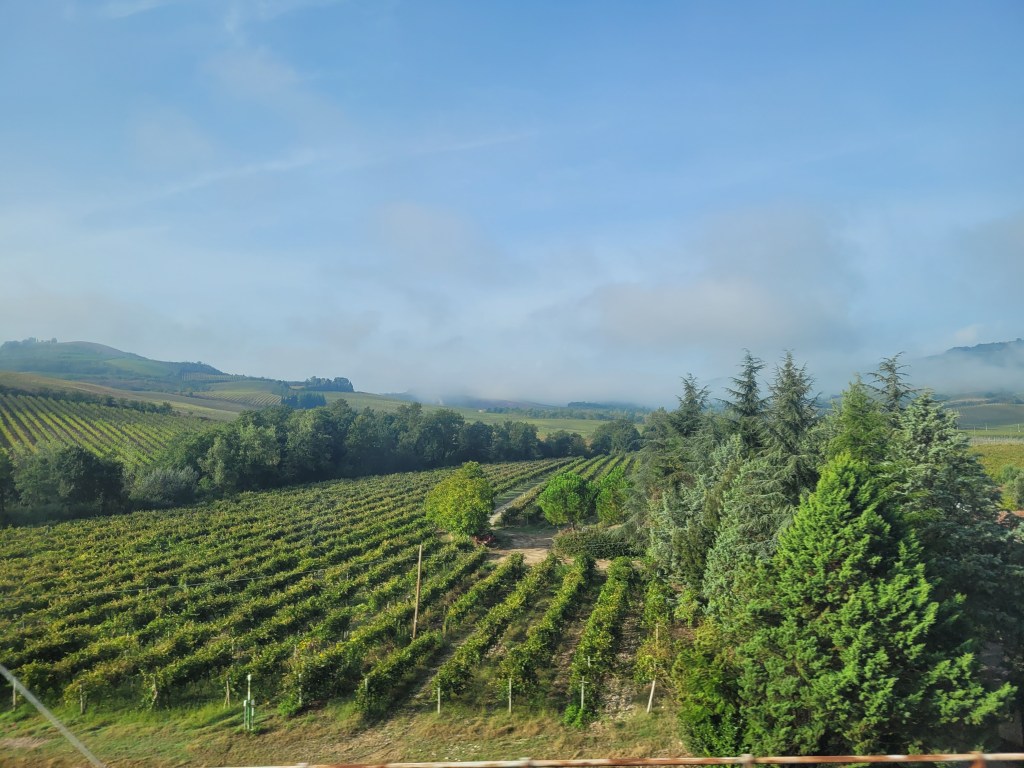
Rolling hills, forests, but always mist. The train travelled at such speed that shapes loomed and disappeared without identification. Except in the case of the industrial complex, which was fairly obvious.
A small patch of olives flashed past too quickly to photograph. Then more forest and tunnels.
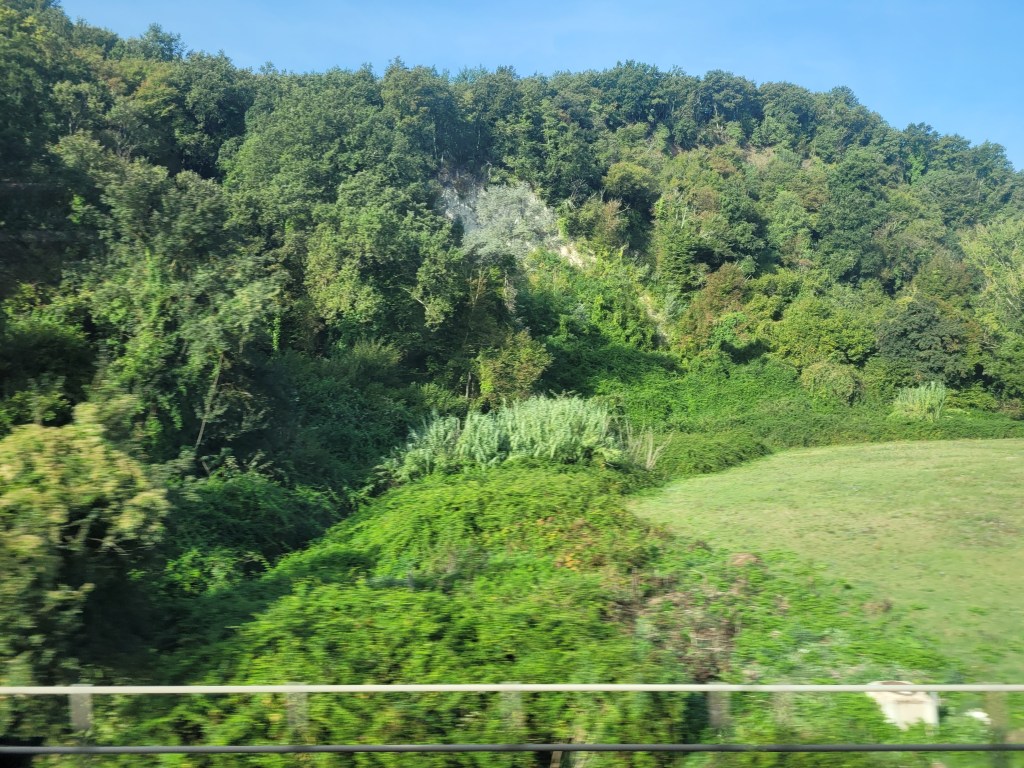
And Rome.
At Termini, the carriage filled up. Every seat was taken.
At 180+ miles per hour, countryside flashed by quickly (as did the tunnels). Blink and you missedù something.
We left rolling, green hills behind us and entered a larger landscape.
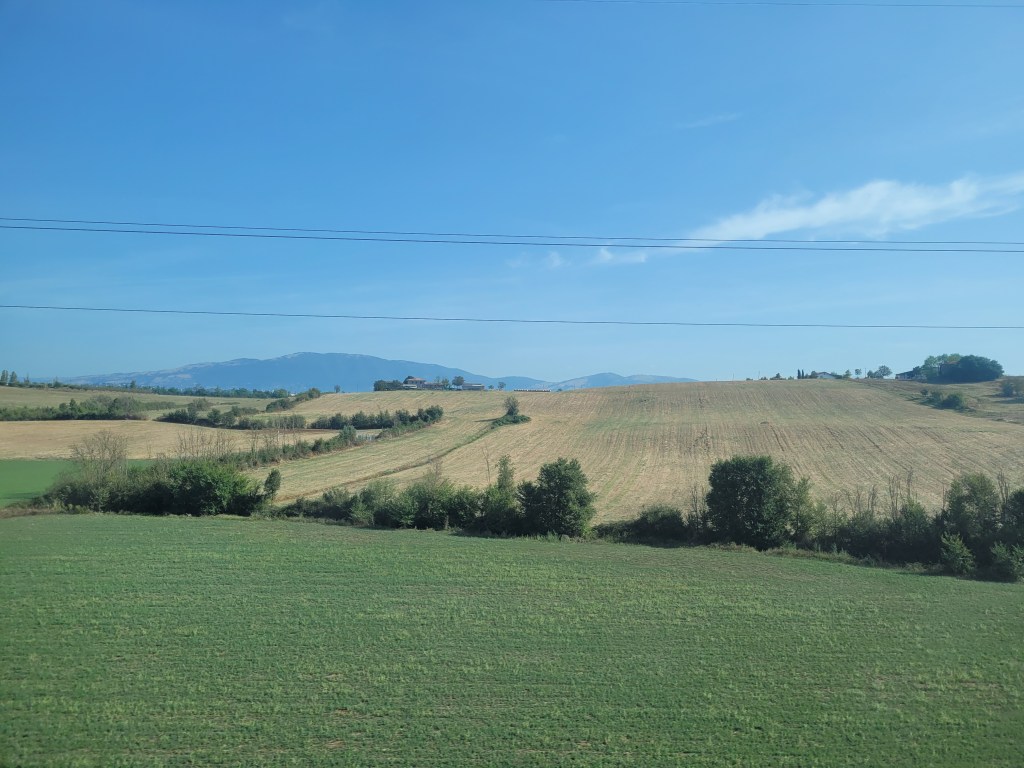
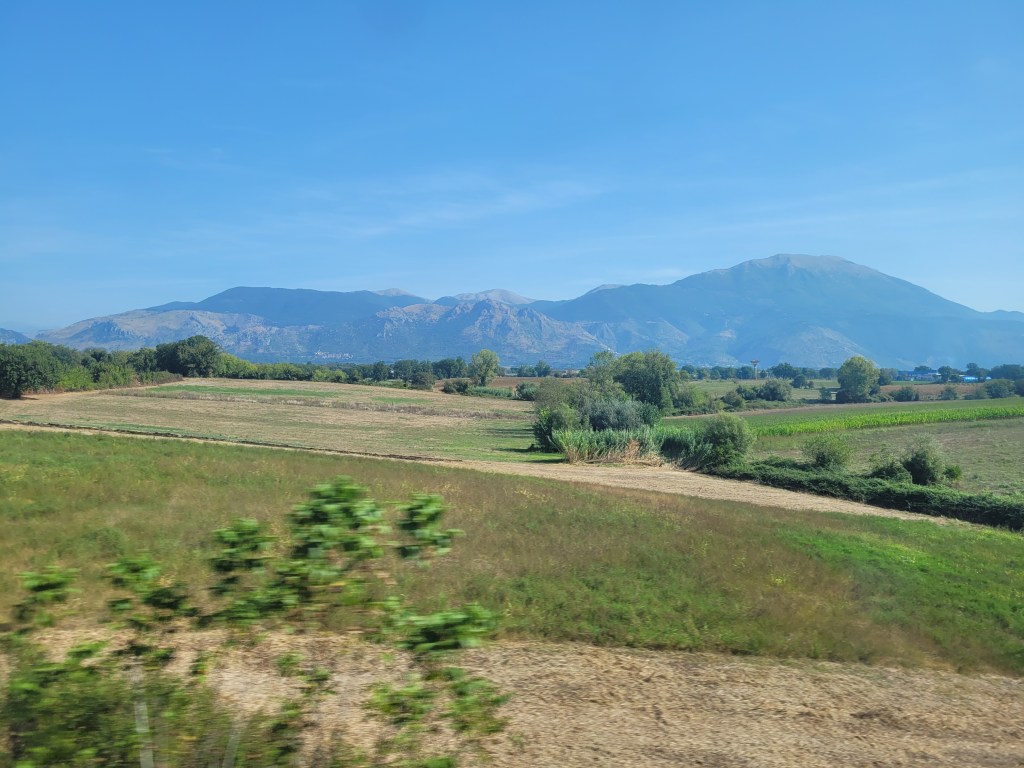
The fields were larger, the hills higher and steeper – or were they mountains at this point? On the other side of the train it definitely looked more like mountains but I was unable to get a picture.
The frequent tunnels suggested mountains and frustrated all attempts at photography.
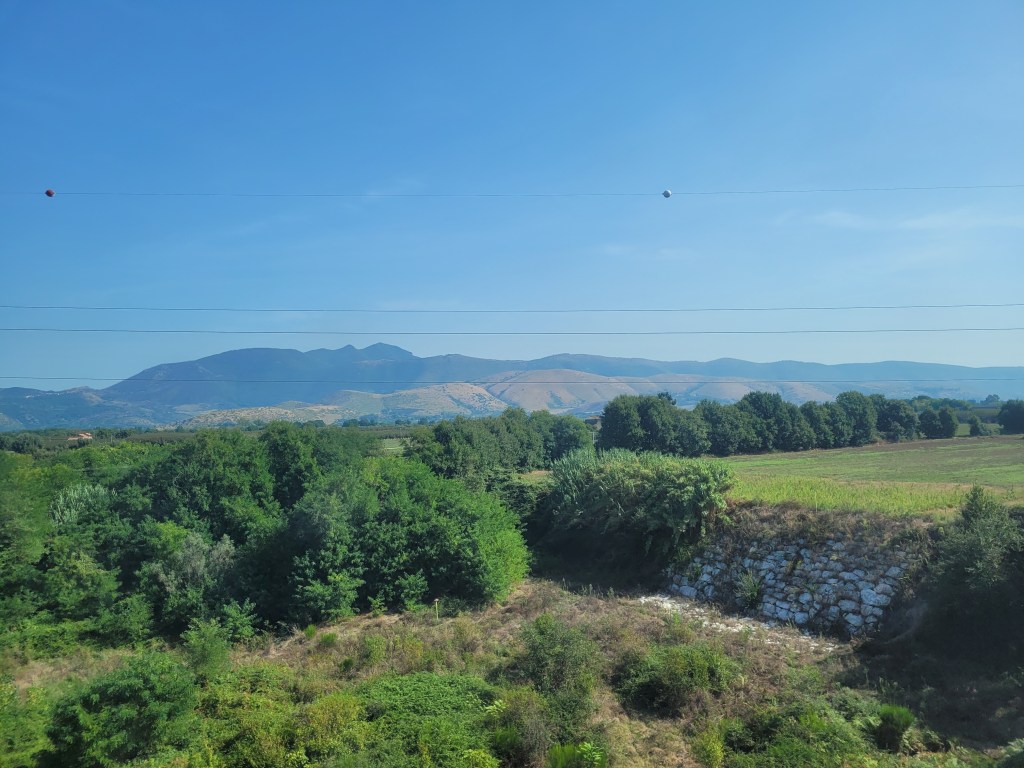
More and more trees until, just before Caserta (near Naples), fruit and olive trees appeared – mostly fruit (and, of course, vines). A few people got off, more got on: still a full carriage and those getting on the carriage started to fret about where to put their luggage.
There were some BIG suitcases. It’s amazing what can be wedged into an overhead rack, given sufficient force.
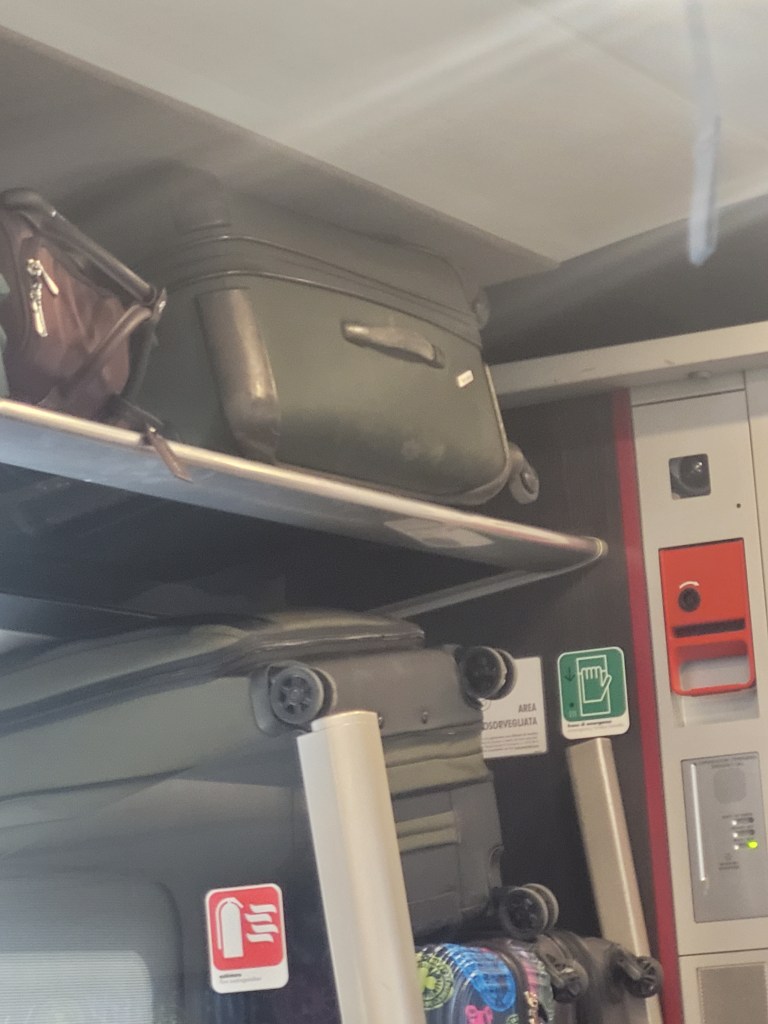
Leaving the Naples area, more vines more fruit trees, more mountains.


Definitely mountains, with fewer fruit trees but more olives and always vines.
The train slowed from its breakneck speed (actually, we came to a halt for 10 minutes) as it twined through the hills. It was green, cultivated (some vines but not as many) and forested in patches.
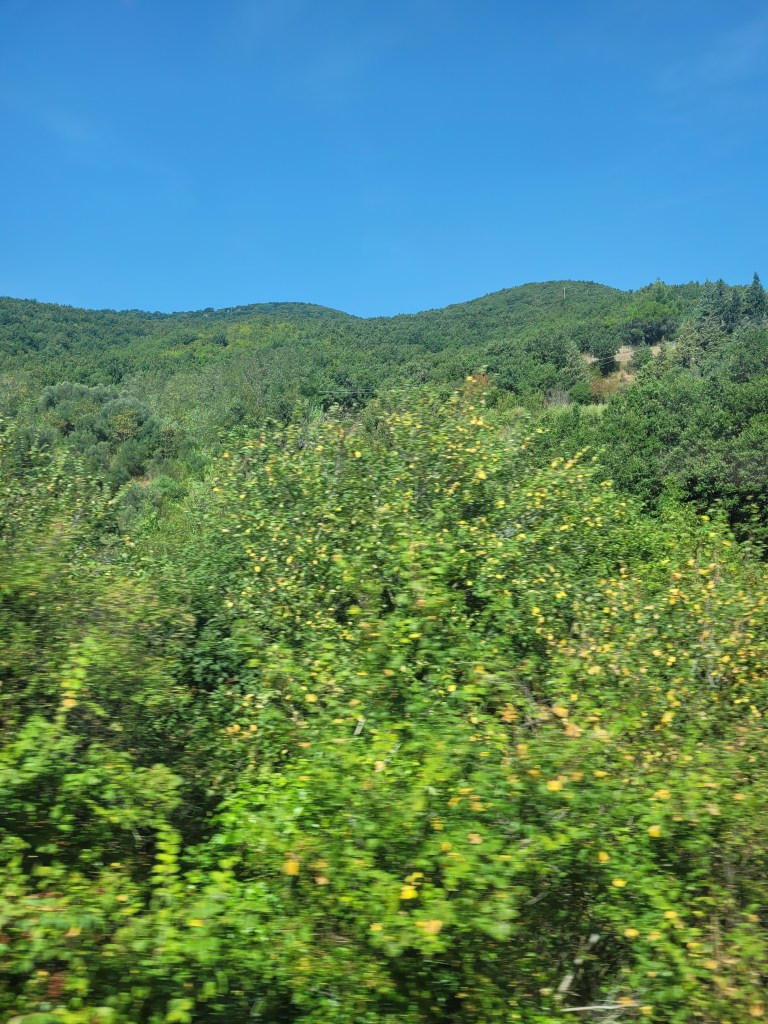
Which made this a bit of a surprise:
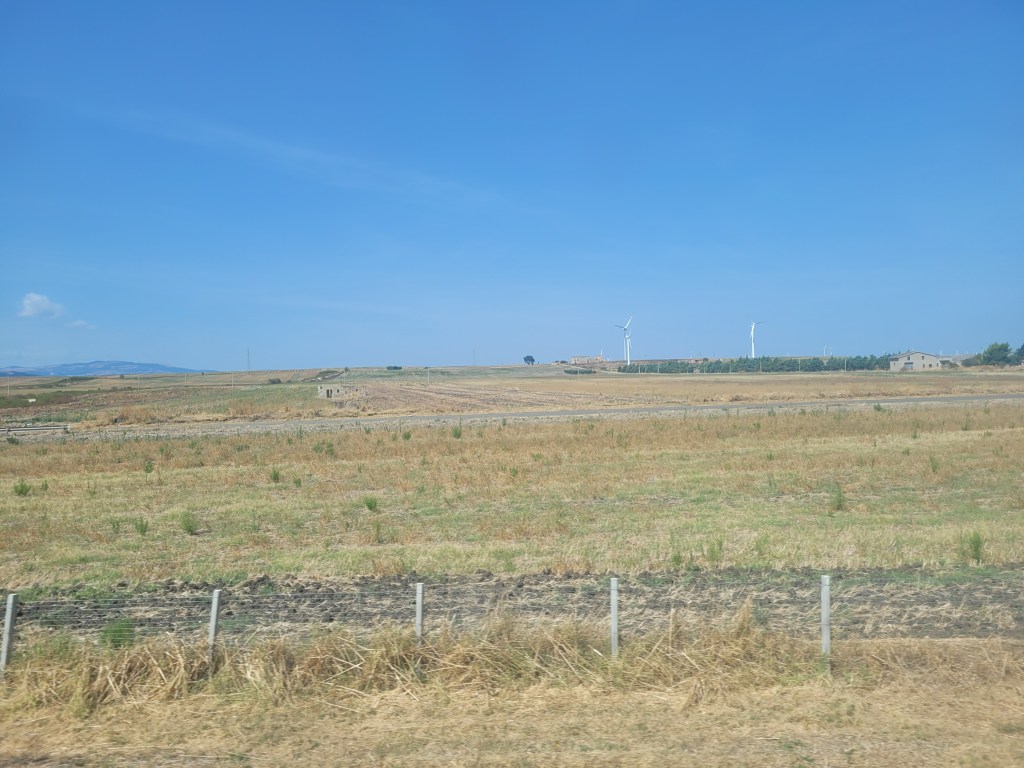
Flat, vast fields and wind turbines, at least we had picked up speed – back to 120 miles per hour. We had just crossed into Puglia.
After Foggia, the scenery remained flat and the train fast, with vines as far as the eye could see.
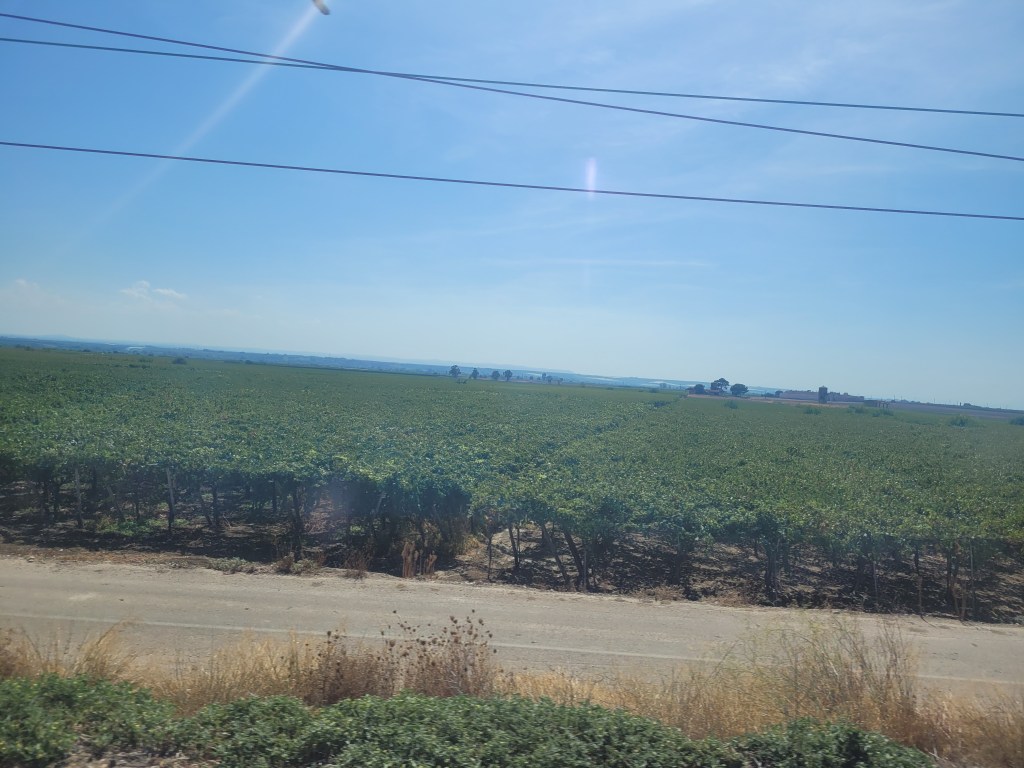
From Barletta the train whisked down the coast to Bari; the carriage was full, with the interesting view on the other side, so no pictures. Amid olives, vines, nopal cacti (an invader species that should be ripped out wherever it is found in Europe), houses, concrete walls and apartment blocks, the Adriatic flashed in and out of view. On the dark blue horizon, highlighted against the lighter blue sky, enormous vessels made their way towards (or away from) port. Ferries or container ships, they were vast.
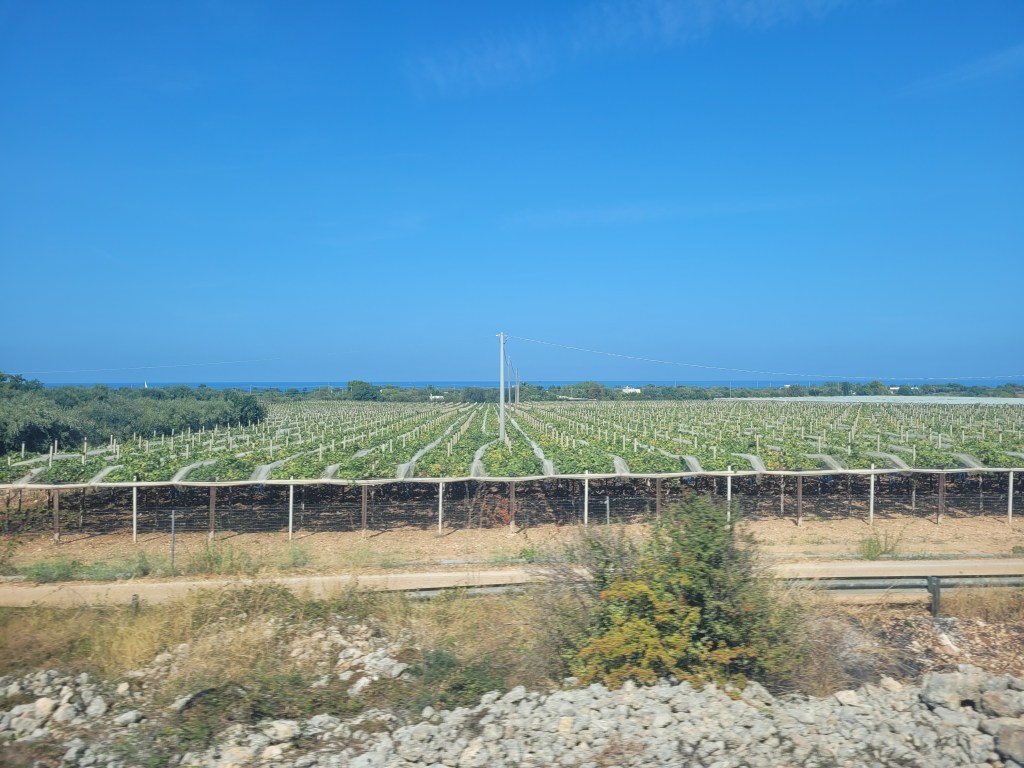
Ever southwards and, more frequently, the expanses were of olive trees. Old, gnarled trunks, painted white against insects (no, don’t know which), in both ordered ranks and haphazard scatterings.
We changed trains in Brindisi, onto a regional (slow) train that squeaked, rattled and rolled along the flatness. Sadly, there was a lot of evidence of Xyllela, with huge, old trees brown and wasted.
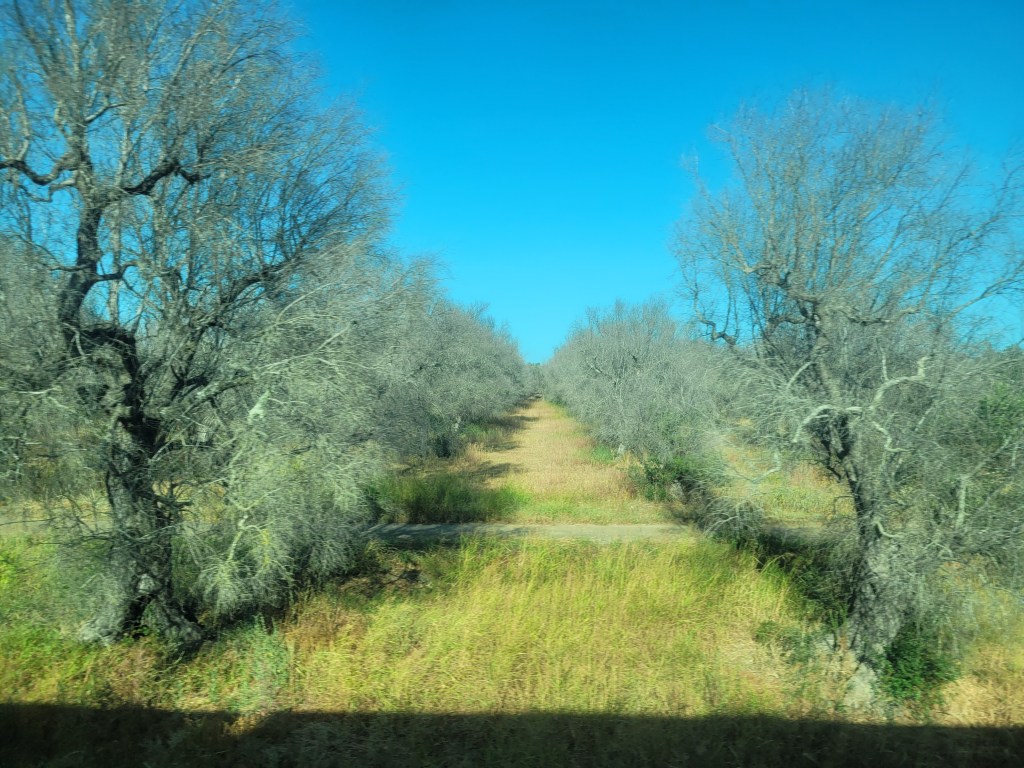
Over half of Italy’s olive oil production came from Puglia. Not so much any more.
Lecce, end of the line (for both the train and us).
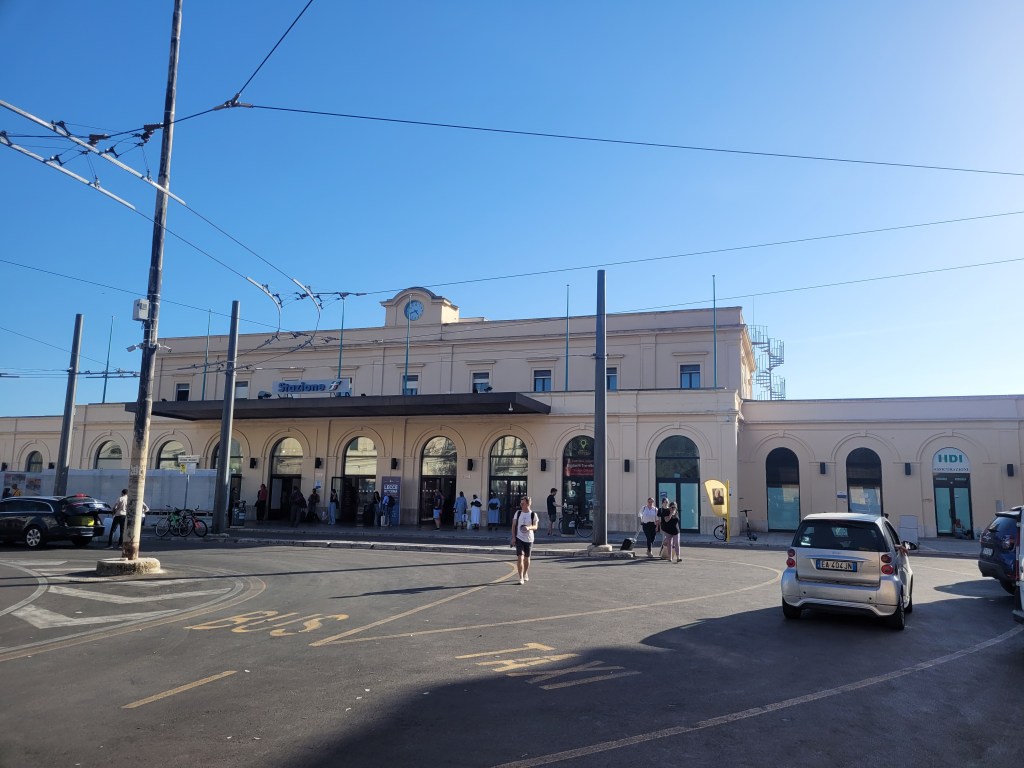
It was hot, humid and sweaty. But the air didn’t smell secondhand.
Our last train, and our only ‘loss’ was our hats. Not bad.
 Retired? What now?
Leave a comment