Sometimes referred to as the ‘Florence of the South’, we found Lecce more enjoyable than Florence.
Was it touristy? Yes.
Did it feel like a ‘Disney does Baroque’ theme park? A bit.
Did we still like it? Yes!
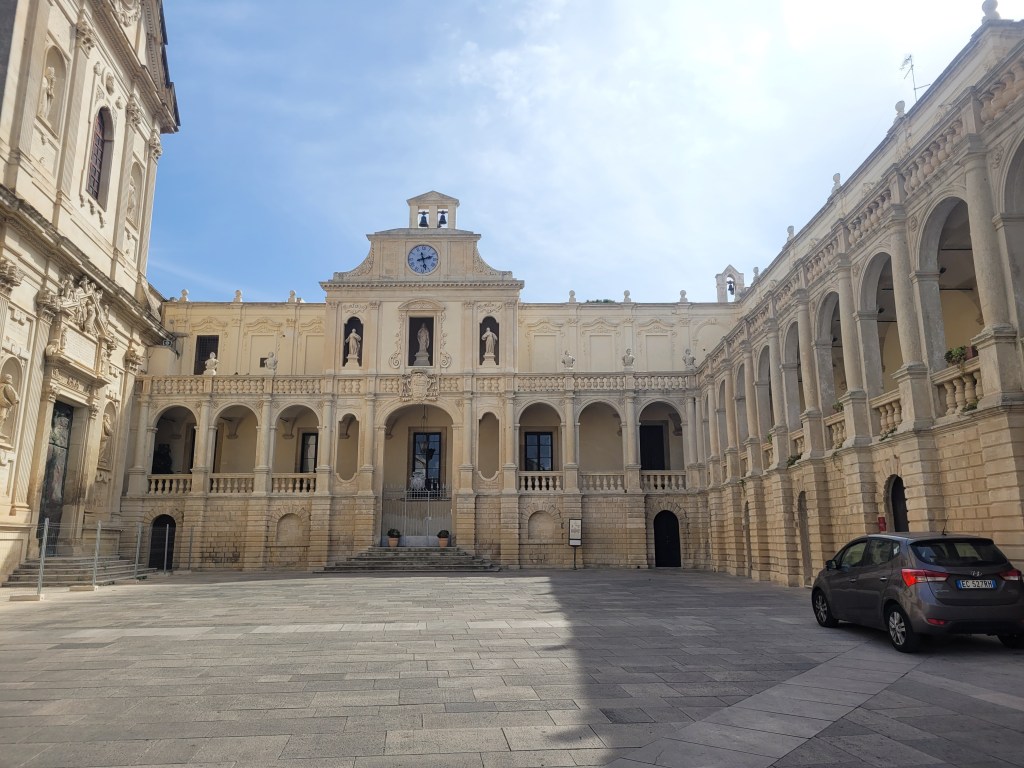
It’s the stone and the light. Lecce is built of a specific kind of sandstone (Lecce stone) which is pale in colour and easily worked. Exploiting this has resulted in buildings effusively covered in whipped cream icing – a bit like a Bake-Off cake.

Lecce seemed bright and fanciful, joyously reflecting the strong Salento sun. And certainly HOT.
Florence, however strong the sun, just wasn’t this light – possibly because the buildings are higher and the buildings are often darker in colour (and maybe dirtier?).
Pale marble paving in the historical centre also helped. Despite the different architecture, it felt more like Syracuse than Florence – all pale stone and marble in pellucid, searing southern sun.

I have to say that there were groups being led round by someone waving a brightly coloured scarf on what looked like an old car aerial, muttering into a microphone, or just shouting loudly.
(From one such shouter, I learned that Ialians don’t go to church anymore. This is new news?)
But the audiences seemed more attentive and the groups were smaller: Antipodeans, Americans, French – also some Spanish and Italians. Lots of people stayed for just one night, usually those on bicycle tours. Which is a shame (for various reasons).
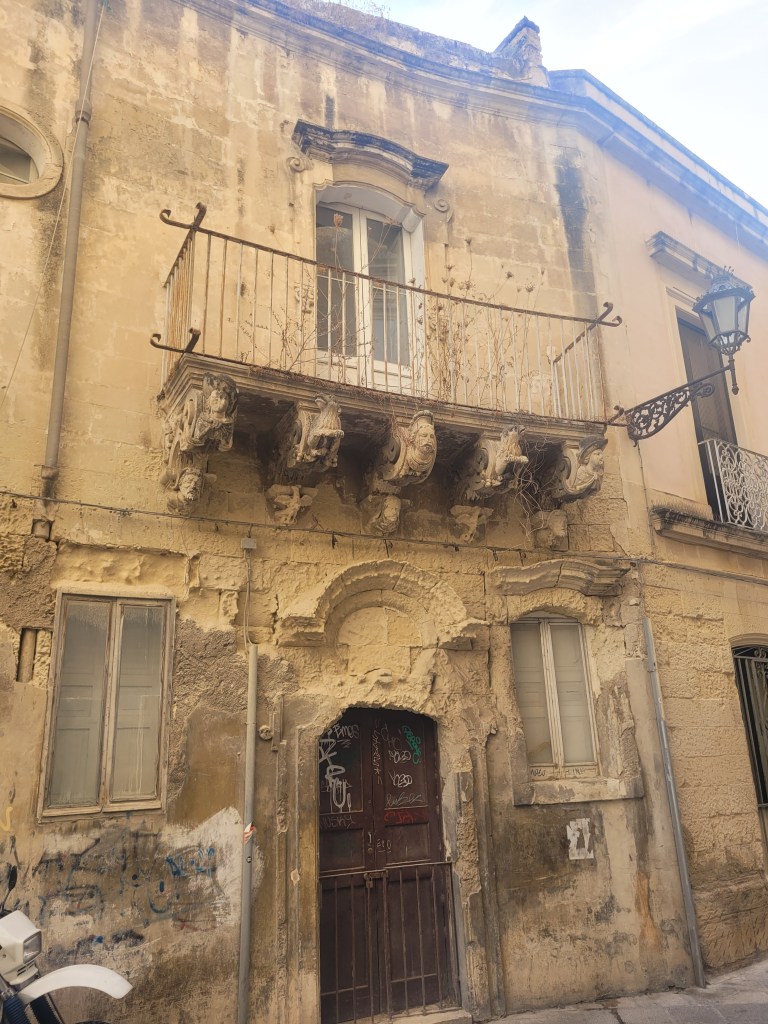
Lecce is a town of balconies. Old, new, stone, metal, large, small, simple, ornate, in various states of repair…

With fantastical, mythological creatures as supports:
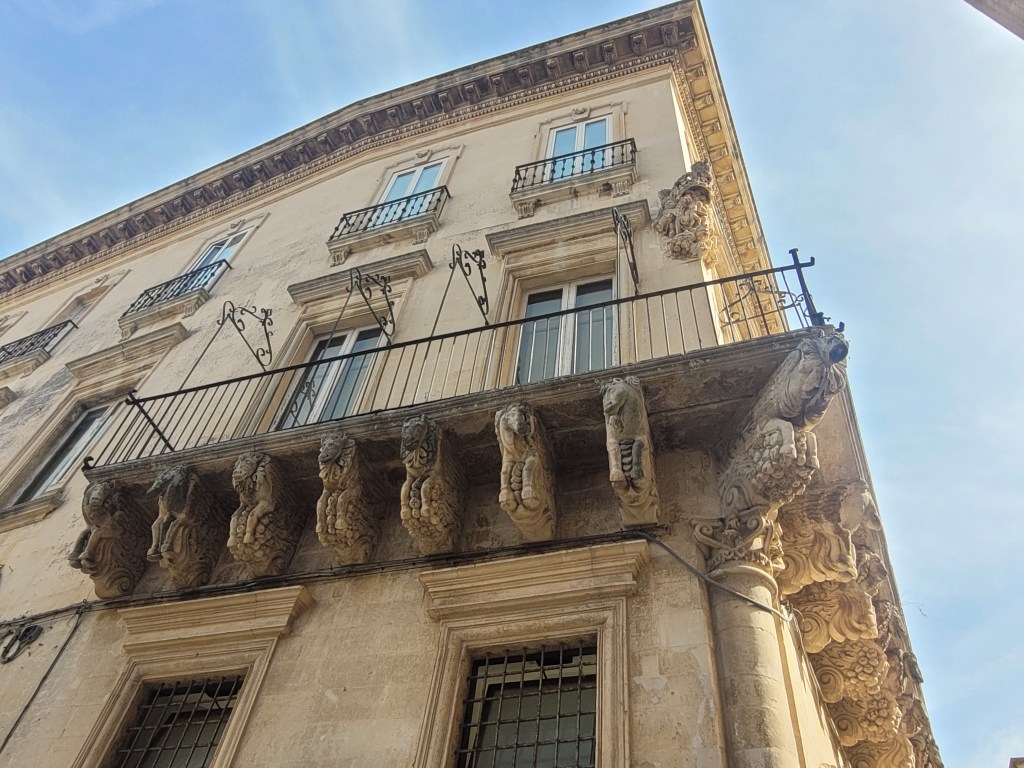
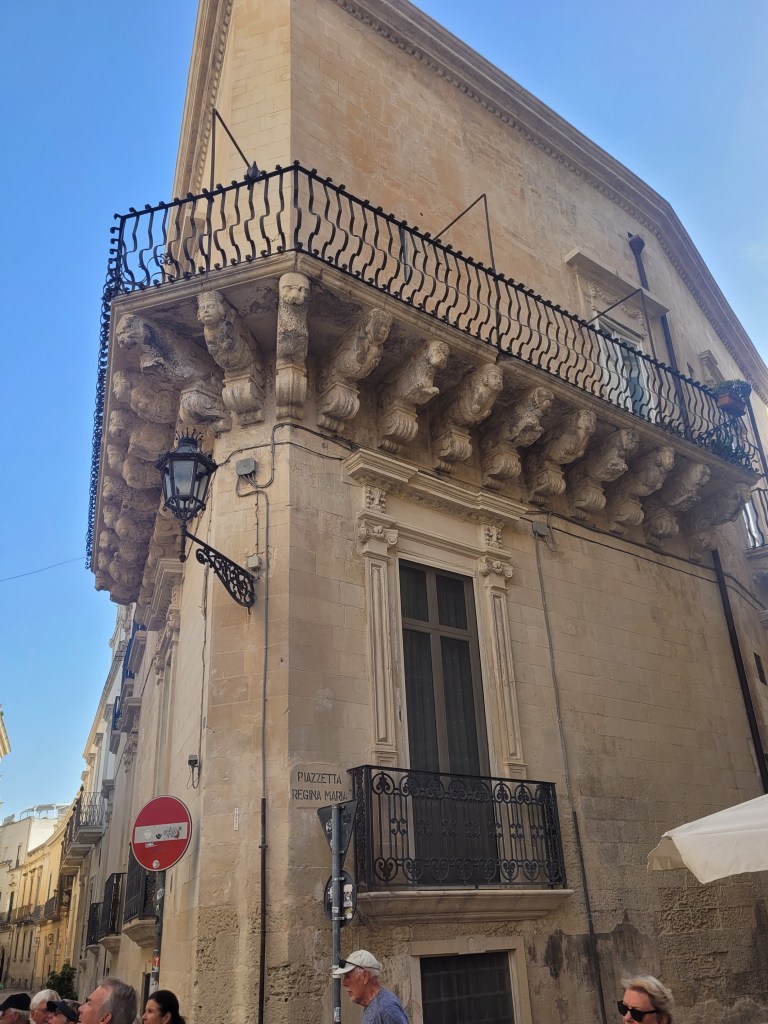
Some in need of a clean,

others of repair work.
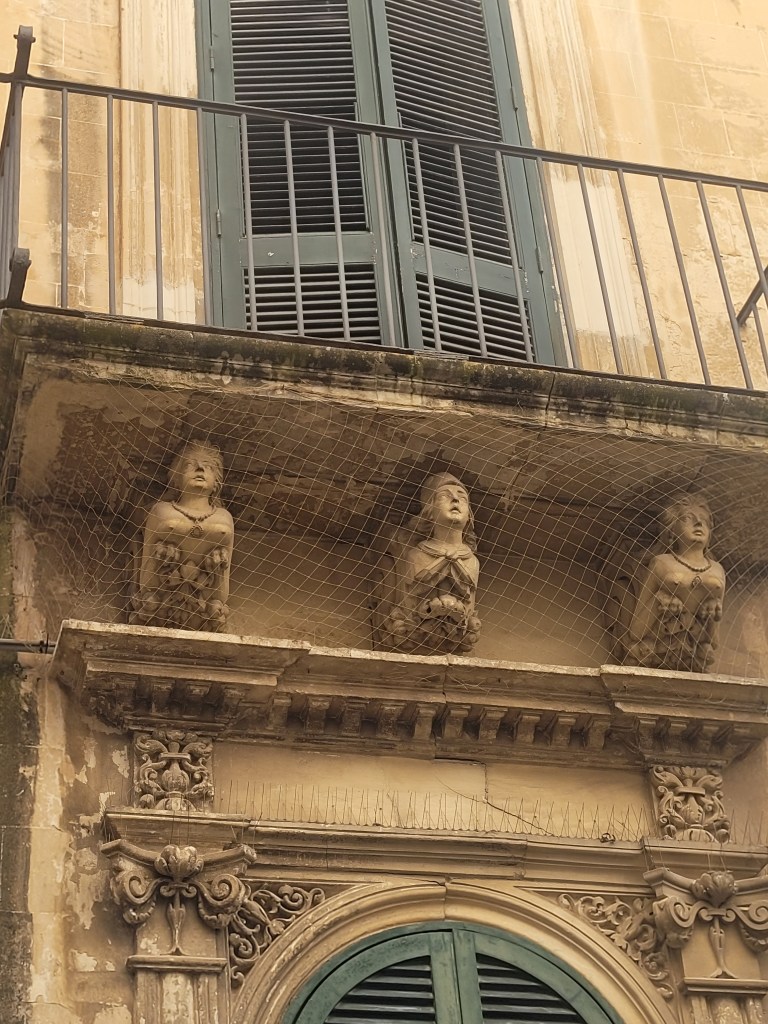
Some took themselves more seriously.

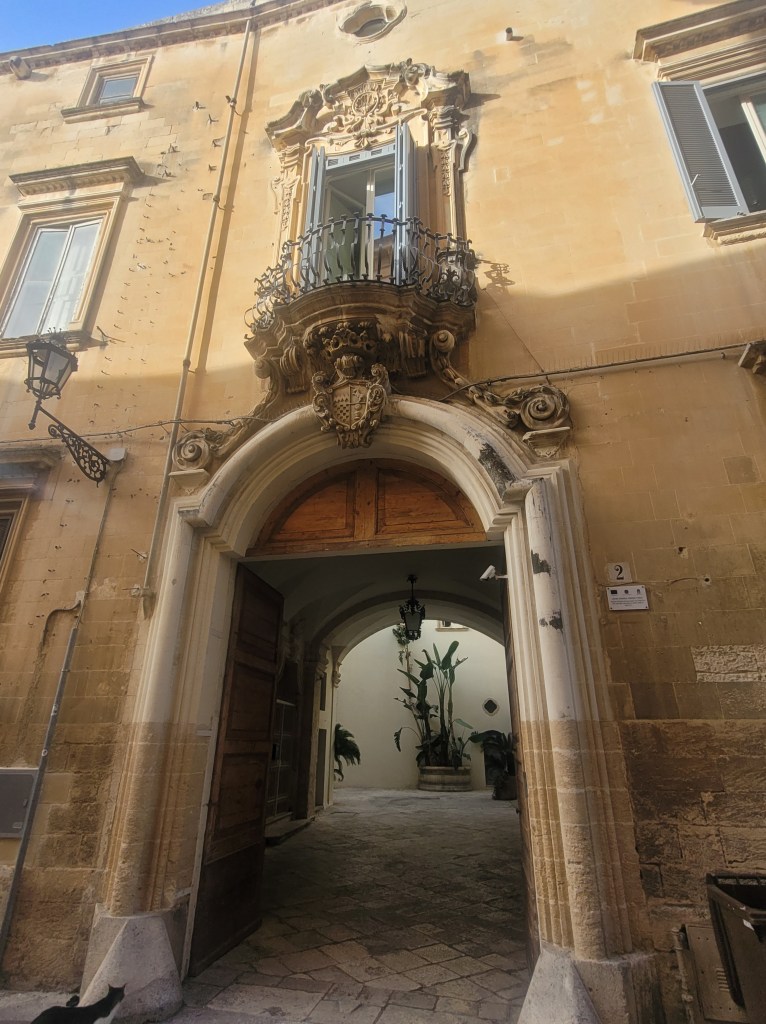
Others just went for the whole stone effect.
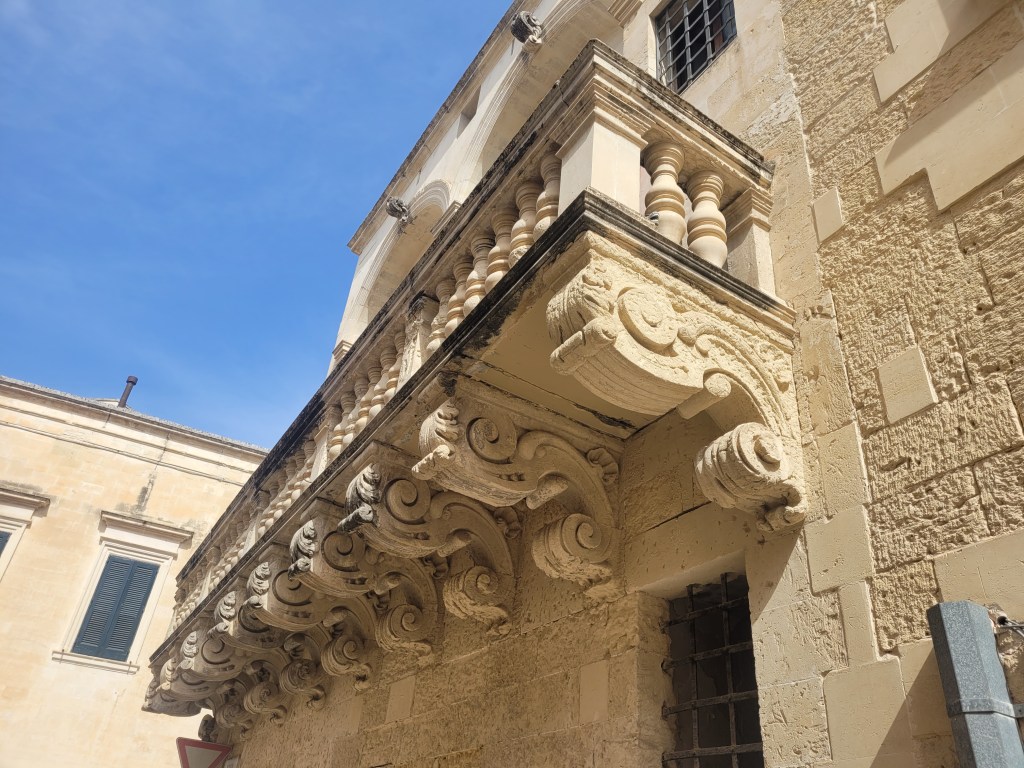
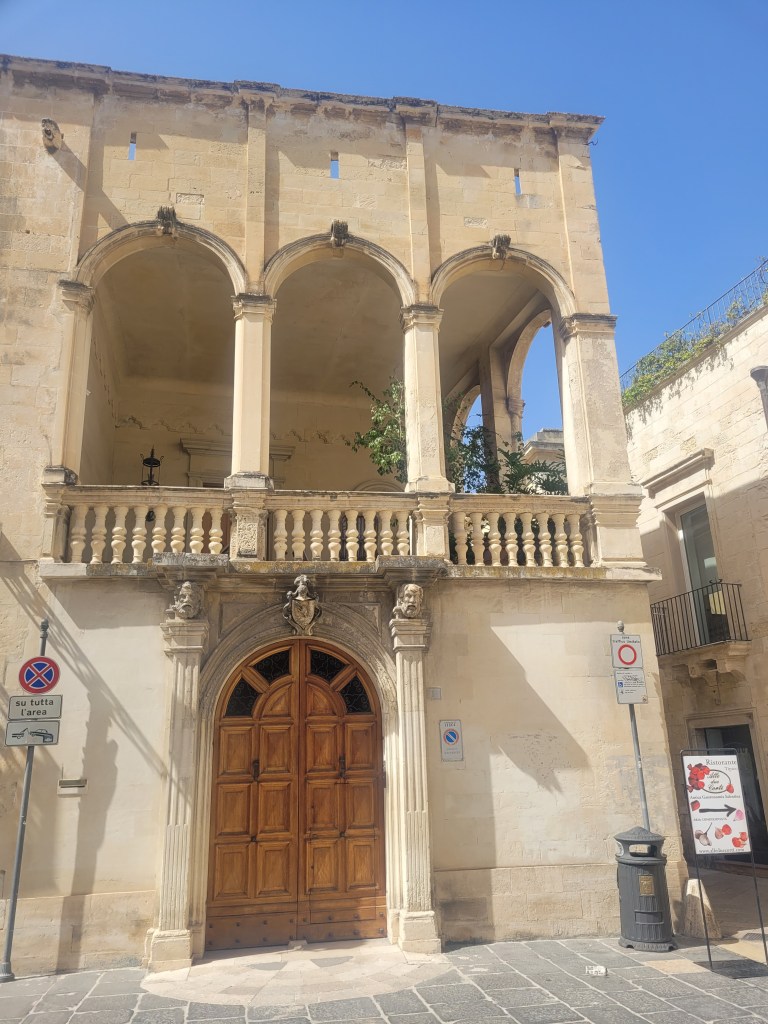
Basically, there are a lot of balconies!
(But we didn’t see many people sitting on them.)
As in many places we have visited on this trip, there were ‘done up’ buildings next to scruffier ones.

Lecce is also known for its myriad of churches, but given that most of the places we have visited have also had a lot of churches, I am not sure how or why this is particularly remarkable.
What is noticeable about the churches – other than the elaborate façades

– is their interiors, which are also done in Lecce stone. This makes them airier and less oppressive than other, darker, church interiors.

Lecce had the traditional Roman accoutrements – amphitheatre (a quarter of), theatre (half of) – but not much other obvious evidence of their Roman past.
Beautiful, sunny, luminous Lecce. We hope to return soon!
 Retired? What now?
Leave a comment