All told we spent two weeks in Apuglia, most of it in the far South.
After taking the airport bus from Lecce to Brindisi airport, meeting the Chapel Allerton crew, and hiring a car, we drove to a villa on the Adriatic coast near Lecce (Torre Chianca to be precise).
To be perfectly honest, had Roger and I driven through that area first we would never have chosen to stay there for a week. It was wall to wall holiday accommodation, with abandoned buildings next to partially completed projects next to finished (and freshly painted) houses, next to empty lots. Very little was open, and the lidos on the beach blared loud music all the time.
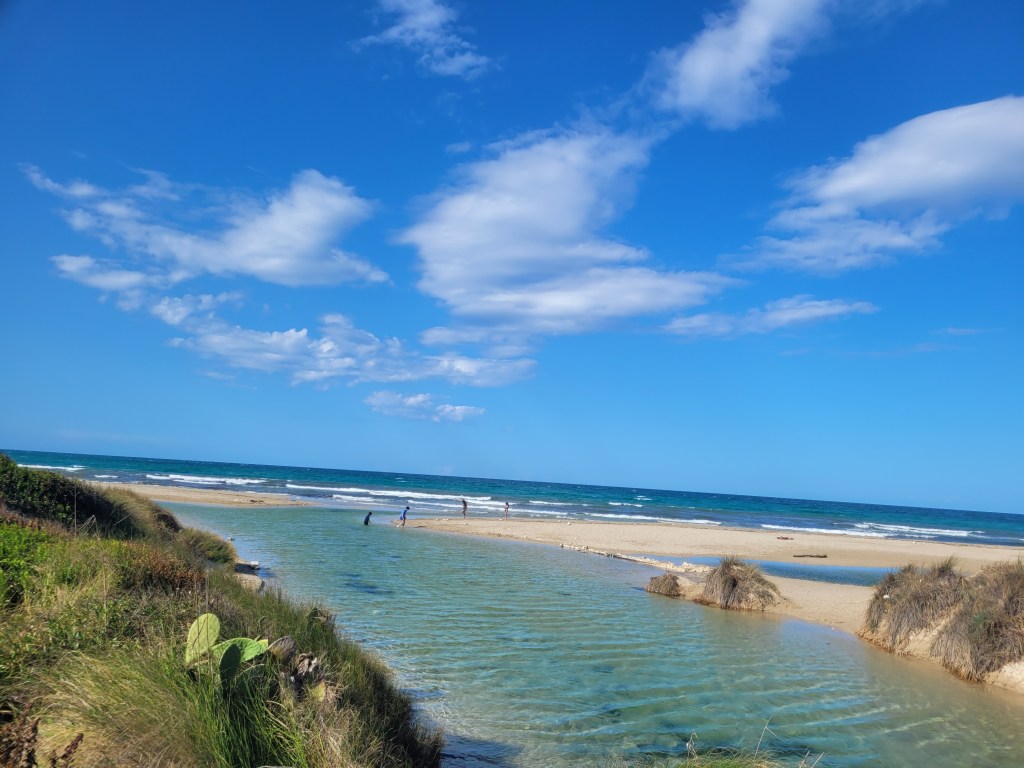
Having said that, the house had lovely outside spaces and was five minutes walk from a brilliant sandy beach that was perfect for toddler Oscar: soft sand, clean, very gently sloping.
The water was clear and warm – everyone bar the toddler enjoyed swimming . He was more excited about running into (mostly out of) the last gasps of the miniscule surf and throwing sand.
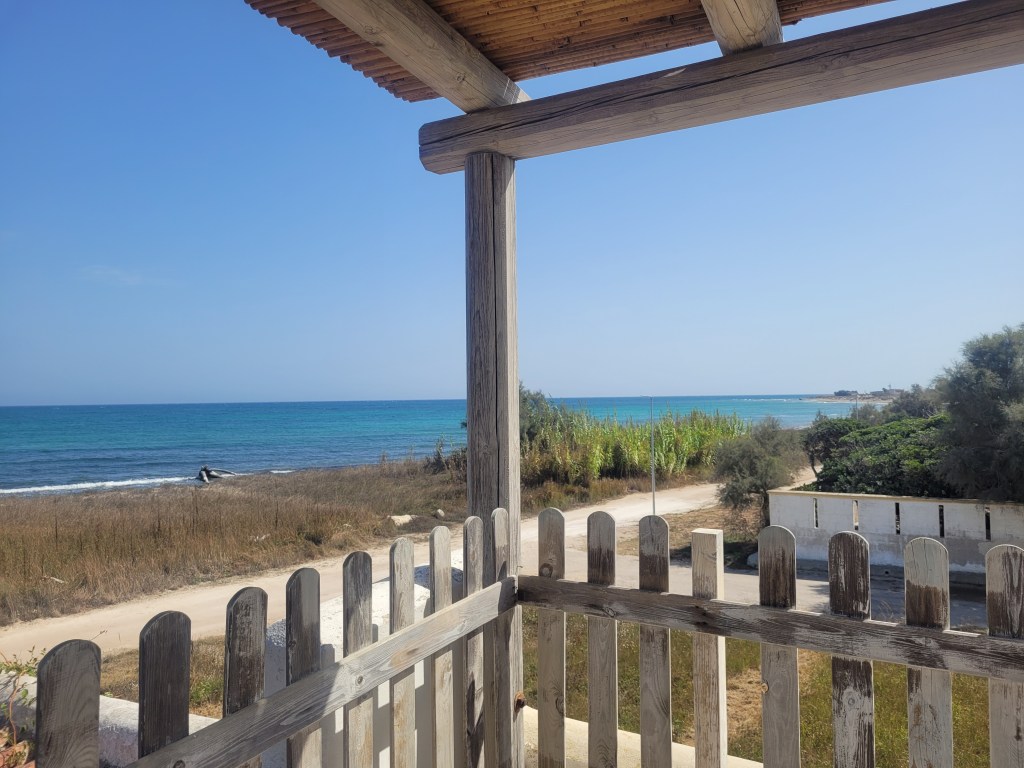
The views from the roof terrace of the house were spectacular.
The first few days it was stifling hot, and the piles of rotting seaweed to the south of the house were remarkably pungent when the breeze was in the wrong direction.
Then the wind picked up a bit, as did the waves (at least the smell dissipated).
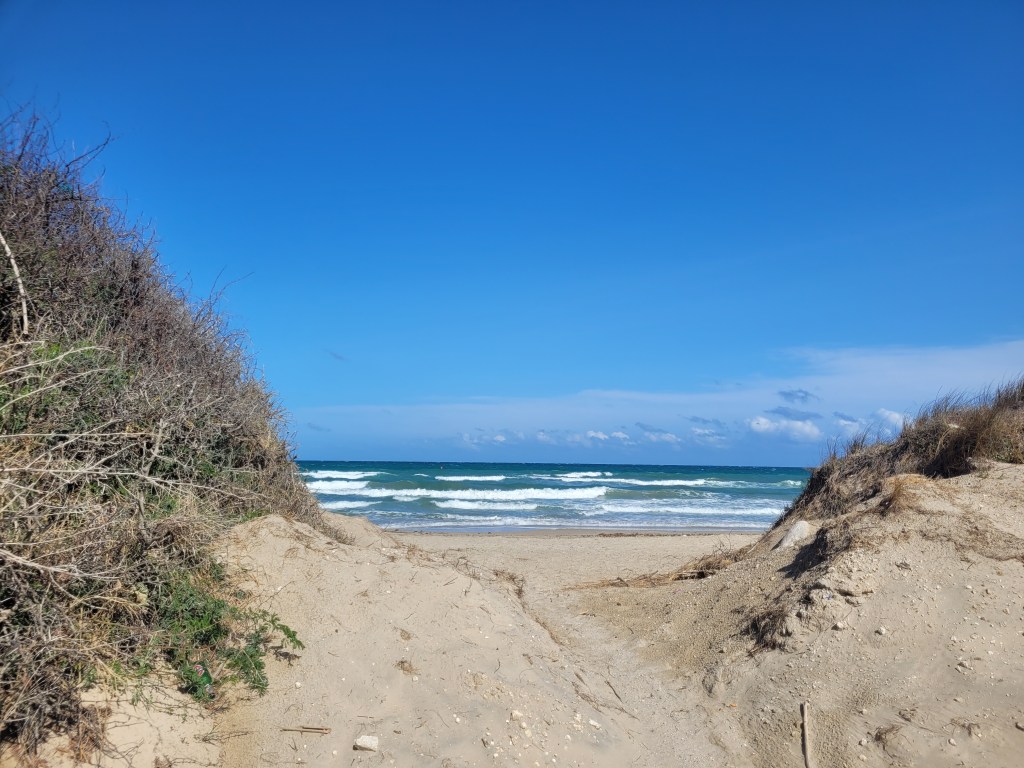
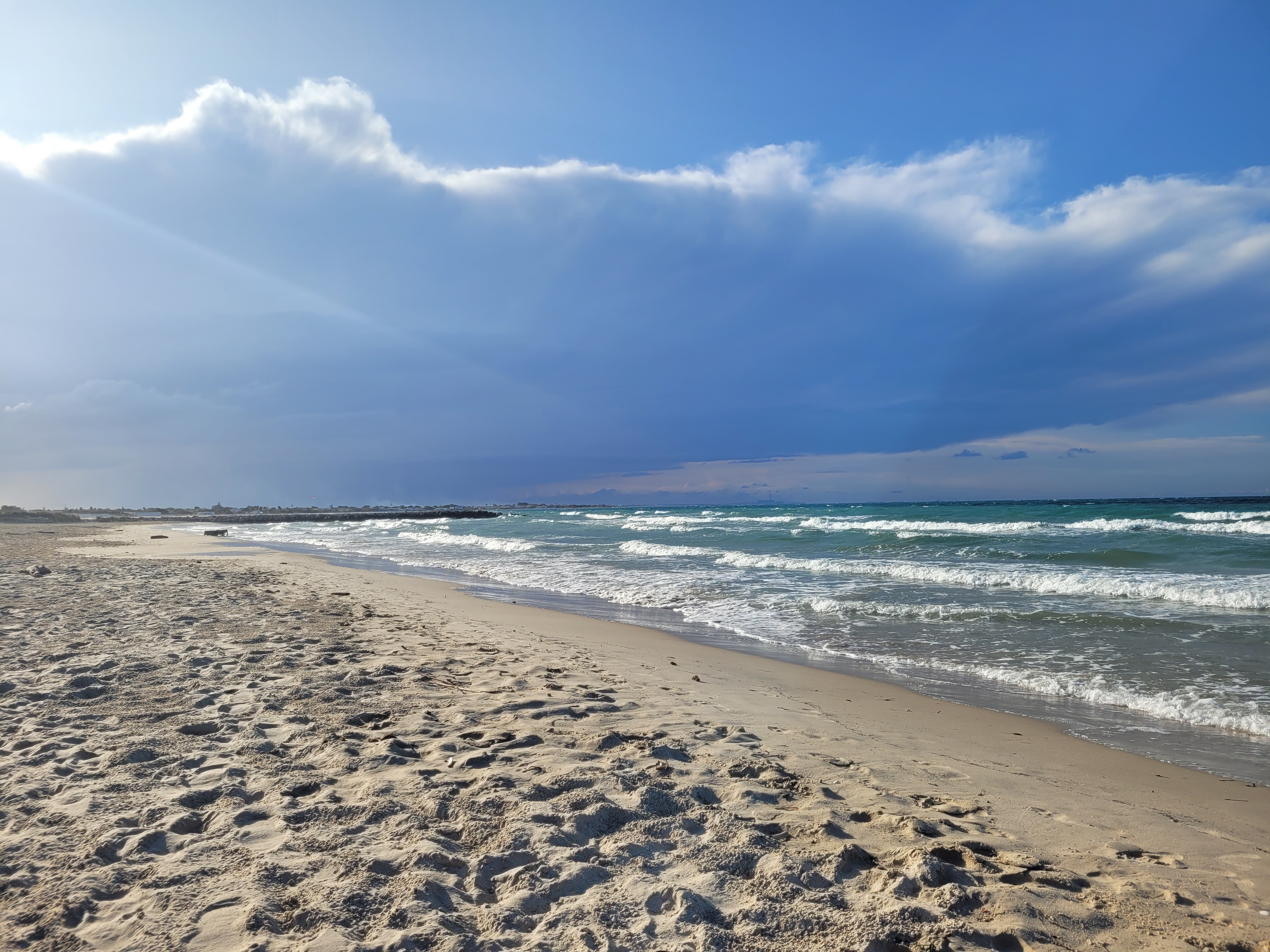
Biblical rain one night, high winds at other times and on our last beach day it started to cloud over again.
Otranto was a day trip – about an hour’s drive away. As we got closer to the city, the landscape grew greener and lusher. Otranto is the easternmost city in Italy and, as such, faced repeated incursions from Saracens, Turks, Pirates… You name it, Otranto was invaded by it.
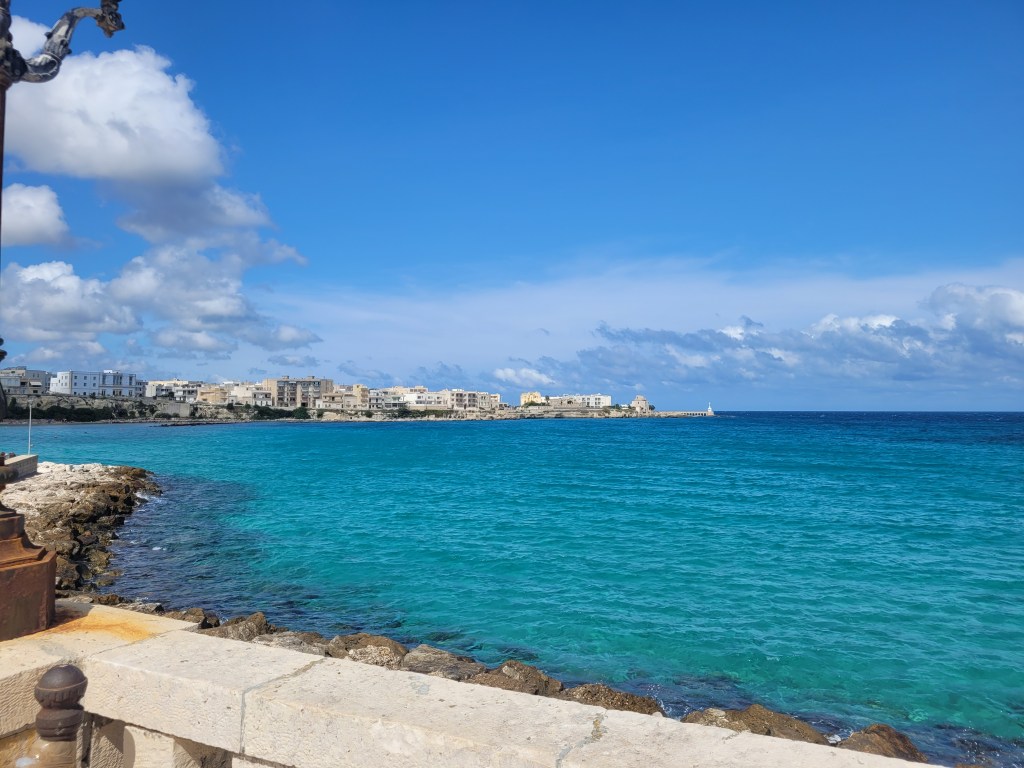
After suffering repeated raids and slaughters, the Aragonese rulers (yes, in the late 15th century Aragon/Spain ruled this part of Italy) built a large, solid, imposing (HUGE) castle. The Castle of Otranto!

(English teacher aside: The Castle of Otranto, written by Horace Walpole, was the first Gothic novel and was the progenitor of the Gothic genre.)
The town was surprisingly nice. Touristy (with the obligatory tour groups) but the tourist ‘tat’ was less tatty and more boujie (and expensive).
Its other claim to fame is the 170-plus martyrs’ bones underneath the altar of the cathedral, killed by invading Turks in the late 15th century (which is why the castle was built). We skipped the cathedral.
We also did a day trip to Gallipoli (more of which later) and visited a local winery. The daughter of the owner (with an oenology degree from Bologna) confessed that she didn’t know how they could survive on wine production alone. Apparently global warming is a problem and so is finding people to work in the fields. Gosh – who would have thought it?
After the family left we drove south to a Masseria close to Santa Maria di Leuca on the West coast and the southernmost point of mainland Italy.
Leuca is a pretty town that seemed very gray and drab when we arrived because it was overcast, gray and rainy. Most things were closed.

There is a huge marina but other than the pretty (but small) centre of town (which didn’t show to advantage under the clouds), and the sandy town beach, it is rather unremarkable. It was very popular with rich Puglians in the late 19th century, who built a series of large mansions along the seafront.
It looked much nicer in the sun!
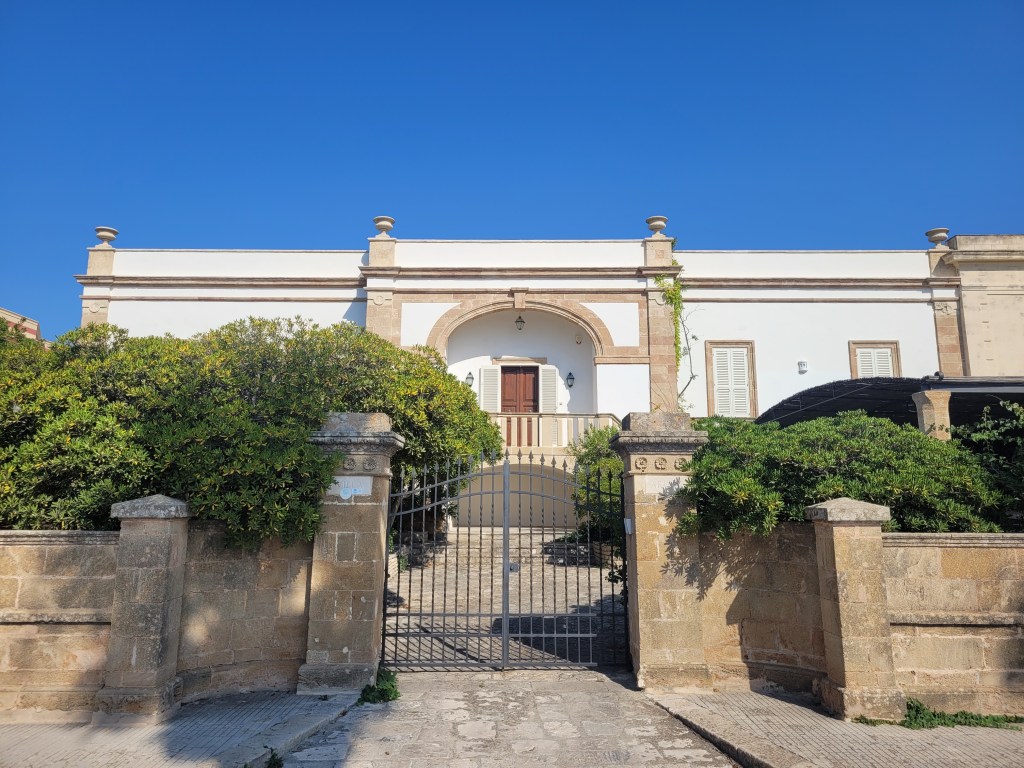
The south coast of the Salento region (between Santa Maria de Leuca and Otranto) is extremely rocky, so there are few beaches – but it IS dramatic!

From Leuca we took the coast road all the way up to Gallipoli, along the Ionian coast which varies between rocky shores and long stretches of pale sand.
Sadly, any (and every) sandy stretch is engulfed by holiday developments – at this time of the year mostly abandoned with a few desultory lidos blaring loud music. It’s a bit depressing and definitely not to our taste. There is no sense of a town centre to these places, just endless development – albeit low rise – cheap pizzerias and bucket-and-spade shops.
Many of these places are nominally focused around the many ‘Torres’ built between the 15th and 17th century to protect the coastline from pirates, Saracens, Turks…
And there are a LOT of ‘Torre’ places, one after another up the coast. The rocky areas are also developed but less so and seem better kept.
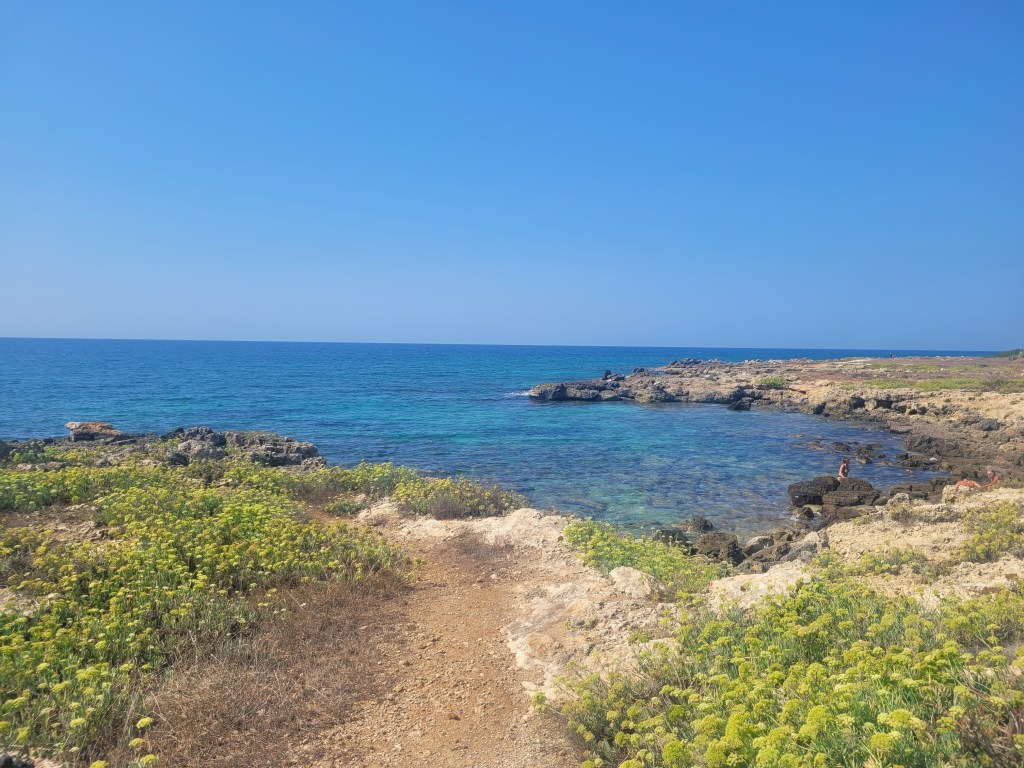
Gallipoli – or ‘pretty town’ in Greek – was our destination. (Puglia was part of Magna Grecia during the pre- and early Roman period. In fact they still speak a form of Greek in some places, and there is Greek writing on some of the older buildings.)
Unusually (because it does seem, geographically, to be a typical place for them), it would appear that Gallipoli was not founded by the Phoenicians. First it was Messapian (the people who lived in Puglia before the Greeks), then Greek, then Roman, then lots of others (eg Aragonese, Venetian…). It’s small, with an enormous castle (of course) but it’s claim to fame was mercantile.
Gallipoli was the main market, from early on, for the vast exports of olive oil from the area around Otranto. There was so much waste from the oil industry that they started up soap production. By the end of the 19th century, Gallipoli was exporting olive oil and soap all over the world. This wealth shows in the buildings.
The oldest part of the town is built on an island (smaller than Cadiz), with a lovely town beach and several large marinas. Entry to the island from the mainland is guarded by (yet another) large, medieval, fortress. Originally Byzantine, then Angevin, then Aragonese… it squats in the harbour behind a sculpture of a sea urchin (one of the city’s delicacies).
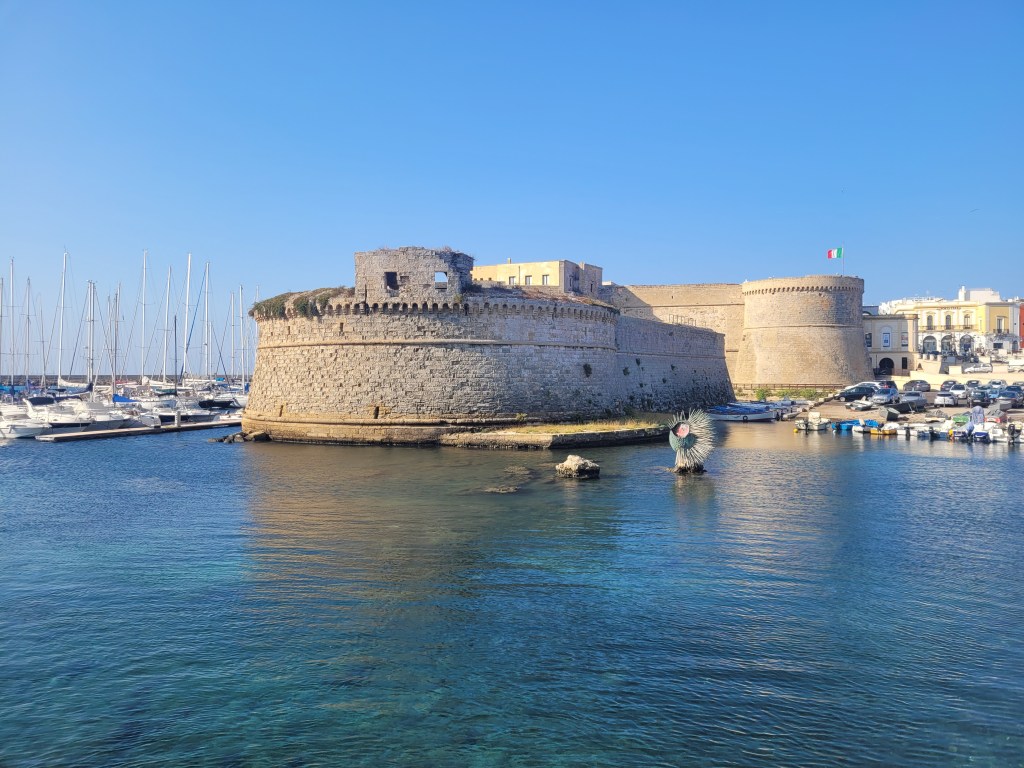
Across the harbour, on the mainland, are some lovely late 19th century houses and an enormous modern block. The contrast between the two is jarring and whoever signed off on the modern building needs disciplining – firmly.
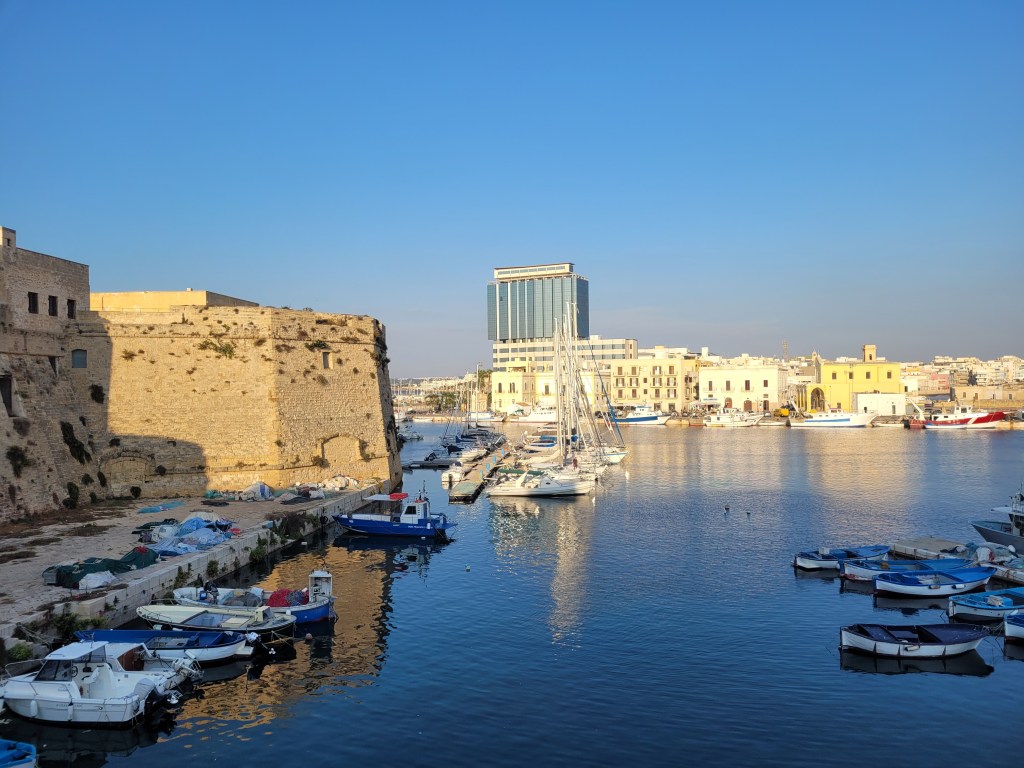
The town beach (which faces out to the Ionian) is lovely and very picturesque.
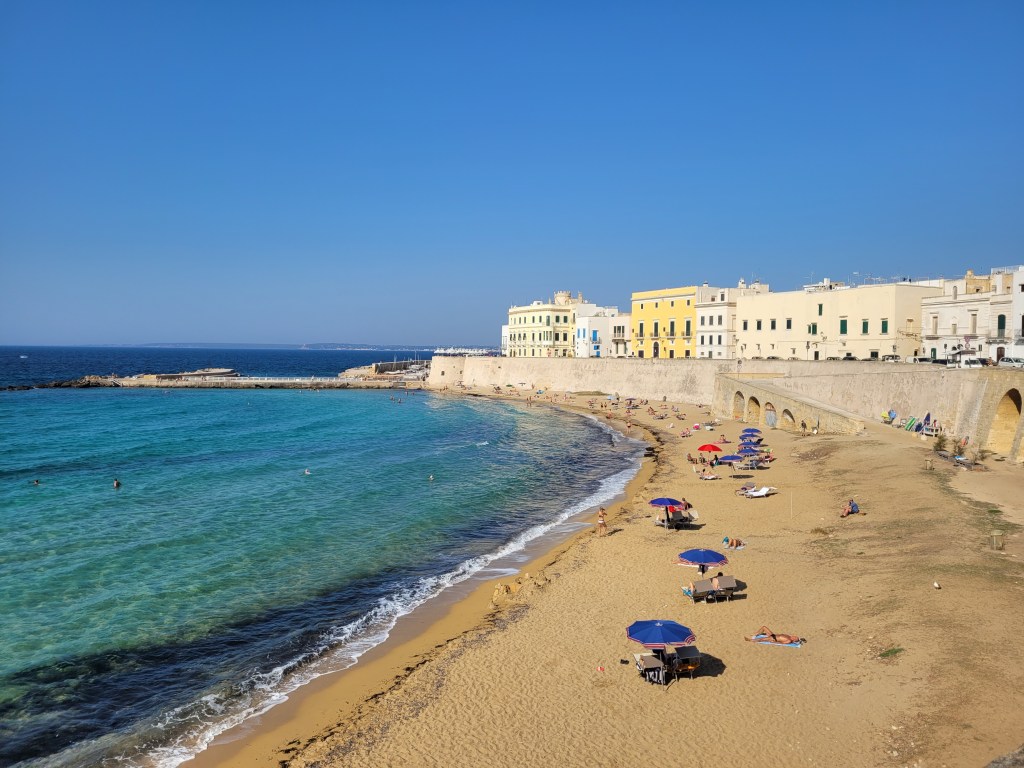
The city is busy, buzzy and touristy – with a lot of cheap tat. It’s nicest in the morning, before the day trippers arrived.
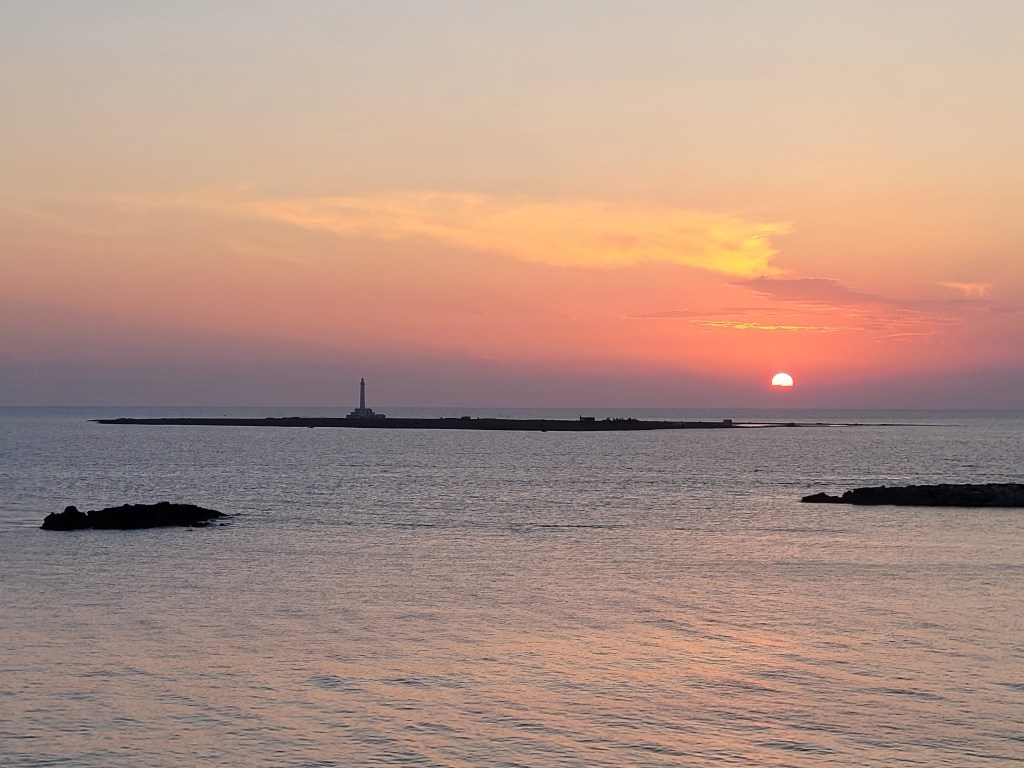
The sunsets were phenomenal!

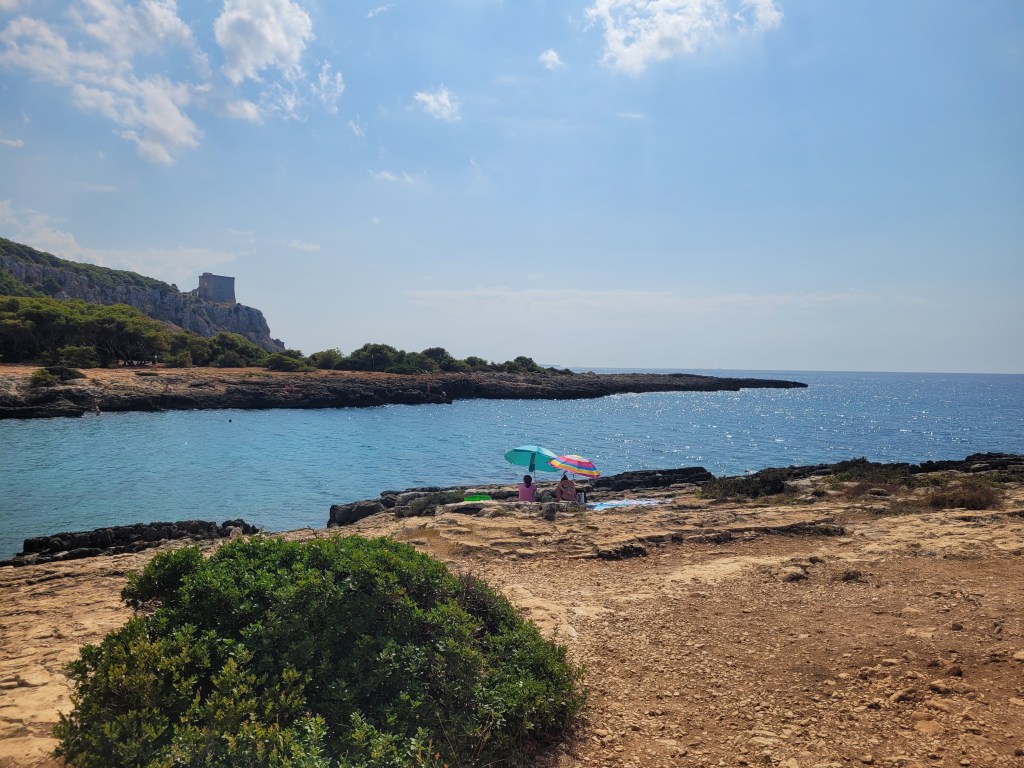
North of Gallipoli we visited a National Park – Porto Selvaggio. It’s a protected part of the coastline and only accessible by walking down (or, if you take one particular entrance, via a shuttle ‘train’) through a pine forest. The water is beautifully clear and cooled by upwelling icy springs – you can actually see the density changes in the water as the colder, fresh water mixes with the warmer salt water. The beach is pebbly, which makes entry to (and exit from) the colder water nearer the shore a slightly fraught (and chilly) experience.
With the wind brushing gently through the dark green pines and the sun sparkling on the clear water it was truly lovely. Despite the enormous picnic hampers we saw, it was spotlessly clean.

It is said that Puglia (particularly the southern part) is un-developed. And while it is true that there are few (if any) high rise hotels on the beaches, there is a lot of sprawling, low-rise development on the coasts – which is almost as bad. It would be bedlam during August.
It is very flat, and there were a lot of fields full of rocks, empty of anything agricultural but liberally strewn with rubbish. There was also a lot of ‘casual’ rubbish strewn on the roadsides.
While we enjoyed the food and wine (both of which were outstanding), Puglia wears its poverty obviously in the far south, which is discomfiting.
 Retired? What now?
Leave a comment