Several years ago, we watched a TV documentary about ancient Rome. One of the topics covered was Ostia Antica and its huge harbour (much of which is now under the runways of Fiumincino airport). Both of us wish we could remember exactly which documentary it was, now that we have visited Ostia Antica.
It takes about 25 minutes on an overground train from Porta San Paolo (which is next door to Piramide) and then it’s a short stroll to the site. We were incredibly lucky with the weather – sunny, warm with a breeze.
Warning: it’s a huge site and much of the time you walk on what is left of Roman roads, so it can be rough underfoot and slippery.

While there aren’t many large monumental buildings that ‘look’ like classical ruins, there is enough to get a real feel for life in a Roman town as the street layout is still quite clear.
There are large black and white mosaics out in the open air; apparently they do protect them in the worst weather but it was odd to have them there, covered with debris from the trees.
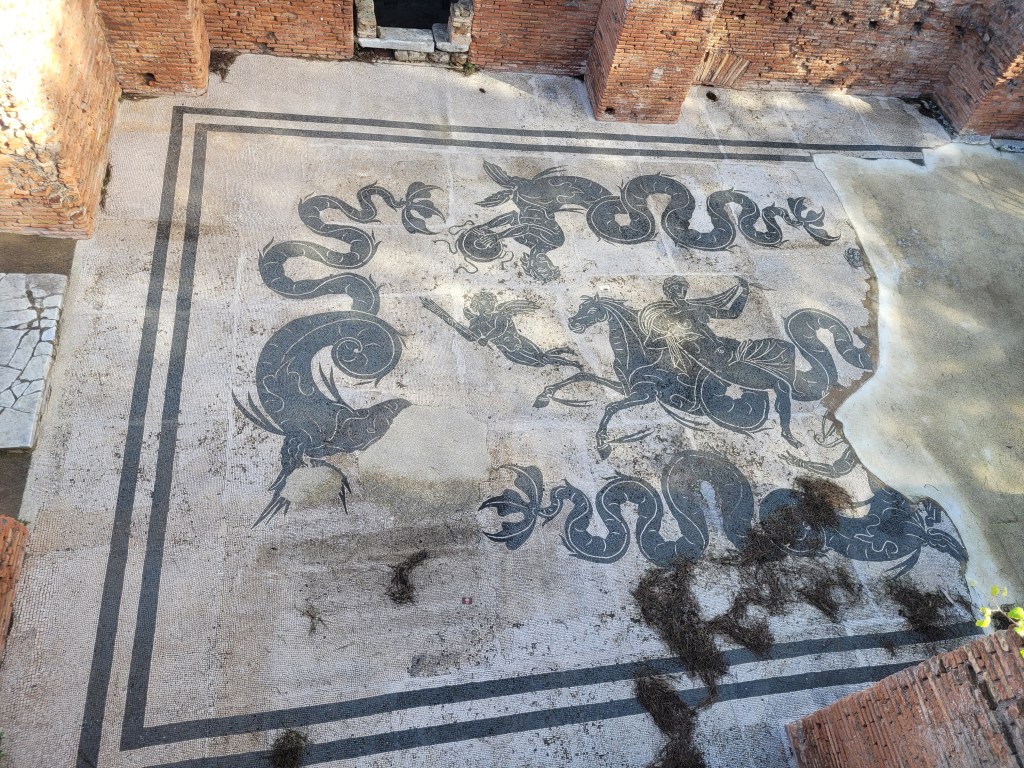

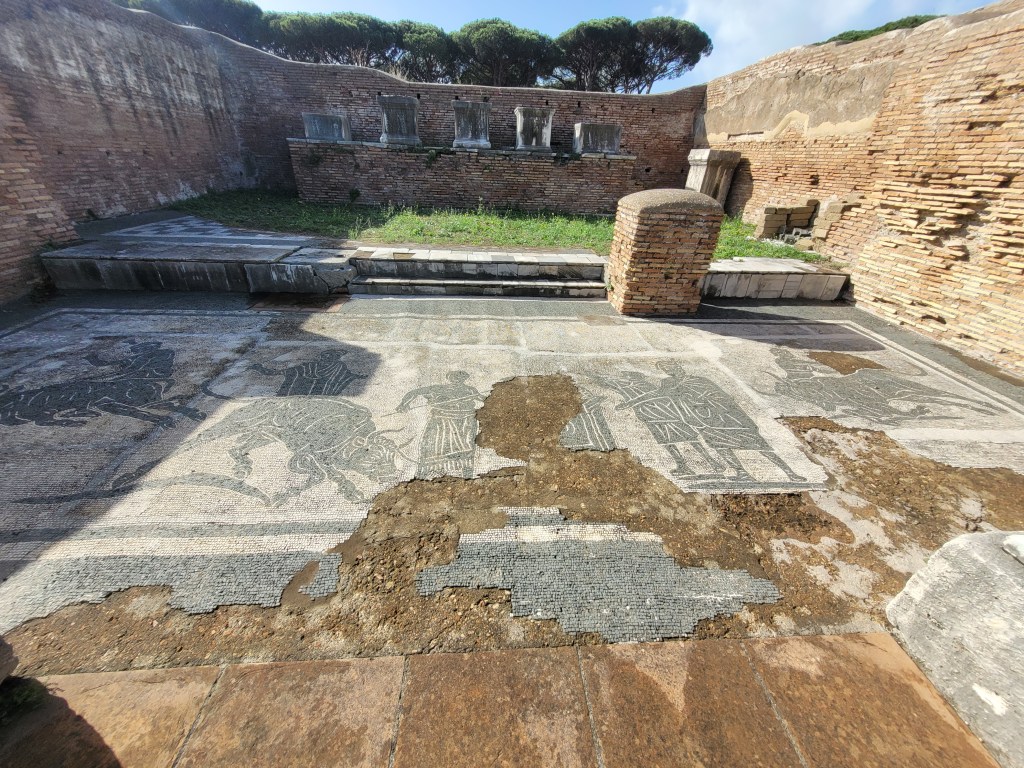
The site had both a Forum (in the oldest part of the town, close to the original harbour) and what they called Piazzale delle Corporazioni, behind the theatre and dating from the end of the first century CE. Both were commercial centres, which I found interesting as I had thought that most commercial activity took place in the forum and yet here was a ‘square mile’.
The Piazzale is a square surrounded by what appear to be businesses that advertised (or announced) themselves using black and white mosaics. We couldn’t decipher them, although there seemed to be a lot of focus on ships and fish (well it was a port city).

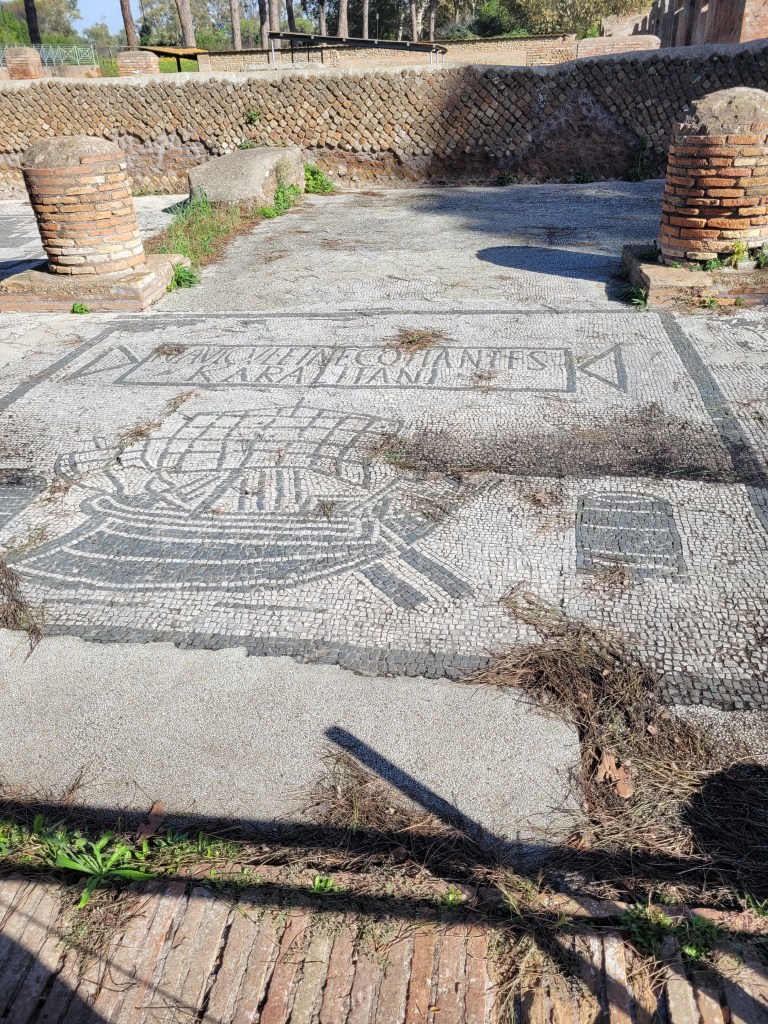

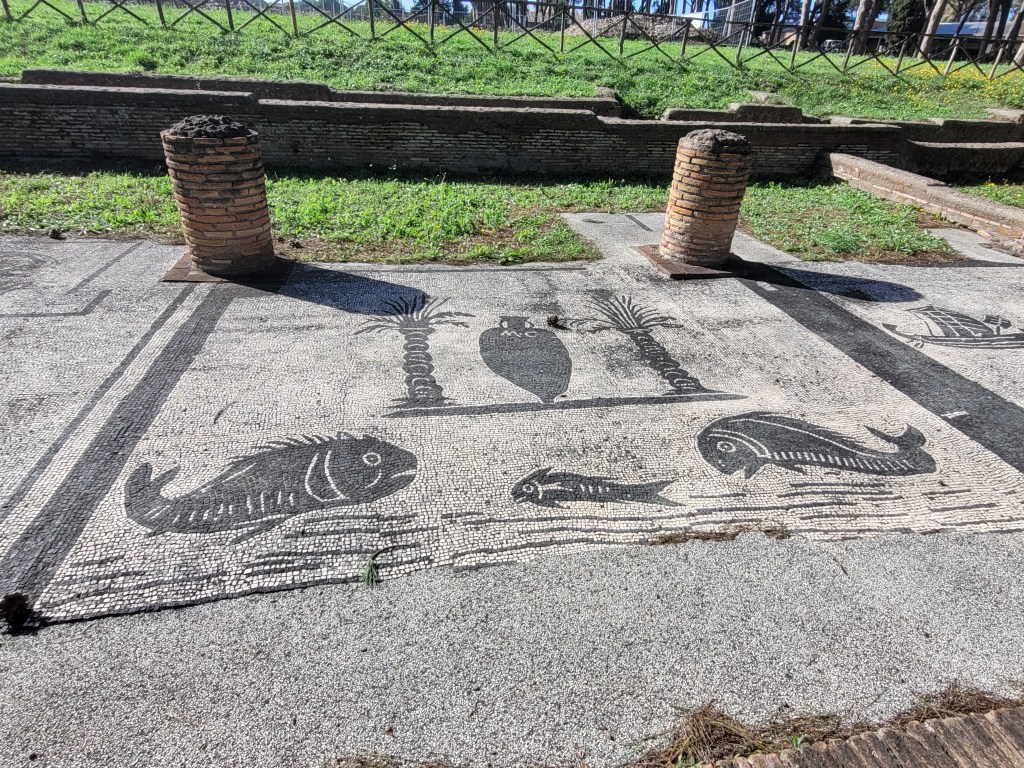
From the small theatre you got a clear view (but little detail on the mosaics).
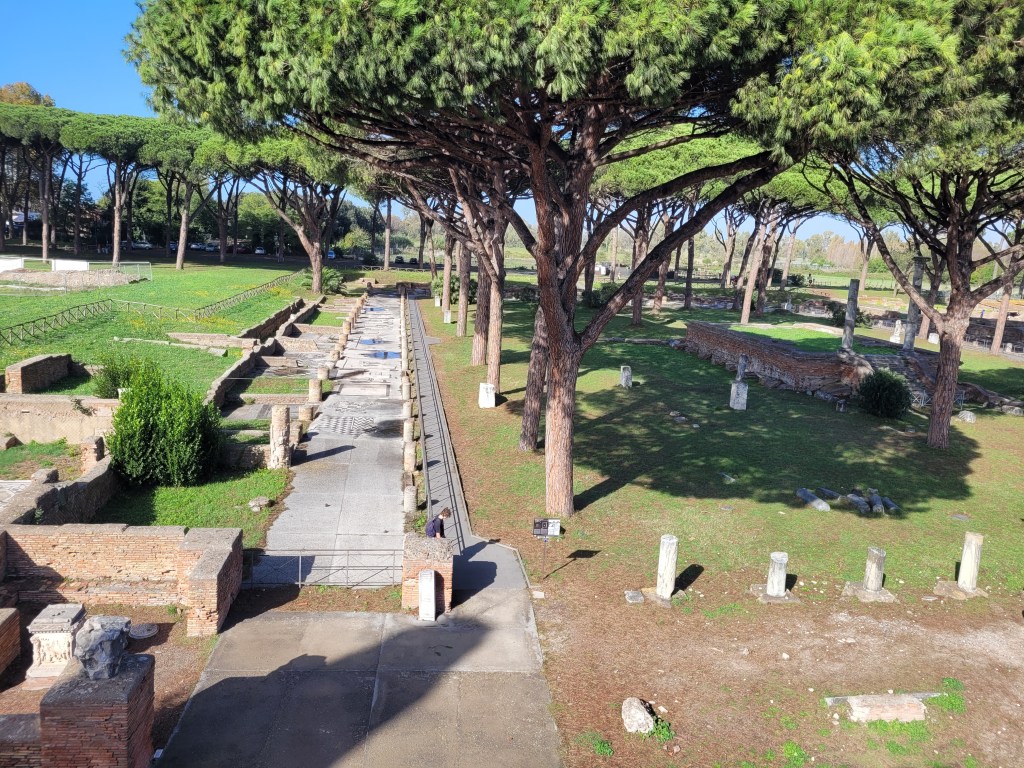
Other well preserved buildings are the insula apartment blocks. In some cases these were almost four stories high!
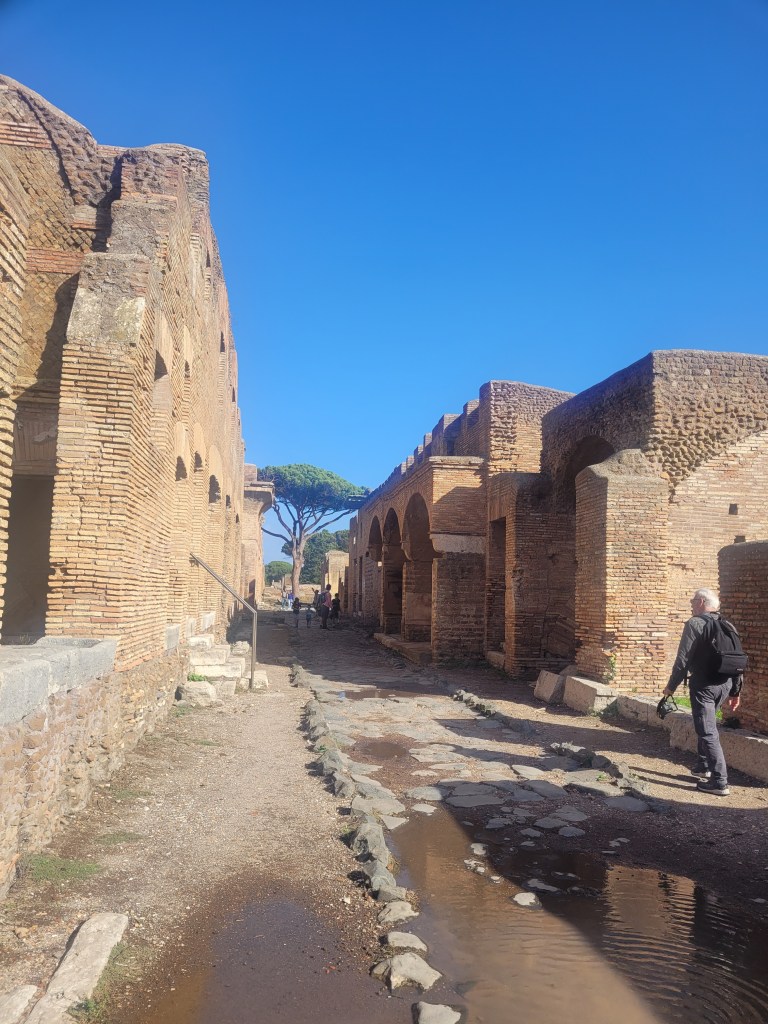
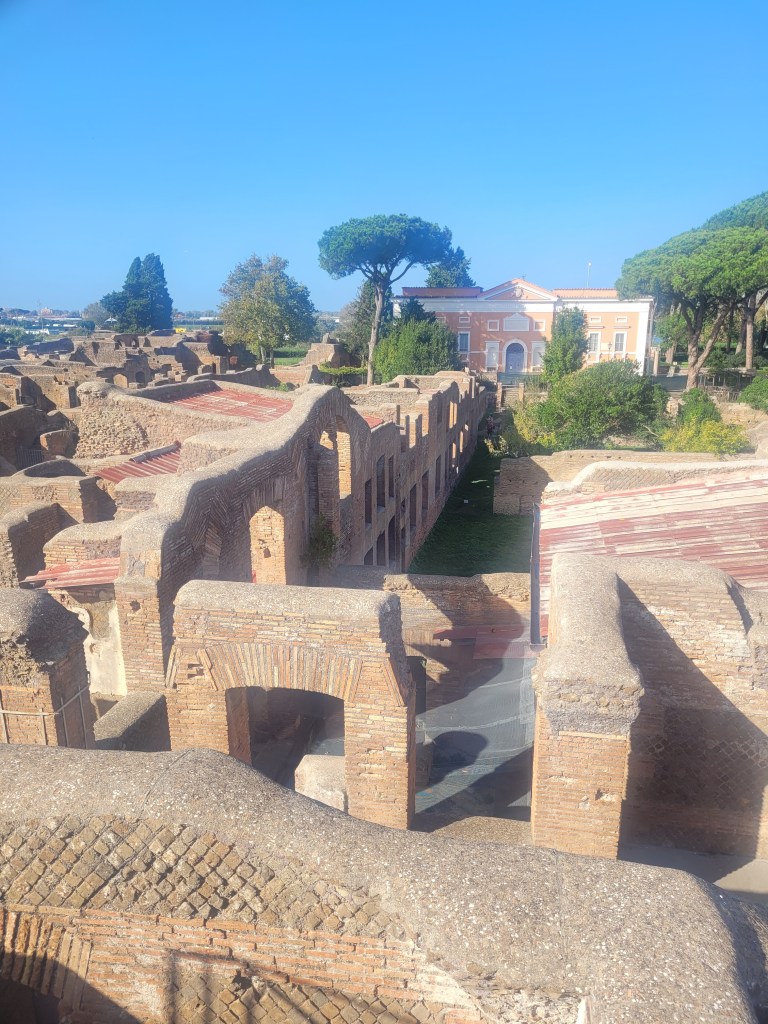
These insula weren’t open when we were there, although they may be for special tickets or tours. The information boards talked about wall frescos and mosaics as decoration, interior courtyards and patios for light and ventilation – so they can’t have been the dark holes you think of w2hen looking at other remains in Rome.
The insula didn’t have cooking facilities; people fed themselves outside the home. Opposite the largest incula was a tavern, which looked as if it had been both well-preserved and slightly restored (or largely restored?).
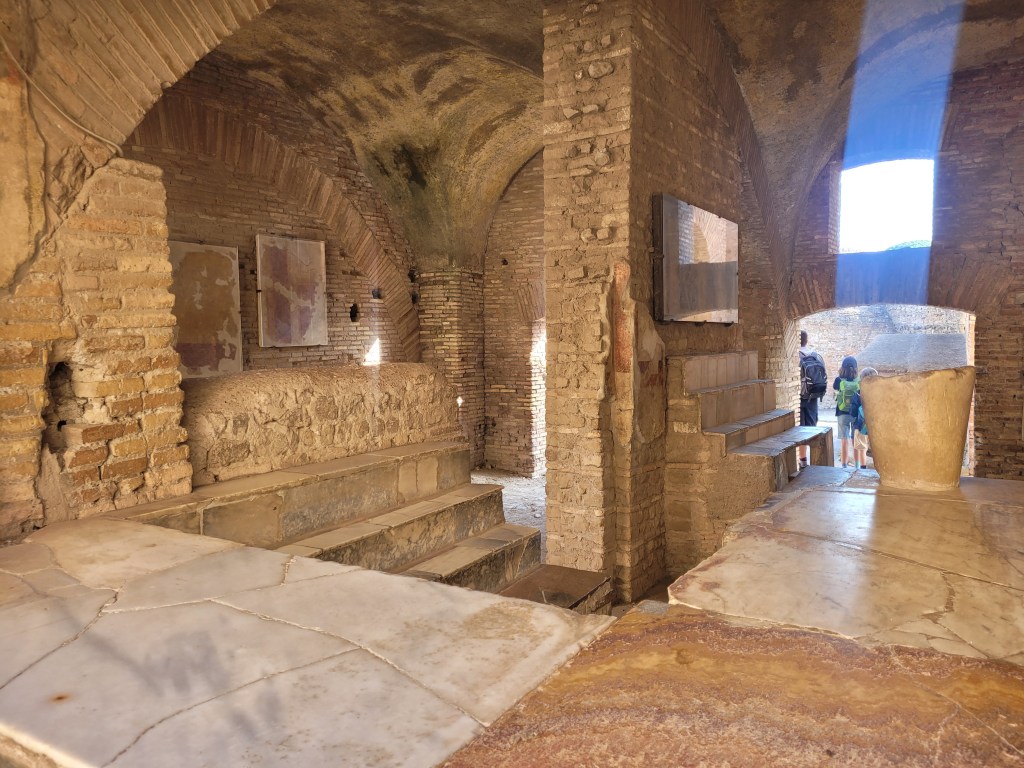
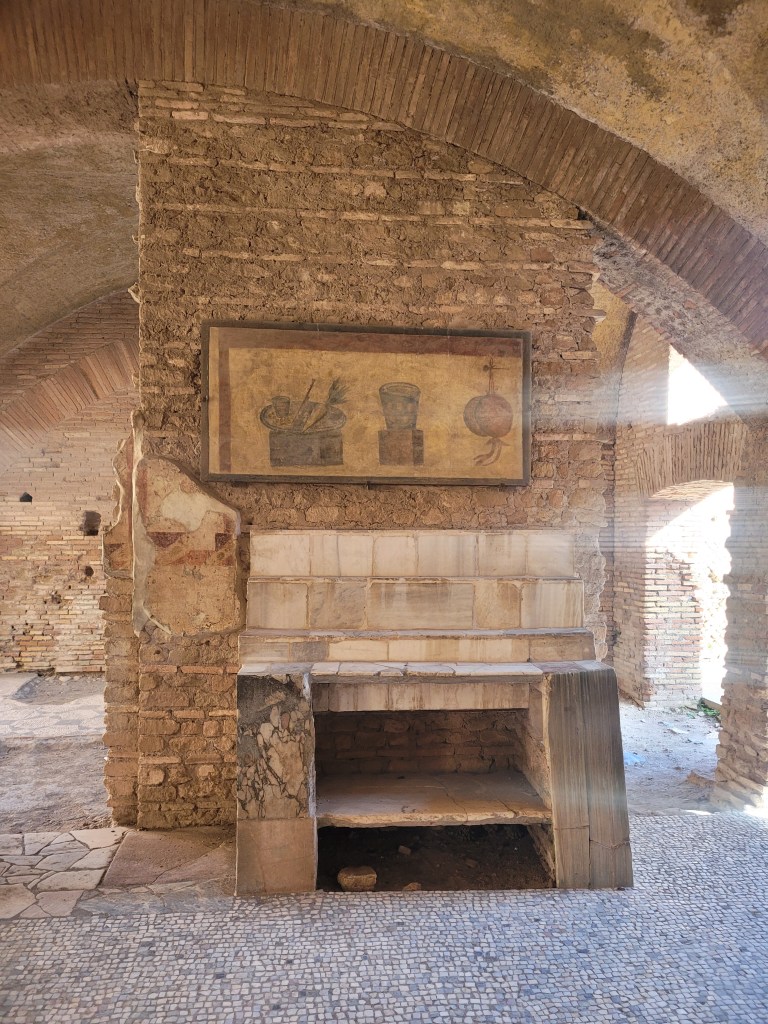
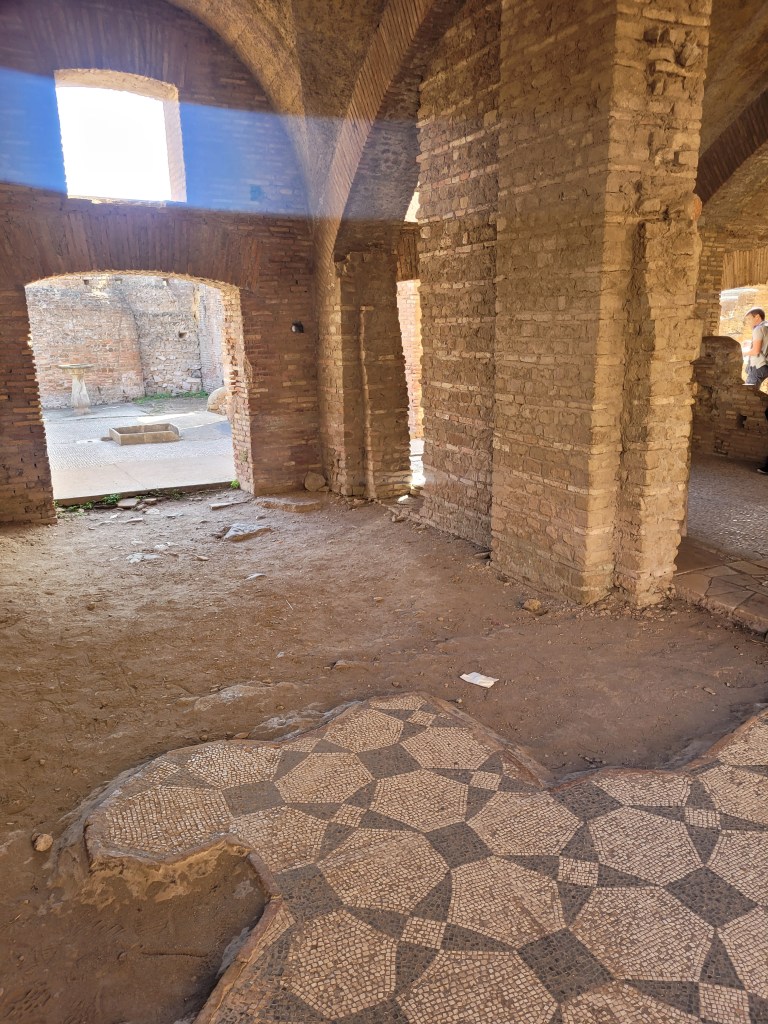
It had three rooms, a kitchen area with an enormous, lidded terracotta pot set into the floor (to keep things cool), a place for washing dishes, pictures on the wall to advertise what was available and was open on three sides, with a patio area at the back.
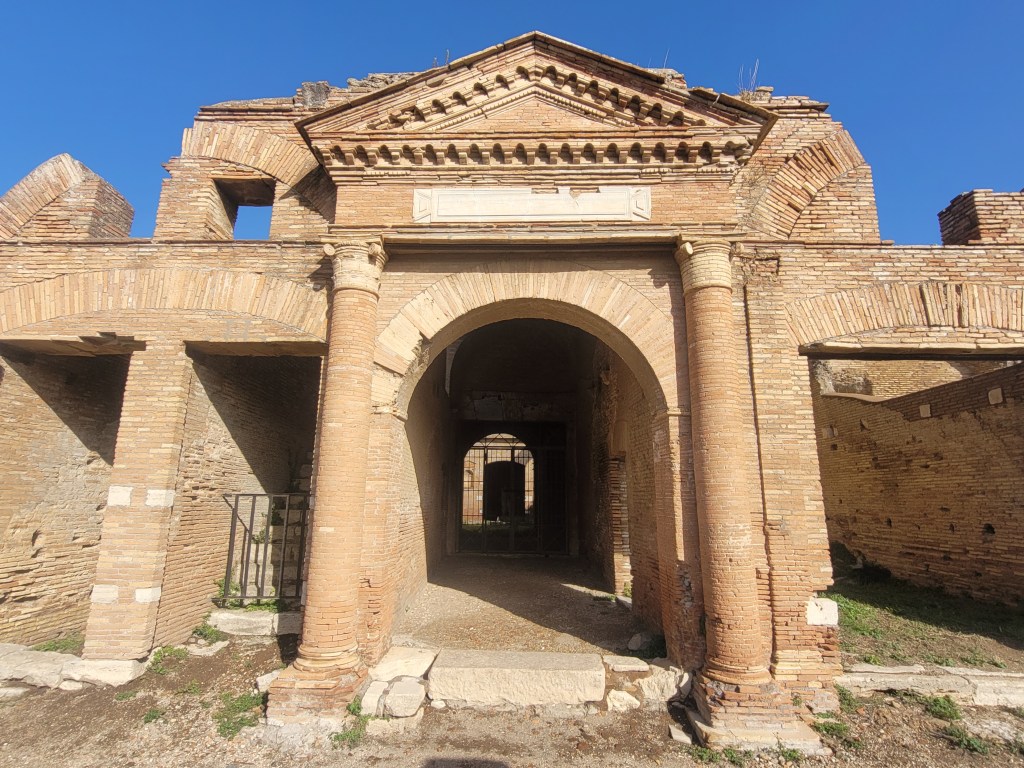
Walking on towards the oldest part of town (and the line of the coast 2000 years ago), we passed another warehouse/emporium, on three stories (not in the picture), with a statue in the back courtyard (behind a gate) and some very elaborate brick work. A large, successful business owned by two Greeks who had originally been slaves!
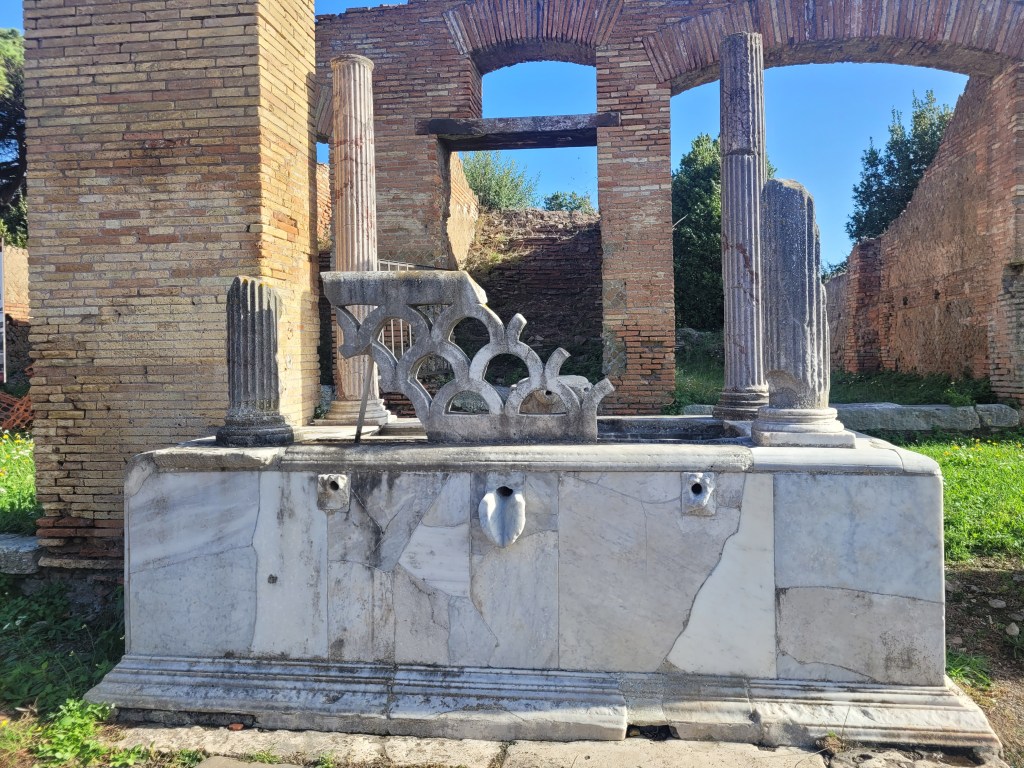
We also passed ornate public fountains
niches for household gods (although this one came from another business) premise)

and walked on until we crossed through the 3rd Century BCE gate footings, finally reaching the place where the land had once met the sea. Sadly it was most unimpressive, as it bordered a busy dual carriageway.
Ostia was a vital port for Rome for at least 700 years, the oldest part of the town (closest to the harbour) dates from the 8th C BCE. Unloaded goods were shipped up the Tiber on barges and, at some point, a canal was built parallel to the Tiber in order to operate a one way system. In particular, Ostia handled the grain traffic from the breadbasket of the Roman Empire, North Africa, without which, Rome would not have been able to feed her citizens (never mind anyone else).
Today the waterways have shifted and silted up such that Ostia no longer stands by the sea, nor does the Tiber run past its enormous warehouses.
But despite the ruins, the lack of water and the meagre appearance of most of the remains, you can still feel the people bustling, deals being struck, sailors looking for entertainment and ships being unloaded.
We returned to Trastavere, eating a late lunch in a restaurant we had previously frequented. This time we had a double portion of the Jewish style artichokes.
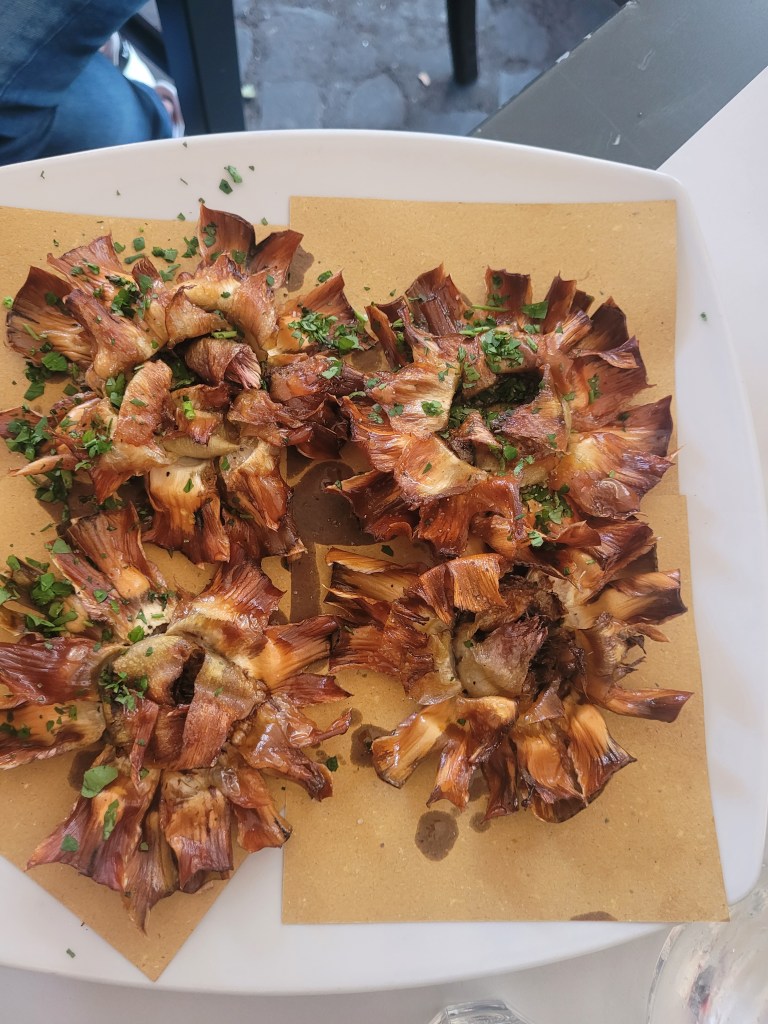
And, once again, no pepper grinder in sight.
 Retired? What now?
Leave a comment