After picking up a car at Fiumincino airport we drove to Tivoli via the Alban hills.
Roger feels this is the worst car we have ever hired and while I agree that it was grim, I think the car in Tinos where we all had to get out and walk up the hills (because the engine couldn’t cope otherwise) just edged into the ‘worst rental car’ award.
Still, it was a teeny tiny car, with a sewing machine engine and as we drove up and down the various inclines we both did wonder if the lawn mower at home (not a ride on) had a more effective engine.
Tivoli is known for two things: Villa Adriana (Hadrian’s villa) and the Villa d’Este. There are a few other things to see, particularly the Parco Villa Gregoriana, but almost everything is outside. So if it rains, you’re a bit stuck for things to do.
Other than the star attractions, Tivoli is a medieval town with narrow roads and crumbling houses – the proverbial maze. The map we were given at our B&B was only faintly approximate, ‘representational ‘ rather than ‘realistic’.

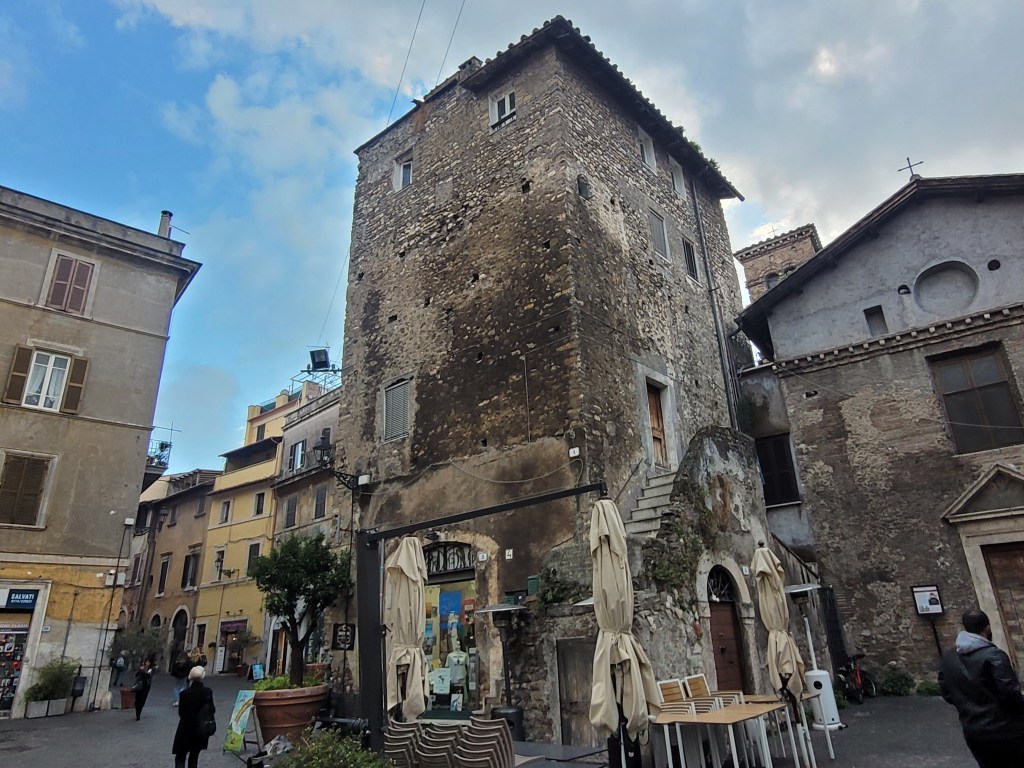
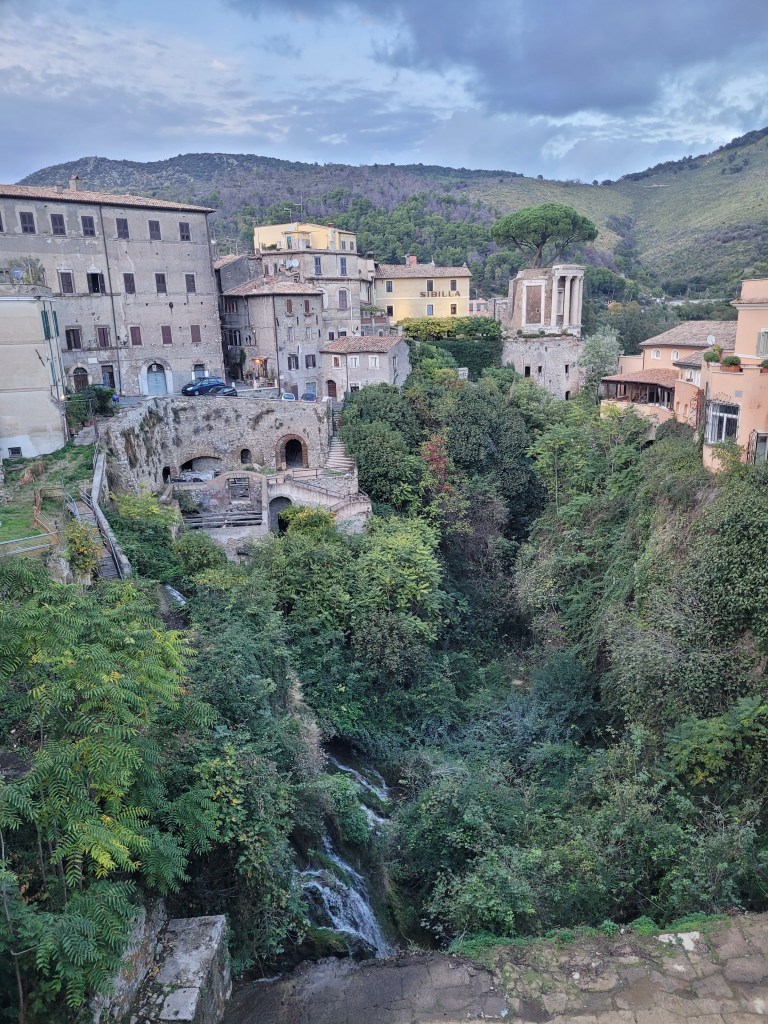
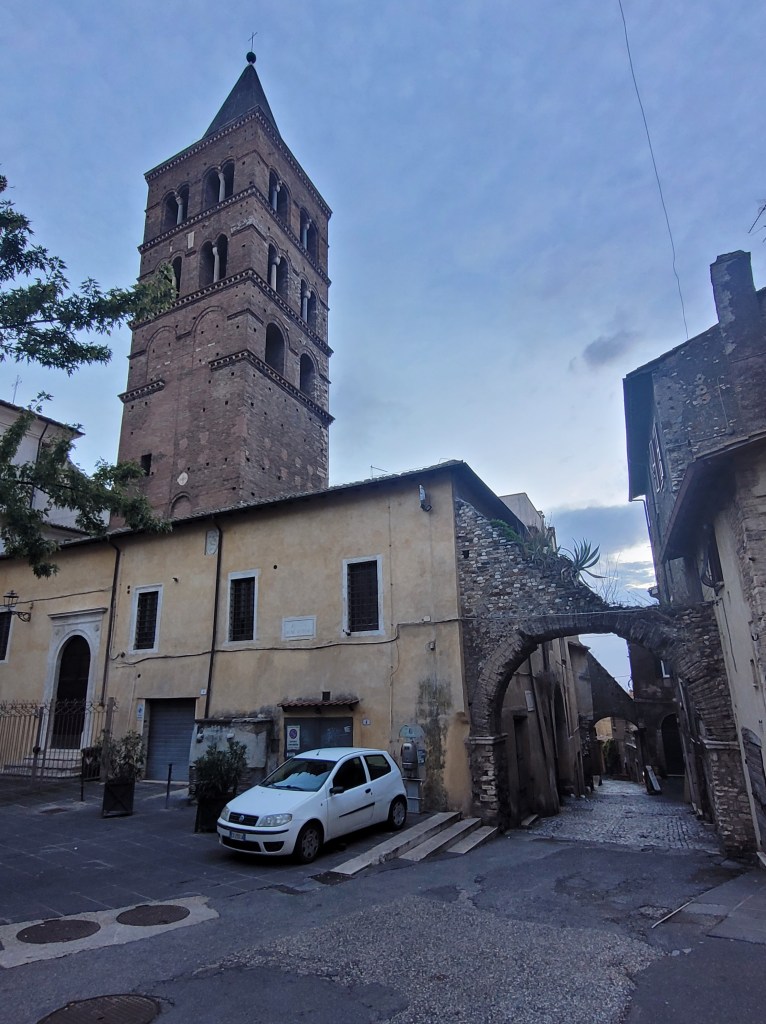
There are very old-looking buildings that appear to still be in use and some less old-looking buildings that have re-cycled even older materials.

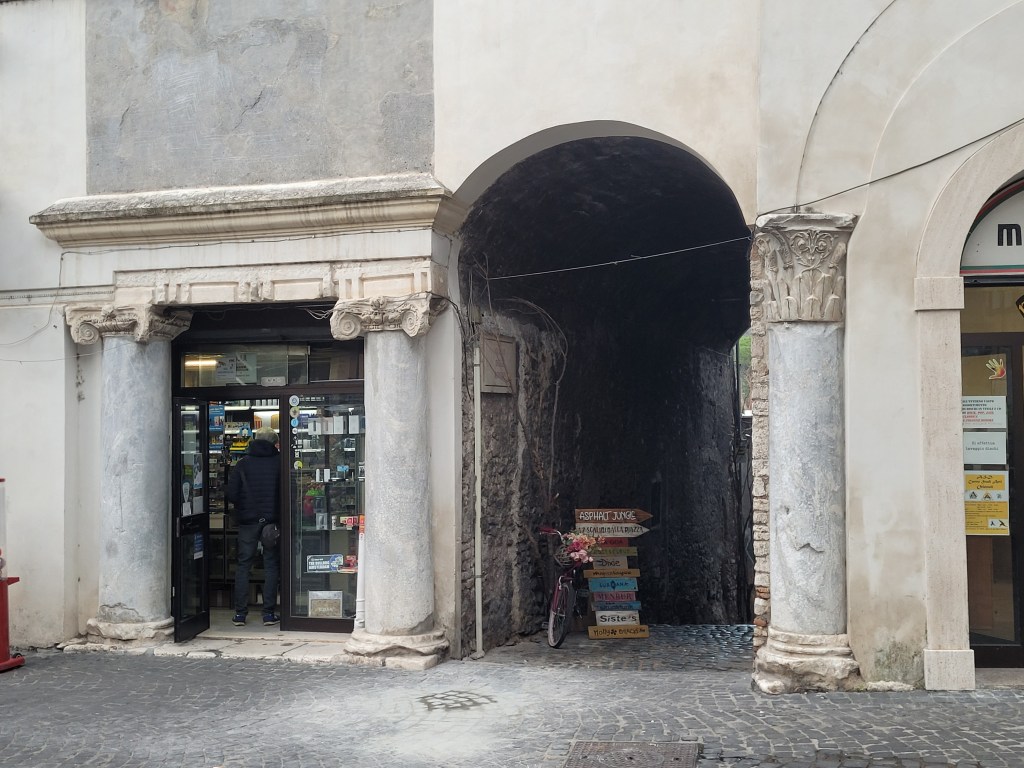
Still, we spent a nice hour or so walking around the town when we arrived and had an indifferent early supper (no pepper grinder) – with an excellent after-dinner Amaro.
Tuesday it rained, poured and lashed it down, only occasionally (very occasionally) did it ease slightly. Because of the rain, we got a marginal discount on our tickets for Villa d’Este: the fountains that are one of its main claims to fame don’t operate in the rain.
The Villa was commissioned and built for Cardinal Ippolito d’Este of Ferrara – fun fact, he was made Archbishop of Milan at the age of 10. An early example of a Nepobaby?
Ippolito was influenced by the nearby Villa Adriana and he appropriated statuary, carvings and other art work for his Villa. The state rooms are a garish combination of Renaissance and Roman, with a plethora of colour. The signage would suggest it makes sense, I found it all a bit overwhelming.
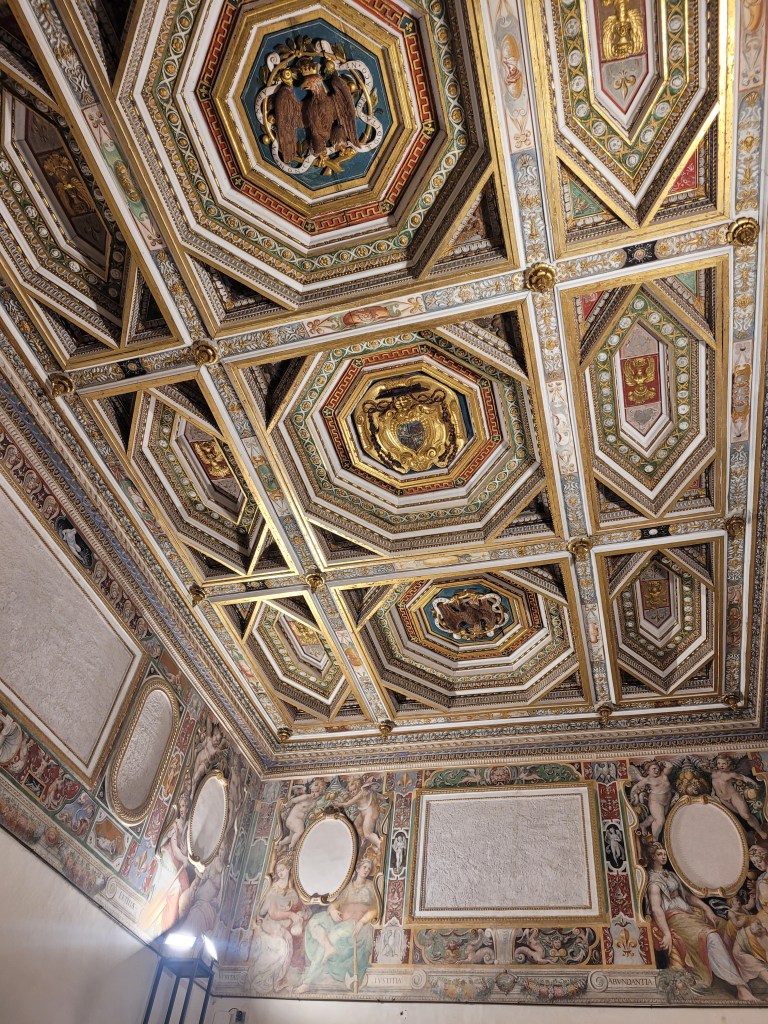

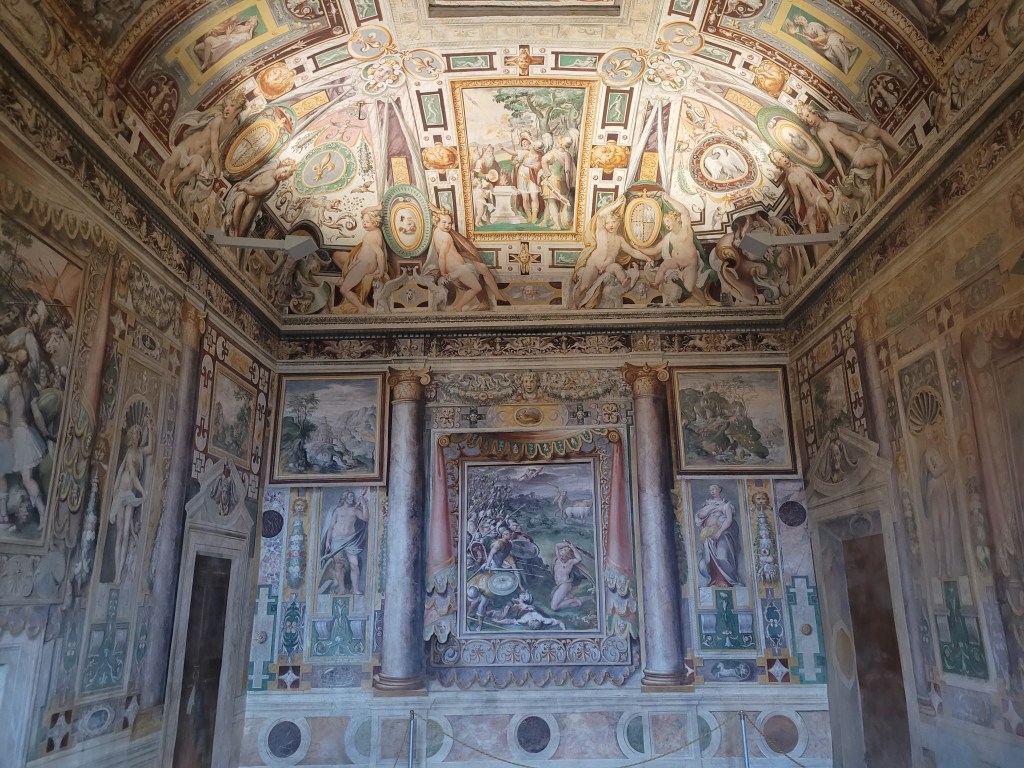
In his attempts to ‘out-Roman’ the Romans, he went too far over the top. This enthusiasm carried over into the gardens, which was more to my taste (probably because it wasn’t so bright).
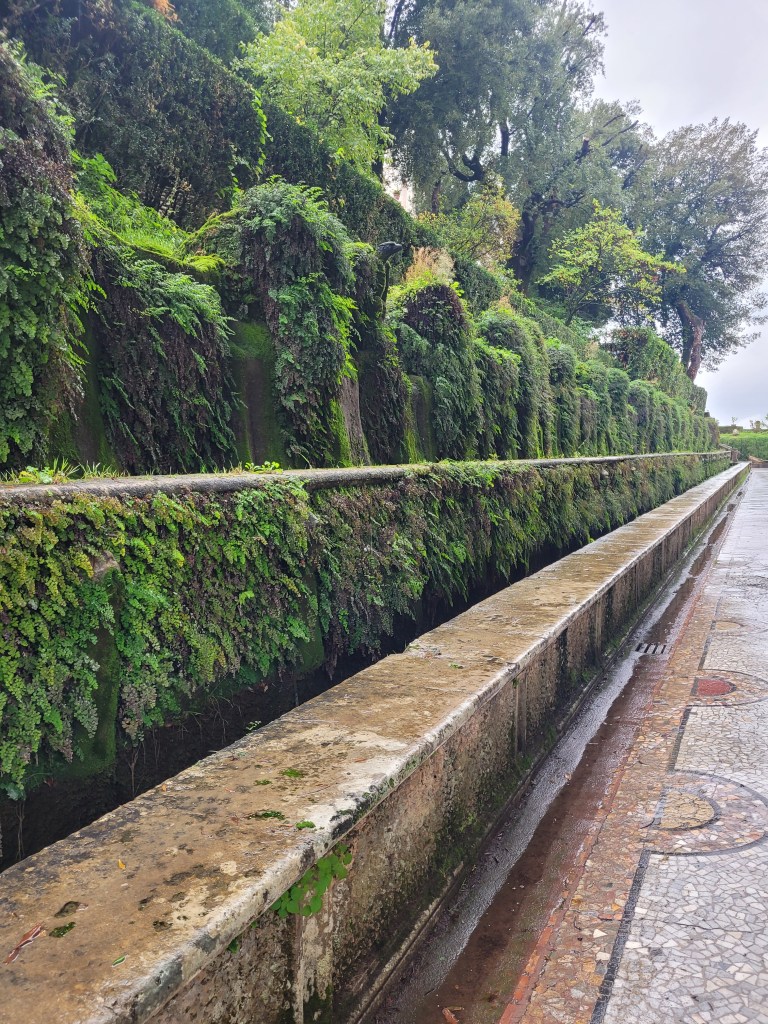
And the gardens are incredible, with amazing fountains. Some are even musical (using a mechanism similar to that of organ stips, apparently).
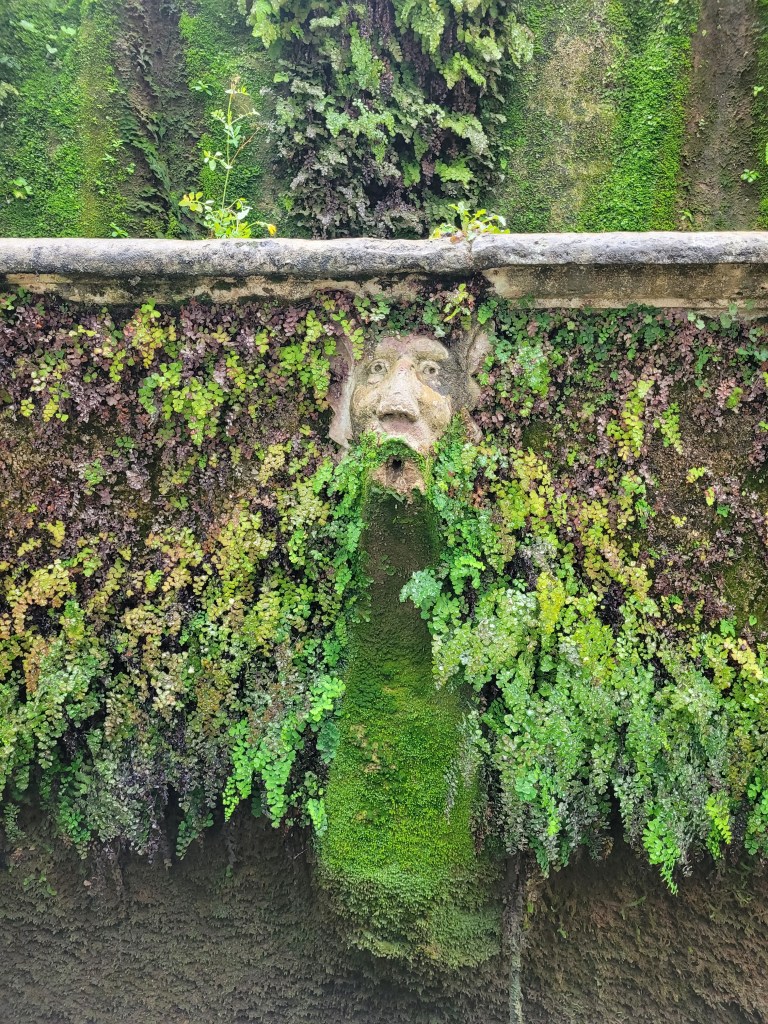
The wall of 100 fountains must be an amazing sight when they are all running:
There are fish ponds with fountains at the top,
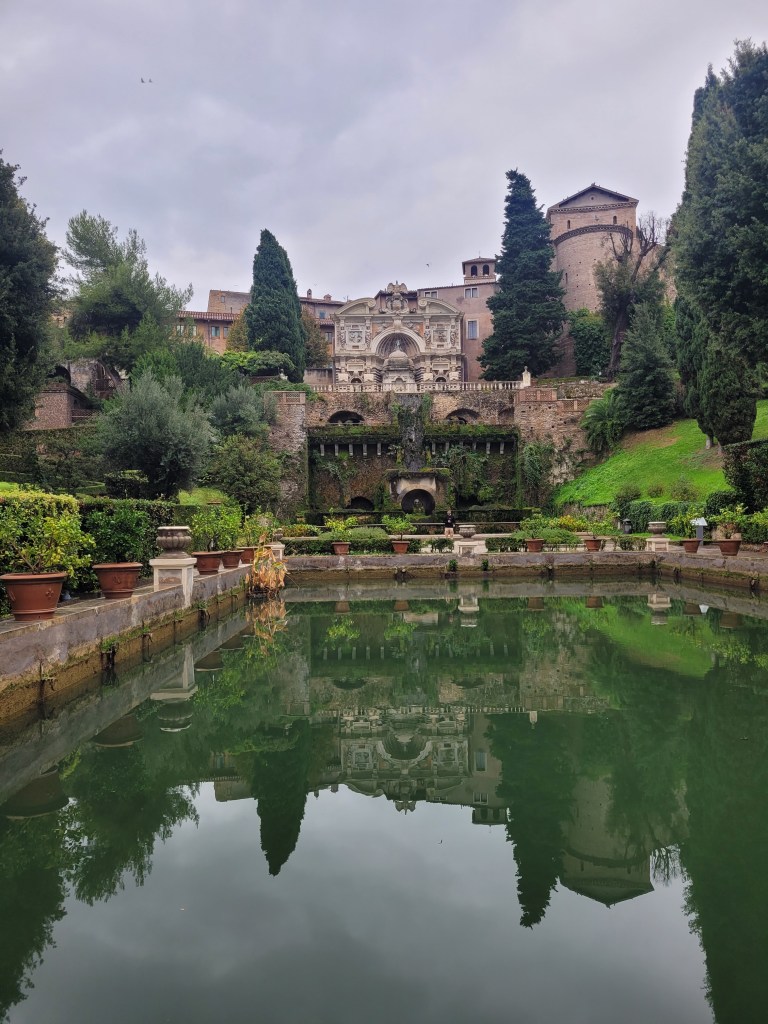
lovely vistas, usually encompassing a fountain somewhere (or several)
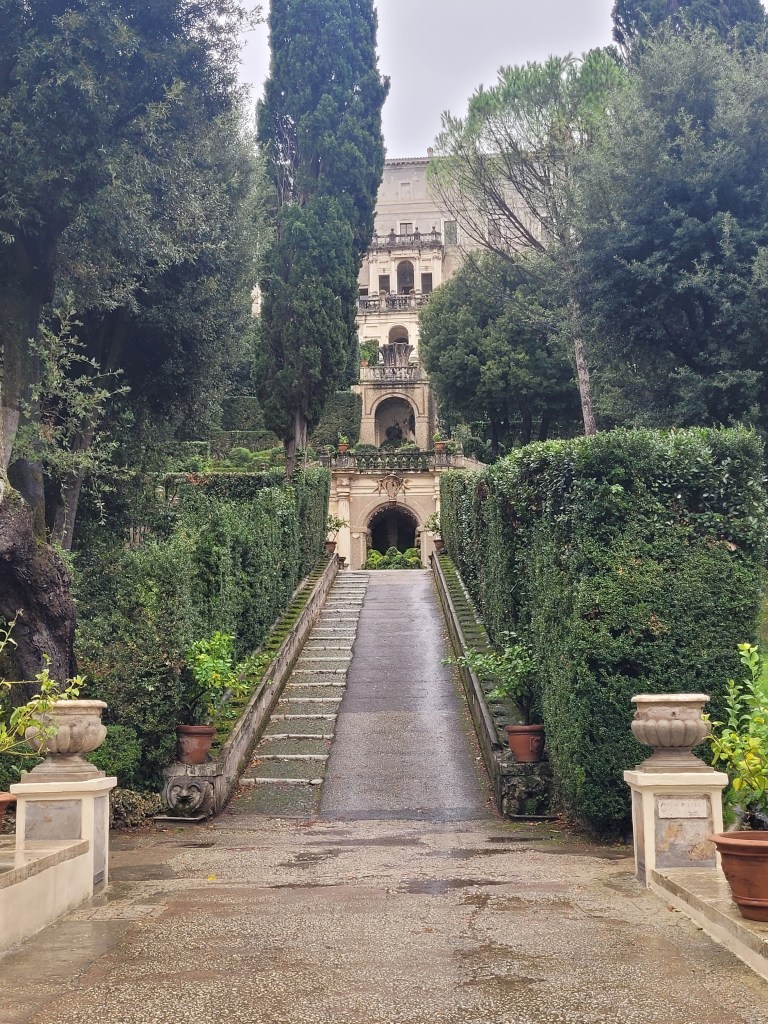
and views out over the countryside.

And while we did wish we could have see the fountains working, it was still an interesting and pretty place to visit.
Villa Adriana was built by the Emporer Hadrian over the last two decades of his life. It is an enormous compound that demonstrates the wealth and power of the Roman ruling elite. Hadrian moved his whole government out to Tivoli, so the compound had to be large enough to accommodate all the relevant people, plus any visiting dignitaries.
It is vast. No other word suffices.
Main takeaways?
There is a series of tunnels and underground passages that, in a few places, enabled Hadrian to move between spaces without being seen. But most of them were for the household staff (slaves), who could then carry out their work without interrupting the business of being rich and powerful. And these workers lived underneath one of the ‘garden’ areas:


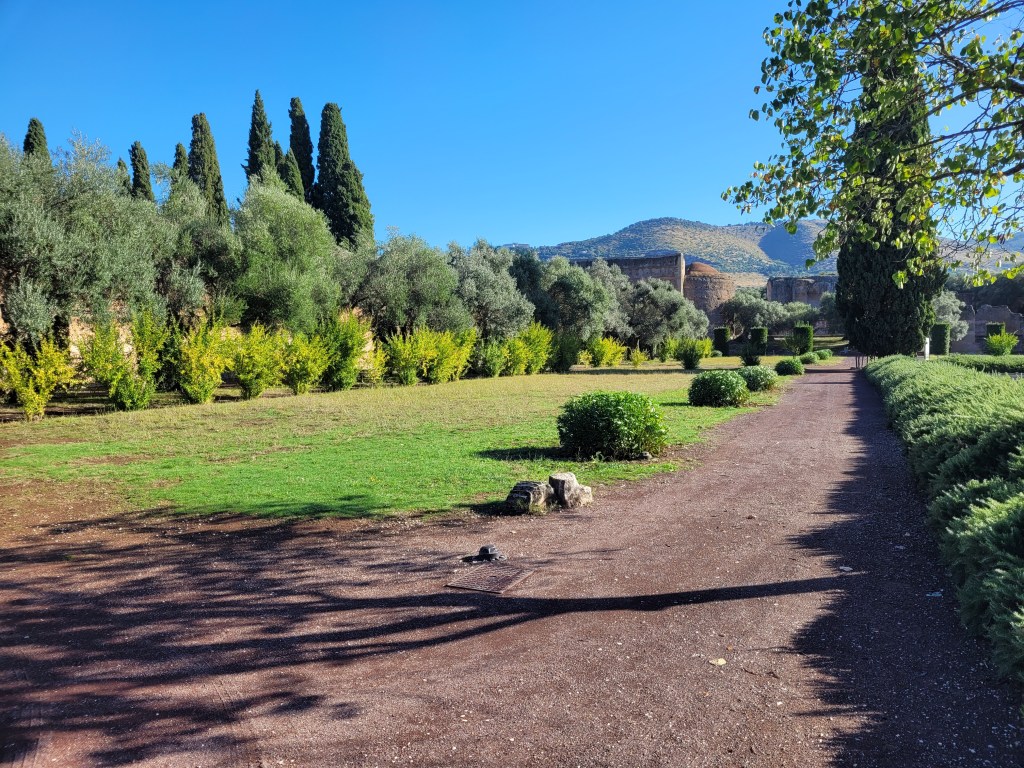
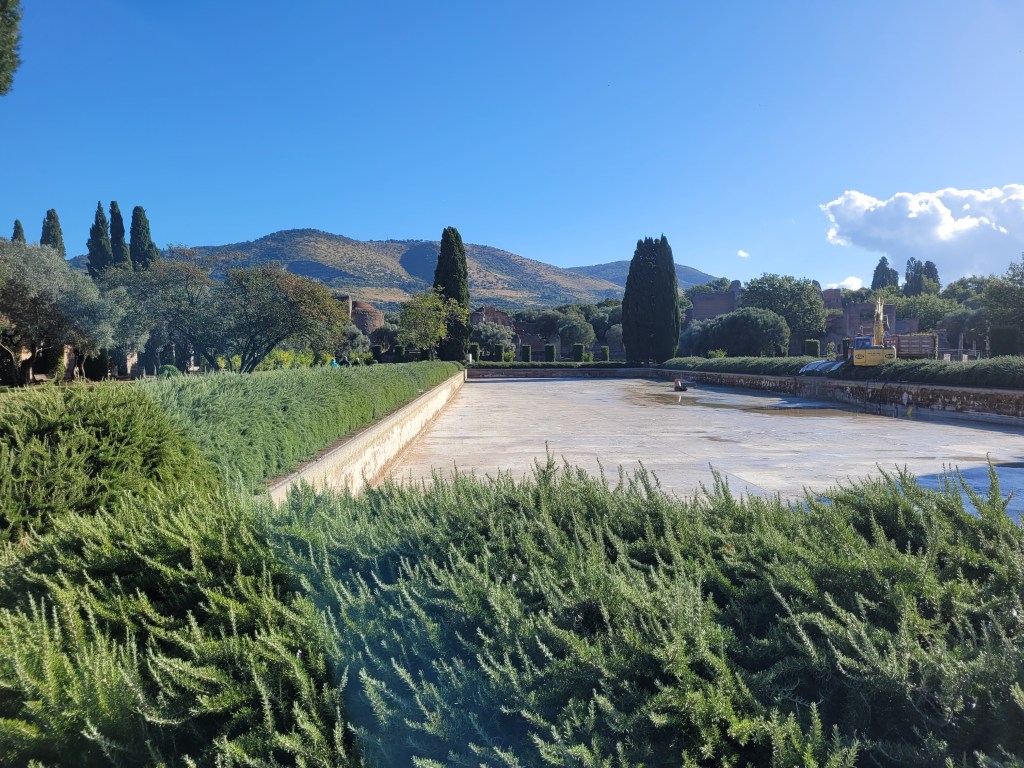
The pictures above show what was ‘on top’. This was below:
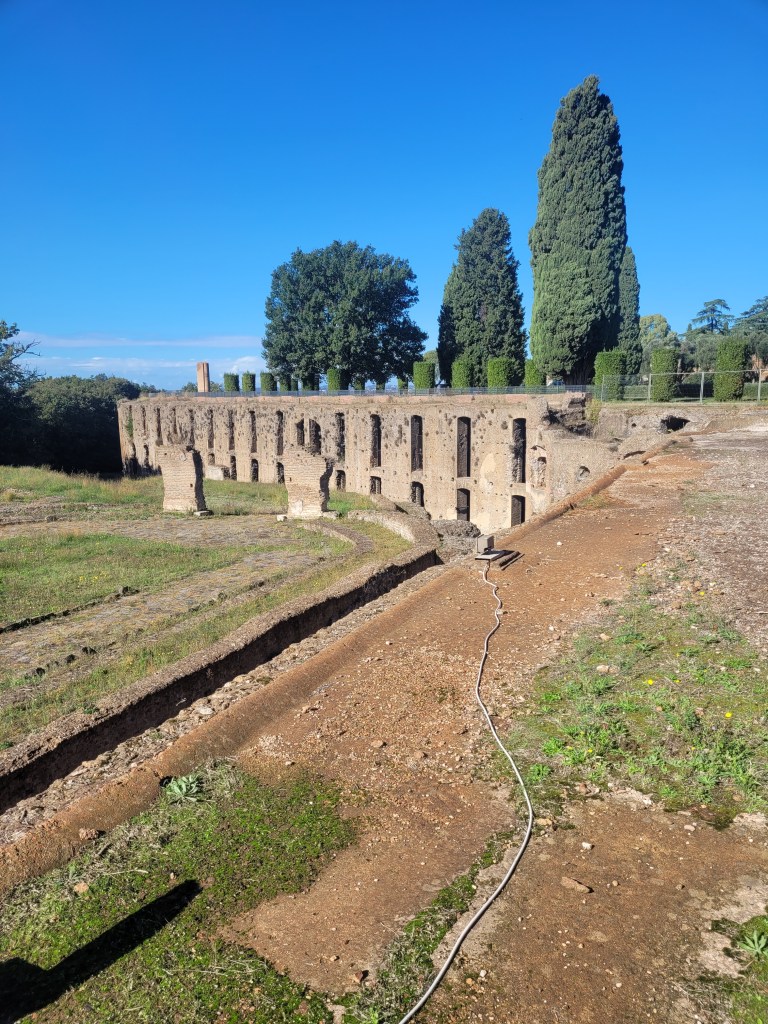
Another takeaway was the Maritime Theatre, an artificial island that had everything Hadrian might need to be comfortable:
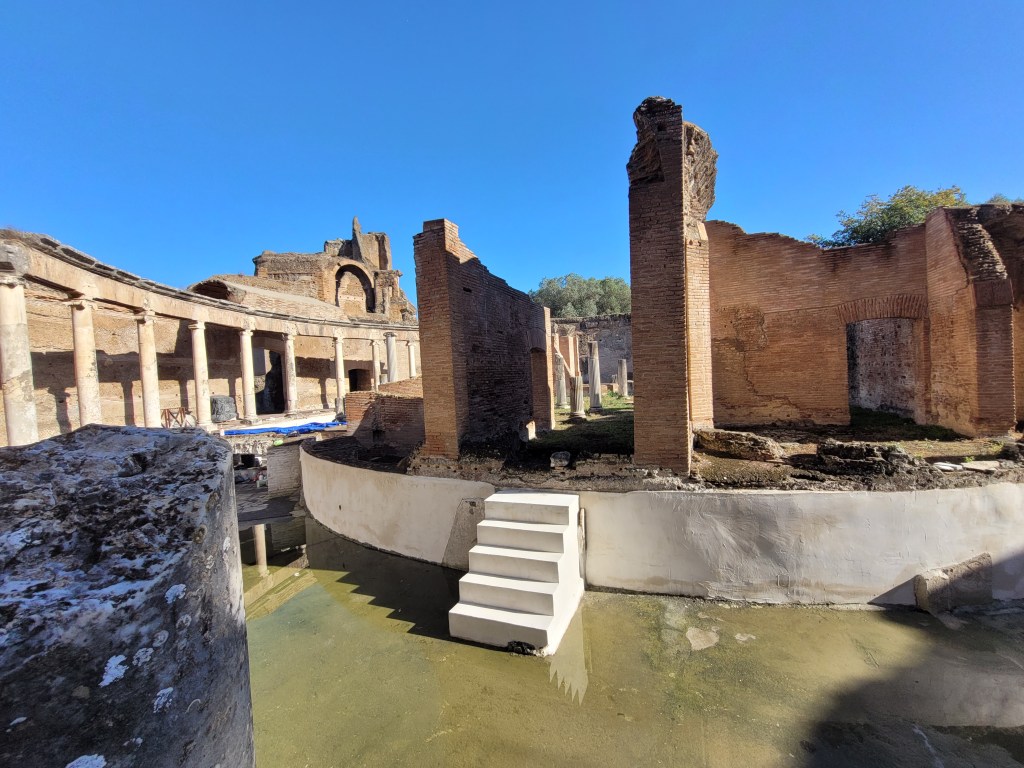
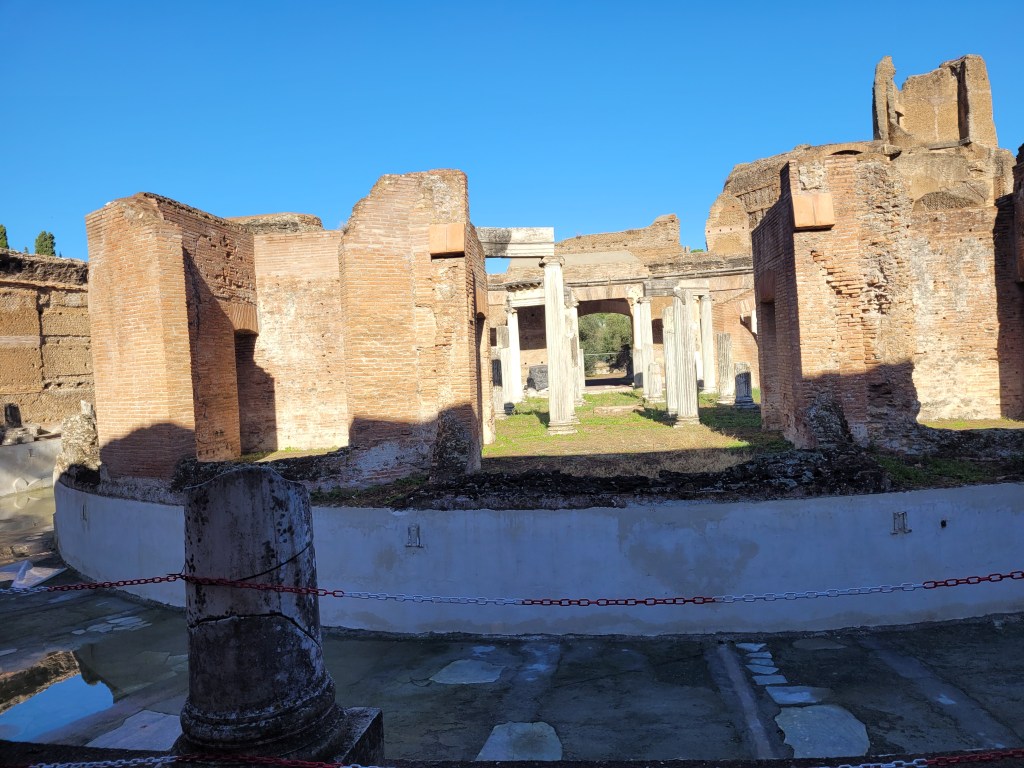
and he could swim in the moat around the island, pulling up the drawbridges if he wanted complete privacy. There were stairs down from the three storied Greek library (which was heated).
Hadrian’s personal quarters had both heating and ‘air conditioning’, and there was no scarcity of open spaces in which to walk or escape from any crowds.
The Canopus and Serapeum were the most indulgent area (among many), with a huge dining platform at one end of thenfish pond, Greek statuary (Roman copies of Greek originals) and Egyptian influences.
Even in its current state ( green water and fallen masonry), it is impressive.
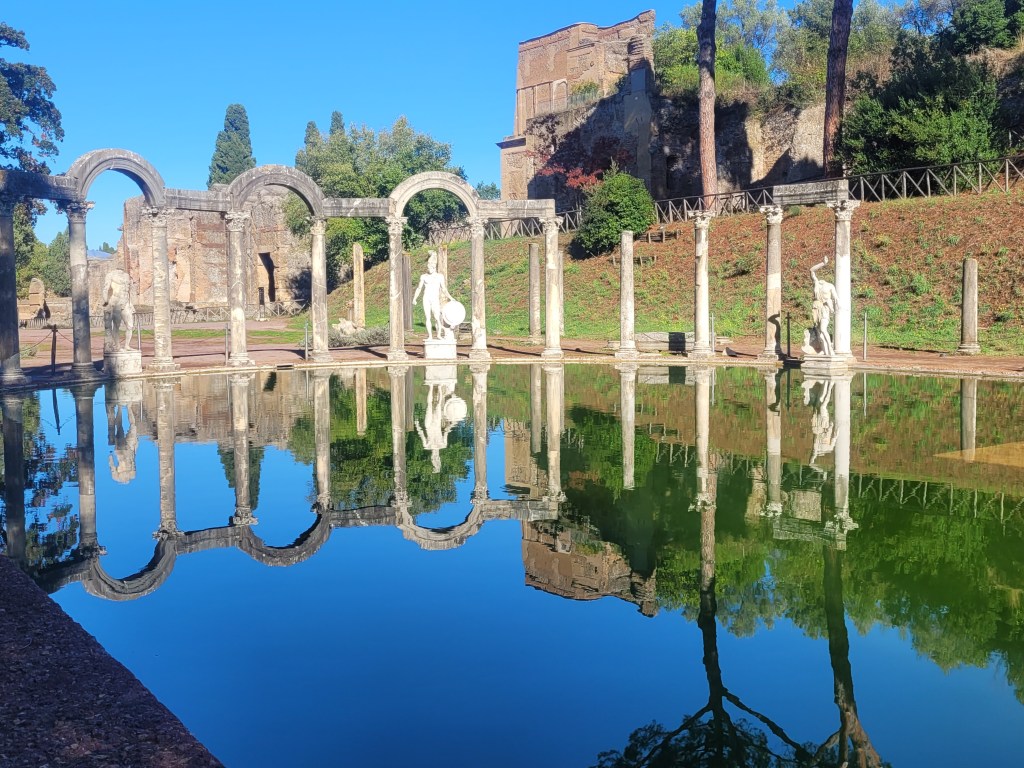
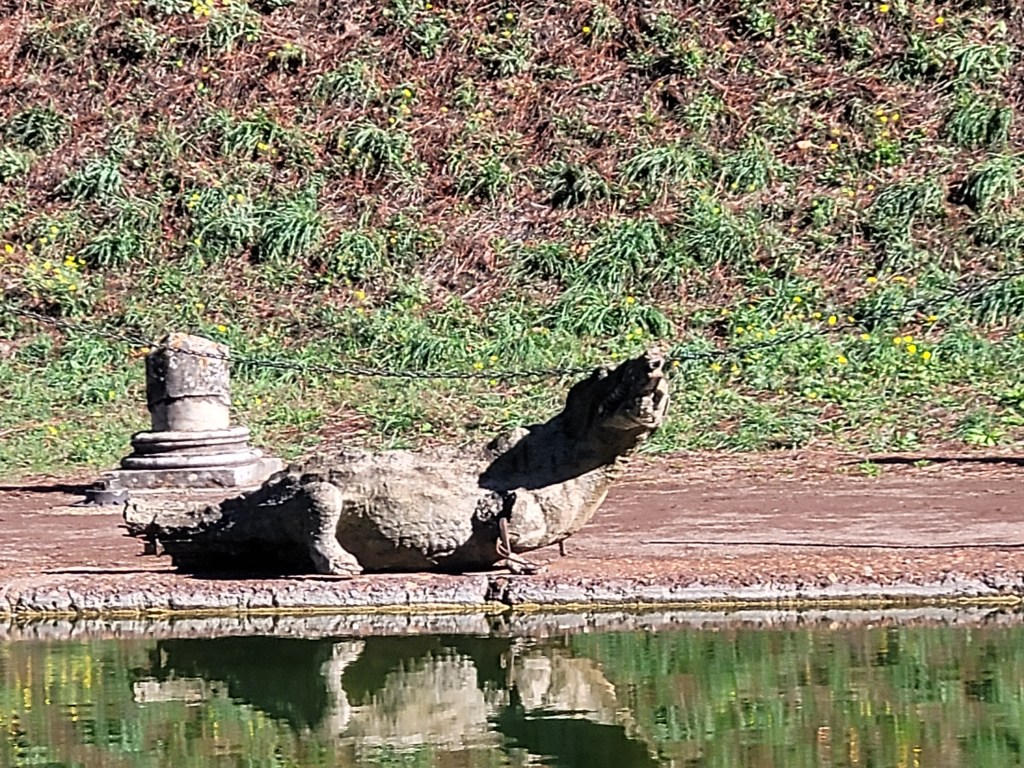
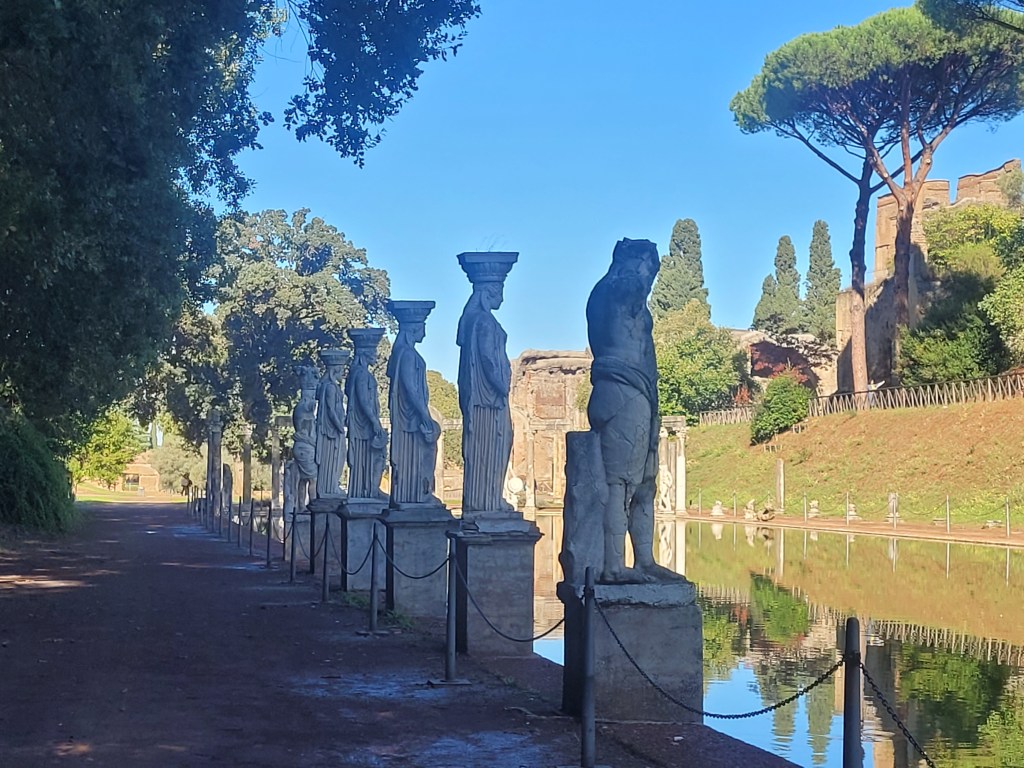
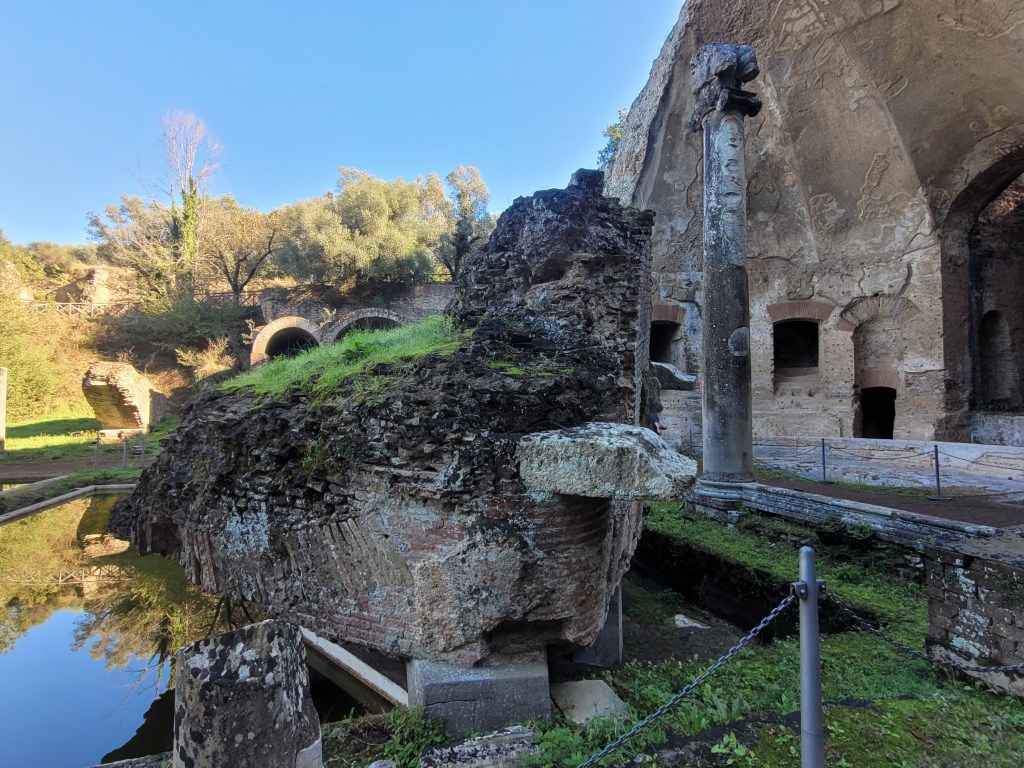
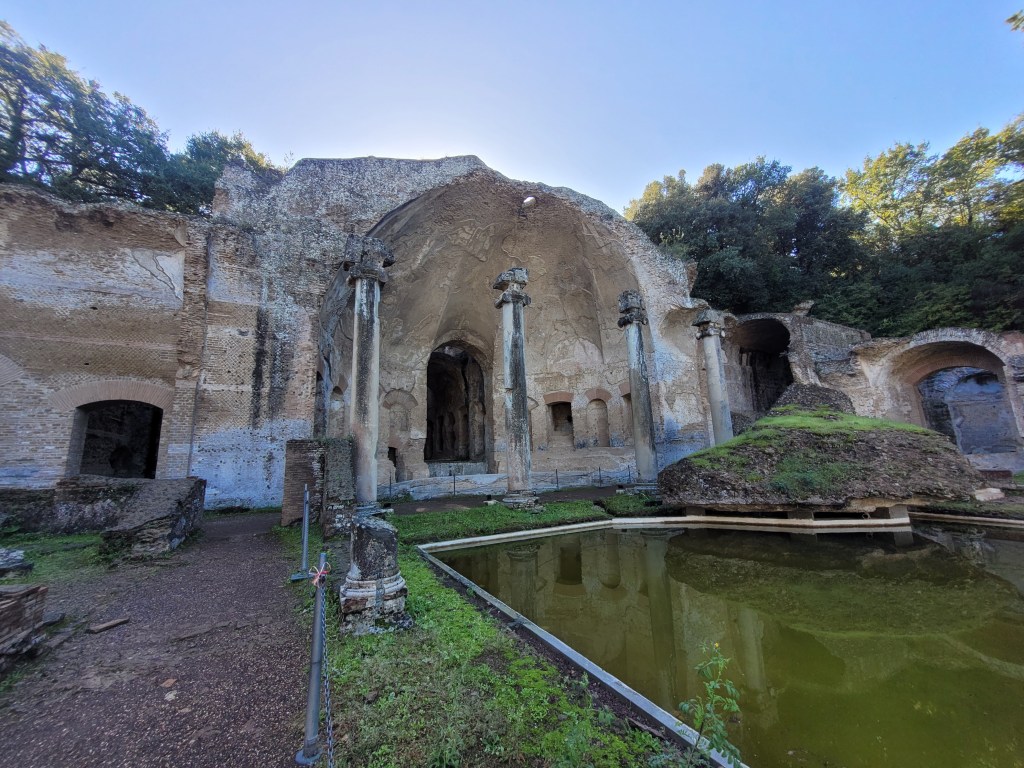
Most of this was buried, so the statues escaped looting by the likes of Ippolito.
The public baths were huge, and some rooms still had the remains of the ornate ceiling plasterwork:

Two theatres, guest quarters of different types (depending on the guest’s importance), a barracks for firemen, a Roman library to go with the Greek one… It went on and on.
It sits in olive orchards, with appropriately carunculated trunks (they date from the 19th C, when the are was farmed).
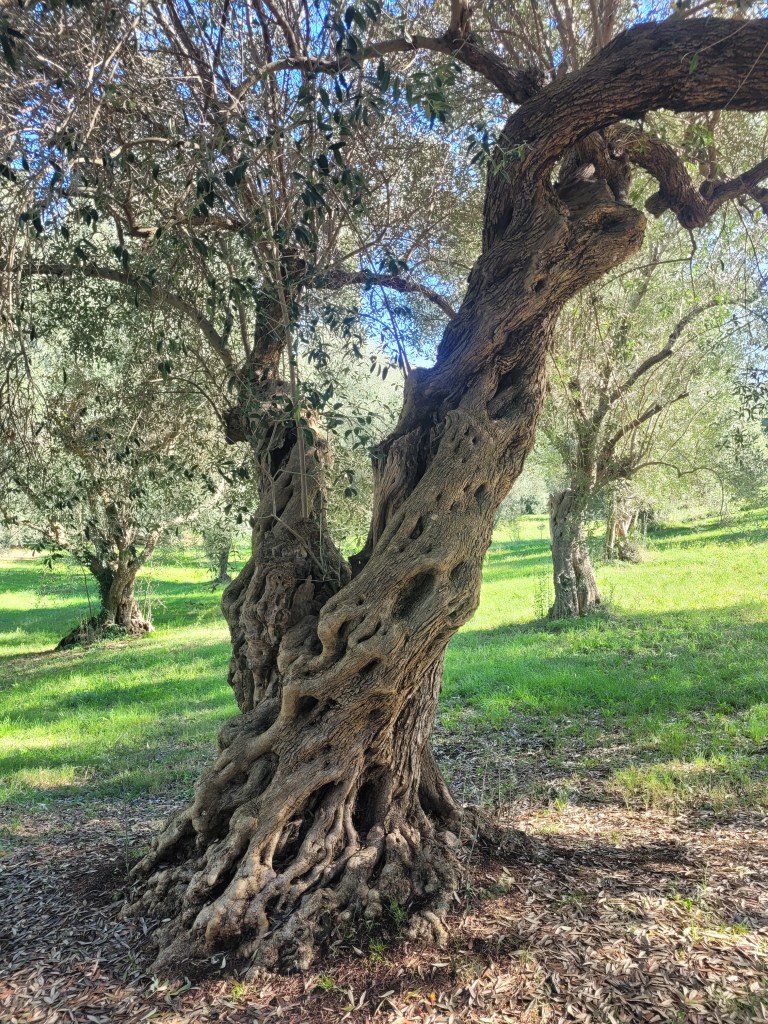

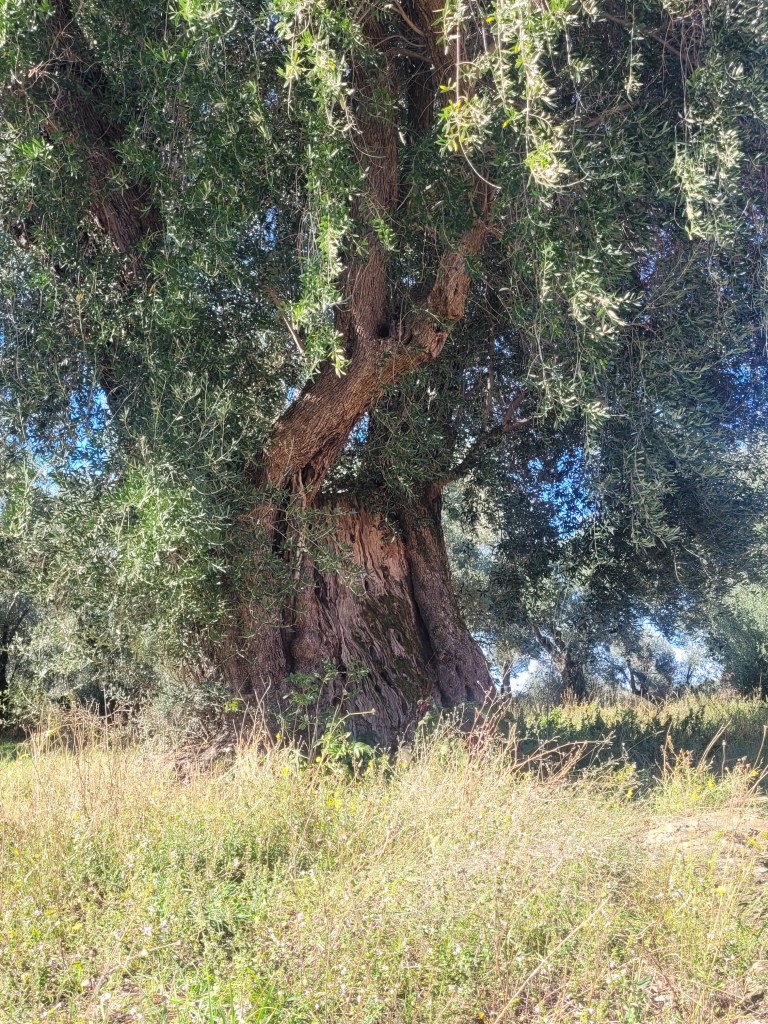
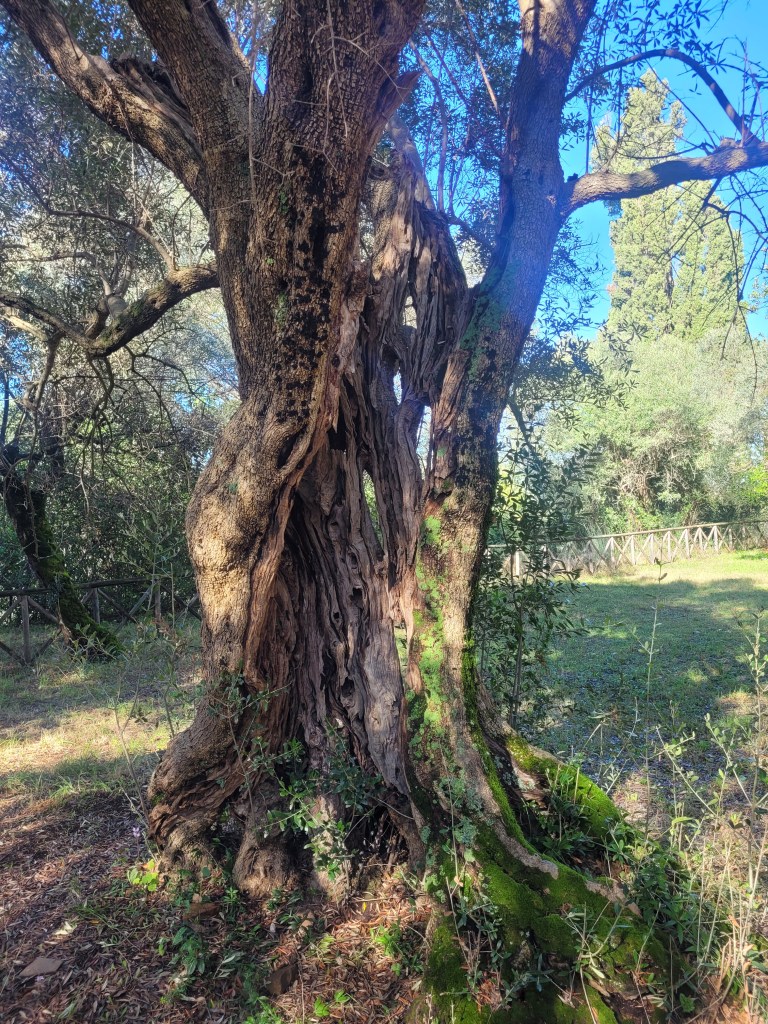
After the horrific rain the previous day, we were lucky with the weather. It was fascinating, breath-taking and awe inspiring.
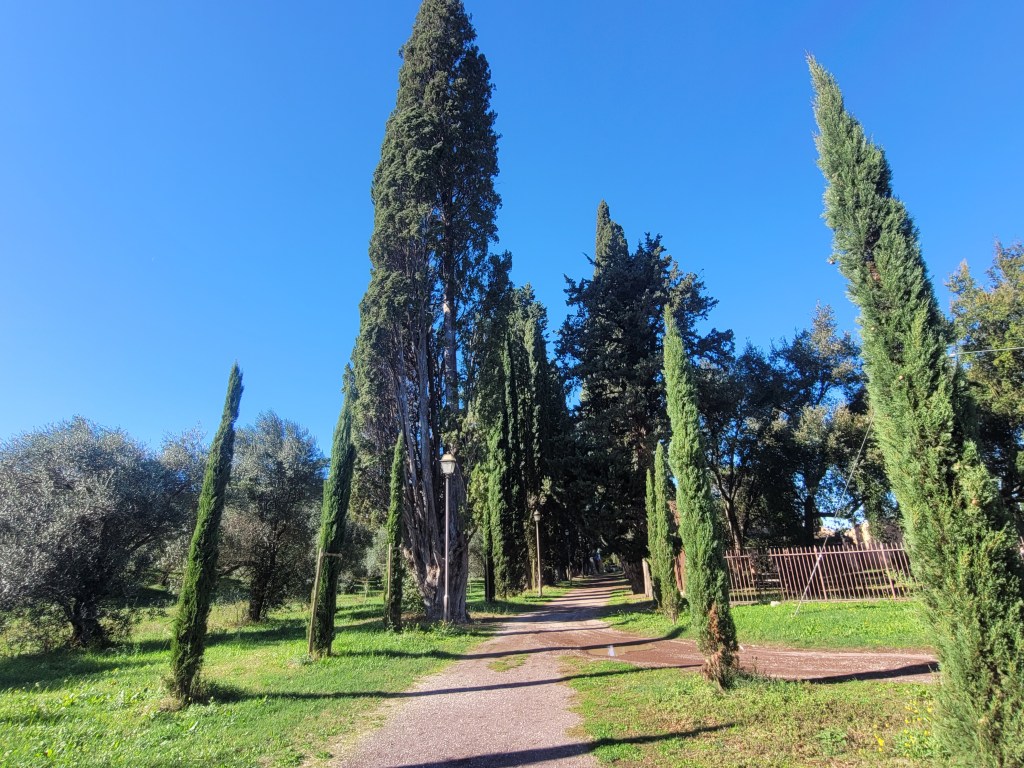
A must-visit for anyone venturing out of Rome.
And we moved on.
 Retired? What now?
Leave a comment