Funchal is larger than you think it should be, with buildings of various kinds running down the sides of steep gullies to the sea. There are several sections: the oldest bit, to the east; a more recent ‘old’ bit, to the west; lots and lots of very new construction around, in between and beyond these two sections.
The oldest section is also the more touristy: think restaurants cheek by jowl and waiters man-handling unsuspecting passersby into a seat at a table. Once confronted with a menu, most are too polite to leave.
The roads here are narrow, cobbled and lined with two story buildings that look like they might have been fishermen’s cottages at some point in their past (I have no evidence for this, by the way just a ‘feeling’).
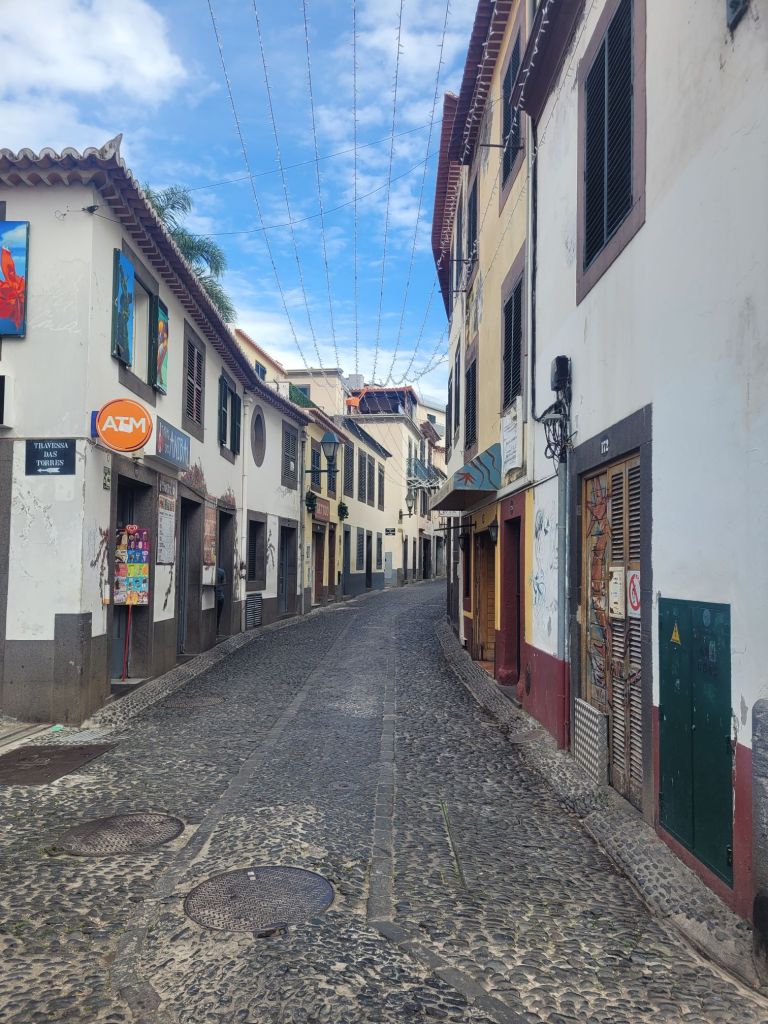
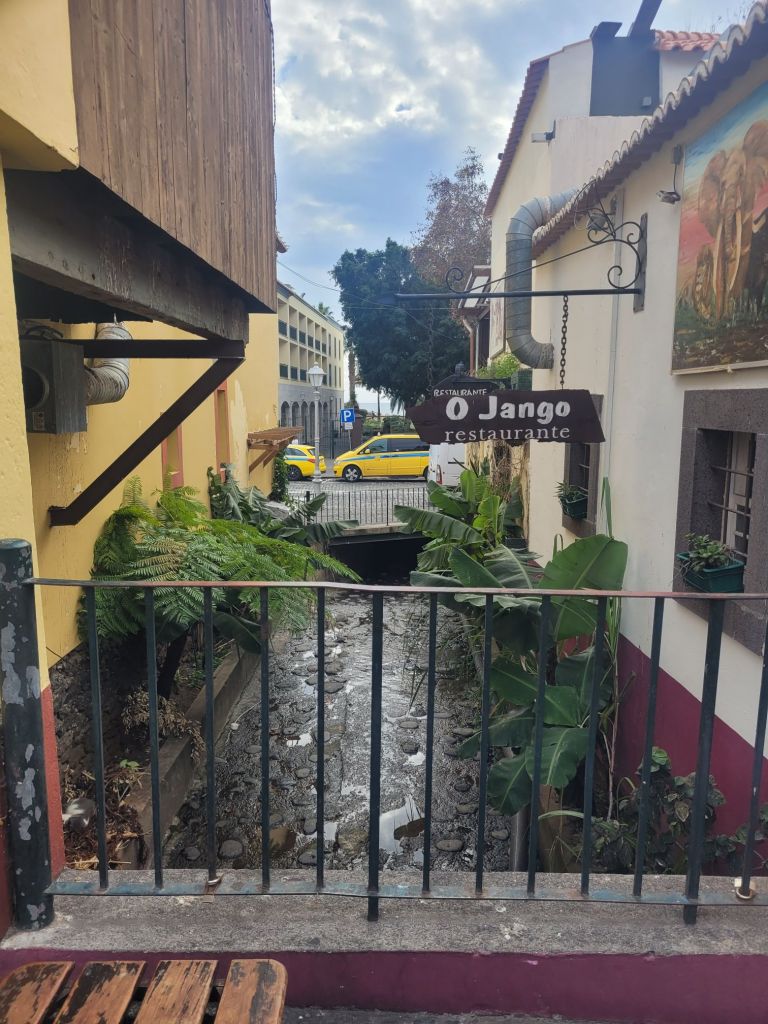
But however narrow and confining the streets and buildings are, there is always a reminder that all roads (and creeks) lead down to the sea.
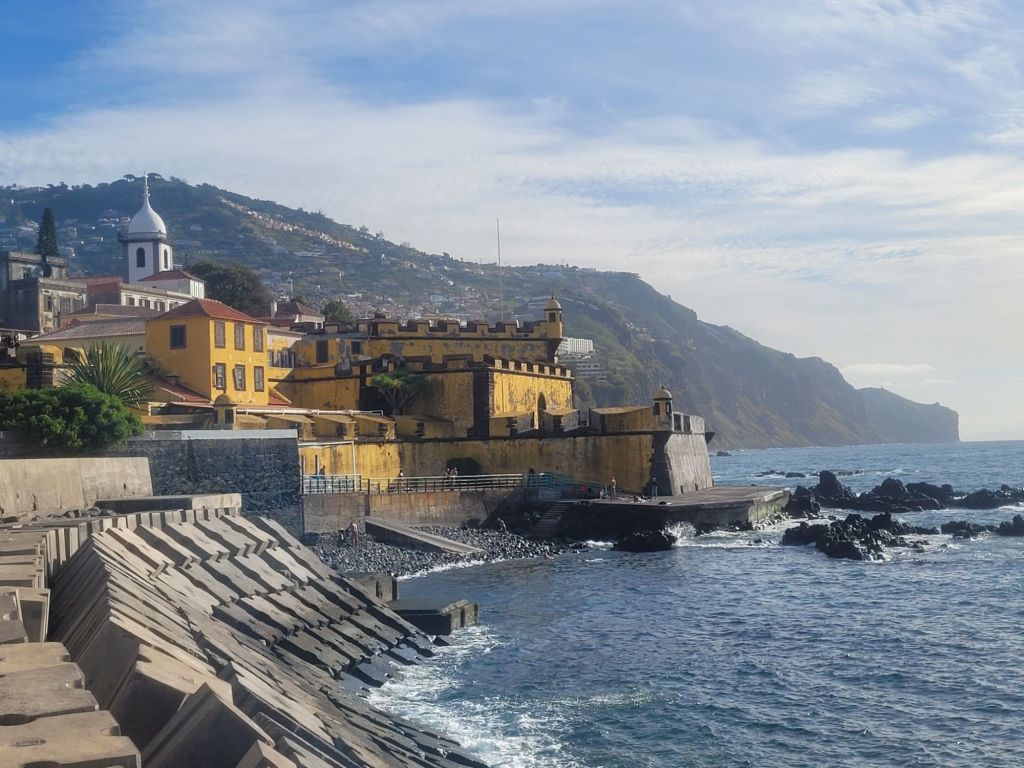
There are several fortifications by the sea and this more easterly area has a pink fortress which is slightly worse for wear – in keeping with the slightly bohemian feel to the place.
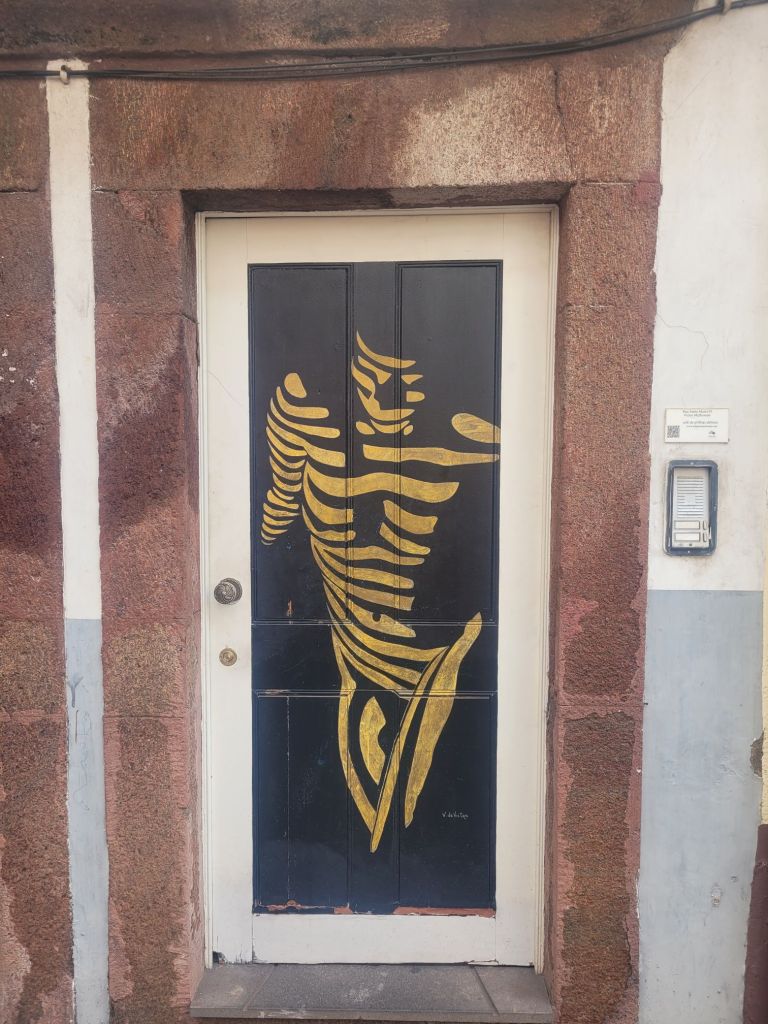
This bohemian atmosphere is heightened (if not created by) the painted doors, with a wide, eclectic mix of subject matter and styles.



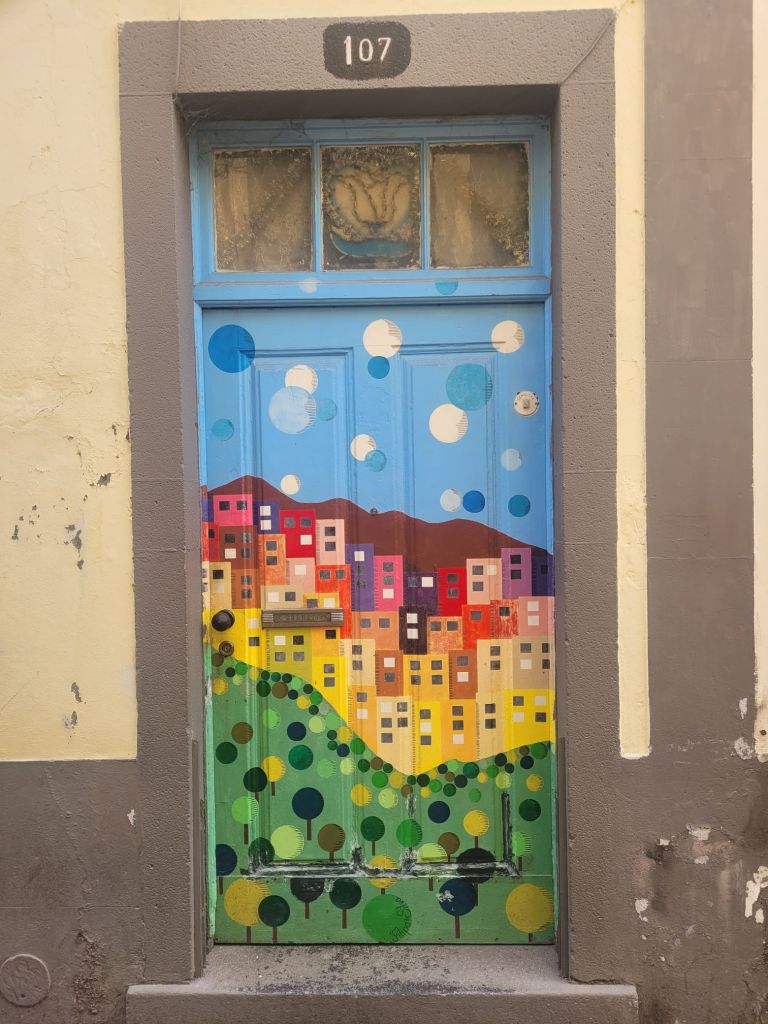
There are reminders of the sea not only in the imagery but also in the occasional flood barrier.
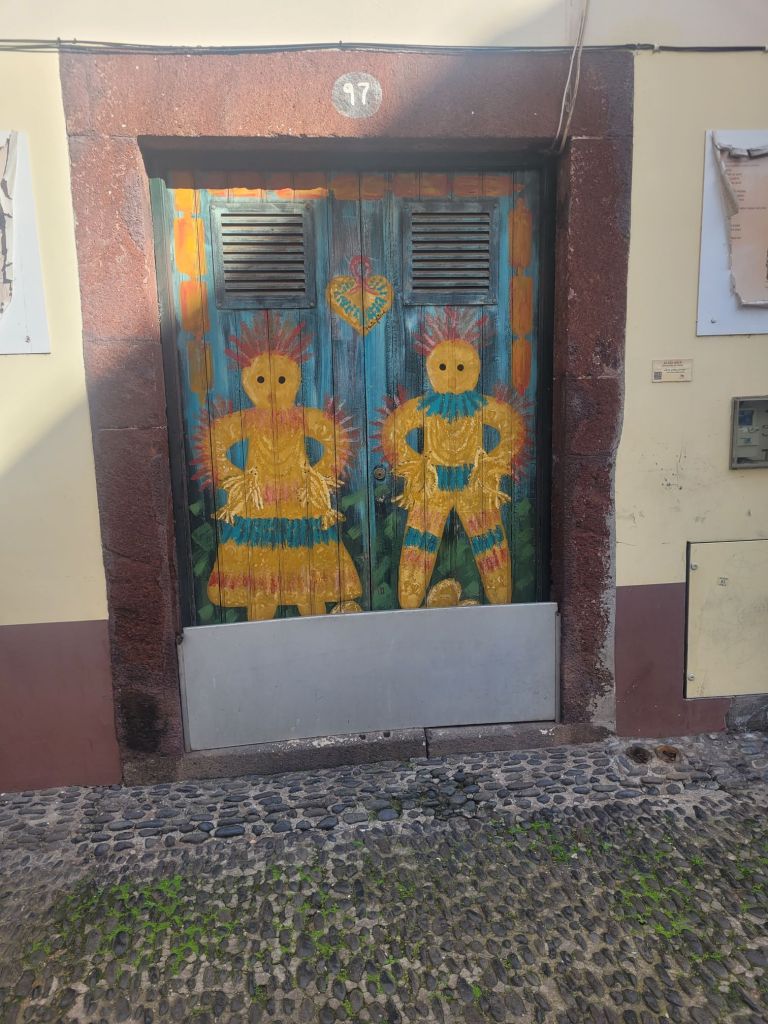
And also clear references to wider European contexts, although I did find this weirdly out of place (more of this later).

The cramped houses don’t reflect the wealth that Madeira (and Portugal) had in its colonial past. It can be all too easy to see Portugal as a small country on the western fringe of Europe but in its day, it controlled a large empire, with vast wealth. This wealth is reflected in the ‘less old’ part of Funchal, closer to the cathedral and also the houses further up the hill.
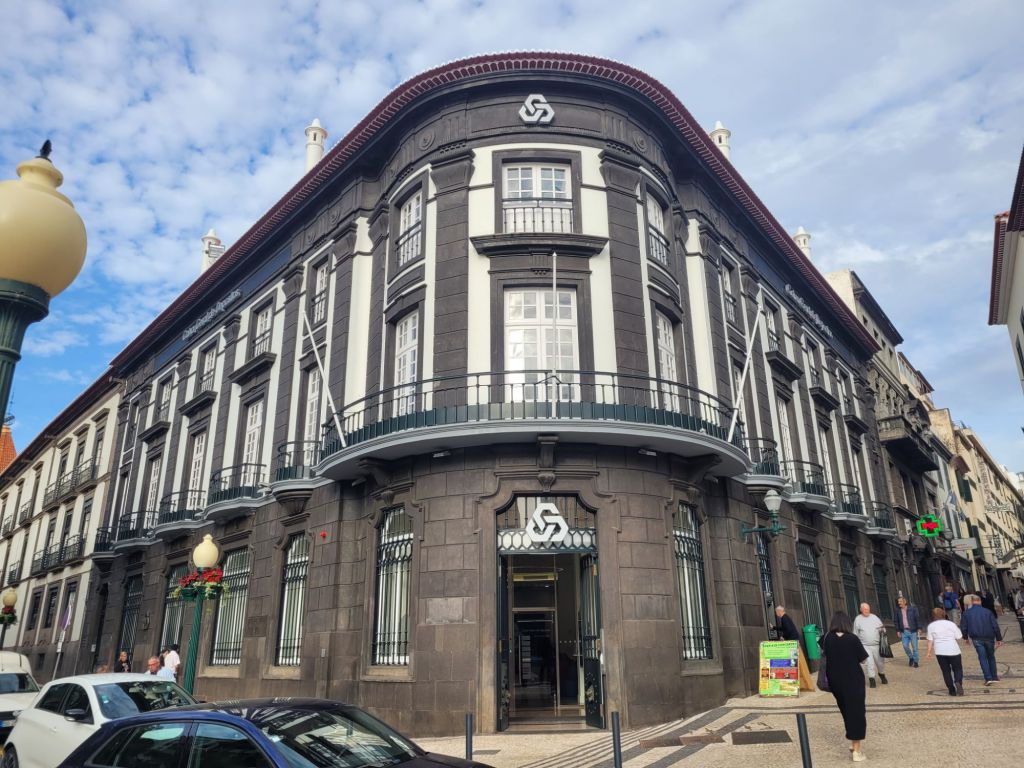
The grander part of town is all monumental black and white, severe yet somehow still graceful. These black and white buildings are enhanced by the black and white mosaic pavements, each road having a slightly different design.
Despite being monochrome, it is charming and somehow restful.
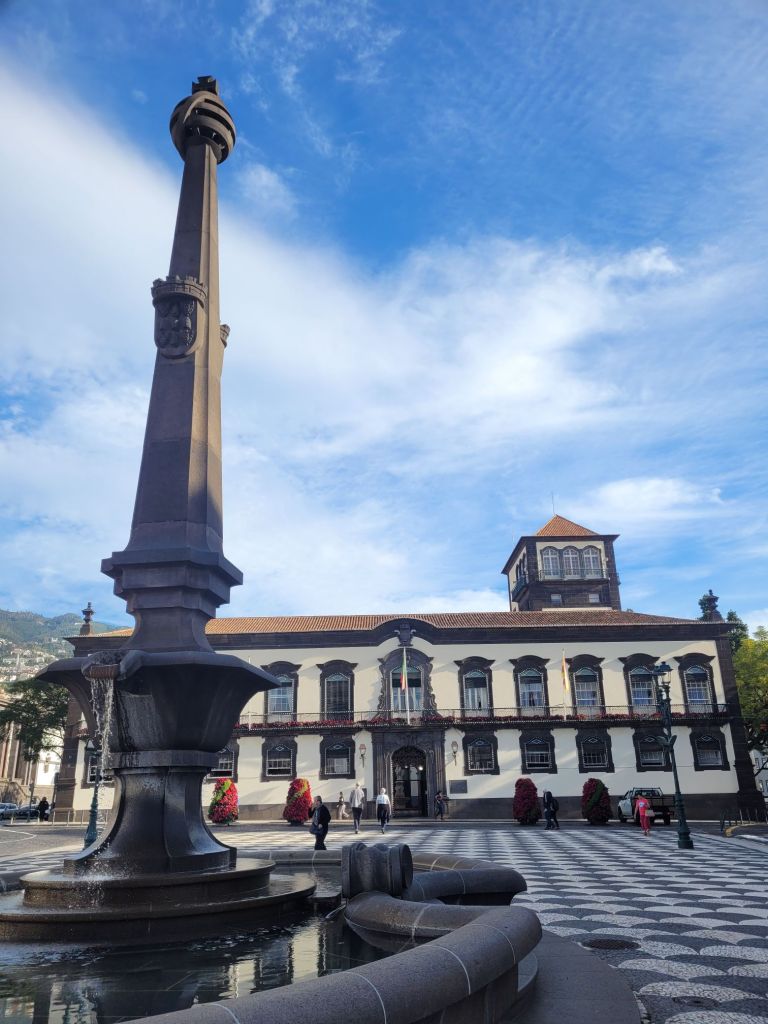
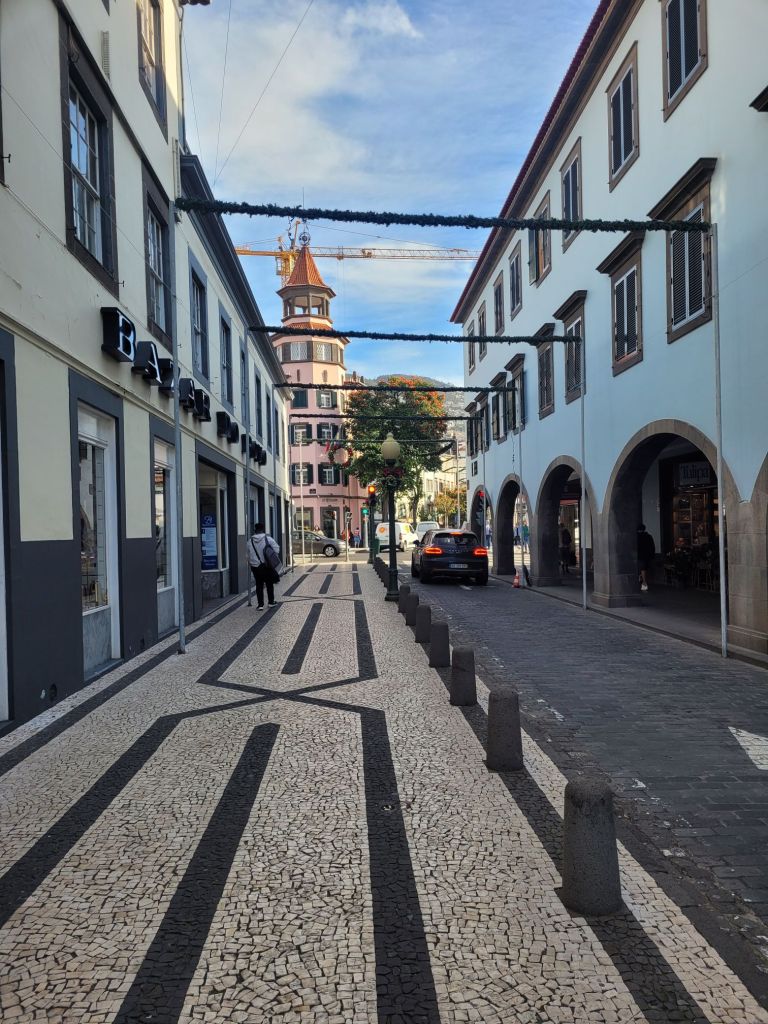
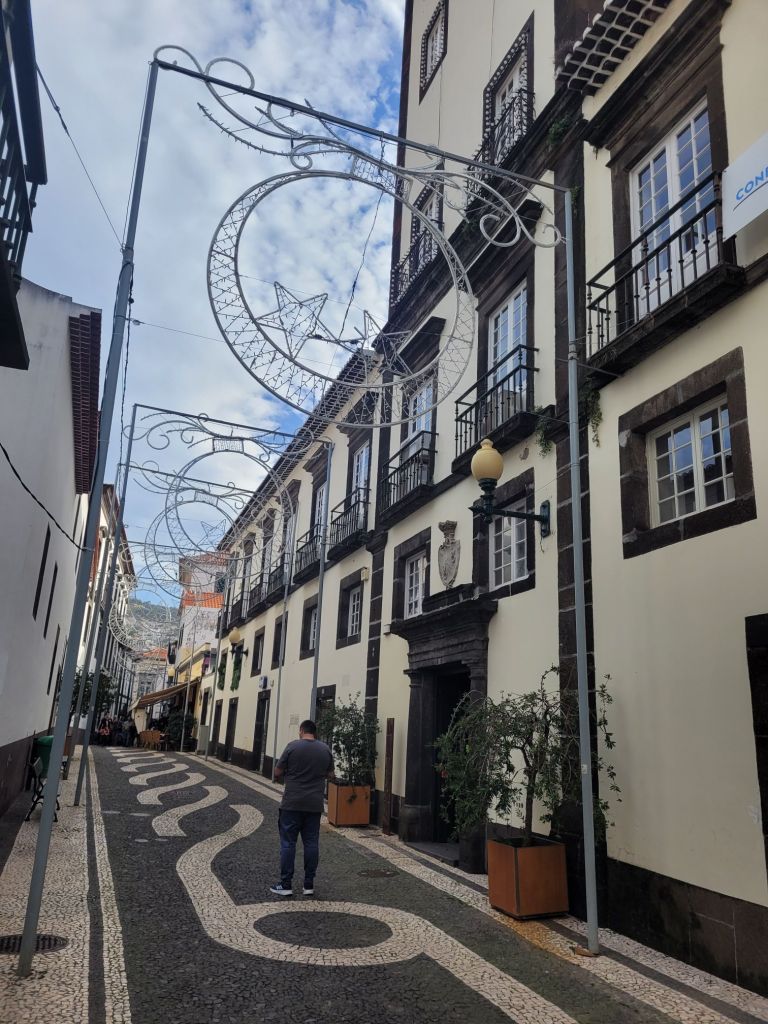
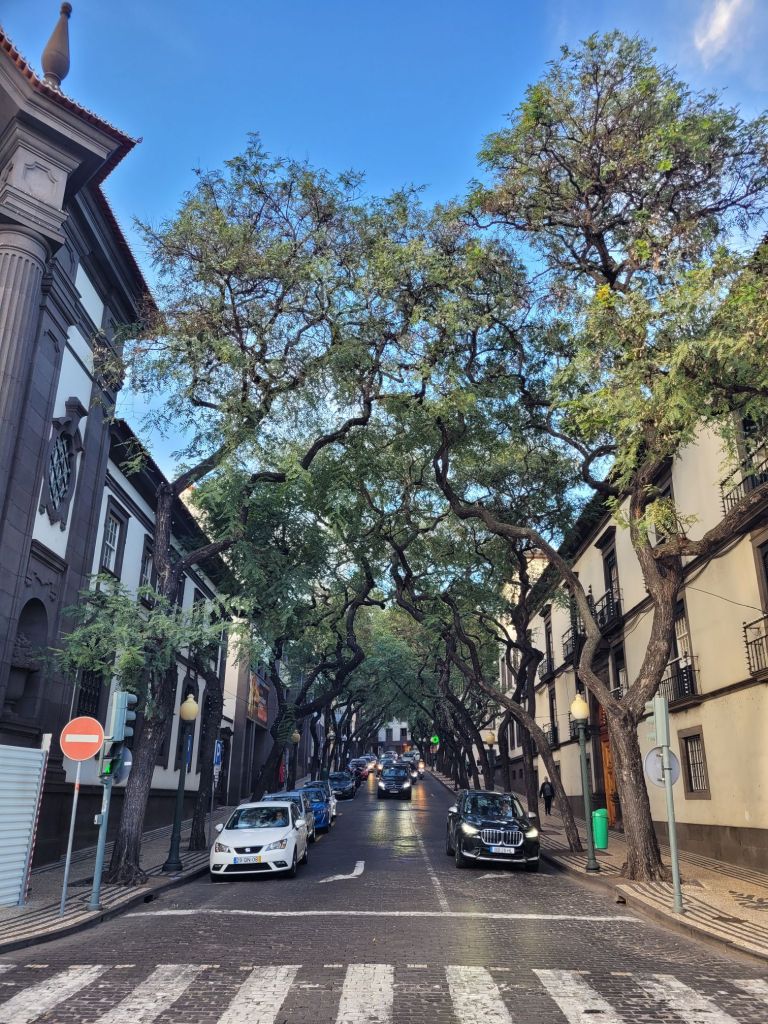
Many of the larger streets are lined with acacia trees, whose twisted trunks are belied by their graceful, feathery leaves.
It presents an image of tasteful, restrained wealth. Slightly beyond, and slightly further uphill, you come to larger domestic houses, including that of a wealthy merchant Quinta da Cruzes, home of the original founder/discoverer of Madeira.
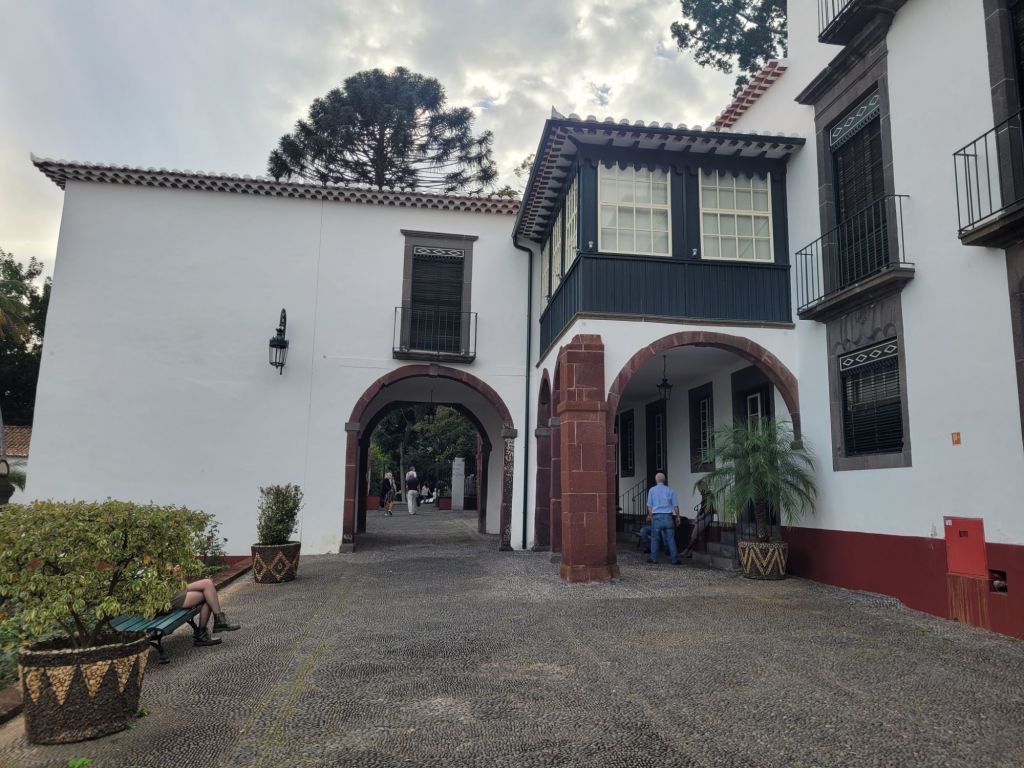

Madeira was discovered in 1417 and served as a staging post for ships (Portuguese ones mostly) crossing the Atlantic to the New World. It’s lush, has plenty of fresh water and a good climate for growing fresh fruit and vegetables (if very little flat land). It also has forests, so there would have been wood for ship repairs. All in all, the perfect spot for adventurous traders to set up shop.
And they did; lots of ships passed through carrying lots of goods, among them, slaves. This shouldn’t be a surprise to anyone, given the proximity of Africa and the route to Brazil (a notorious consumer of slaves). However, what is noteworthy is that the slaves spent time on Madeira not only creating the irrigation system (the levadas) but also working sugar cane.
(‘Fun fact’: sugar cane was originally domesticated in the East Indies, and was taken to Brazil by the Portuguese.)
What is astonishing is the lack of any reference to this past. Well, I didn’t see any.
The merchant’s house has some beautiful objects on display
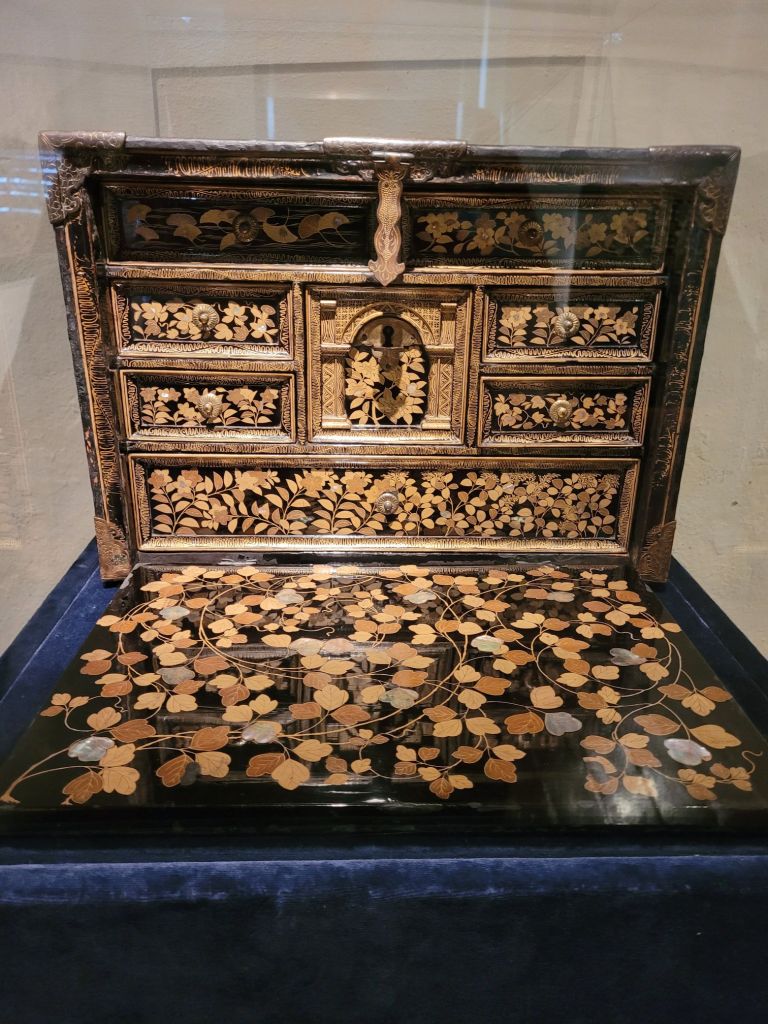
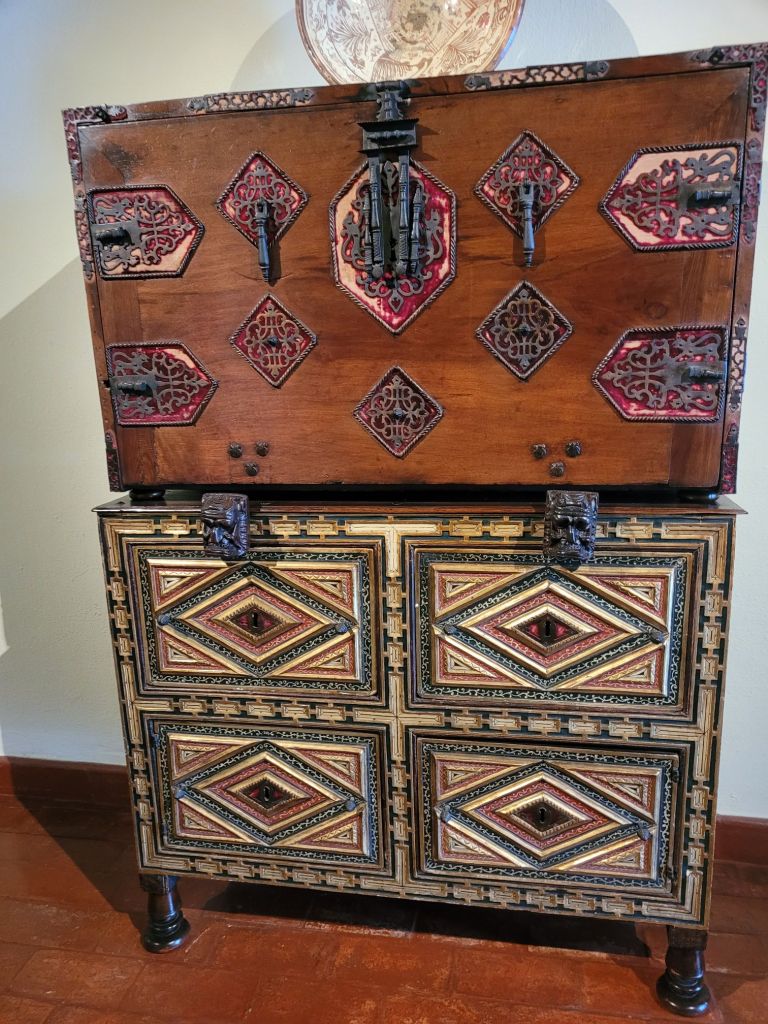
and rooms full of Chippendale furniture. And two sedan chairs (to help with the hill, presumably). And more silver than we have seen outside of a Cathedral museum
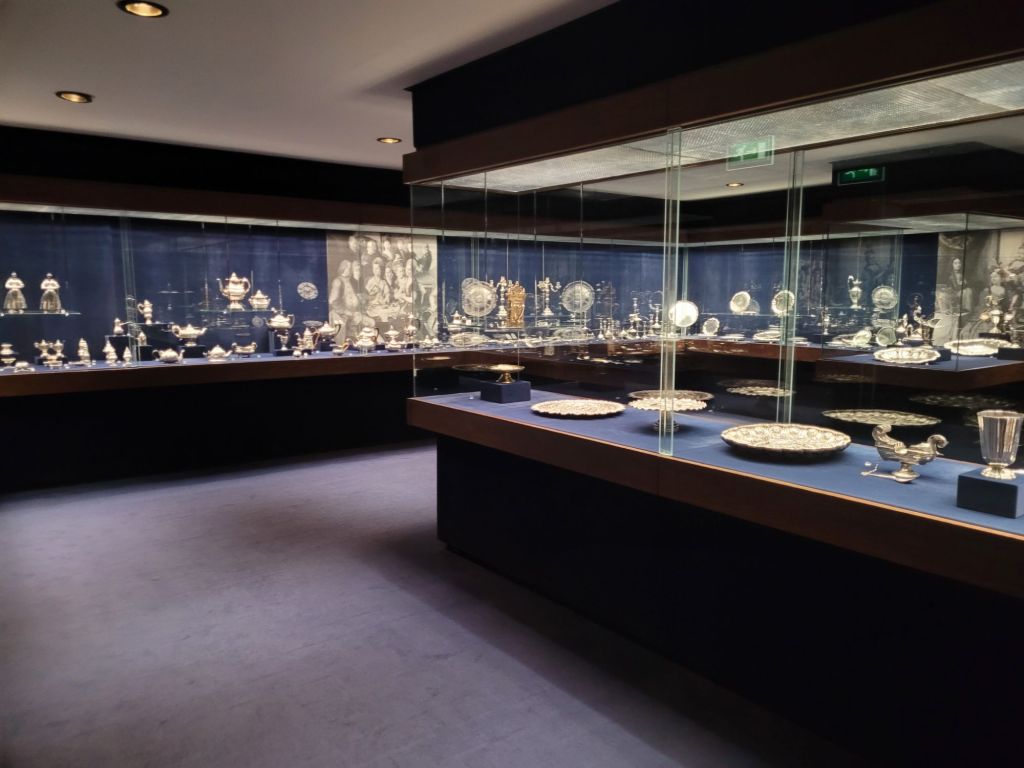
But the only even vague reference to a non-European population was in these two figurines – and they are servants (and silver with ebony and ivory).
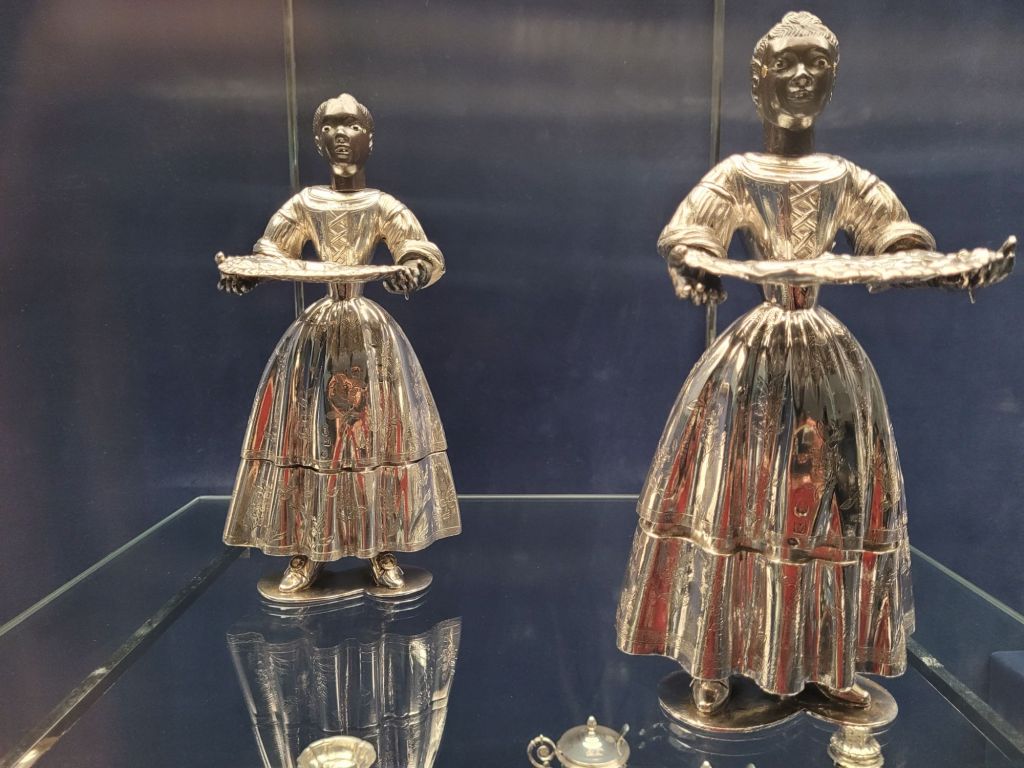
I found it odd that someone could reference the first World War (via the Owen poem Dulce et Decorum Est), but there appears to be no reference anywhere (that I could see) to a colonial past.
Just odd.
But the money was clearly being made somewhere. There are some lovely houses ‘ripe for renovation’
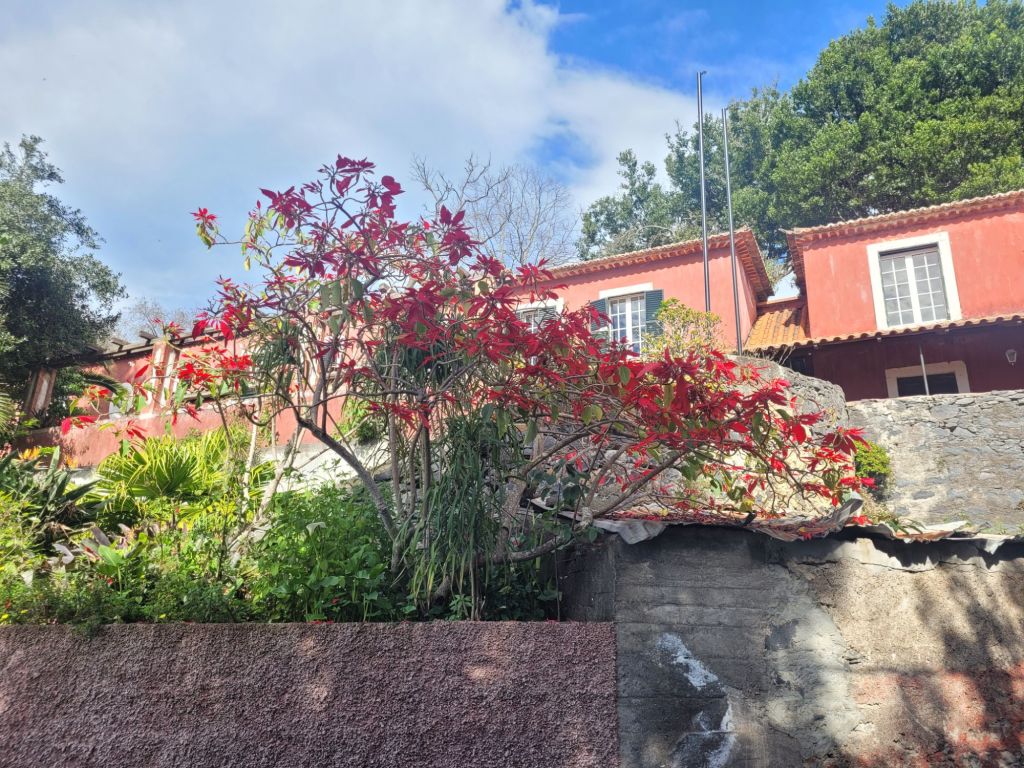
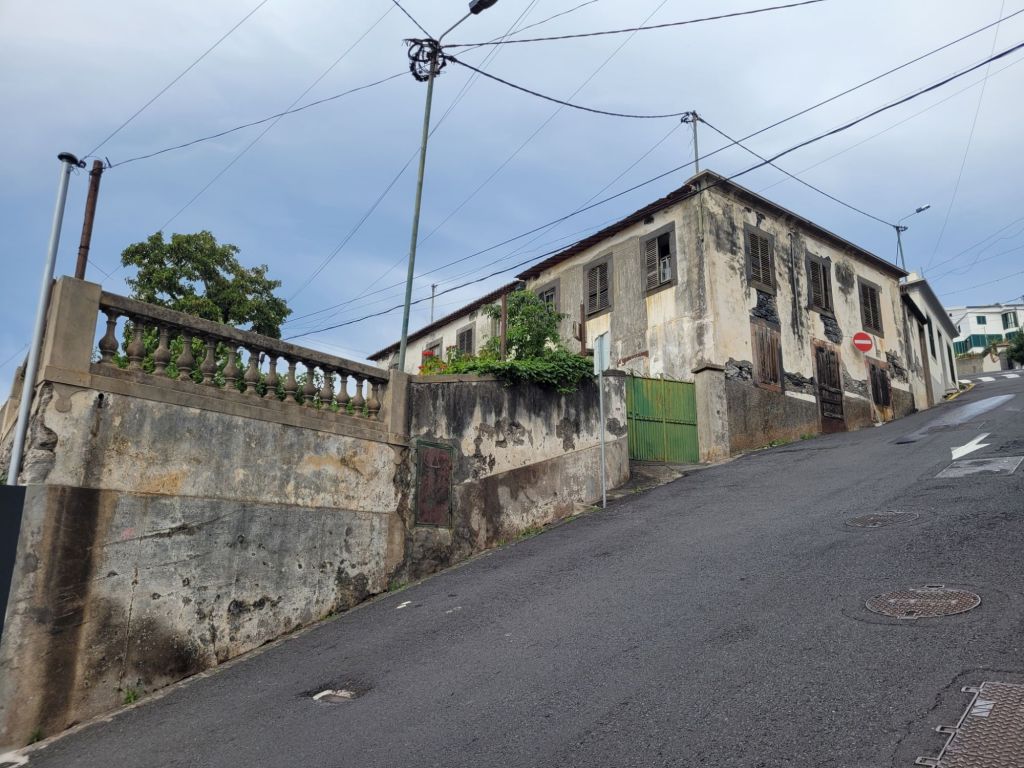
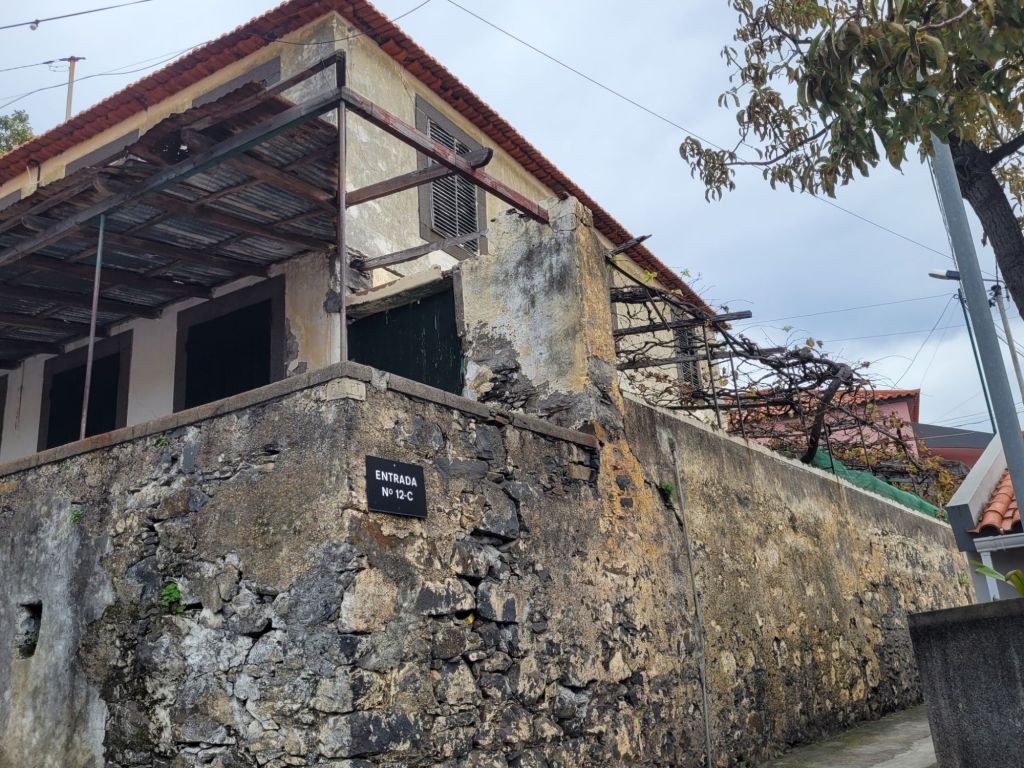
None of these were small (and one had the largest Poinsetta plant I have ever seen).
And houses that became hotels and then flats:

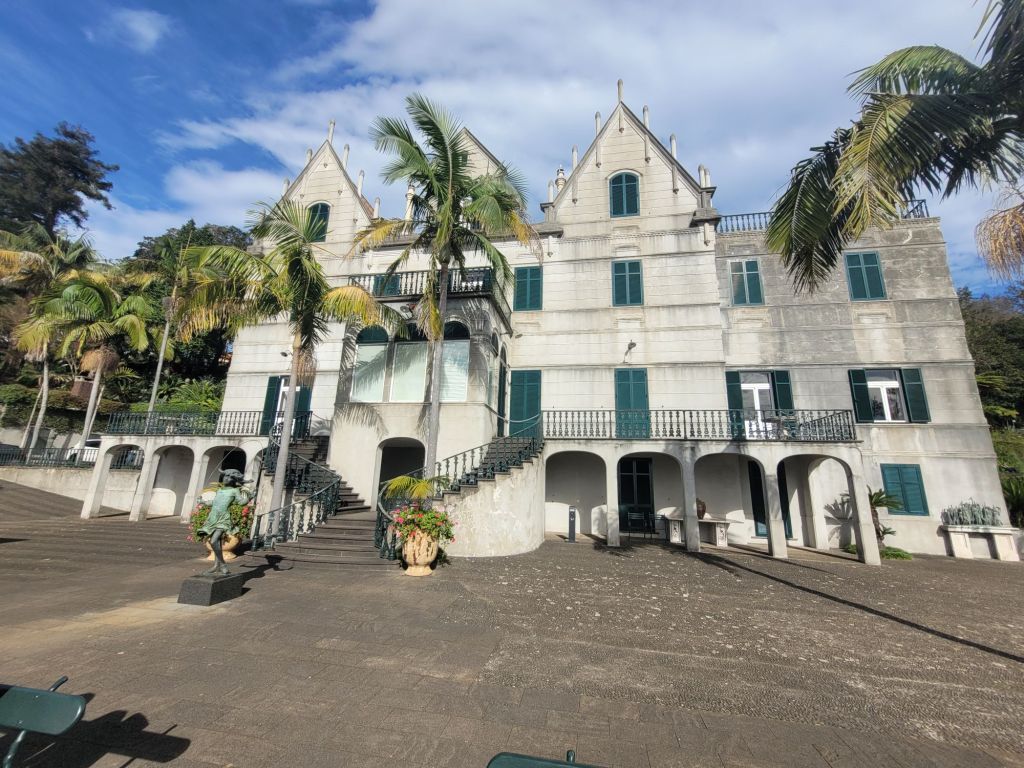
Large churches (and lots.of smaller ones):
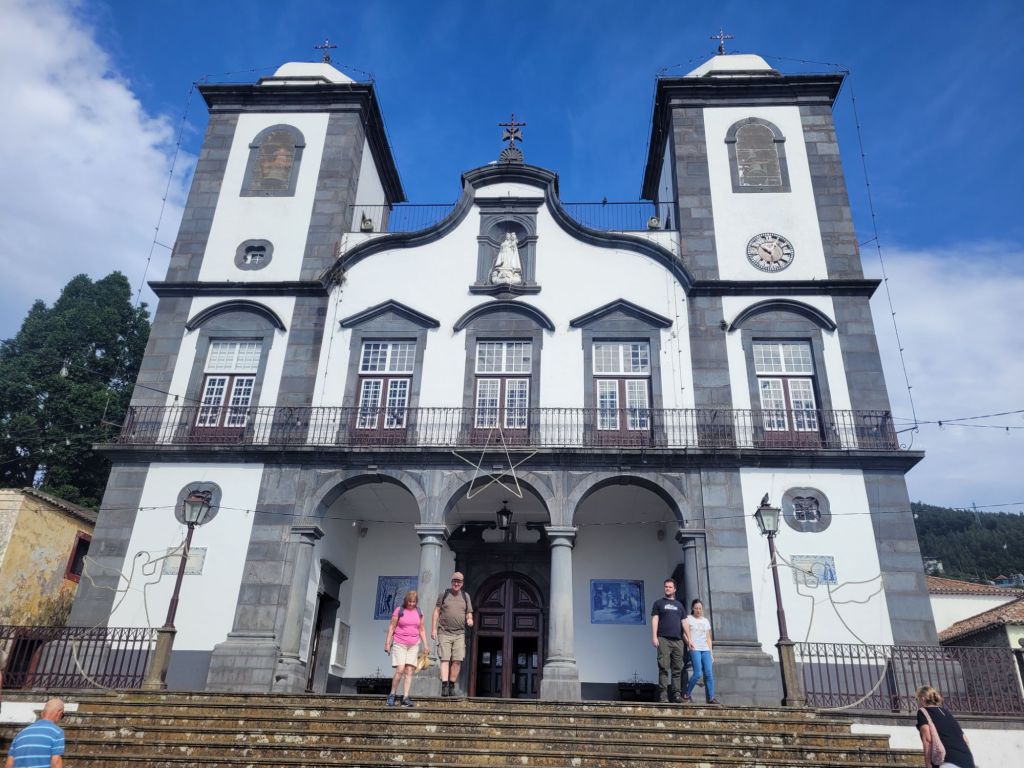
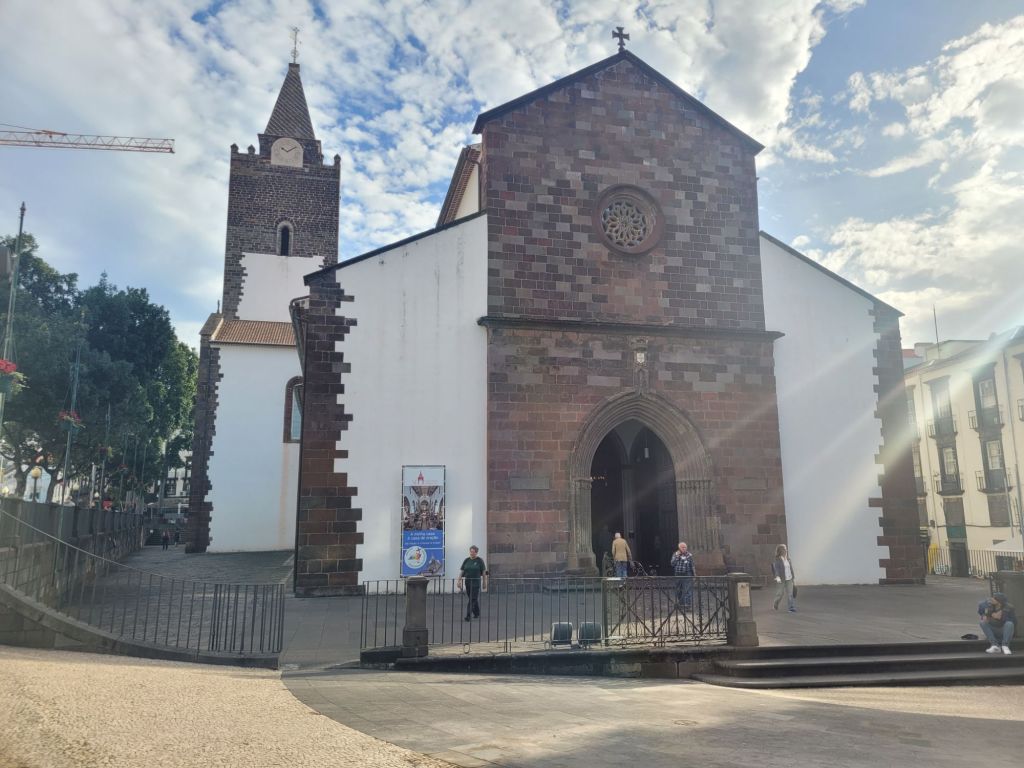
Funchal Cathedral was the Diocesan Church for the whole (yes, the whole) of the Portuguese overseas territories. From Macao in the East, through the colonies in Africa and to Brazil. A huge area.
Old wealth is easy to see in Madeira. Where it came from is less obvious.
 Retired? What now?
Leave a comment