Funchal is known for its gardens, which are the result of the balmy climate and rainfall. Everything seems to grow here, from tropical orchids to sequoia pines. There are several gardens to visit, two were all we could manage.
We started with the Botanical gardens, which are above the city on the easterly side and as Google maps said it wasn’t too far, we decided to walk.
This exercise revealed, painfully, just how steep the ravines are. The route is straight up, no wiggles, no respite, just straight up for just over a mile and a half. By the time we arrived at the gardens, my fitness tracker claimed I had walked 7500 steps but done over 100 active minutes, half them ‘intense’. Not surprising.
The view made the climb worthwhile

and the plantings were interesting.
Everyone has probably seen Strelitza – the Bird of Paradise plant. It’s everywhere in Funchal, even as hedges.
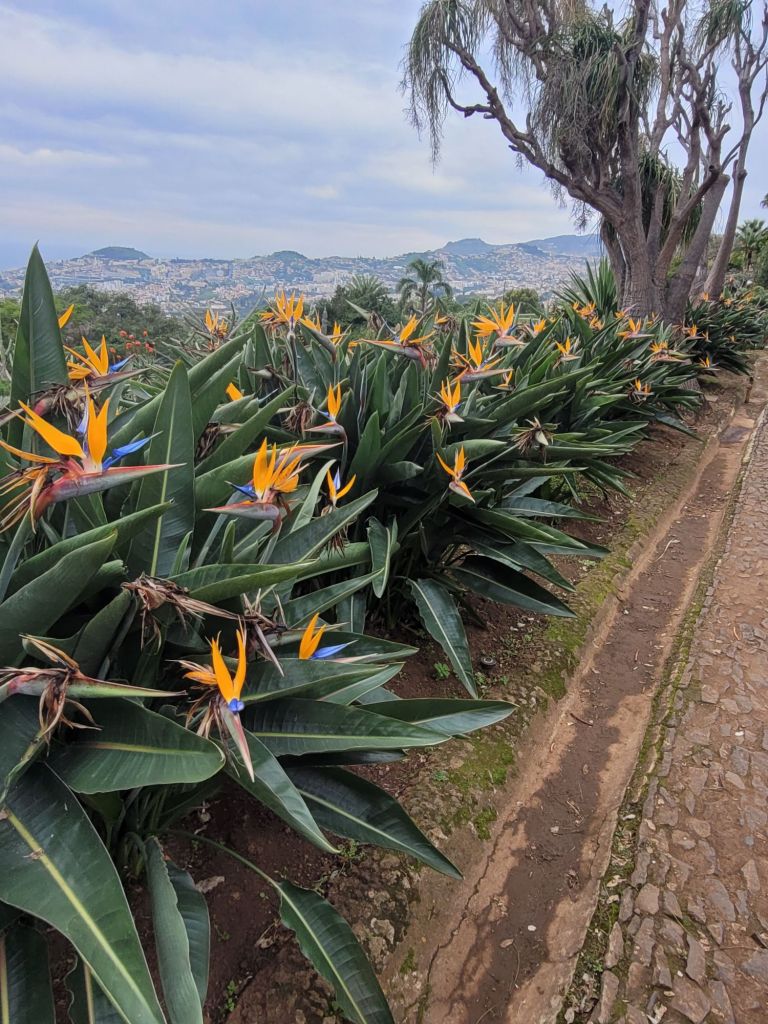
I did not know they came in different colours

or that there is a tree-like version
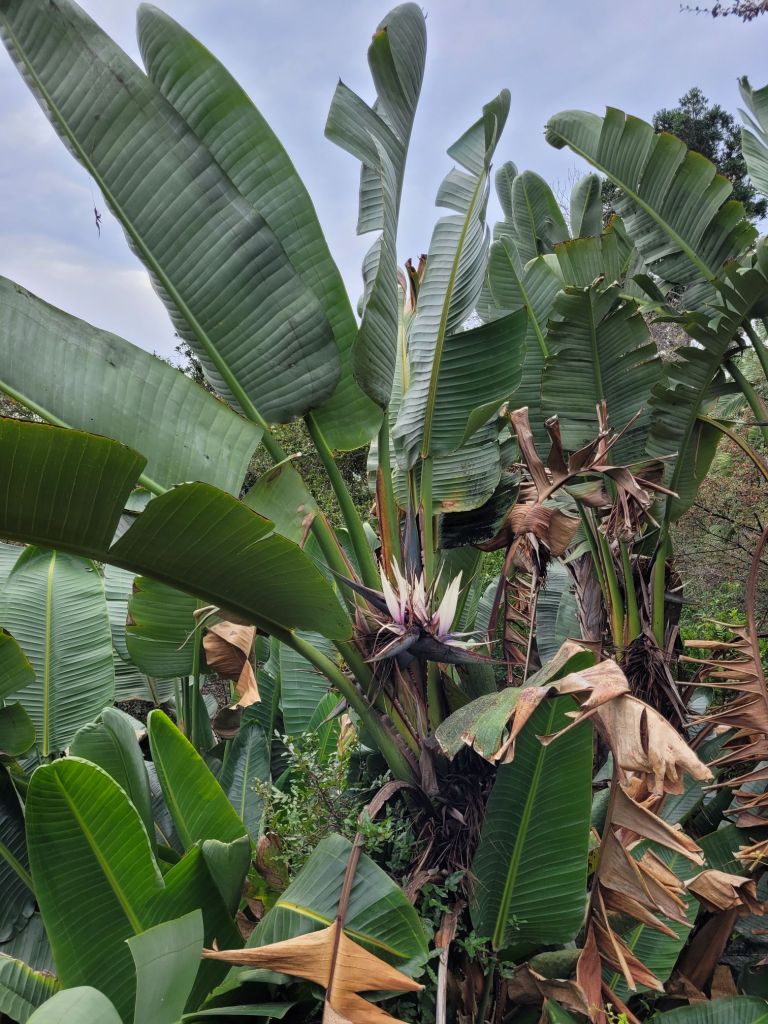
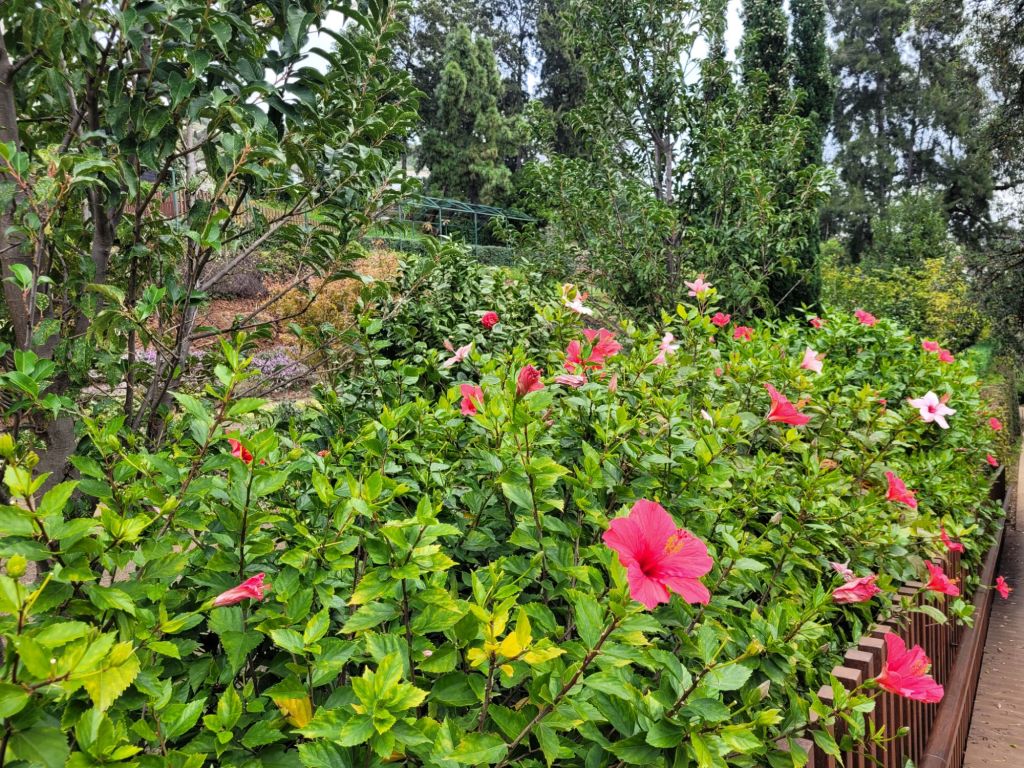
This is very much a collection of plants, so there were areas dedicated to hibiscus (including more hedges)
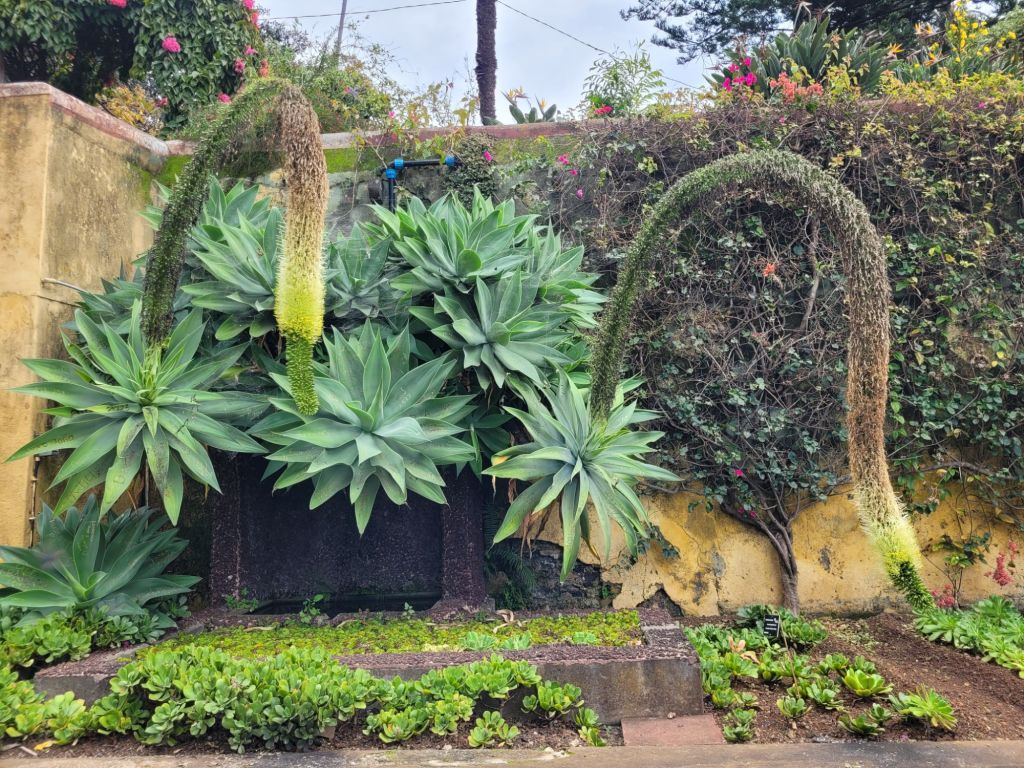
an extensive succulent collection –
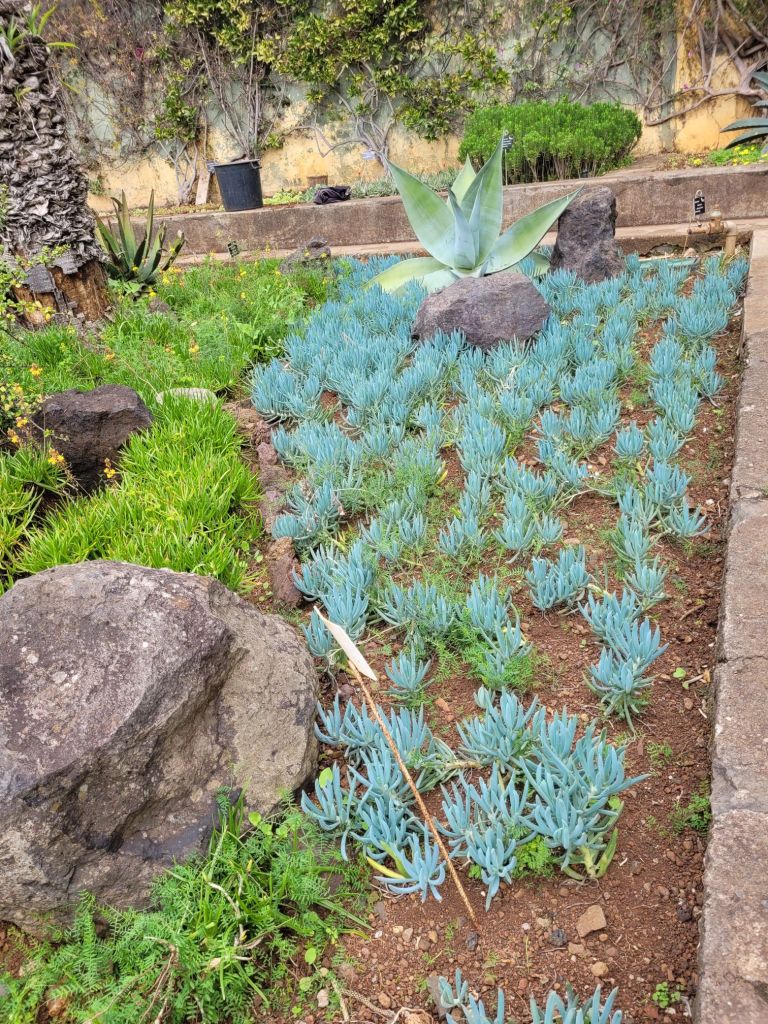
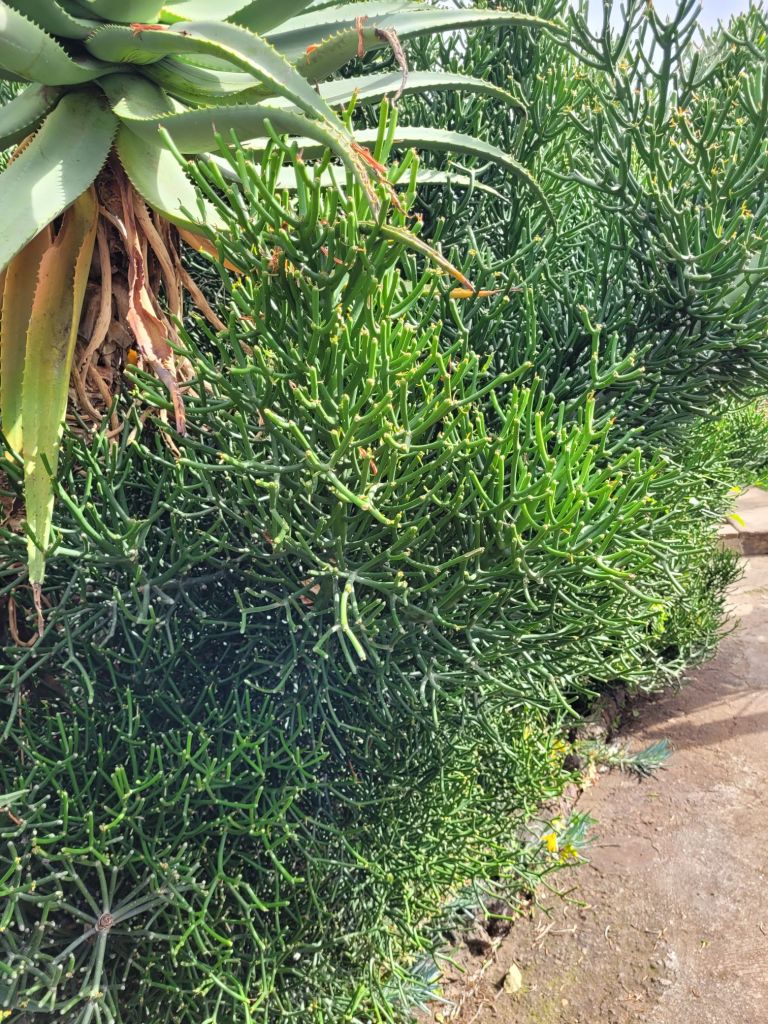
some with extraordinary flowers
and a large numer of cacti – with their attendant spider aerial metropoli. These are difficult to photograph, especially with a mobile phone camera, so it isn’t very clear. Many of these plants were enveloped by complex web constructions.

Palms – from all over the world – are also grouped together. I thought this fish-tail palm from Indonesia made a graceful contrast to the larger (and more familiar) trunks around it.

The Botanical Garden is also known for the red and green topiary, made up of different forms of amaranthaceae – apparently it comes from Brazil. It looked like colourful houseplants to me. But I know next to nothing about plants.
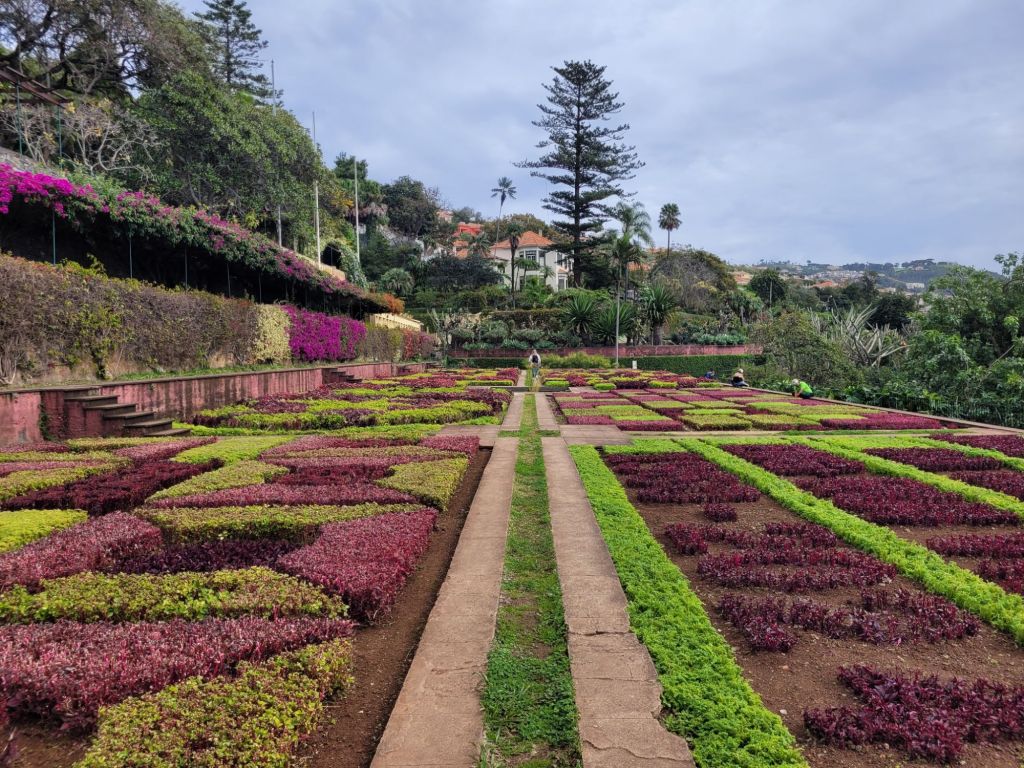
While it plantings were pretty, the labelling wasn’t hugely informative. Those interested in plants would possibly appreciate it more, but we enjoyed the views, the colours and seeing different types of plants grouped together. It was also a reminder of the global reach Portugal had in the past.
We then walked back down the hill and spent the rest of the day stretching our calves out (to no avail, they caned the next day).
The Tropical Gardens provide a contrast, not only in terms of price (double) but in terms of the objectives for the gardens.
Given the distance (it’s slightly further up the hill) and our aching legs, we took the cable car – another Funchal ‘top ten things to do’. A couple sharing our car spent much of the journey speculating on the cables, how they serviced the whole mechanism, how often it was inspected, how windy it had been on the previous day, whether it would be windy on the way down…
Given Roger’s fear of heights, none of these topics were particularly helpful, so we were both relieved when we arrived at the top.
A Milanerium olive tree is the centrpiece just inside the entrance to the gardens. It was transported from Portugal, the victim of an engineering project, and is said to have been planted by the Romans. It has also grown around a rock, so it has two claims to fame.
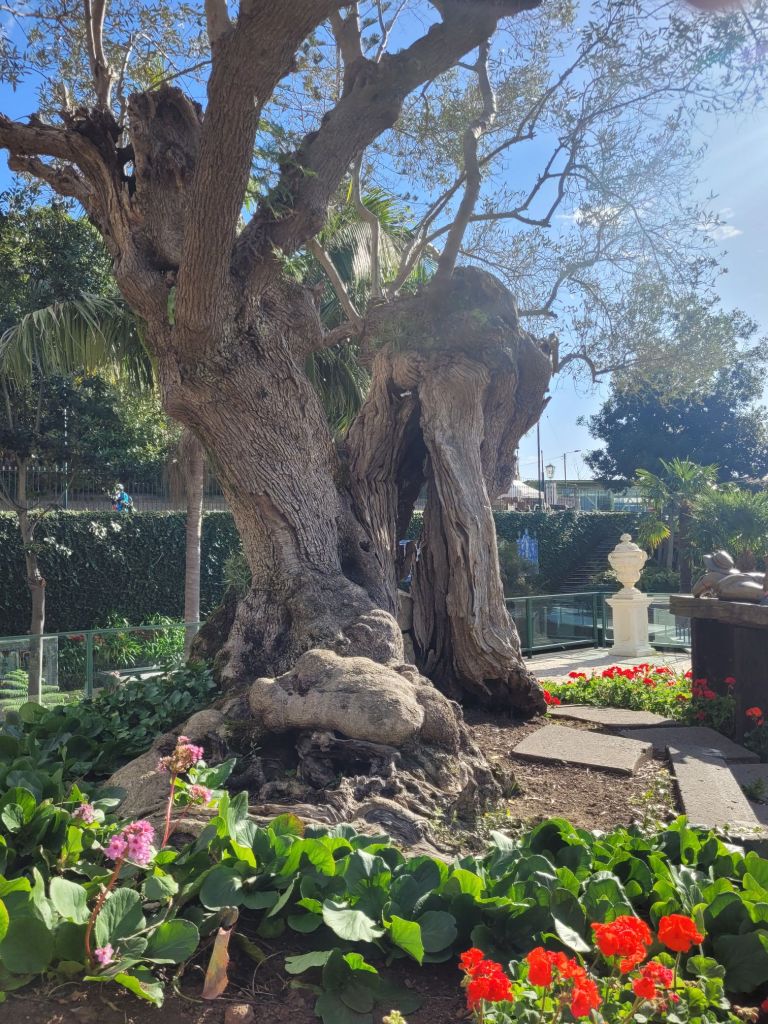
The Tropical Gardens are all about gardening as an art form; the plants are interspersed with sculptures, mosaics telling the history of Portugal and Madeira, fountains etc. The large Japanese garden gives it away – it’s all about the look and atmosphere – labels are few and far between.
Red walkways (vaguely Japanese in their design) run above the gardens and cobbled pathways run alongside streams and ponds.
It’s incredibly beautiful and peaceful.

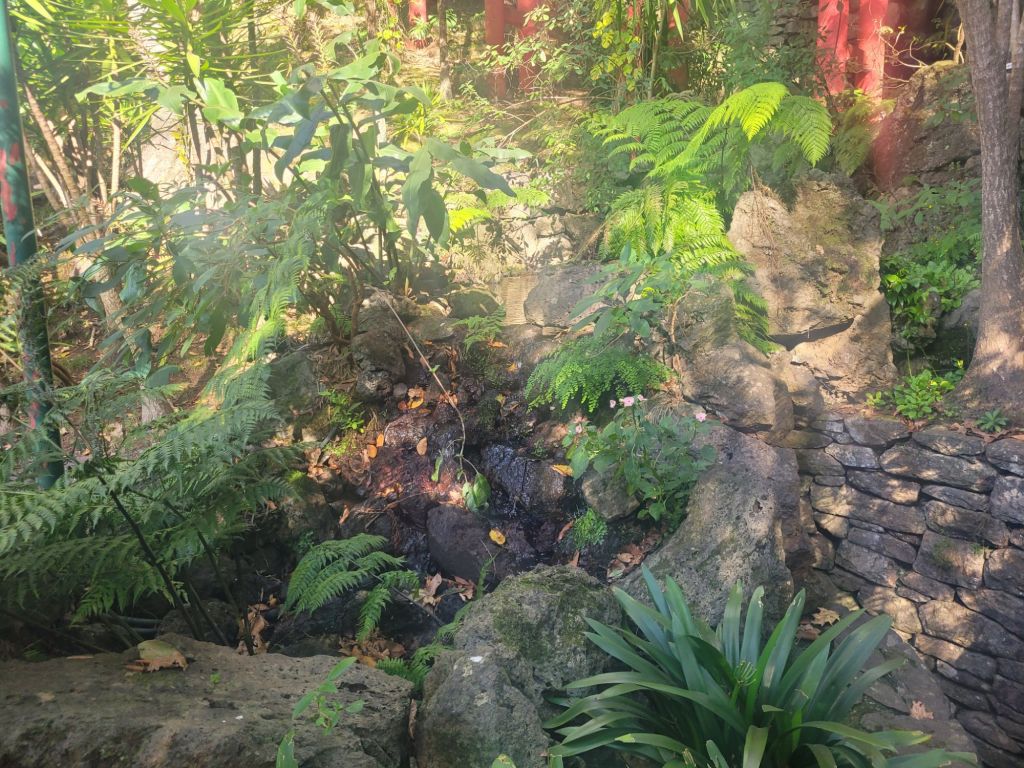


Two thirds of the way down the hill (yes, it’s ALL downhill) there is a wonderful house with an ornamental pond/lake and a few fountains.

For some reason they have a few flamingoes and a couple of swans; it was as if no-one had seen either of these species before – they attracted an inordinate amount of attention (all of it too close).
The house and its gardens were initially a home, then a posh hotel, then derelict and now apartments. It has wonderful views – as long as you’re in a front room!
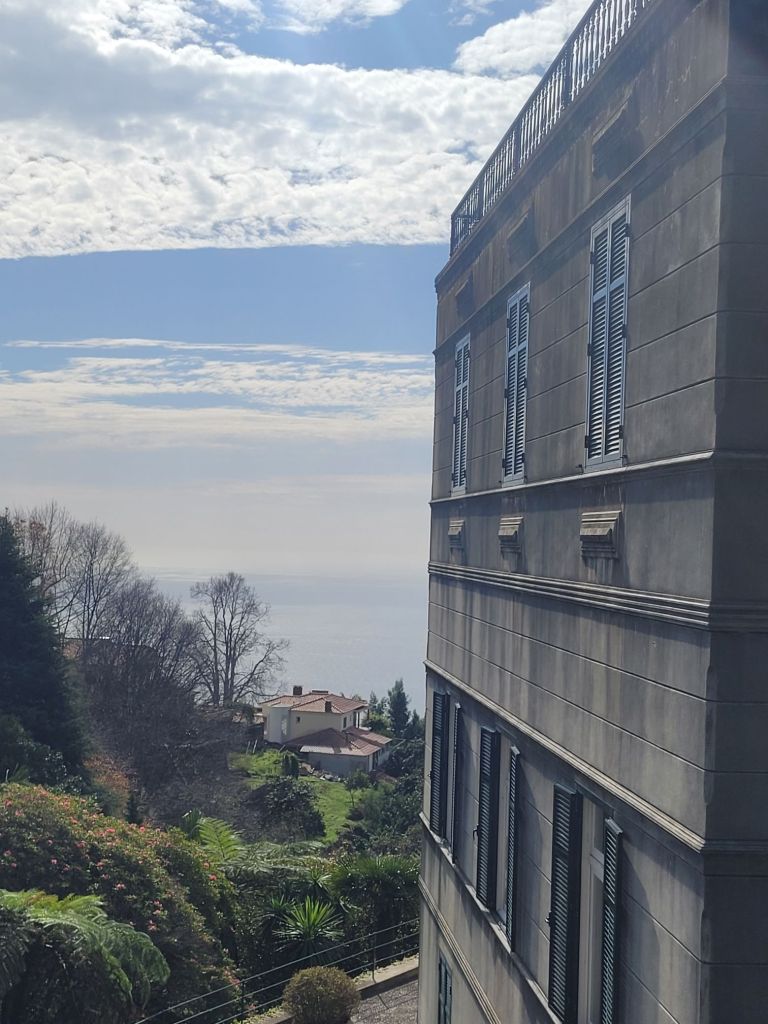
As you enter the gardens (at the TOP of the hill), they tempt you with the offer of a ‘ free wine tasting’. This happens at the BOTTOM of the hill. Of course, ‘bottom of the hill’ is relative, as you are still towards the top of the ravine, but once you have your extremely small, single glass of whatever they are offering, you then have to walk back up the hill to the exit.
There is a shuttle: they charge separately for it. We felt it was a bit of a con, so we walked. Surpise!
After the gardens we strolled to Monte (a three minute stroll) to see the church and catch a glimpse of the basket toboggan – another of the ‘top ten’.
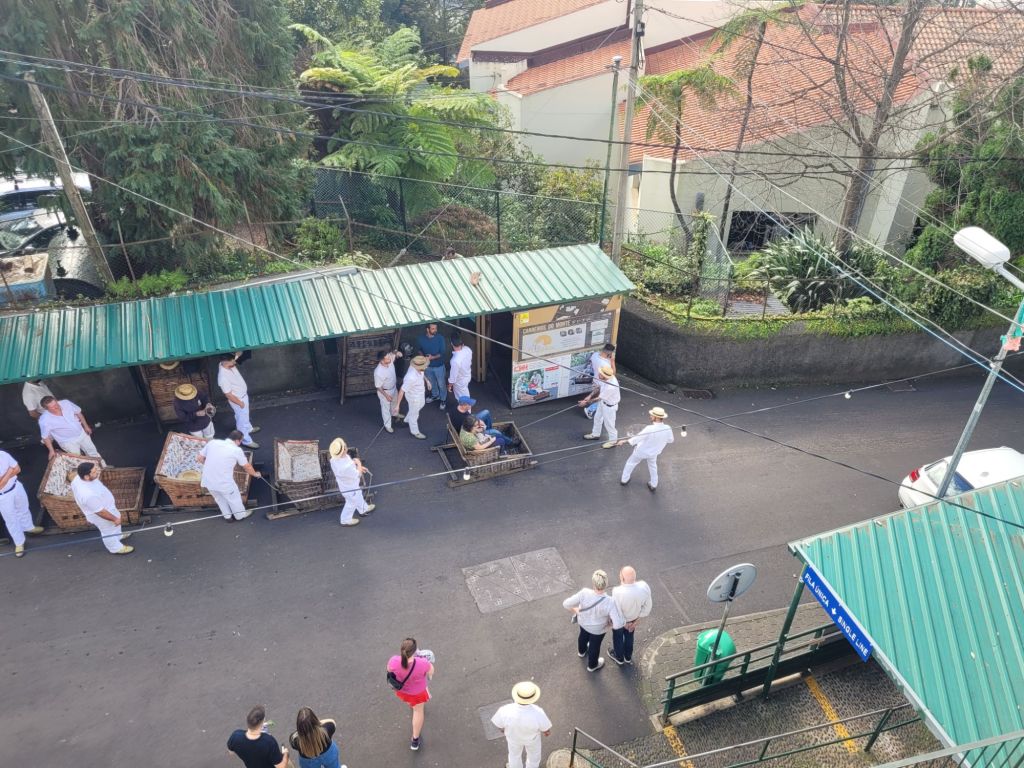
You sit in the basket, two men stand behind and steer and all of you hurtle down the road trying to avoid the oncoming traffic. Not our idea of fun. Plus it doesn’t go all the way down, so you still have to walk, take a taxi or a bus to get back to the centre of town. Another black mark.
Apparently it does end right outside a bar but this was not sufficient enticement for us. The cable car was adventurous enough for us, particularly as the doors didn’t close until right before we left the station – and I do mean ‘right before’. Roger nearly had a panic attack and I confess to being a trifle concerned myself. But they did shut and we dropped gently down to sea level.
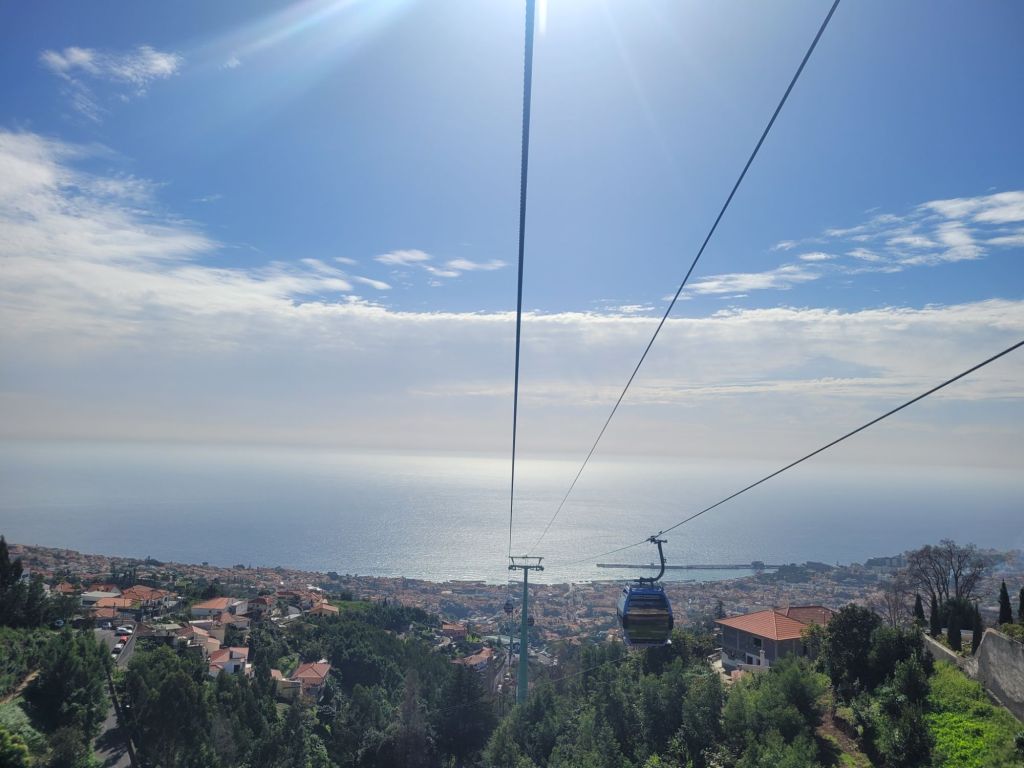
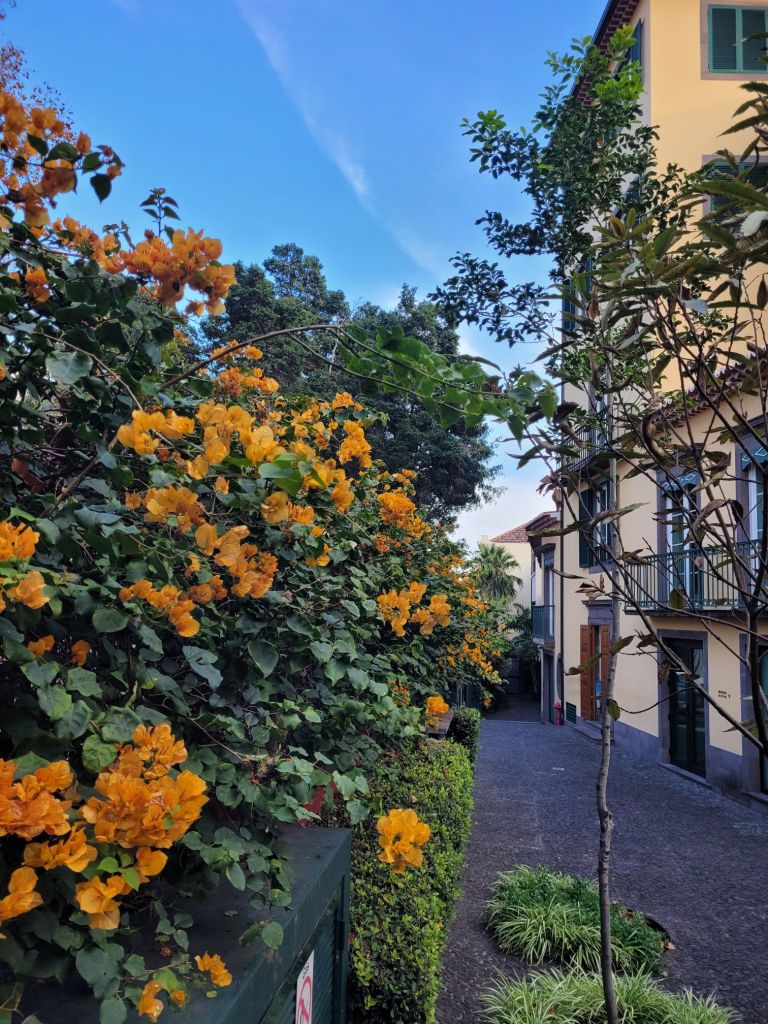
The sheer variety of the flora in Madeira has to be seen to be believed. I have never seen so many different colours of bougainvillea, ever. The standard pink/purple is actually in a minority. Every other colour (except blue) seems to be more common, including yellow.
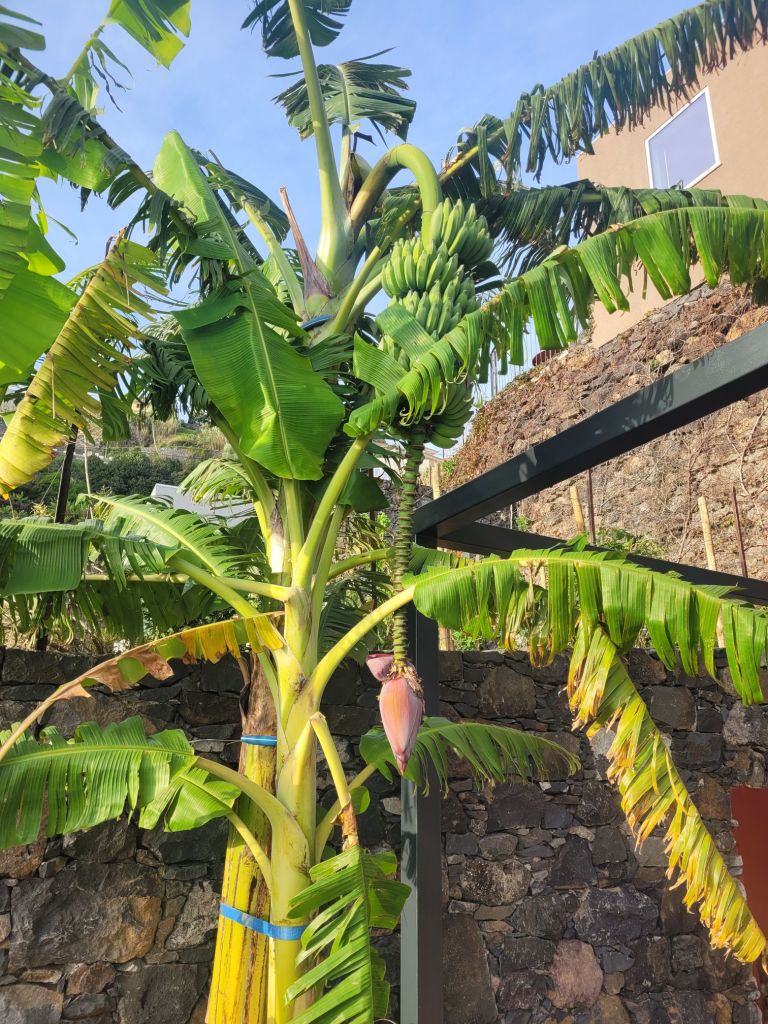
There are also banana palms – with bananas, not only in plantations along the hillside terraces but also in people’s gardens.
And while I really am not a plant person (a repeated observation to place emphasis on this point), it is still breathtaking.
And very, very lovely.
 Retired? What now?
Leave a comment