The Madeira archipelago (to use its formal name) lies off the coast of Morocco. This section of a map shows its relationship to the other islands off of Africa.
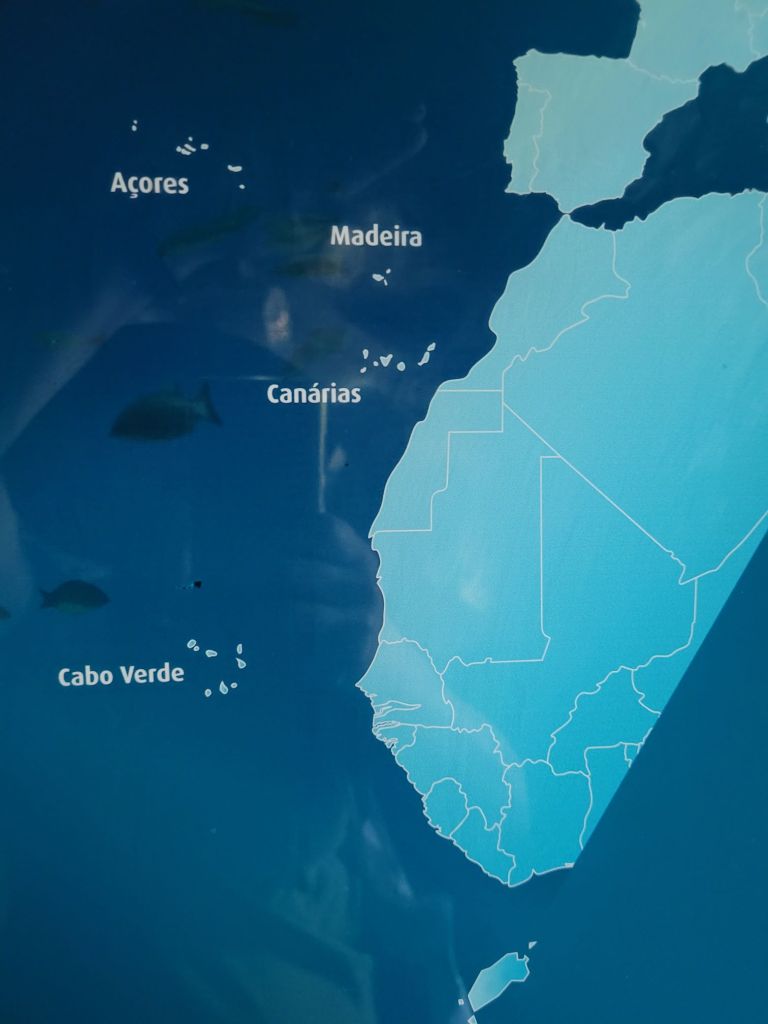
The Azores are also Portuguese, Cabo Verde was Portuguese (or at least, they speak Portuguese there) and the Canaries are Spanish. All of these islands served the same purpose for their respective controlling countries: staging posts for the ships moving goods to and from their colonies.
Madeira is essentially an enormous volcano that rises a long (LONG) way from the floor of the Atlantic. There are few beaches, even fewer natural harbours and miles of sheer cliffs.
While the Phoenicians did make it to the Canaries, there is no evidence that they made it to Madeira – and even if they had, they wouldn’t have found the type of harbour/anchorage that they liked. On the other hand, there appears to be some evidence that the Vikings did make it to Madeira. I have no idea where though.
Being a large, dormant volcano, the island has Geography with a capital ‘G’; this has resulted in an amazing landscape that must have been almost impassable by land before the advent of the current road system.
The whole island is a series of ravines that run from the top of the island down to the sea. Everything is steep. Everything.
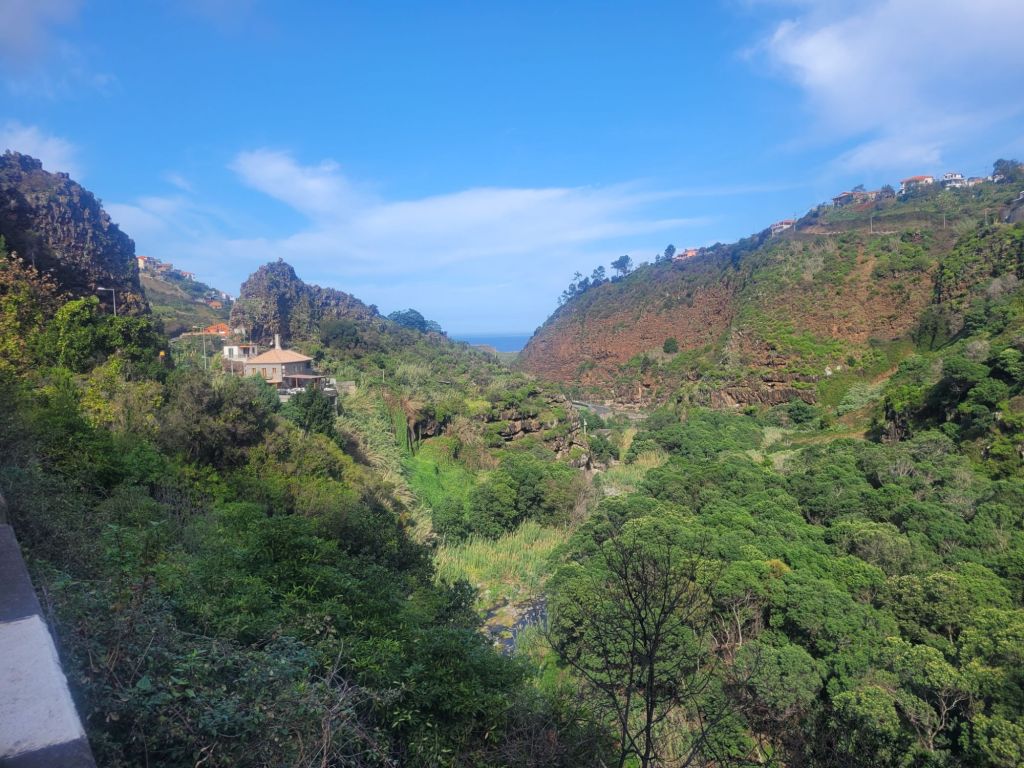
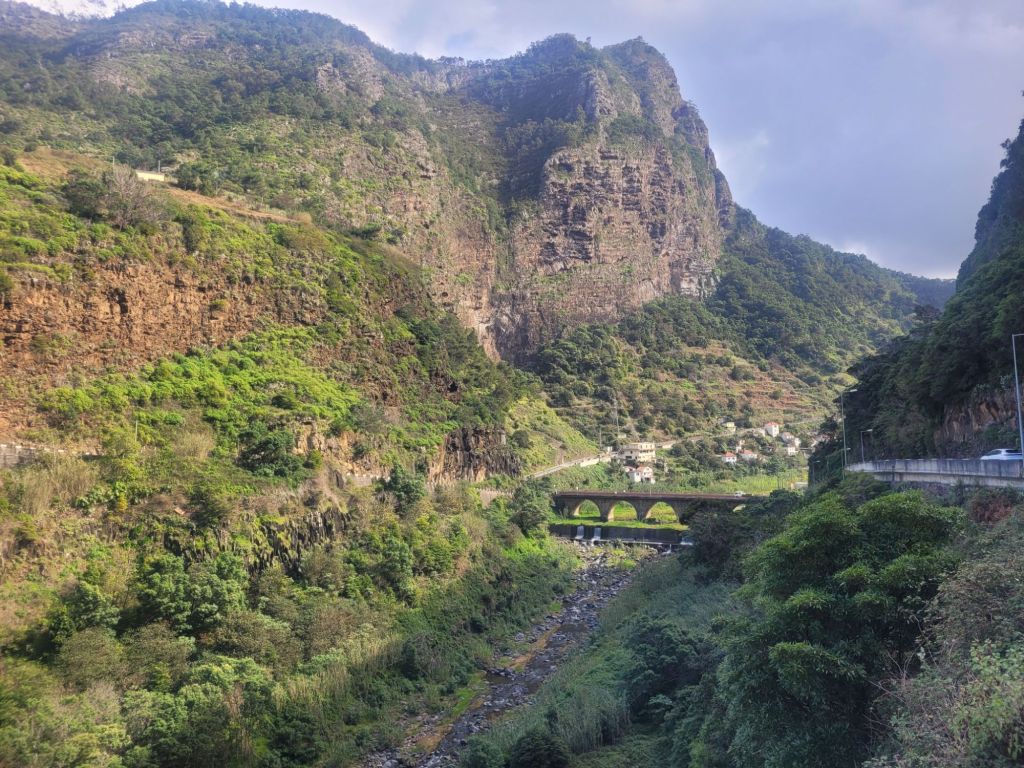
The south part of the island is less ‘massive’ and seems (to my uneducated eyes) to be more ‘running’ down to the sea. Whereas the North side is definitely ‘massive’ and positively plunges, or hurtles, into the sea. This is probably a huge generalisation, by the way.

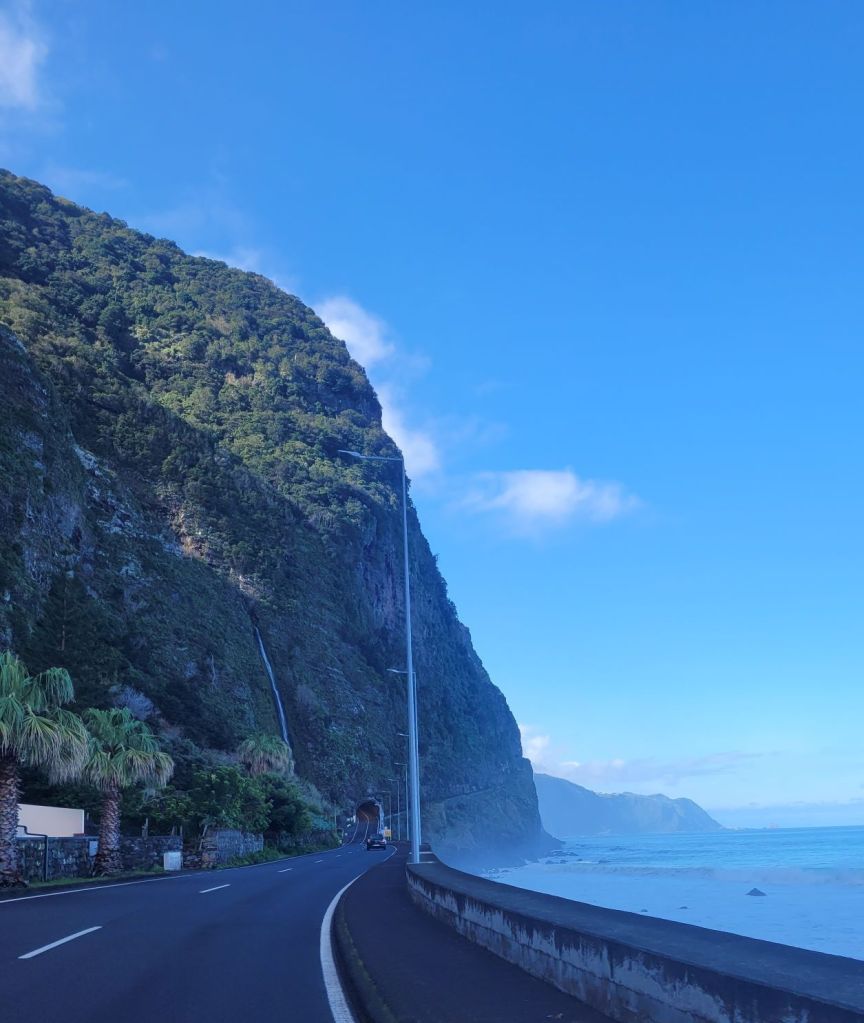
The solution to all this Geography is tunnels. Lots of tunnels: short, long, flat, curved, uphill, downhill… it’s all in the tunnels.
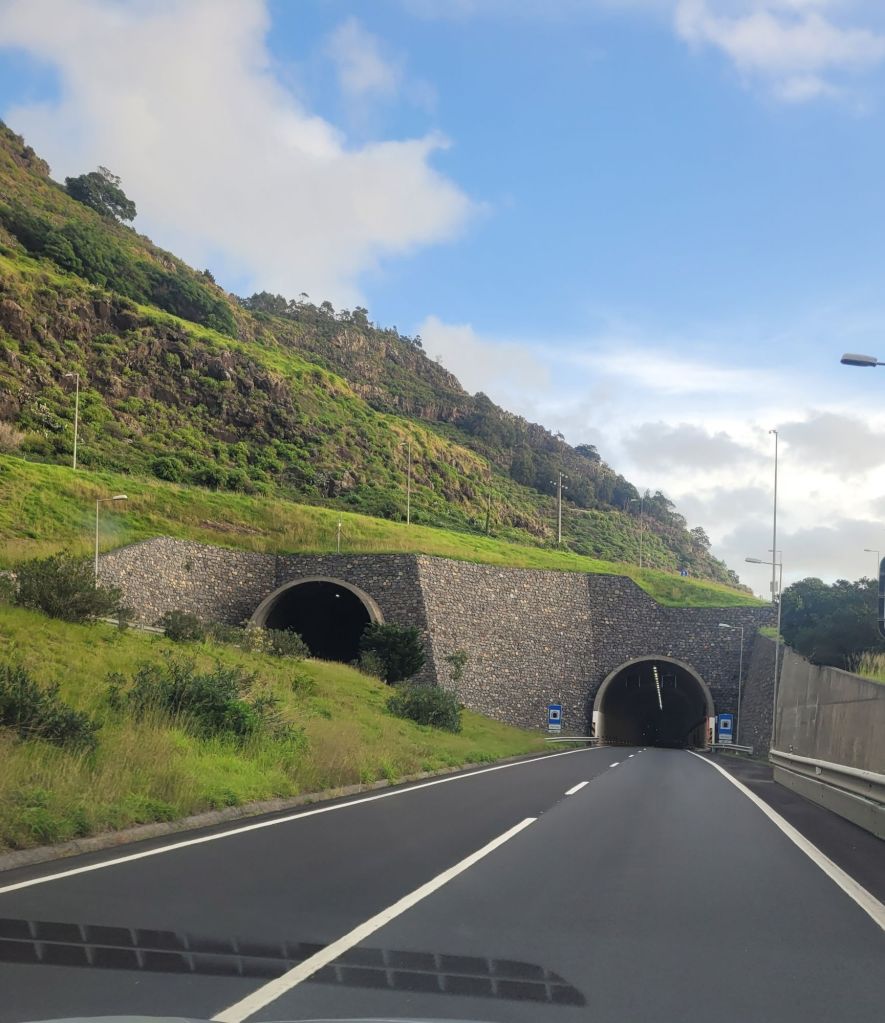
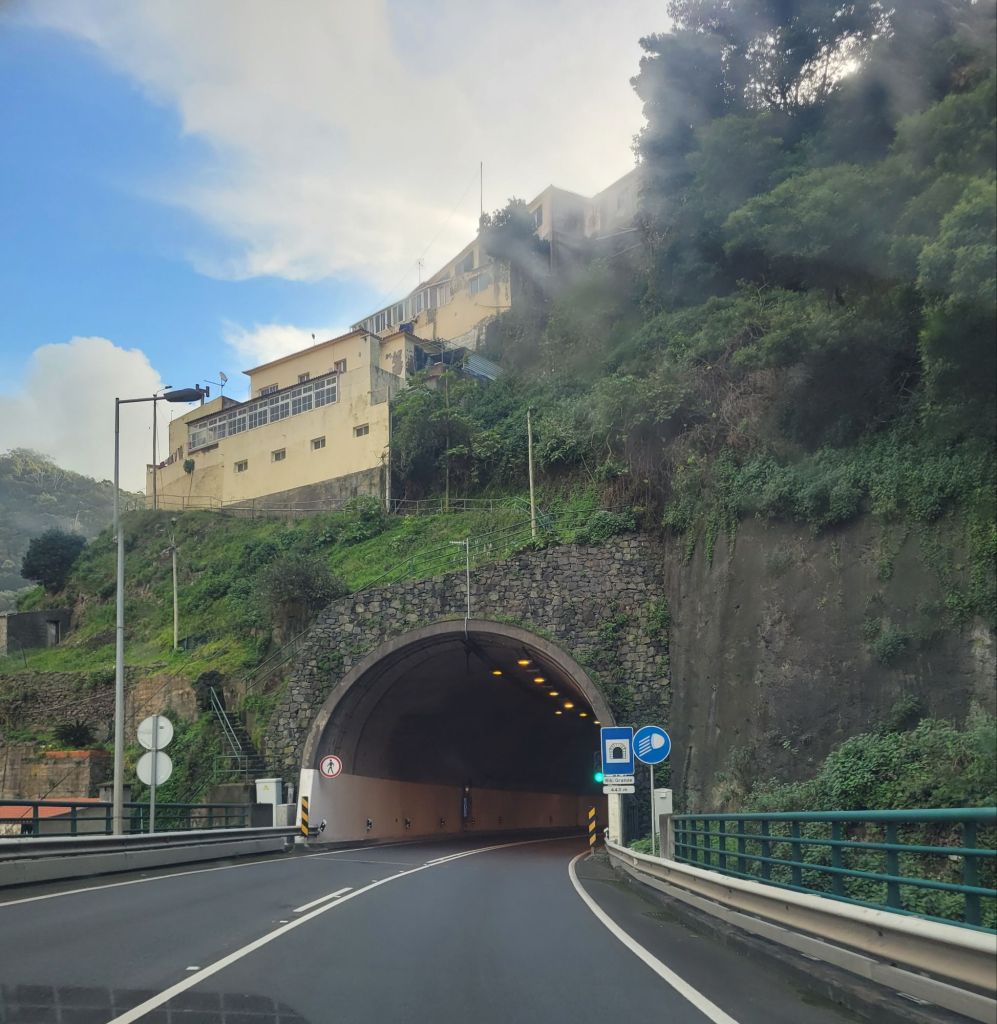

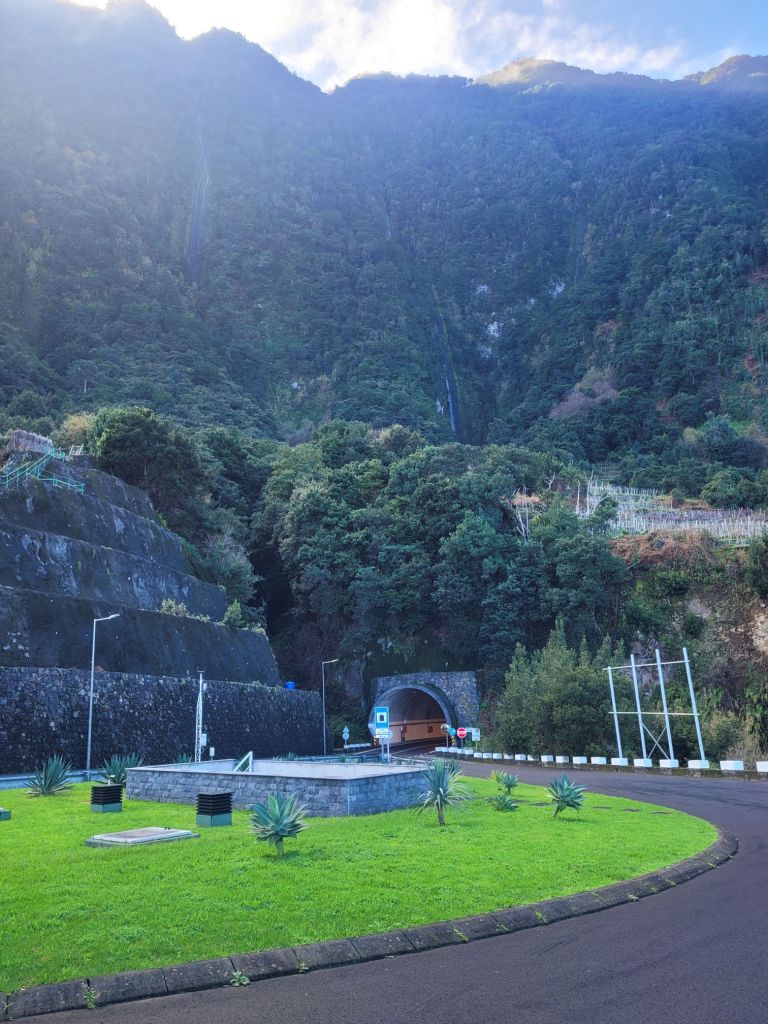
Occasionally there are galleries – usually before or after a tunnel – that run around the edge of a larger ravine.

In some places (Funchal in particular) there are three layers of road:
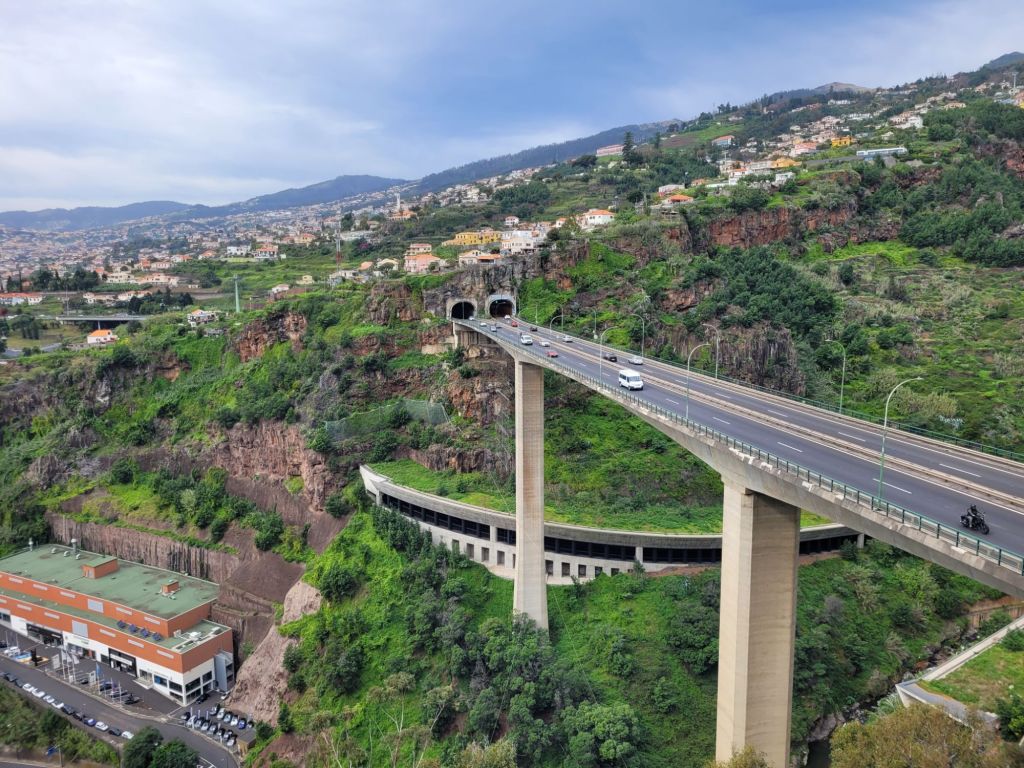
There is an ‘old road’ along the north coast (impassable to cars now) which you can sometimes catch sight of – it also has a few tunnels and bridges.
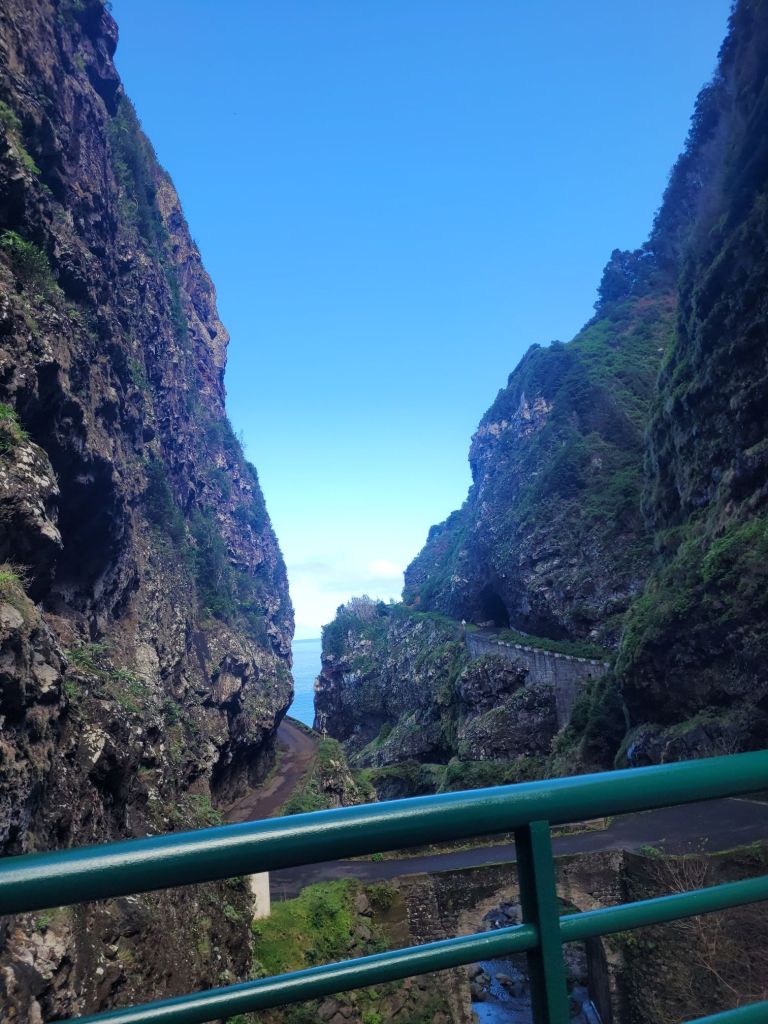
And while the road system works well, and circumnavigates most of the island, it makes for boring driving because most of the time is spent in a tunnel.
We went through one, very long, tunnel with a downward gradient and a sharp bend; after about 1.5 km it ended in a very small roundabout, with a right hand turn into yet another long tunnel. Sadly, I didn’t get a picture.
On the south side of the island you do get a bit of time between tunnels to at least register where you are and possibly turn off to an inland or seaside village. This is not the case on the north side, where you pop out of one tunnel, blink and are back in another tunnel, without necessarily having a junction going anywhere else.
The longest tunnel we drove through is 3.1 km long, and there were many tunnels over 2 km along the north side than there were on the south.
The coastline is rocky, with few (if any) natural sandy beaches – mostly you see rocks, small rocks and concrete erosion defences. Or cliffs!
On our way round to our final hotel, we stopped off at Porto Moniz on the northwest coast to see the natural rock pools. Views from the top were incredible and the switchback down to sea level was not as bad as we thought it would be.
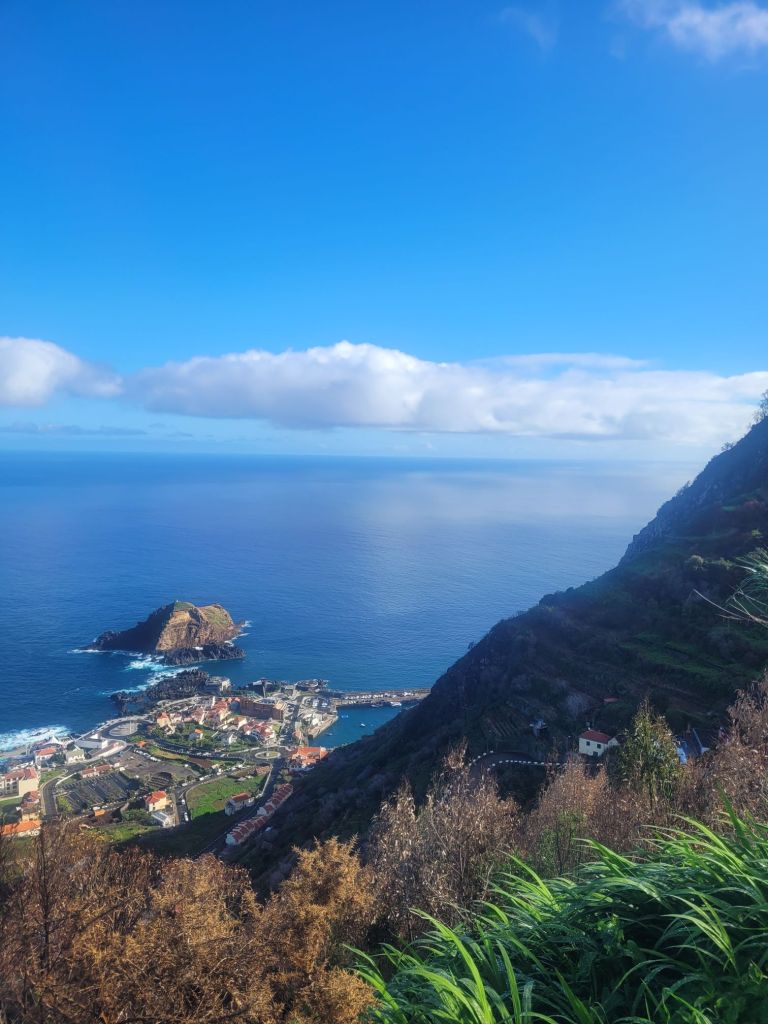
The natural rock pools were beautiful – well, the whole sea front to be honest. The seafront is a series of jagged black rock (ancient lava?)
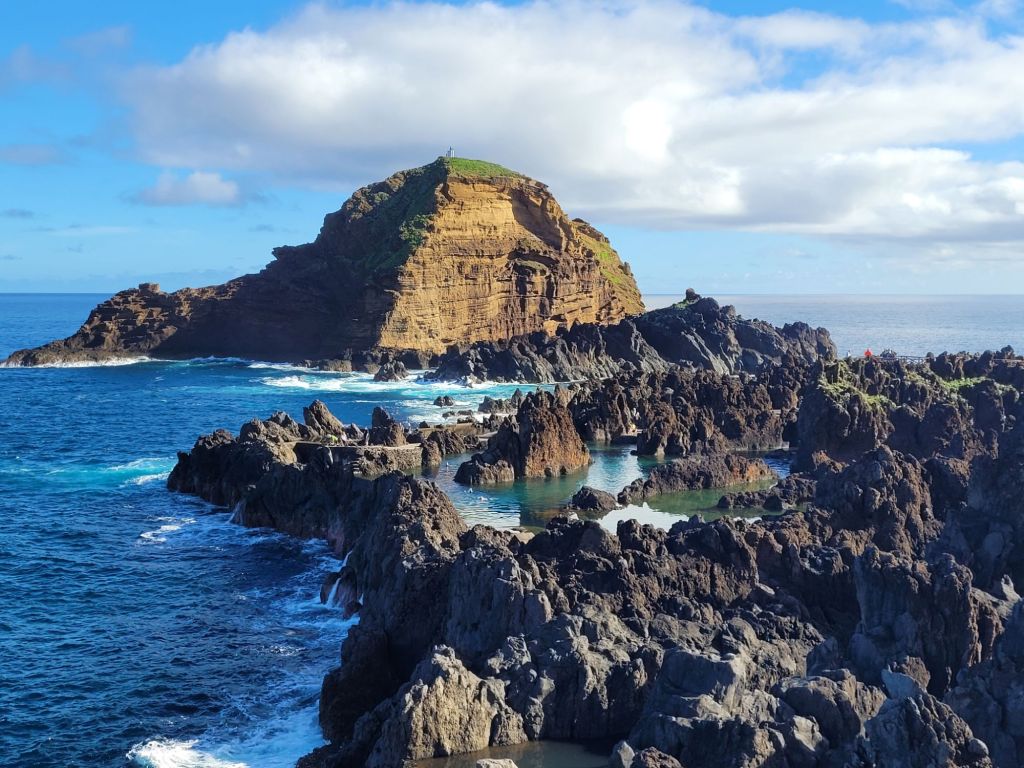
Near the larger rock, a sequence of pools has formed, linked to the promenade by a series of concrete walkways. The water in the pools is crystal clear and utterly still, in contrast to the foaming waves just beyond.
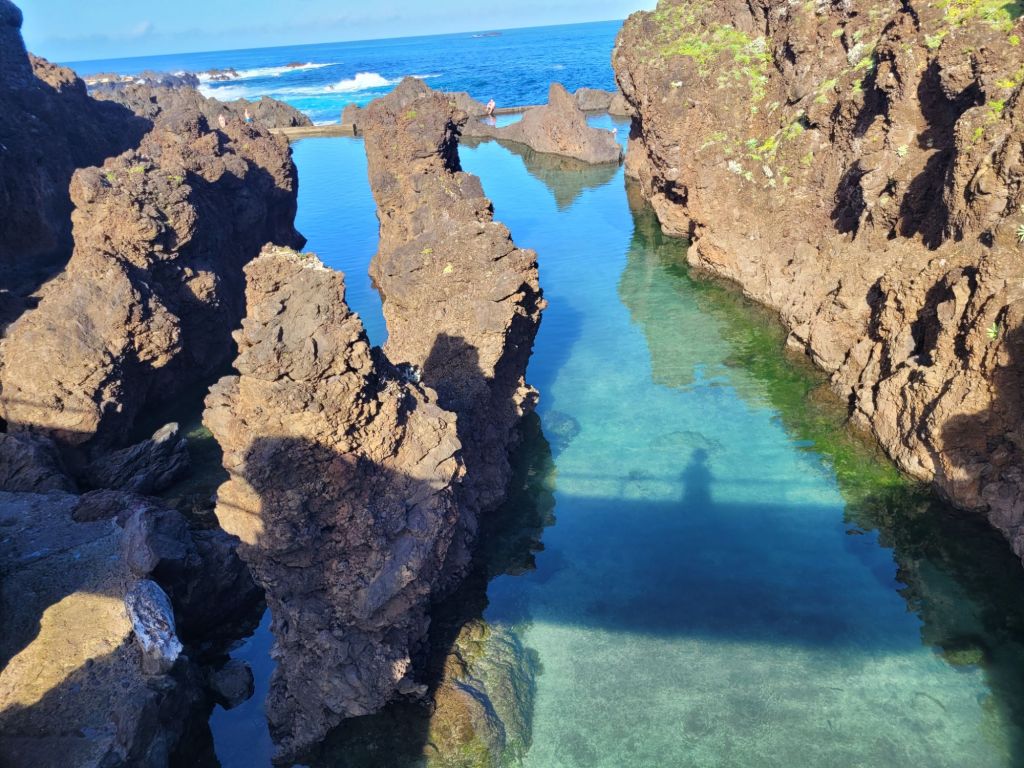
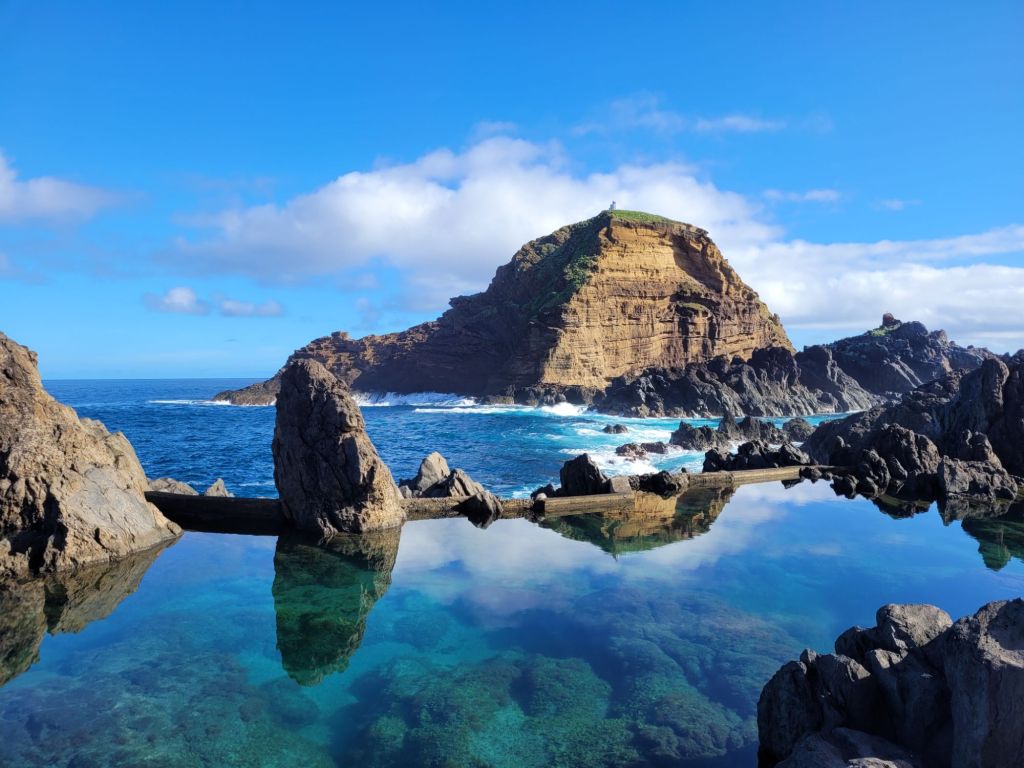
And people swim in them. It’s a rather surreal situation, the still water surrounded by the roar and hiss of the waves and people bobbing about gently – it’s all a bit hushed.
The water was freezing and don’t even imagine that I did more than dip my finger in it. Having heard words like ‘brisk’, ‘bracing’ and ‘takes your breath away’ I didn’t feel the need to do more than a finger.
Looking east across the small harbour, the rocky coast stretches out.
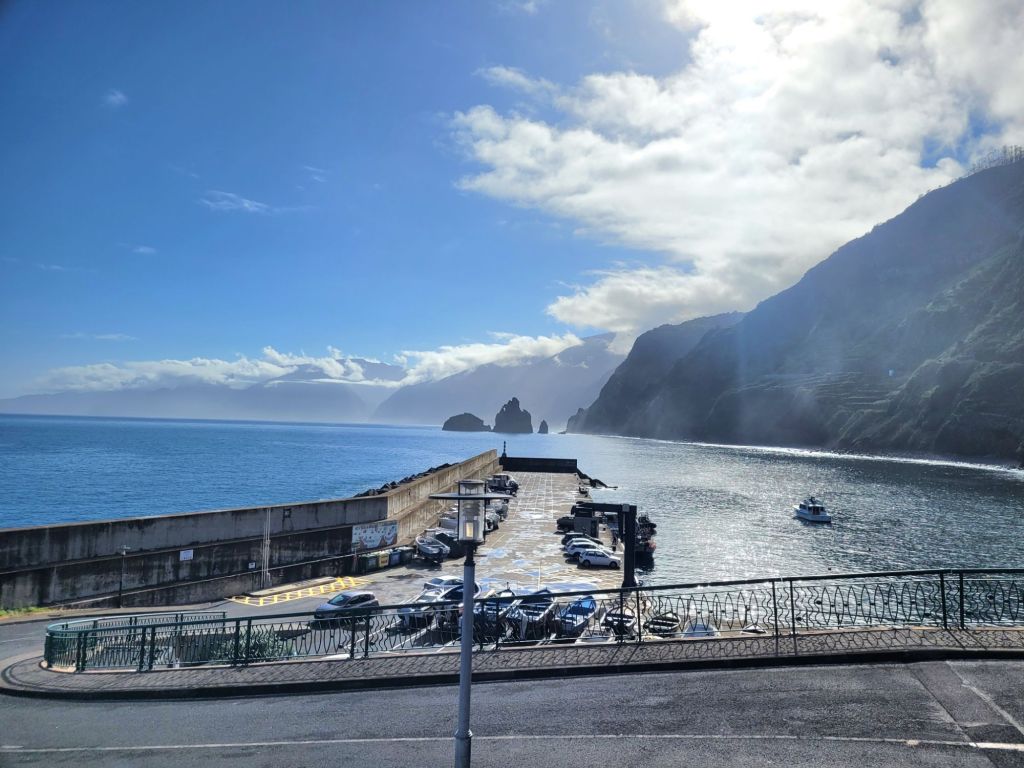
Accessed via a tunnel as you leave.
 Retired? What now?
Leave a comment