With over 800 km of levadas, most of which can be followed on foot, walking is a big deal in Madeira. You could probably traverse the whole island following the levadas, if you wanted to. We tried several levada walks and one non-levada one.
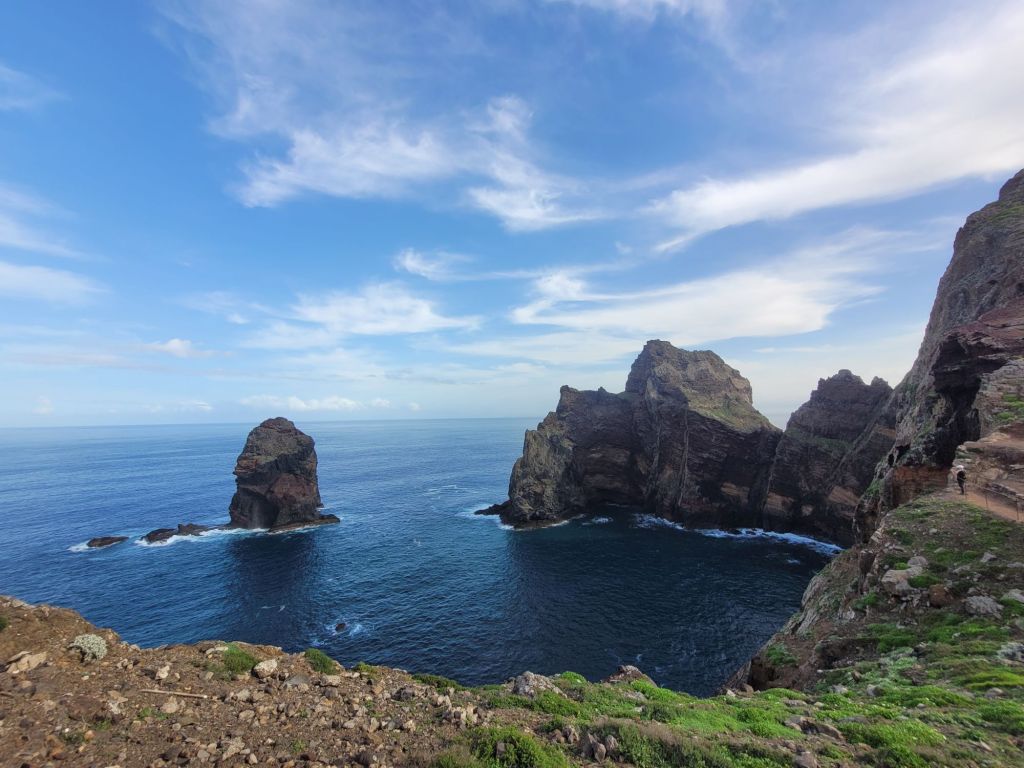
The south-eastern corner of Madeira, the Ponta da São Lorenço, is a partial nature reserve on an uninhabited rocky peninsula. Unlike the rest of Madeira, which is covered in trees and shrubs, the peninsula is almost completely bare due to the wind. It’s said to be where the discoverers of Madeira first landed and it’s definitely the first view you catch of Madeira if arriving by plane as the flight path runs directly above it.
There is , the more enterprising one parking area, with two snack vans having towed in a portaloo (two euros, the queue was long).
The walk starts on stone steps (down) and then wooden steps (up). Then it’s stone most of the way with the occasional scrabble over rocks.
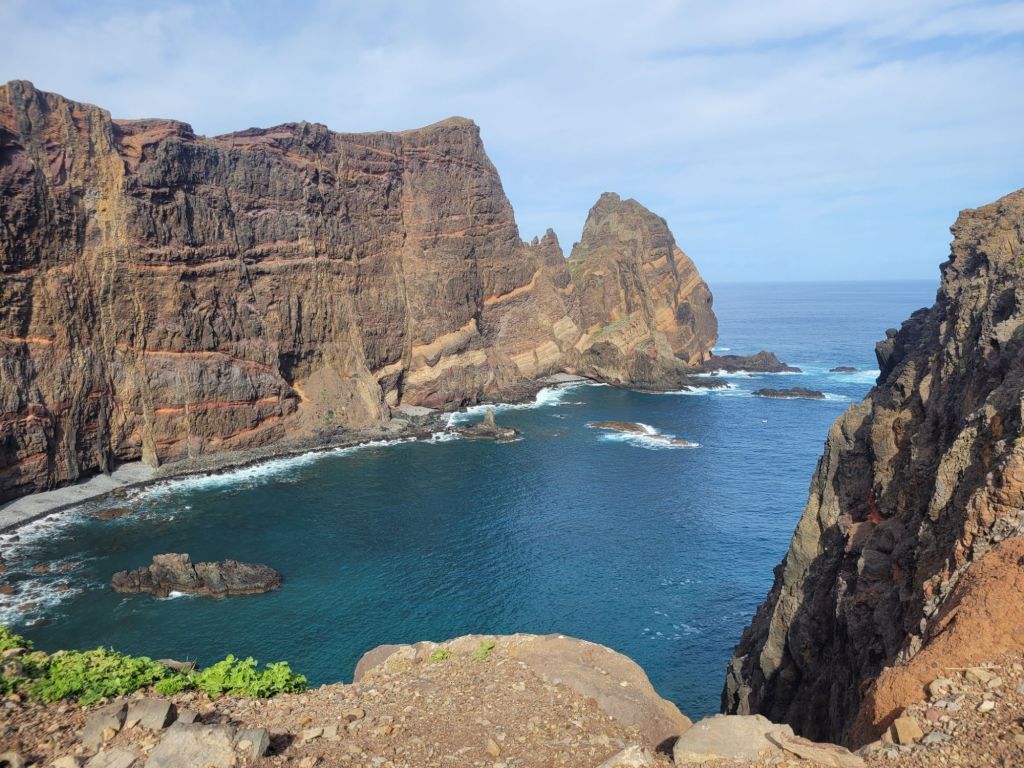
The views are spectacular; but it is a bit ‘blasted heath’ as you move further towards the end. It’s also busy and potentially dangerous.
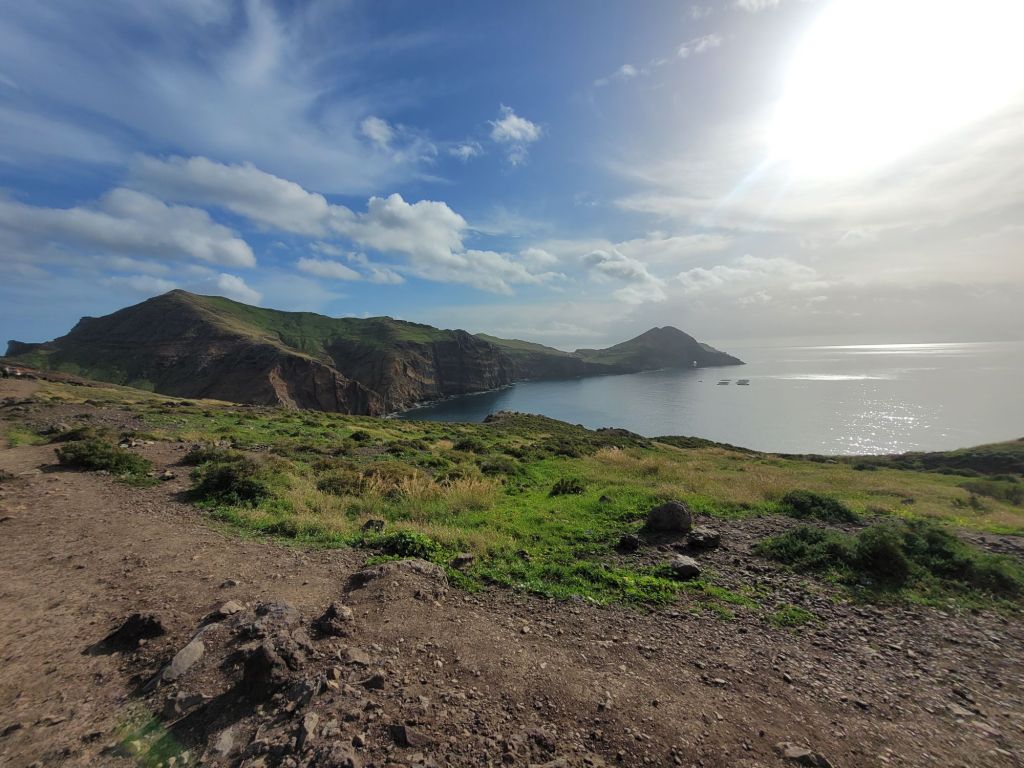
There are views back towards Funchal and the south coast and on the opposite side, views north up the eastern coast.
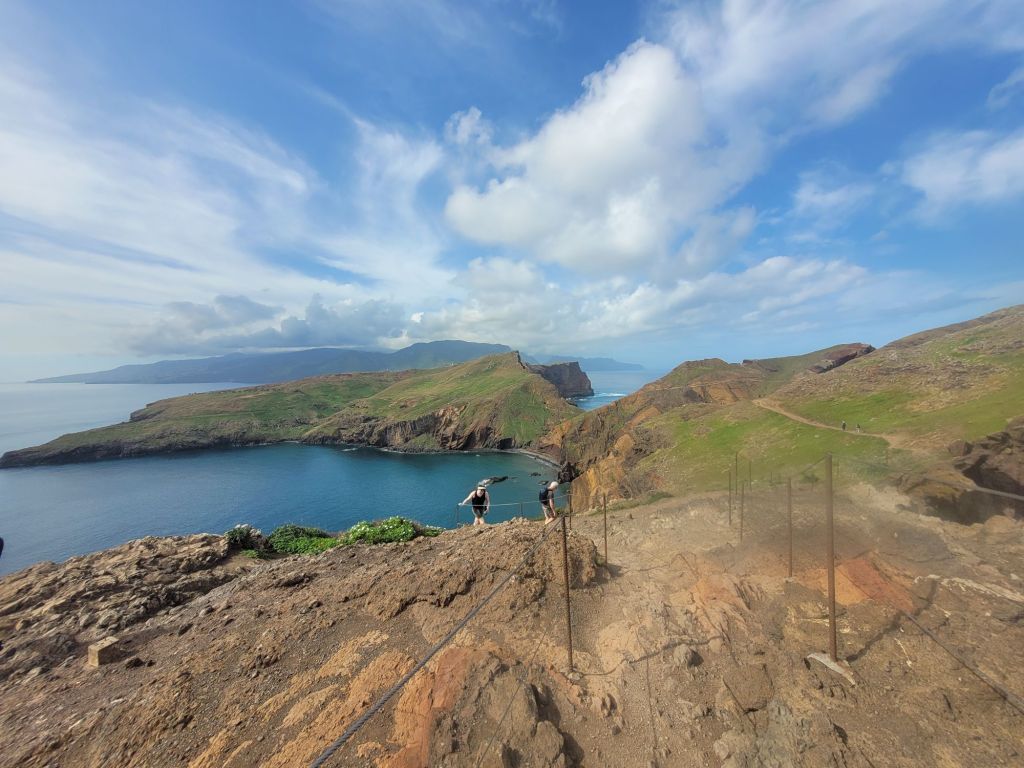
Everywhere the rockiness of the coastline is obvious, as are the ever present cliffs.
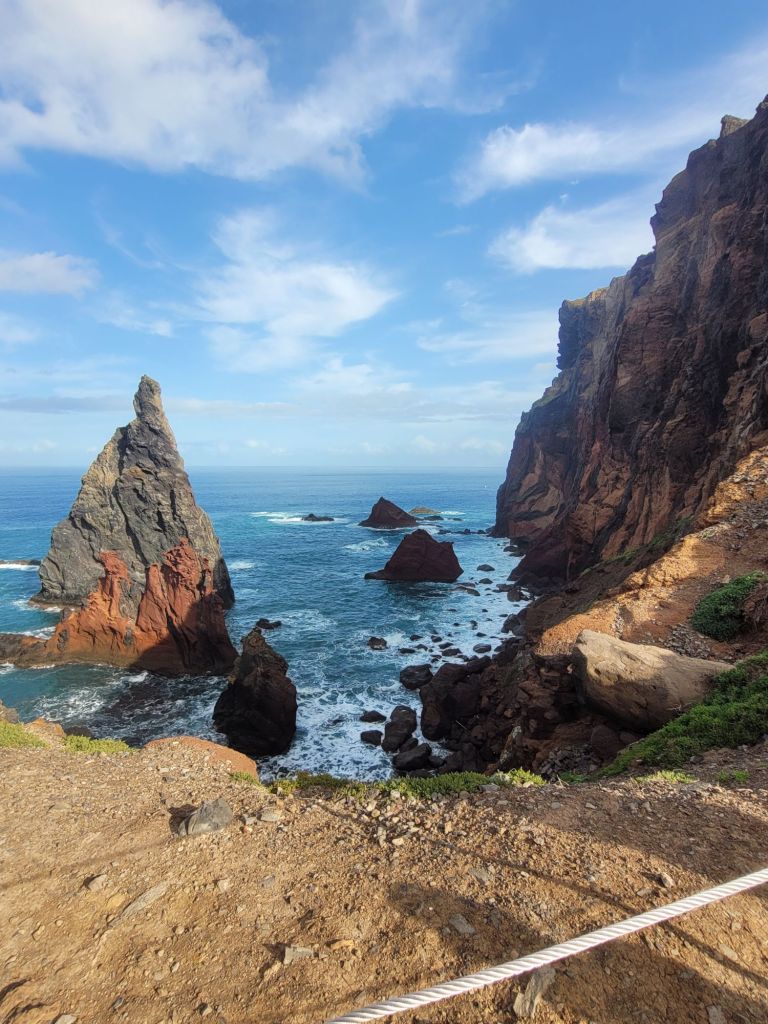
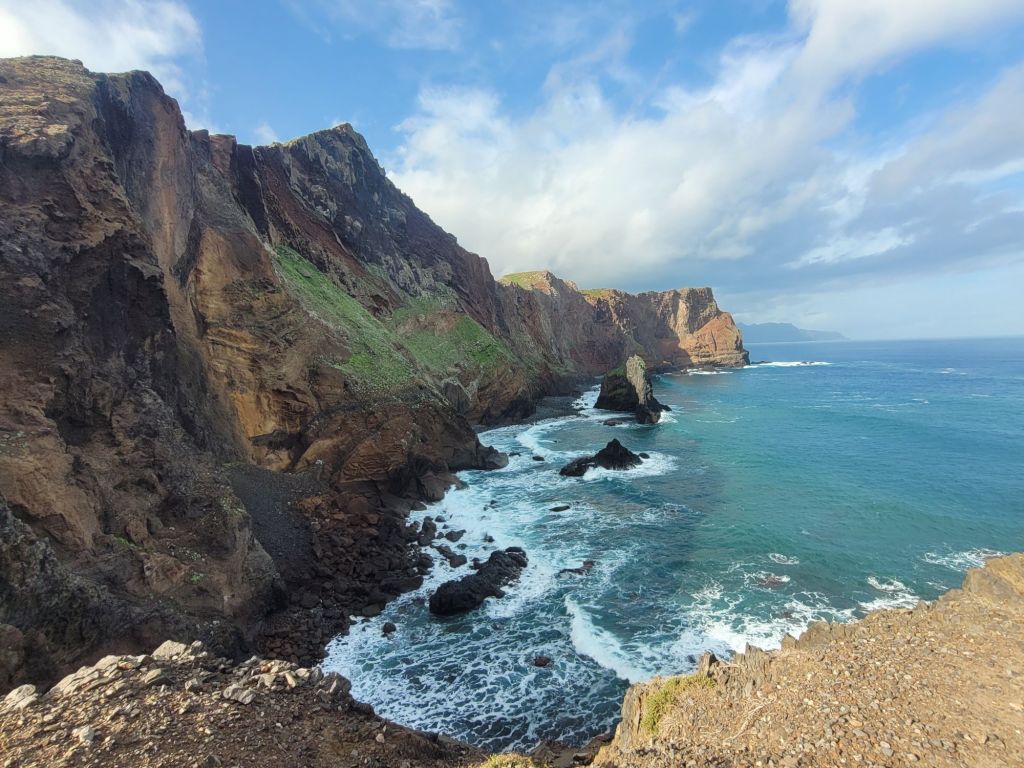
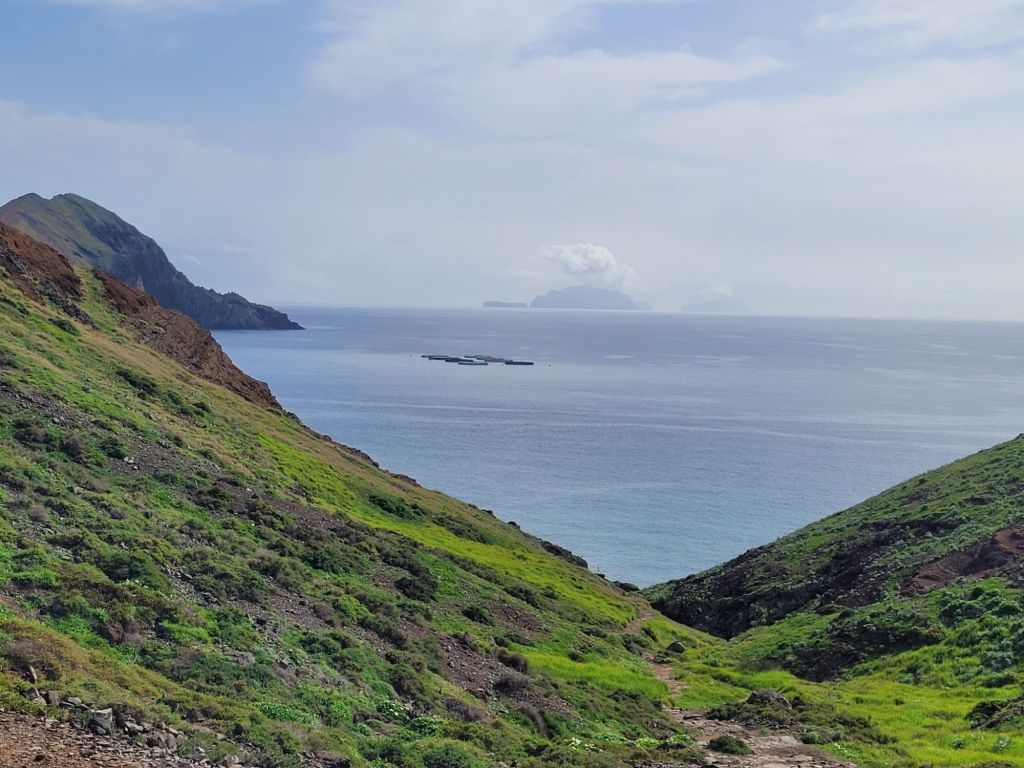
If the weather obliges, you can see Porto Santo and the Ilhas Desertas,
And the waves against the rocks are impressive even when the sea is fairly calm.
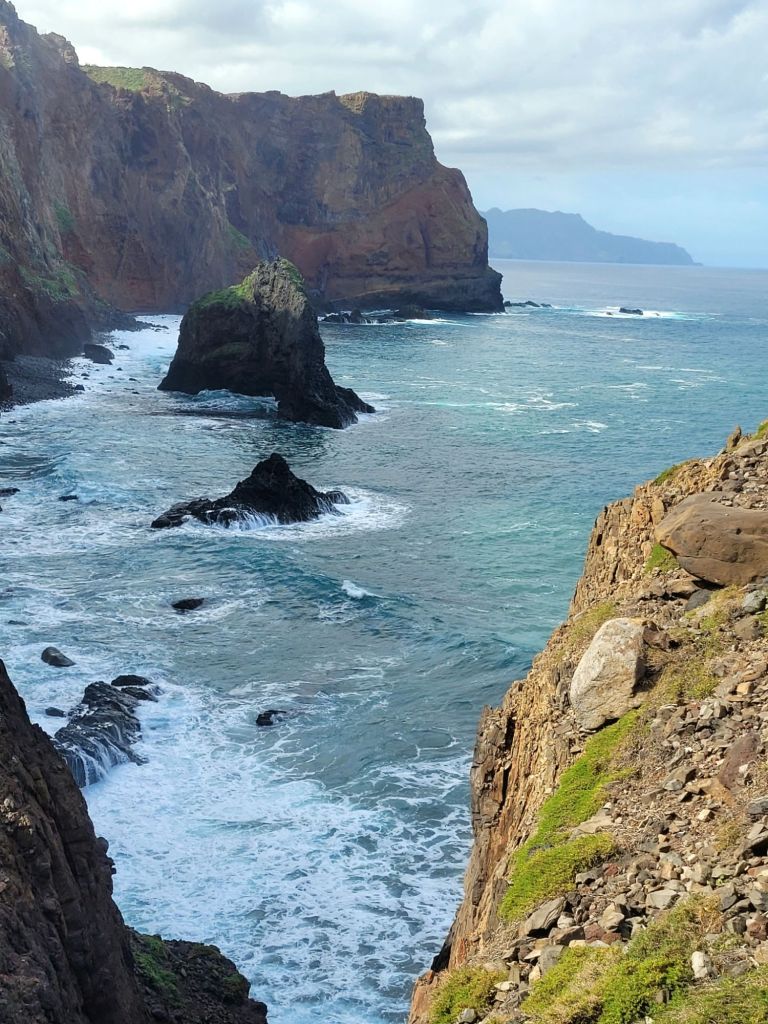
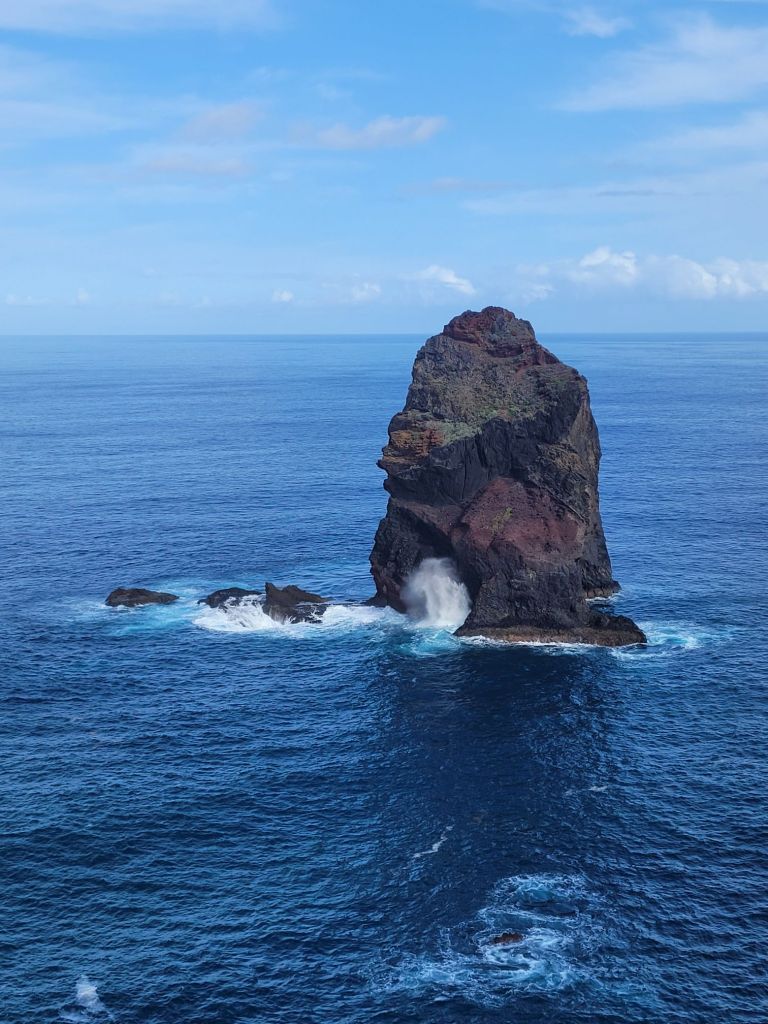
There are a lot of sections where those who have issues with heights are challenged and there are places where there is no clear path, just bare rock across sloping ground covered with loose stone chips.
Some had babies and young children (which gave us both nightmares as there is little to no protection from many of the drops), some were glued to their phones as they walked (no prizes for guessing their ages) and some had odd footwear.
Solid, grippy footwear is a must, water is a must and so is suncream (AND a hat). There is no shade and although it isn’t far in terms of distance, the route is a steady series of ups and downs that take time.
Worth doing, but start before late morning! At almost the furthest point there is a small restaurant – loos cost one euro here – and another clever enterprise offering boat rides back to the car park (two euros per person).
We also tried to find a suitable levada walk in the mountains to compare to the section of the Levada do Norte that we did earlier on. We also wanted something fairly flat after the previous day’s ‘uppy downy’.
The Levada do Rei is popular, considered easy and safe, and features on many guided levada walk tours. It’s also up in the mountains, so you walk through the Laurissilva forest, which was added to the UNESCO World Heritage list in 1999.
Laurissilva forest is a subtropical rainforest that used to cover much of southern Europe and North Africa (a long, long LONG time ago) and Madeira is the largest remnant of this primordial environment.
We started our walk along PR18 with high hopes. It was flat, the forest smelled wonderful and we were on our own.
Water raced down the levada, on its way to power the water mill slightly further down from the start of the walk.
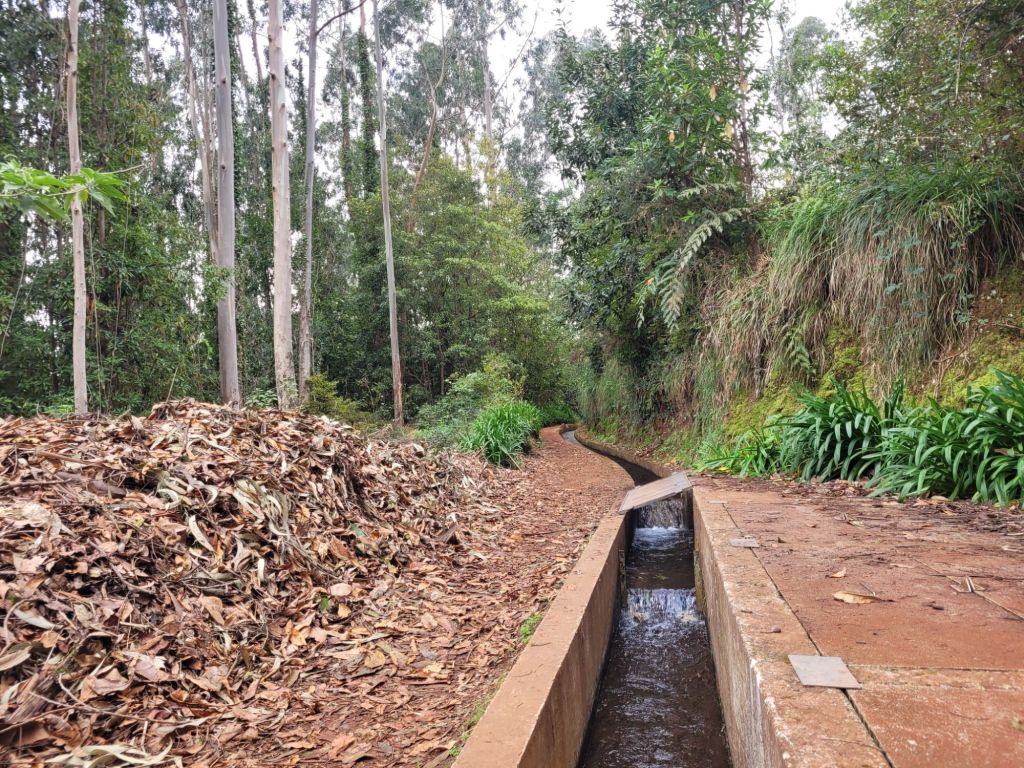
The reddish soil seemed an ideal place to dig a levada but rocks soon appeared.
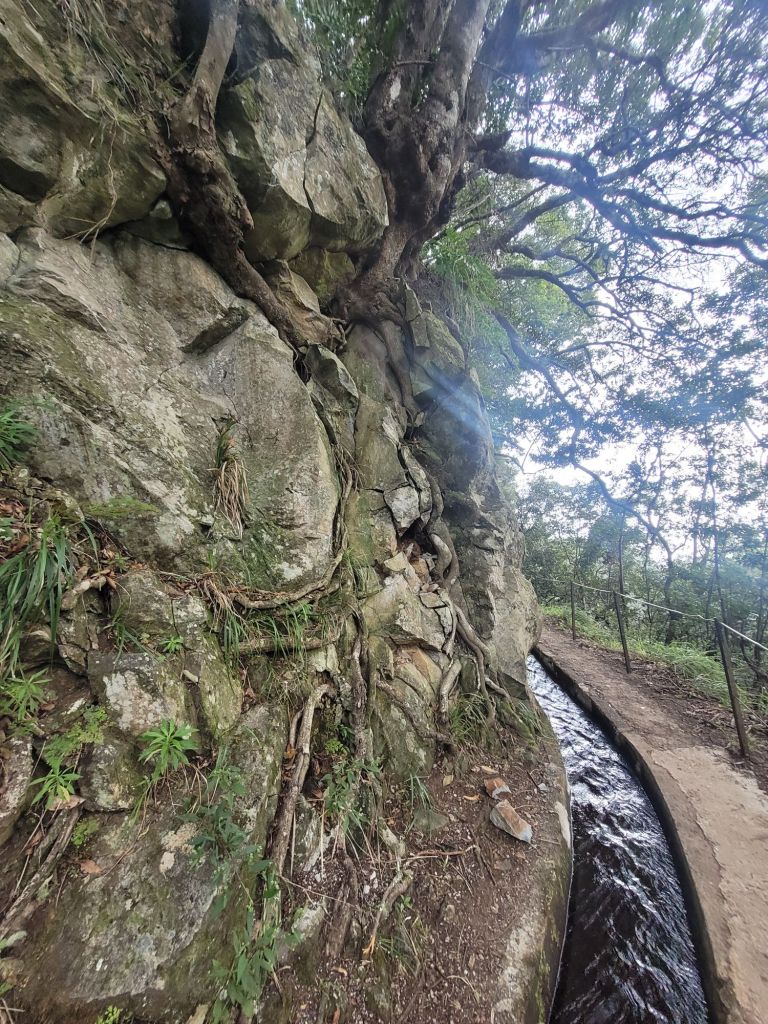
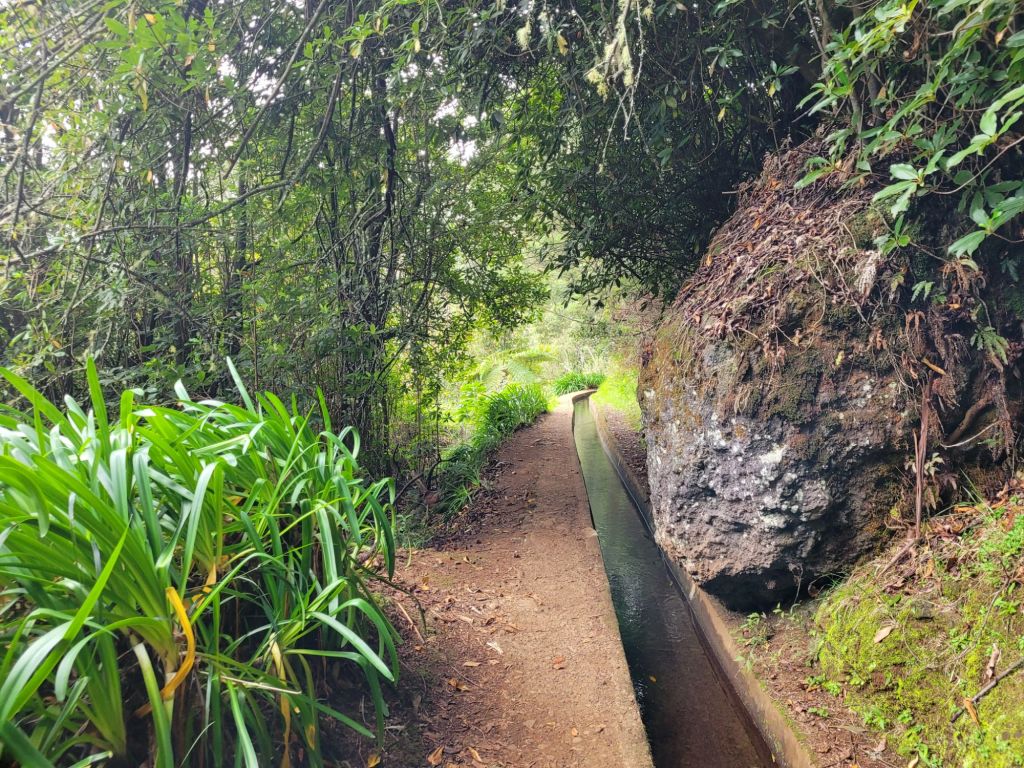
And then the cliffs became apparent.
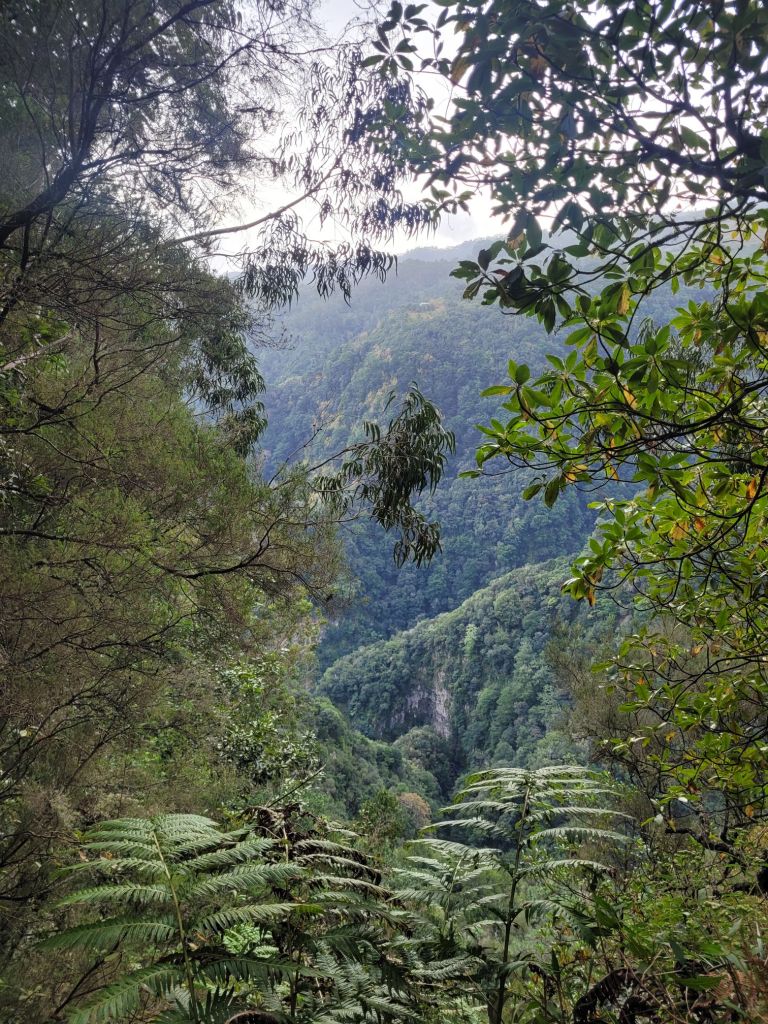
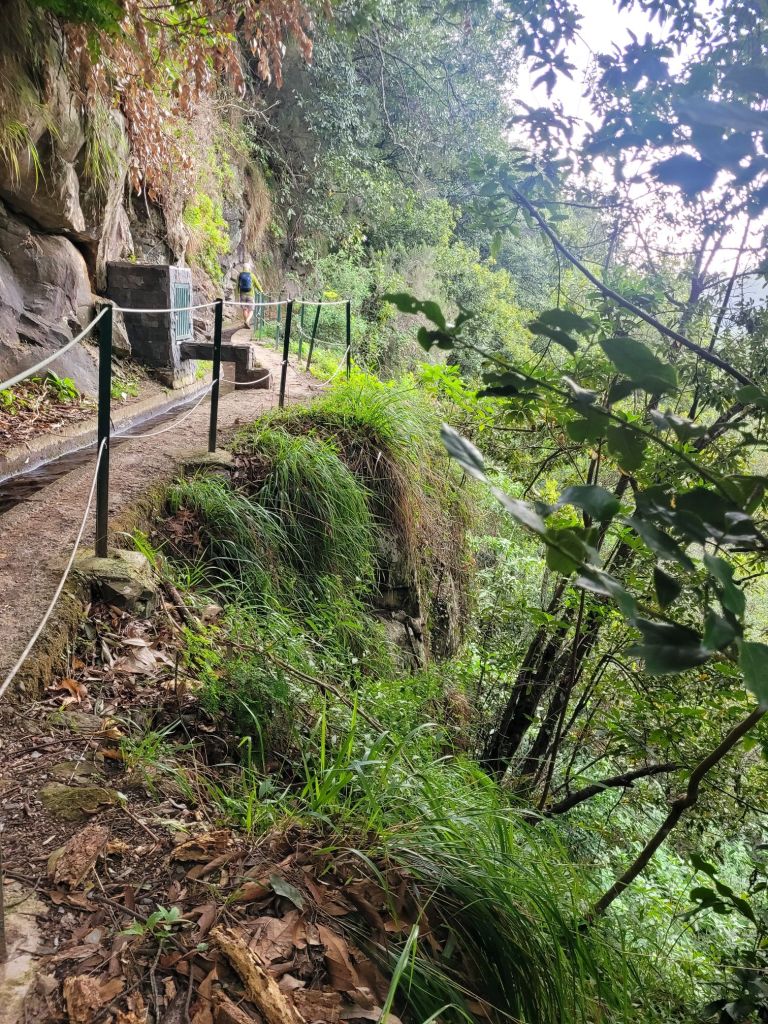
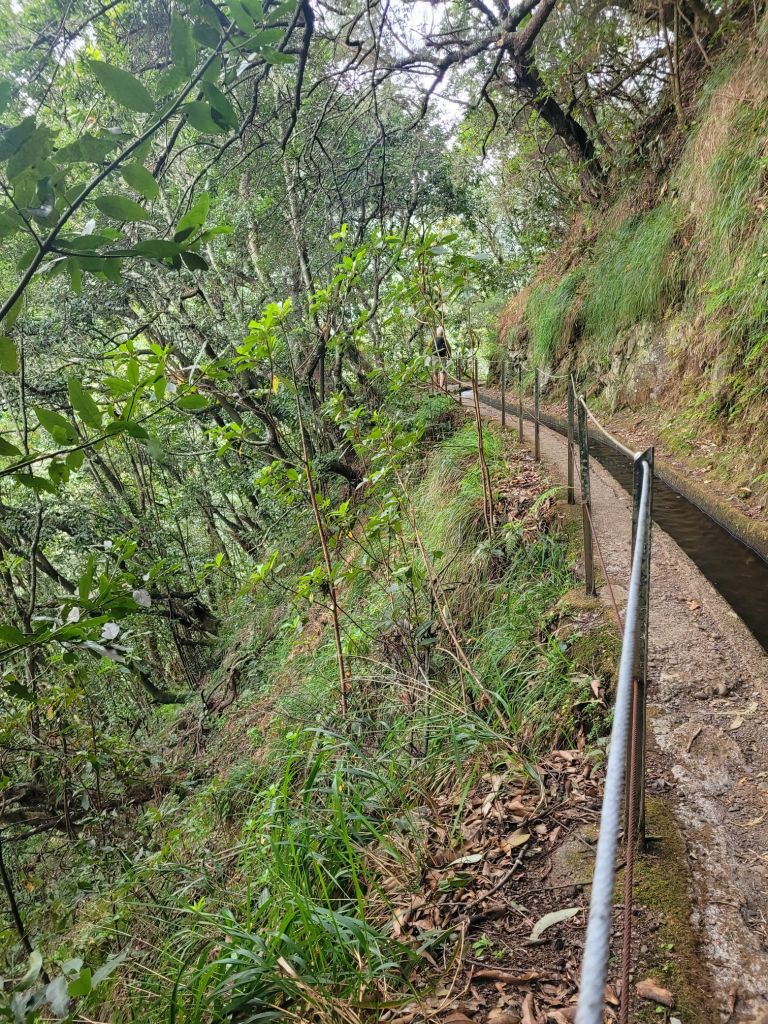
The views through the forest were incredible
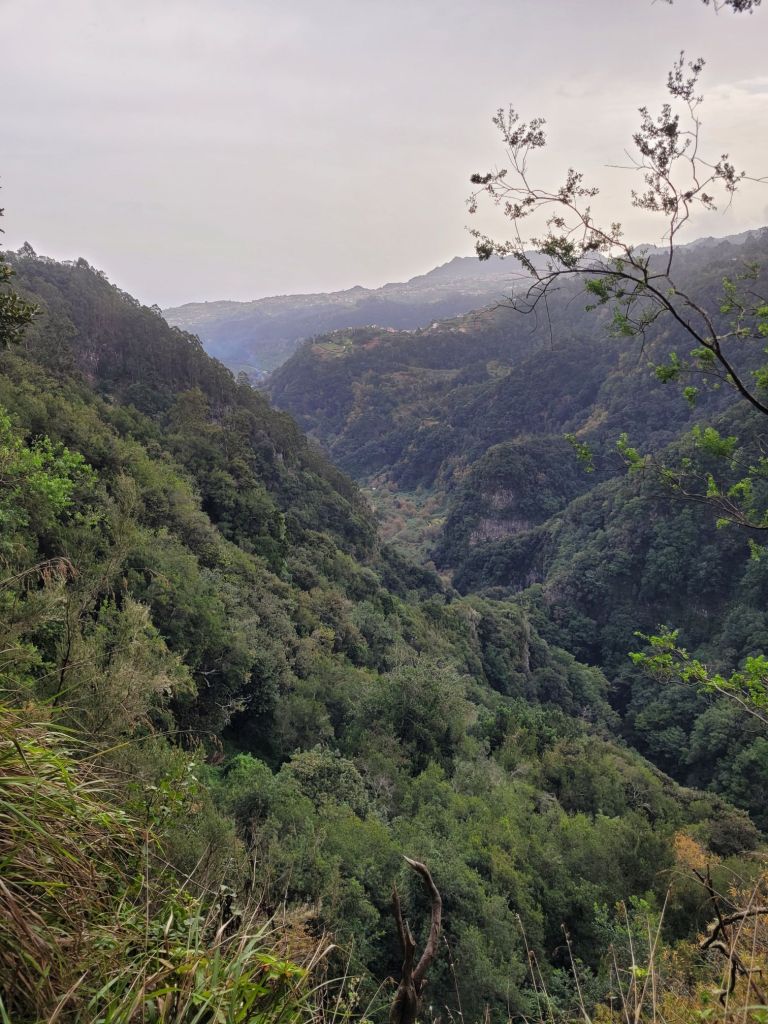
and showed just how high into the mountains we were.
Roger, however, is not good with heights at all. And despite the flatness of the footing and the barrier, he found the cliffs we walked over (while on 50 cm wide cement path) nerve-wracking. We agreed to turn back when he said that his feet were sweating – it wasn’t cold at all.
As we returned, we passed several groups, so it’s a walk best done earlier in the morning to escape the crowds.
Having done just under half of this walk we found a different one, at an even higher altitude (900 metres). It was slightly cooler and the trees were covered in lichen and some kind of hanging moss (or hanging lichen?).
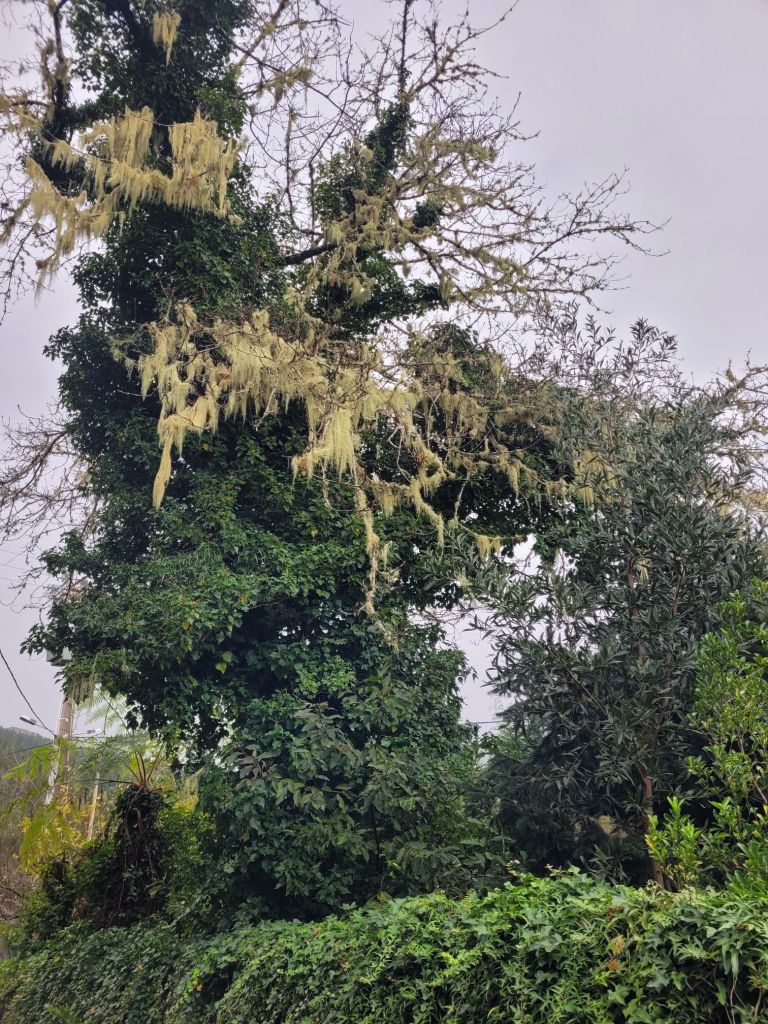
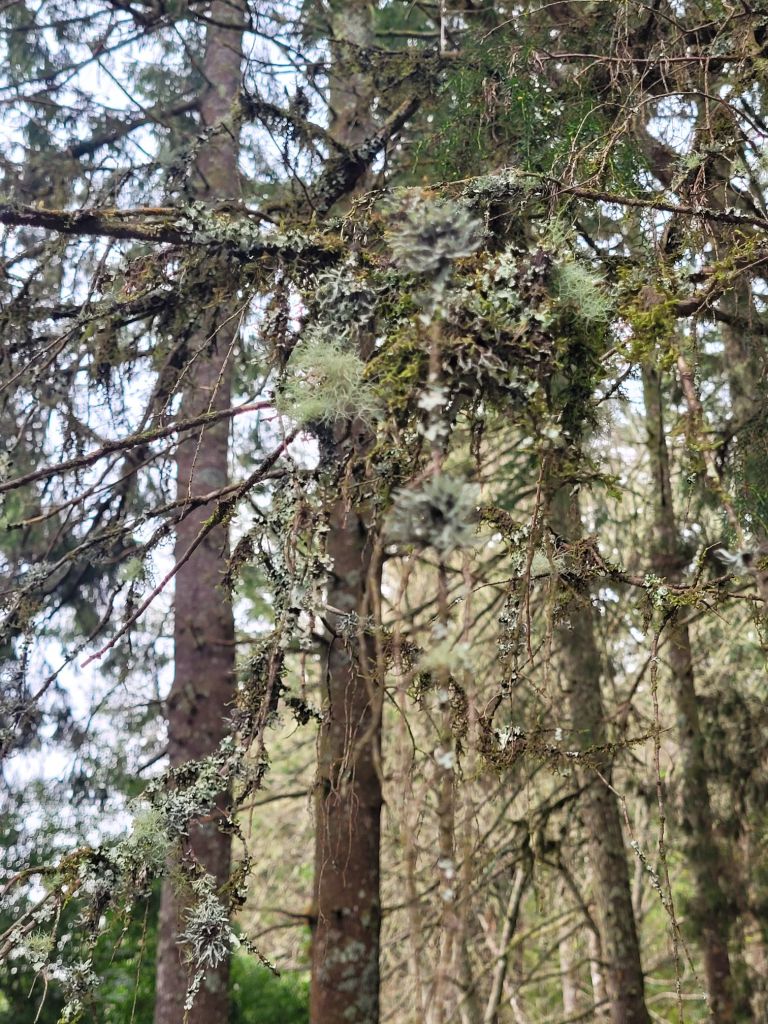
Where the previous two levadas we saw looked well kept and made of modern materials, this one looked much older, with flat stones lining the sides of the channel.
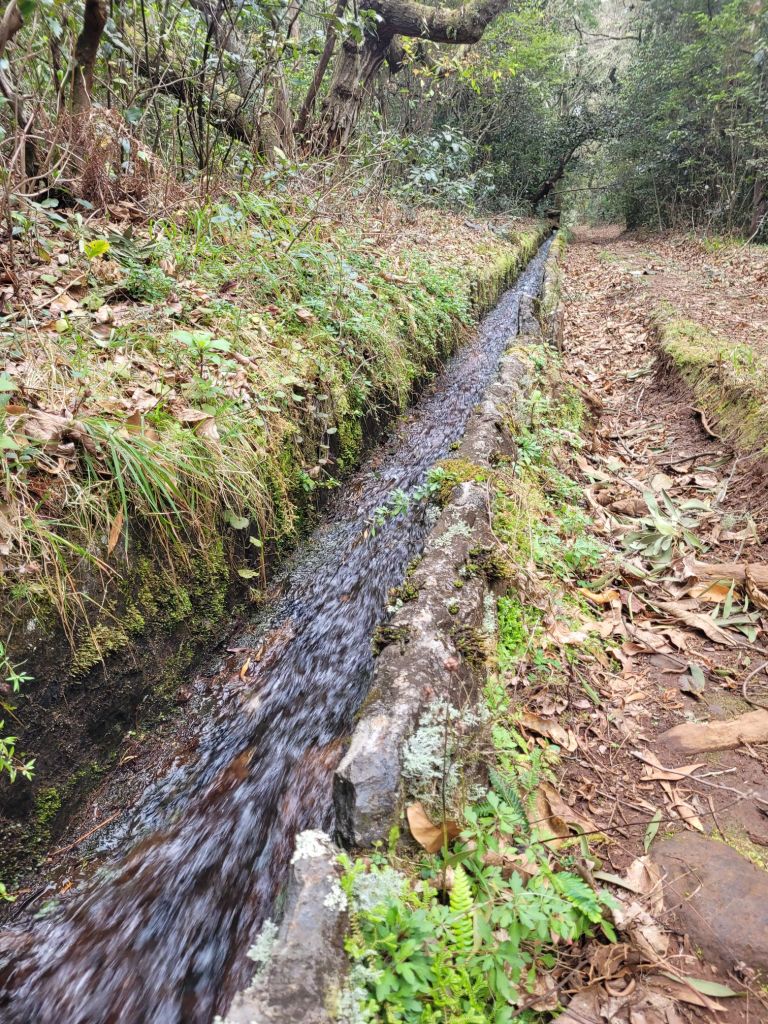
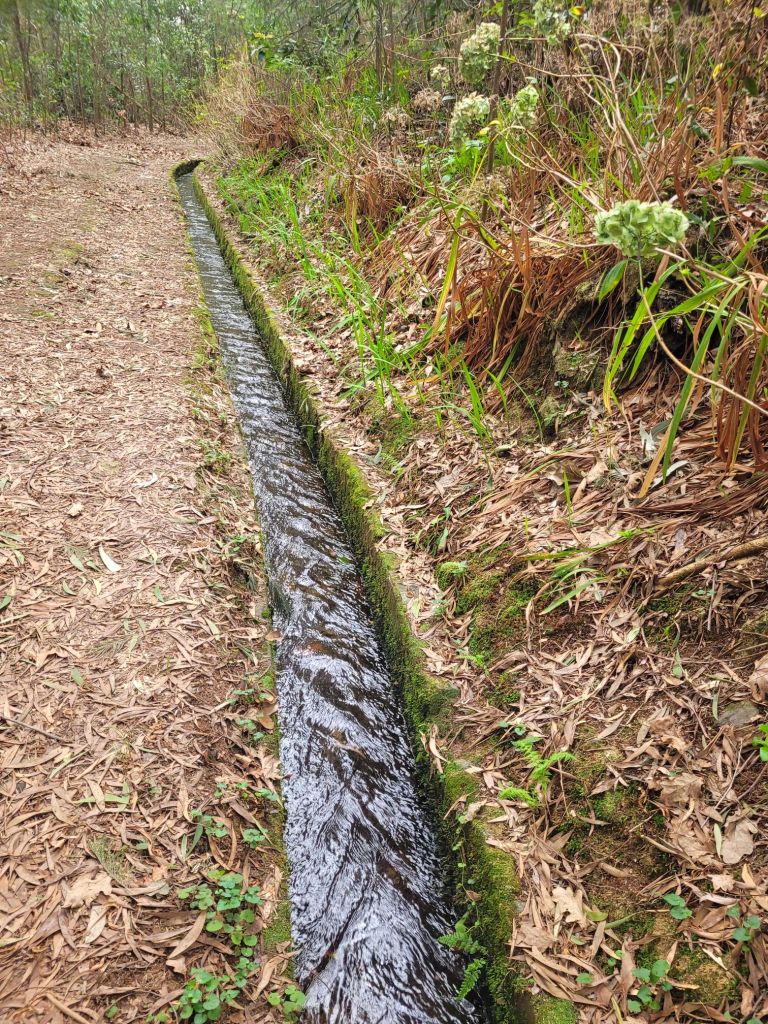
Water gushed downwards and the path alongside was wide – enough for Roger to not notice the sheer drop opposite the levada channel.
It was a pleasant walk, albeit a bit rutted and rocky, but downhill all the way. We were very aware that our return journey would therefore be uphill all the way. So after a few kilometres we cut our losses and went to lunch instead.
All told, we walked about five miles.
While walking IS a big thing to do in Madeira, it isn’t an activity for those with vertigo or those who aren’t comfortable on remote trails. You also have to plan carefully so that you can do a long, linear walk, catching a bus back to your car/hotel, or you have to be happy with ‘there and back’ walks.
We enjoyed the walks, but each one definitely provided a challenge for Roger. Maybe Madeira isn’t the best place for us to walk (yes, I do know we were warned).
 Retired? What now?
Leave a comment