The Canary Islands lie further south than Madeira and are also slightly closer to the coast of Africa.
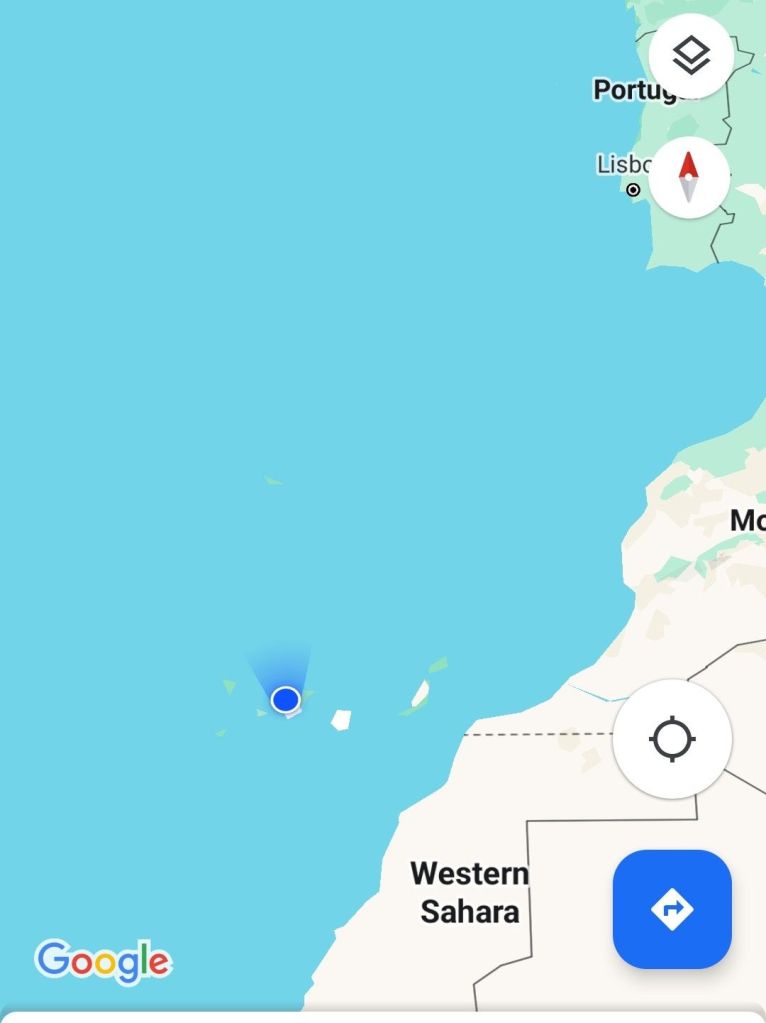
Close enough that the more easterly islands have issues with small boat immigrants (funnily enough drifting up from Senegal, which is further south). Another interesting factoid is that there is, apparently, a submarine graveyard for the home-made vessels used by South American drugs smugglers, manned by mules who sit in their own filth for days as they traverse the Atlantic underwater. After handing off their drugs cargo, the submarines are deliberately scuttled.
Both activities demonstrate the desperation of those willing to do anything to improve their lot in life. However, I digress into dangerous waters (!) and should re-focus on our investigations into destinations that provide an escape from English winter gloom (!!).
We flew into Tenerife, the largest of the Canaries. In order to get to the airport (on the south side) you fly over (or almost over) El Teide, the volcano which makes up the middle of the island. And it’s really, really obvious that it’s a volcano.
All the Canaries are volcanic, some are more active than others: Tenerife last had an eruption in the early 20th century. It’s still considered active, is one of the largest volcanos in the world and is the highest point in Spain (and one of the highest points in Europe).
Mass tourism mostly focuses around the southern half of the island, which is warmer and has less rain. It’s certainly arid, with apricot clouds of dust floating around any traffic in the brown fields and a plethora of cacti (our old friend magay and nopal) dotted around.
We drove west, rounded the south-west corner and headed north into the mountains, with La Gomera in view at times as the motorway twisted through the foothills.
Eventually the urban sprawl (holiday sprawl?) ended and it started looking a bit greener, with eucalyptus and pines. Blue sky, warm sun. All good!
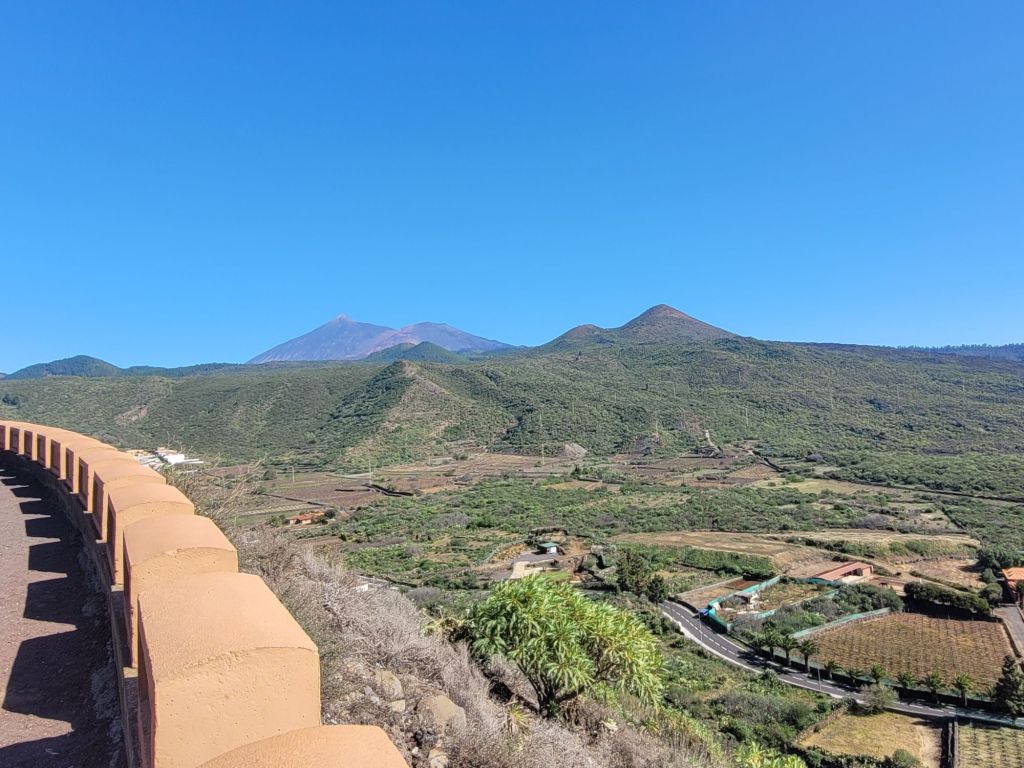
Upwards, onwards and wispy smoke started floating over the road. At first we thought it was a fire, or factory output, but as we headed over the ridge and round a corner, it became abundantly clear that it was cloud. Or fog. Or mist. Call it what you will. Major dampness – a sea of white dampness.
I would have taken pictures but the road was narrow, downhill, greasy with moisture and busy. Any attempts to ask for a photo stop would not have been received gracefully. So my words will have to suffice. Poor as they are.
The change in vegetation was immediate: lush greens, huge trees (pines) and flowering shrubs – bright yellow gorse was the only one I recognised but there were others, mostly flowering in various shades of yellow and white.
After another climb the forest became mostly pine (Canarian Pine) and very rocky. What was striking was the lichen: hanging from the pines and powdering the rocks in an ashen layer. Again, no photo opportunities given the density of traffic.
And still the mist drifted, caught up in the trees, rolling over the road, and dropping the temperature to ‘less than pleasant ‘.
After a slight Google mishap which saw us driving down a ‘residents only’ road so steep and narrow we would have been absolutely stuck had we met anyone coming up, we located out hotel. El Patio.
This ‘Hotel Rural’ set in a banana plantation took a bit of getting to, given that the entrance gate was closed, the bell didn’t work and you couldn’t get in (or out) without a remote. Fortunately we followed someone in after a mishap that saw us on the inside looking out at the car, with no way of getting to it.
We hadn’t escaped the clouds, so it all looked a bit grey when we arrived.
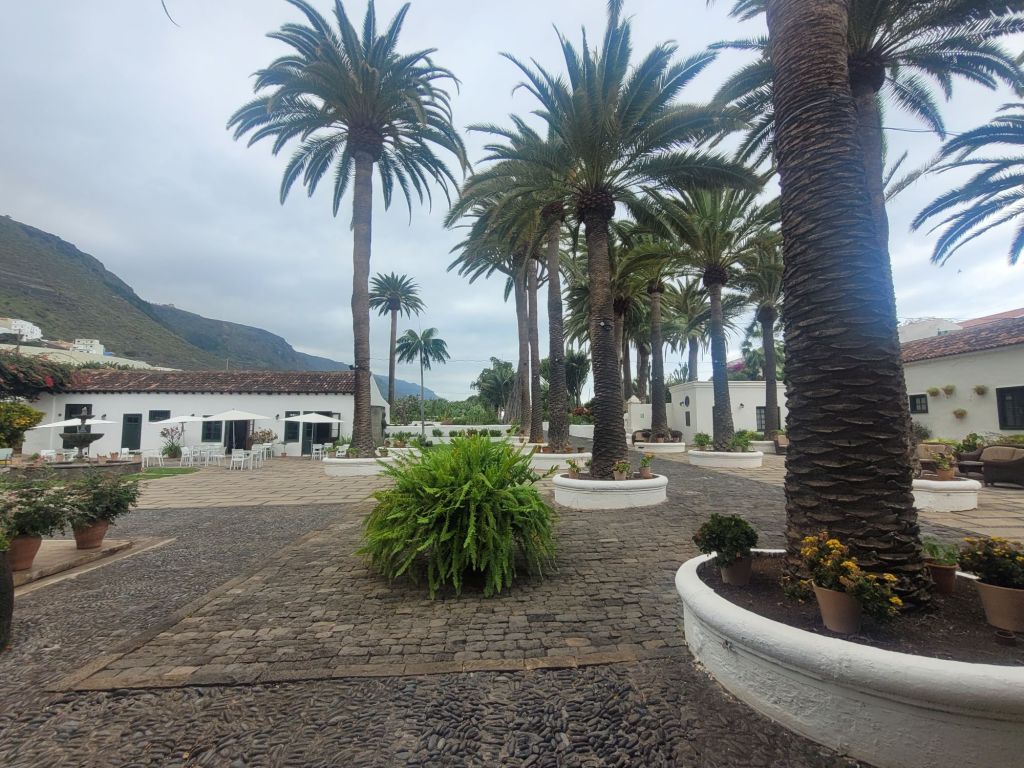
The next morning, however was a complete contrast!
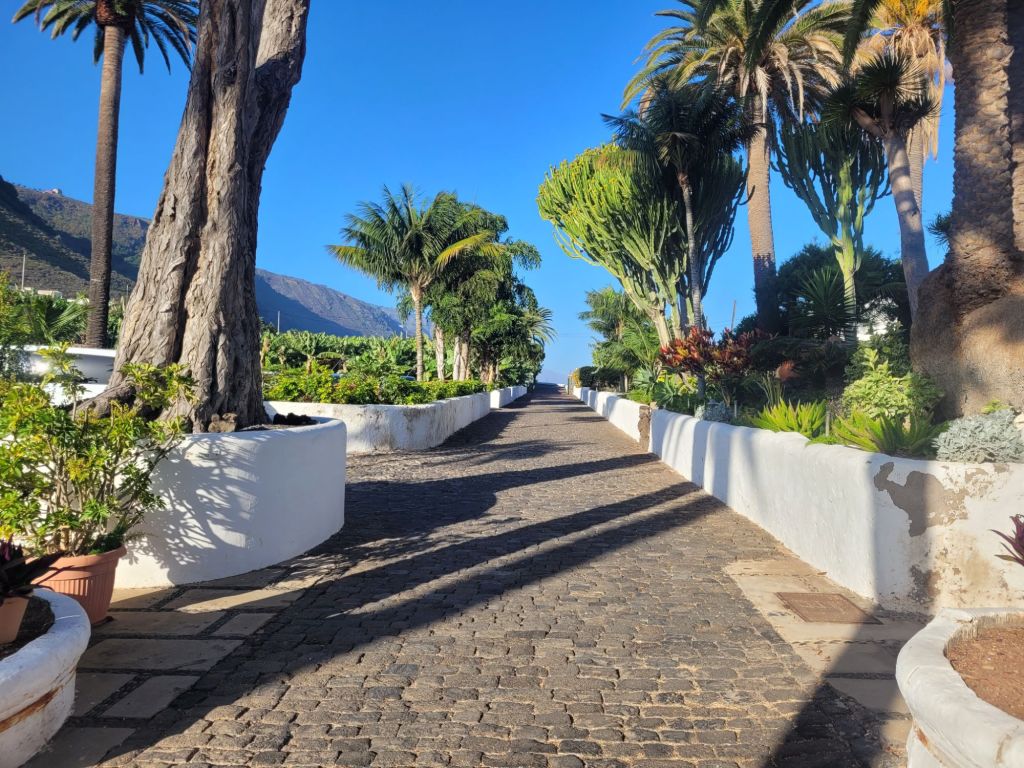
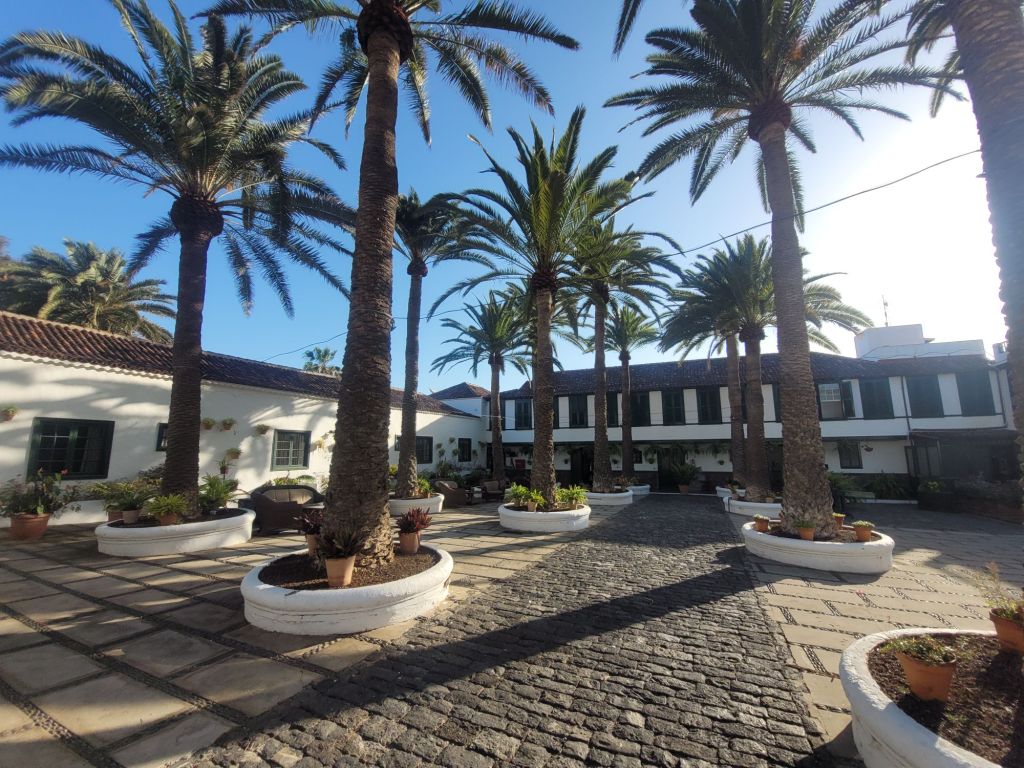
The hotel provides ‘rustic comfort’: the people are wonderfully friendly, it’s peaceful, surrounded with birdsong, rustling palms and banana trees. The views over the sea are stunning
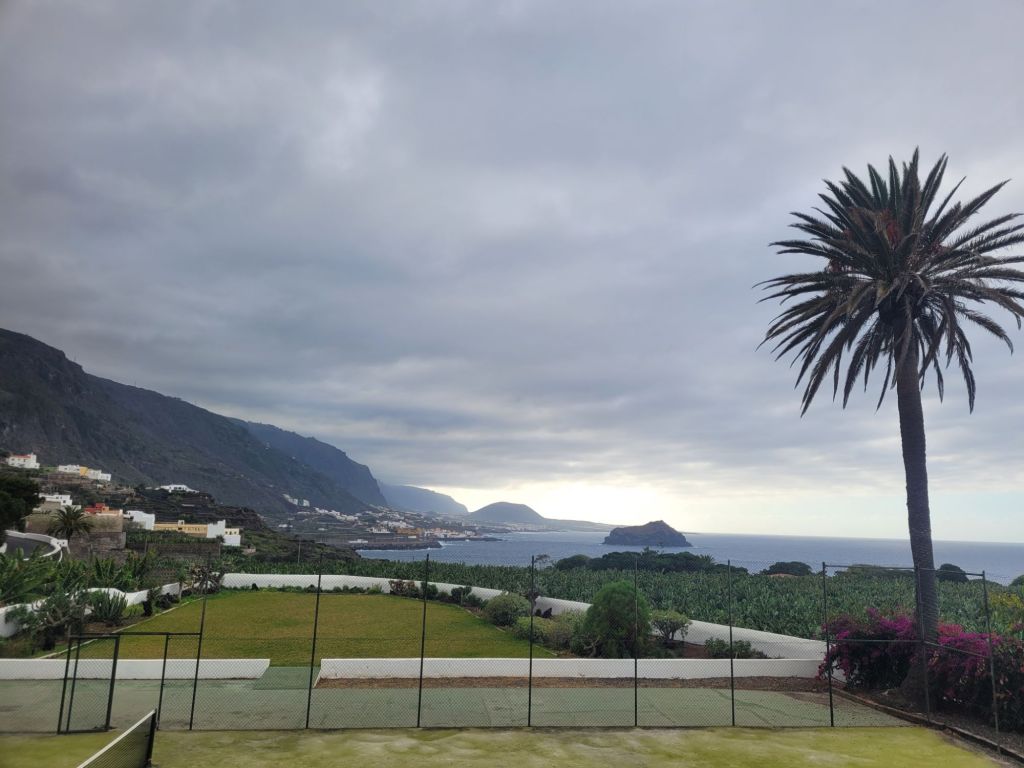
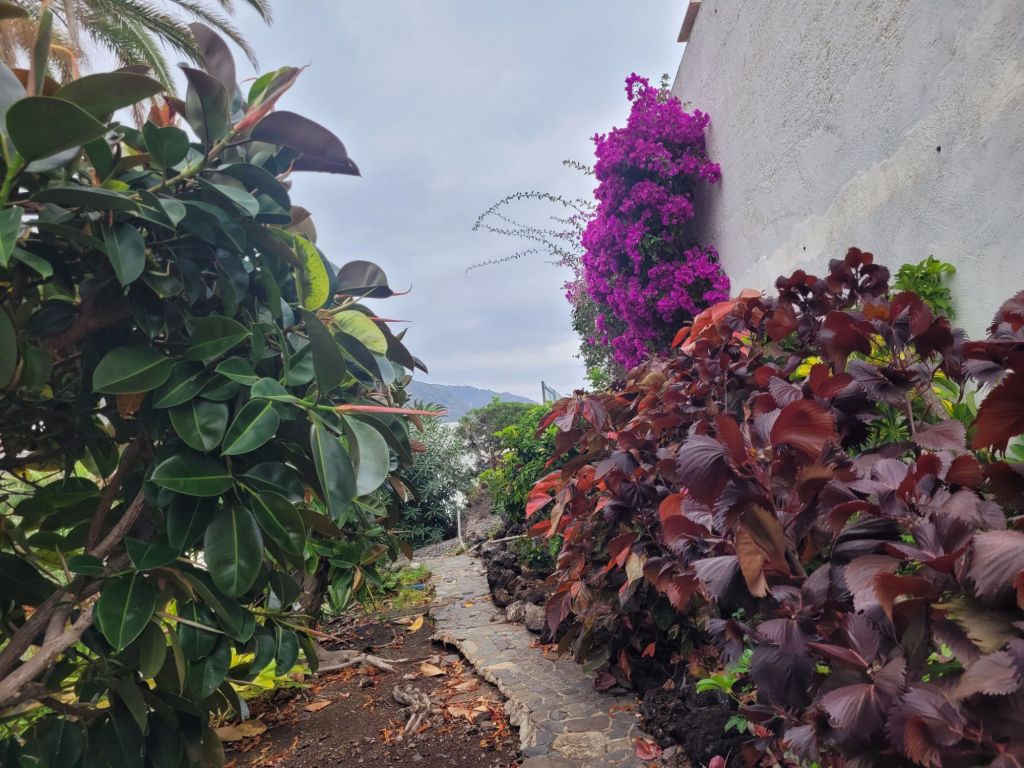
and the gardens are full of huge versions of what are seen as houseplants in the UK.
But it is hard to get anywhere without driving.
 Retired? What now?
Leave a comment