Lava (or is it tuft? or basalt?) is hard to escape on Tenerife.
The coastline is incredibly rocky, the cliffs are dark and the beaches are covered in black pumice pebbles.
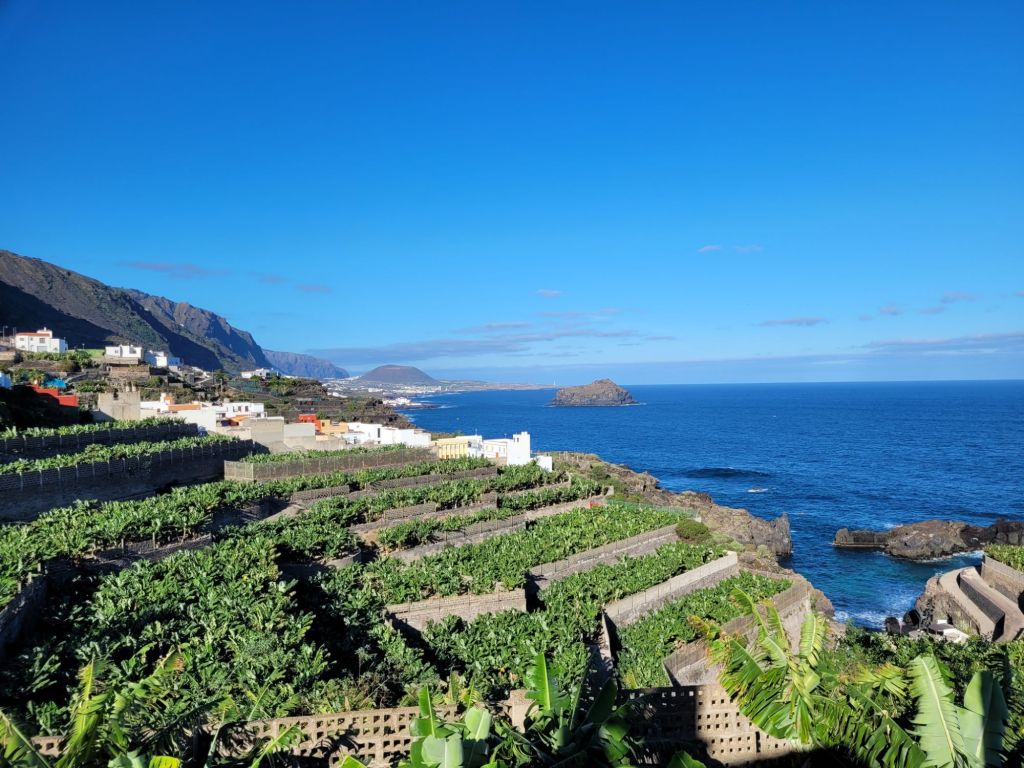
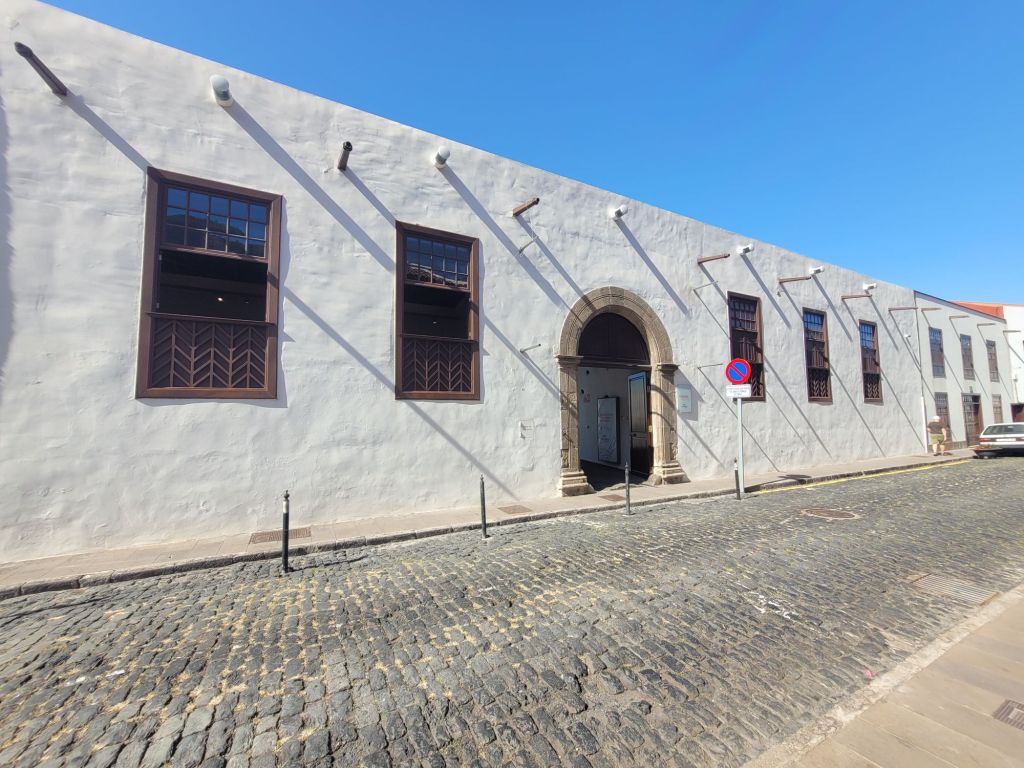
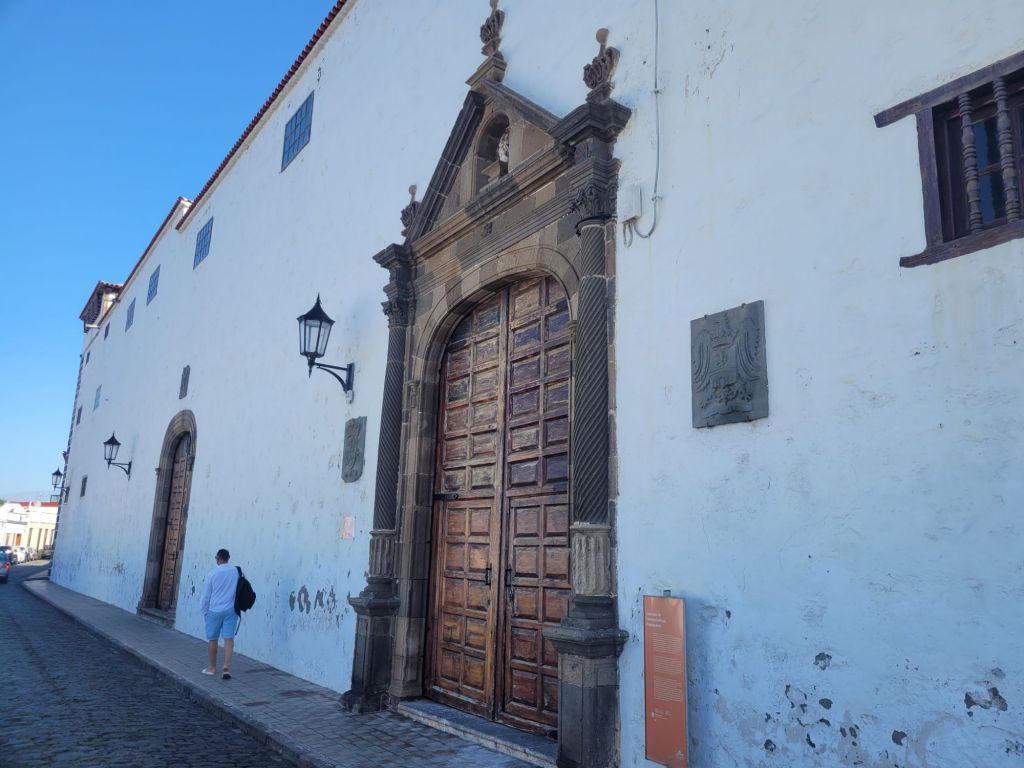
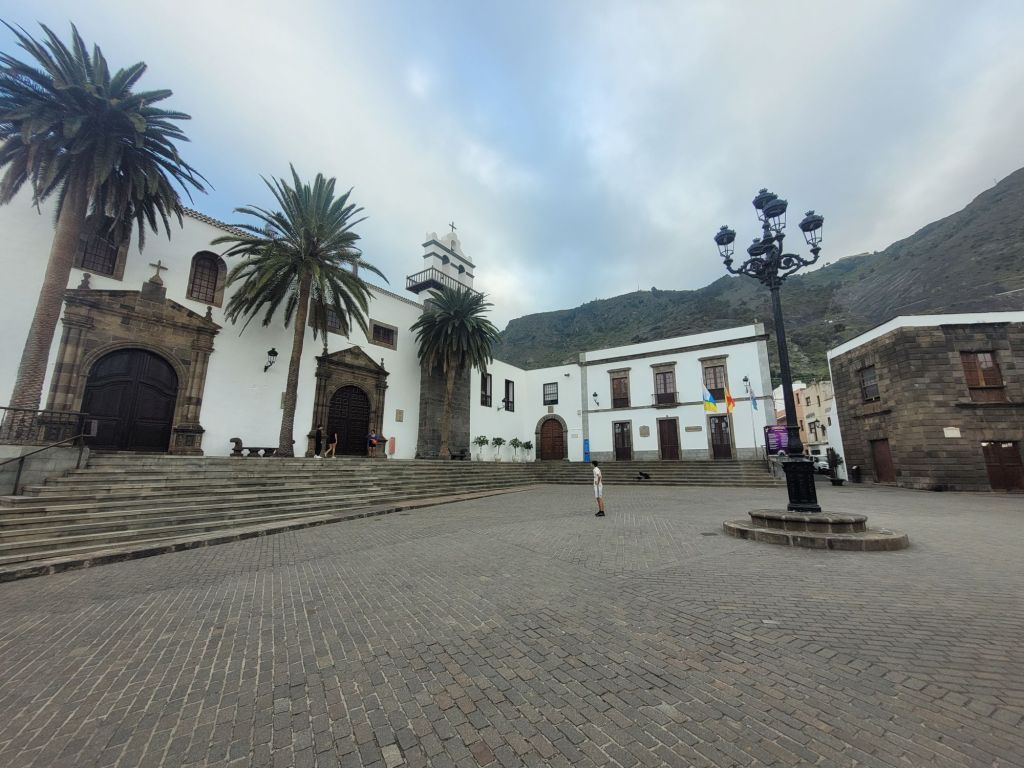
Moving Westward from the hotel, the first largish town is Garachico, a charming place that buzzes with tourists but has managed to keep a really graceful historic centre – and no high rise hotels.
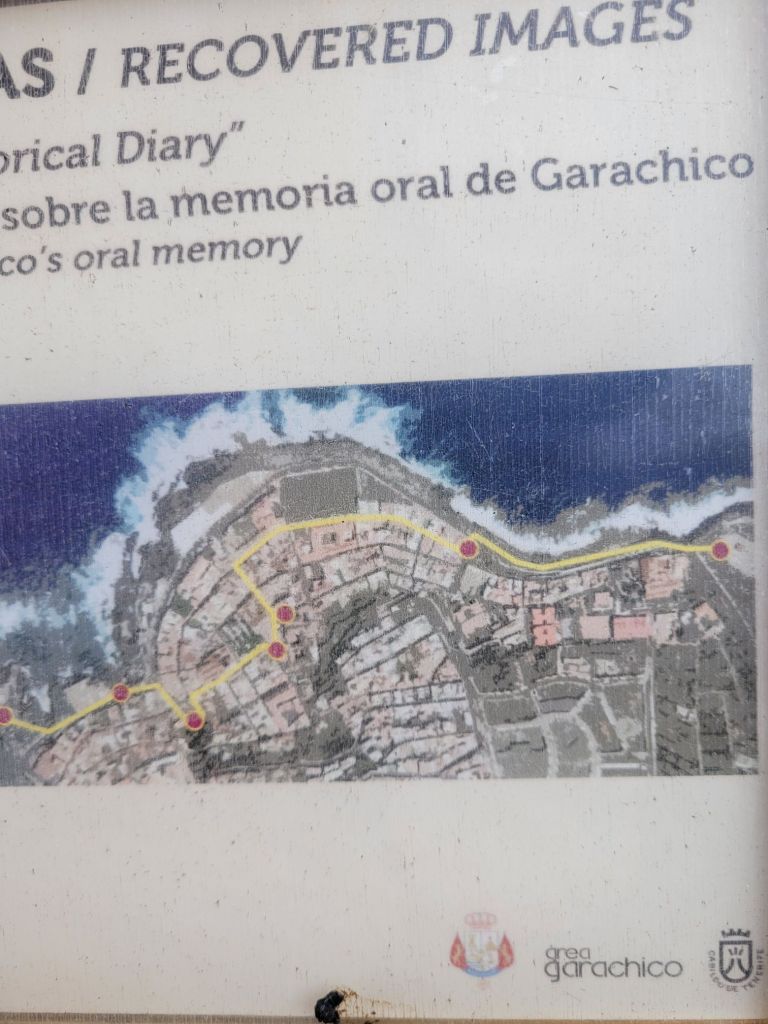
The connection between Garachico and lava becomes clearer when considering the eruption in 1706, which destroyed parts of the village, moving the coastline a few hundred metres out to sea by filling in the original bay. The map below is poor quality but shows the change.
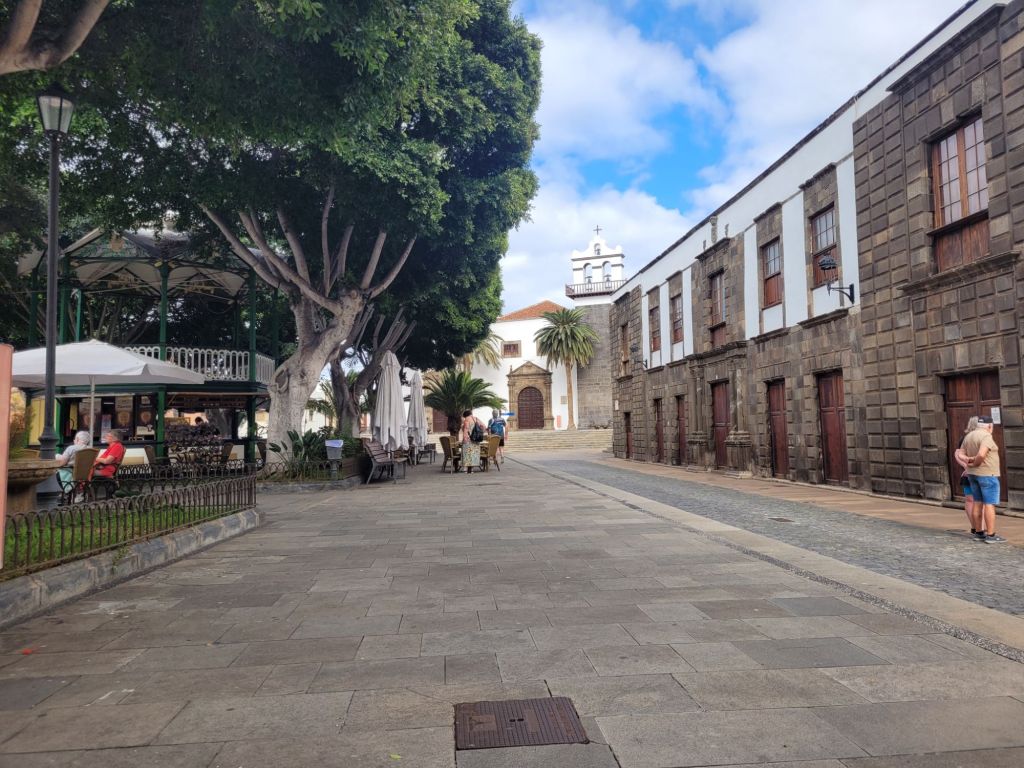
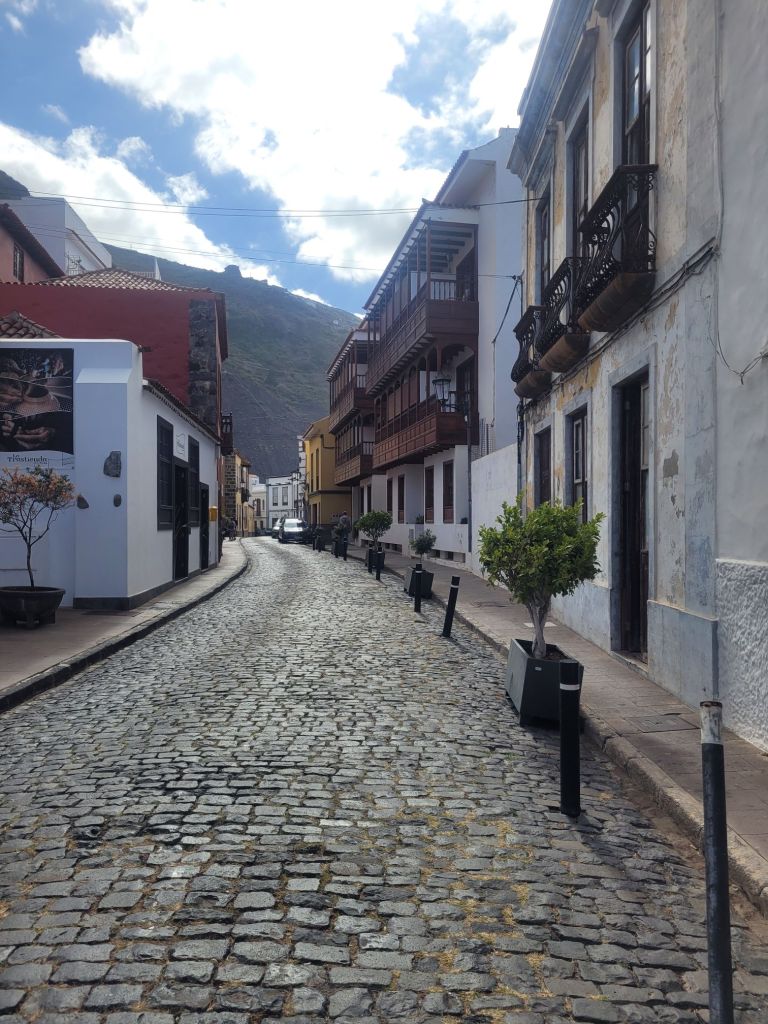
It was one of the earliest towns on Tenerife, and one of the earliest commercial ports. The wealth that followed can be seen in the large houses (palaces, really) – some of which are now pricey hotels – the two large churches and the two huge convents.
The streets are cobbled and the shops have a boutique-y, artisan feel. It is, essentially, pretty, with a large selection of eateries.



Off the coast is a large plug of volcanic rock, a reminder of the 1706 eruption and an iconic feature of the town.
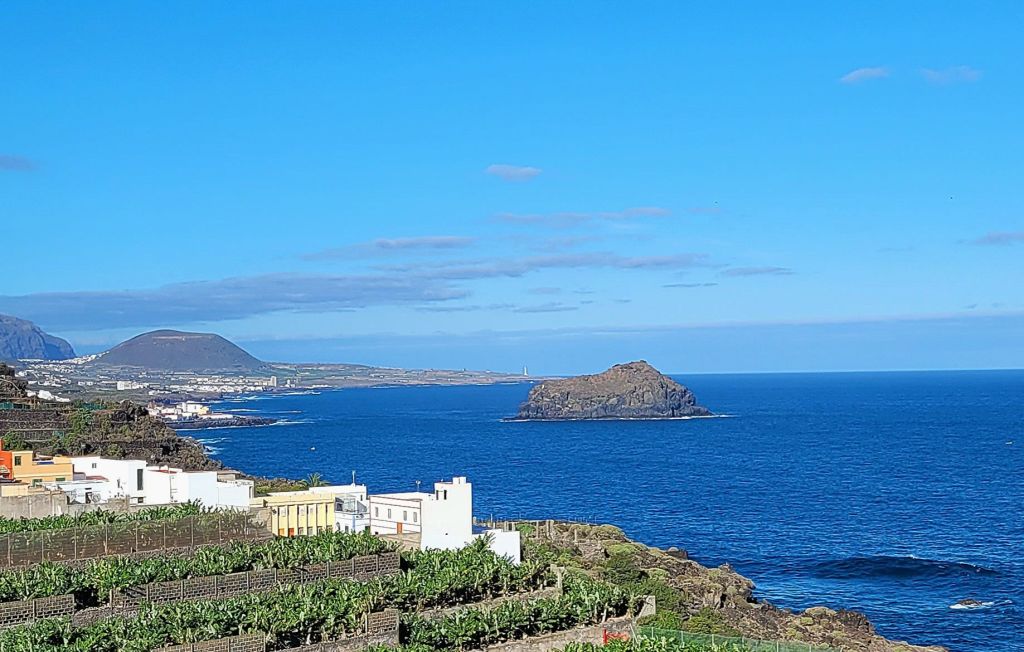
The other reminder is the menacing darkness (and bareness) of some of the hills behind the town, essentially huge mounds of frozen lava.
West along the coastal strip (more banana plantations), the mountains become a bit wilder and a bit steeper, with odd protrusions and scooped out caves dotted along the cliffs.
Punta de Teno is the most westerly point of Tenerife. Vehicle access is controlled, although this only seems to start after late morning. There is a bus from Buenavista, or you find a spot to park and walk.
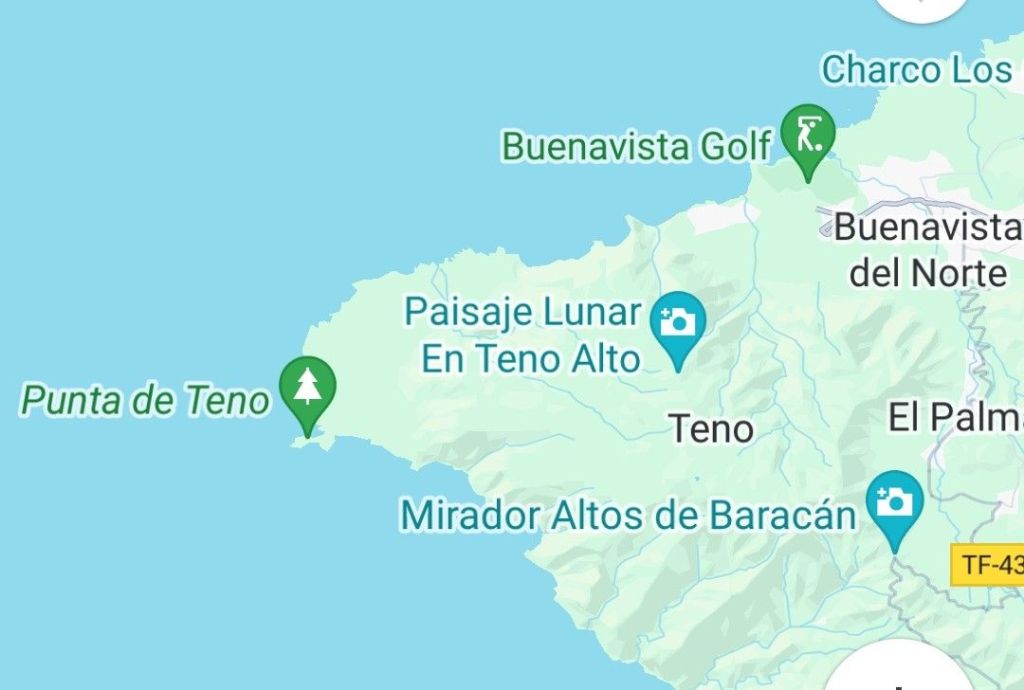
It’s an easy walk in terms of the surface – the road – with spectacular views, a bit of a climb and little traffic other than cyclists. There should have been no cars but some drivers ignored the signs: it wasn’t being policed when we set out.
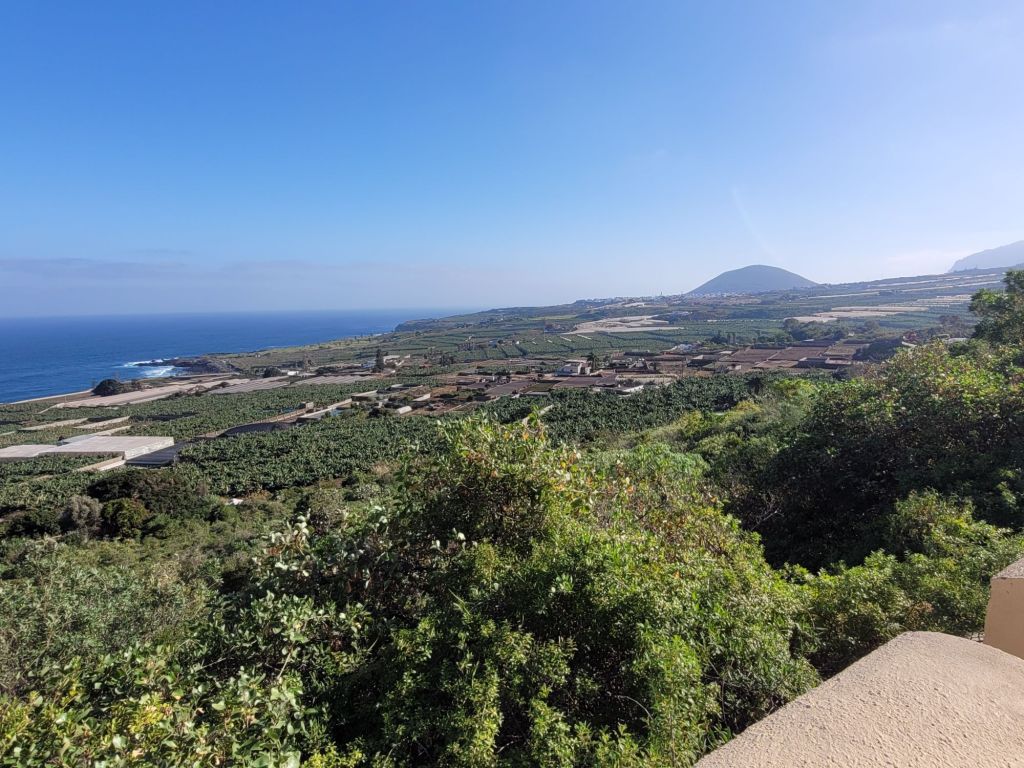
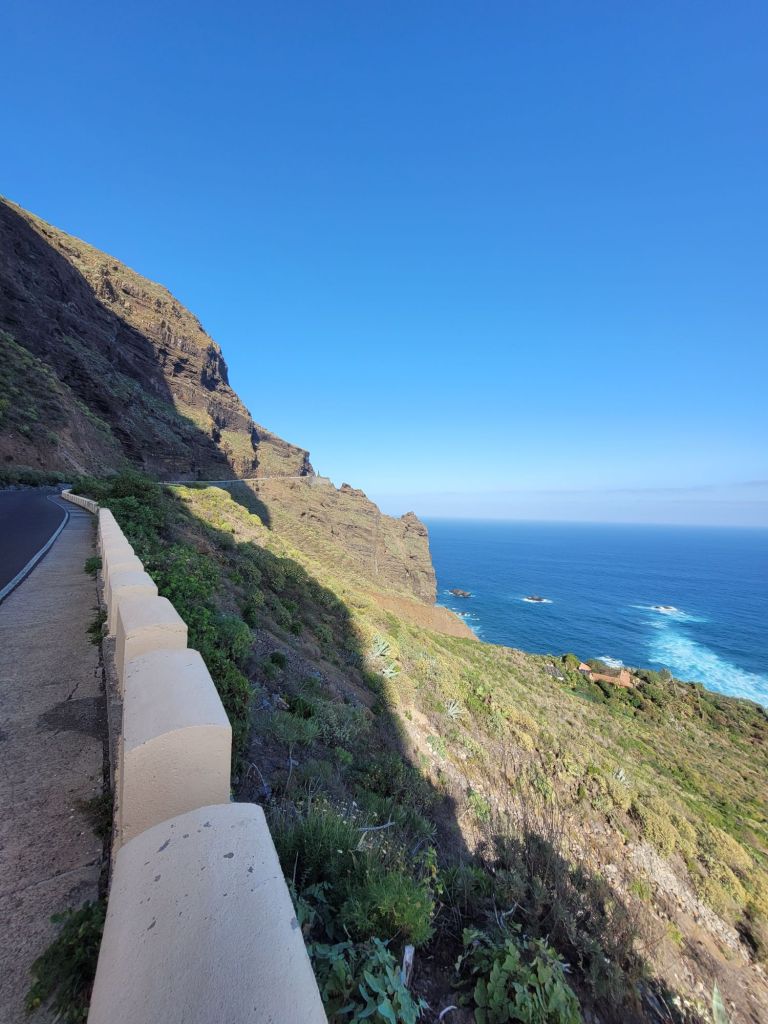
Inevitably, there were tunnels – short ones. Between them, the view got more striking and more vertiginous.


And then there was a long tunnel. It felt like it went on forever, but probably took around 7 minutes to walk through. It was unpleasant. But the view was worth it on emerging.
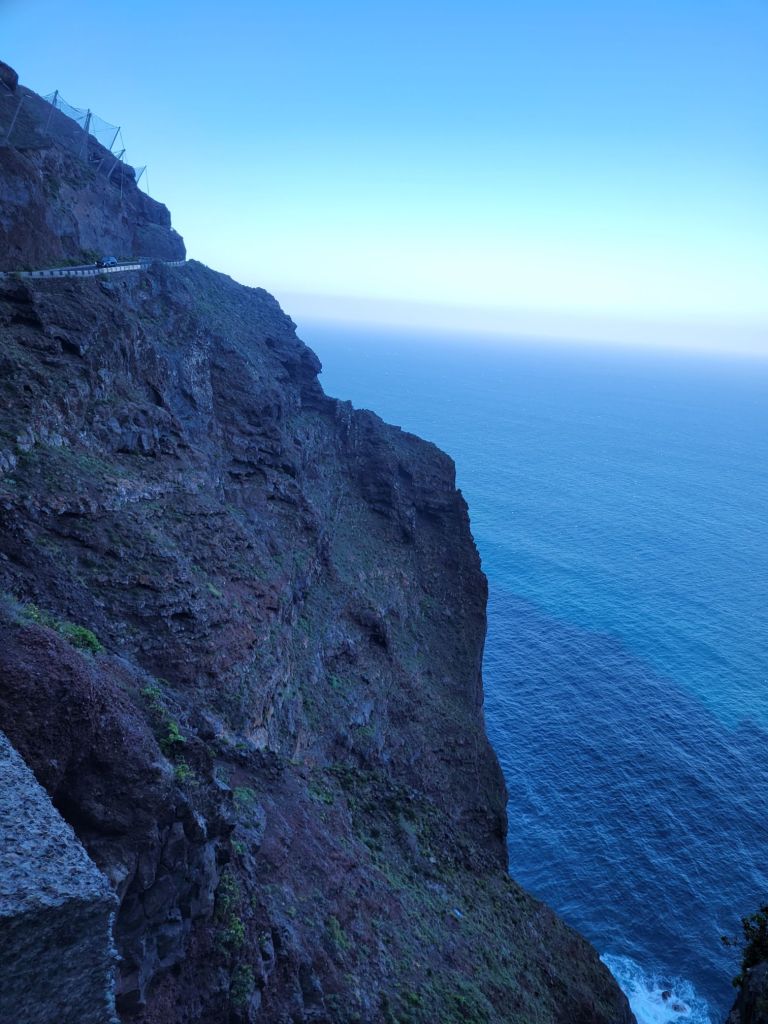
Roger was much less impressed.
Looking east, the lump of rock the tunnel went through was even more obvious.
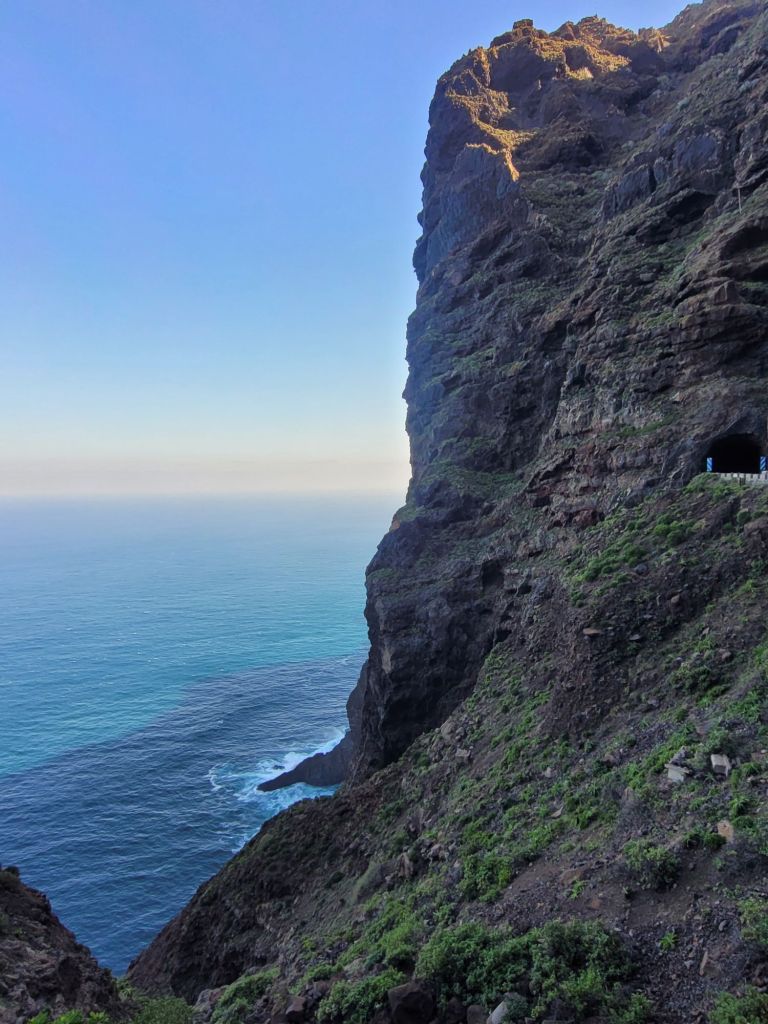
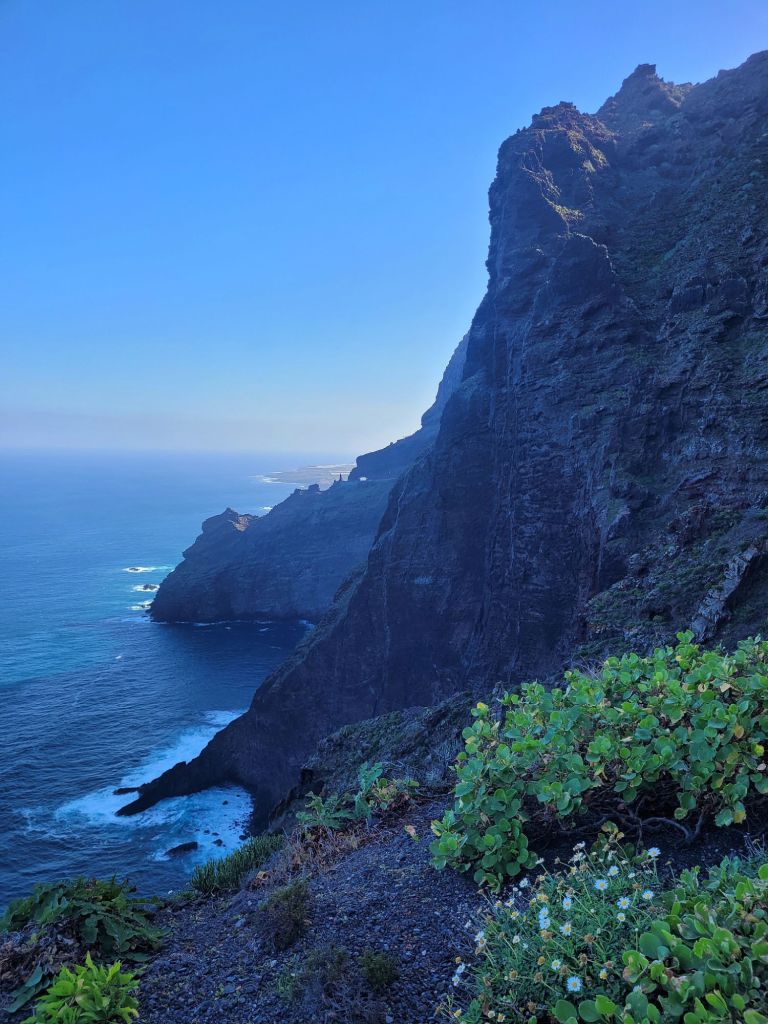
And then, round a corner, this!
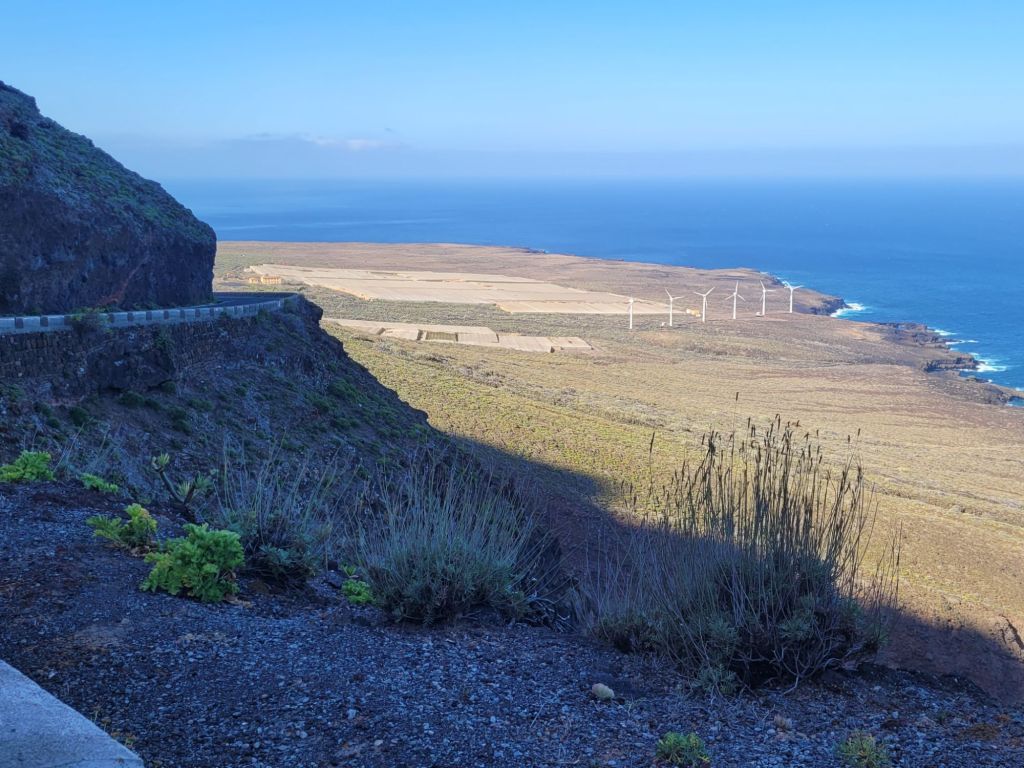
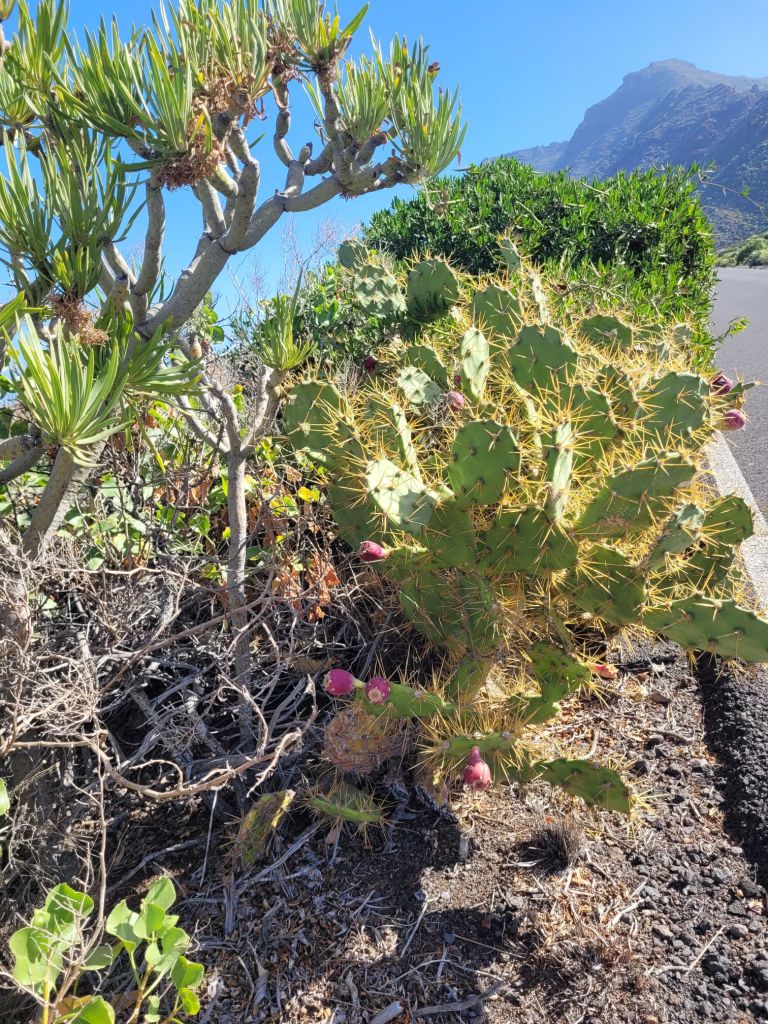
Flat, arid and khaki brown, with succulents and nopals.
The steady downhill trajectory didn’t inspire me with enthusiasm for the return journey (absolutely no shade and it was getting hot), and both the slope and curve of the road concealed any sign of the lighthouse. It wasn’t particularly inspiring scenery, other than the sea, so the final approach to the Punto dragged a bit.
It was worth it on arrival.
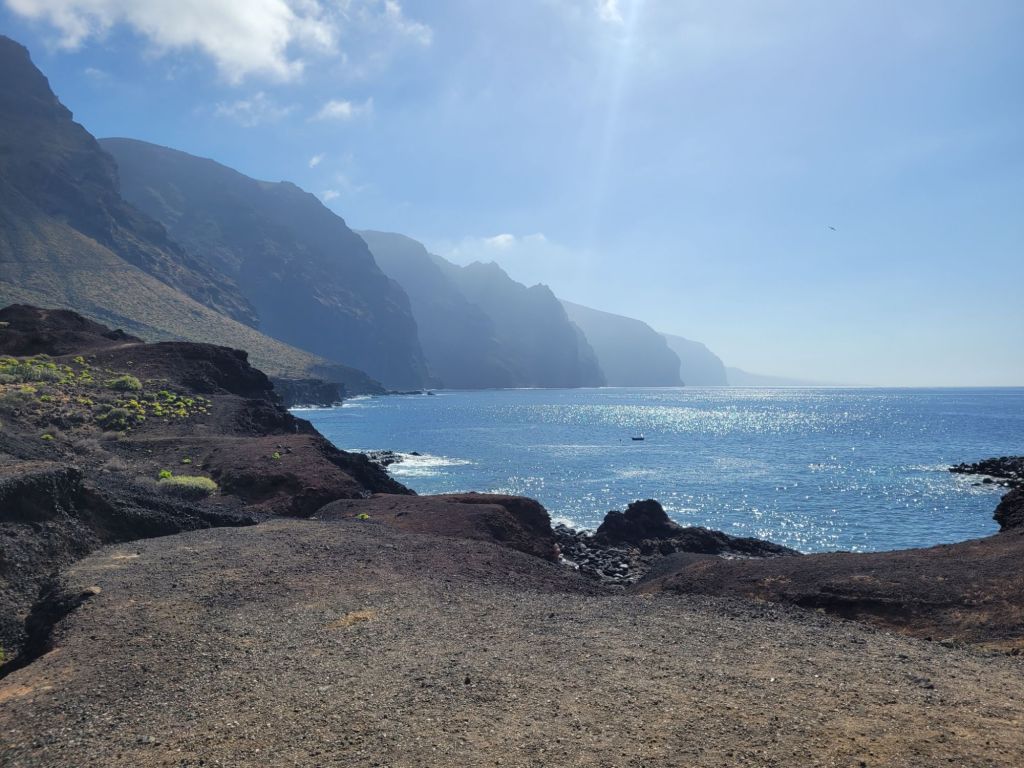
There is very little vegetation. The point itself seems like a lump of lava that has been extruded into the sea. Thus part of Tenerife is, apparently, the ‘youngest’ in terms of volcanic activity, so it hasn’t been softened by time , weather and waves.
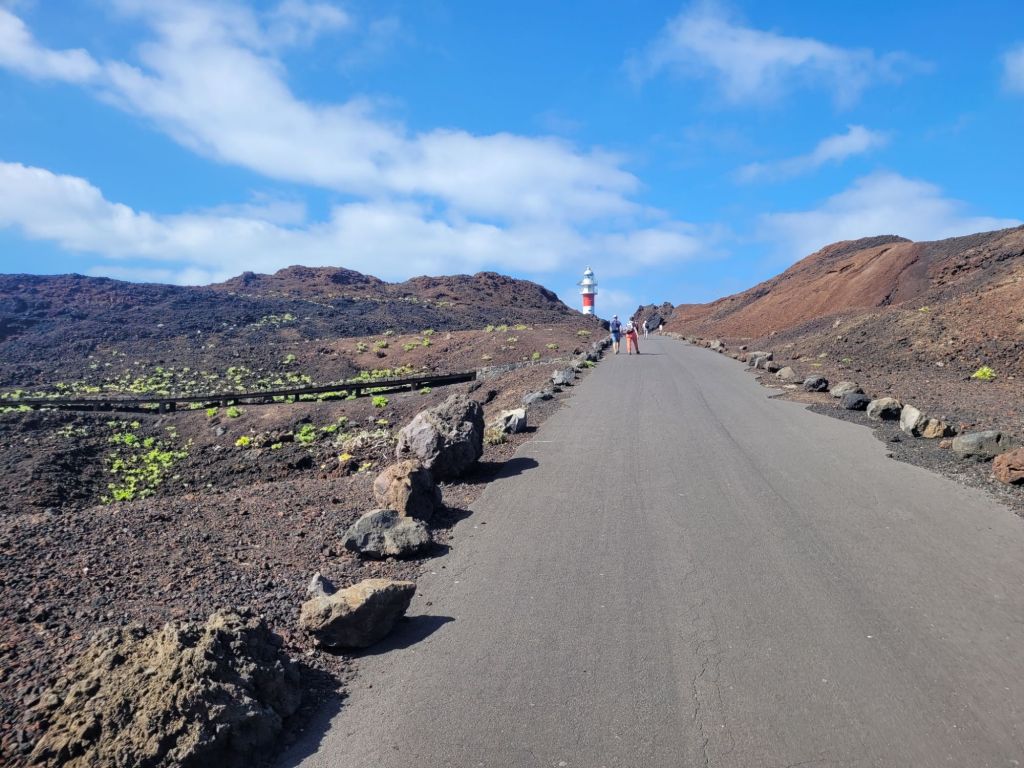

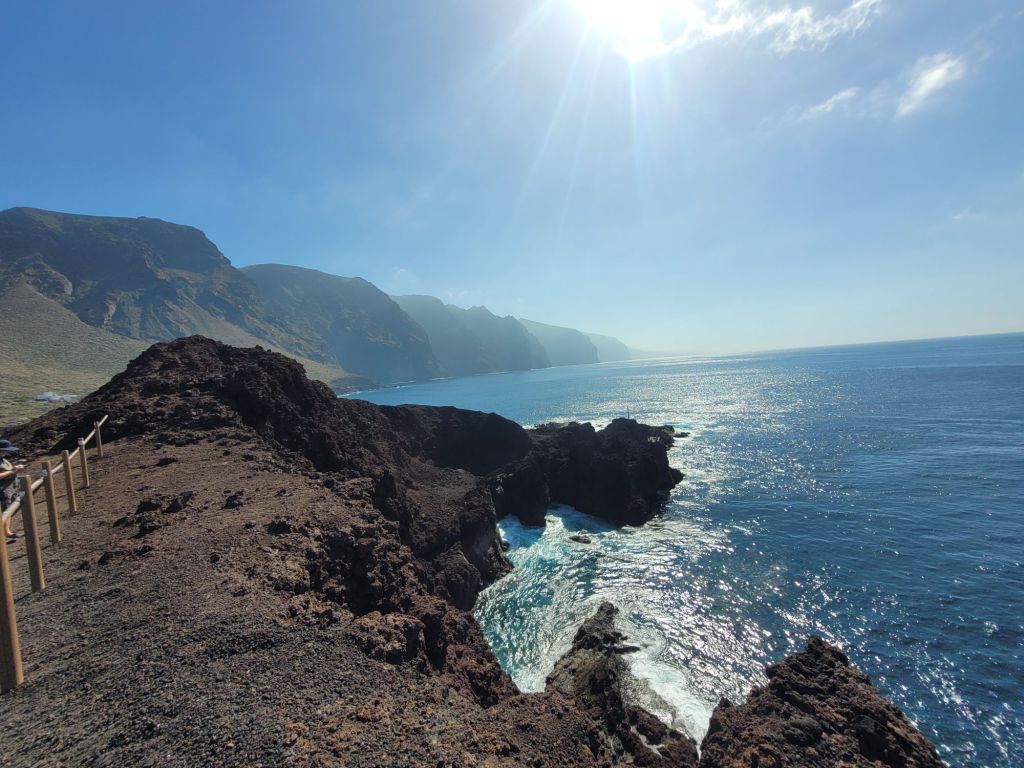
Looking north and east provides a complete contrast.
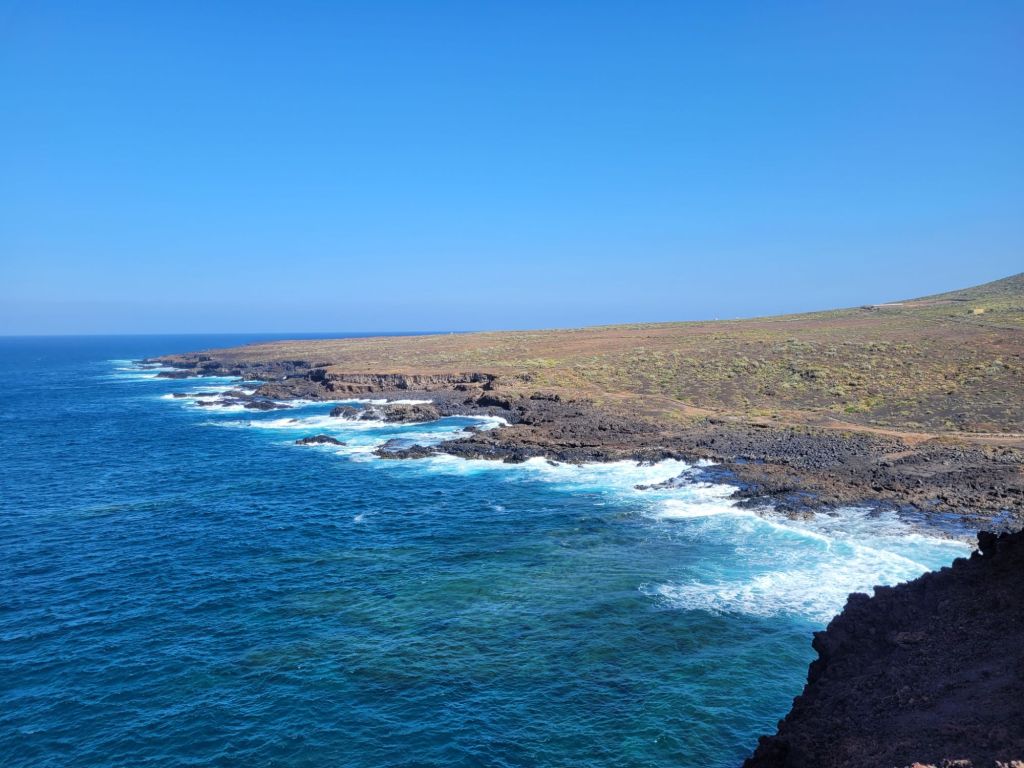
Many people take the bus out and spend the day swimming and sunbathing (there was NO shade). The water is beautifully clear and I was reliably informed that it wasn’t ‘too bad’ in terms of temperature. A group of lads had brought fishing gear and a large bucket. Their catch was impressive in terms of numbers.
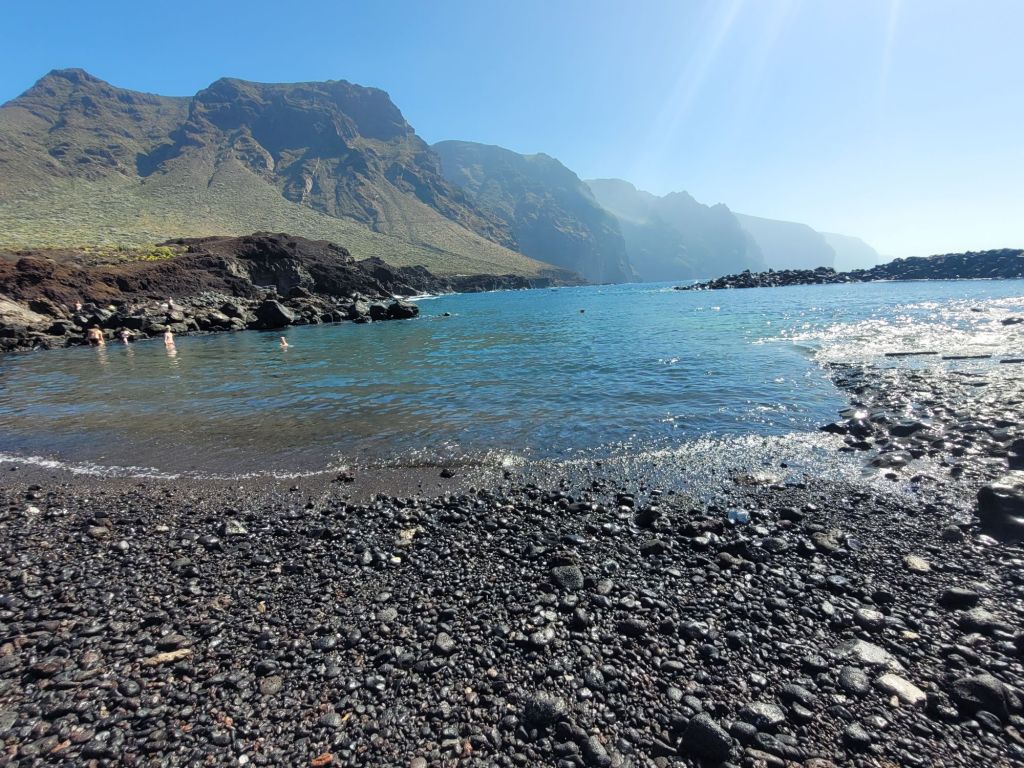
It was wild, undeveloped and we were pleased we made it.
But we took the bus back, thank God.
 Retired? What now?
Leave a comment