La Palma was one of the last of the islands to be ‘conquered’ by the Spanish. Like the other islands, it had an existing population; in this case they were tricked into submission by a turncoat who promised peaceful talks only to have the Spanish attack as they came down from their mountain hideouts.
The island may have been one of the last to be taken over by Spain, but it quickly grew to immense importance due to its supply of Canarian Pine and its location on the trade routes to the Americas and Africa.
Contrary to my previous entry, where I speculated that pine is too soft a wood to create such marvellous wooden structures (that have lasted so long), apparently Canarian Pine is so resin laden that it is incredibly long lasting and resistant to termites (and presumably other wood eating insects). I was told by the hotel owner (one of them) that their house is one of the oldest in Santa Cruz and its beams still drip resin!
It used extensively in buildings:
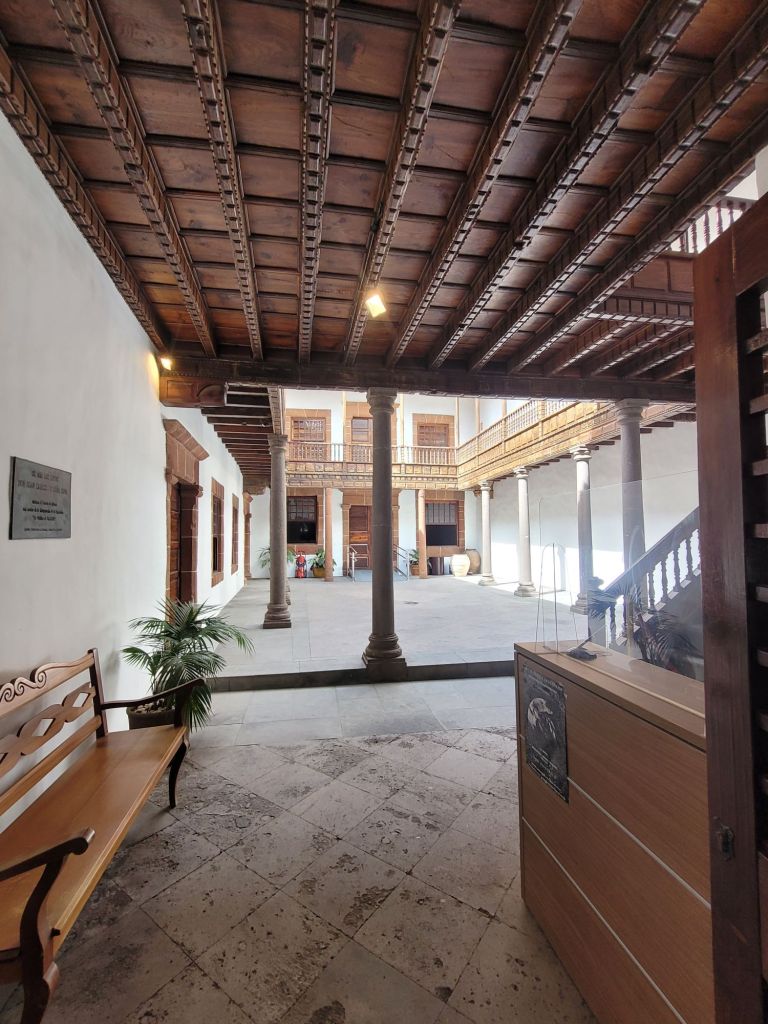

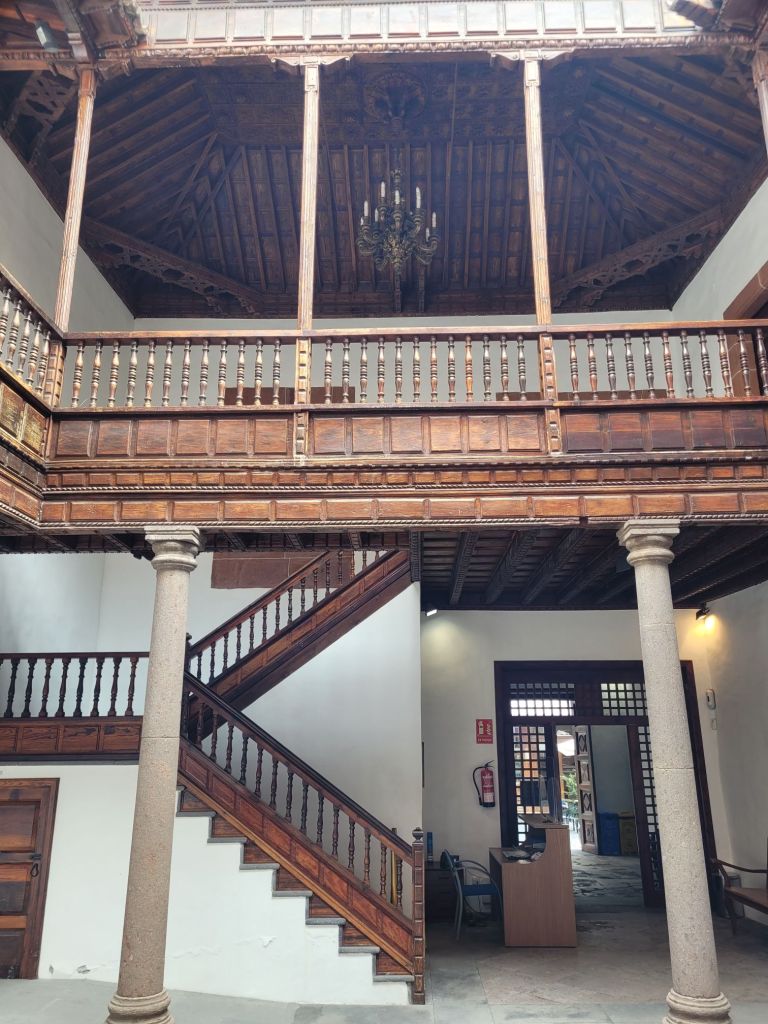
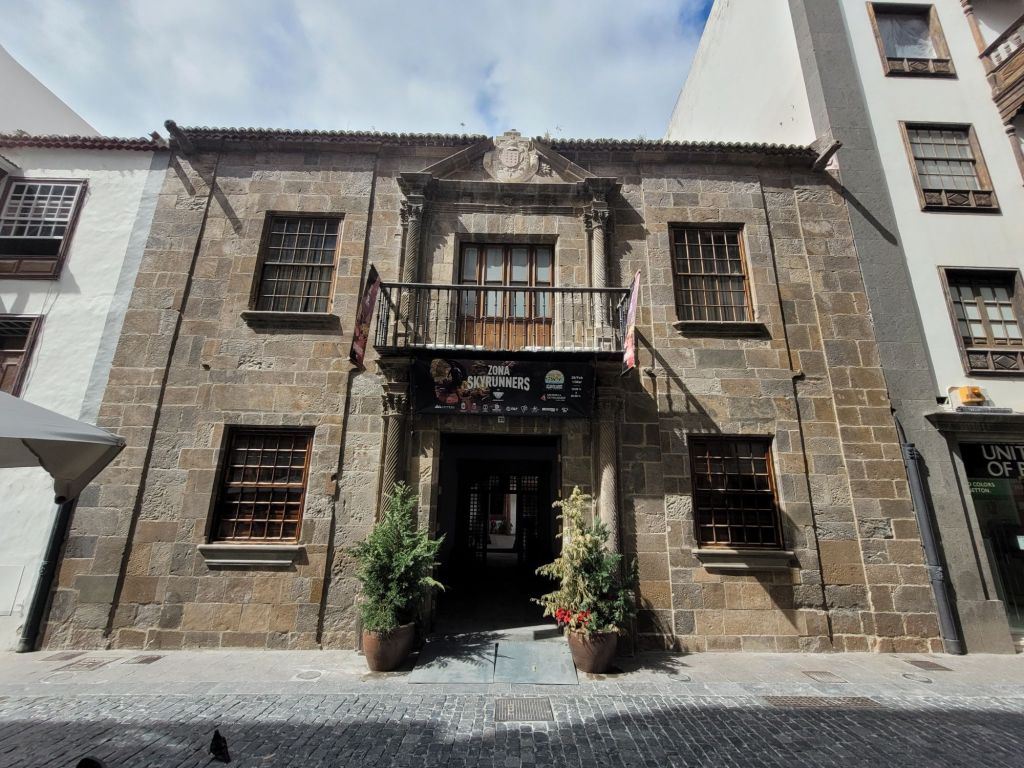

Canarian Pine was also instrumental in ship construction and repairs, helping to build La Palma’s importance: Colombus’ fleets stopped in La Palma for repairs and refitting.
The island became the first Court and Assizes of the Indies in the late 16C (having control over all trade to and from the ‘Indies’ – the name given to Spain’s colonies) and by the early 17C was the third most important port in Europe, after Antwerp and Seville. Trade leads to bankers and wealthy merchants – and wealth generally.
The architecture gives it away. The historical part of the city is built in a line along the bay, hemmed in by cliffs and steep hills. The roads are cobbled, traffic is light – it’s hard to decide if this is just because there aren’t many cars or it’s controlled – and there is an eclectic mix of building styles and ages.
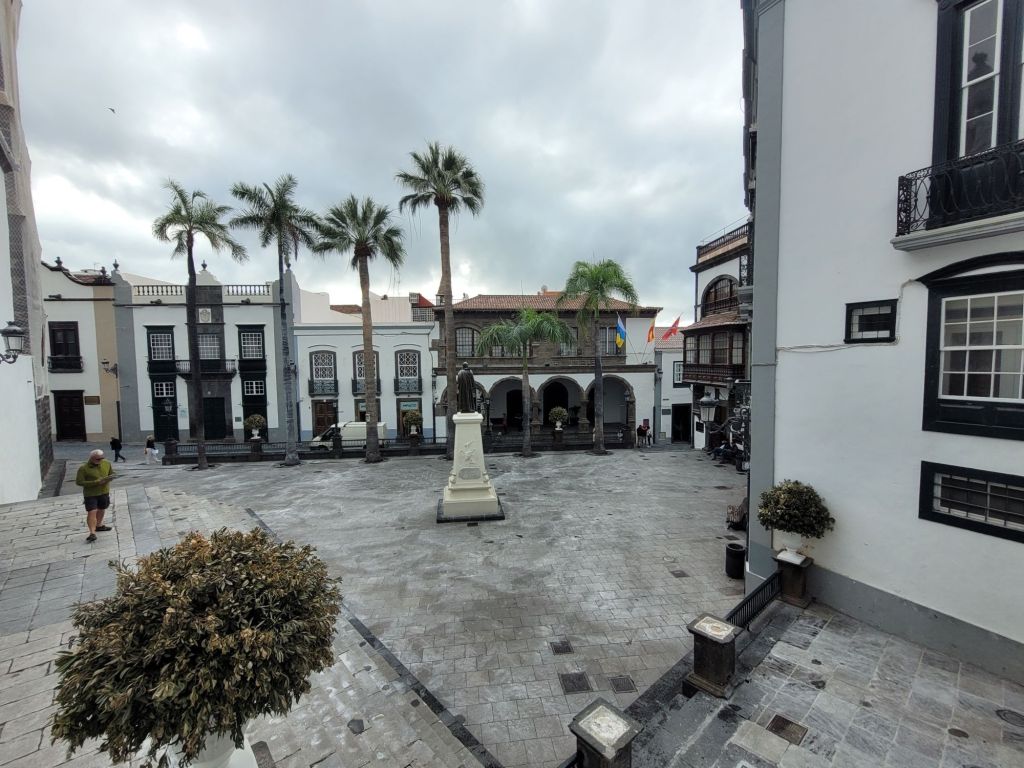
The Plaza de España is oddly shaped, small but beautiful
There is old (and ‘ripe for renovation’):
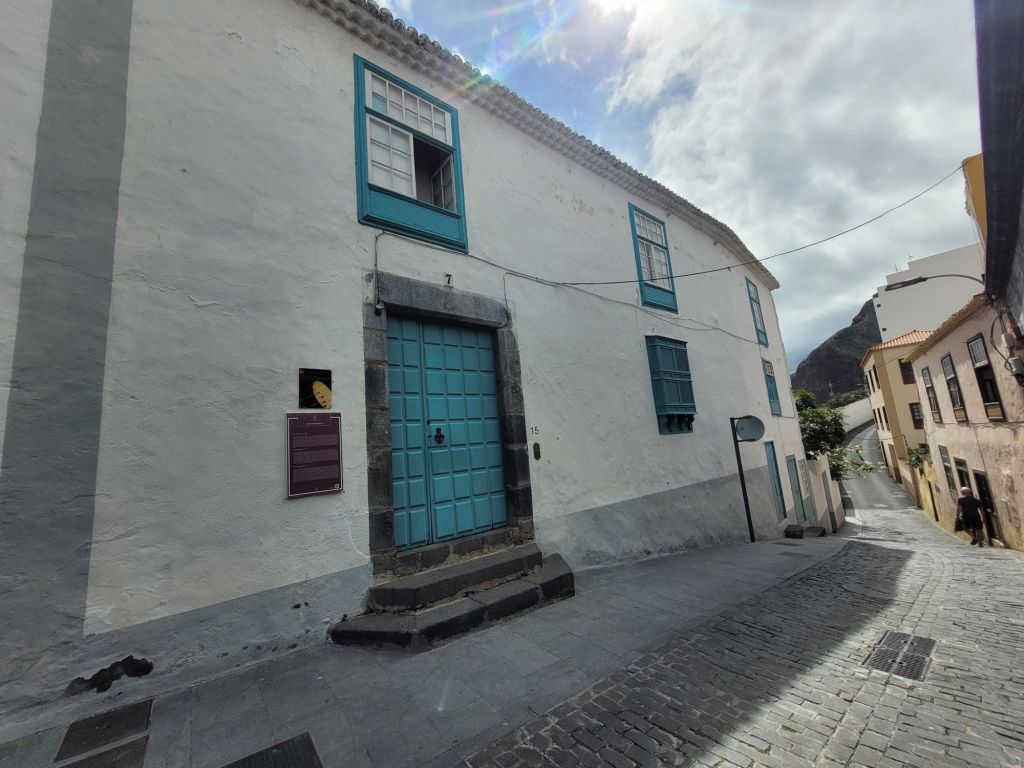

There is monochrome:
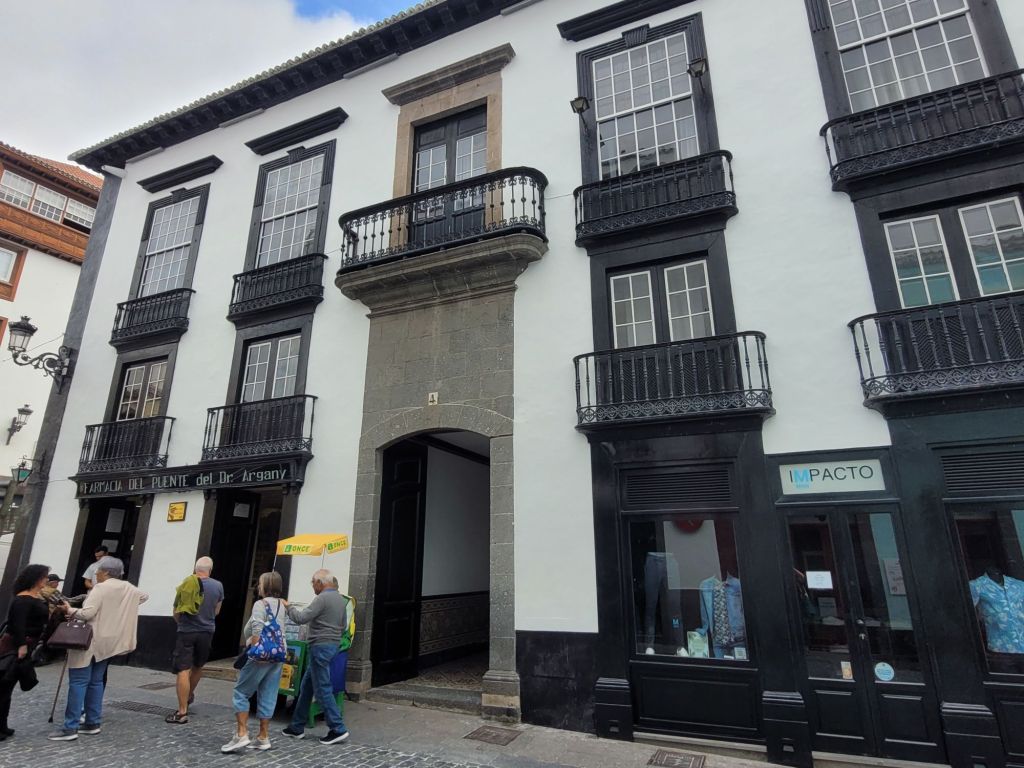

There is ebullient and enthusiastic:
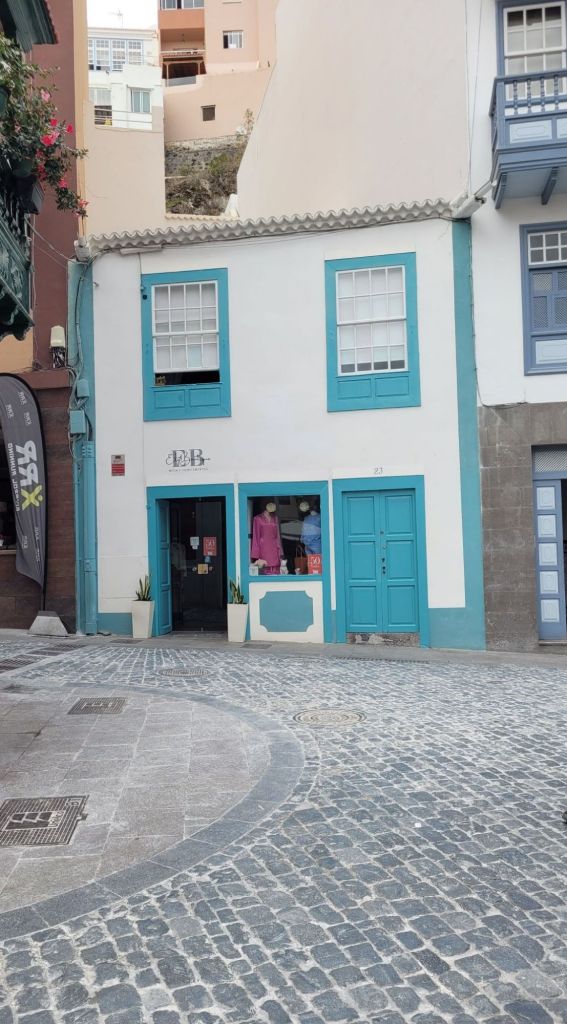
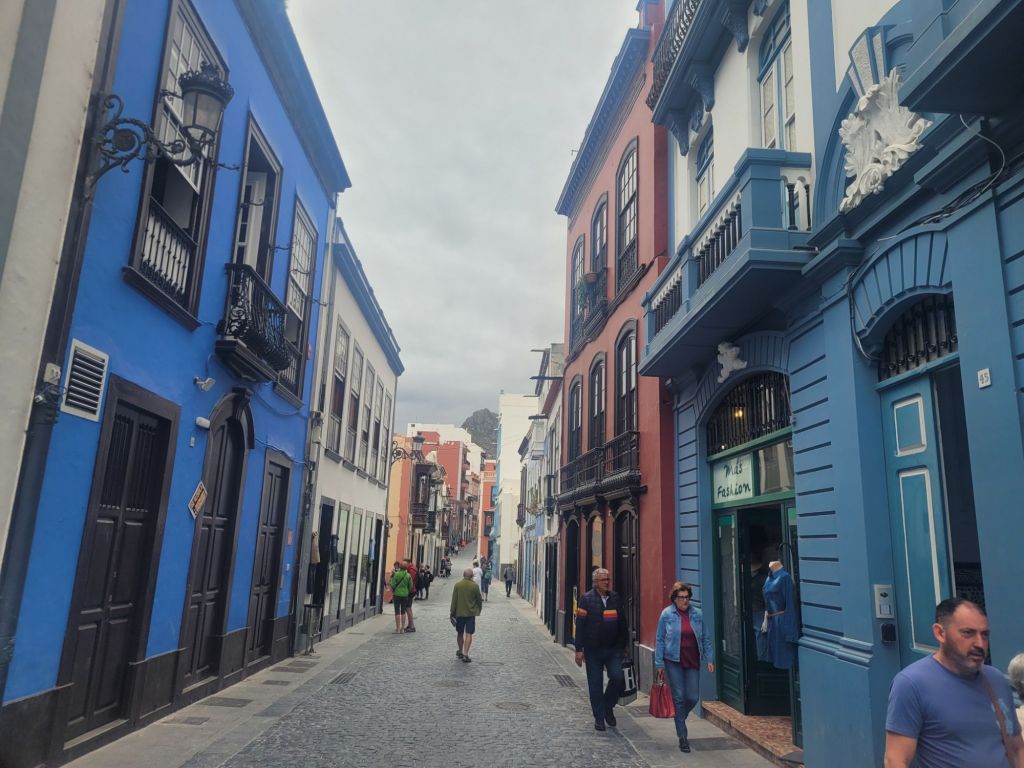
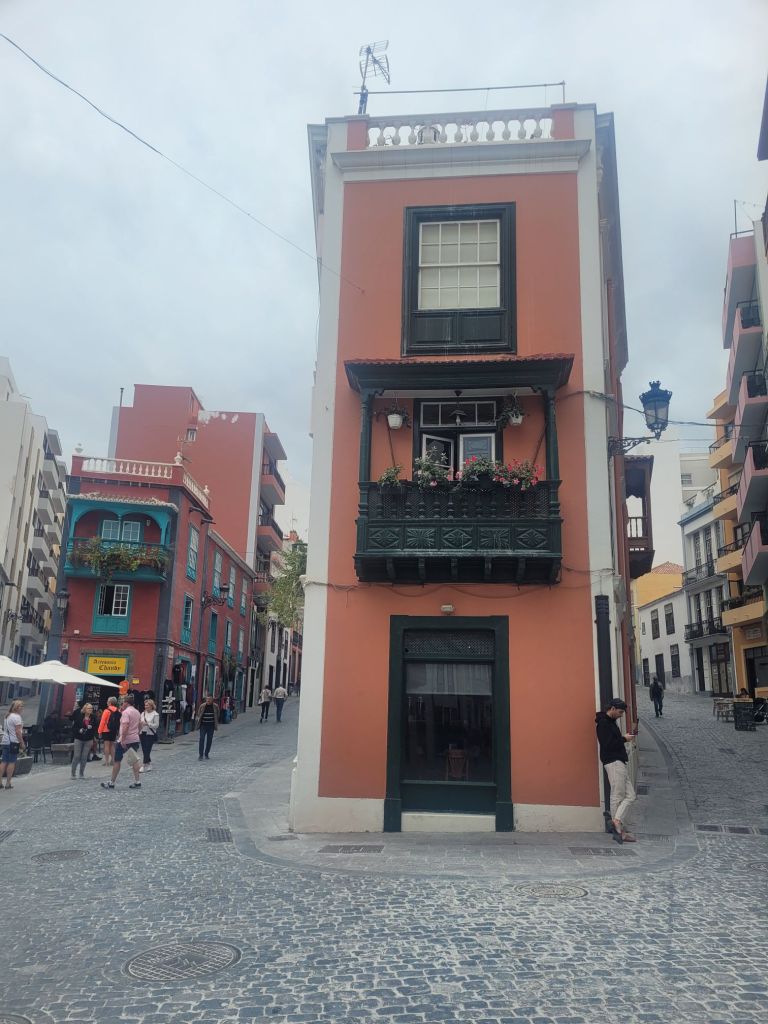
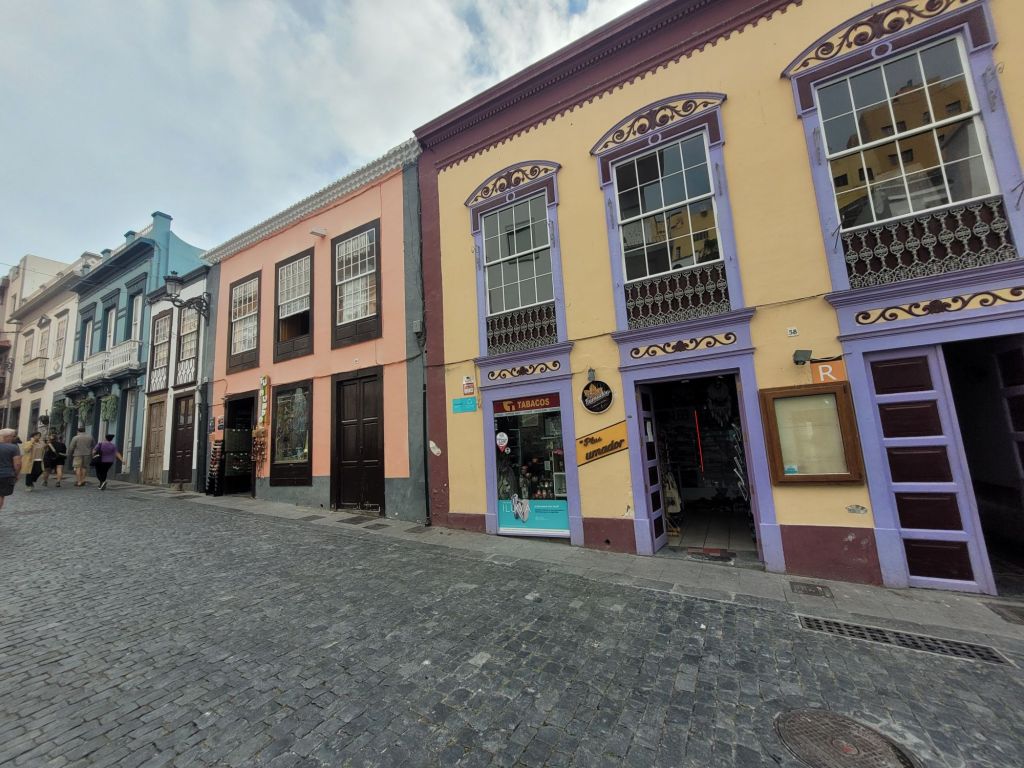
The explanation behind this wild burst of colour in the old part of town is as follows (maybe):
A long time ago the houses were white, with olive green or natural, brown woodwork. During Franco’s reign, it was forbidden to change the colours, so everything was very uniform. At the fall of Franco, everyone started asserting their individuality. Possibly sometimes a bit too strongly.
My source cannot swear to the veracity of this account, but it makes a nice story!
Balconies (wooden of course) also feature heavily!
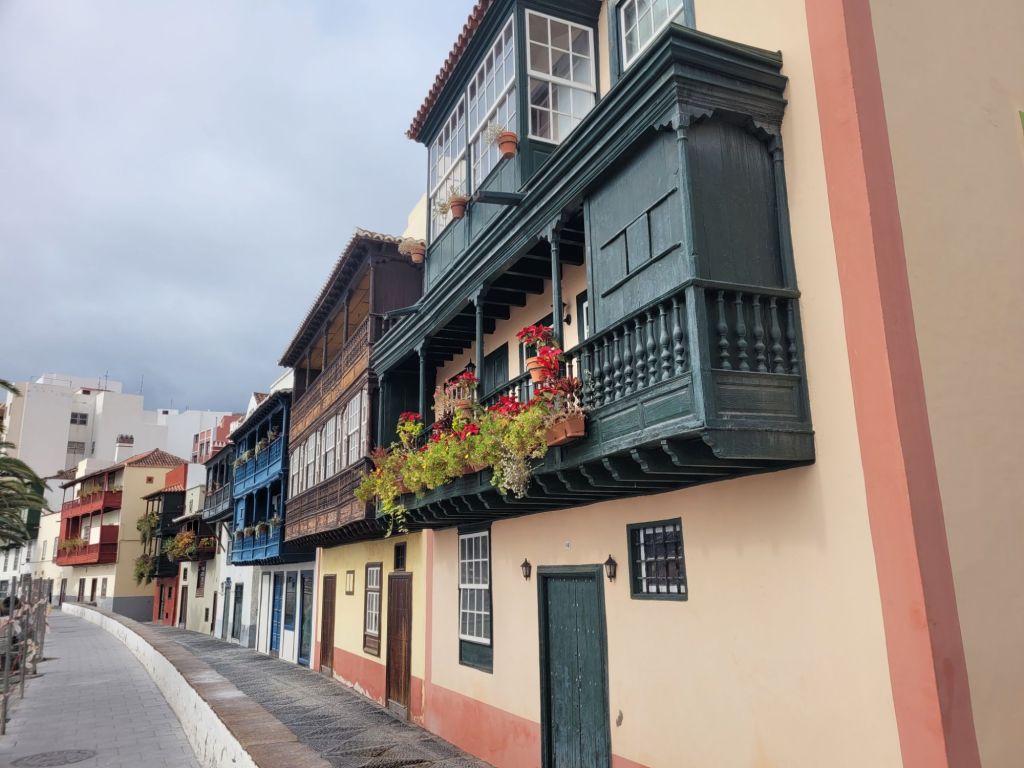
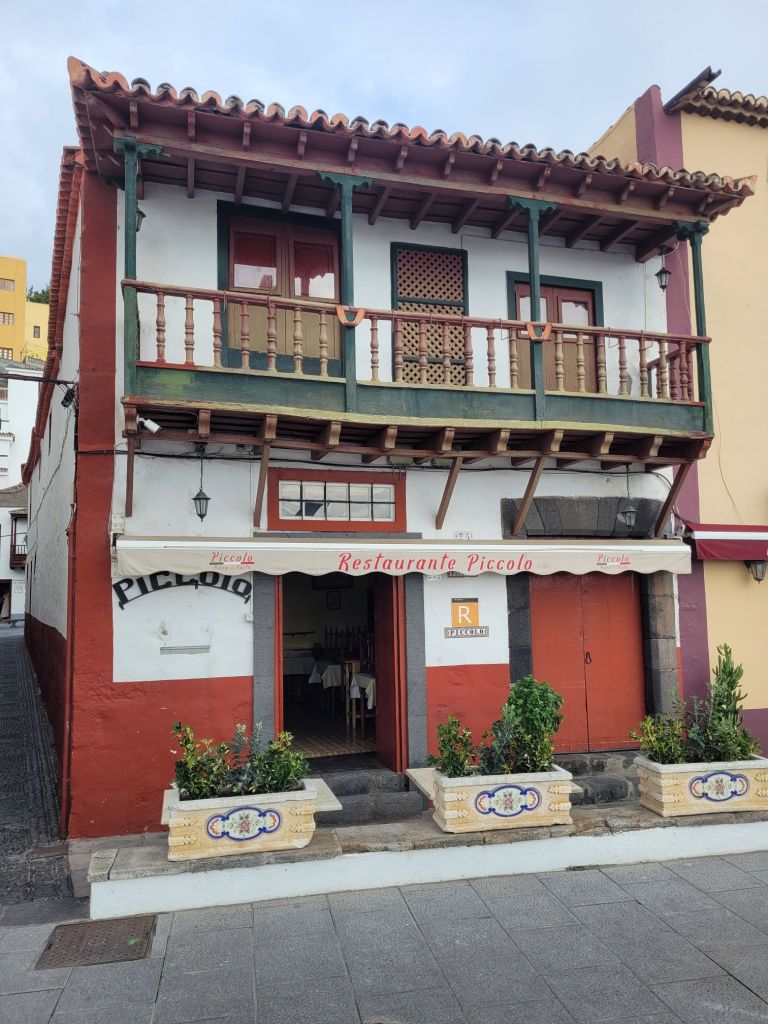
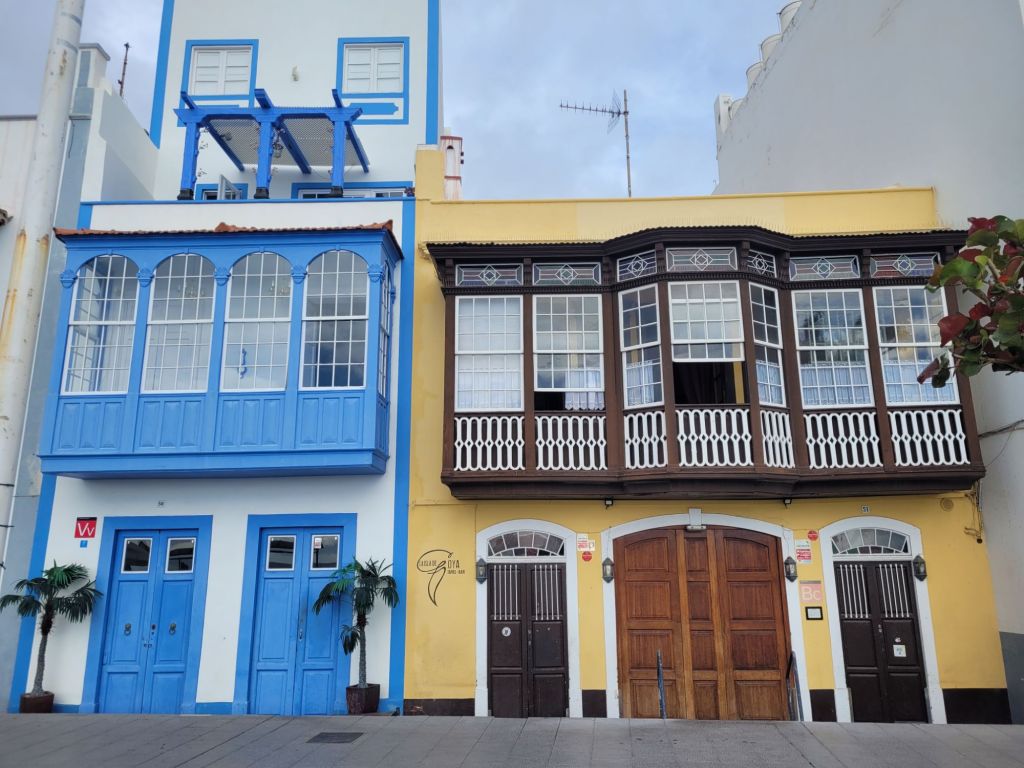

And balconies with more gravitas:

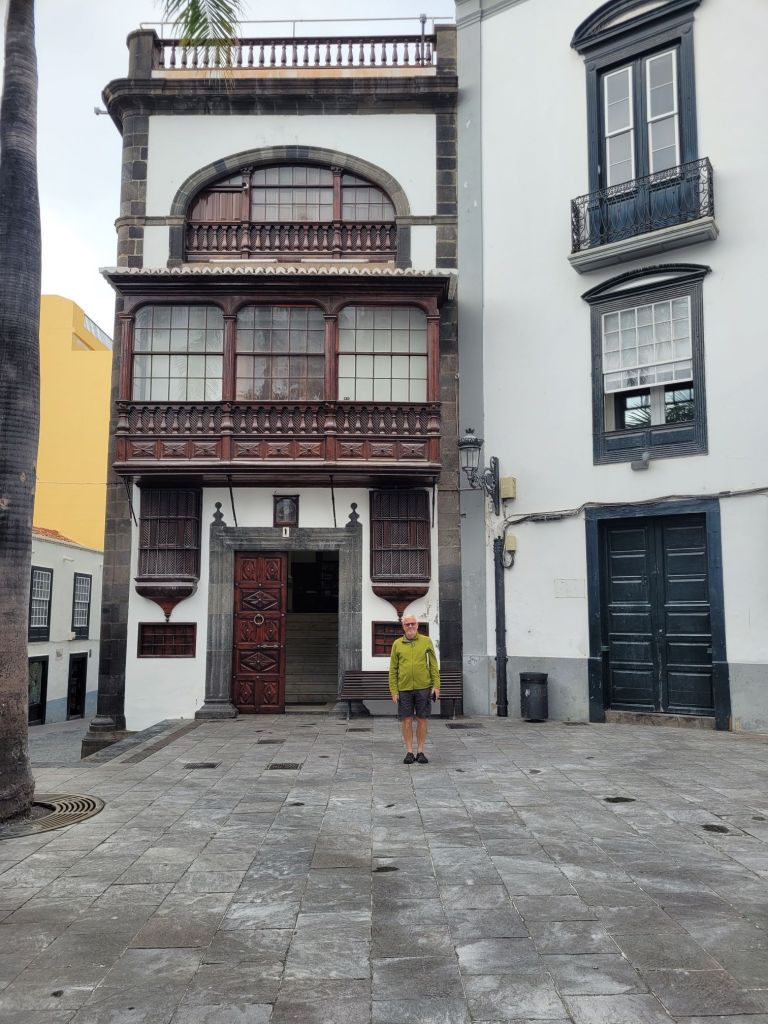
Old houses, small houses and even what look like Belle Epoque houses

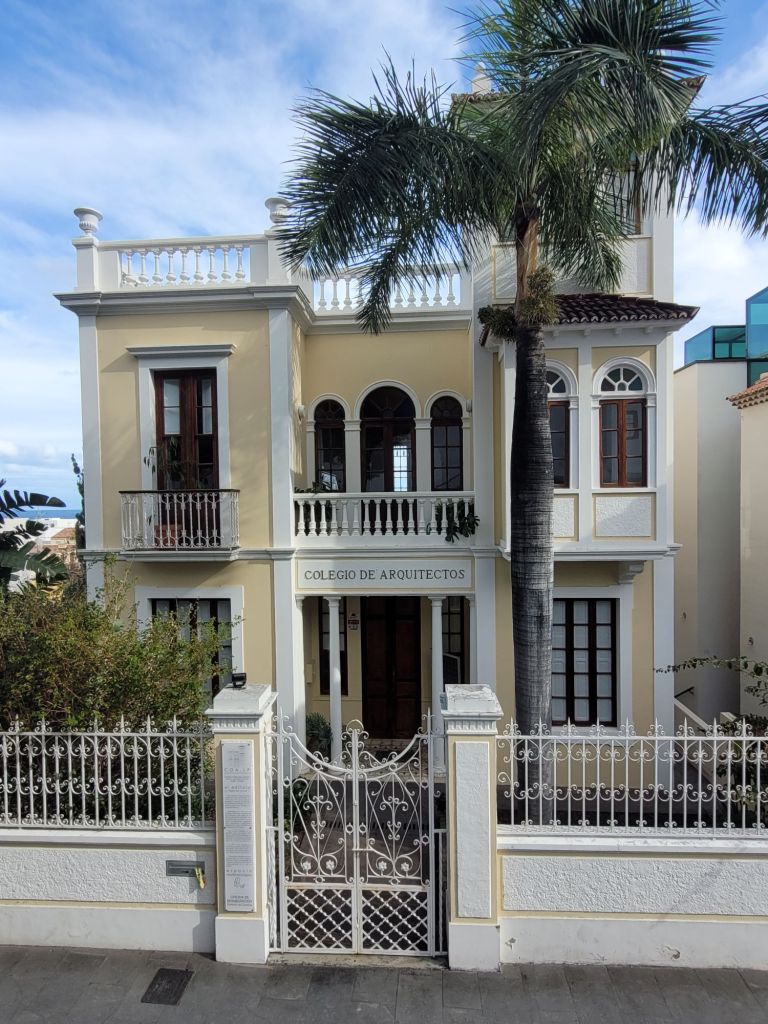
Fanciful tiled towers

and what is described as the finest example of mudejar craftwork in the Canaries (the cathedral ceiling, if you were wondering).
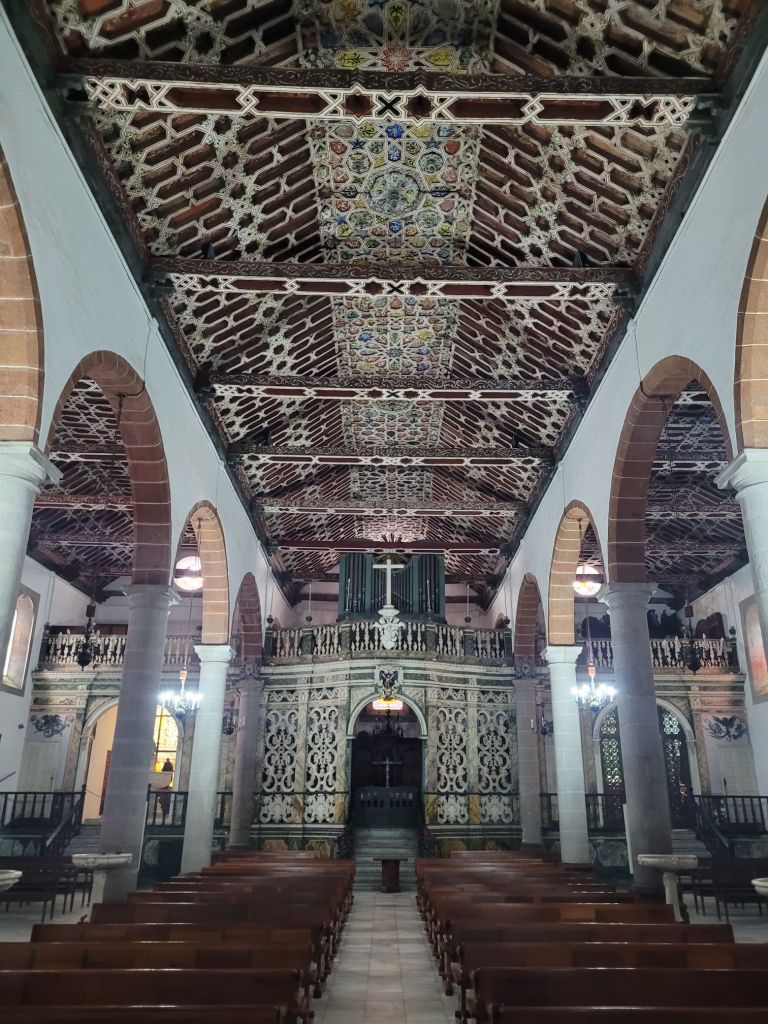
All packed into a few long, immensely pretty streets bursting with colour and sheer FUN.
Oh, and some bougie shops too!
 Retired? What now?
Leave a comment