A city of wine, made of warm buttery stone, by a large river – what’s not to like about Bordeaux? It was the perfect place to break our journey.
Warning – it was tricky to find somewhere to stay that wasn’t wildly expensive (it is a major city, after all, with a goodly tourist trade).
Our only other (very mild) complaint would be bicycle peril. Bordeaux is flat, perfect for cycling, and there are a lot of bicycles – single cyclists, tourist cylists, those in full lycra cycle clothing shifting along quickly, business people wearing ofice attire, delivery bicycles with trailers, mothers cycling with children in front of them, mothers cycling with children behind them and someone on a skateboard being towed, cycles towing refuse collection boxes… just lots of them. There are also monocycles, e-scooters, scooters, those on roller skates or blades. They all zip along at speed, with little to no segregation between pedestrians and two-wheeled traffic. After a few close calls (and some interesting French imprecations which I didn’t quite understand), we felt we needed wing mirrors on either side just to walk along the road.
This, however, was a minor issue and not unique to Bordeaux, although I don’t remember seeing quite so many parents with children on their bikes or being towed/pushed in various types of containers.
After much searching, Roger found a comfortable B&B just outside the historic centre – between 5-10 minutes walk away. The Chambres D’Art has a handful of rooms, a charming and very helpful host; it provided us with a peaceful place to sleep along with a delicious breakfast. From what I could see, there are only three rooms – only one of which has its on bathroom (early booking is in order).
The historic area is grand, with cobbled streets and mostly pedestrianised (other than the bicycles).
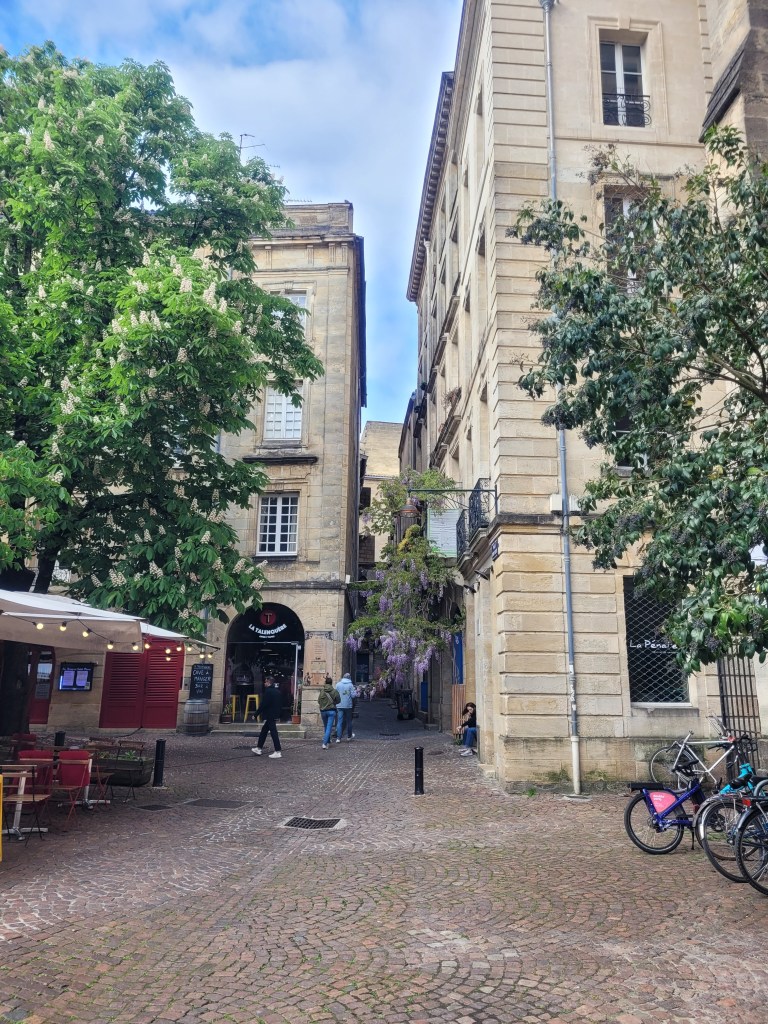
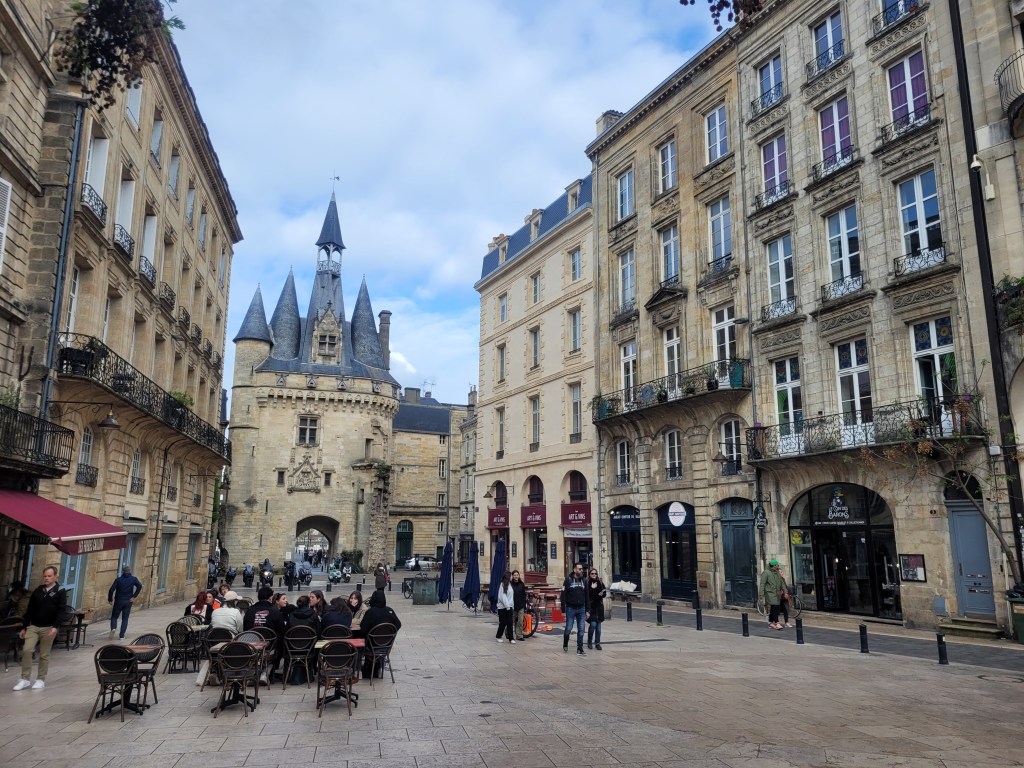
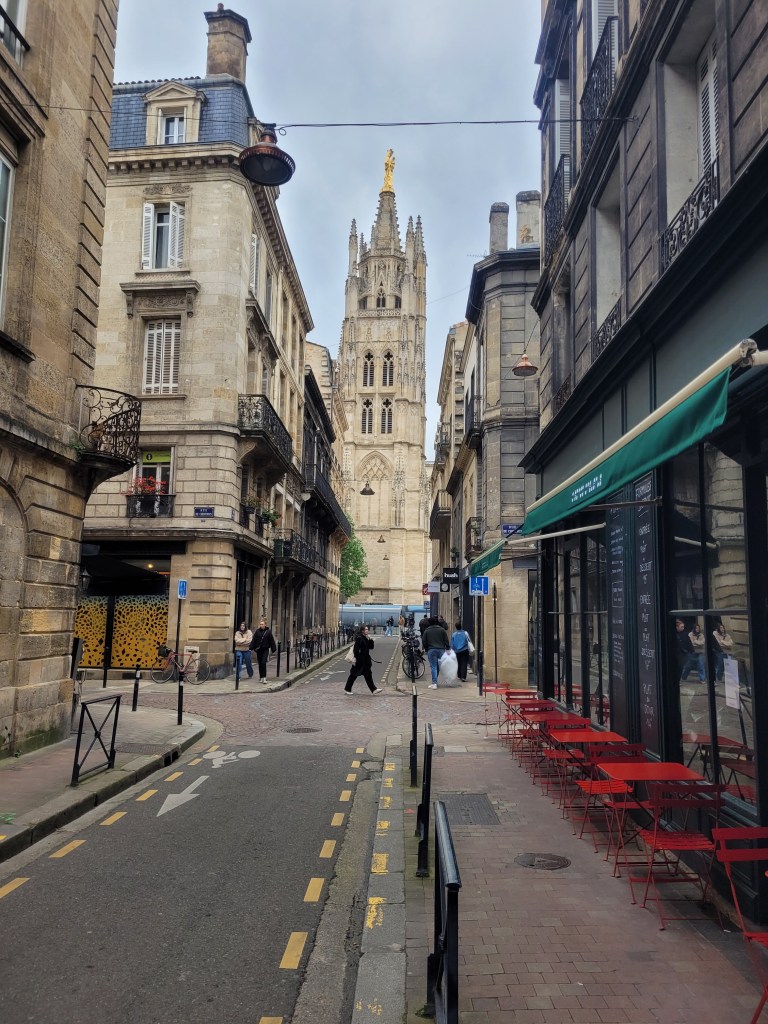

There are lovely arches and churches
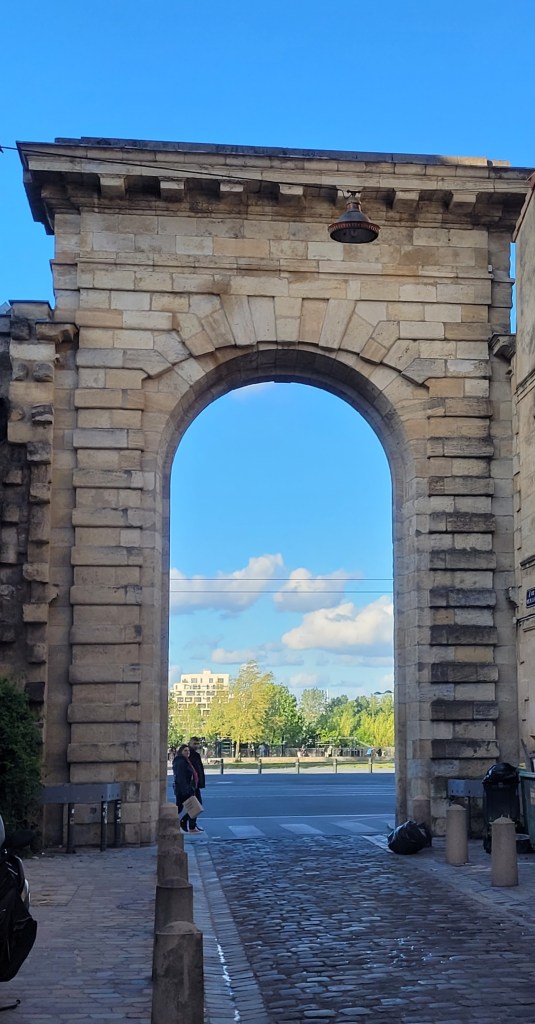
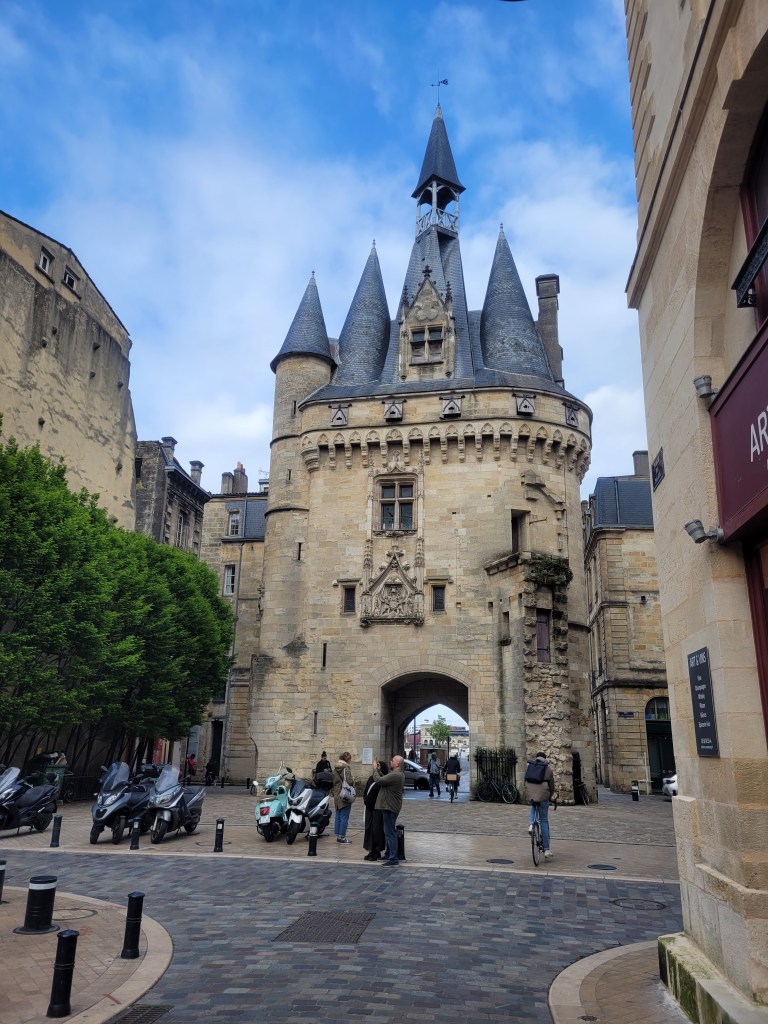

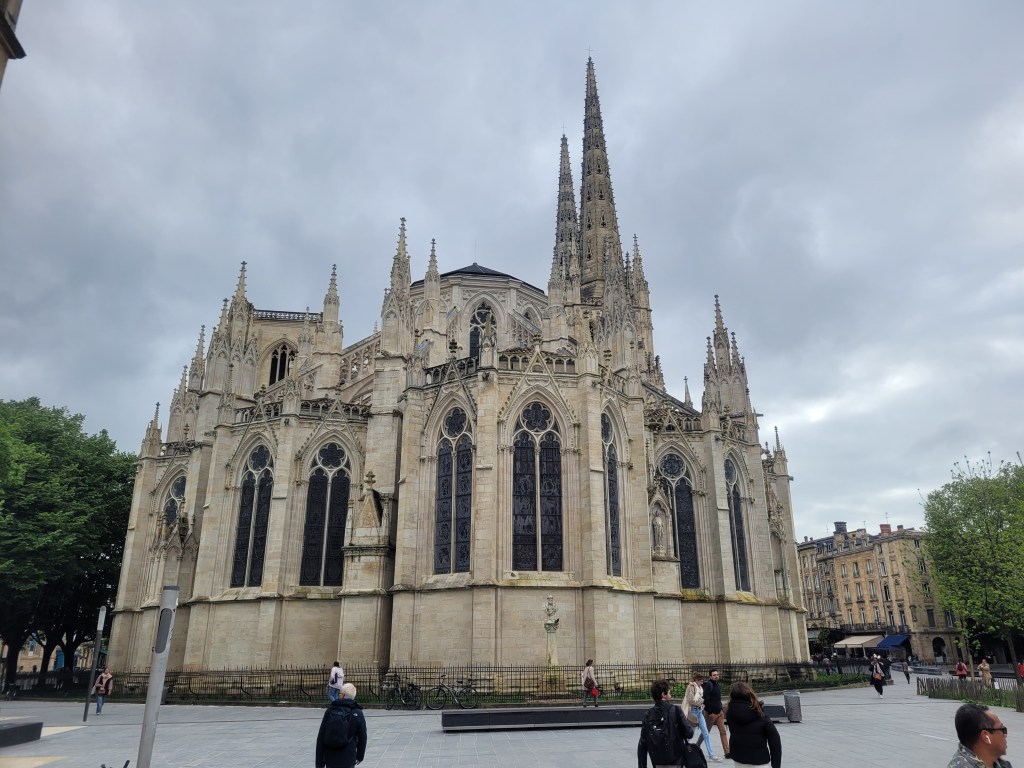


and some impressive squares.

Bordeaux earned its fame and money through the wine trade. For around 300 years it fell under the English crown, part Eleanor of Aquitaine’s possessions when she married Henry Plantagenet after divorcing King Louis VII (which then led to years of war between the French and English crowns over who owned Acquitaine – among other gripes).
As a result of not paying taxes for its wine exports to England, Bordeaux became extremely wealthy and its wines extremely well-known. When Bordeaux finally returned to the French crown (in the mid-1400s), its reputation for wine was already established and its wine trade still flourished.
The food scene has caught up with the wine and there are a plethora of different eating experiences: we sampled a restaurant, a food market and a tapas bar.
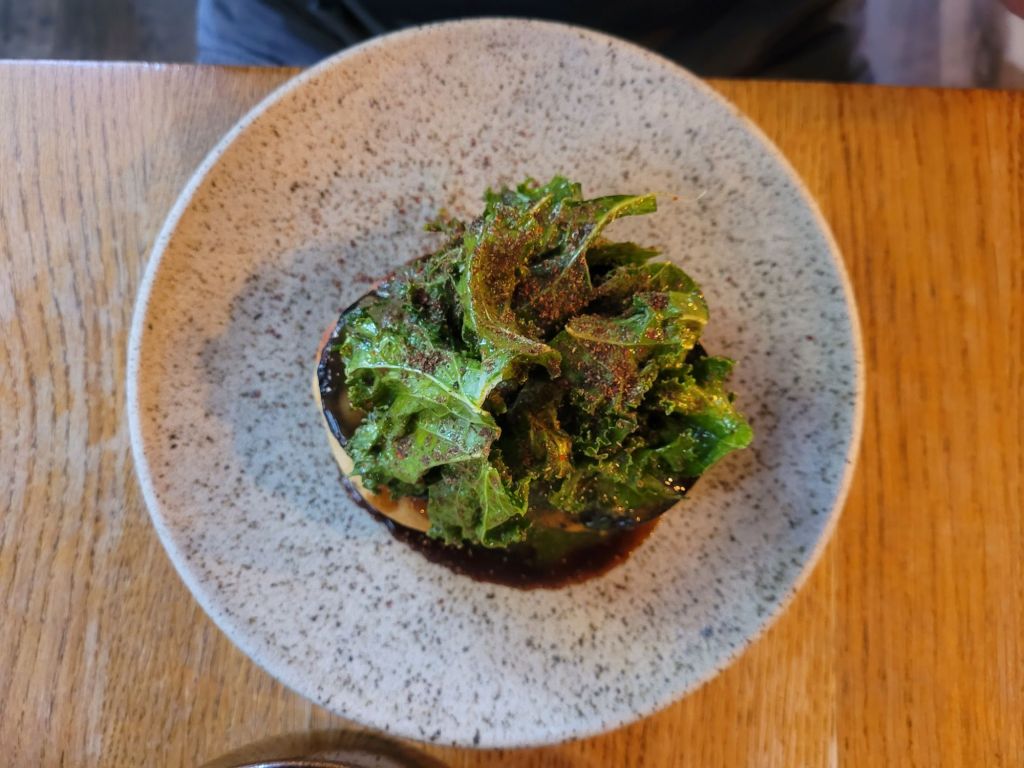
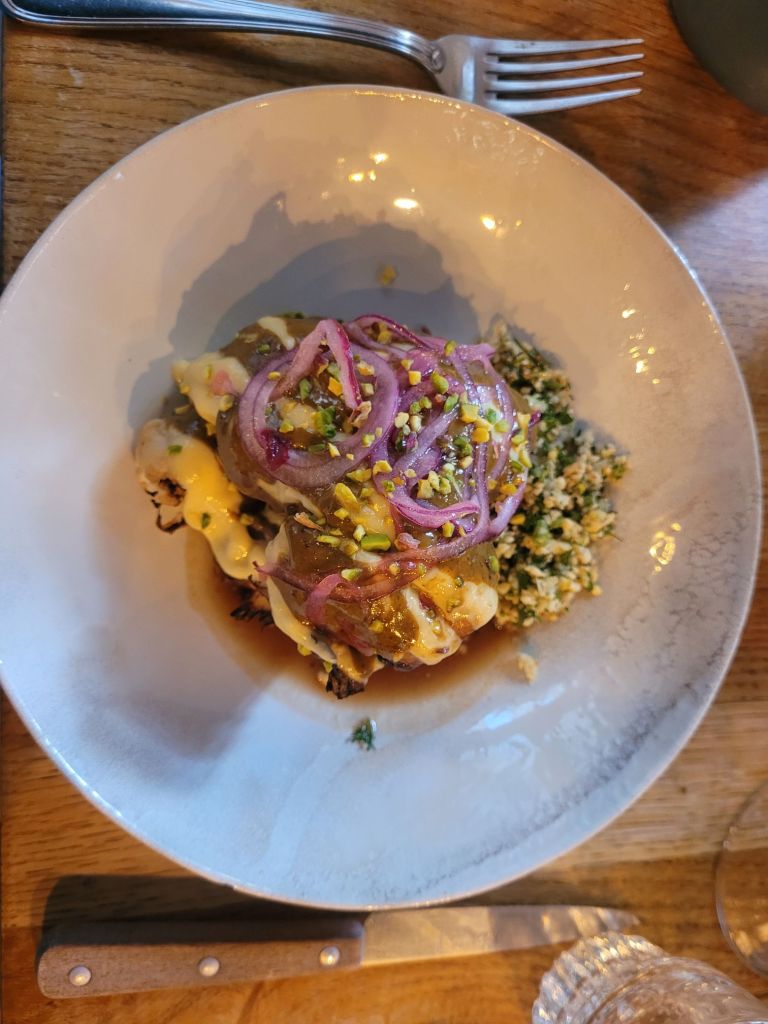
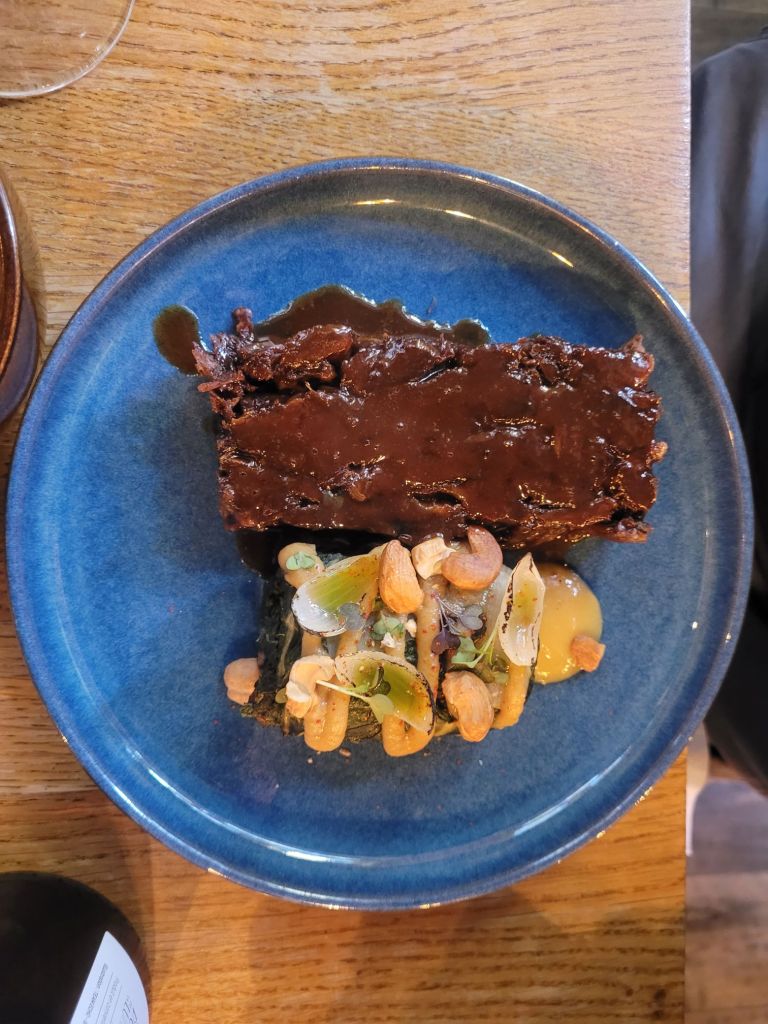
Supper on Tuesday was at Echo – a small place run by a young team who have some interesting ideas about flavour combinations. All their wines are organic (an interesting choice in such an iconic wine city) and their menu is quite restricted: three starters, three mains and two puddings. Strict vegetarians would be limited as there was only one option between all offerings that didn’t have some meat component, however small.
The food was delicious, the wine was spicy and very drinkable (possibly too drinkable) and it’s clearly a popular place as it filled up quickly after 19:30. By the time we left it was full, with people being turned away.

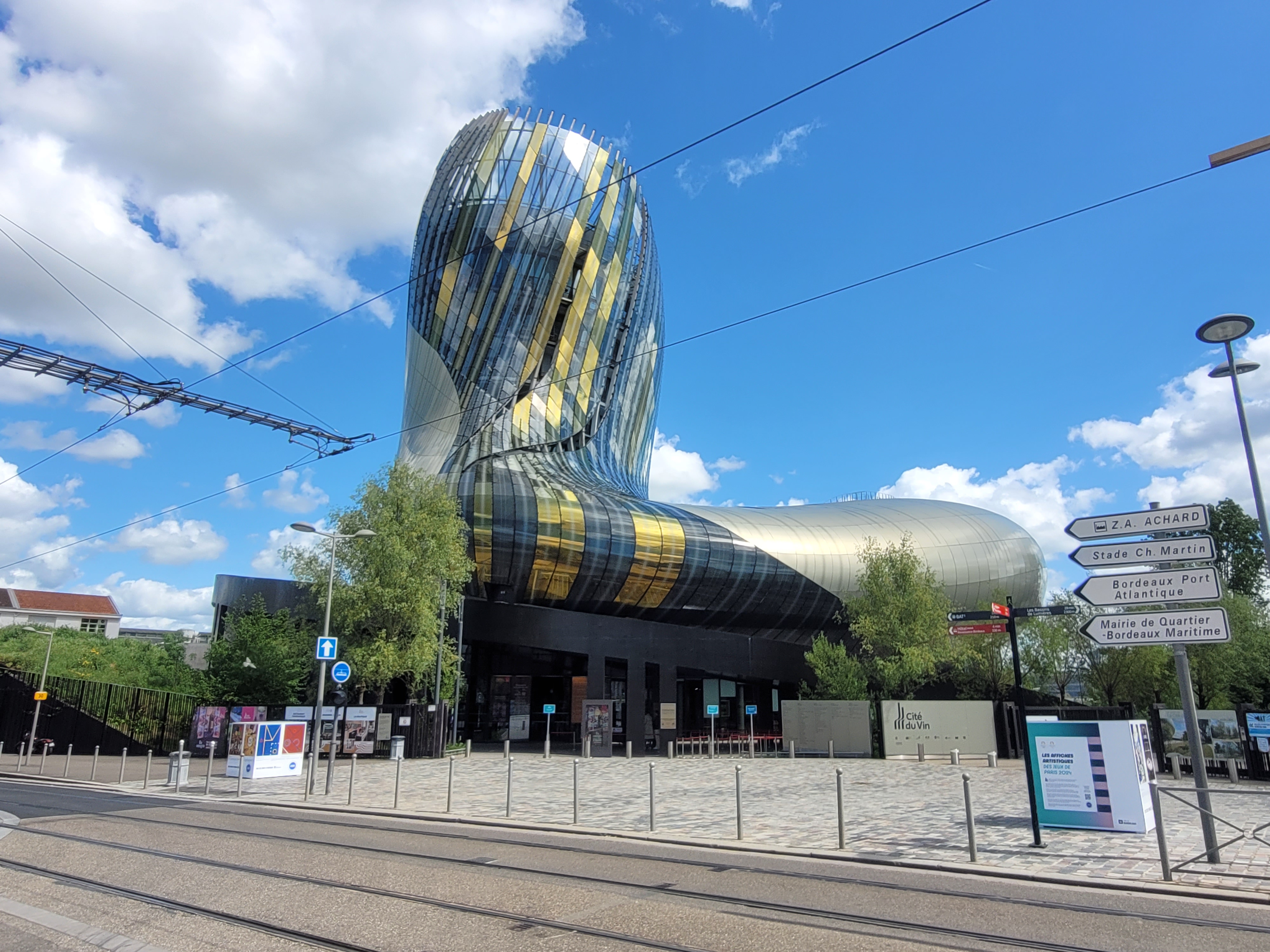
On Wednesday we went to the Museum of Wine, which is a nice walk along the river to the west of the main city, by the main historic docks where the German submarine pens were/are. These are now used a sound and light show – they are said to be amazing (our host was most enthusiastic) but it isn’t really our thing and we wanted to go to the archeological museum instead.
The wine museum was incredible. The quality of the displays, the breadth of information and the interactivity was quite stupendous. Personally, there were times I wanted a bit more depth and detail, but this did not detract from the overall experience. At the end of the exhibition you can go up to the top of the building and have a glass of wine. The views are spectacular and they aim to provide a range of ‘styles’ to choose from (all French, of course).
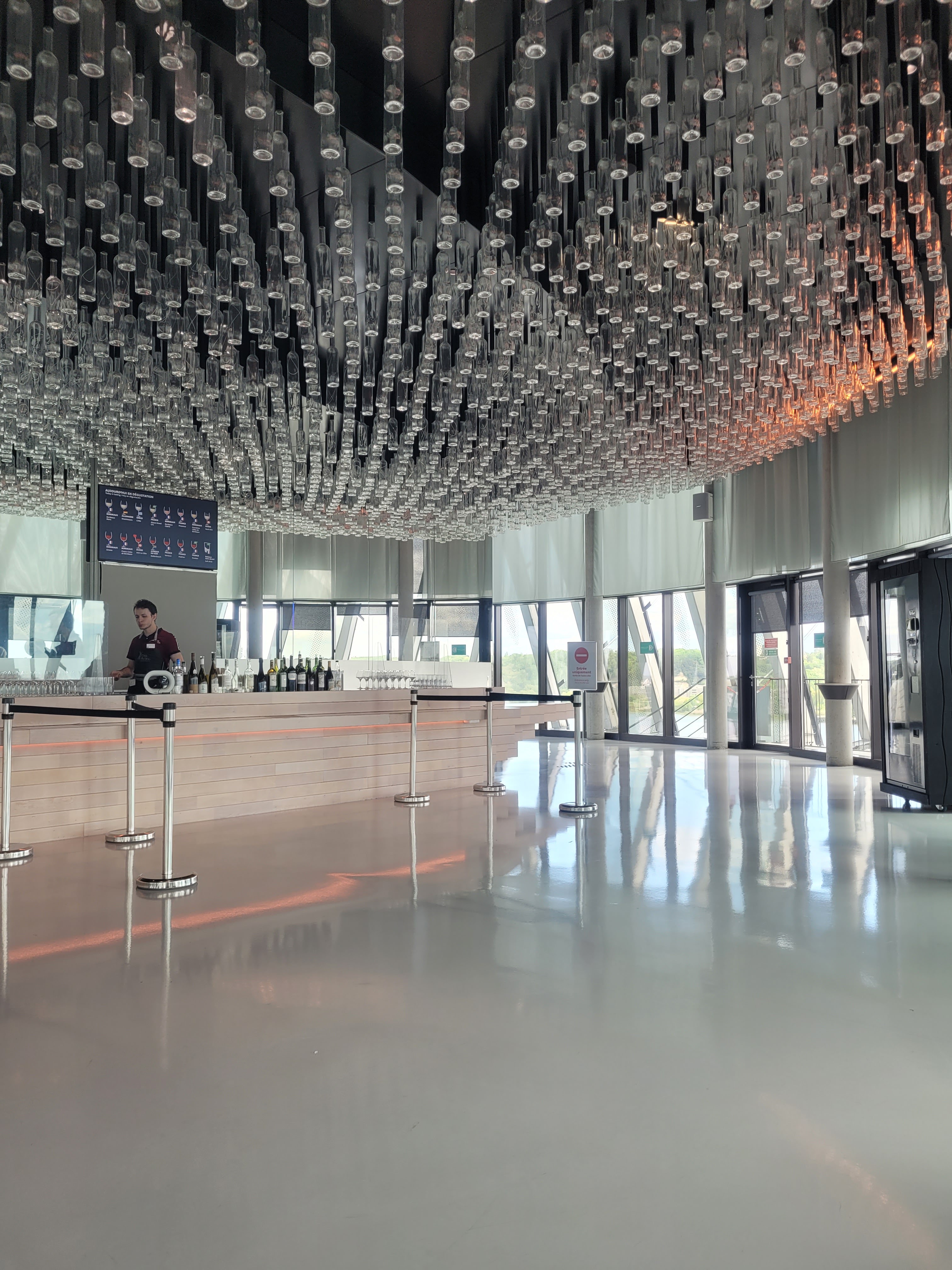
There is a walk-way outside with notice boards for various features – I learned that the Garonne is/was known as the ‘blonde river’ because of the effect of the saline water (it’s tidal) on the suspended silt. From where I was standing it looked brown. But it’s a nice thought!
The building is ultra modern and looks faintly ‘digestive’ to me. But I never was an appreciator of modern art or architecture.
Lunch was had across the road at a food market. These are popular everywhere and apparently this one is standing room only at weekends during high season. We were lucky and got a seat quickly.
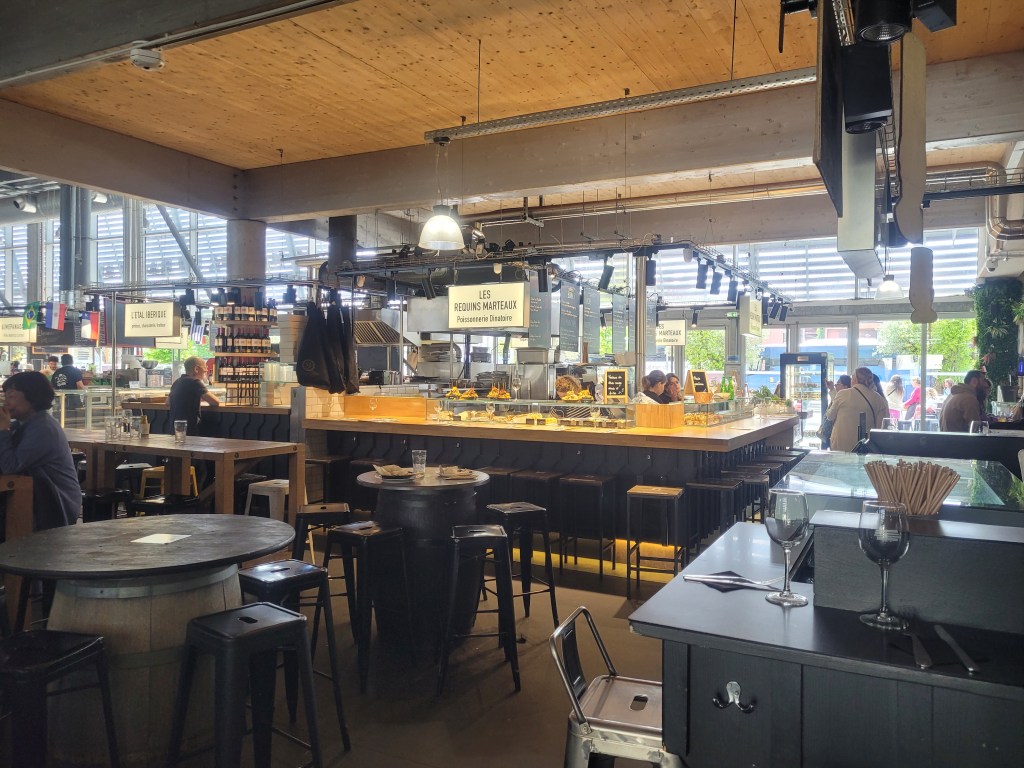
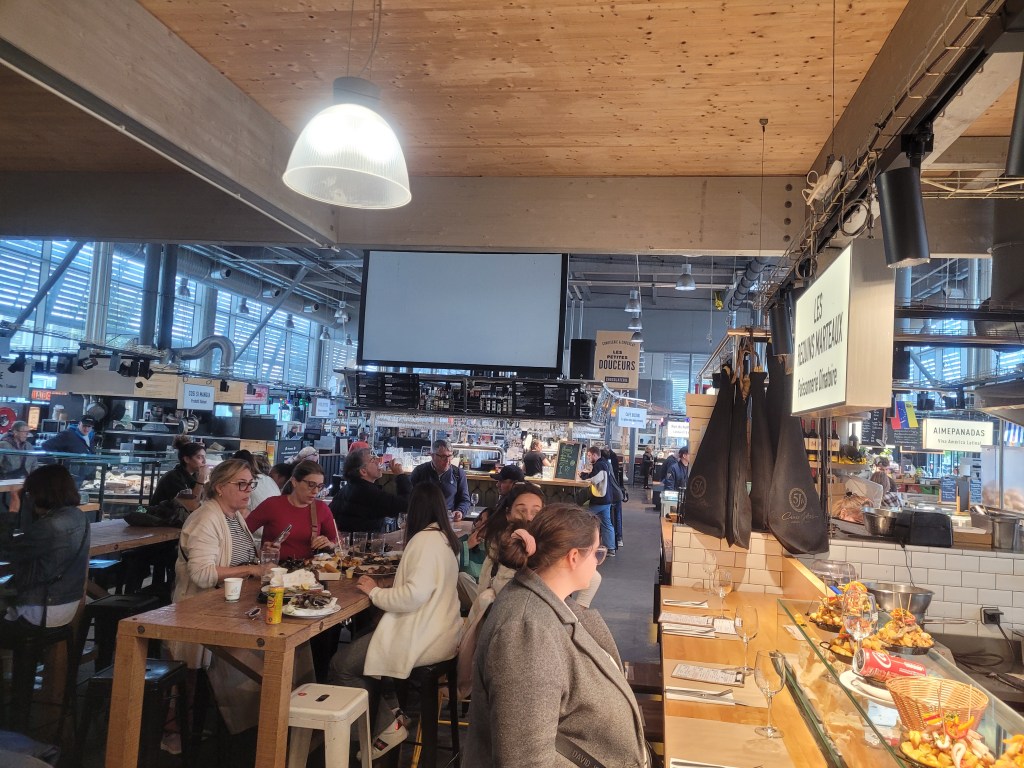
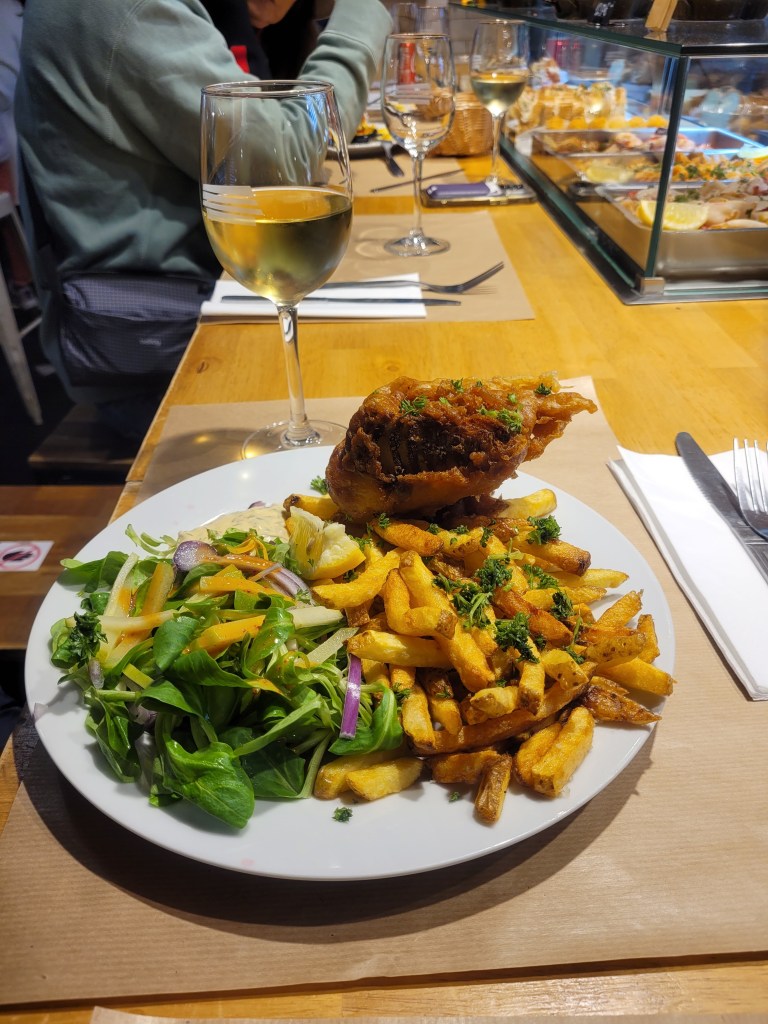
Le Requins Marteaux (poissonerie dinatoire) was amazing. Roger had ‘traditional’ cod and chips – he said if cod and chips were that good in the UK he would eat it every week – and I had a tuna tartare salad (and chips). The tuna had a tasty wasabi, ginger and pomegranate seed dressing (the crunchy pomegranate seeds provided a nice contrast to the raw tuna), the chips were thin and crispy and a nice glass of local white (no idea what it was but it was light and fresh) washed it all down nicely. Something that we both commented on was how nice the salad was: clearly intended to be eaten rather than just plonked on the plate as garnish.

We then walked back into town and visited the Archeological museum (or Museum of Acquitaine, if you like). This was disappointing: it was a bit tired, a bit old fashioned, we learned nothing new and the signage started in a combination of languages (including English) and then reverted to only French. Our French isn’t good enough to navigate the historical detail of a tombstone bearing an early Christian sign, so we missed a lot of the detail.
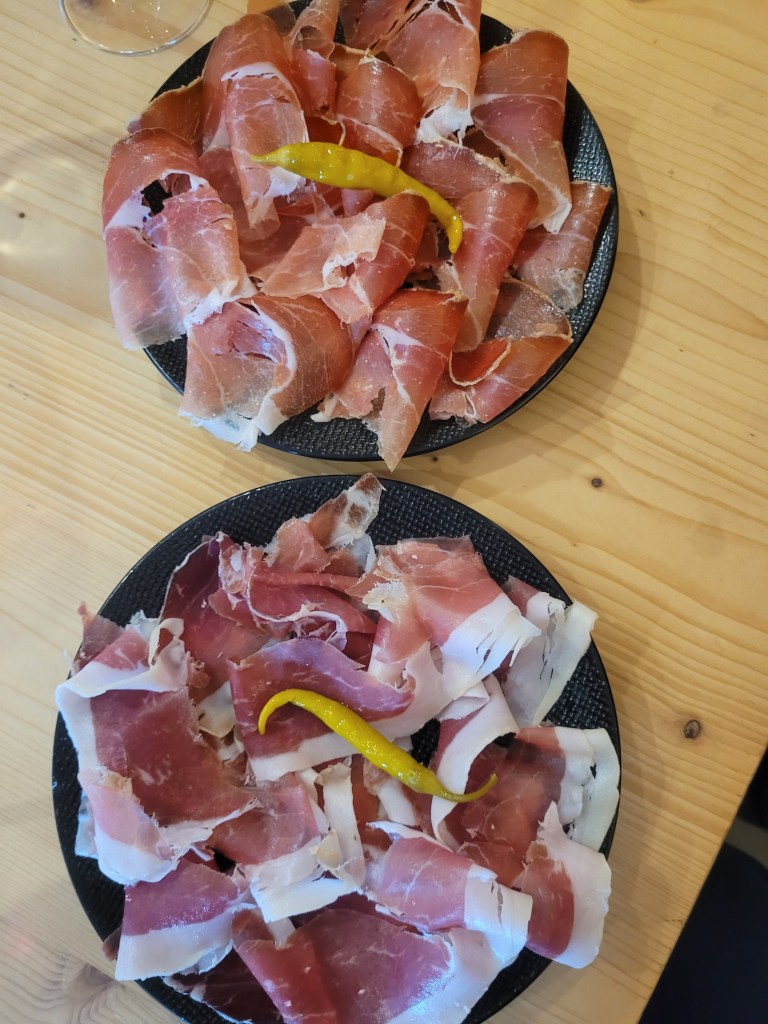
Tapas were had at Julo, which served a variety of ‘bits’ and a good selection of wine (yes, French). I had a red from the Loire Valley which was delicious and Roger had two different glasses of local Bordeaux (not at the same time though!). We tried two different types of ham: a Bayonne and a Noir de Bigorre. They were very different. The Bayonne was sweet, almost perfumed, drier and less fatty. The Noir de Bigorre had much more fat and was far more complex. We were told that the Noir de Bigorre pigs have to forage outside for a season and most of what they eat is nuts. Much like Iberico ham, this turns up in the flavour. I will leave you to work out which we preferred!
Bordeaux was a great place to break our journey. The food and wine were enjoyable and the city is easy to walk around because it’s so flat. And given that sitting on a train features heavily both before and after Bordeaux, the walking was most welcome.
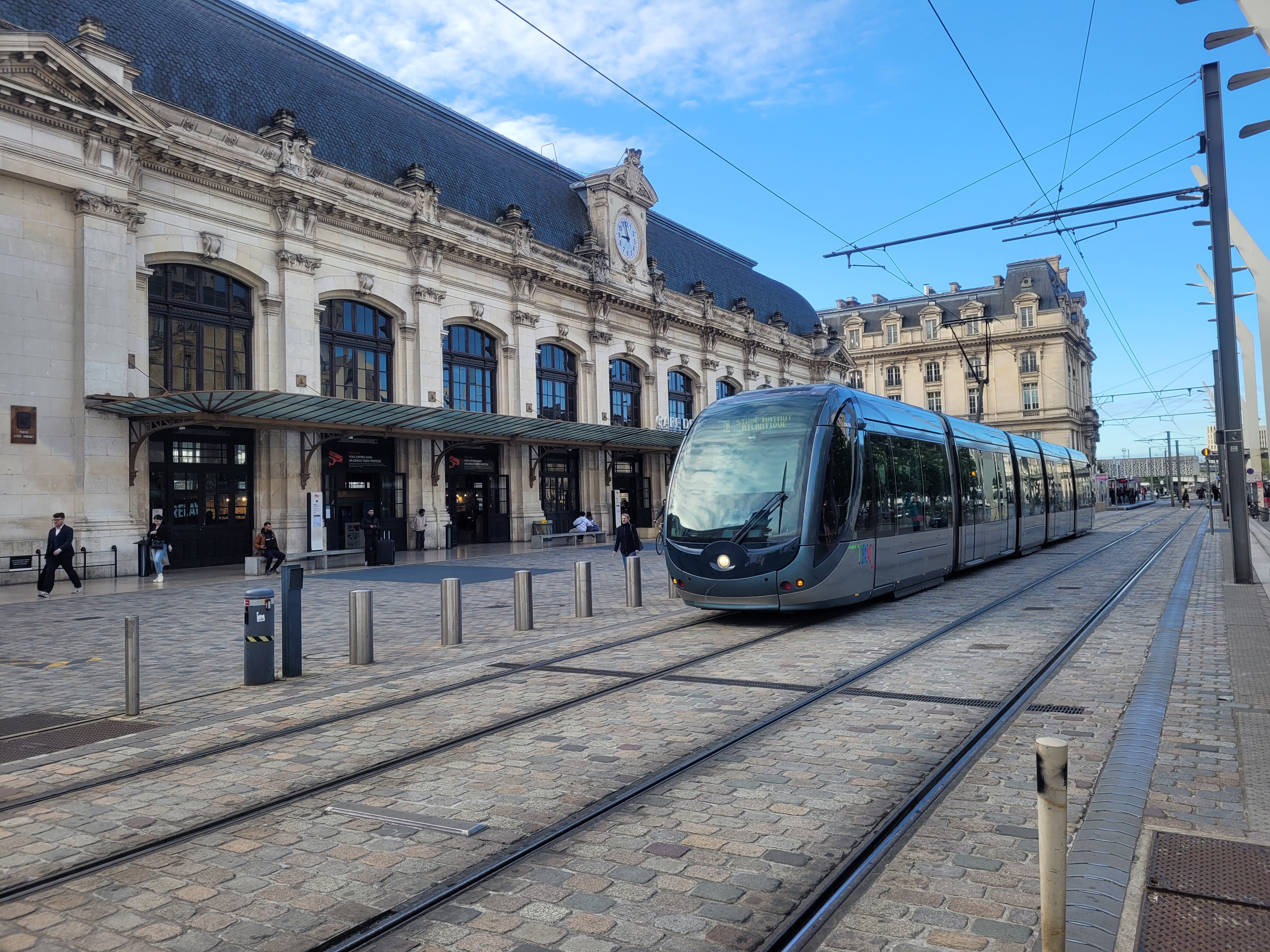
Yes, you do risk the two-wheeled menaces and we also found the trams a bit of a worry: they whisk along at great speeds, mostly quietly (until they are close) and it’s sometimes difficult to know which way to look when crossing the tram lines – and there aren’t many formal crossings.
It’s an area we would like to come back to, particularly to visit some chateaux and Arcachon. If we take the train to Northern Spain again, we would also break our journey in Bordeaux – but I think we would only stay one night.
 Retired? What now?
Leave a comment