Hondarribia is a small town at the mouth of the river Bidasoa, which separates France and Spain. It is one of two places where trains travel between the two countries – Hendaye/Irun or on the Northern Mediterranean coast out of Perpignan.
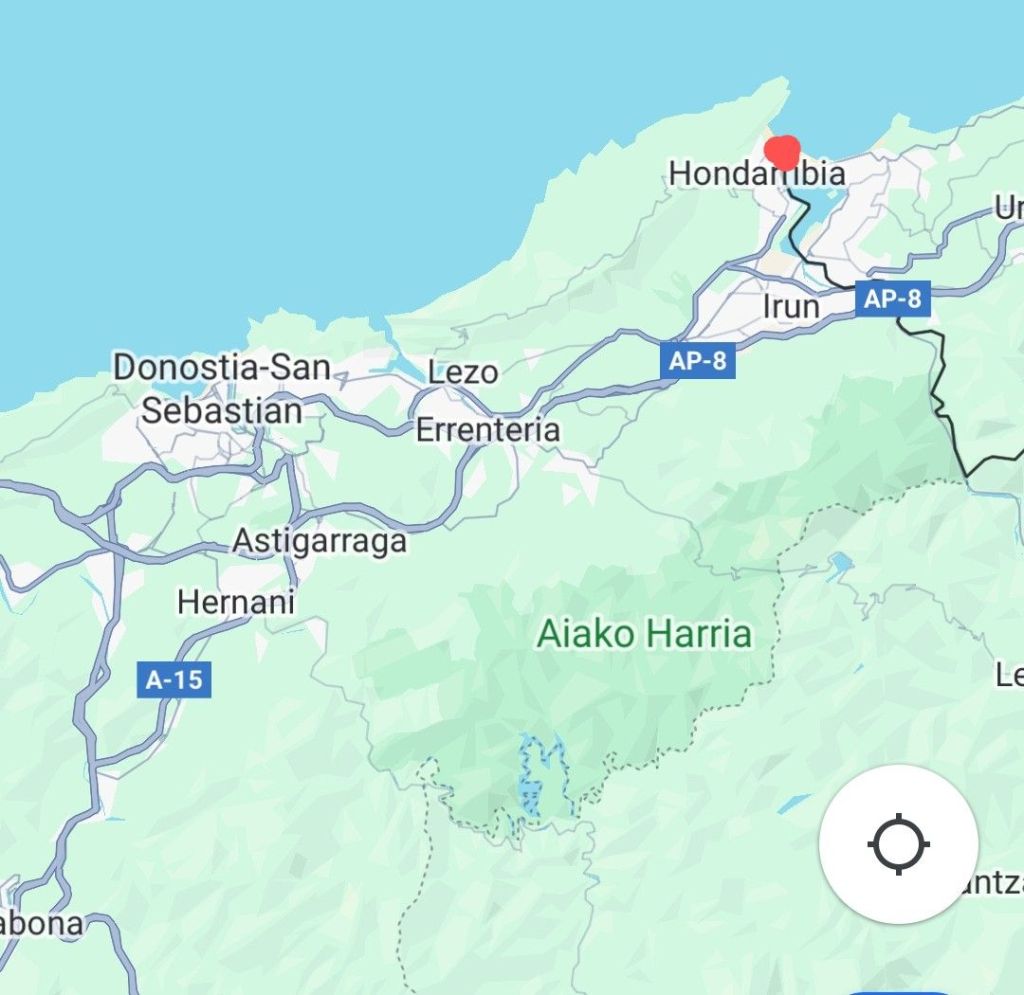

It is where the mountains run down to the sea, although the area immediately around the estuary is very flat (lucky for us!).
Mostly urban, the towns all have different names but they run into each other so it’s tricky to figure out where one finishes and the next one starts. Hondarribia itself is extremely pretty and is considered a ‘good’ place to eat.

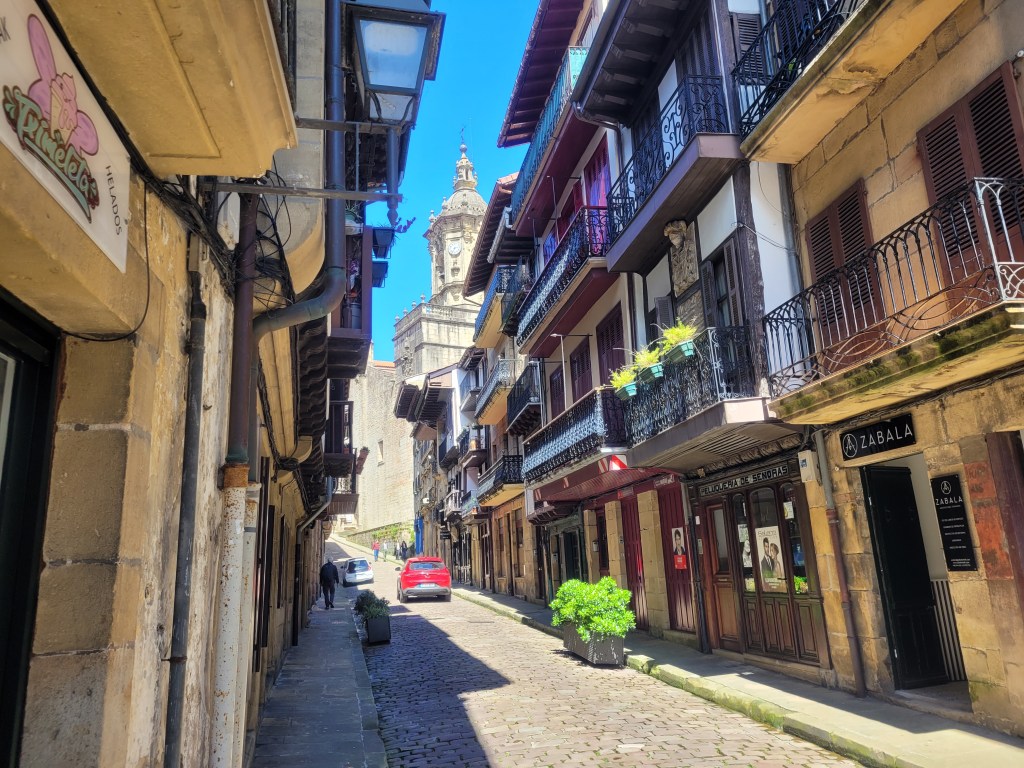

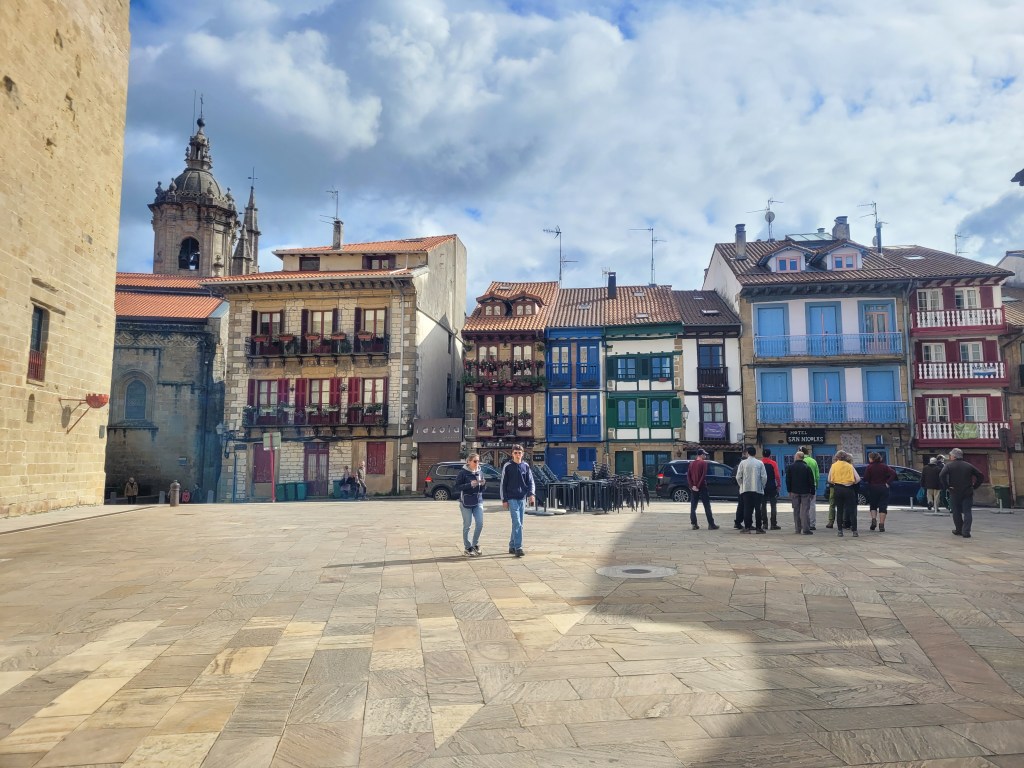
Having staggered into the Parador where we were staying, it was slighly galling to hear that there is a small boat that runs from Hendaye Plage to Hondarribia. Next time. We dumped our things (after getting upgraded – yay for the ‘Amigos’ benefits) and went out in pursuit of lunch.
‘La Hermandad de Pescadores’ is situated in one of the oldest buildings in the town – an old fishermen’s shed for storing their fishing gear. Inside it definitely didn’t look old, it was a bit more evident outside!
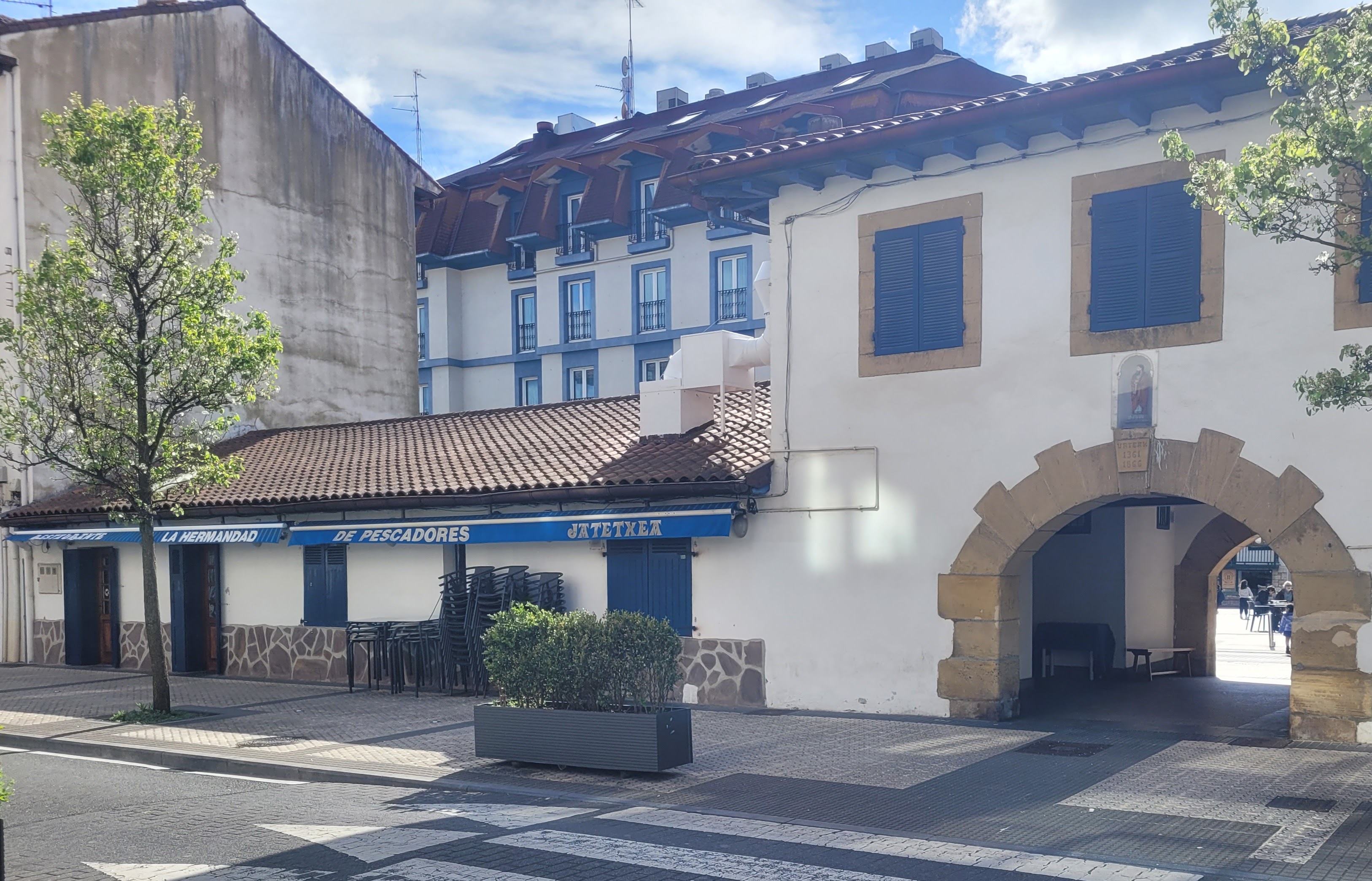
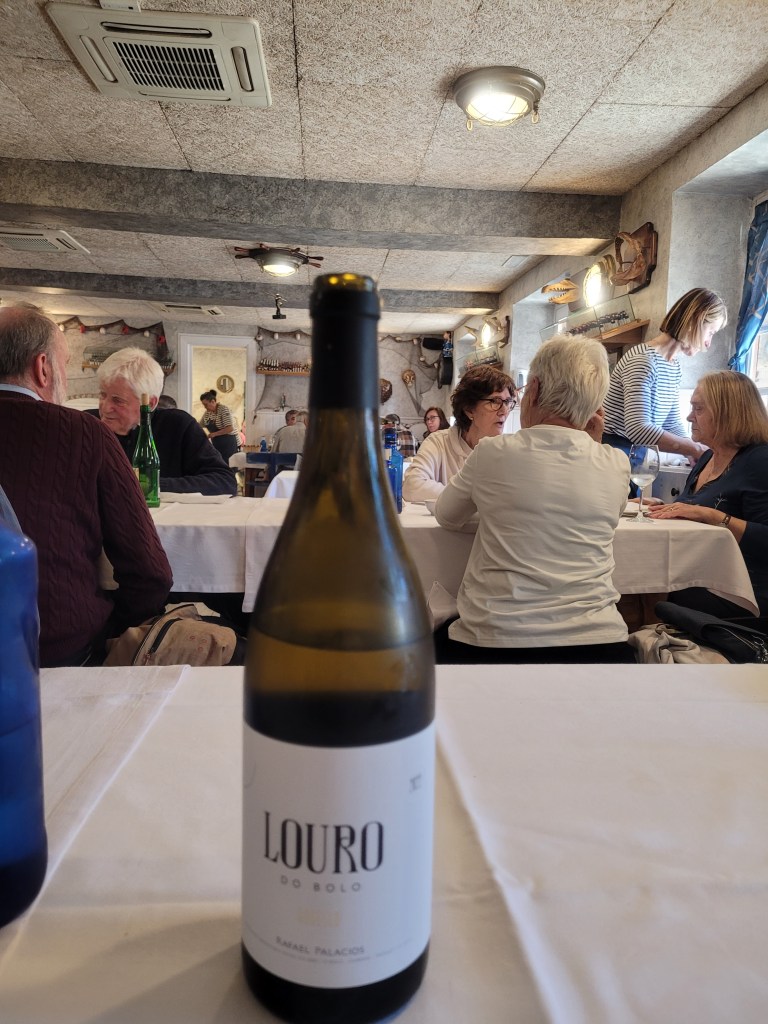
No prizes given for guessing that we had fish – Roger had cod, I had hake – and a wonderful bottle of Godello that we had tried on a previous trip to Galicia. It was all fairly informal, with long tables and friendly (and swift) service.
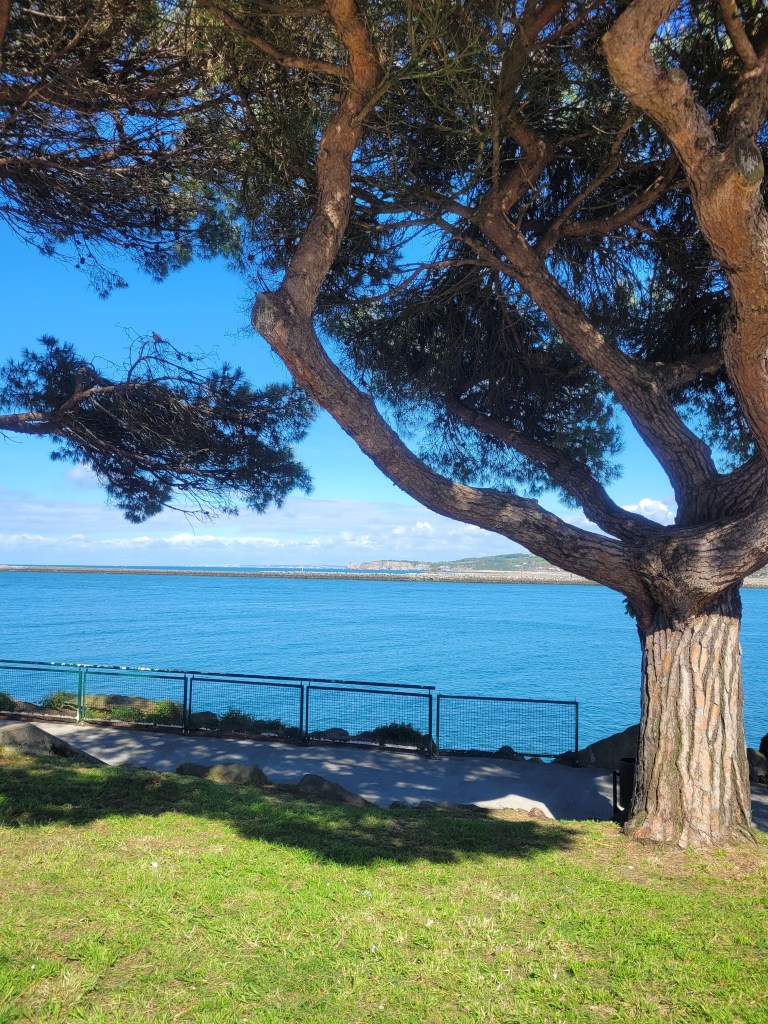
The walk along the seafront was lovely – we were so fortunate in the weather.
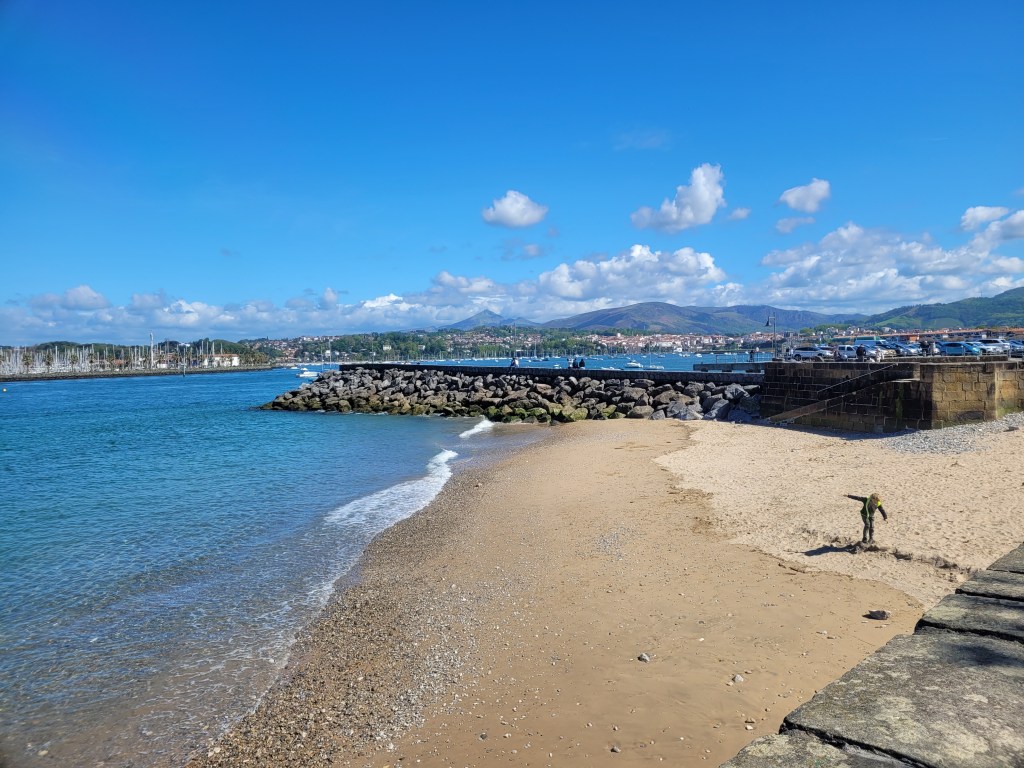
There were a few brave souls in the water but I think they had wetsuits on.
The following morning we took the E25 bus from road below the Parador to Irun Colon station. It took 20 minutes and cost about two euros each. Definitely saved my feet!
There are two stations in Irun, one is a RENFE station (mainline) and one is the narrow guage Euskotren. The RENFE lines don’t go directly to San Sebastian or Bilbao (you have to go inland and then come back out again); the only line to take is the Euskotren, a stopping service that links into a wider local network. And it’s all great until you have to negotiate the ticket machines at the station. Most of it is in Euskero, which is impossible to understand (for me, at any rate).
Now follows a bit about Euskero (the Basque language) – feel free to skip to the end!
There is a Basque region in Spain – West of the Pyrenees – and there is a Baque region in France – East of the Pyrenees. The Vascayos (Basques) were around before Roman times – certainly the Euskero language is considered one of the oldest in Europe – and their language influenced the development of Spanish (which we all know is a Romance language developed from Latin). The most exciting word I could find is ‘izquierda’ (Spanish for ‘left’ – the direction), which has been borrowed/adopted from Euskero. According to the very interesting book about Spanish that I read (ages ago), Euskero also had a subtle influence on Spanish grammar. I don’t remember enough detail to say any more than that.
Euskero has long puzzled linguists as it doesn’t appear to be linked to any other Western European languages. It is certainly not a Romance language, nor is it a Celtic one. Years ago, when we were in Budapest, we went to their archeological museum which had a section about the Hungarian language (helpfully translated into English). Apparently Hungarian is a language from across the Urals (so Russia-way) and some linguists believe that it stems from the same language that gave rise to Finnish and Euskero. Go figure.
Back to the train station.
With most of the instructions in Euskero, even after asking for it to be in English, choosing tickets was quite tricky. Interestingly, almost everyone was having problems – and they weren’t English tourists either!
You need to choose a zone first – which means looking at a map with the names of the places/stations in Euskero (not Spanish, which is what is mostly on Google maps), choose your zone, and THEN choose your station. Suffice to say the member of staff on duty at that time must have had the patience of Job (plus an intimate knowledge of the ticket machines). After spending five euros fifty cents for two tickets to San Sebastian (or Donostia, in Euskero, and Amara Donostia to be precise) we boarded the three carriage train and rattled out of Irun-Colon.
The Basque Country is one of the wealthiest parts of Spain (no wonder the Spanish government doesn’t want them to become independent) and this is really obvious as the train judders and jolts along the track. It’s mostly built up, with nicely maintained apartment buildings, shiny industrial parks and less shiny (and more greasy looking) heavier indutrial areas. The train stops everywhere and takes about forty-five mintues to get to San Sebastian, where you emerge from a slightly bunker-like station onto a pretty square.

Walking through San Sebastian to the bus station was a real treat. The houses along the river are large, fin-du-siecle and mostly well maintained. They appear to be a mixture of businesses (yoga studio, opthalmic clinic and cute cafe to name but a few) and flats.

The bus station is just across the river and underground – which is a clever thing to do with a bus station and worth knowing before you rummage around looking for it. Once again, purchasing tickets from the machines defeated us (one didn’t work, one didn’t take cards, one only took a specific kind of card) and the woman in the ticket office was, to say the least, close-lipped. I got a miniscule nod when I asked if there were seats on the one o’clock bus to Bilbao airport and she just about managed to open her mouth enough to tell me that it would leave from an ‘anden’ between five and eight. Customer service not a priority here – or she was just fed up with tourists. San Sebastian is a popular place, and the coach is the easiest way to get to it from the airport, so this is a definite possibility.
The coach ride was uneventful other than an exciting fifteen minutes spent in a lay-by off the motorway while the driver tinkered with various doors. Several people got off and ordered a taxi and almost as soon as they had done this, it all got fixed and off we sped – leaving a small (and disconsolate) group standing on the roadside.
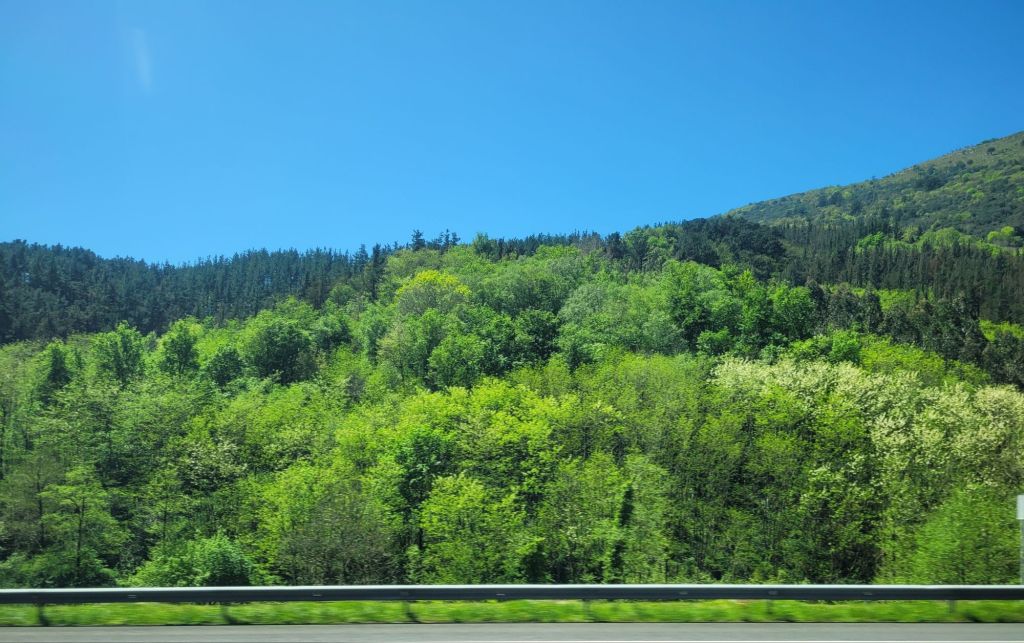
It was difficult to take pictures but it was green. Every shade of green from dark (the older pine trees) through bronzy-green (the young beech growth) to palest lemony green (no idea what tree it was). So lush, so beautiful, so leafy – and SO hilly!
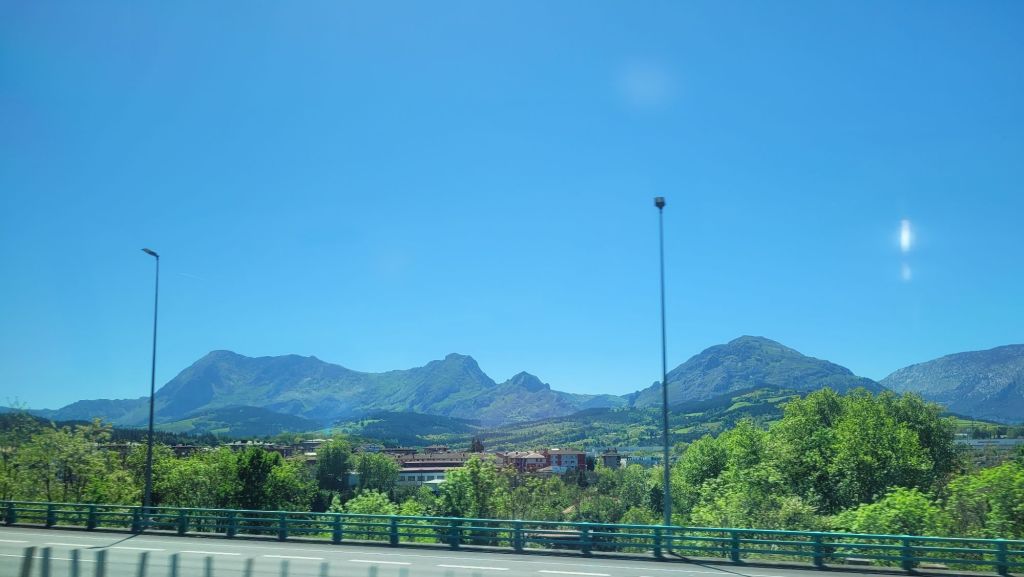
The coach decanted us (and not too late – but then he was definitely driving over the speed limit) at Bilbao airport, where we picked up a car.
A brief word about car hire. We used Thrifty this time (owned/operated by Hertz) and were astonished by the hard sell. Did we want an upgrade as we were going into the mountains? No. Are you sure? Yes. Really? Yes. Did we want their insurance? No. Are you sure? Yes. Really – it will be your responsibily to pay for all ambulances and medical treatment. Are you sure you don’t want insurance? Yes. The one that really got us was the offer of a ‘device’ that we would rent for ten euros a day, because it would be cheaper than paying the tolls. There was much pursing of lips and sucking of teeth over this one but we both felt that spending one hundred euros, given that we wouldn’t be using the motorways every day, would be a bit excessive. Our refusal of the GPS offer was accepted without murmur.
Once in the car (no upgrade, manual gearbox – another ‘discussion’ – and no prepay toll device) we headed into Cantabria, to Santillana del Mar.
Green, green, more green, mountains and the sea.
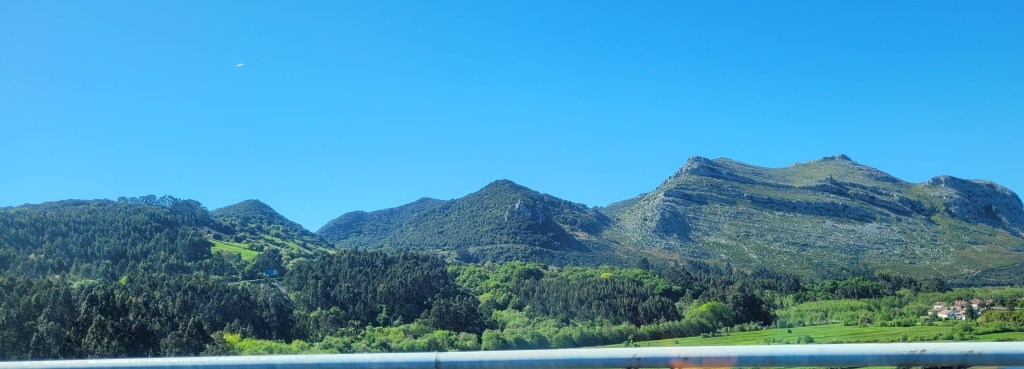
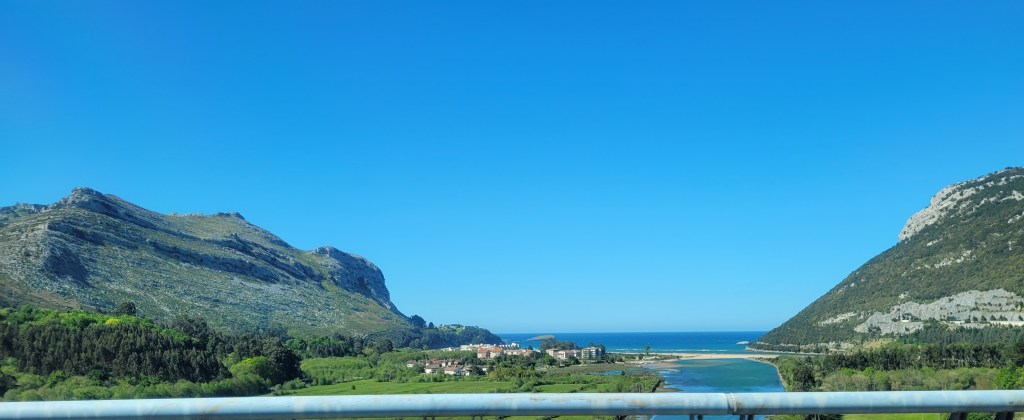
We arrived in Santillana without crossing one toll booth. Win!
 Retired? What now?
Leave a comment