Cantabria is known for its beef and dairy produce – there are a lot of cows in the fields, far more than you see anywhere else in Spain. But an even greater claim to fame is their anchovies. Apparently Cantabrian anchovies are famous all over Spain and have been for quite some time.
The interesting thing about the anchovy industry is that while the men do all the catching (in the Bay of Biscay and it’s a specific kind of quite large anchovy), the women do absolutely everything else in order to get them into jars and tins – and all by hand. We have mostly seen ‘Santoña’ anchovies, and they are important enough to be named on menus.
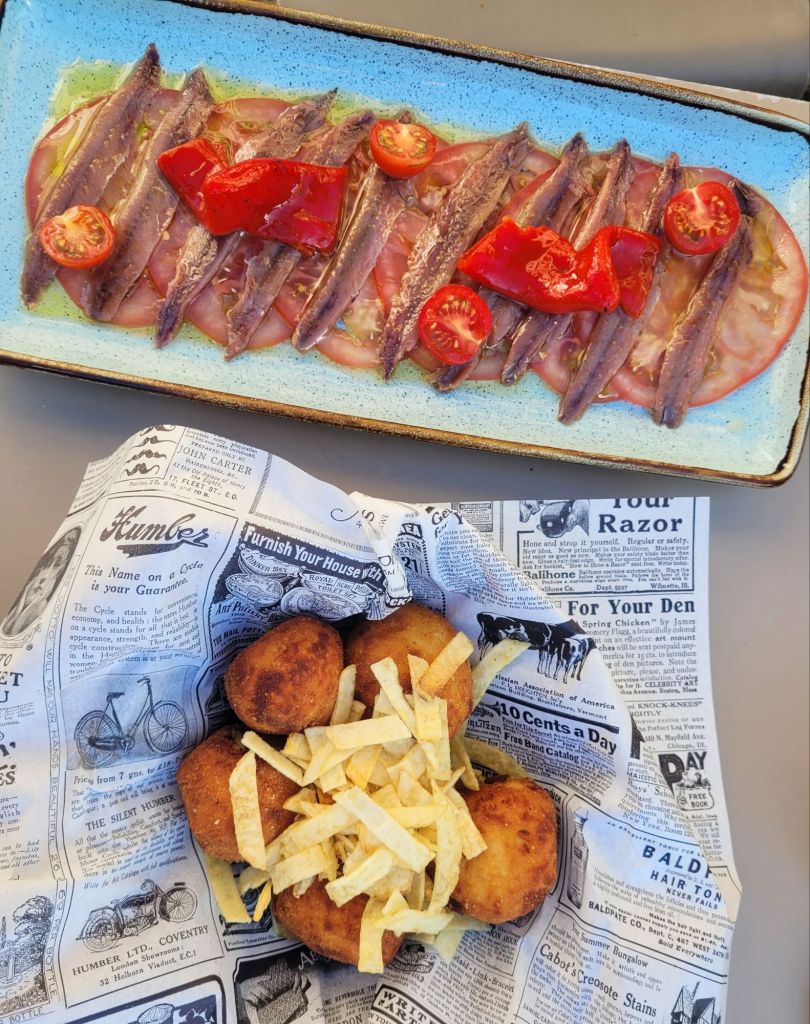
They mostly appear in ‘salads’ with beef tomates sliced paper-thin or roasted red peppers (sometimes both) and a good drizzle of olive oil. Less salty, more meaty and larger than the normal tinned anchovies (which, let’s face it, are only really good for cooking), they are absolutely delicious and one of our favourite ‘finds’ on this trip.
(The croquettas in the picture below were utterly indifferent – even poor: too large, not enough salt, flavourless… So much for the vaunted ‘caseras’ label!)
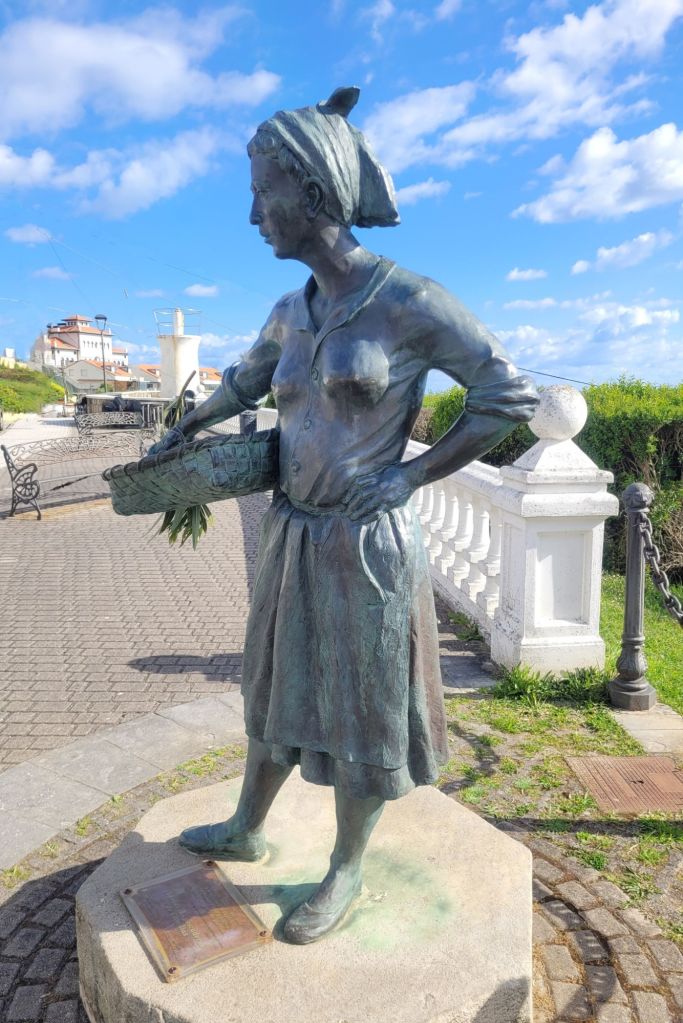
There was even a statue to the hard-working women who did all the back-room work in this industry (presumably alongside keeping house and bringing up their families).
We had the anchovies in several different places and they were always good – but then it’s hard to spoil something that comes out of jars and/or just requires slicing!
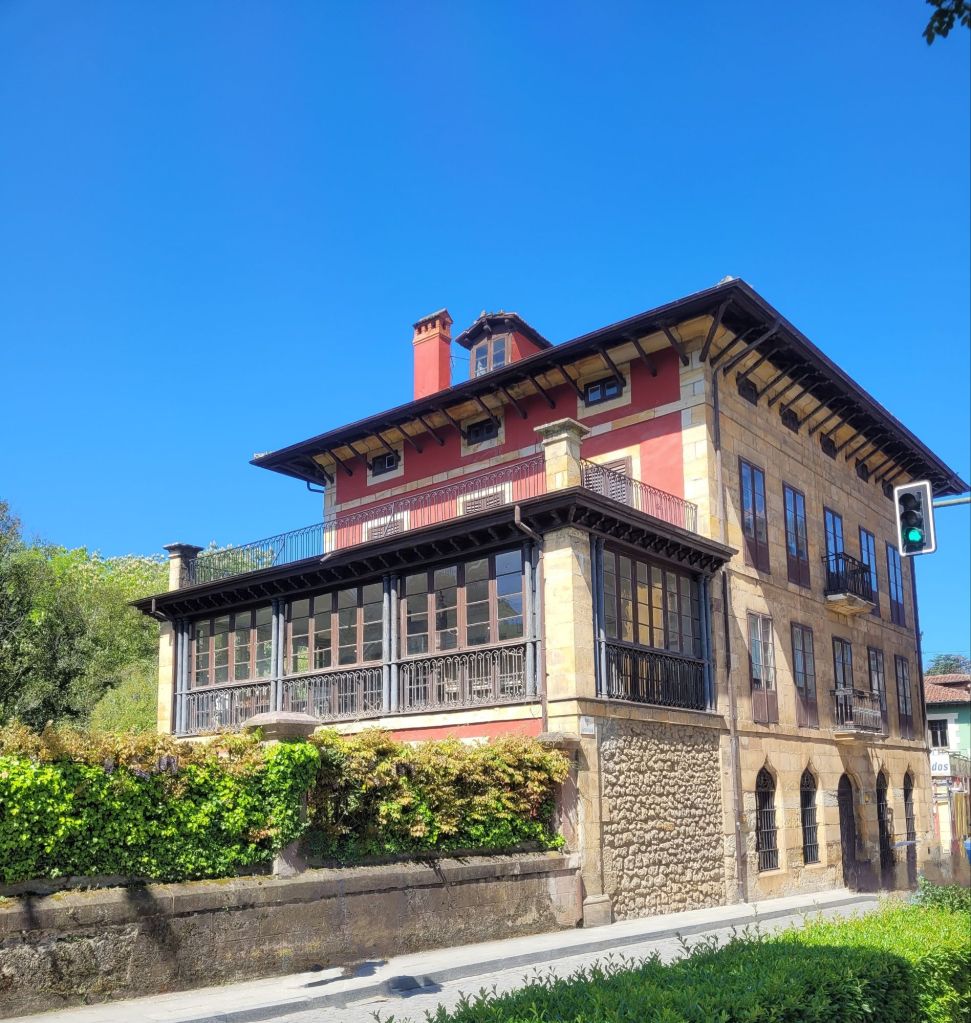
Something else associated with Cantabria (well, much of the north coast of Spain really) is the glass ‘galeria’ – sometimes just a bay window enclosed in glass, sometimes a larger structure that runs along a whole floor – these are iconic in A Coruna (in Galicia) but also provided inspiration for Gaudi in his first house commision, in Comillas.
The glass provides protection from the cold winds and allows some radiant heat to move through any connected rooms. There can be large expanses (look up the harbour in A Coruna – it’s famous for its glass galerias) or they can be a bit smaller. In Comillas you see large, small, old, modern – a bit of everything.
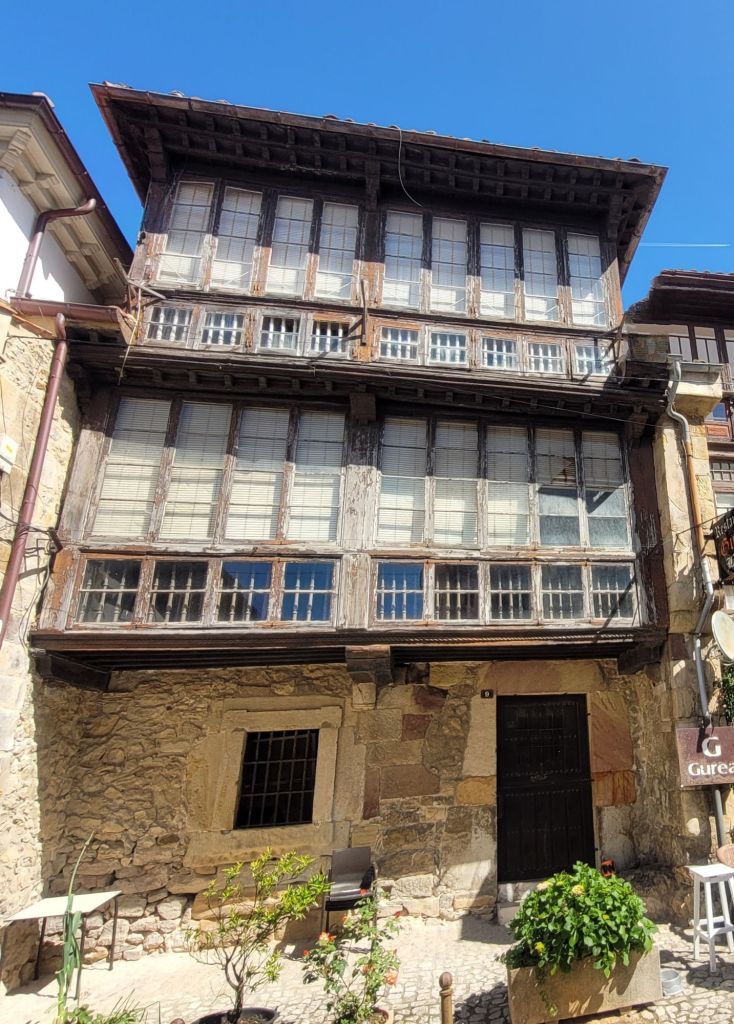
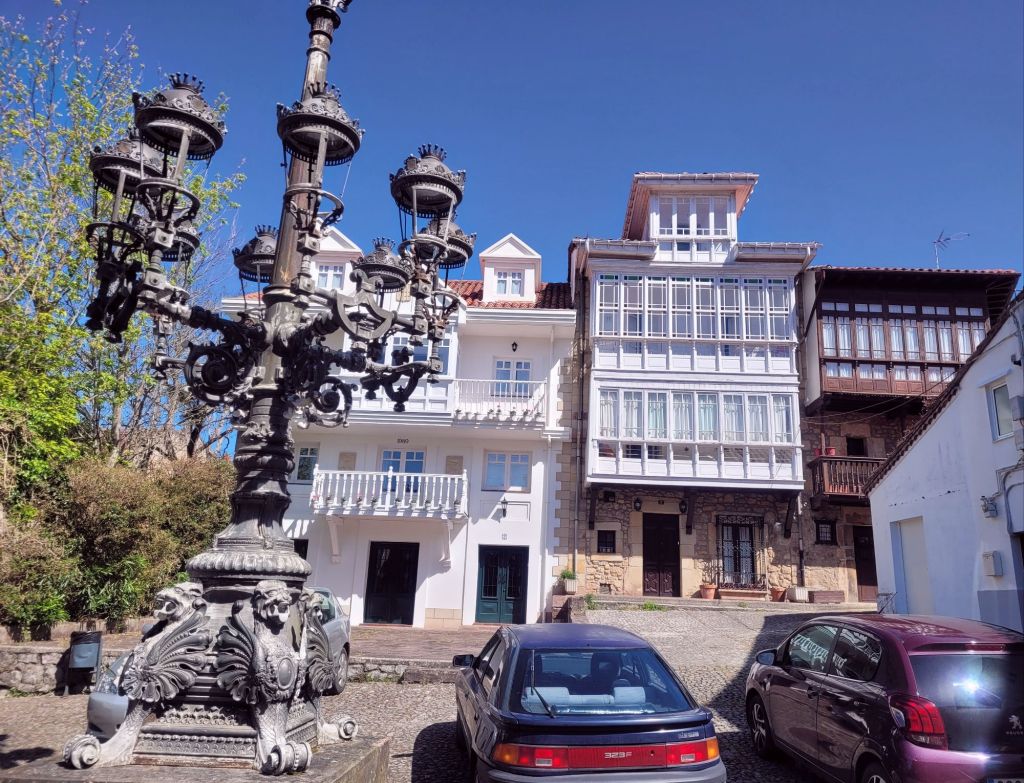
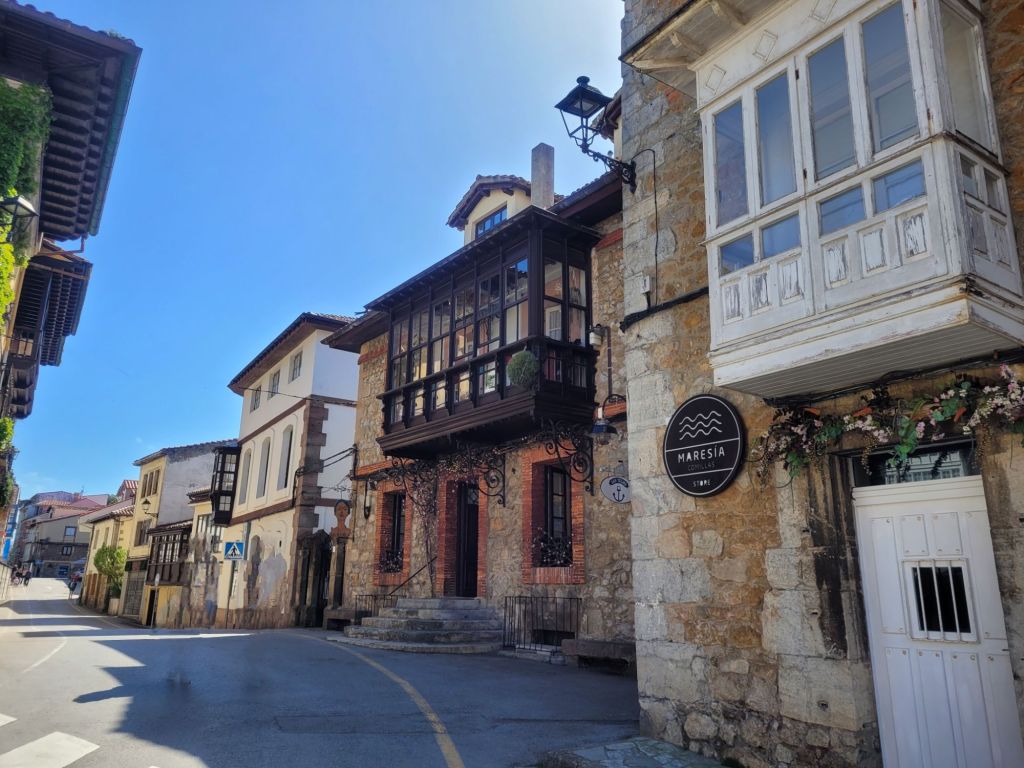
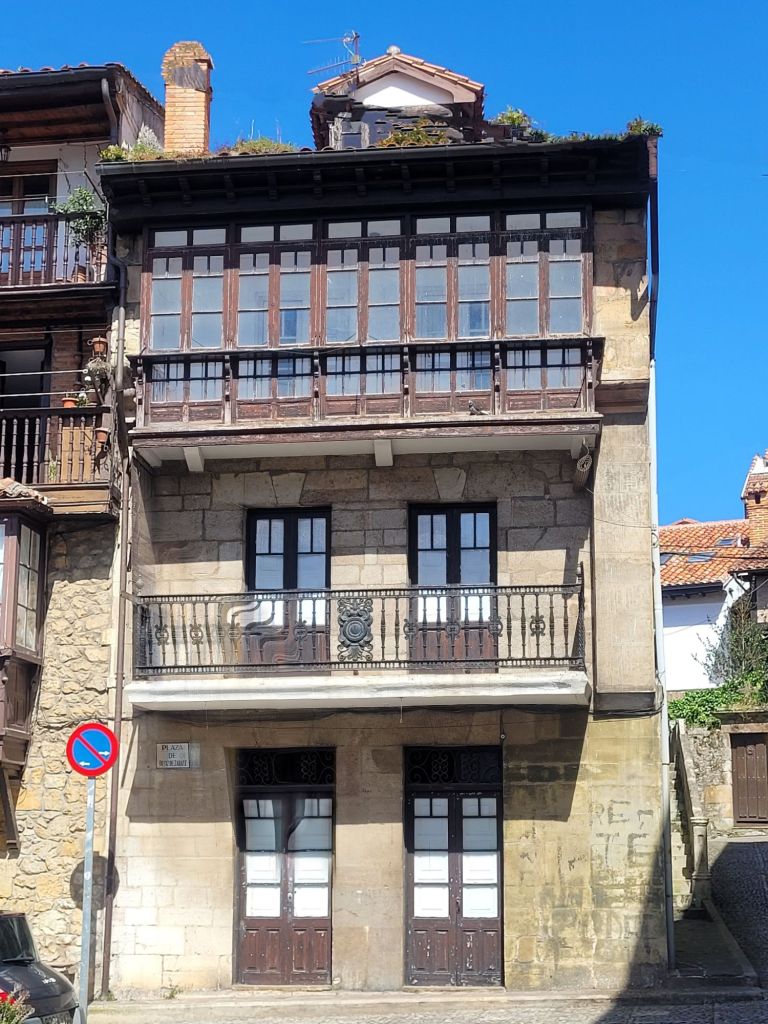
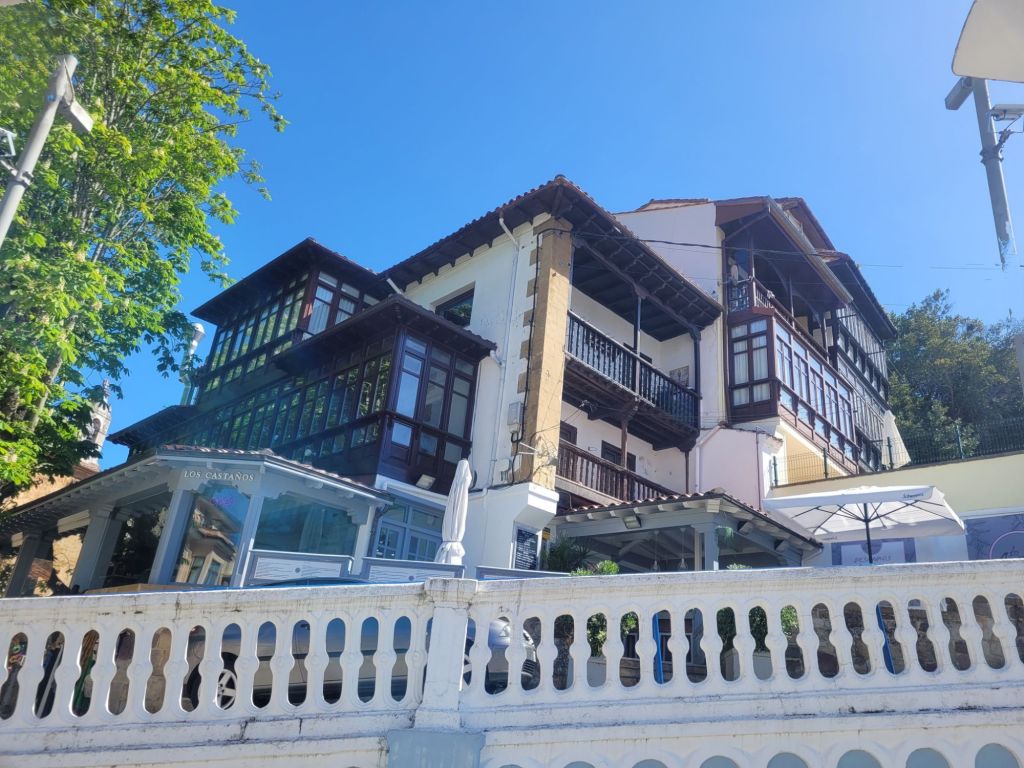
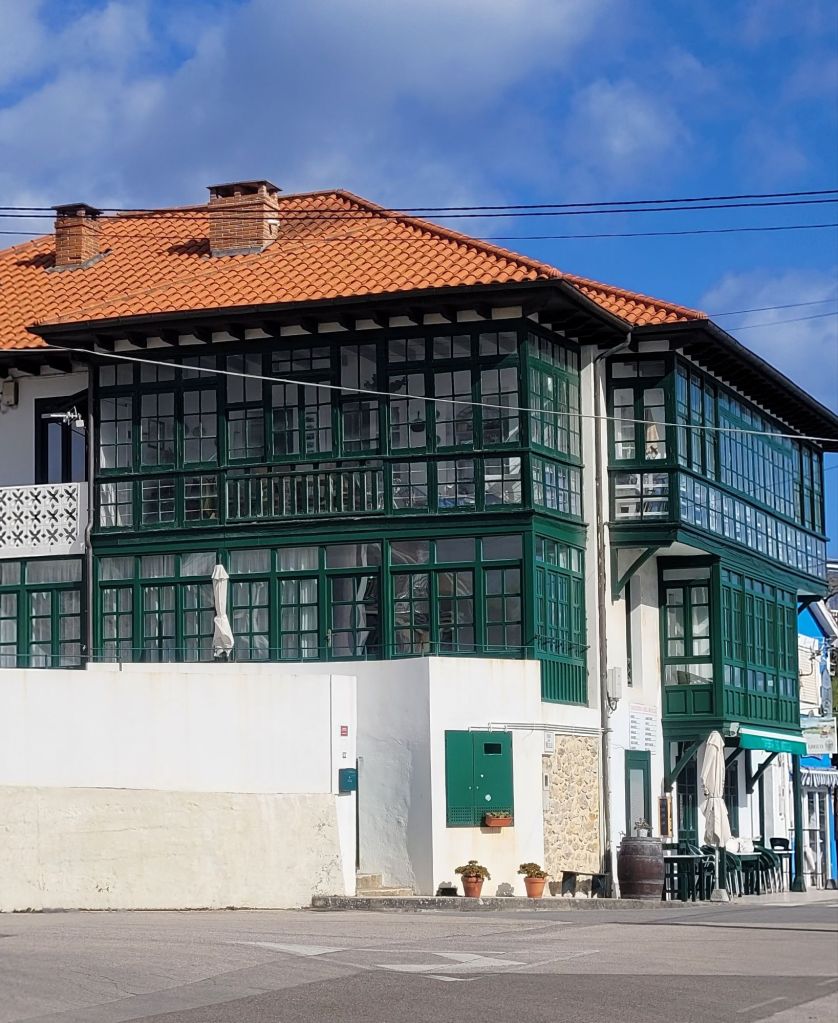
These must be so useful in colder weather, when the sun is shining but the wind bites.
These galerias were incorporated (to a certain degree) in Gaudi’s design for ‘El Capricho de Gaudi’ the house he designed in Comillas. It was his first large commission – he was 30 – and was completed for Maximo Diaz de Quijano, who was either: the son-in-law of the first Marquis of Comillas, related to the first Marquis of Comillas, the accountant of the first Marquis of Comillas, the lawyer of the first Marquis of Comillas… You get my drift.
The first Marquis of Comillas is relevant because he was a 19th century son of Comillas (a smallish fishing village, essentially) who went to Cuba and made good – really good. When he returned to Spain, as a shipping magnate, alleged slave trader (really? alleged?) and owning several different businesses (tobacco among them), he was said to be the richest man in Spain (and one of the wealthiest men in Europe). He was given the title by King Alfonso possibly as the result of his sponsorship of whatever war or insurrection was going on in Cuba in the latter half of the 19th Century and his wealth and influence led to many other wealthy people flocking to Comillas (including the nobility) and building large houses.
Whatever the connection, Maximo Dias de Quijano had lots of money (he was also in Cuba) and was very well connected. He met Gaudi, through a string of other connections, in Barcelona and enticed him to design a house. El Capricho is bijoux, beautiful and demonstrates some of Gaudi’s later tropes – like spiral staircases and airy servants quarters. No attention to detail was spared.
Built for a bachelor who never really had time to enjoy it (Maximo died either shortly before or shortly after completion, depending on where you look), the house has very few rooms but is unmistakably Gaudi.
What struck me the most was the conservatory. Facing south and sheltered from the northerly winds by the rest of the house, the hallway curls around the conservatory, with windows into the other rooms, sharing both light and warmth. It’s truly stunning and I want one just like it.
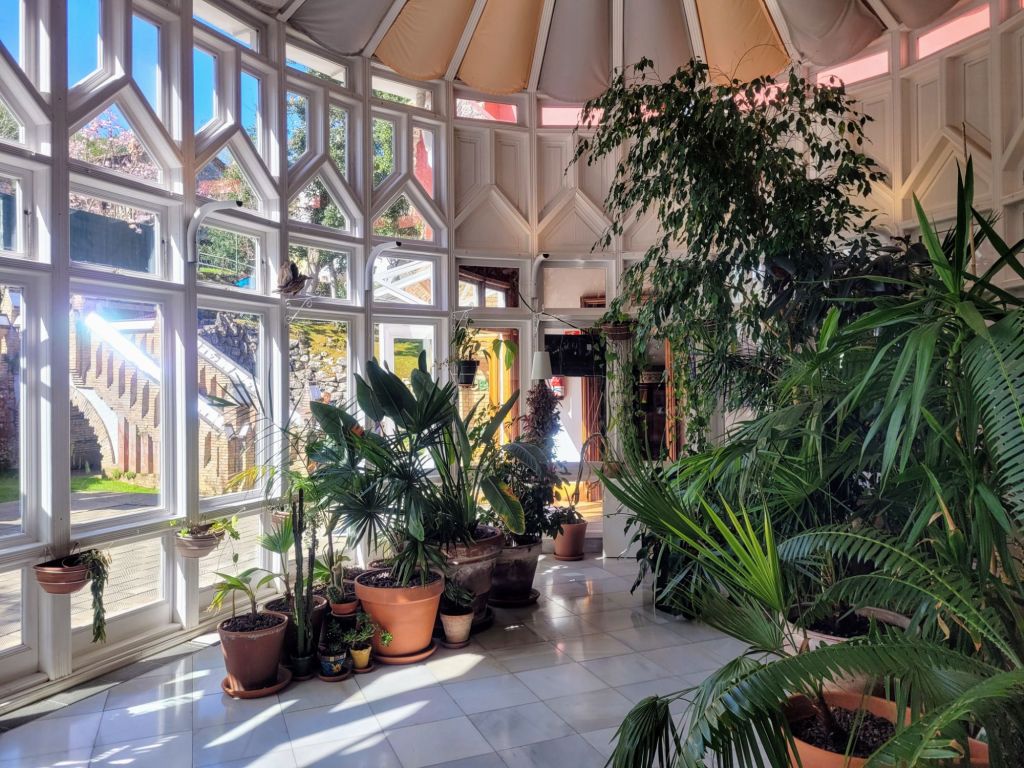
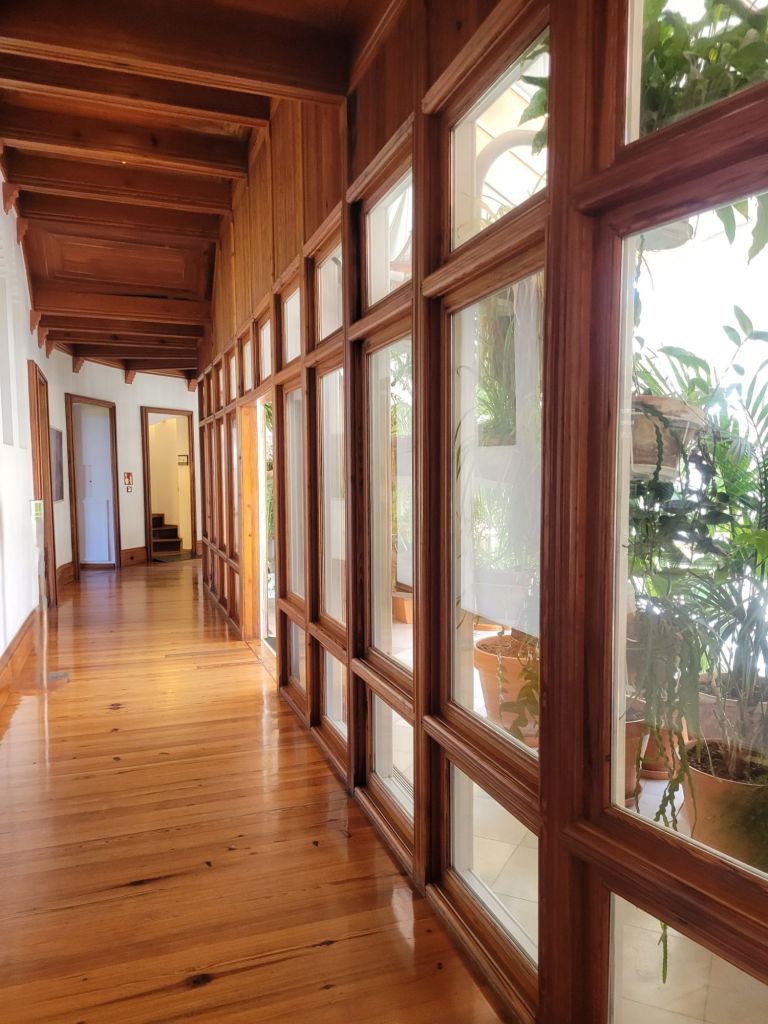
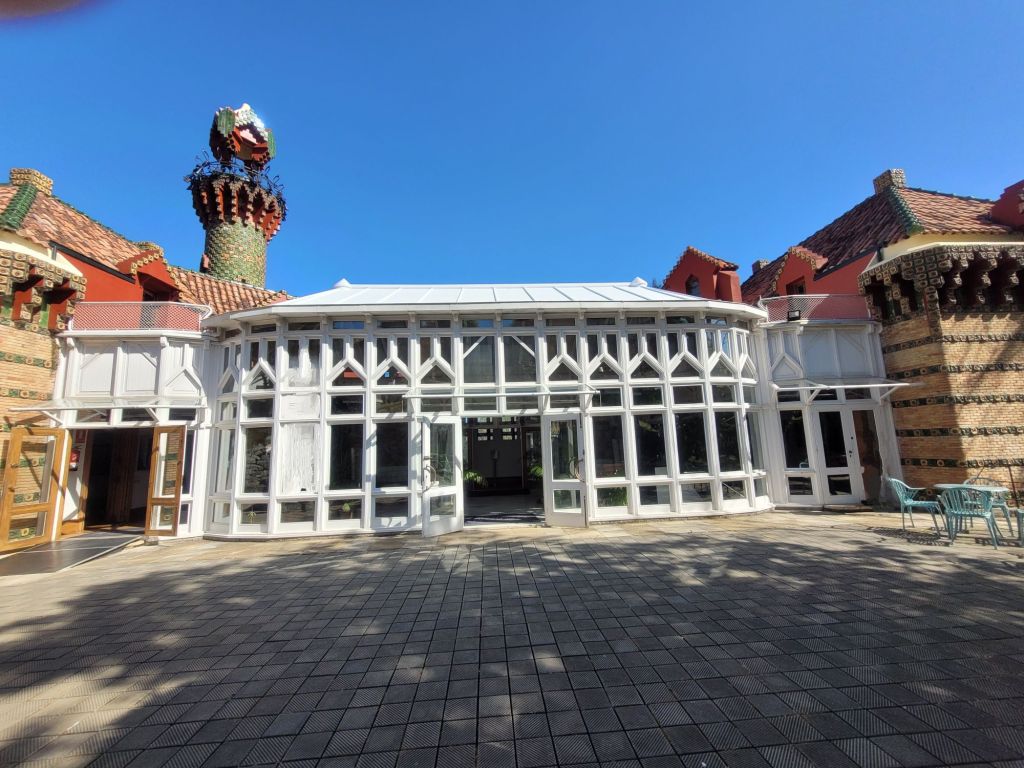
The ‘balconies’ are typical of Gaudi’s quirkiness: cast iron railings with benches designed as part of the railings and included as part of the curves of the walls.
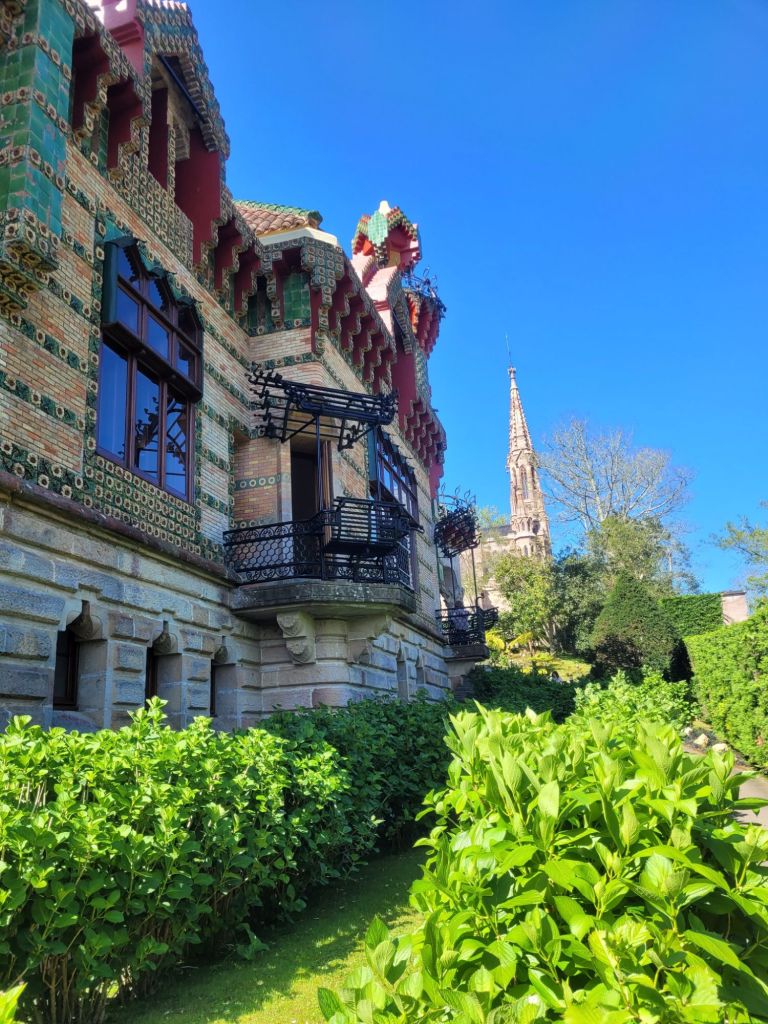
Apparently Gaudi used spiral staircases in his work elsewhere; there are three in this house, from the servants’ quarters in the attics to different parts of the house. What struck both Roger and myself is how narrow they were – we aren’t particularly large (fairly normal really) but it was definitely awkward getting down them!
Another aspect of Gaudi is that he designed every detail of a house, including the furniture – some of which was displayed in the attics (which also demonstrated the ‘scissor trusses’ – I think that’s what they are called – that Gaudi experimented with in this house and then used elsewhere).
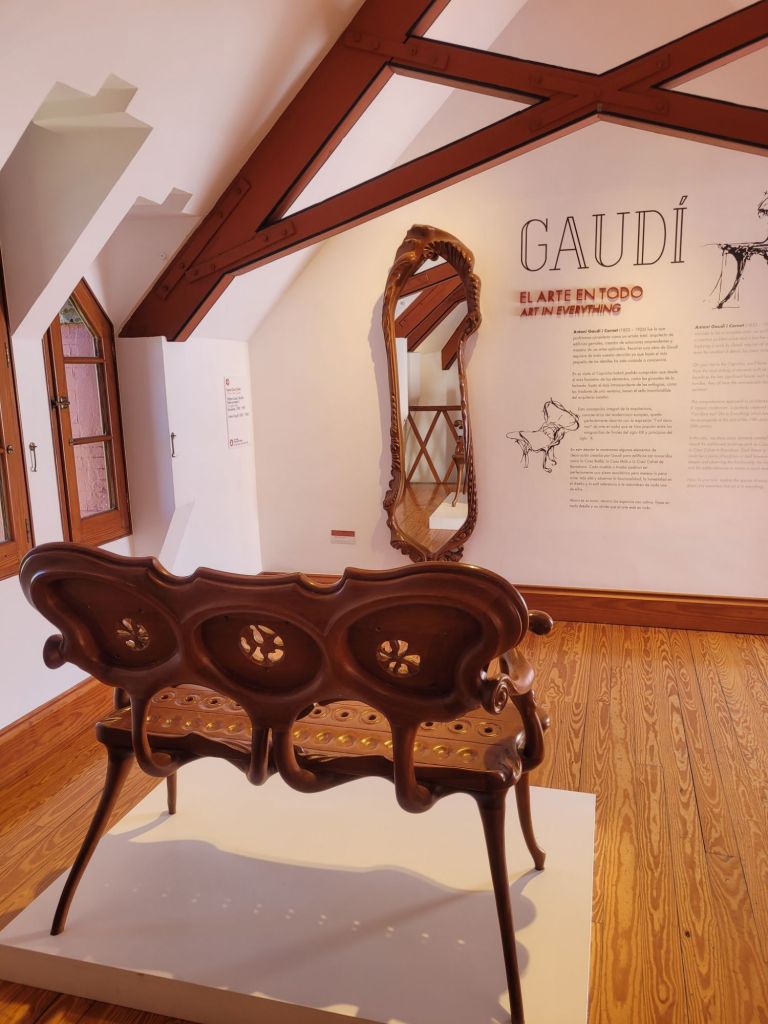
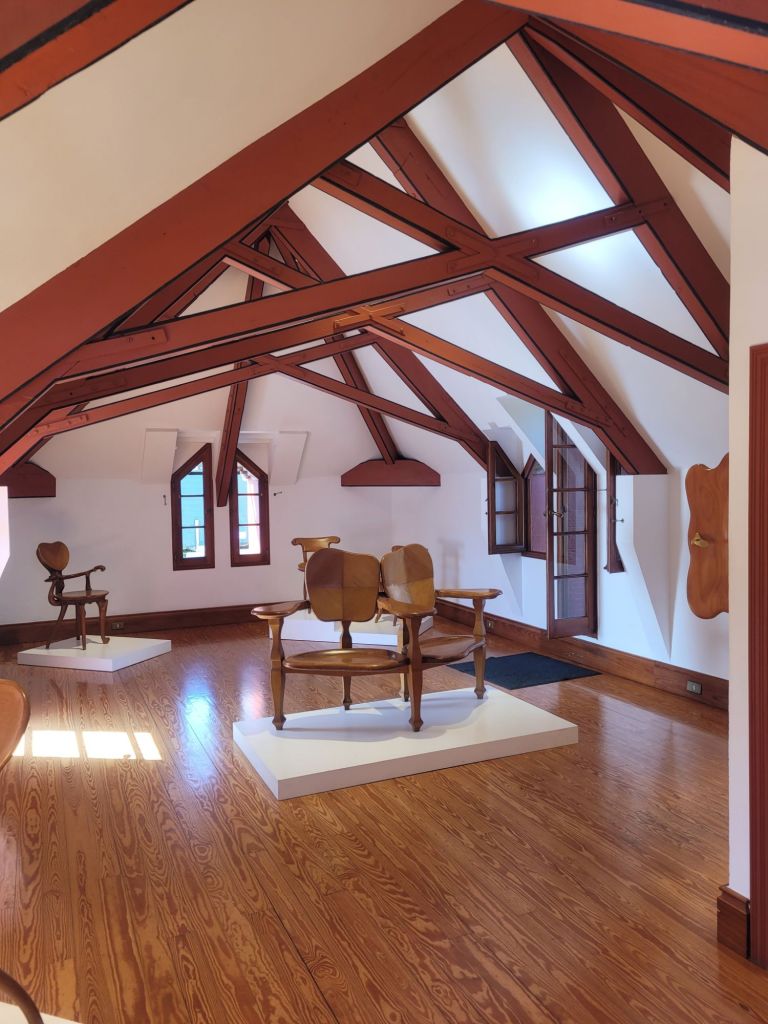
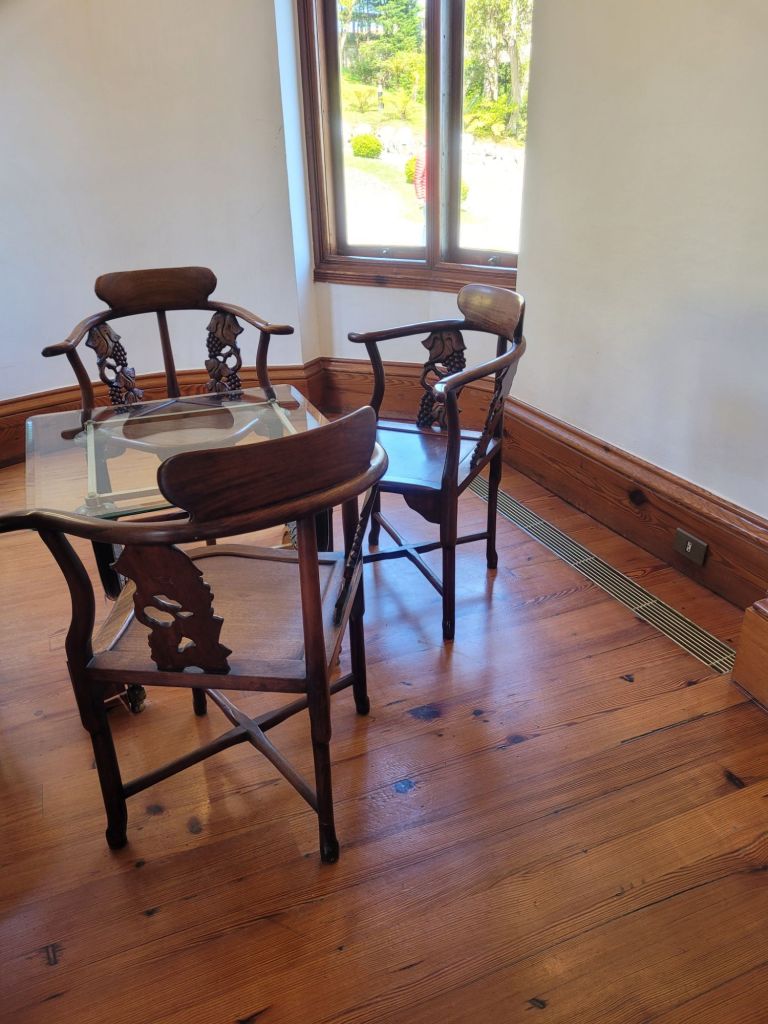
An interesting factoid about this house is that there are no architectural drawings, descriptions or photographs of the house in its early days. In fact, there appears to be very little information about the house generally. Thus, when it fell into disrepair and was eventually made into a private museum, any and all repairs required a considerable amount of what can only be described as archeology to try and uncover what was there originally.
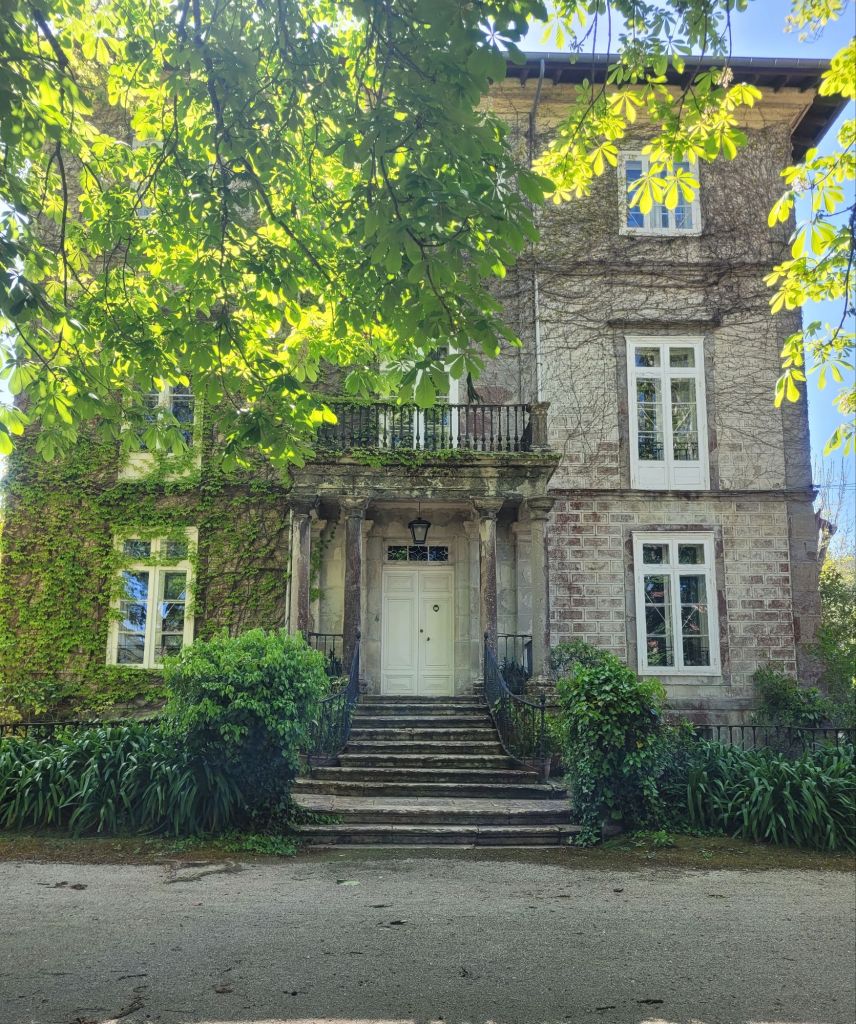
There are other big houses around Comillas – most are not open to the public. They aren’t quite as stylish or eye-catching as El Capricho though!
 Retired? What now?
Leave a comment