The Picos are beautiful – there’s no other way to put it. Every corner reveals a new, breath-taking vista and the small hamlets, villages and larger towns are – for the most part – atmospheric. Some are clearly more ‘atmospheric’ than others and in need of some TLC but mostly they are charming.
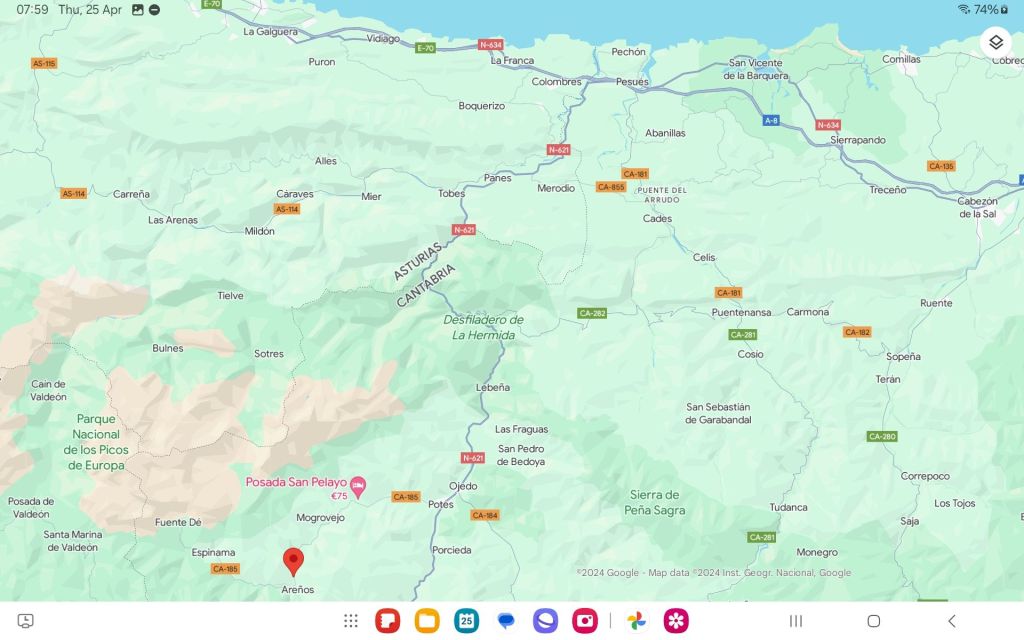
Hotel del Oso is just inside the southern boundary of the national park, set alongside the Deva (which has diminished in size by this point but not in energy).
It’s slightly reminiscent of a Swiss cuckoo clock, with all the wood and the large eaves, and indeed they do have such a clock in their reception area which cuckoos regularly.


One of their ‘signatures’ is St Bernard dogs – there was at least one outside reception every day, lazing in the sun.
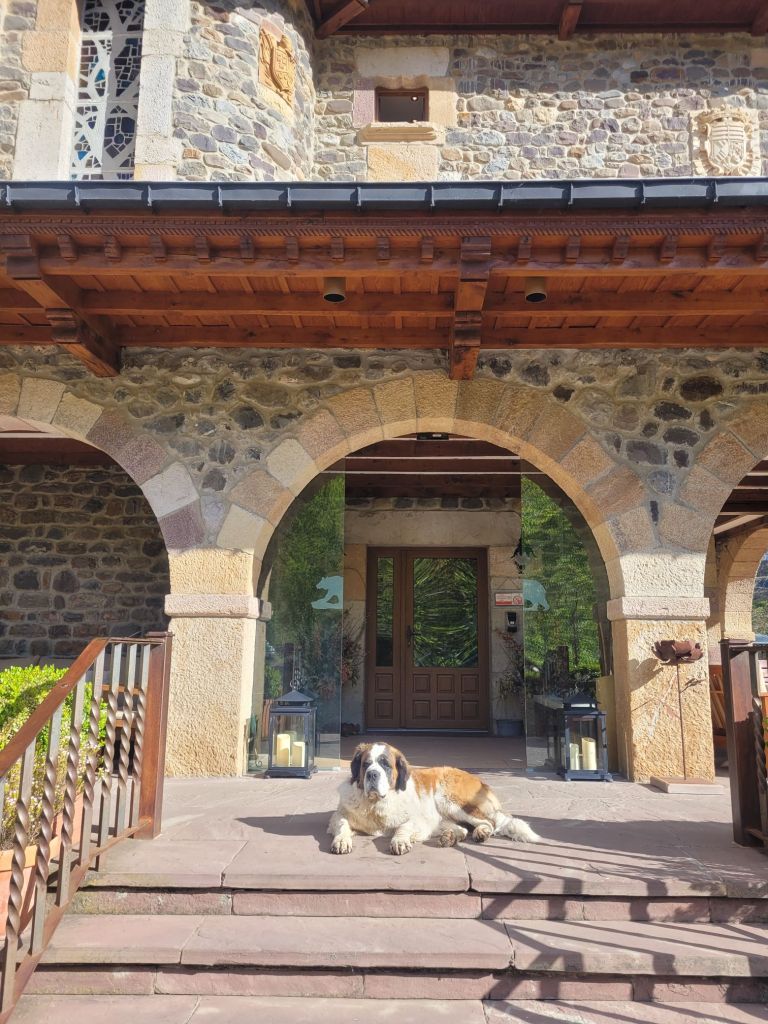
Somehow they emphasise the Alpine ambience.
Rooms here are on the small side and slightly noisy, but the beds are really comfortable and there are several large public spaces, one of which had an open fire every evening. While the fire was nice to sit by (and needed as it was quite brisk), we were reminded of just how much wood they get through – the logs they used were large (‘proper chunks’). The food was delicious and plentiful; portion sizes were vast – in Spanish they say ‘platos fuertes’ or ‘comer fuerte’ to describe large plates of hot food that contain a lot of meat. And they were definitely ‘fuerte’; we also had excellent, more vegetable oriented, starters (I had a mushroom medly which was vast and Roger had artichokes with ham – also vast). Again, not gourmet or refined but traditional, good, home cooking.
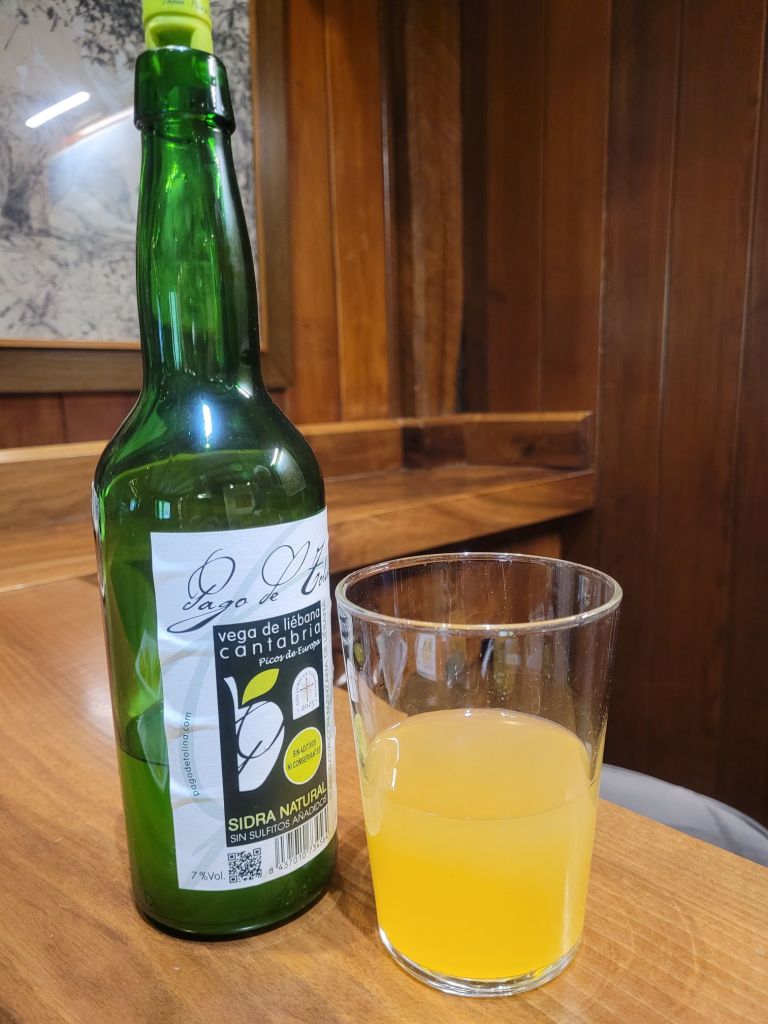
Cider is a thing across northern Spain, so we decided to sample it. The yellow plastic cork is an ingenious device which, after being pulled from the bottle, is reinserted upside down in order to aerate the cider as you pour it out (with much splashing and dripping, despite not having my hand up in the air). Possibly an acquired taste.
One wish we had was to walk in the Picos but we had doubts about the weather – and about our ability to navigate Spanish ‘senderismo’ directions and nomenclature. In England, a path marked as ‘Easy’ is probably fairly flat, fairly short, usually well-marked and has good footing (so no slipping or sliding). As we found out a few years ago, in Spain a path marked ‘Facile’ doesn’t necessarily mean any of these things. The last time we tried following a Spanish route (from the tourist office) that was marked as ‘Facile’ (easy), it took us almost four hours, we got lost and had to retrace our steps twice due to lack of signage, had to scramble up several very steep slopes (using our hands) and slid down several others… Easy it wasn’t. So we were conscious of the overcast weather, our lack of warm clothing should the weather turn really bad and our suspicions about a suitable route. We were offered two by the staff at the hotel reception and took the shorter one that she said was ‘very well signposted’.
‘Just make sure you take the right hand path by the church, it’s a gentler climb.’ Her final words filled me with some doubts but at least it appeared short-ish (two hours) and not very far away. She didn’t give us a map of the walk, just a map to the starting point.
We drove to Blez, a small village not marked obviously on any maps, although Google maps did know about it, parked outside the village and climbed up to the church on the opposite side.

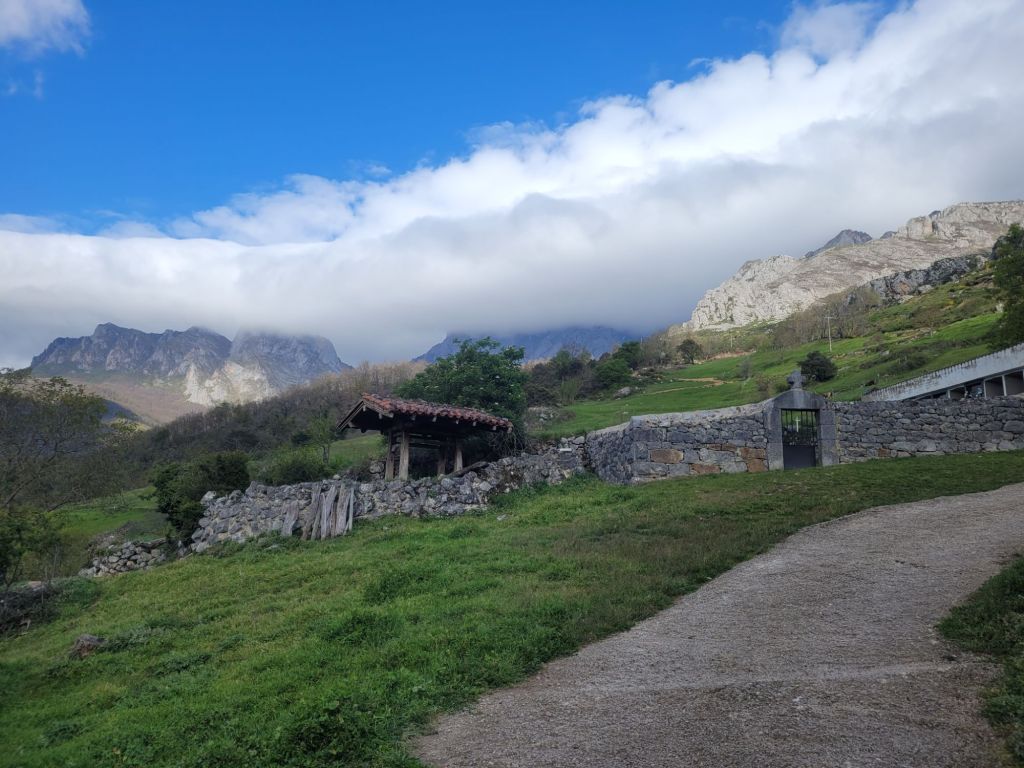
Taking the right hand path, we moved steadily upwards. It wasn’t steep but it was continuous; the views got better and better while clouds pelted across the skies – one minute an ominous overcast grey and the next with large sections of bright blue.

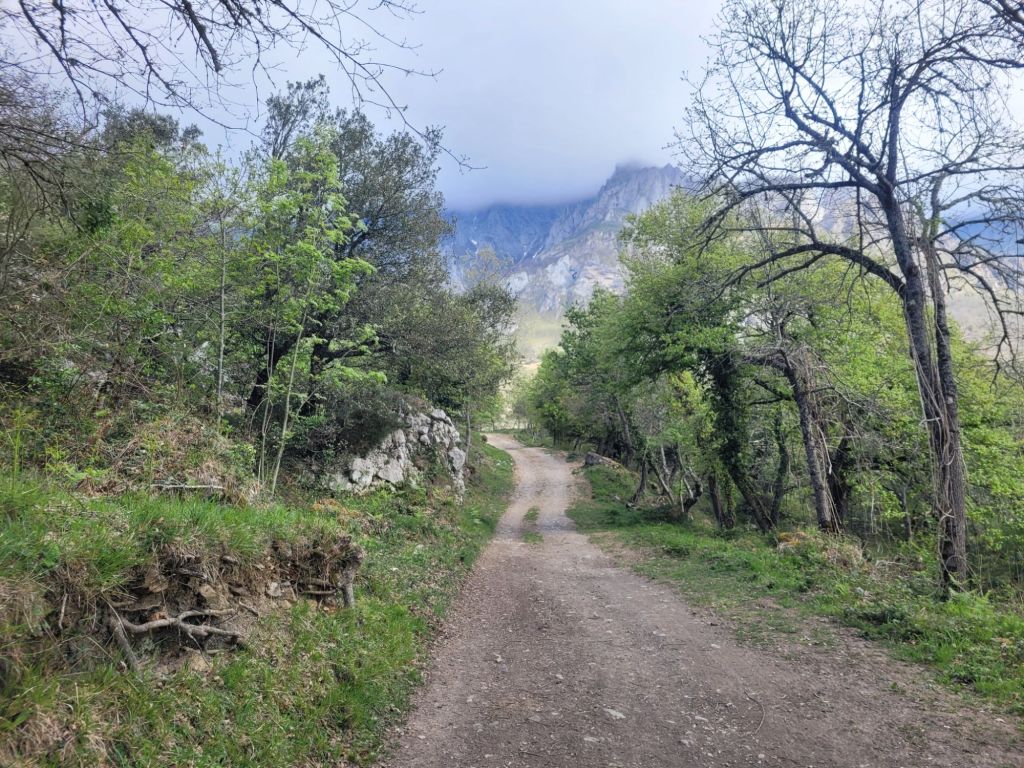
Approaching the highest point of our route, after a few steeper uphill sections and a few rough sections underfoot (some both), the path followed along below a set of peaks, levelling out for a bit
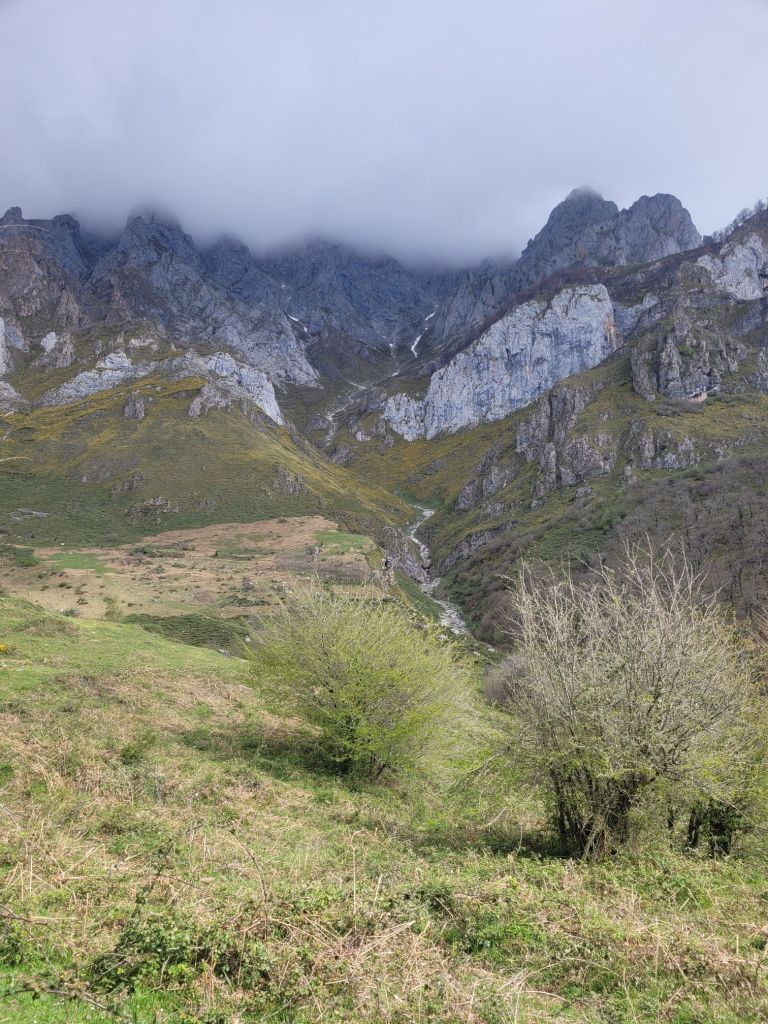
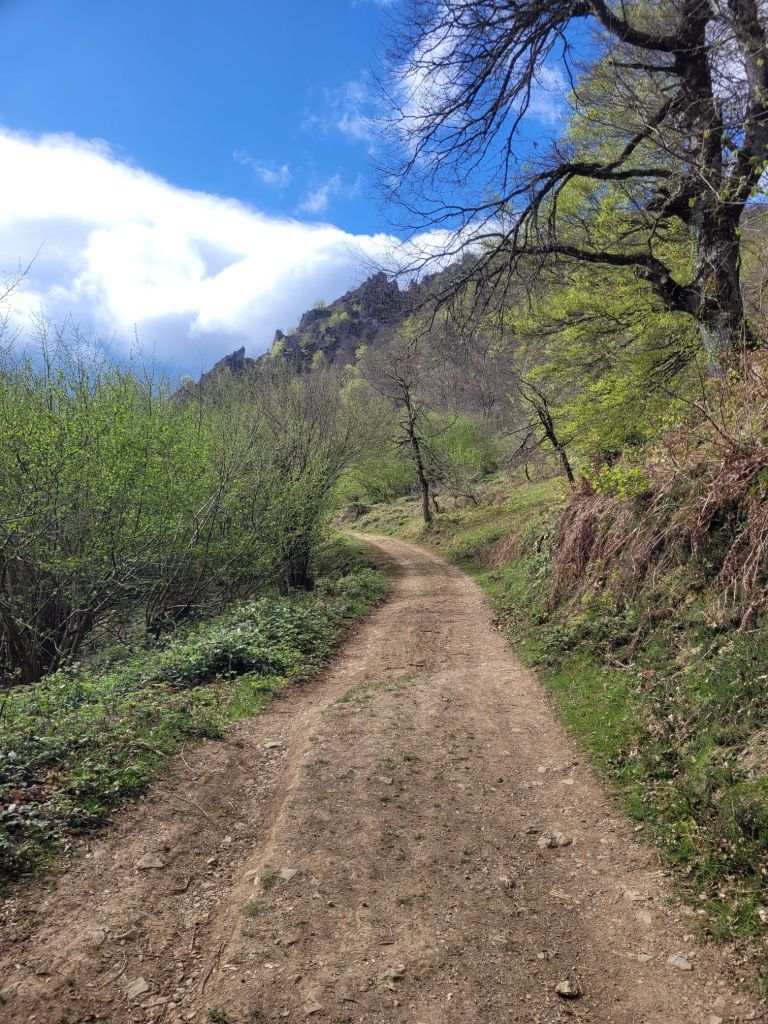
until we reached the very top and were looking back at the valley we had walked alongside on the way up.
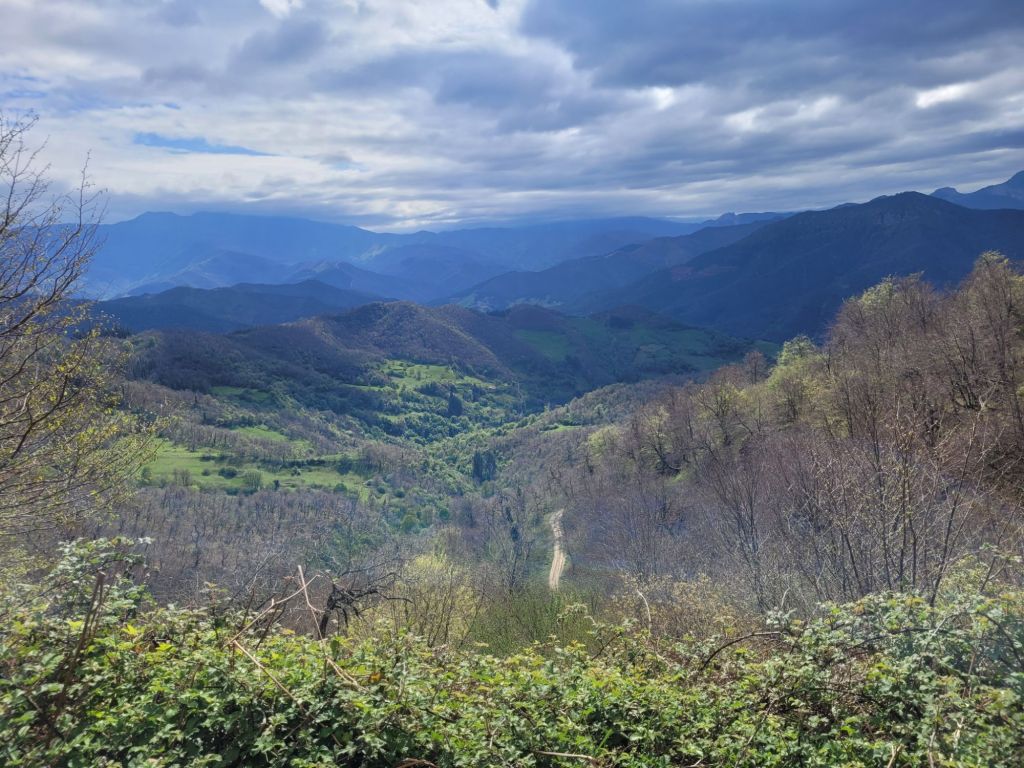
There were men strimming in the distance – the ground was mostly covered in bracken and brambles – and we asked another walker if he knew why they were strimming. ‘For the grass’ he explained. It became clearer that these were grazing pastures when we walked past some grassy fields, one with a sign warning about mastiffs.
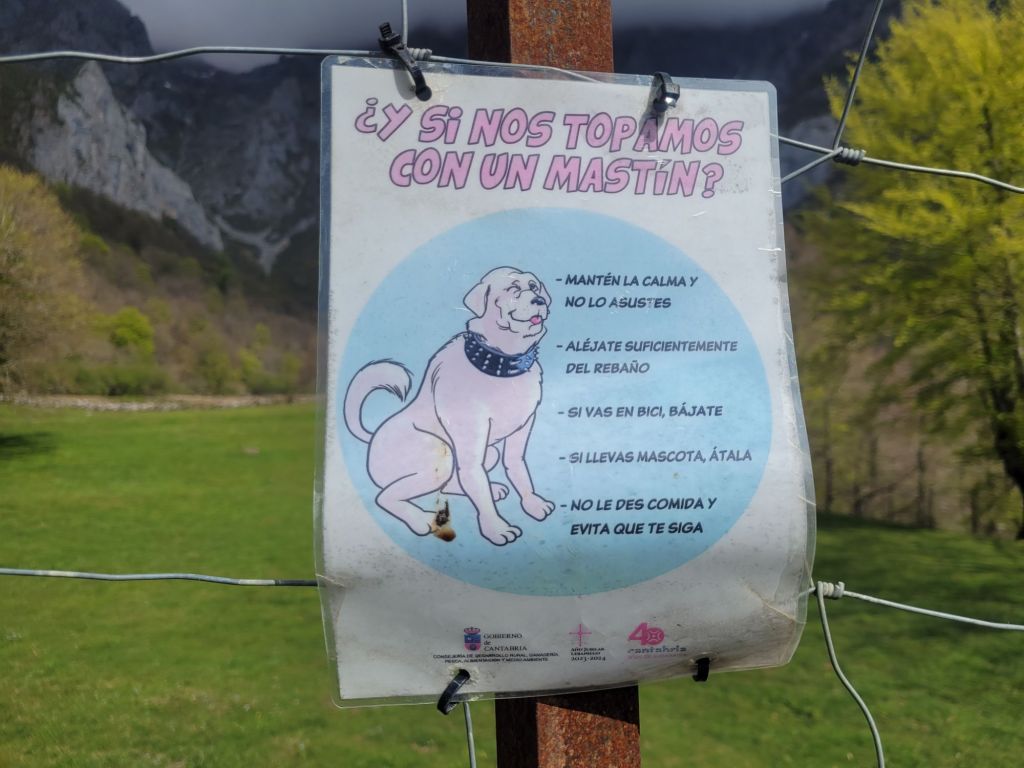
The Picos are home to brown bears, the Iberian wolf and the Iberian lynx. The brown bears became endangered as a result of poaching: since the punishments levied have become much more severe, the bear population has recovered so that they are no longer vulnerable. Wolves have been reintroduced in the last few years and these are now causing problems for farmers; lynxes have been reintroduced further west, in Galicia, but apparently there are still a few in the Picos. This last point formed the basis of a lively and rather agitated ‘discussion’ between two members of staff at the hotel, one of whom swore he had seen a lynx late one evening last year, the other who laughed at the suggestion. Their exchanges were fast enough that I could only, just, get the gist of what they were saying. Some of it got quite heated, with some interesting vocabulary that, should I use it, wouldn’t endear me to my listener.
However, along with the wild predators, there are also human predators (rustlers maybe?) and so the farmers have large mastiffs which run loose on the hillside to guard the animals. Clearly they are out enough that it was felt necessary to remind walkers what to do if they come into contact with one. We didn’t see any signs of them but I think the animals had only just started to go outside after the winter.
And then we started down the other side,

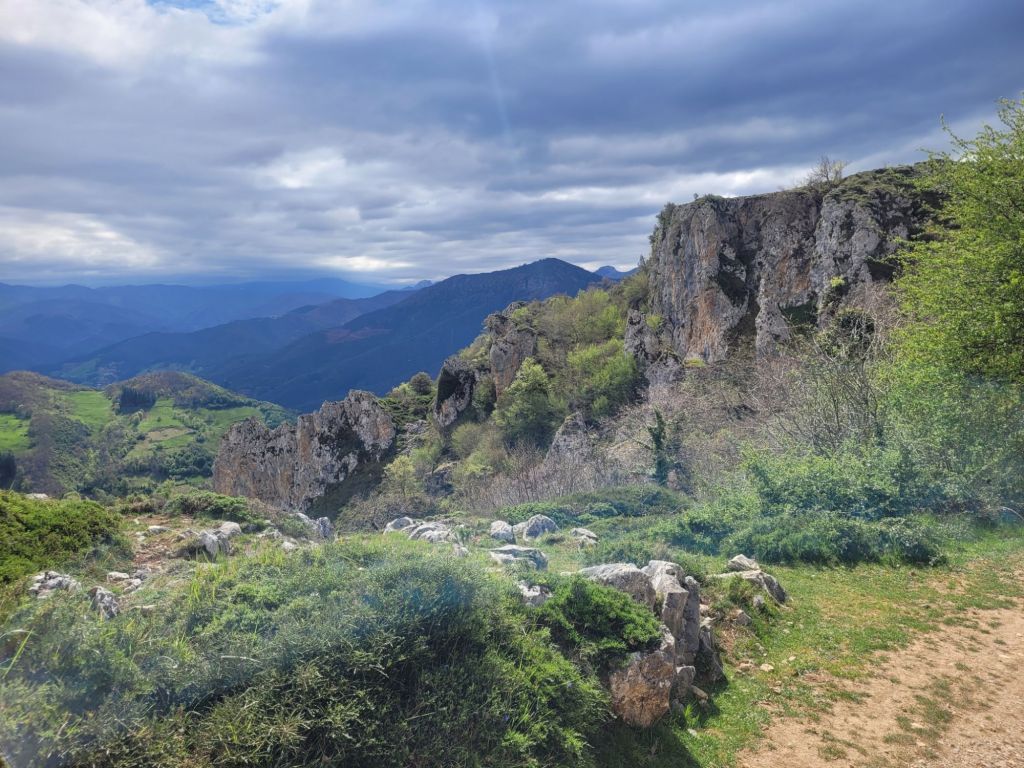
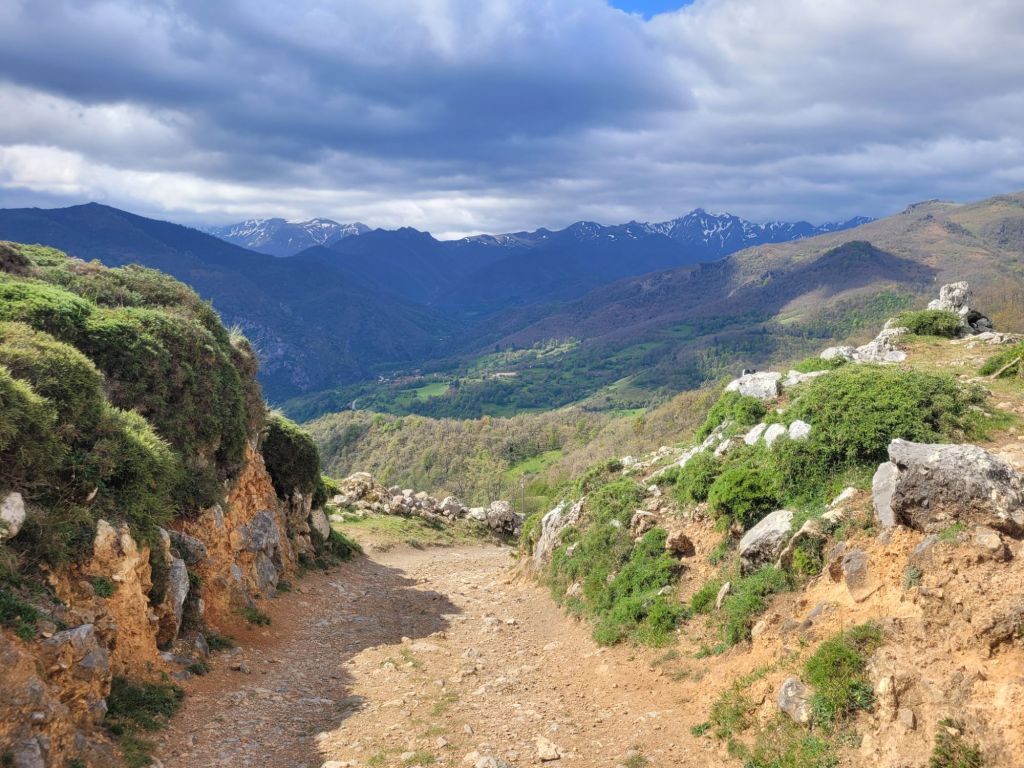
went around a corner where we could just see where we parked – teeny tiny in the distance. We seemed so high up I thought we would never get down.
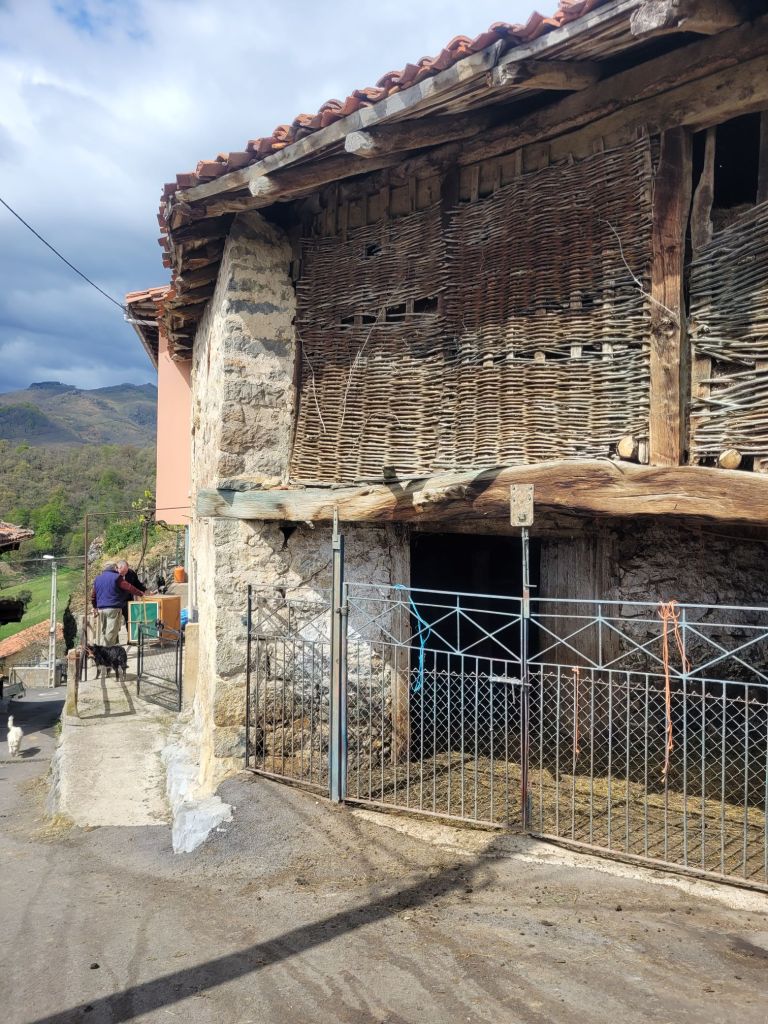
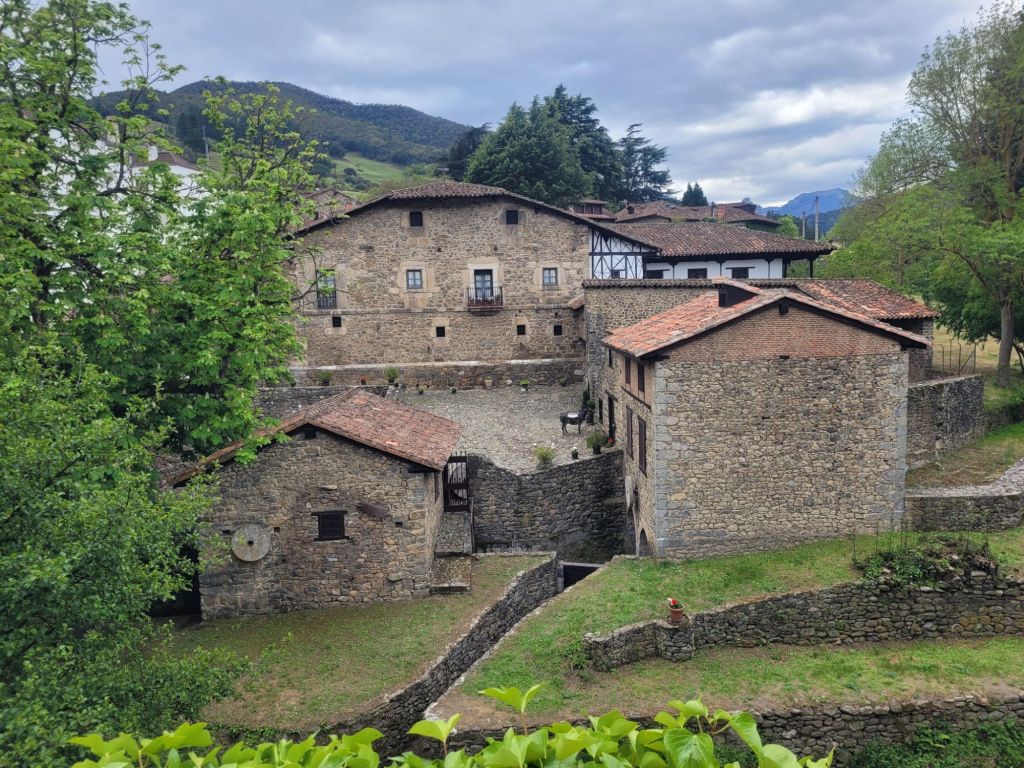
But down we went, back to the church, and the steepness completely justified the advice we had been given to ‘take the right hand side’. My knees started to complain. Coming into the village, we saw houses with animal sheds below and human living space above – useful for keeping warm in the winter, I should think, but possibly a bit ripe after a while.
And yes, it was about two hours – maybe two and a half given the amount of time we spent taking pictures. And yes, it was fairly well marked. And yes, the footing was fairly good and the path was wide. But it was steep enough in places that someone with more limited mobility wouldn’t be able to walk it. So definitely ‘Easy’ in Spanish terms – probably more ‘moderate’ in English terms.
Along the way we also learned (from the fellow walker we kept on meeting) that he hoped it would rain (we disagree there) because there had been so little rain over the past year. It also hadn’t snowed much – usually the mountains are still covered in snow, rather than the smattering we saw. Another factoid he passed on was that in the past the snow in the village had been over a meter and half deep in the winter, which helped the water situation, but that no longer happened. We agreed that climate change was definitely a thing and left it at that.
In the field next to the car ginger cattle grazed – the Monchina cow, a Cantabrian breed – their bells clonking as they ripped up the green grass. We felt as peaceful as they looked.
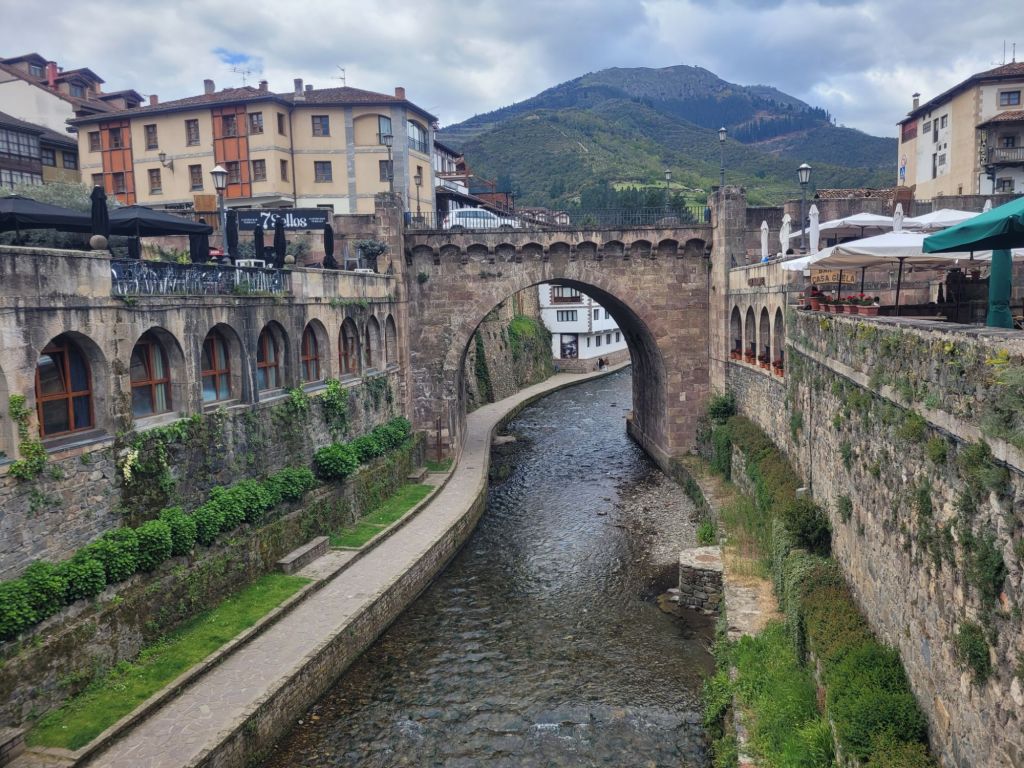
After our walk we took a quick jaunt north to Potes, a pretty town on the Deva river. It’s name derives from a corruption of ‘pontes’, the word for ‘bridge’ and there certainly are several bridges in Potes.
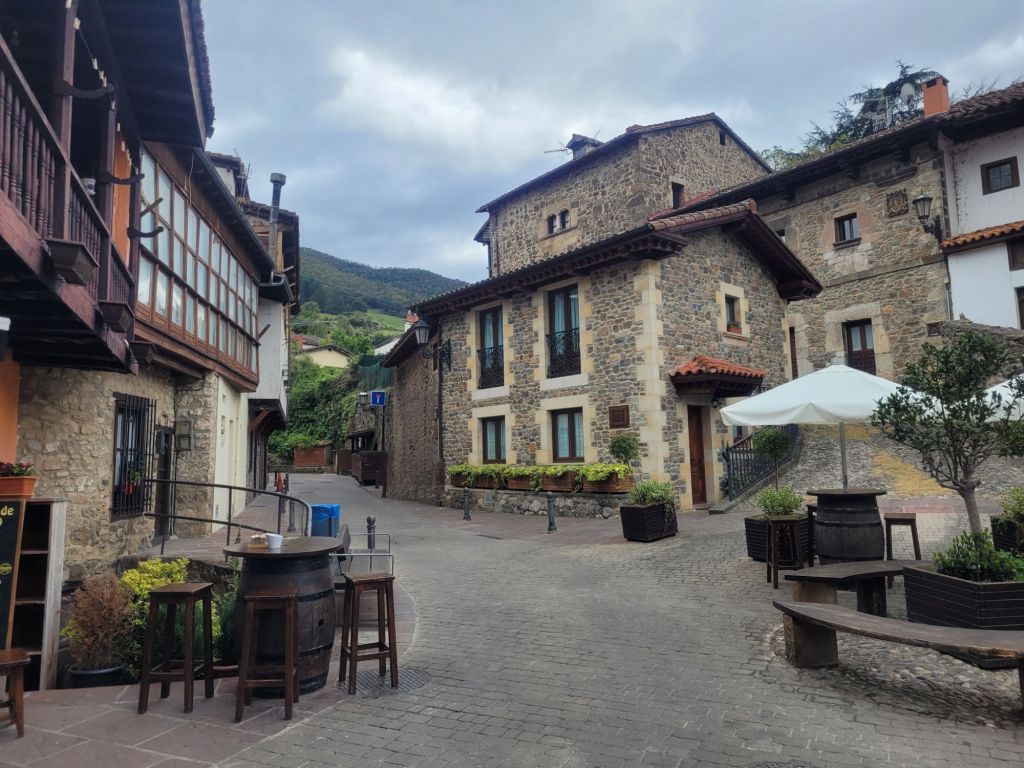
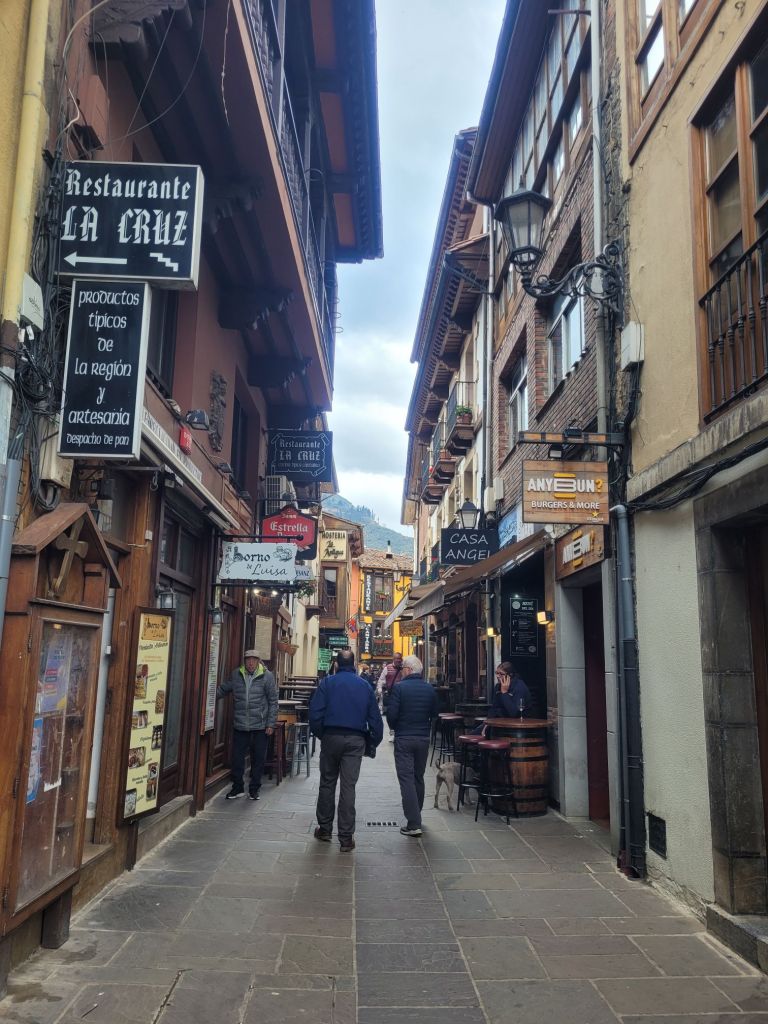
It’s a very pretty town and has an all-year population that needs things like strimmers, tools, sewing supplies… It also caters to tourists: both visitors to the Picos but also those who are walking the recently reinvigorated Ruta Lebaniego, about 72 kilometers from the coast to a monastery in Santo Toribio de Liebana. A pilgimage route in its own right, it also joins the Northern Camino de Santiago (which runs along the coast) and the, more standard, Camino Frances (the more southerly route).


And then back to the hotel for a well-earned lunch.
We were extremely lucky to miss the rain on our walk – it started sprinkling down as we got to the car in Potes and continued gently through the rest of the afternoon and evening. When we left the next day there was more snow on the mountain tops.
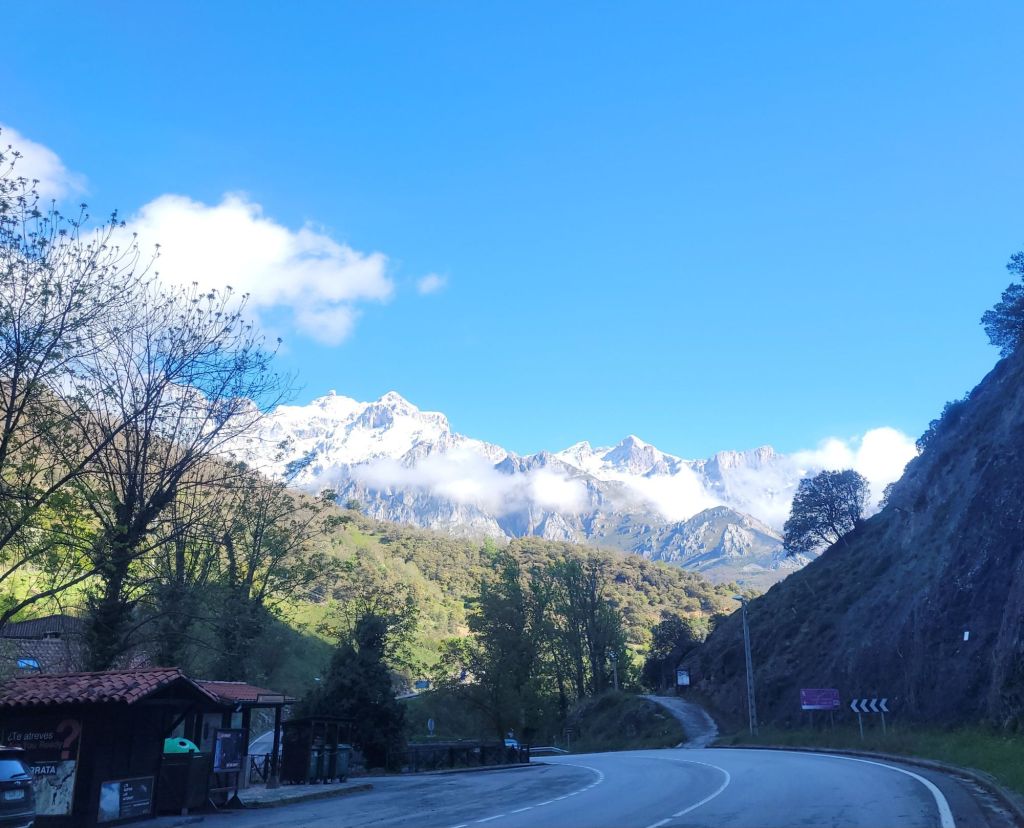
We were sad to leave and look forward to returning sooner rather than later. Next time, we will take the longer walk, weather permitting!
 Retired? What now?
Leave a comment