We felt sad to leave the Picos area, particularly on such a lovely sunny morning but the move eastwards had to be done.
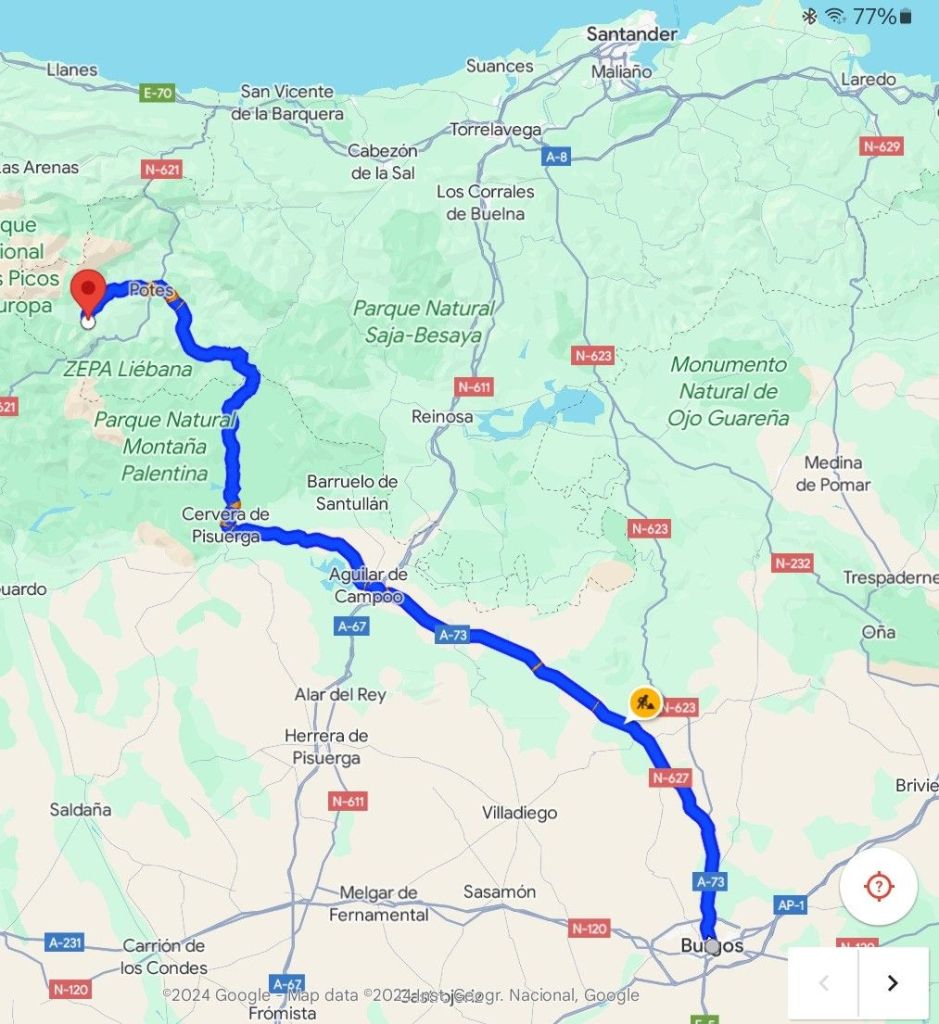
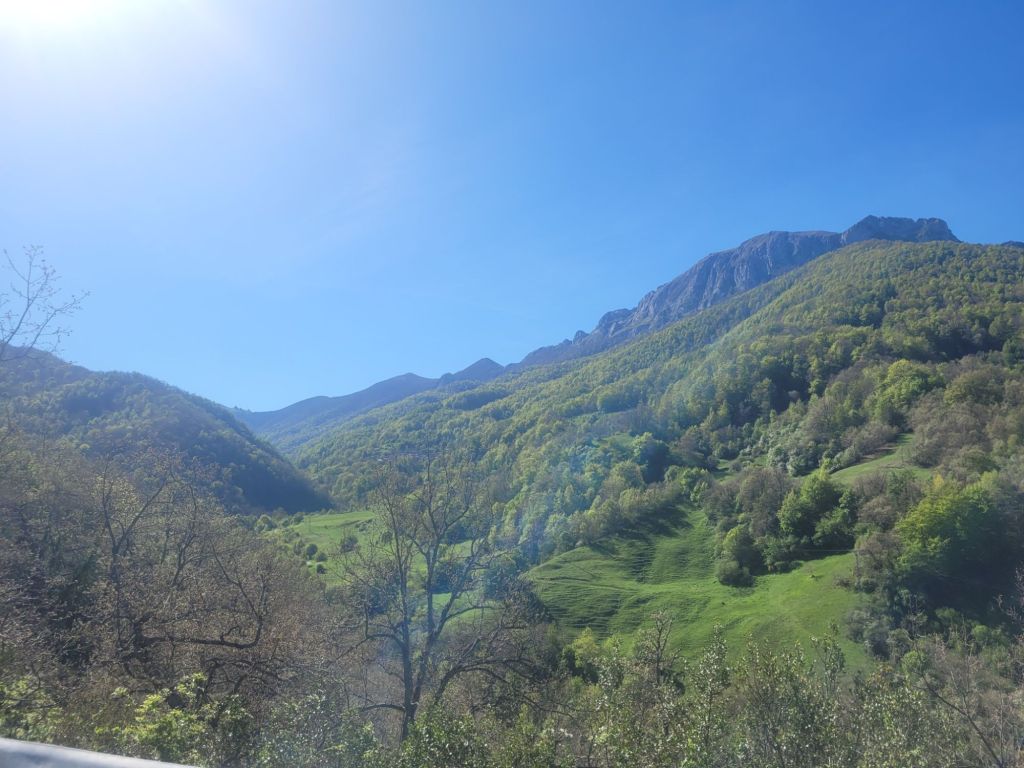
Following the road north, back to Potes, we turned east up the valley formed by the river Bullon and as we moved away from the Picos, the landscape became less rocky, if no less lovely. Against the bright blue sky everything glowed with colour: older, leathery dark green growth softened by feathery tender bright green shoots while brassy bronze greens sharply contrasted acid lemon yellows.
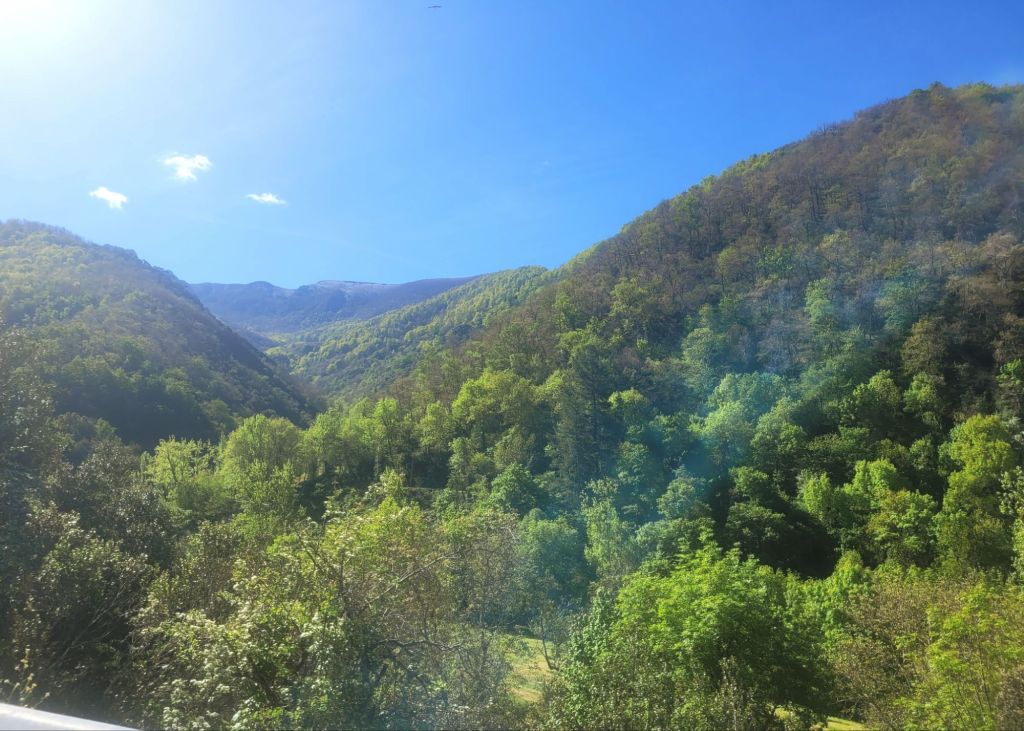
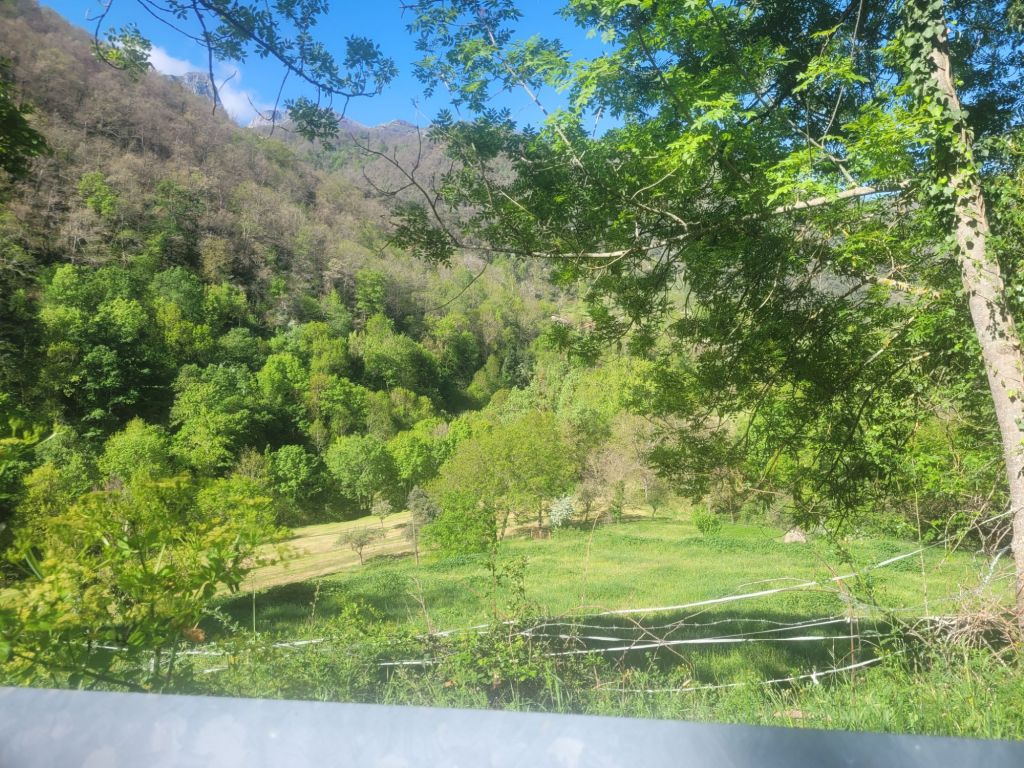
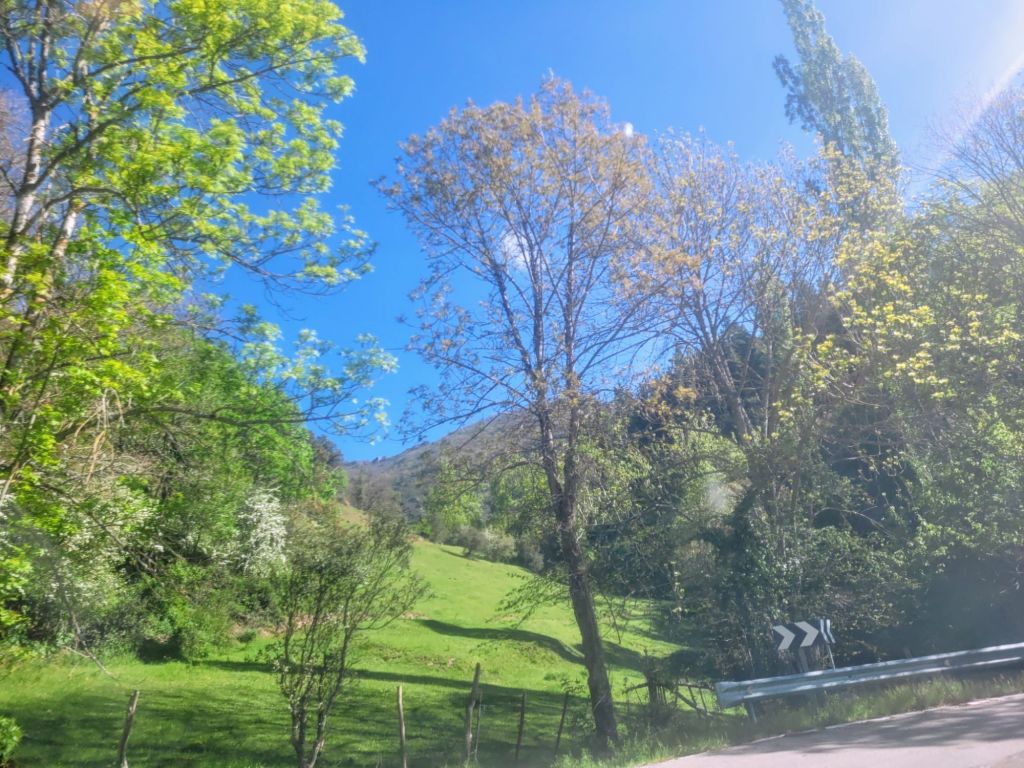
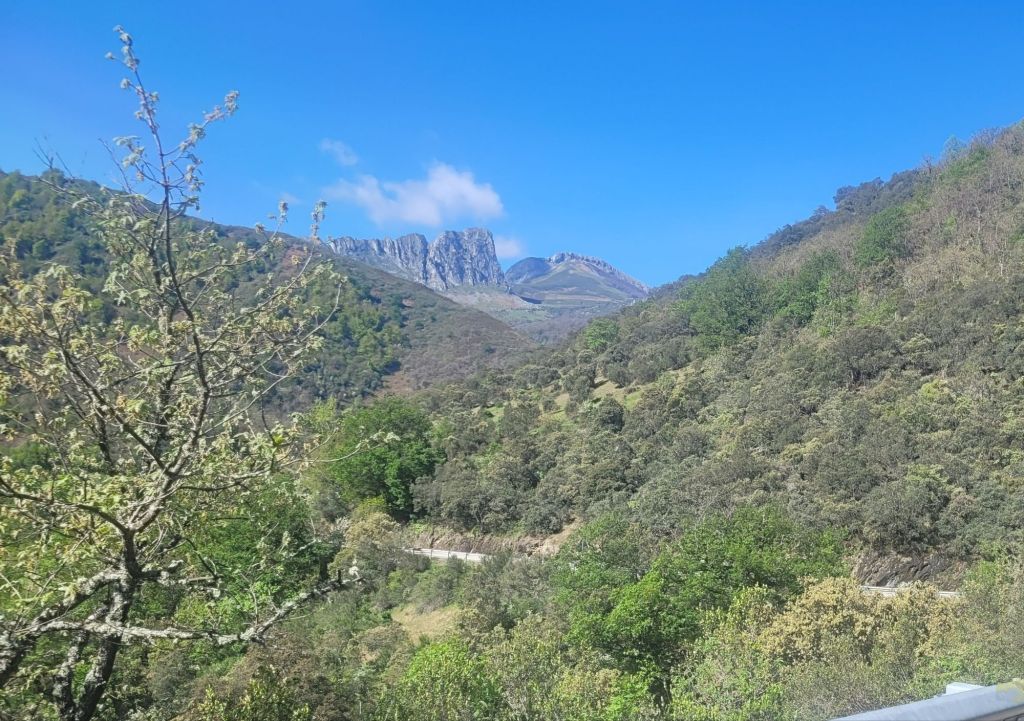
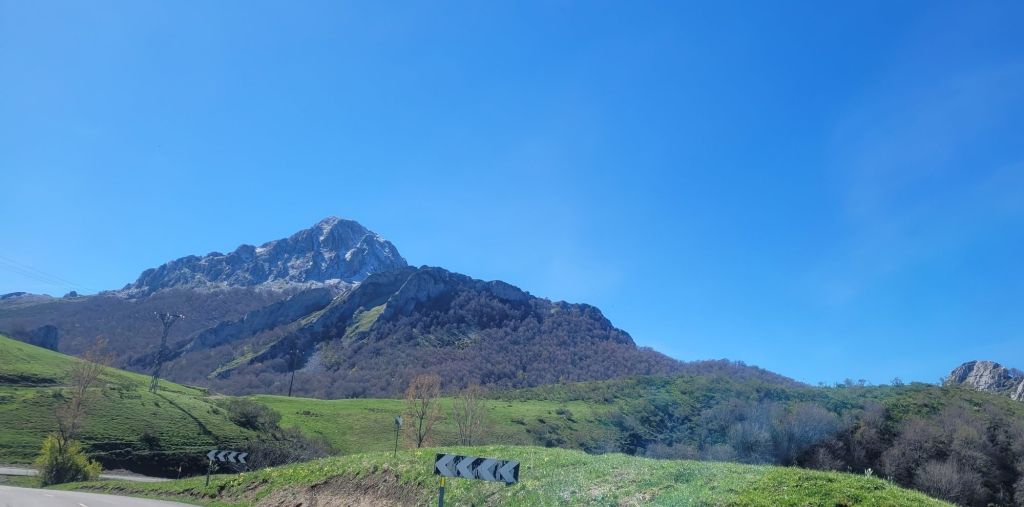
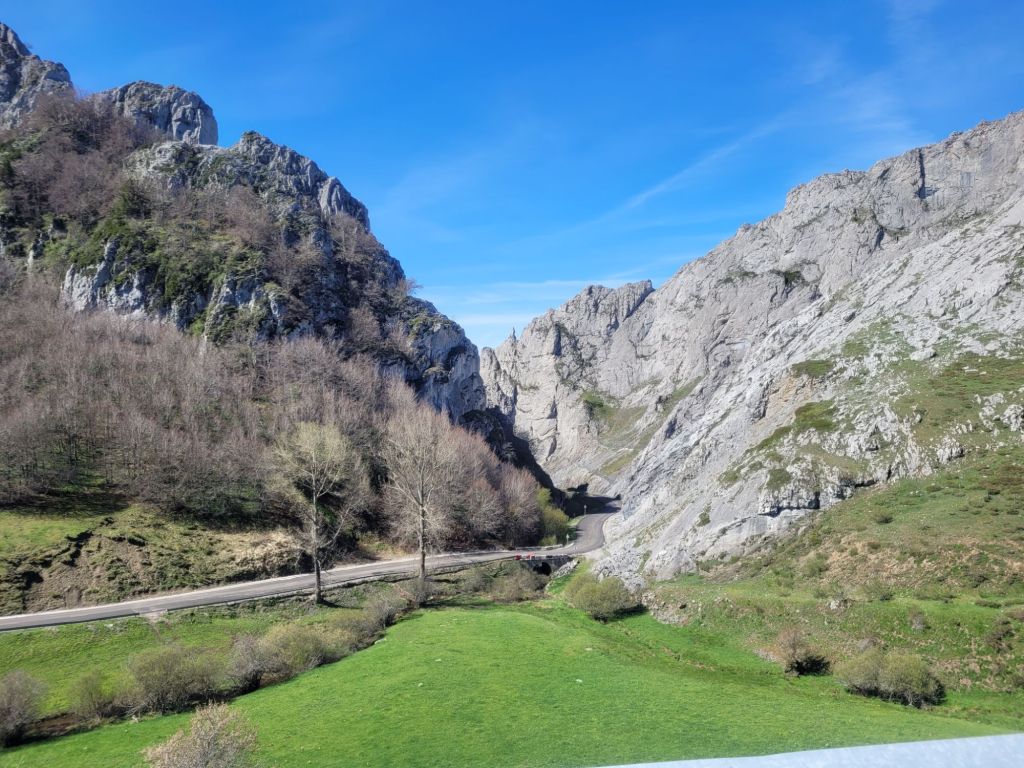
After all the lush green, rounding a particularly sharp corner brought a surprising rocky outcrop in the distance: the road inexorably climbed towards it.
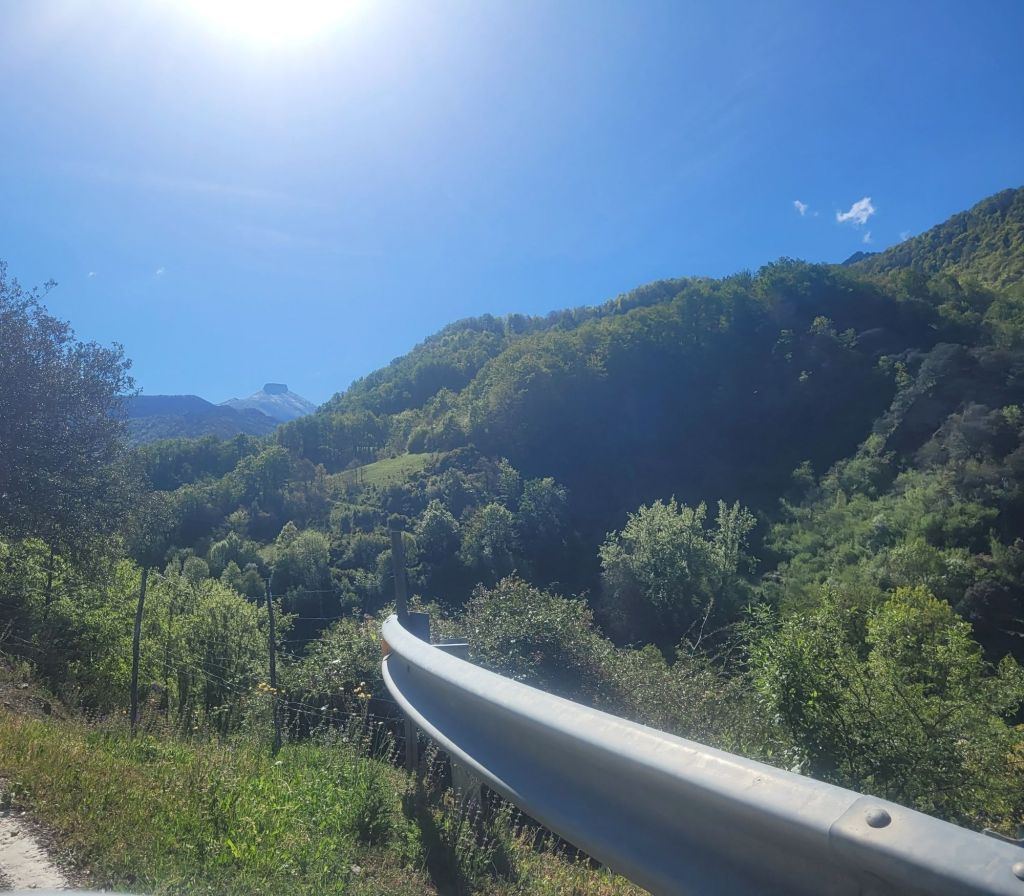
As the road wound its way upwards, it became rockier and more pines appeared.

At one point, traffic was stopped in both directions by cattle, who seemed utterly unconcerned by a car appearing from around a corner – fortunately the road was so twisty that our speed was low, so we stopped easily.
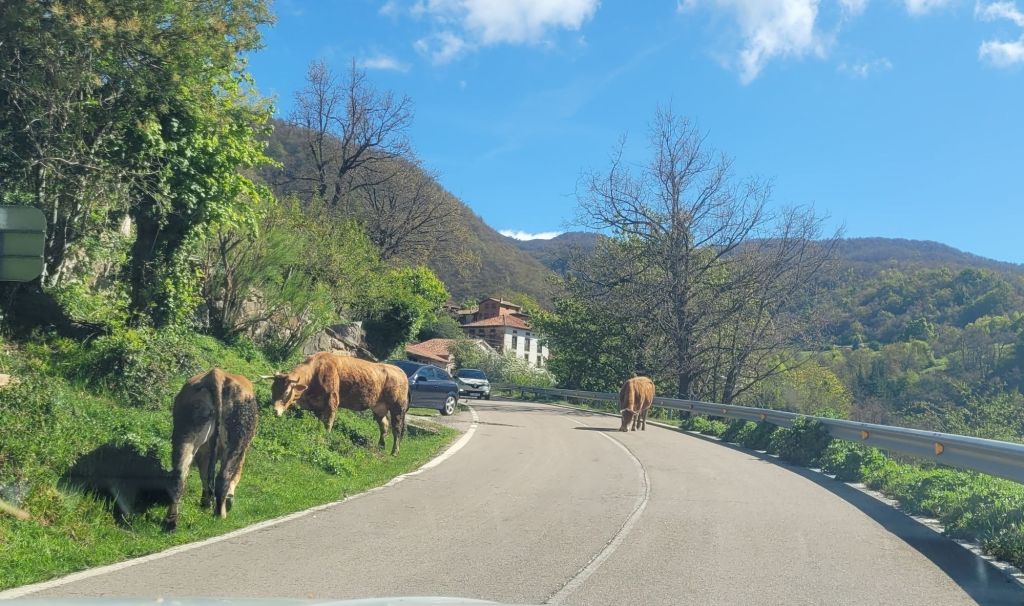
After some minutes, they slowly moved off enough for cars to get through.
Marking the head of the valley, an enormous lump of rock guarded the route into the next system. It gleamed in the sun under its light coating of overnight snow, bookending the valley with the Picos at the other end.
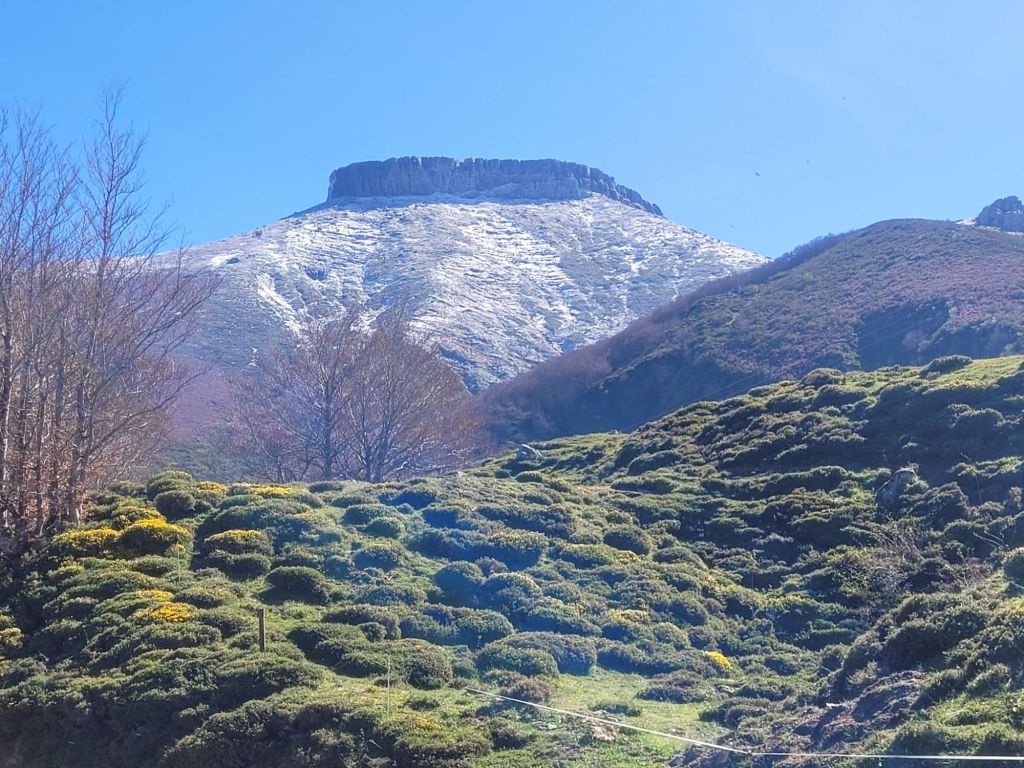

Just beyond, clonking bells and the ripping sound of grass interrupted the silence. Above us, birds of prey circled (no, I couldn’t identify them but they have at least three different kinds of rare raptors in this area). It was quite magical.
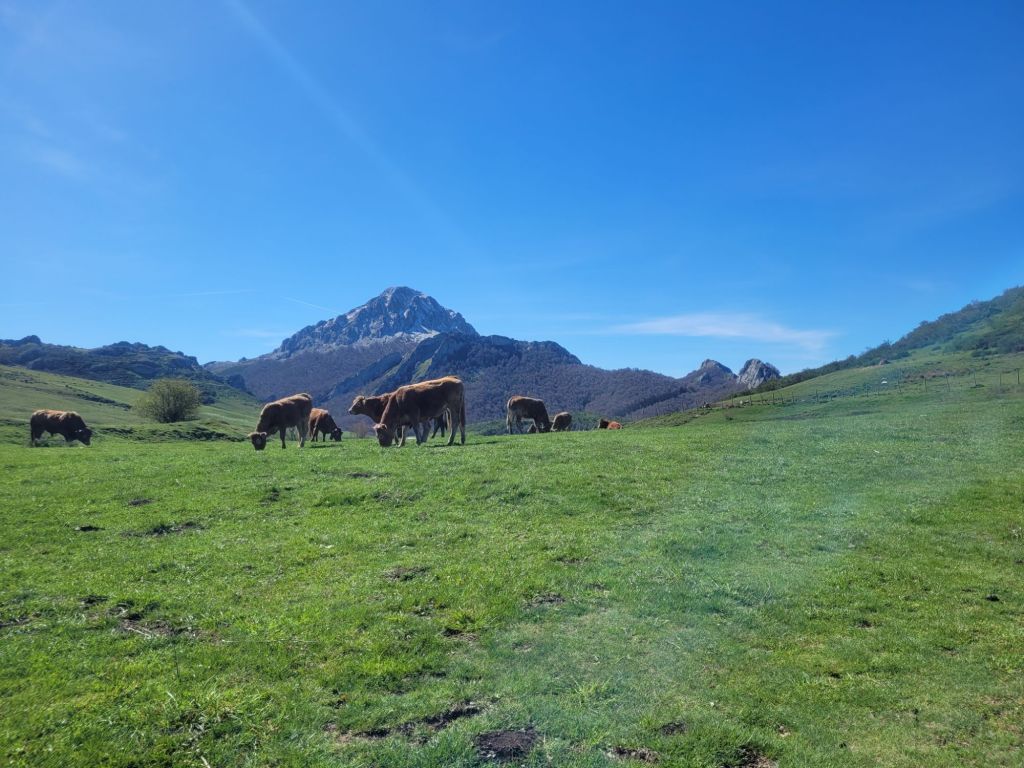
We were on the border between Cantabria and Castilla y Leon.
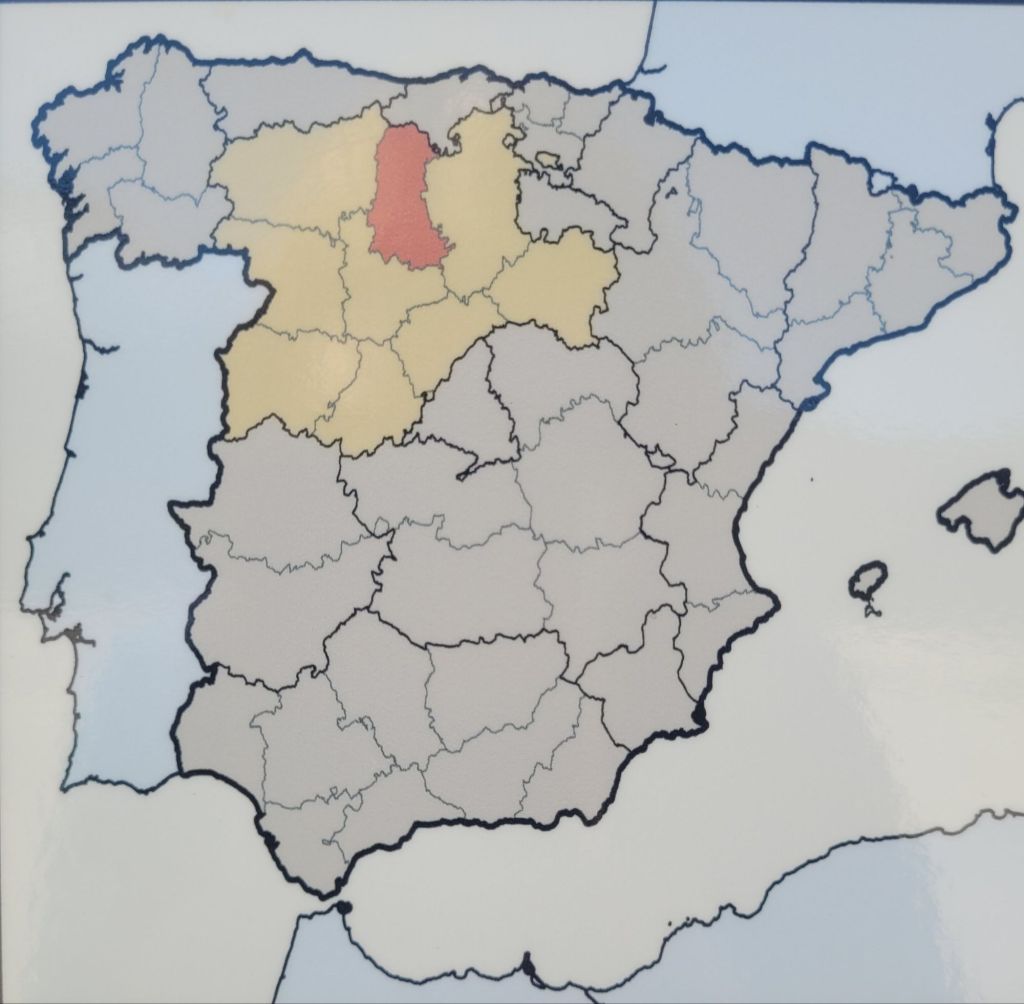
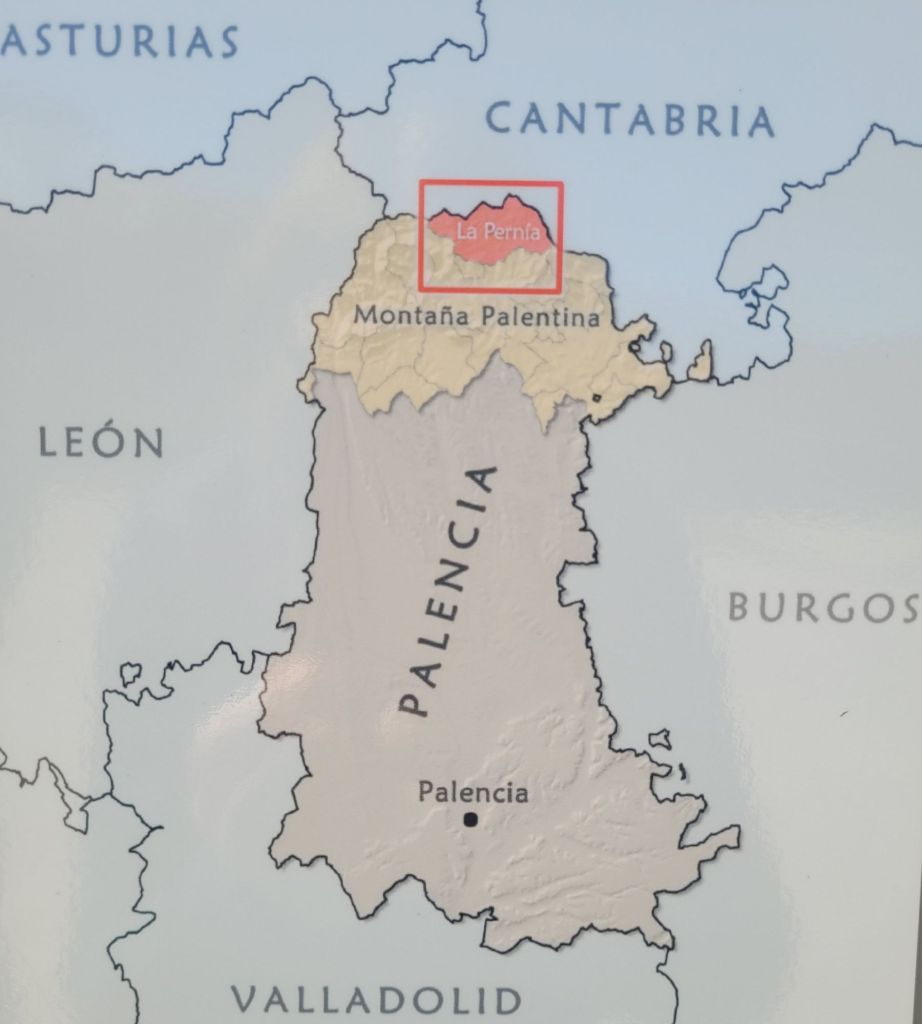
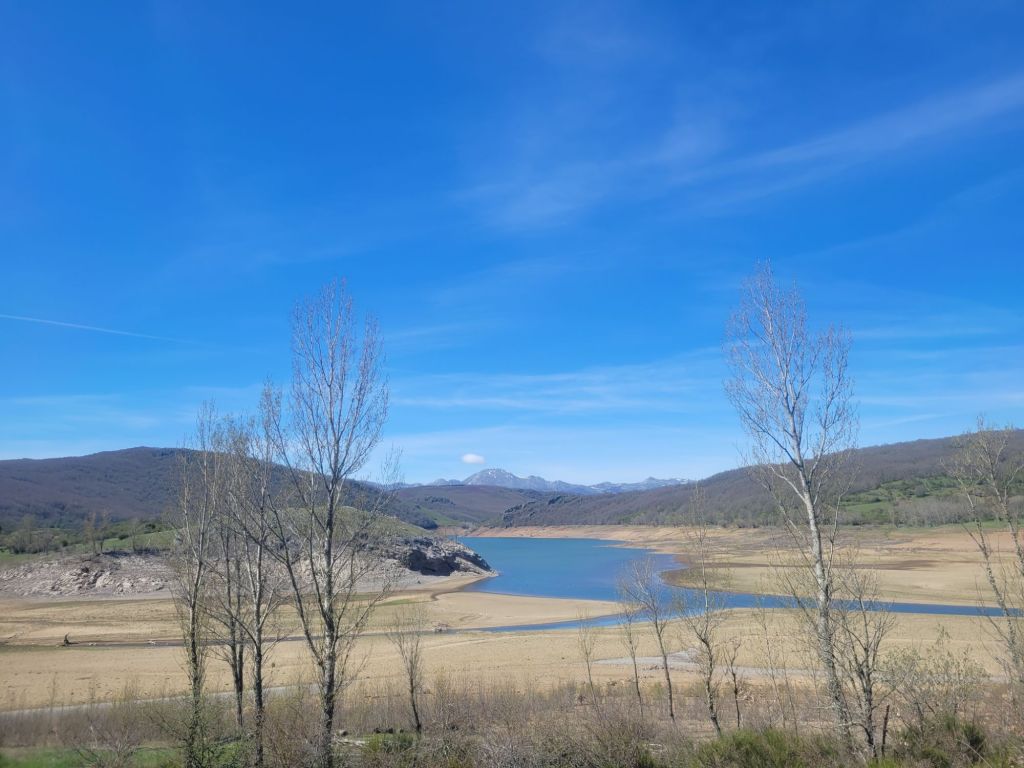
The road started moving downhill and once it got through a dog-leg of rocks (big ones), ran through high pastures and past a very dried up reservoir. Water is desperately needed.
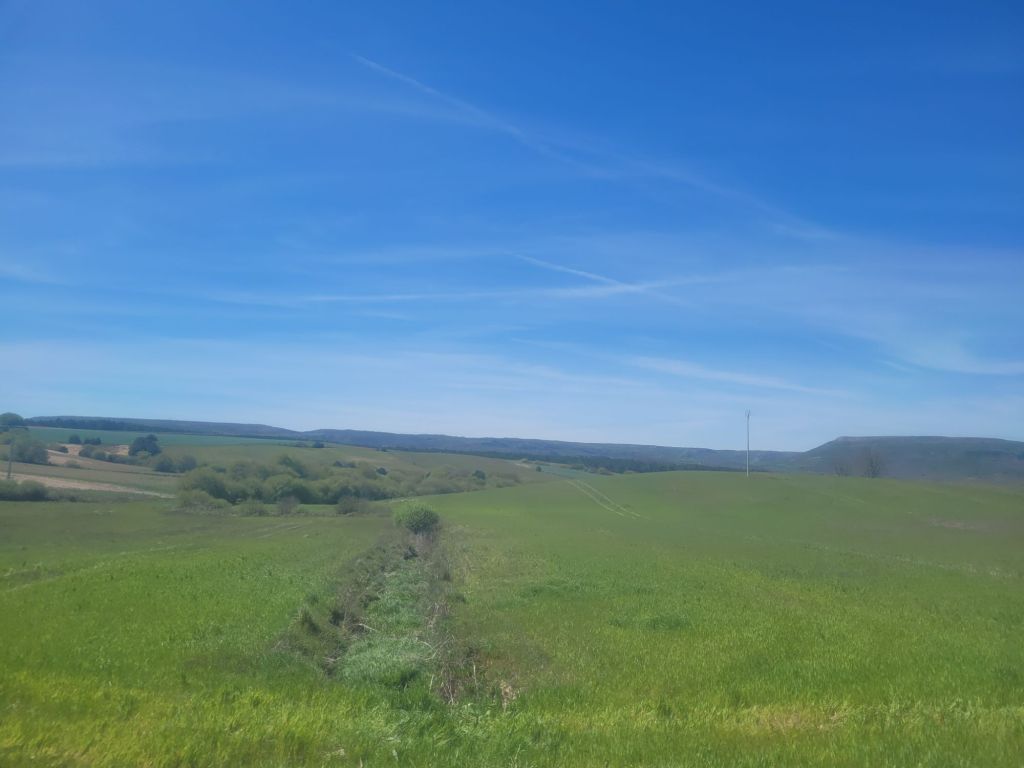
Back to flat, flat and yet more flat – stretching as far as the eye could see. Occasionally there was the minor thrill of a tiny roll in the enormous fields but mostly it was flat all the way to Burgos.
Burgos is a big place, with a large, modern and not-very-attractive ring of outskirts: large industrial buildings, large shopping complexes and large blocks of flats. Once over the river (the Ebro) it got a bit nicer.
An important place historically, Burgos is home to the third largest cathedral in Spain (after Seville and Toledo) and the only one on the UNESCO World Heritage register. It’s also an important place for the Camino (there are many hostals and posadas advertising for pilgrims). For a short period of time Franco made Burgos his capital – possibly reflecting the (slightly unholy) alliance between the Fascists and the Spanish Catholic church.
(note: Please be aware that I am woefully undereducated in the detail of the Spanish Civil War and the rise of Franco – my interpretatinos are based on the little I know from what I have read and seen on TV and from what Roger has shared from his extensive reading.)
To access the main square we went through an impressive arch on the river and bang! There was the cathedral in all its soaring glittering glory.

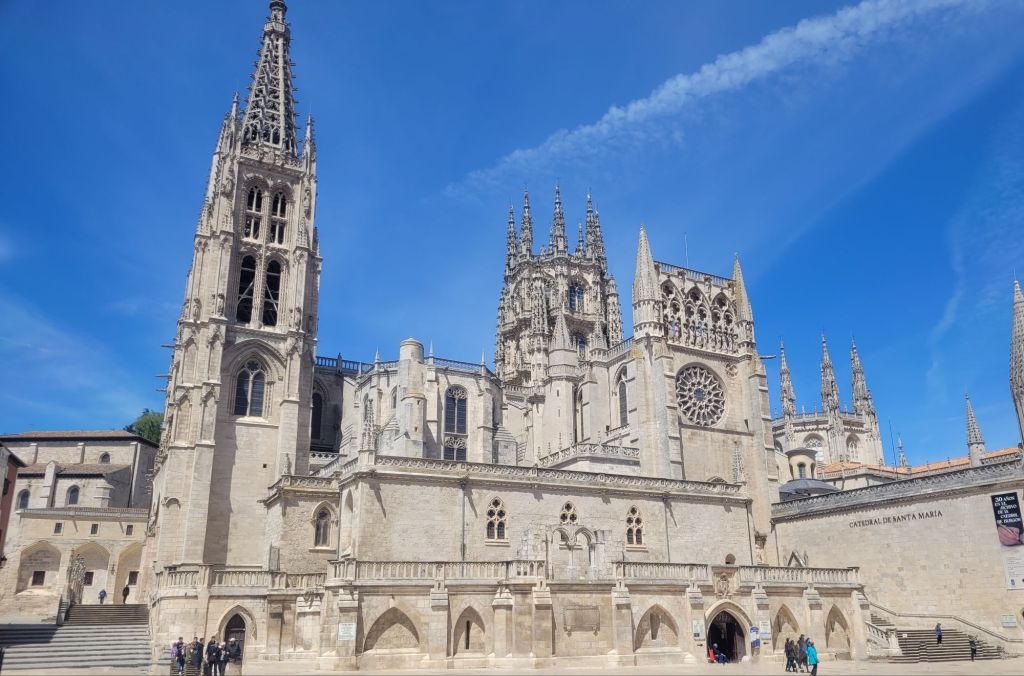
It’s VAST – hugely biggly, ginormous. And all the towers and different levels make it seem even larger.
The outside is highly carved in places and looms uncomfortably next to some of the smaller houses that surround it.

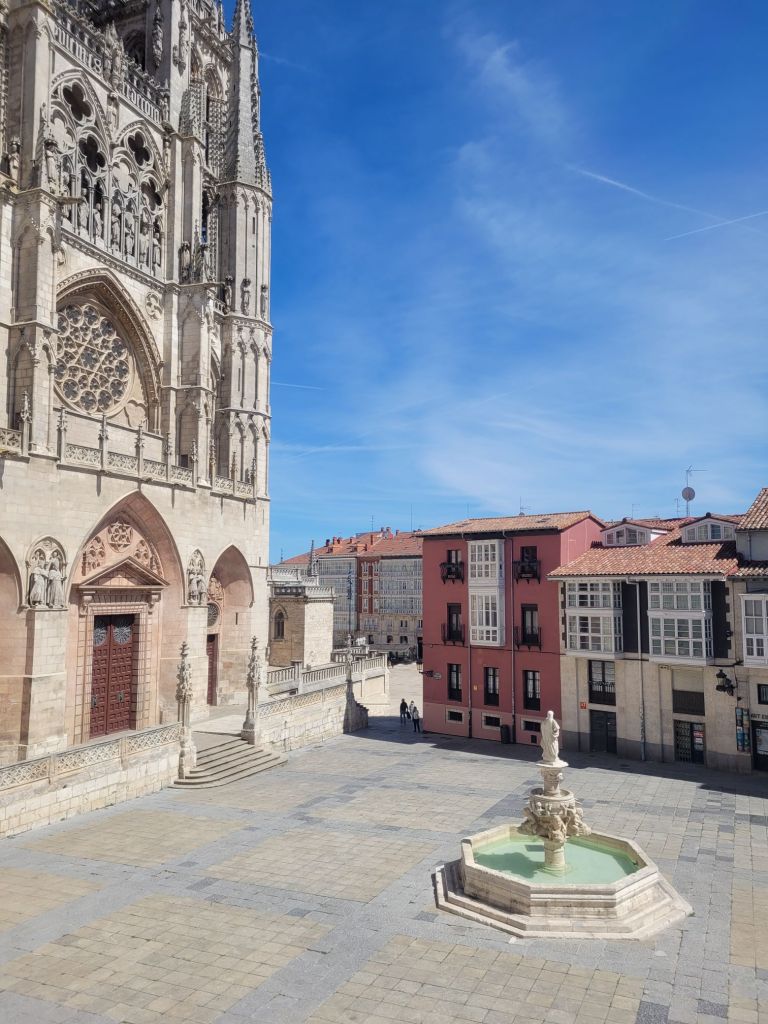
A couple walking the Camino who we fell into conversation with said it was incredibly beautiful inside – and ‘so interesting’. We therefore had high hopes that the twenty euros we spent for two tickets would be rewarded by some ‘good stuff’.
I have to admit bias here. I have great difficulty with very large churches, Spanish churches particularly, because they are SO imposing, SO full of obvious wealth and flaunt SO much power. It’s hard to equate the expression of faith in these churches with a religion that is supposed to, in theory, reward the humble and meek and uplift the poor.
Not much humility in this church and no sign that the poor (or even ‘not quite so filthy rich’) were even allowed to worship here. Everything (and I mean everything) was fenced with black metal bars.
The high altar, the choir and the main body of the congregation? Fenced. Every single saint’s altar and chapel? Fenced. If the gates hadn’t been open, the only accessible place would have been the corridor that went around the high altar and the choir.
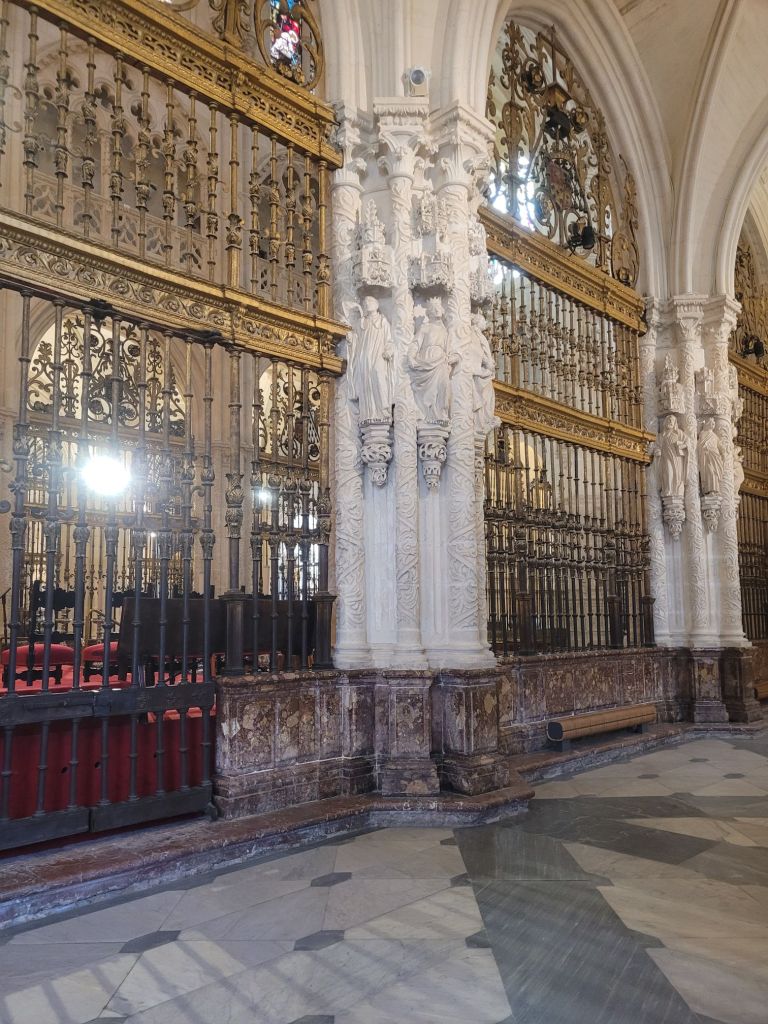
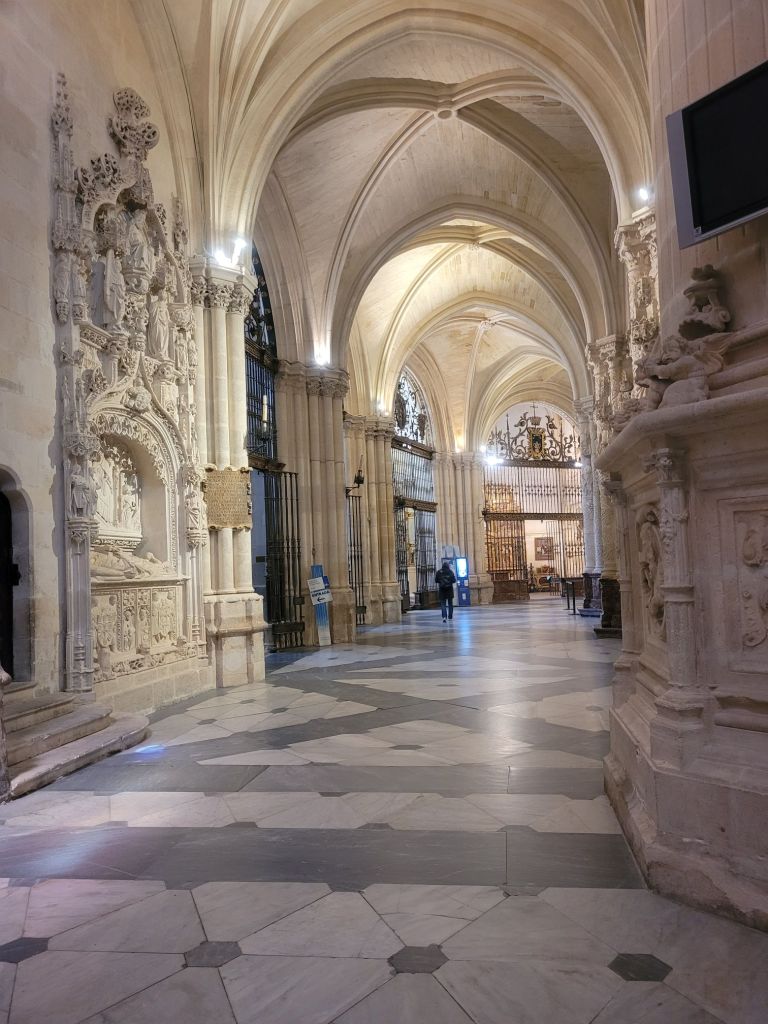
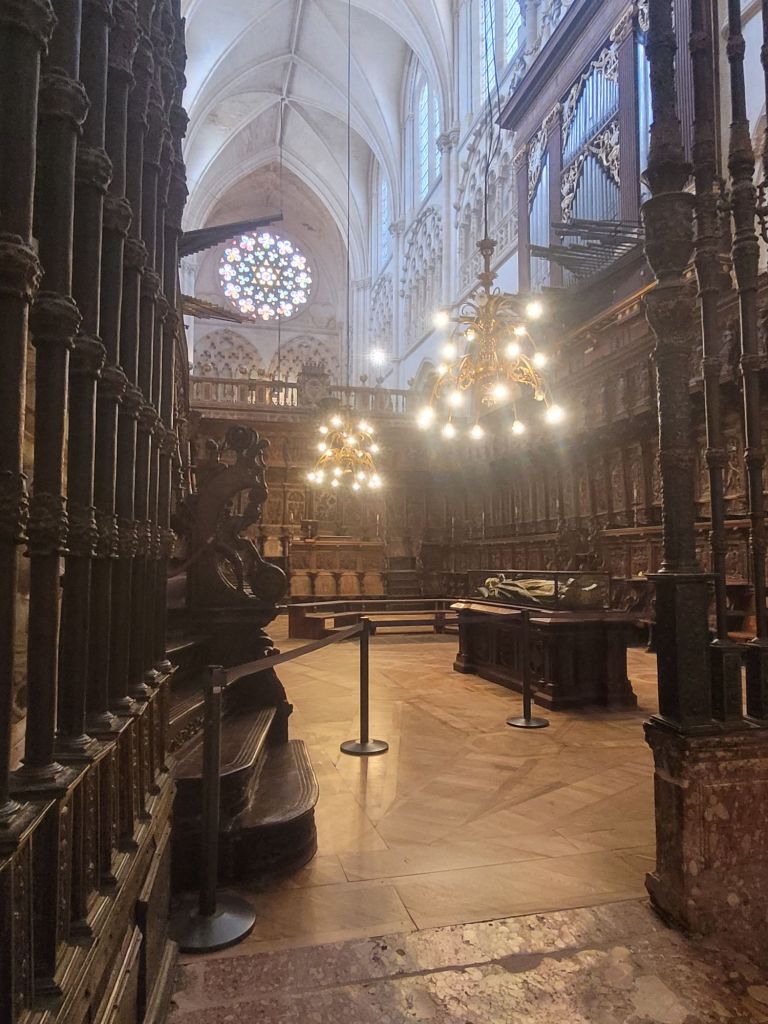
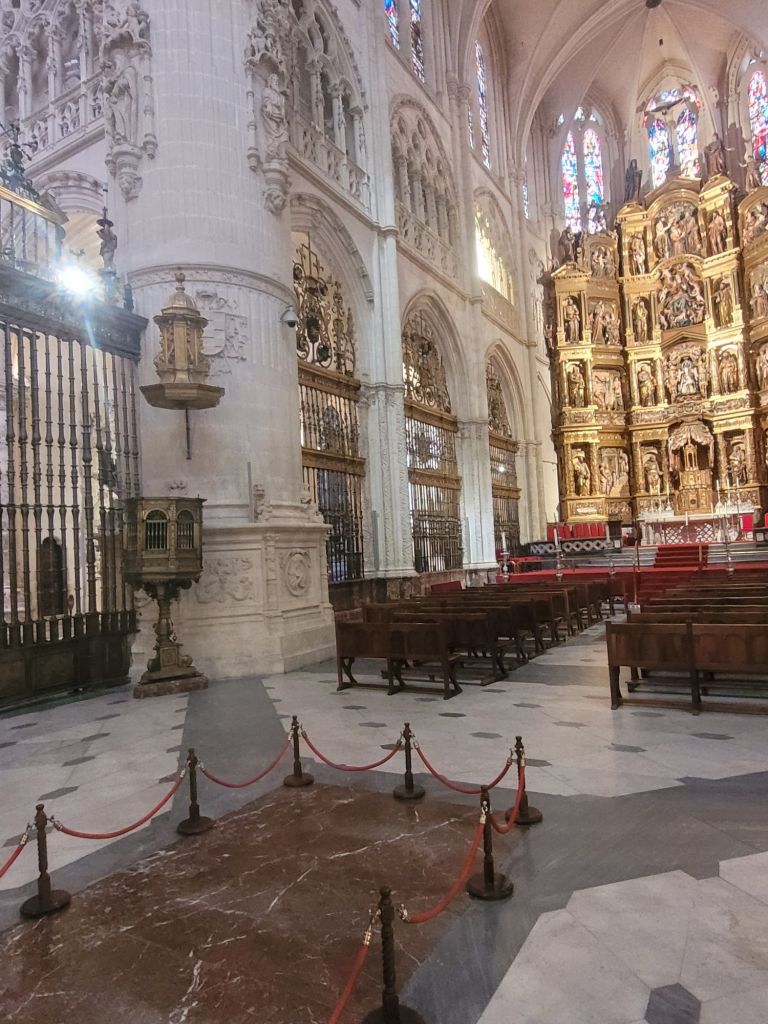
Welcoming it wasn’t.
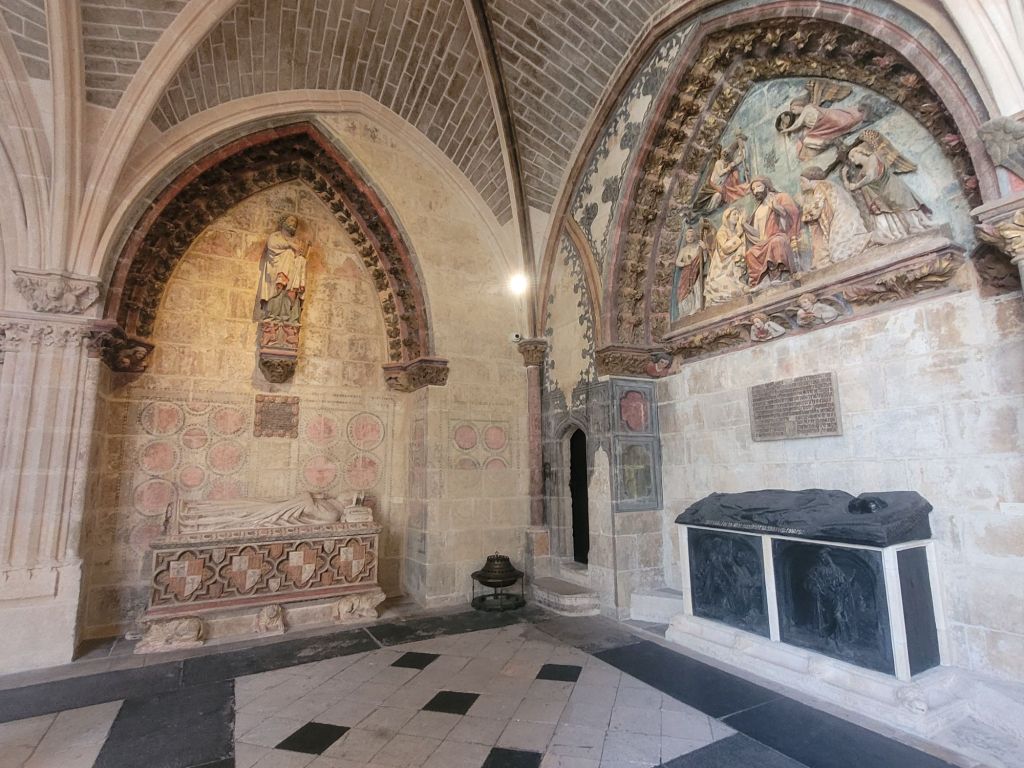
The altars in the side chapels were an exercise in excess, with several being specifically endowed, built and dedicated as mauseleums for wealthy and influential men.
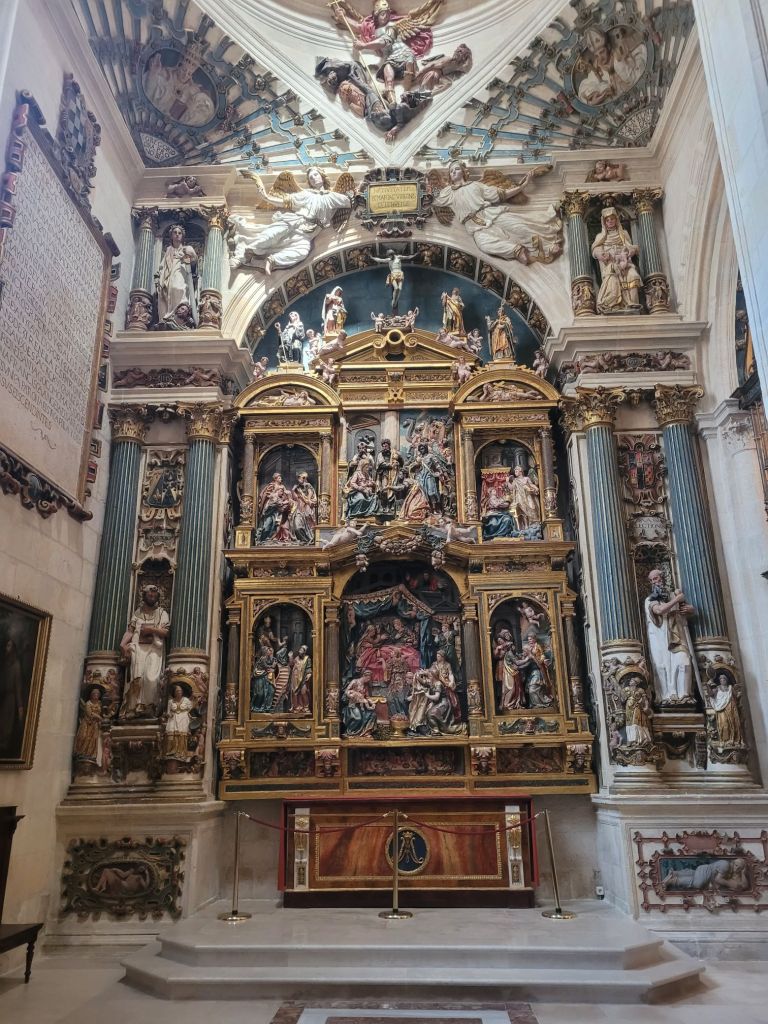
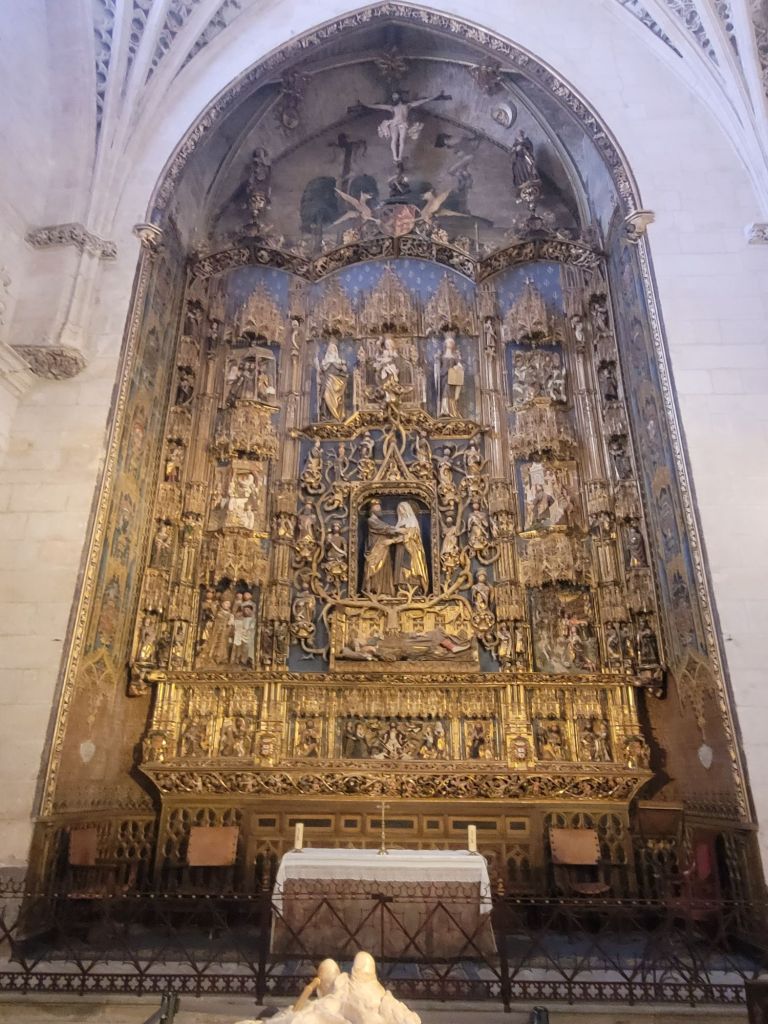
Not much humility in evidence here.
It appeared to be a demonstration of the power granted by money and social position, a political statement to keep others further down the ladder in check: we didn’t find it beautiful at all.
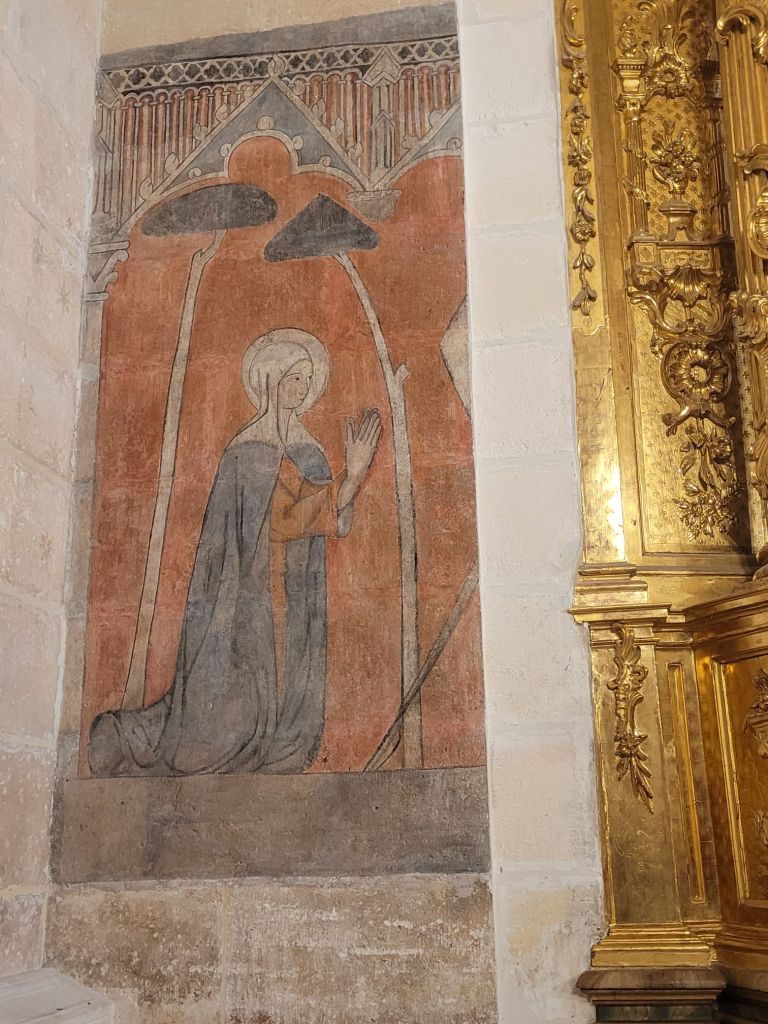
There were some interesting ‘bits’, like the very early wall paintings uncovered during restoration work in one of the side chapels. These were charming but looked slightly out of place alongside the gilt-framed altarpiece.

In the upper cloister there were remnants of painted stonework, hinting at the riot of colour that worshippers (or just visitors?) might have seen when the cathedral was ‘new’. Started in the 13 century and completed in the 16th century Burgos cathedral is considered a comprehensive example of the development of the Gothic ‘style’. Painted stone was typical of the medieval period – so maybe only the earlier sections were painted because the Gothic style has more light so specific artwork can be appreciated more? I could find no answer to this question that linked specifically to this cathedral.

Suffice to say we weren’t fans and were so disturbed by our reaction that we left Burgos rapidly, without stopping for lunch.
But I don’t object to spending the money on the entry tickets. It’s an important cultural site – if only to show visitors just how powerful, rich and controlling the Catholic church was at that time and to remind us that the builders and artists were incredibly skillful with limited tools and resources.
On to Santo Domingo de la Calzada.
 Retired? What now?
Leave a comment