We left La Rioja feeling well fed and well ‘wined’. One of the main things we have discovered this trip is that we prefer ‘Crianza’ wines rather than ‘Riserva’. Crianza wines are younger, spending less time in oak barrels and are generally fruitier and softer. Much more our ‘glass of wine’. This won’t surprise those who know of our preference for the wines of southern Italy!
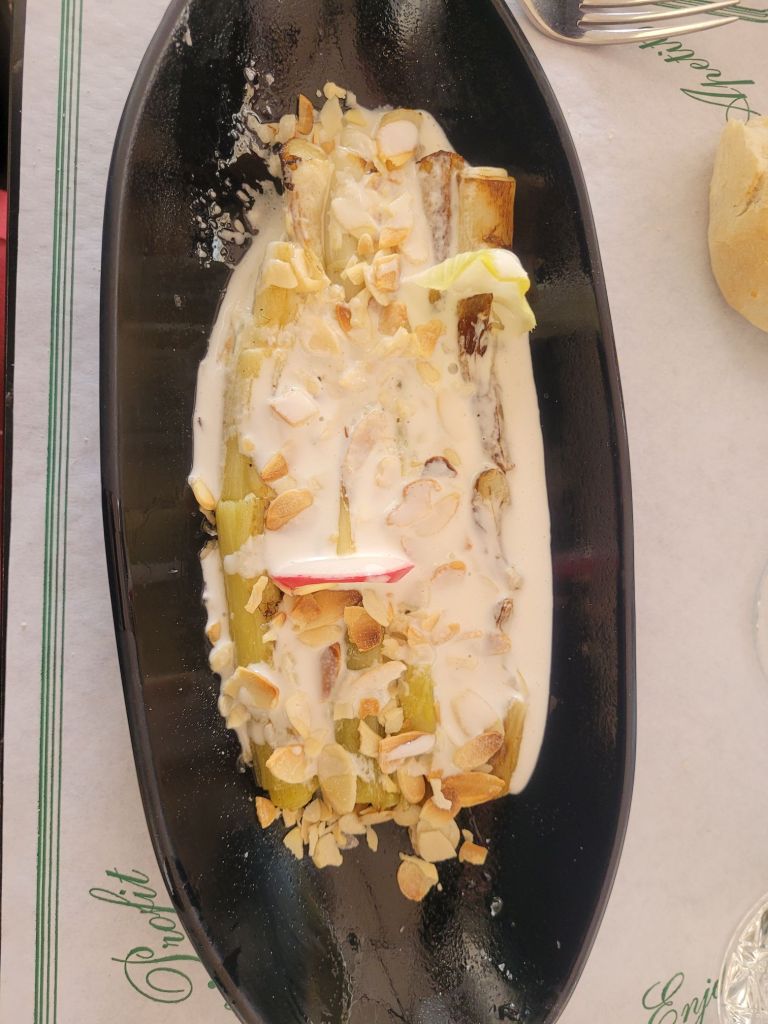
On the whole the food has been good – some better than others. My stand-out dish by far in La Rioja was the starter I had in Logrono at La Cocina de Ramon: roasted baby leeks with toasted flaked almonds and an almond cream (just almonds and water). The combination of the sweetness of the leeks and almonds was offset by the flakes of salt sprinkled across the top. Totally unexpected and utterly delicious.
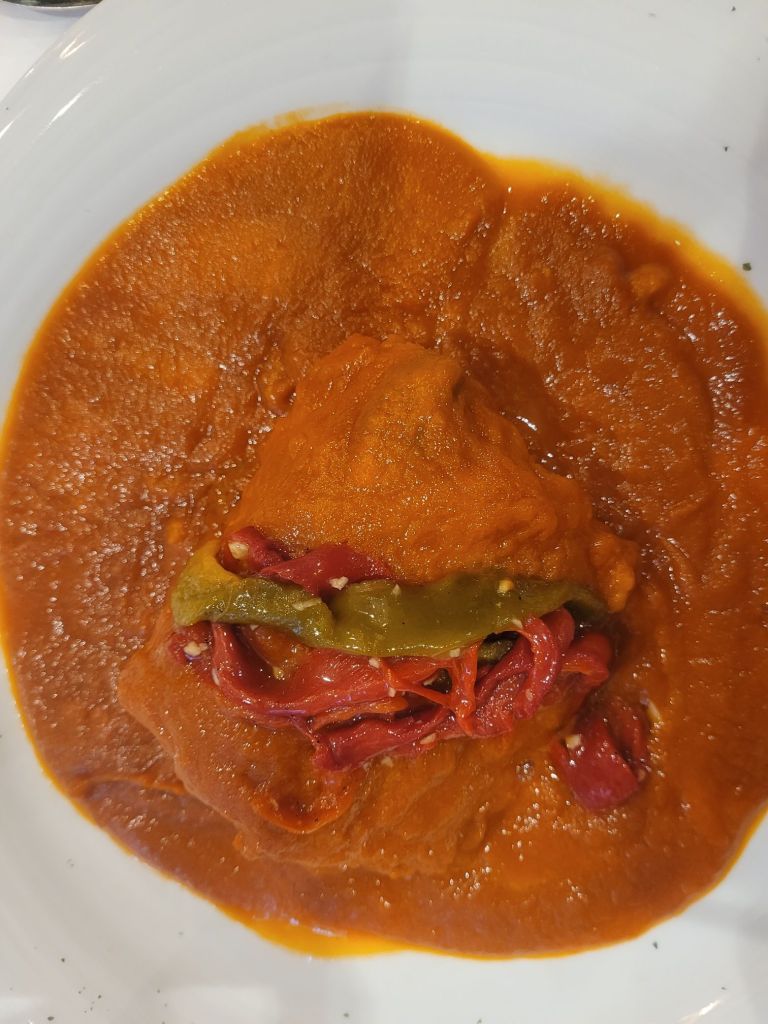
Roger’s stand-out dish was had at Los Caballeros in Santo Domingo de la Calzada. Bacalao (salted, dried cod) is a typical ingredient in Spain. When I have had it, I have not enjoyed the texture at all. Roger had the bacalao ‘a la Riojana’: he found it difficult to believe that it was salted and really thought it was fresh – he asked, it was salted. Apparently it’s all in how it’s reconstituted. He found it delicious: the sauce had just enough pimenton to give it a very gentle kick.
Both the above were Michelin bib-Gourmand restaurants – we shall use their list again.
After leaving Santo Domingo we drove back into the Basque country, skirting Vitoria-Gasteiz. According to social research, Vitoria-Gasteiz is one of the (if not the) most popular places to live in Spain: clean with good job prospects and a nice town center. We saw mile upon mile of high-rise, ultra new-build apartment blocks plus a few industrial complexes. So there are definitely jobs and accommodation but we didn’t find it particularly inspiring.
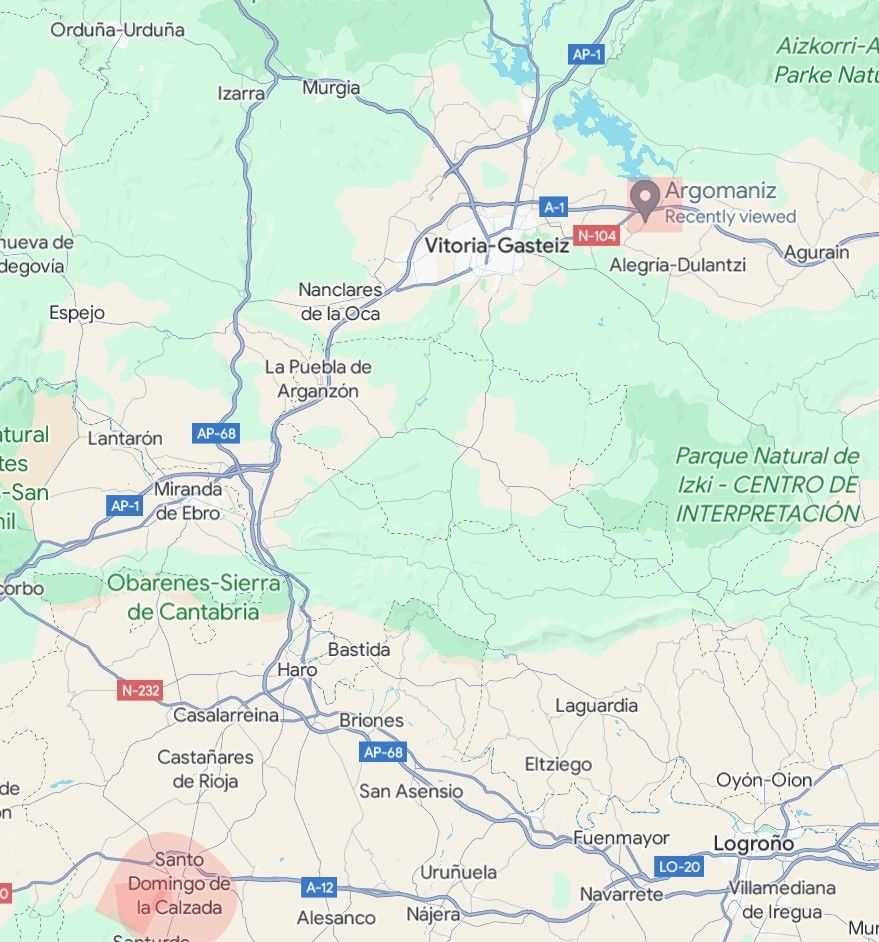
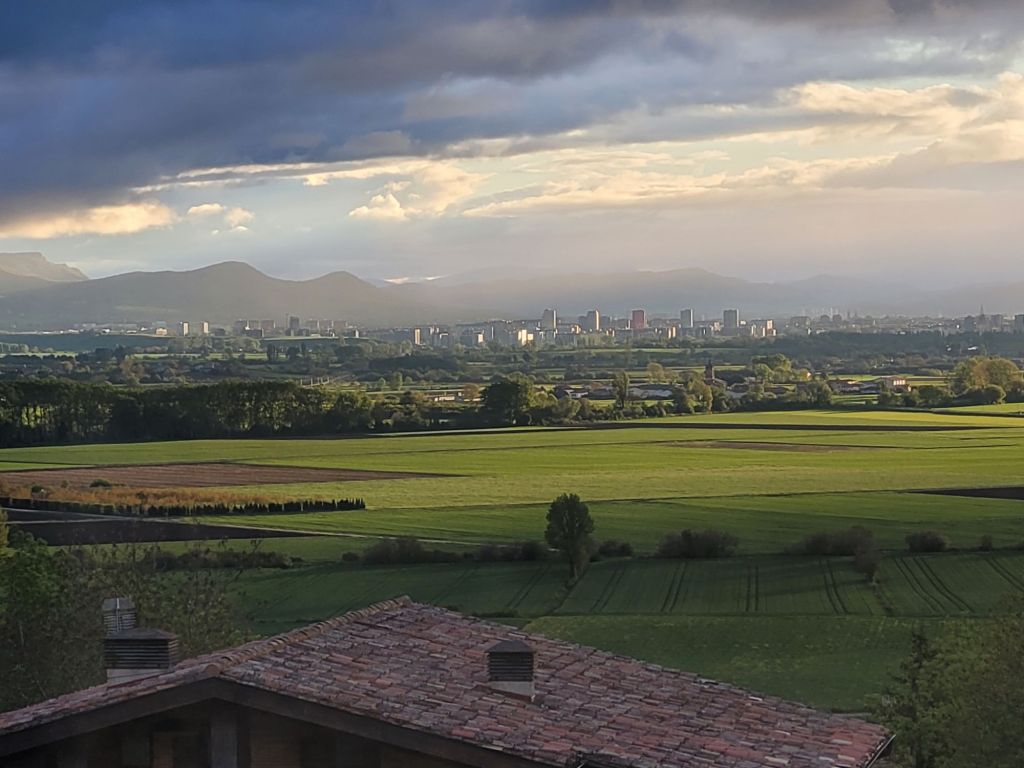
After a night in the Argomaniz parador (old building, lovely views from our room, nice bar, lovely staff, ‘meh’ food) we spent the following day walking around in the Garaio ‘natural’ park, around the Ullibarri-Gamboa reservoir. Not only was it a sunny day (hurrah!), in a fabulous location, but the reservoir itself has an interesting history and the information provided by the extremely garrulous park guide was quite eye-opening.
The reservoir was started in 1950, flooding around 12 villages and hamlets. The aim was to provide hydro-electricity for the factories in Bilbao (which lies to the north). Built by 35000 political prisoners (many of whom died), the goverment provided little support for those who lost their family homes or pastures (and thus their livelihoods). Local tradition led to property being passed down from father to son, with little paperwork to support ownership. Those few who had aready left to seek work elsewhere had registered their properties ‘back home’ and thus got compensation but those who hadn’t (most) received nothing. The local priest who organised protests disappeared – no-one knows if he was disposed of by law enforcement or if he was forced to flee to another country.
What astonished us was the depth of feeling evidenced by the park guide, who was Basque (she kept on forgetting that we only spoke Spanish, breaking into Basque). Nothing about the reservoir benefitted the local communities and the reservoir (and the surrounding areas) was only returned to local control 20 years ago: it now provides household water for the local area.
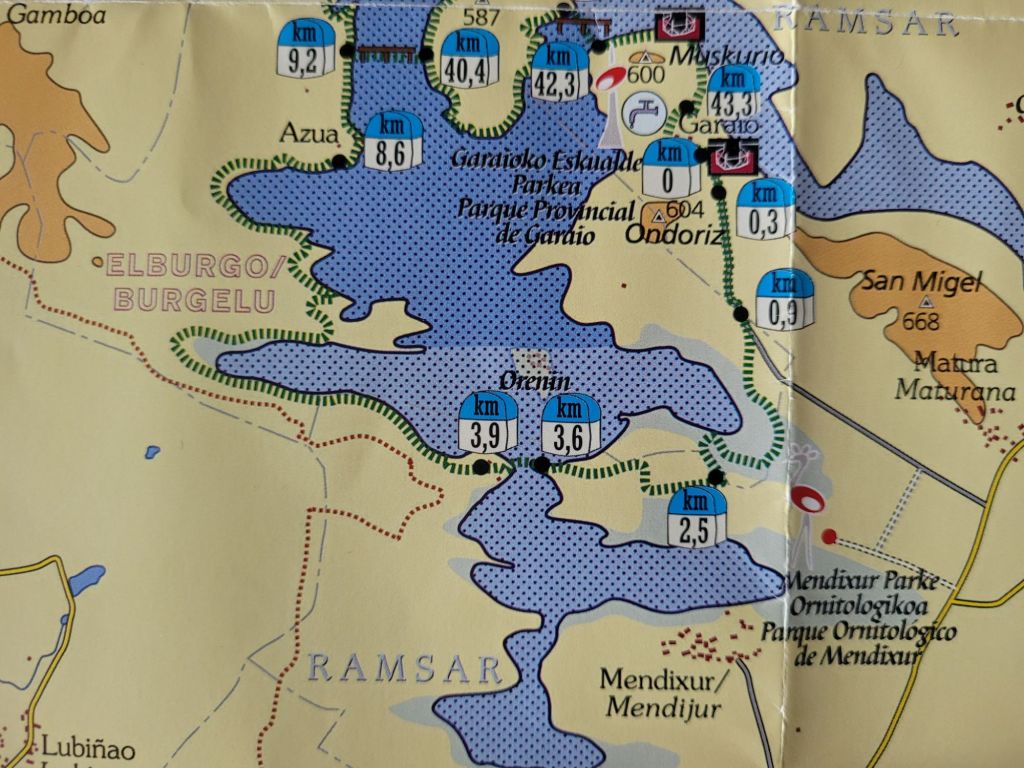
As a park it’s tranquil, brilliantly kept, with provision for motorhomes and caravans, cycle and walking routes – that are really well maintained and signposted.
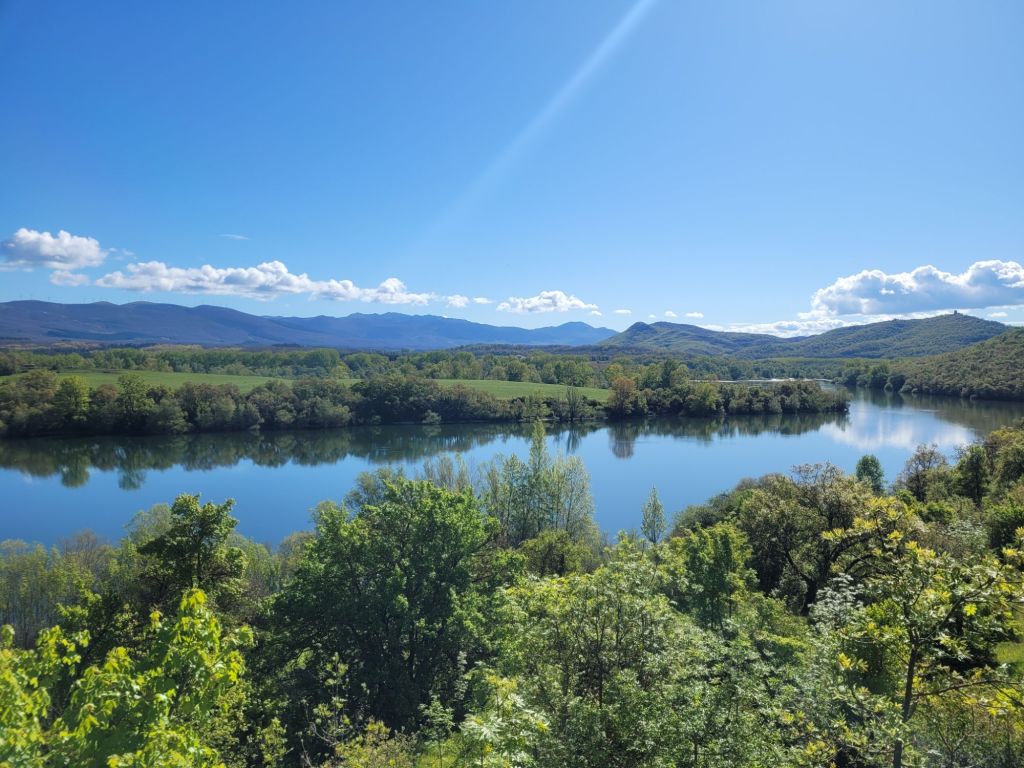
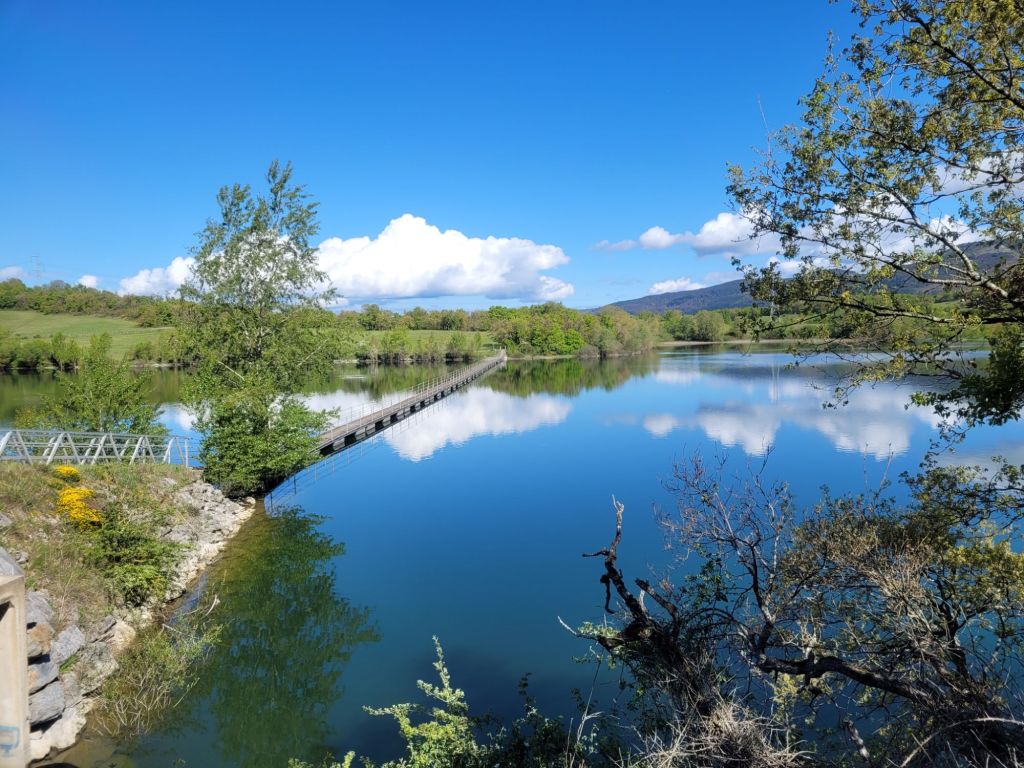


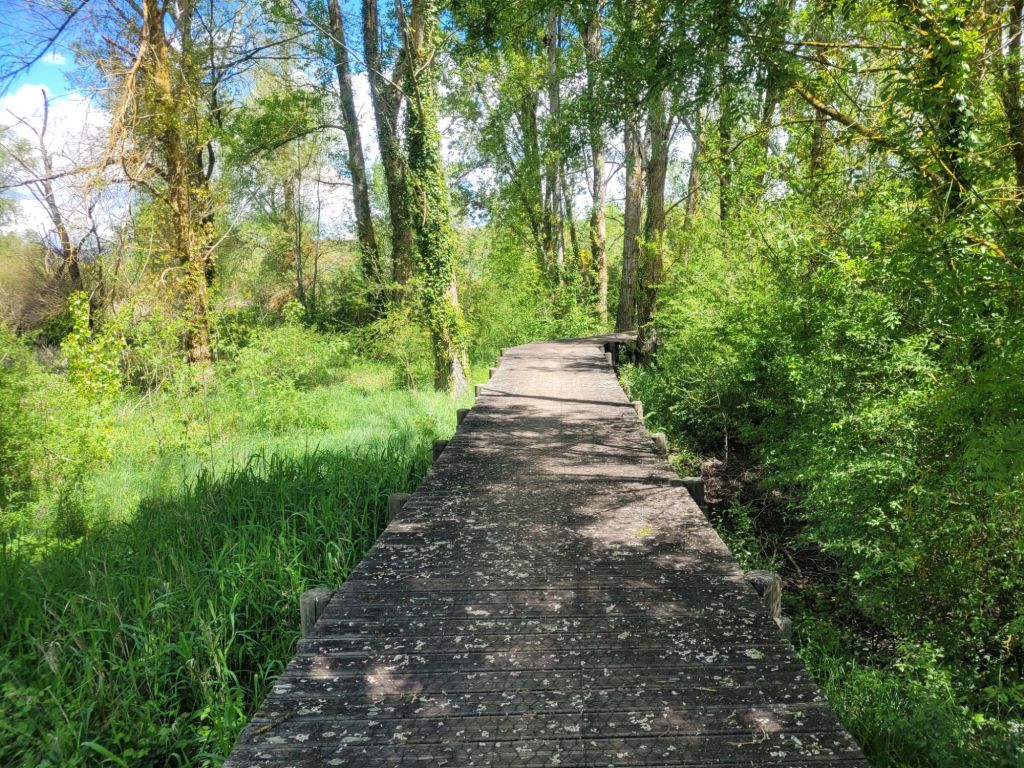
At the far south of the reservoir is marshy ground, with a raised boardwalk over some of it. It’s a valuable bird sanctuary that is accessed via another entry point – you can’t get to it directly from the reservoir, only skirt the northernmost corner.
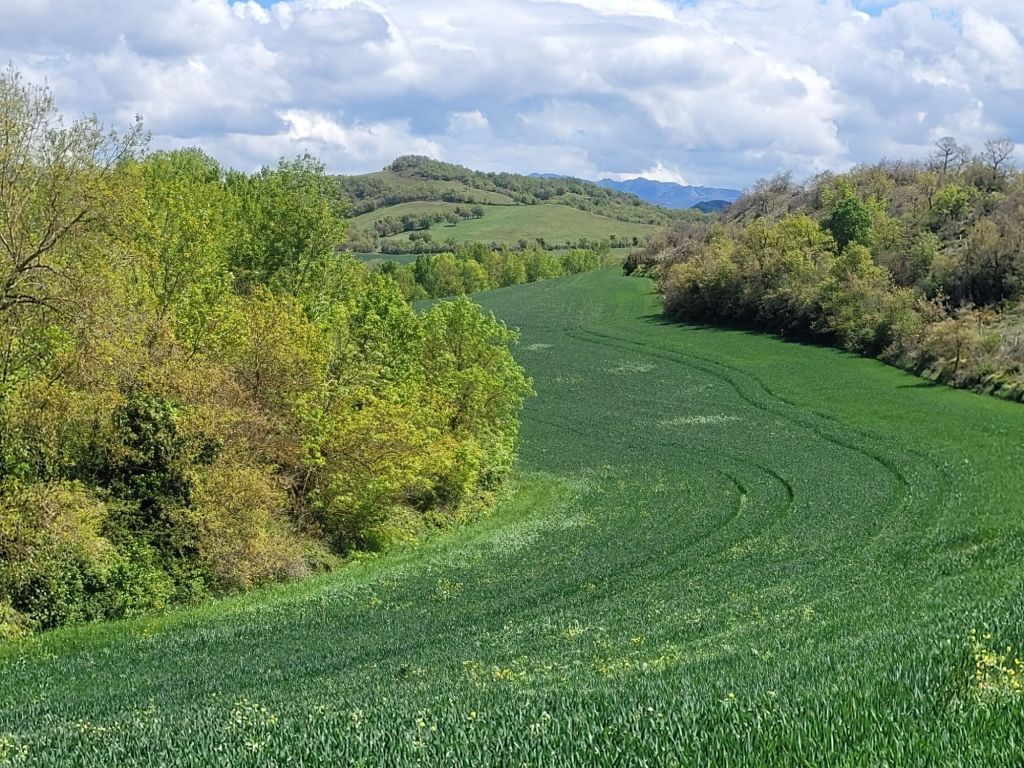
We had a great walk (about 13 kilometres) in a wonderful setting.
Once on our way to Bilbao, we decided to stop off in Gernika. Roger felt that this was an important place to visit, given its historic importance. It’s a prosperous looking, pretty town with a horrific past.
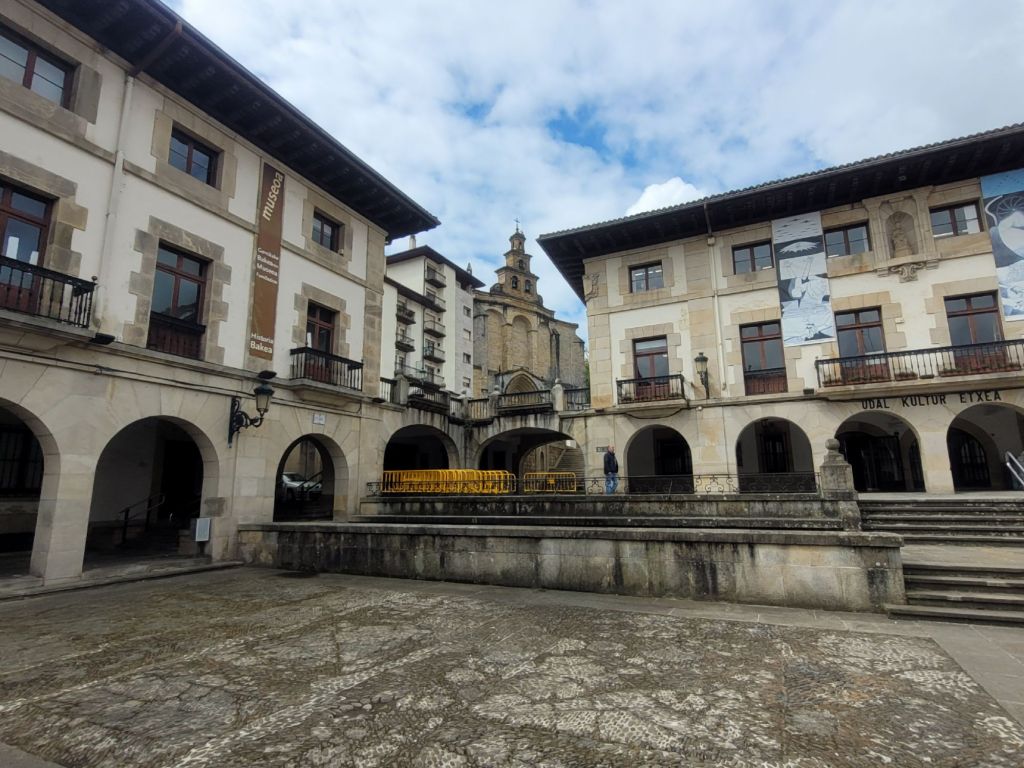
I did know that Franco allowed (requested?) German bombers (the Condor legion) to ‘practice’ on Gernika, testing out their area bombing – not going after a specific target, just bombing civilians – in April 1937. I also knew that Picasso produced his famous Guernica painting in response to this atrocity shortly afterwards, exhibited at the Paris International exhibition that same year.
What I didn’t know (and learned) was that the town of Gernika was symbolic for the Basque people before it was bombed (maybe why Franco chose it?), nor did I know that Franco continued to lie, blaming the ‘Rojos’ for setting fire to the city, right up to his death. Even in the 1970s, people were punished for speaking about the bombings, and they faced imprisonment (at the very least) if they suggested it was the Germans at Franco’s instigation.
The Picasso painting and the horrific event are inextricably linked. Many assume that the world only knew about the bombing because of the painting, but there was wide reporting throughout Europe and America immediately afterwards. I suppose Picasso’s painting has, however, kept the event current.
The small museum in Gernika is thorough, detailed and moving. The temporary exhibition about the concentration camps in France moved me to tears – I hadn’t realised how badly the Basque and Spanish refugees were treated nor had I realised how many French jews were transported from these camps to the death camps in Germany.
The whole museum should be a compulsory visit when in this area.
Then we dropped off the car at Bilbao airport and took the bus into Bilbao.
 Retired? What now?
Leave a comment