Several members of my immediate family love Bilbao and they have encouraged me (sometimes quite vigorously) to visit. To be honest, it hasn’t really appealed probably because I am not a massive modern art fan and it seemed as if the most important thing there was the Guggenheim. It just doesn’t interest me – I usually don’t get it at all.
But on this trip it seemed really silly not to spend two nights there (given that we were flying home from Bilbao airport) – at least to confirm our suspicions that Bilbao was not the place for us.
Well.
Were we wrong or were we wrong?
Definitely wrong – big time!
For starters, transport to and from the airport is cheap and easy – and the city is also well provided with trams , overground trains and even a metro system. That’s a big plus for us, especially when considering how and why we might return to a place.
And yes, the tram lines were just as confusing in Bilbao as they were in Bordeaux. Which way do you look? They rarely follow the flow of traffic.

The city is essentially divided into the ‘Casco Viejo’ – the historial ‘seven streets’ area – and the new, ultra modern development around the Guggenheim, further downriver. There is a very upmarket, later 19th early 20th century section that joins the two (and which is home to lots and lots of very busy pintxo bars and restaurants – just saying).
We stayed within eyesight of the Guggenheim, a spectacular sight – even I recognise that.

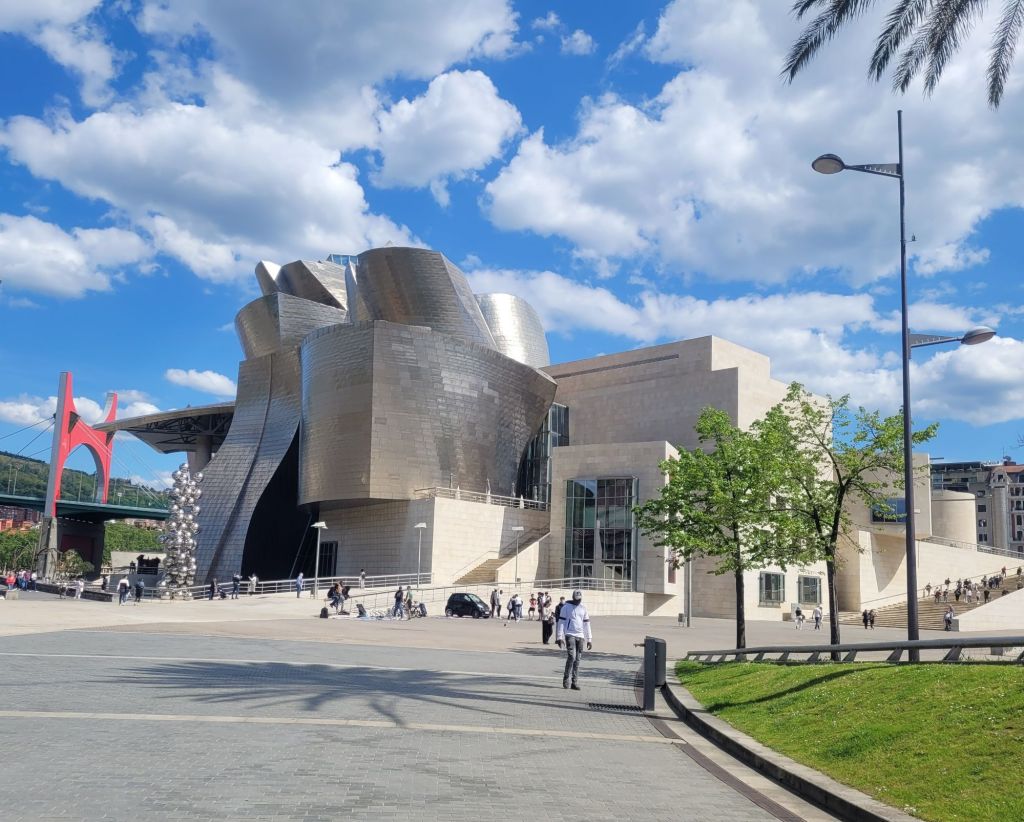
Bilbao has long been associated with the export of iron ore and iron products – iron has been mined in the area since Roman times (if not before) and coal was mined in the 19th century. A vital Atlantic port, (even from the Roman period) with the Basque reputation for seamanship it wasn’t too much of a leap to move into shipbuilding. As a result, the area later occupied by the Guggenheim was a tangle of shipyards, industries associated with ship building, steelworks, transport hubs etc etc.
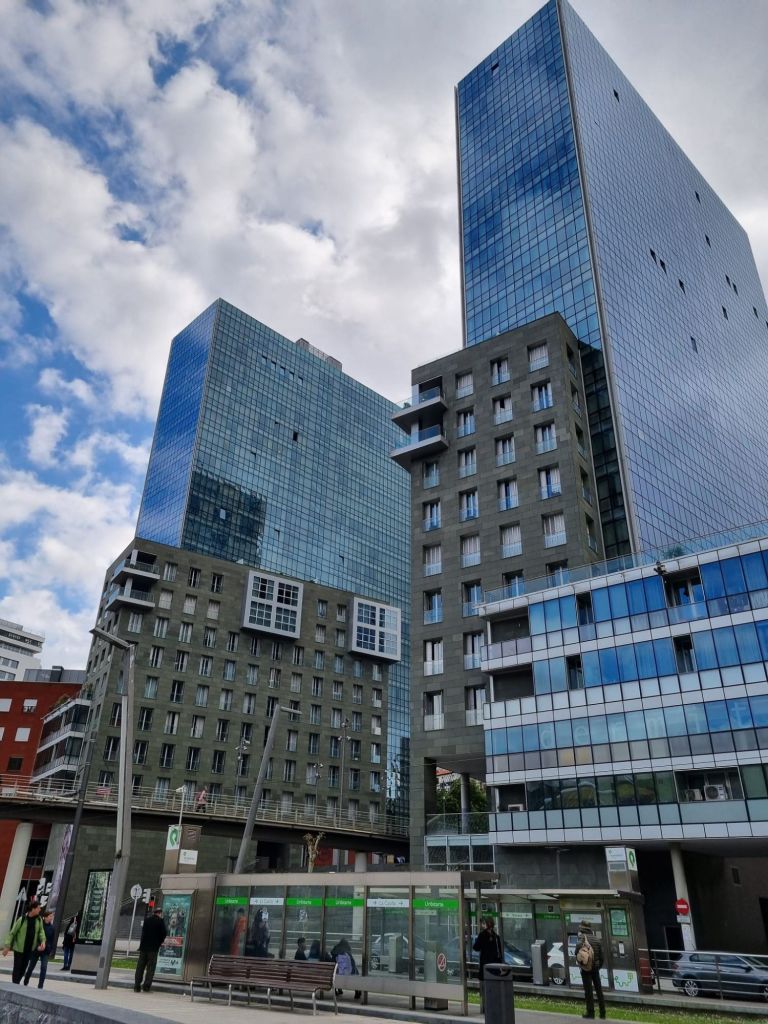
When the shipyards finally closed in the 1970s, Bilbao took a bit of a downturn, but things perked up considerably when the Guggenheim was built. The considerable inwards investment drawn in by the museum led to extensive redevelopment throughout the whole area: many of the high-rise blocks have won awards. Sometimes the very new is cheek by jowl with the ‘less-than-very new’ – with slighly less satisfactory results.
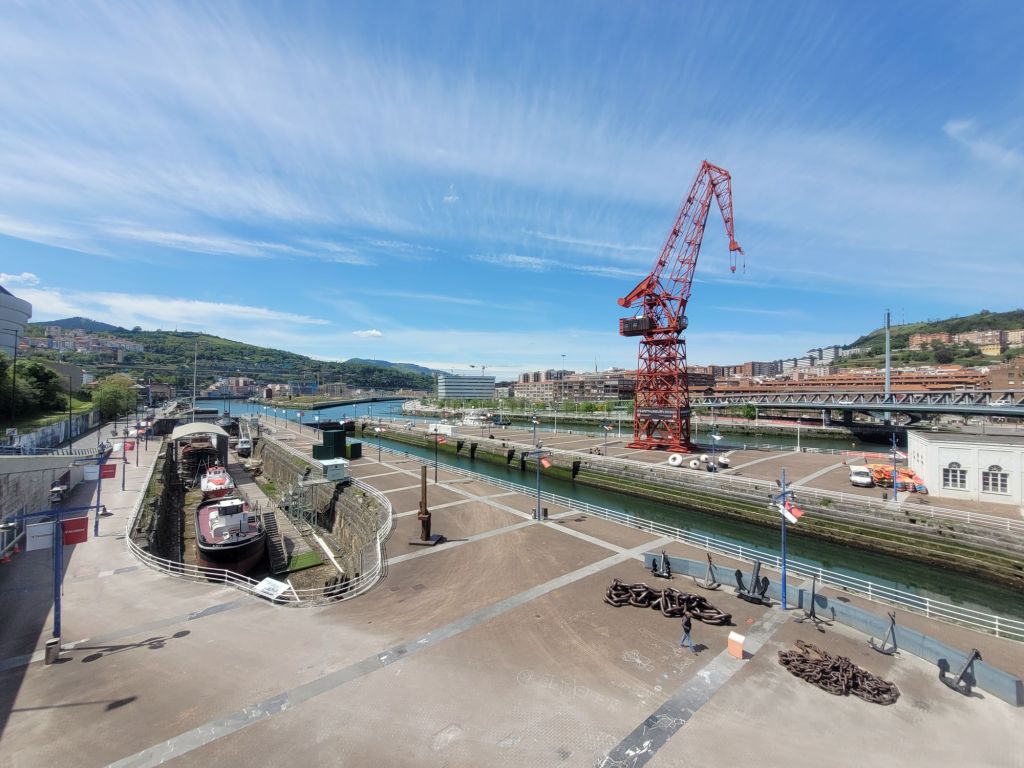
Further downriver from the Guggenheim they have redeveloped the last shipyard into a marine museum, the Itsas. There are some outside exhibits (yes, ships of different types), all with a connection to either Bilbao or the shipyard.
The museum itself (free on a Tuesday afternoon – always a bonus) was interesting: lots of history related to all things seafaring, including the racing they do in what they call ‘trawlers’, which mimic the early, rowed boats the Basque fishermen took out at first for whales and then for sardines and anchovies. In both cases, speed was of the essence. The video footage of a race was awe-inspiring (and a little scary) as the swell was significant (frequently they were rowing air).
There was a lot of information – much of it from the 19th century onwards – not quite enough older history or geography for me though. One exhibit that particlarly took my fancy was this carving on a sandstone tombstone from Durango (about 30 Km inland, south-east from Bilbao).

It dates from the 14th century and features a ship of Nordic design – those pesky Vikings got everywhere!
The museum tries to play up environmental concerns but given their list of very large container shipping sponsors (and ferry companies like Brittany Ferries), it appears a trifle like greenwashing. The display about plastic and rubbish gyres was, nonetheless, shocking (and nicely done). A slight sop to the conscience.
Bilbao was financially powerful from the midde ages but it really hit the big time in the 19th century, and this is when the older part of the city – the ‘siete calles’ (seven streets) – was ‘re-‘developed with lovely galleried, tall buildings. It’s mostly pedestrianised now: I say ‘mostly’ because everyone seems to walk (and there are surprisingly few bicycles or scooters weaving in and out of the pedestrians) but then every so often a car or van appears, just to mix things up a bit. It’s a lovely, lovely set of streets to stroll through,
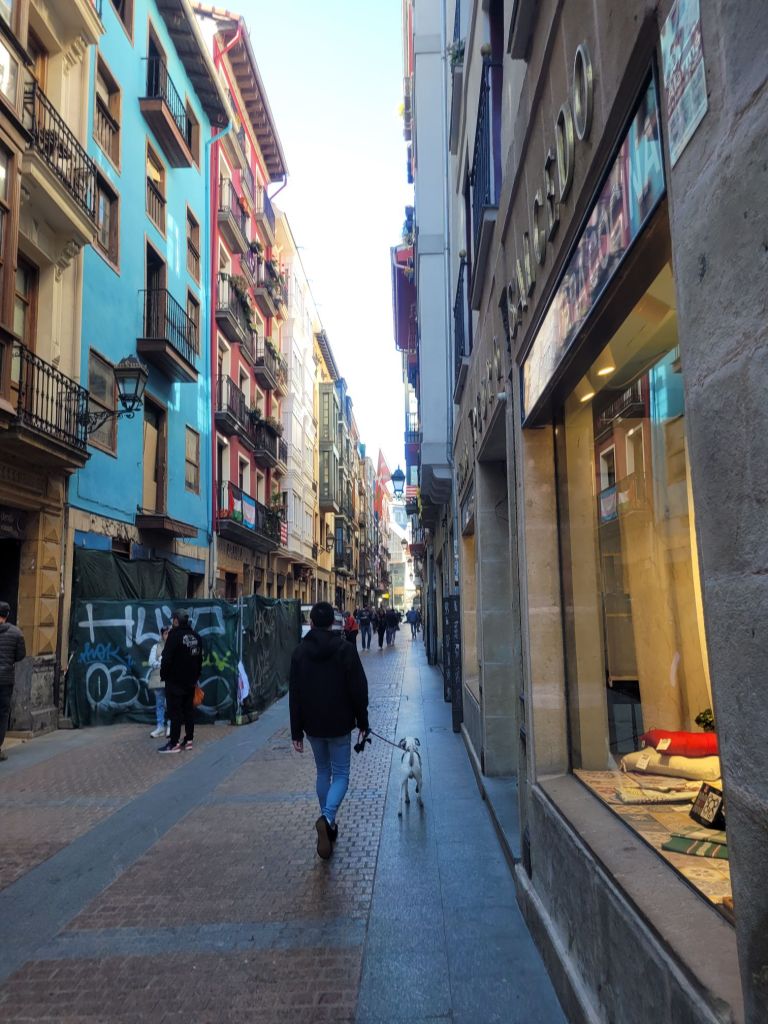
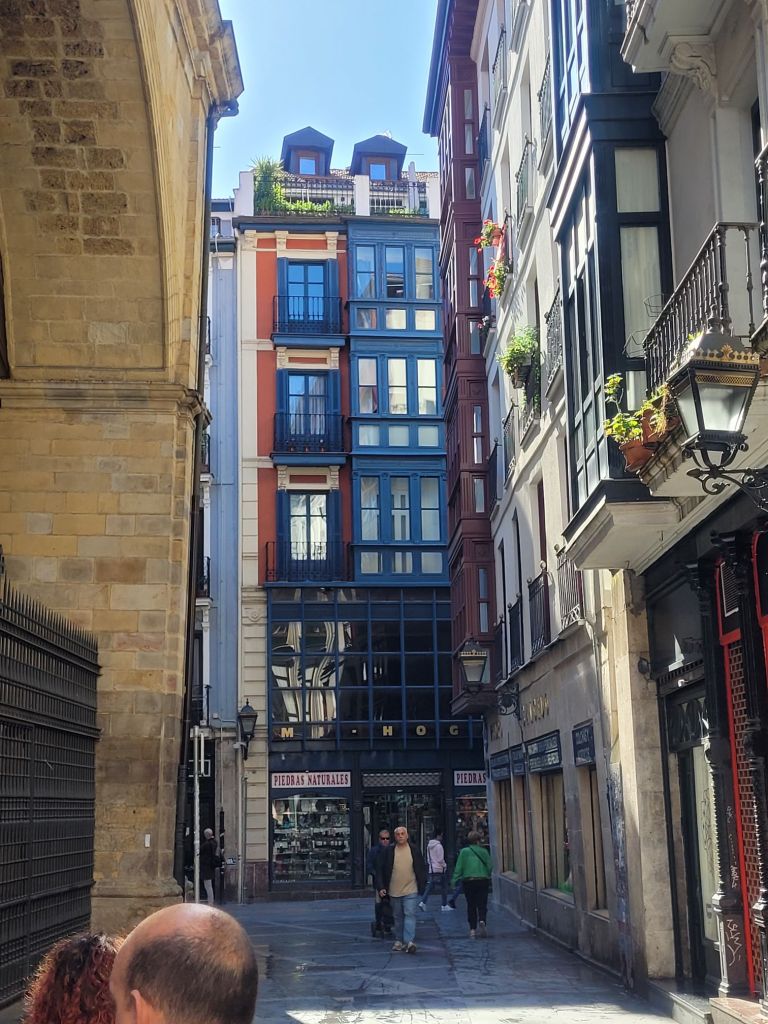
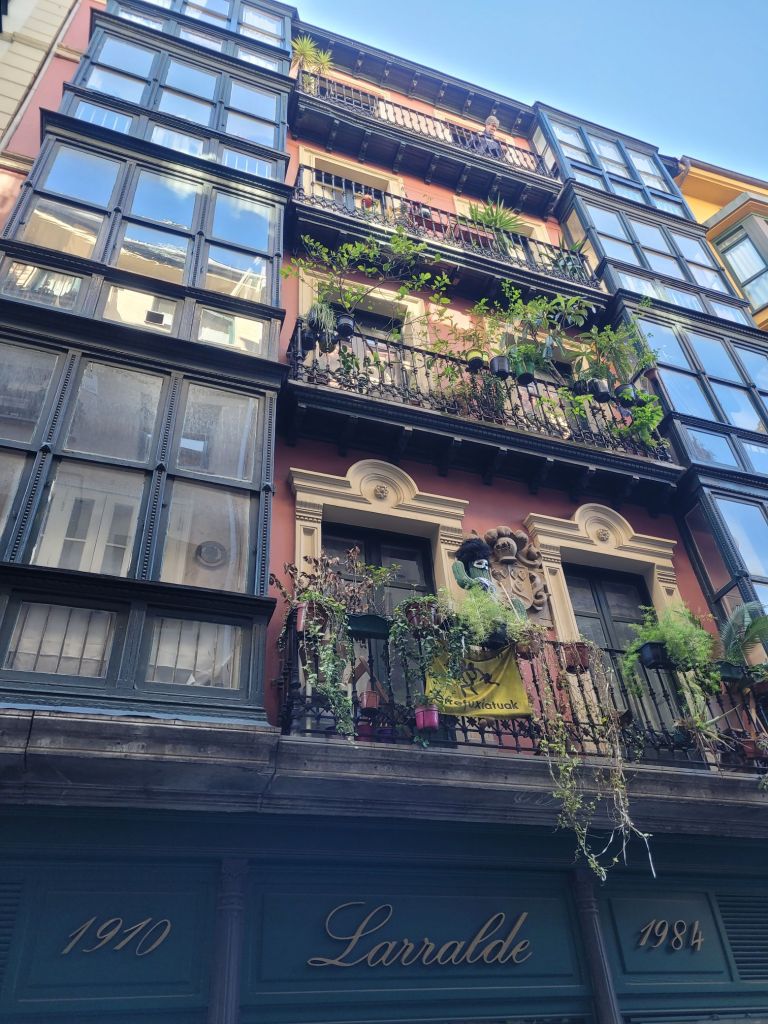
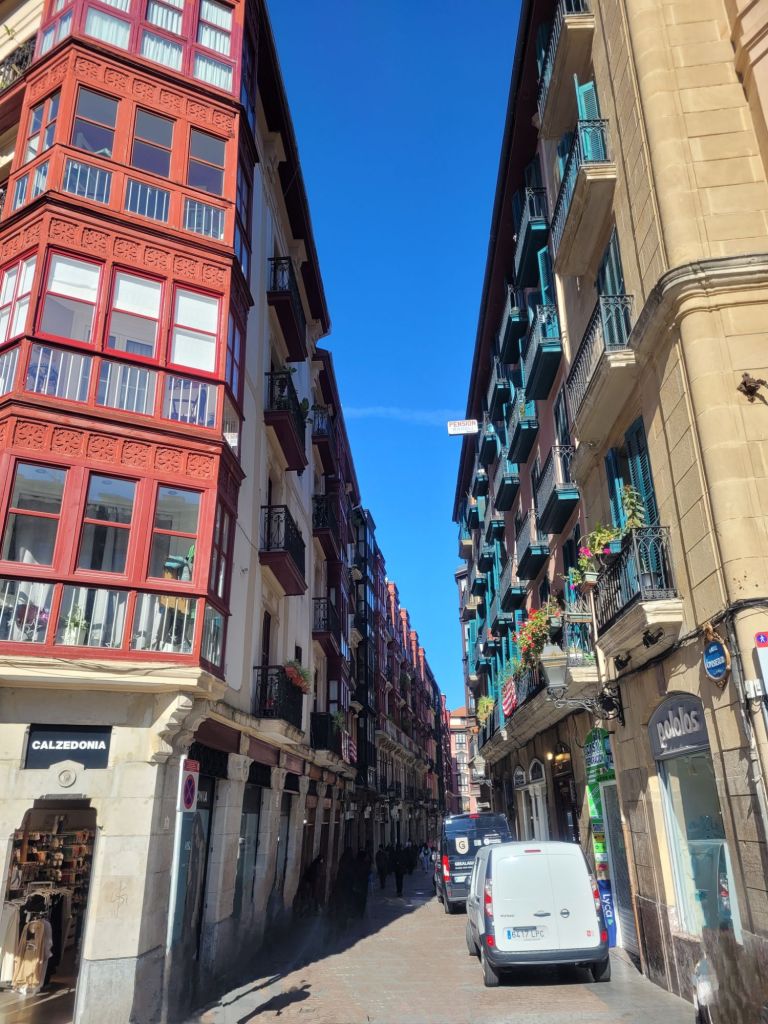
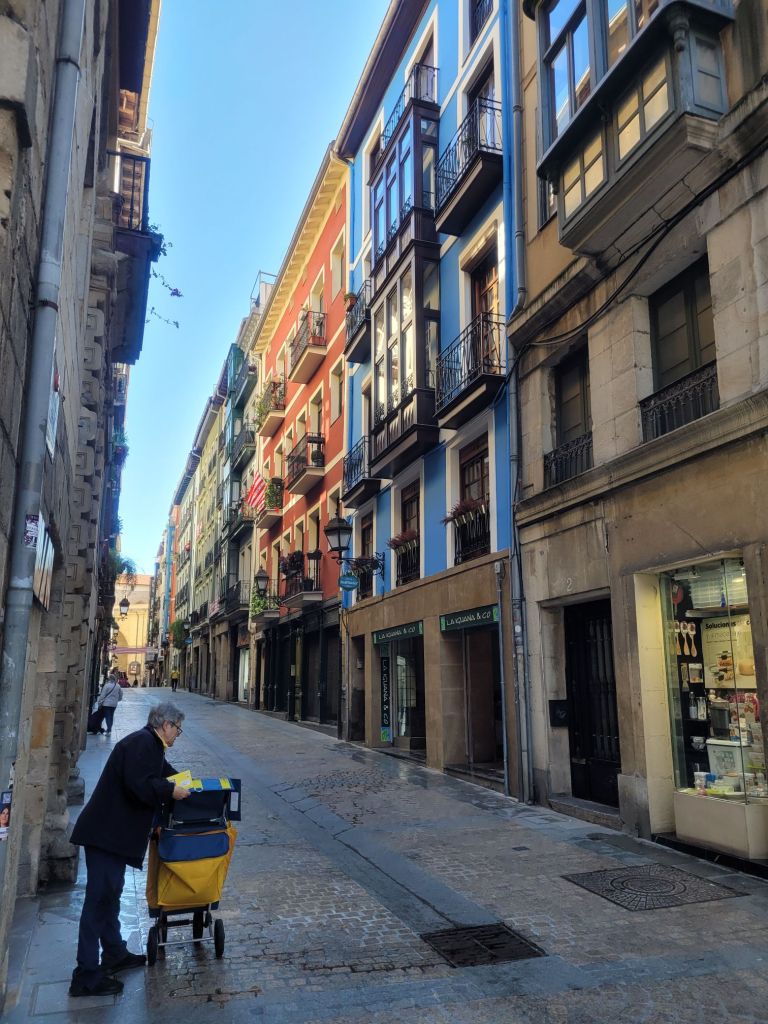
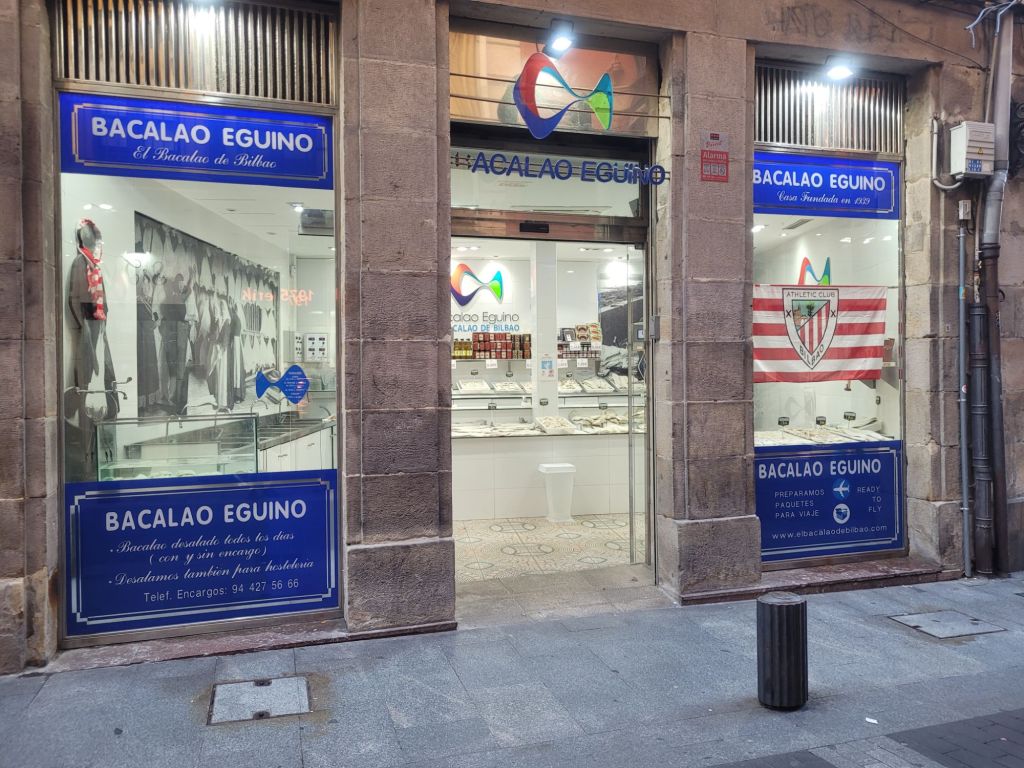
full of shops of all types including greengrocers, fishmongers and bacaloa specialists.
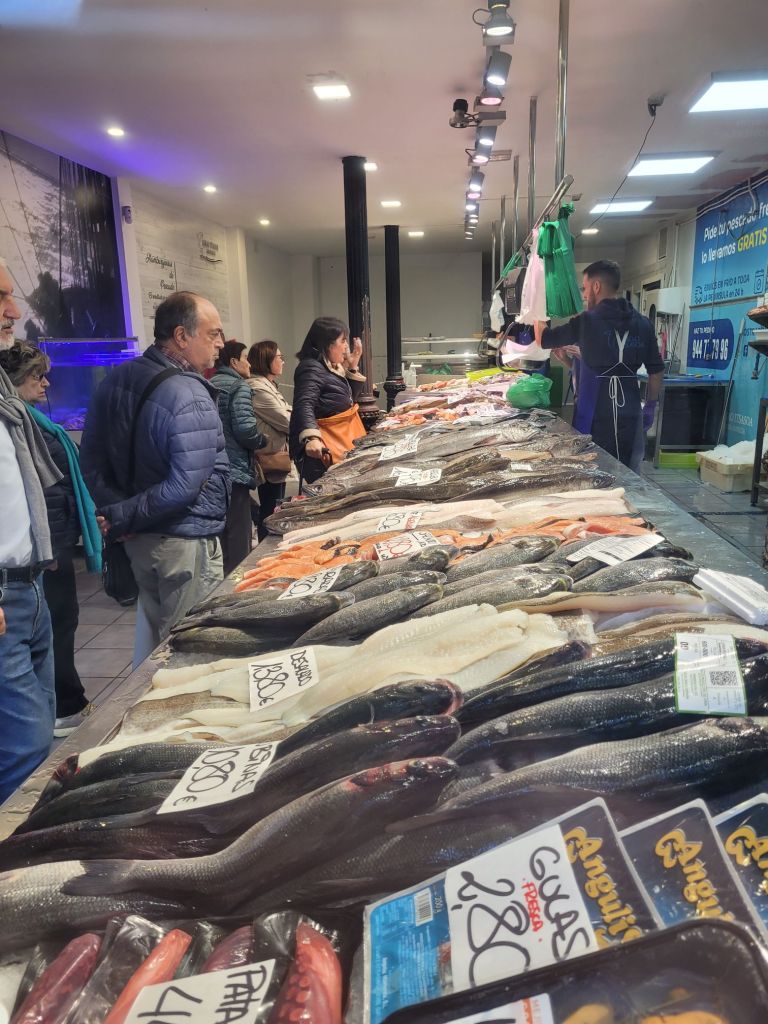
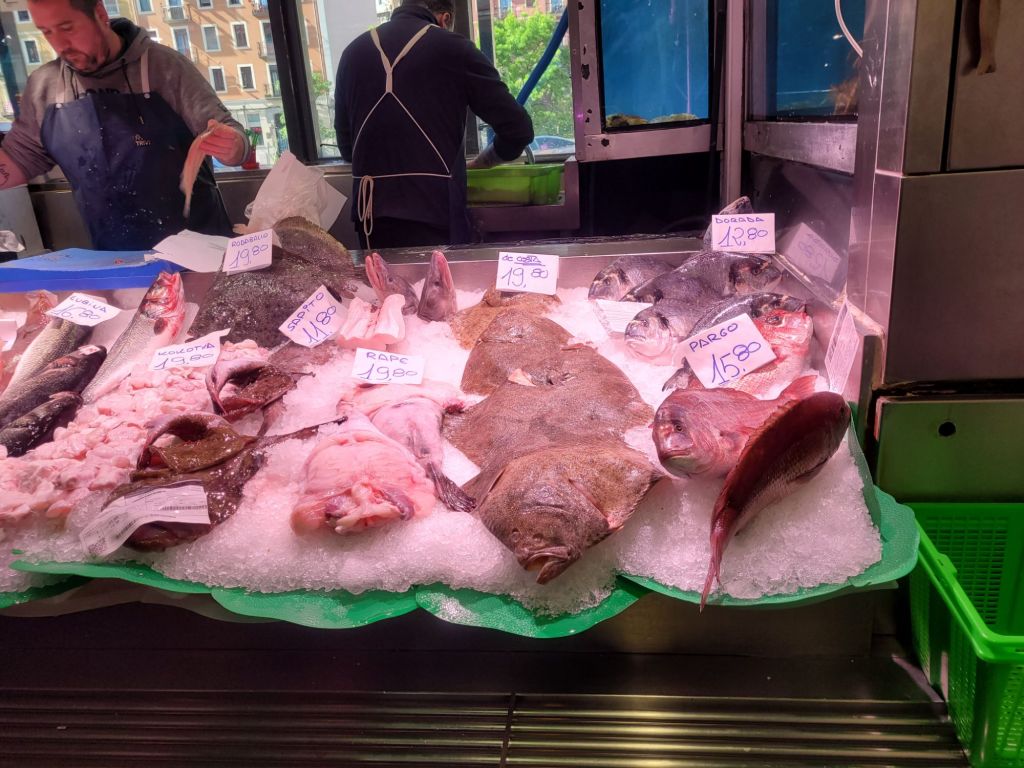
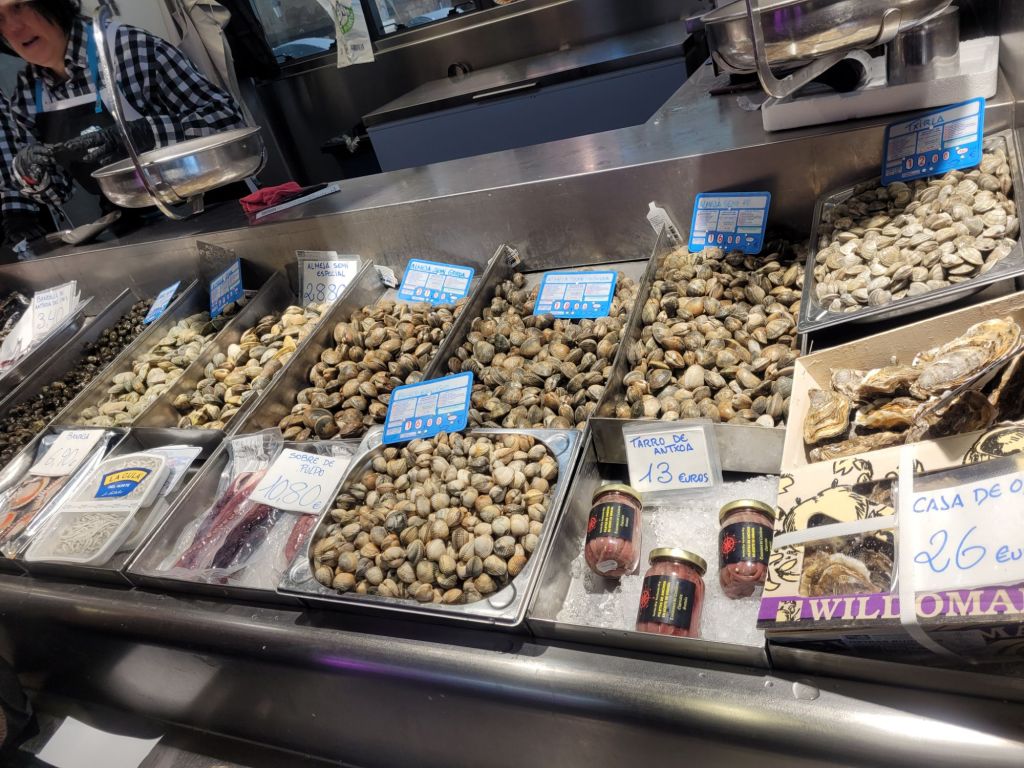
We always enjoy looking round a food market and Bilbao’s was incredible for the sheer variety and size of the fish on the fish stalls. There were also stalls which only sold shell-fish; anchovies were widely available.

Meat vendors were also specialised: stalls that only sold poultry, stalls that only sold beef, stalls that only sold pork and stalls that only sold lamb. And, may I just say, absolutely every piece of the animal was available: ears, feet, tripe, necks, heads, tongues, ‘innards’… along with the standard cuts you see in the average British supermarket. They were incredibly busy so I couldn’t look too closely, but there must have been a few organs or ‘bits’ that weren’t available (but not many).
(I have chosen not to include pictures but I did take some!)
While it was a bit gross, it was clear that every part of the animal was available for consumption: something to consider in our rather squeamish Anglo-Saxon world – although it might make me consider vegetarianism more than considering eating pork trotters or tripe.
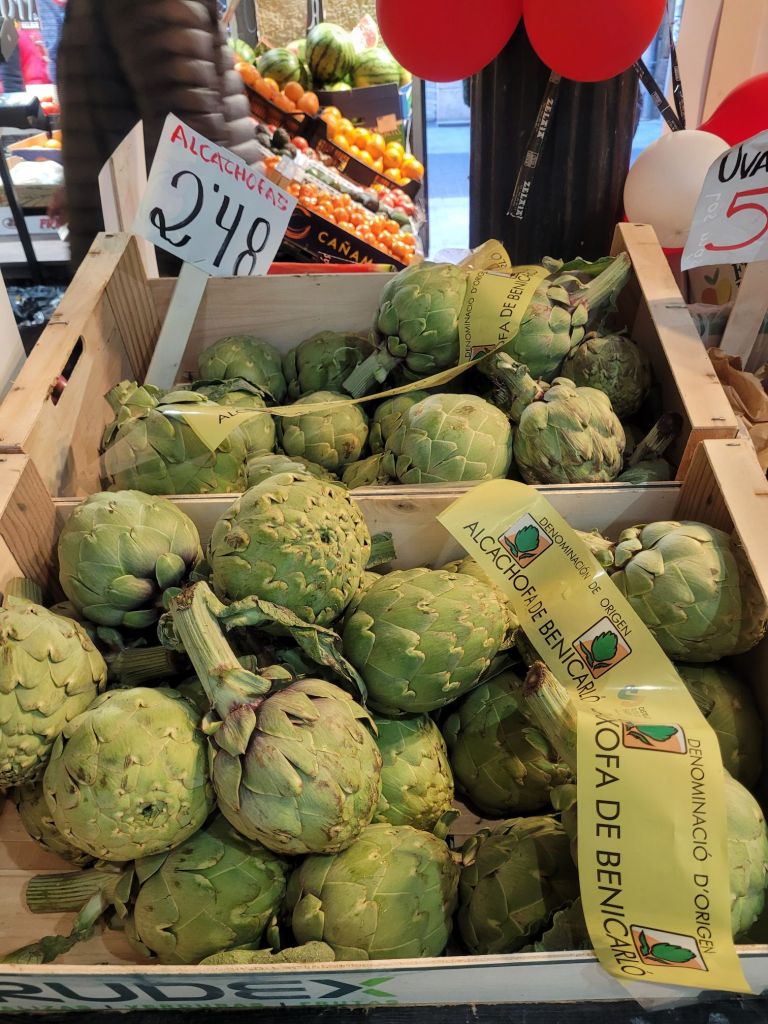
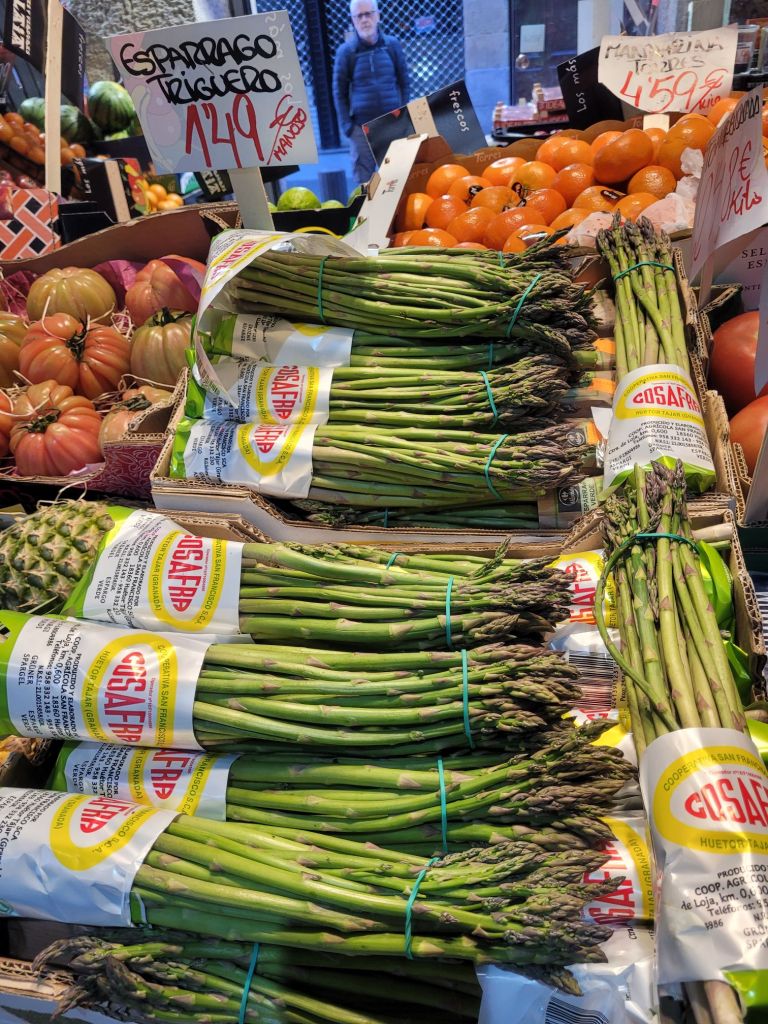
The vegetables were incredible, as were the prices. There are controversial issues in Spanish fruit and vegetable production that keep prices low – employment practices, water and plastic use – but it was nonetheless galling to see that what are considered luxury items (with luxury prices) in Britain were so inexpensive.
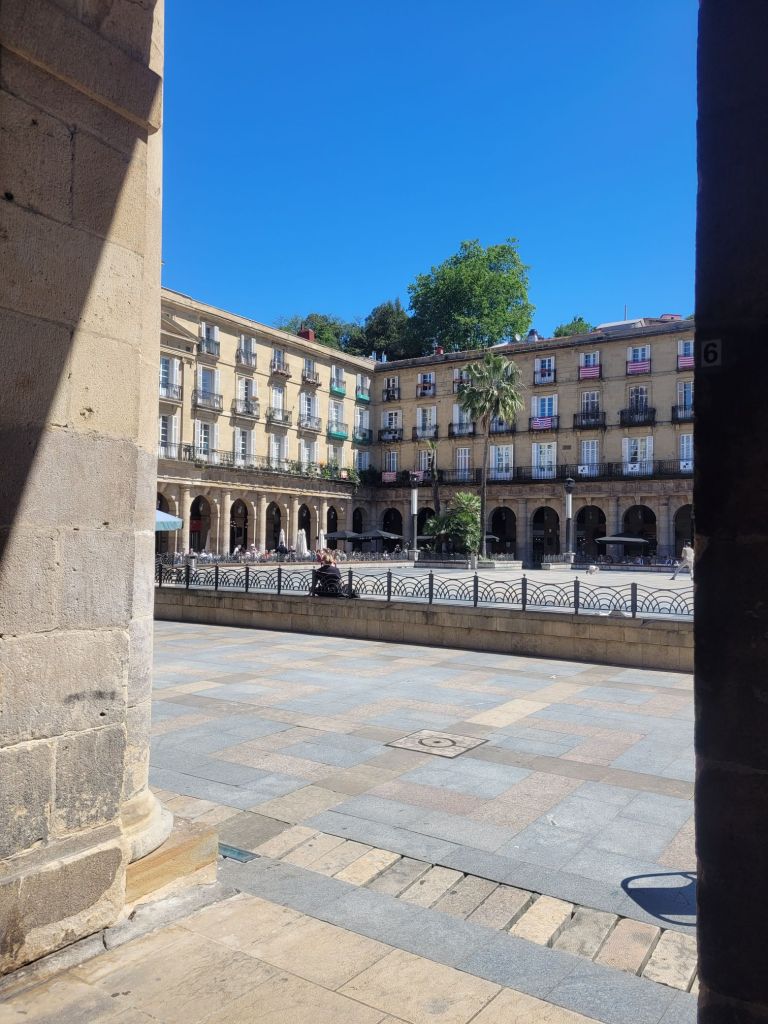
The ‘Paza Nueva’ (‘new’ square – so late 19th century) was an excellent place for a quick coffee and then a few pintxos.
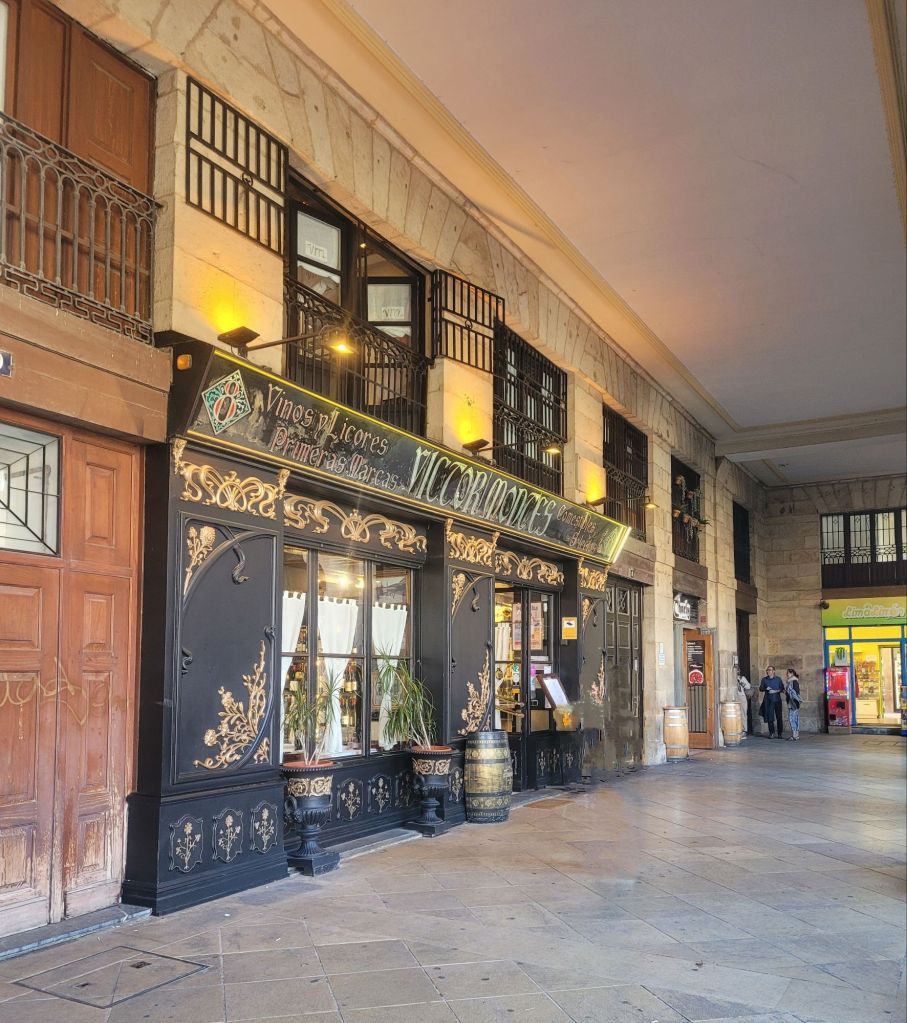
Pintxos are like tapas but you can (just about) eat them with your fingers (no fork or plate required): they come either on a skewer or on bread, sometimes both. We saw some restaurants that didn’t have a bar and pintxos, but not many. And every bar has at least a few bits and pieces on bread available. Seafood (octopus usually) and bacalao feature heavily, as do thick slices of beef or skewers of pork or lamb. Vegetarian options are less varied but cheese options are available.
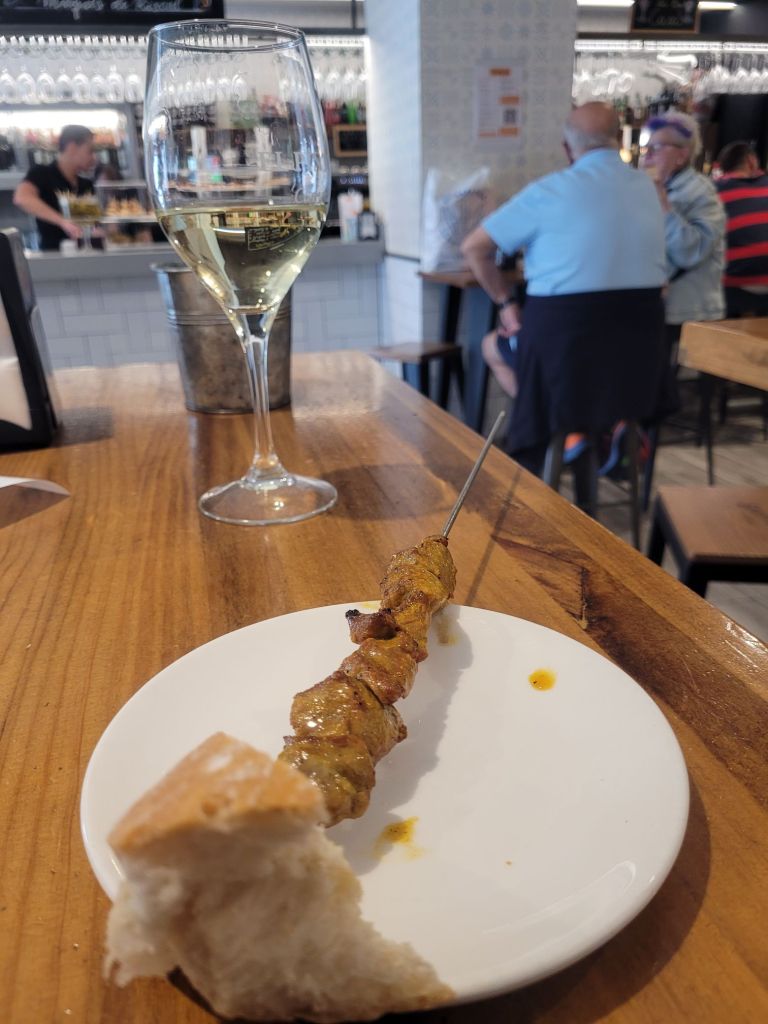
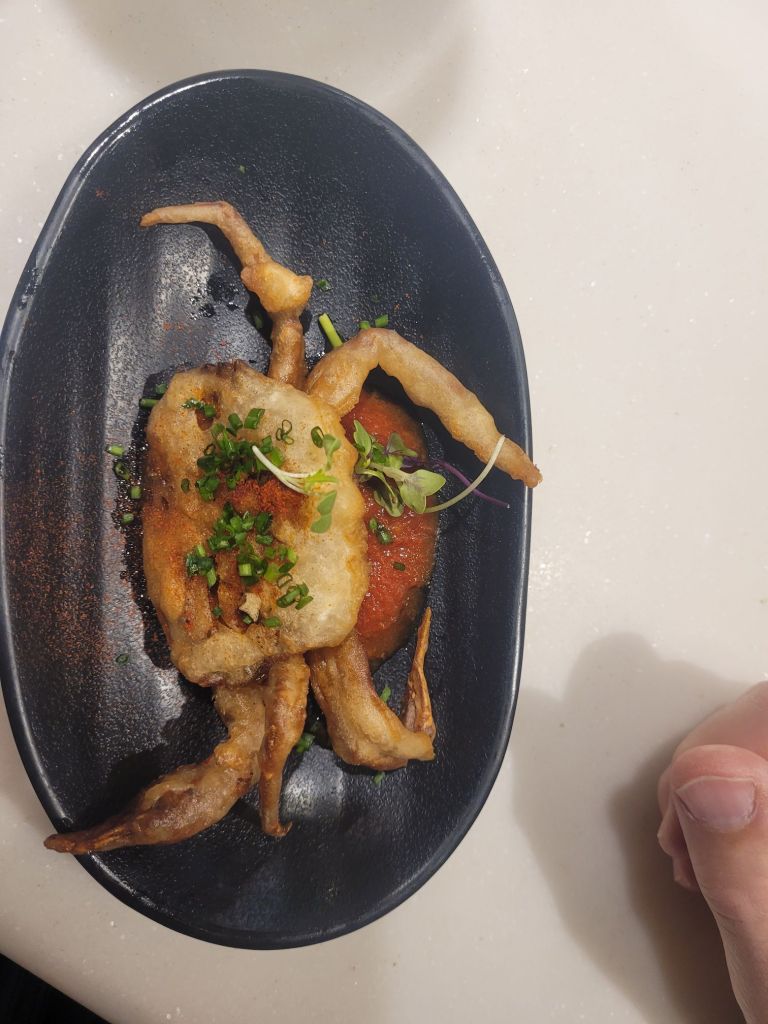
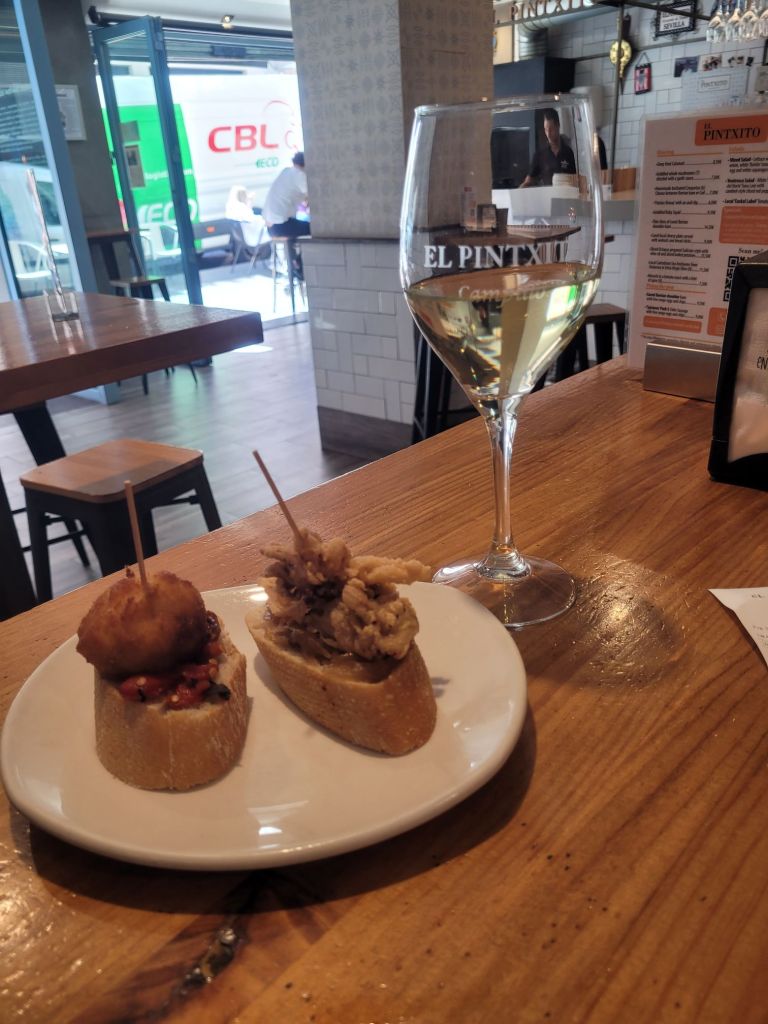

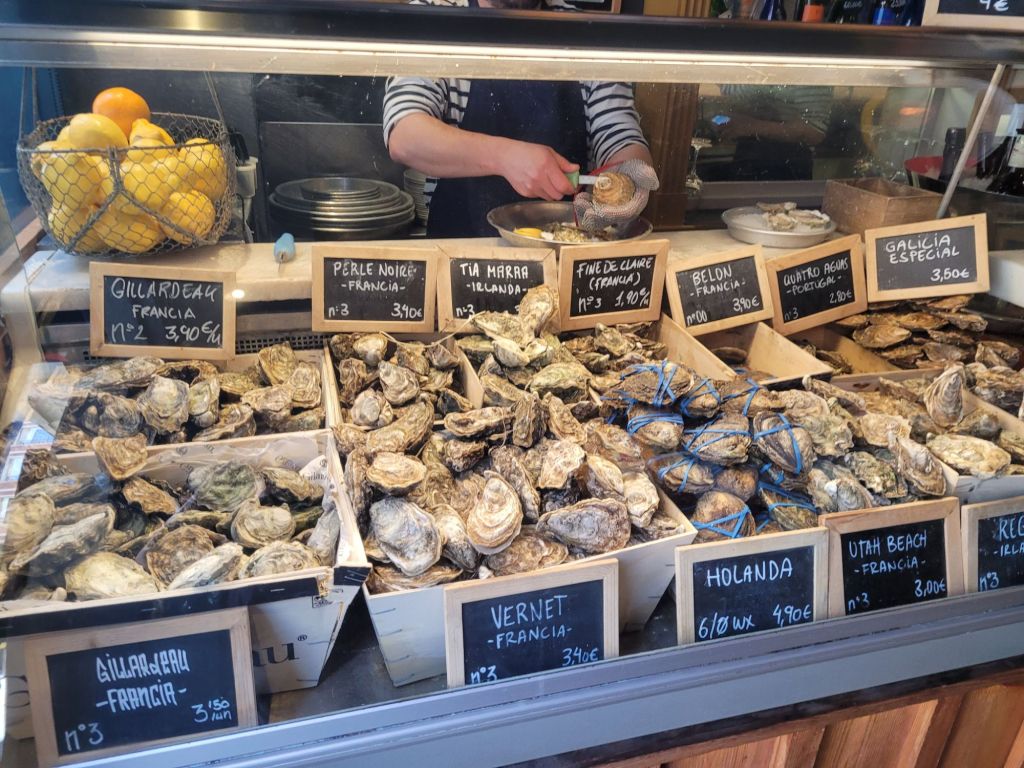
We wandered from bar to bar grazing on pintxos, with a final stop at an oyster bar. The chain mail glove was clearly useful!
As we love snacking, pintxos suited us perfectly. We did have one ‘proper’ meal at a restaurant/bar called Abando, returning there the following evening to have pintxos and a few glasses of wine. The restaurant is quite small, the bar area was packed both times we were there. The food was excellent (albeit pricey) and the selection of pintxos equally good (less pricey) – the wine was even better (and not pricey).
Hotel Miro, conveniently located for the Guggenheim and the airport bus, and a 15 minute walk to the old town, was clean, fairly quiet and the staff were helpful and friendly. As far as big city hotels go, it was fine, but our room wouldn’t have been pleasant to sit in for any length of time (not with it’s superb view of the ventilation shaft…) and the hotel bar was on the ground floor (with a superb view of a major road). Again, the good weather meant we could stay out most of the time.
Bilbao was great fun but I don’t know if we would have felt the same had the weather been poor. As it was, we were extremely fortunate that our one whole day there was sunny and warm so we could enjoy strolling along the river and around the old town. Rain would have curtailed that somewhat.
But the weather in the North of Spain is always unpredictable. It tipped it down the following morning, soaking us on the way to the bus stop despite rain jackets and umbrellas. Even the clothes in my suitcase were damp.
When we visit Bilbao again (sooner rather than later), we will navigate the publice transport system to the coast and also take the funicular up to the top of the hill where you get a panoramic view of the city and surrounding area. We look forward to that.
Next up (in a couple of weeks) Austria!
 Retired? What now?
Leave a comment