Crete has lovely beaches and it has serious mountains. If all you want to do is laze around from meal to meal, in nice surroundings, the deciding factors will be the availability of swimming, the quality of the food and the temperature. Mountains tend to be cooler and quieter, while the beaches are hotter and, especially in the north, busier.
We stayed in two mountain ‘retreats’ and very different they were too.
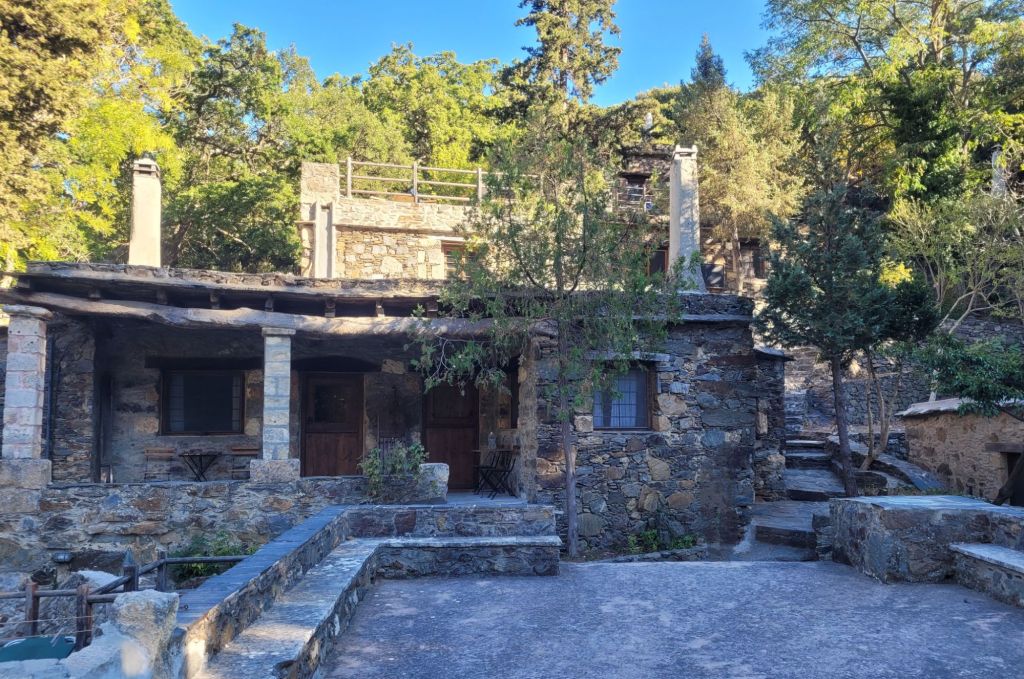
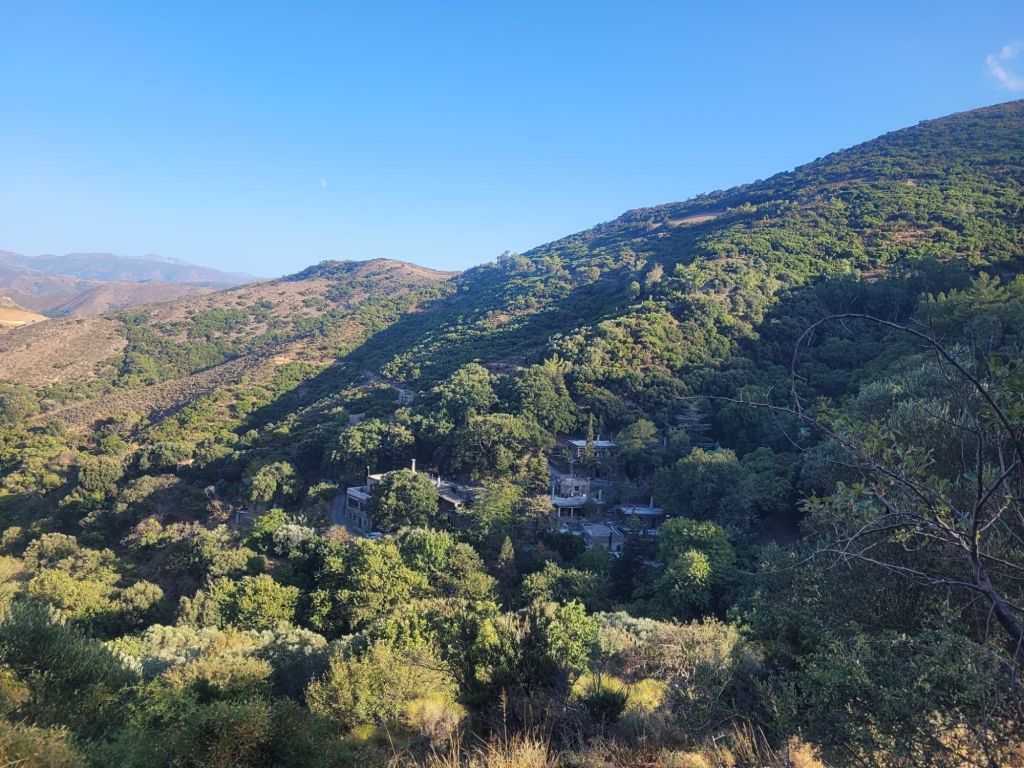
The Milia Mountain Retreat is an eco-lodge in the reconstructed Milia, a medieval village that was finally completely abandoned in the mid- 20th century. It lies in a mountainous region of western Crete, nestled in a narrow valley, and the last thing you need to use for driving instructions is Google maps! The hotel recommends using Google to get to Vlatos and then following their wooden signs. This makes a lot of sense when you see what Google suggests: we did this on the way out – it was wild, some of the suggestions involved turning down what could only be described as donkey tracks (and very rocky ones at that).
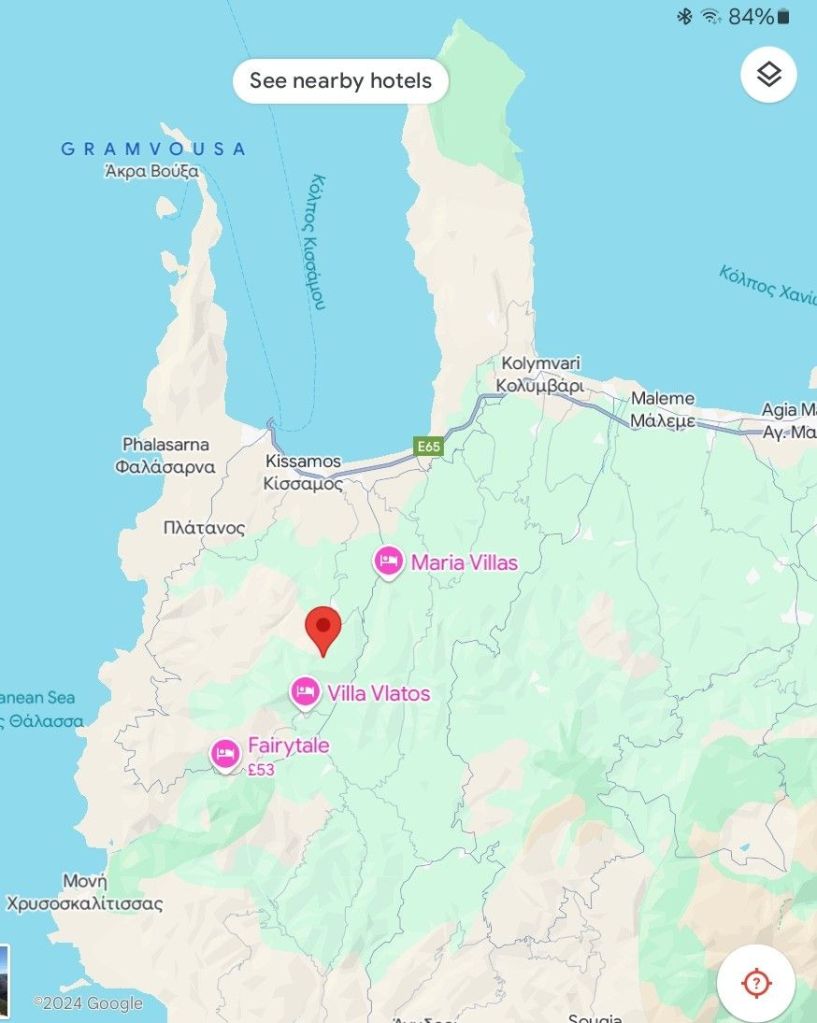
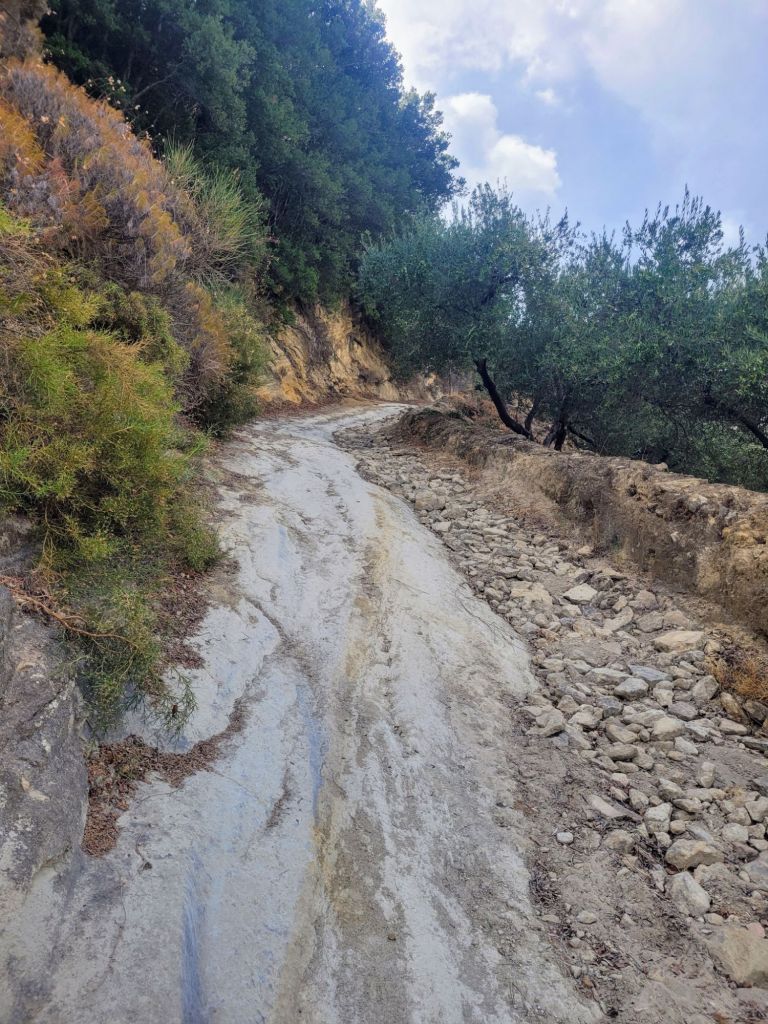
Shortly after leaving Vlatos the road becomes dirt (with some gravel); sometimes fairly wide, other times single track (yes, on the corners). It hugs the mountain, with few barriers between the track and a steep drop.
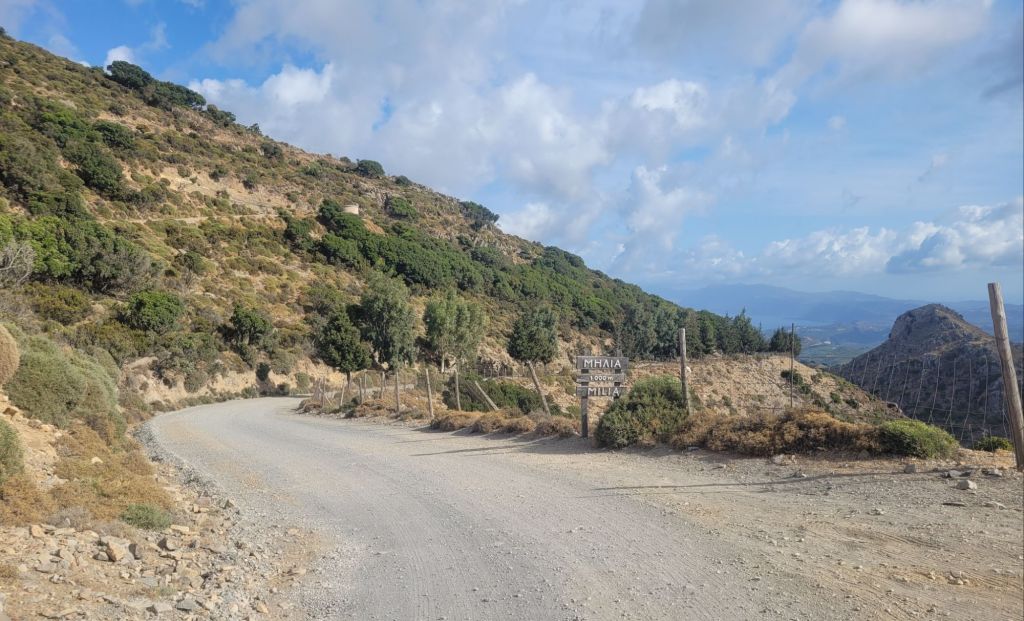
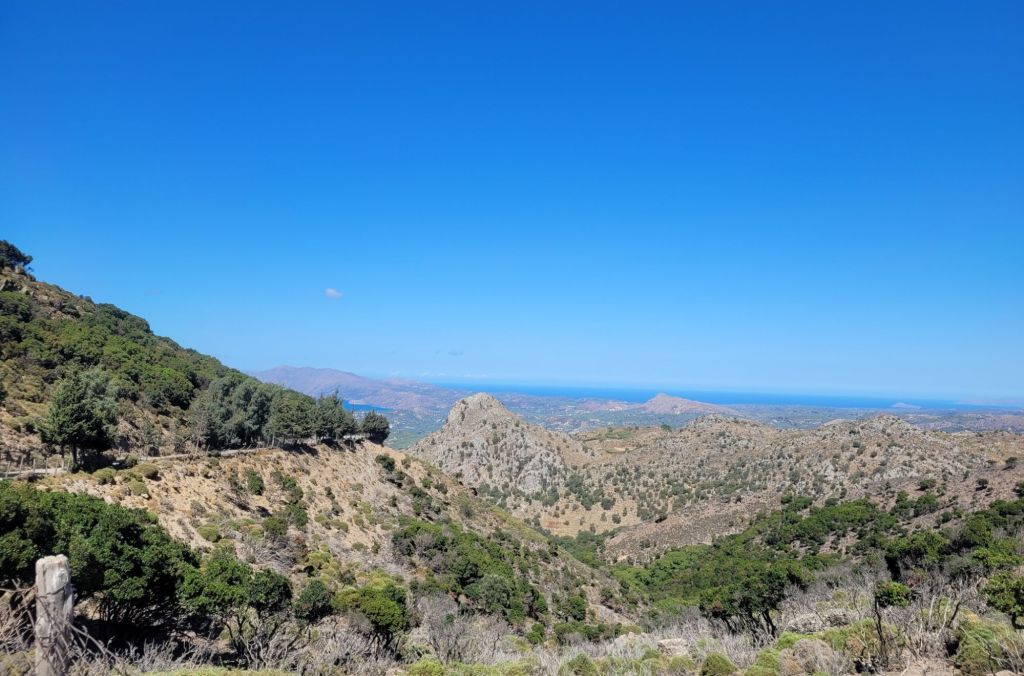
As you drive over the (and around) the moutainside, the views emphasise its remoteness: it’s beautiful but not for the faint-hearted. Fortunately we didn’t meet anyone coming the opposite way.
Car parking is done above the hotel/village and then you walk down through the trees. We left our big bag in the car and only took essentials as it was quite steep and we didnt want to lug the bag back up to the car.
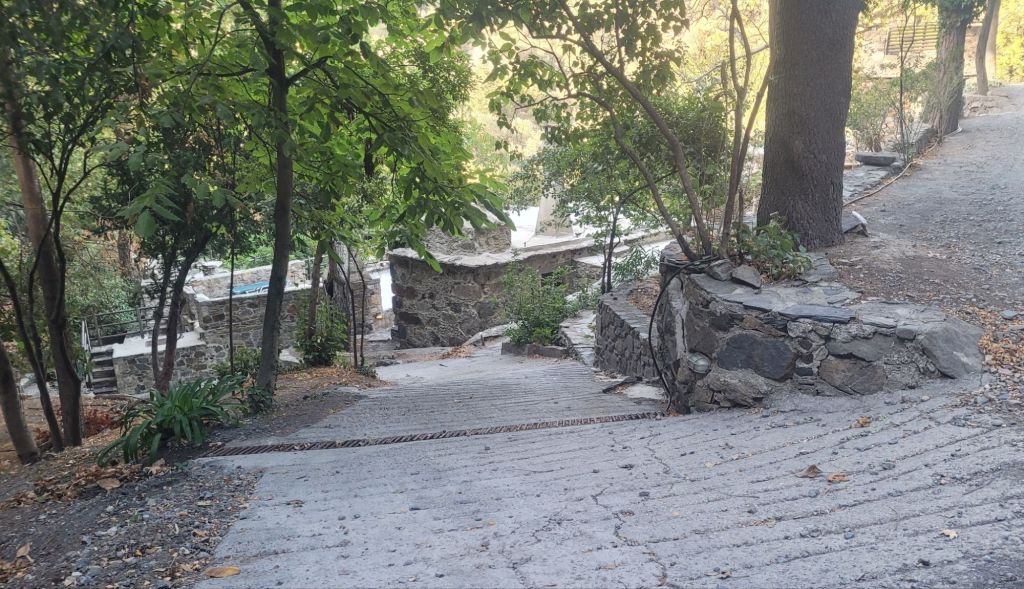
Everything about this place is low-key. The rooms are small – comfortable but small – the decor is simple (lots of use of stone and wood) and the phone signal is weak (but the Wifi is mighty).
It’s quite other-worldly, almost divorced from reality. Surrounded by trees, the greeness and the silence (broken by the occasional bird or sheep or tractor) encourages guests to keep their voices down. The trees (and greeness) are the result of springs which trickle down the valley, providing the fresh water for the hotel (yes, it’s drinkable).

There are two things to do here: walk and eat. Both options are nothing short of spectacular.
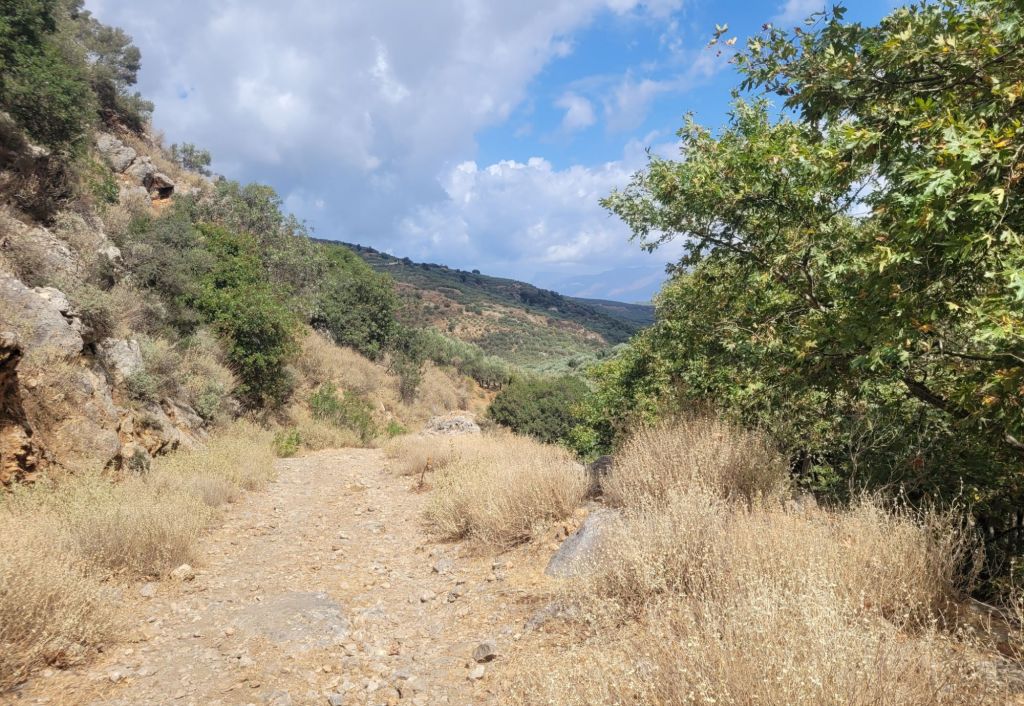
Reception provides maps and directions for a comprehensive set of walks – we took one of their shorter offerings (a mere five miles). It was either up, or down, not necessarily steep but certainly extended! Despite being in the mountains, and overcast, it got extremely warm; thankfully there was a spring water tap half-way along to refill our water bottles.
The views over the mountains to Kissamos Bay were incredible.
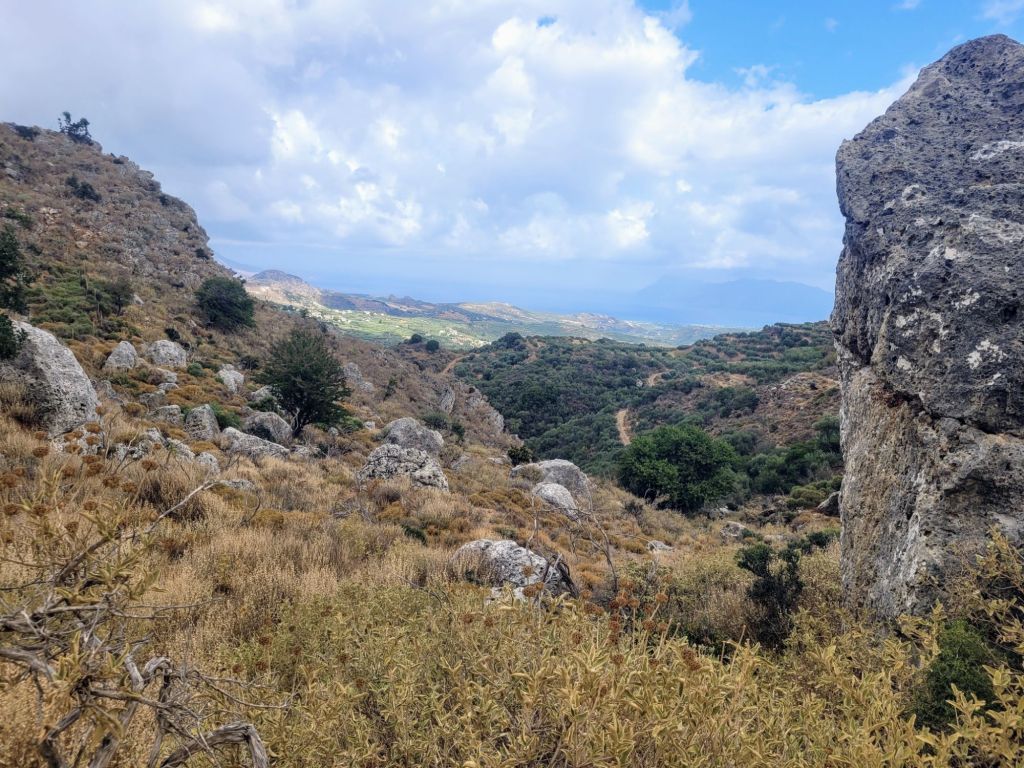
On the home stretch, close to the hotel, a fourteenth century chapel to St George drowsed among the trees, the only sounds the humming of the bees from the numerous beehives and the gentle clonk of the bells around the goat’s necks. It still seems used and we did wonder how people got there for services.


While the hotel is nice, and the location amazing, what stands out is the quality of the food. Every dish was indescribably delicious – some of the best food we have ever eaten on holiday (never mind in Greece). There is a strong emphasis on everything being organic, sustainable, and locally grown. People drive up from the north coast for lunch or dinner (it takes about an hour each way) – and breakfasts are equally good.
On our way down the mountain, while laughing at the ridiculous options Google was giving us, we reflected on those who drive up for a meal, eat heartily, have a few drinks, enjoy the after-lunch raki, and then drive down.
We were delighted to be leaving after breakfast and well before lunch!
Although the Milia Mountain Retreat was tricky to get to, and it felt incredibly remote, it clearly isn’t ‘that’ remote as people make the drive just for a meal out. It may be the inaccessibility: we had no desire to drive in or out more than once in either direction.
In contrast, the Eleonas Mountain Village seems much more remote as the route runs south through the White Mountain range. Huge granite chunks of mountains – dry, barren and definitly rocky – are relieved by small dusty villages that often look quite down at heel. It gets drier and drier the further south you get.
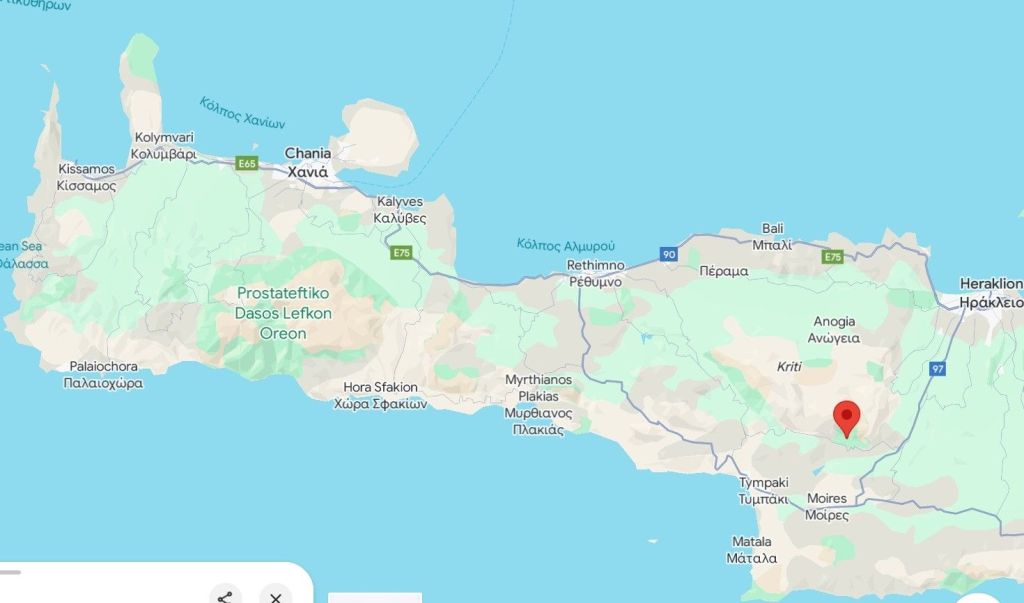
The final mountain range is the Psilitoris Mountains, which gives way to the Messara Plain, bounded by the Psilitoris on the northern side and a series of much smaller foothills towards the south. The Messara Plain is fertile, flat and extensively farmed – almost solidly with olives, in places a few vineyards and in one area some polytunnels (many of which appeared derelict and those that weren’t appeared to be growing something bushy and very green – possibly young tomato plants). The olives are all irrigated. Without exception. So although the Messara Plain has (or had?) two large rivers cutting through it, these do not provide sufficient water for the intensity of current agriculture.
The mountains are skirted by ranks of olive trees, with tangles and coils of black hoses running through them, sometimes along the ground and sometimes strung from tree to tree like minimalist garlands. Every so often the roadside is punctuated with water outlets, sprouting a spaghetti junction of pipes which, in some cases, are carefully labelled.
These mountains gave rise to fresh water springs, which have resulted in the town of Zaros (at the foot of the Gafaris – or Nikolaos – Gorge through the mountains) hosting a water bottling plant, which claims to produce ‘Europe’s best bottled mineral water’ – Zaros’ Springs water. The St Nikolaos convent rests at the foot of the gorge – both are visible from a distance.


The Eleonas lies downhill from the convent. It’s a purpose built ‘village’ of what might be best described as ‘lodges’ for rooms. Some are smaller and some are larger – a few clearly have multiple rooms plus their own pool. There are several entrances and car parks and all entry roads lead uphill to the accommodation and very ‘uphill’ it is. The staff use electric buggies… Just saying.
Two swimming pools (one adults only, for lane swimming – unheated), a children’s indoor play area, an exercise area and a taverna complete the facilities – there is even a small chapel behind the hotel. Our room was way up a vertiginous incline; the car had to be in first gear with the air conditioning off in order to have enough power to get to it. Both and and down, it was a tricky drive and a decided effort to walk up after meals. Our legs definitely felt it at the end of the day.
For some reason we had an upgrade and ended up with lots of space (still only one room) a patio and a hot tub. This last was somewhat wasted on us as neither of us could sit in it for longer than three minutes.
It was comfortable, had a newly refurbished bathroom and a small kitchen nook, while the views were amazing, although you couldn’t see them when relaxing on a lounger.
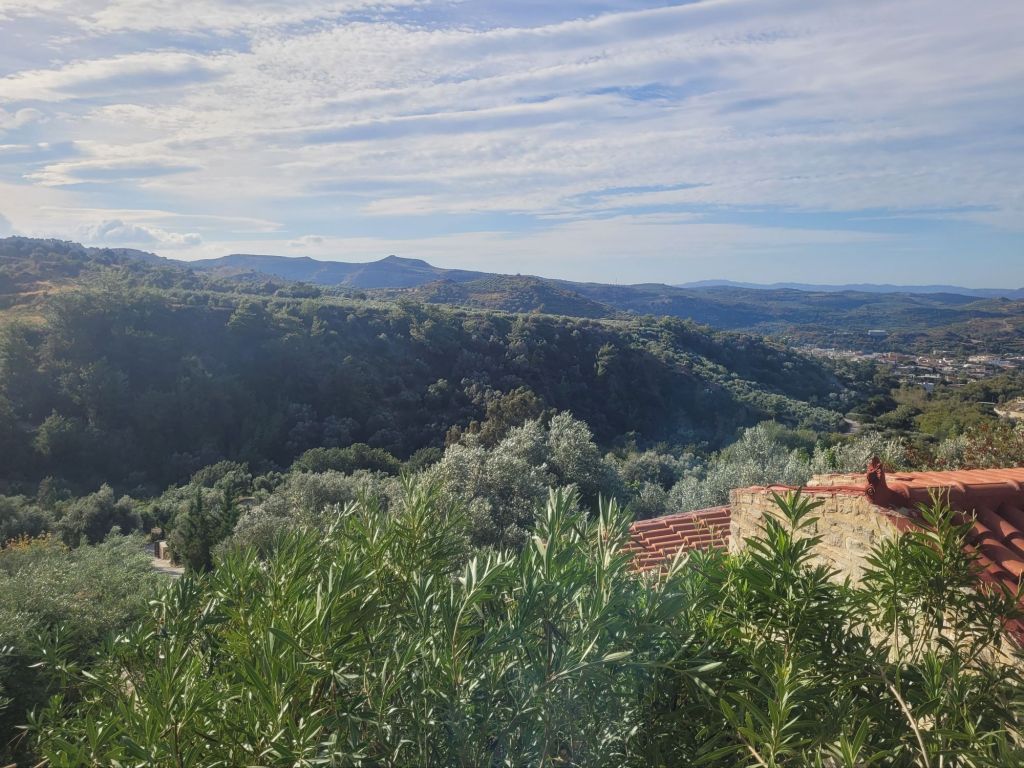
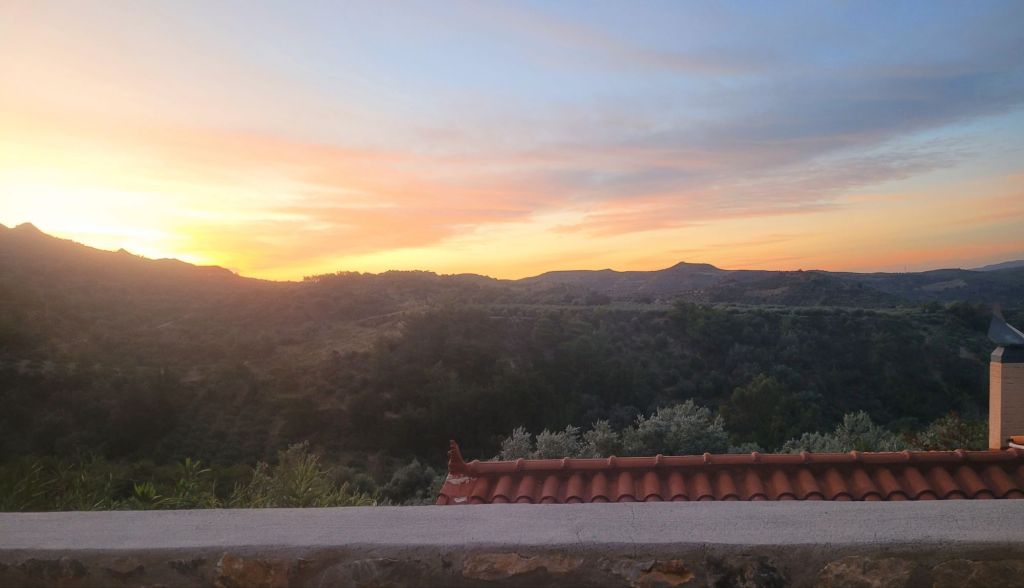
This is an area for keen walkers, with many of the walks a three or four out of five for difficulty, some even mentioned ‘specialist equipment’. Needless to say we didn’t attempt any of these, just did the ‘simple’ short loop to Lake Zaros.
This walk (rated ‘easy’, or ‘two out of five’) involved an incredibly steep uphill climb to the convent. Given my state of hyperventilation, no pictures were taken until I managed to catch my breath.
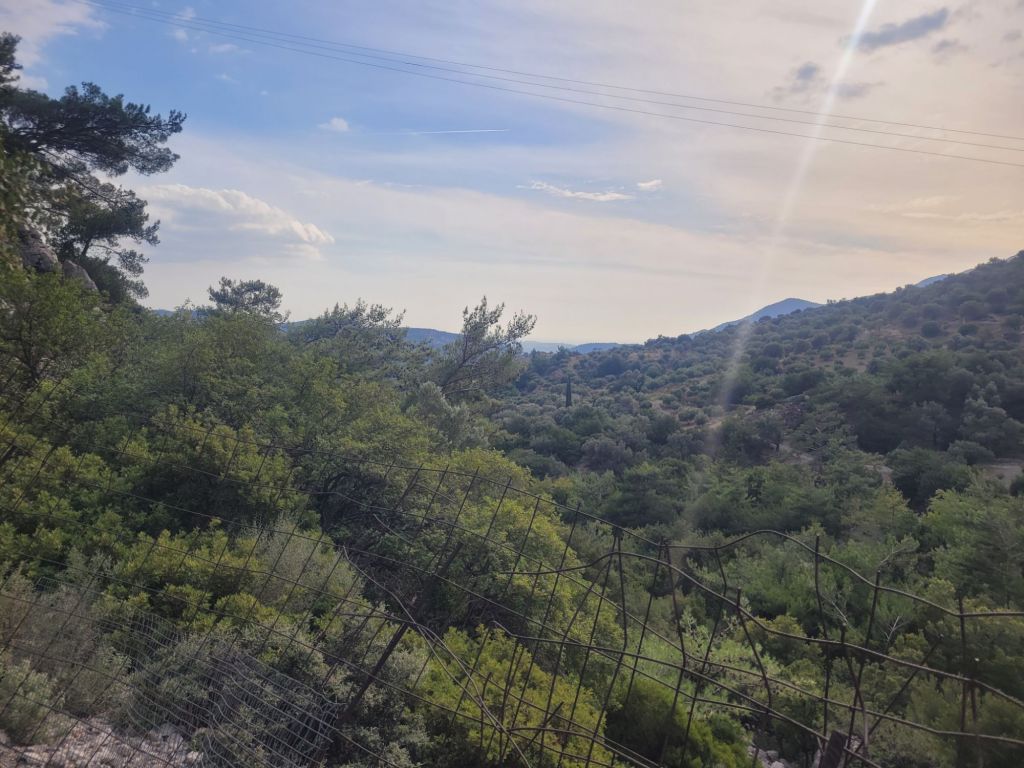
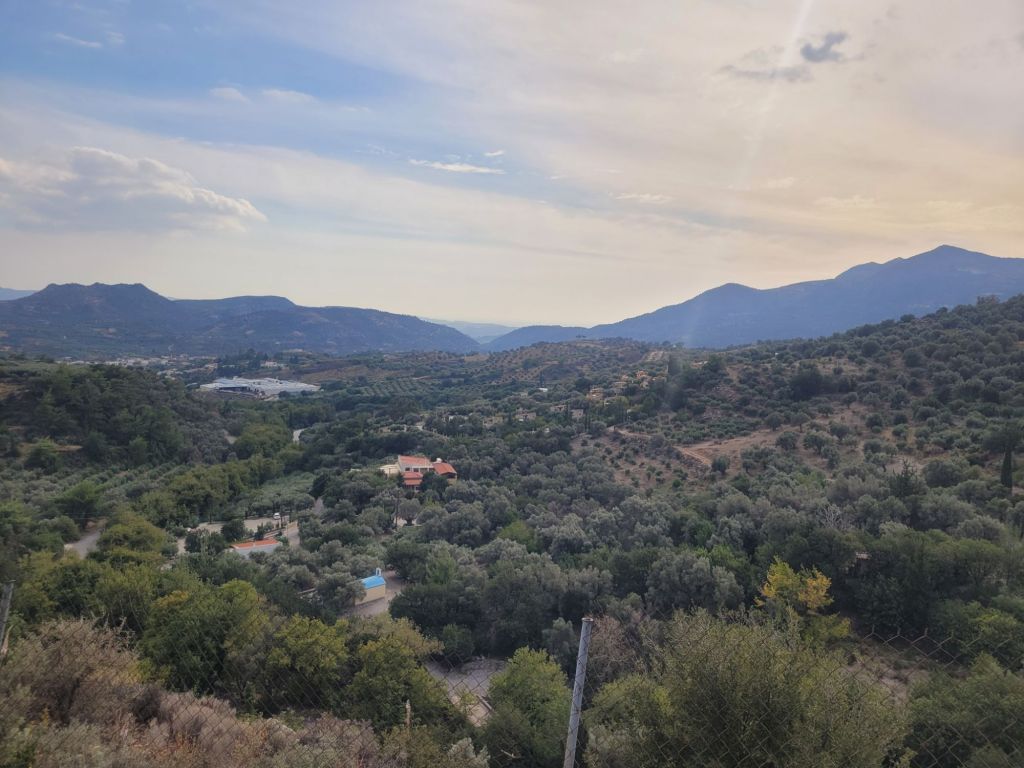
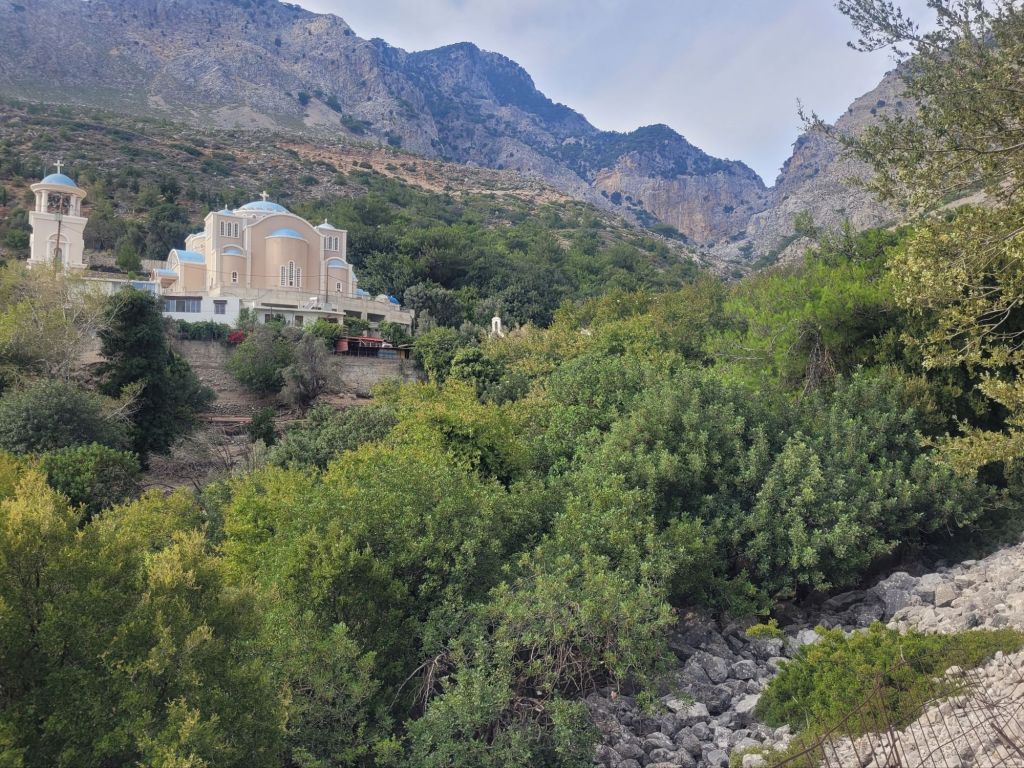
The lake is small, pretty and has several tavernas on one side, which provided us an opportunity for a much needed cold beer. The final half a kilometer back to the hotel was mostly uphill (again) and then we had to face hauling ourselves up the final stretch to our room.
When booking the hotel it would have been useful to know of the other opportunities for eating as we would not have taken the half-board option. Maybe it was because we were on half-board, so our choices were very limited, but the food offering at the hotel was poor. Neither of us could understand the glowing reviews on Google – although the wine was good!
The two places had very different ambiences: the Milia very quiet and peaceful, the Eleonas busier (lots of German tourist and some other English people). The Eleonas was definitely larger and felt a bit more ‘corporate’. Both provide amazing walking opportunities, if you don’t mind significant gradients and the odd misplaced direction. However, once you are up at the Milia, it’s a bit of a faff to get anywhere else, while at the Eleonas, you are in striking distance of several important archeological sites.
However, if it’s food you are after, the Milia wins hands down!
 Retired? What now?