Well, ‘some’ other historical sites – there is a LOT of history in Crete!
The very first site we visited was Falassarna (also spelled with a ‘Ph’, you find both on the same website, in the same document and on different road signs), in the northwest, just beyond the long sandy beach the modern town is known for. It’s also known for the number of polytunnels (melons, I think), which you drive through in order to get to said coast, and olive groves, which you drive through on the unmade road that takes you to the ancient site – which is not particularly well marked.


Despite both the guide book and Google (that always accurate fount of all knowledge) indicating that the site would be (and was) open, it was actually firmly closed. We were mostly alone, with a maximum of four people at any one time, and we had a decent wander around the fenced off area.
After the Minoans and the Mycaeneans, Doric Greeks (ie, people who spoke Doric Greek from mainland Greece) started migrating to (invading, depending on who you read) Crete. Falassarna was founded by one of these Doric Greek groups around 800 BCE, becoming a powerful city state (city states were common across the Greek speaking world) that controlled excellent trading routes across the eastern Mediterranean and provided powerful mercenaries to other nations’ armies. Although Doric Greek in origin, there would appear to be some evidence of Phoenician influence in the harbour design, while the ‘throne’ at the entrance of the ruins is thought by some to be the base for a statue of Astarte, a Phoenician/Carthaginian goddess who protected seafarers.

Something that taxes the imagination when exploring the site is the absence of water: it was, after all, a strongly sea-faring city. Tectonic shifts throughout the Bronze Age and later led to a six-to-eight metre uplift of the whole of western Crete. This may seem counter-intuitive when you think about other coastal areas of Greece and Italy where the opposite happened, with rising sea levels covered habitations for example: the emperor Caligula’s sunken palace just north of Naples or the archeological site of Pavlopetri, off the coast Elafonisos in the Peloponesse. Crete is, however, located immediately adjacent to (if not actually on) a tectonic fault line between two plates and it has been earthquake prone throughout its history. All this explains the distance of the ancient site from water. More prosaically, there was also a canal to the harbour which is now silted up.
It is increibly rocky and even with a higher waterline, it must have been an incredibly treacherous coast.

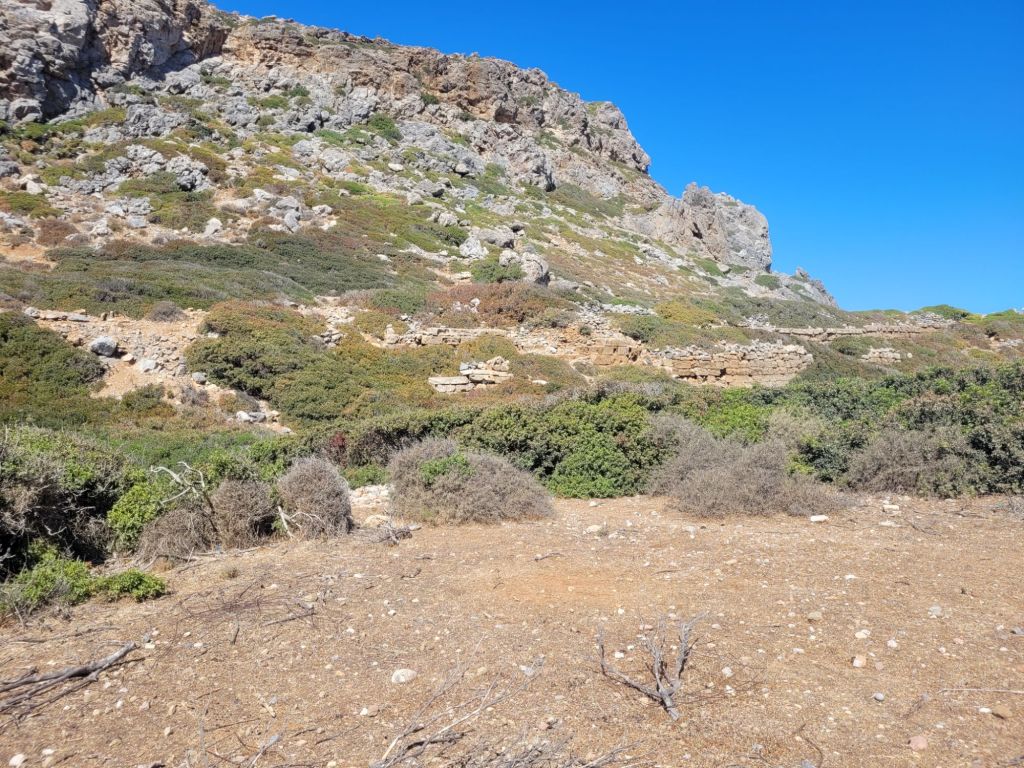
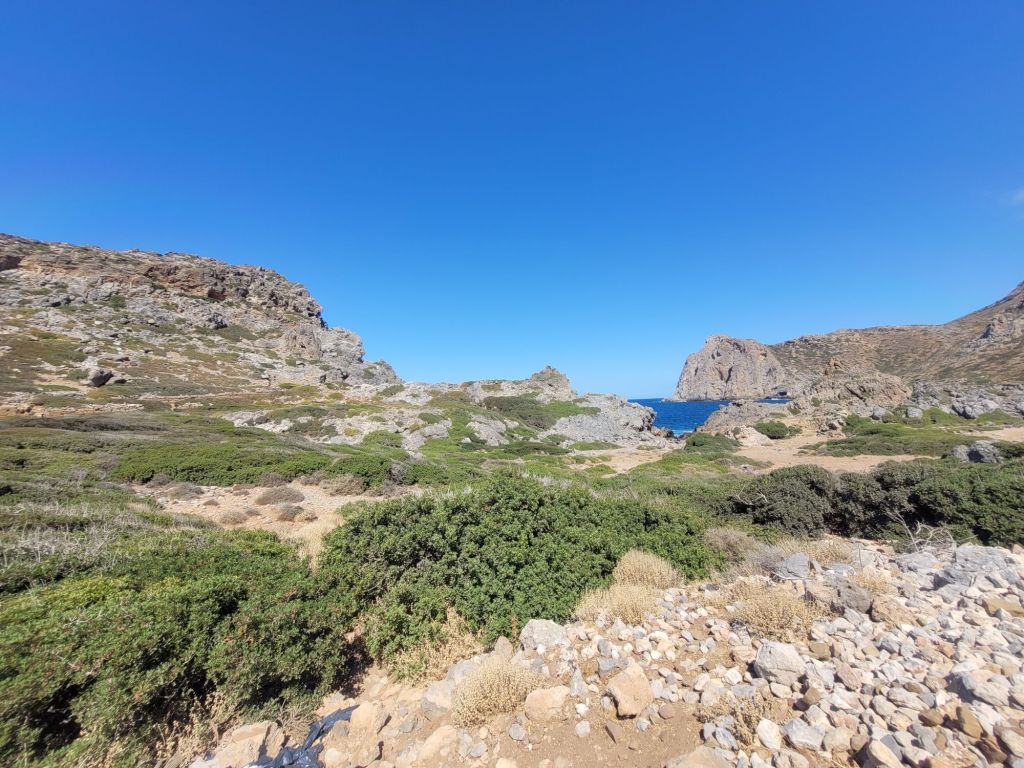
Had we been staying closer, we would have returned when the site was open as there did appear to be some signage: it would have been nice to have some explanation of what we may (or may not) have been seeing.
Another ‘ancient’ site we visited was Roman Gortyna (or Gortys – it’s modern name). I say ‘ancient’ because compared to the Minoans, Roman ruins seem almost modern.
The area around Gortyna has been continuously inhabited since Neolithic times and it replaced Phaestos as the largest and most important city in Mesara during what is called ‘Archaic’ times – when Doric Greeks took over Crete, sharing (sometimes struggling for) power with Knossos. Gortyna controlled two ports on the southern coast of Crete – one at what is now Matala, the other in Lentas. Romans annexed the city in the mid 60s BCE because of these ports and the access they provided to the east-west sea routes across the Mediterranean.
A quick Google search suggests Gortyna is ‘one of the largest and most important sites in Crete’ (and sometimes ‘Greece’), so our expectations were high. And, to be fair, the area covered by Roman (and other) stonework is extensive: we missed the turning (or failed to understand the road layout) and did a bit of wandering through houses and fields – the fields were full of tumbles of dressed stones, odd lumps of pillar, sections of what could have been arches … There was loads of it. A major find on the site dates back to a stone inscription documenting the most detailed description of Greek law before the Hellenistic age, and it became the capital of the Roman province of Crete and Cyrenaica. So it has enormous importance from a historical and archeological point of view. But the actual site itself? Hugely disappointing.
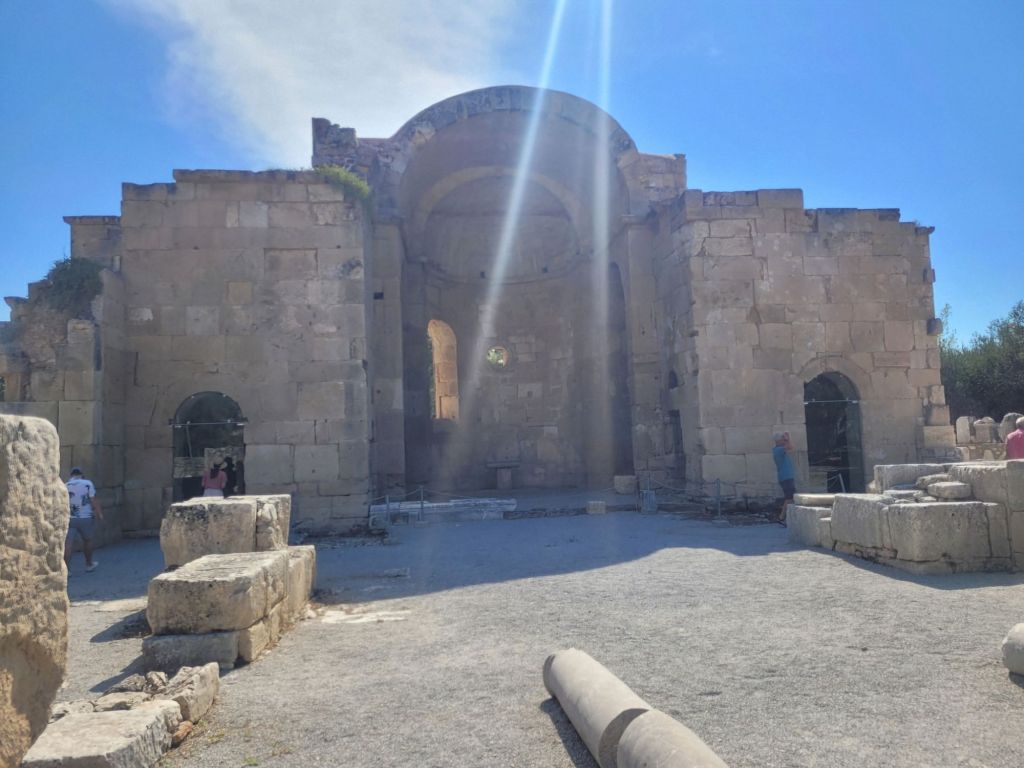
Maybe it’s because we have seen a lot of Roman ruins. Maybe it’s because they don’t have a lot of the site open to the public. There is a bit of road, a bit of theatre and an early Christian church – the Basilica of St Titus. The basilica DOES have a sign – absolutely nothing else does!
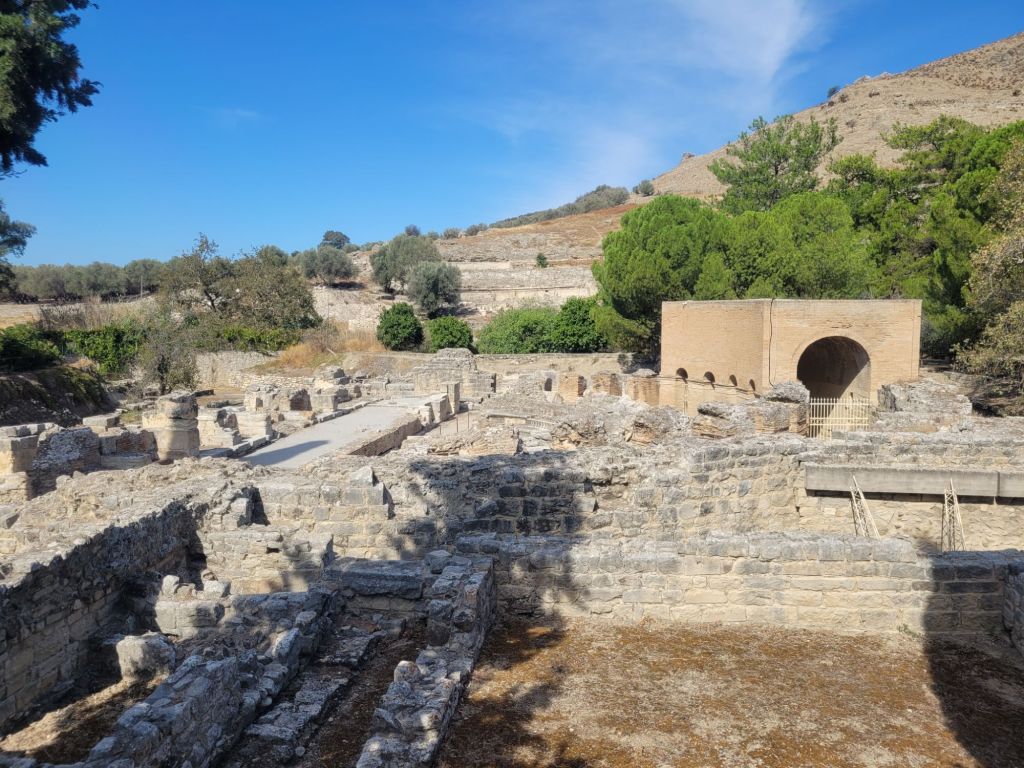
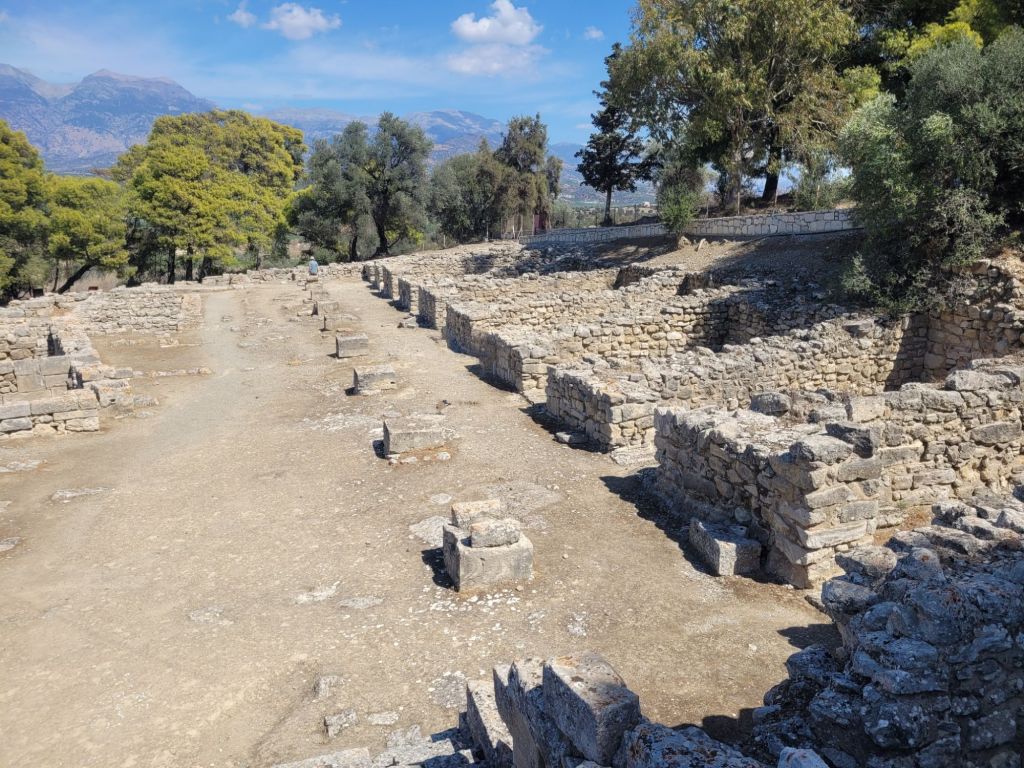

Across the road from the main visitor site is an ancient olive tree that had grown through and around the stonework – a sign of just how long the structure had been there, gently decaying. As we drove away, through the surrounding olive groves, I noticed a gap in the bank beside the road. Above it, neat ranks of well established olive trees. Below the trees, exposed by the crumbling crust on the slope, a mass of stones and arches. By the time I had registered what I was looking at, we had driven past. It was a fast road, there was some traffic – no time for a photograph: a missed opportunity I regret.

Christianity was brought to Crete by the apostle Paul. He ordained his companion (disciple?) Titus as the first bishop of Crete, leaving him to continue the work of spreading the faith throughout Crete. The Basilica at Gortyna is said to be the site of Titus’ first church. The current building is said to date to the eighth century (some say earlier). It almost appeared more valued than the Roman site that surrounded it. Maybe an oblique commentary on the importance and power of the church through the ages? After all, the Romans were yet another set of invaders.
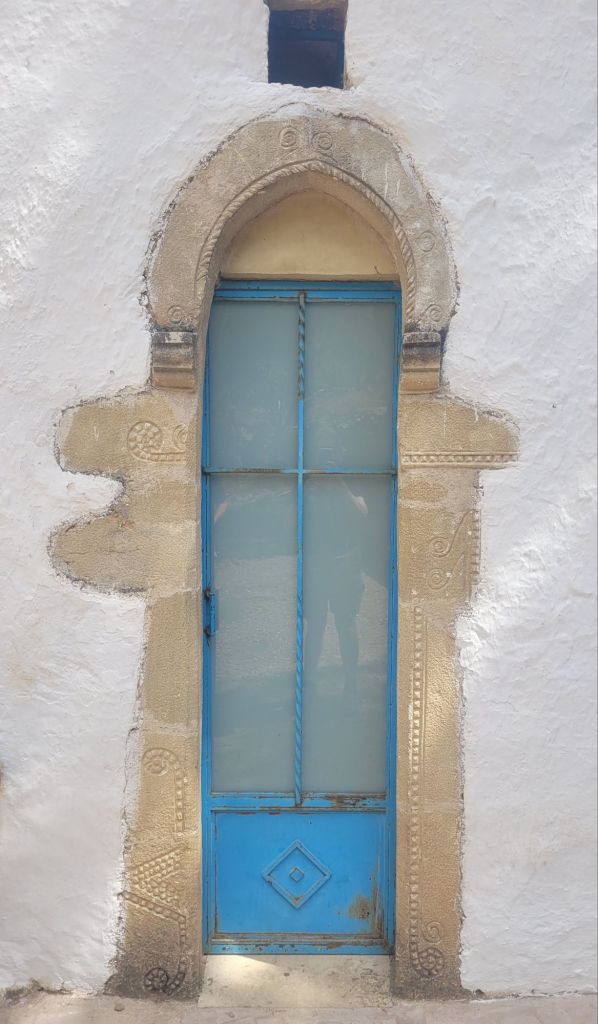
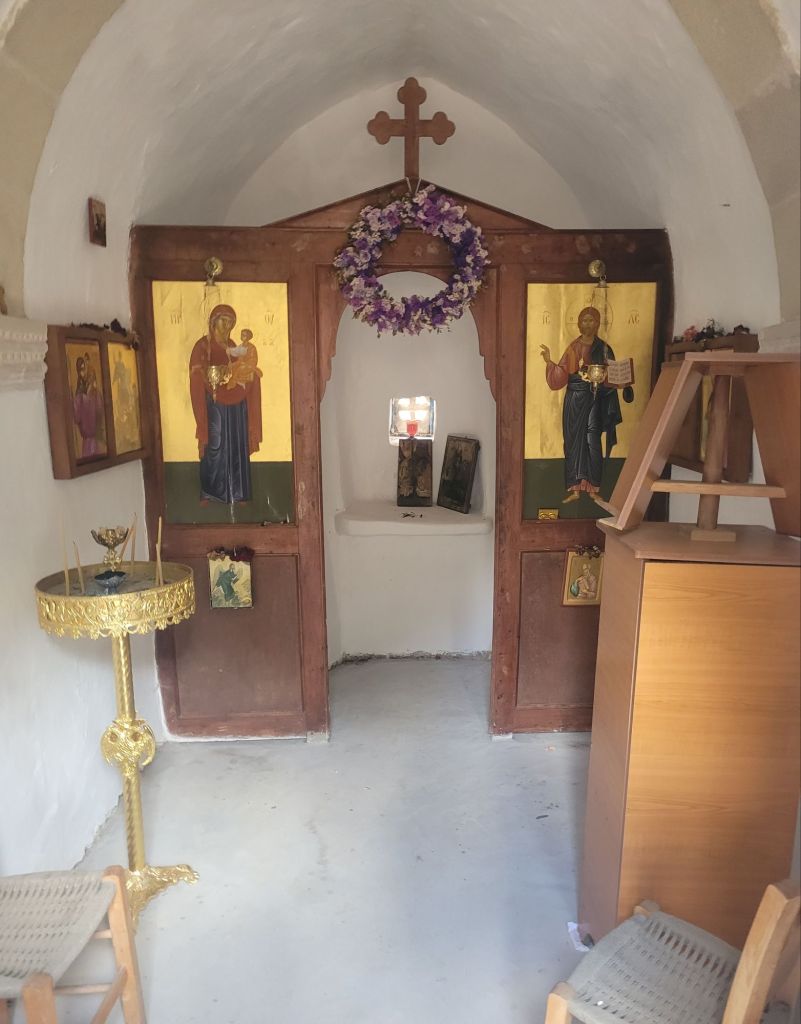
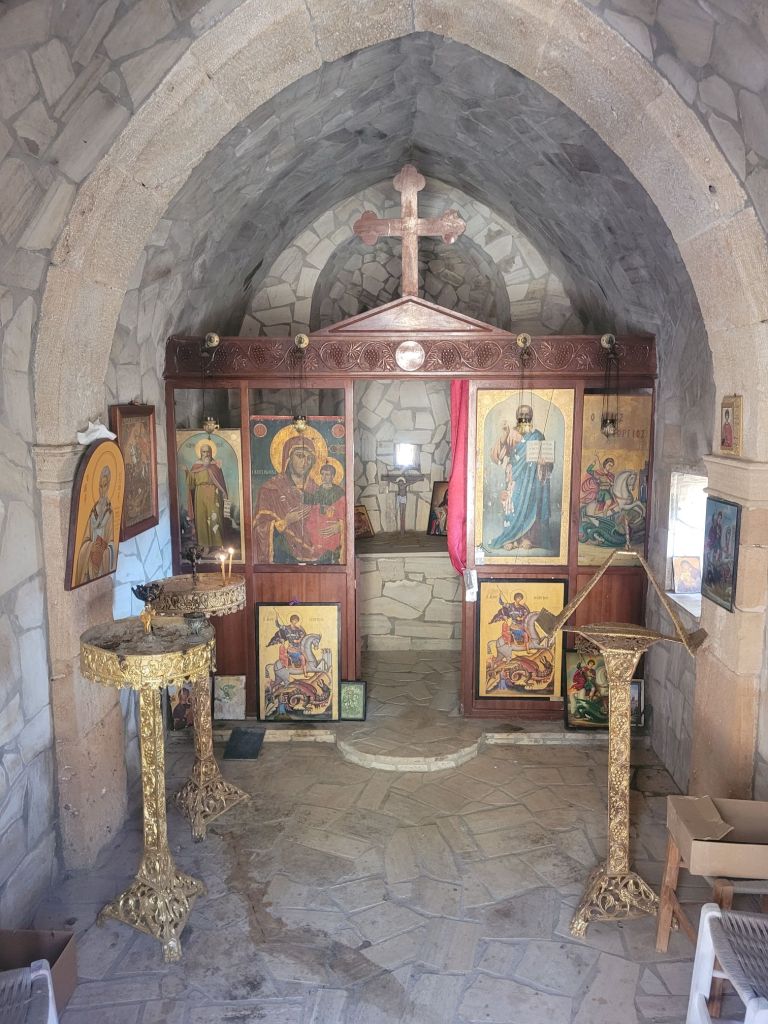
There was a string of chapels and churches, most of them to Saint George – patron saint not only of England but also of Greece. Many of them appear to be in quite inaccessible places as they are near abandoned villages or archeological ruins but despite their remoteness, a candle burns brightly inside some of them.
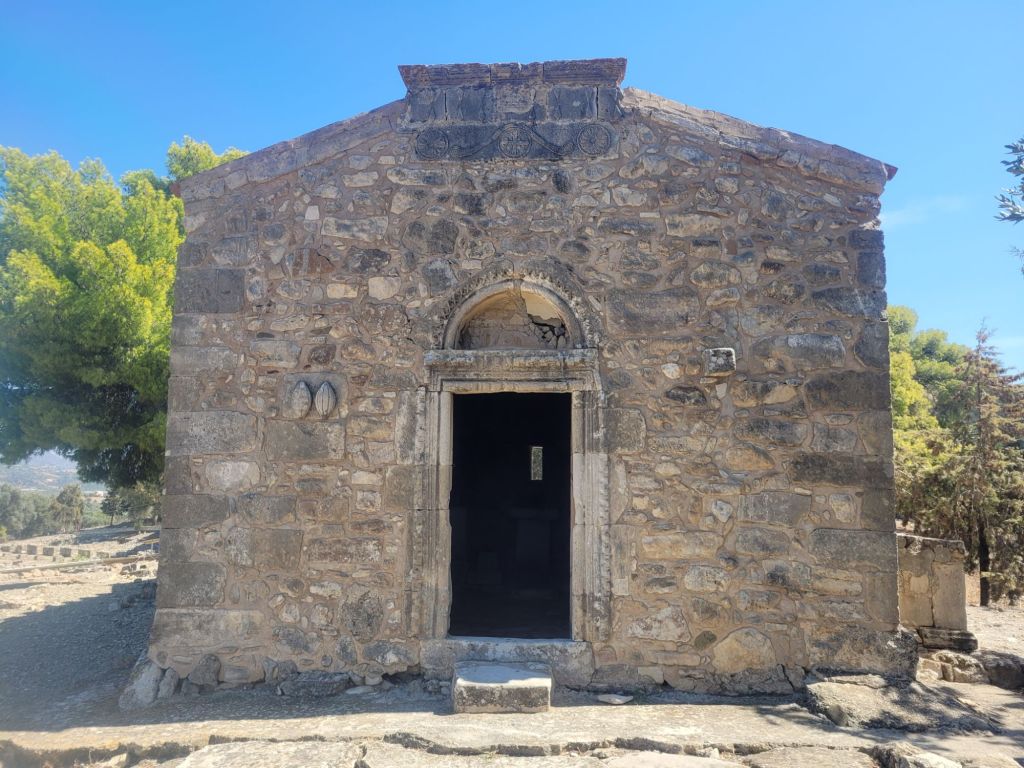
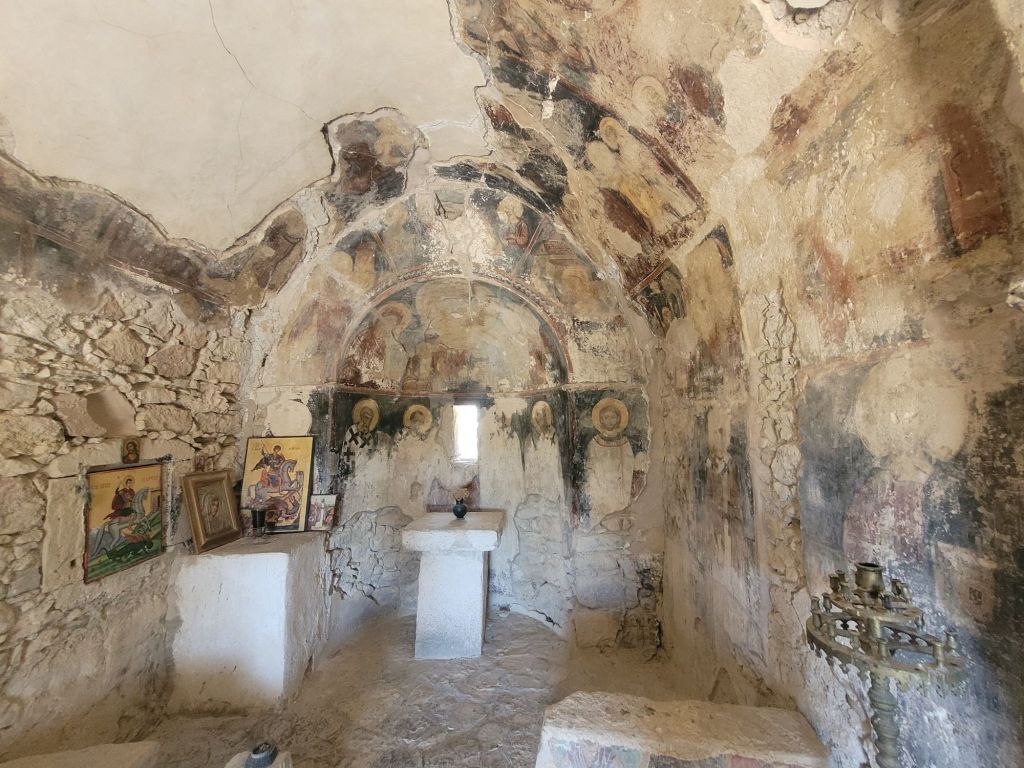
Crete’s history is long, layered and complex. It’s unavoidable. And almost too much to take in.
 Retired? What now?