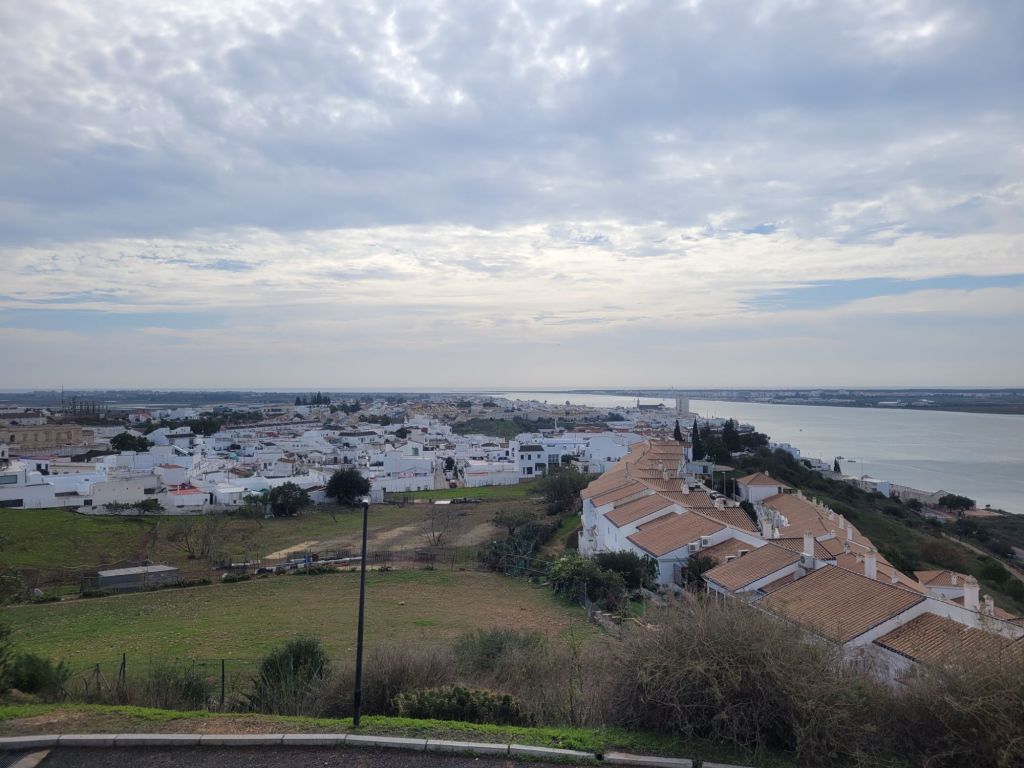
The decision to take the longer route into Portugal via Ayamonte was based on an interest in seeing the mouth of the Guadiana river.
From mountains and forests the terrain quickly flattened, turning into acres of citrus fruit trees (possibly oranges, based on the quick flashes of orange among the leaves). Further south these became interspersed with acres of polytunnels, followed by a fringing of umbrella pines nearer the coast.

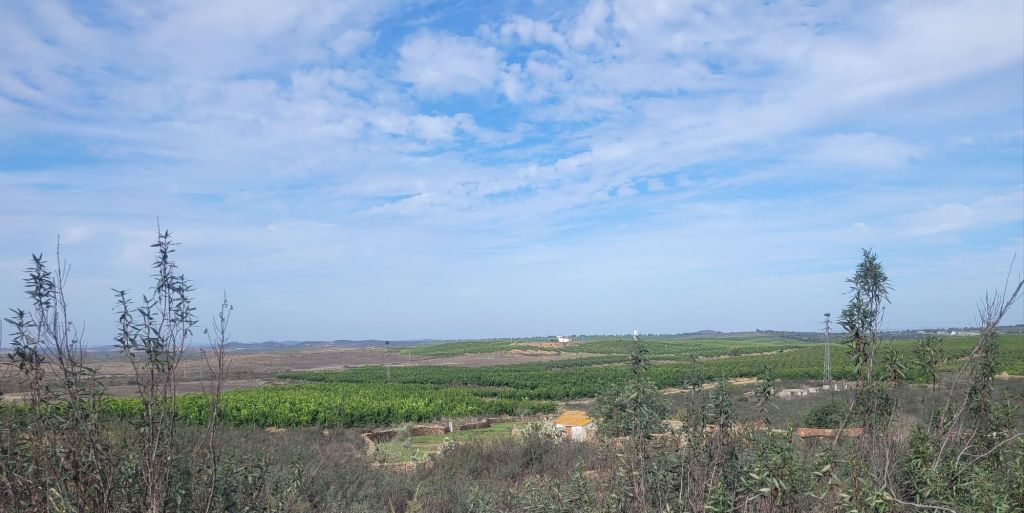
This south-west part of Spain (and south-east Portugal) was important to the Romans for its mines: silver was mined extensively, along with some gold, and then iron and some copper. The soil is orange/red in places with iron ore and the Rio Tinto (which flows through Huelva and gave its name to the mining/mineral corporation) got it name because of its red colour. Its now quite polluted (and therefore even more ‘tinto’ than it was before) but originally it was the iron ore which led to its name.
Slightly further west, The Guadiana forms part of the Spain/Portugal border (off and on) before flowing east into Spain and through Merida up into Extremadura. It’s name derives from the Arab word for ‘water’ – ‘wadi’ – alongside the Latin word for ‘duck’ – ‘anas’. It empties into the gulf of Cadiz, where it is spanned by a modern bridge.
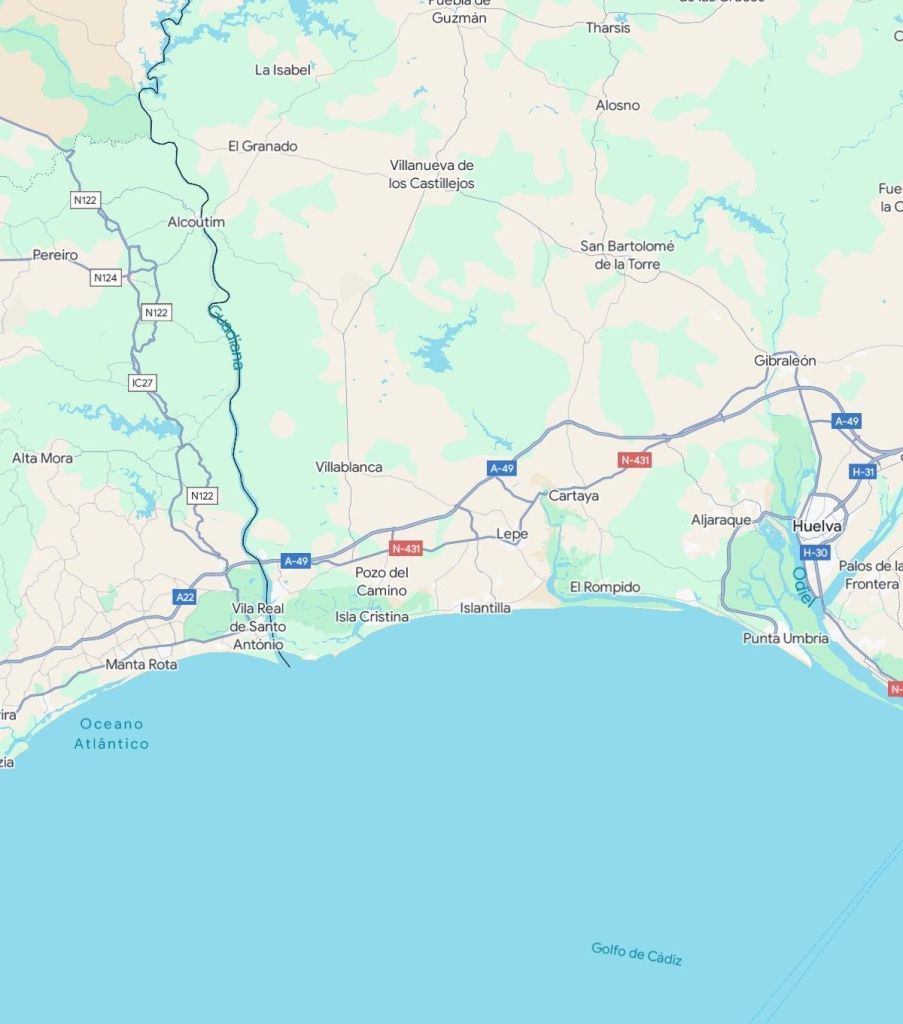
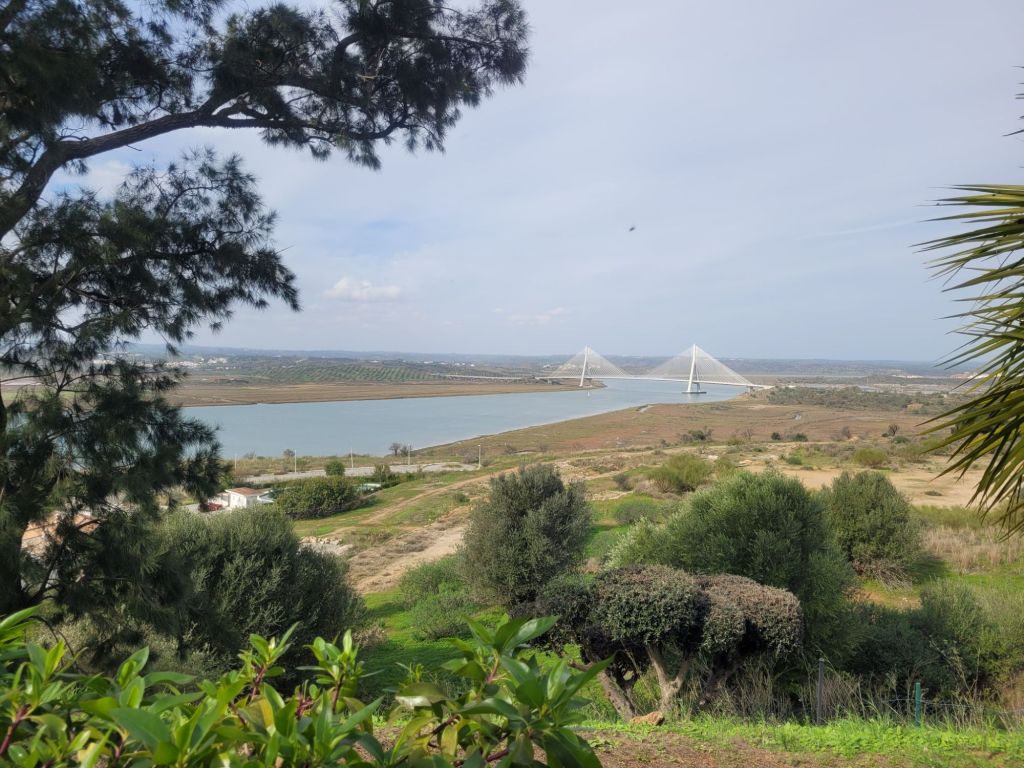
The fourth largest river in the Iberian peninsula, the Guadiana provided a vital highway for the Roman empire, which was looking to expand its hold and increase the flow of valuable metals back to Rome. Its importance remains today in enormous reservoirs along its watershed (most of them in Spain).
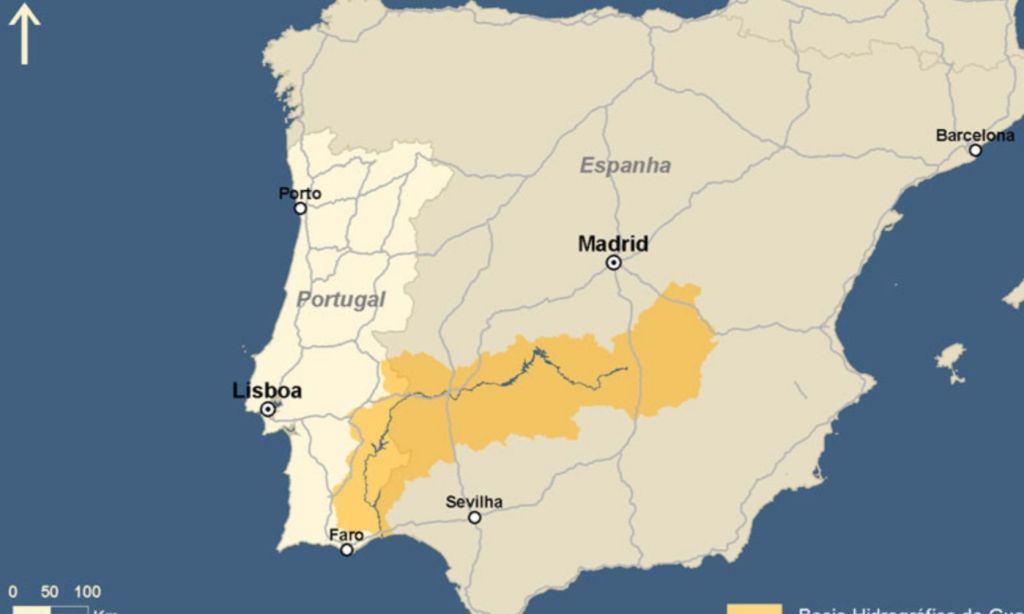
In Roman times the westernmost part of the Iberian peninsula was the province of Lusitania, with its capital in Merida (now in Spain). The Guadiana river, navigable up to what is now Mertola (in Portugal), provided a valuable highway for transporting mined metals and minerals, and other products, south to the Atlantic and then on to Rome, with Roman luxury goods in return. The whole of the province of Lusitania sent its goods through Mertola, due to its position on the river.
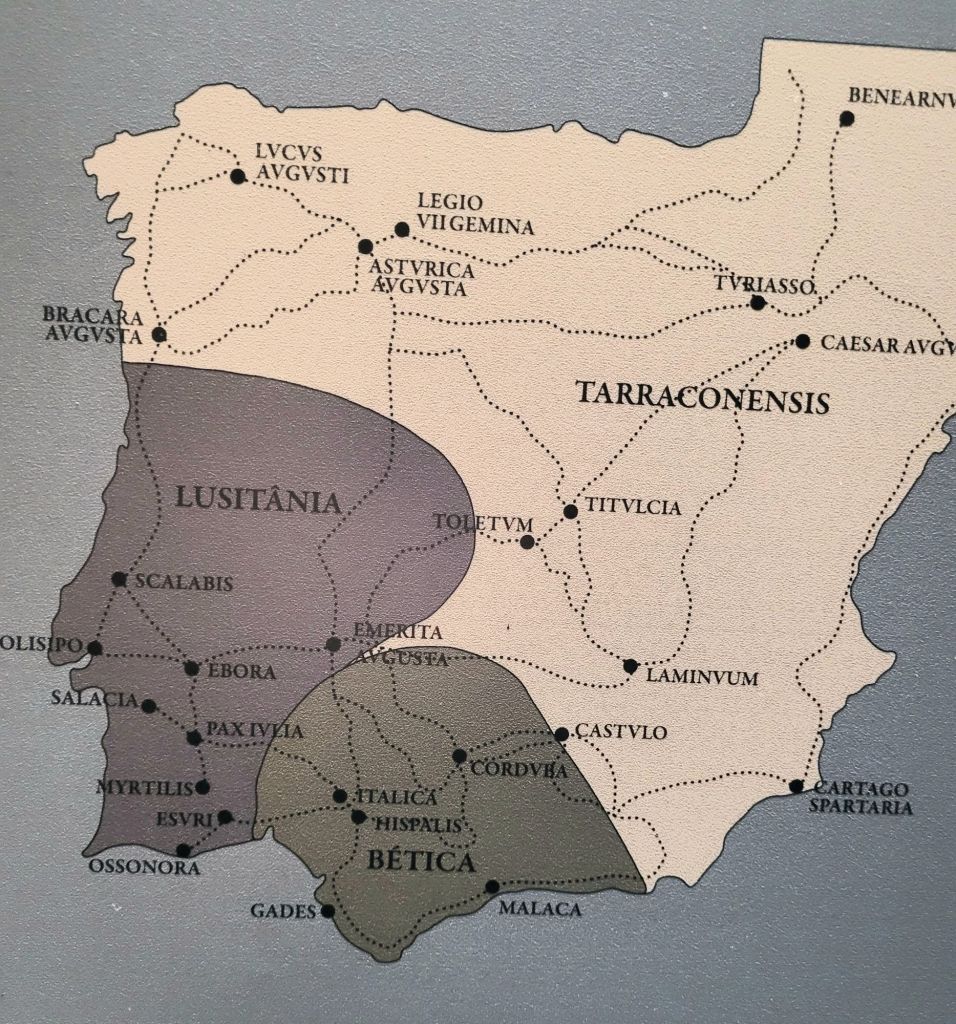
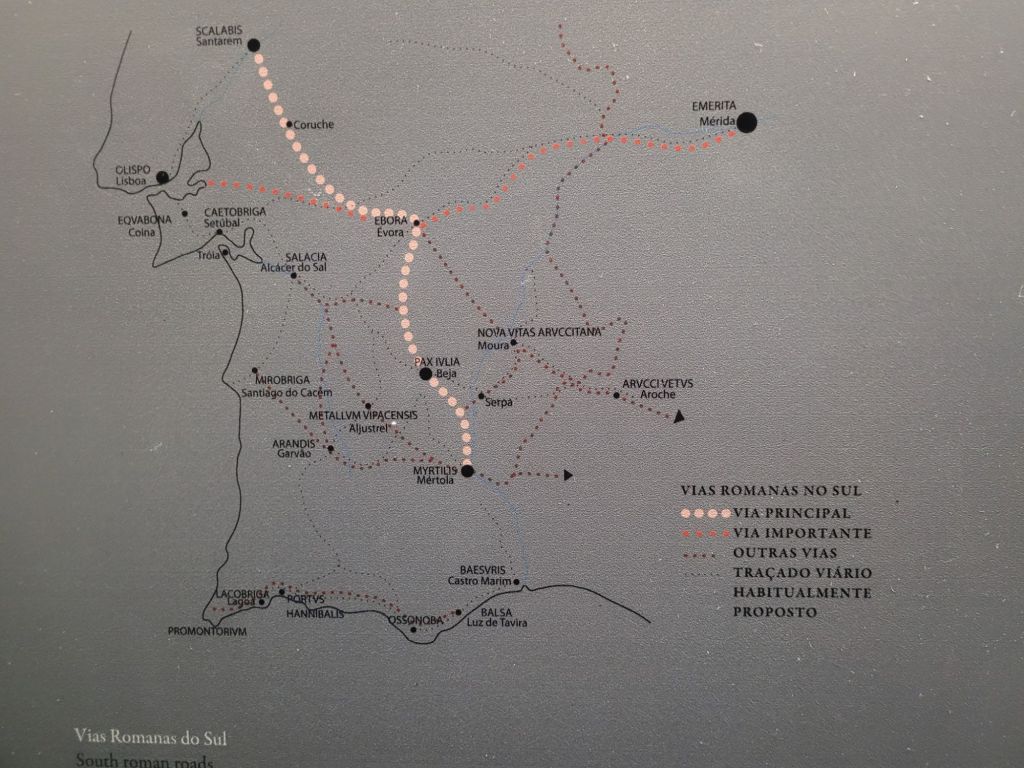
This strategic importance of what is now called Mertola, led to successive waves of habitation: Romans, Visigoths, Moors, Knights of Santiago de la Espada… All seeking to make use of the position of the town on the highest tidal point of the river Guadiana and therefore the most northerly navigable place.
(Bearing in mind that travel by boat/ship was both faster and safer than any other mode of transport.)
Mining (using slave labour) for silver and gold was key to the area until the late Roman period, when vines and olives started to be planted. Later, in the 19th century, copper was mined in the area west of Mertola, near the Spanish border, and the largest of the mines (the open-cast Sao Domingos mine) only closed in 1966 after a period of mining pyrite (as a source of sulphur). The resulting pollution from the sulphuric acid that arose from mining the pyrite contaminated the ground around the mine, while its closure devasted employment prospects.
Slightly south of the Sao Domingos mine is Pomarao, on the Guadiana just beyond its confluence with the river Chanzas (now dammed and forming the enormous Chanza reservoir). This was where the output from the mine was taken downriver to the Atlantic.
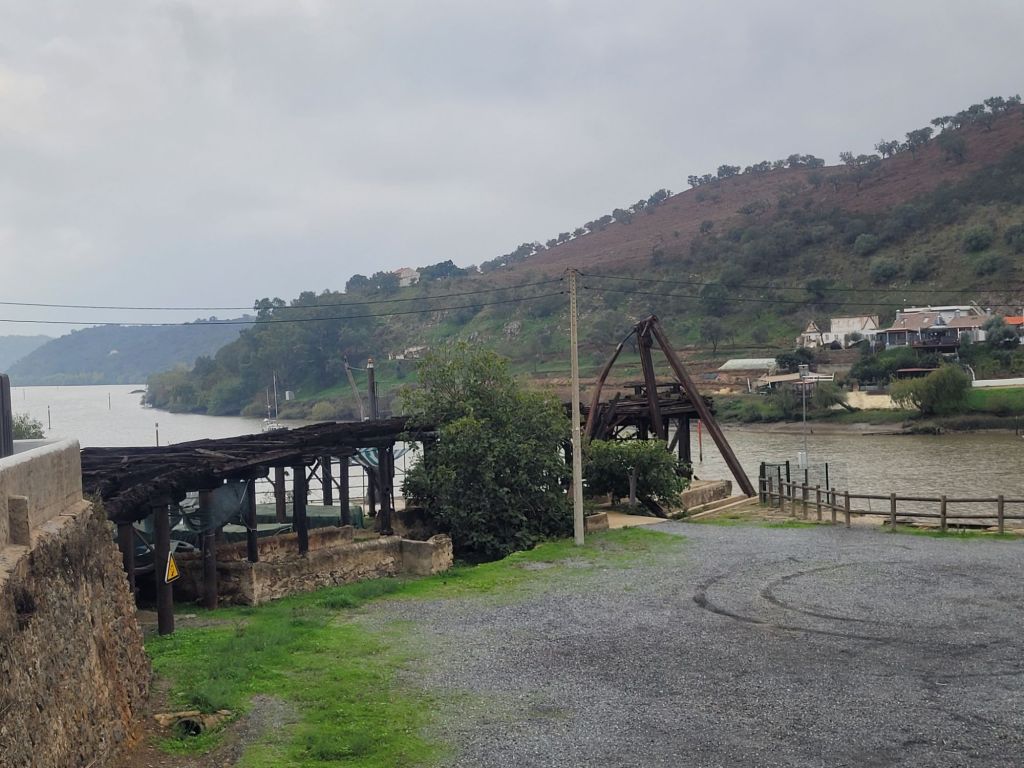
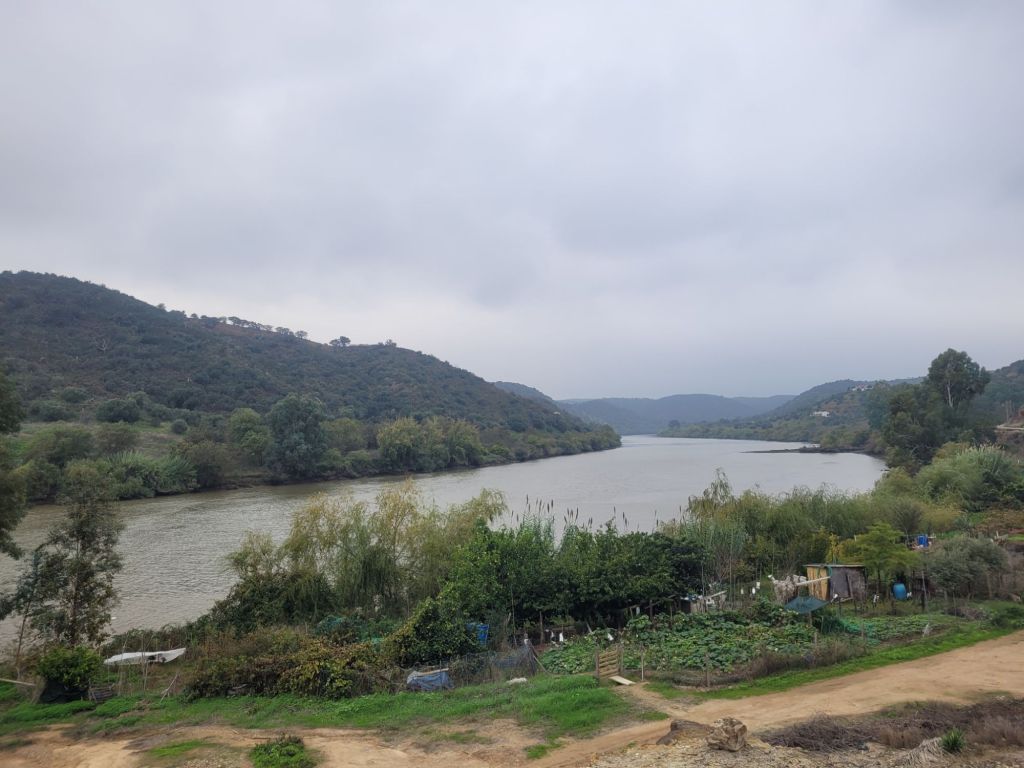
This area in and around Mertola is trying, hard, to increase economic activity through tourism. There are a lot of ‘agriturismo’ signs and much is made of the river as both a historic site but also a wildlife refuge.
And the river is beautiful, winding through a rocky landscape that is scrubby and fairly barren. There are bird watching hides dotted about in what appear to be random fields and well signposted hikes with boards detaiing the flora and fauna that you might see. Alongside these are frequent reminders about nature as a precious resource, the need for conservation and the avoidance of fire hazards and littering. All very heartening.
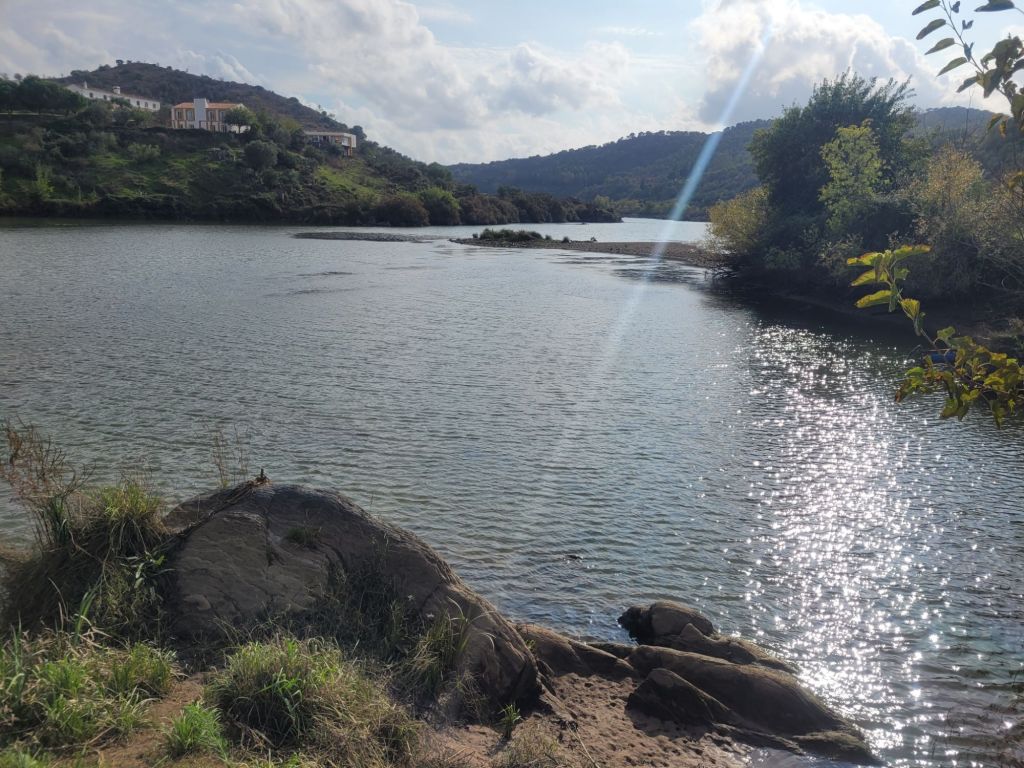
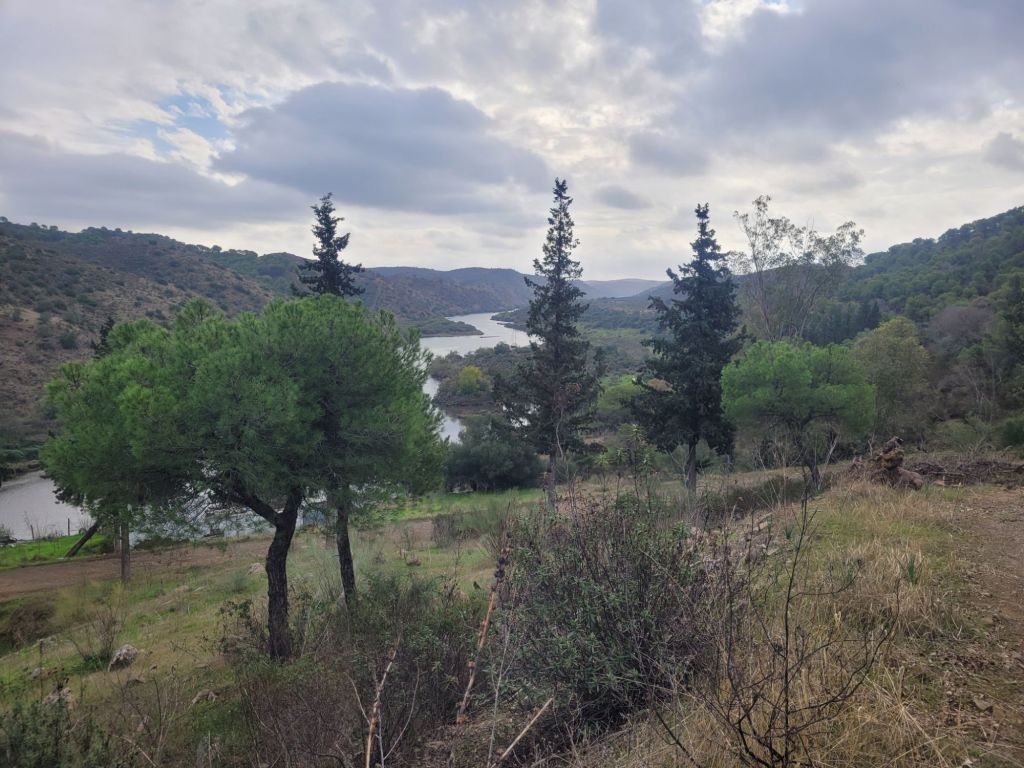
After an hour’s drive from Ayamonte in Spain we arrived in Mertola, mid-afternoon on a busy Sunday. Lunch in Portugal is earlier than in Spain, which was slightly concerning…
 Retired? What now?