It may have seemed that there isn’t a lot to do in Evora; this is not quite the case, there just weren’t things that particularly appealed to us. Like Capela dos Ossos – a church with a knave made of bones: apparently the town ran out of space for burials so the decision was made to construct an ossuary in a small chapel next to the Church of St Francis. The walls are (I think) made of bones and skulls.
Not our thing at all.
And there are other churches, a palace, a museum… We just didn’t quite get to them because we spent a day in Elvas. Which was awe-inspiring.
Elvas has been an important military site for centuries, situated as it is in the valley through which the Guadiana turns east and runs into Spain. It’s about eight kilometers from Badajoz in Spain and was called the ‘Gateway to Lisbon’, as the river valley provided an easier route through the mountains separating the two countries; from Elvas it’s a straight run into Lisbon, 200K away.
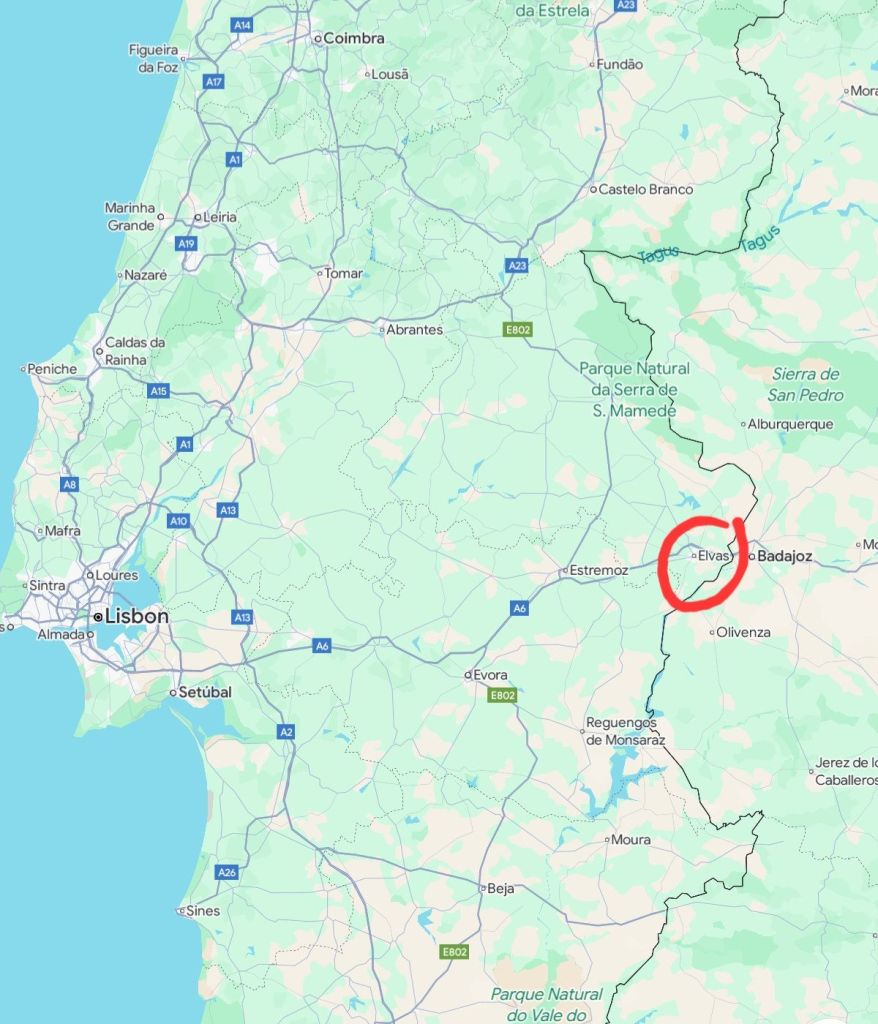
Elvas was an important border fortification during the Peninsular War (early 19thC – the British army helped the Portuguese fight against Napoleonic armies in Spain).
And it is immense. There is no other word. It’s vast. The whole town is fortified and one of the best examples of ‘trace italienne’, where enormous bastions protect against cannon fire.
Like many towns in this part of Portugal and Spain, it started off as a Roman fort (and possibly even Celtic before the Romans), then it was Moorish and after a bit of swapping and changing, finally became Portuguese in 1226. It was just that strategically important. During the Portuguese Restoration War (when Portugal wrested control of itself from Spain in 1640-1668), major works started and for the following 200 years the fortifications were continually re-developed and increased. Walking around it (either in the dry moat or on the walls) was incredibly confusing as at times it isn’t quite clear which section you are looking at (or quite where you are if you are in the moat).
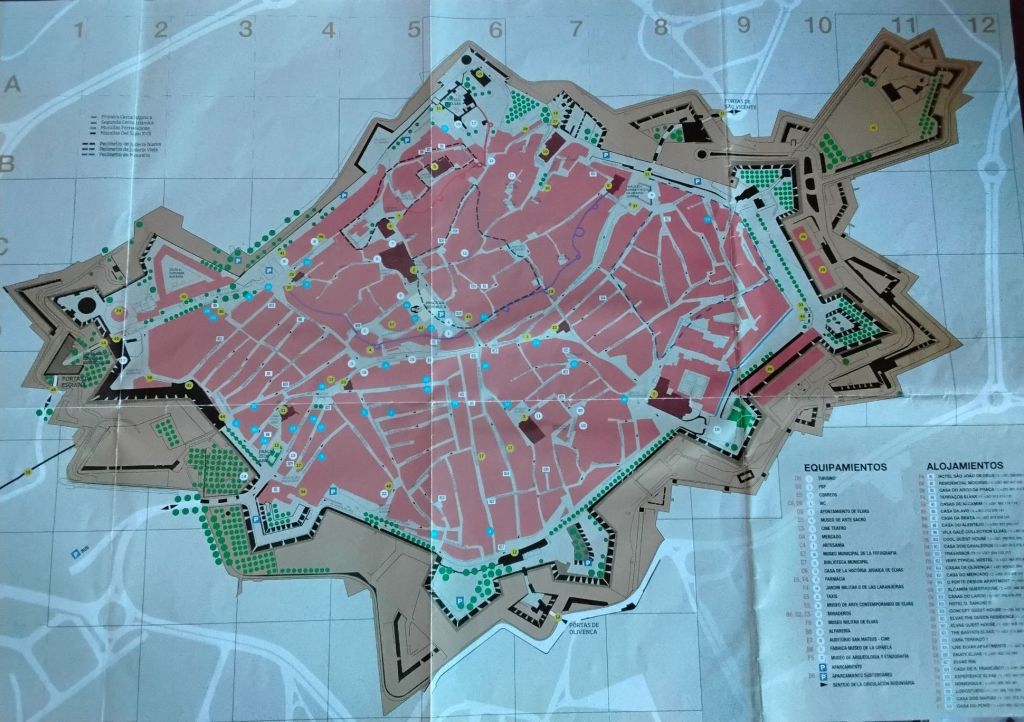
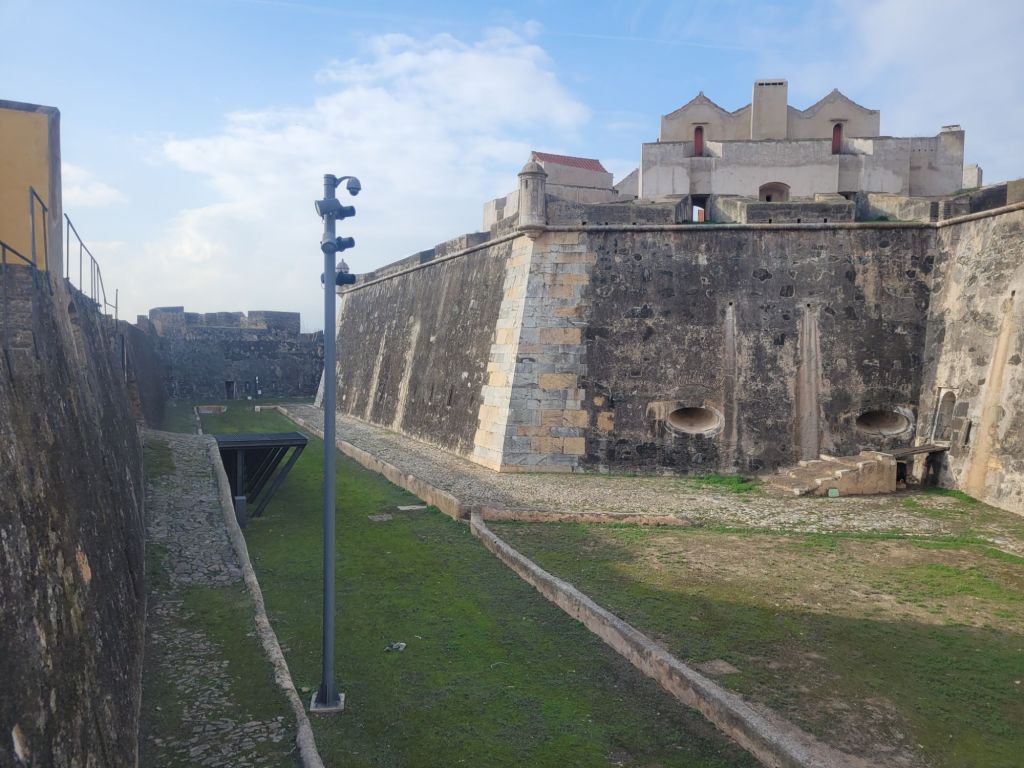
Walls (enormous walls) surround the whole town, uninterrupted. The dry moat which runs around the town inside the walls provides car parks (in places) and space for a tank collection next to the military museum.
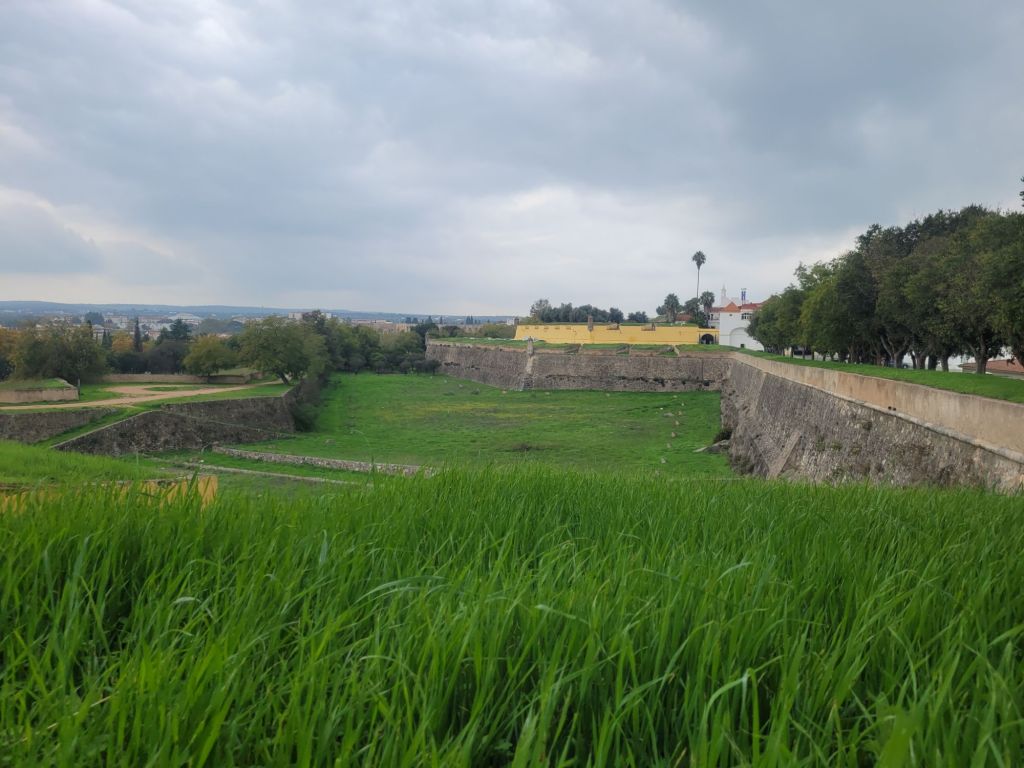
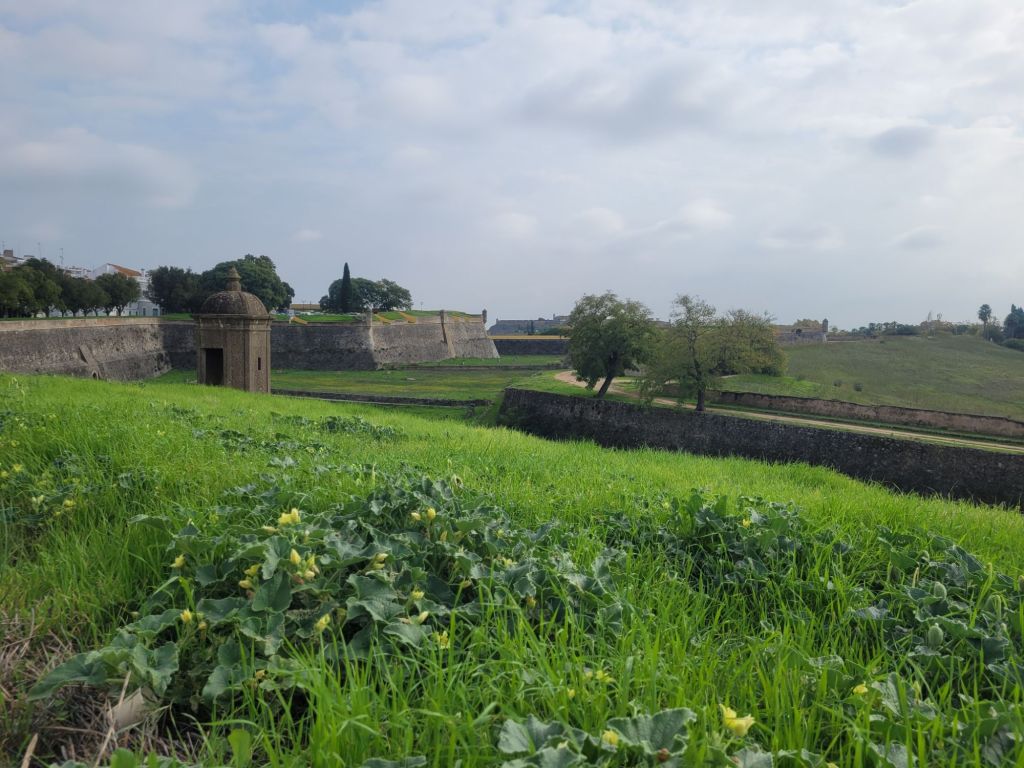
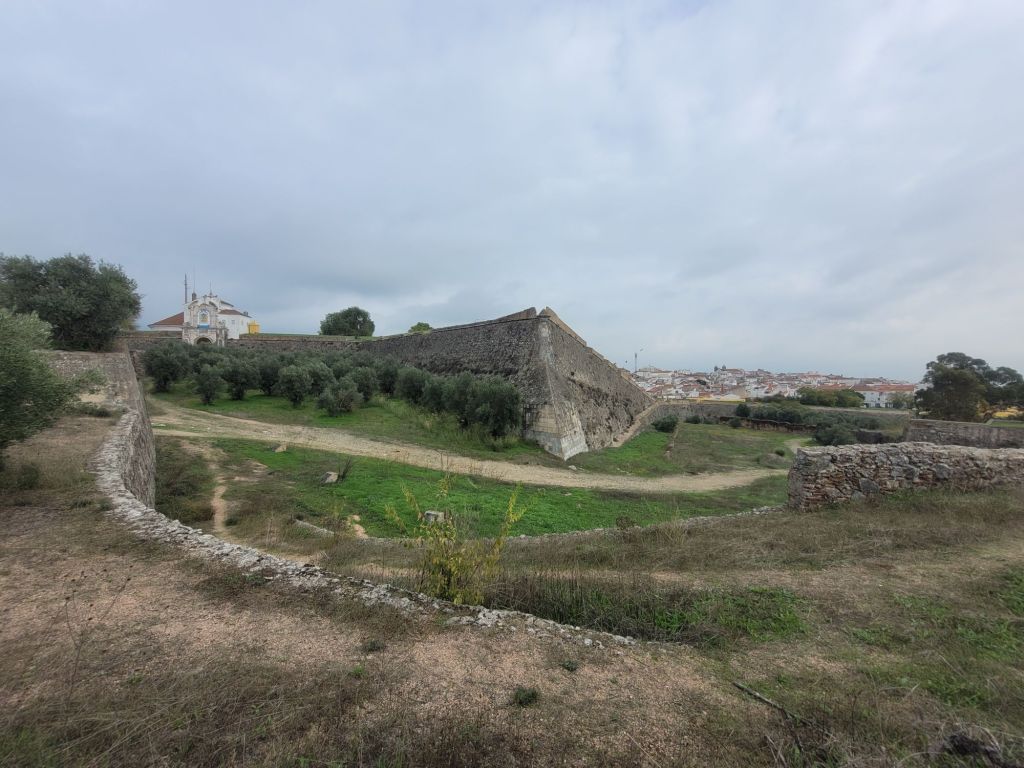
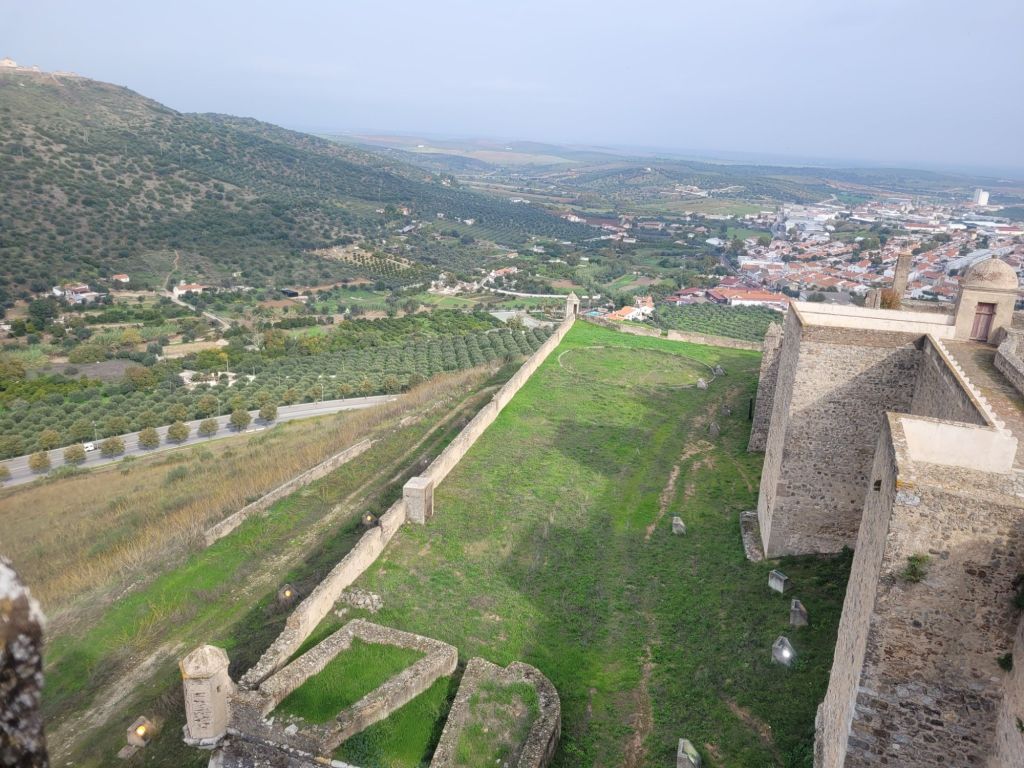
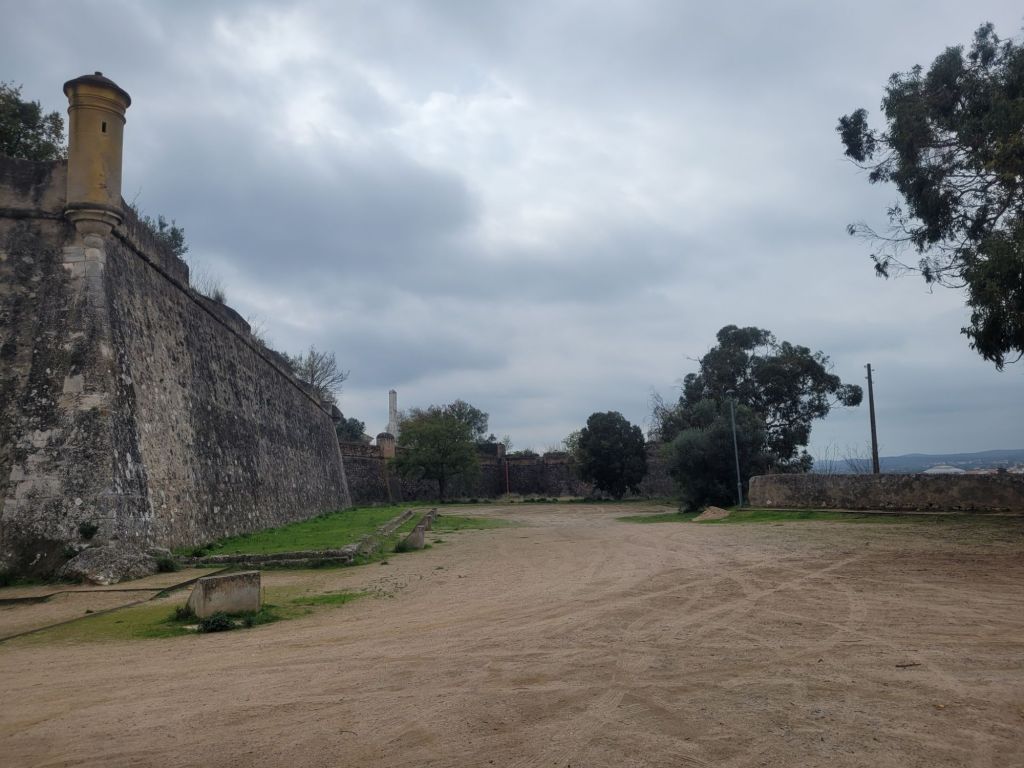
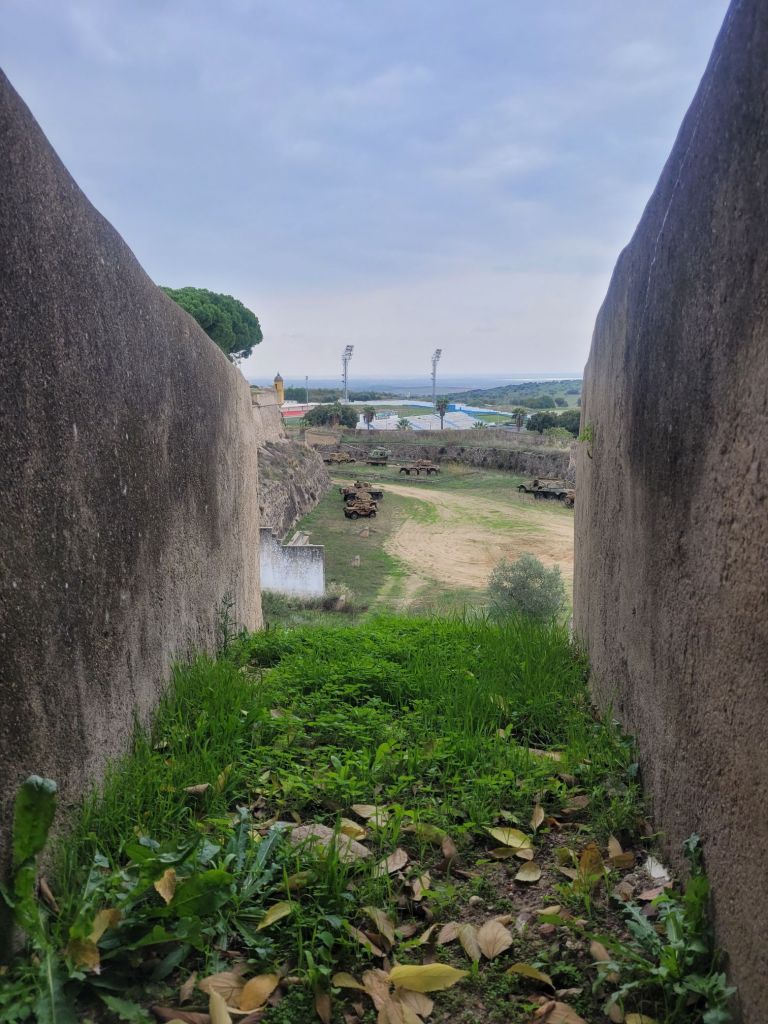
There are cannon slots on almost every facet of the walls, particularly where there are gates into the city. The dry moat has many blind alleys as well as a few overgrown buildings, that make it tricky to see how to get out of the moat, onto a road and into the town.
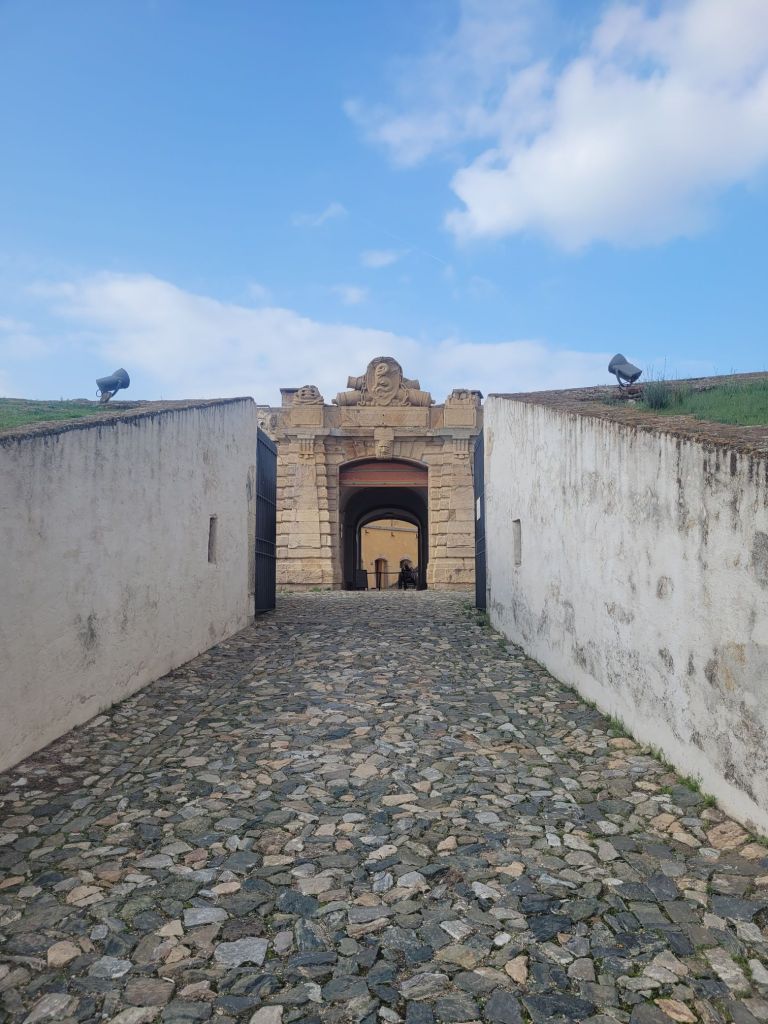
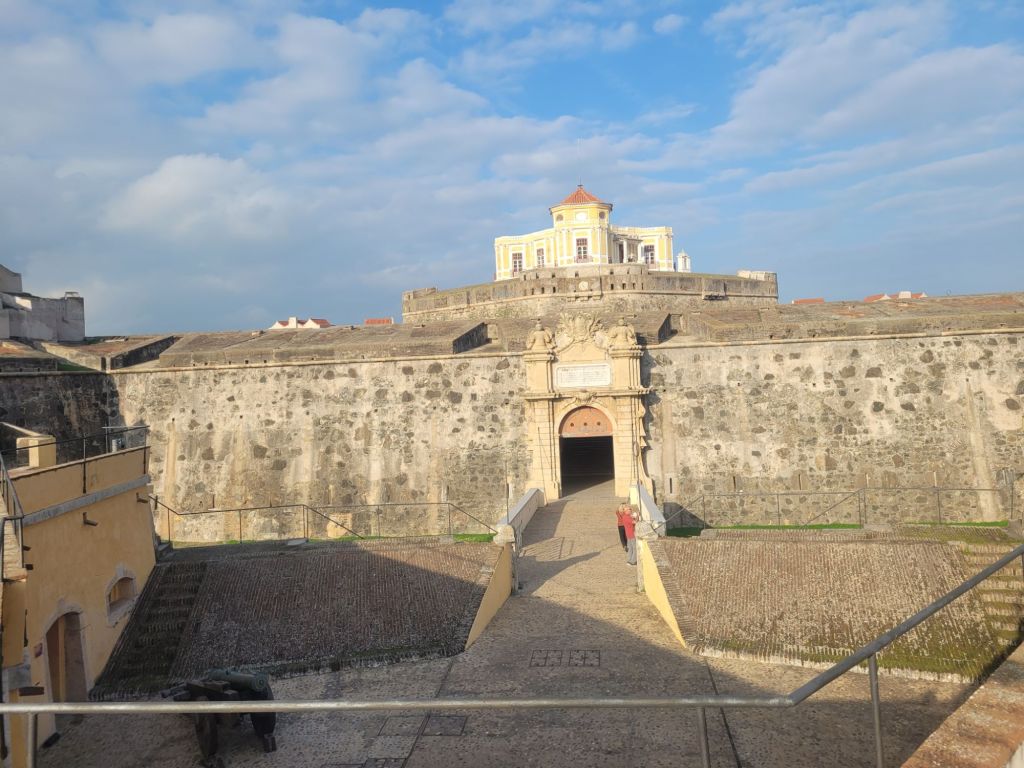
There are four main gates into the town, each of which is either protected by cannon emplacements in nearby walls, or by curving access tunnels, drawbridges, more tunnels and huge doors that can seal off the inner gate.
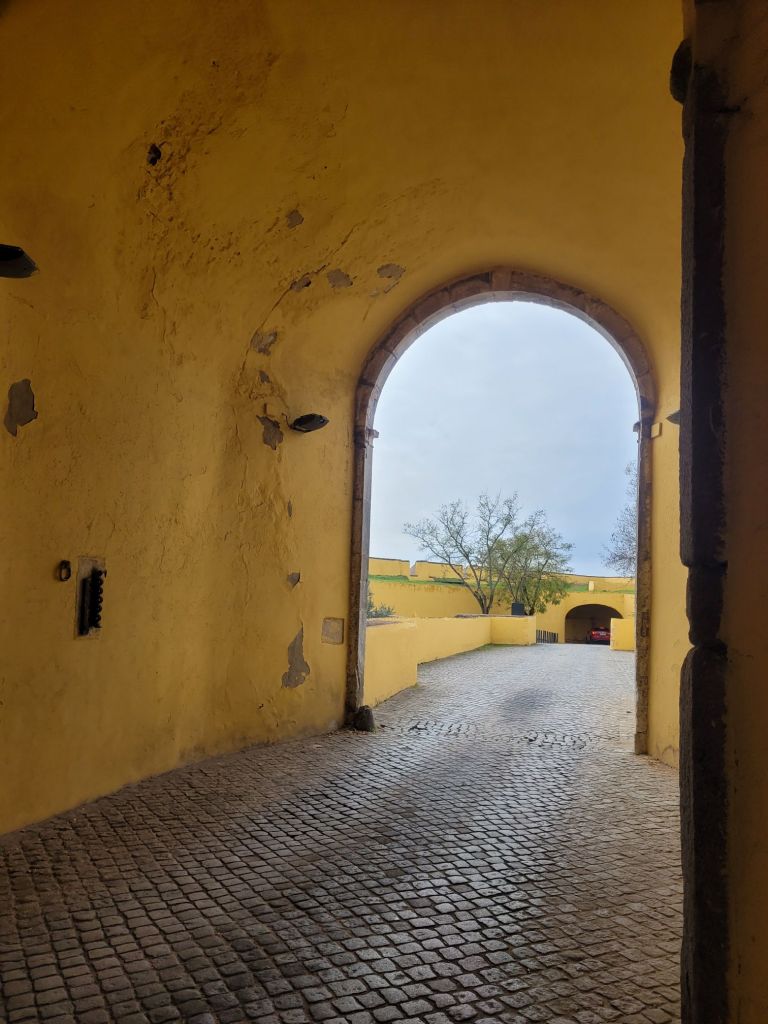
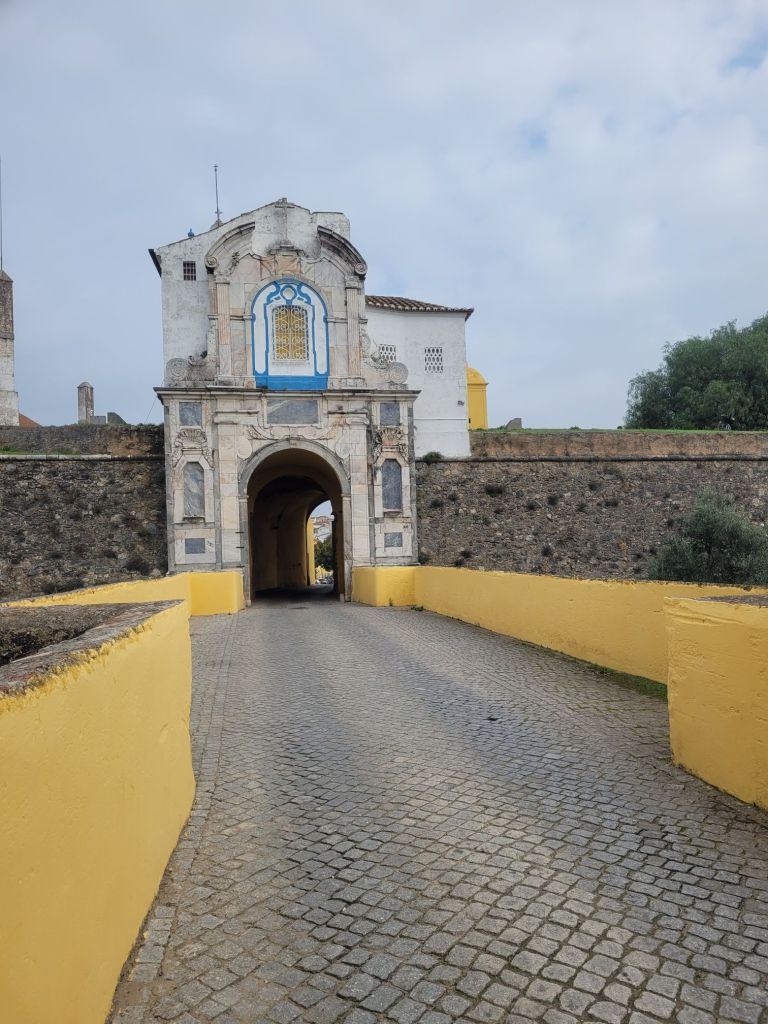
In one corner there are the remains of the Moorish alcazaba – still standing and incorporated into the whole.
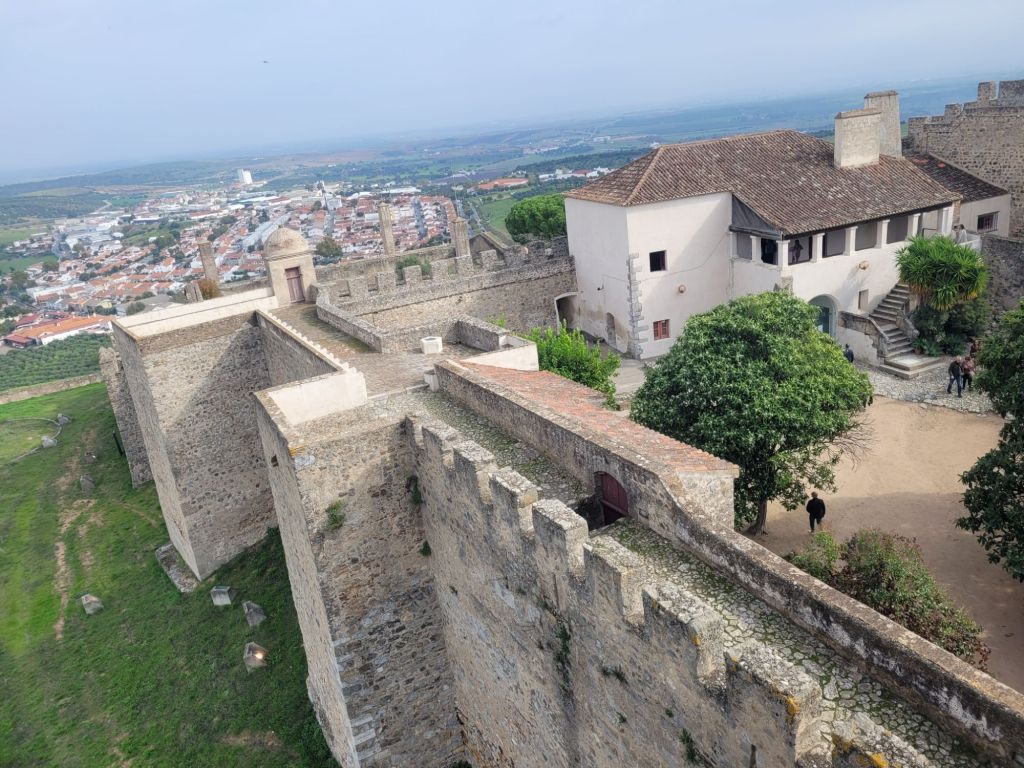
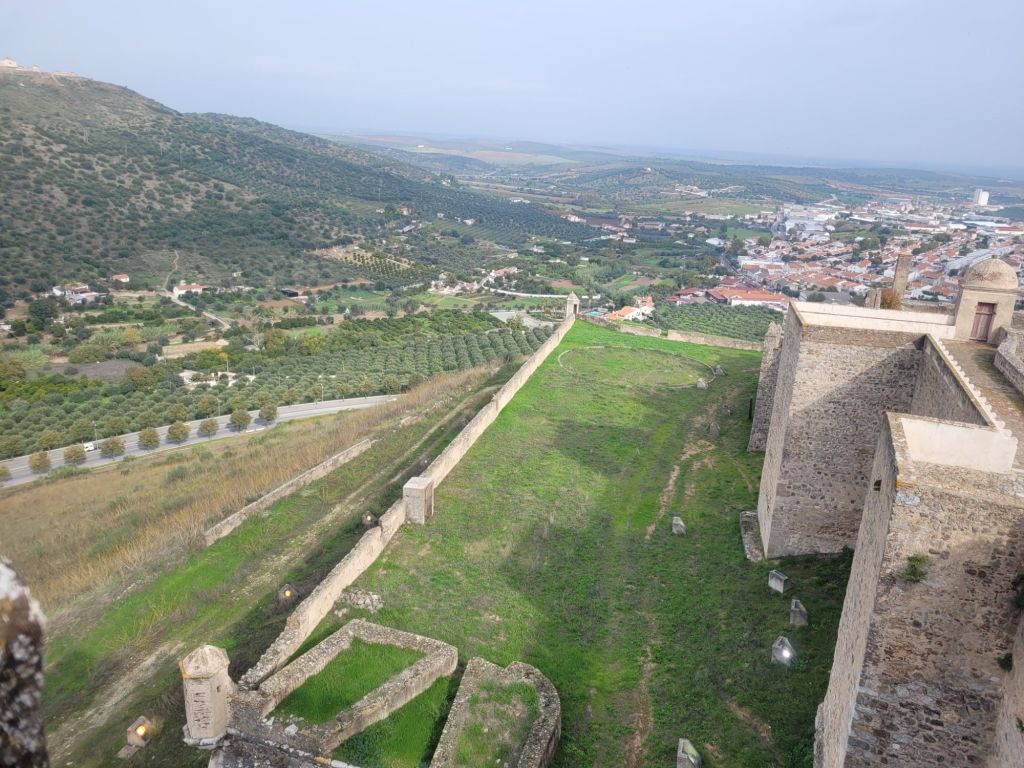
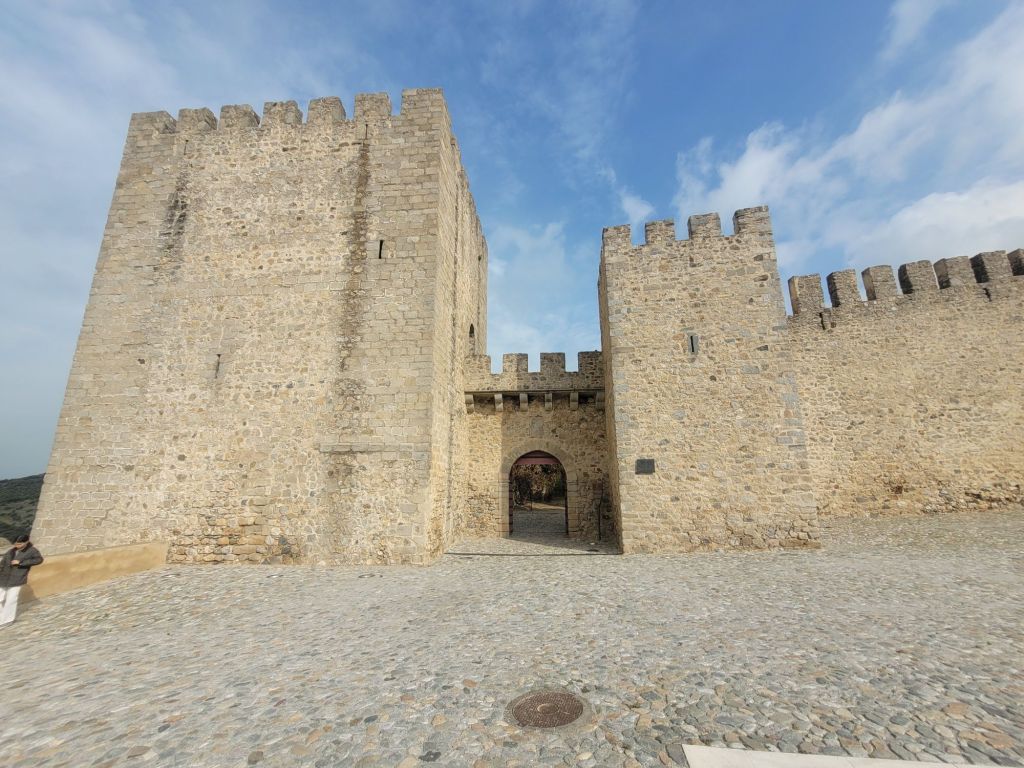
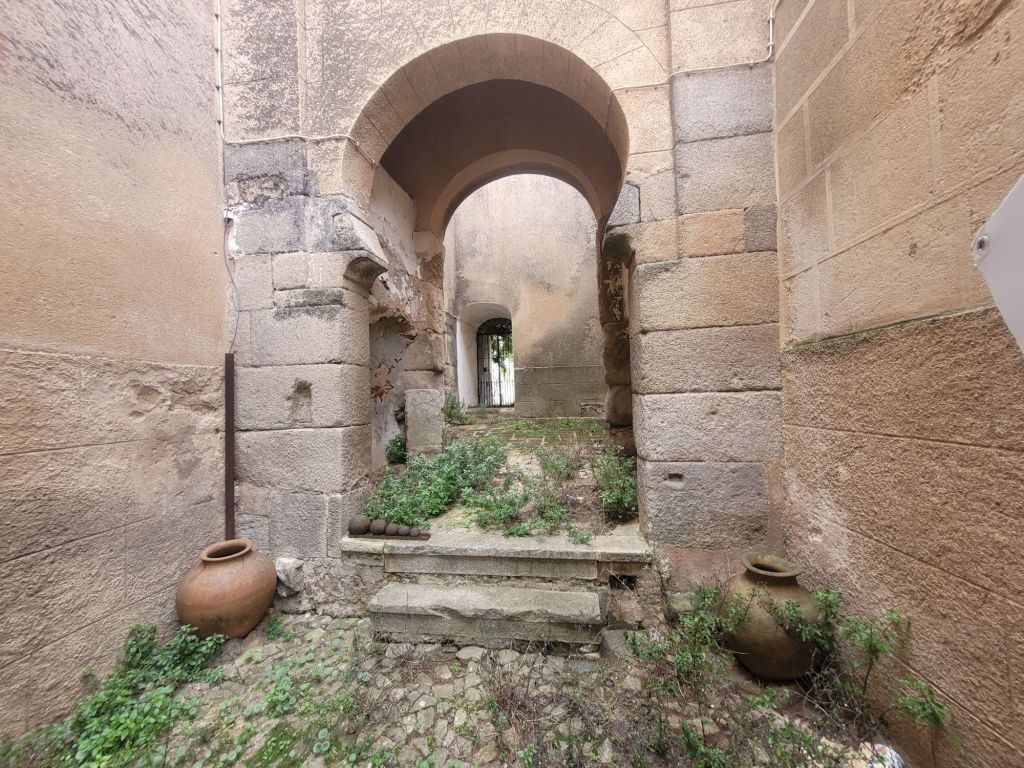
Further inside the town are Moorish fortifications which are delineated on the tourist map but difficult to find. Mostly it’s the occasional bit of tower that can be seen. A remaining gate is fenced off, and hard to see unless you notice the sign (which is quite discrete). Sadly many seem to see it as a rubbish dump.
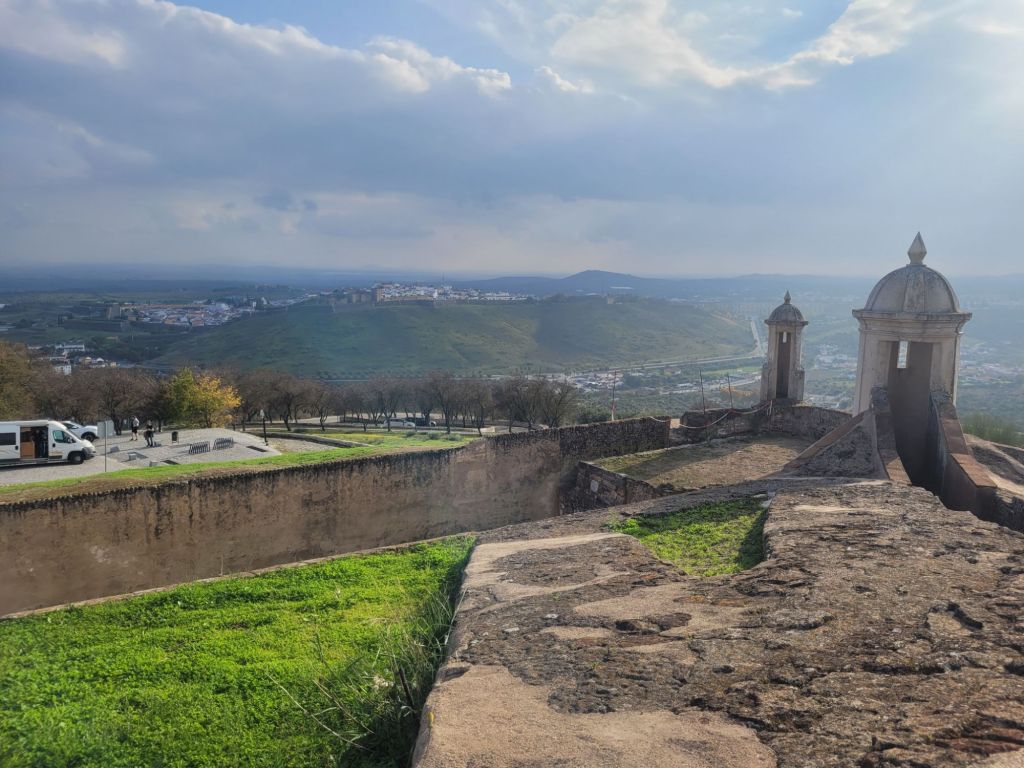
On either side of Elvas are additional forts – at least three, possibly more. The whole area is littered with forts.
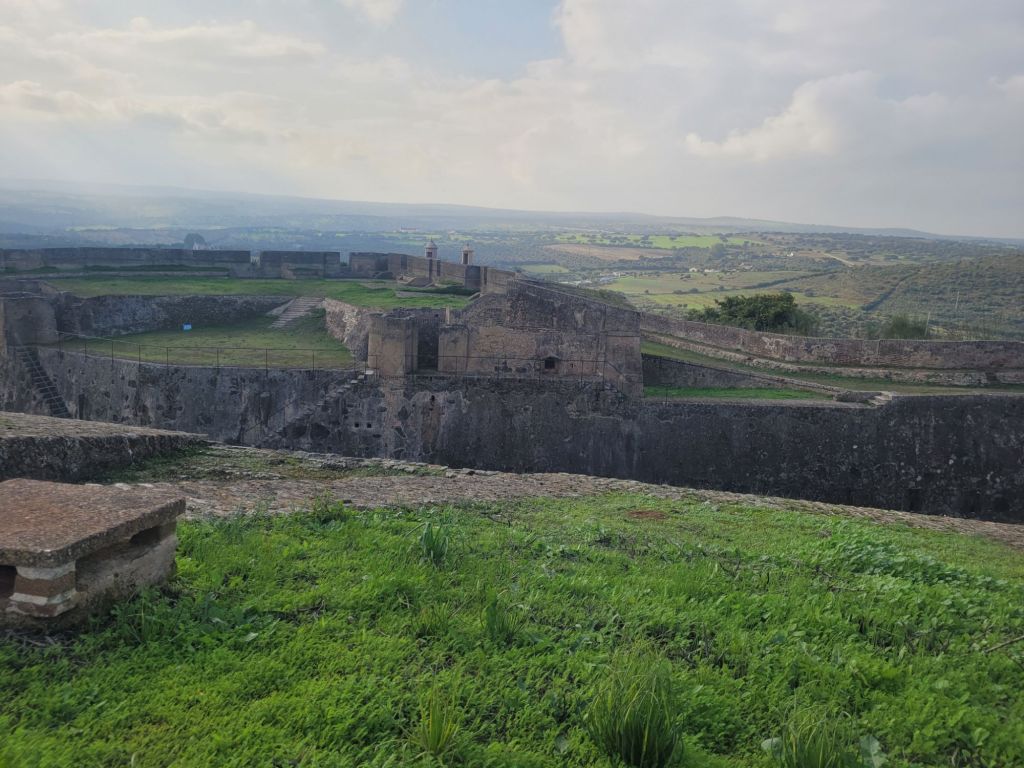
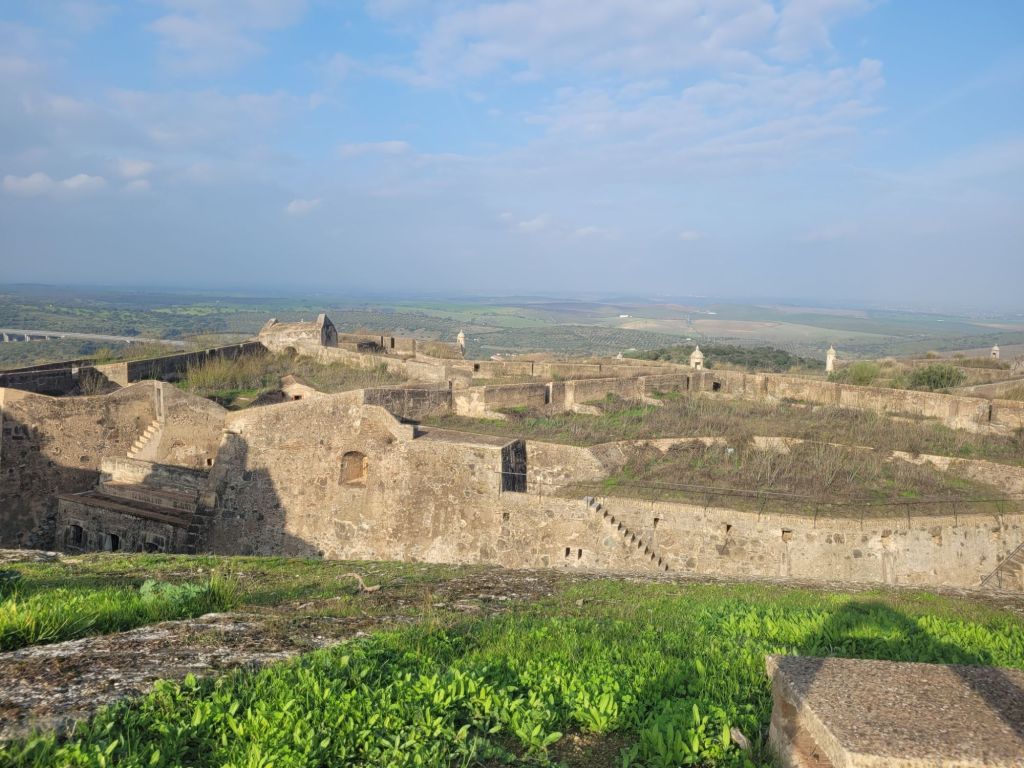
We visited Fort of Graca which has (to say the least) an impressive footprint. How it was built without the benefit of a bird’s eye view escapes me.
Originally the hill it occupies had a small chapel but during the Restoration War the Spanish fortified the hill top in order to attack Elvas.
In the 18th century, construction began on a star shaped fort that would help to protect Elvas against attack.
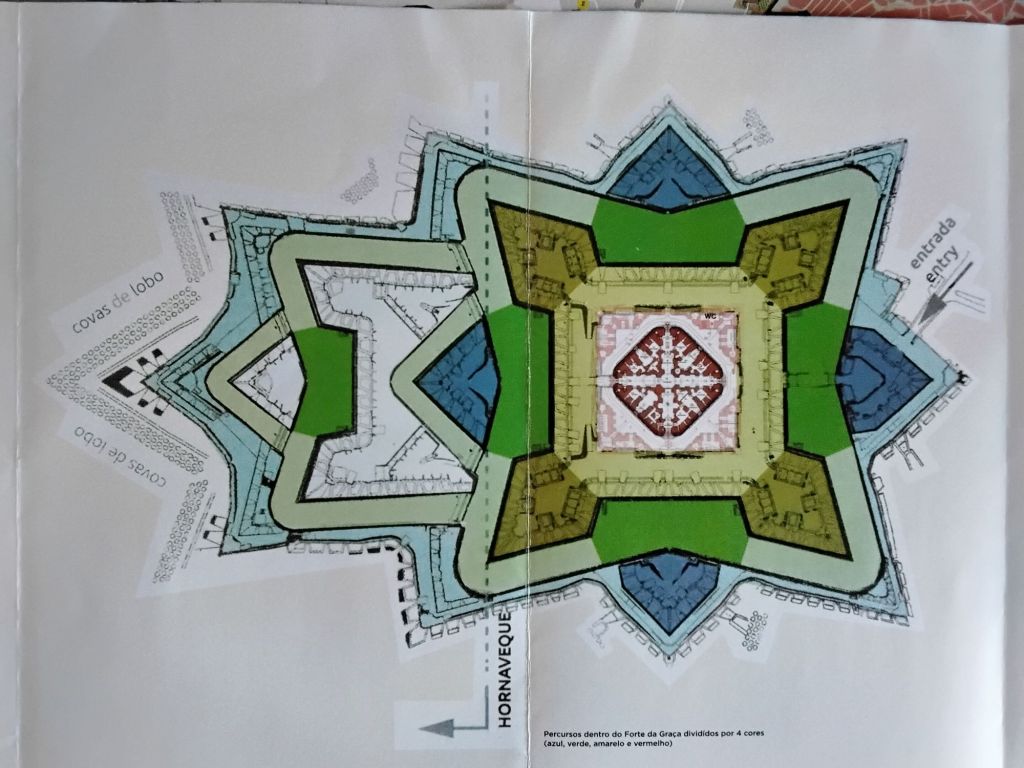
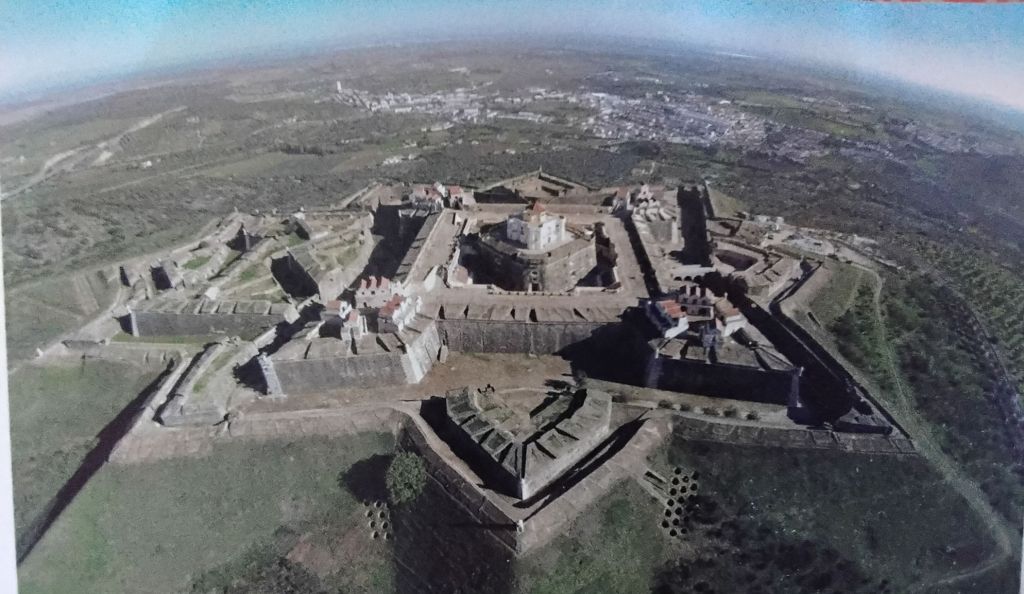
This was a place meant to house soldiers and only soldiers. It is ‘just’ a fort – apparently the biggest fort in Europe (or so I was told by the man who sold us the entry tickets).
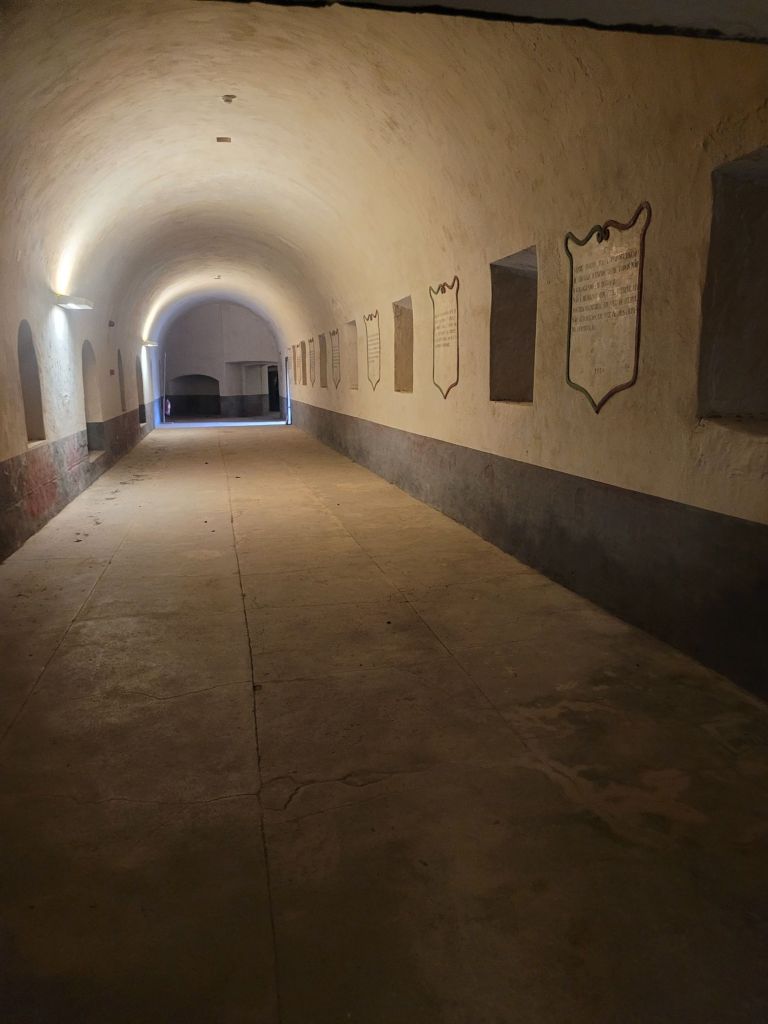
It is a bit spooky, as lighting is minimal in the shooting galleries – and there are few windows anywhere else. It’s also spooky because it seems incredibly easy to lose your way and wander through unlit galleries trying to find the way out – it’s not desperately well signposted.
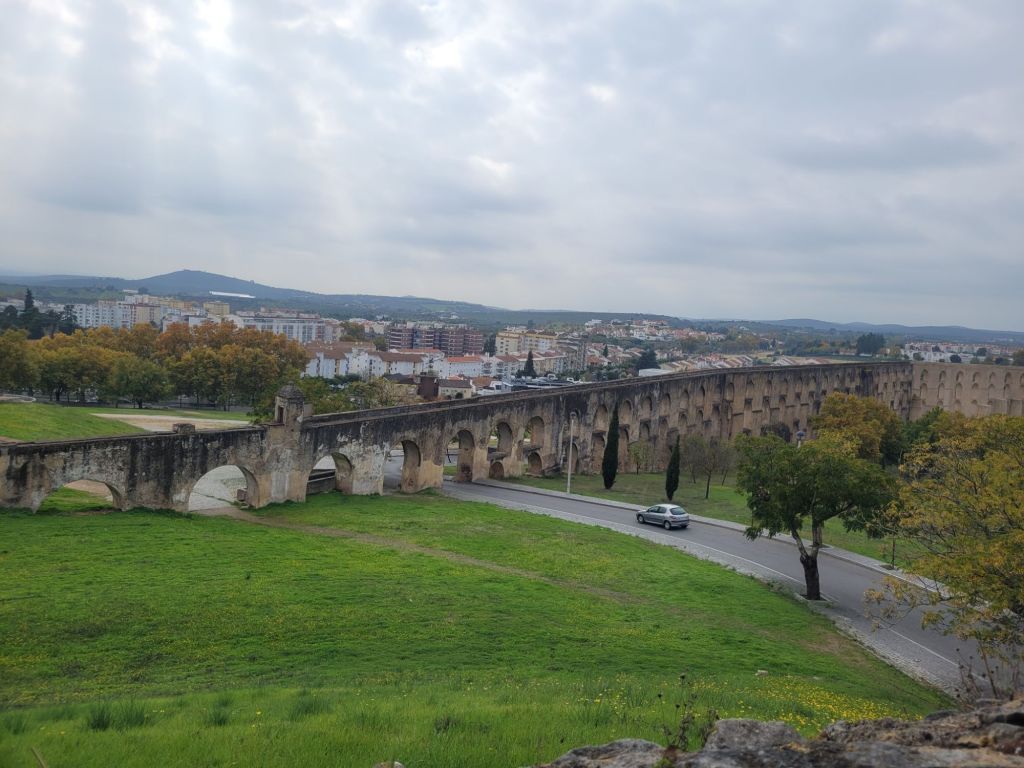
Another ‘tourist attraction’ is the Amoreira aqueduct, confusingly said to the the ‘largest’ aqueduct in Europe. As the aqueduct only runs less than 10 kilometres, I suspect this refers to its height rather than its length as in places it appears to have at least six layers of arches.
The aqueduct was initially planned in 1537 and took almost 100 years to complete, requiring several rounds of money raising in order to get it finished – as well as some remodelling in order to ensure it actually worked properly. Plus the intervention of a war. After all the time and money, it was knocked down 20 years after completion! The stone was needed for further fortifications. Talk about a vanity project…
I have little interest in military history, and little interest in the Peninsular war. Nonetheless, I found both Elvas and Graca fort interesting, if only to marvel at the engineering, architecture, effort and creativity expended in their construction.
 Retired? What now?