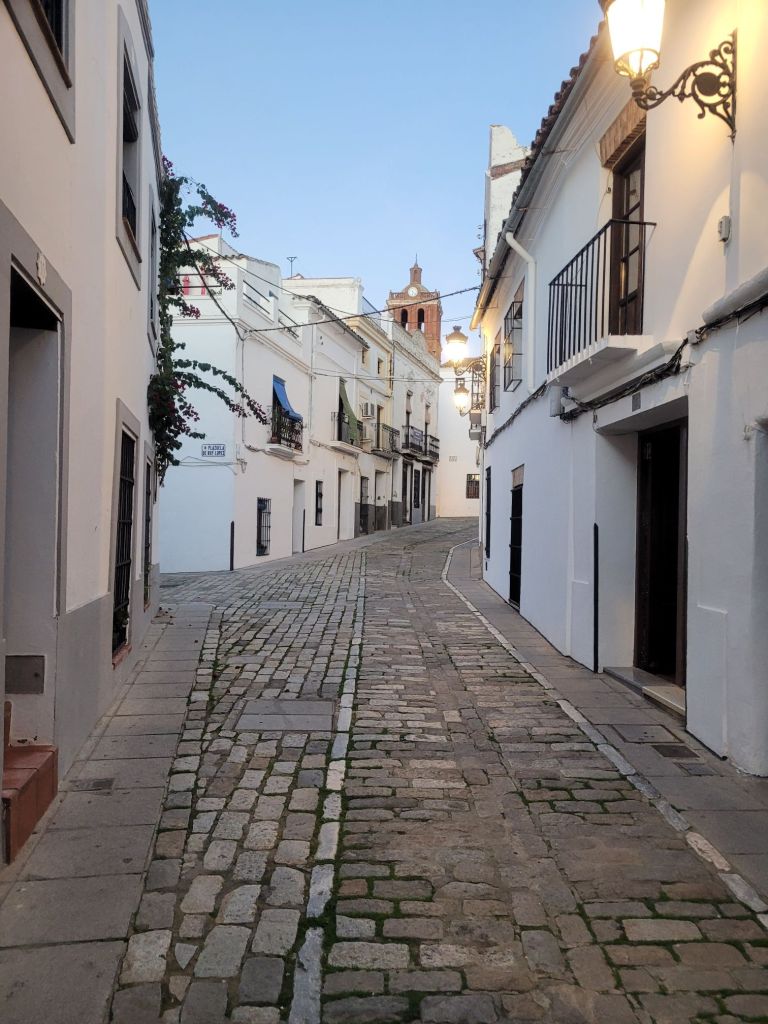
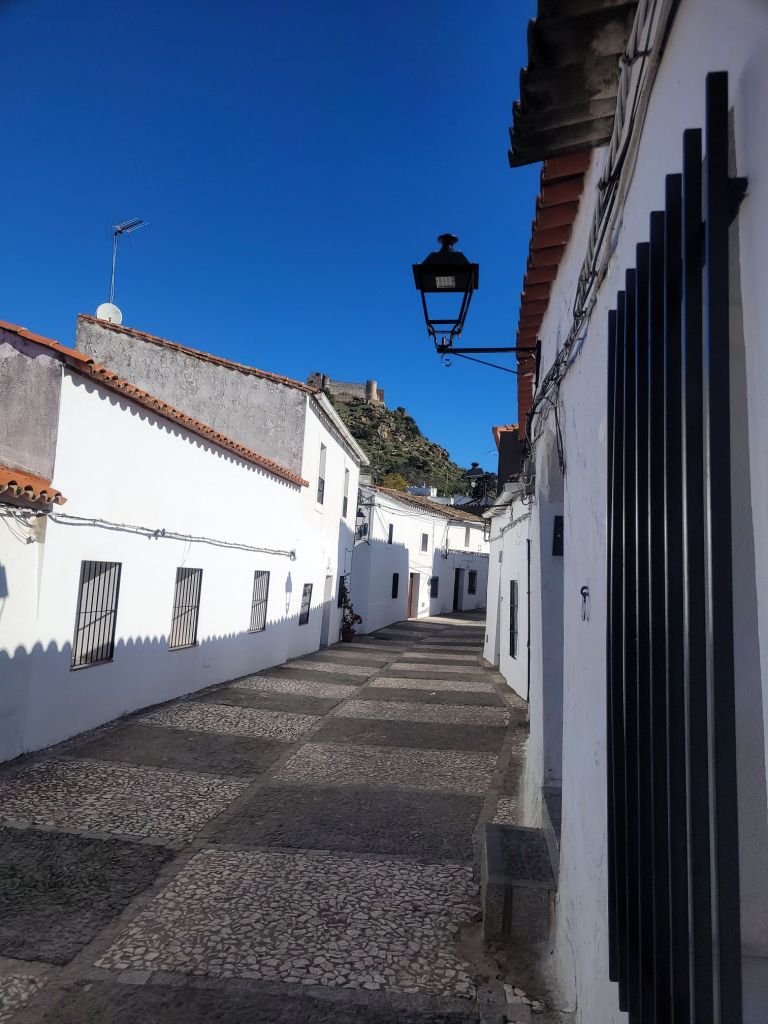
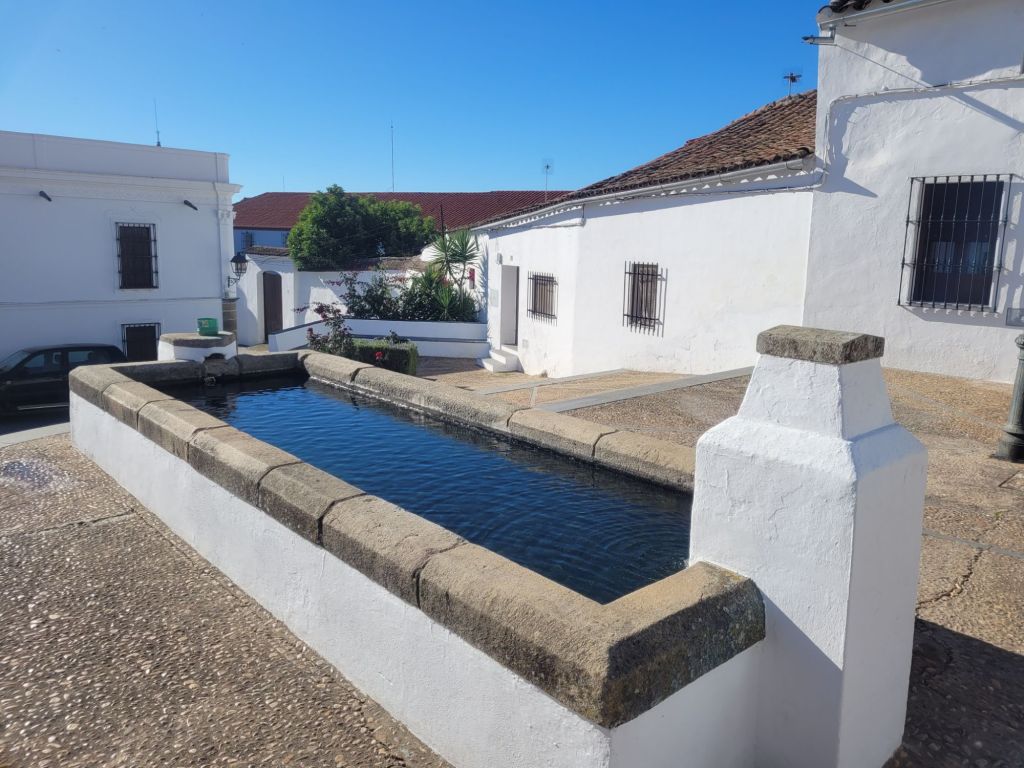
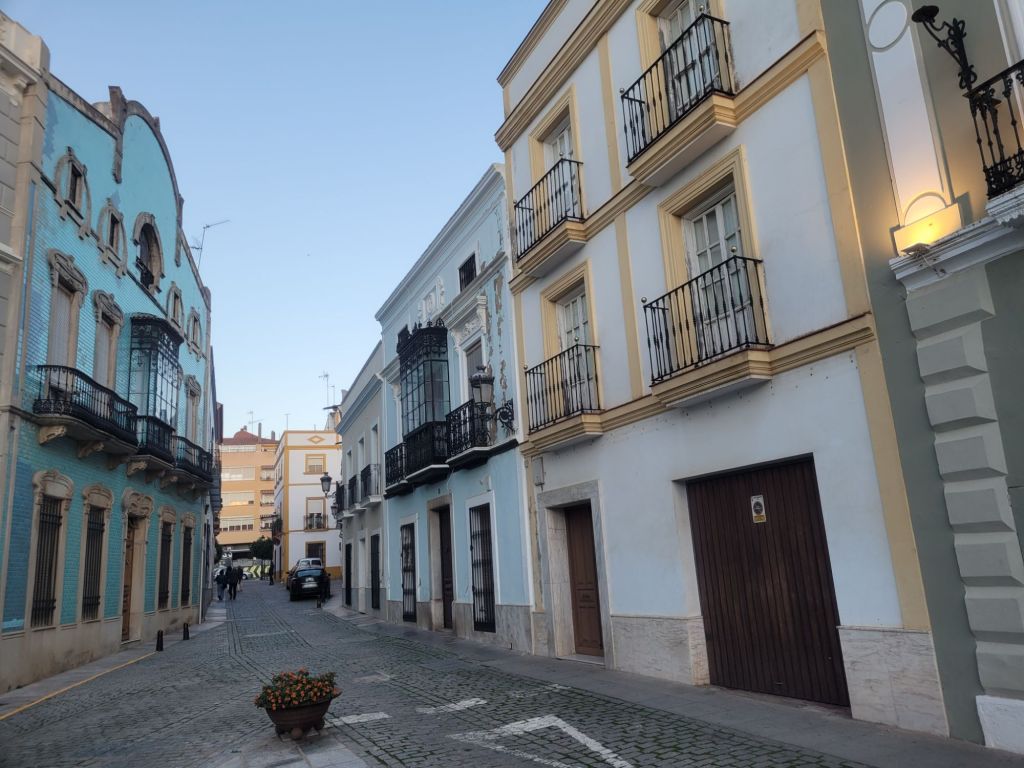
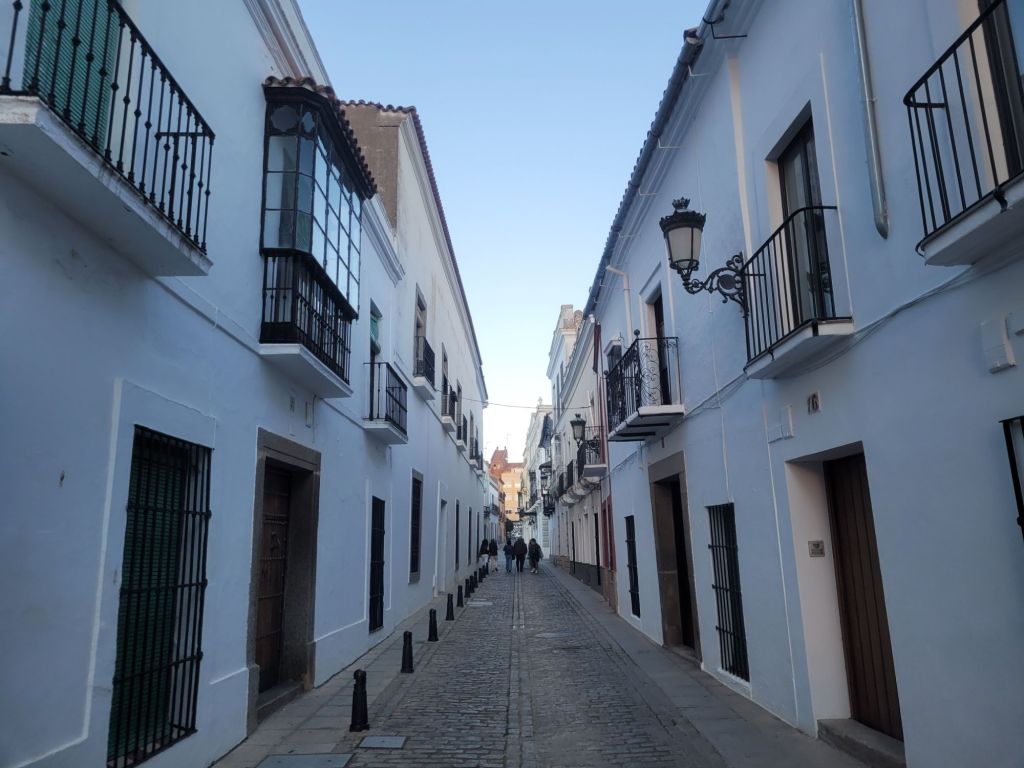
When the term ‘white towns’ is used about Southern Spain, often the villages being referred to are in the far south of Andalucia and seems to apply to more obviously Moorish places. While it may be that the habit of painting everything white came from the Moors (as a way to reflect the hot sun), actually most of the towns we drove through could qualify as ‘white towns’ – and the ones in Badajoz province (which is not in Andalucia) don’t aways announce their Moorishness in an obvious way.
Not only are they united by monochrome (although there are splashes of colour here and there), they are also similar in the narrow winding streets, the black ironwork over windows and monumental doorways. Spainish architecture in this region rarely gives much away: a bland exterior often conceals a beautiful courtyard.
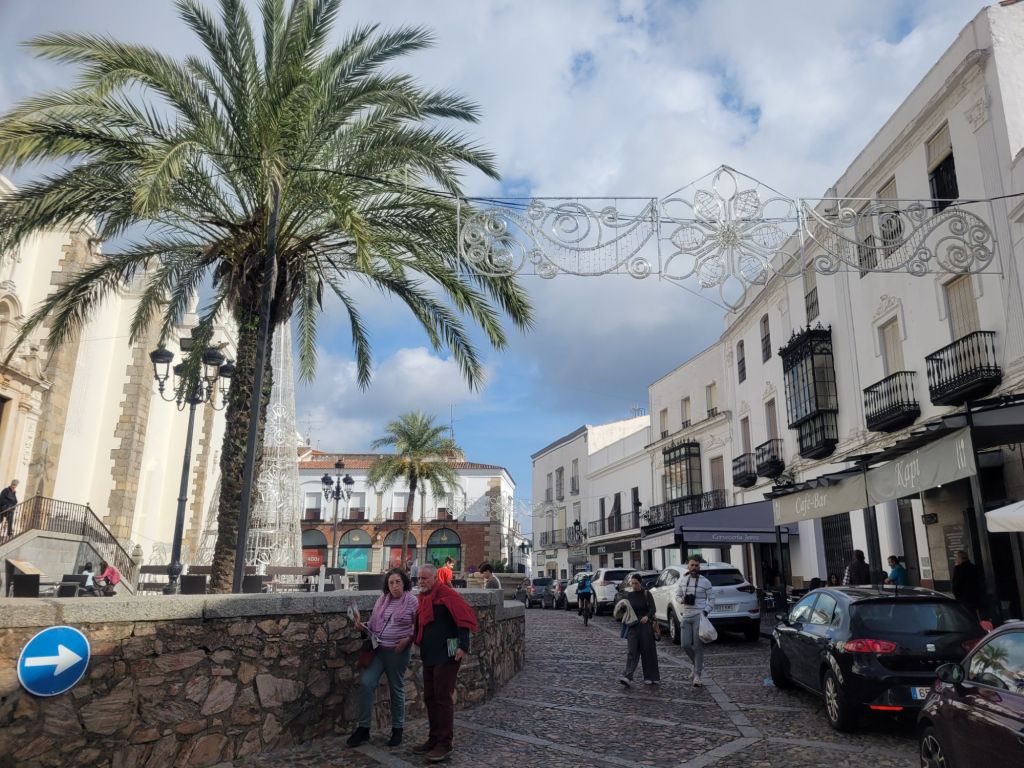
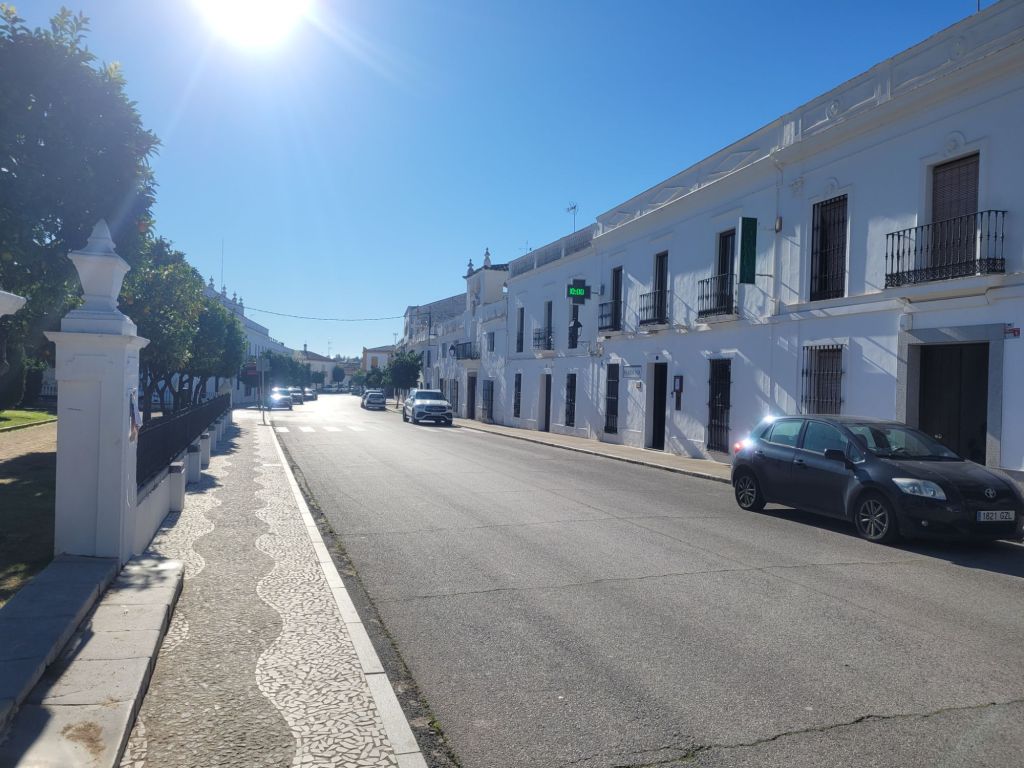
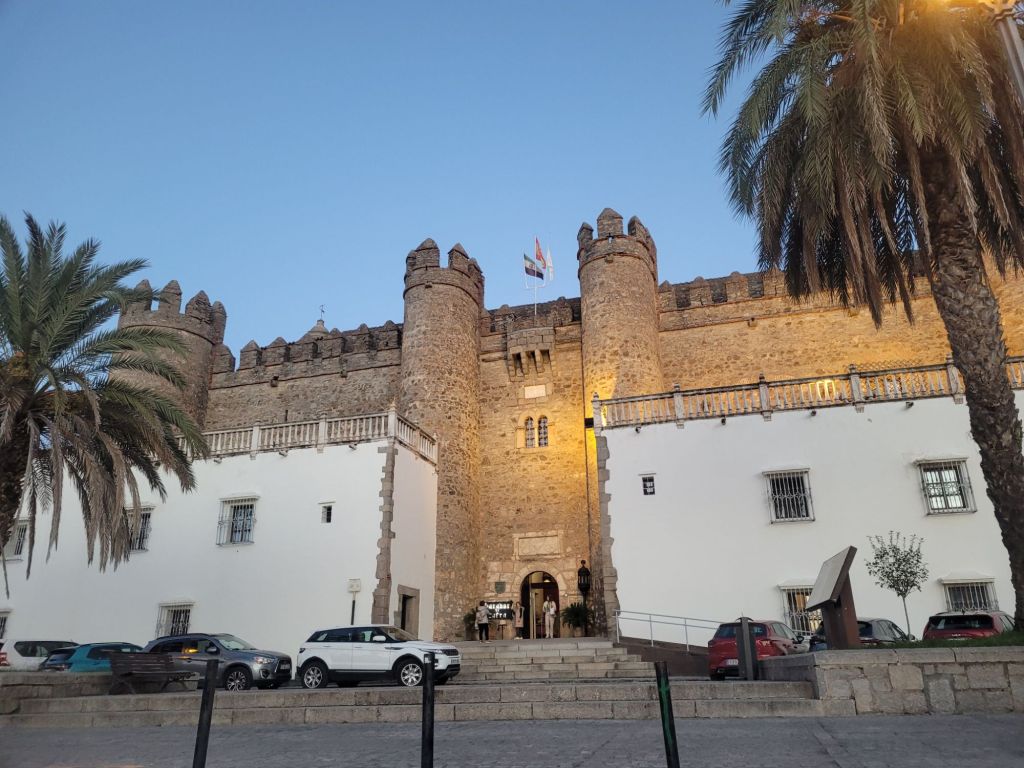
Zafra is a larger town, firmly in the province of Badajoz, which exhibits the same characteristics of a white town but with some much more impressive buildings. Wealth was more on show here, possibly because of the palace built by the Spanish duke of Feria in the 15th century – it’s now a Parador hotel.
While the old part of Zafra is extremely pretty and quite lively, there isn’t all that much to do – we stayed three nights when two would have sufficed (again).
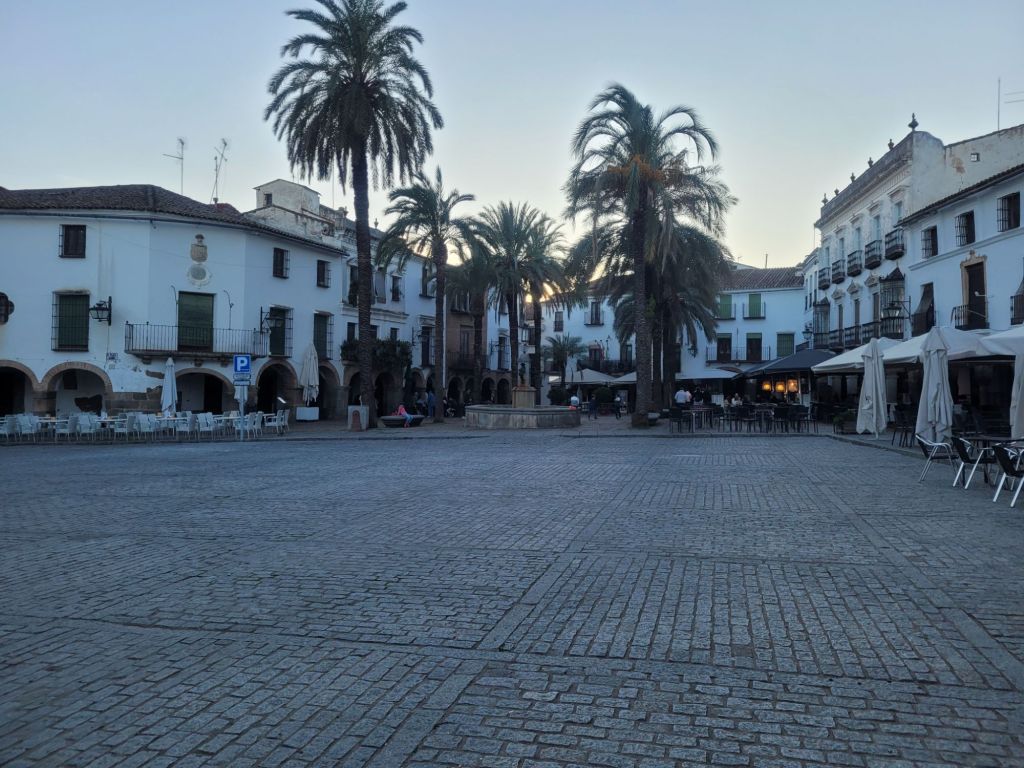
One main attraction is the loveliness of the two plazas: Plaza Grande and Plaza Chica, adjacent to each other, surrounded by restaurants and bars and usually full of people.
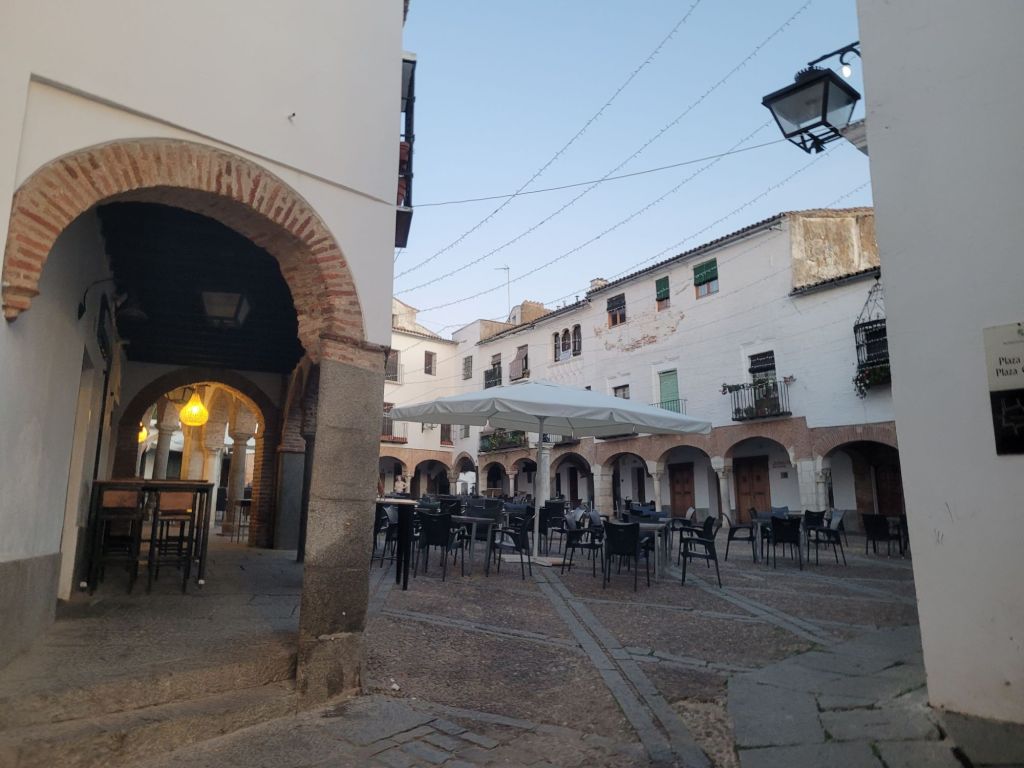

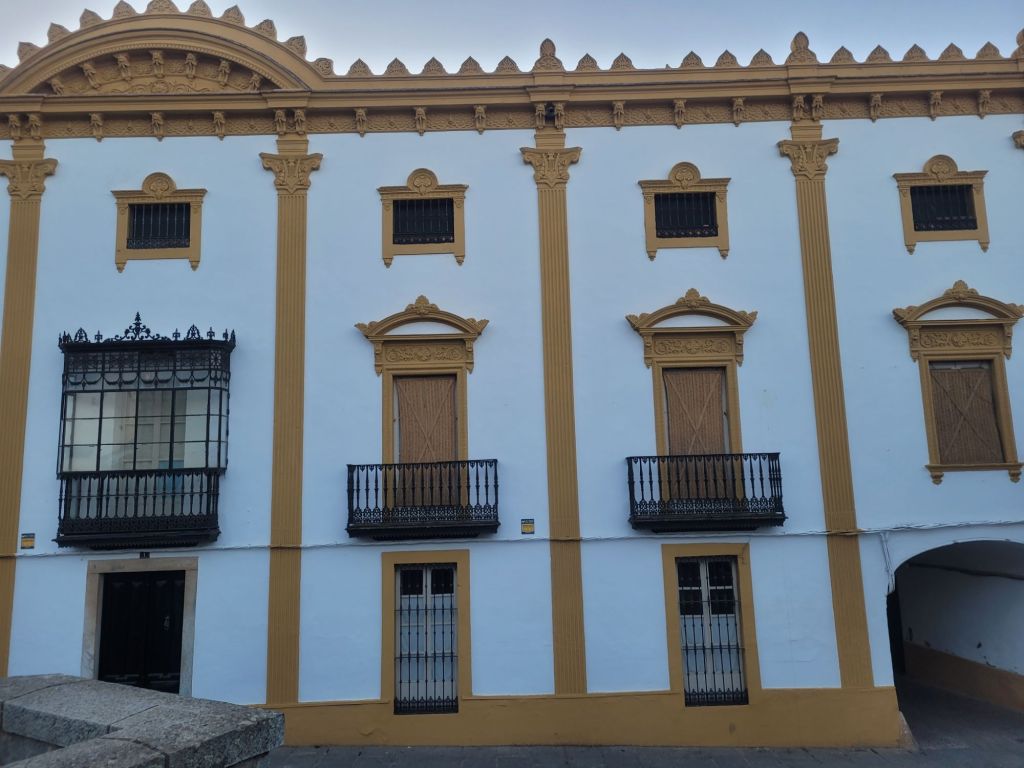
The streets in the historic centre are equally pretty, with the occasional ornately decorated building breaking up the unremitting white.


It was originally walled, with the palace (or castle) built in a gap left in one section. We took the tour of the Parador and, despite what various websites say, the guide was most insistent that the palace was not built on the remains of a Moorish fort. Apparently it was flat, empty ground. Although it looks like a castle, this is an illusion as it isn’t fortified enough to sustain an attack.
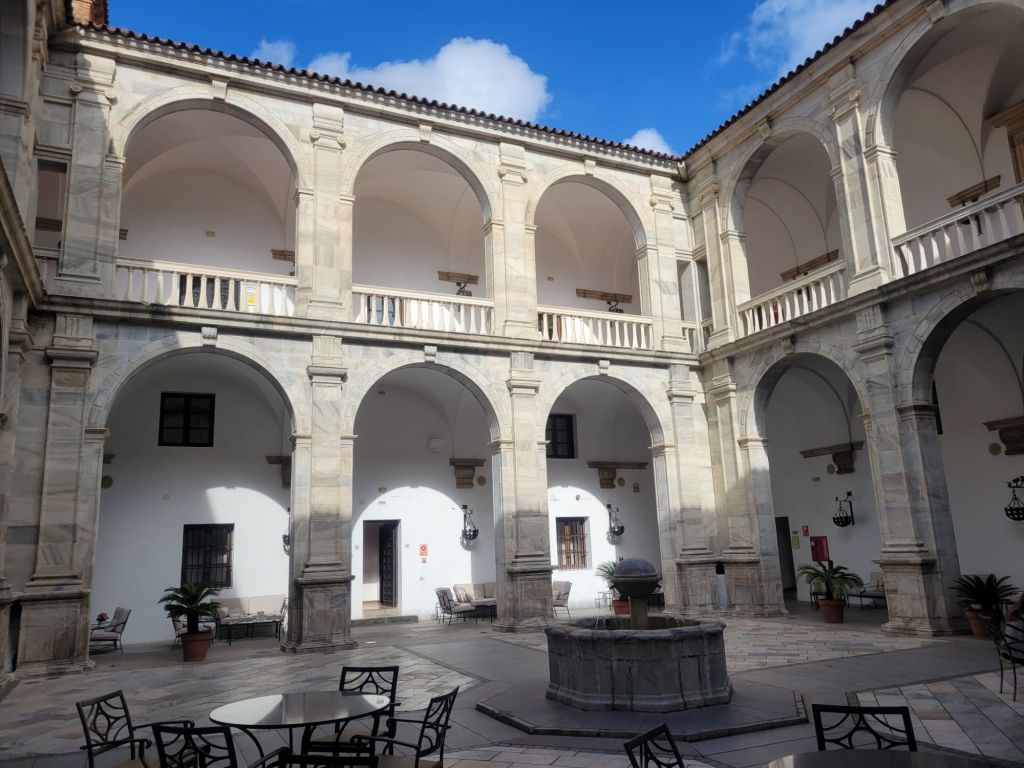
Built around a fabulous courtyard, that was later covered in white marble to reflect the heat, it’s an impressive building with extremely interesting public rooms. There is a lovely chapel (now a meeting room) decorated in mudejar style. The paintwork in the dome has had very little renovation, only some of the lower sections have been touched up. It looks black to the naked eye, the blue only becomes apparent in certain lights (or pictures).
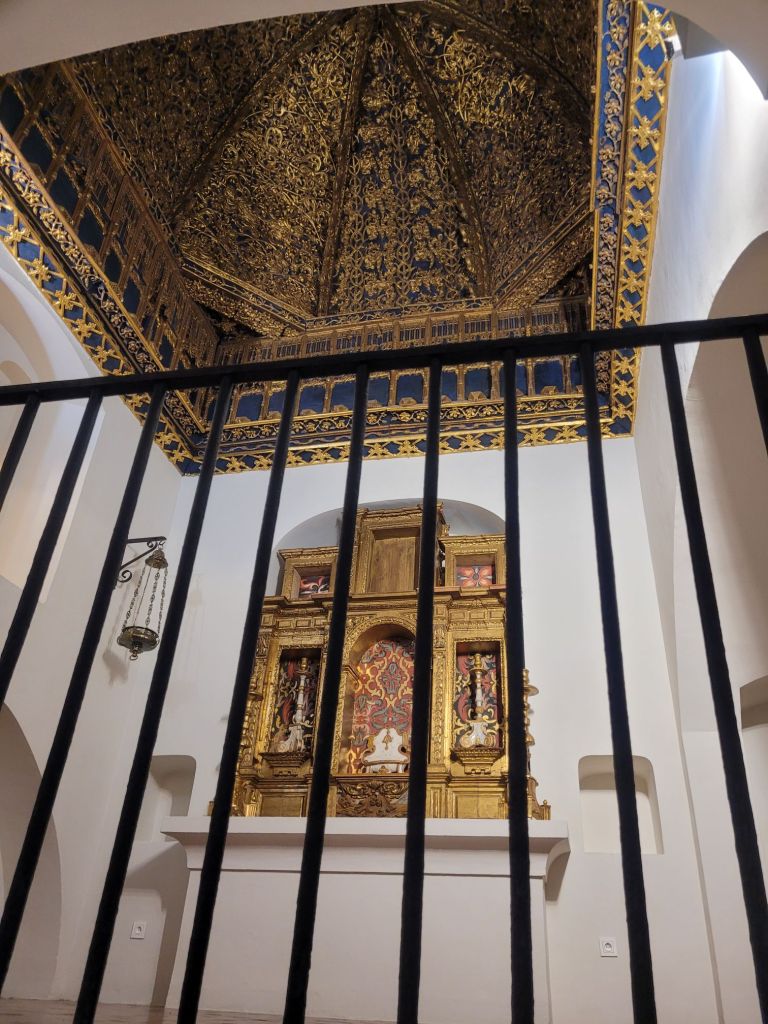

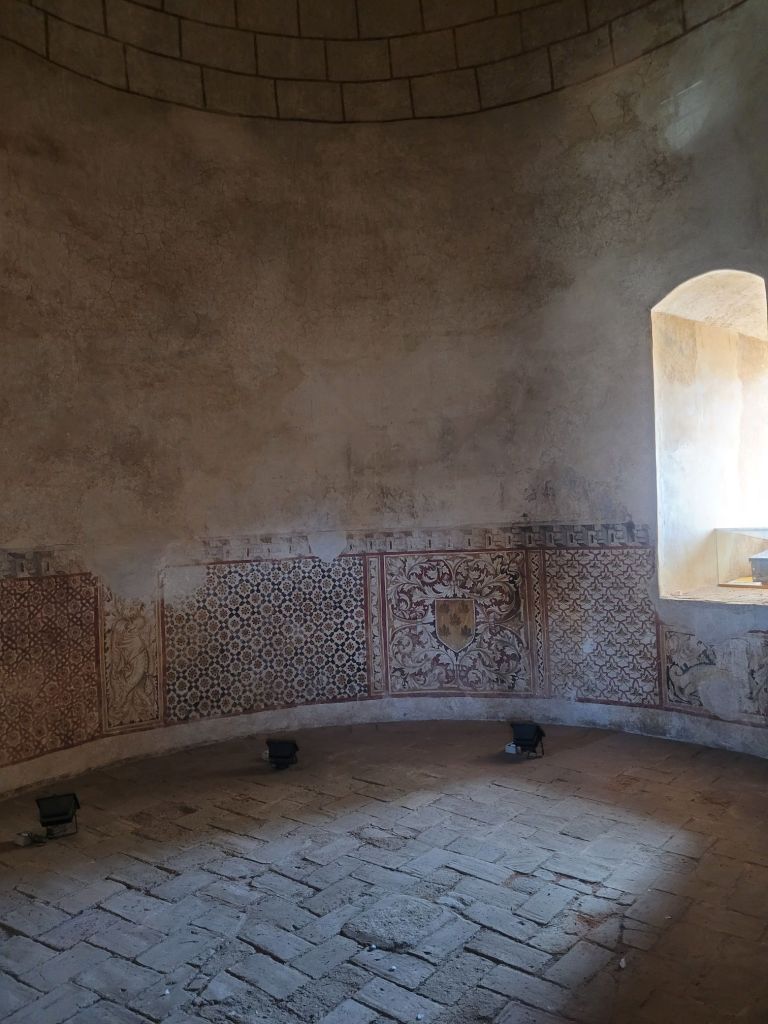
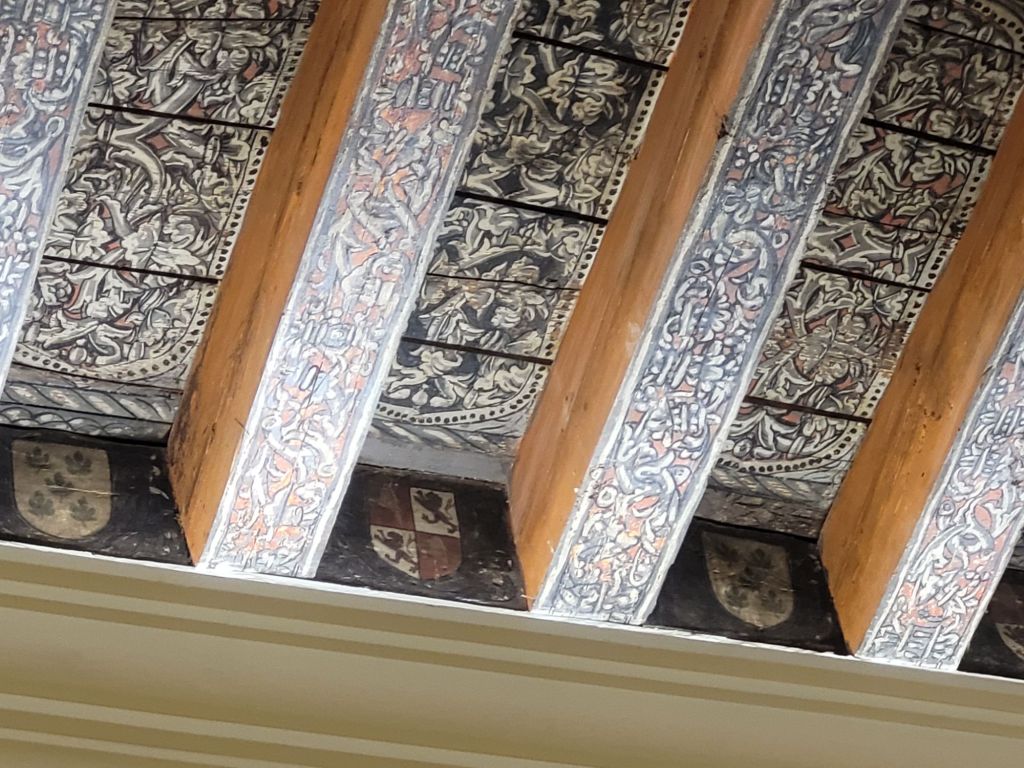
The building was in a desperate state until it was rescued by the Parador chain of hotels – this is, after all, their speciality. Aside from the chapel, there is a small room at the top of one of the towers with mudejar tiling (now not on show as the department of Antiquities has told them to shut it for protection) and a decorated, beamed ceiling.

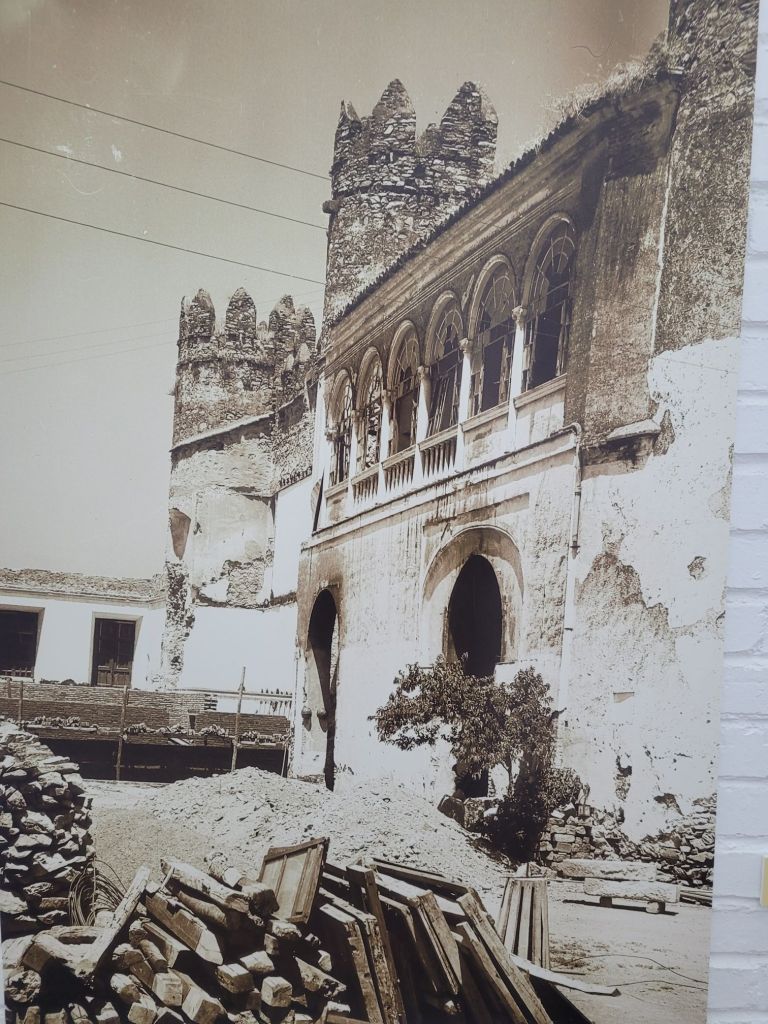
While the building is impressive, as a hotel it isn’t as comfortable as other Paradores we have stayed in. And the food isn’t as good.
The wine and ham are, as always, wonderful!
 Retired? What now?