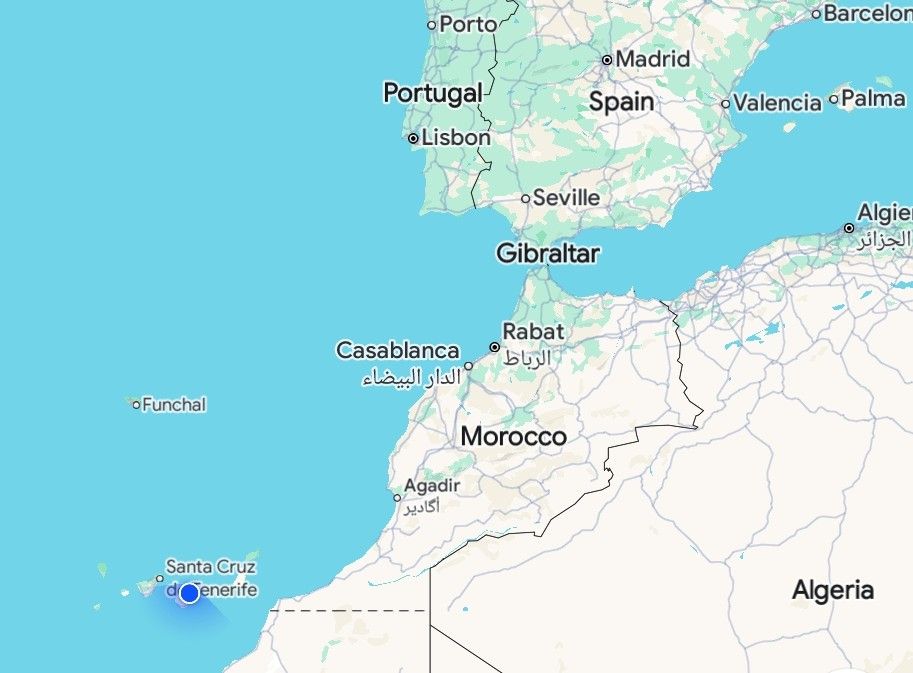
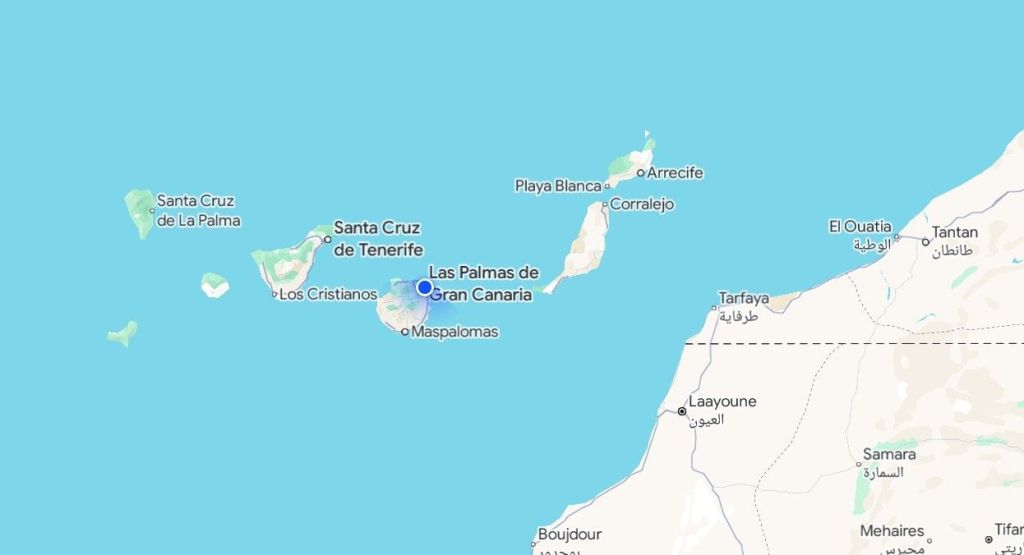
East this time: Gran Canaria, Fuerteventura and Lanzarote (in that order).
Why the Canaries? No, they weren’t our favourite place last time, but the major positives are winter sun (ie more sun generally) and better temperatures than gloomy UK weather in January.
Plus, having done three of them, we felt obliged to get the whole set.
(Yes I am aware that we haven’t visited or even mentioned El Hierro, but it’s not straightforward to get to, so it didn’t get included in our plans.)
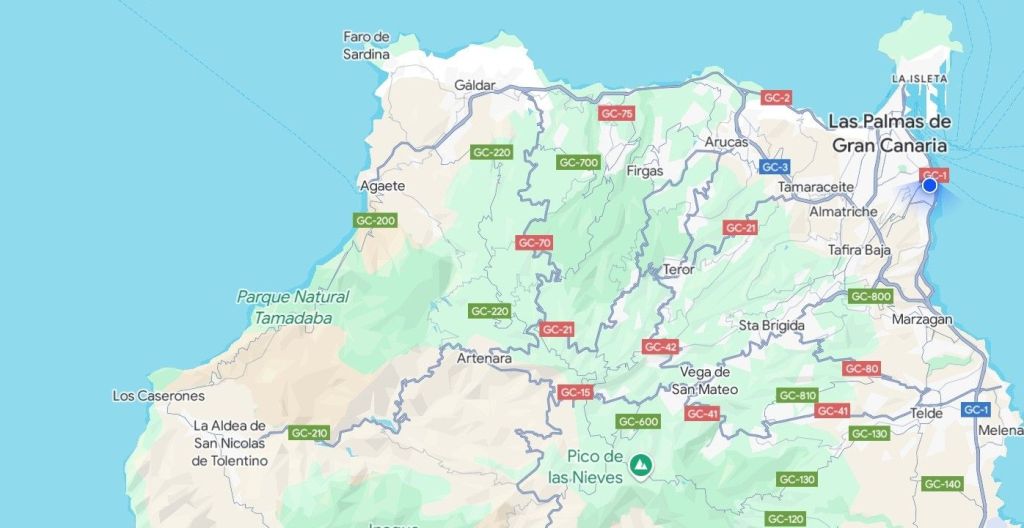
We started in the eastern capital of the autonomous region of Las Islas Canarias: Las Palmas de Gran Canaria, in the north-east of the island. This city is the ninth largest in Spain and shares its capital responsibilities with Santa Cruz de Tenerife (which is a lot smaller).
It is a much MUCH bigger place than expected, as we discovered when we reconoitred for our car hire and the ferry.
Let me just say, it was a high step count day.
Las Palmas has a charming old town, a very touristy city beach district and an awful lot of modern development. Over the years, there has been some ‘re-formation’ with the coastline being extended into the sea in order to provide a coastal motorway to the docks. This extension of land surface started in the late 19th century, when the isthmus of sand connecting La Isleta was built up to provide for a bigger port.
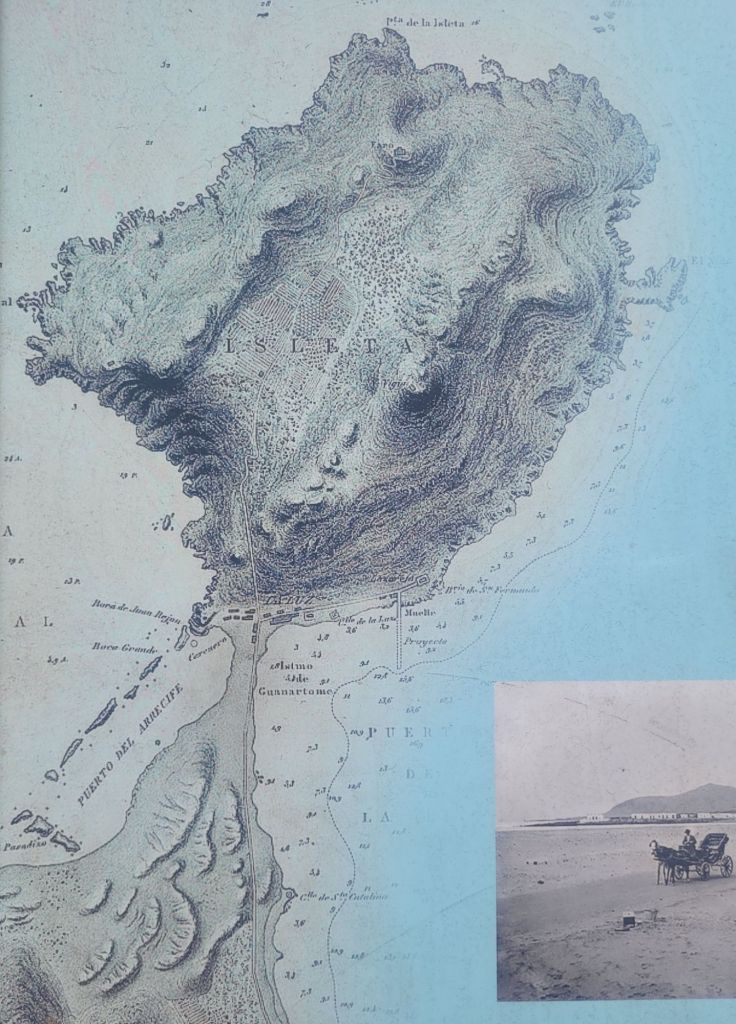
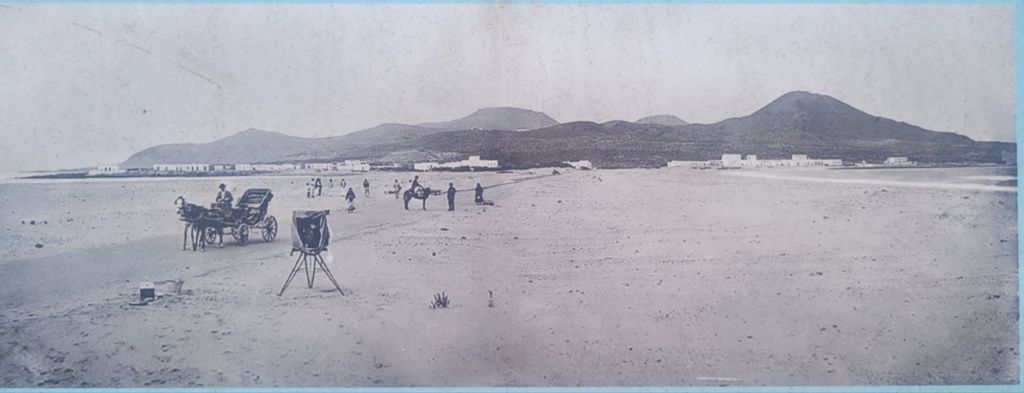
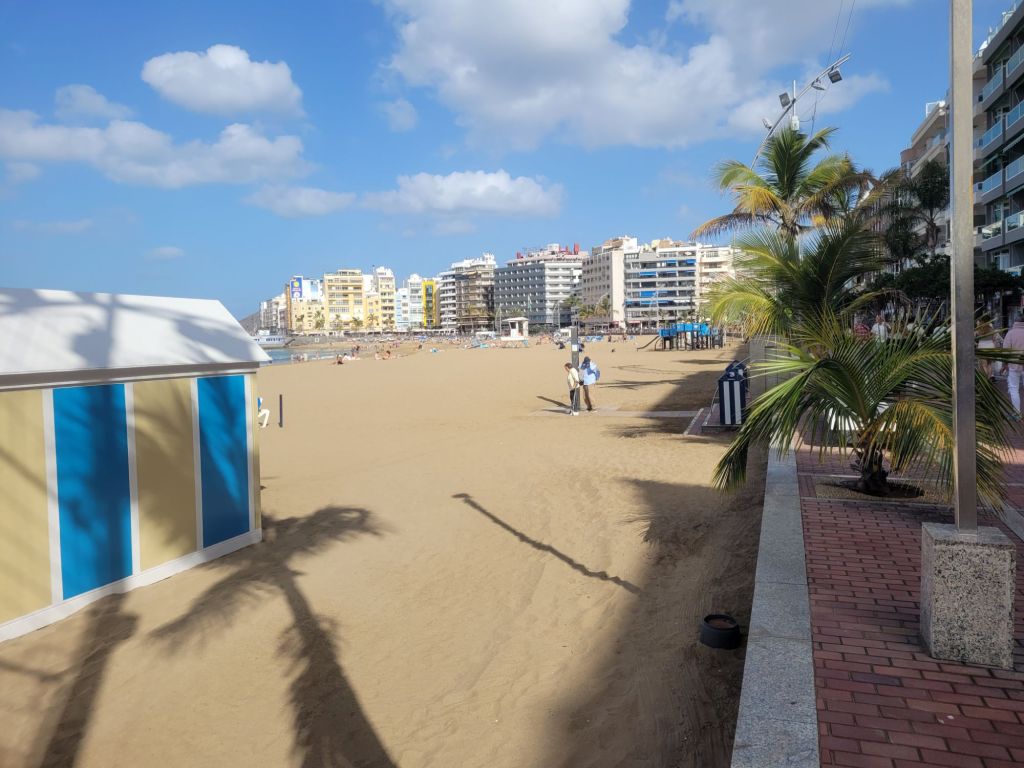
What the old picture doesn’t quite show is that the water on either side of the isthmus lapped almost together – the sand bar was incredibly narrow. The new picture doesn’t quite reveal the extent of the development betwee the two sides – there are several roads running parallel to the shore, plus a market occupying what was once beach.

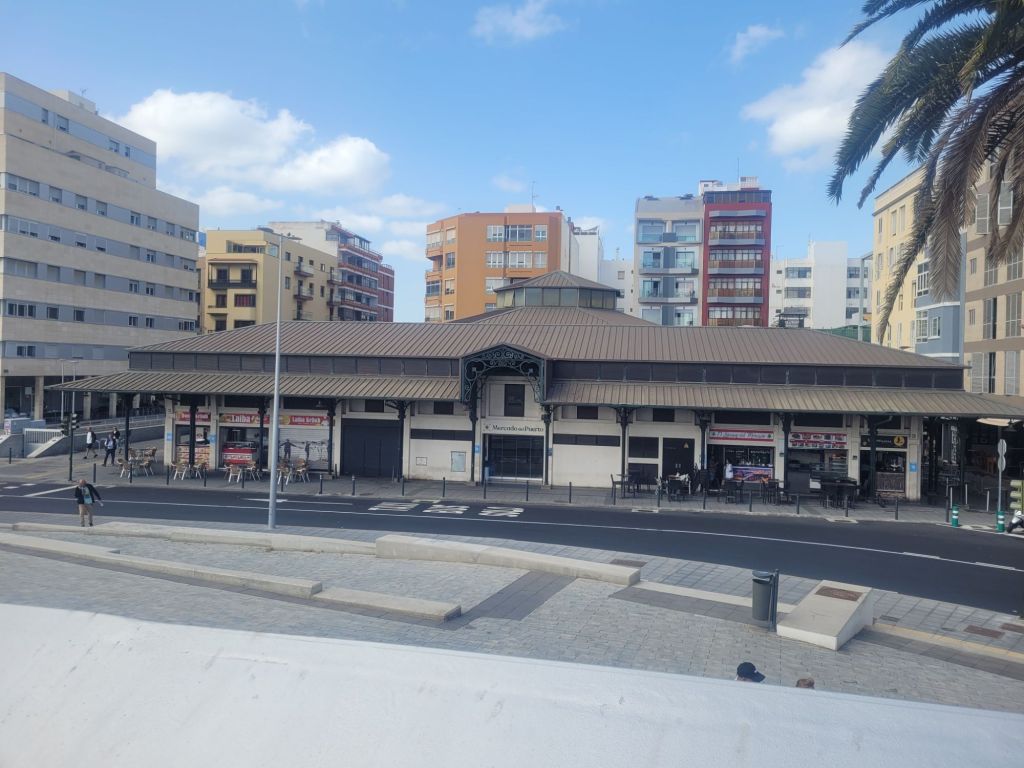
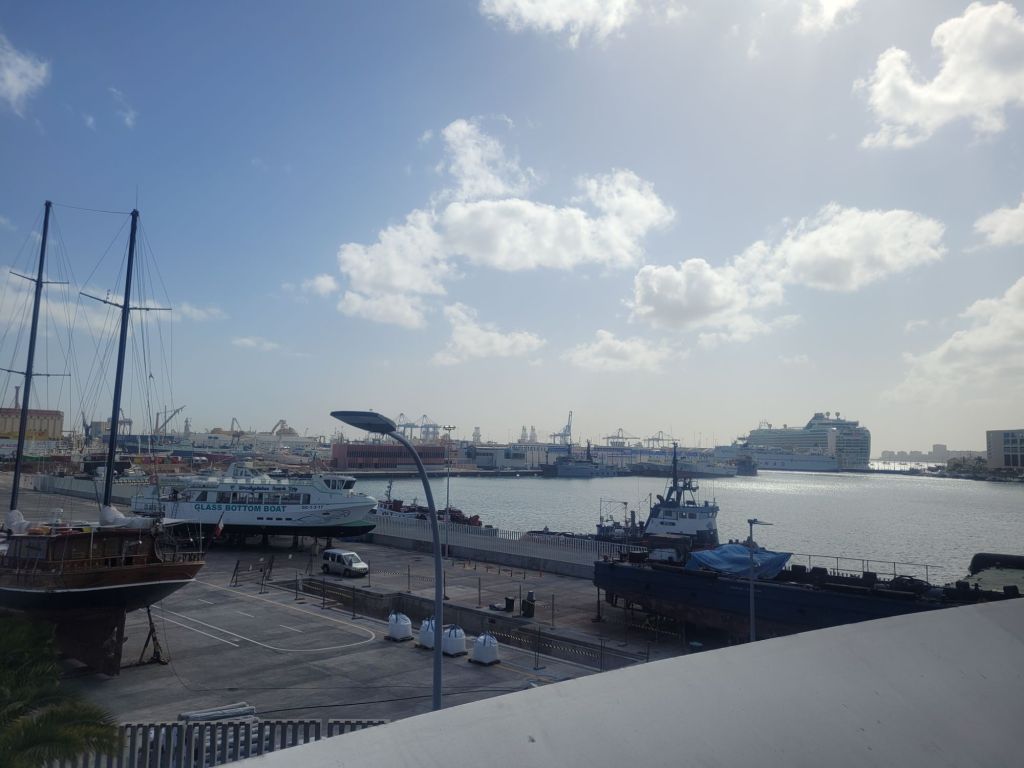
The coastline east of the city is unattractive, being mostly docks or dual-carriageway. The object seems to have been to shuffle people and goods as quickly as possible to the docks or Las Canteras city beach, which is where most of the tourists are.
And the beach is enormous, with beautiful golden sand for much of it; a long reef (La Barra) protects a stretch of the water providing warmer and more sheltered swimming (no, neither of us swam). Parts of La Barra are, just, exposed at low tide but its presence is always seen as a white foamy strip of breaking waves.

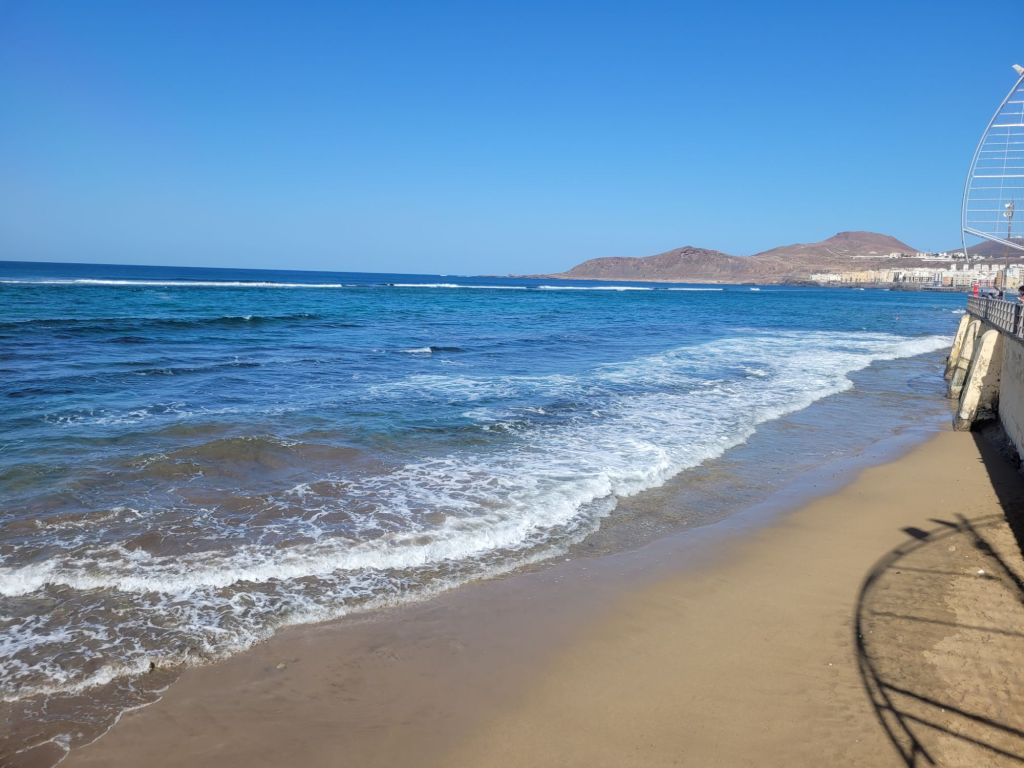
Development on the isthmus has changed the movement of the sand. Whereas previously the sand would have move across the isthmus eastwards, nowadays it moves up the beach during the winter, leaving rocks uncovered at the westerly edge. During the summer, this drift is reversed, so that golden sand covers the whole stretch. The westernmost section is also darker, with areas that glitter with black pumice sand that is very soft and sticky.
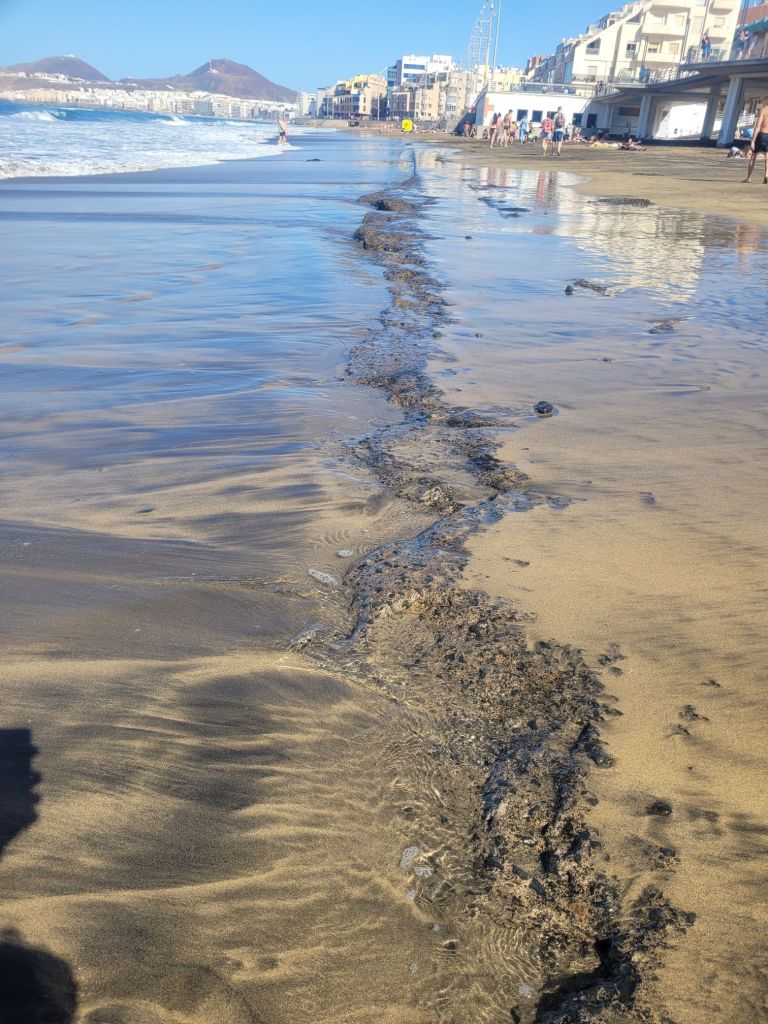
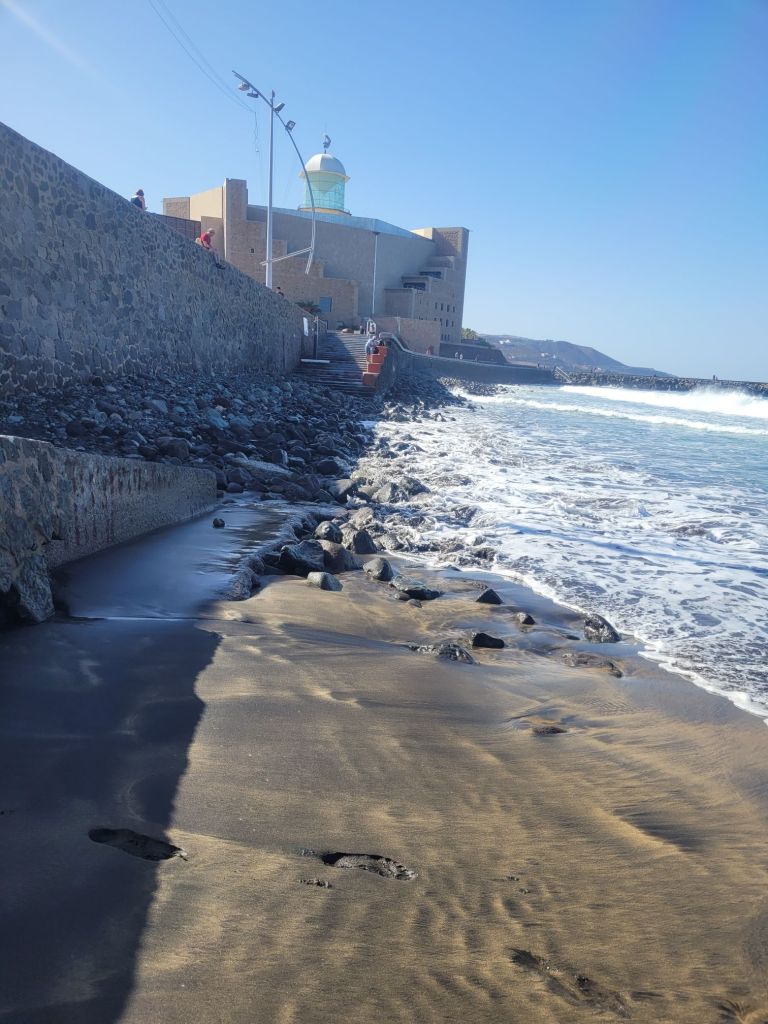
It is undoubtedly one of the nicest city beaches we have seen, and it is absolutely clear that everyone wants to enjoy it. The authorites have installed regular showers for swimmers and surfers, and even some ‘foot showers’ on the stairs leading up to the promenade. Along the promenade there are speakers making regular announcements about rubbish, cigarette butts, drinks cartons…
They are trying really hard to keep it clean and pleasant for everyone.
Understanding this did not stop us feeling a bit sad that there is quite so much development

and exceedingly grateful that we were staying in the old town, where there were fewer tourist ‘tat’ shops.
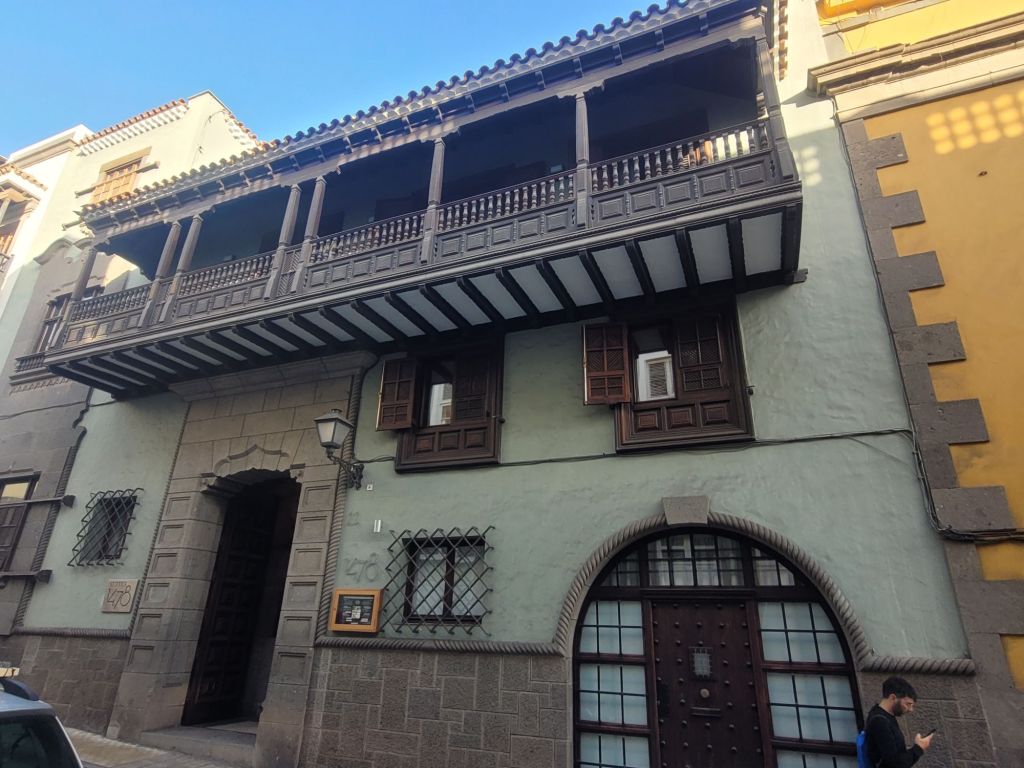
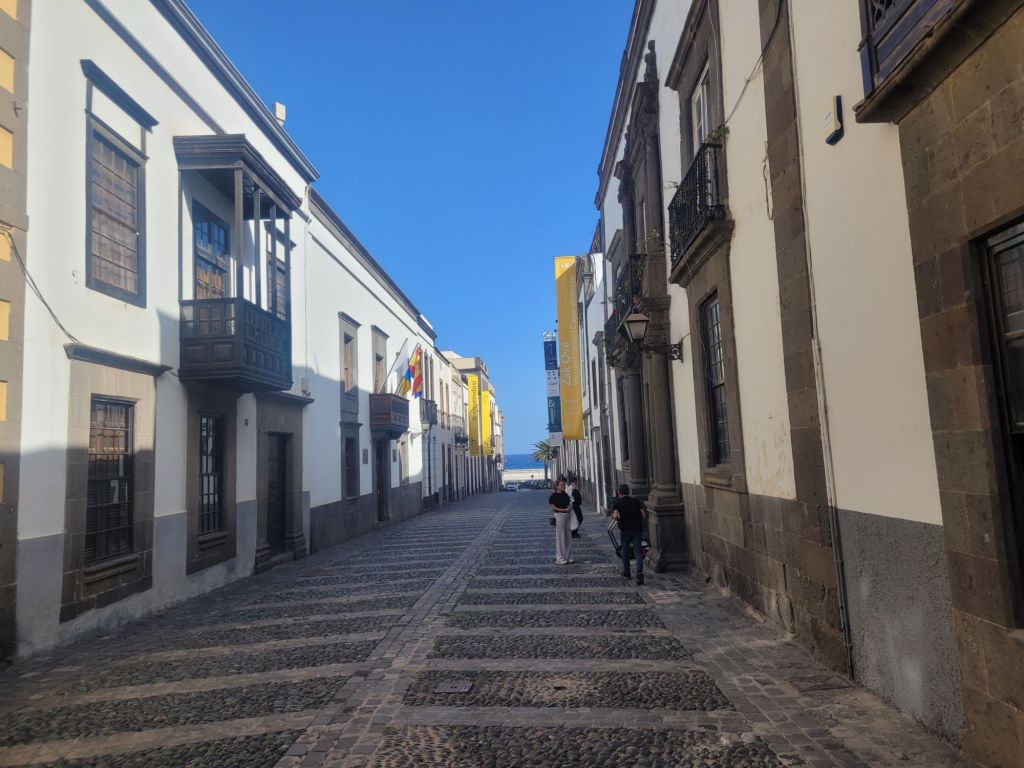
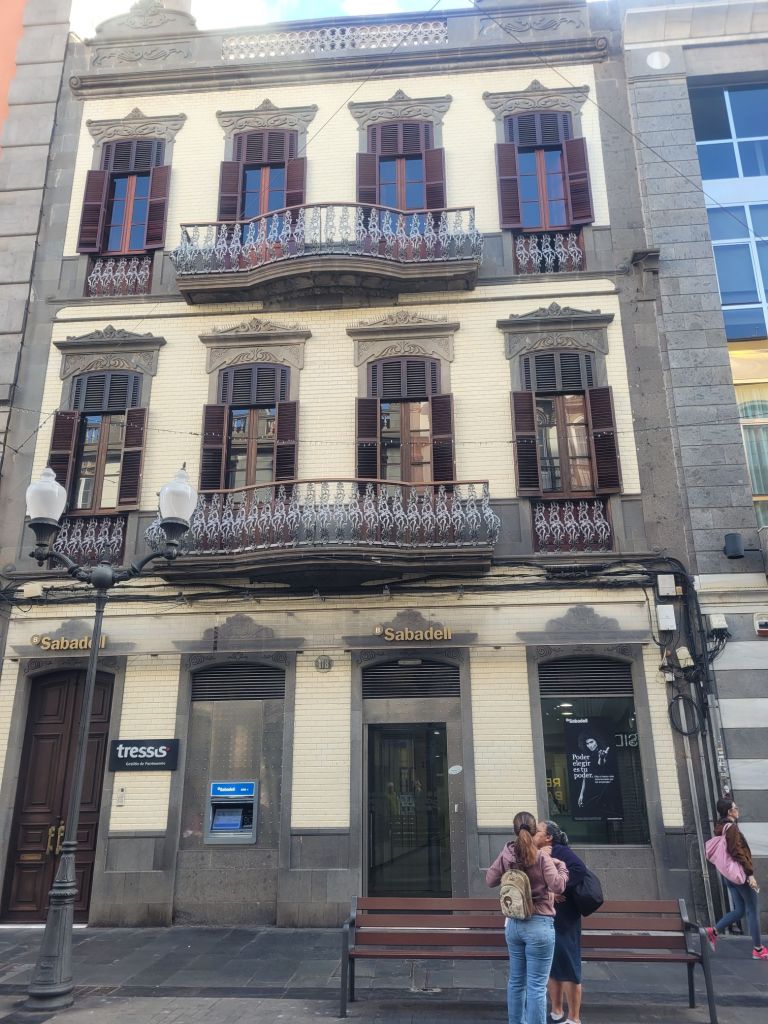
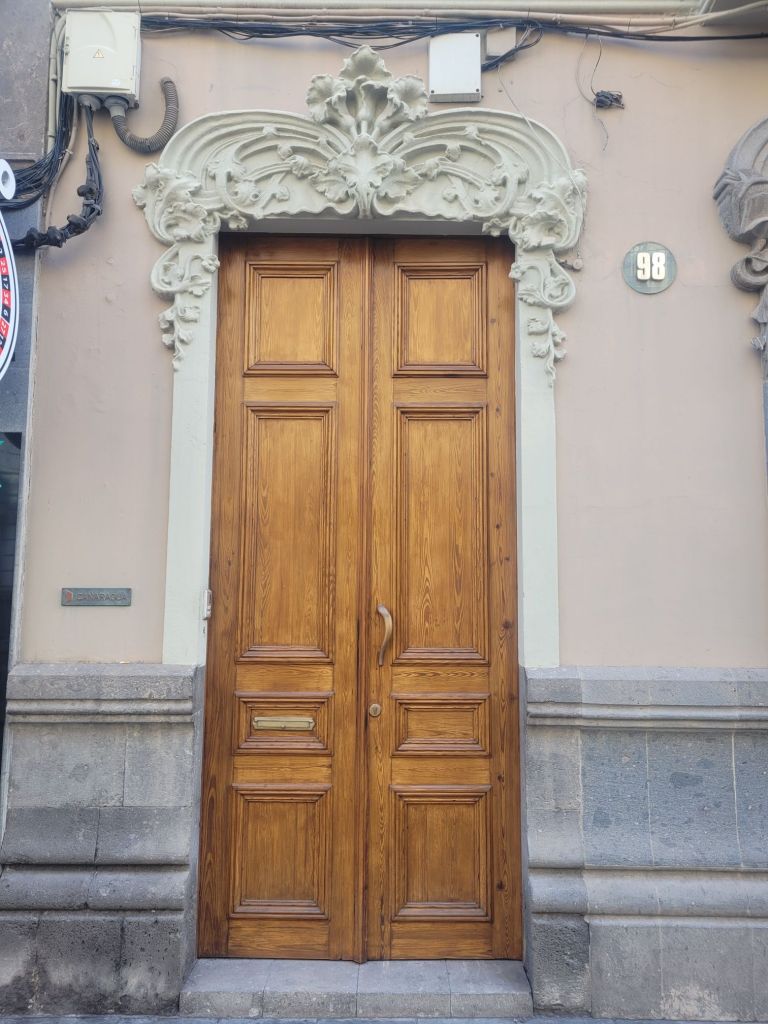
The old town is a mixture of styles, from classic colonial Spanish (wood or stone around openings, monumental doorways, white wash walls…), Canary Island architecture (more wood, less stone, wooden balconies…) and what I think is called ‘Art Nouveau’ – or ‘Art Moderne’? Some buildings look similar to those turn of the 20th century buildings in Barcelona. There is a mix of colours, a nice series of bars and restaurants (we ate well), some pretty (if small) open spaces and two excellent museums.
Balconies (of every material) feature large, as do ornate doorways, and there is a lot of colour.
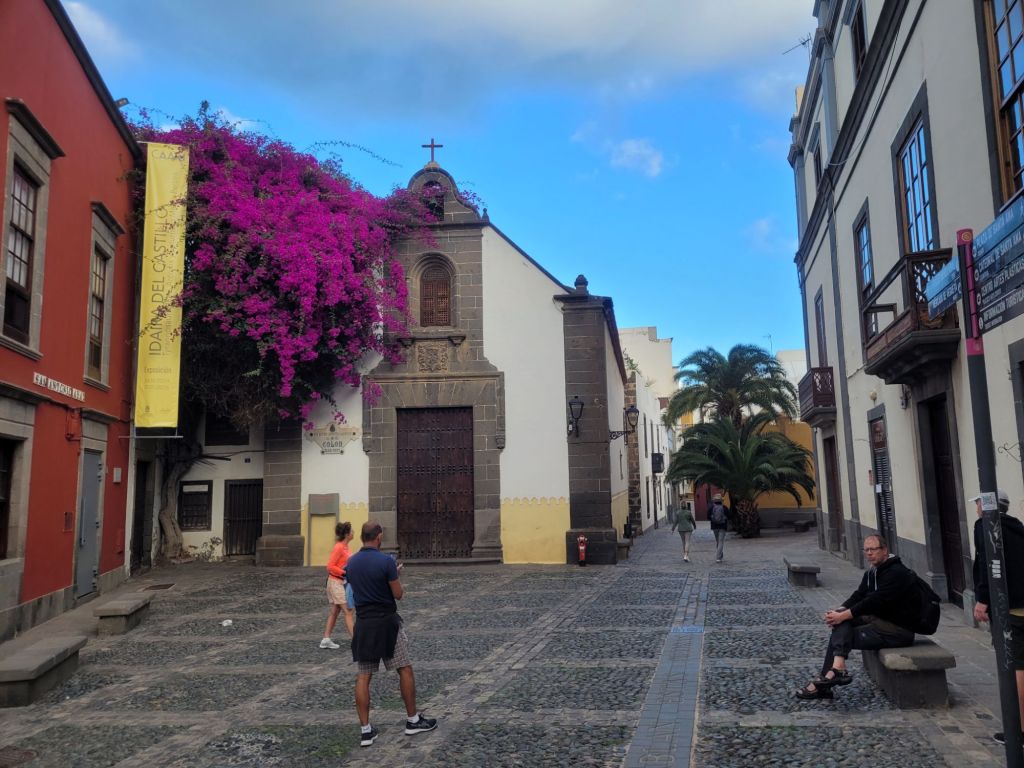
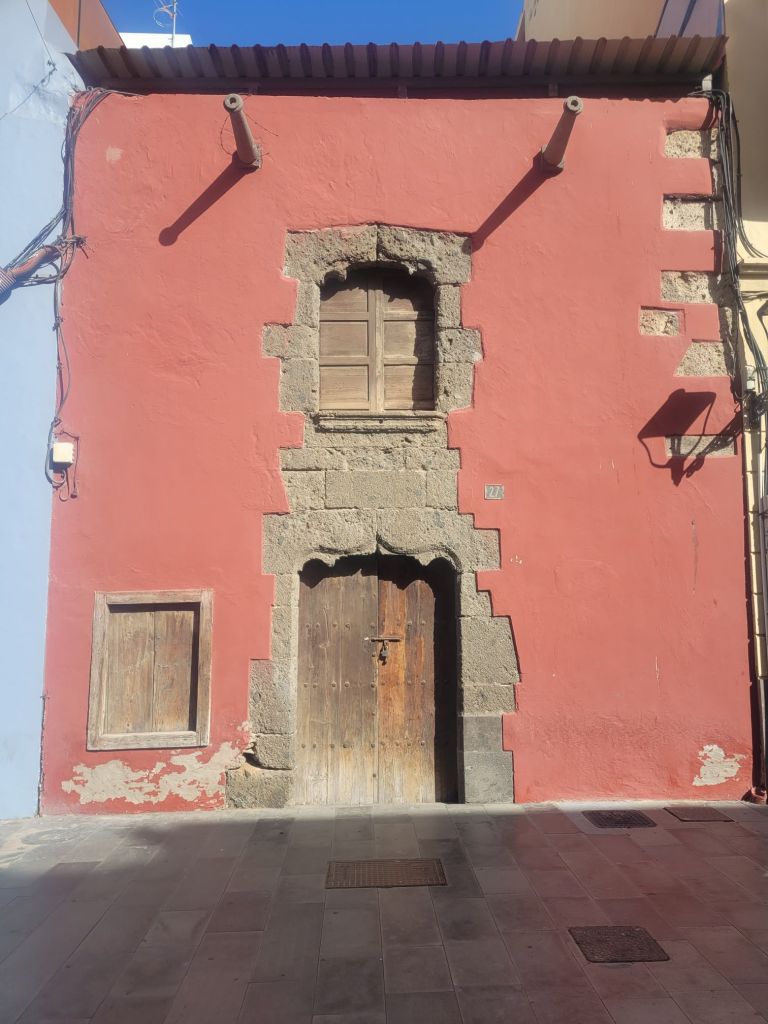
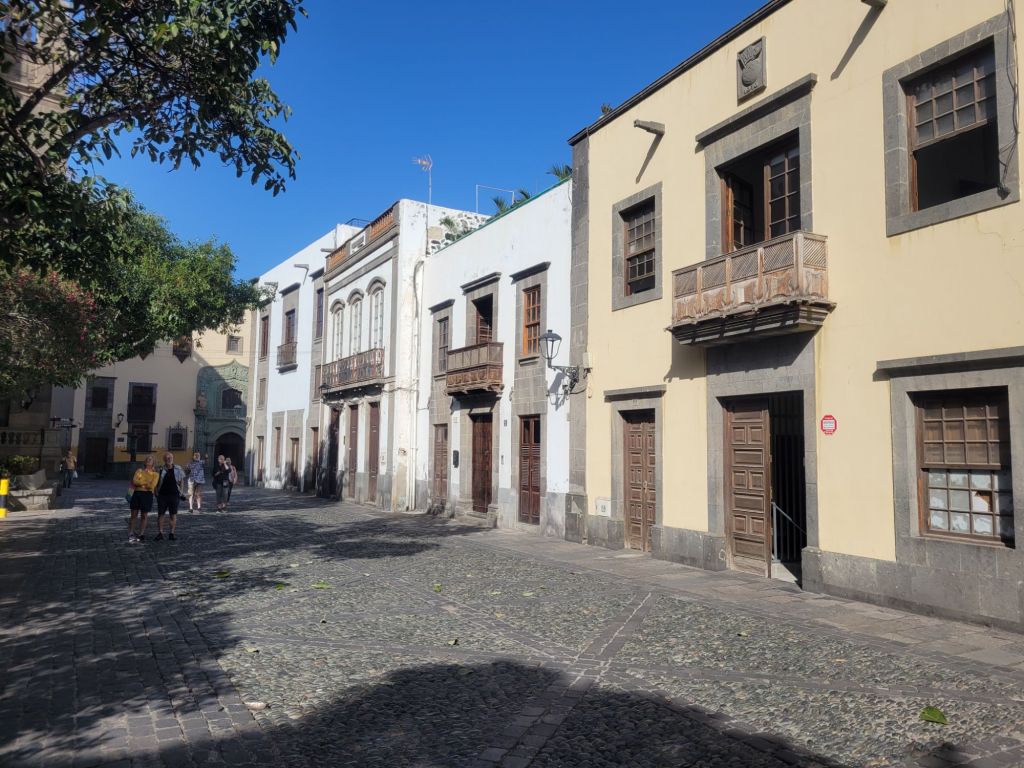

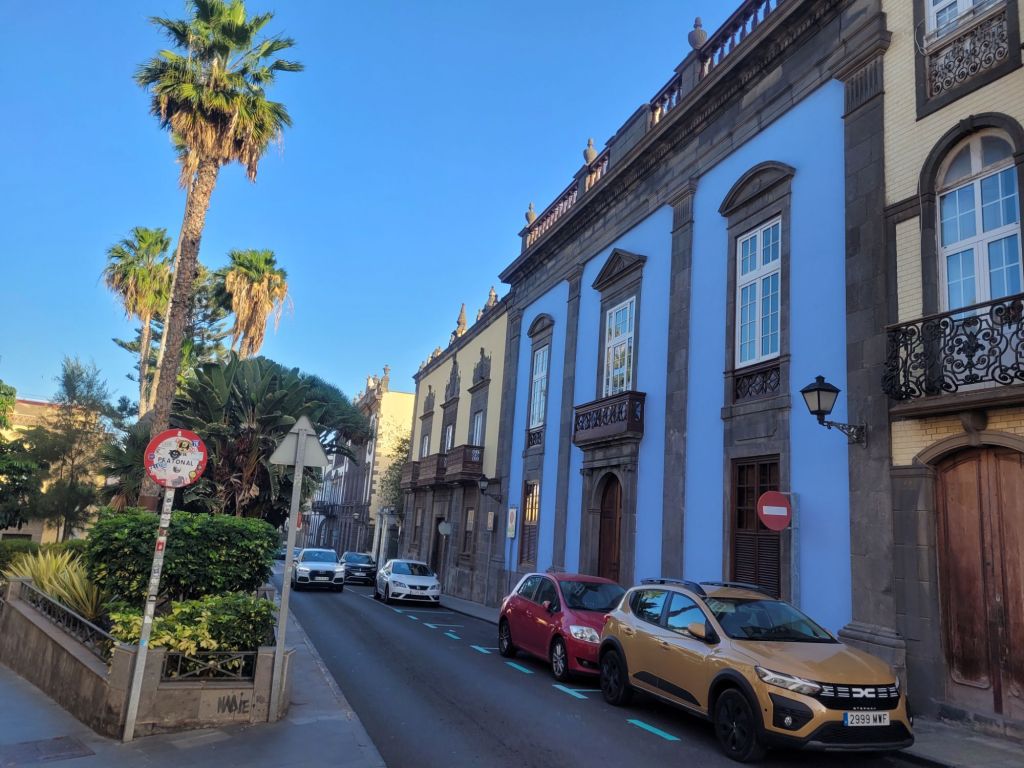
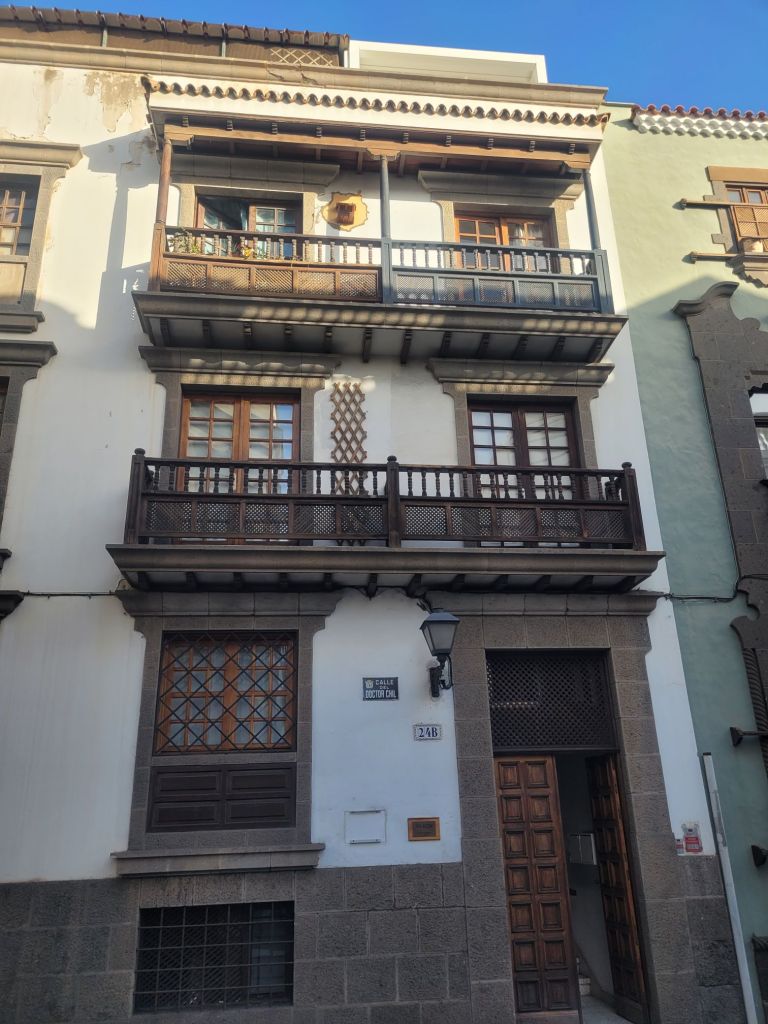


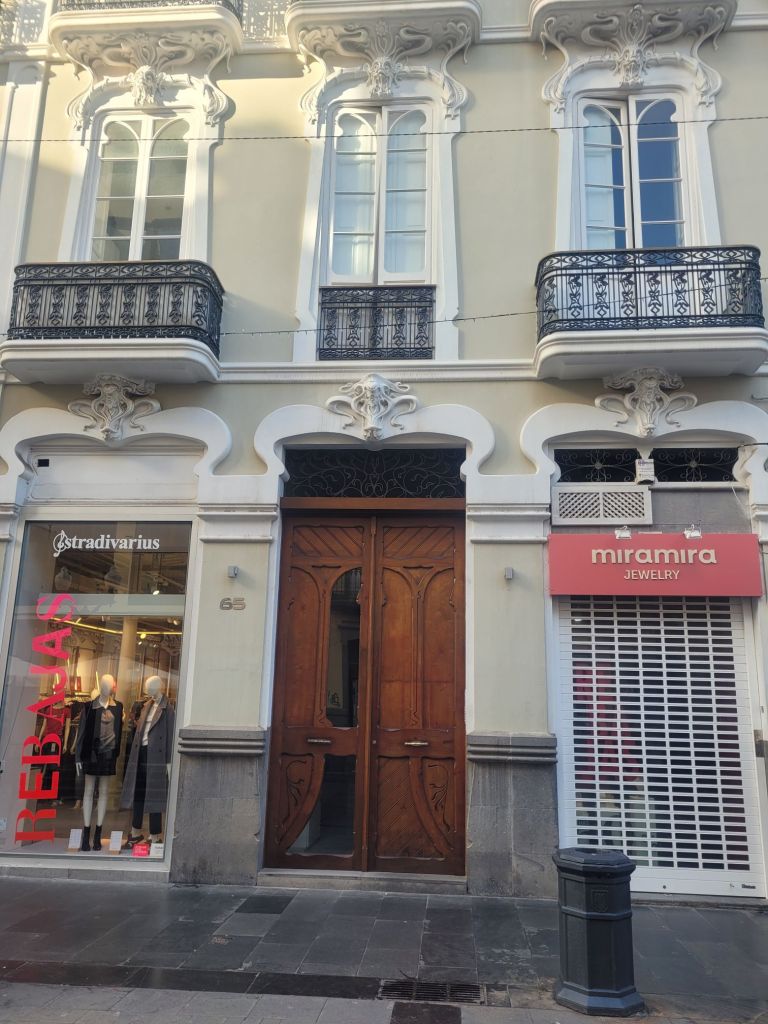
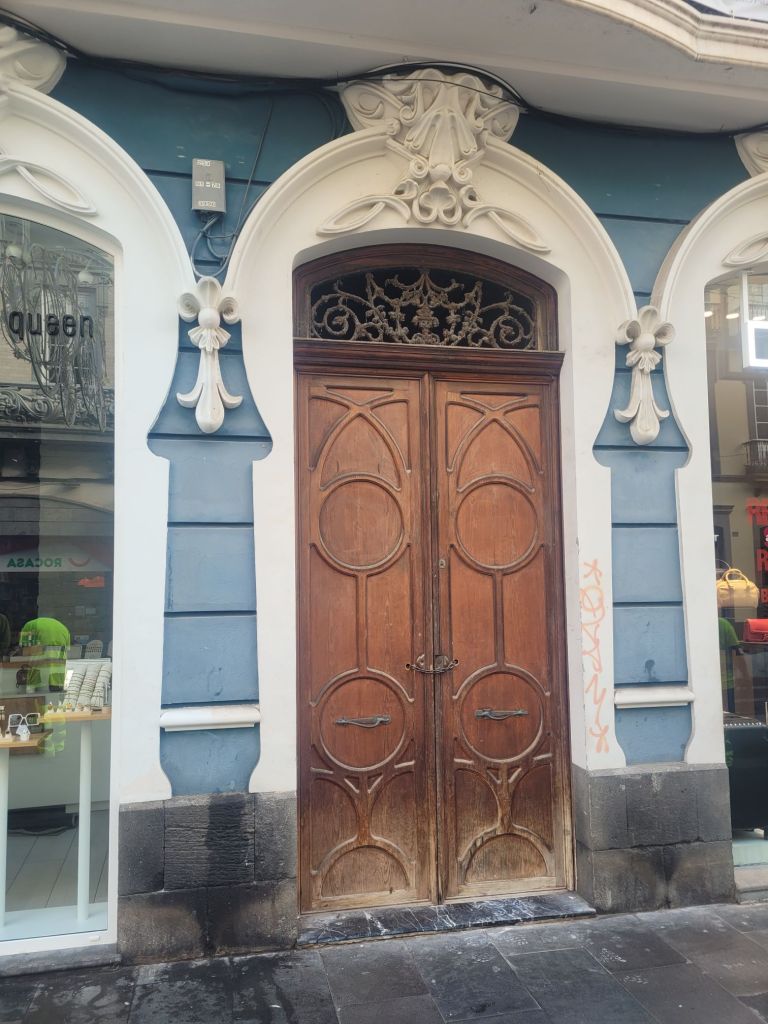
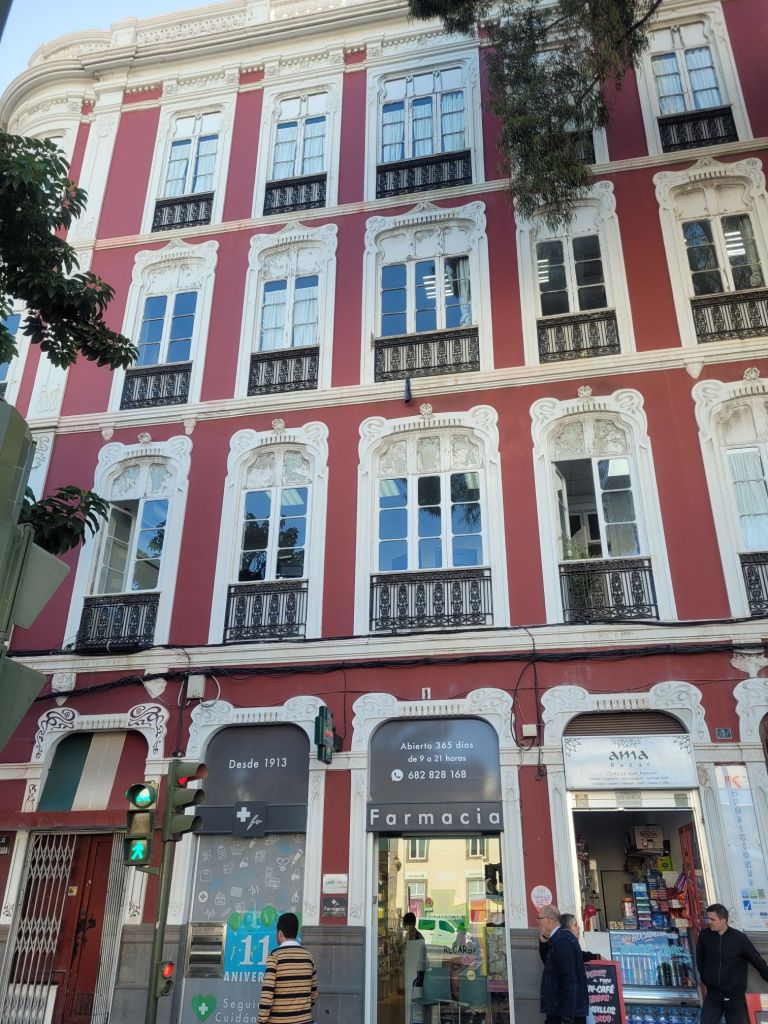
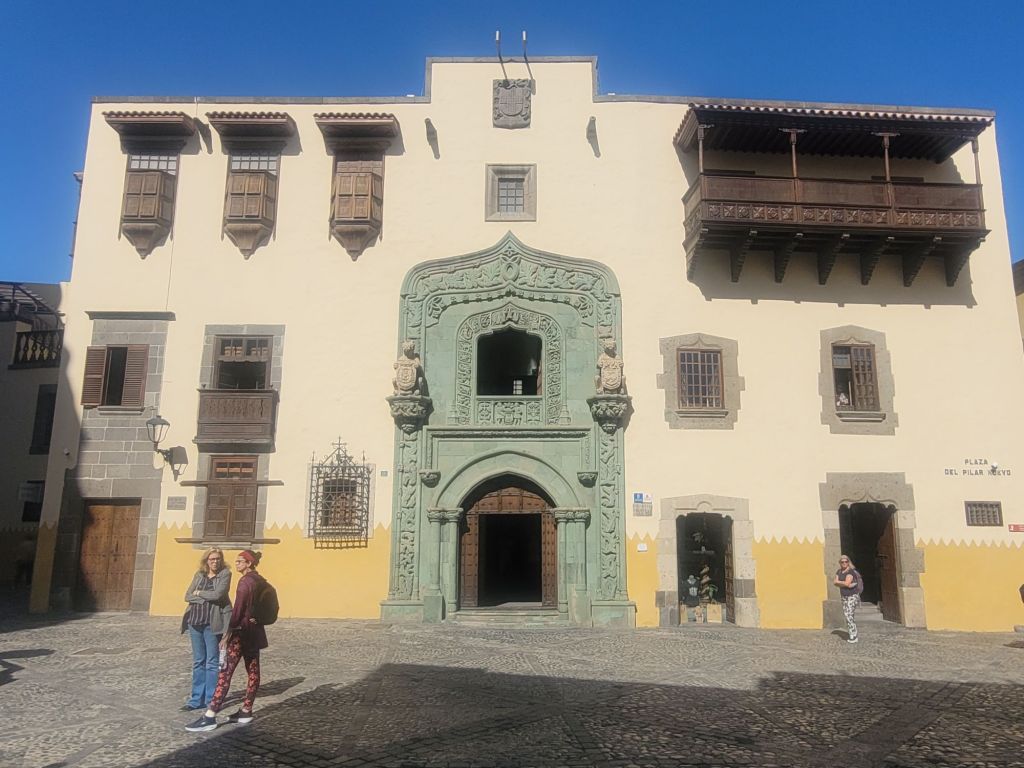
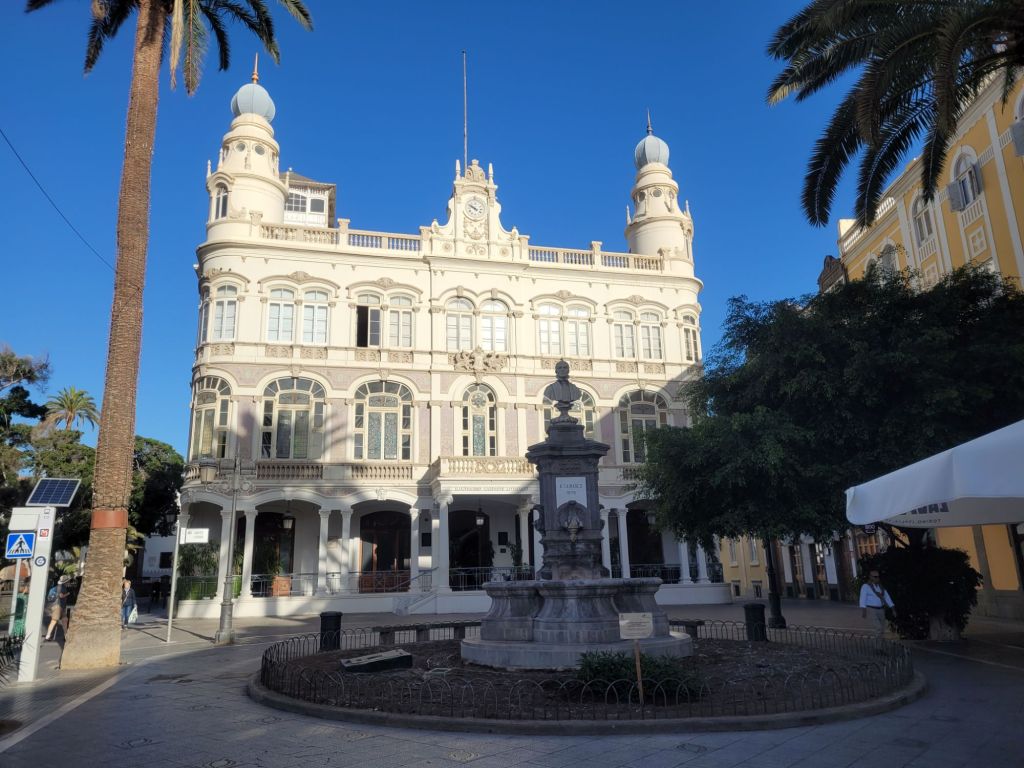
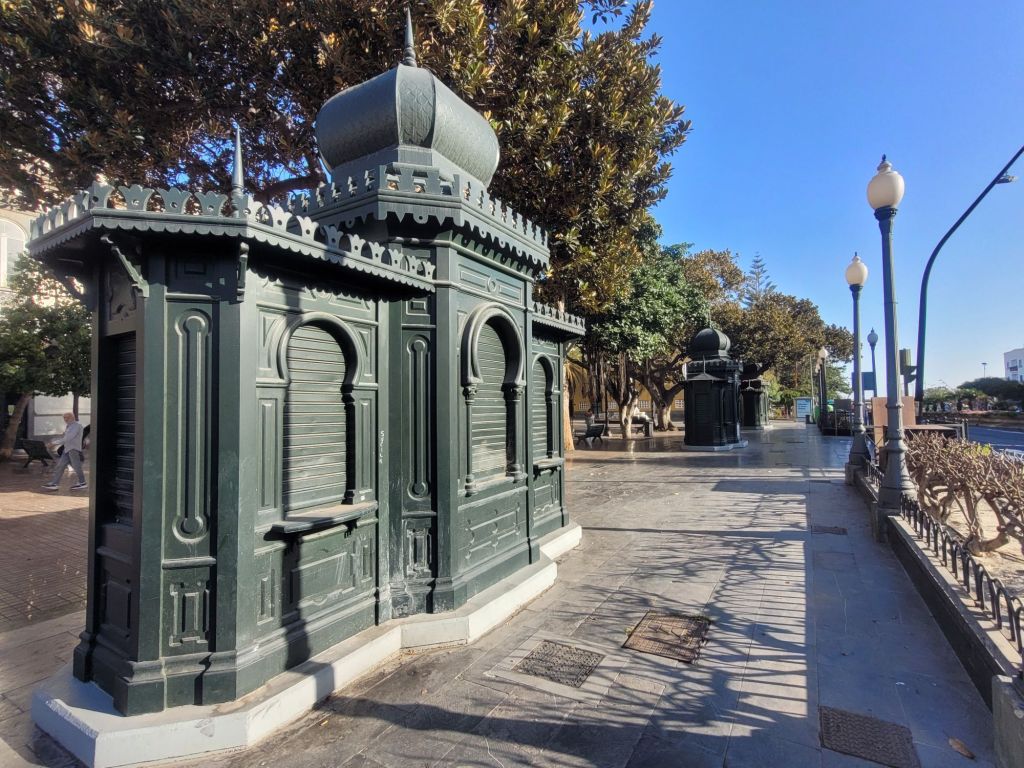
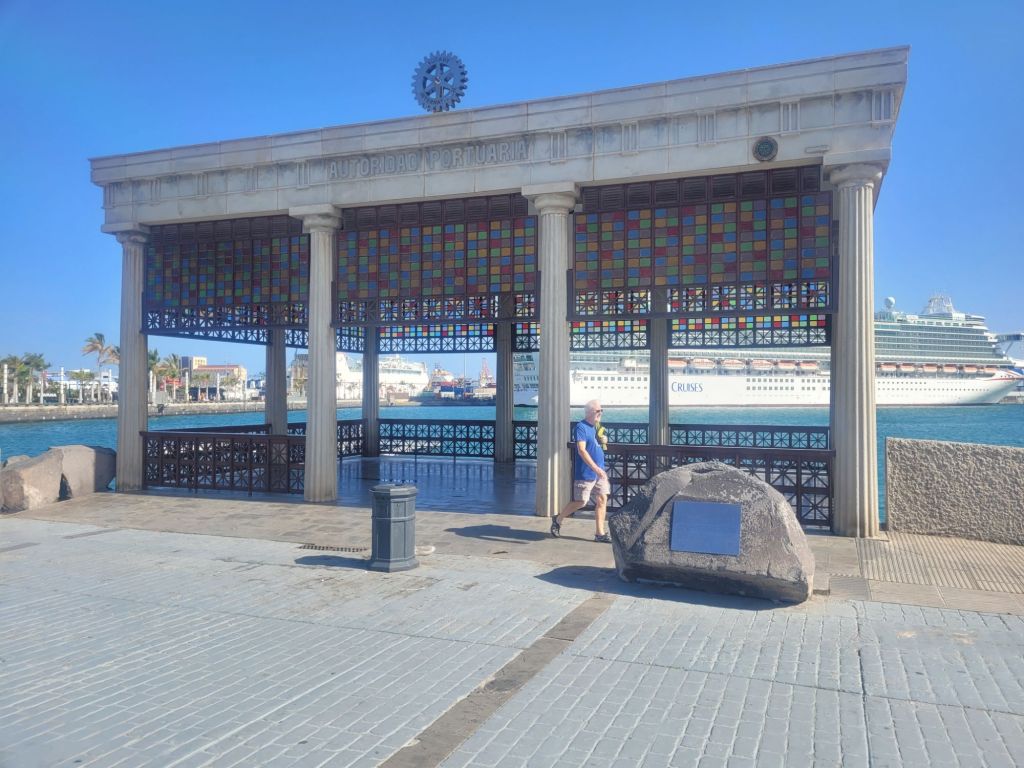
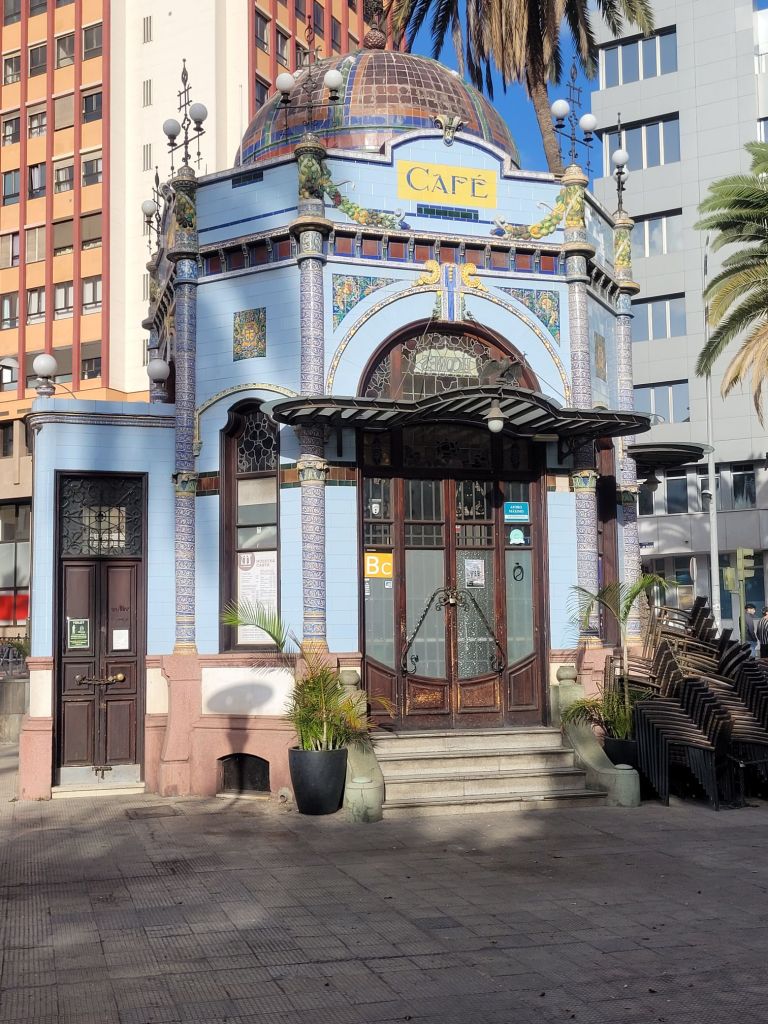
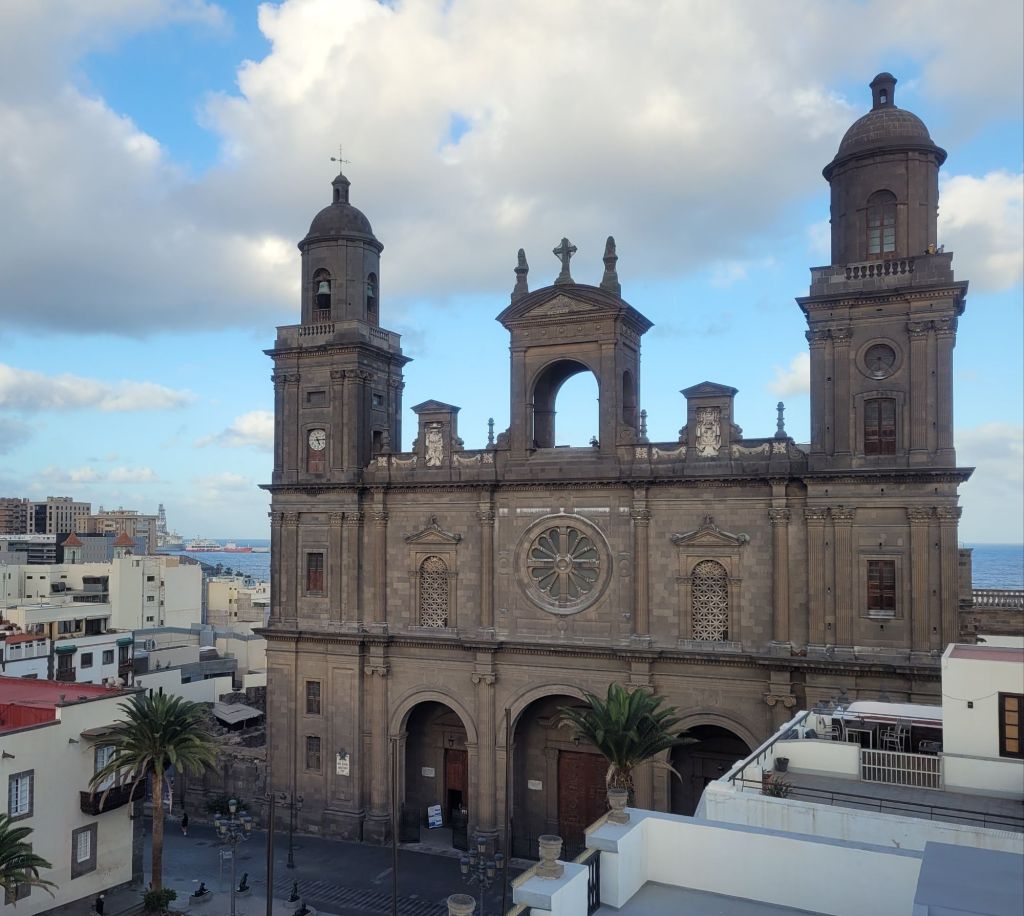
Aside from the beach we visited three ‘attractions’: the cathedral, the museum of Gran Canaria and the House of Columbus. All three were interesting for different reasons. All three were similar in that the buildings themselves were fascinating with no apparent signage about them anywhere.
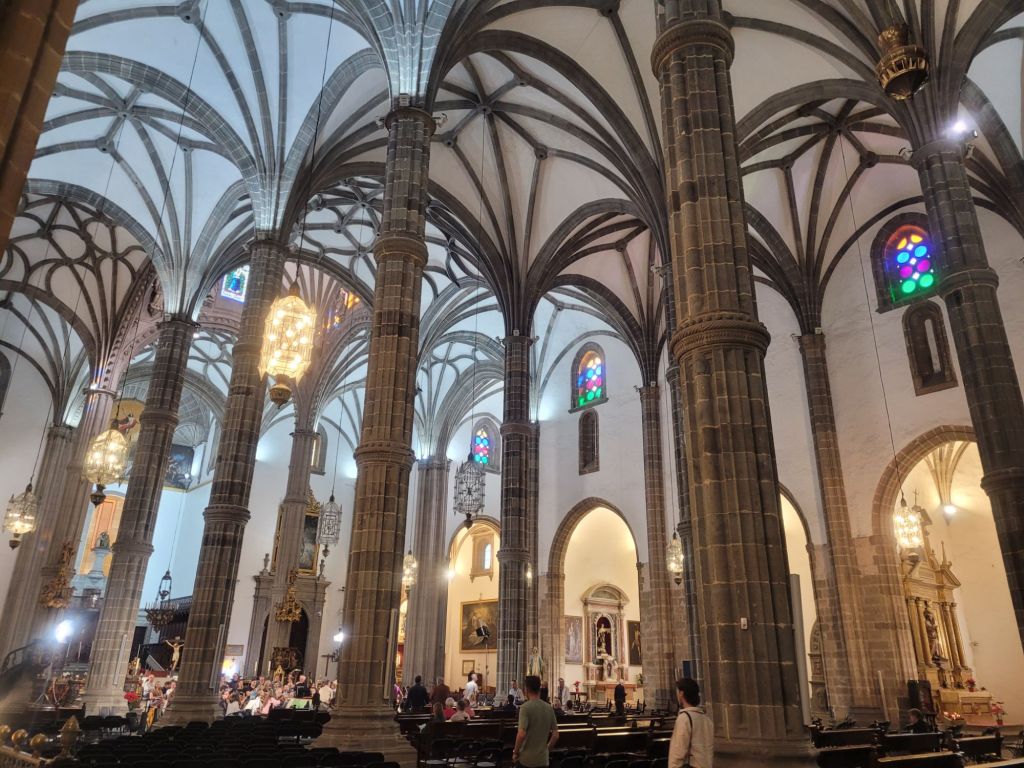
The cathedral was relatively austere for a Spanish Catholic church – with fabulous light fixtures AND a rehearsal for an evening performance of Bach’s Mathew Passion – but not without some bling.


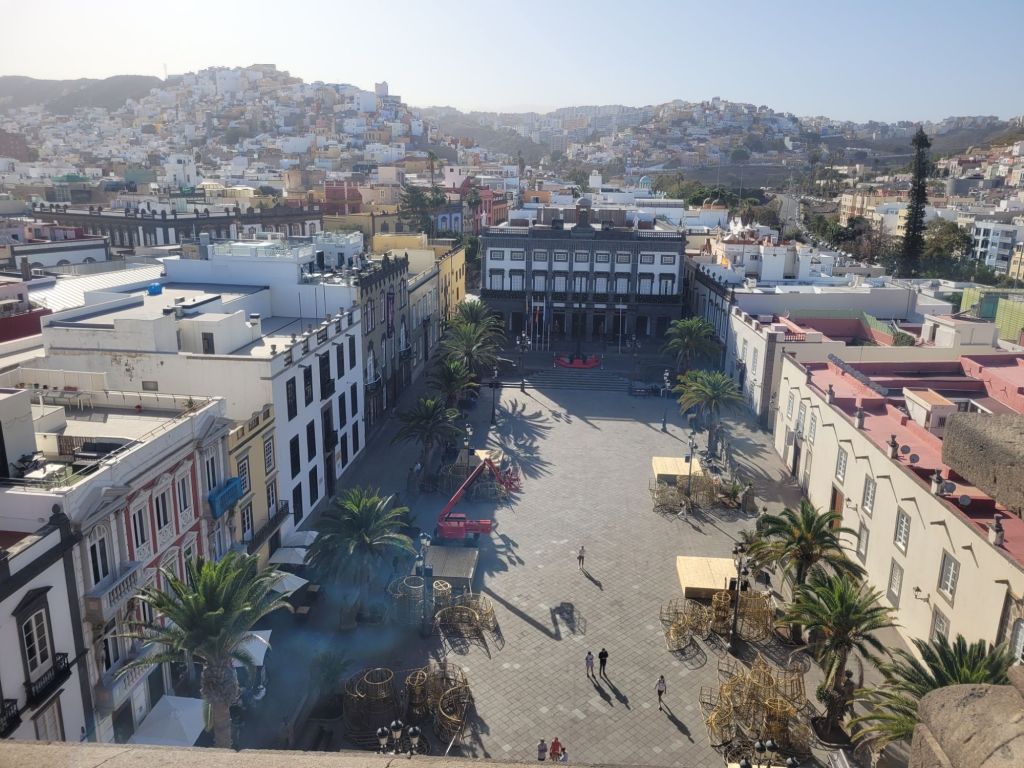
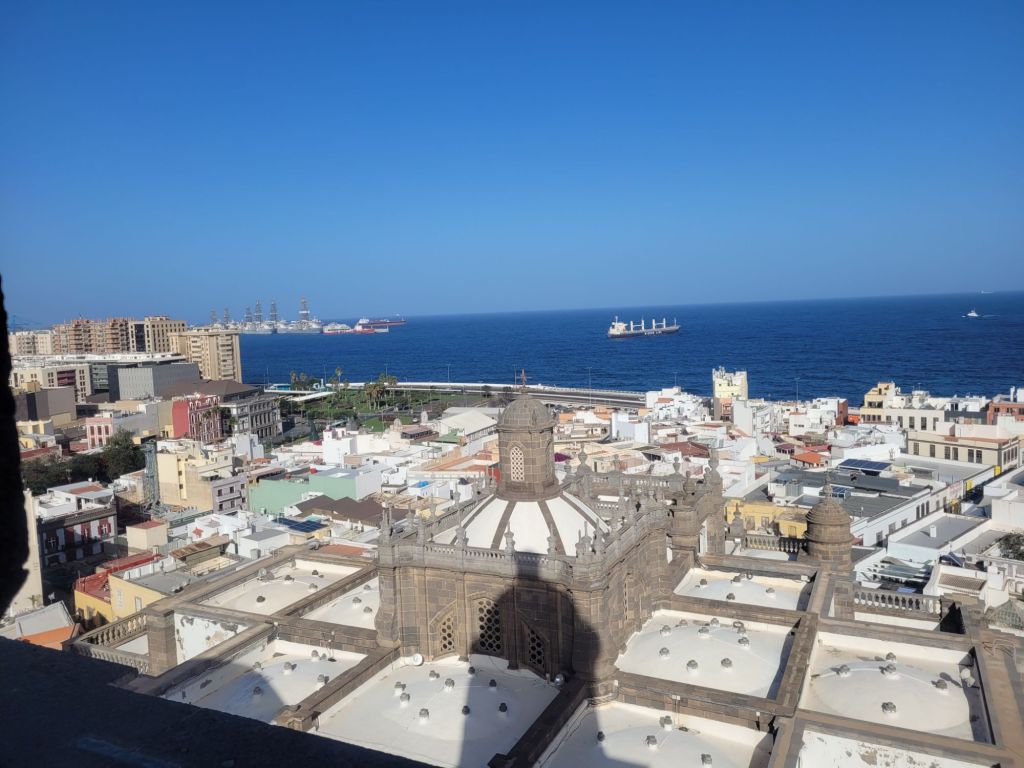
The upper walk-ways were open, giving panoramic views of Plaza Santa Ana, the town hall, the sea and everything else in between.

But the real gem was the Cathedral museum, located in the ‘cloisters’ next to the cathedral (basically where the churchmen lived). It was beautiful and I could appreciate the wonderful building while ignoring the over-the-top sacred art.
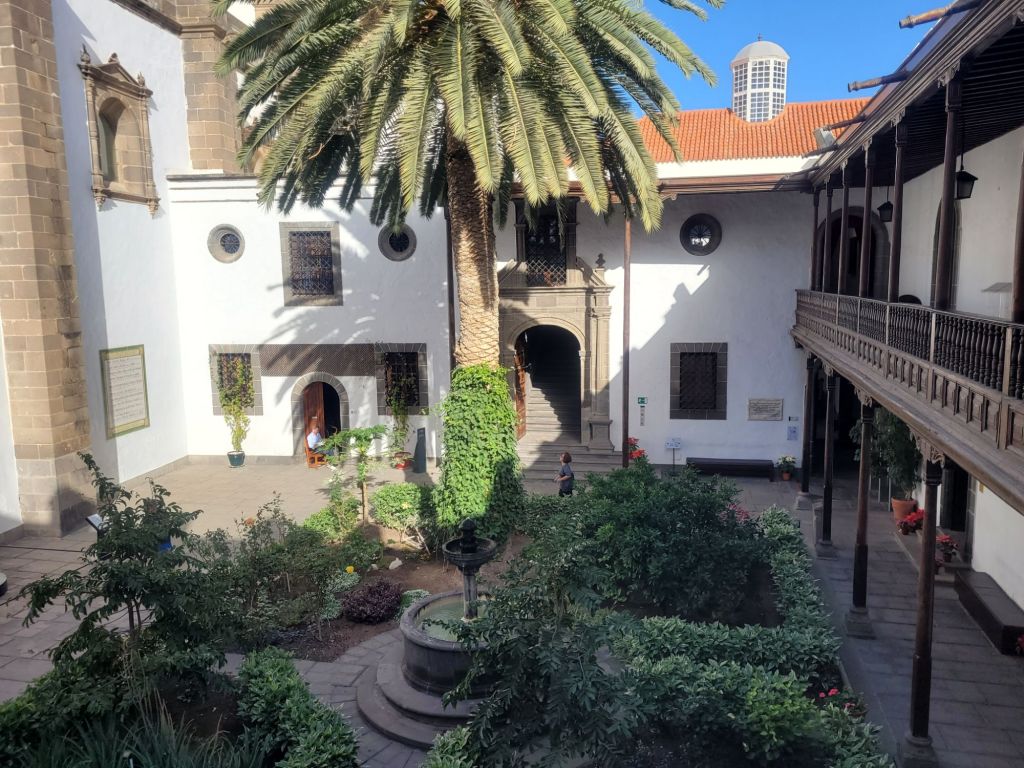
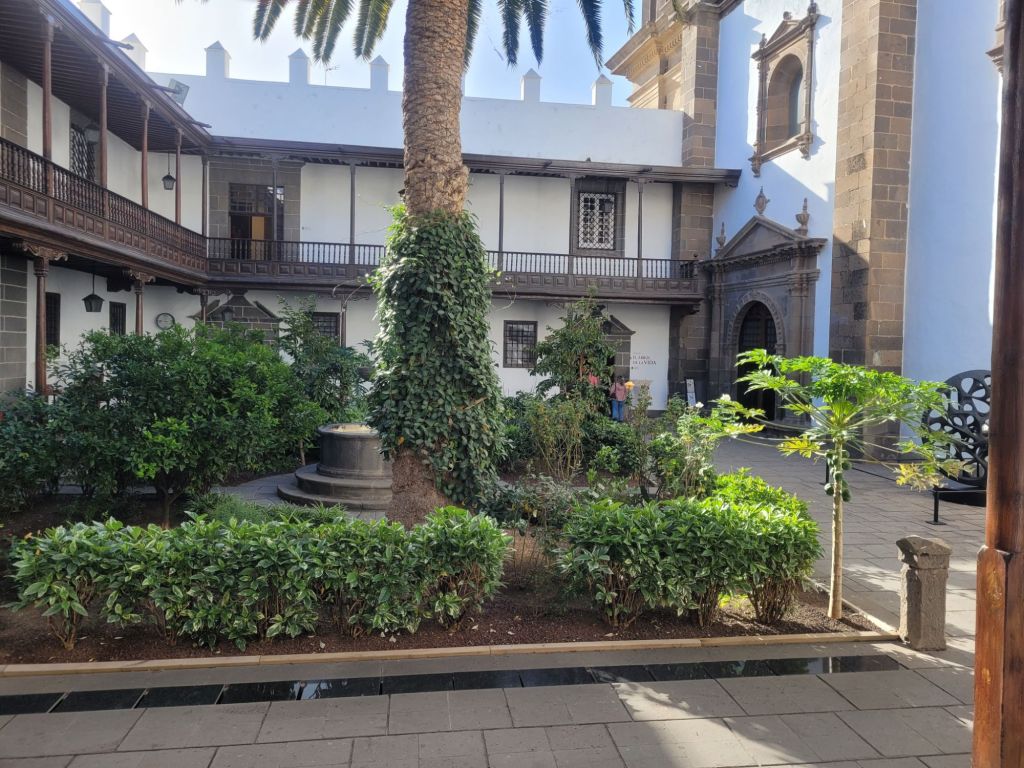

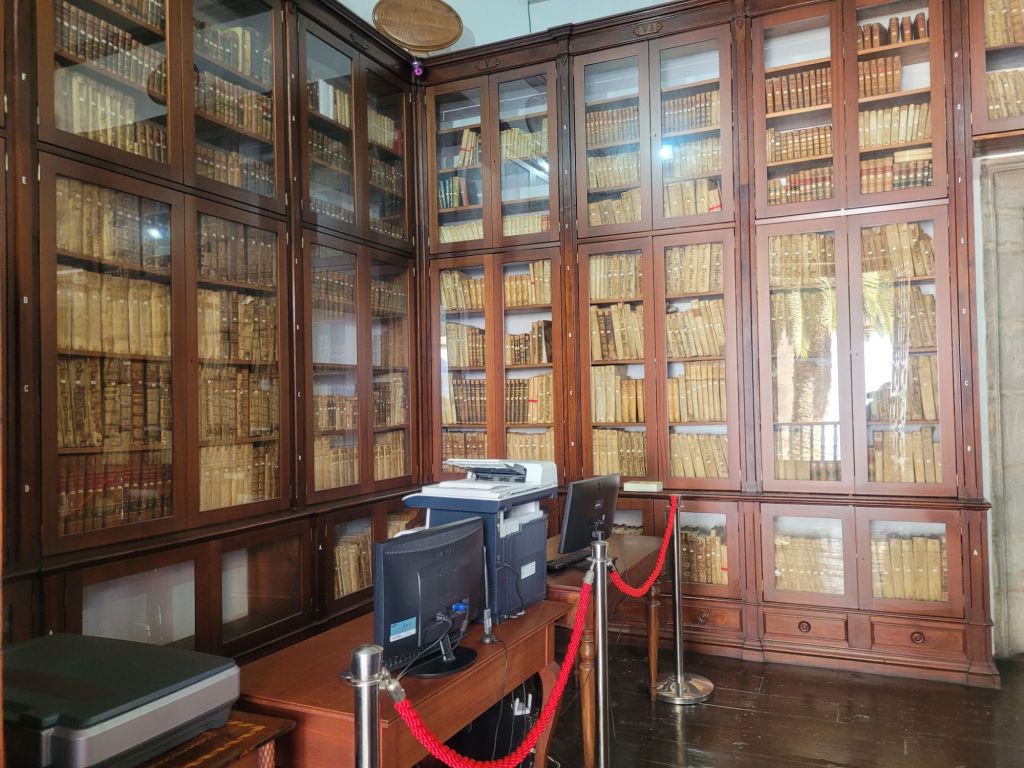
The Columbus House (Museo de Colon) was also a stunning building, typically Canarian architecture: a wonderful series of patios, extensive use of wood – well worth the entrance fee for the house alone.
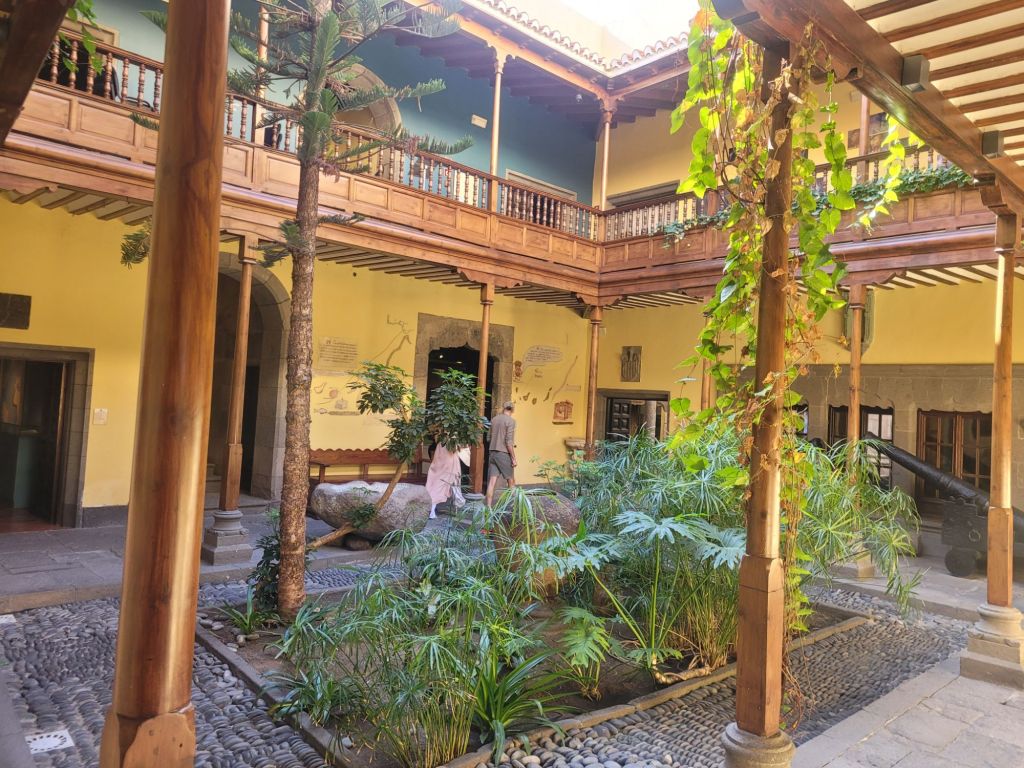

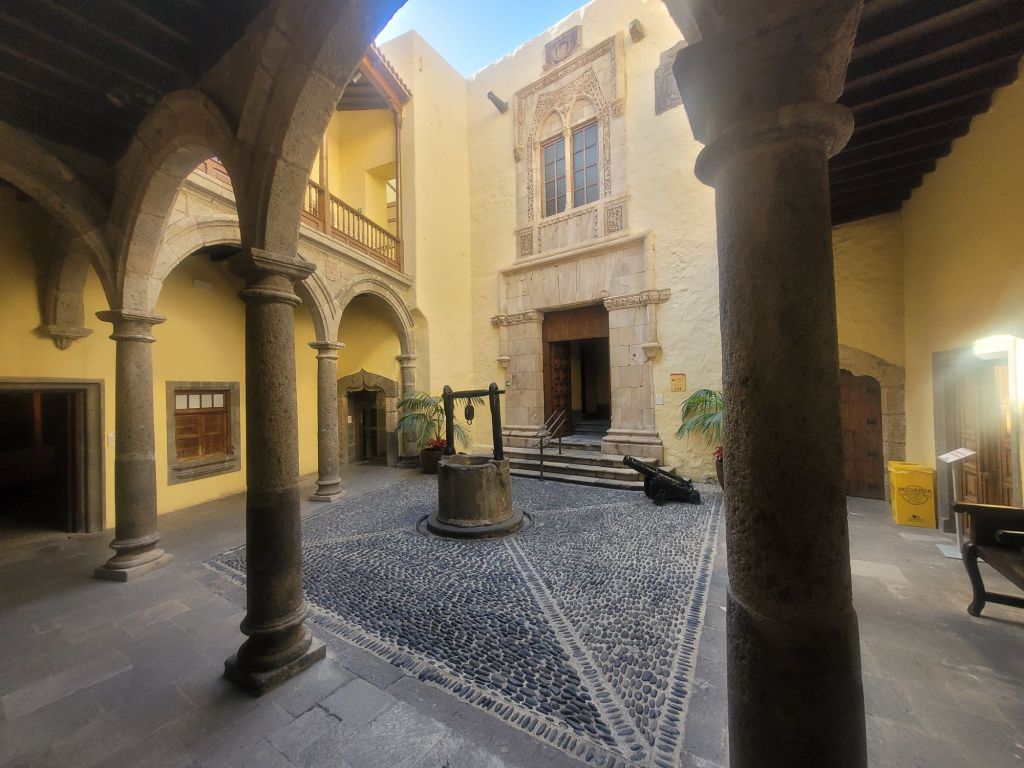
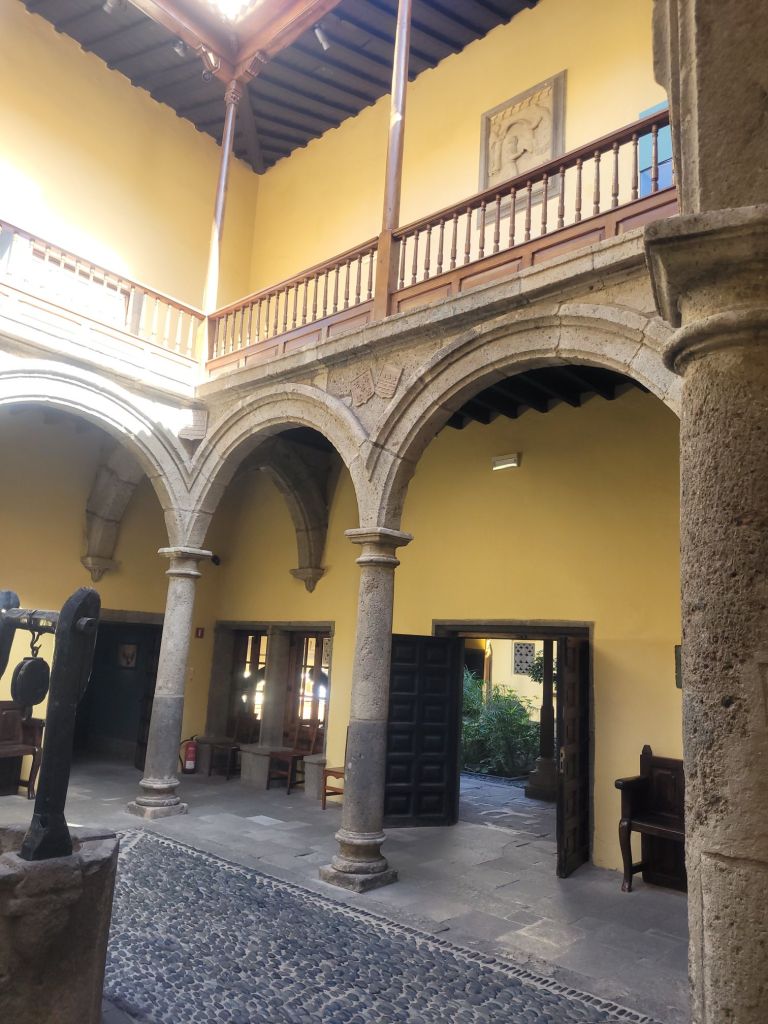
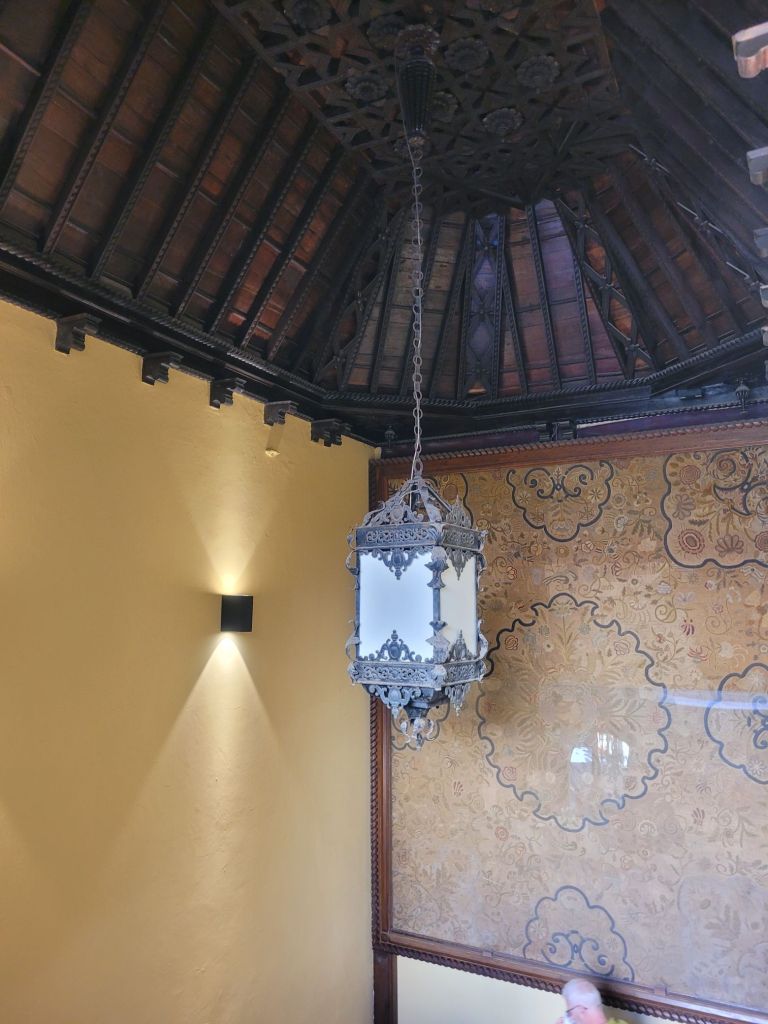
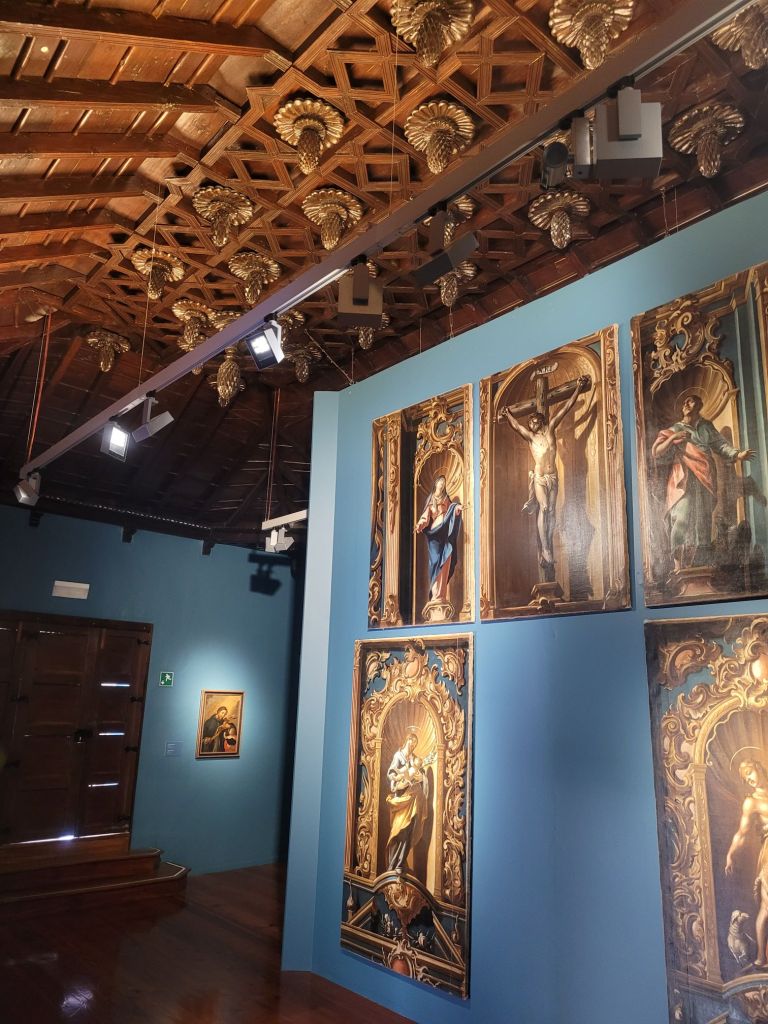

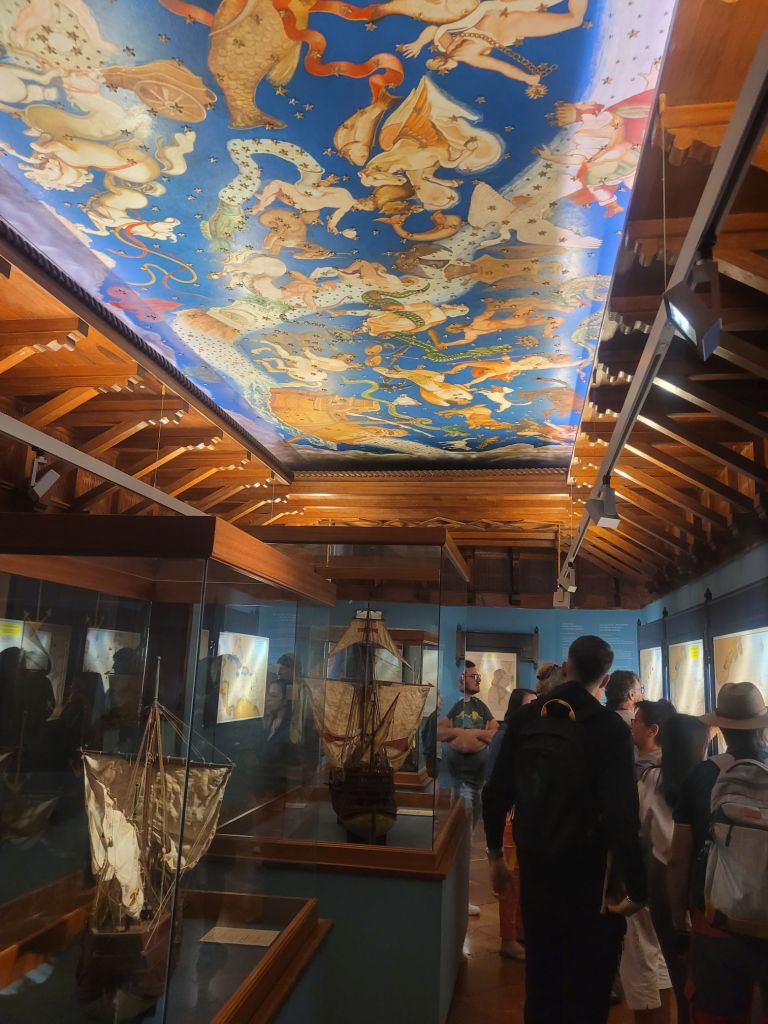
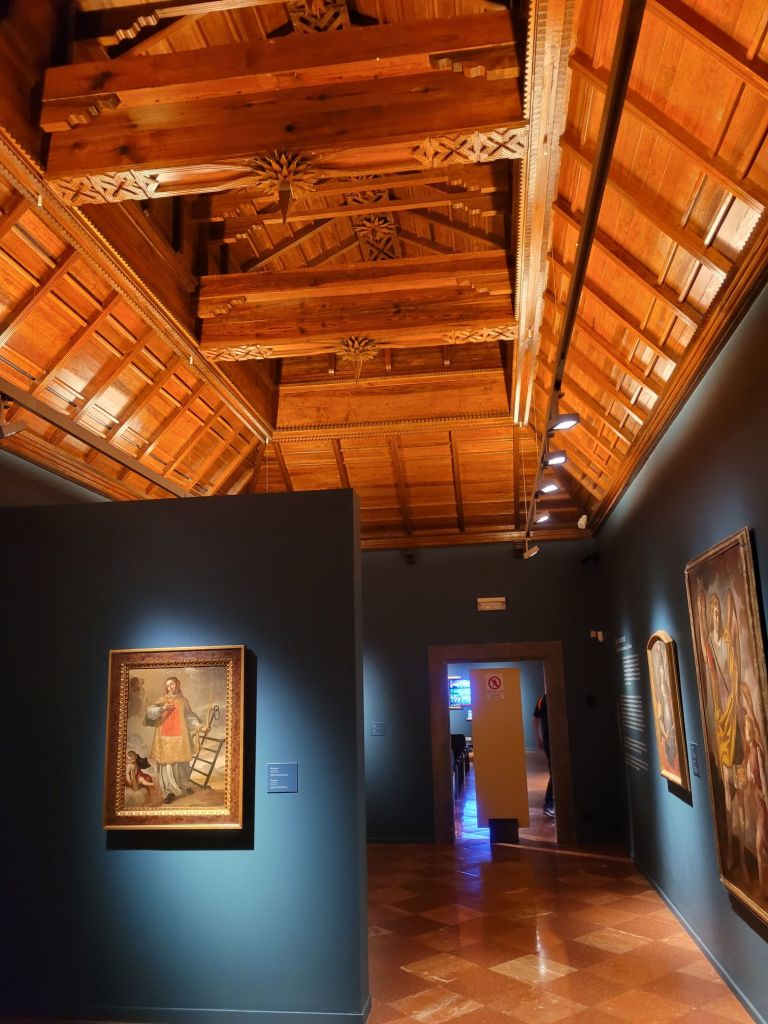
And I learned something new from the exhibition. One factoid is that Columbus didn’t set out ‘on spec’; there had been rumours of a land further west due to non-native trees, plants and human bodies arriving on the beaches. So Columbus knew that there was ‘something’ out there, he just wasn’t sure what.
All in all a nice place to spend a few days but not for much longer unless beach life and/or surfing are your bag.
 Retired? What now?