Cesar Manrique was born on the island, went away to study art in Madrid and returned during the Civil War, where he fought on Franco’s side. After WW2 he spent time in New York and on returning to Lanzarote in 1966, he formed an artists’ colony with the support of his friend – the president of the island at the time.
Clearly a politically well-connected individual with friends in high places.
His vision of Lanzarote as a nature preserve and his advocacy for low rise development and high value tourism have meant that the island has avoided the influx of mass tourism seen on the other islands (particularly Fuerteventura).
This input is seen across the island, particularly in three major tourist attractions: Timanfaya National Park – where his restaurant has pride of place and a fabulous view; Jameos del Agua – which defies description as either garden, bar, restaurant or performance space; Mirador del Rio – a repurposed military installation with spectacular views north to La Graciosa (and further). His houses are dotted around the island, some can be visited – we visited the last house he designed for himself before he died. He was a vital figure for Lanzarote.
Restaurante del Diablo takes advantage not only of a jaw-dropping view, but also the volanic heat generated immediately below it. All the cooking is done on this; it isn’t quite clear exactly HOW they achieve it, but that’s one of their big selling points.
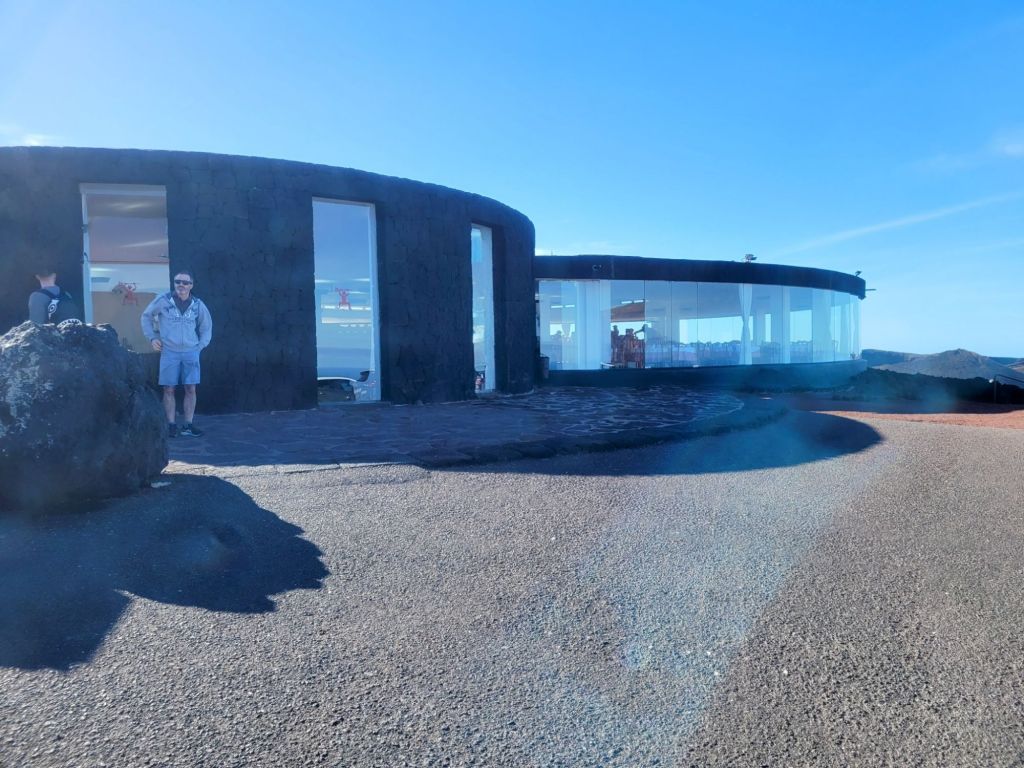
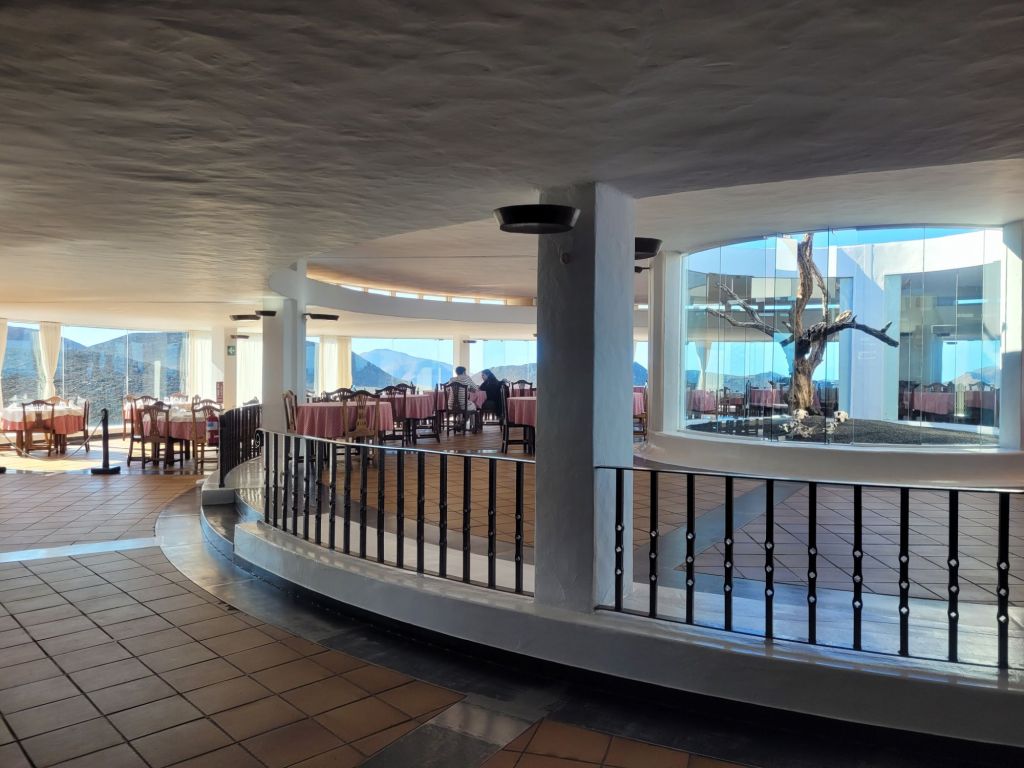
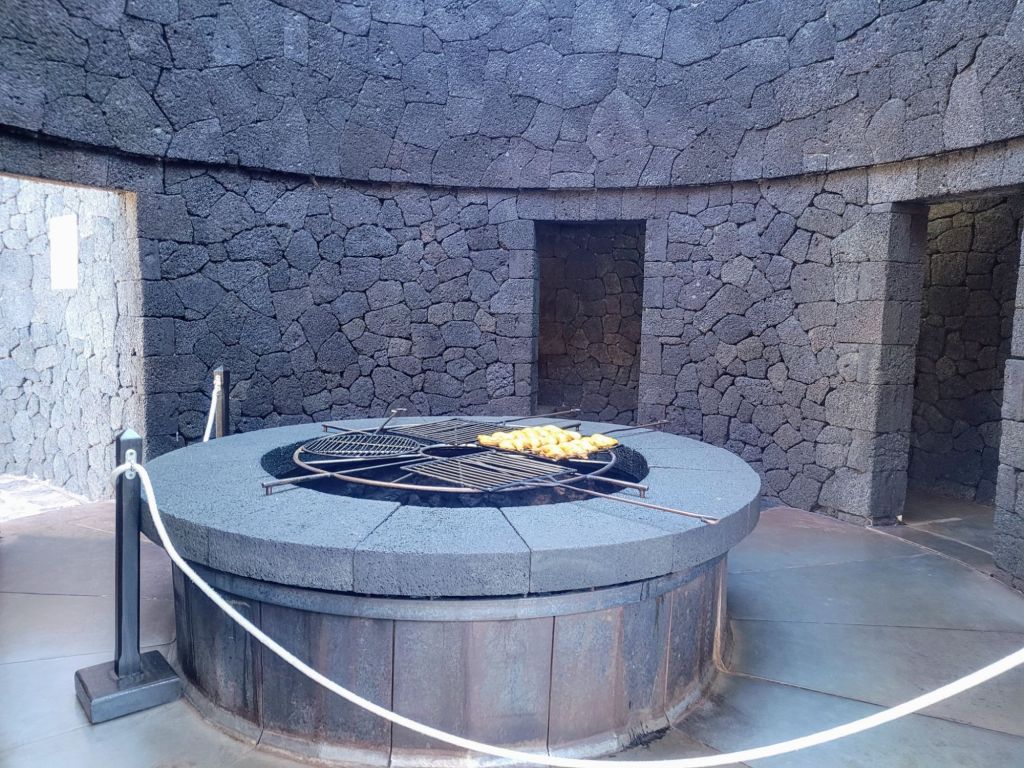
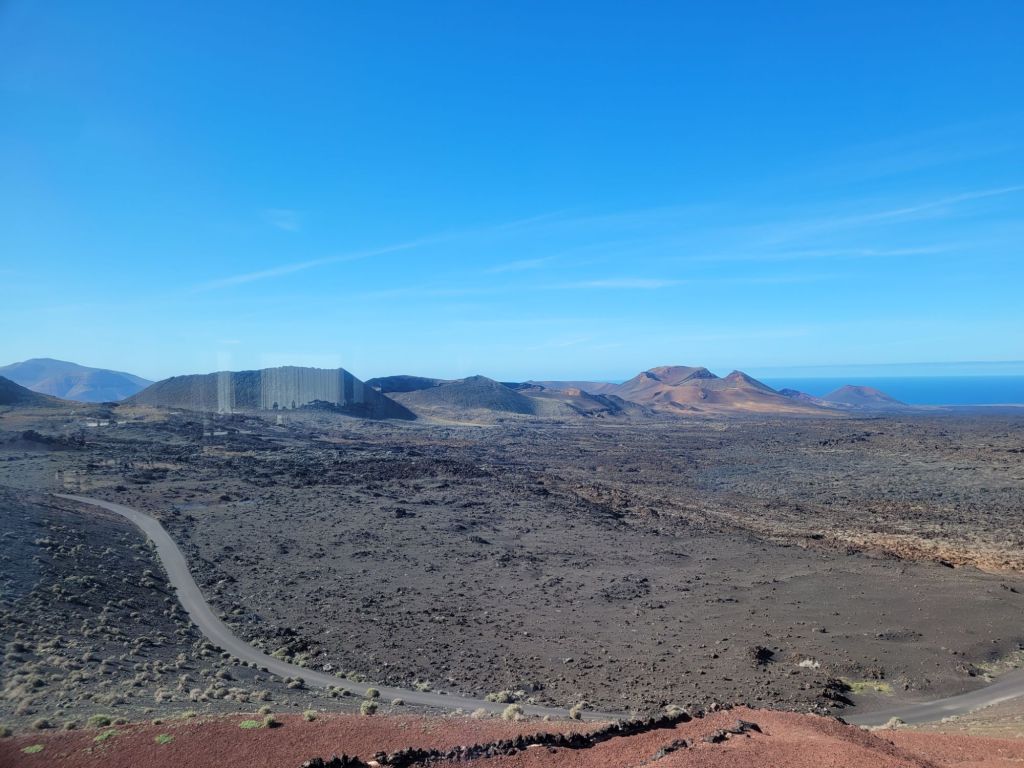
If you decide to just come for a meal, we did wonder if you had to pay for the park entry too. At 20 euros each, that would add a significant chunk onto your expenditure. We had a coffee but didn’t eat there, nor did we check the menu so I really can’t comment on the offering.
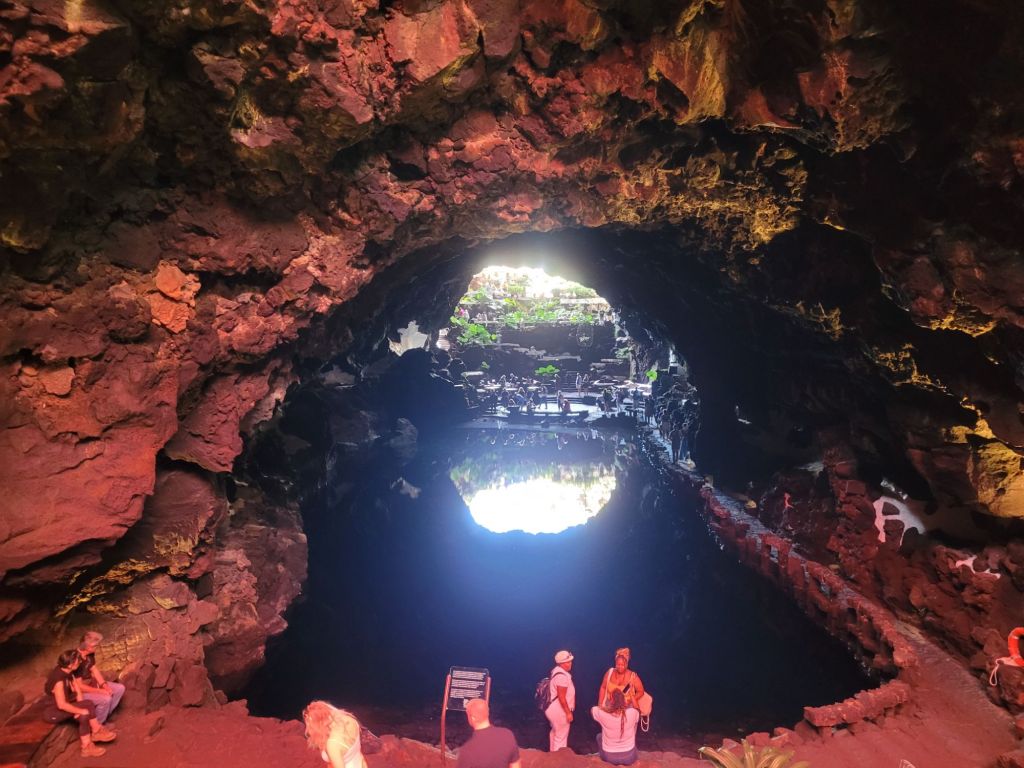
Jameos del Agua gets its name from a Maho word for ‘capsized roof of a lava cave or tube’ – although I am unsure of whether it’s just the ‘capsized’ bit or all of it. The lava structure in question was formed by the explosion of La Corona volcano and also features in Cueva Verde, just up the road from Jameos del Agua. Manrique took a massive sink hole, an underground lake and some collapsed tunnel and made a pleasure garden come entertainment space out of it: it is stunning. Small, but stunning. Everything is done to enhance the feeling of being in a grotto; to us, it felt slightly like Gaudi’s Parc Guell in Barcelona – consciously sculpted but very organic.
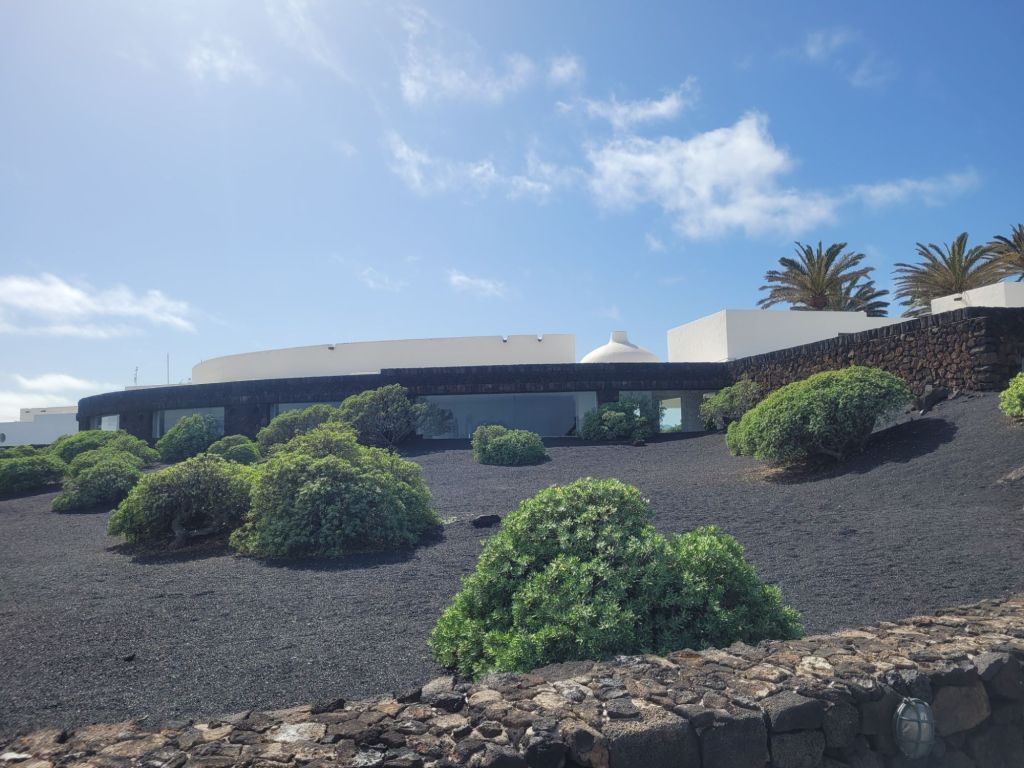
The symbol of Jameos del Agua is a lobster; this represents the white cave lobsters that live in the underground lake. They are tiny and we both thought they were debris when we looked into the water. There are warning signs about throwing anything at all into the water, but particularly coins (why oh why do people insist on chucking money into a standing body of water).
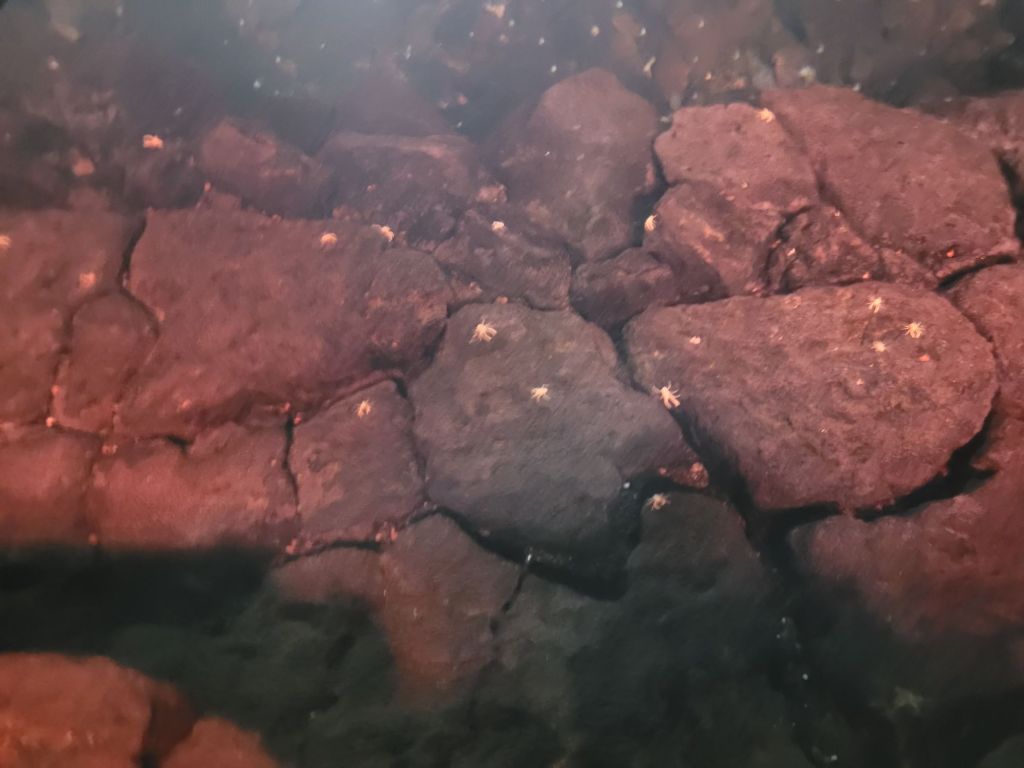
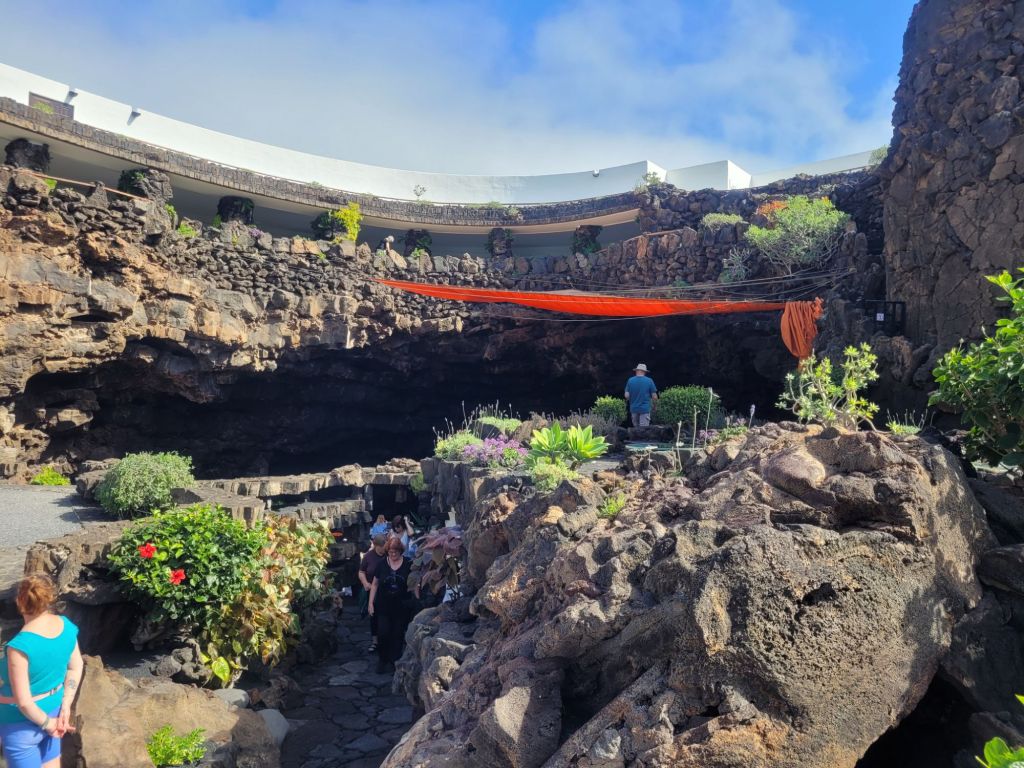
Entrance (after forking over for the entry tickets) is down a spiral staircase that winds around the sinkhole. The red sail over the top casts a slightly eerie shadow.


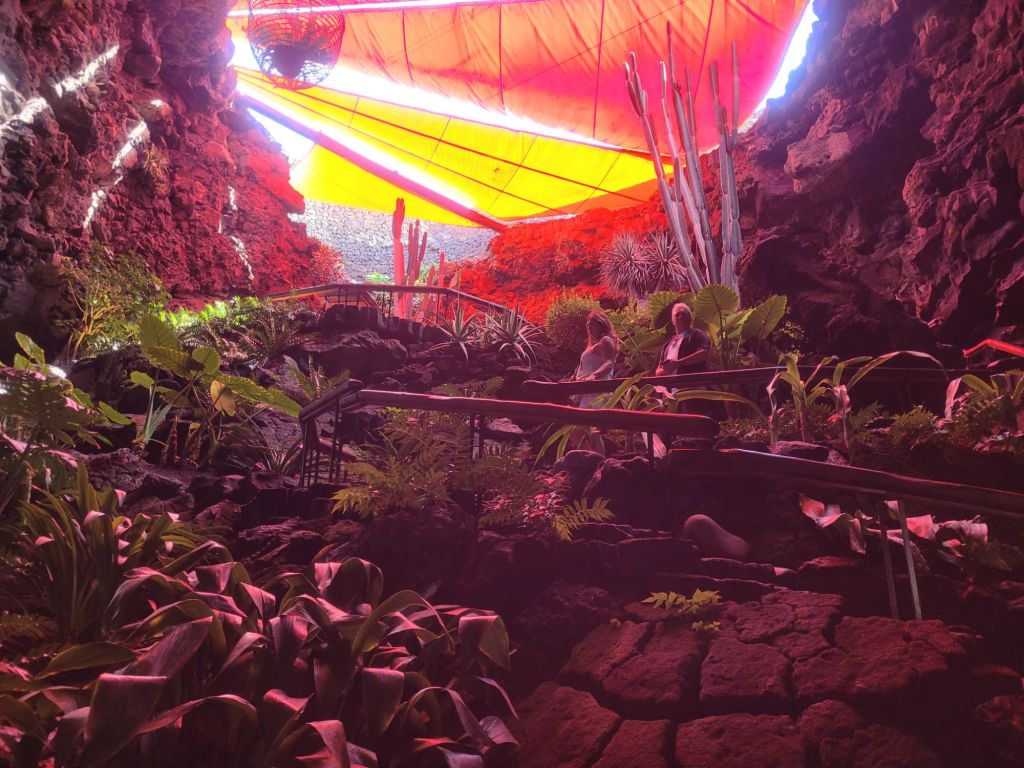
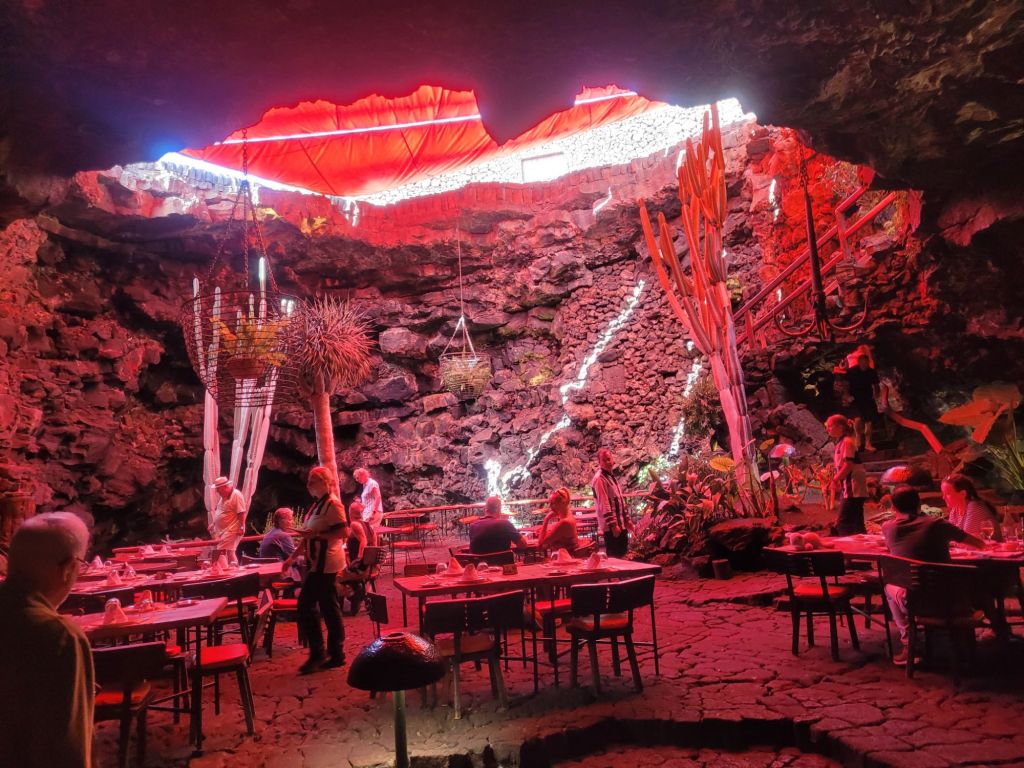
As you descend, the cave underneath opens up into a huge space, with a bar serving both drinks and food, a dance floor (I did say entertainment) and a gallery overlooking the lake.
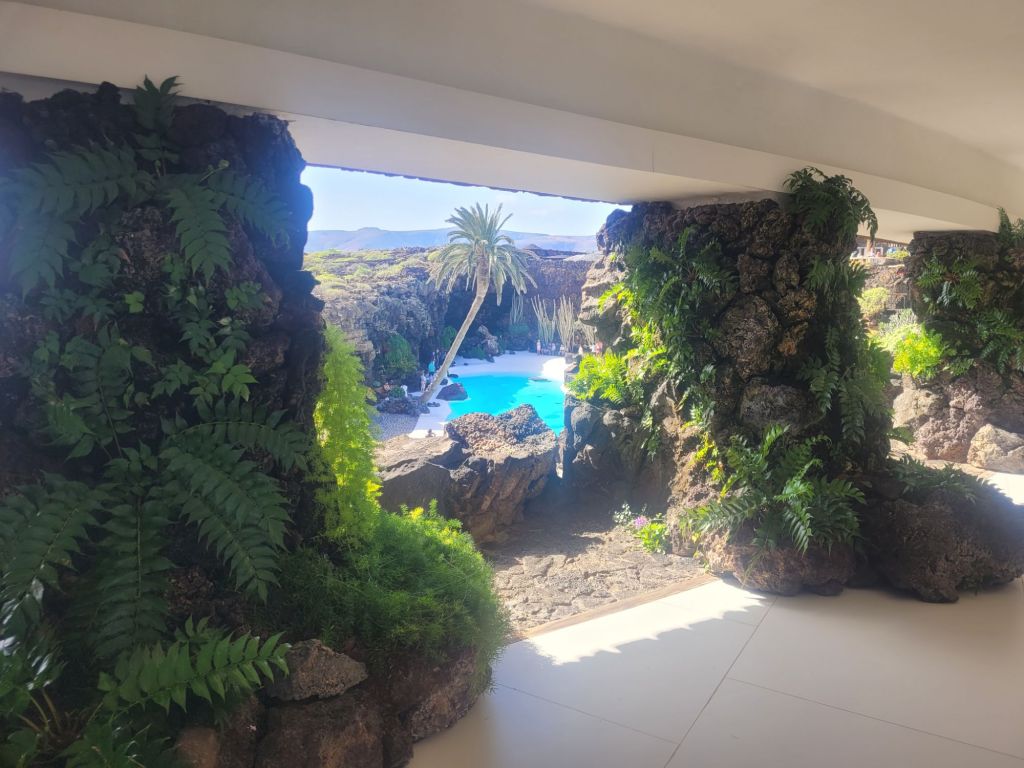
Beyond the lake you emerge back into the sunlight, to lush plants (ferns feature heavily) and ultimately a white pool with startlingly blue water (I have no idea why the pool is there – maybe it represents the sea and sand?).
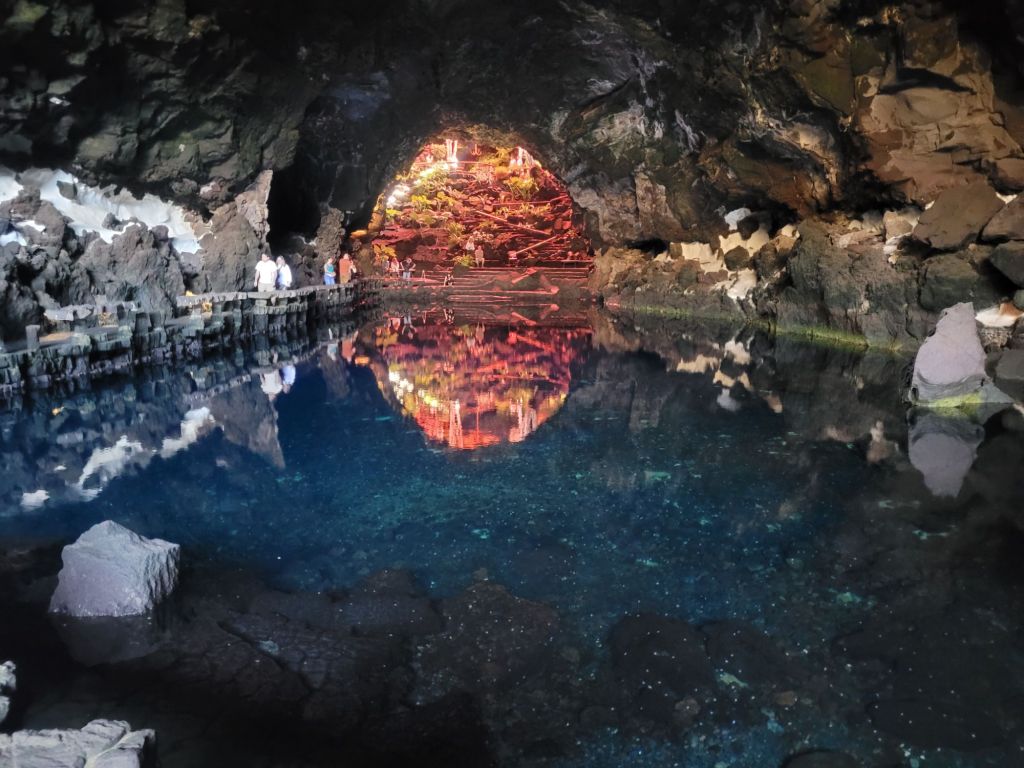

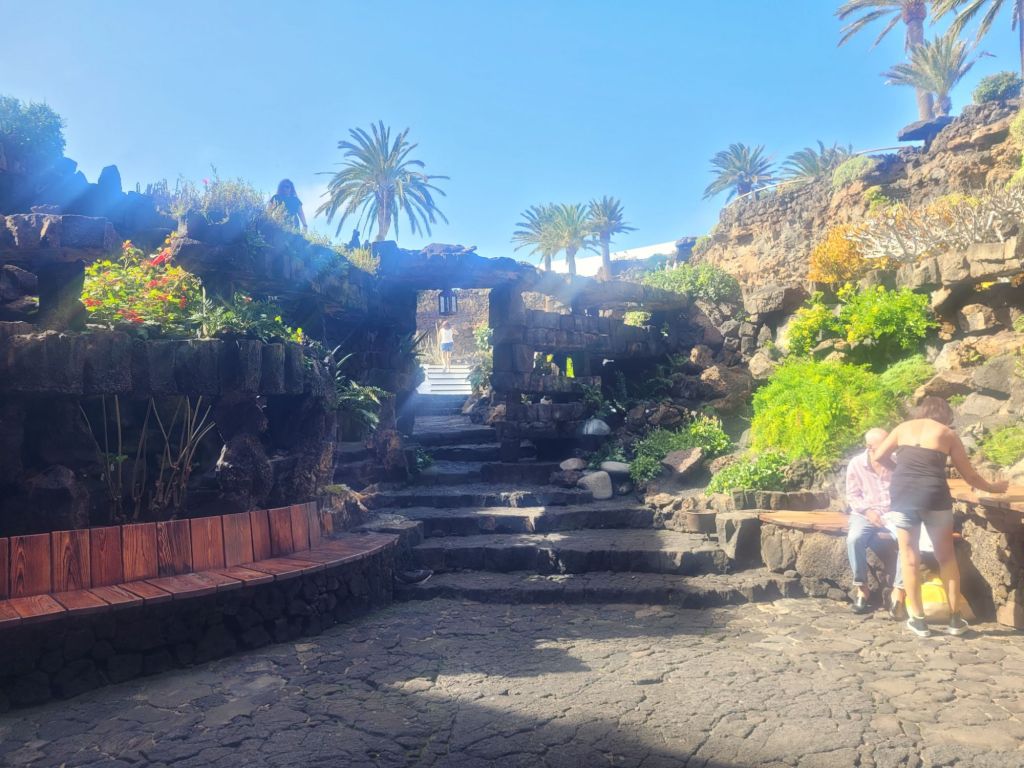
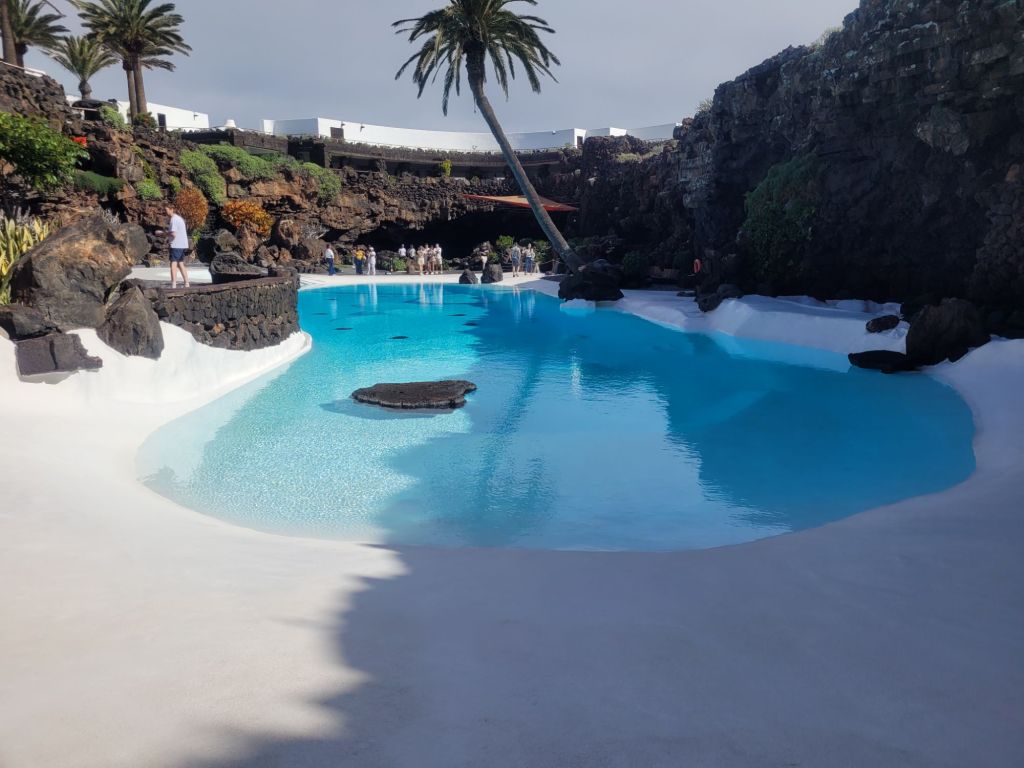
Everywhere there is volcanic rock and plantings – all beautifully maintained, so at least you can see where your money is going.
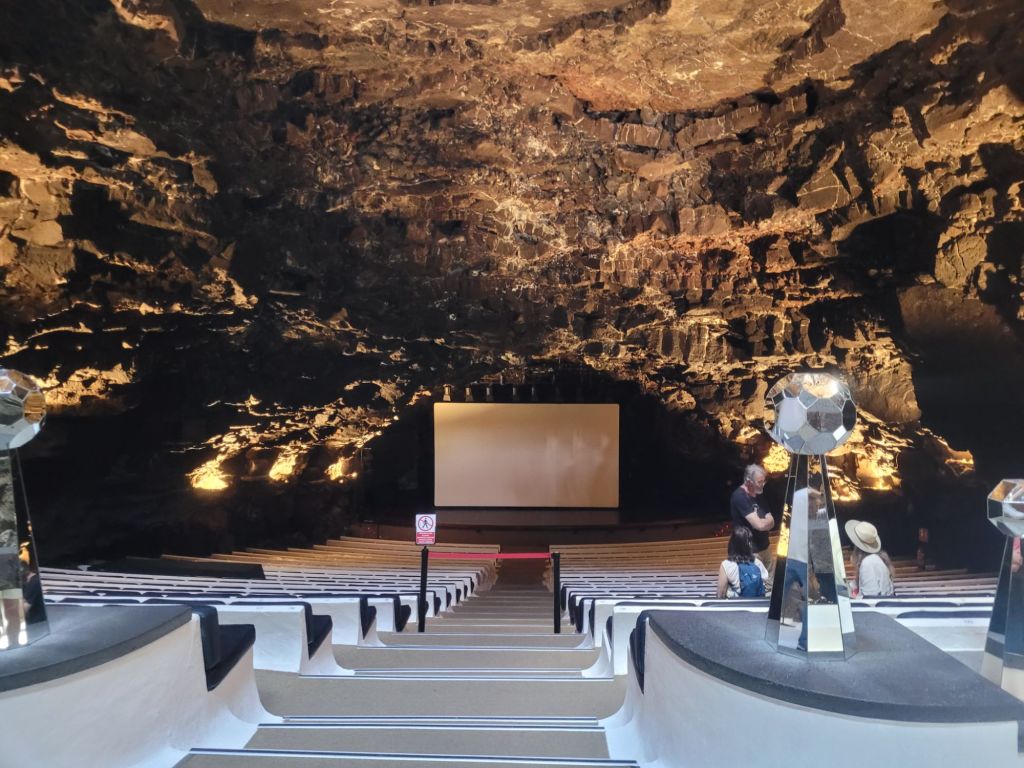
There is also a performance space in a rock cavern.
Above and around the garden and pool is a series of galleries and buildings – at least one of them is a house (we didn’t visit that). The views speak for themselves and the Gaudi ‘feel’ is strongest here.
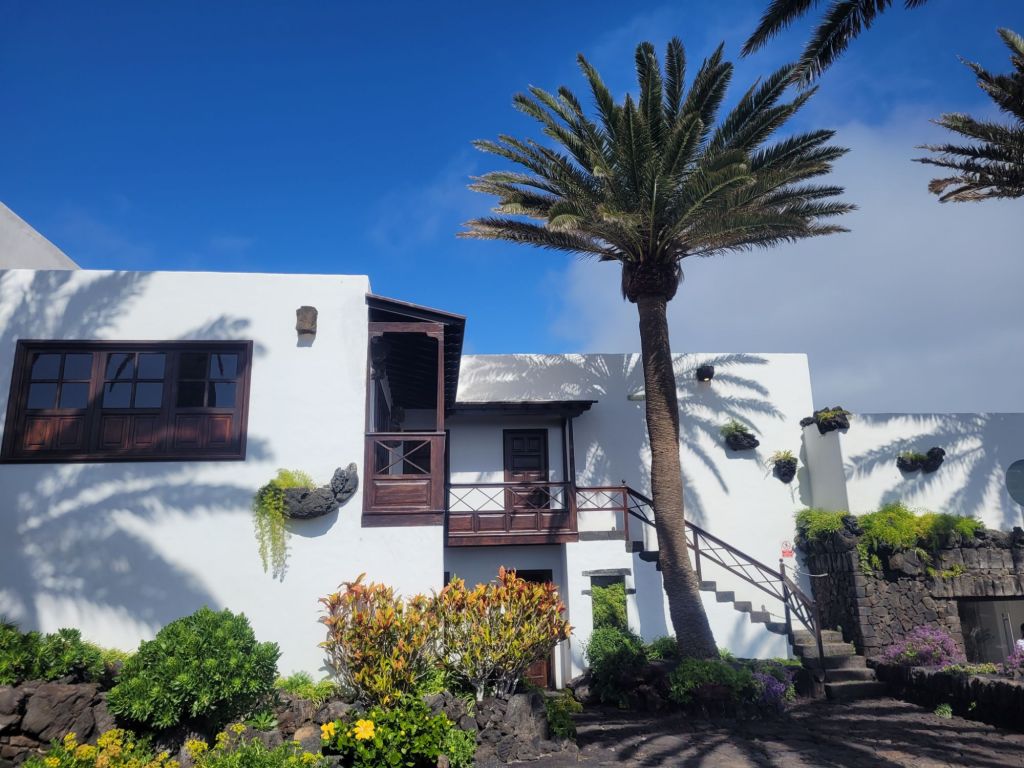
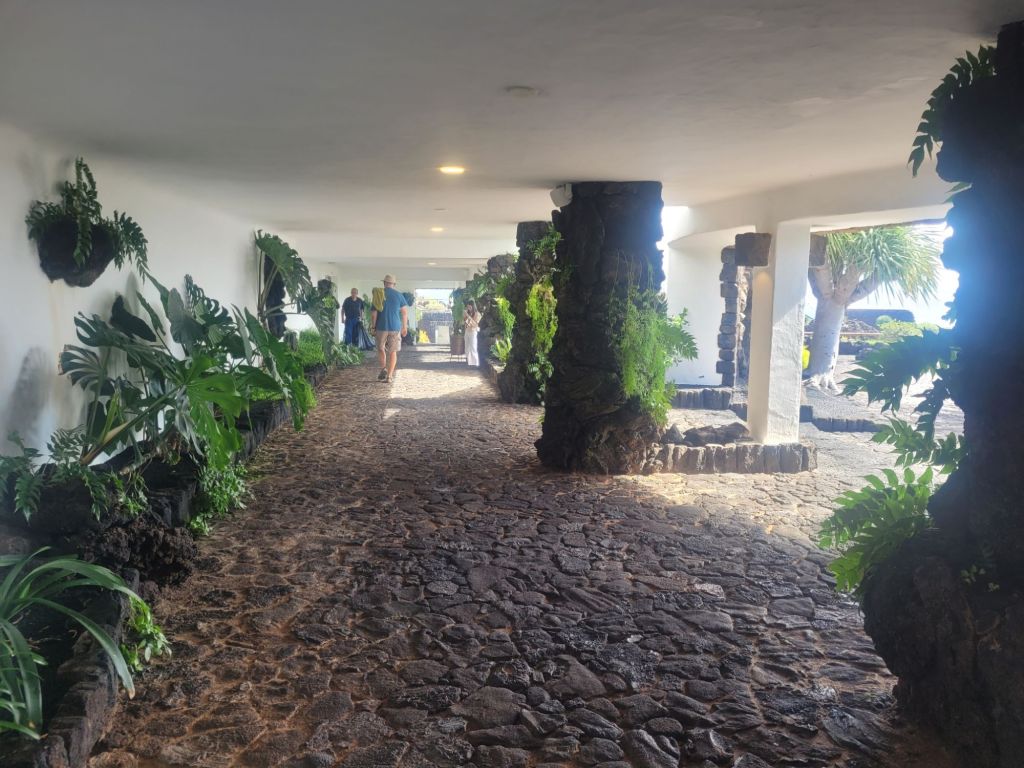
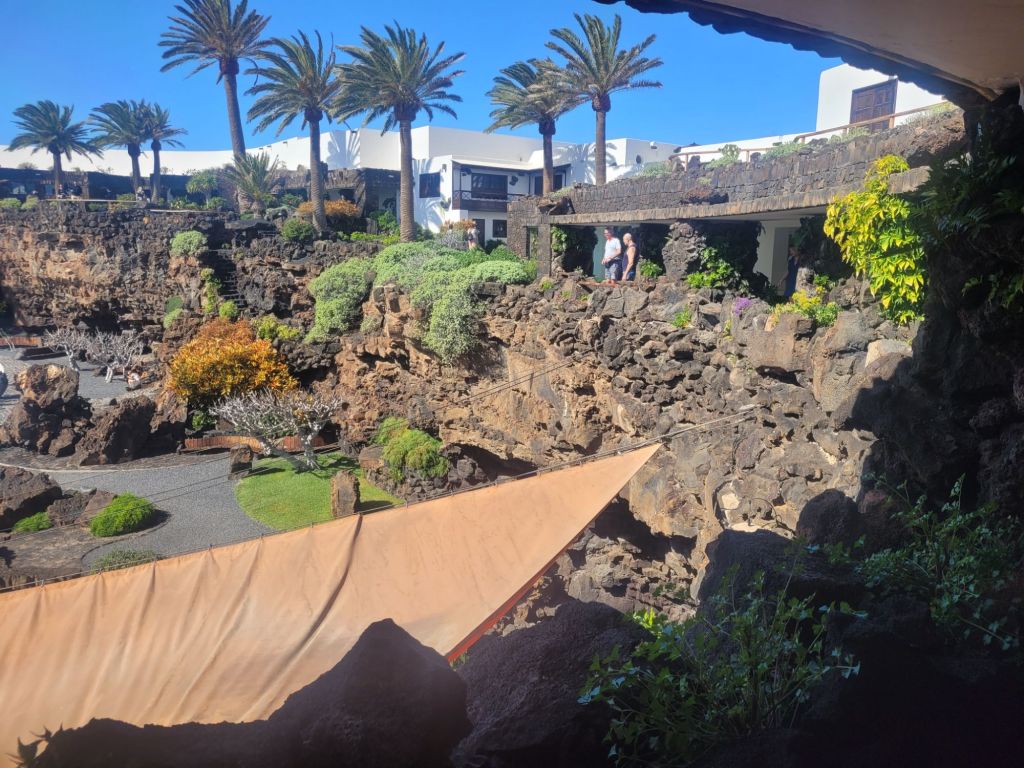
Beyond the buildings, the sea beats against a rocky coast.
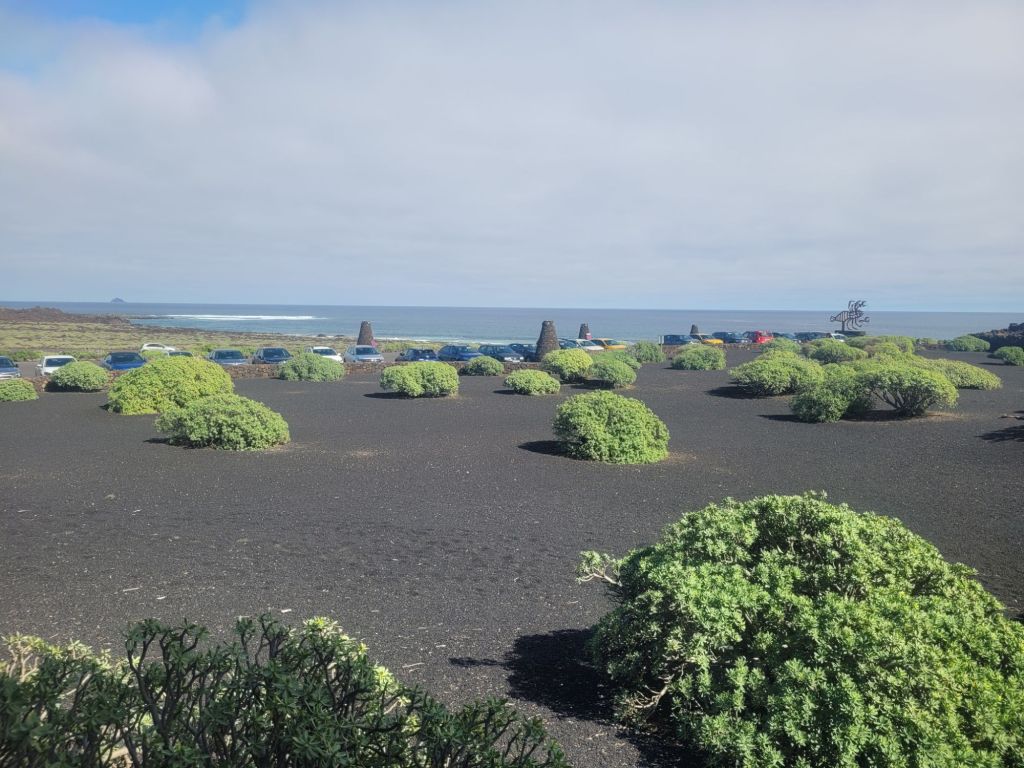
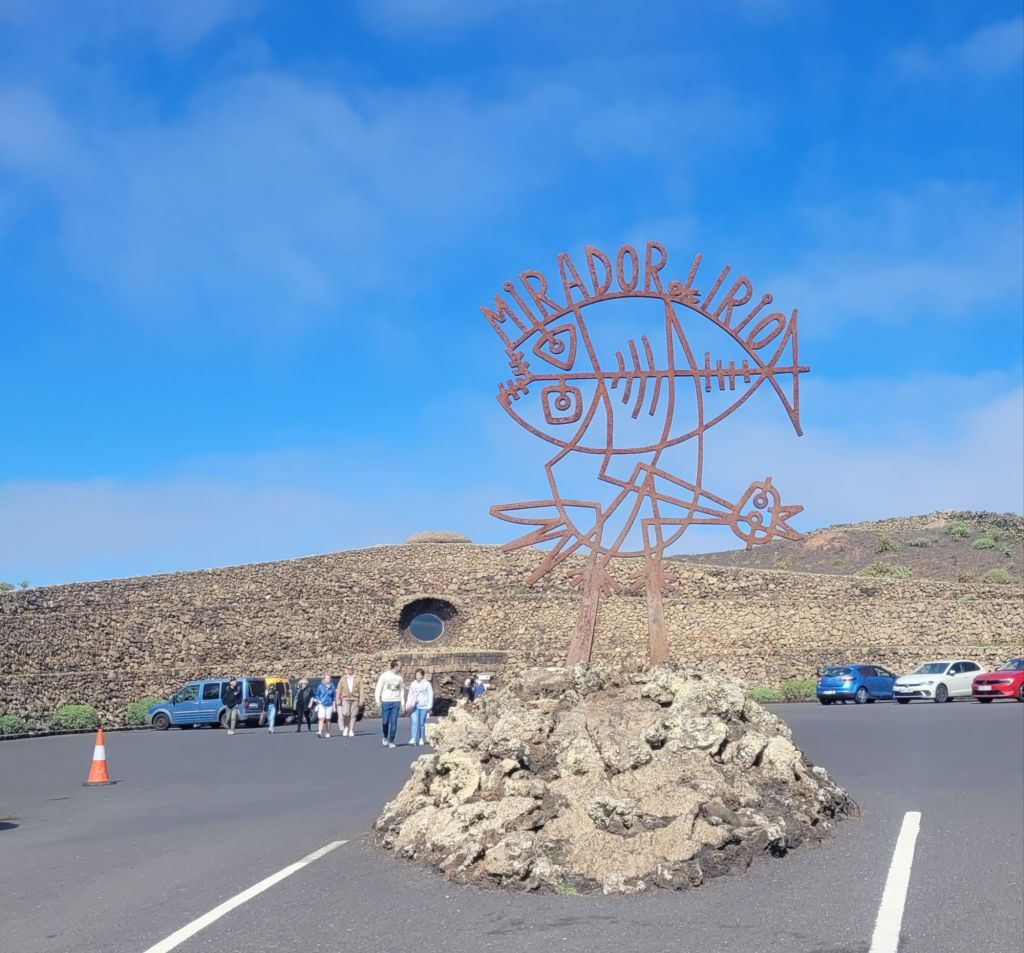
Mirador del Rio is on the north cliff of the island, overlooking La Graciosa. Originally it was a military installation of some sort, but Manrique purchased it, transforming it into a public (but not free) space with a bar, a shop (selling the same things you see in every one of his ‘attractions’) and incredible views over the water.
We went twice: the first time it was so foggy that our tickets were validated for a week. When we went back it was definitely worth it!
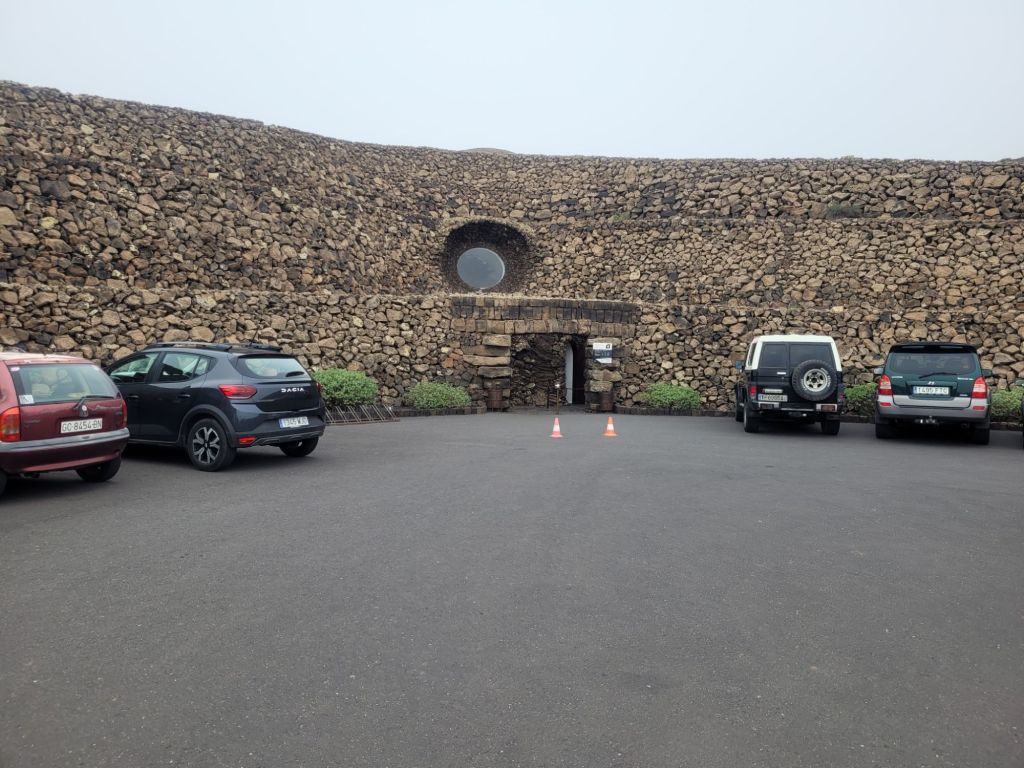
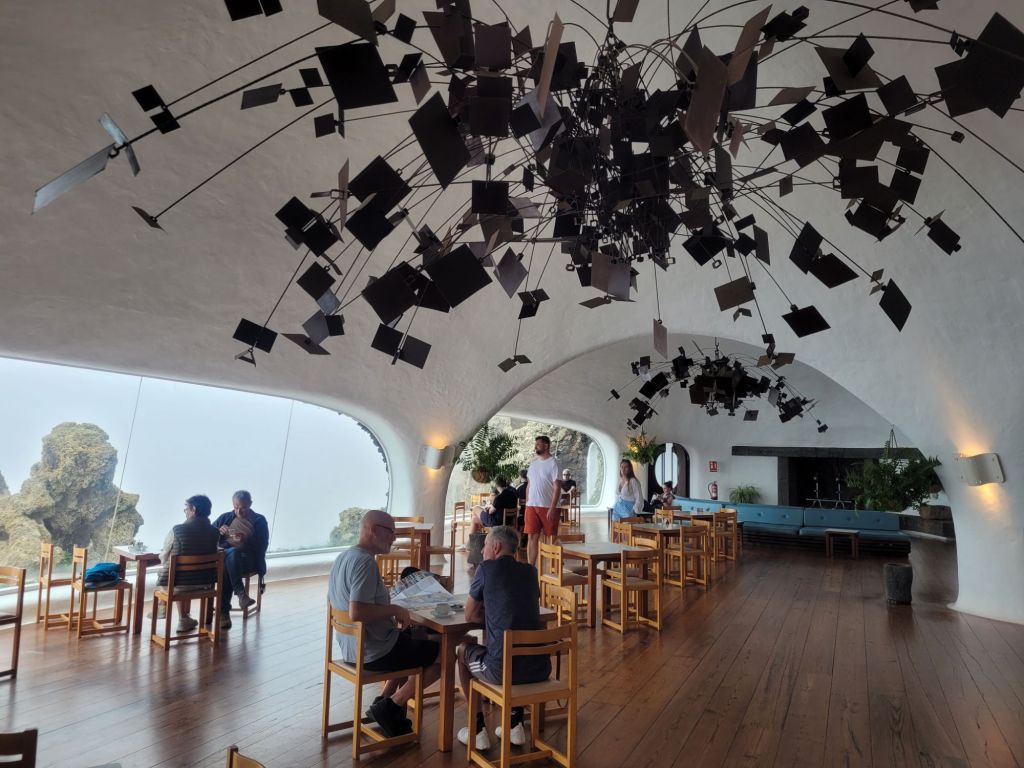
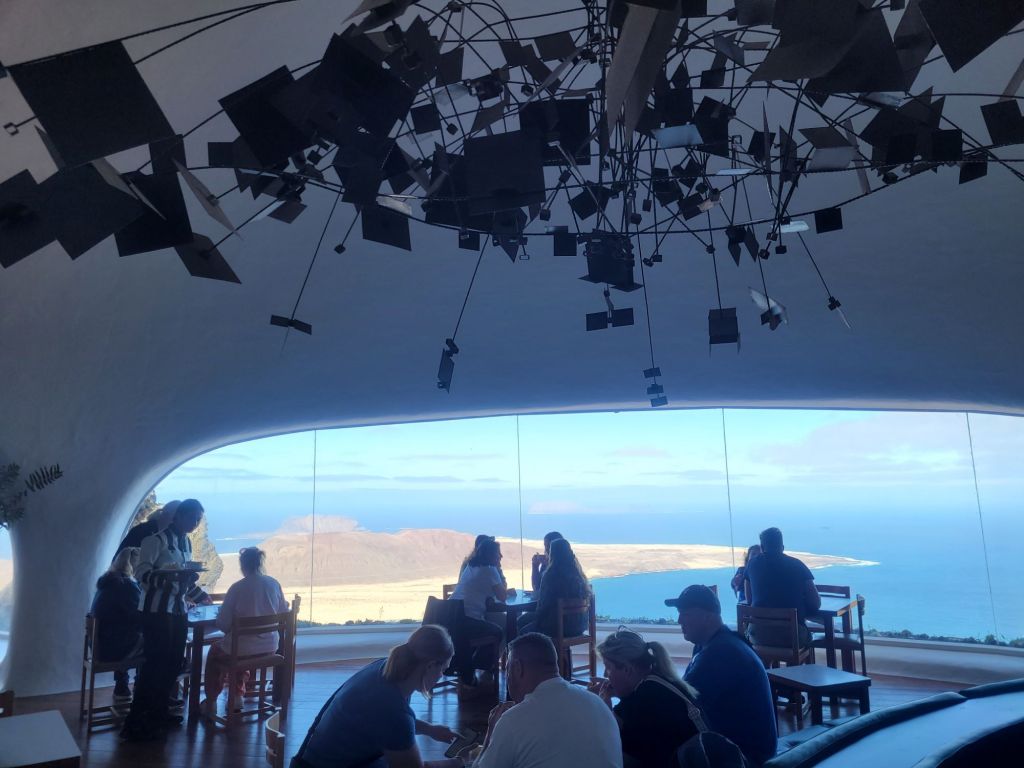

The interior is white, with stone floors, wooden stair treads and no sharp corners anywhere, even the ceilings and walls are curved.
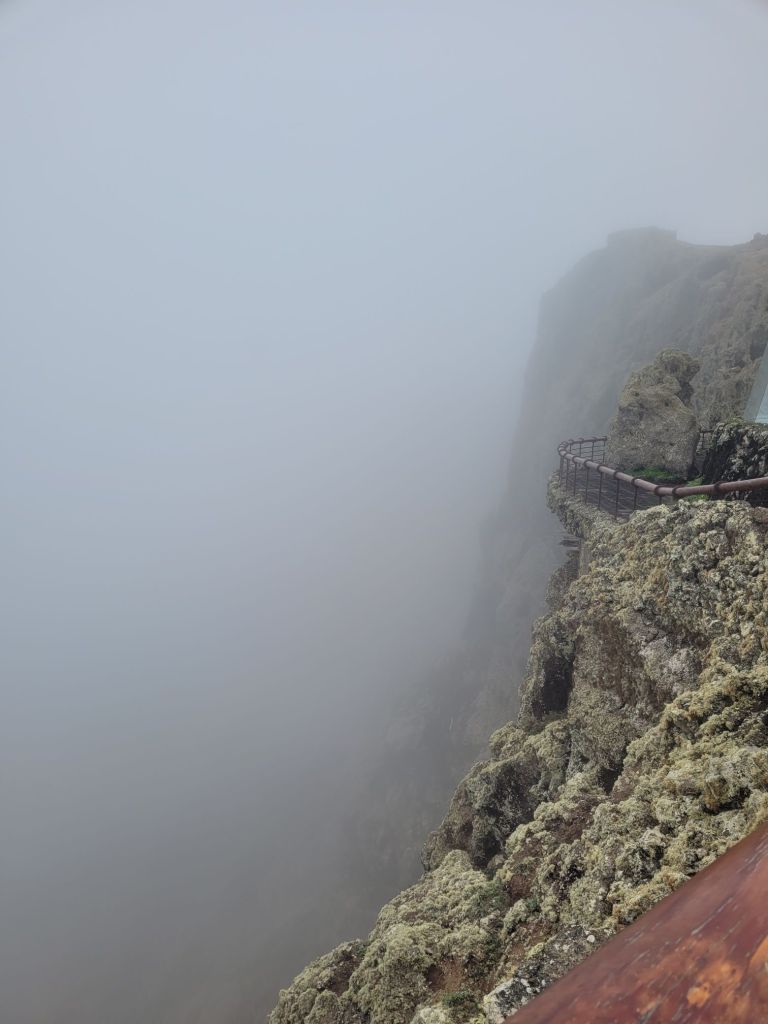
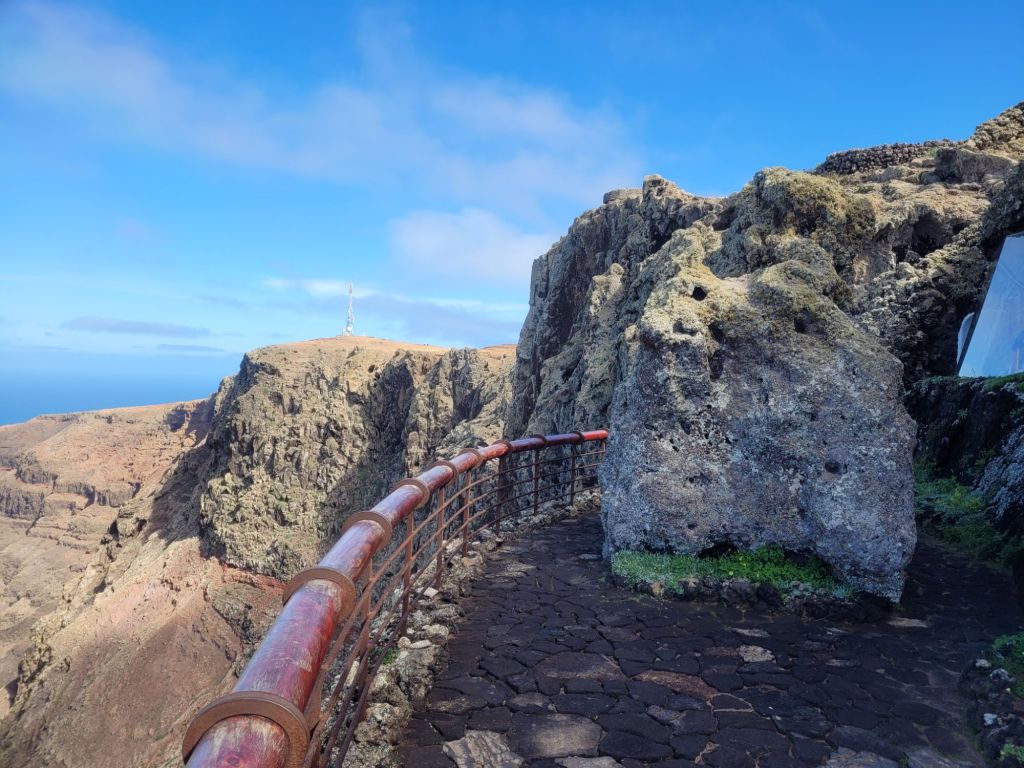
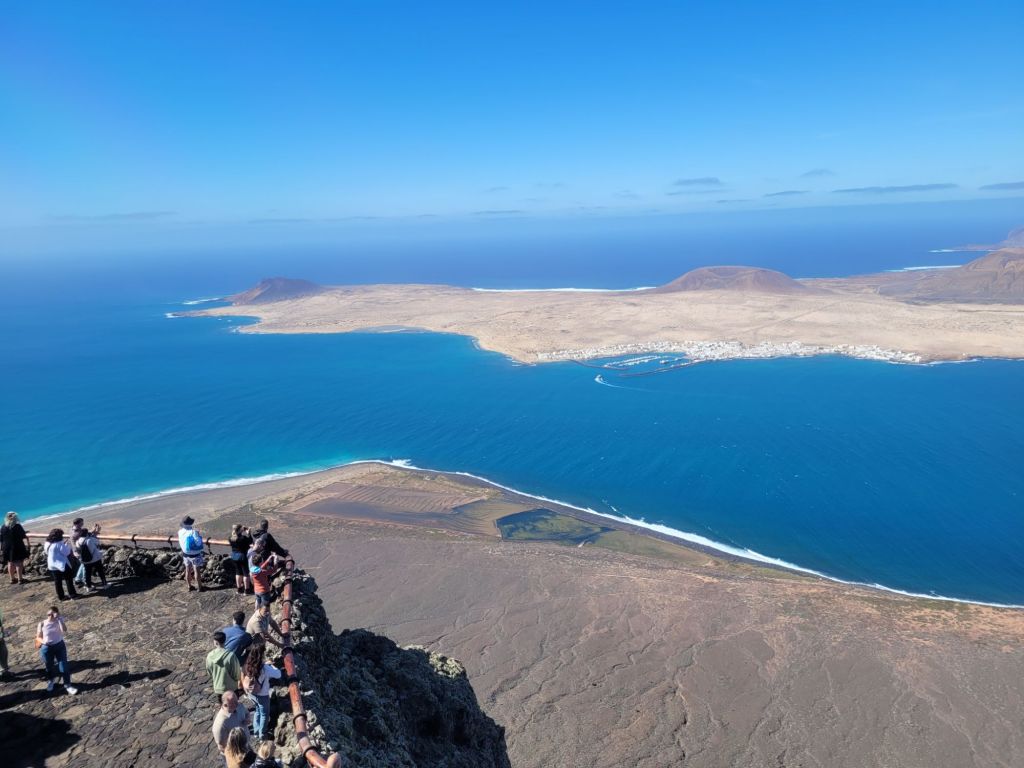
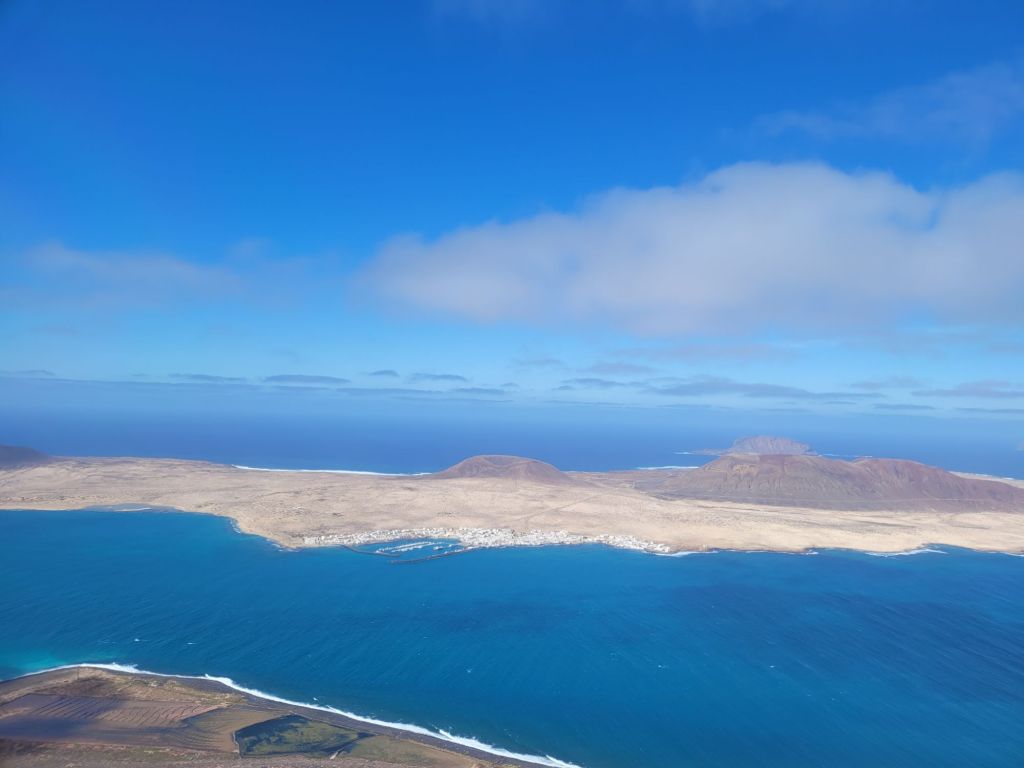
Right at the top, 500 metres up on the third floor, there is a terrace that not only looks out to sea but also allows views south-west, down the coast. Despite the improved weather it was still hazy enough that the volcanoes that parade down the island were indistinct. On a crystal clear day, it must be unbelievable.

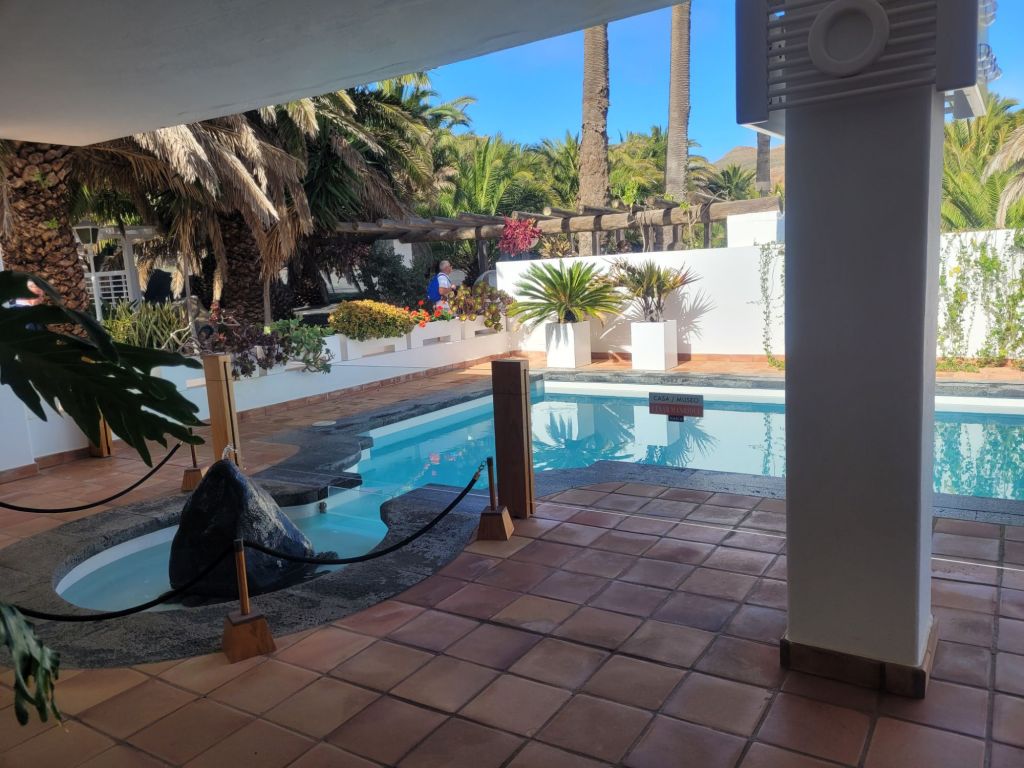
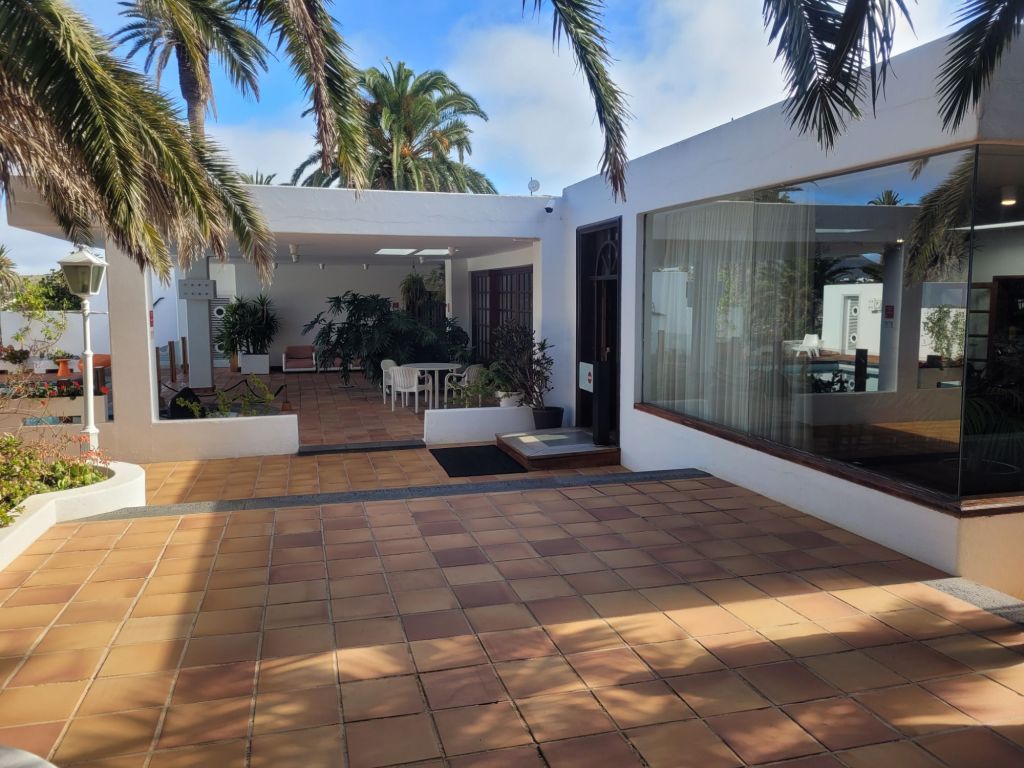
Monrique’s last house was heart-stopping, possibly because it had echoes of houses in Mexico – a very similar ‘feel’. He re-developed a traditional Canarian farmhouse, and the blend of materials and styles is seamless and so so pleasing.

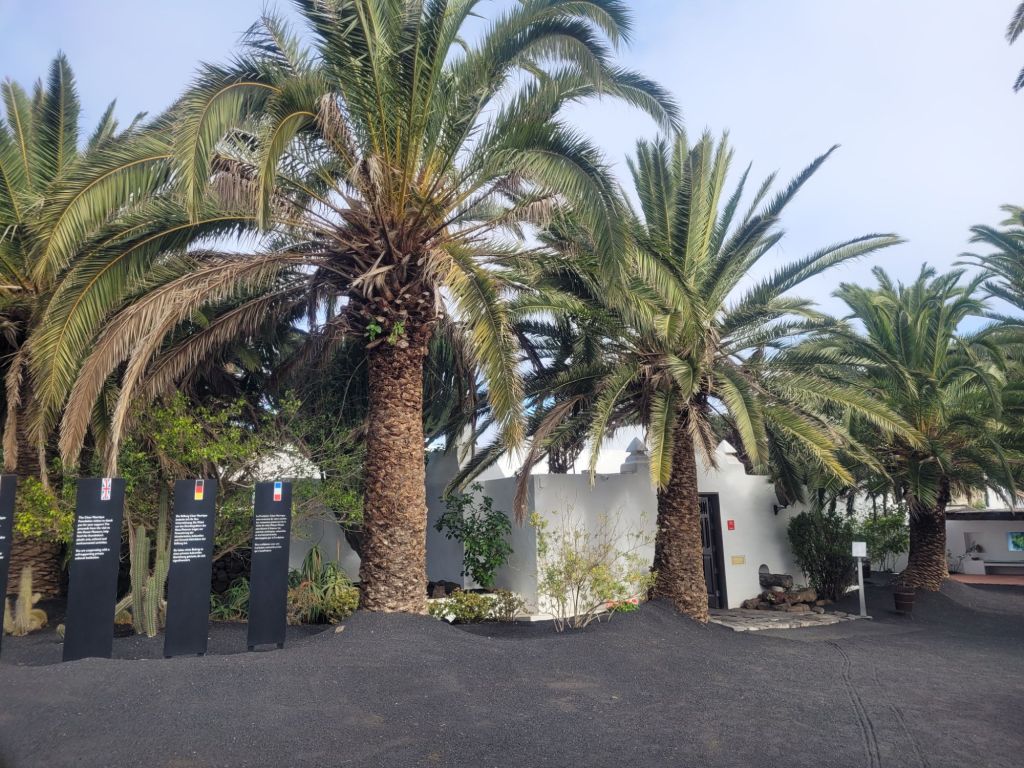
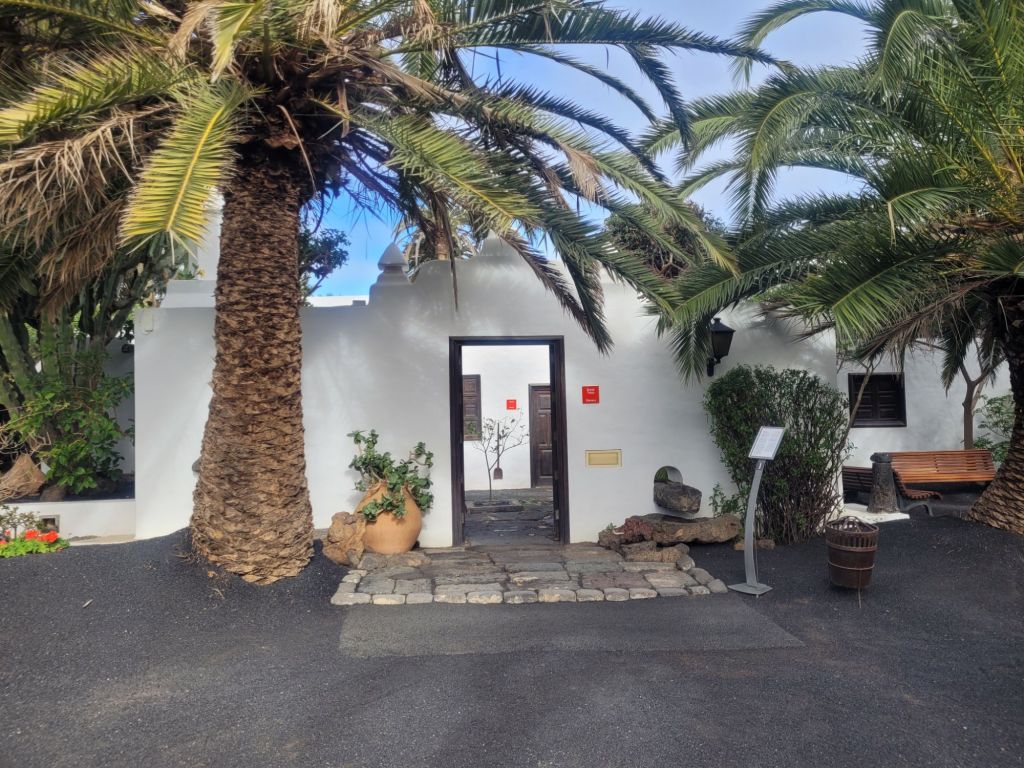
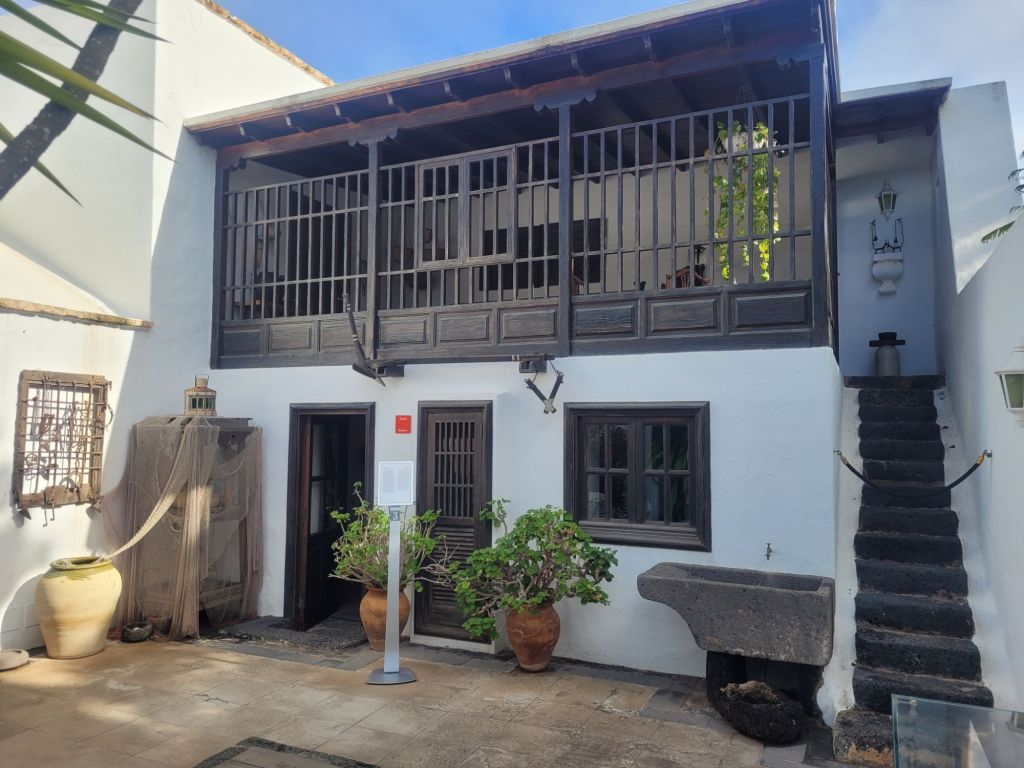
The interior was full of knick-knacks and ‘things’ – dusting that clutter must be a Herculean task.
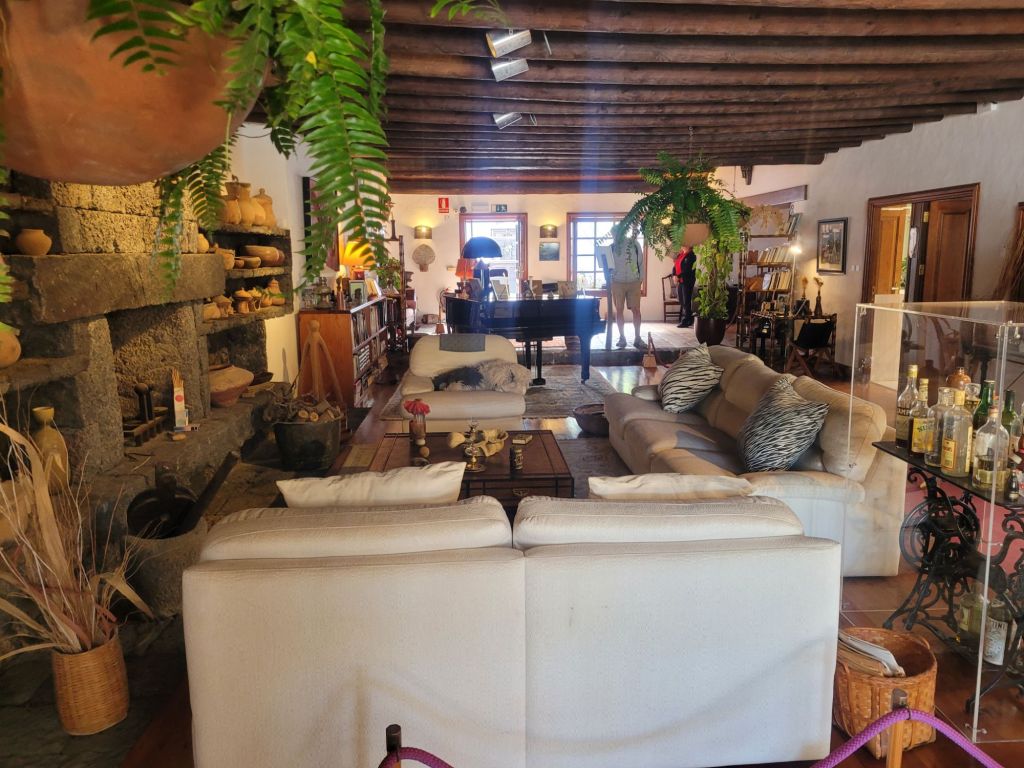
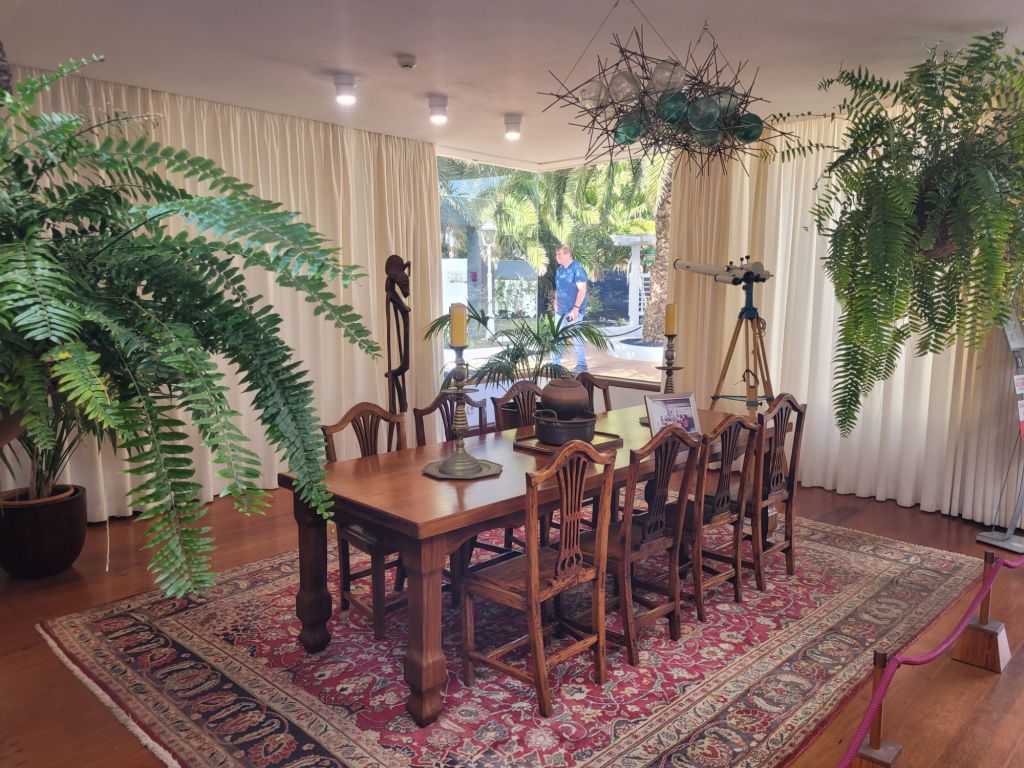
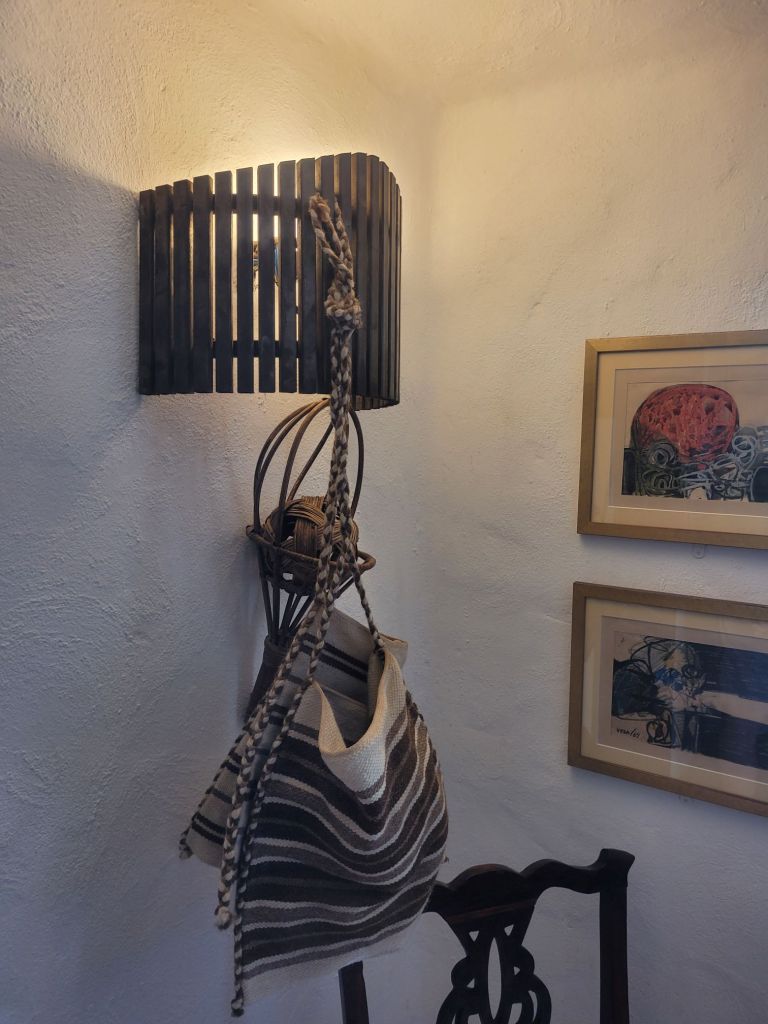
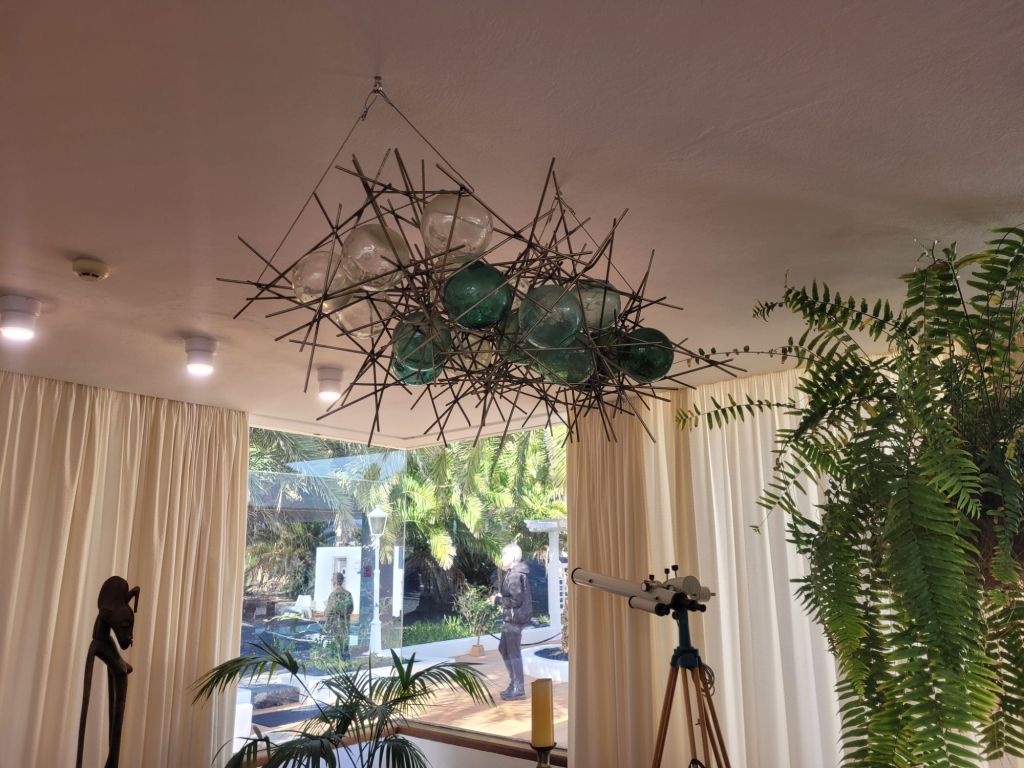
The light fixtures were stunning – these seem to be a feature in every building of his we went into. Along with hanging plants.

Another common feature is the use of volcanic ash in the gardens, which makes sense.
Cesar Monrique remains an important influence in Lanzarote. Not only do his buildings and installations bring in tourist money (prices are different depending on whether you are local, Canarian or a tourist), but his influence on town planning remains strong: you rarely see anything over two stories outside of bigger towns and even in Arrecife, the capital, there are only one or two truly high-rise buildings. Furthermore, his foundation continues to support and develop artistic endeavour across the island.
As a result of Manrique’s efforts, the island has avoided high-volume low-cost tourism and it is a much more pleasant place for it. However, there is a slightly homogeneous feel to the island, so might there also be a touch of the authoritarian in his vision?
 Retired? What now?