Why go to Italy via France?
Well, for starters you can take the train all the way there.
And in taking the train from Marseilles along the southeastern coast of France into Italy, you travel along one of the more scenic railway routes in Europe.
Well, that’s what the map said, at any rate! As did several travel articles about the Ligurian coast.
Add in Roman ruins in various parts of southeastern France, and the Cinque-Terre in Italy and you have the bones of a trip that will satisfy most of our interests: history, culture and walking. Not forgetting good food and wine.
So all bases covered.
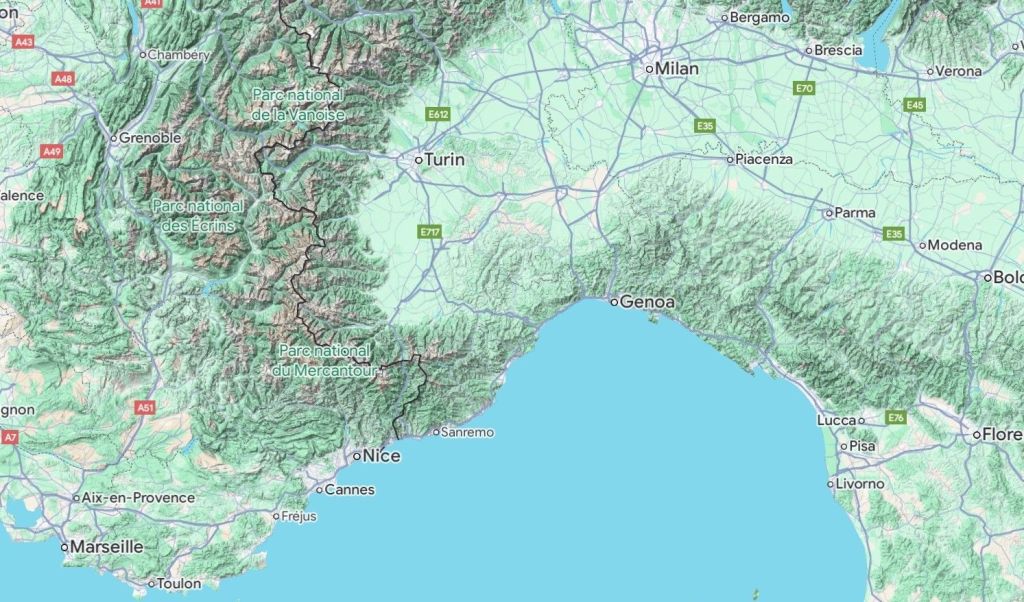
When planning the train route, The Man in Seat 61 website came in handy again, as did Trainline. I wanted to avoid navigating across Paris between Gard du Nord and Gard de Lyon, so chose to break the journey in Lille. This seemed particularly interesting as there was a cheap train run by Ouigo between Lille Flandres and Lyon Part-Dieu – so it was the least expensive route anyway.
That was the plan – sadly the only days that Ouigo train didn’t run were the three days around and on our chosen day of travel. And this did not become apparent until the standard Inoui tickets were more expensive. But it was an easy journey nonetheless.
Eurostar to Lille Europe, a few hours to have lunch and then a train direct from Lille Europe to Lyon Part-Dieu. The centre of Lille is about a 20 minute walk from the station, so we had time for at least a quick sandwich and a beer in the main square. Again, that was the plan: our train was delayed so there wasn’t enough time to get into the centre of town.
We did walk up to Lille Flandres, a ten minute (if that) walk and a very pretty older station surrounded by quite touristy looking restaurants (and main roads). Eating on a main road didn’t quite appeal so we returned to Lille Europe and lurked about in a slightly scabby restaurant waiting for our train. Lille Europe is sparsely served with refreshment outlets and it’s an unattractive, functional station. Next time I might risk the cafe on a main road instead.
From Lille the train runs almost due south, through a flat landscape either covered with light industry buildings (and what look like warehousing depots or distribution hubs) or enormous fields. Once south of Paris, the fields get smaller, surrounded by hedges or shrubby trees, alternating with woodland. As the rolling hills flash past, fierce lush green is interspersed with tiny towns and farms. Eventually vines start appearing: acres and acres of them.
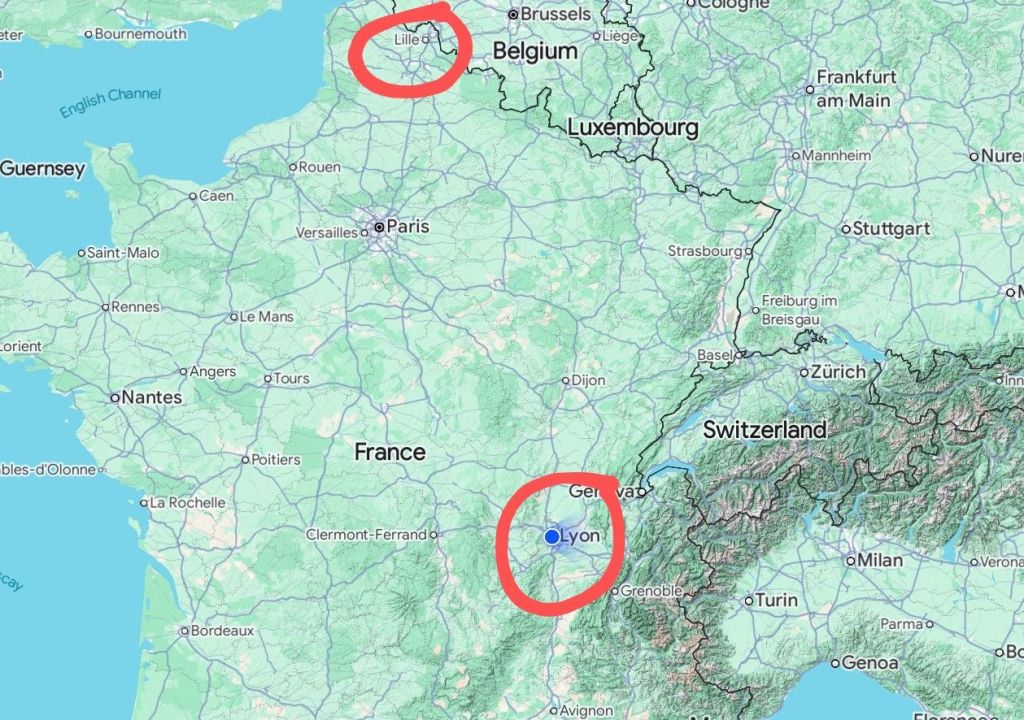
TGV trains get into Lyon either at Part-Dieu or at the airport – Part-Dieu is on the metro system which provides the easier access to the city. Saying that, I had not quite realised that Lyon is built on two hills. Quite steep hills. Our hotel was situated at the top of one of them, with Part-Dieu station across the river.

Thank God there is a good metro system and a fabulous funicular railway up to the top of the hill. Sadly we took the wrong one, so while we got almost to the top, there was still a ten minute walk with many stairs and a few steep hills to navigate with our luggage. We discovered the ‘better’ funicular station later on.
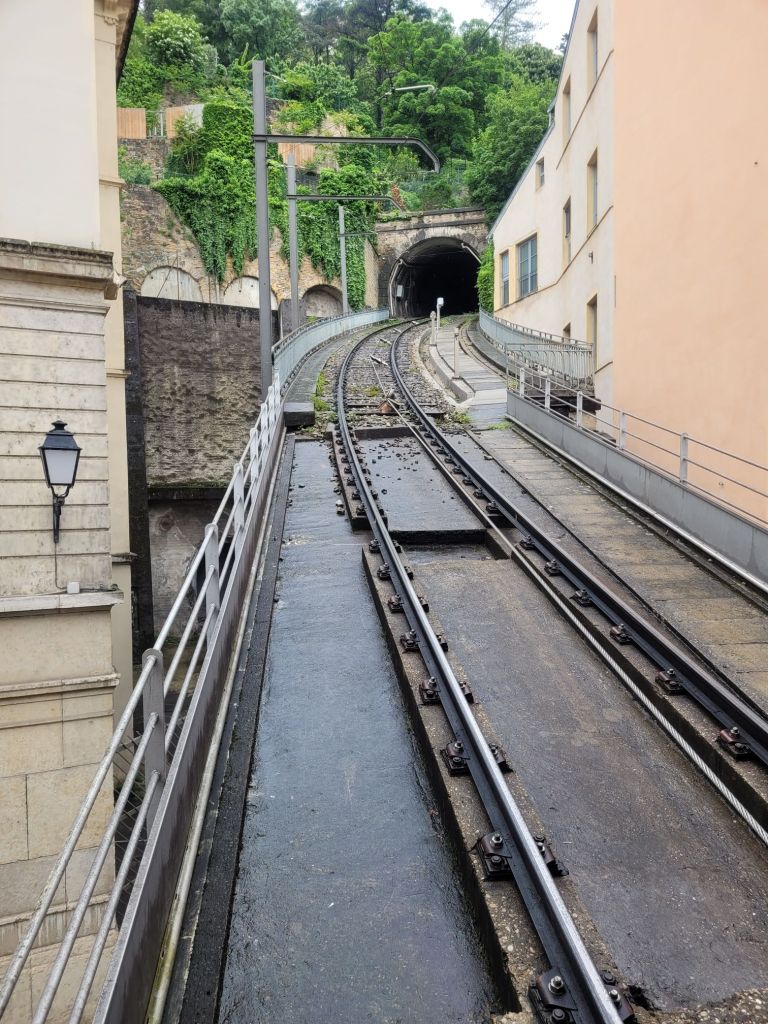
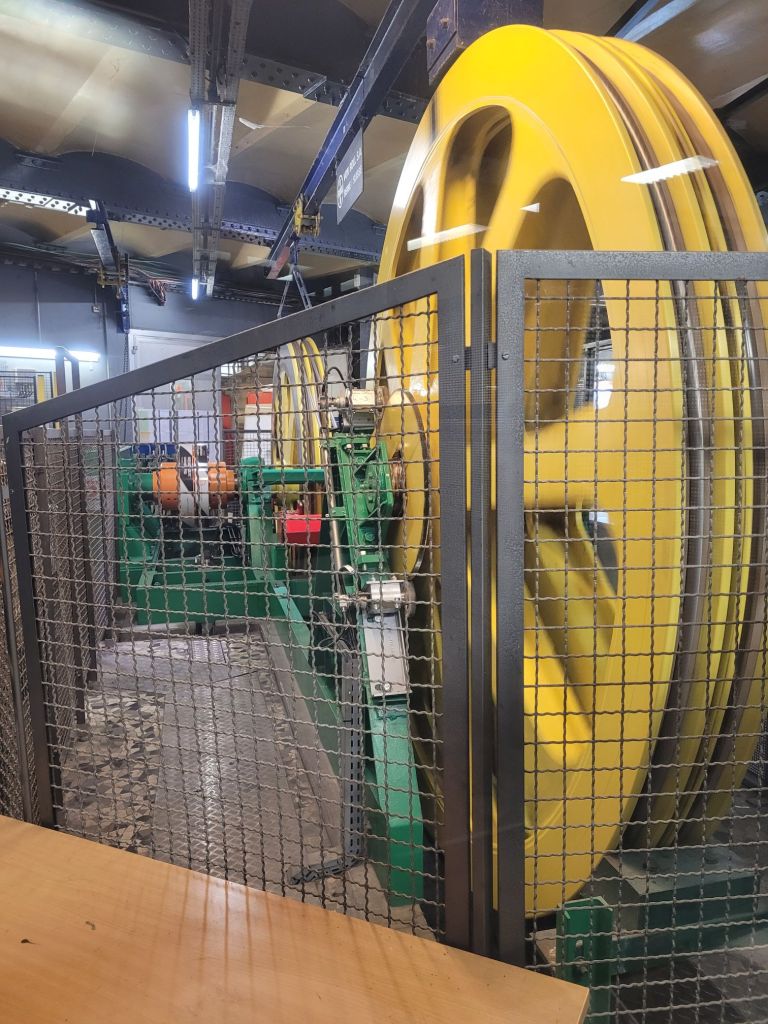
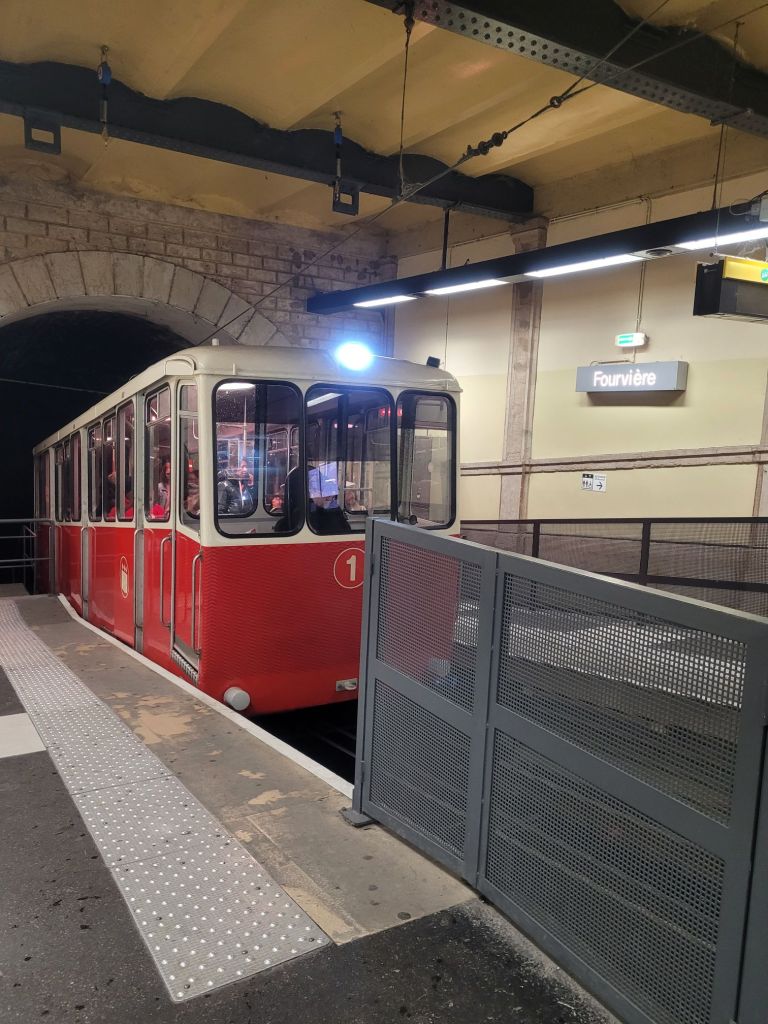
The funicular railway lines date from the 19th century. The first line opened in 1862, the second in 1891. They have been closed in (so they run in tunnels) and much modernised since then! The two car trains run up and down the hill regularly, roughly every ten minutes. Along the line that goes up to Fourviere, there are regular displays of Roman remains: amphora, stone busts and heads, clay pots… Photography of these was impossible (despite repeated attempts) as the tunnel is dark, the train moves at some speed and is a bit bumpy, and the display areas are low down, below the level of the window, so you can’t get a camera straight on to them. Frustratingly, all my attempts came out both fuzzy and chopped in half – and there were many attempts.
Although a hotel at the top of a hill, above the main town, seems counter-intuitive, it was extremely quiet and very comfortable. The building was originally a convent, built in the mid-19th century, and this religious origin is reflected in a reception desk set in the original church.
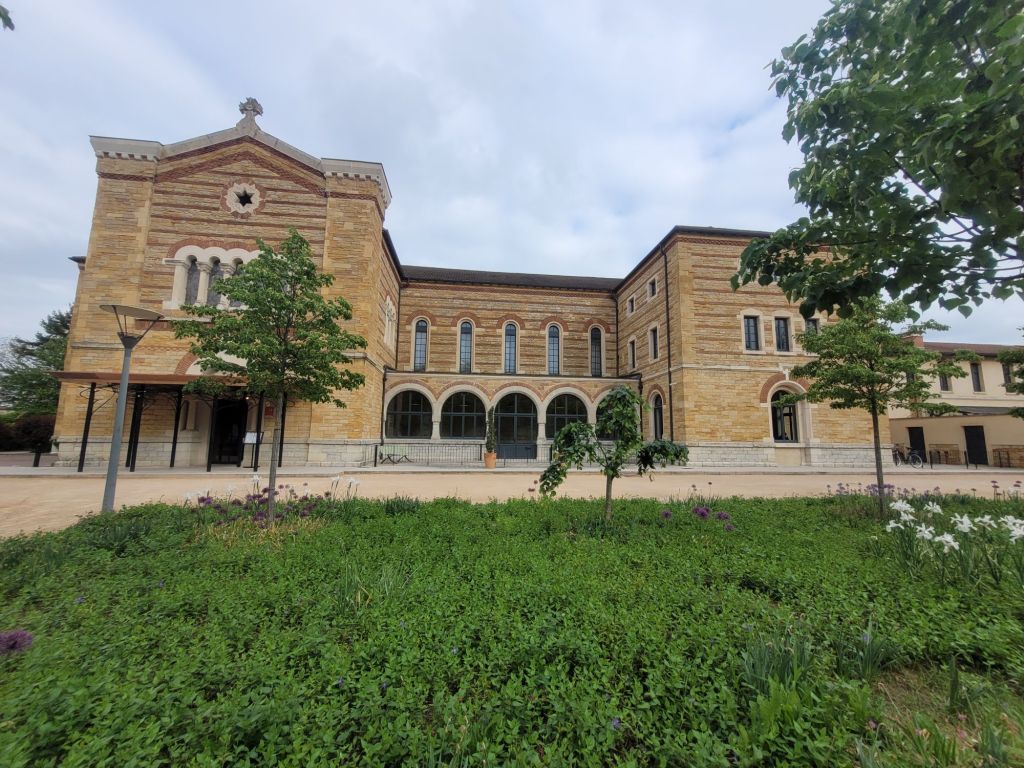
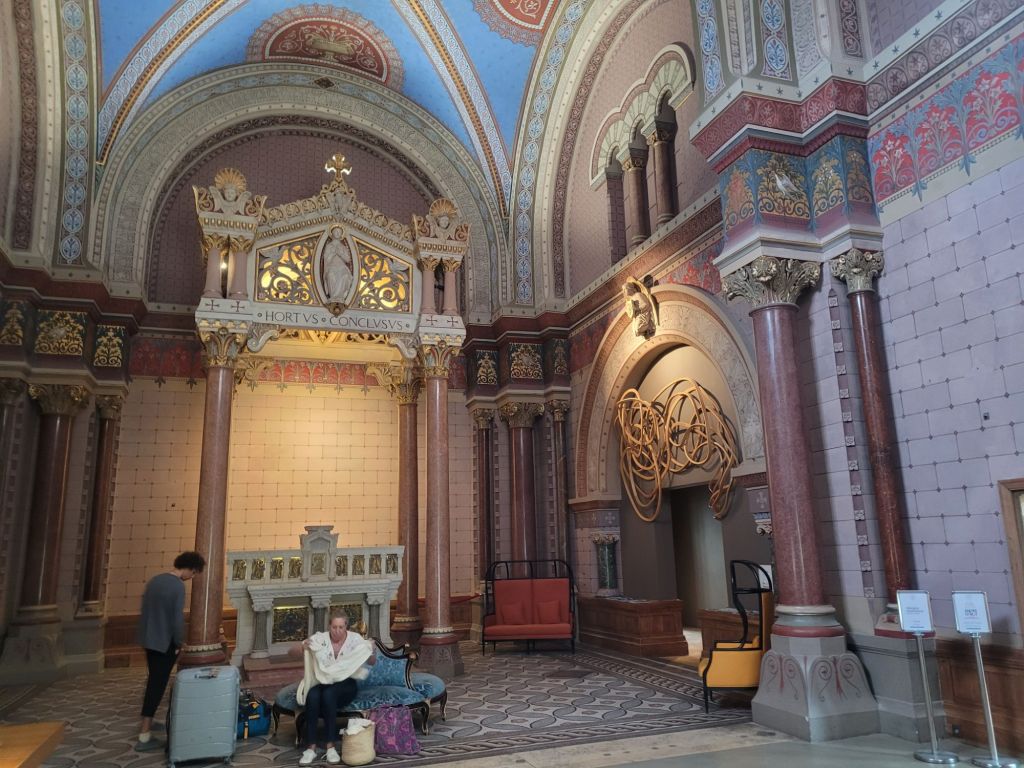
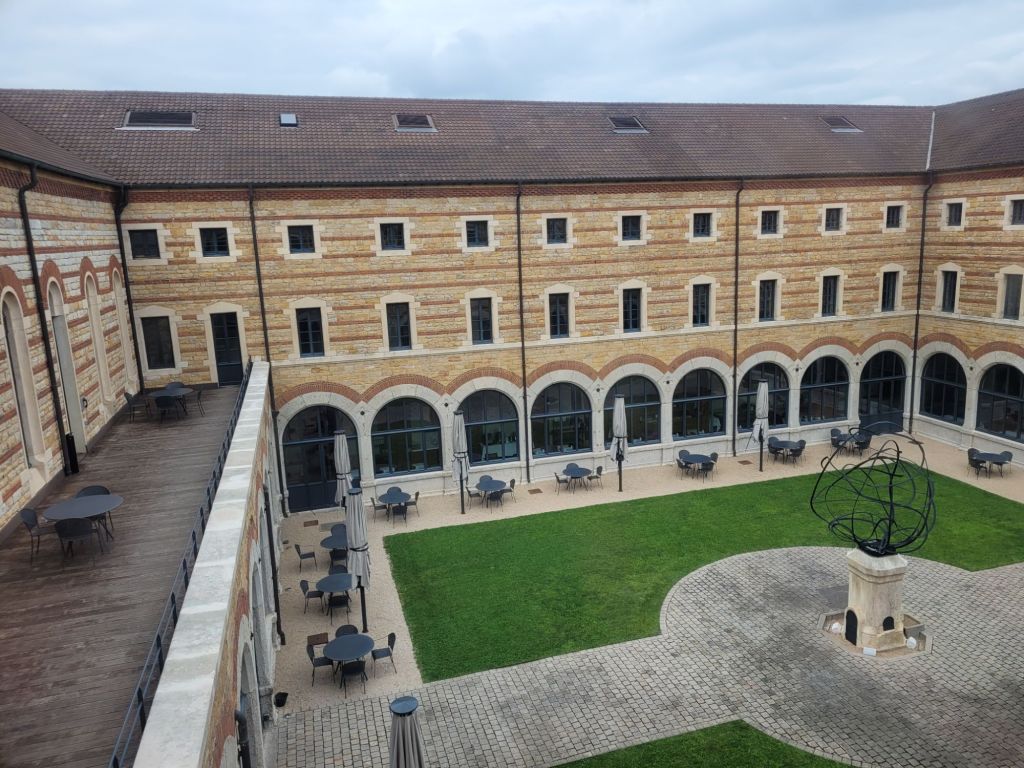
A disadvantage is that the restaurant, bar and breakfast are all expensive and thankfully we didn’t have car as parking is exorbitant. Fortunately we walked past a small supermarket and were able to purchase a bottle of wine. Essential equipment for travel always involves a corkscrew!
Lyon is on the confluence of two rivers, the Rhone and the Saone, which goes some way towards explaining its trade importance through the ages. The Romans certainly understood this – Lugundum became a large trading hub. There are many Roman remains (over and above those along the funicular railway tunnel) and a large Gallo-Romano museum. As the third largest city in France (or second, depending on how you measure it), Lyon is a modern city with a long history.
And fantastic food and wine which we were eager to explore.
 Retired? What now?