Birthplace of the emperor Claudius, there is no doubt that Roman Lugundum was a highly significant place during the years of the Roman Empire. And the various remains dotted about modern Lyon attest to this.
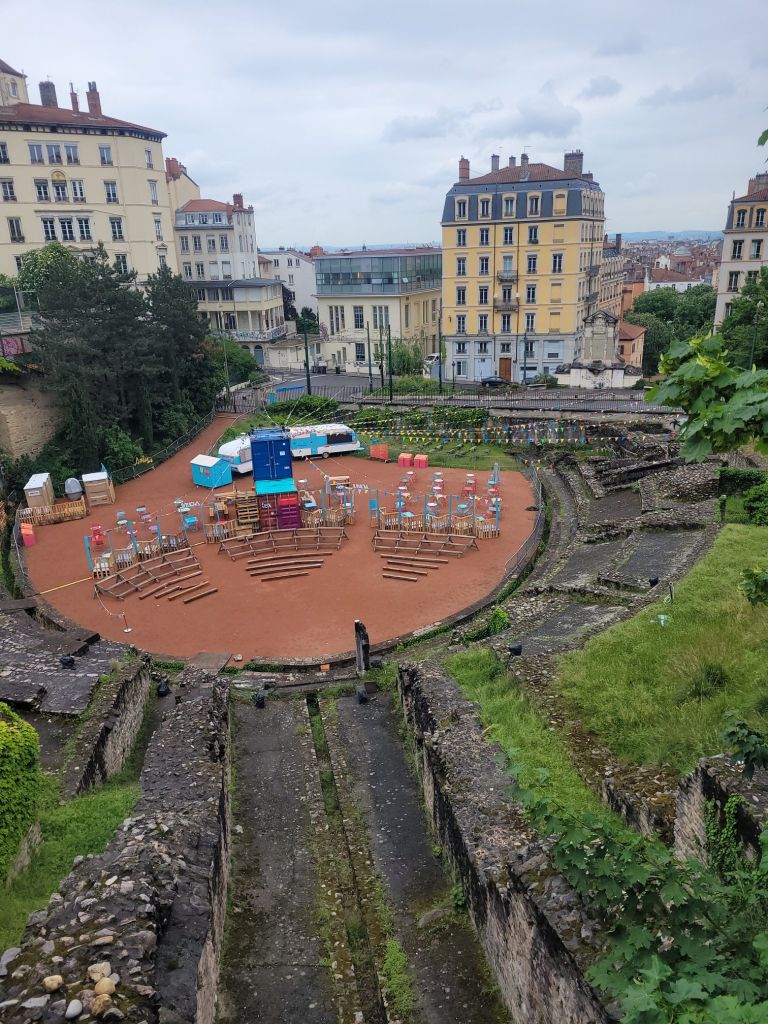
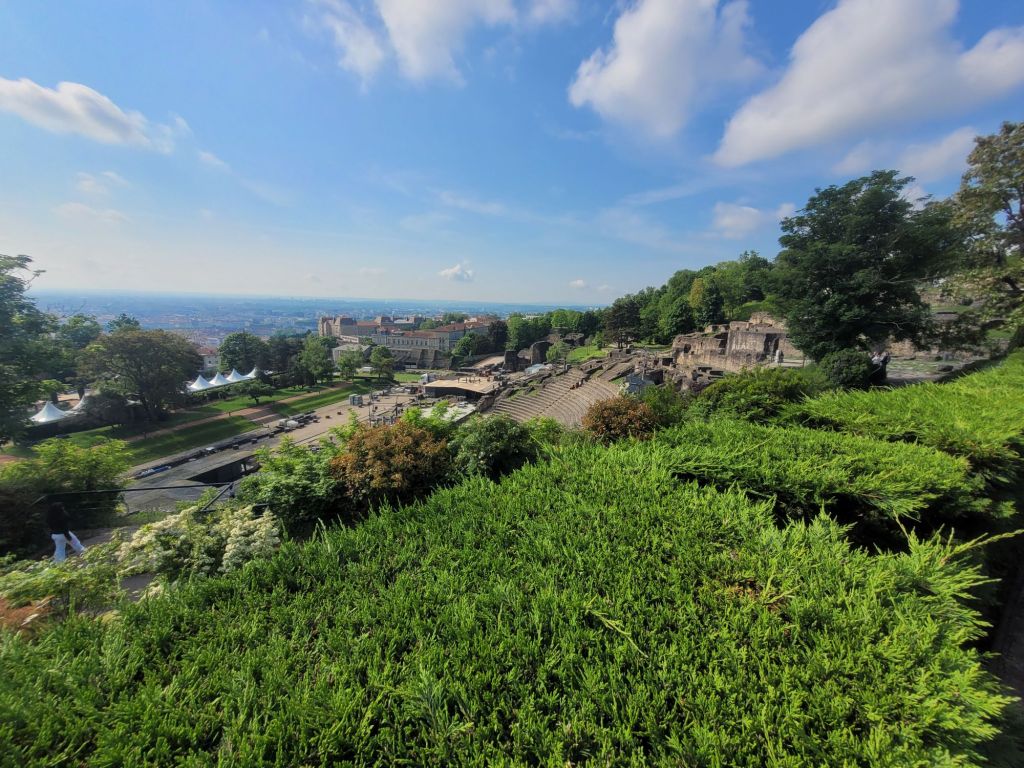
However, over the centuries, Lyon has become much more than its Roman sites and it has a variety of things to engage and entertain a visitor (aside from the spectacular food and wine).
A lovely colleague (well, ex-colleague now) supplied a long list of things to see, do, participate in and eat: we managed a few on the list but left plenty for another trip. It’s possible that completing her list would require a week, rather than just a few days.
From the 15th century Lyon became, again, a trade hub for goods from and to the Mediterranean: spices, knives, weapons and silk moved up and down the Rhone. However it soon became known for its home industries and innovation.
Lyon had a large silk industry – from worm to finished fabric – which played a huge part in the development of the Lyonnaise economy from the second half of the 15th century. From the 17th century, Lyon exported high quality silk all over the world; there is a silk weaving museum that gives demonstrations and many (many) shops selling Lyonnaise silk. In 1895 the Lumiere brothers invented the cinema in Lyon – there is a museum dedicated to film in the centre if the city. Lyon is now the largest industrial area in France outside of Paris, with a wide range of industrial outputs, and the second educational centre in the country.
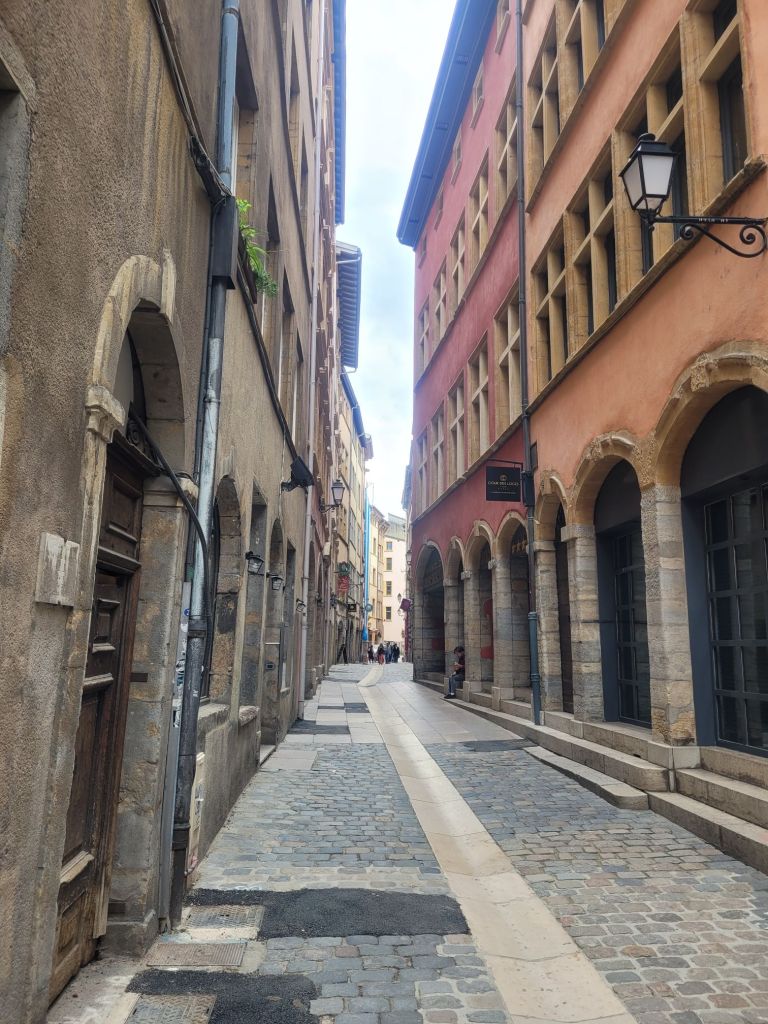
While the industrial development is everywhere to be seen, particularly heading south along the Rhone, the old town is cobbled, charming and atmospheric.

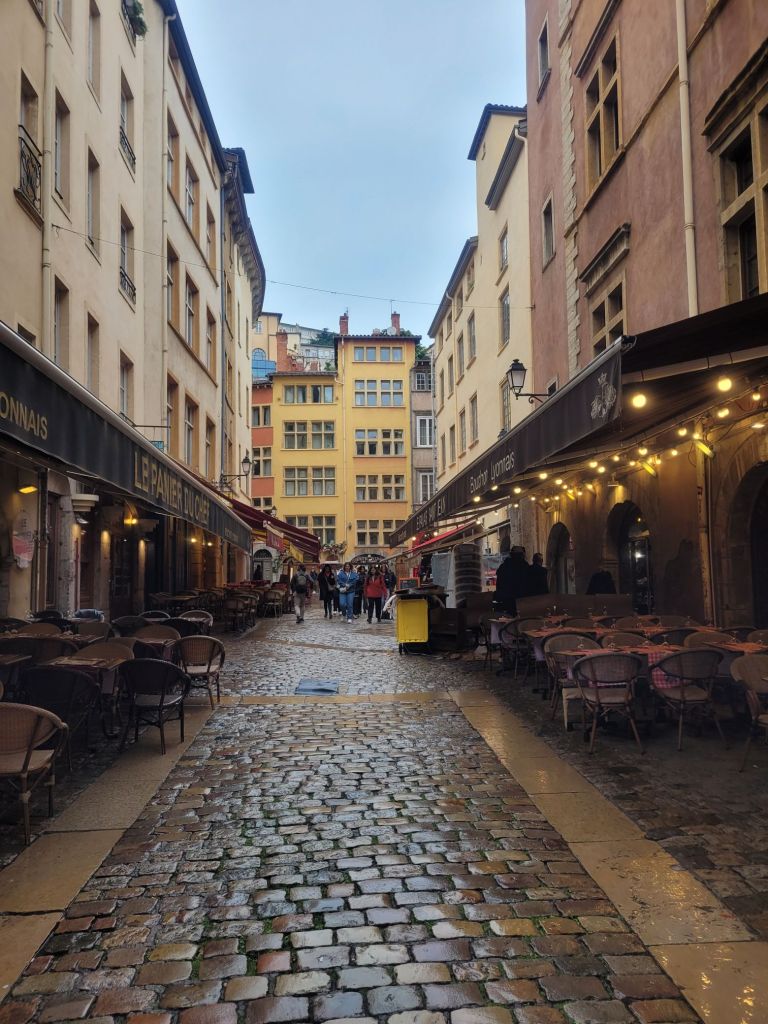
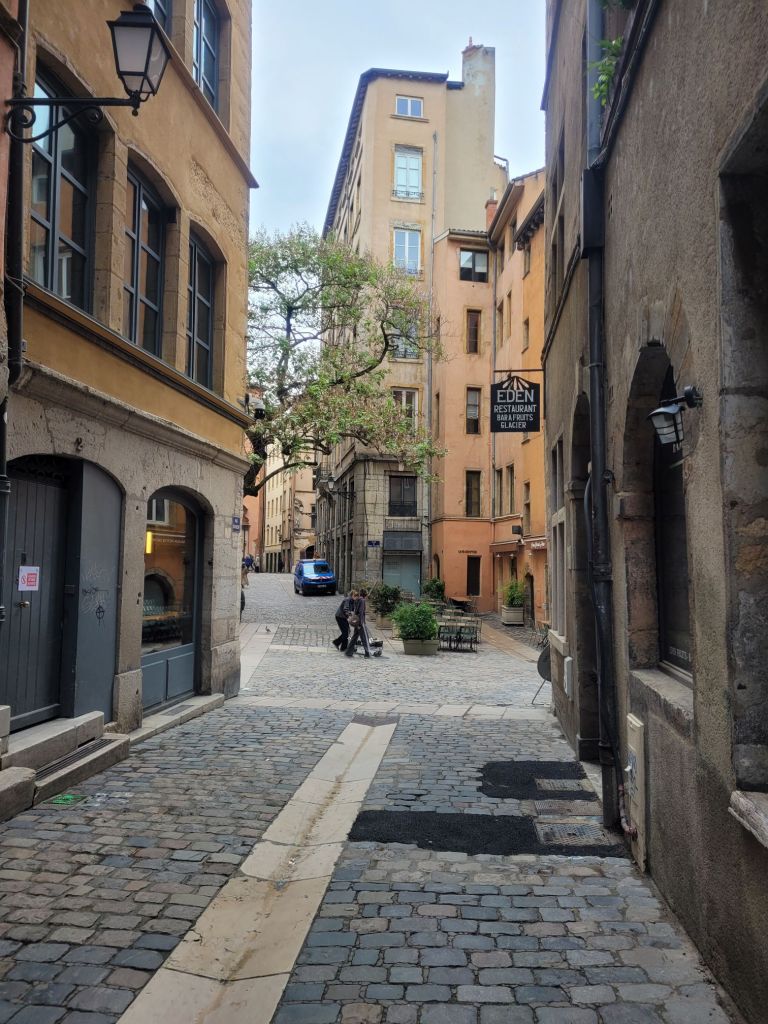

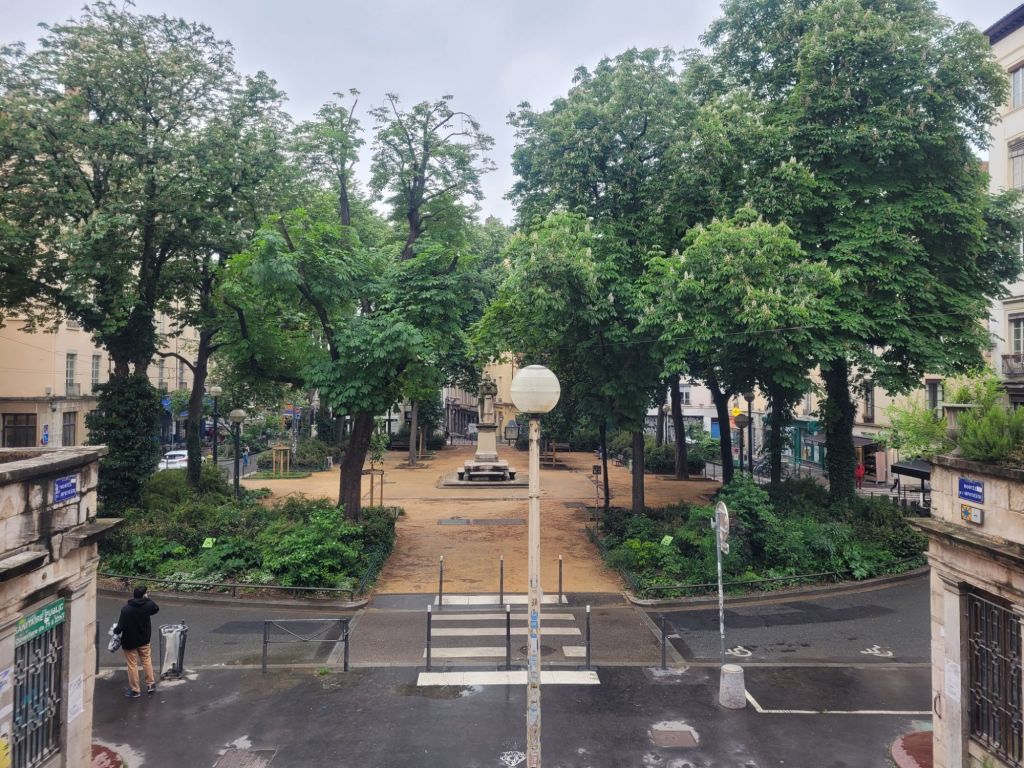
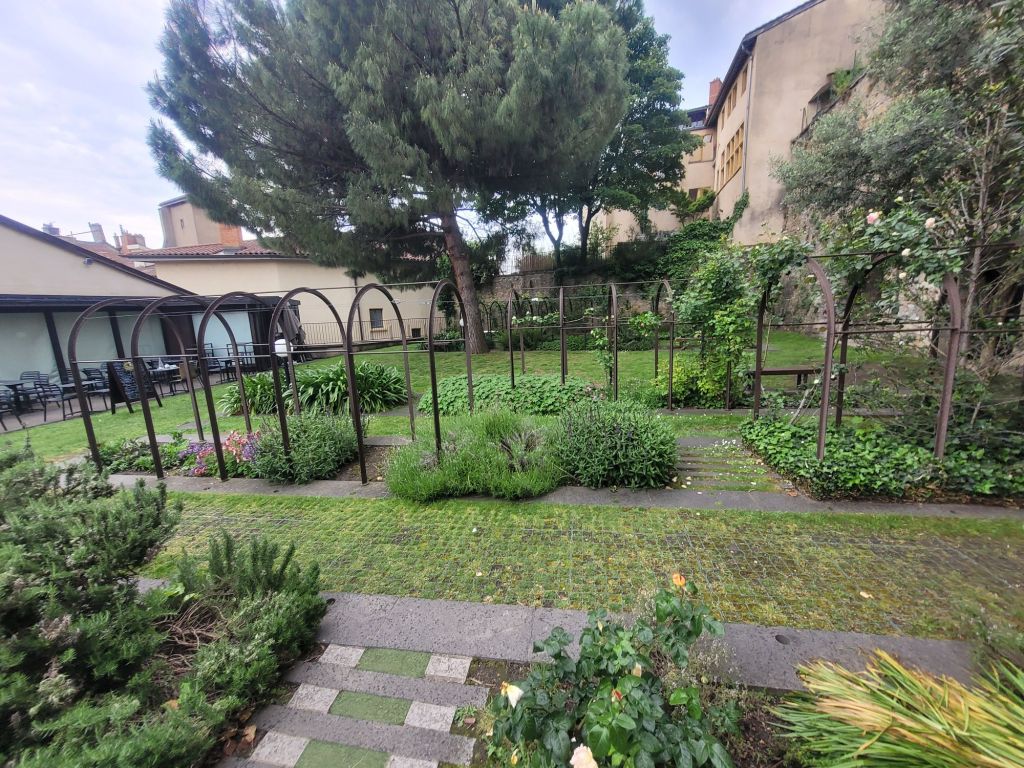
Despite the enormous pressure for space, given the narrow stretches of flat land by the rivers, rooftop terraces and vegetable gardens can occasionally be found (usually associated with a bar, cafe or restaurant, it must be said), and there are a number of peaceful squares just outside the old town centre.
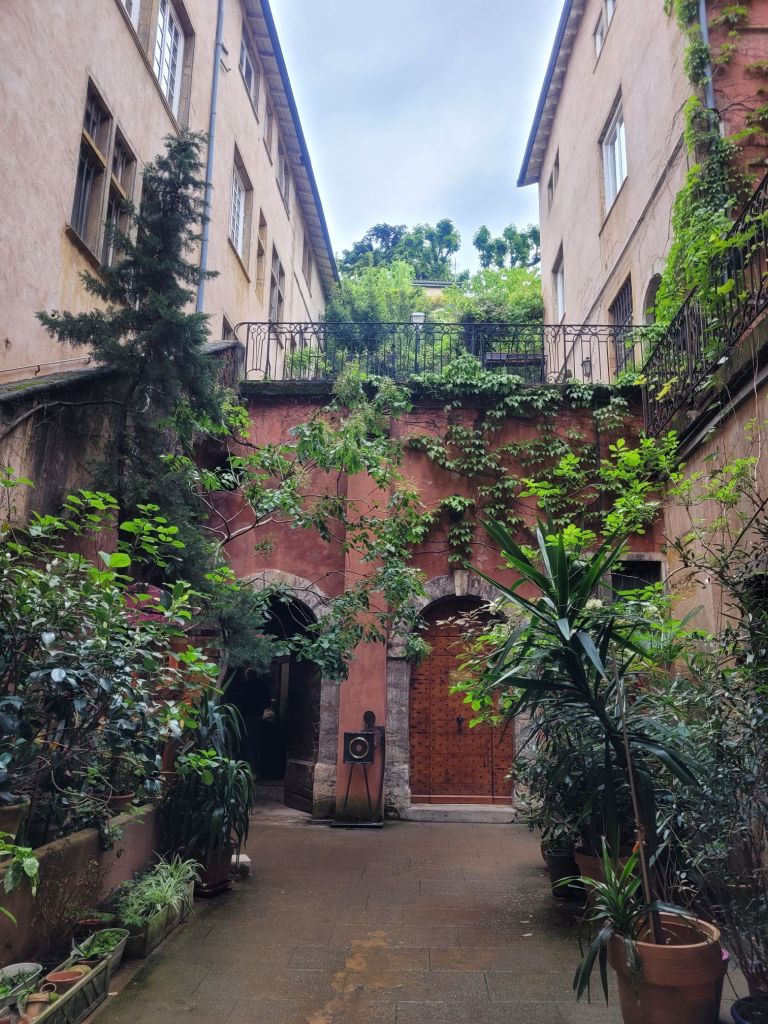
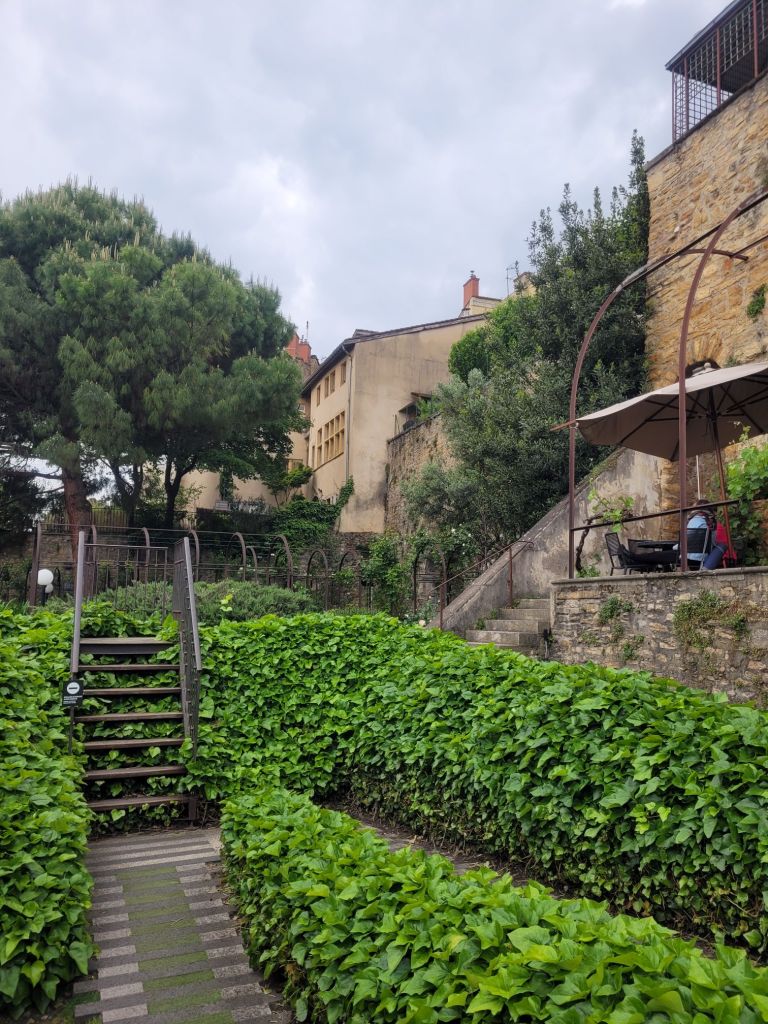
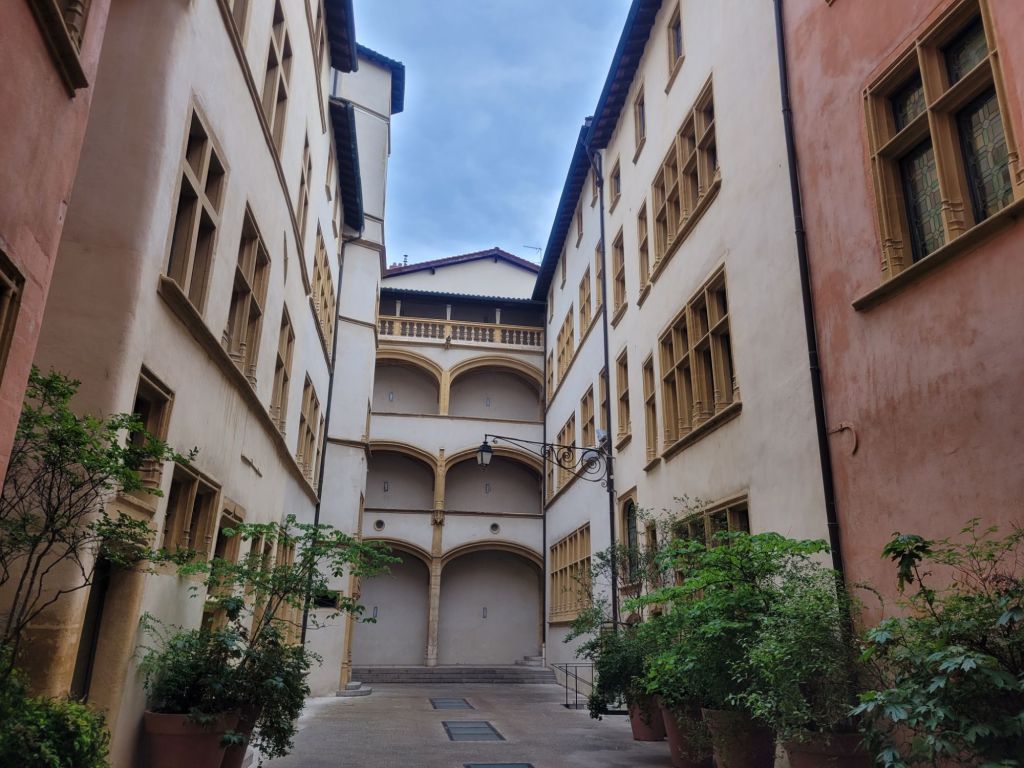
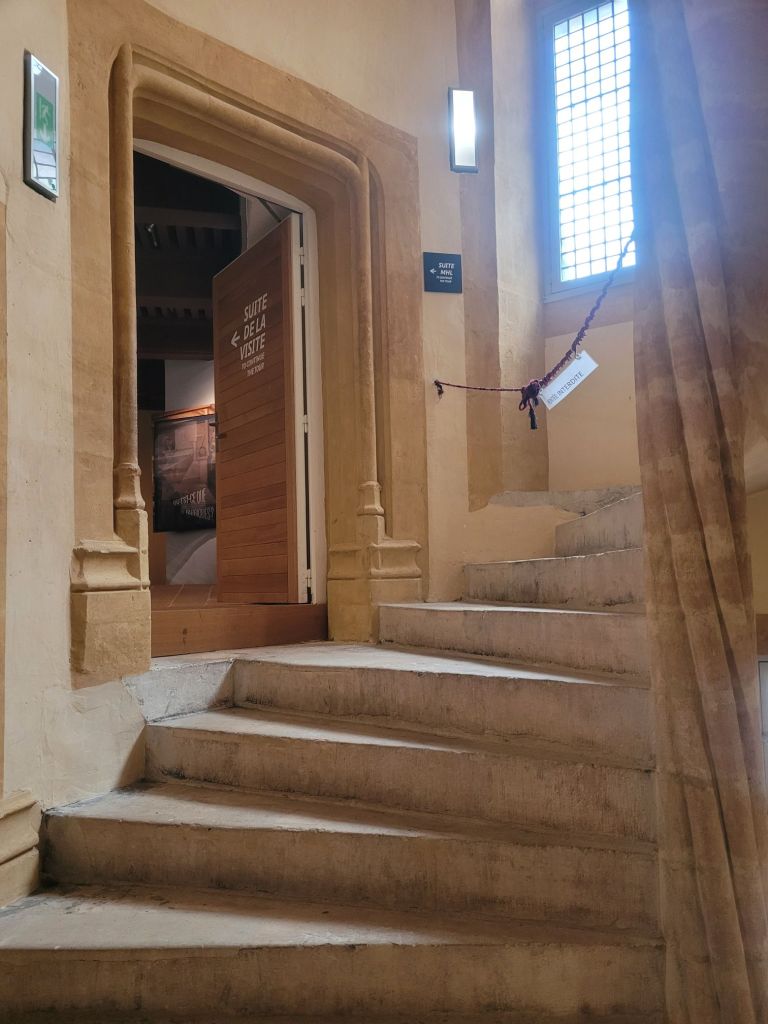
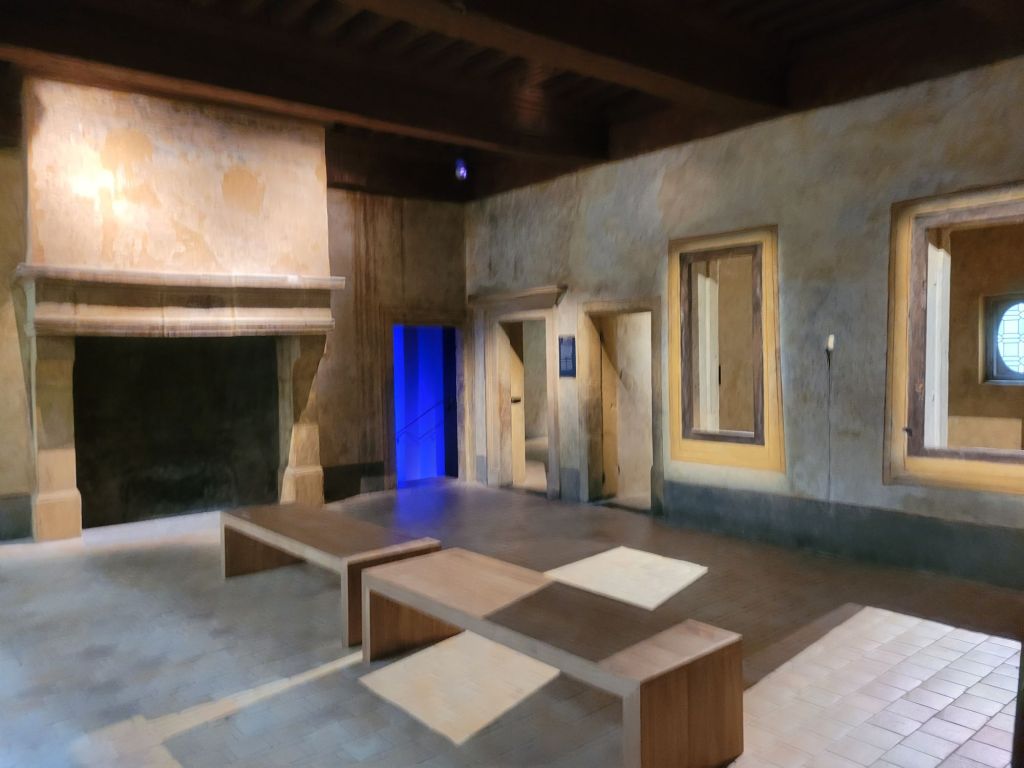
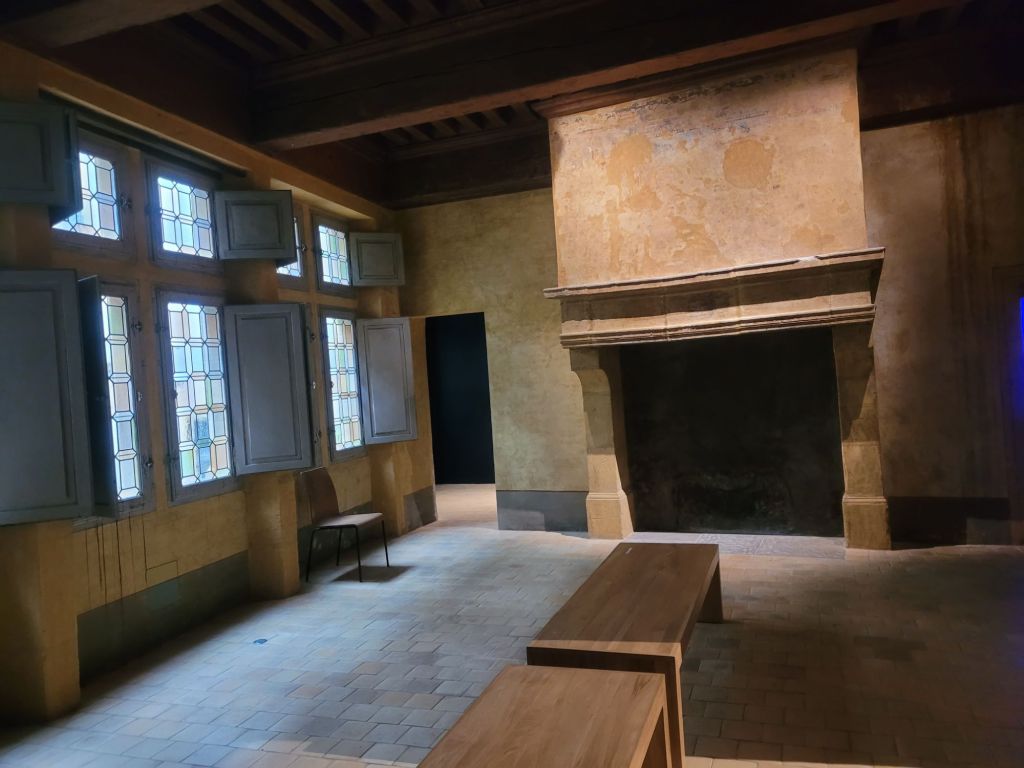
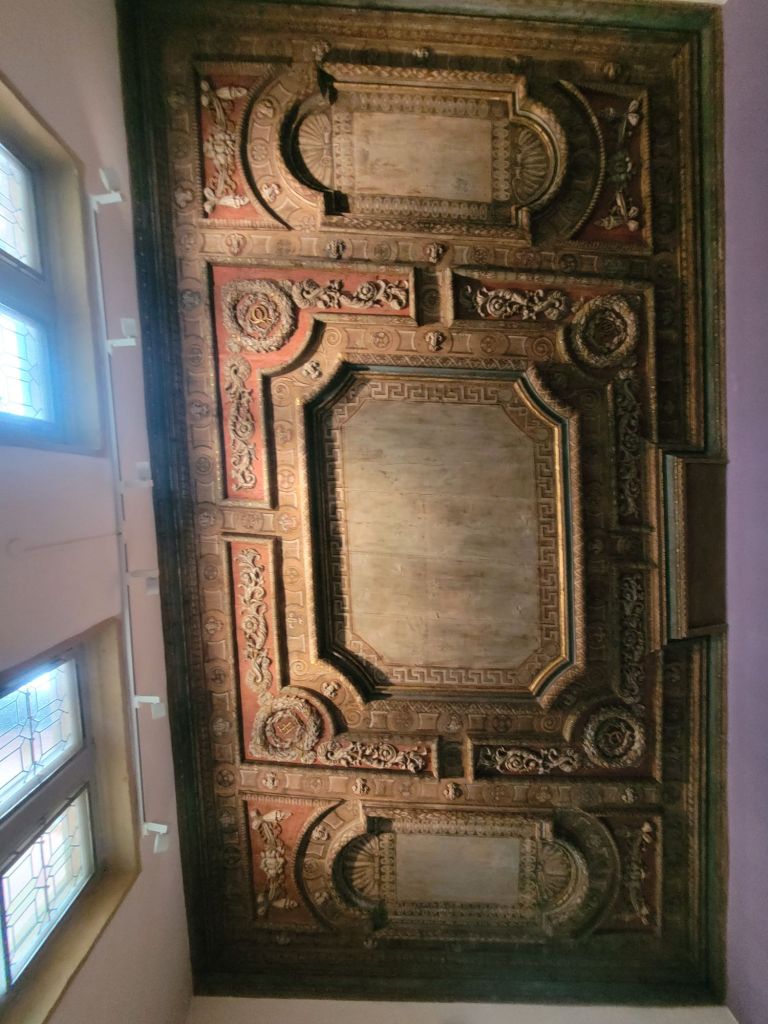
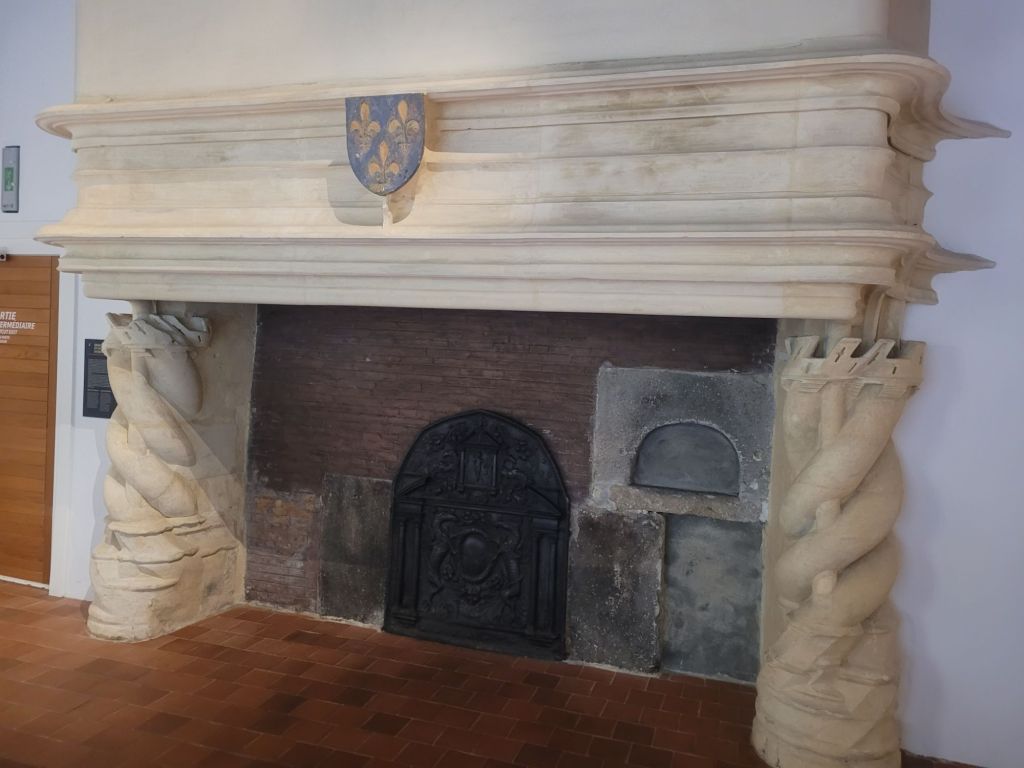
The museum of the history of Lyon (Musee Gadagne) is a bit of a mixed bag, with some interesting artifacts and history, but is predominantly7 about Lyon over the last two centuries. This is mostly delivered in French, thus it is less relevant for foreign visitors. Having said this, the museum is housed in an incredible building that is worth the price of entry just by itself. Dating back to the Renaissance, it has a beautiful spiral staircase (stone), enormous fireplaces (stone), a magnificent painted wooden ceiling, interior windows (with stone mullions) where the house was ‘extended’ into the next door house sometime in the 17th century… It was fascinating. And some of the displays were interesting too, particularly the interactive one that showed the changes in the two rivers over time.
The two churches in easy reach for tourists are the Basilica of Notre-Dame, built at the top of Fourviere hill on the site of the Roman forum (so almost next door to the Roman theatre) and the Cathedral of Saint-Jean-Baptiste. The Cathedral was completed in the second half of the 15th century and has an ornate exterior but is relatively spare inside – surprisingly so. In contrast, the Basilica was built in the second half of the 19th century and is surprisingly ornate (both outside and in), with a huge crypt.

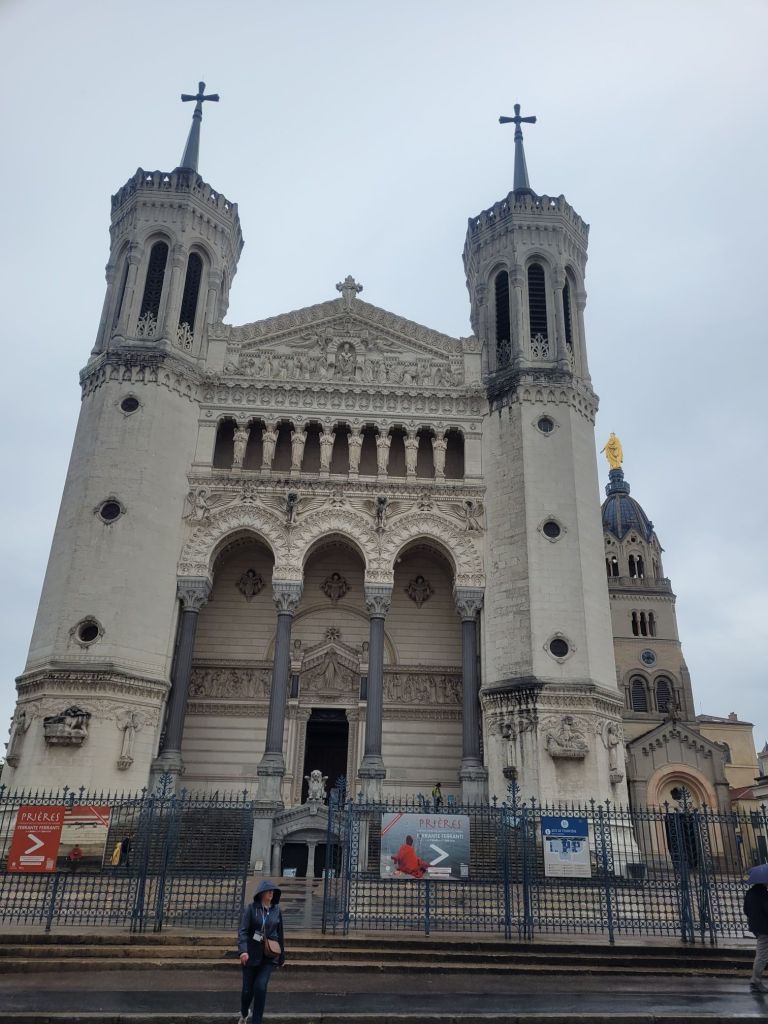

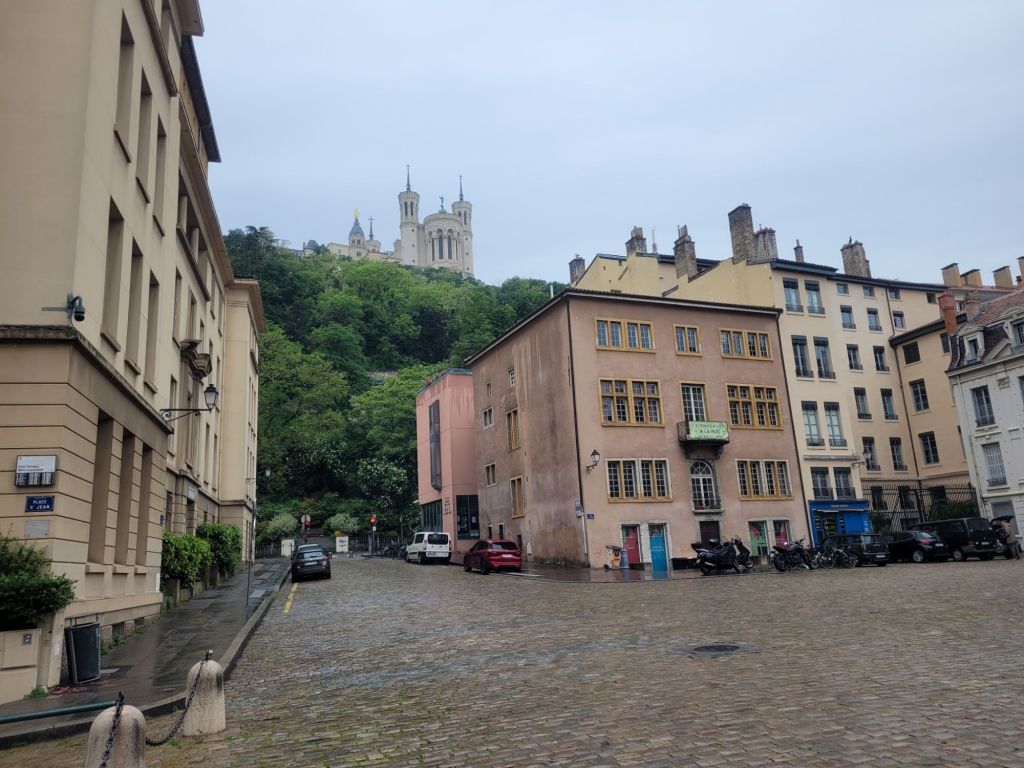
From the top of Fourviere, the Basilica looks over the city – you can see it from several points below – almost lining up with the cathedral.
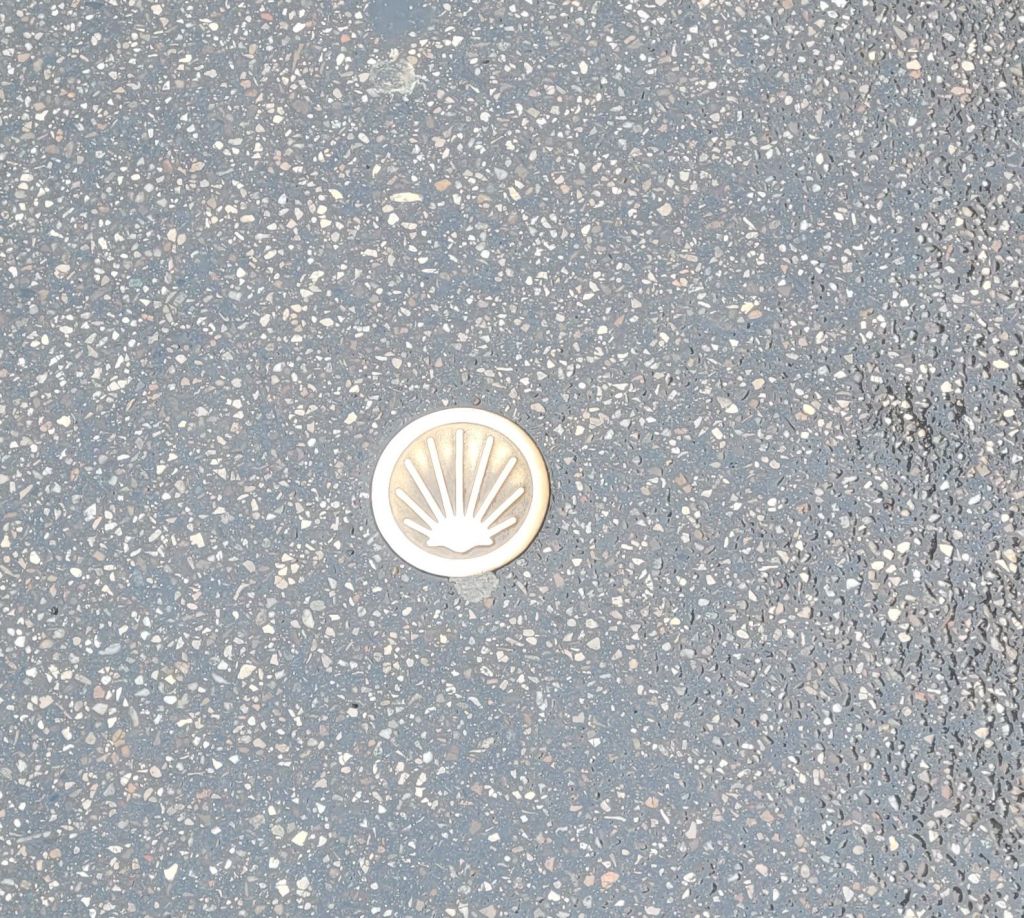
The cathedral is on the Santiago de Compostela route, attested by the brass shells in the pavement.
We were there when the election of Pope Leo was announced: lots of bells…
Food is another Lyon speciality; we had two fantastic meals. One was near (ish) the hotel in Saint-Just, Bistrot Nicephore: a tiny space full of French people eating and drinking (always a good sign), minimalist menu and an outstanding charcuterie board of local produce. The wine was equally excellent, with the producer there to introduce his wines and offer tastings. The second was at Basserie Sathonay, across the river in Place Sathonay at the bottom of La Croix-Rousse hill. This was recommended (on the long list) and was, again, full of locals – we were the only non-French speakers. A great set menu and good wine. We also bought patisserie (because you sort of have to with all those lovely shops everywhere), bottles of red wine to drink in our room, some ‘interesting’ salami (the only minor ‘fail’).
Overall a great stay.
Onwards to Avignon.
 Retired? What now?