The coastal route between Marseilles and Nice is marked up as a scenic railway route on our giant map of European railway lines. Trying to establish exactly which route went which way was a bit tricky and despite my efforts to ensure that we definitely took the scenic route, there were some time constraints.
Scenic often means ‘long’ and the day’s travel was already going to be our longest day of train rides. I finally chose a direct train from Avignon, through Marseilles and on to Nice. From Nice we picked up a train ti Ventimiglia and then a local train to Bordighera. It involved leaving early and departure from the TGV station on the outskirts of town.
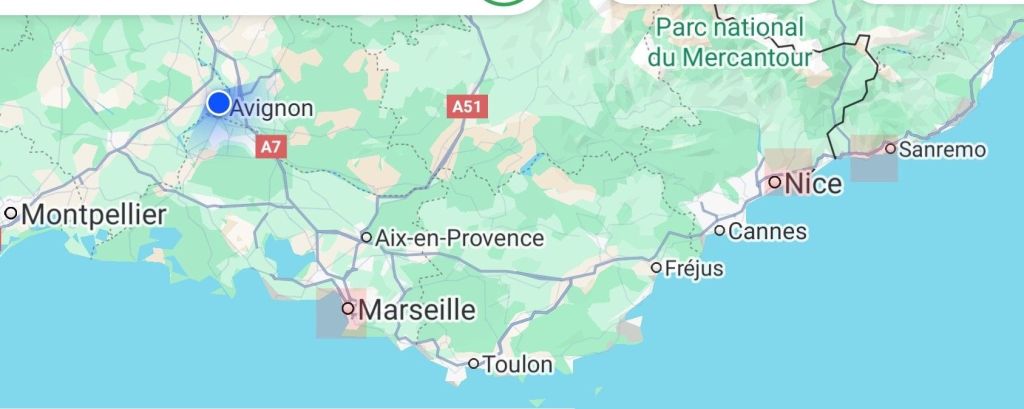
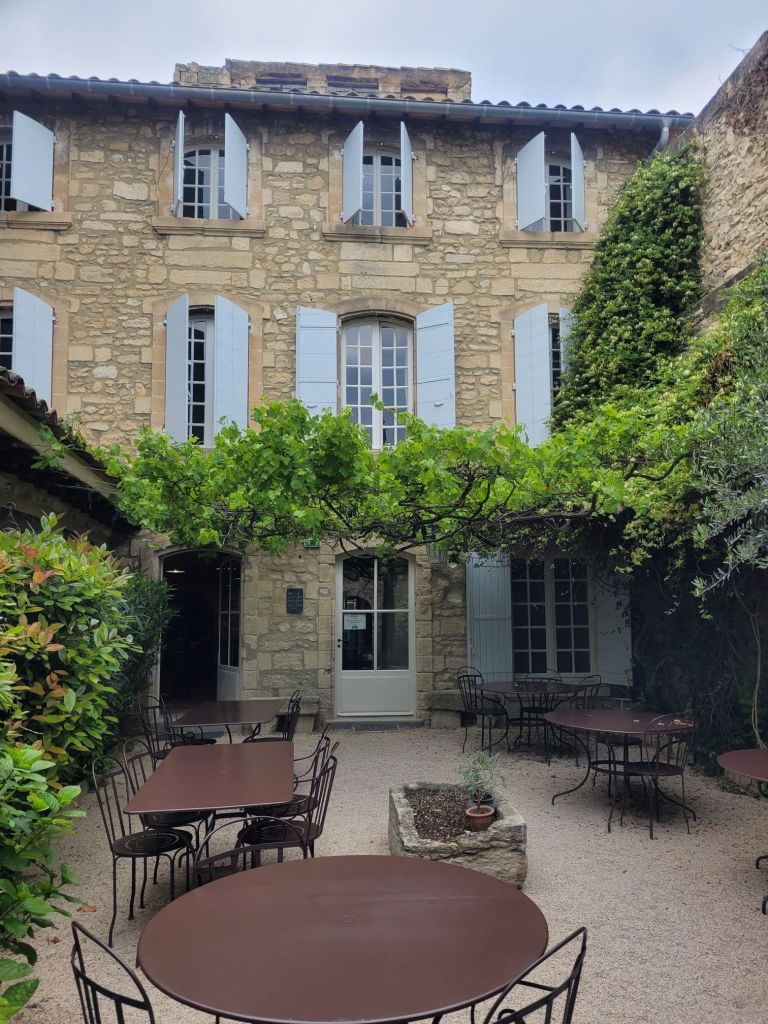
We enjoyed our hotel: it was comfortable, the staff were nice and the location was brilliant. Possibly it took ‘shabby chic’ a bit too far (I do think doors should be a bit more solid) and a shower would have been nice. It was definitely noisy when full – people trampled about upstairs, dropping things, and there was a fair amount of noise when the last group came in at midnight. But the strong smell of honeysuckle outside our room and the general charm of the place (and town) outweighed any negatives.
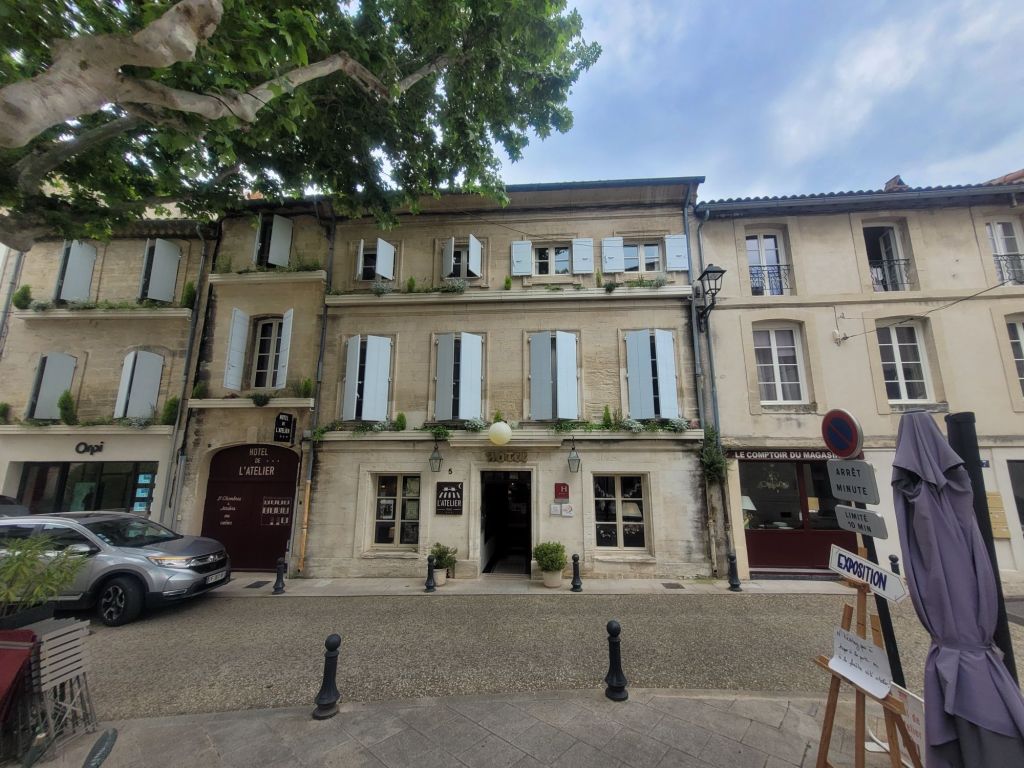
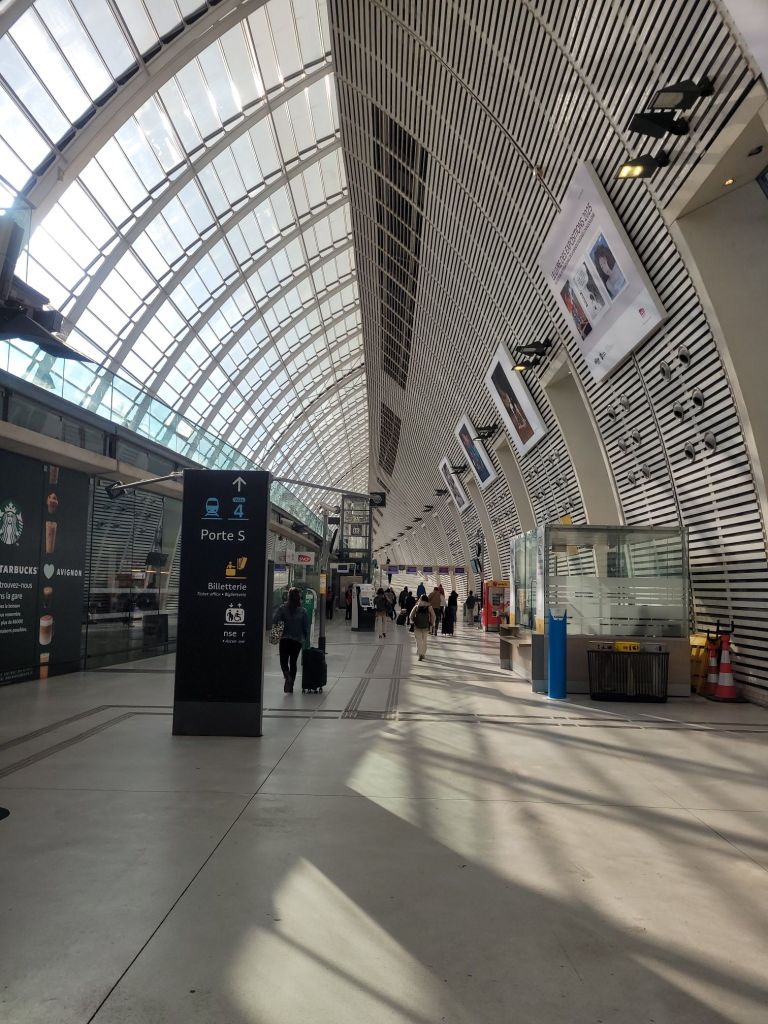
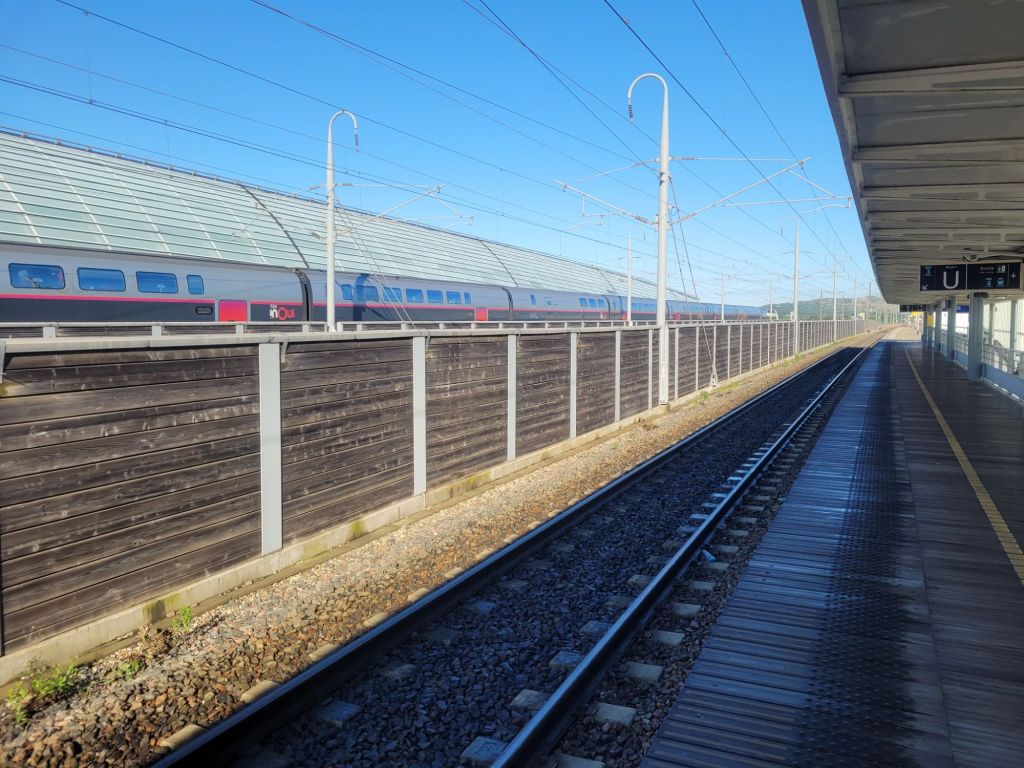
The TGV station for Aivgnon is on the south side of town, reached by train from Aivgnon Centre, a bus from outside the Avignon Centre train station or (in our case) a taxi. It’s sleek and gives an impression of size but in actual fact it’s long and thin, with only three high-speed tracks (one for through trains) and a couple of local trains.
Leaving Avignon, there were cultivated fields (crops, fruit trees, vines), trees, pasture – all very green and well tended. Twenty minutes into the journey, the landscape changed to scrubby pines and gorse, opened out and became flatter. The Rhone appeared to split into several channels, in places broadening and running over shallow gravel banks.
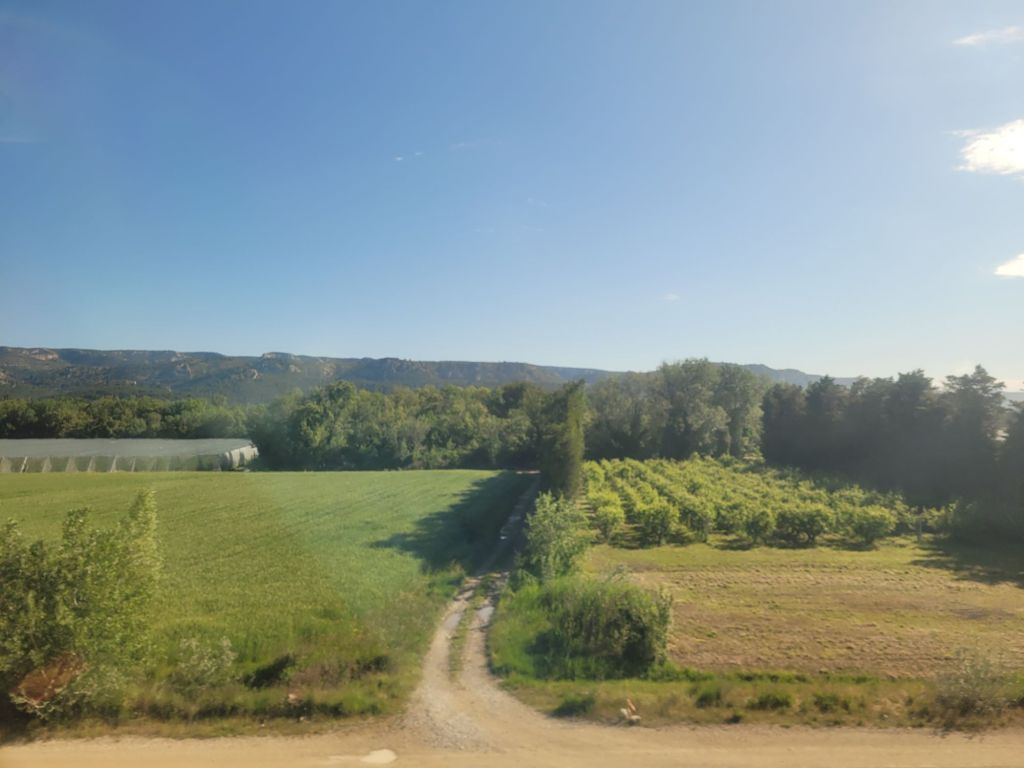
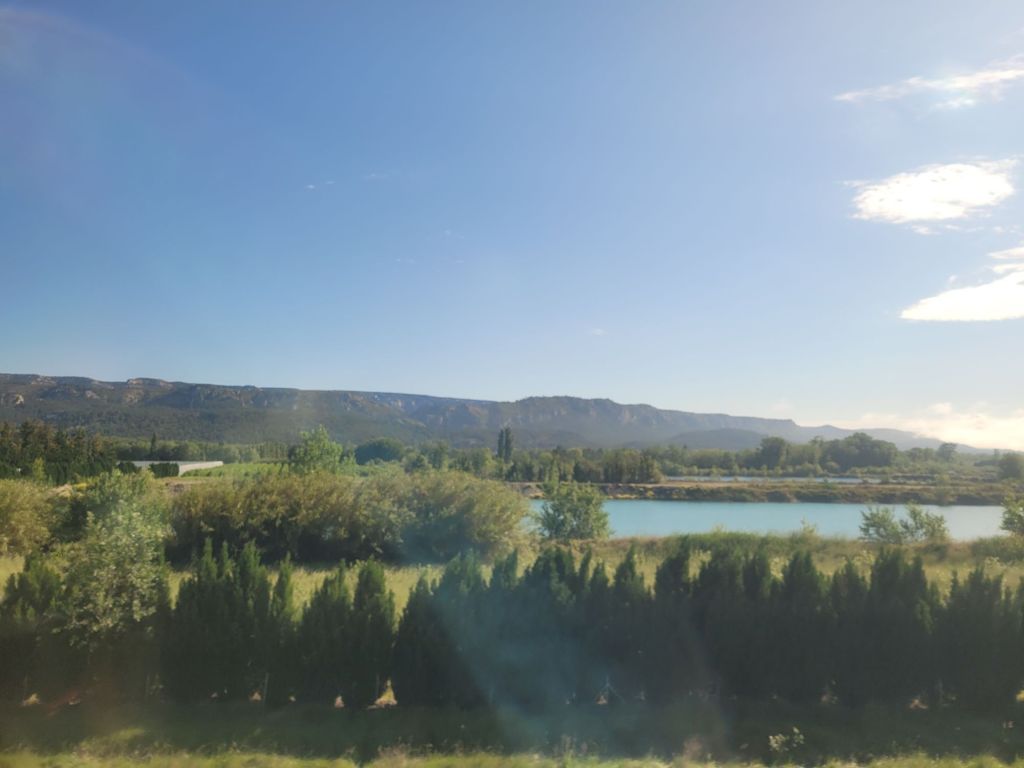
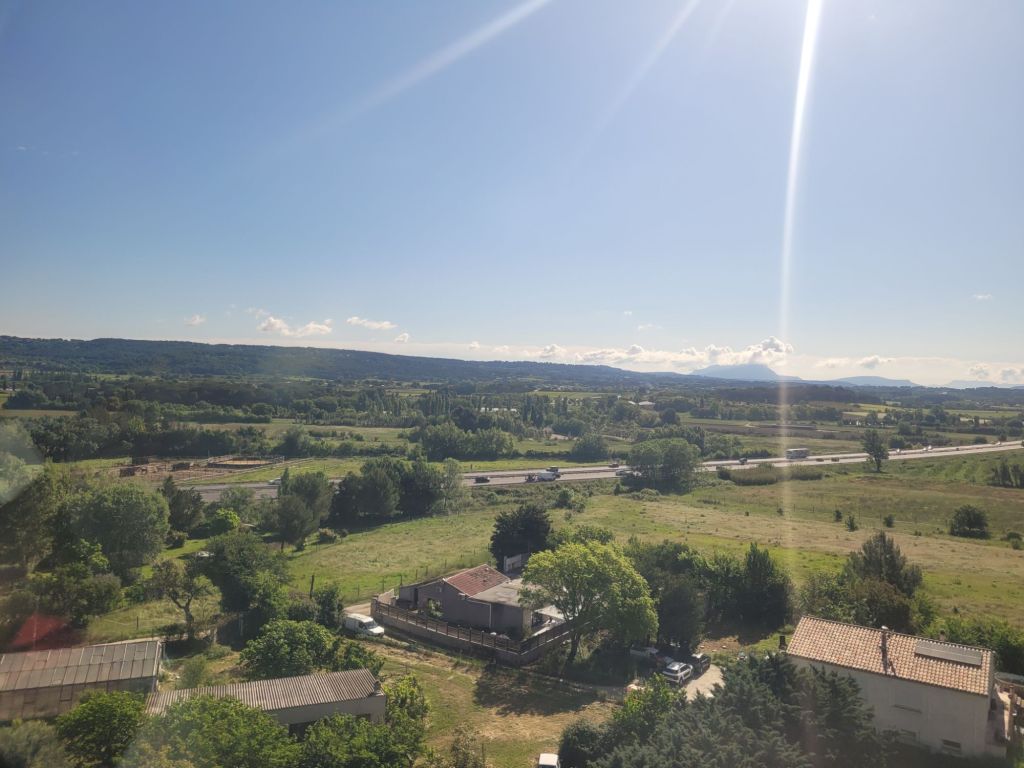
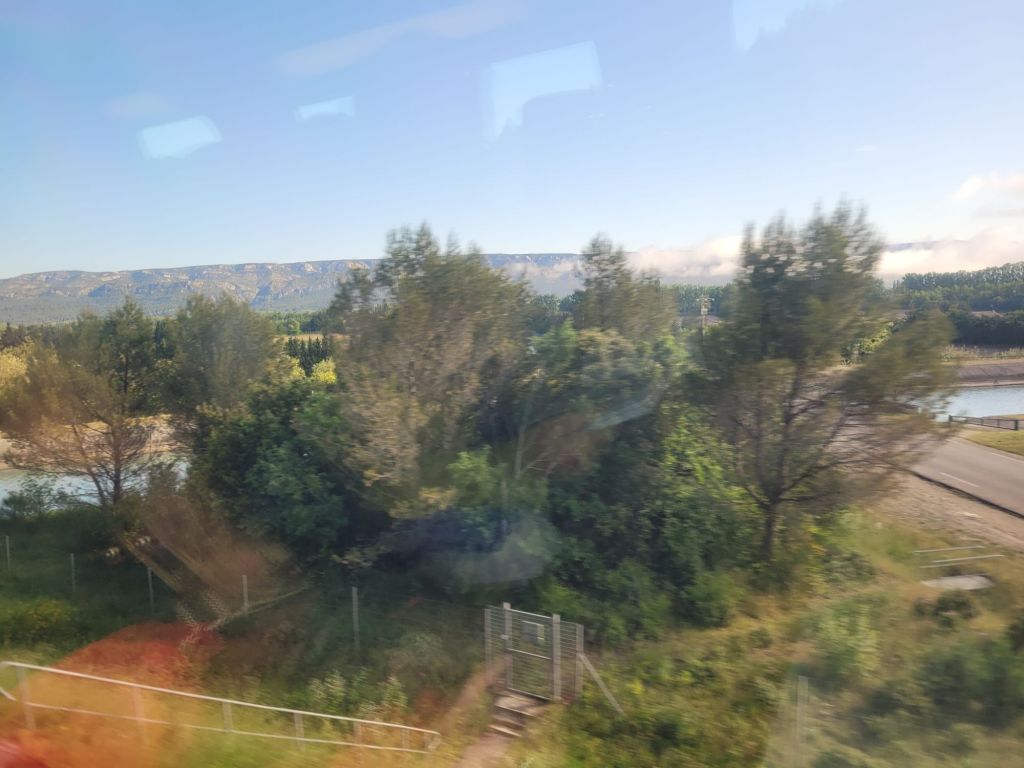
Shortly after Aix-en-Provence a glitter of blue burst into view, only to vanish behind industrial sites and large blocks of modern flats almost as it registered that it was the sea. Marseilles.
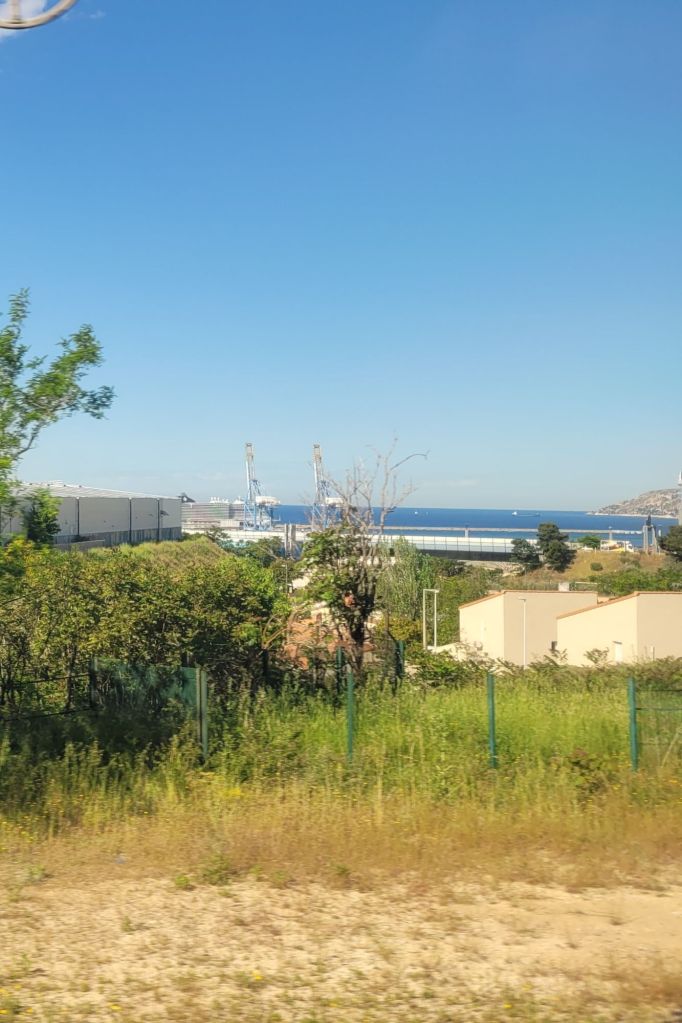
A long pause in Marseilles, where many people alighted but sadly even more boarded and off again to Toulon – hopefully along the coast. I was a trifle concerned that our seats were on the wrong side of the train to appreciate the sea views (the whole point of this journey). And the train was packed.
Sigh.
Happily I was proved wrong and as the train pulled out of Marseilles, past suburbs, industry and shabby high rise flats, I was hopeful of spectacular views.
Inland first, skirting the northern edge of the Calanques national park, so sea views were absent. Instead, rocks and more scrubby pines appeared and disappeared as the route dodged in and out of tunnels (some moderately lengthy).
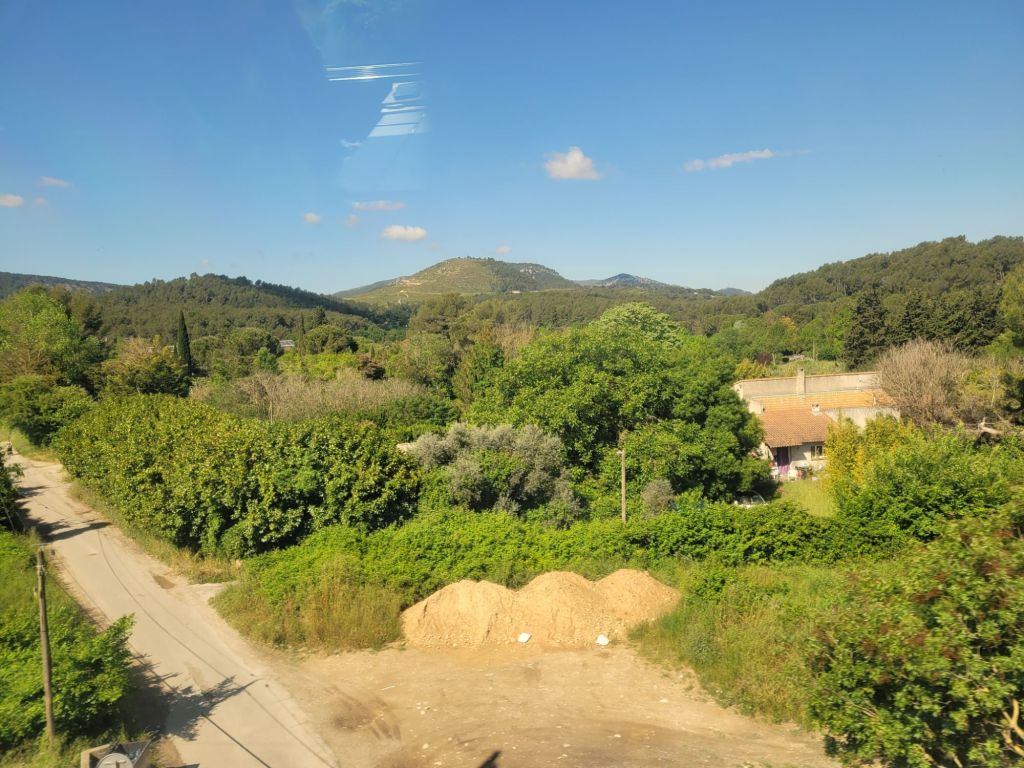
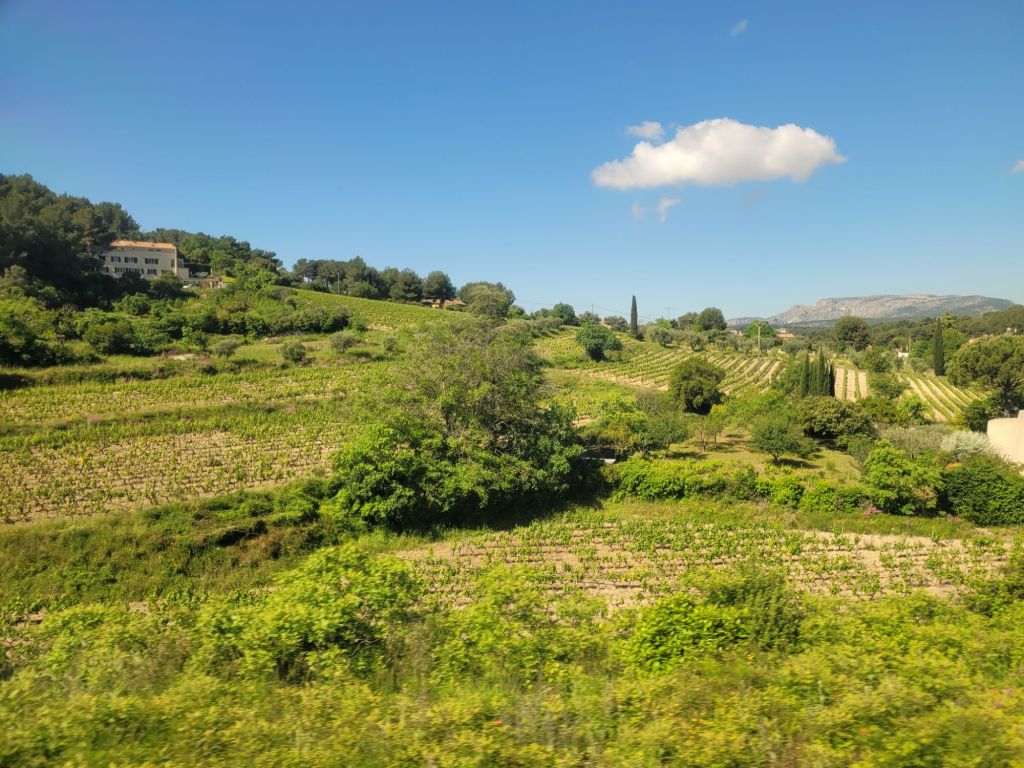
Once the sea did start appearing, the tunnels were replaced by high sided rocky cuttings (covered with strong wire mesh to protect against rockfall). Handkerchief sized pockets of vines flashed past, some being cultivated by hand. Every so often a glimpse of blue teased behind pines and Cyprus.
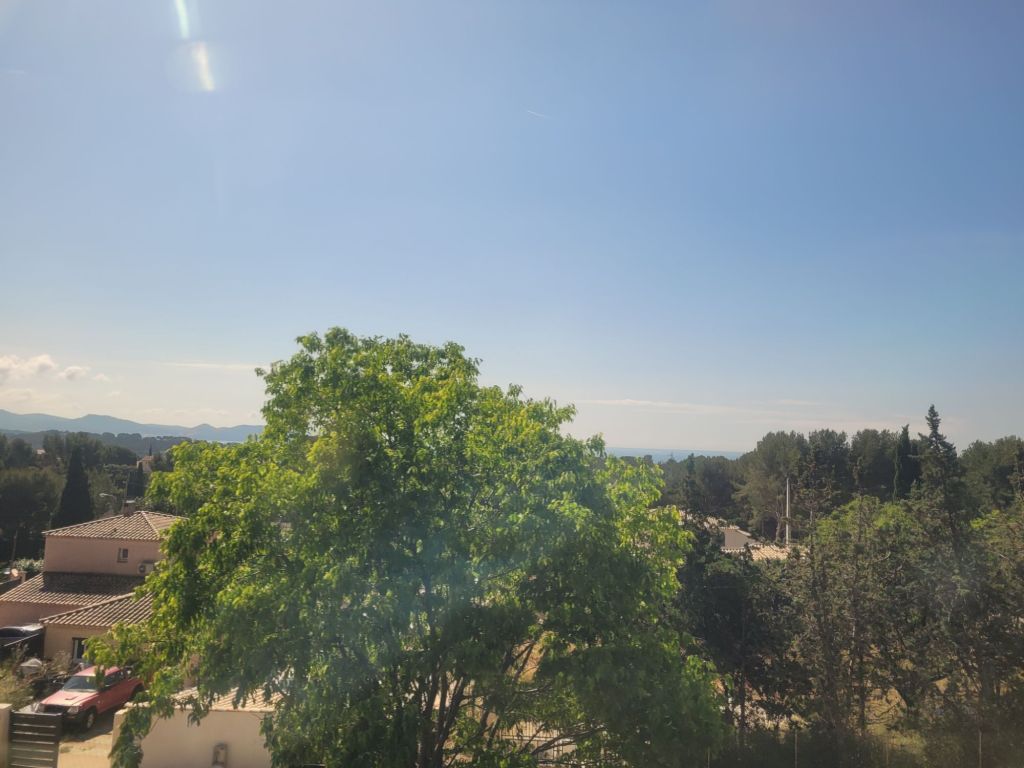
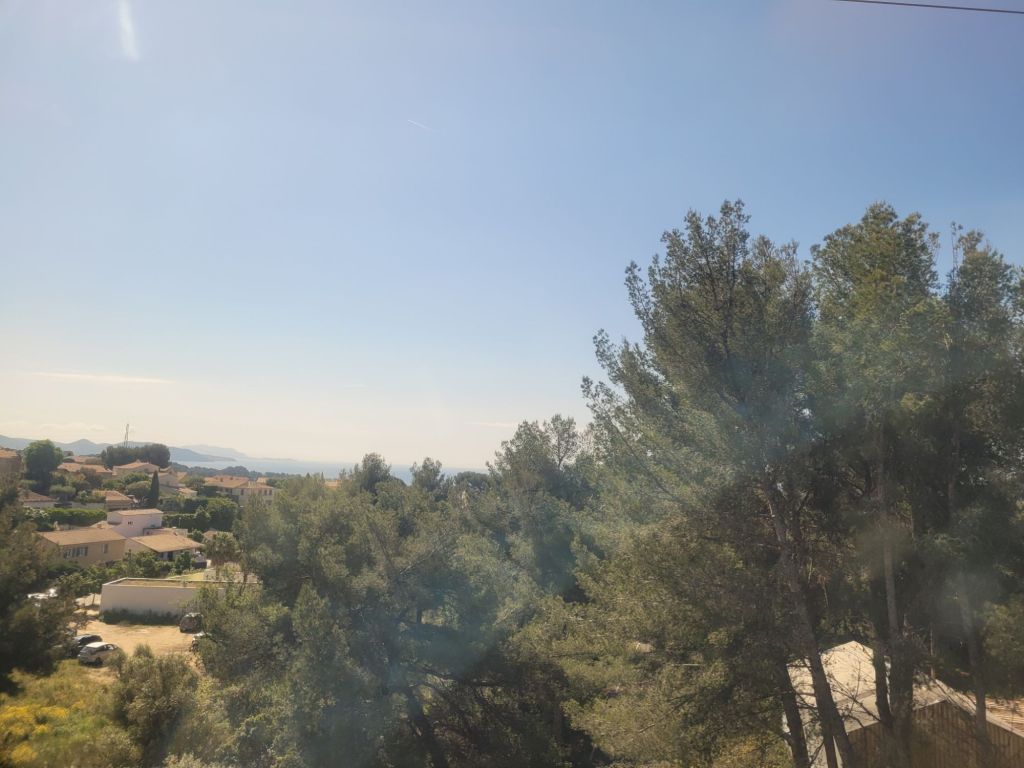
After a few bursts of sea, the route left the coast and dived into industrial developments and unattractive suburbs: Toulon. Then inland again, through a mix of more urbanisation and lush green countryside; it clouded over and started raining.
Careful checking of individual legs between specific coastal towns revealed an enormous difference in journey time (as in almost double) when taking the slow, local, coastal route. Maybe next time.
And then a flat expanse, covered in vines. No sea view however.
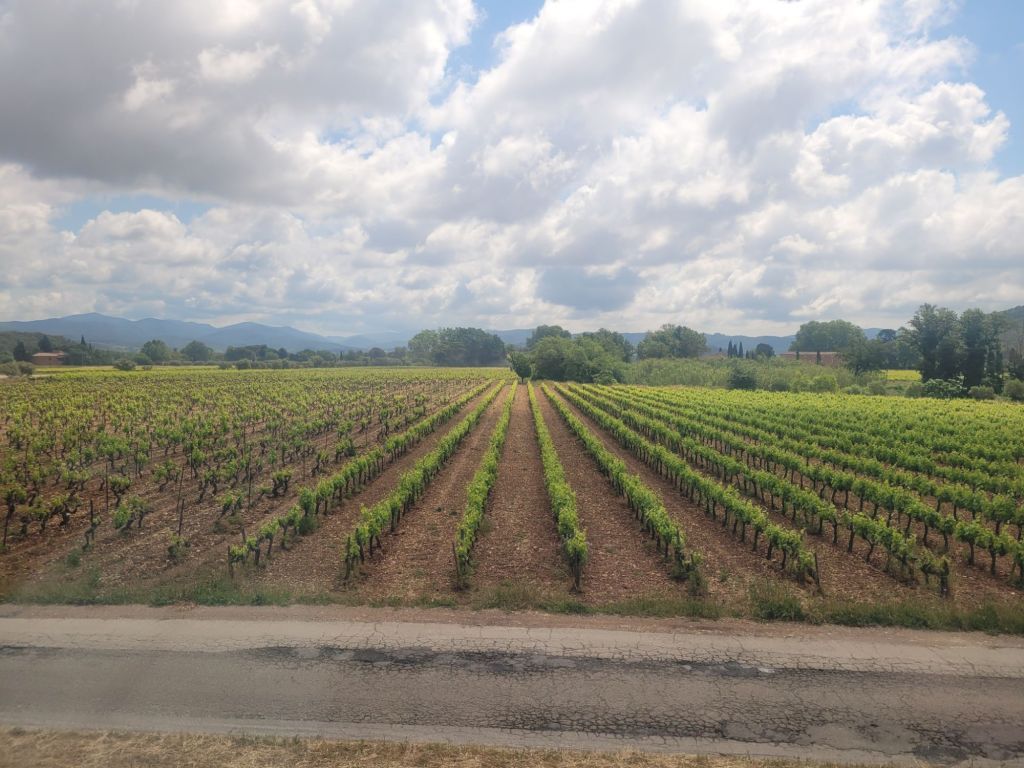
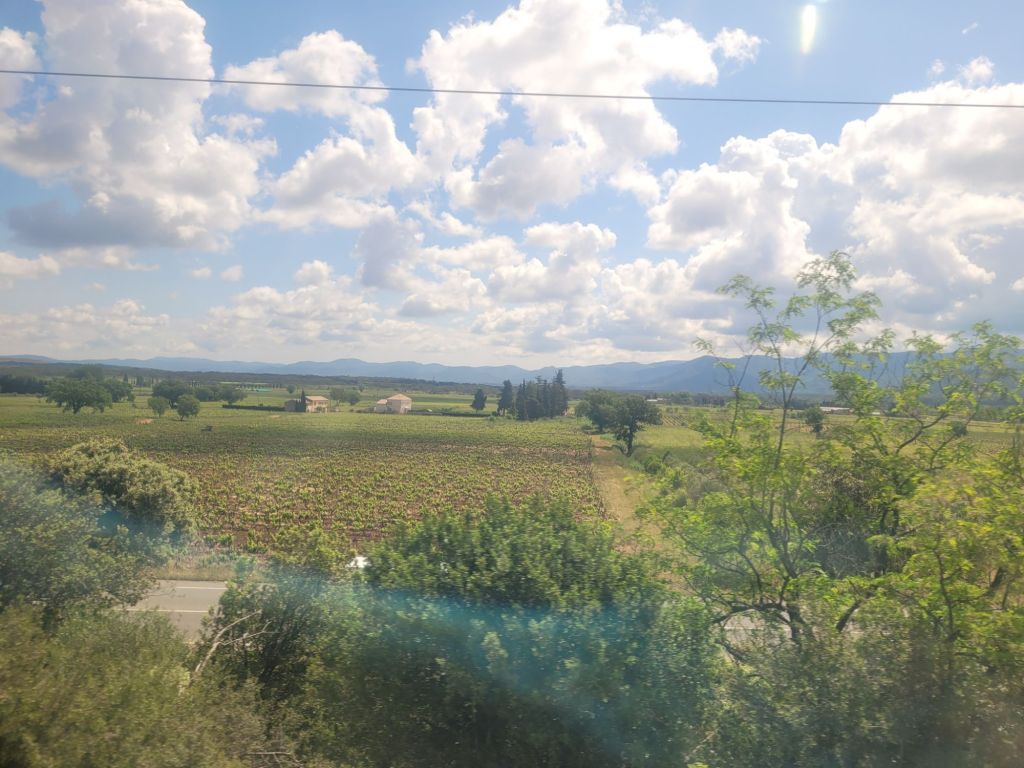
This plain (and the vines) went on and on until the outskirts of Saint-Raphael-Valescure. We wondered if these were the vines that produced the famed Provencal Rose – Google searches did not provide a conclusive answer. Maybe.
From Saint-Raphael-Valescure, the line did run by the coast, I was hopeful, but behind a lot of housing: apartments, hotels, villas… I feot a trifle deflated.
Eventually the coastal views got better, with a reddish rocky coastline contrasting nicely against dark green vegetation and a sparkling blue sea. It had stopped raining – nothing like a bit of sun to brighten things up.
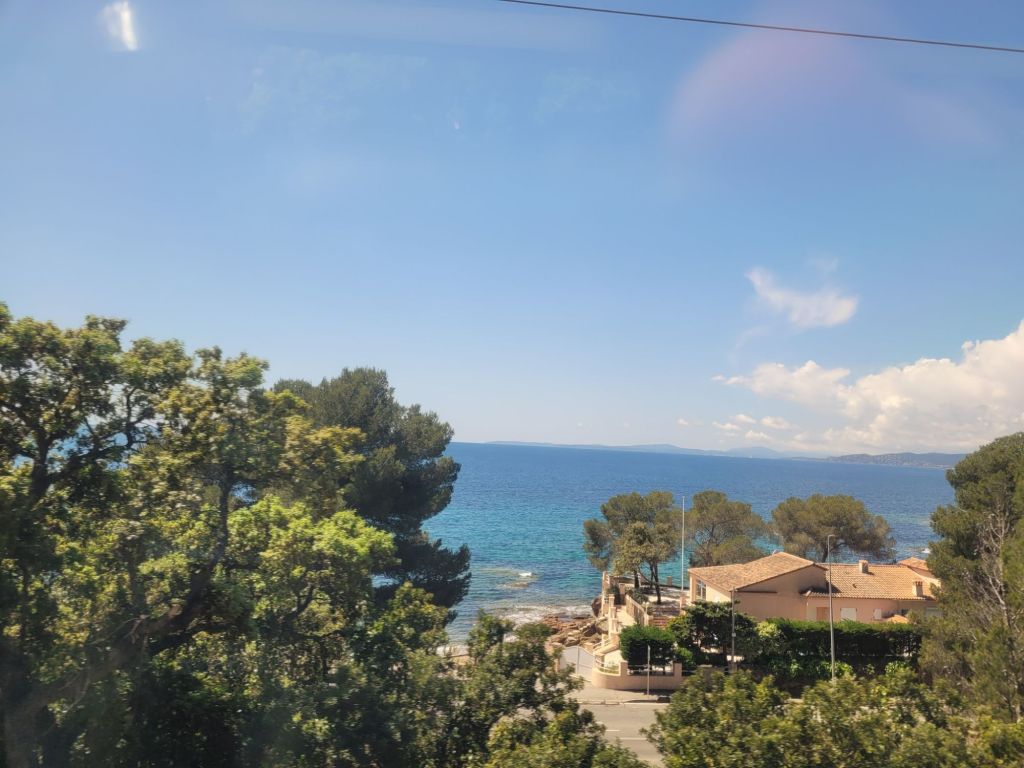
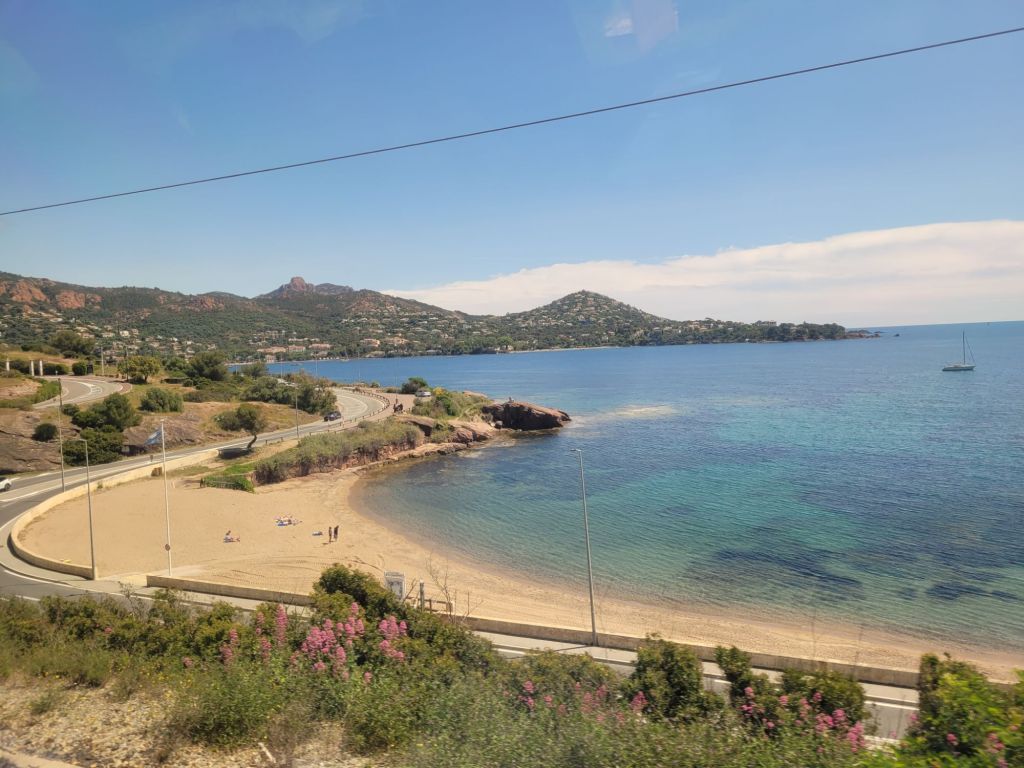
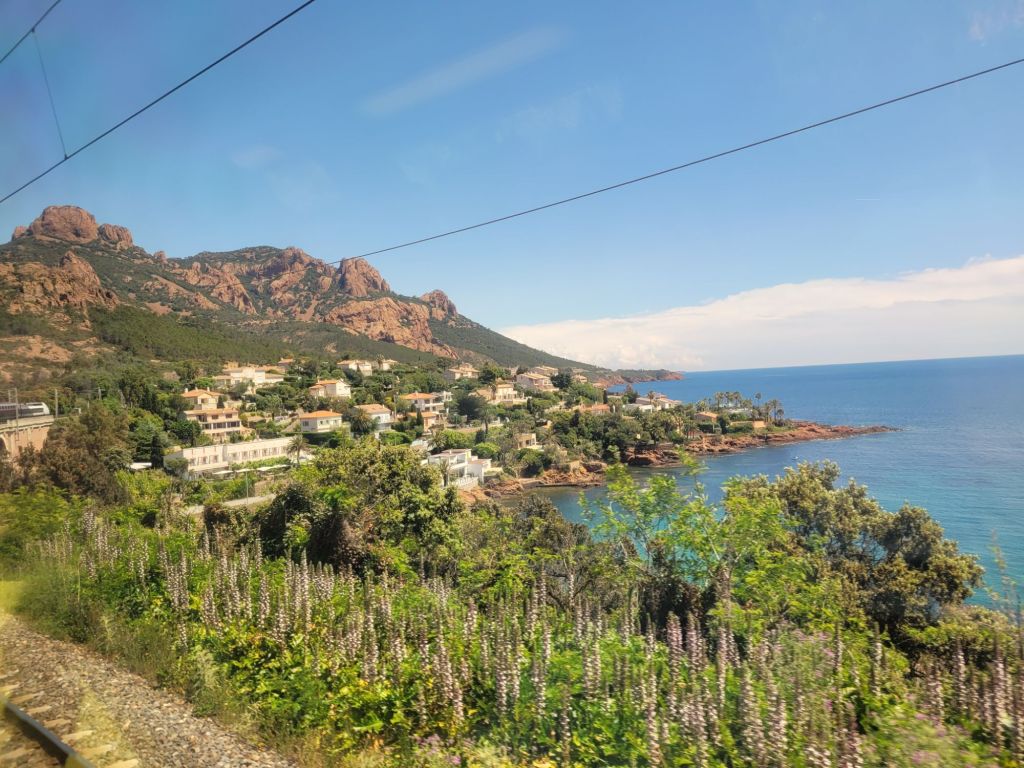
Sandy beaches started around Cannes (as far as I could see), with expanses of beach, high rise accommodation, marinas full of yachts (large and obscenely large), some kind of aquaculture (fish or possibly molluscs) and a cruise ship. Somehow I managed to take pictures of the only bits that weren’t built up: this is a very developed coast.
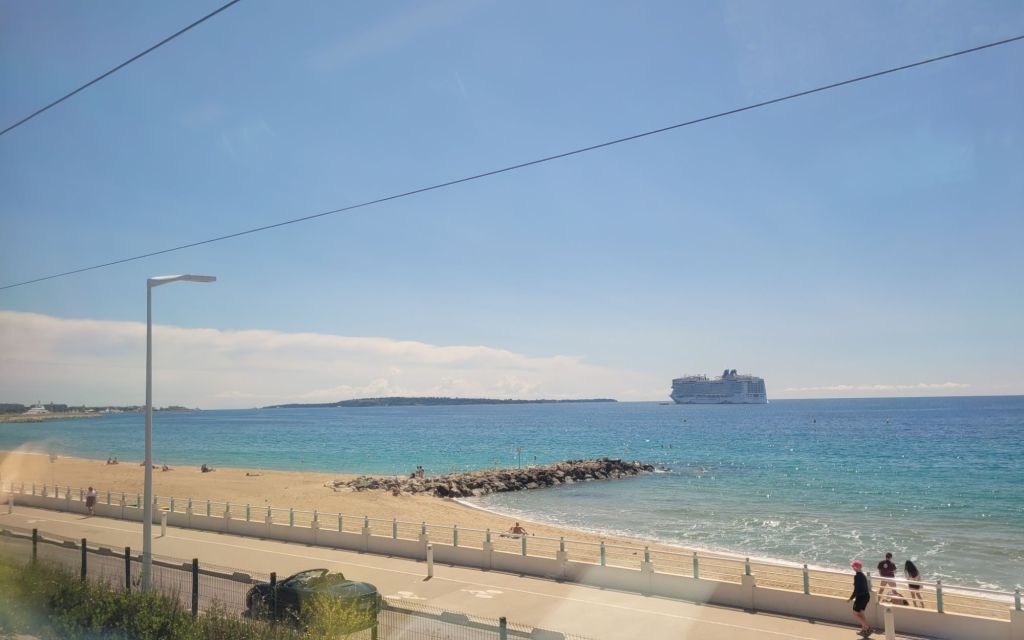
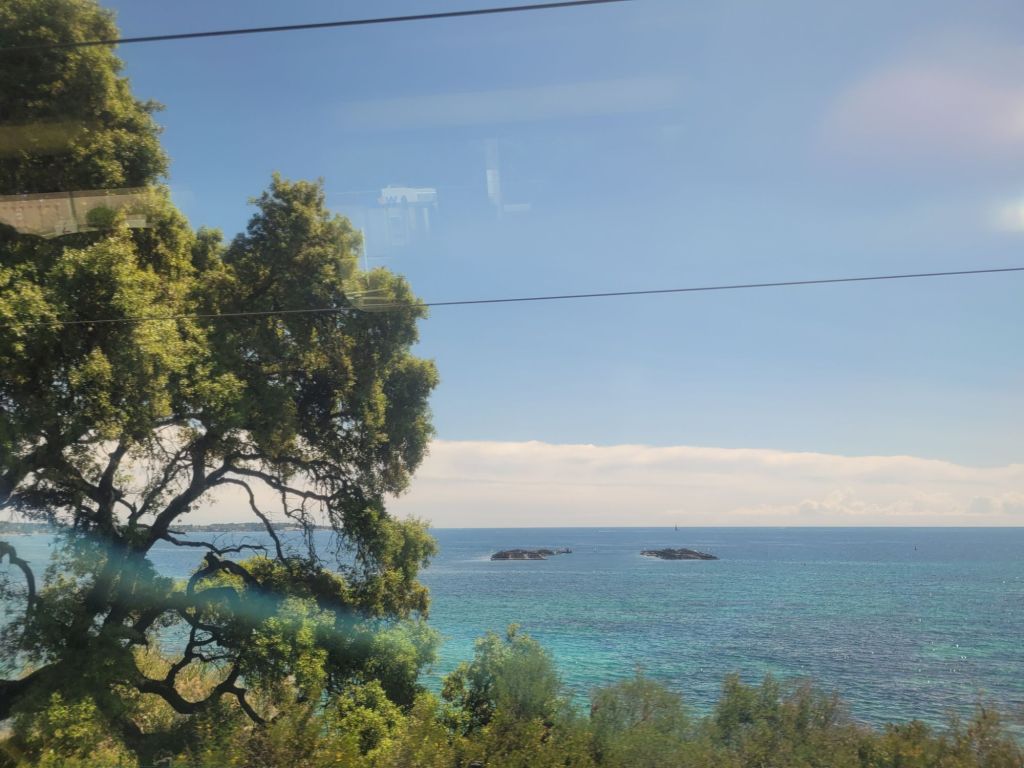
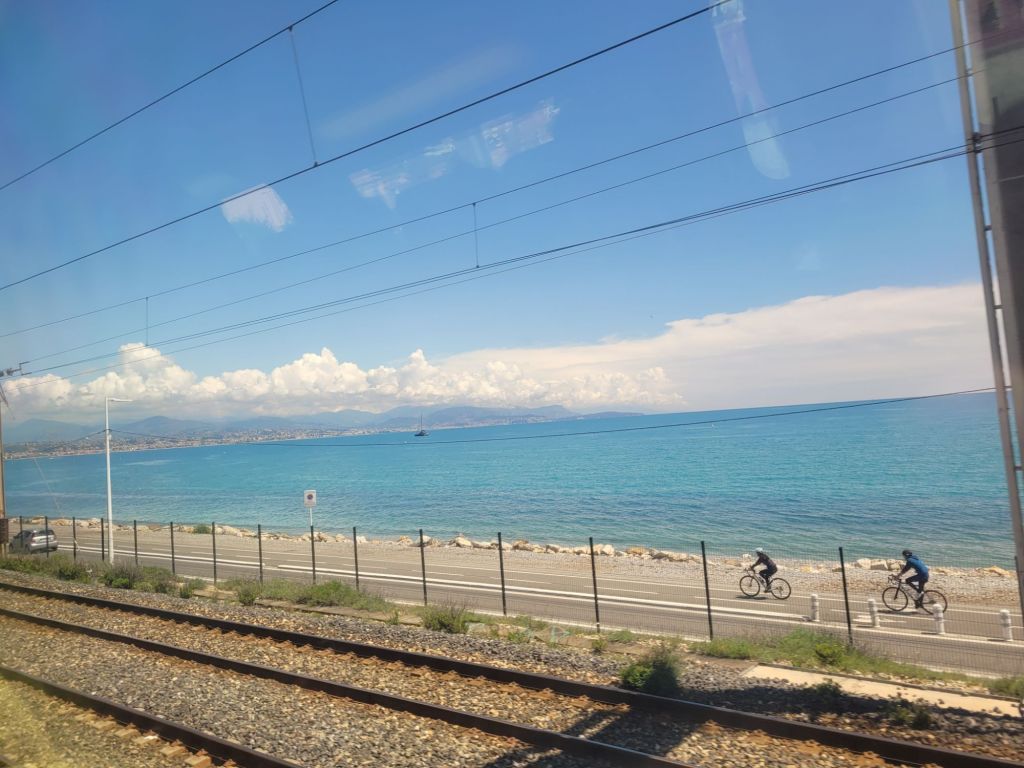
As Nice drew nearer, the Alps grew closer. We were a few minutes late into Nice, so we had to run for our Ventimiglia connection.
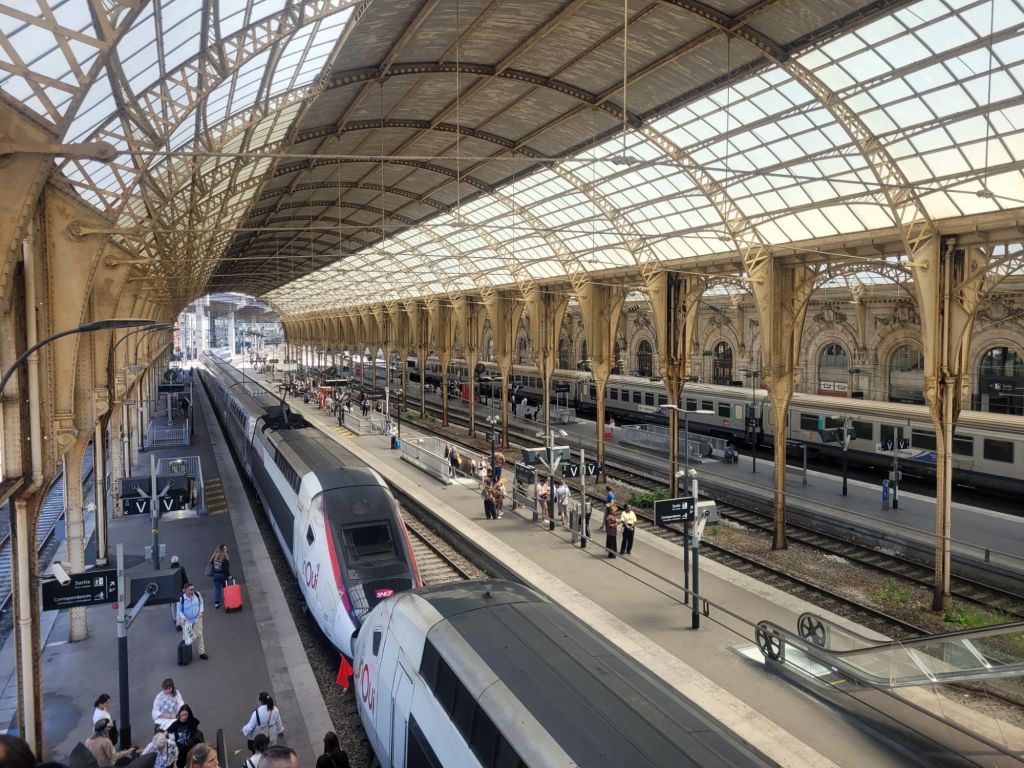
The coast got rockier and the mountains (the Alps Maritime) ran right down to the sea, with rocky veins extending out under the sea. The tunnels got longer.
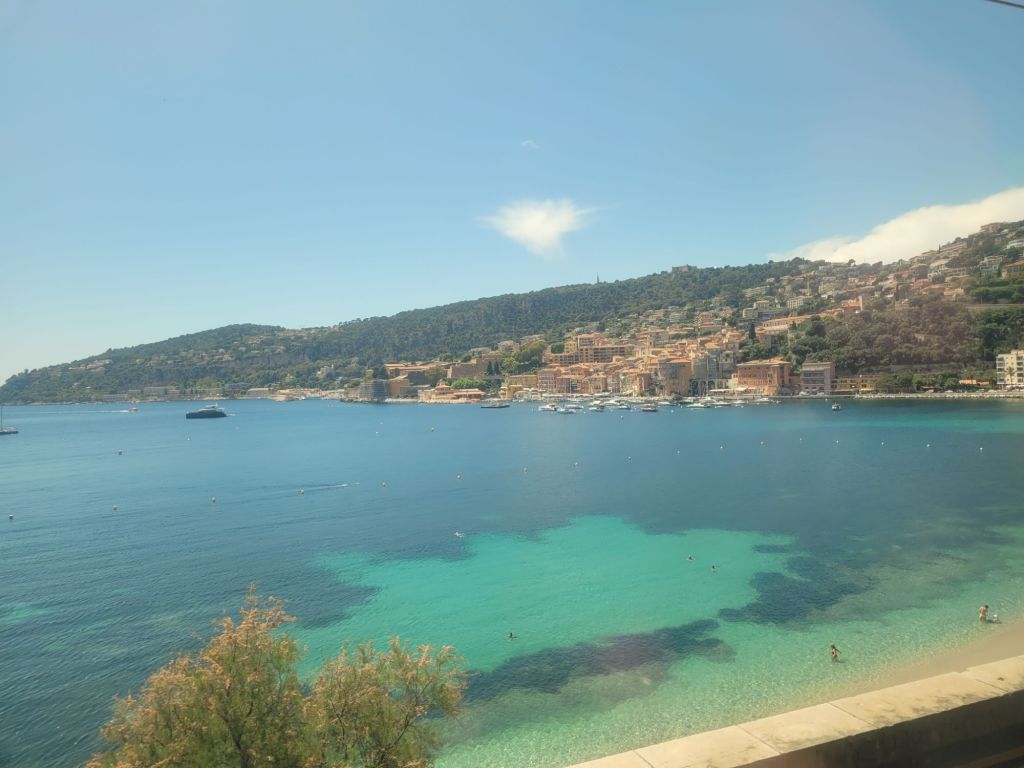
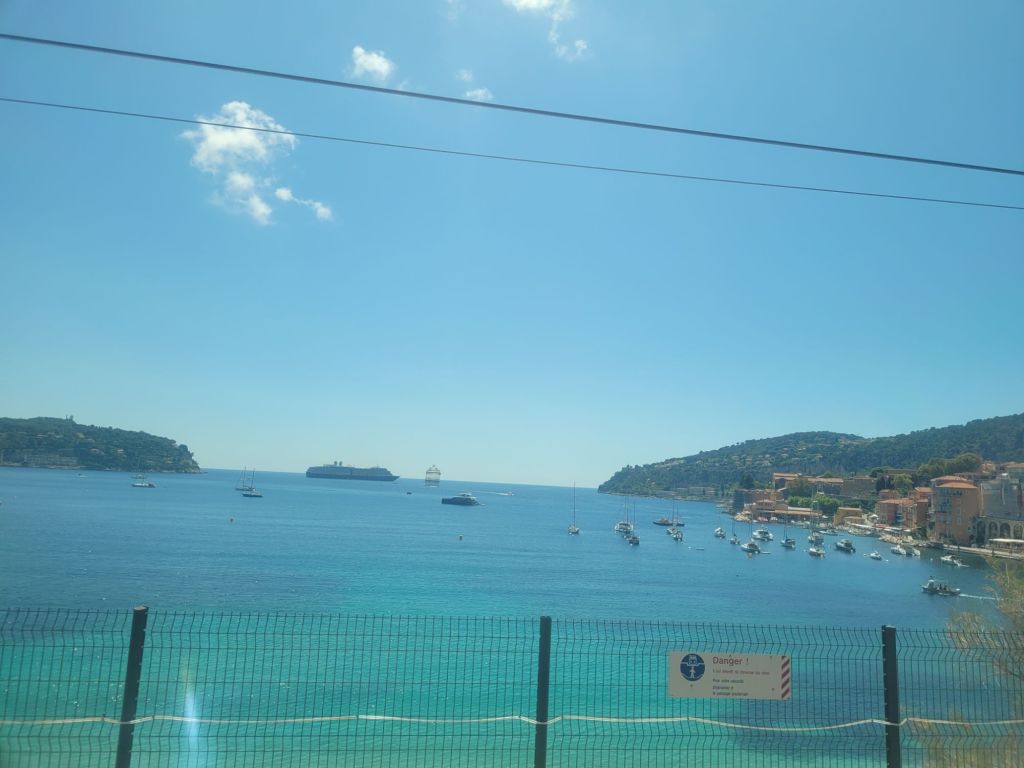
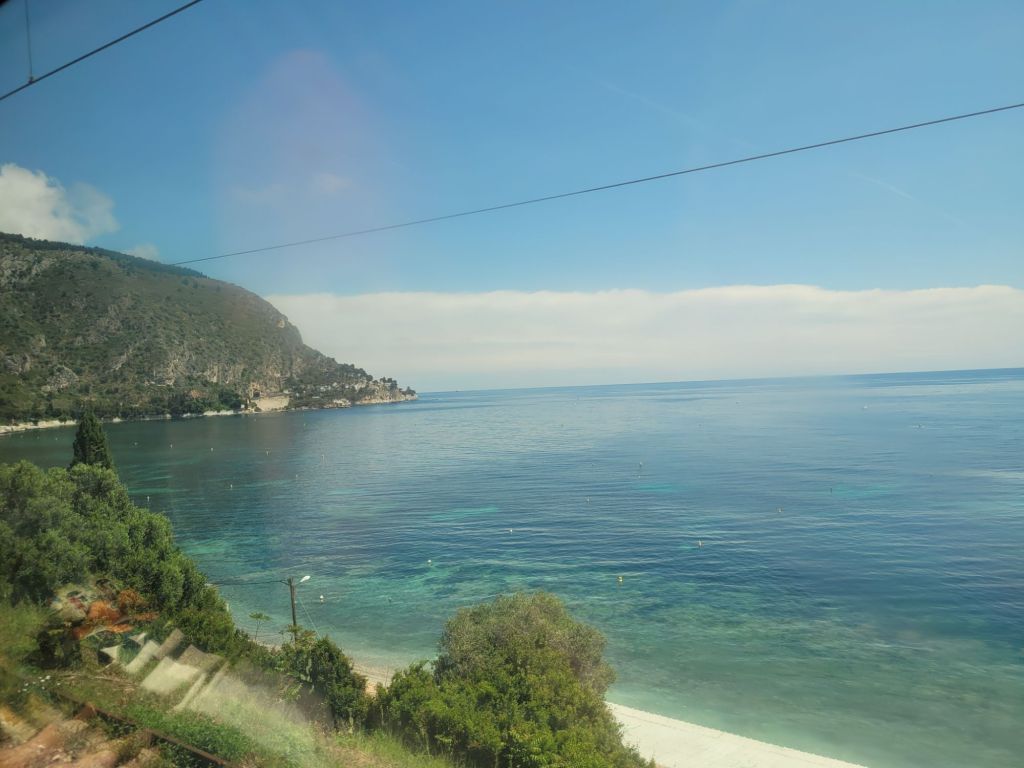
The whole of Monaco is traversed via tunnel – apparently to save ‘buildable land’ but we wondered if it was because they wanted to guard their views for the better heeled.
And then the train emerged into Italy through the main headland, running alongside such blue water.
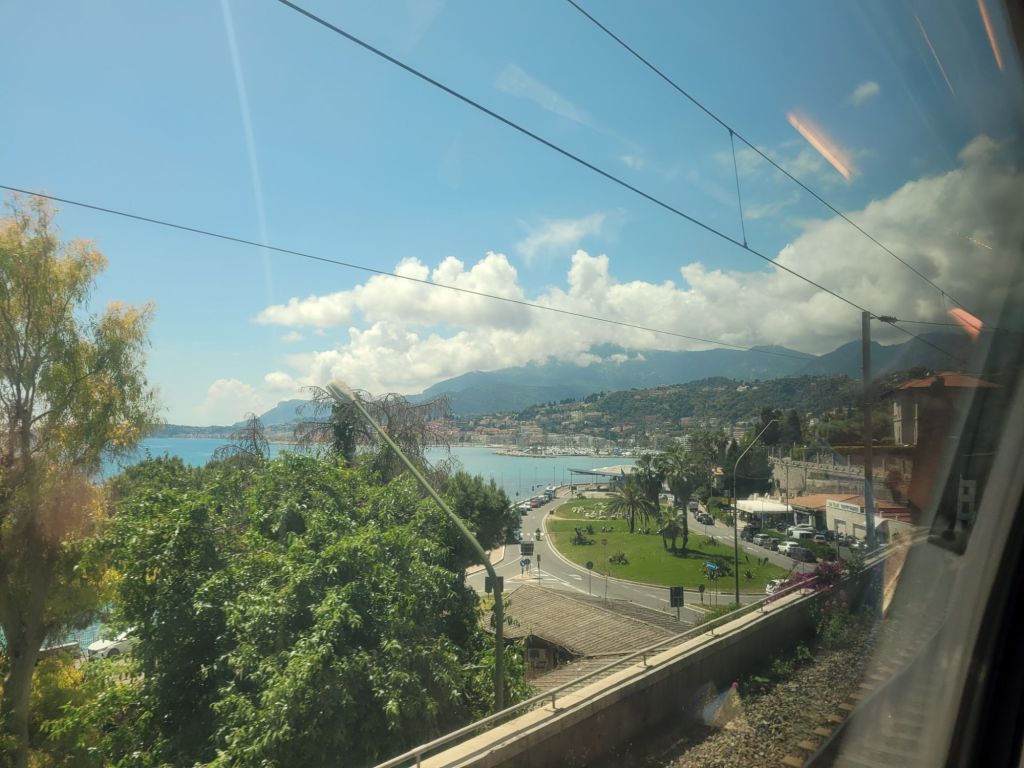
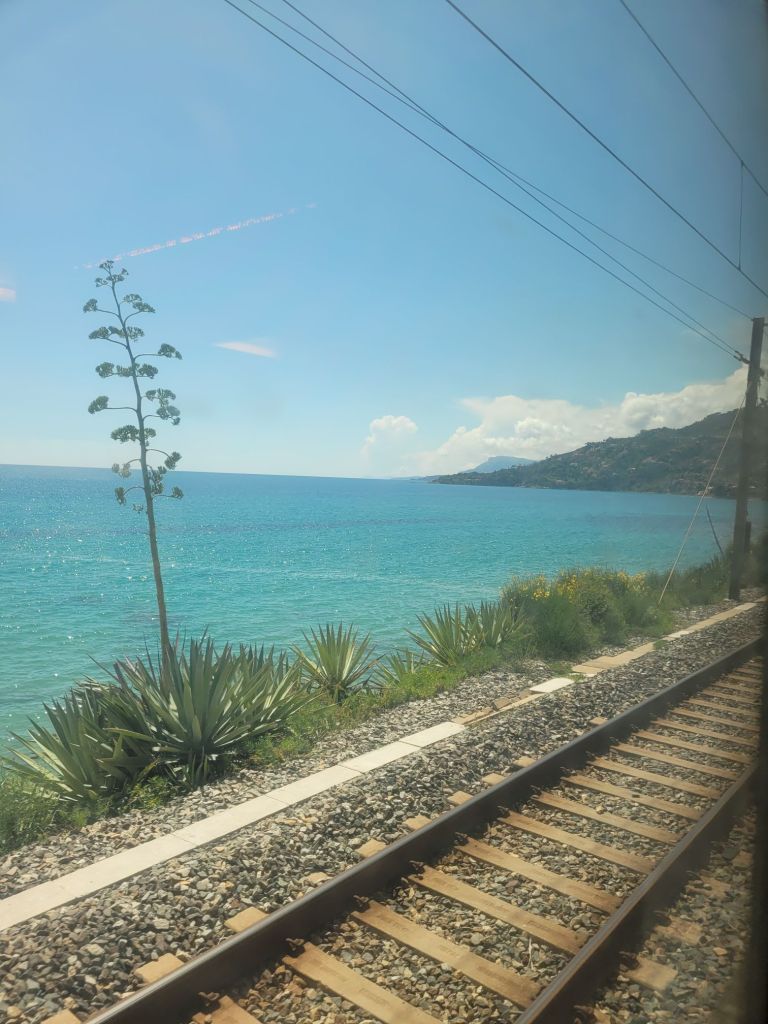
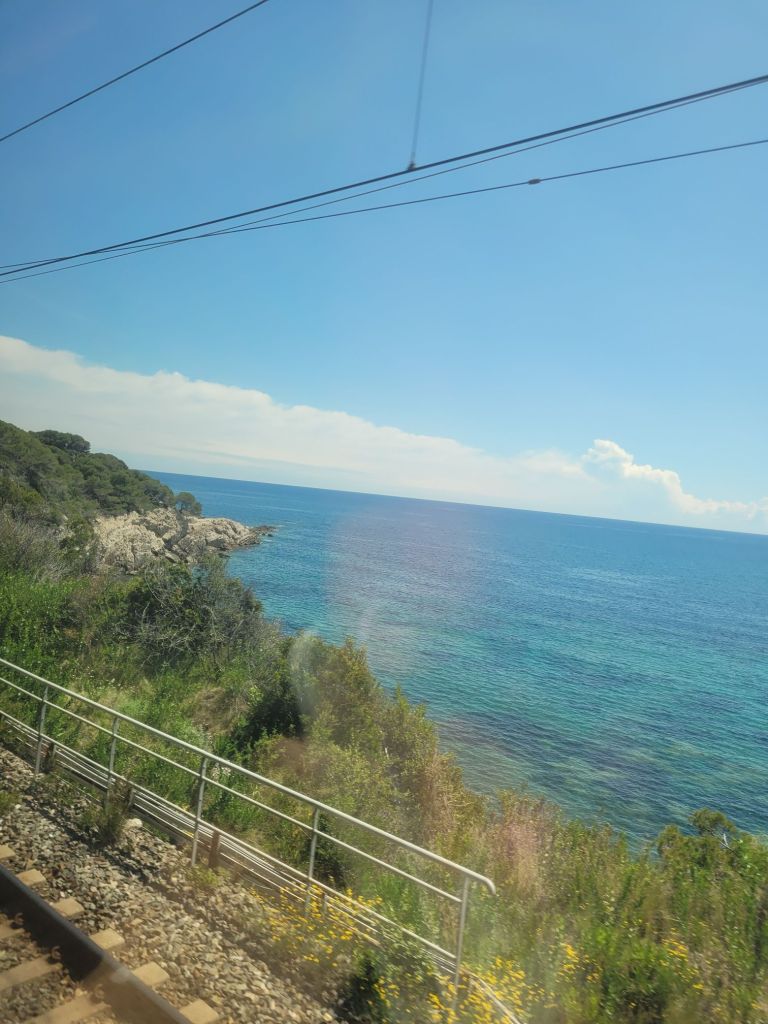
Having missed our train in Ventimiglia, I used the station toilets (a young man sat outside and gravely took my one Euro coin in exchange for a formal ticket – no idea what I was supposed to do with it) and we had a piece of pizza while waiting an hour for the next local train along the coast. The station had absolutely no facilities for the less able. Getting on to the platform involved stairs (no lift) and boarding the local train was a challenge.
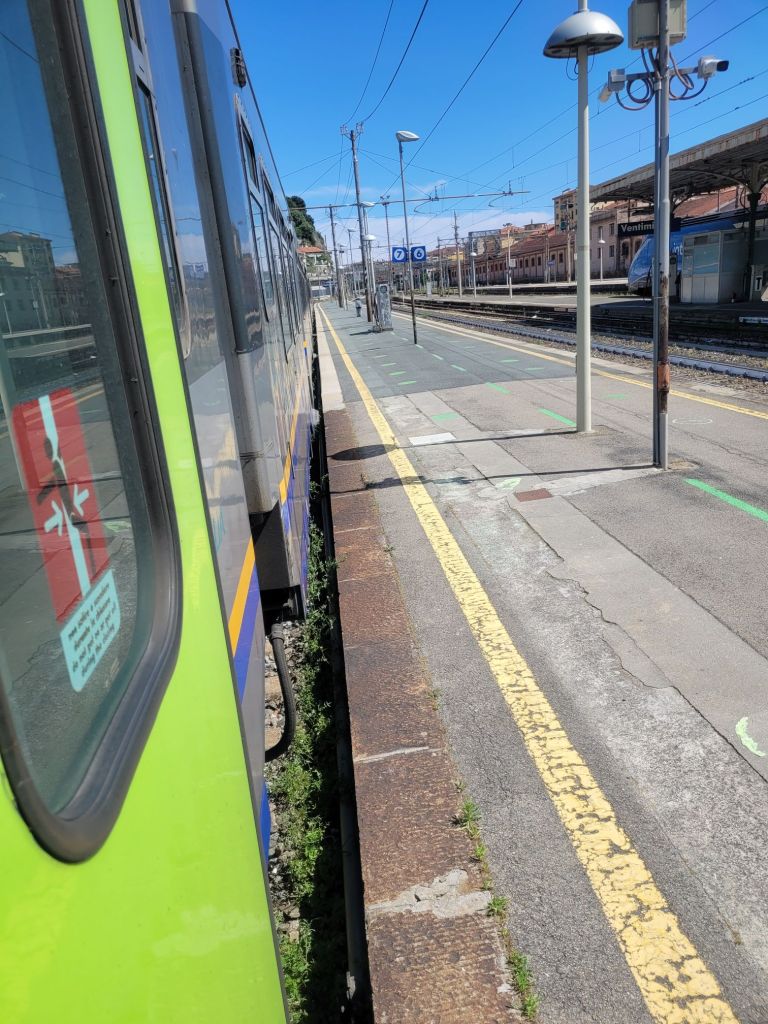
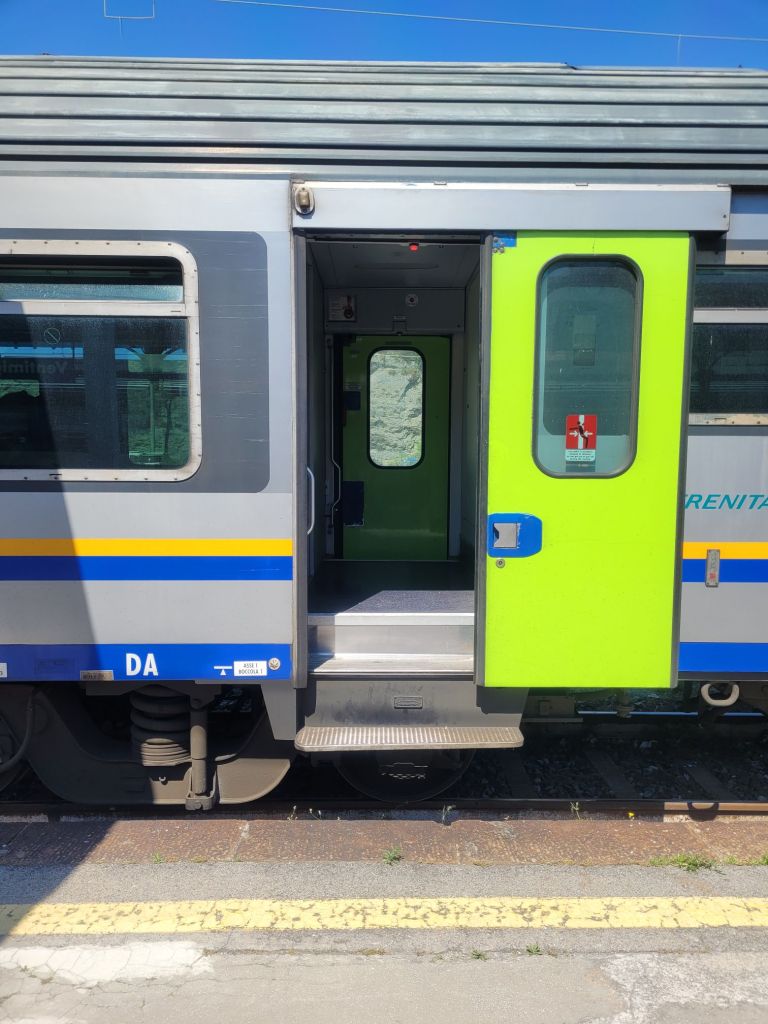
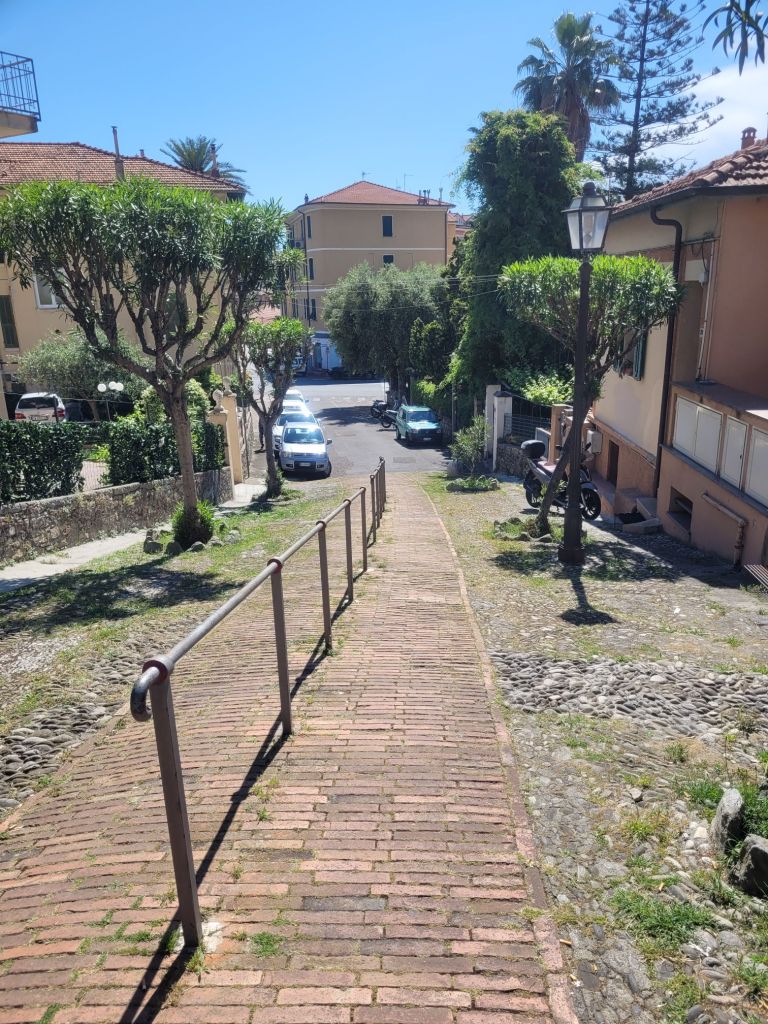
And into Bordighera, where a 16 minute ‘mostly flat’ walk took a little bit longer.
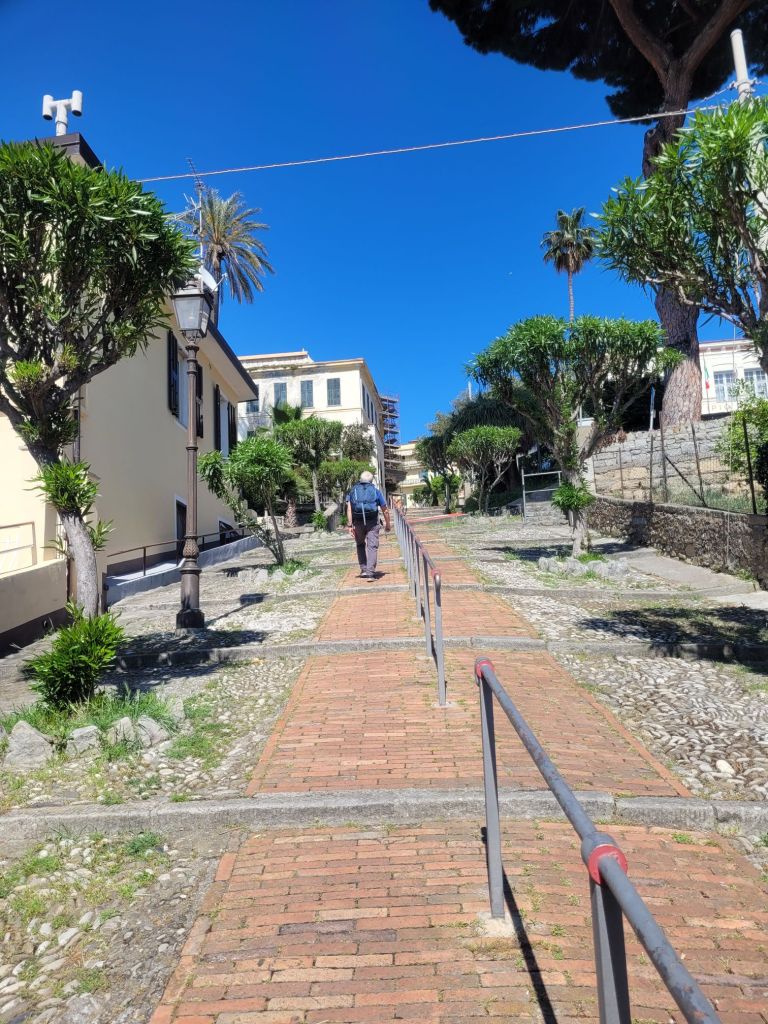
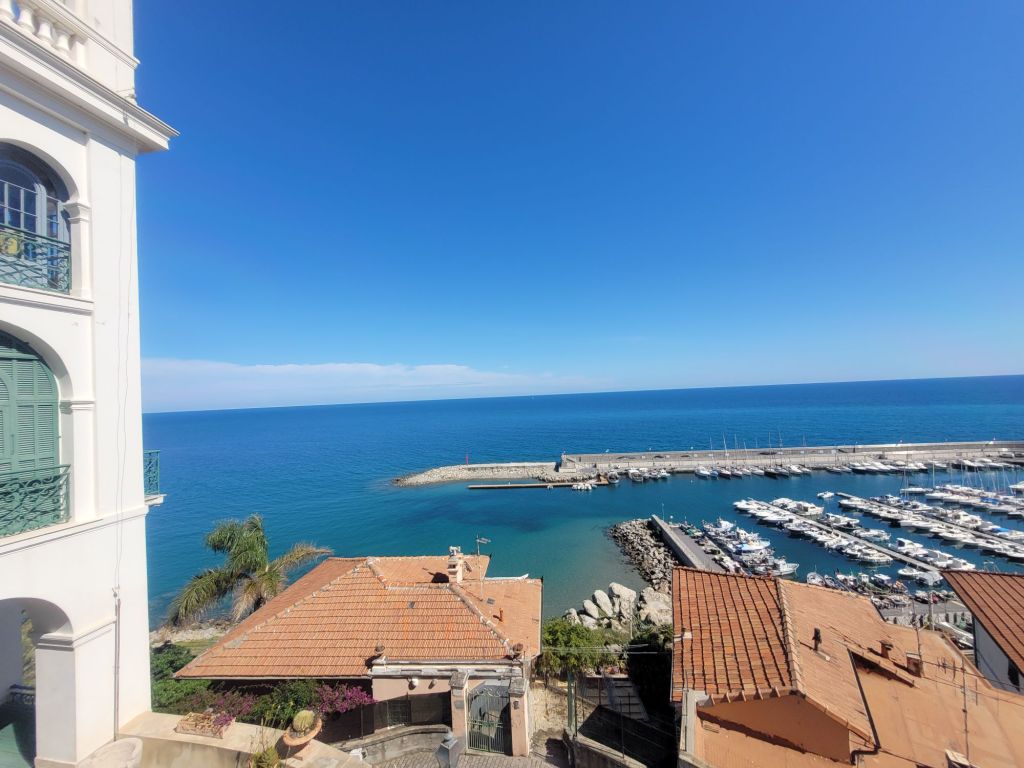
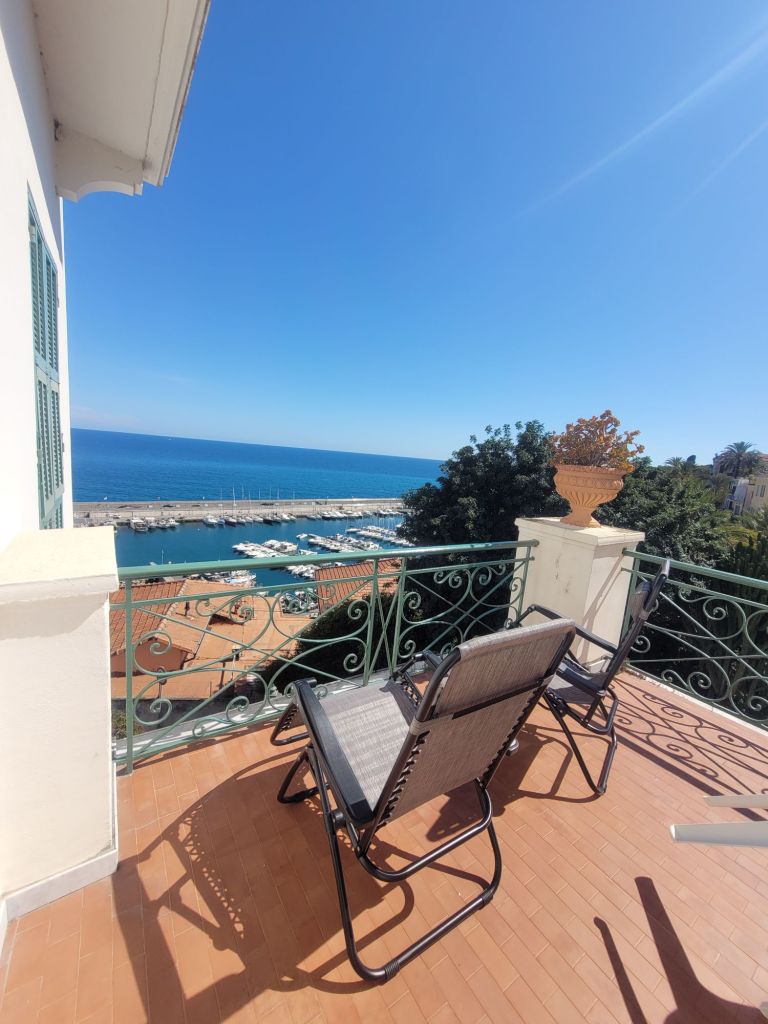
But the views from our room were worth it.
 Retired? What now?