And not much evidence of the Romans (who were definitely in Avignon).
Roughly 30 minutes of walking take you into Avignon from Villeneuve-les-Avignons; it’s a pleasant walk (flat) that avoids the main road but sadly without views of the Rhone. The river splits into two branches around Ile de la Barthelasse and on the final crossing over the Rhone there is a marvellous view of the Papal Palace and the remains of the famous bridge.
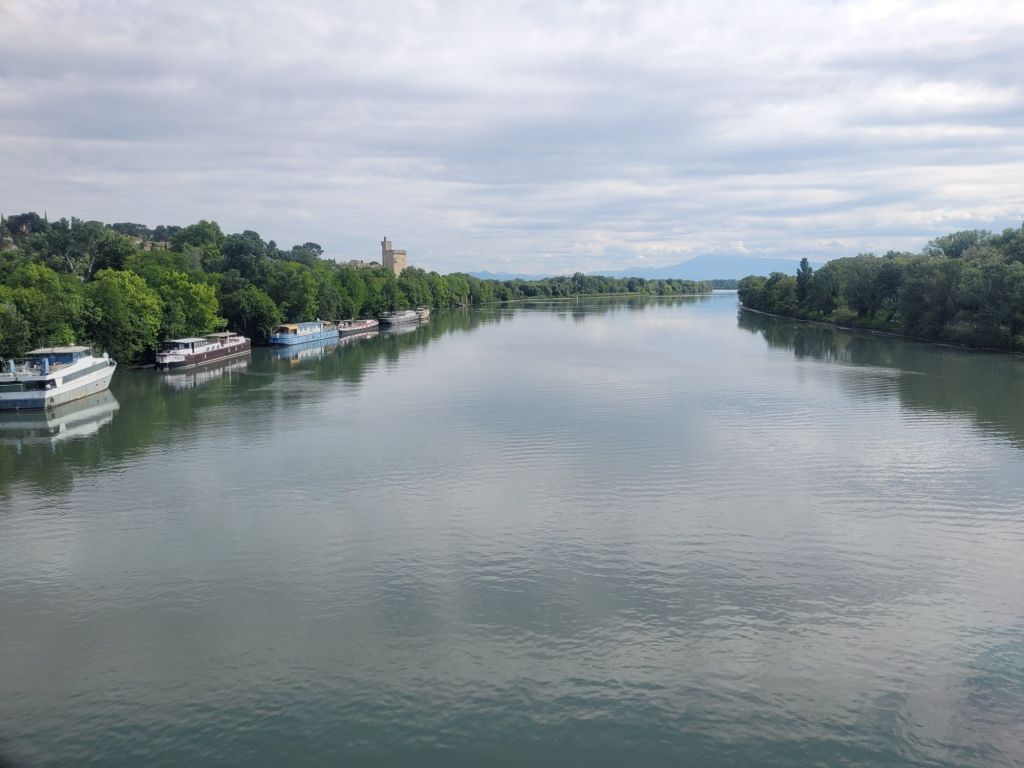
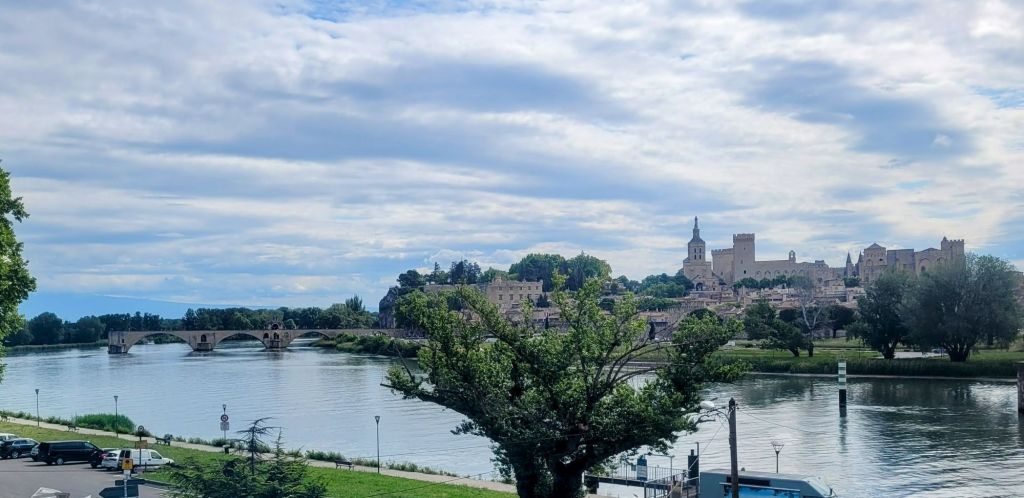
Many nursery rhymes have a historical context to them (for example, Ring a Ring of Roses is linked to the Black Death) but Sur le Pont d’Avignon is not one of them. It was written in the 19th century for a Parisian theatre performance. And anyway, no-one could have danced on the original 12th century bridge because it was so narrow that two people could not walk abreast (or pass each other).
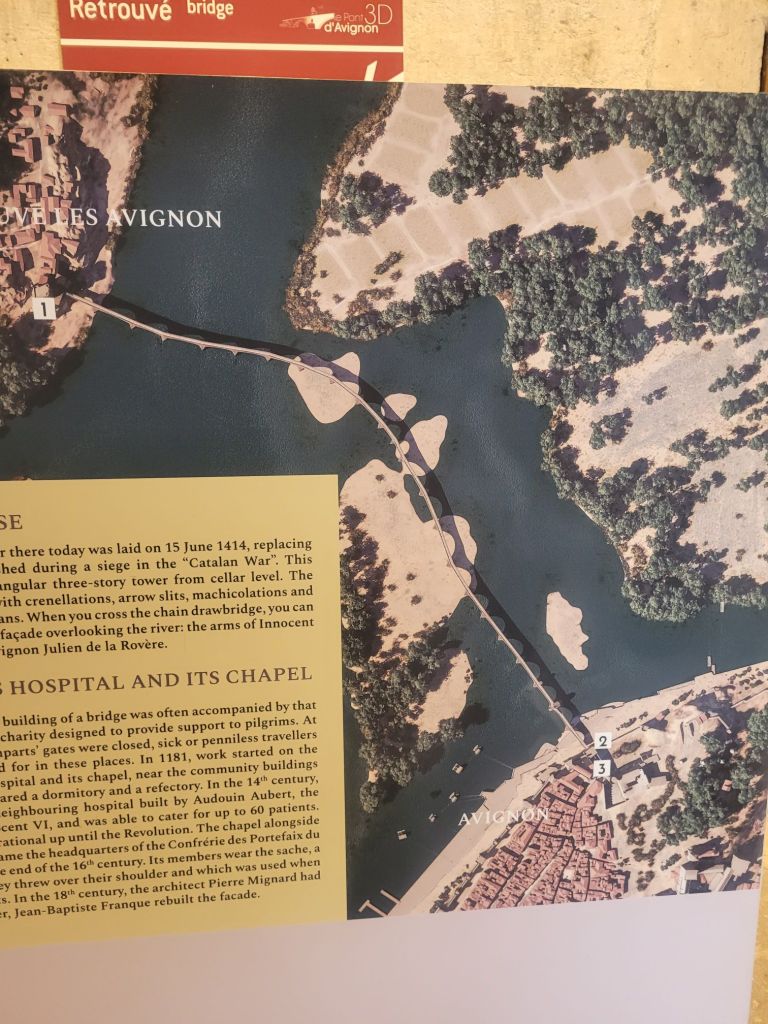
In 1177 (or so the signage said), a young shepherd called Benezet, with God’s help, built a wooden bridge across the Rhone. Looking at the river today, it’s hard to see how this could be achieved, but old maps reveal that the Ile de la Barthelasse, which is big enough to house roads, houses, parks etc, was a series of smaller islets.


The bridge was important both strategically, as a control on North/South river traffic, and in terms of the collection of tolls. To his contempories, Benezet must have had divine help, particularly as the river current was strong enough to defeat even Roman engineers (who were no slouches in the bridge building department). It was, however, built of wood and was regularly damaged (if not demolished) by debris brought down the river after particularly heavy rains; it was also destroyed during the siege of Avignon during the Albigensian Crusade. The very comprehensive museum on what remains of the stone bridge has both a map and a digital reconstruction of the route of the bridge, which makes it very clear how small islets and shallow gravel beds were used for the footings – and therefore governed its route.
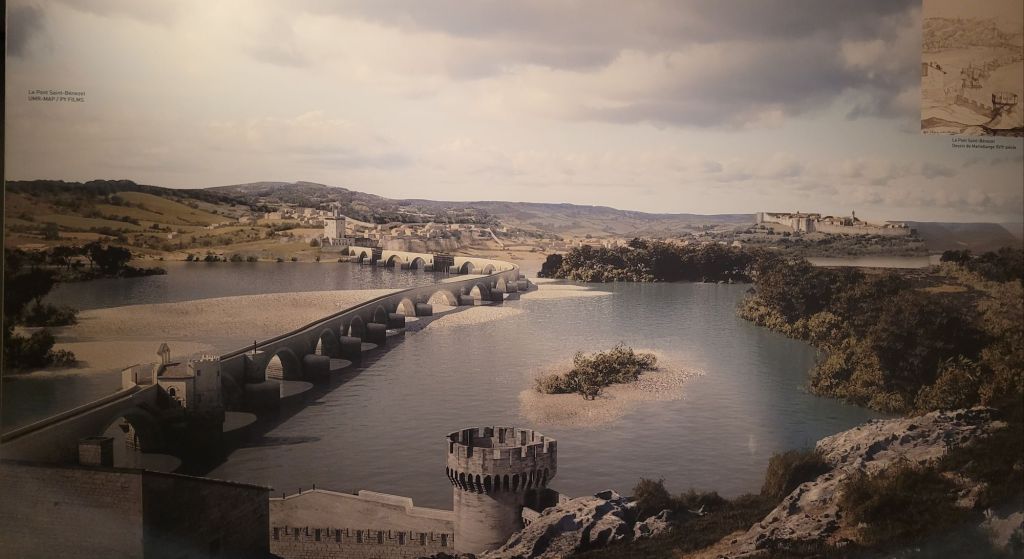
The Tour de Philippe-Bel was built on the other side, to protect the bridge. At this point it all gets political and historically murky, with one side of the Rhone belonging to the King of France and the other to the Holy Roman Empire (aka the Franks – who were a Germanic tribe). Suffice to say that controlling the bridge (be it wooden or stone) was important to all sides, for a variety of reasons.
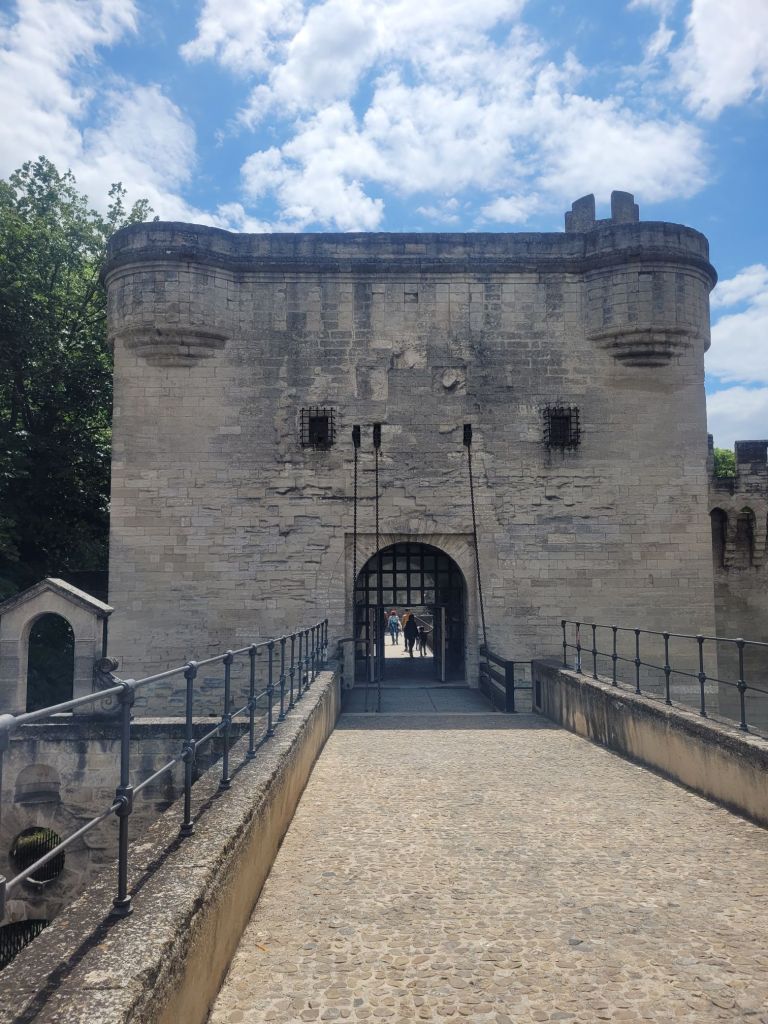
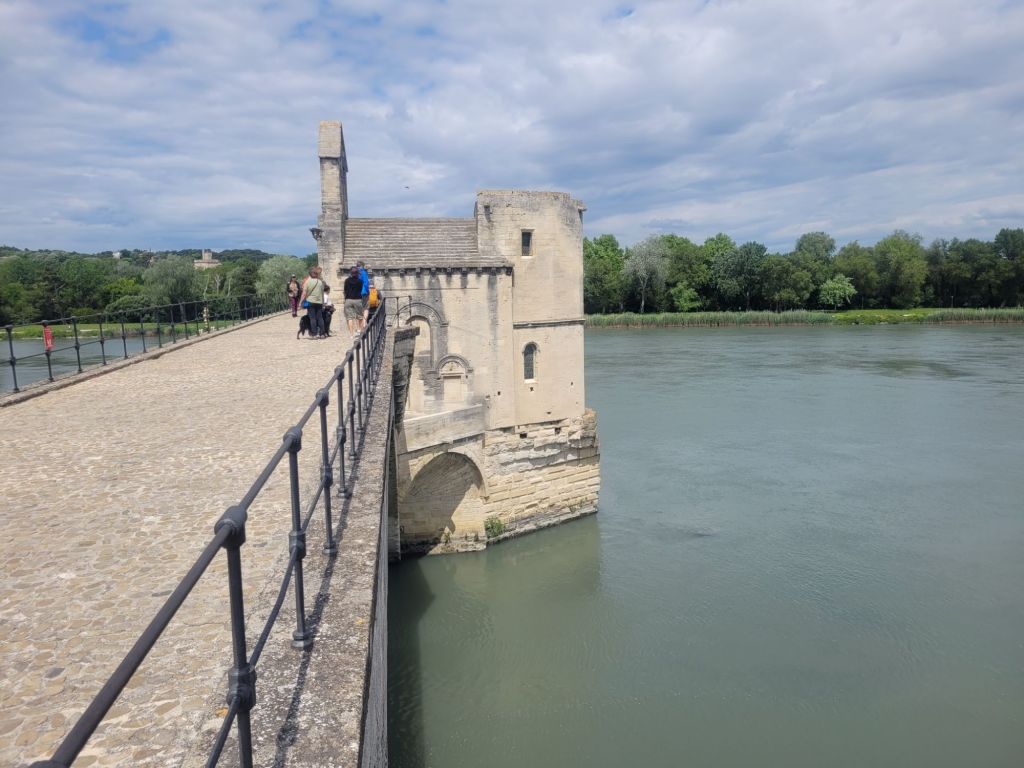
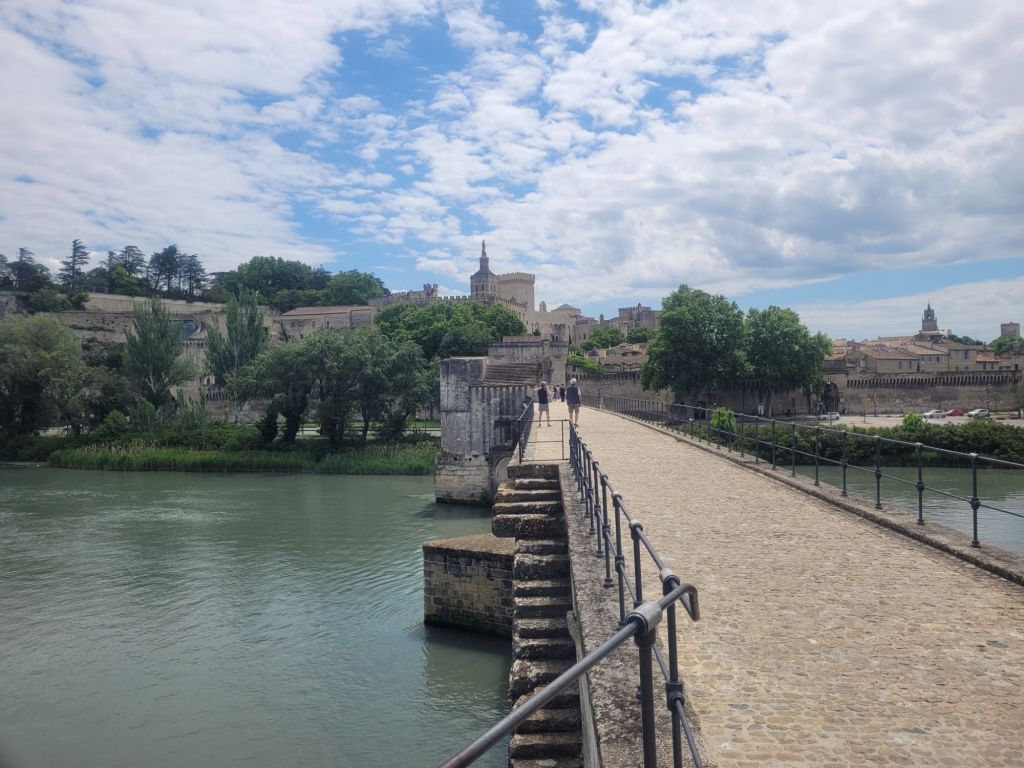
There are two small chapels (one on top of the other) on the bridge itself, one of which originally housed the remains of Benezet upon his death. In the 17th century the bridge was damaged so much by floods that only four arches remained and repair work was deemed too expensive and difficult to pursue. The body in the chapel was moved and the bridge left in ruins, which is what remains today.
Another big tourist draw is the Popes’ Palace. Again, the history around this is obscure. Apparently during the 13th century, popes were itinerant, moving from palace to palace across the area controlled by the Holy Roman Empire. In the early part of the 14th century, after a violent disagreement between the French king and the current pope (who was in what is now France at the time), a French cardinal was elected pope (Clement V). He remained in France in order to address specific local issues, particularly the disbanding of the Templar order, endimg up in Avignon and staying. During his reign as Pope, he installed a large number of French cardinals so Italian dominance over the church ended. The following six popes were all French and chose Avignon as their residence, which belonged at that time to the the Count of Provence, also ‘king’ of Naples and Sicily and a vassal of the pope. The area wasn’t fully absorbed into France until the Revolution, three hundred years later.
The palace is vast – no other word describes it. The building is huge, the rooms are enormous, the corridors are narrow, dark and pokey – which seems odd in places.
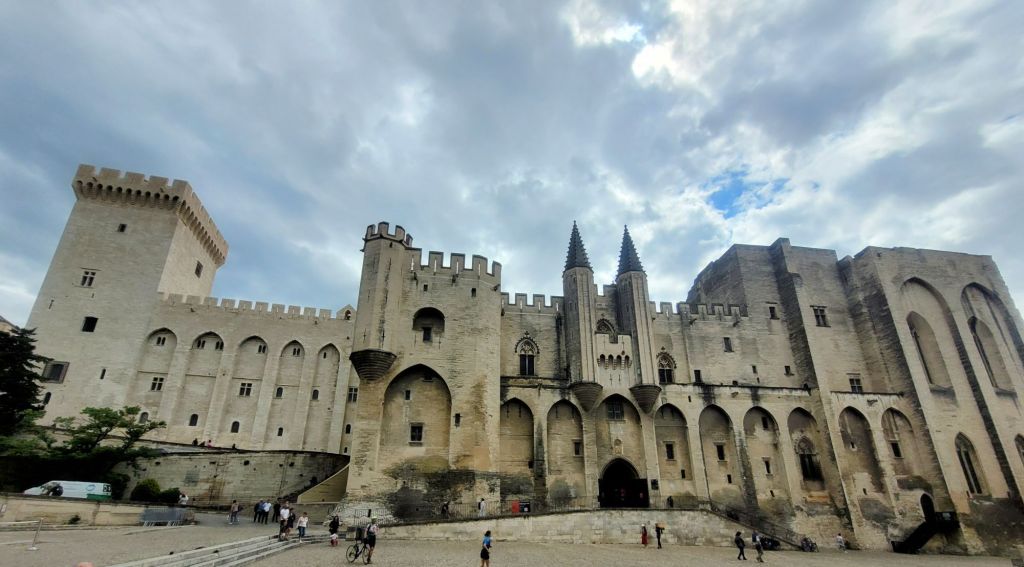
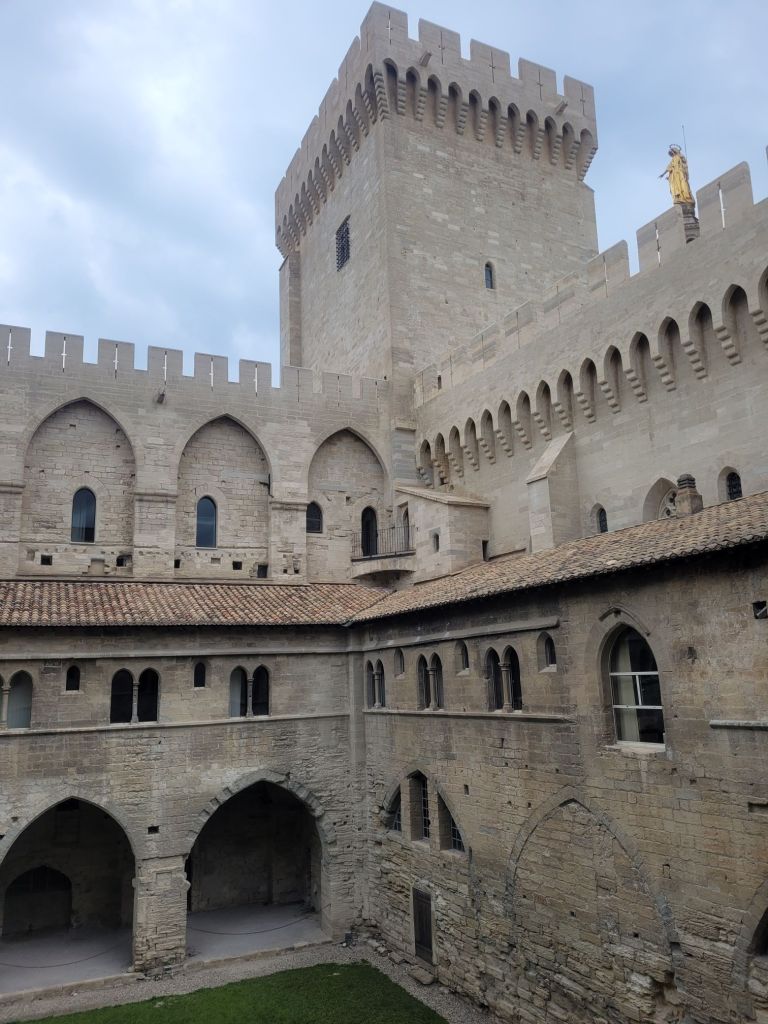
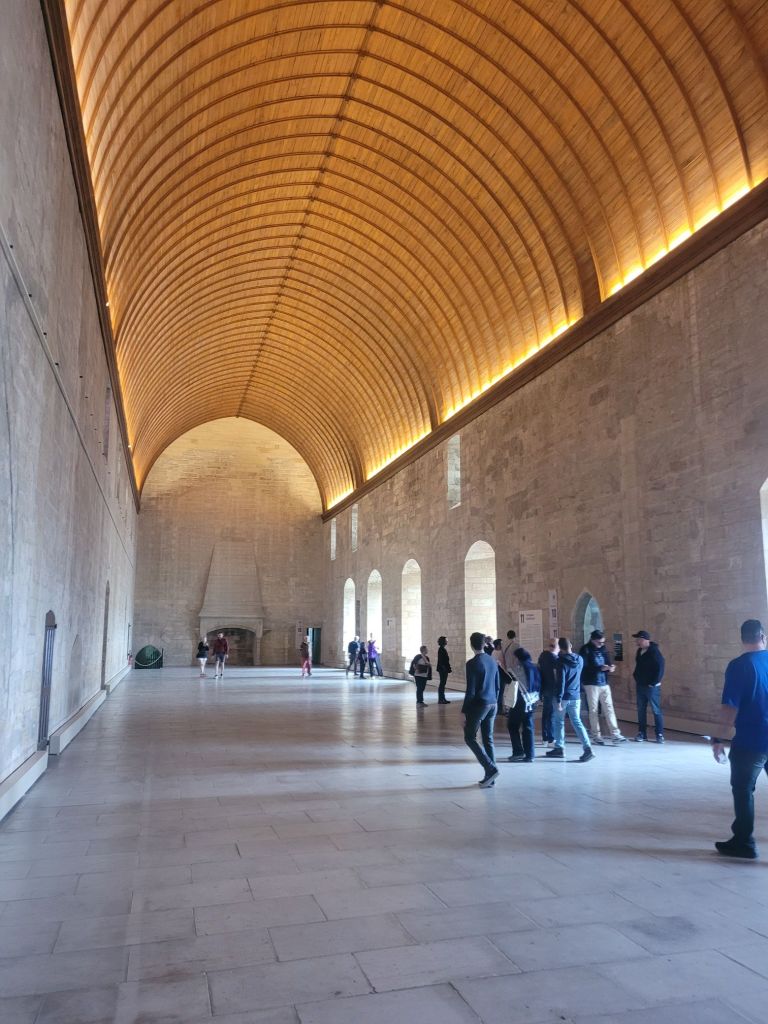
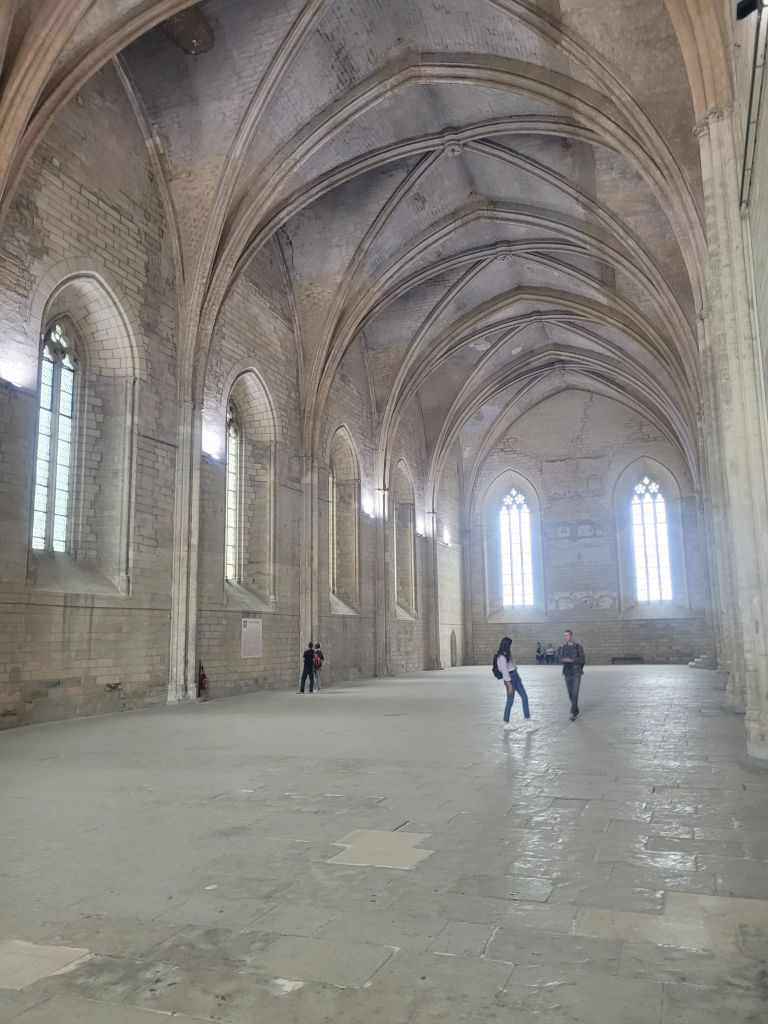

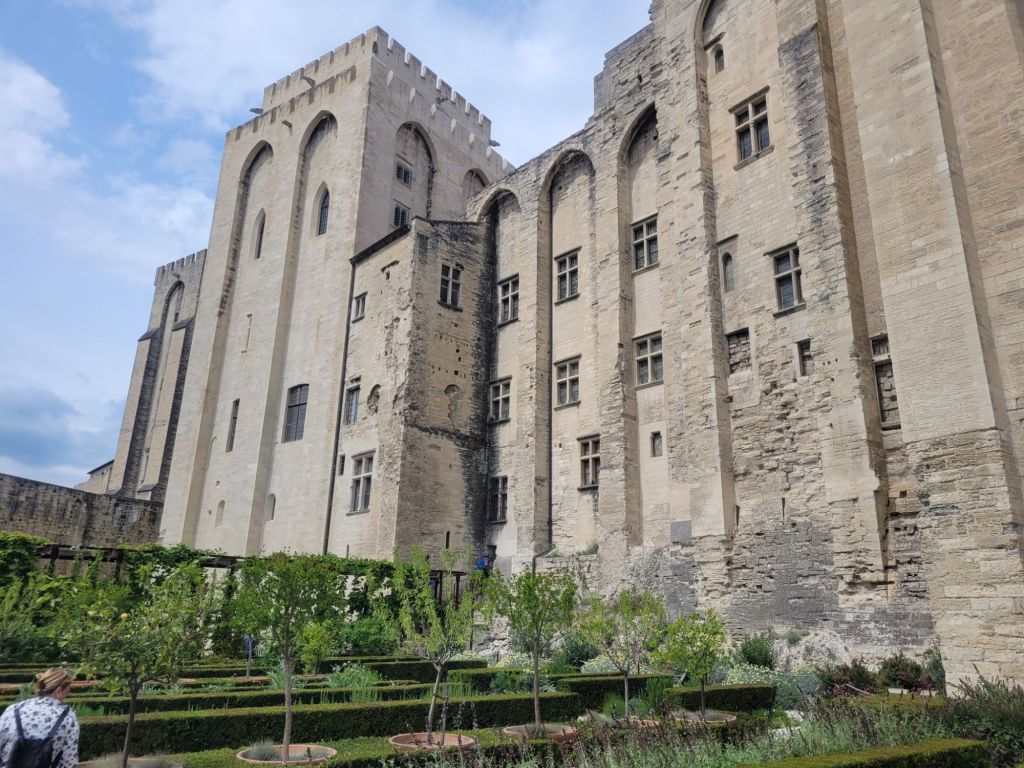
Signage is, again, mostly in French so information was often unclear. Because of the use of the palace as a prison, then as a garrison, in the 19th century, most of the rooms have been stripped of their decoration. There is some evidence of the rich wall paintings that were there originally, particularly in one tiny chapel (I did take a picture but deleted it by accident) and the pope’s rooms . But mostly it’s very echoey and empty – cold. In places they have left the rooms in their ‘destroyed’ state, and in other rooms they have remnants of floor tiles and small areas of painting that have escaped destruction.

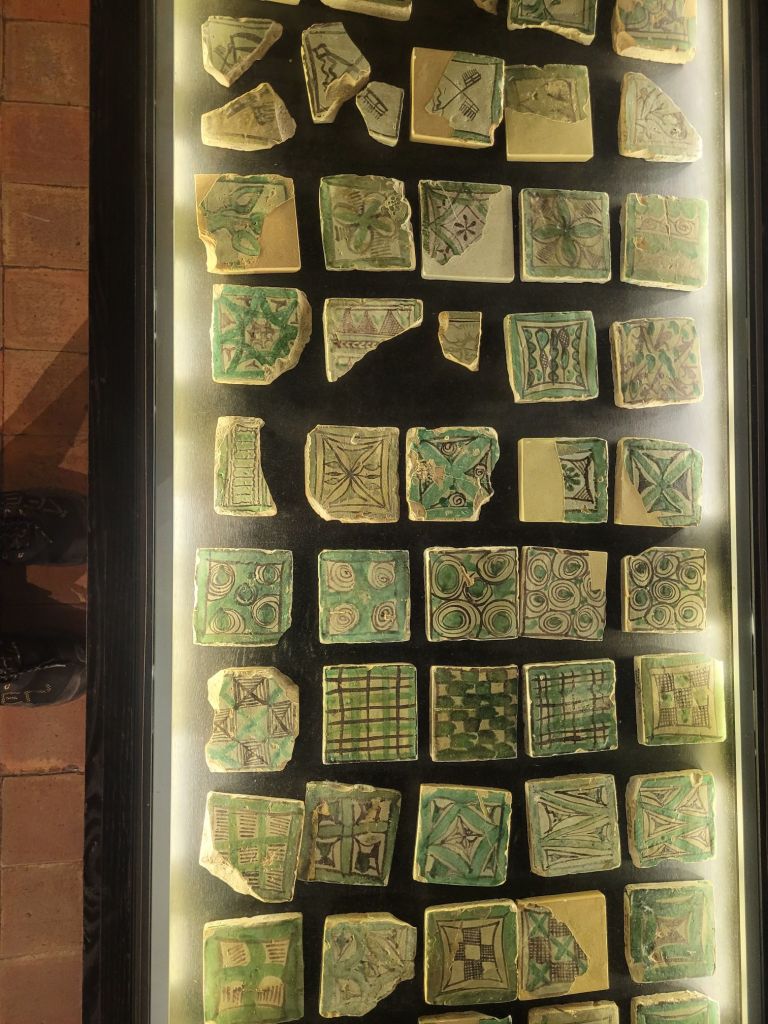

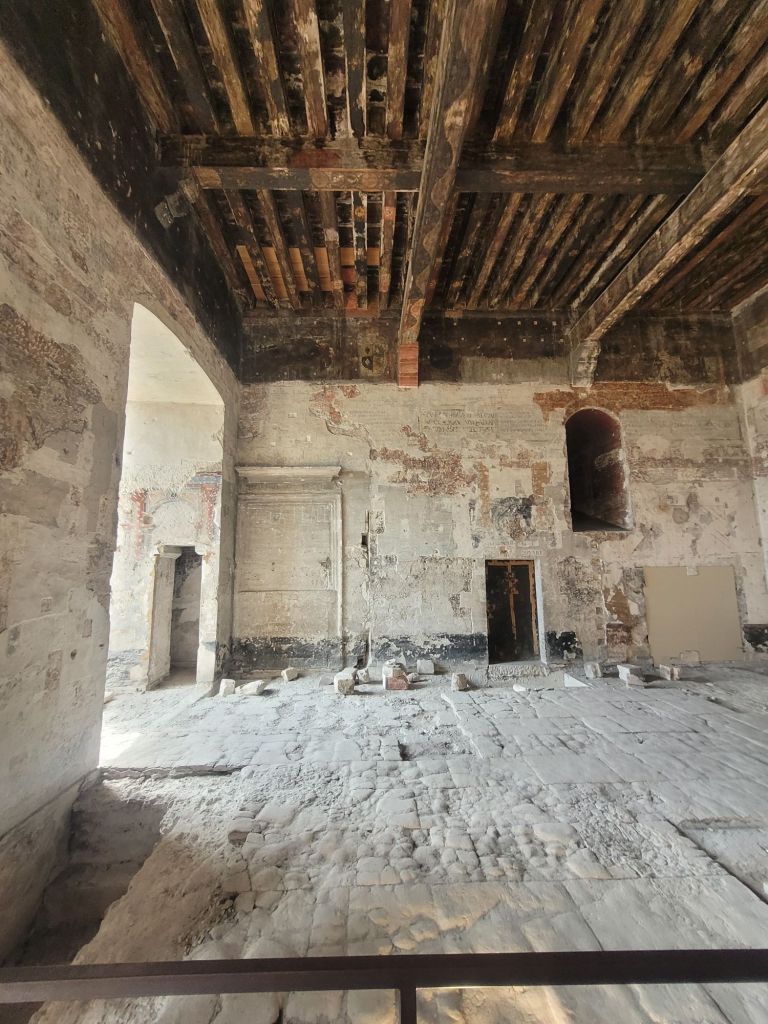
The popes’ rooms – a bedchamber and a study – remain fairly intact, fully decorated and with a most beautiful tiled floor. Photography is absolutely forbidden, nor are visitors allowed to talk or linger as you move through the rooms. Room guards police movement and use of phones (to the point where you can’t even hold it obviously in your hand). The pictures are taken of post-cards and a fridge magnet (of the floor – it’s a bit lurid but gives a good impression).
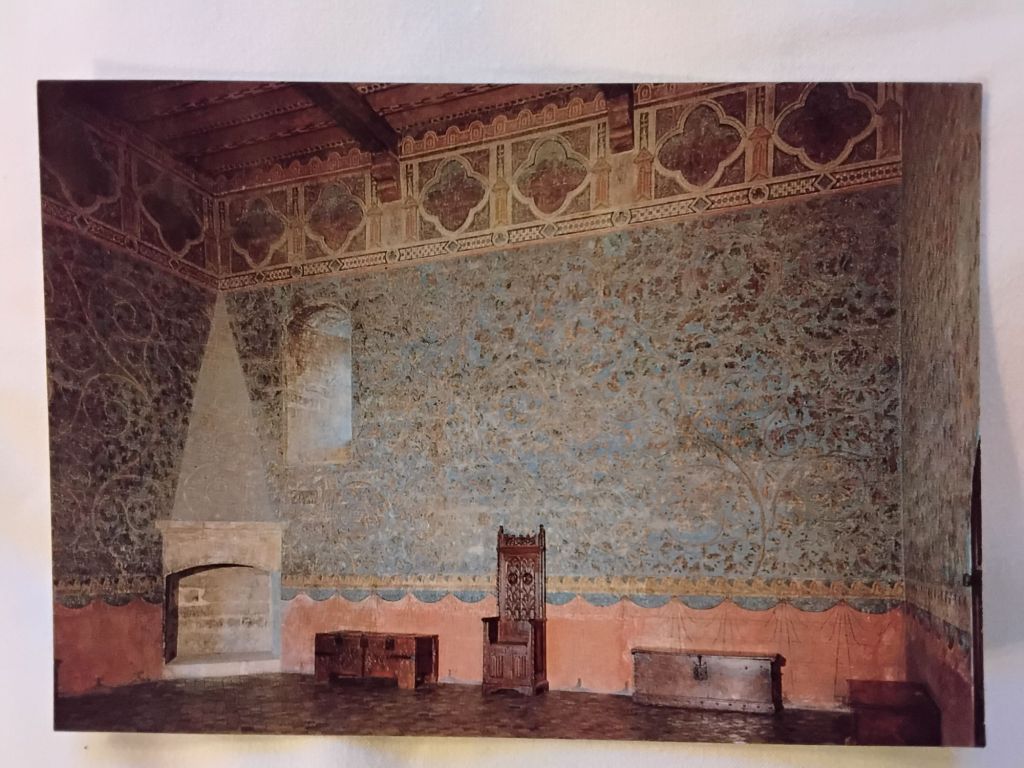
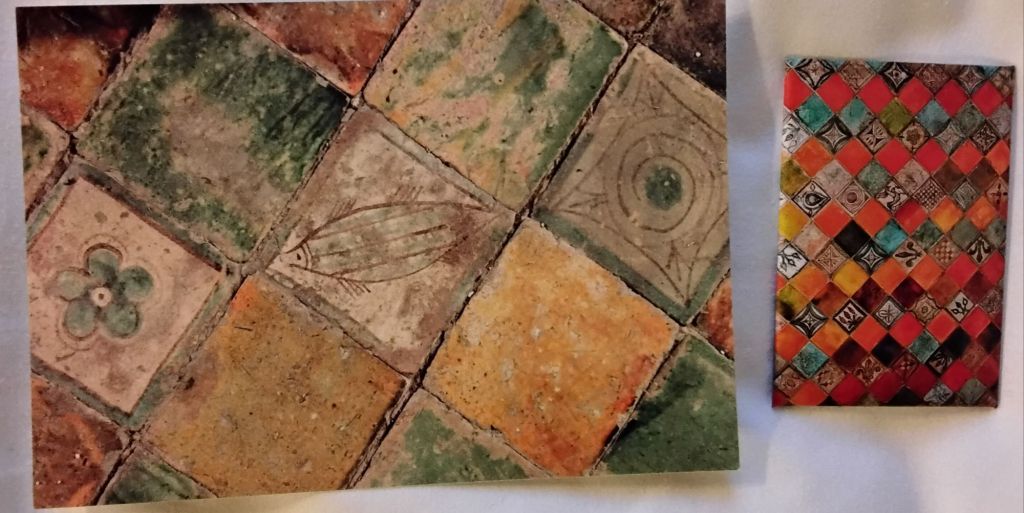

It takes time to move through the palace because it’s so big, rather than the number of rooms you can see. A joint ticket with the bridge is advisable, simply because it gives the impression of better value.
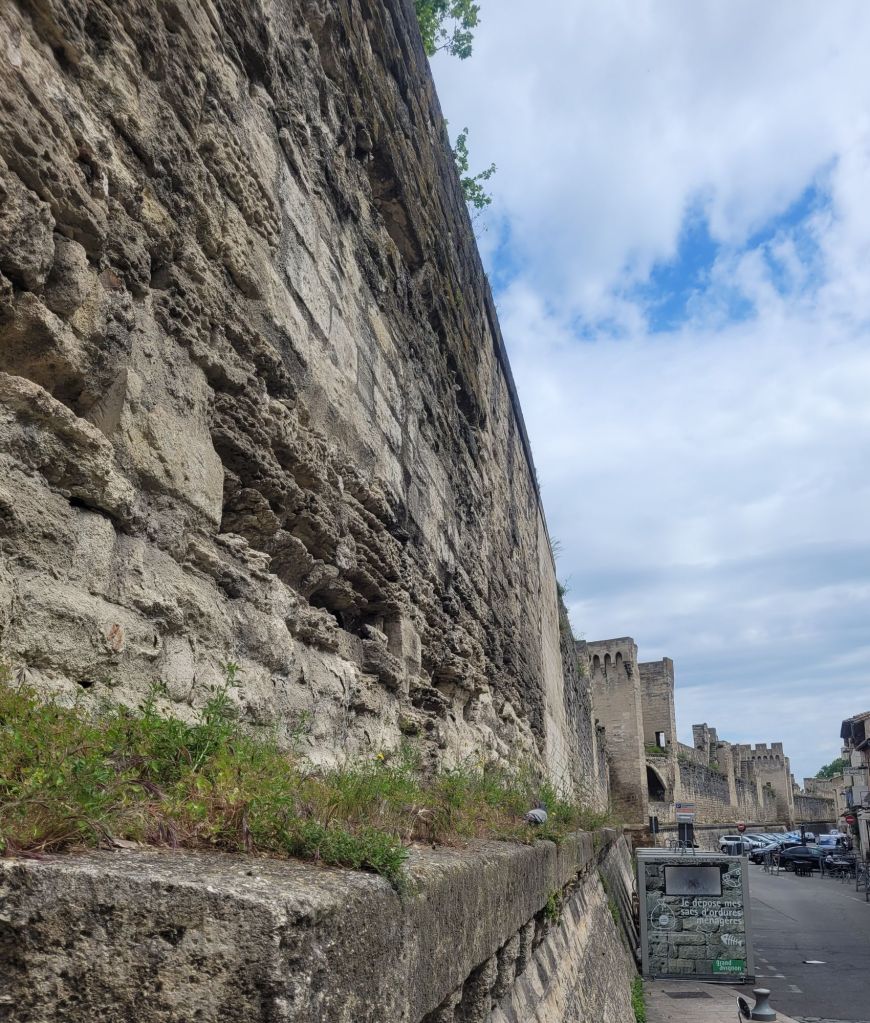
Avignon is a lovely town to walk through – again, utterly French. Surrounded by walls (which have been rebuilt in places), its small streets and tree-lined roads are chock-a-block with shuttered houses and the odd large palace (usually now a museum).

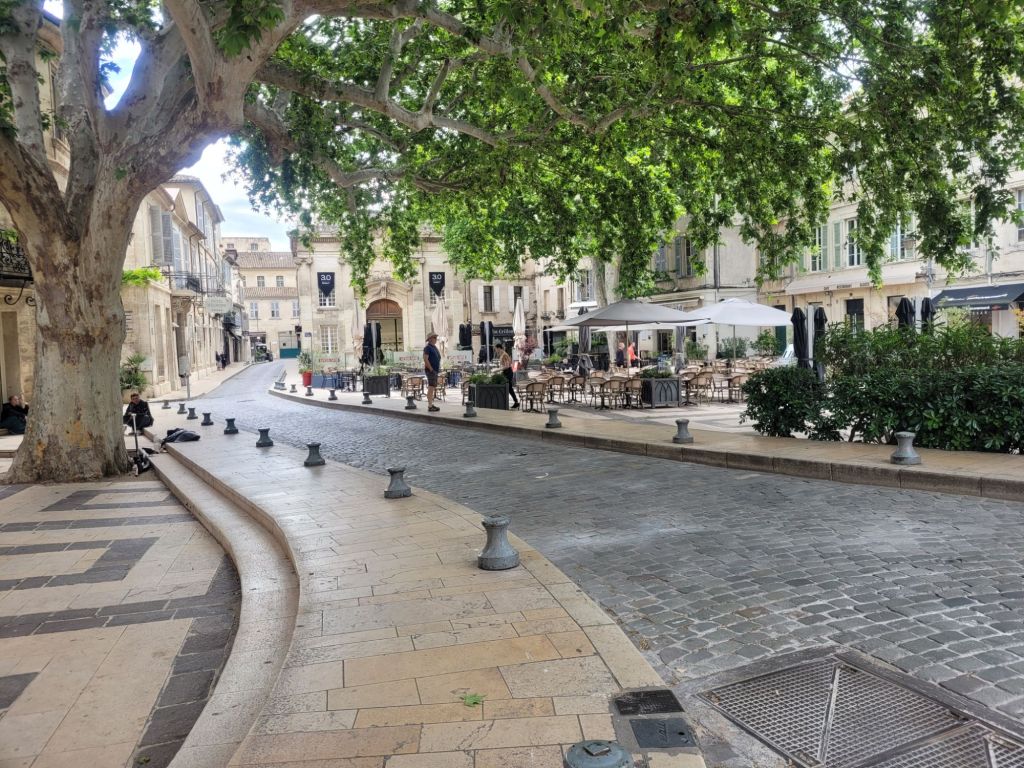

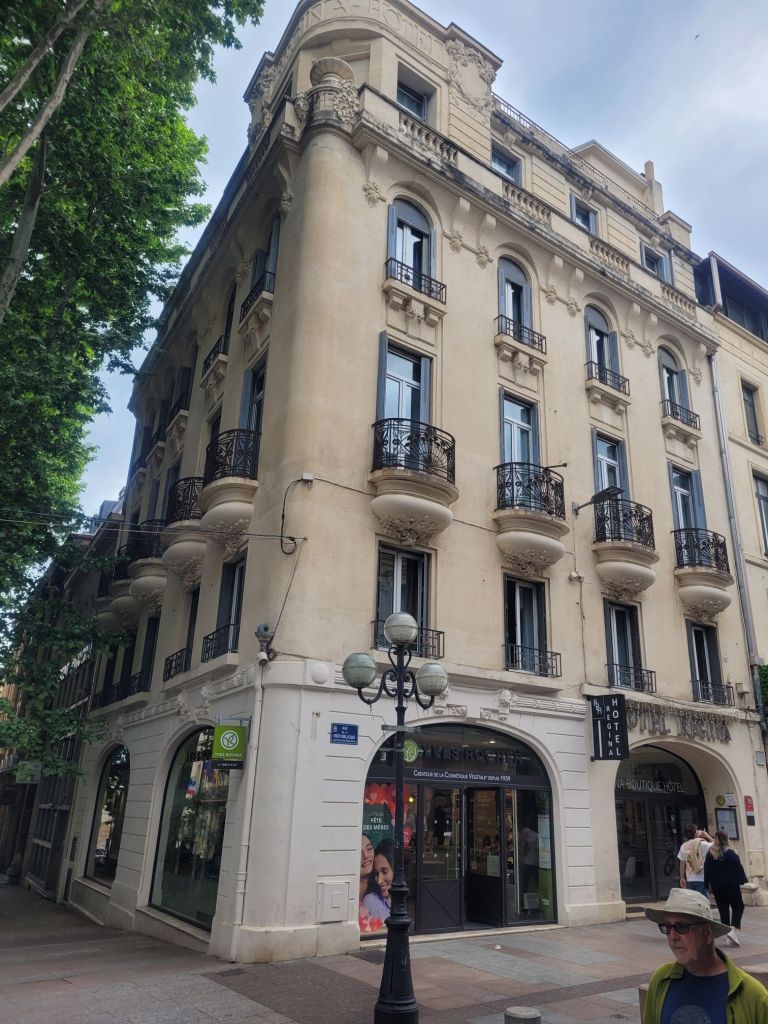
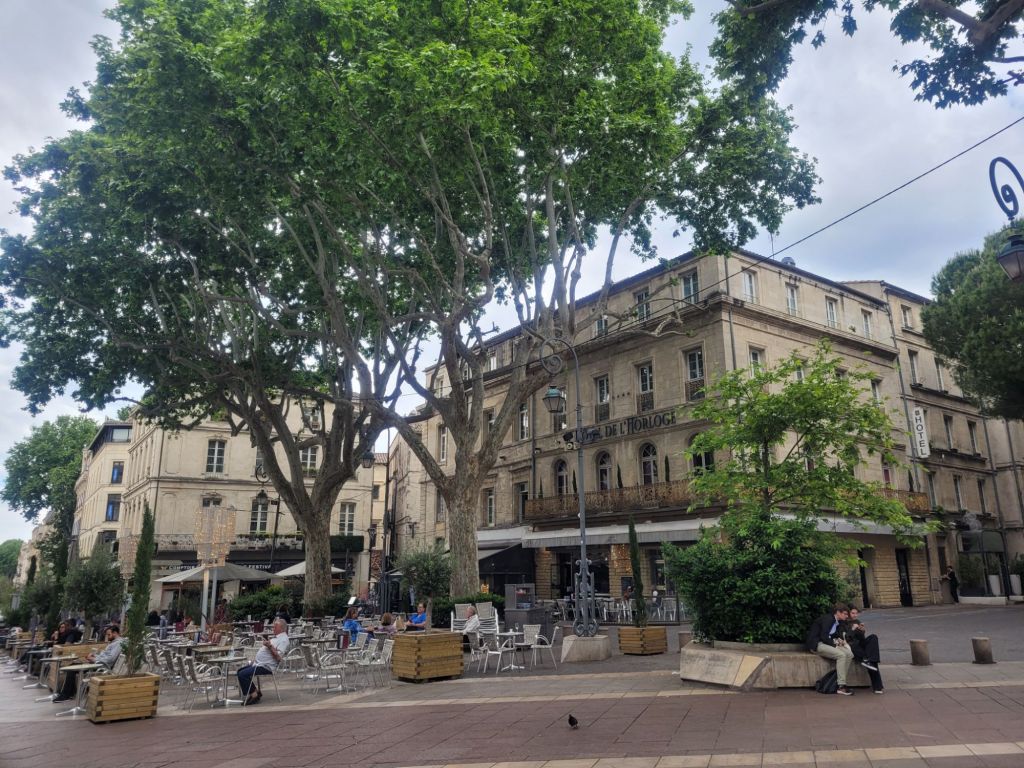

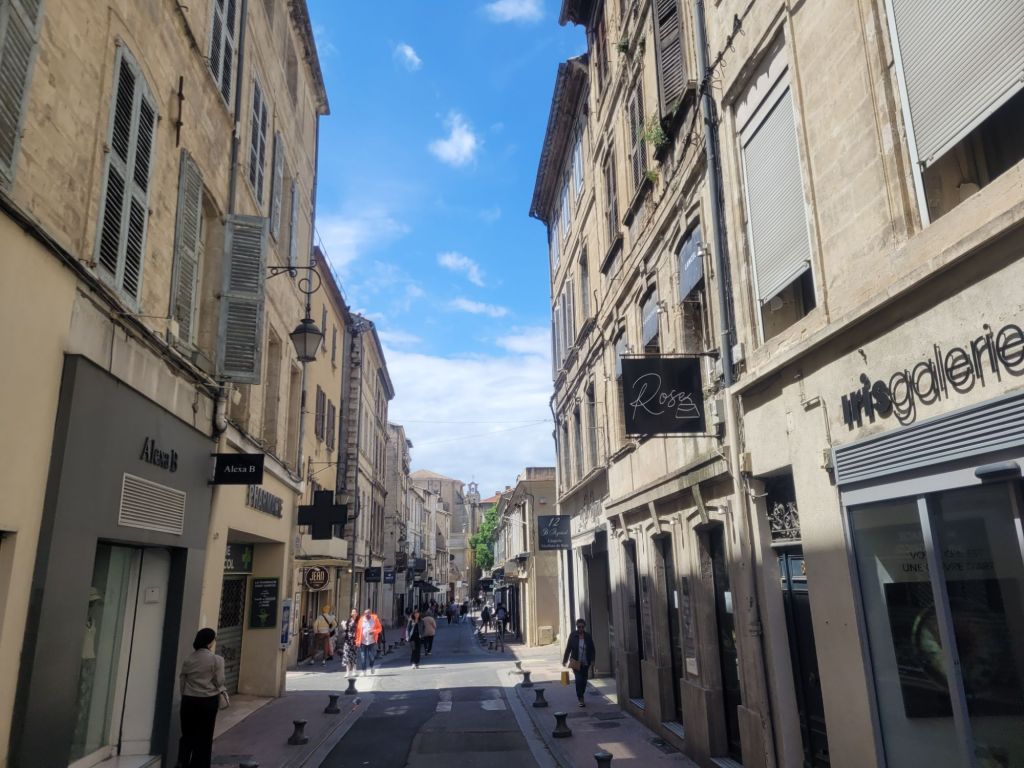
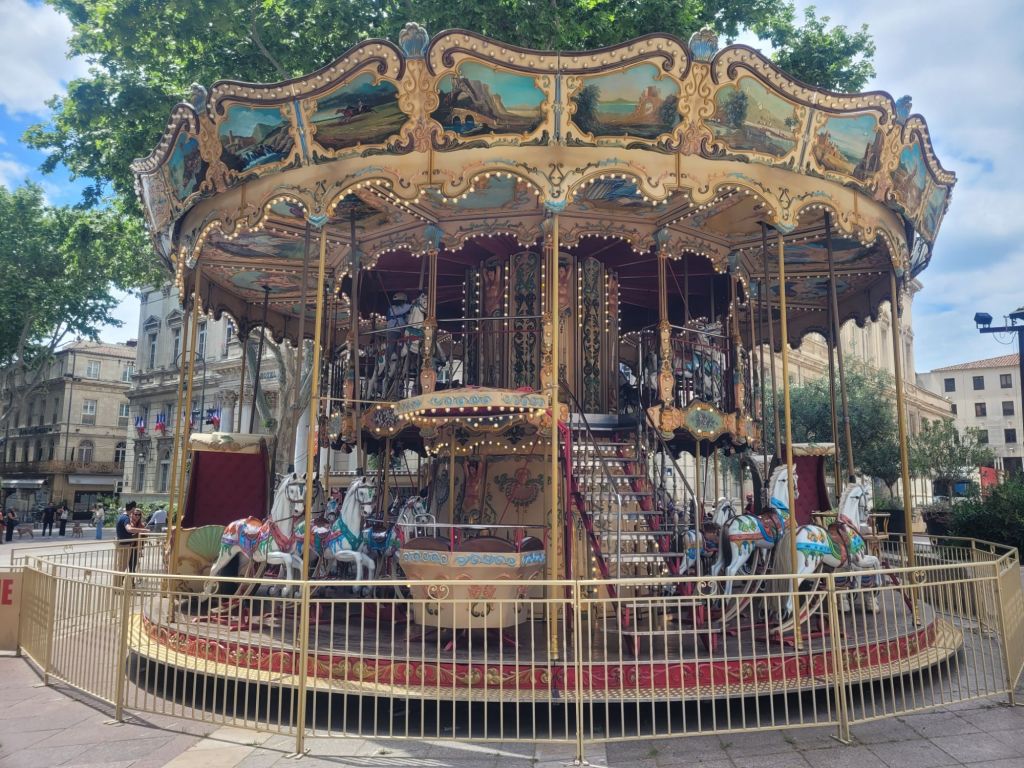
Near the Popes’ Palace is the Place de l’Horloge, which houses the opera house (with a group of tourists learning a dance), the town hall (with a demonstration on Gaza), a large number of restuaurants (our beers and coffees were expensive – to be expected) and an old fashioned roundabout.

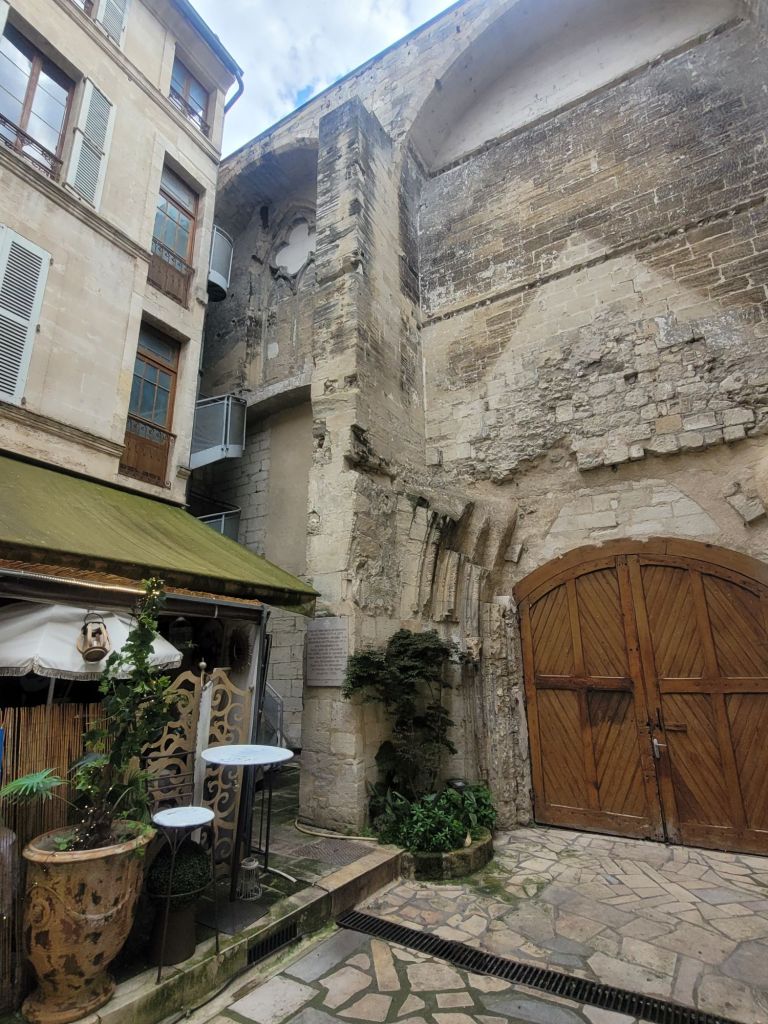
The Templar order (disbanded by the Pope at the request of the French king) is remembered in the small remains of their chapel. Having seen some of their impressive buildings in western Spain, it was slightly sad to see this small ruined corner, with an equally small plaque. Similarly for the tiny nod to the Roman past: a few scattered stones and a small plaque.


We were recommended a good place to eat – the Cour d’Honneur, slightly out of the way of the main touristy areas.
It’s a pretty, pretty place, with lots of complex history anda large number of tourists (river cruise boats stop here). Well worth a visit.
On to Italy via the coastal rail-way line.
 Retired? What now?