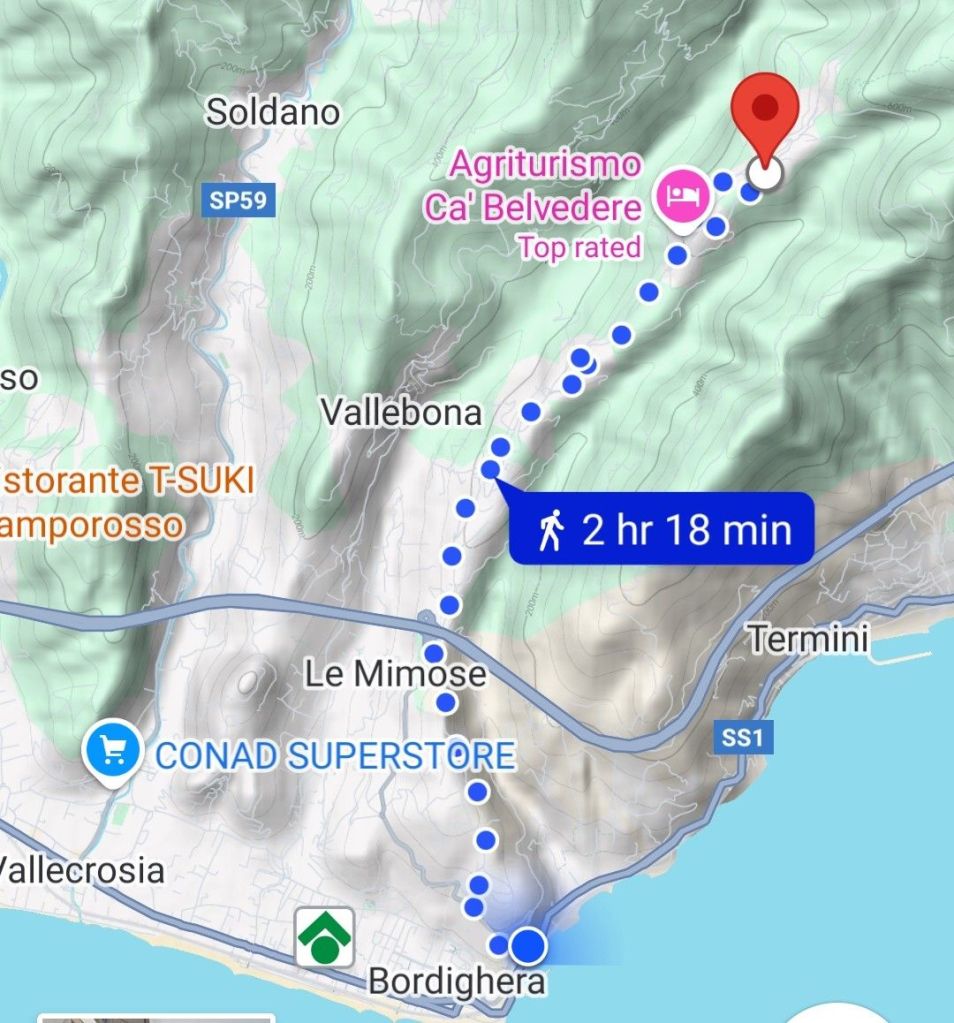
Seborga, up in the hills behind the coast, is a quaint village of beautiful views and murky history. Although it is perfectly possible to walk up and back, we took the minibus for one leg. Up, naturally!
Buses are few and far between and the timetables on the various bus stops don’t always agree with what is on the website or what the tourist office suggests. As the timetable at nominal ‘bus station’ adjacent to the train station matched that of the tourist office, we went with that. Buying a ticket was easy – from the Tabaccheri just up from the station. We were assured that we could have bought tickets on the bus itself but that they would have been more expensive. If you buy them first, you have to validate them.
This all seems very official when considering that the ‘bus’ is a 20 seat minibus with poor shock absorbers.
With no pothole avoided, we hairpinned our way up the narrow road at a good clip, arriving in Seborga about 35 minutes after we left. I was extremely relieved to alight before the driver reversed into a parking space on the edge of a precipice.
A self-proclaimed independent principality (hence the murky history), Seborga invests in its claims to Templars, independence (although some of the documents from the 12th century that underpin this claim may be 14th century fakes) and tourism. It was a bit of a shock, then, to arrive at 11:30 in the morning and find everything closed. No chance of a coffee (or a toilet) before starting down.
The village is small, all narrow streets with a myriad of signs indicating various ‘attractions’, hostelries and eateries (closed).


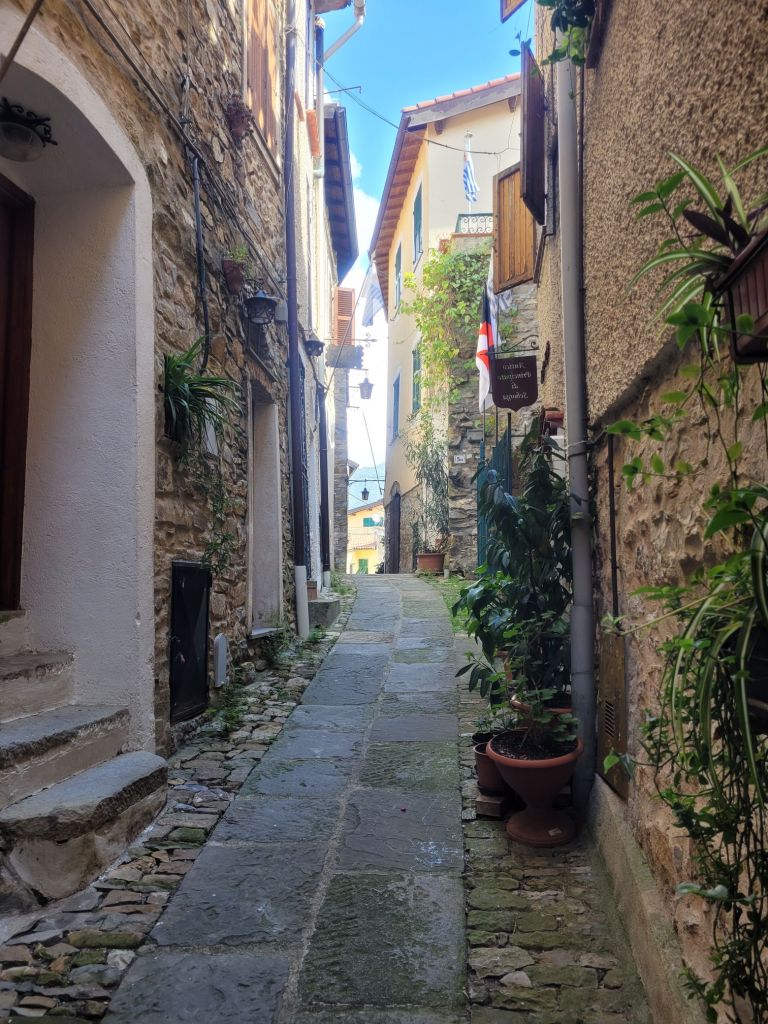

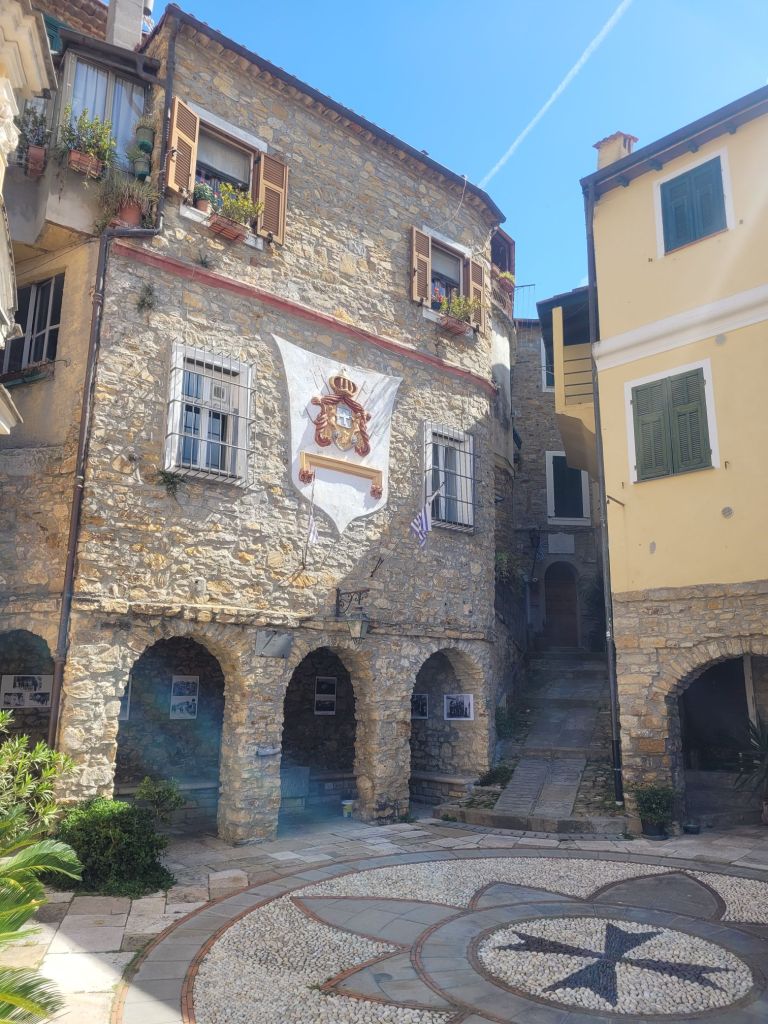
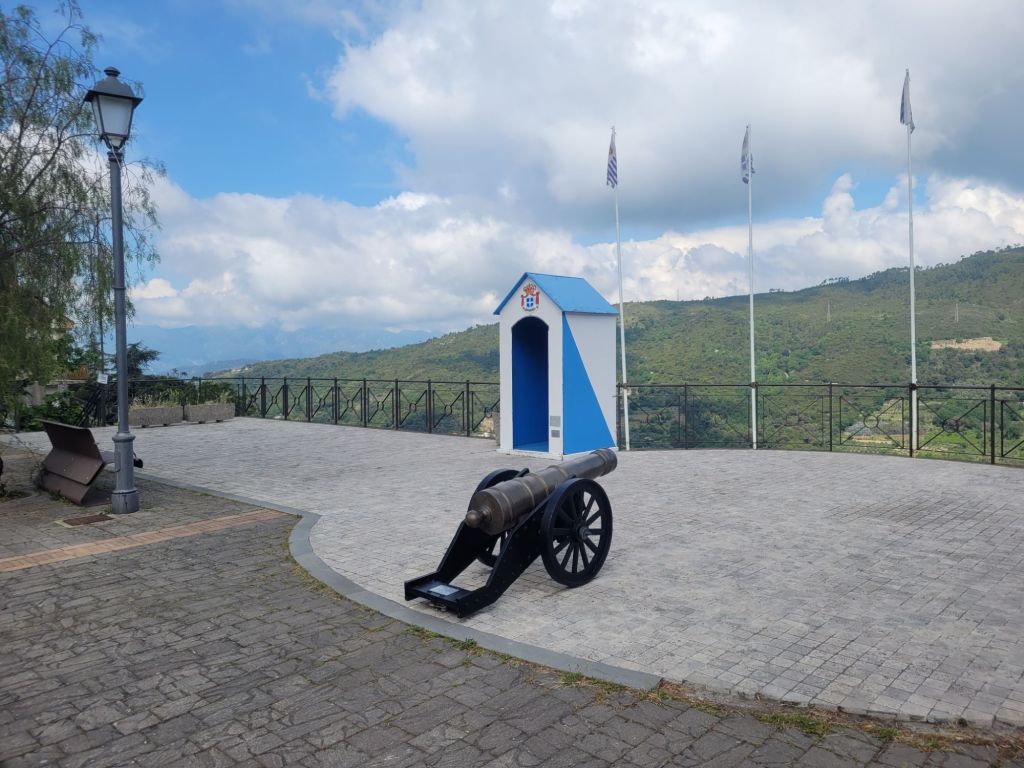
Following one sign, the Templar Chapel, resulted in a disappointing underground vault that looked like an old storage room. The blue lighting was even less impressive.
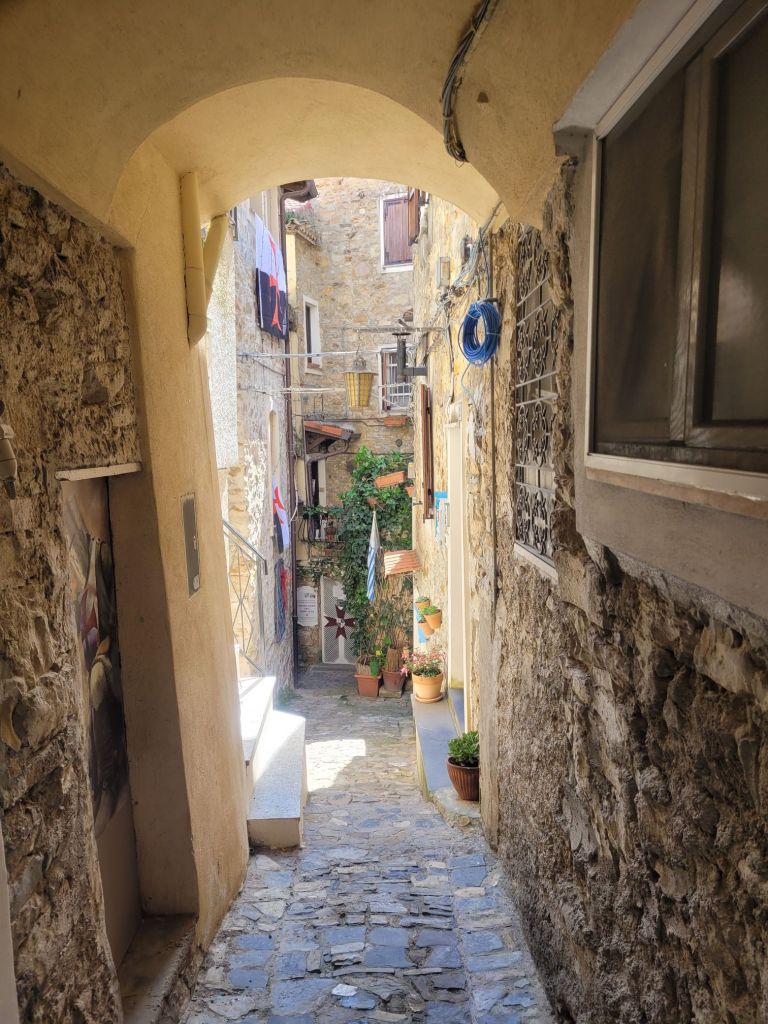
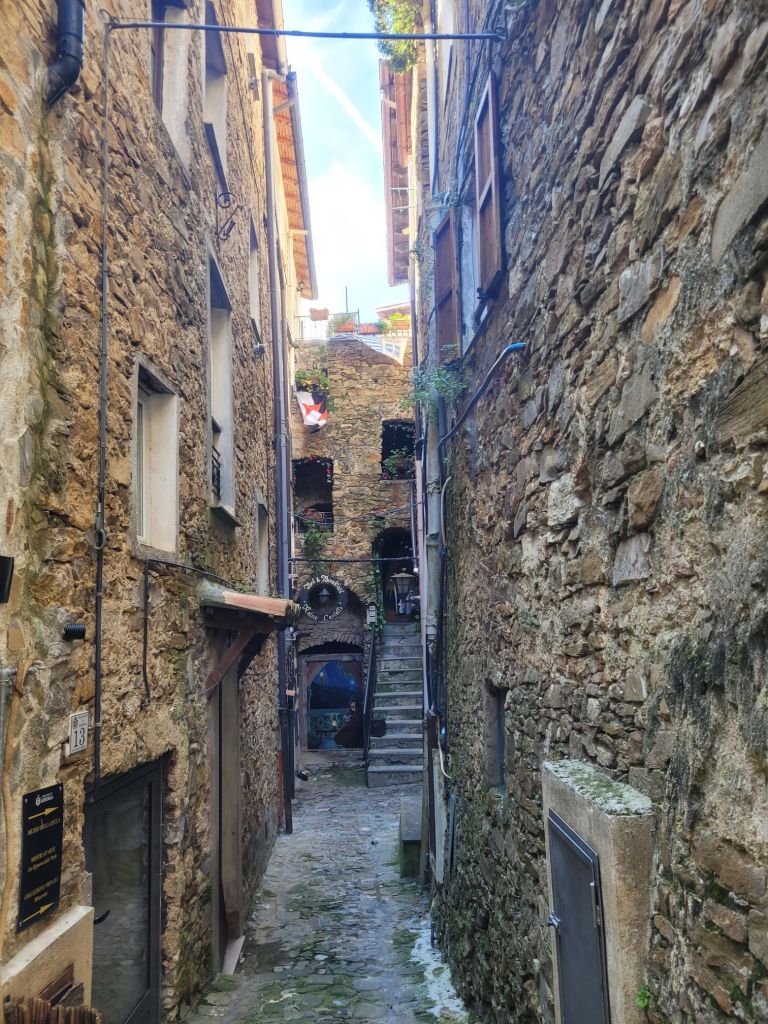
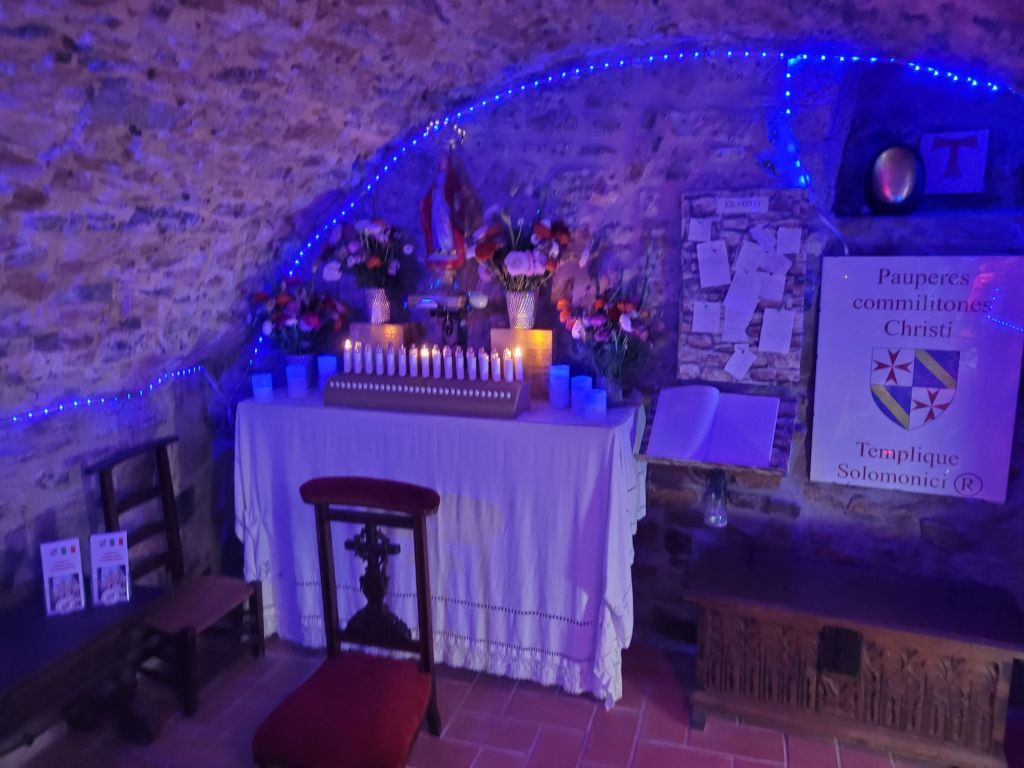
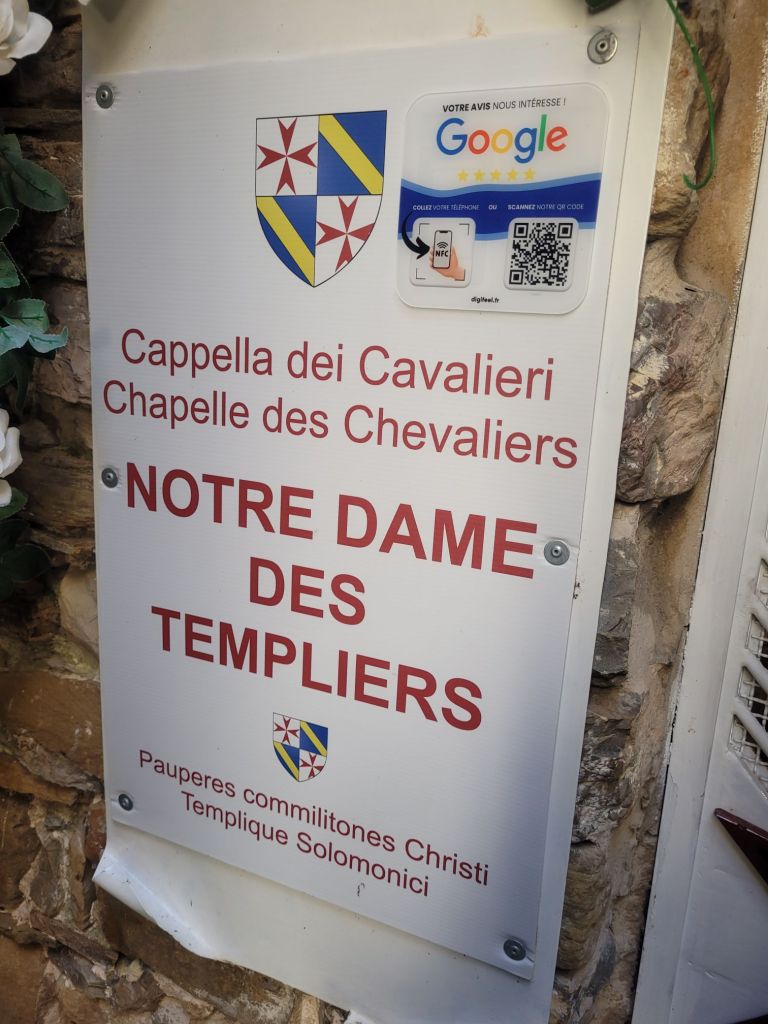
Calling it the ‘Notre Dame’ of the Templars was over egging the pudding to a significant degree but it was at least located in an atmospheric hidden alleyway.
The guide book mentions the walk back down as a ‘pretty footpath ‘, which suggests signage or at least some formal identification of the route. Fond hope: Google was marginally more useful. in the absence of any sign anywhere in the village, we chose to head downhill and south, on the main road, with some expectation of a turn off at some point.
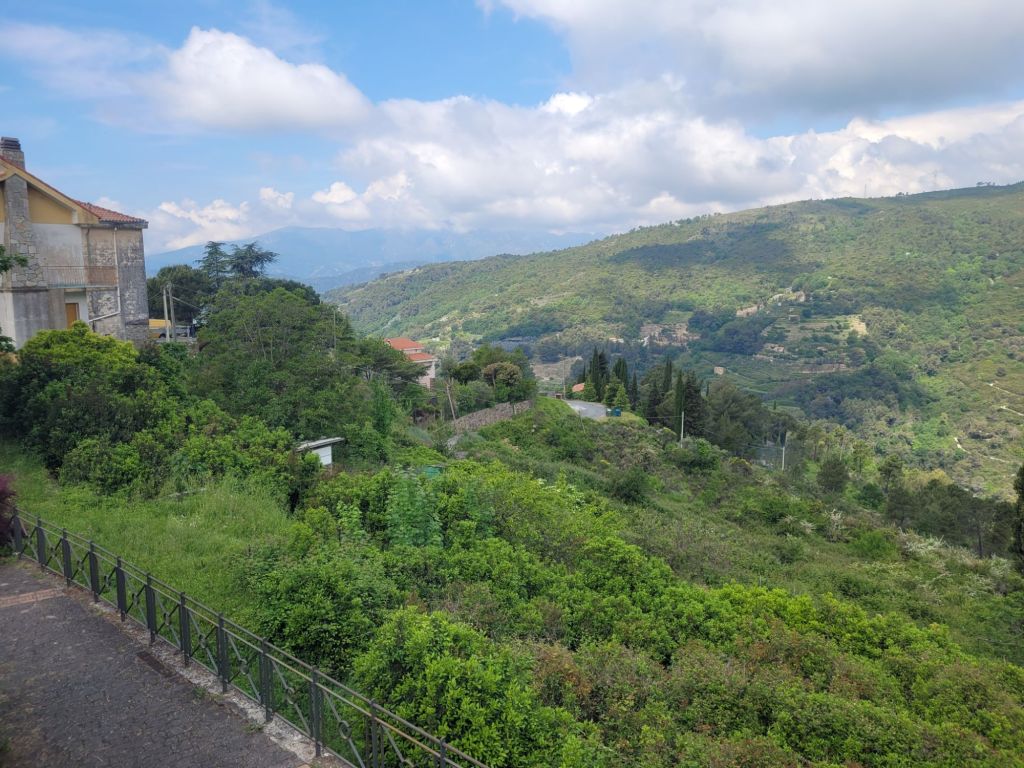

Shortly after leaving the town, a sign for ‘Via Antica Principato’ appeared: we took it, hoping for the best.
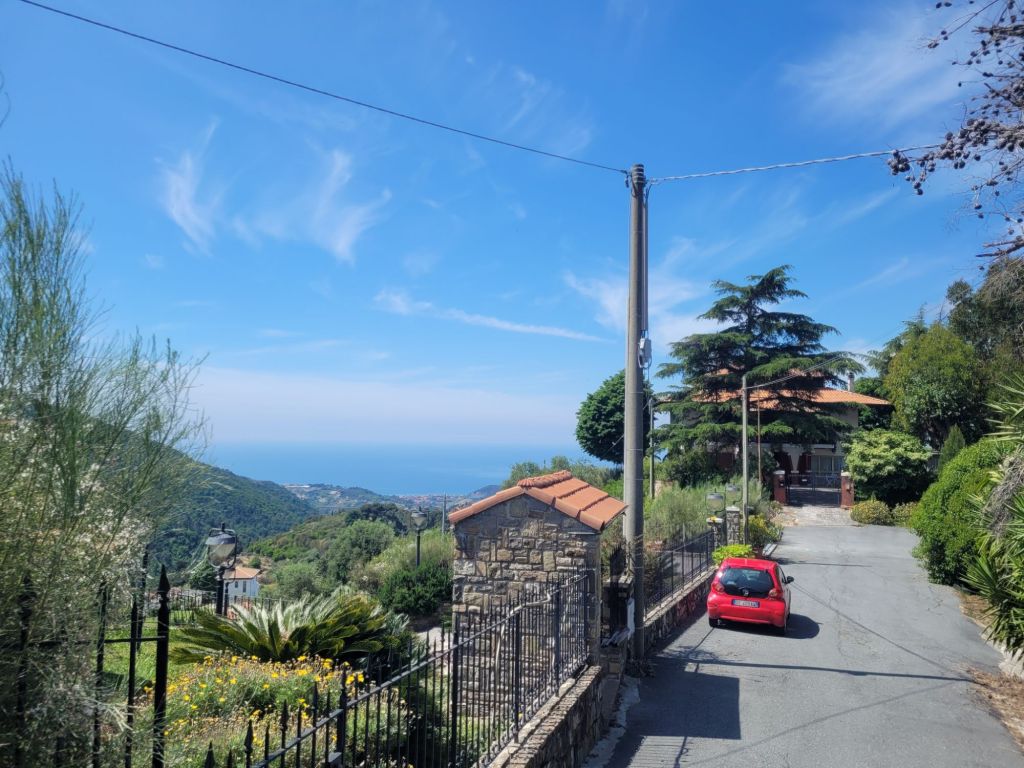
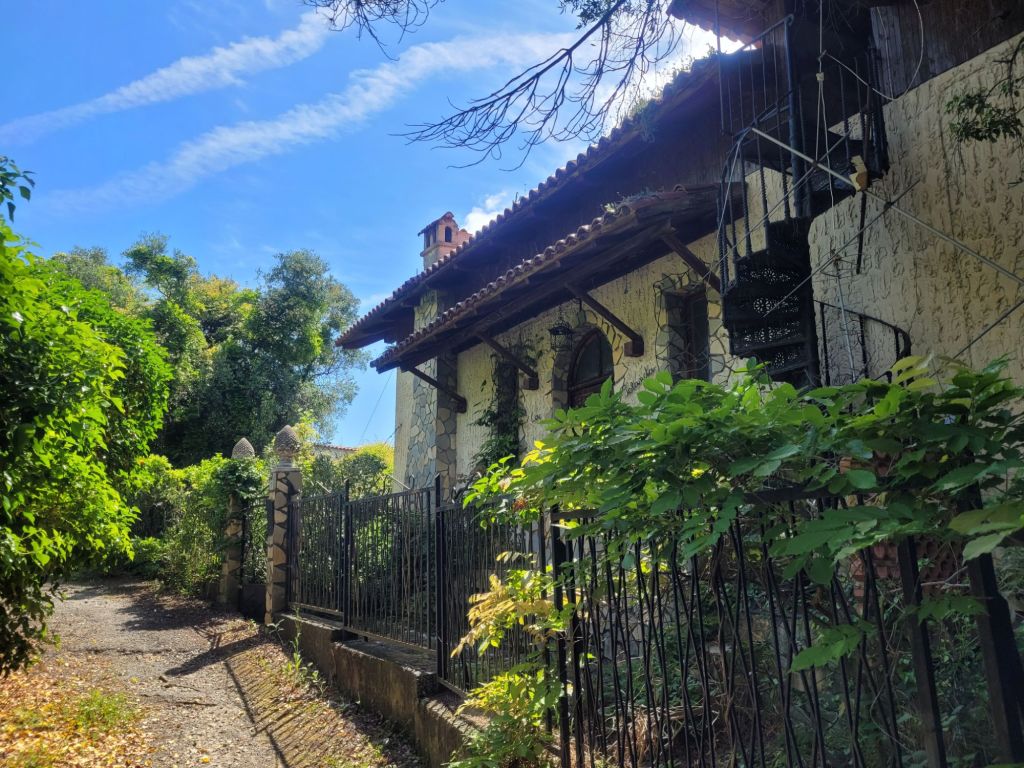
This, it transpired, was the correct footpath, which you realise only after walking along it for some distance and coming across the footpath symbol (red and white stripes ). Signage was minimal, often well after a junction where some direction would have been useful, and frequently signed for the ‘up’ route rather than the ‘down’.
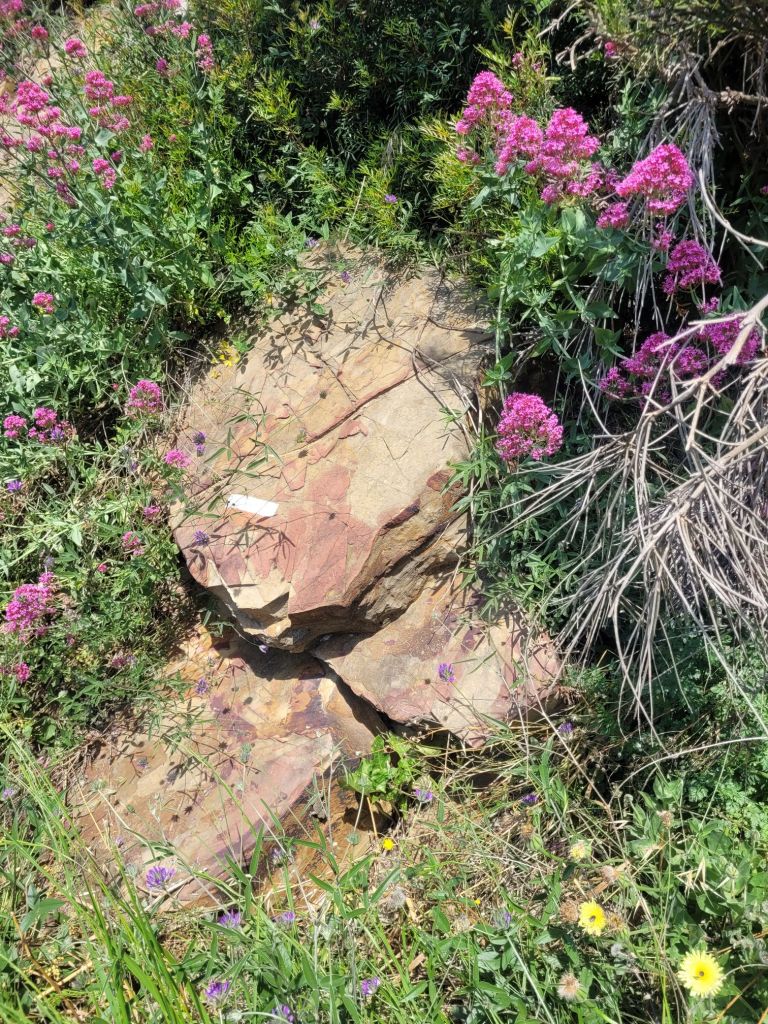

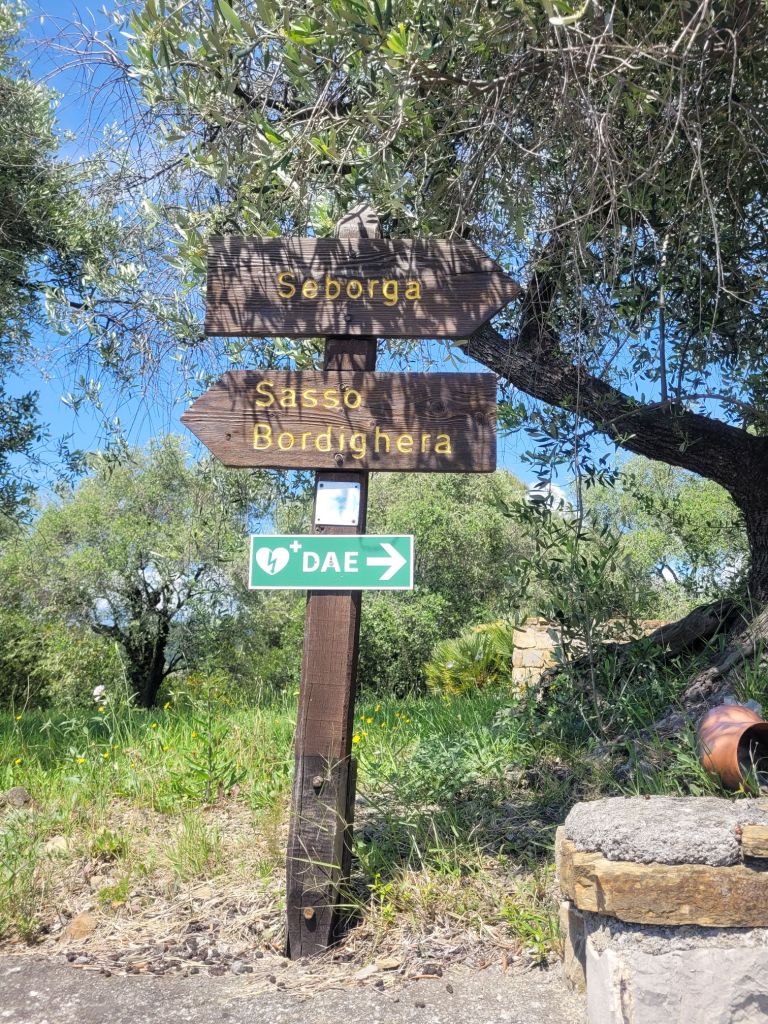
Much of the walk was on roads, small roads at times but still roads.
Essentially the walk is down, down and down, passing through a couple of attractive villages and past houses.
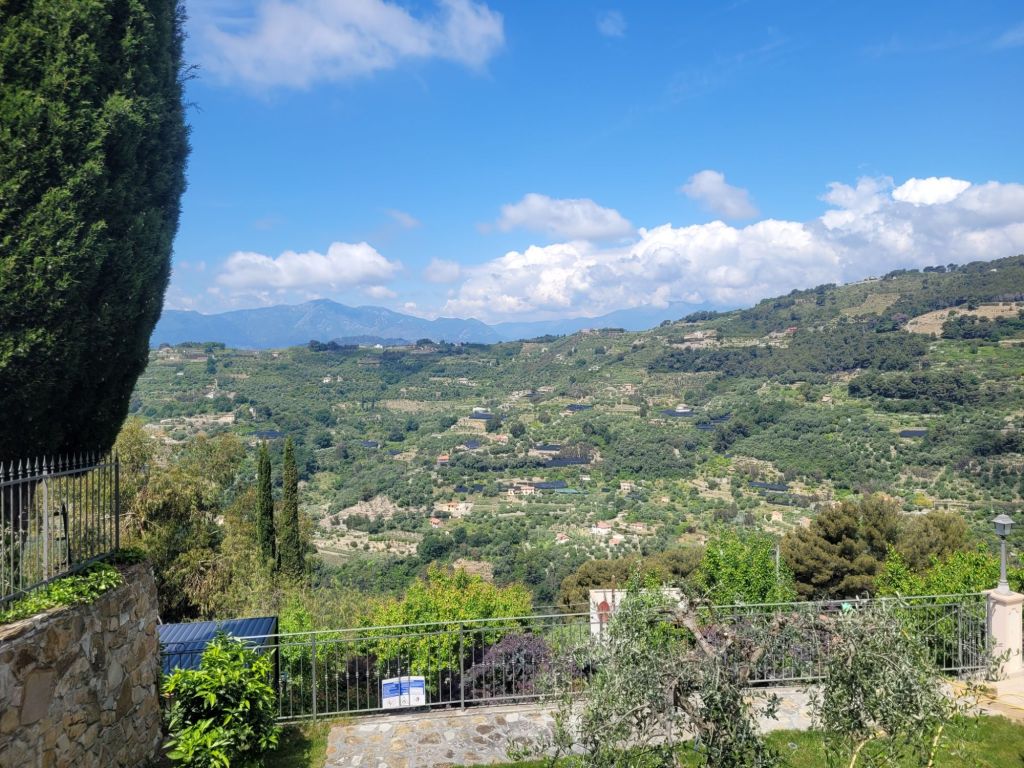
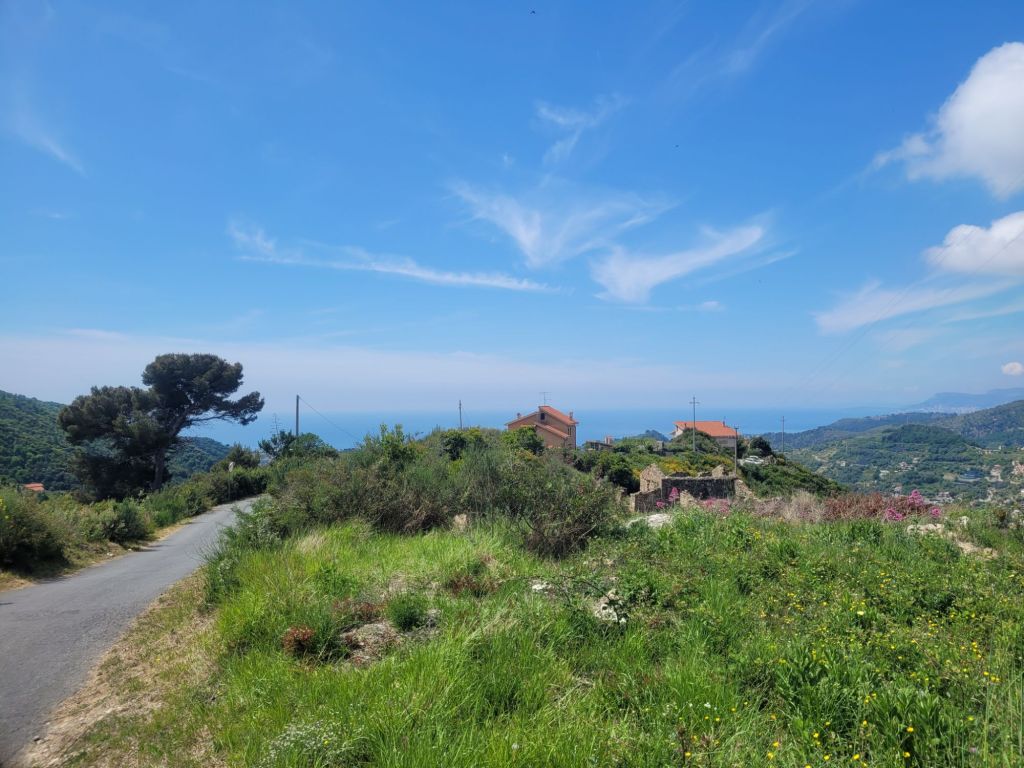
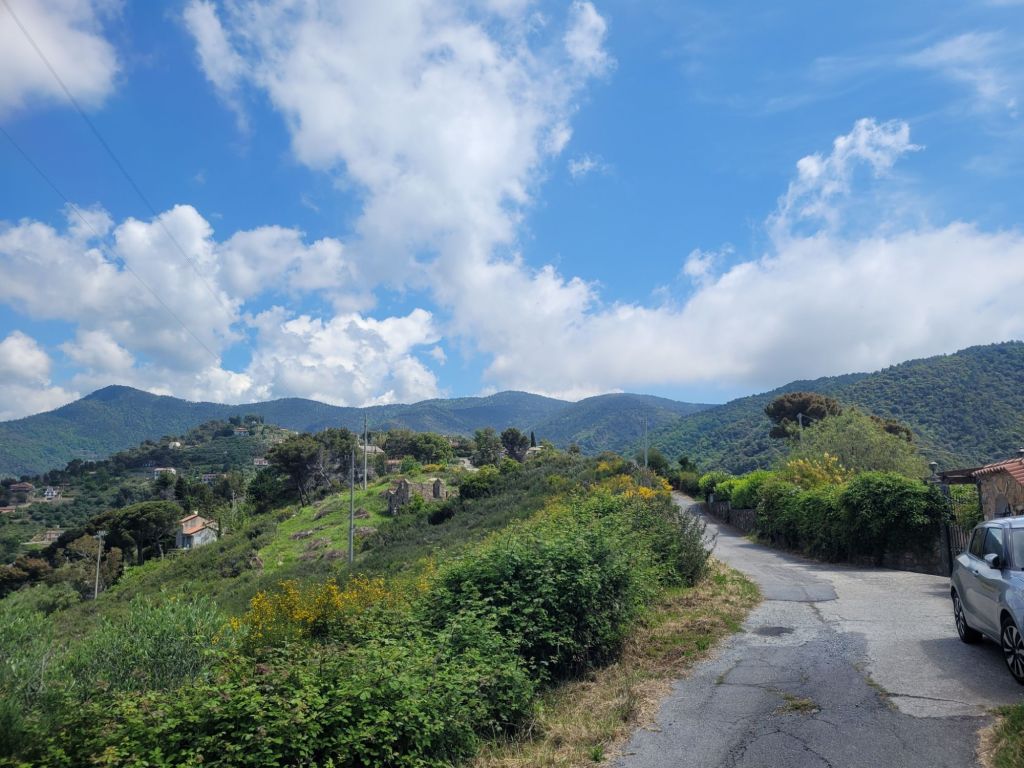
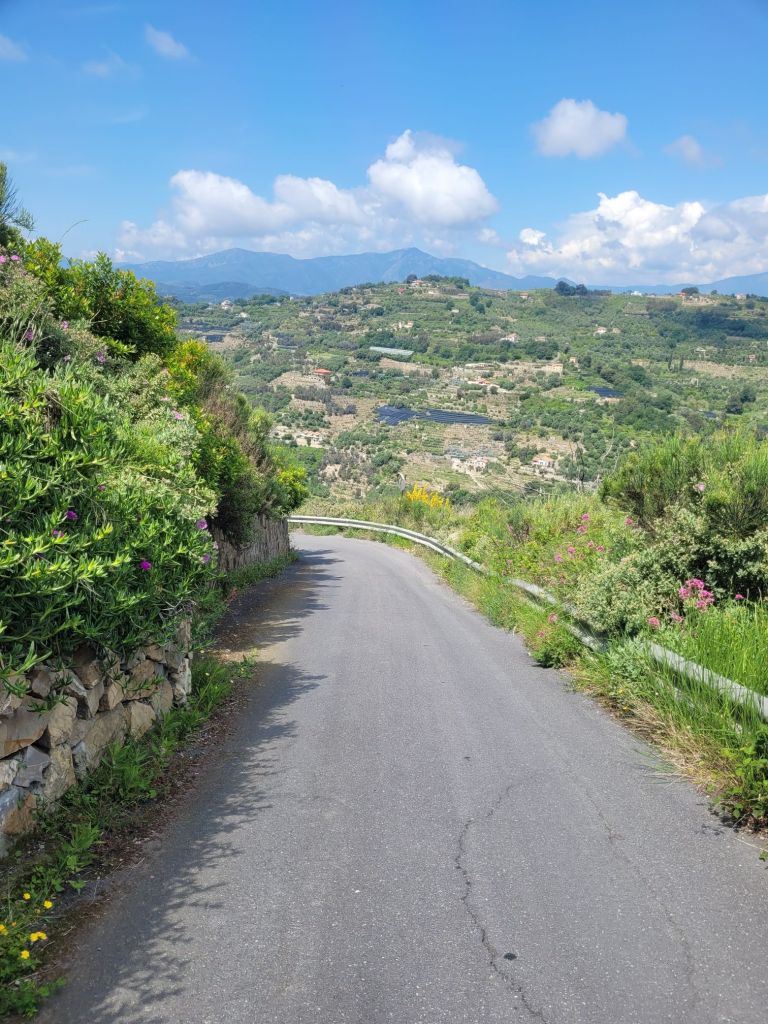


Madonna della Neve appears to be similar to Seborga- all tiny alleys- we should have explored but it involved going up into the centre of the village and as we were only a third of the way down, we felt our knees wouldn’t thank us for the diversion (however slight).
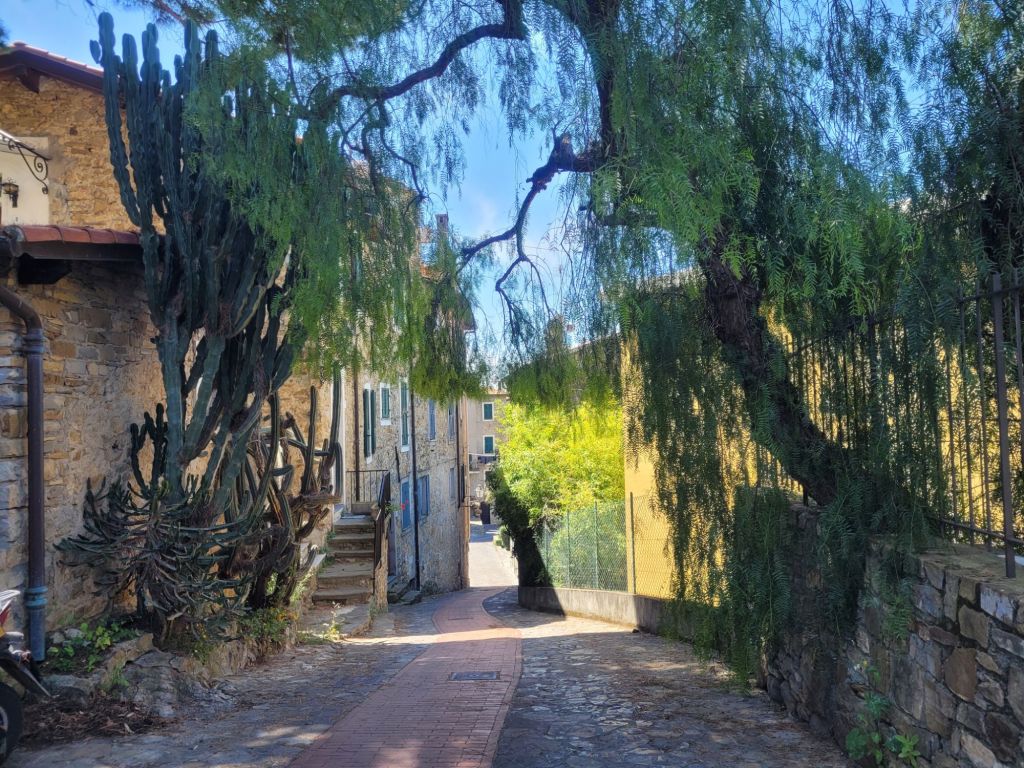
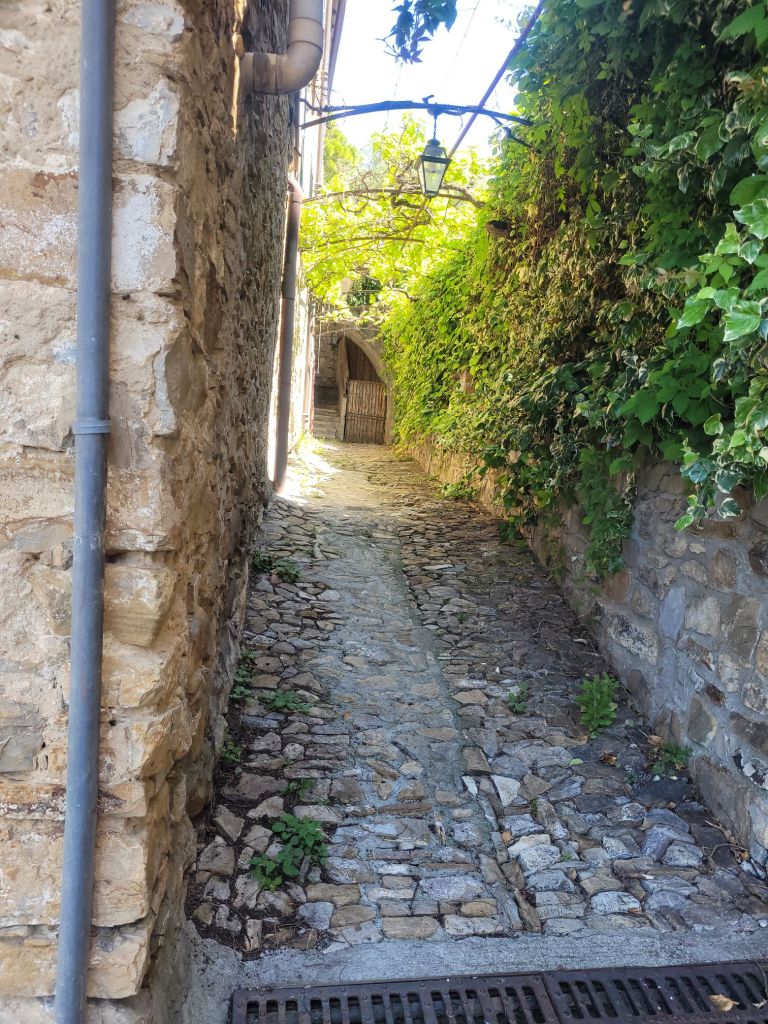

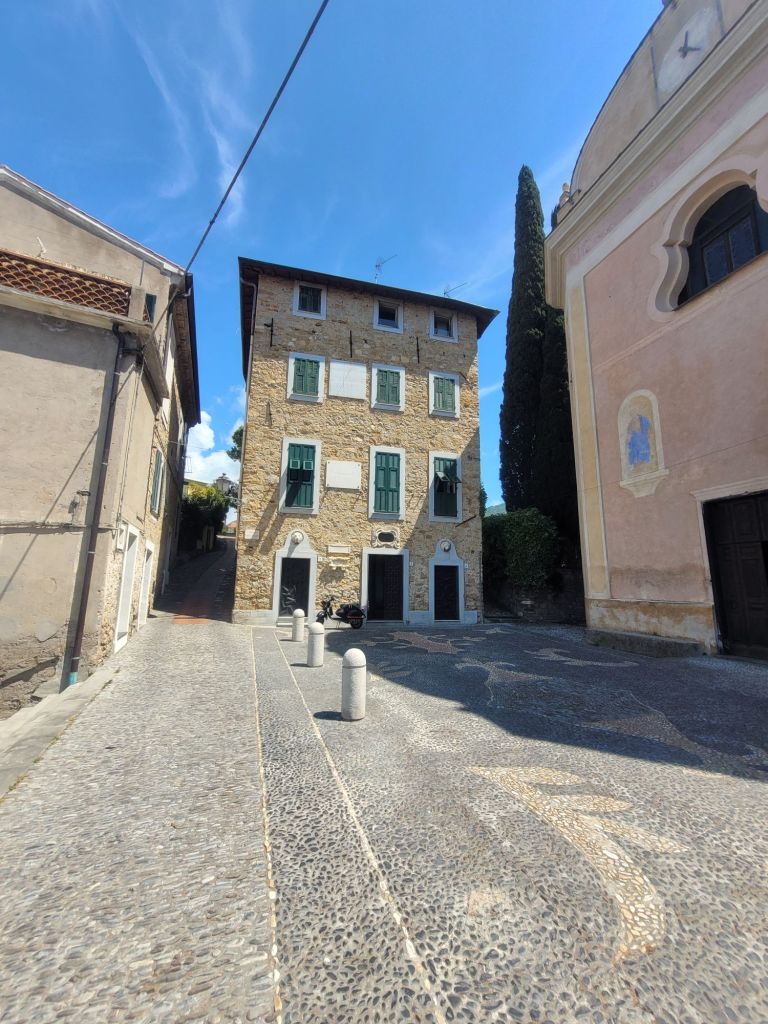
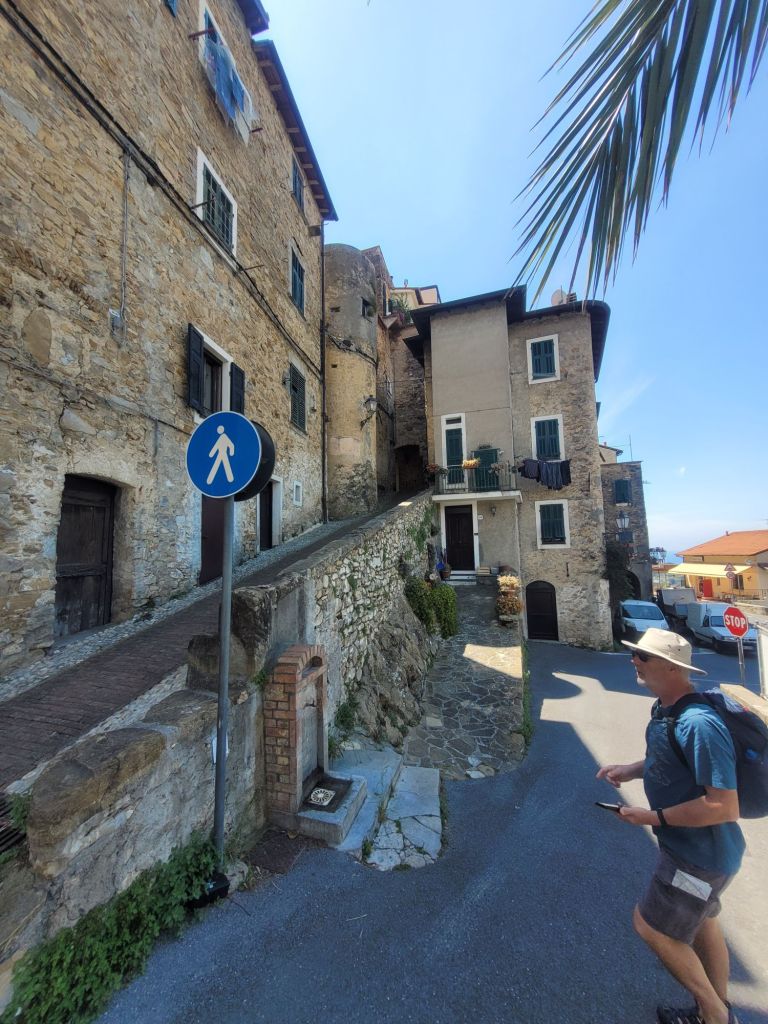
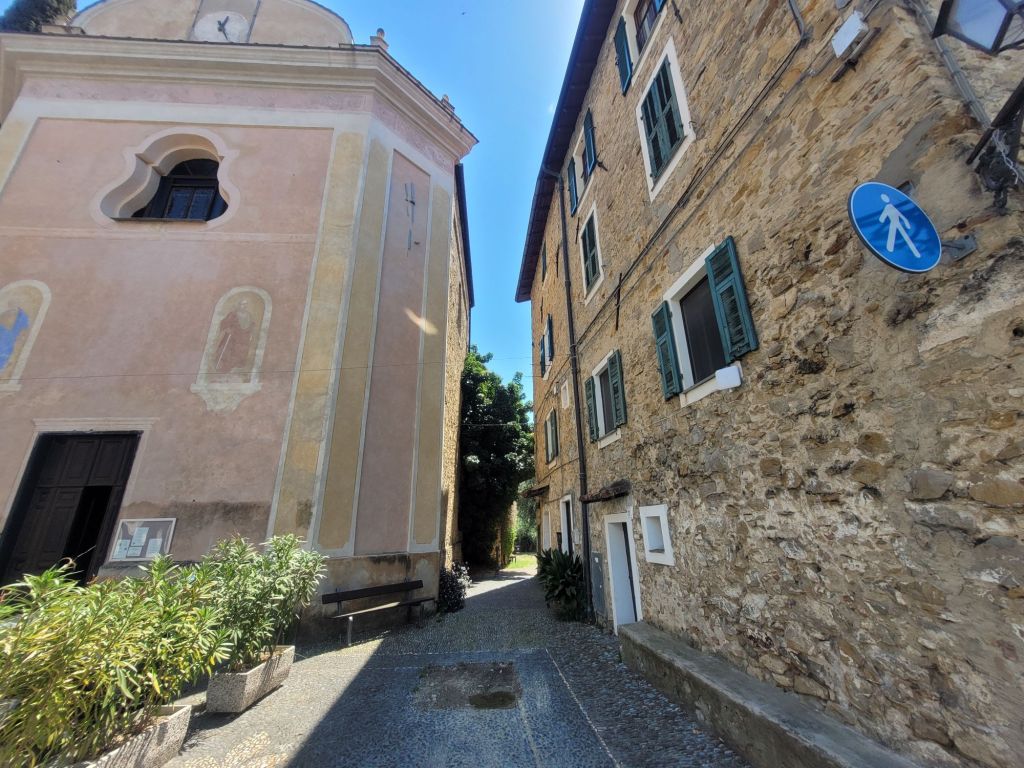
Sasso di Bordighera was the next stop – between half and two-thirds of the way down. We stopped for lunch – indifferent food but incredible views.

Over the motorway bridge. It may be unattractive, but at least it keeps through traffic off the coast road.
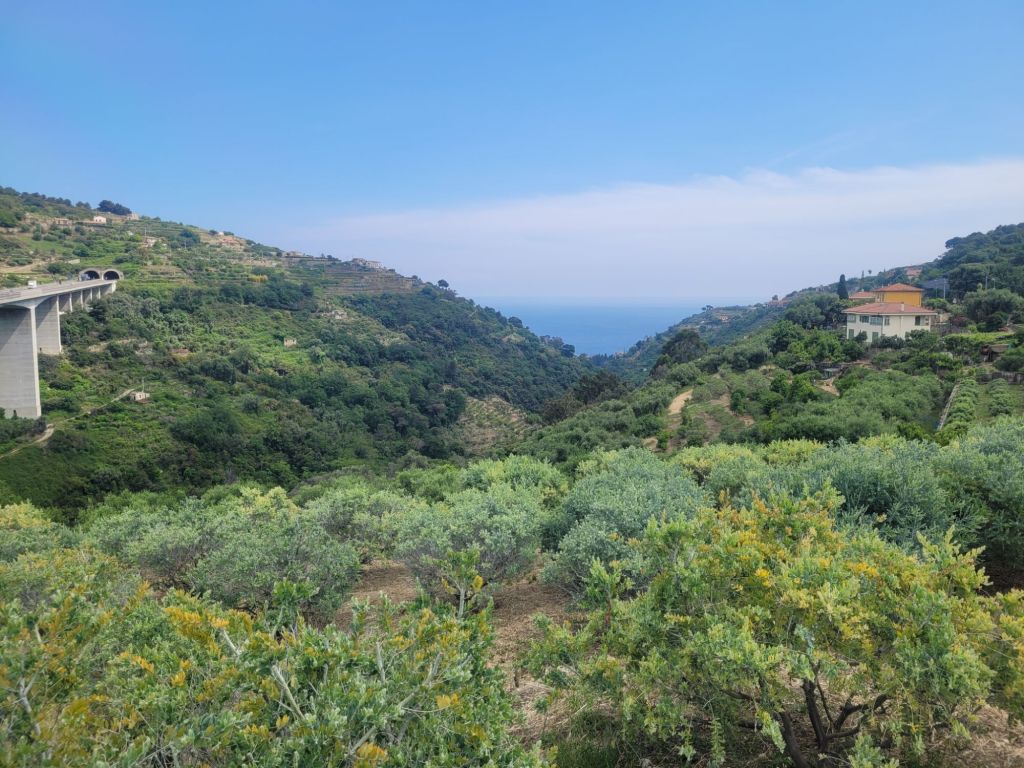
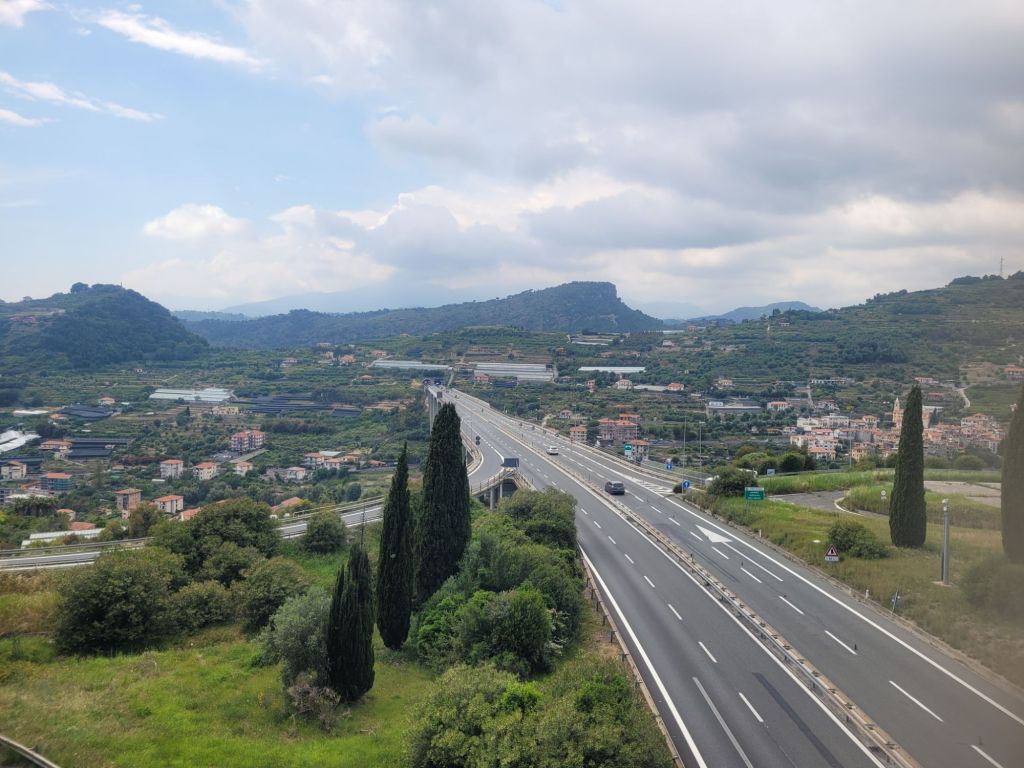
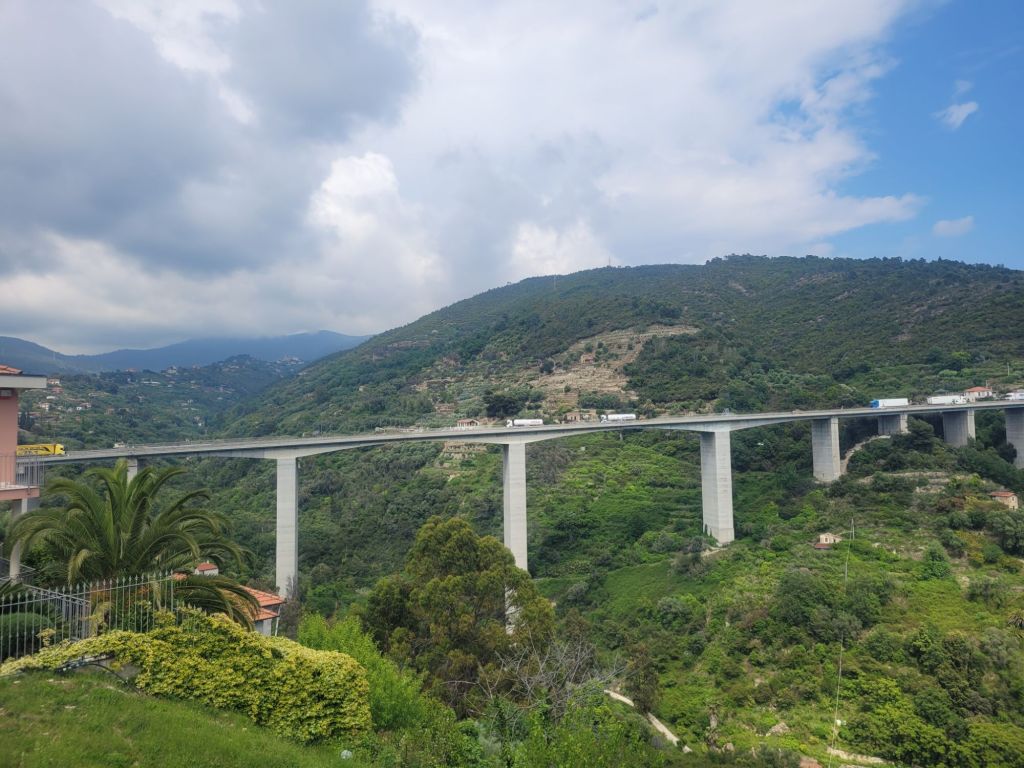
And down into Bordighera.
It was a great walk, with fabulous views, but more road than footpath. We may have missed the route, maybe there’s a wonderful, quiet footpath that we just didn’t see. Or it wasn’t signposted.
Bordighera has been a great stopping point. Our room had fantastic sea views and a great location. Villa Garnier, built by the architect, is run by the Sosters of St Joseph in Aosta (so yes, there are nuns there). The villa strives to maintain the 19th century decor (all painted ceilings and decorative walls), with extensive gardens (most of which aren’t open to the public) and some modern amenities. Garnier himself painted some of the frescoes, others were done by his artist friends.
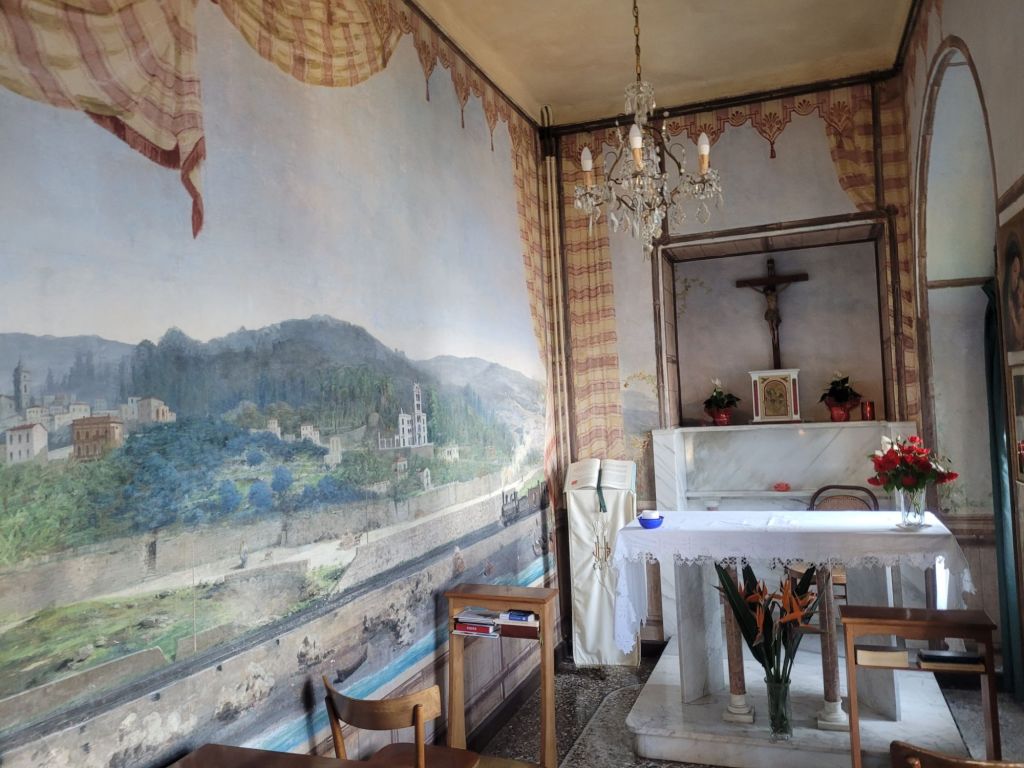

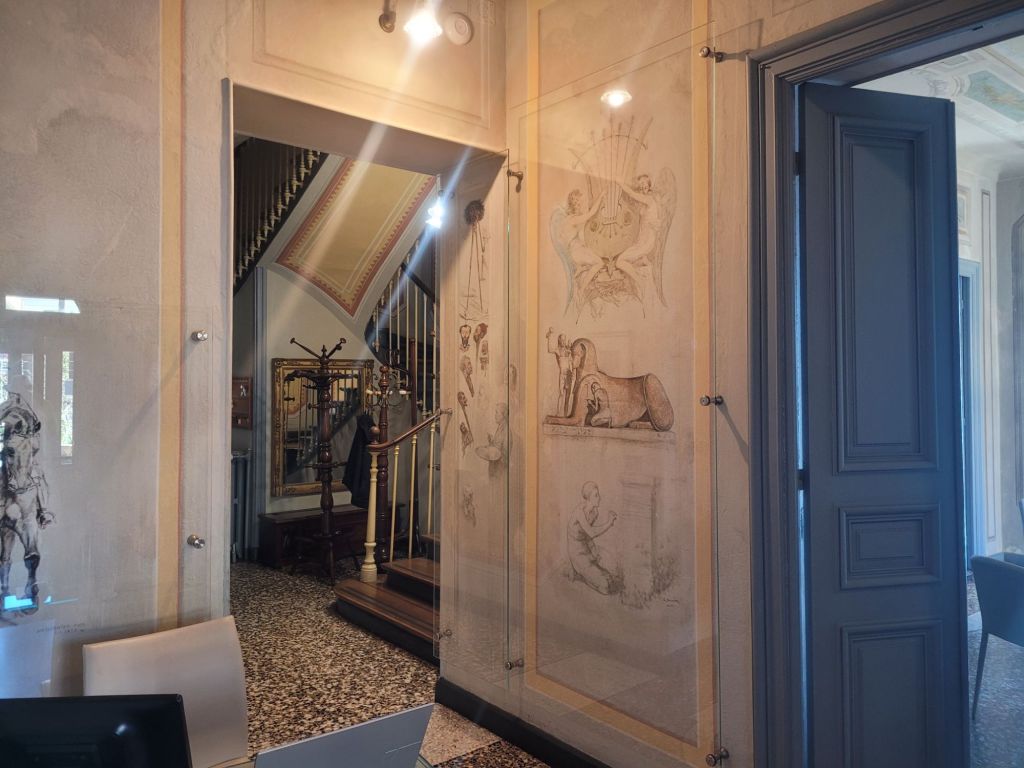
Everyone was incredibly nice, although no quarter is given to non-Italian speakers. Breakfast was indifferent, dinner was home cooked and pleasant. Meal times are regimented (8 to 9 for breakfast, a dinner bell is rung at 19:30). The hotel has an otherworldly feel to it due to its old fashioned decor, high ceilings and creaky wooden floors.
The views were amazing.
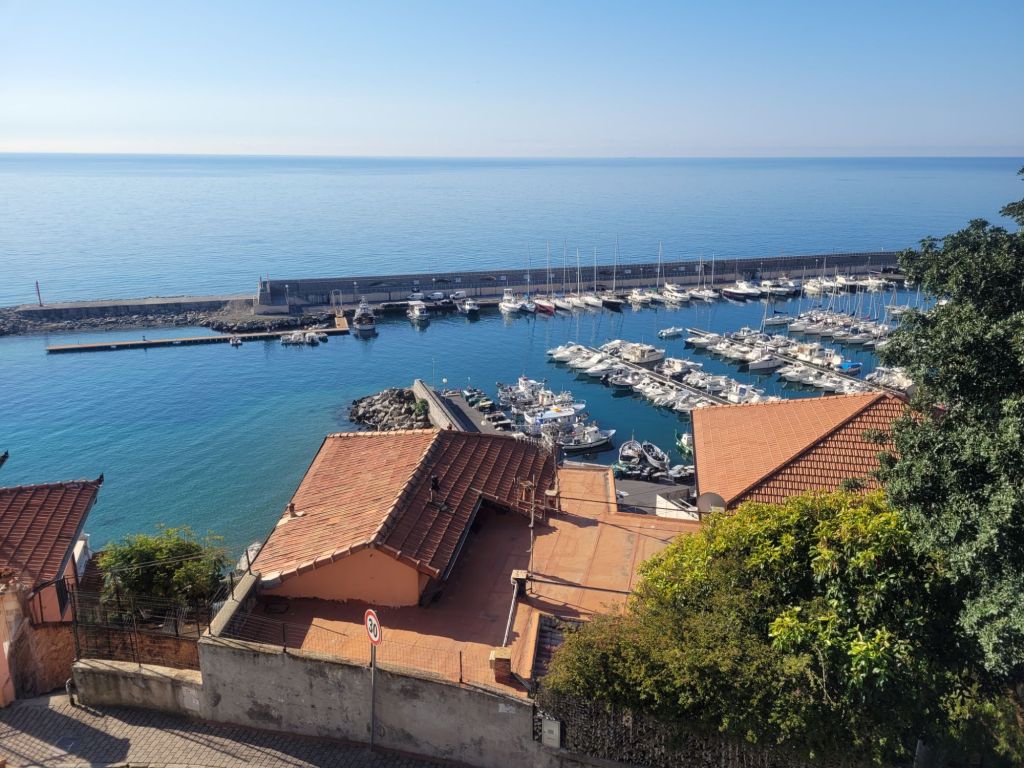


I am not sure that we would return to Bordighera, not without a specific reason. It’s been interesting and enjoyable, but we’re done.
On to Camogli.
 Retired? What now?