The train ride between Ventimiglia and Genoa was purported to be picturesque, and lovely, and interesting, and all those positive adjectives. Which was odd as much of the time after leaving Bordighera was spent either in tunnels (between just before San Remo almost until Imperia) or slightly inland from the coast or behind unattractive modern buildings in varying stages of decrepitude or industrial complexes.
Unimpressive for the most part, occasionally opening out onto a glittering blue expanse but more often not. Once within the outskirts of Genoa (even before getting to Sarona), industrial docks appeared with huge unloading gear. Genoa station was approached through a tangle of railway lines, motorways, waterways and docks. Seriously unimpressive.
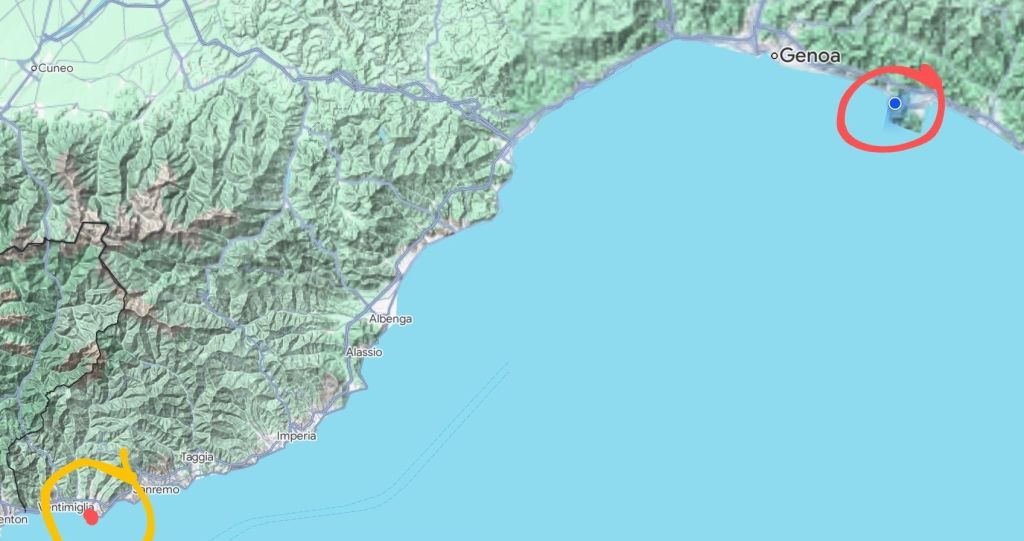
We changed train at Genoa and moved along to Camogli on a local train that stopped frequently, leaving behind an industrial, urban landscape and catching tantalizing glimpses of the sea.
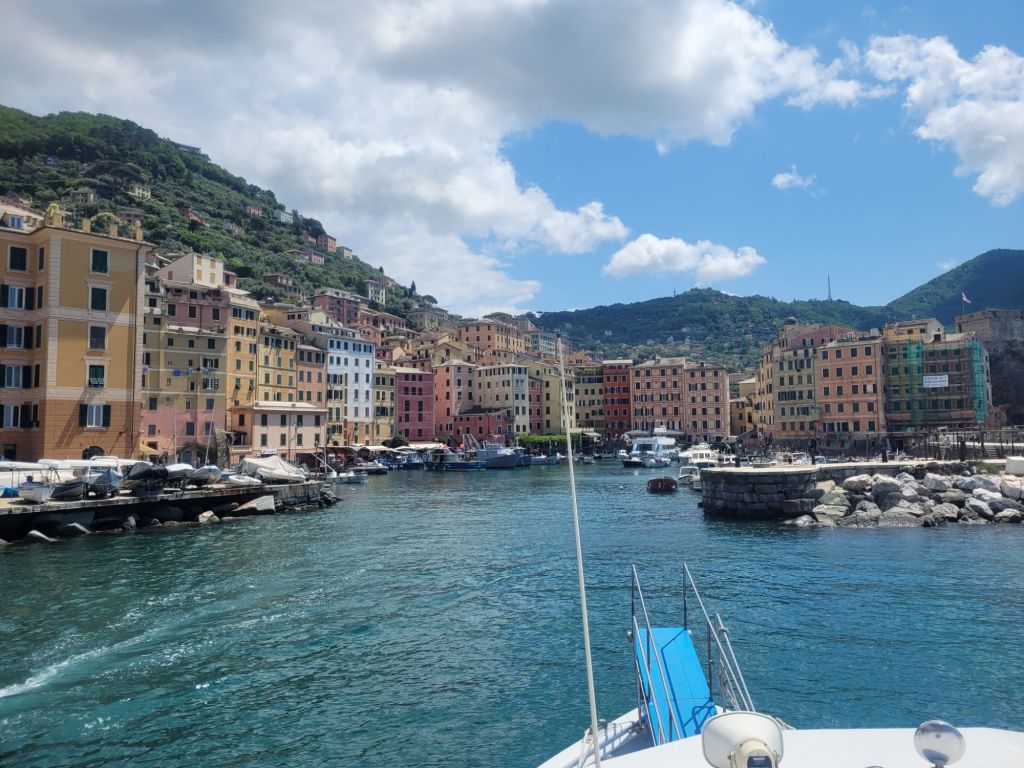
Camogli is pretty, with a generous helping of holiday makers – both Italian and other. We stayed slightly outside the town itself, in Villa Rosmarin, who had emailed instructions about how to take the bus: we ignored these and walked. With our luggage.
This was a mistake but we managed. Just.
As the map attests, this area is hilly, and you can’t get anywhere without encountering stairs or inclines of some form or another.
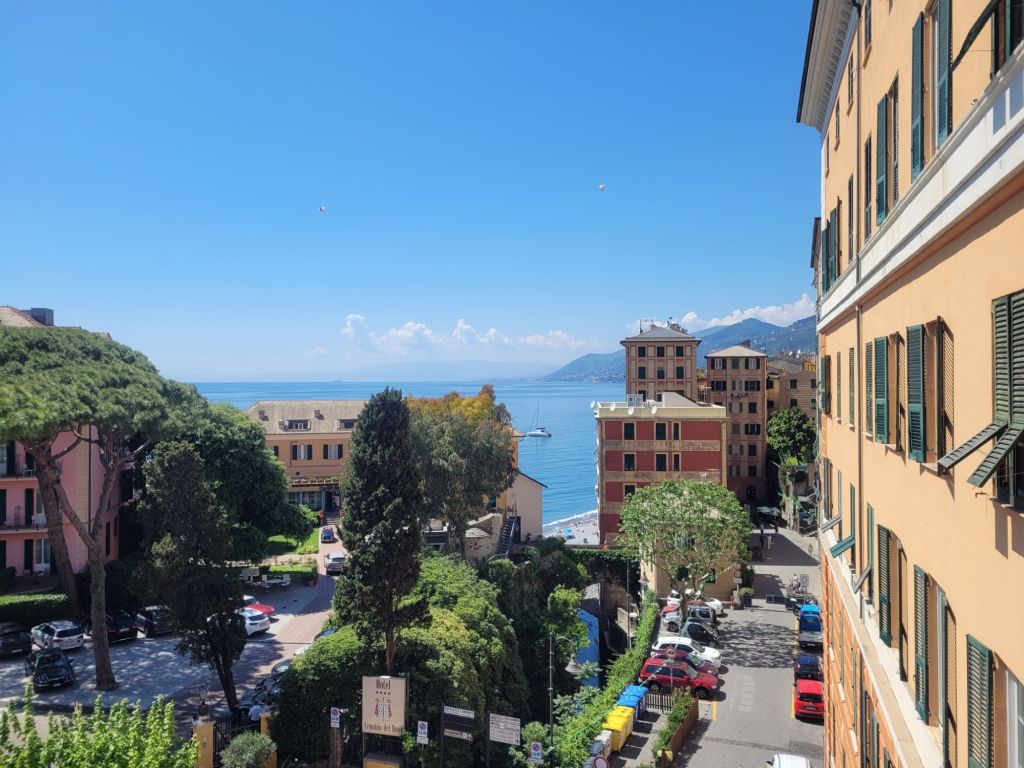
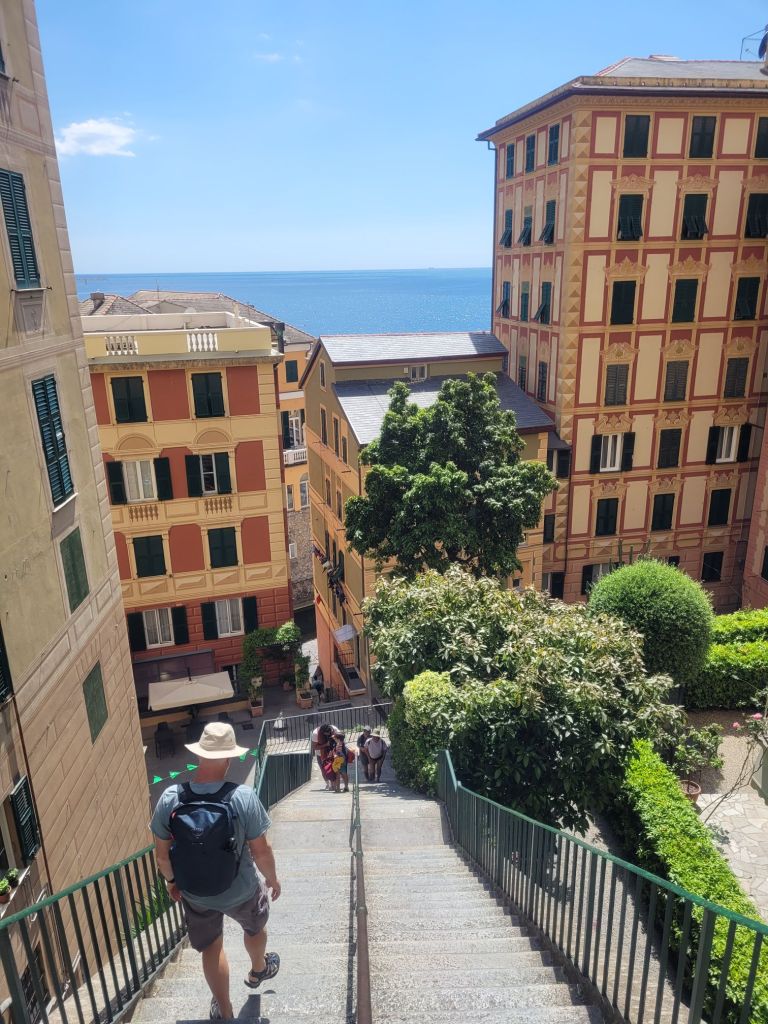
The town was colourful, with buildings painted up to look like three-dimensional stucco – a fashion that seems to have become popular in the 17th century (maybe to mimic those Renaissence buildings in Florence). According to various sources (including someone at the hotel), the different coloured houses around the harbour enabled fishermen to recognise their home ports. Given that there are so many of these little fishing villages along a rocky coast, this seems a reasonable explanation.
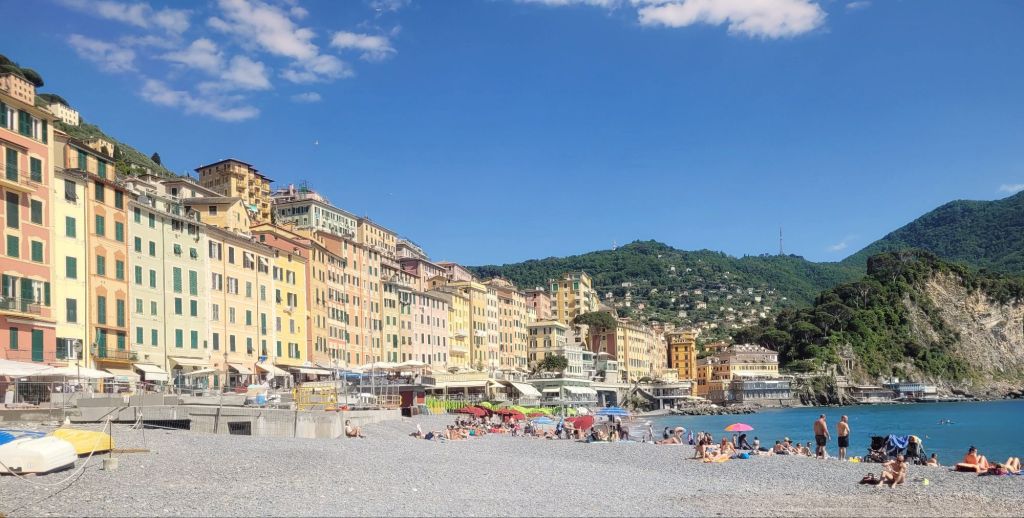

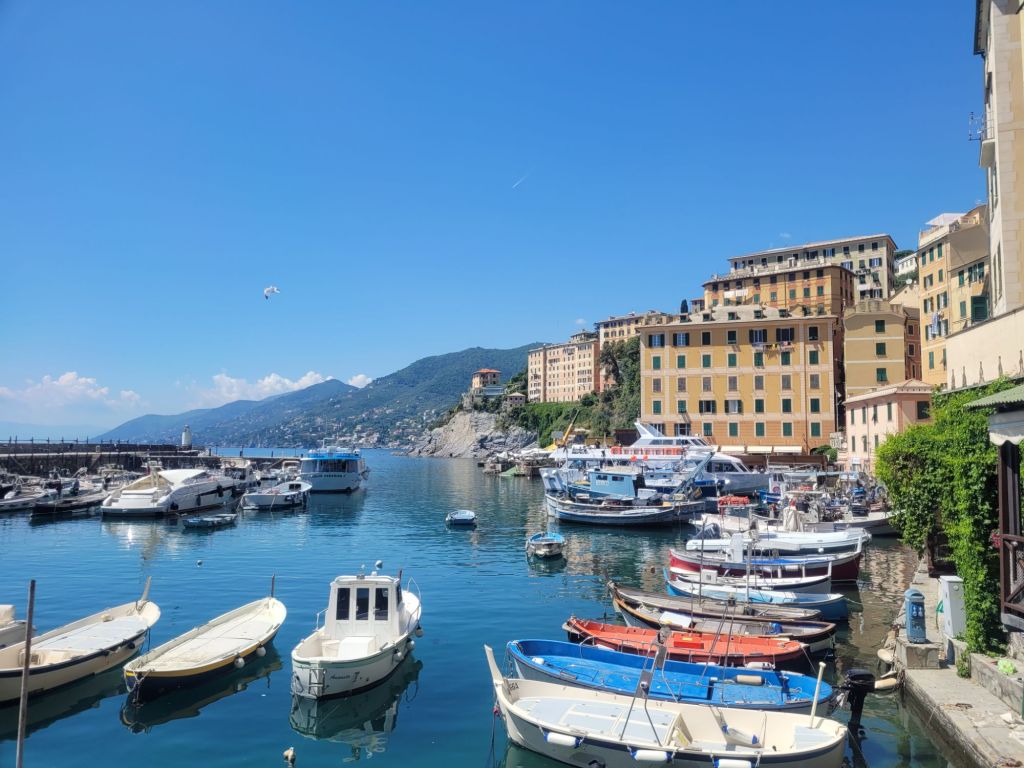
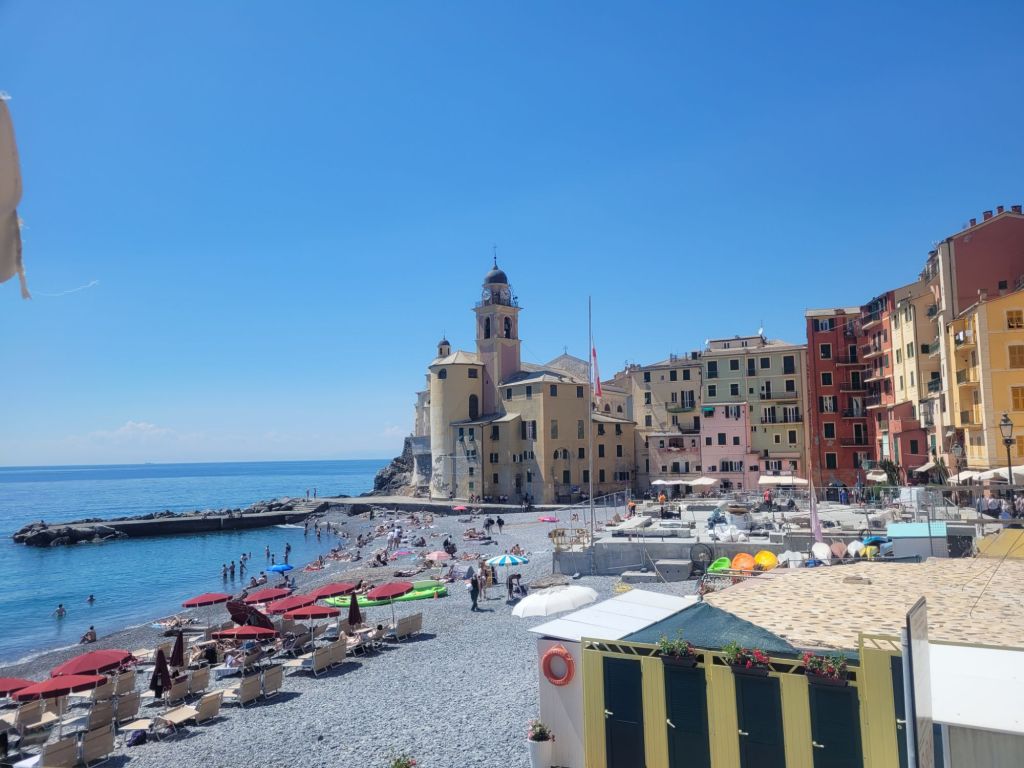
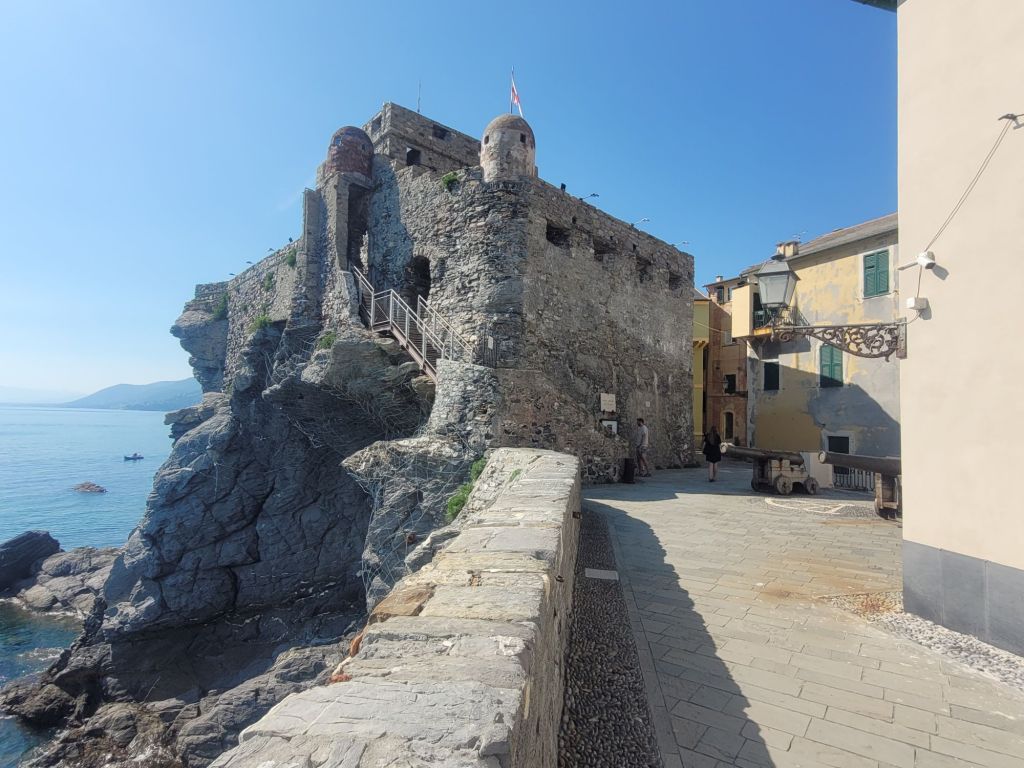
With the obligatory castle and blingy church (which was probably redecorated in the 19th century), numerous restaurants, bars and shops, and the nice little beach (more sand than pebble but still grey), Camogli provided a nice base from which to explore the Portofino peninsula.
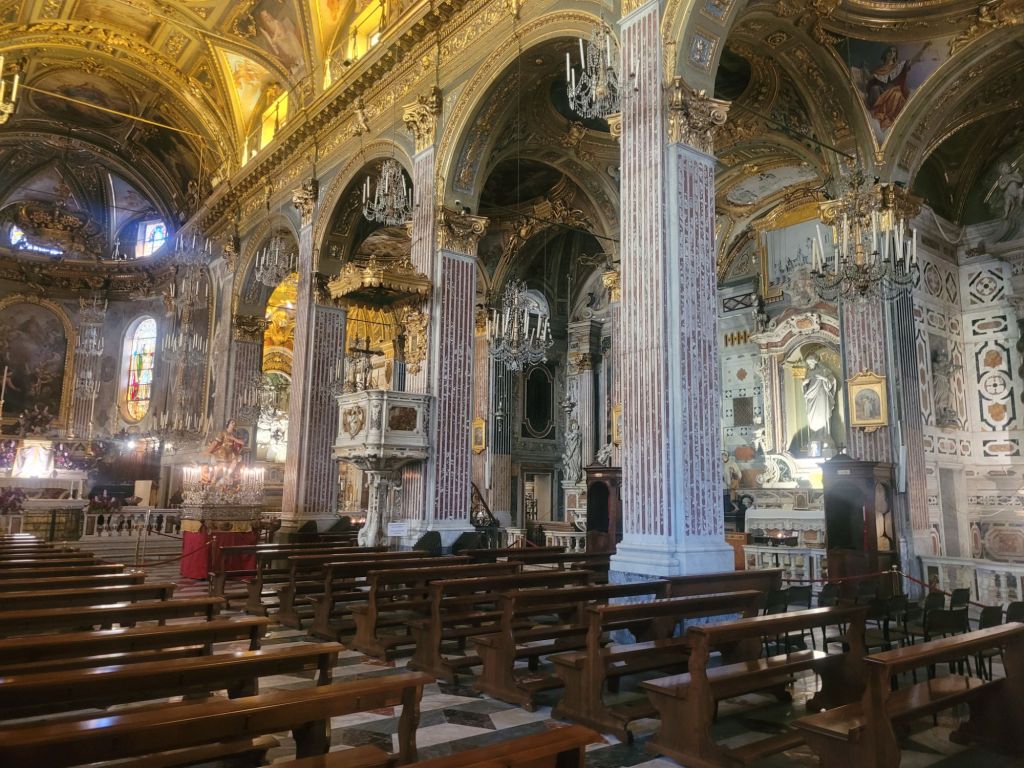
The Portofino peninsula is a national park – marine and land – and has both interesting walks (of varying degrees of challenge) and some lovely places to visit. In our two full days in this area, we visited Portofino and walked through a small section of the national park to Punta Chiappa (well, almost).
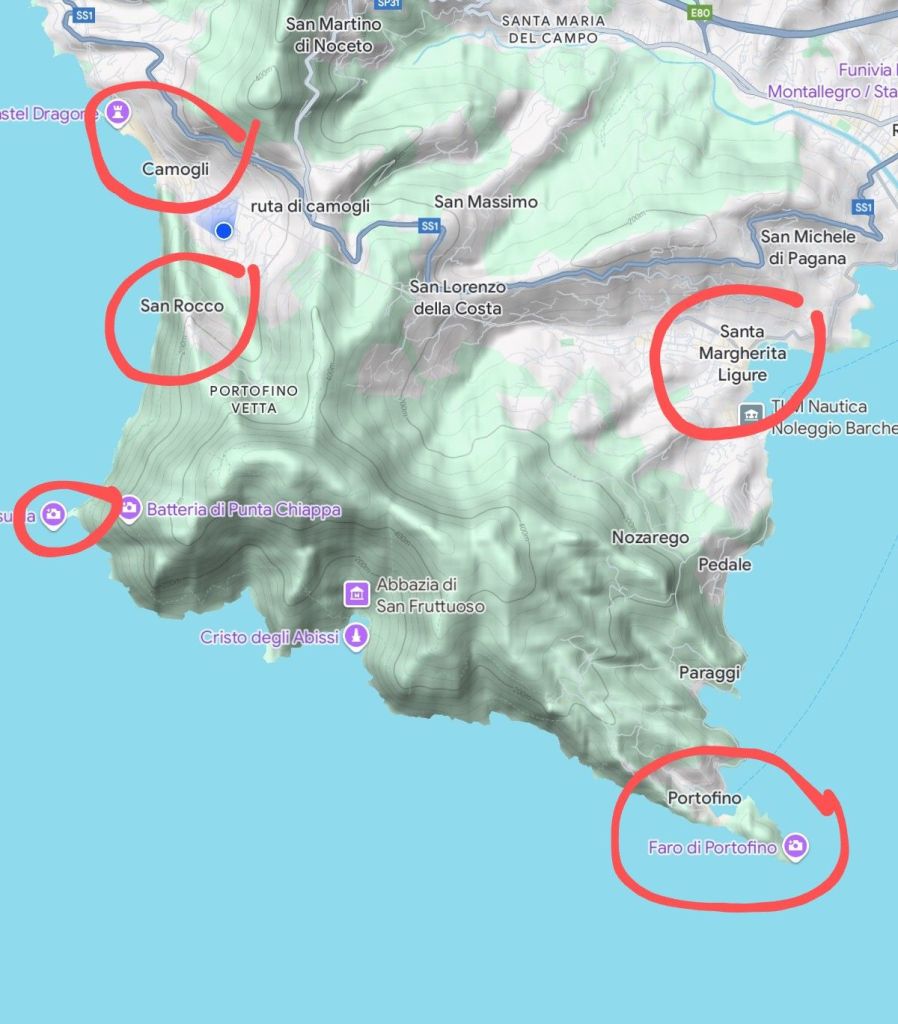
Our first full day, we chose to take the train to Santa Margherita Ligure (a 5 minute ride from Camogli), rather than the ferry, then walked to Portofino. Our guidebook contained warnings about Portofino – its expensiveness for starters – so we were braced to avoid any purchases while there.
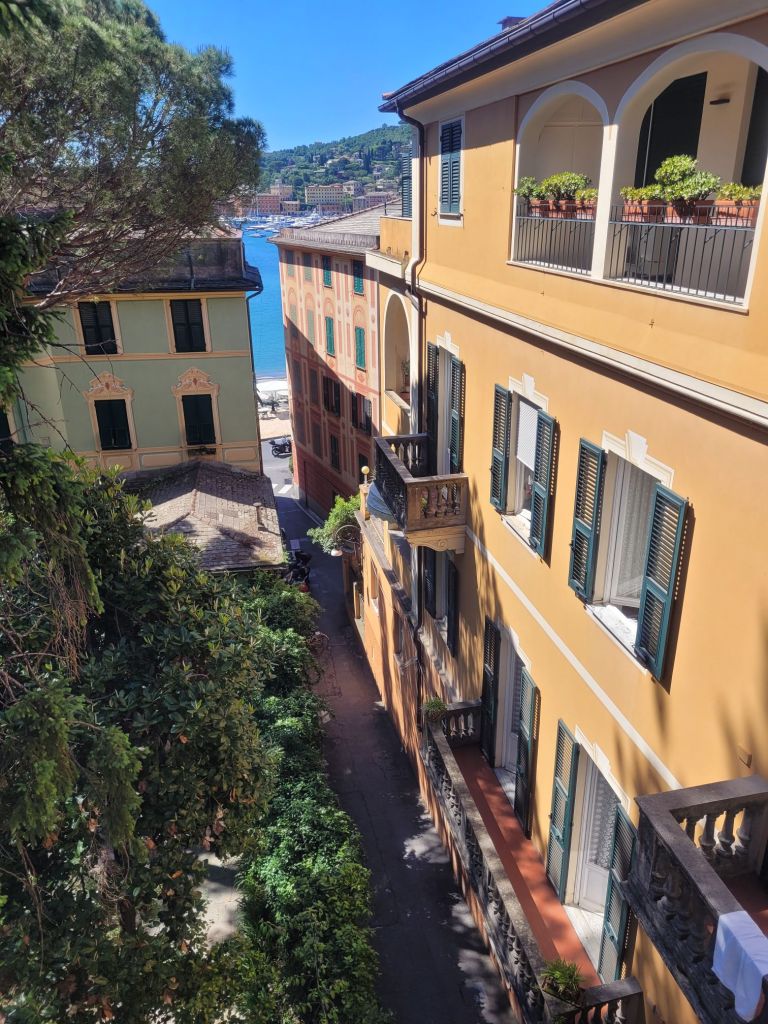
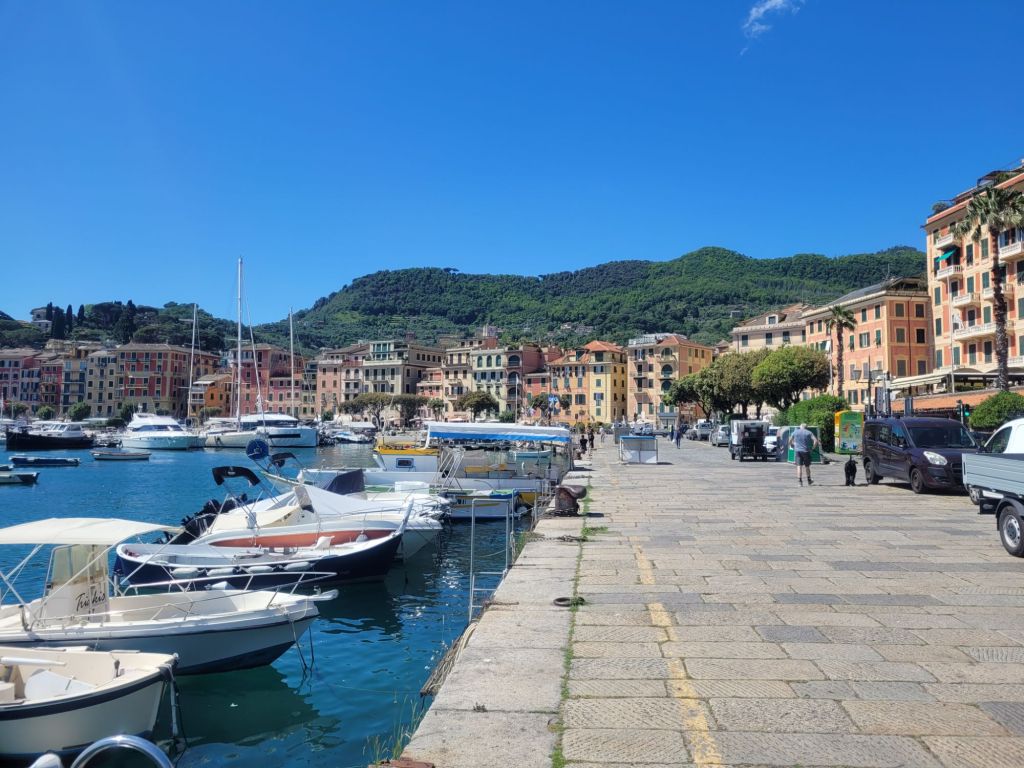
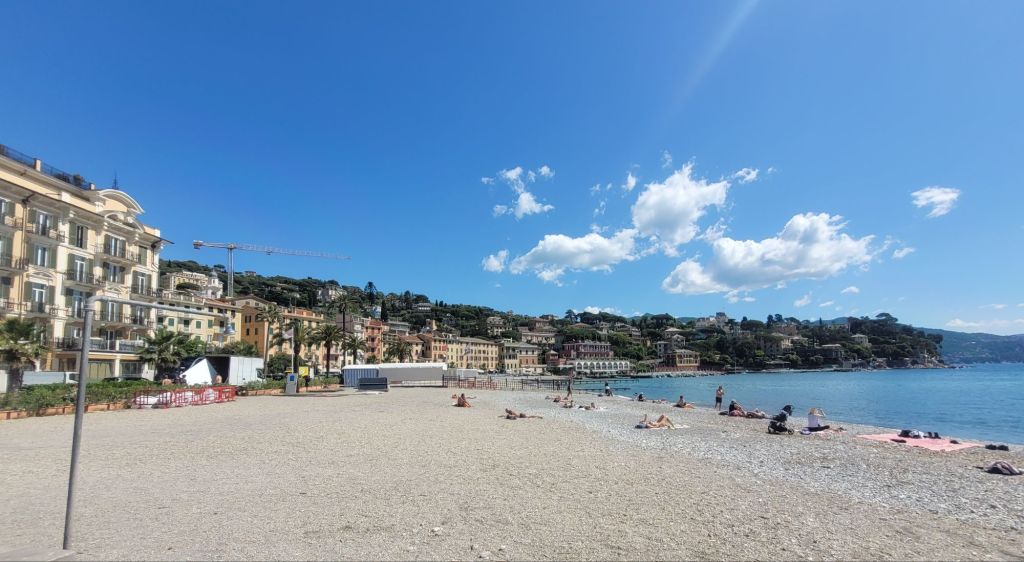
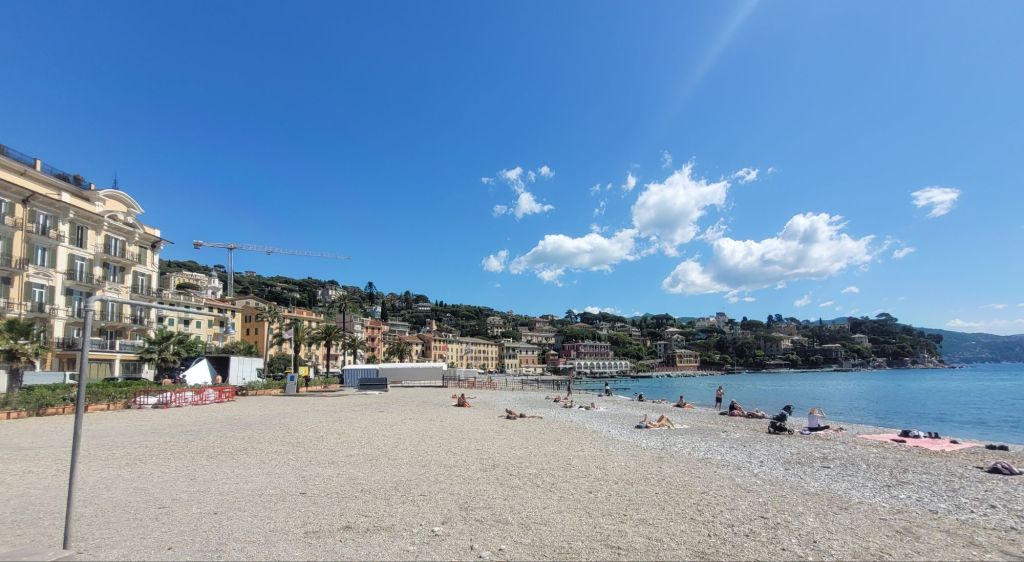
Santa Margherita Ligure, despite being on a fairly large flat bit (compared to Camogli, anyway) still had its hills. It’s attractive, much larger than Camogli and with a much larger beach, but definitely more touristy.
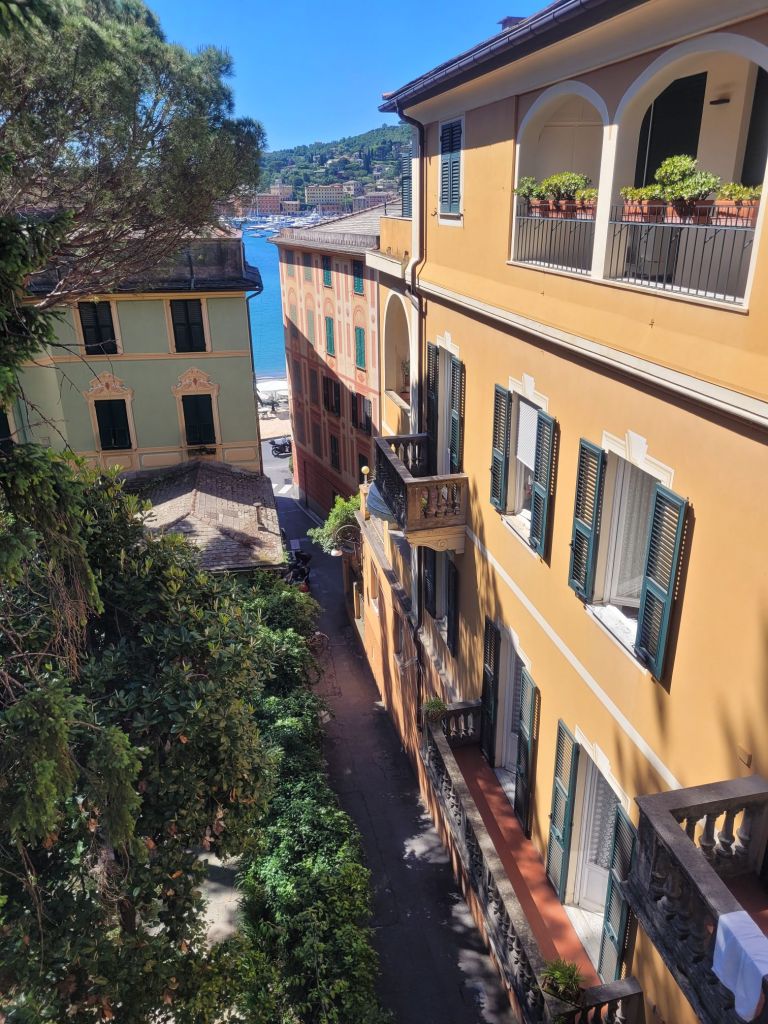
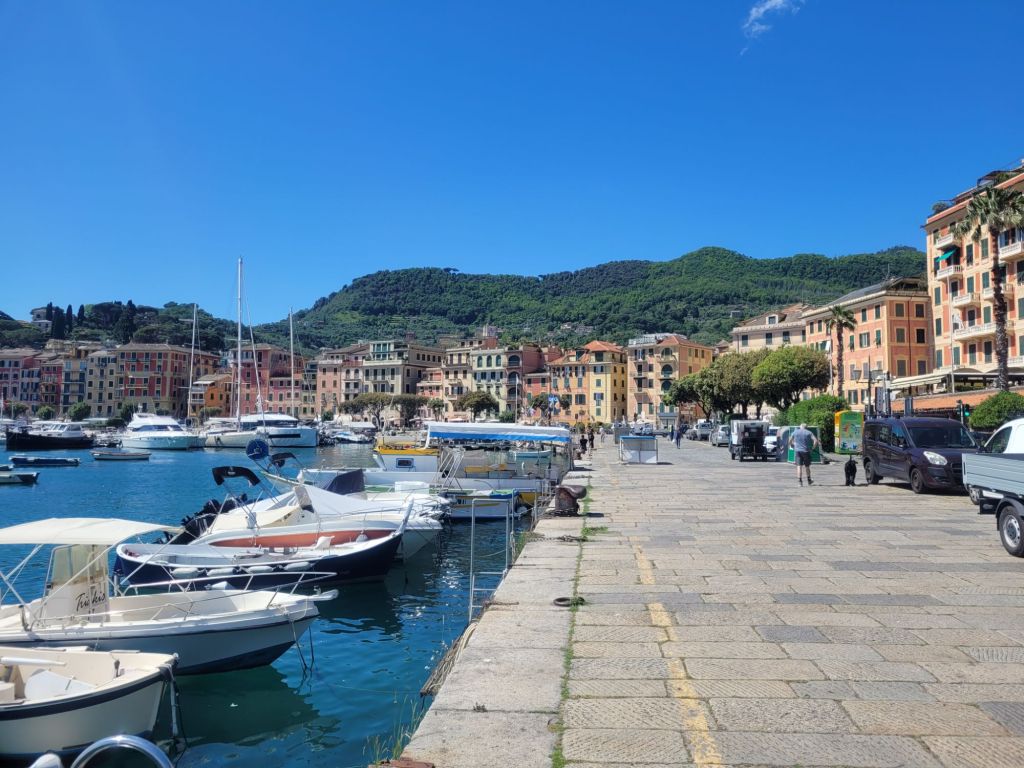
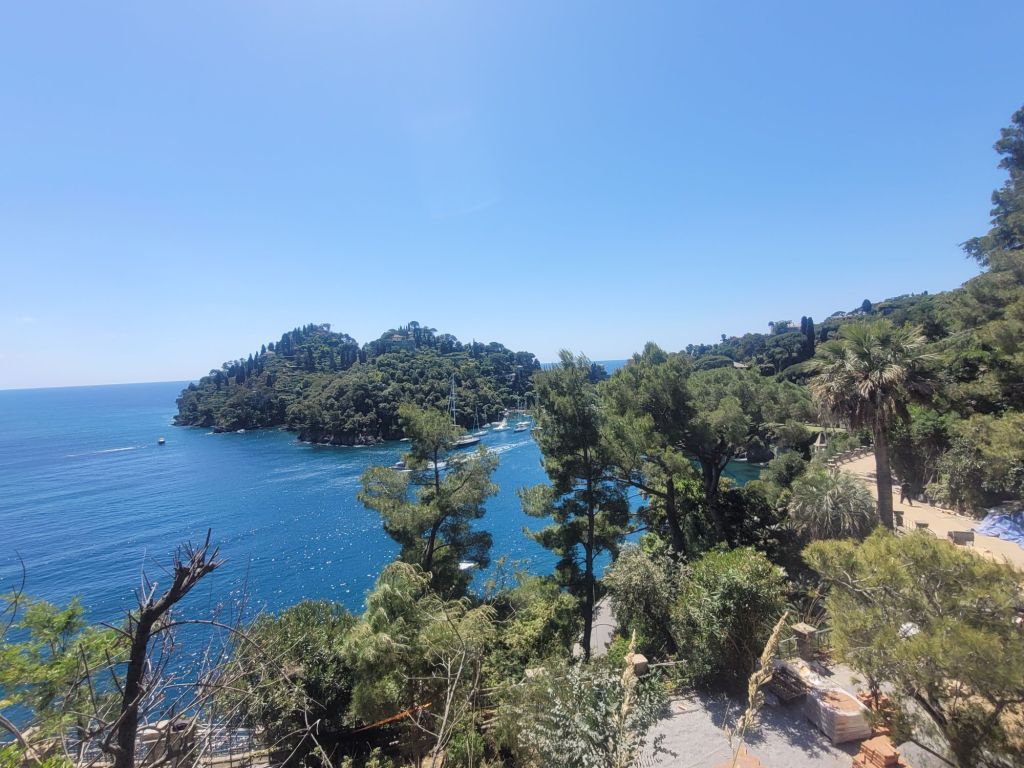
The walk from the train station to Portofino took just over an hour; it’s along the coast, which allowed us to admire both the sea views and the fancy houses.
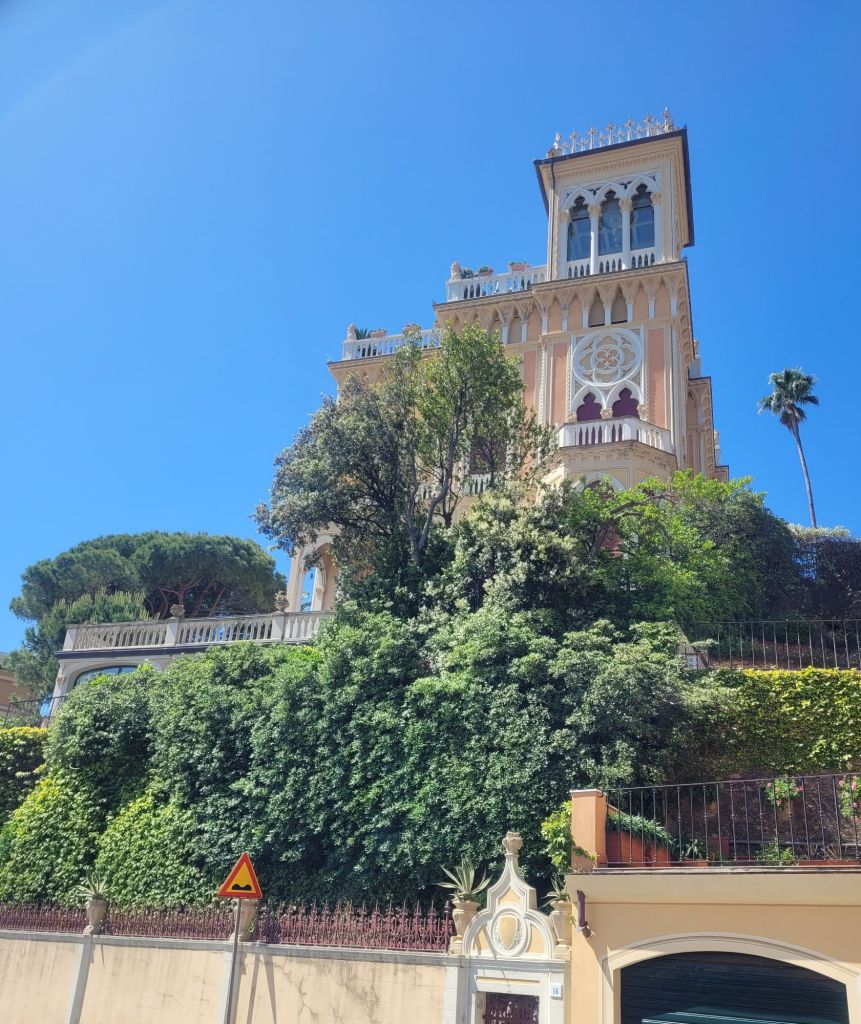
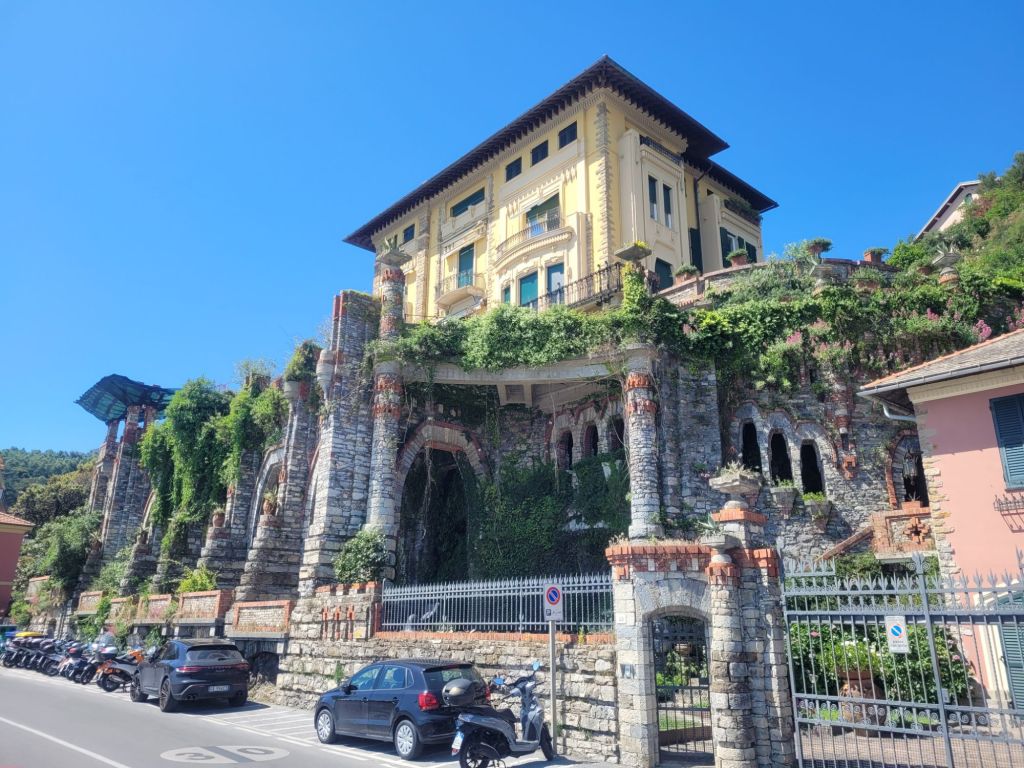

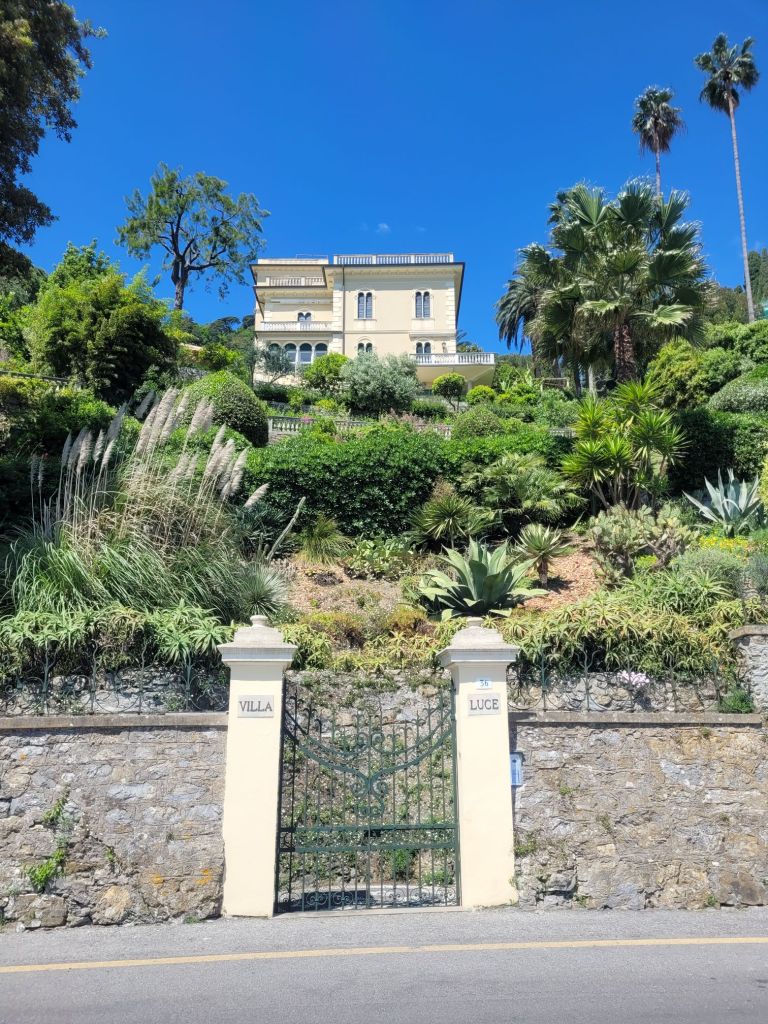
The coast is rocky. It may be a tired description, but the mountains really did plunge into the sea, with the road (and the footpath) clinging to the edge. The cantilevered walkway was, at times, a trifle concerning as some of the planks were either broken or loose (or both), leading to a sense of buttock-clenching uncertainty. It was nice that they considered the local flora when building it.
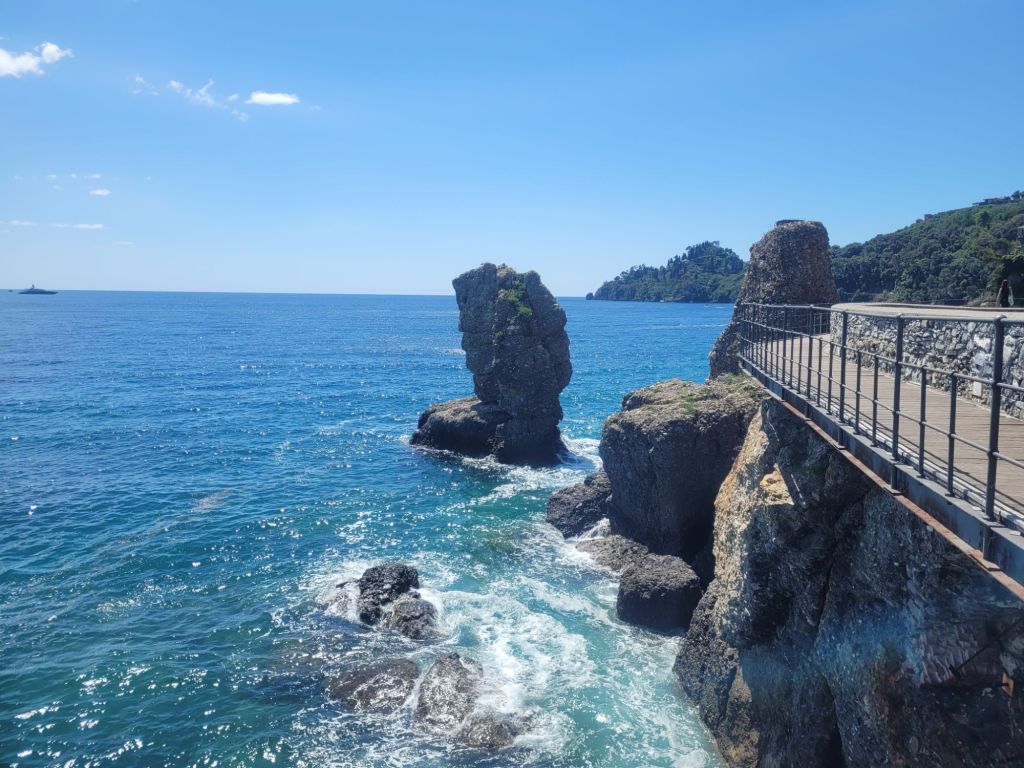
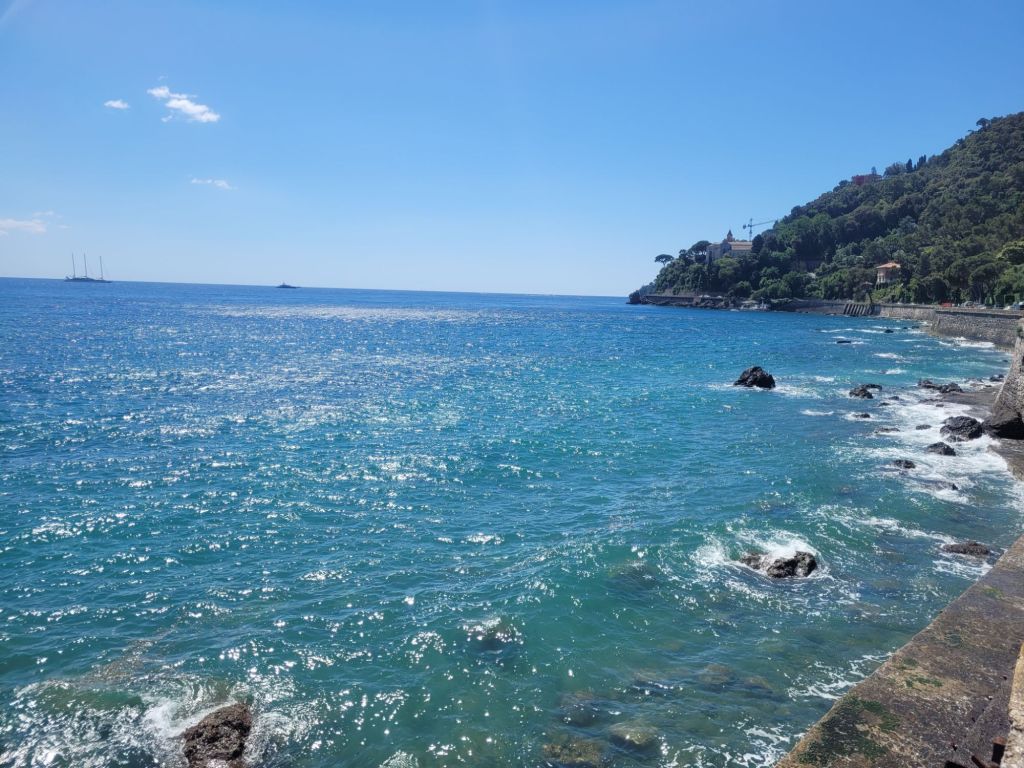
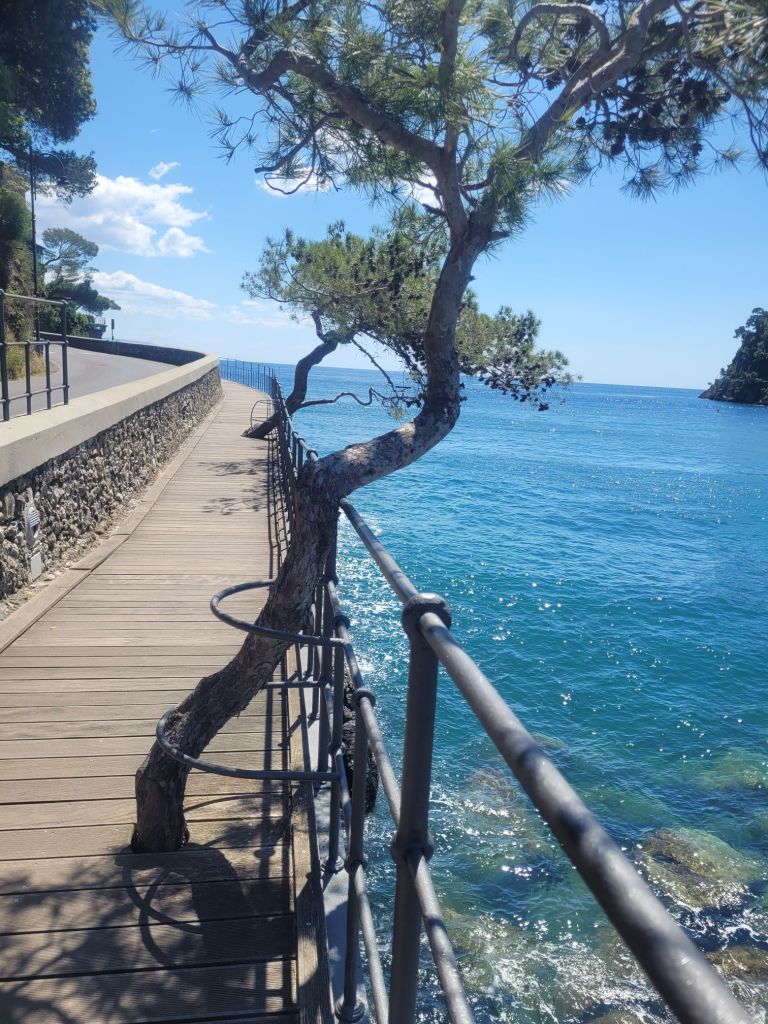
The closer to Portofino, the more extravagant things became. In the lovely bay of Paraggi – pretty but hardly generously sized and with a road running right along three sides – the daily hire for a sunbed was over 200 euros a day. I double-checked on Google – that’s the low season price! There was a Dior shop behind the beach which might explain the clientel…
From Paraggi, the path along the coast disappeared and pedestrians were re-routed to a footpath through the forest just above the road: much calmer and with some glorious views of impressive properties across the bay.
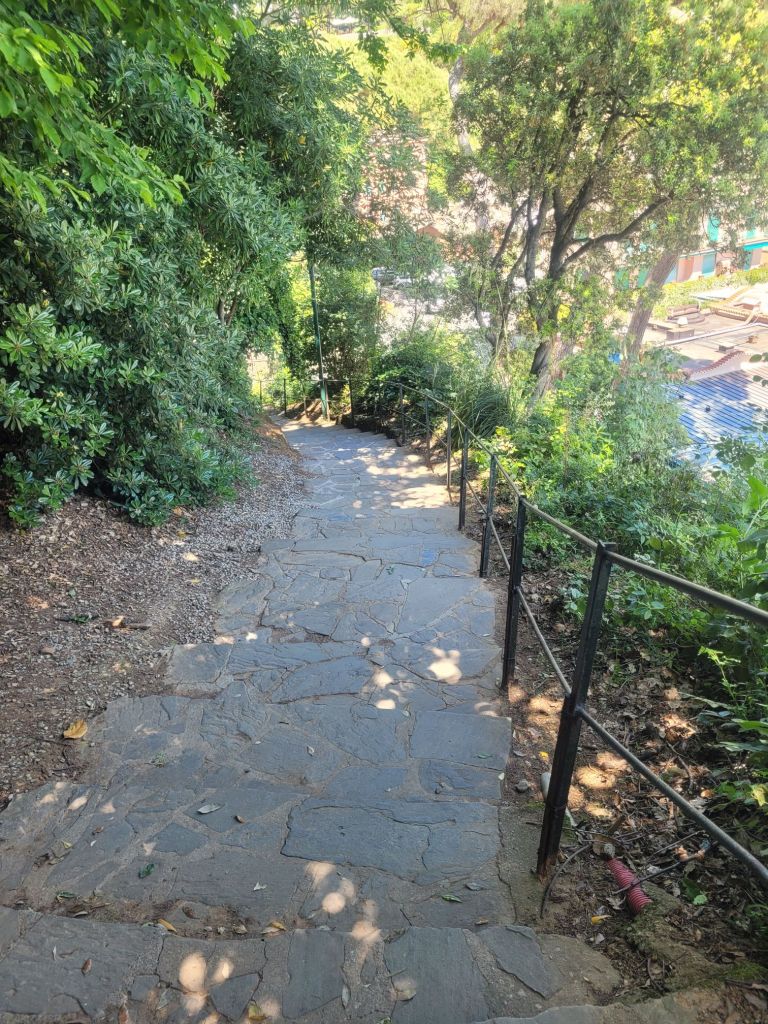

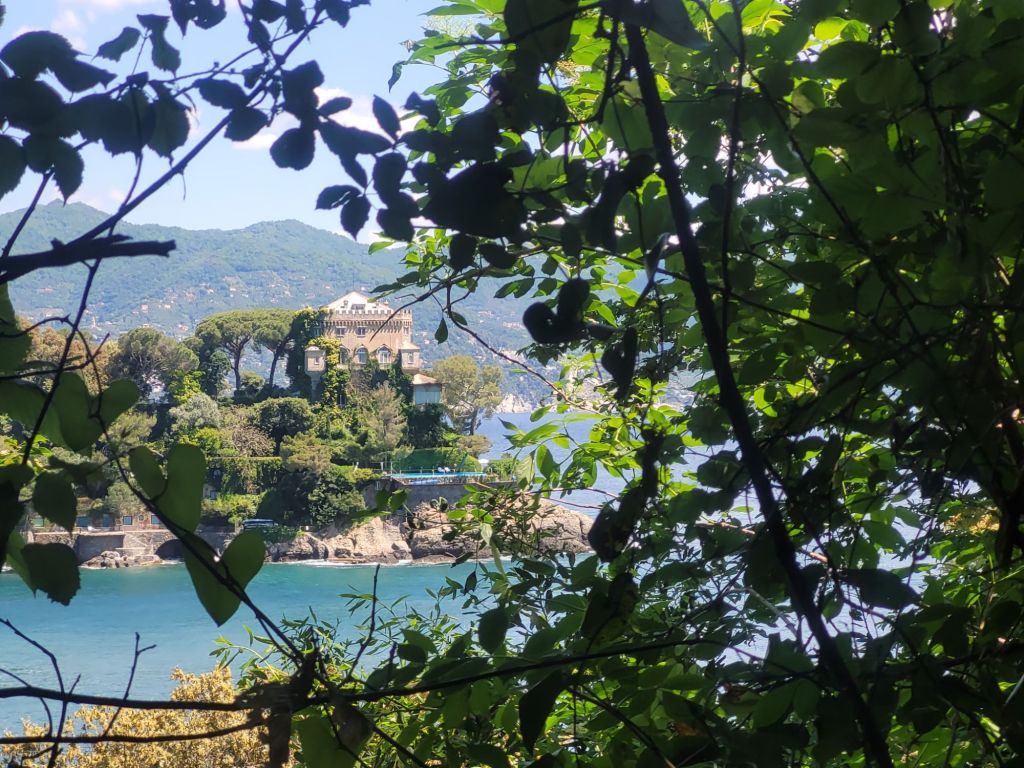
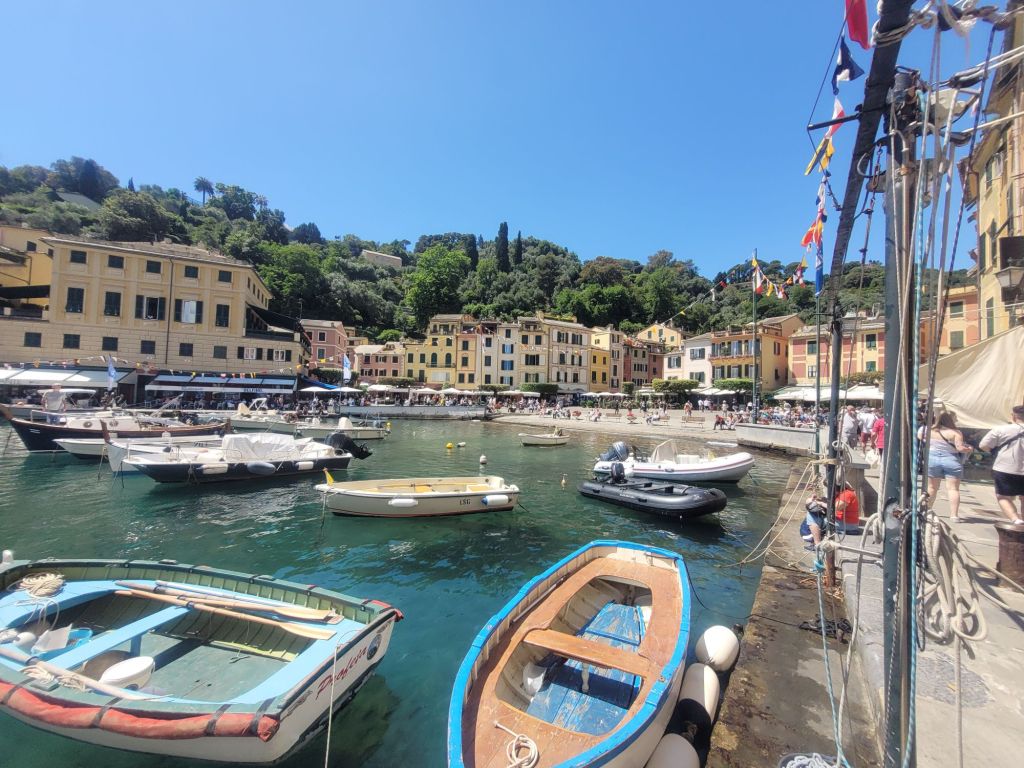
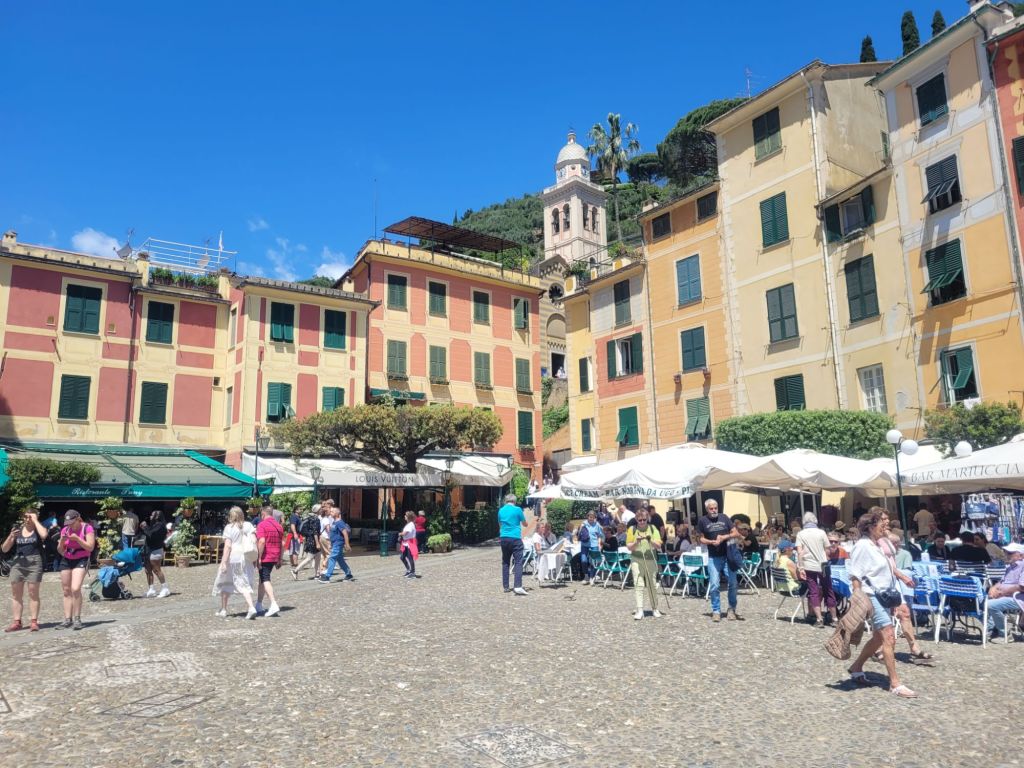
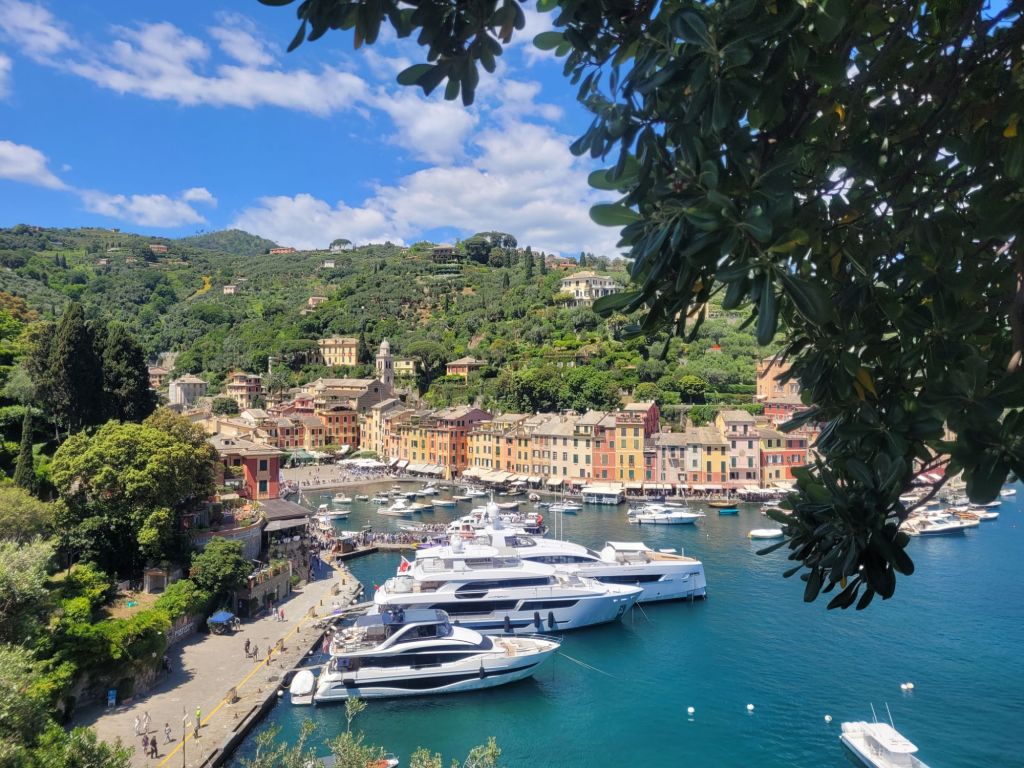
Just round a corner, Portofino appeared. Painted houses, picturesque setting, pretty harbour and hordes of visitors. Literally hordes.
One of my favourite films is called ‘Enchanted April’, adapted from the novel ‘The Enchanted April’ by Elizabeth von Arnim, written in 1922.
(And yes, the definite article does make a difference!)
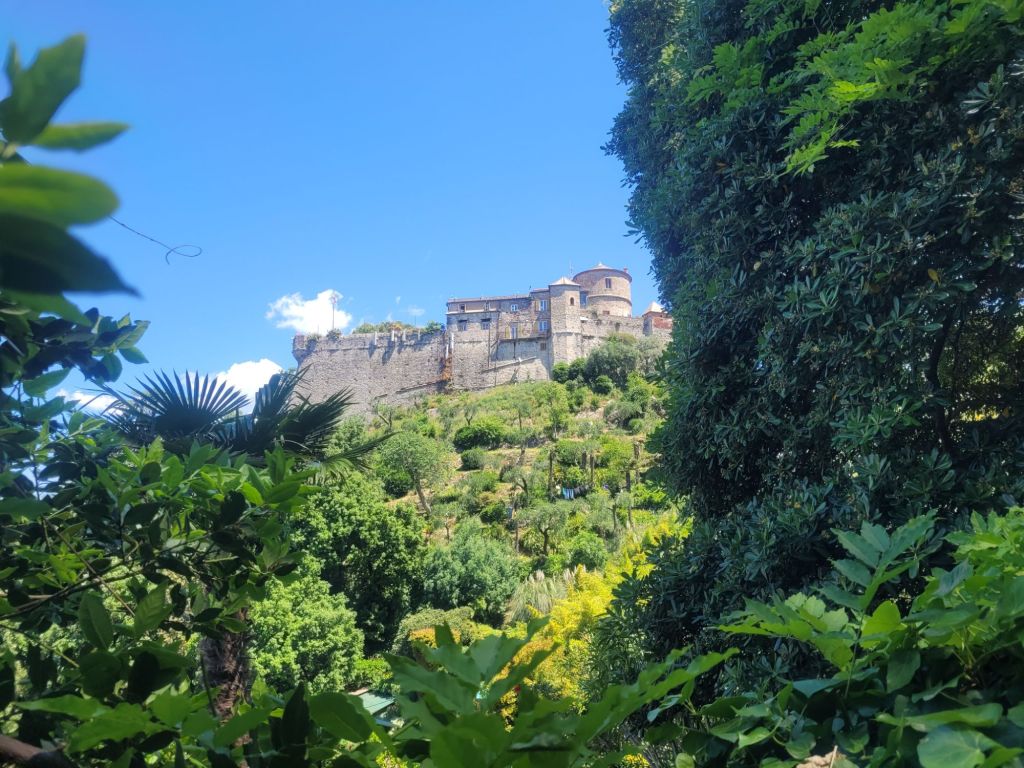
Inspired by a trip to Portofino, where she stayed at Castello Brown, the novel was a runaway hit: it is said to have initiated a tourist boom for the area. And it’s easy to see why: the area is wildly Romantic. Up the hill, beyond the harbour are Castello Brown, the church of St Georio (said to house the remains of Saint George, brought by the Templars, who appear to get everywhere), numerous large houses and a walk to the lighthouse. The stairs up are strenuous (there was an easier way which we missed). Again, there are spectacular houses, with some heavy-duty surveillance at some points (I counted 11 cameras in one short section).
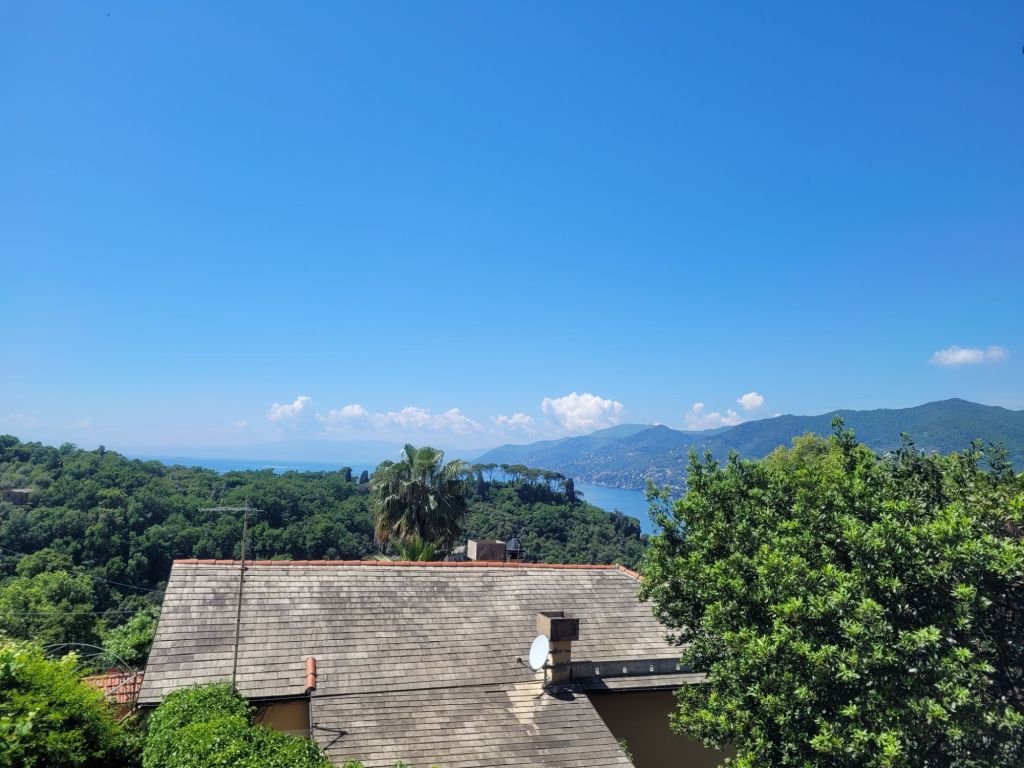
The views were incredible.
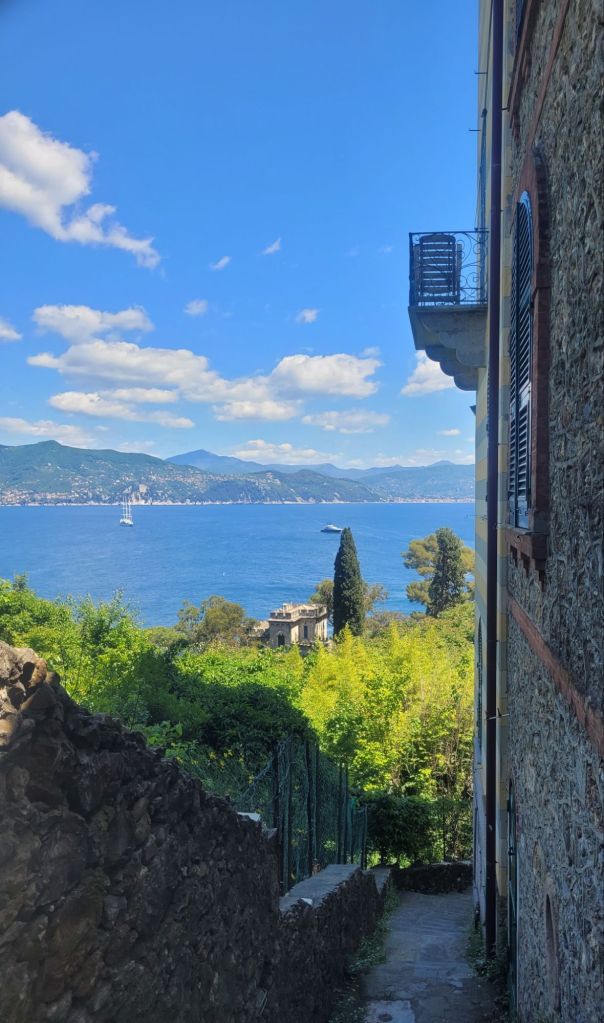
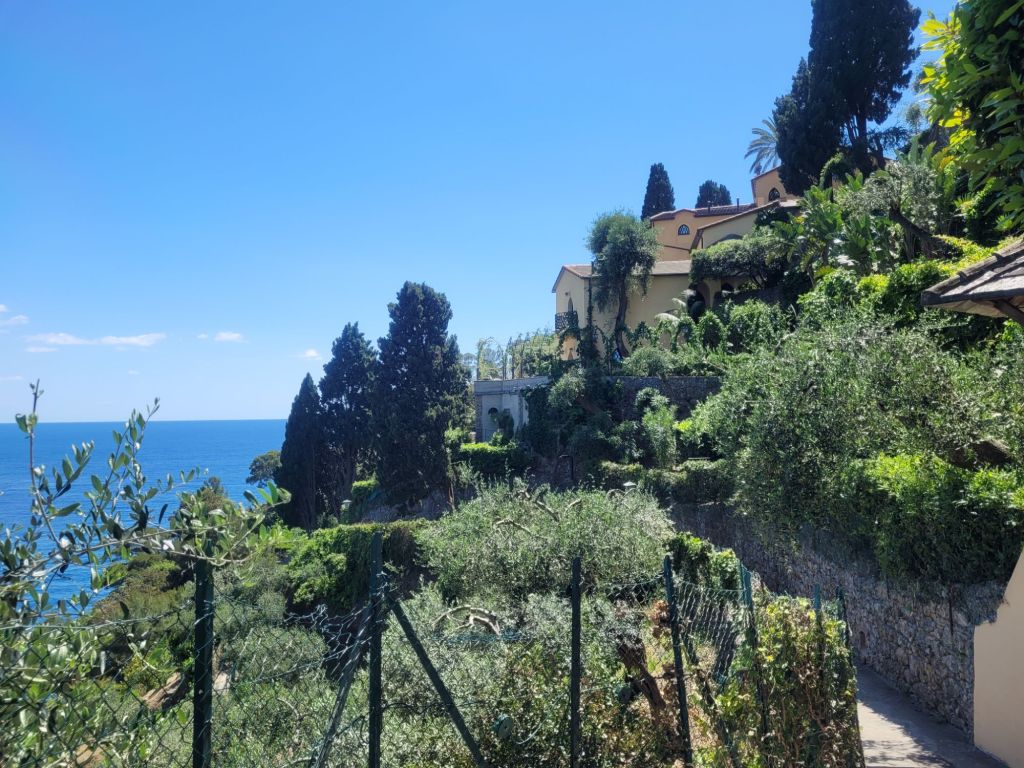
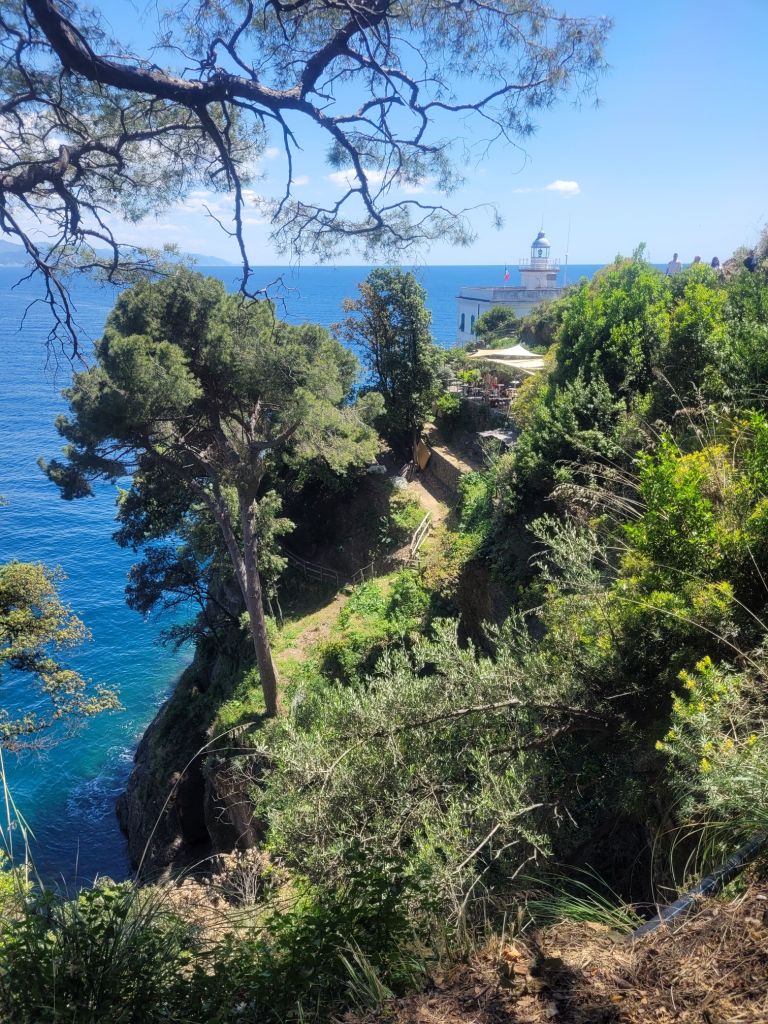

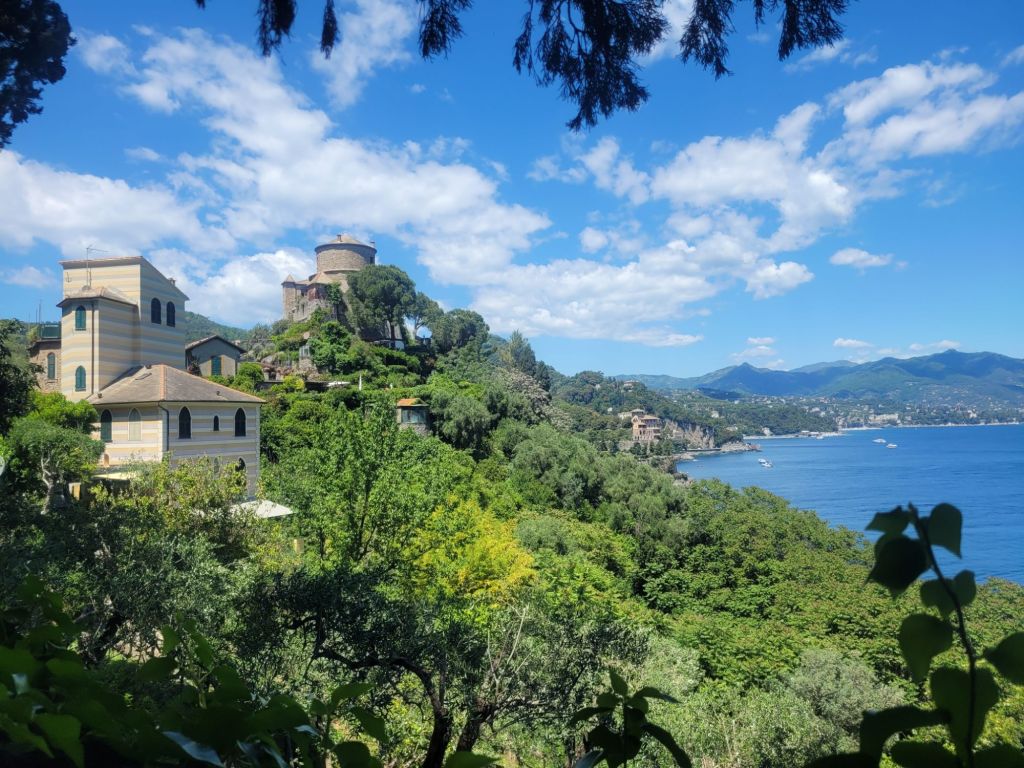
We returned by bus, having exhausted ourselves on the various sets of stairs. Portofino was exceedingly pretty, possible too much so, and certainly exceedingly busy. It’s the most expensive mooring place in Italy, which explained the bloated obscenities moored up (three of them). We were pleased to have seen it but won’t be returning.
The following day we walked up to San Rosso (on the ridge above Camogli) and then down, almost to Punta Chiappa. Picking up the path to San Rosso involved going all the way down into Camogli and then back up so we were pleased to have discovered there was a ferry for the return (which we checked before we left).

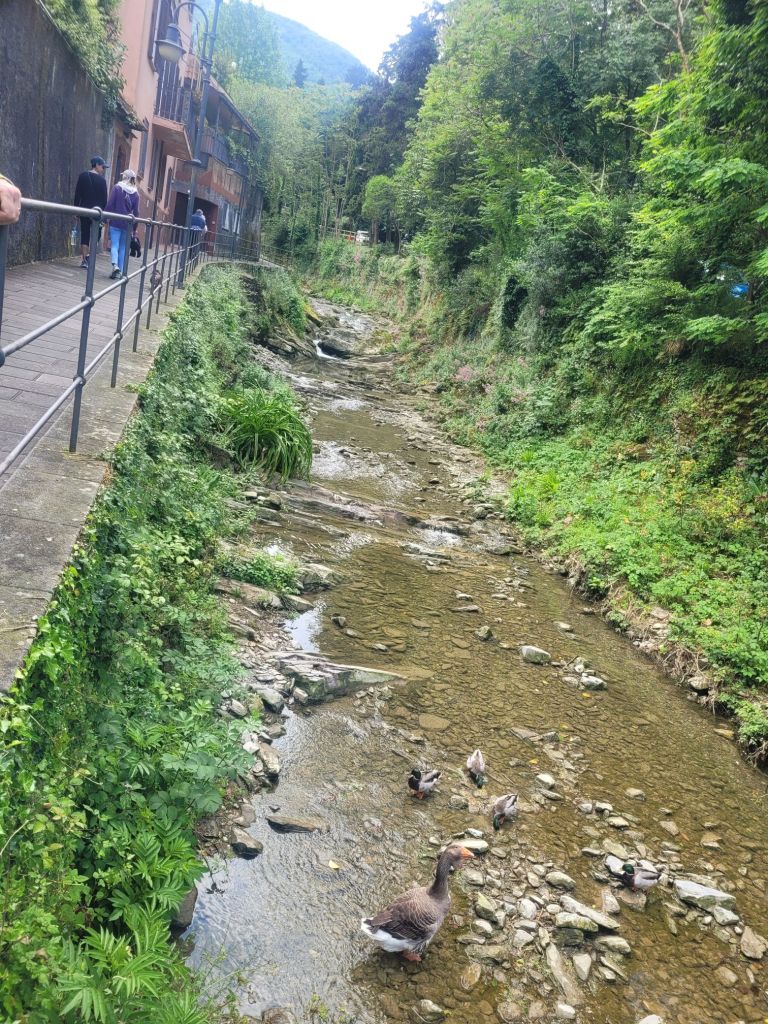
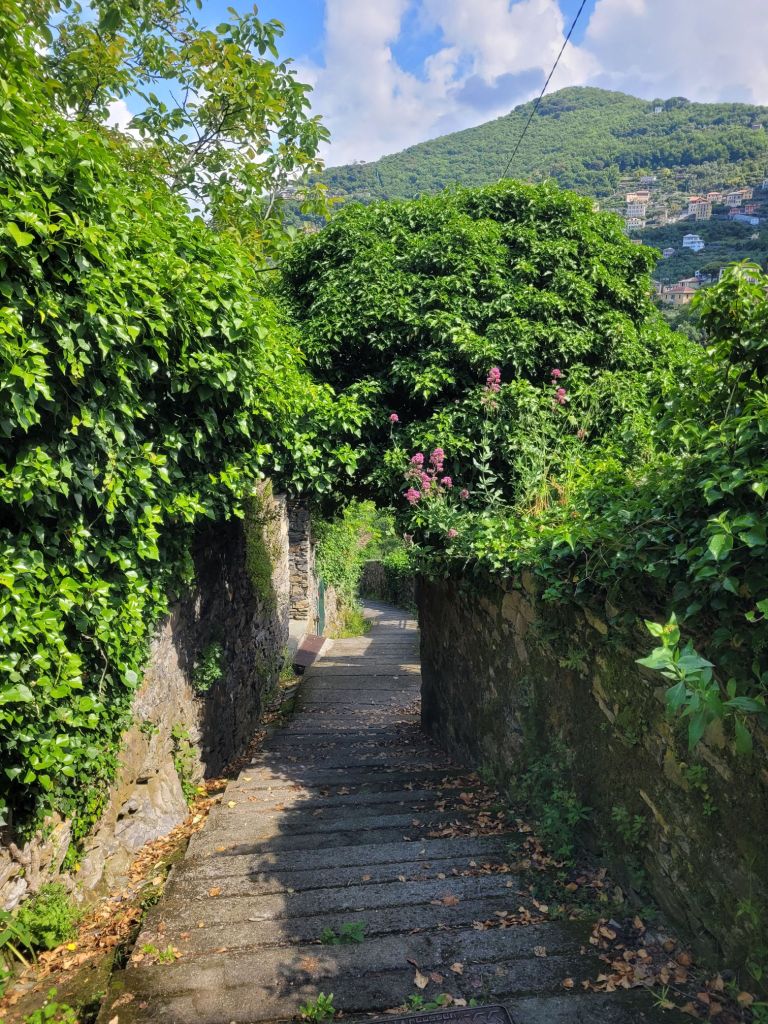
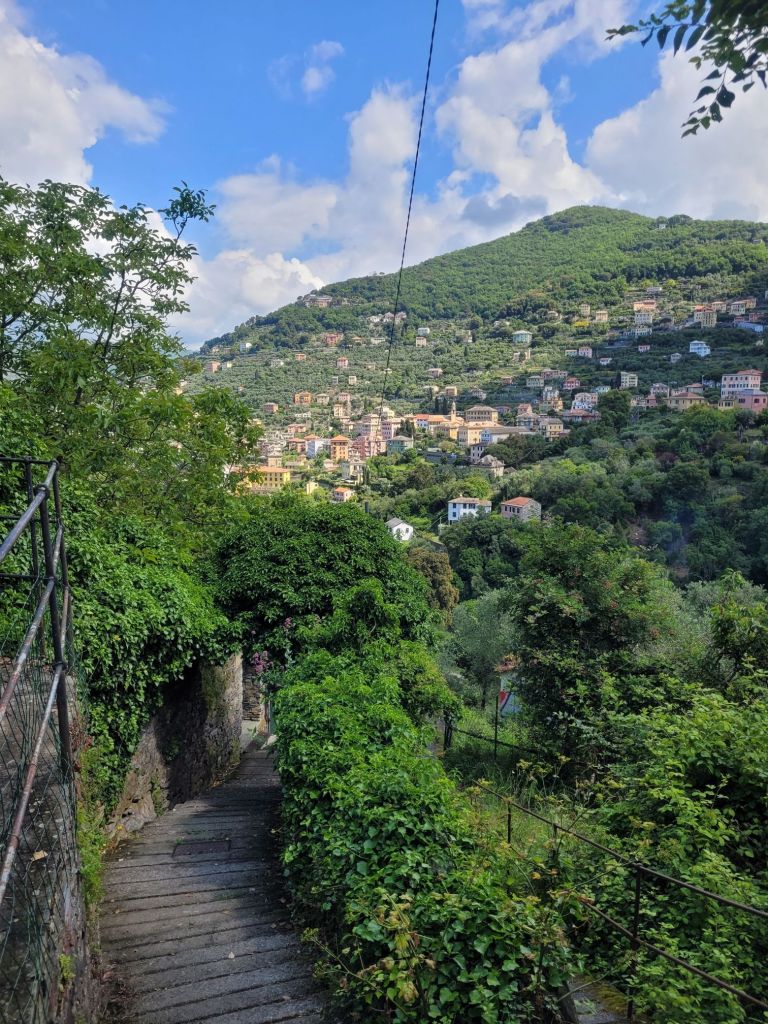
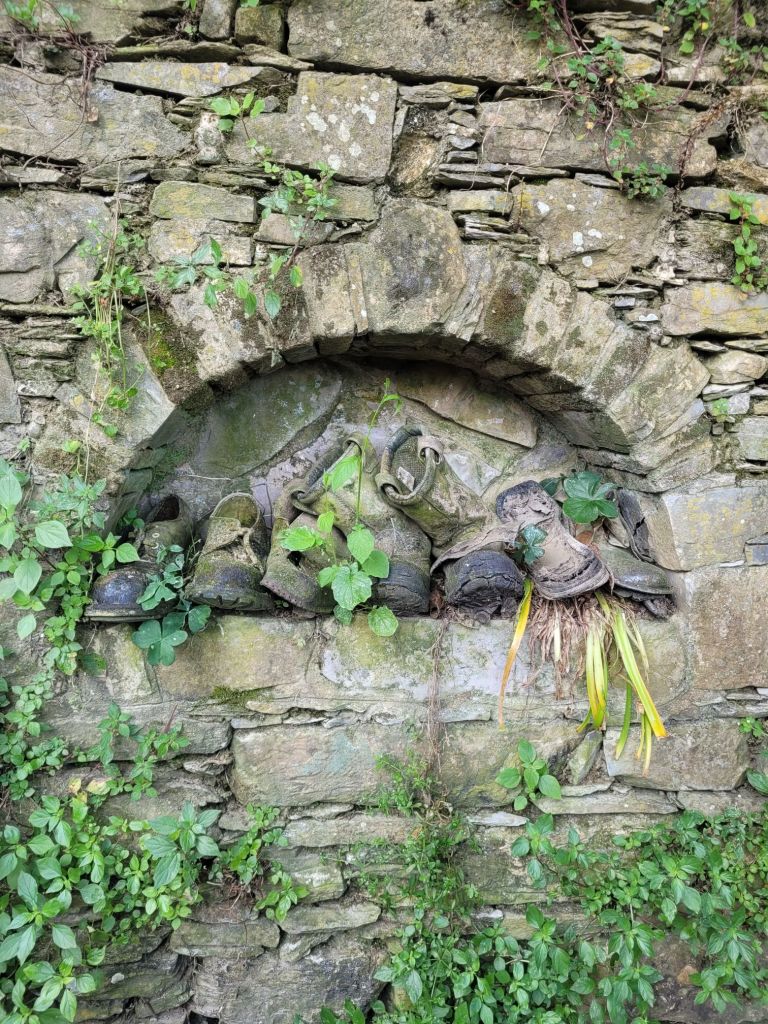
San Rocco itself has fabulous views on either side, although the sea views have the edge in my humble opinion.
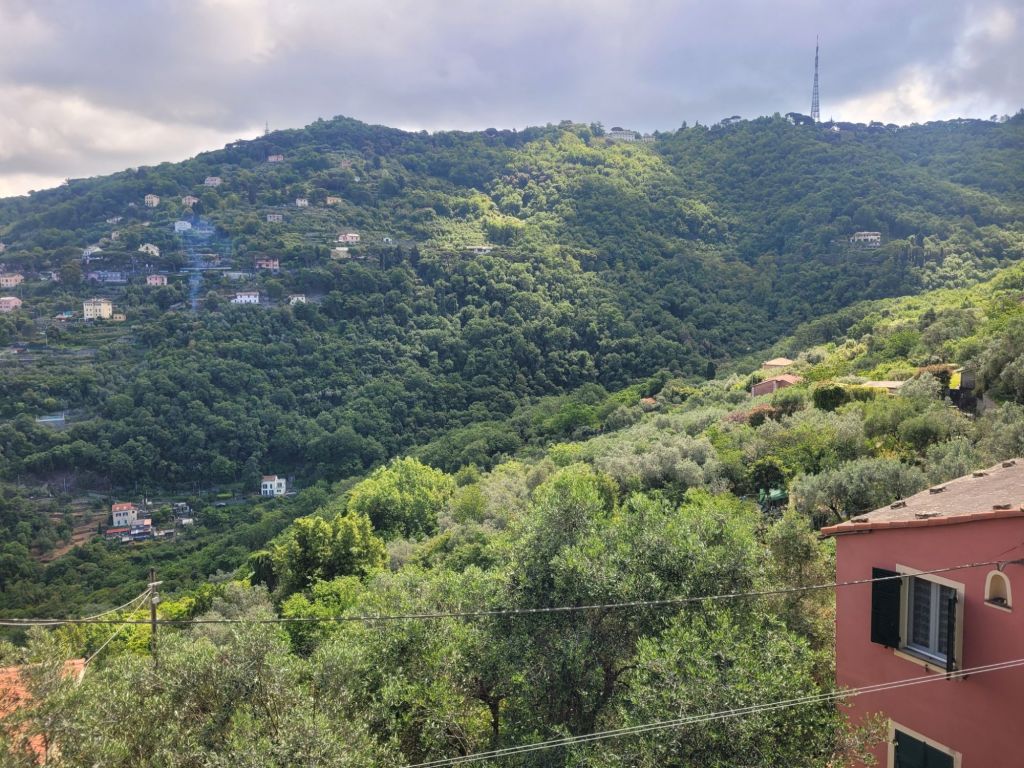
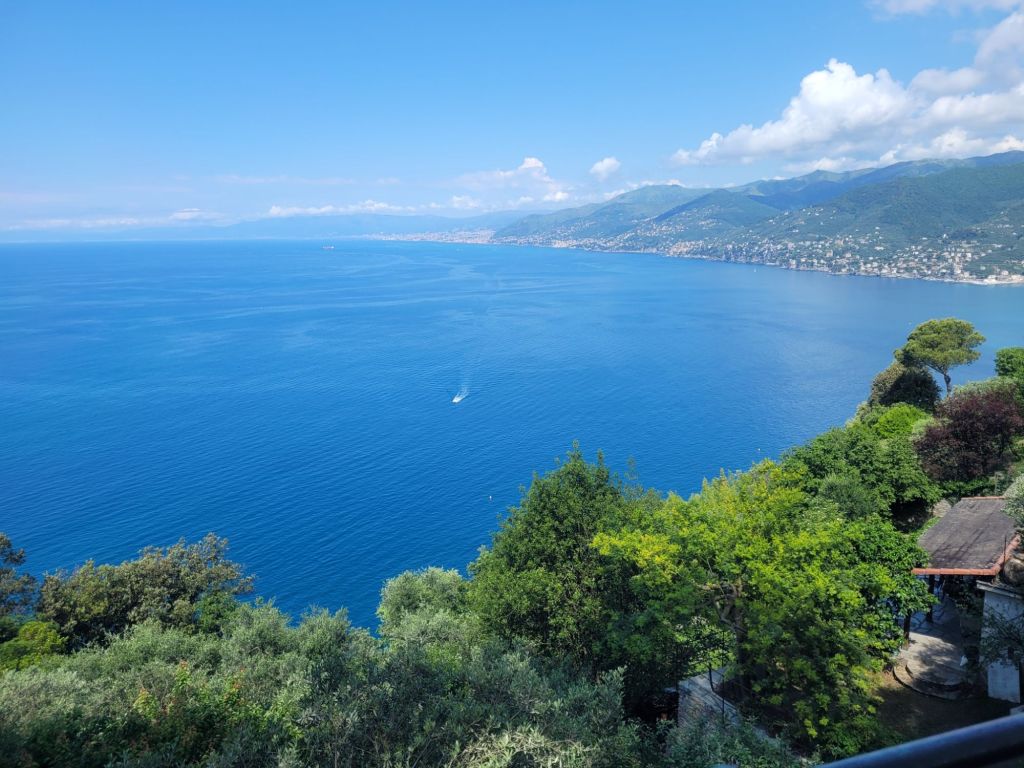
The path was well signposted, which made a nice change, and stable underfoot, although there were lots of stairs down at various points. The views continued to be breathtaking and we discussed whether the vague mountains on the horizon might possibly be France. Doubtful.
On the way down we passed houses, some dilapidated, some lived in, some abandoned, some having work done. Given the stairs, the cobbles and the narrowness of the path, we could not figure out how the giant bags of aggregate and cement mixer made up half-way up the cliff.
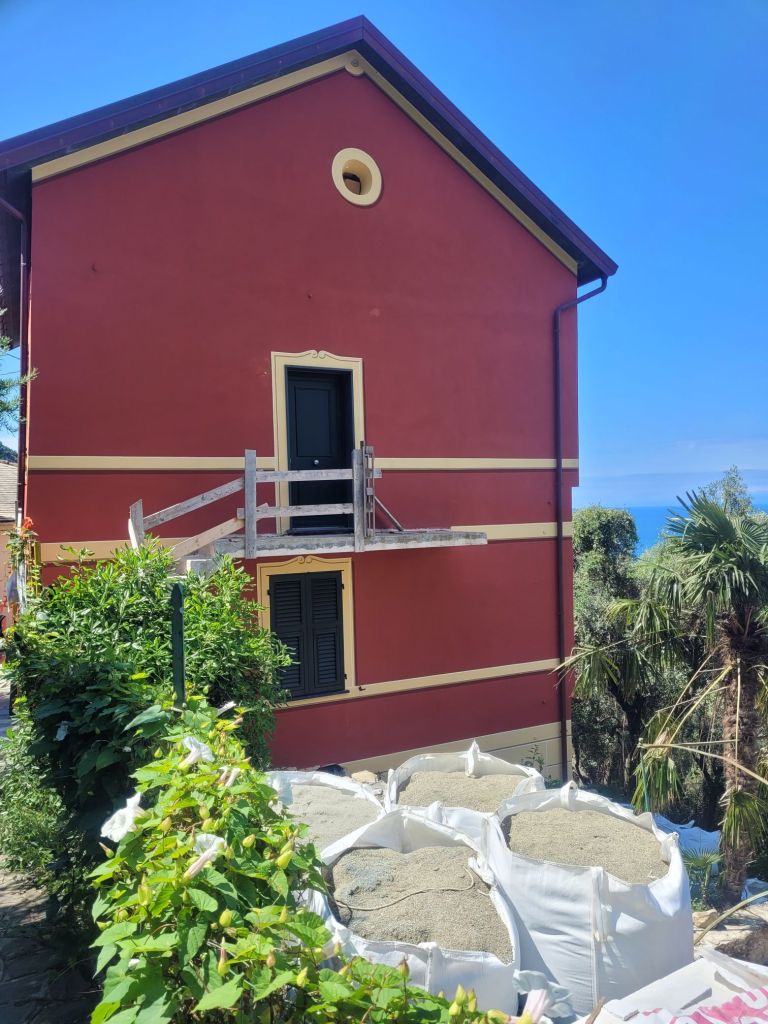

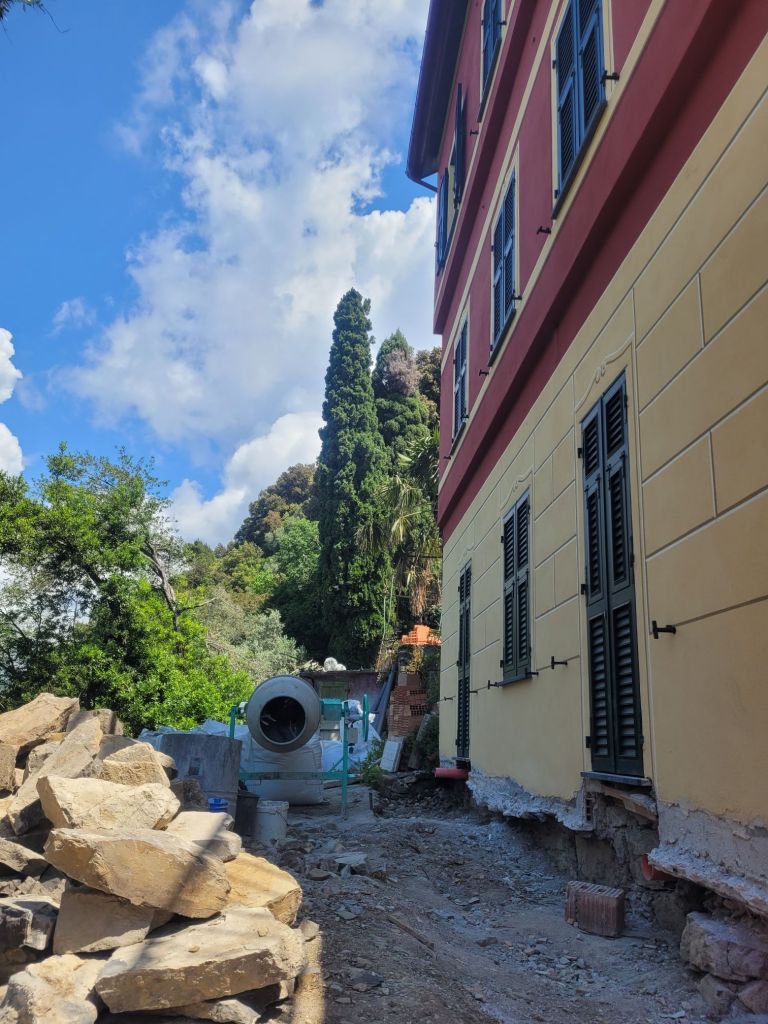
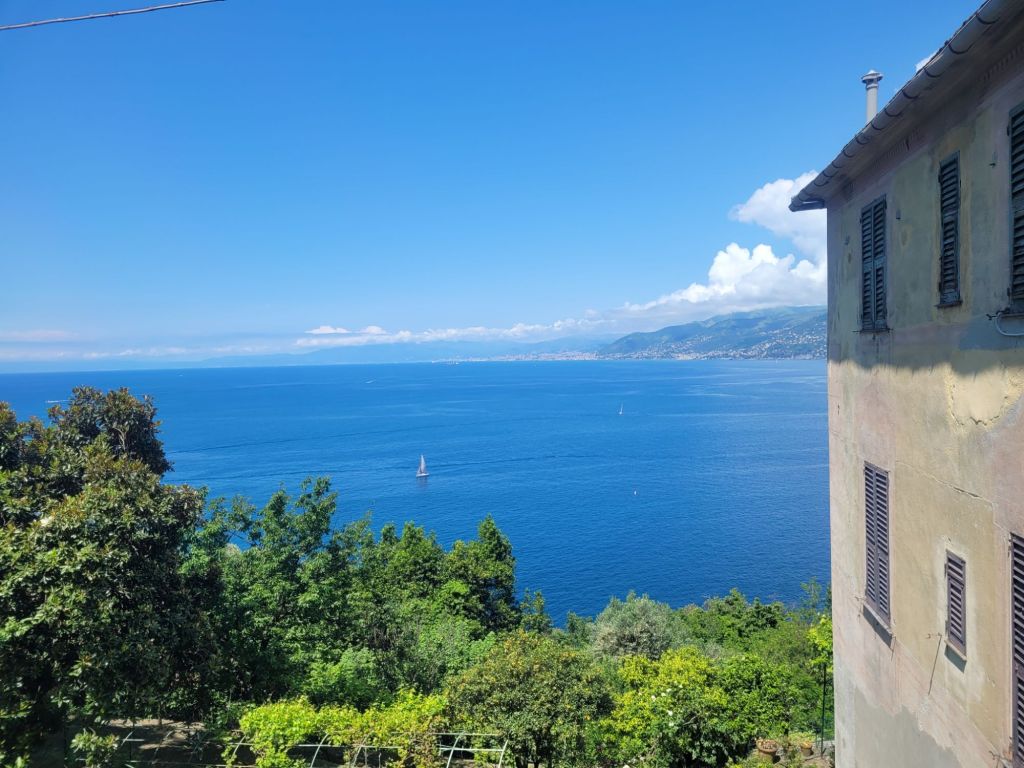
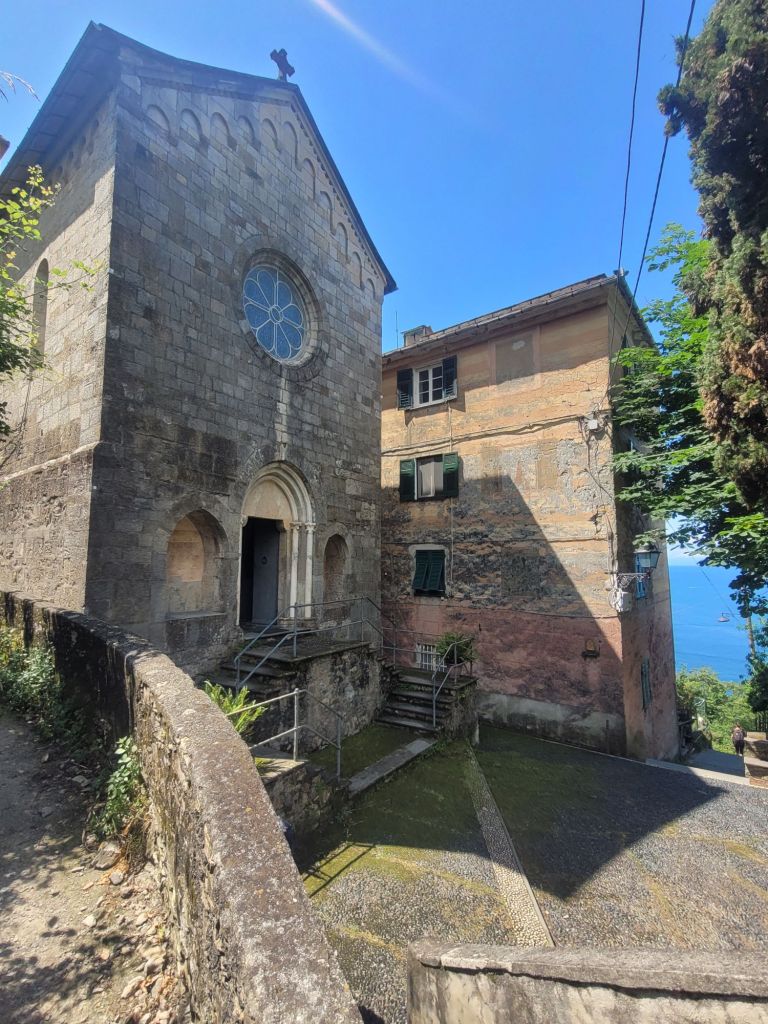
San Nicolas, about halfway down, had a large church and a few houses in need of some serious attention – all were huge.
Once all the way down, the coast was rocky.
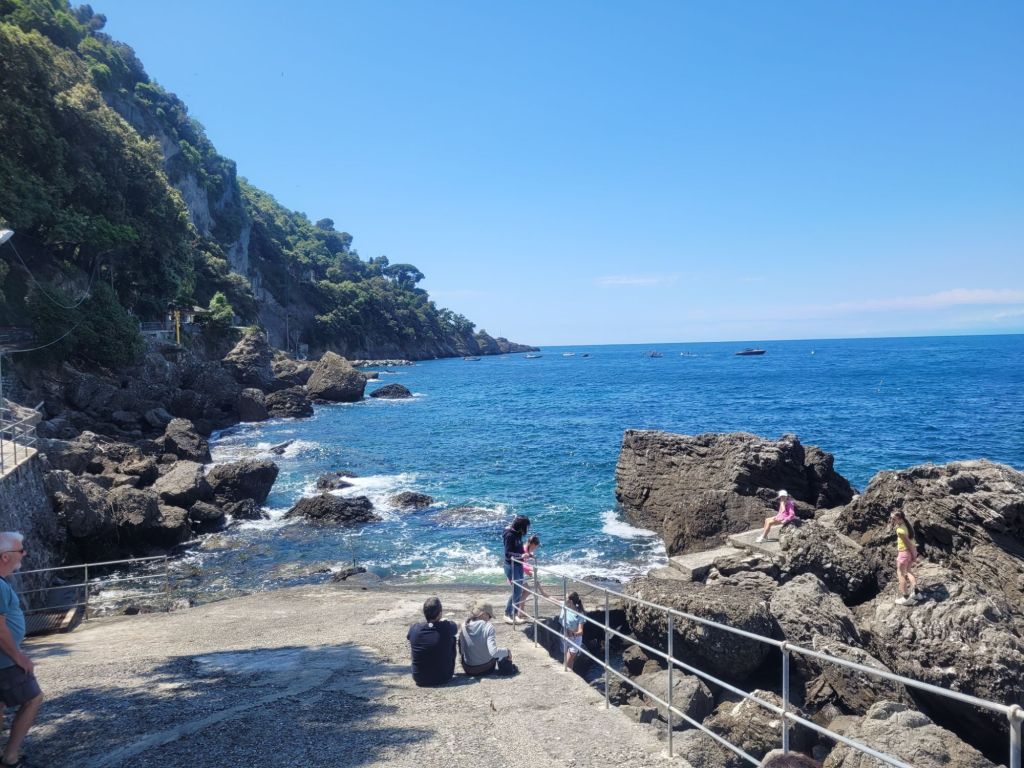
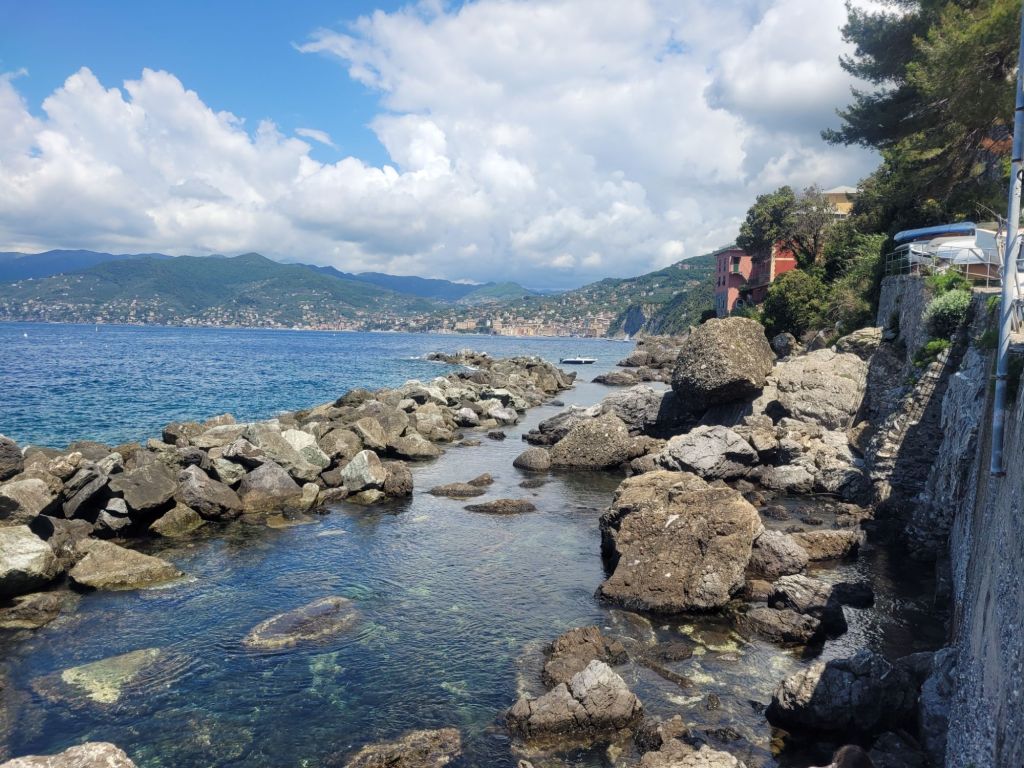
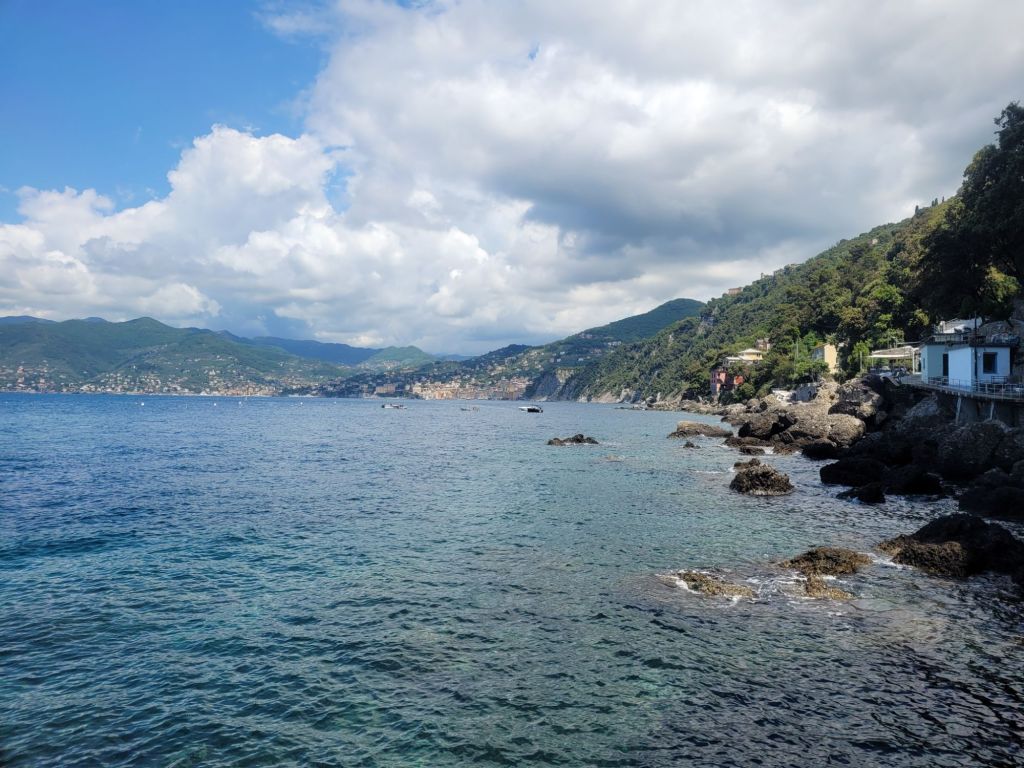
The boat ride back cost seven euros each, money very well spent as there was no way either of us was was walking back up.

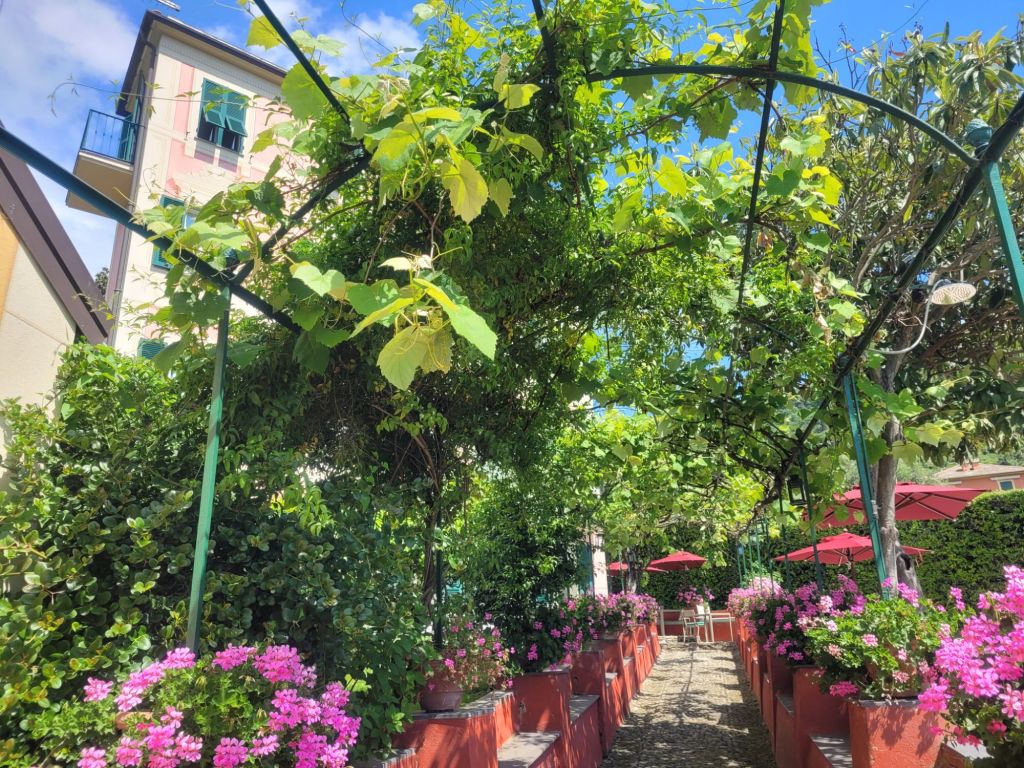
Villa Rosmarin was comfortable, with beautiful, tranquil gardens, great views and a delicious breakfast.
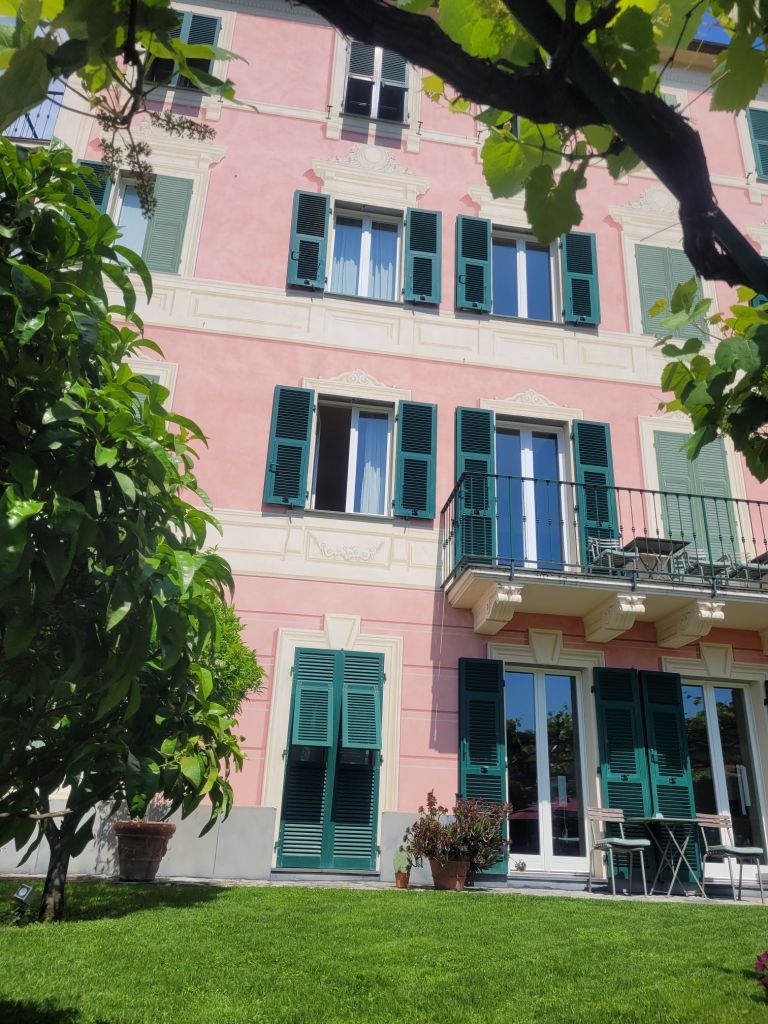

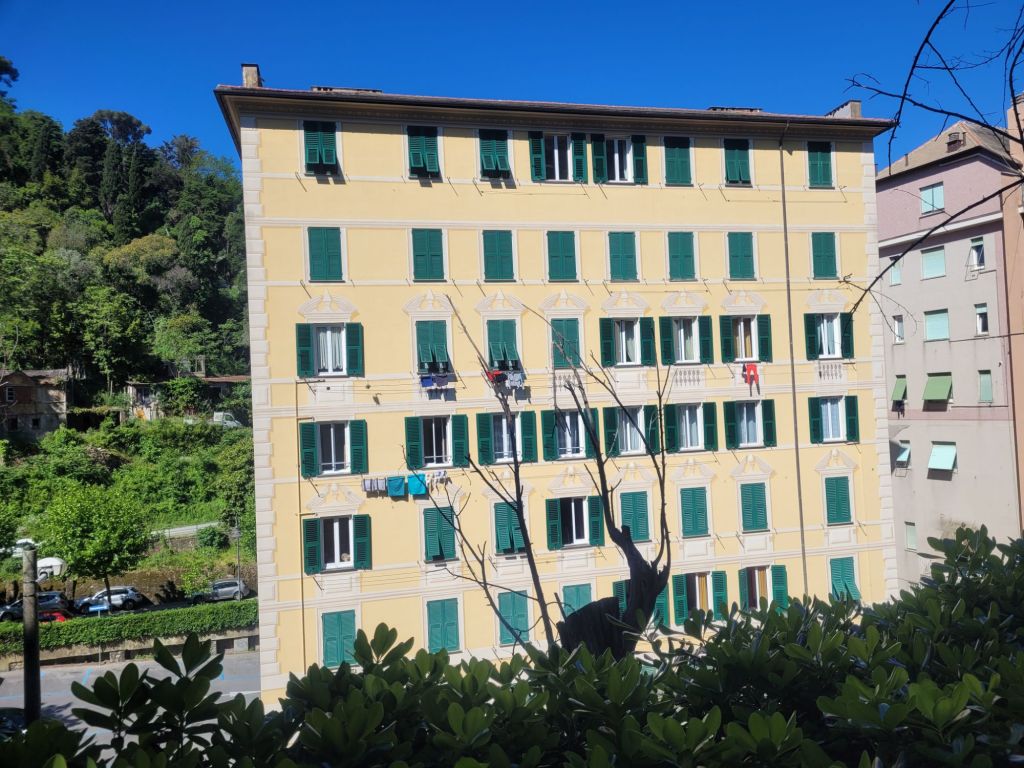
All in all, Camogli was the perfect stopping point for this small section of the Ligurian coast. And it’s heartening to know that amongst all the beauty and wealth, people still dried their smalls out the window – even in Portofino!

On to Moneglia and the Cinque Terre.
 Retired? What now?