The Cinque Terre National Park is famous for its five villages: Rimaggiore, Manarola, Corniglia, Vernazza and Monterosso al Mare. The area was first settled in pre-Roman times, with the current villages taking shape in the Mediaeval period: by the 11th century, the area was mentioned by name. Due to the predations of various types of pirate, fortifications were built – myths abound about hidden treasure buried before a pirate raid.
The area is now a UNESCO World Heritage site, and the surrounding waters are a protected marine reserve.
It’s a walker’s paradise, with extensive trails, and a tourist ‘must see’, with organised tour groups (and individual, private, tours) coming in from both the cruise ships docked in La Spezia and further afield. Payment is required for many of the more accessible trails, train tickets are regularly checked and toilets are rigorously charged for. The best way to cover all of this is to buy a Cinque Terre pass – either a train pass (which gives you access to all trains and buses in the park) or the full train and hiking pass.
There is a coastal route that connects all five villages – it’s about eight miles long with around 500 metres of elevation in places (so very uppy downy). The easiest section is Via dell’ Amore, which runs between Riomaggiore and Manarola: it’s flat, paved, about one and half miles along and you not only have to buy the full Cinque Terre pass, you have to pay an additional ten euros per person to walk it.
This we did not do.
Our first foray into the Cinque Terre was the walk from Levanto to Monterosso. It’s about five miles along the coast, free – so we didn’t need the pass – and we thought it would be a good introduction.
Levanto is a large town just outside the park, with a comprehensive Cinque Terre store that had a huge queue. We decided to purchase a map in the tourist office in town.
This proved to be a mistake.
The start of the trail was easily found and we joined a fairly constant stream of people moving uphill. It was beautiful.

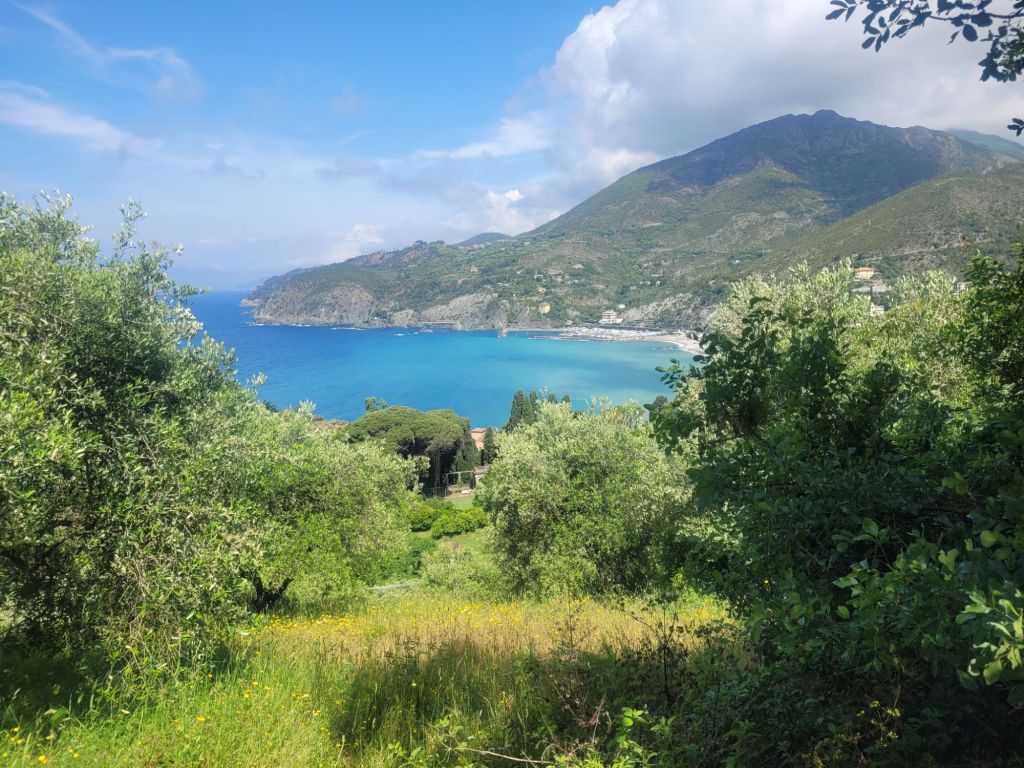
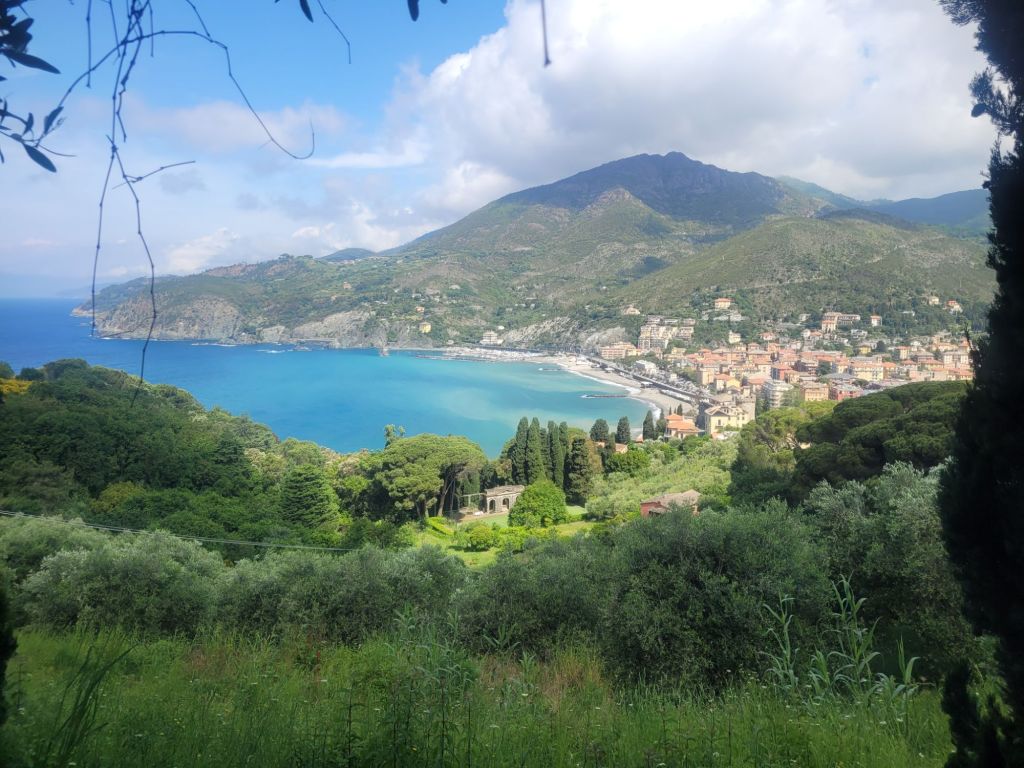

The SVA proper, which runs along the coast connecting all five villages, was less easy to find as a car was cleverly parked in front of the signpost. Eventually, we located the right turning and followed it above the coast. Again, beautiful.
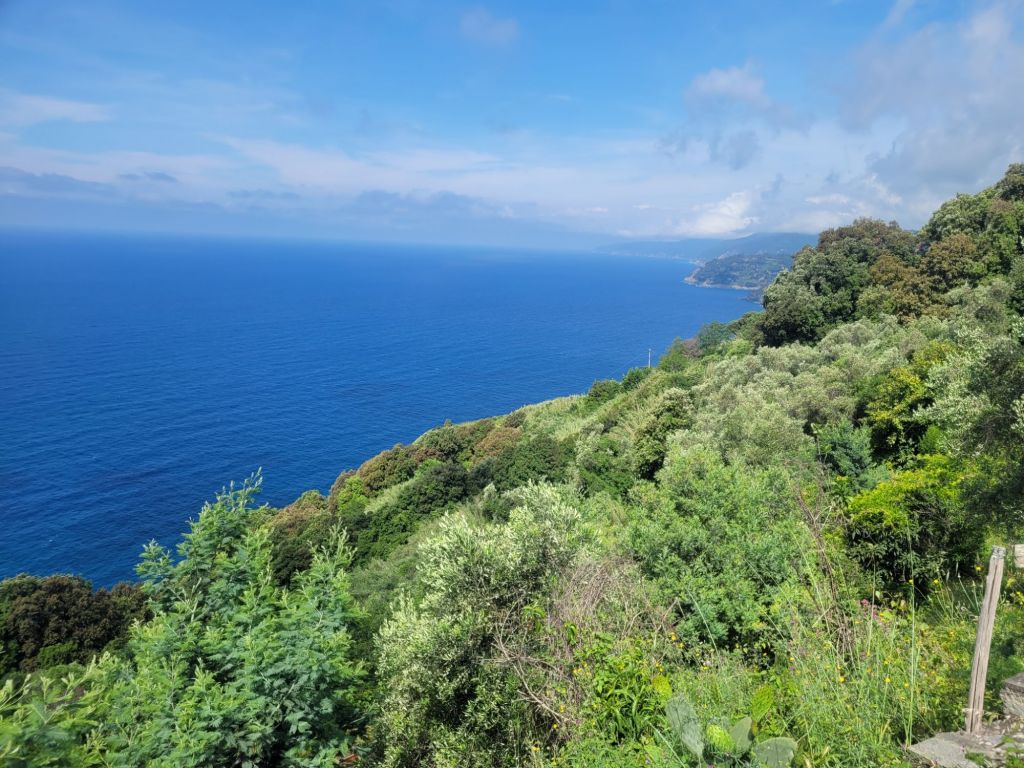
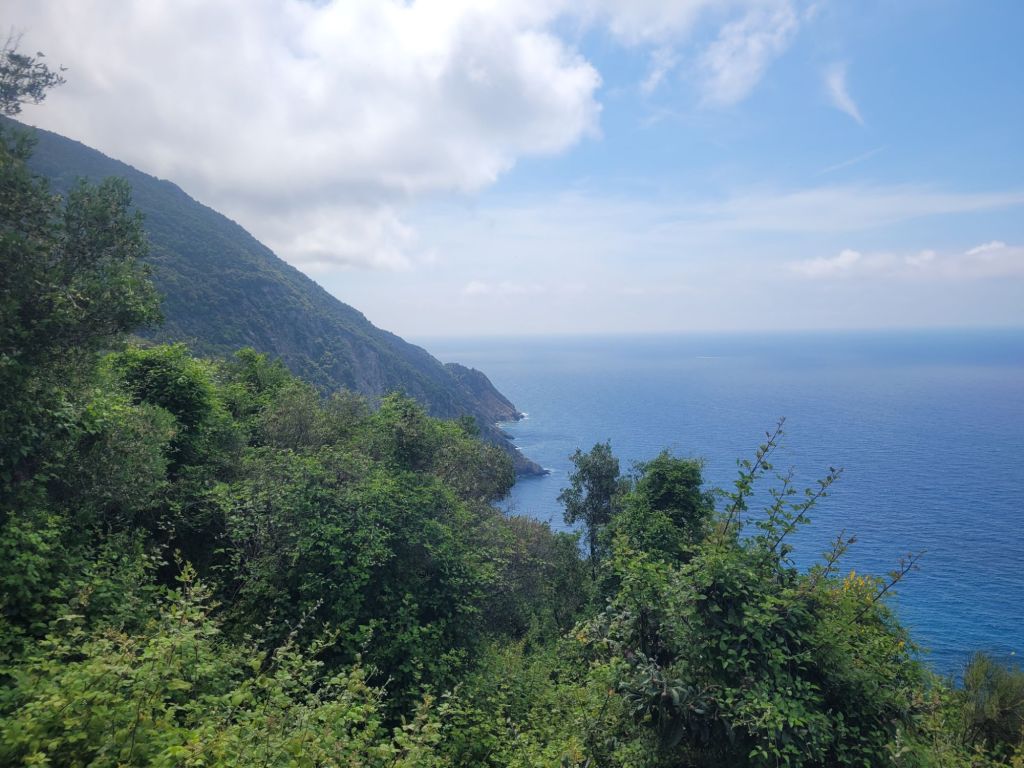
But the path was narrow, very narrow in places, and the edge fell away steeply, very steeply in places, and vertigo took over. So we retraced our steps – up to a point – deciding to take the inland route (which on our map looked fairly straightforward).
This was where our map became problematic. And where we didn’t do such a good job of reading it.
Having climbed all that way up to join the SVA, our route went even higher: all the way up to a section of the old mule track that runs along the spine of the mountains. 495 metres up. Somehow we missed that small piece of information (yes, it was on the map) that might have influenced our choices.
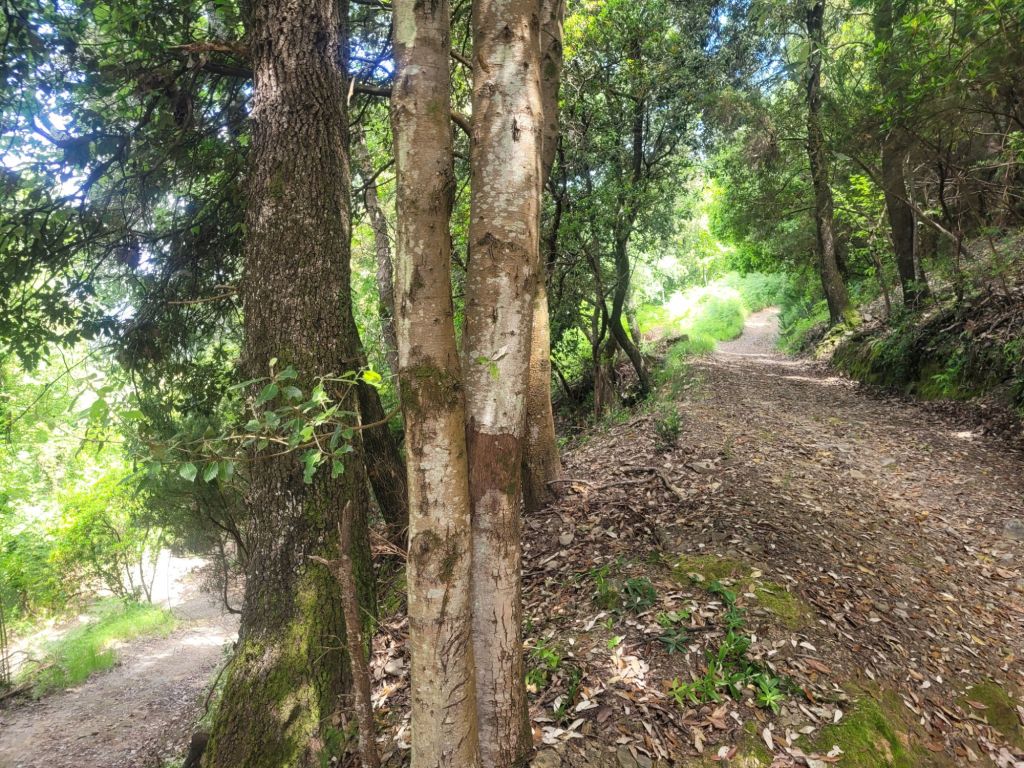
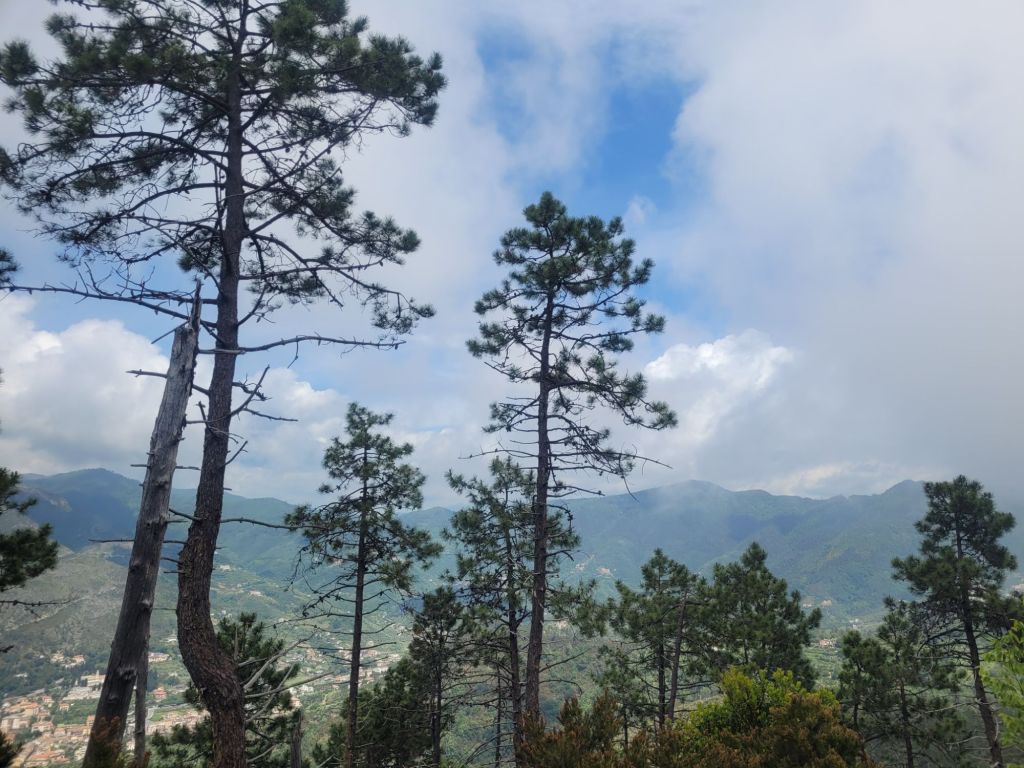

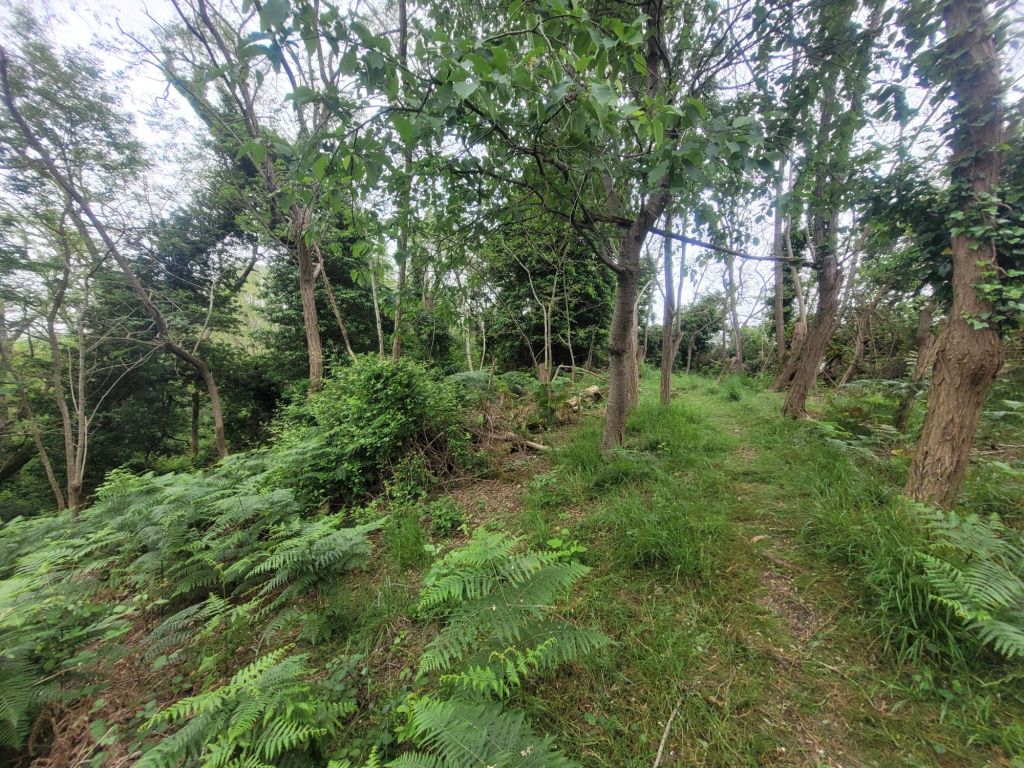
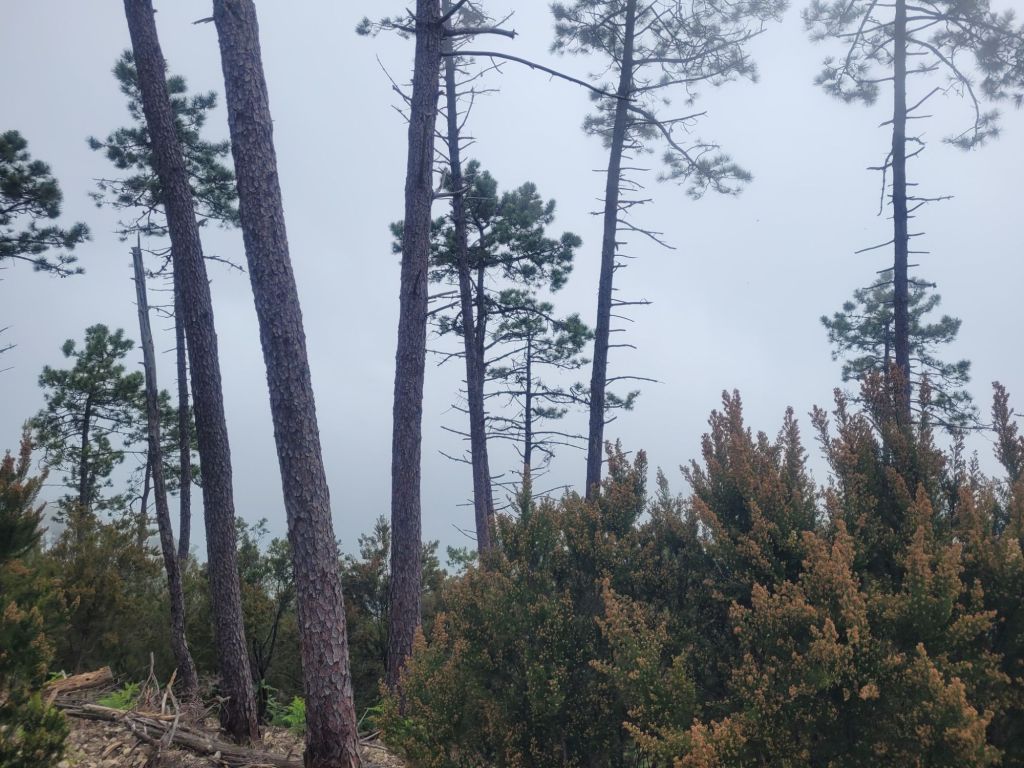
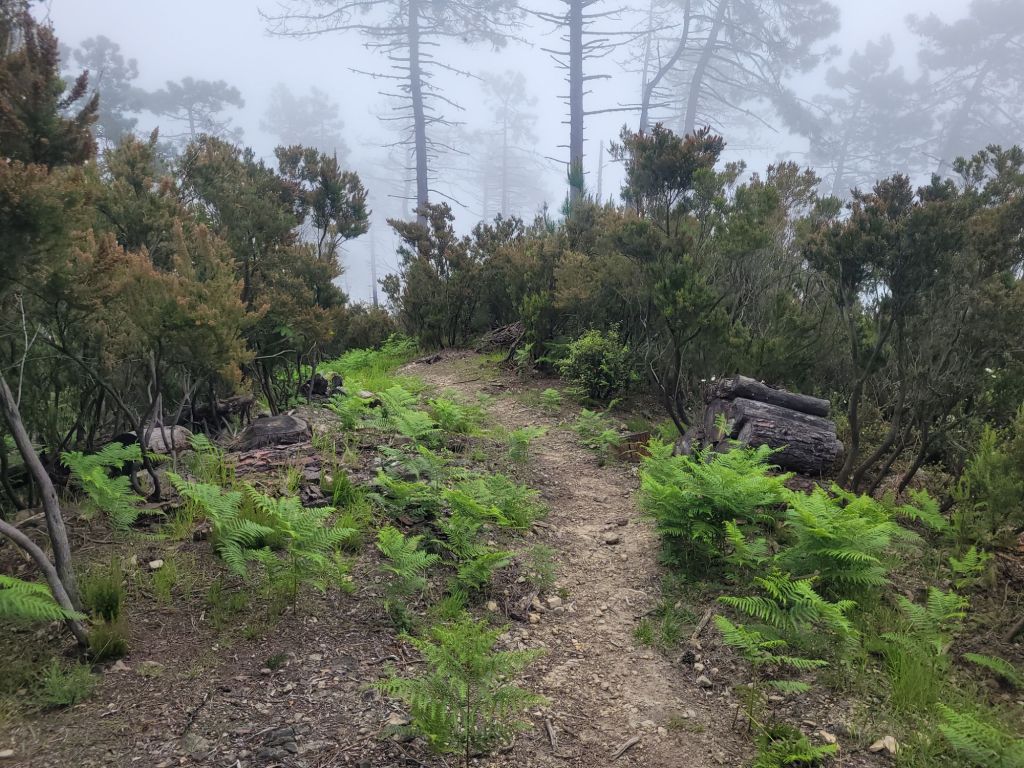
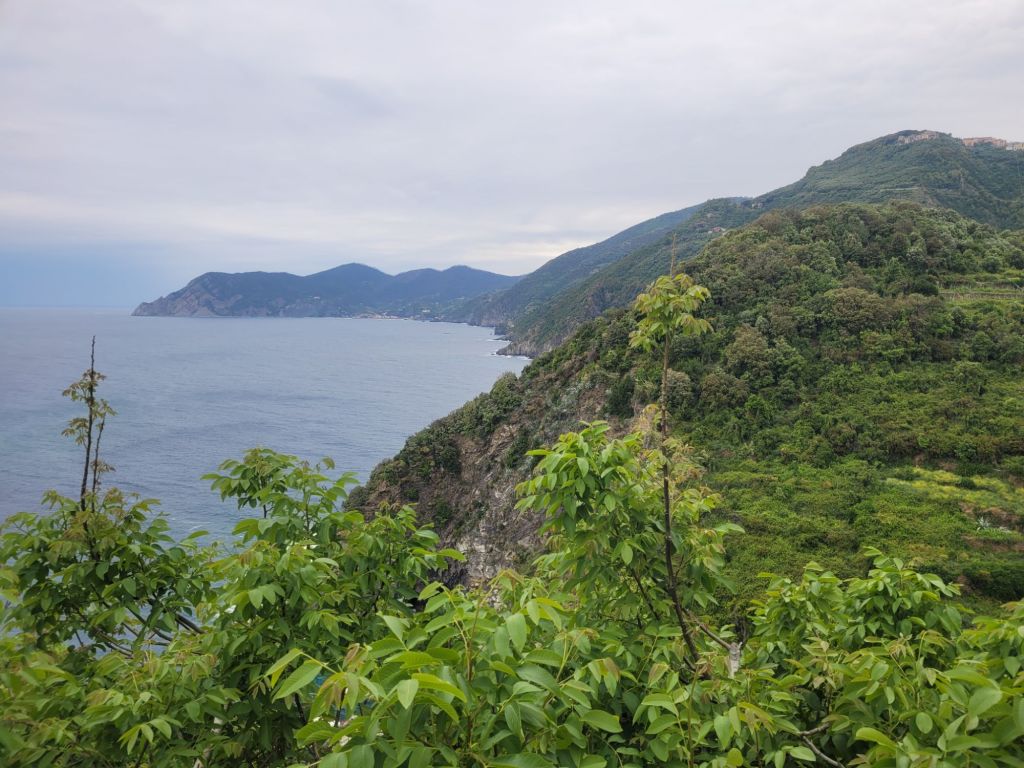
While the views were spectacular (when you could see through the trees), we ended up in cloud on a route that was definitely not well marked. After about an hour and a half of solid uphill, we finally got to the top and were, momentarily, hugely relieved.
Until we saw how steep and unstable the descent was. Halfway down we were badly let down by our map and ended up thrashing our way (down) through an overgrown section of a numbered route that wasn’t marked on our map.
Just as we despaired of ever seeing civilization again, we caught sight of the coast and Monterosso al Mar (or we hoped that’s what it was). It seemed a long way away.
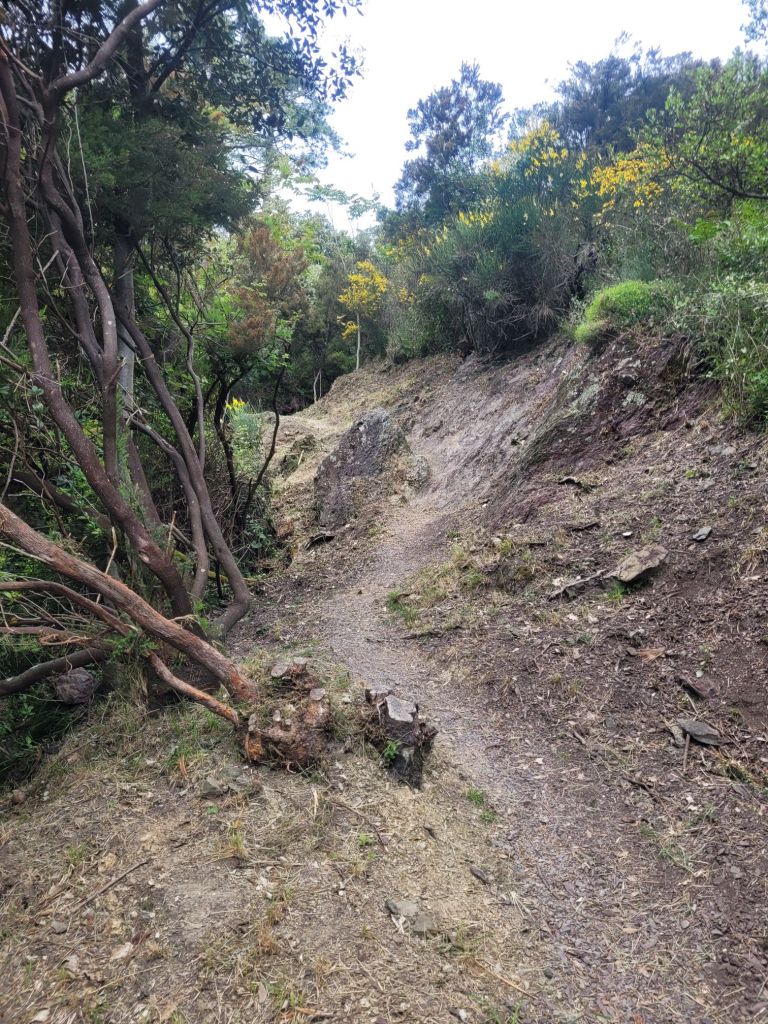
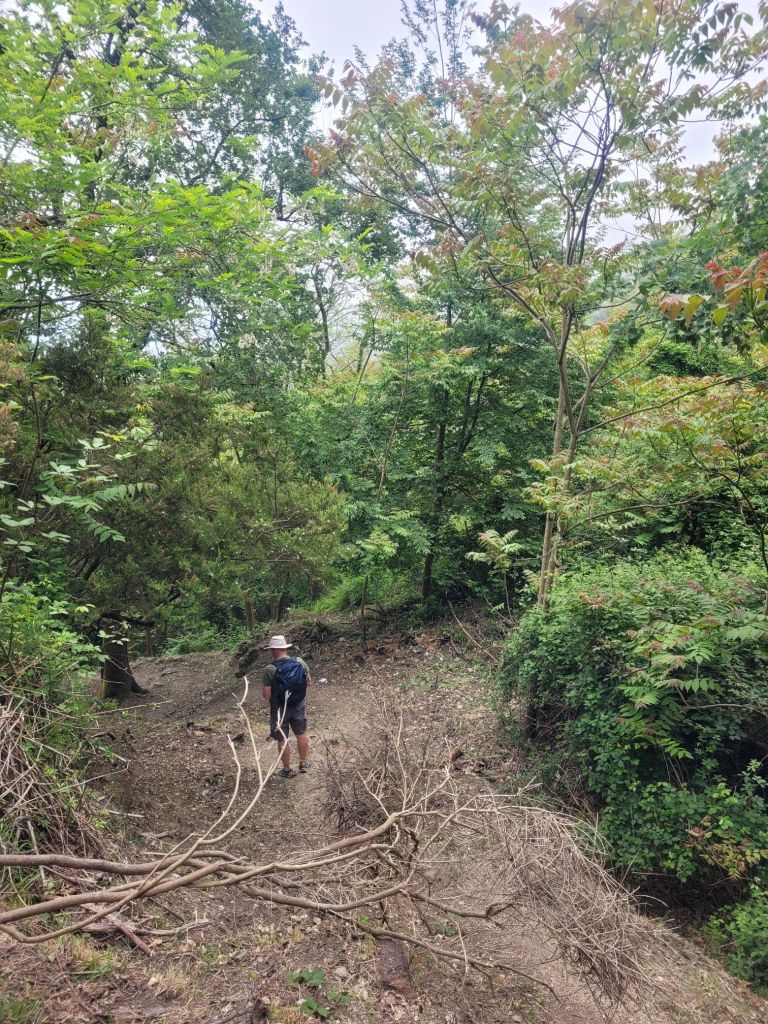

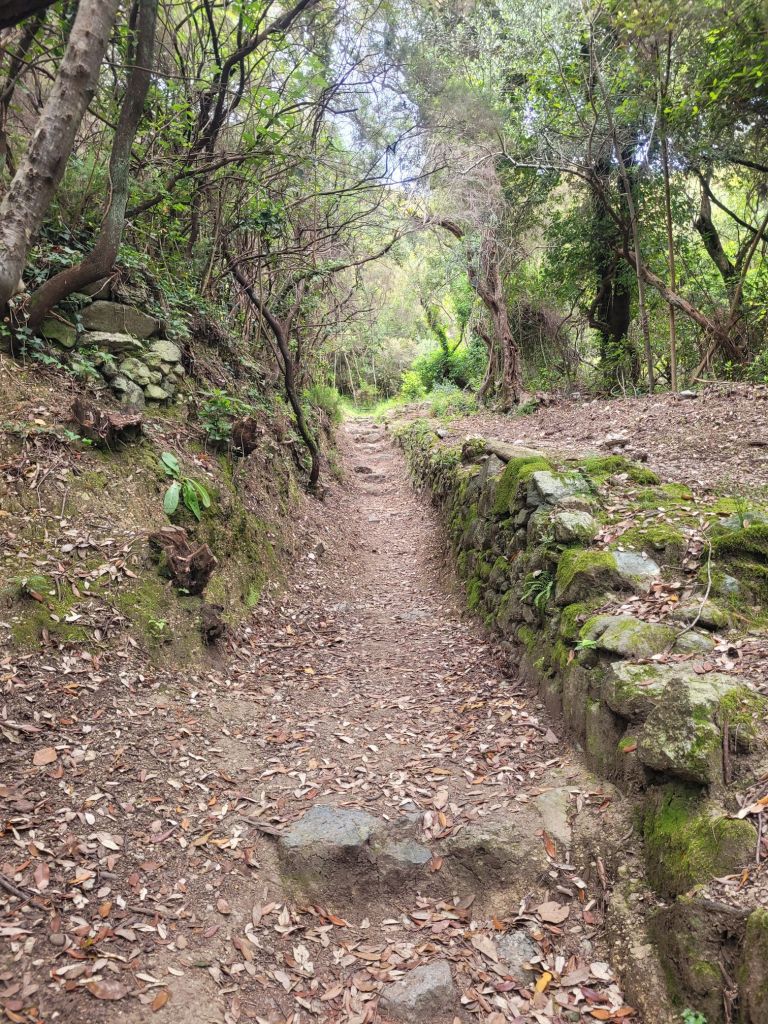
And then, Hallelujah, what seemed like a more paved road (still down) and we started passing people coming up – including a few who were even less well prepared than we were. One of us was walking in sandals (it wasn’t me).

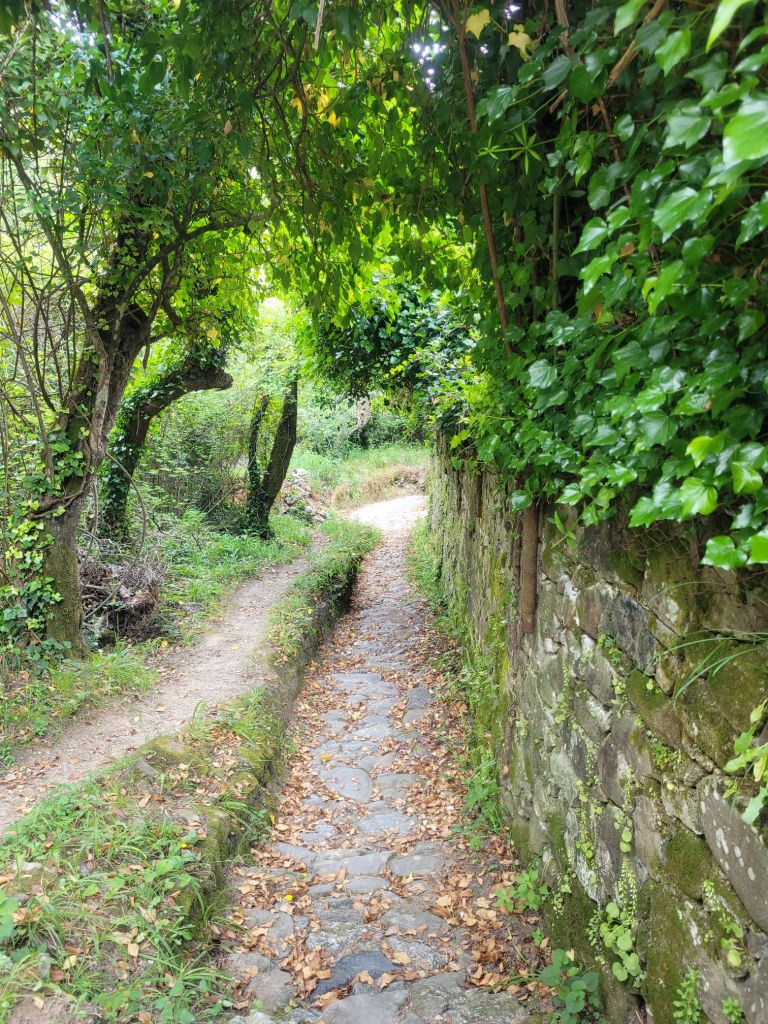
Staggering into Monterosso, we stopped at the first eating establishment we came to, ordered large beers and collapsed. The food was edible and carb heavy, the beers were large (we each had two). We had left Levanto at just past 11 and arrived in Monterosso at nearly three o’clock.
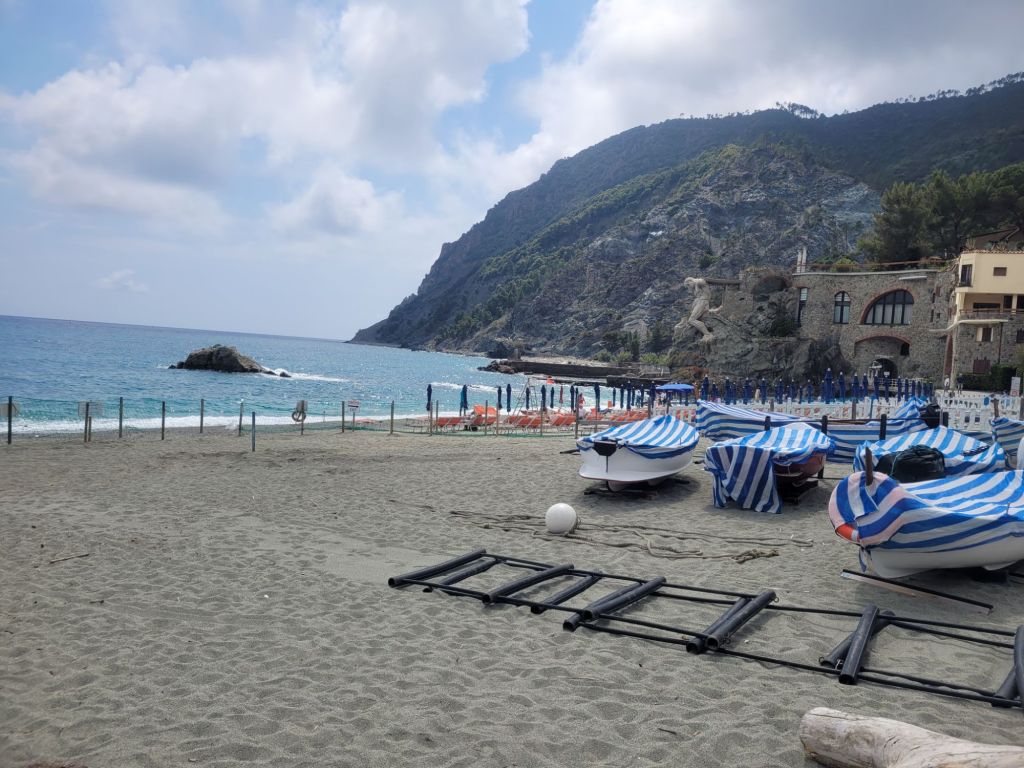
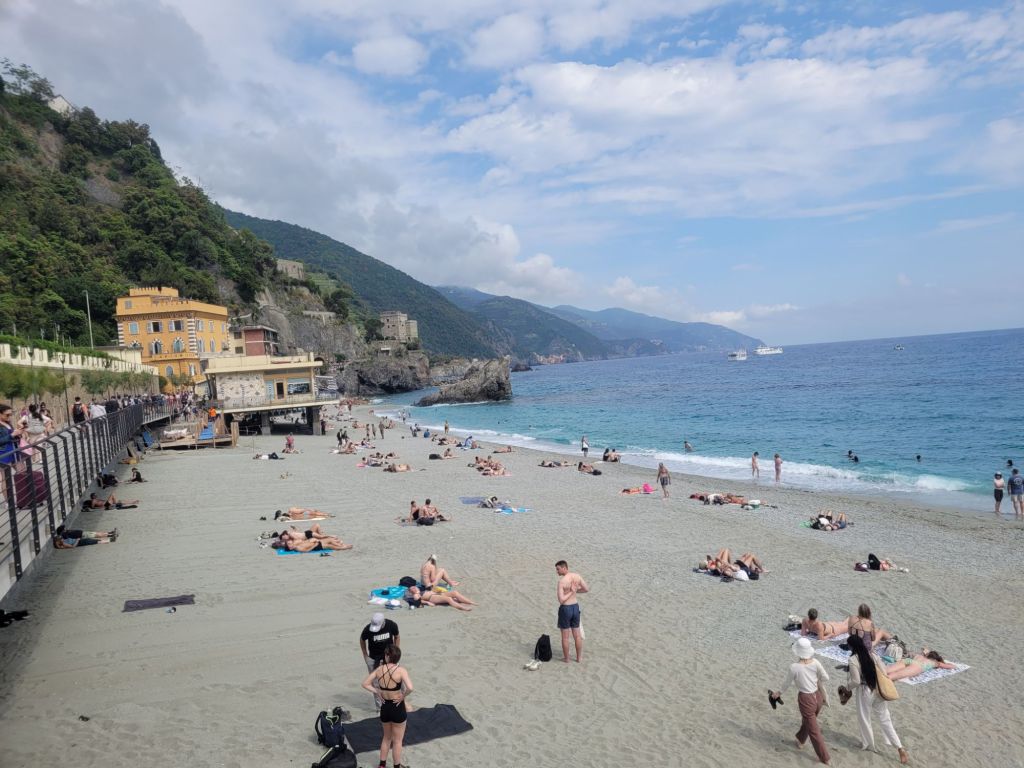
Monterosso has a fairly nice beach, an old railway tunnel that you can walk through and a castle. It’s considered the ‘least attractive’ of the five villages.

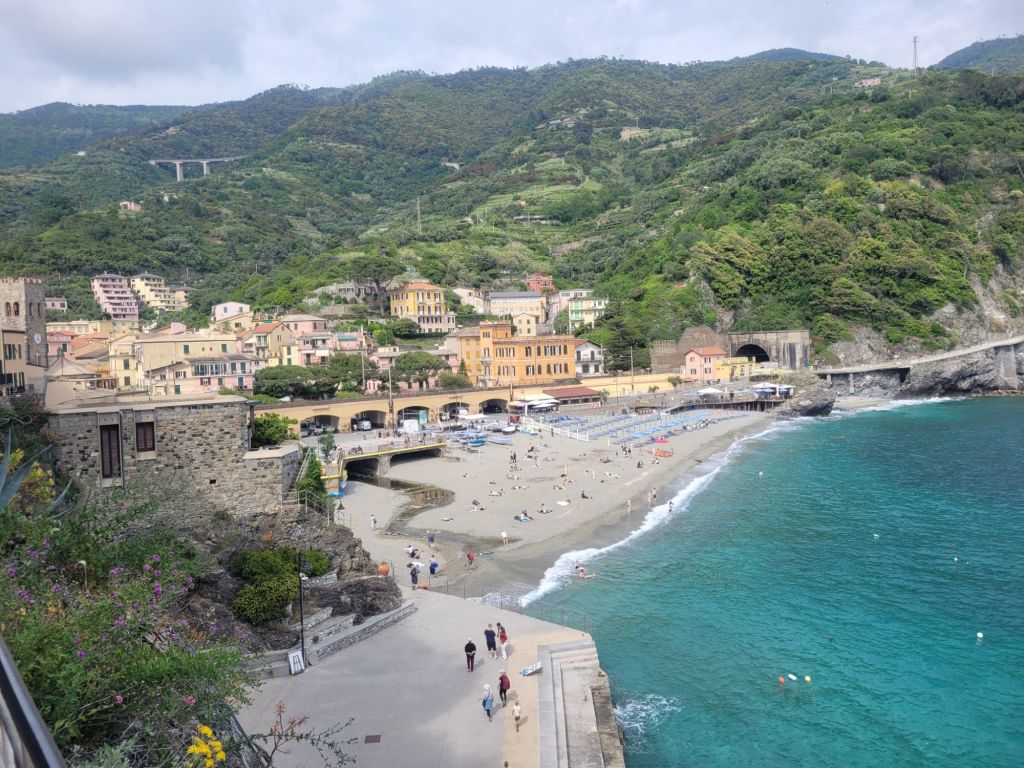
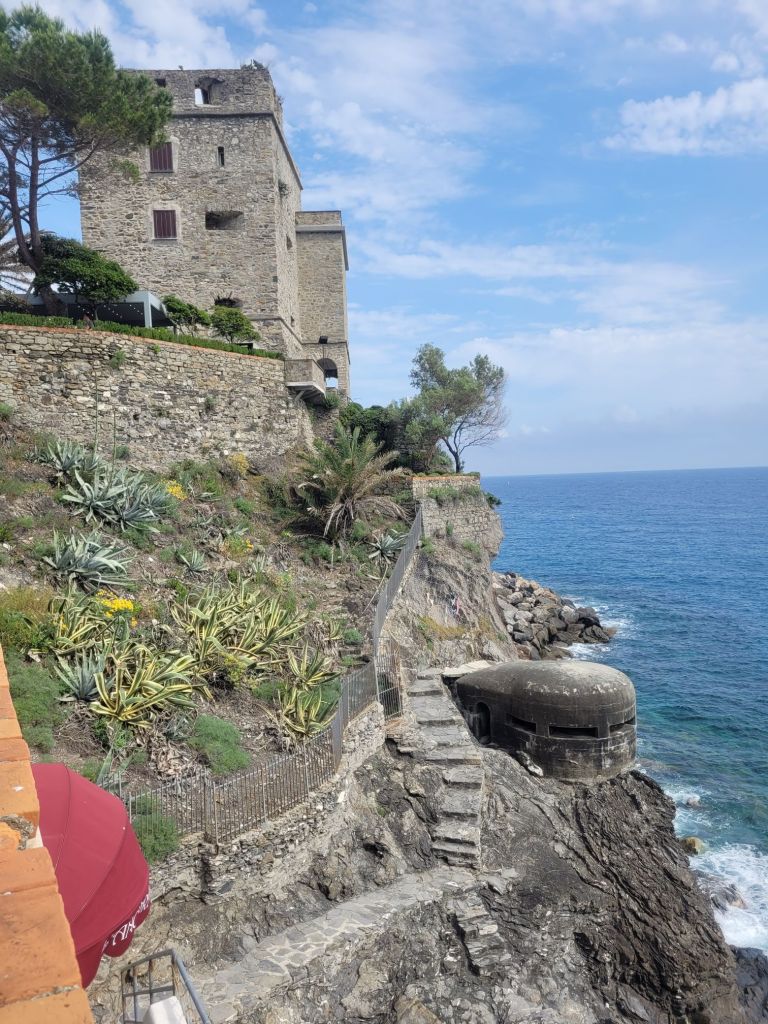
The following day we spent touring through the Cinque Terre villages on the train, taking the train to Riomaggiore and working our way back. To be honest, the weather wasn’t brilliant and our experience hiking had soured us a bit for further exploration.
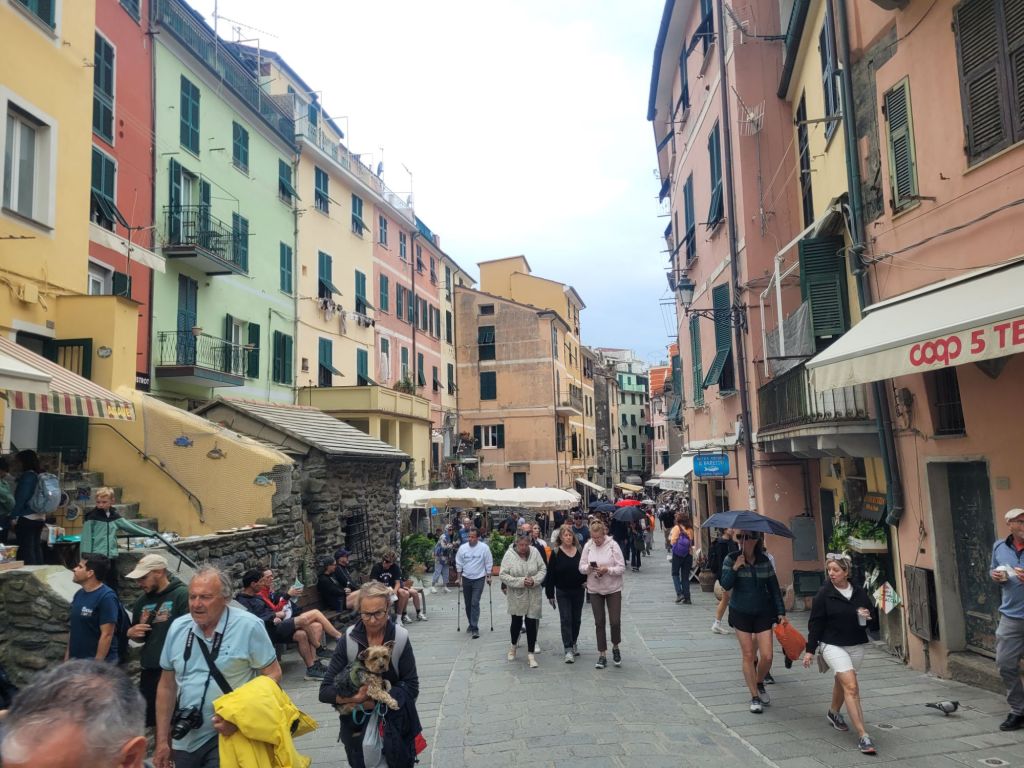
The towns are pretty, but not particularly spectacular: it’s their location that makes them more interesting than they first appear. They were all busy.
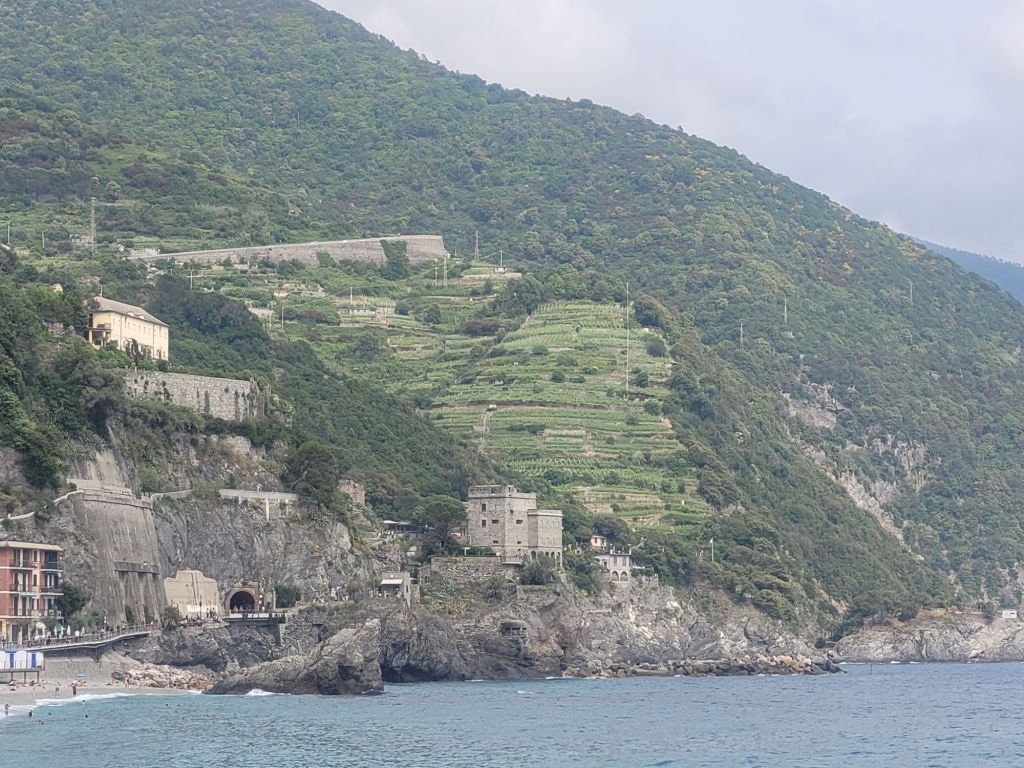
All of the villages have some form of fortification against pirates except for Corniglia, which is above sea level.
Riomaggiore is all rock formations and tunnels, with the village built along the sides of a steep ravine.


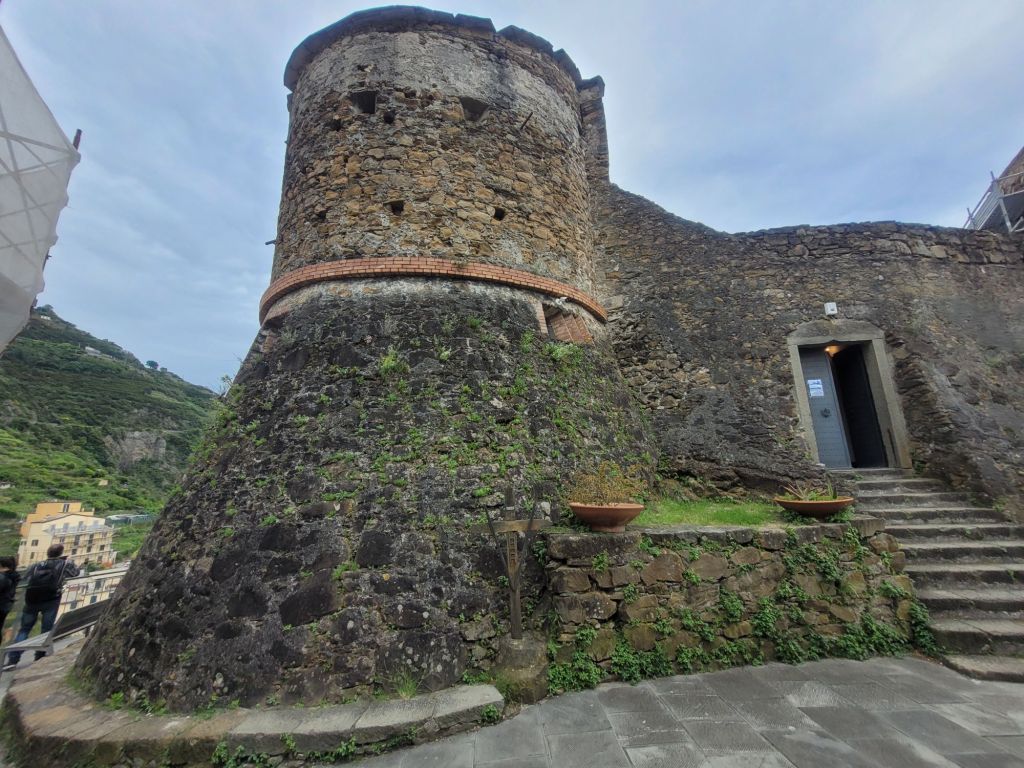
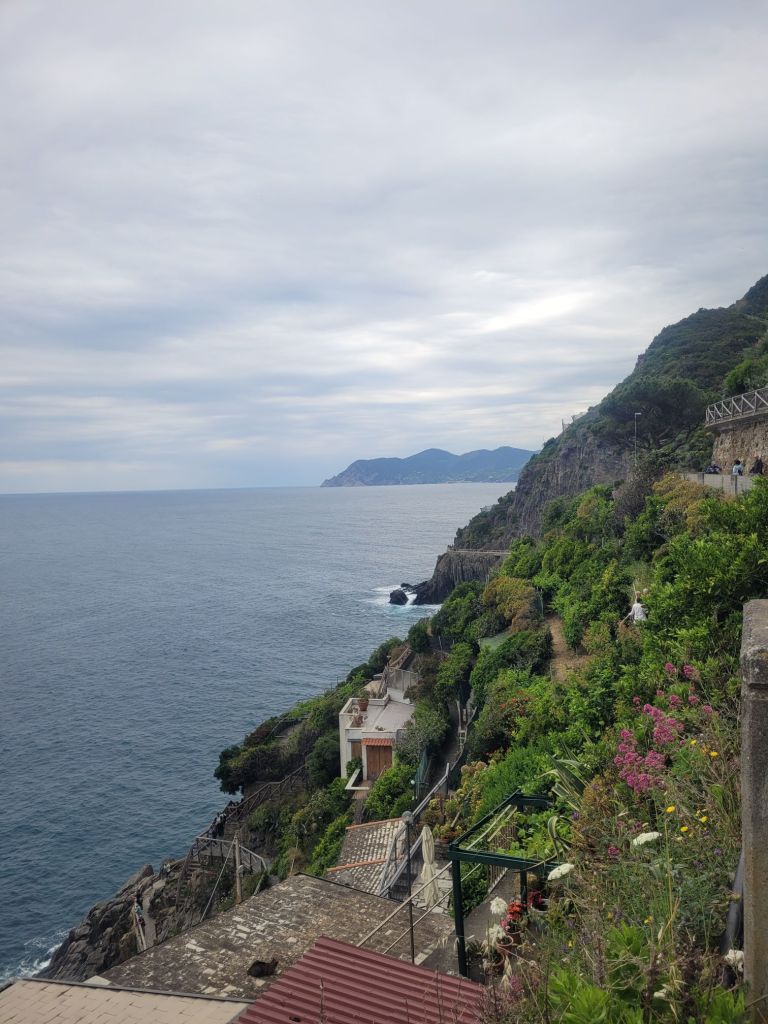
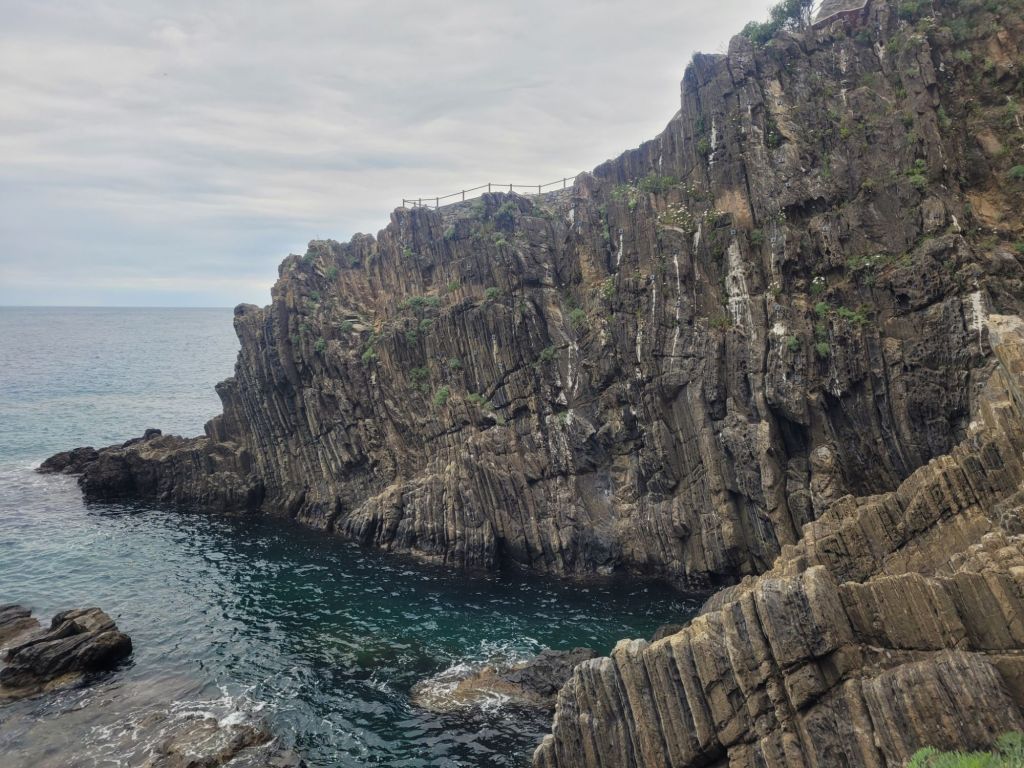
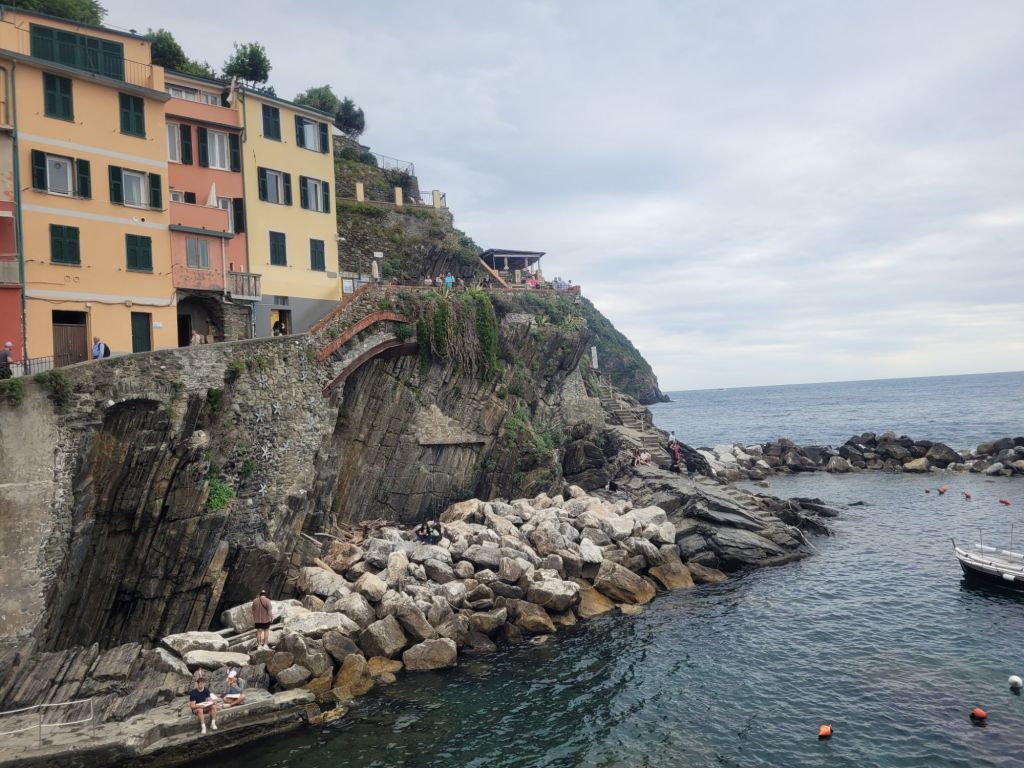
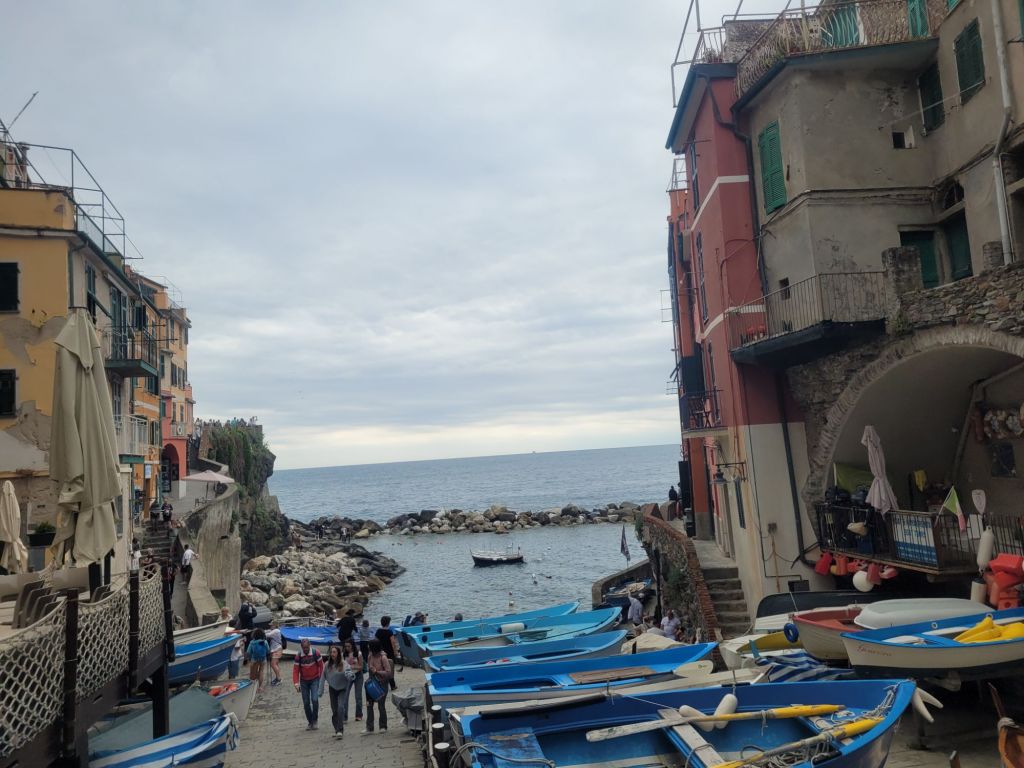
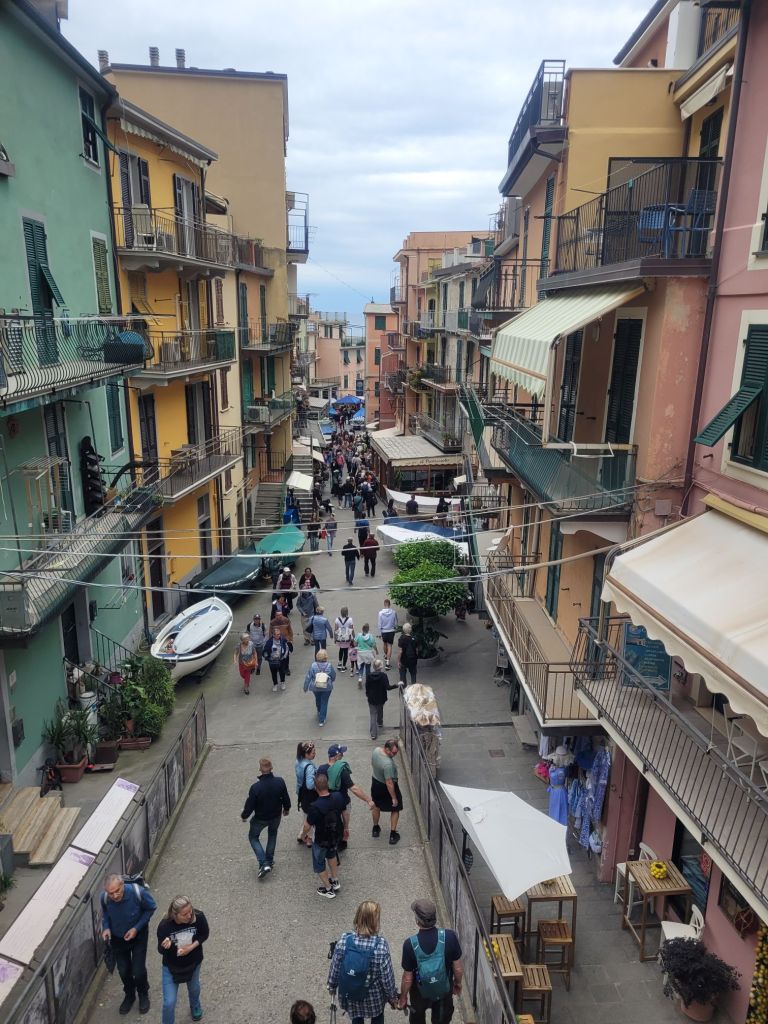
It was very busy. Narrow alleys and staircases ran off the main street to the harbour – a slow walker or careful climber resulted in huge queues. The narrow tunnels cut through the rock provided another bottleneck: it’s blatantly obvious why the locals get so frustrated with the tourists.

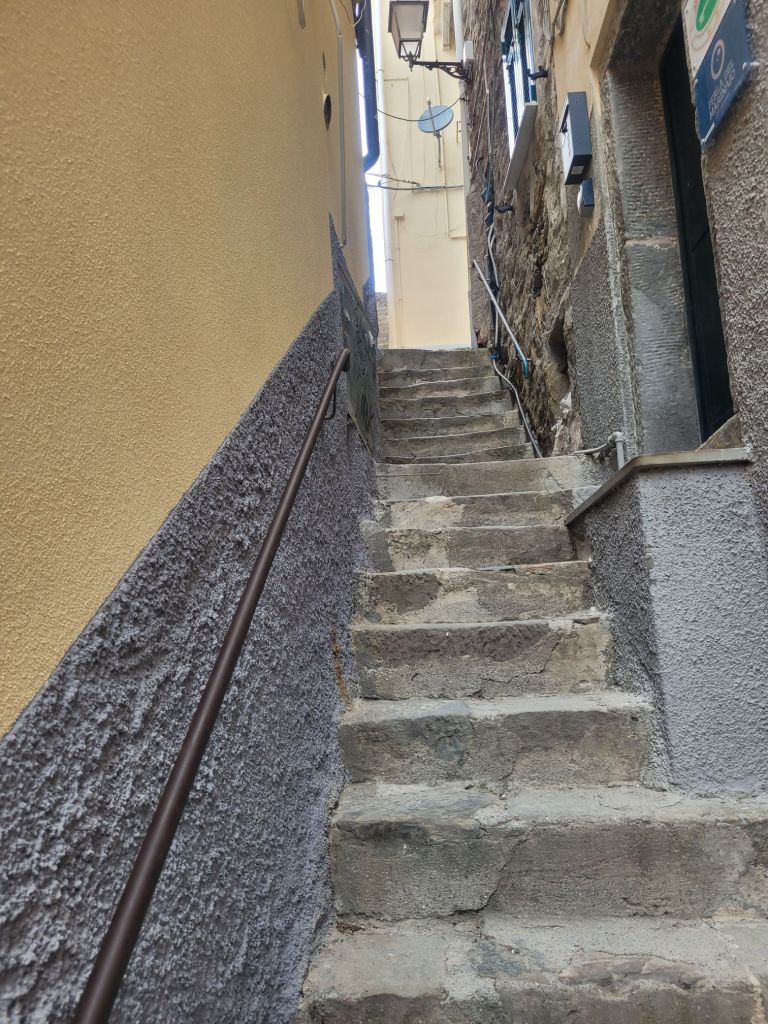

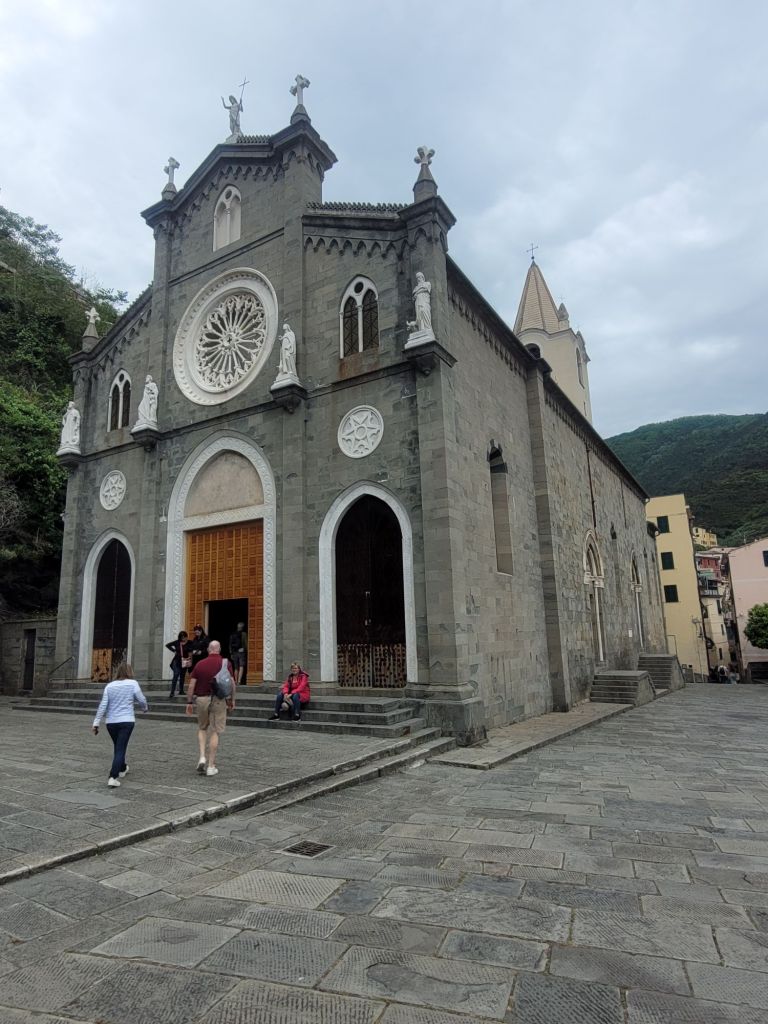
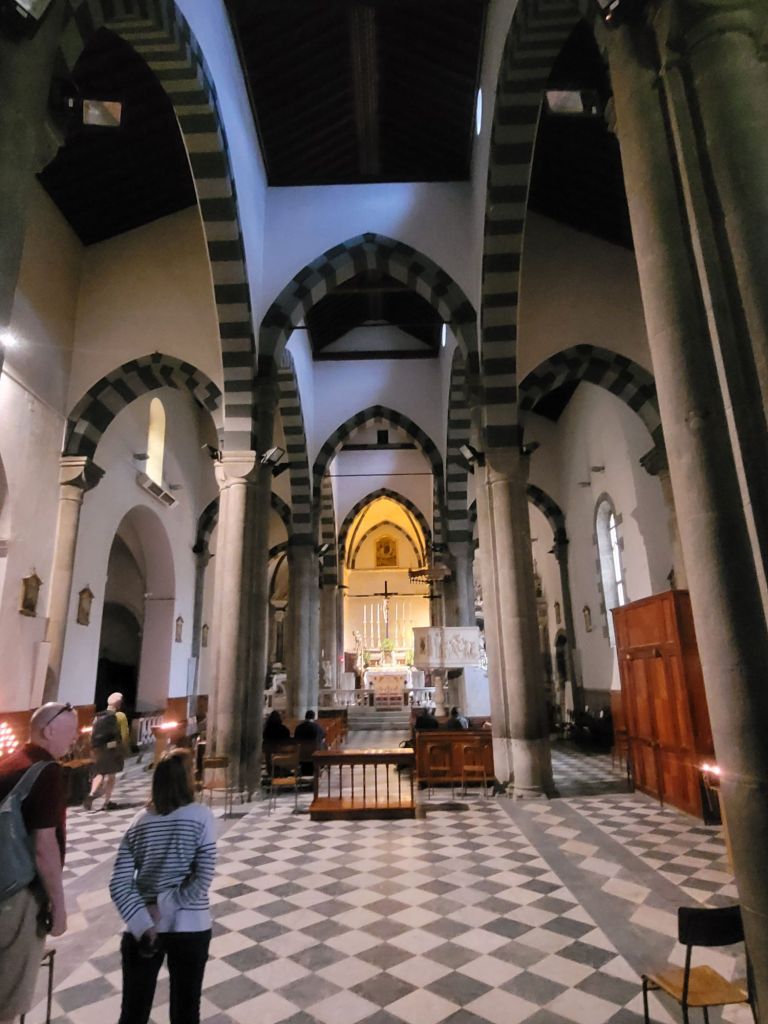
And then it was on to Manarola which was originally (apparently) just a series of bridges over a narrow ravine. Behind the village, a natural amphitheatre has been scooped out of the rock, while streams run behind and under the houses.
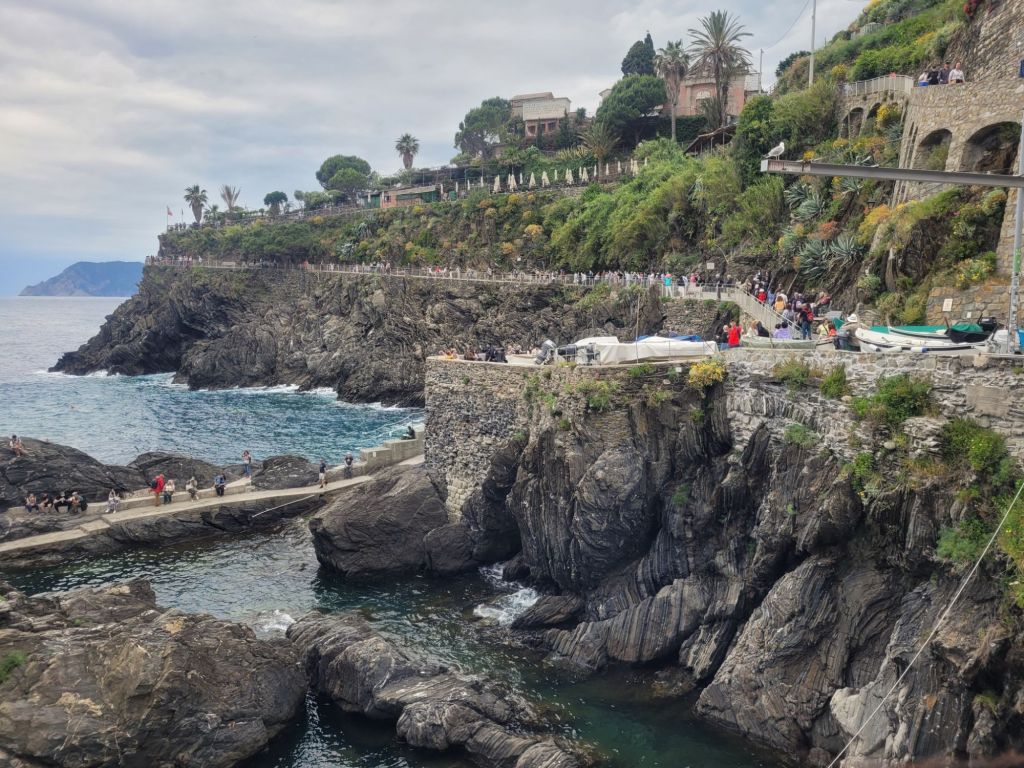
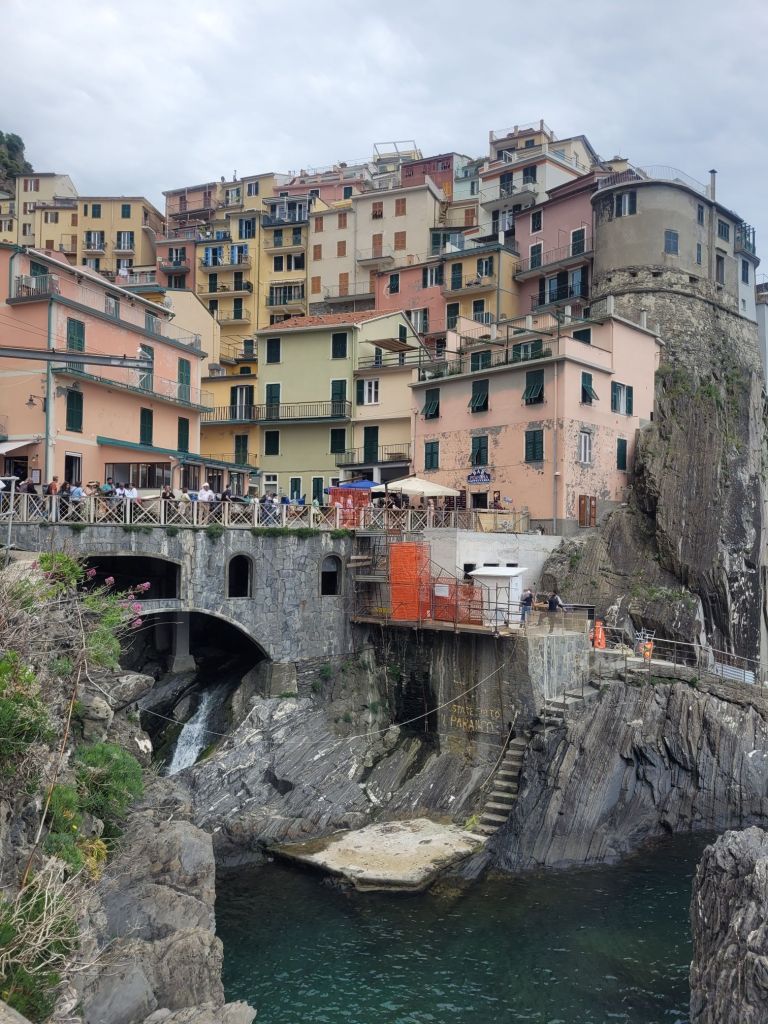

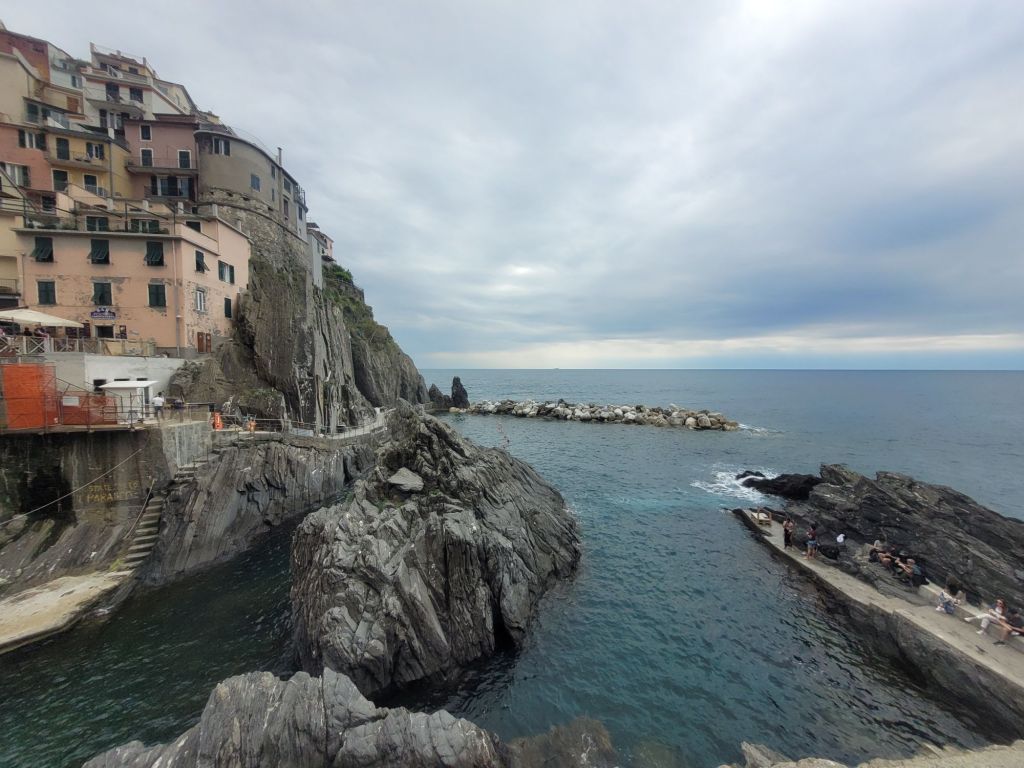

Above the village, the church and its bell-tower kept watch.

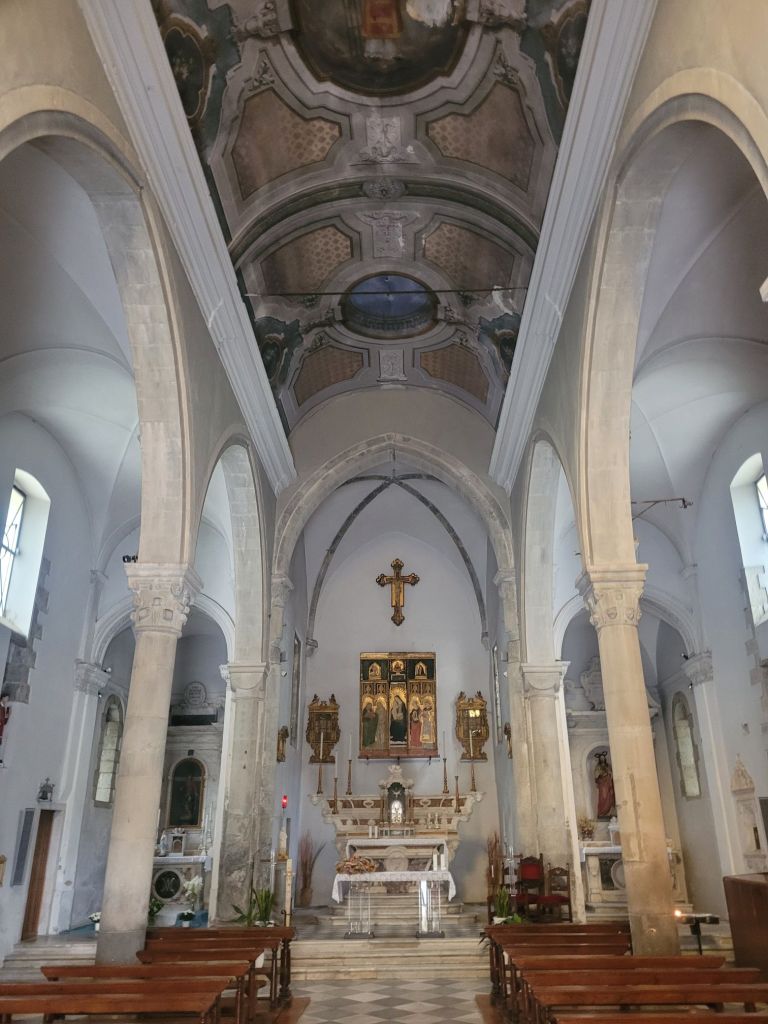
Again, it was packed so we jumped on a train and went off to Corniglia.
In order to get to Corniglia you either take the shuttle bus (packed and a huge queue) or you walk up the 340-plus stairs. They aren’t big steps but it’s still a long way.
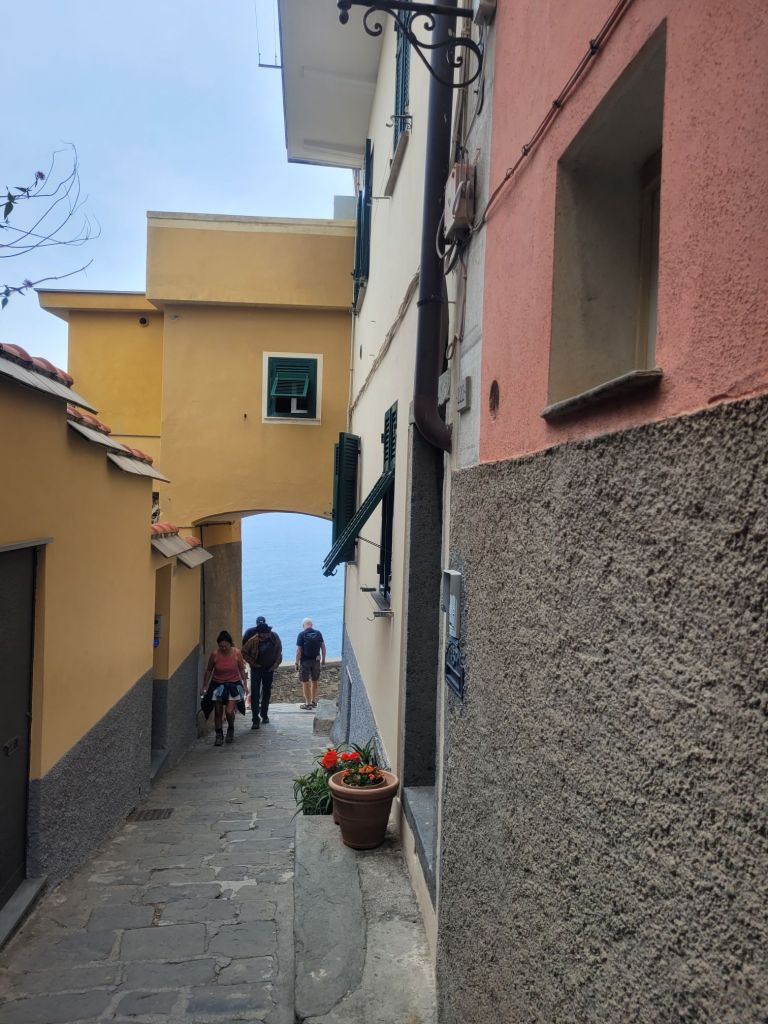
It’s a more restrained place, more stone, less colour; still narrow alleys, still busy and still with the sense of a certain irritation among the locals.

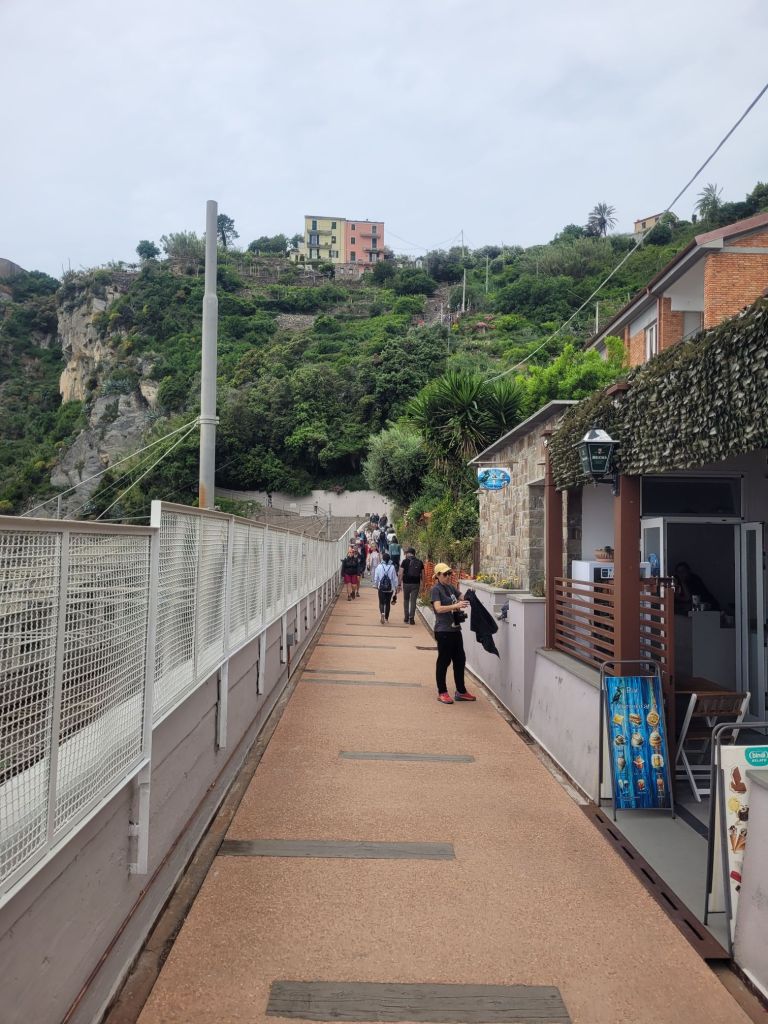
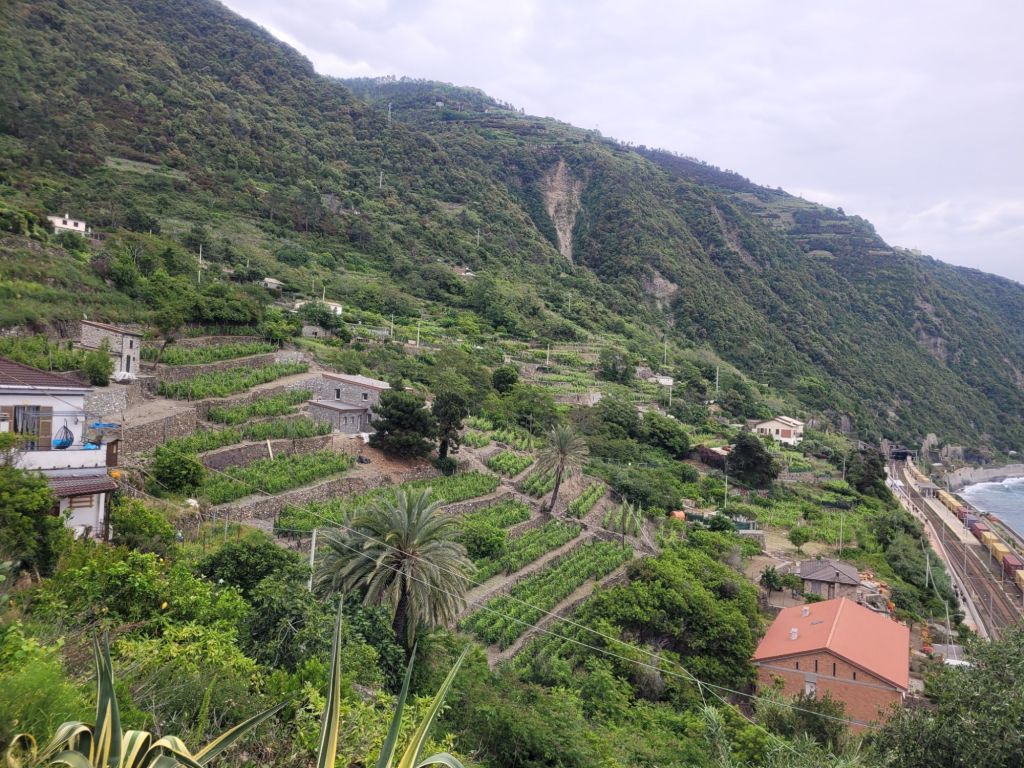
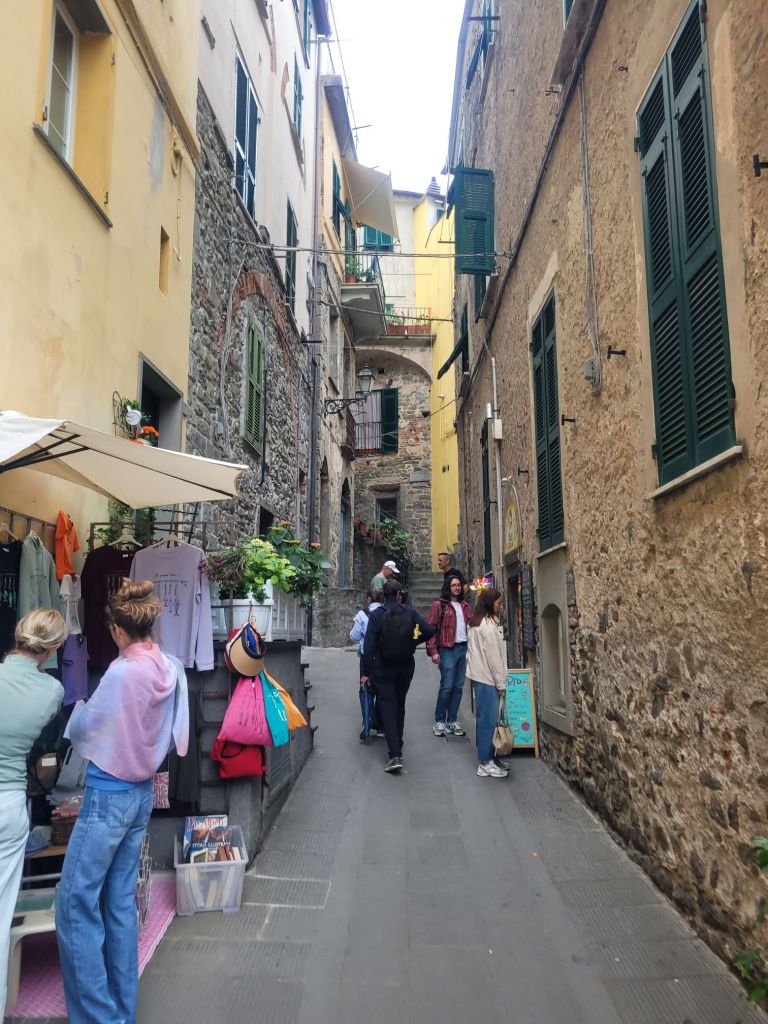
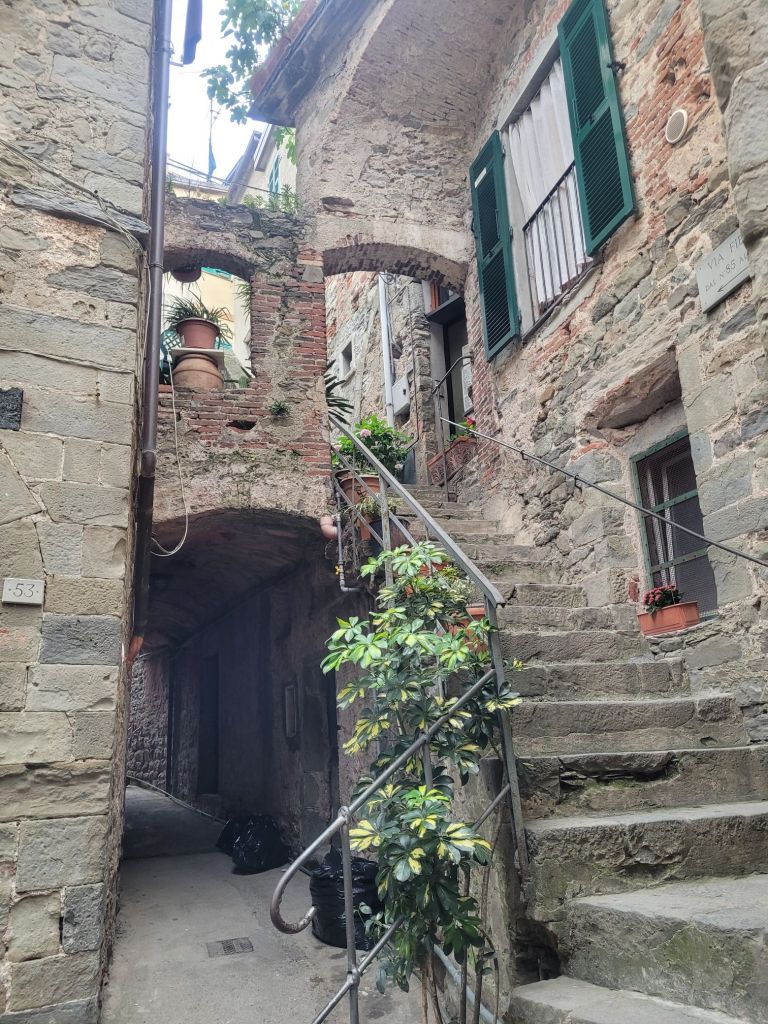
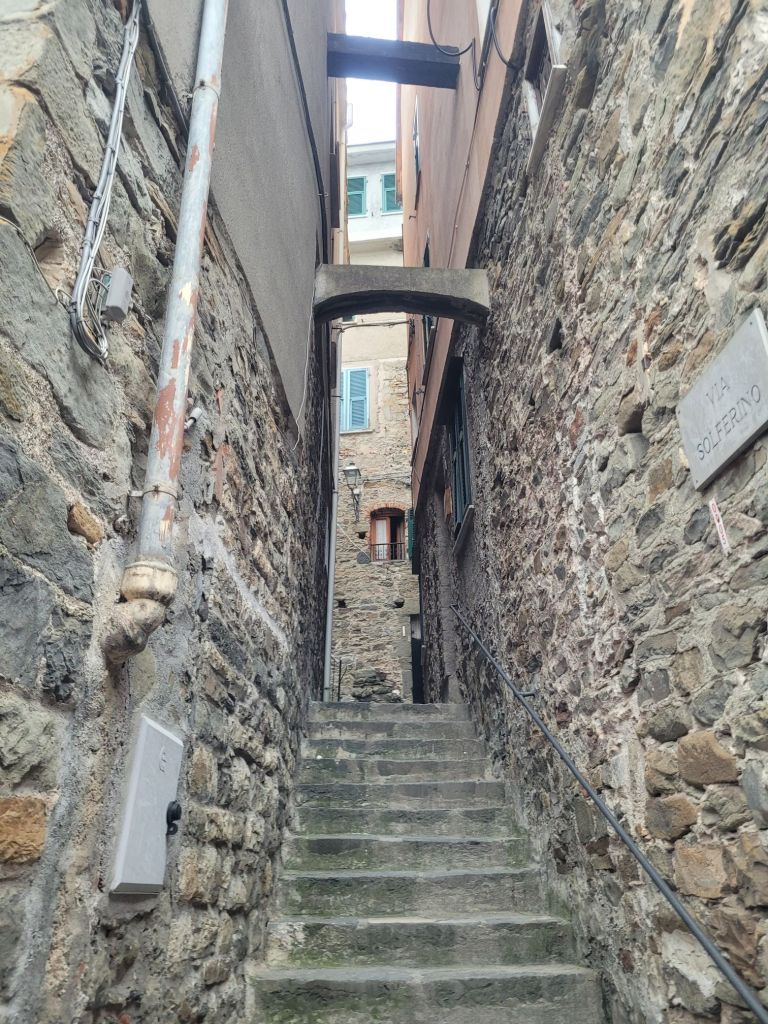
There are some wonderful views from the village.
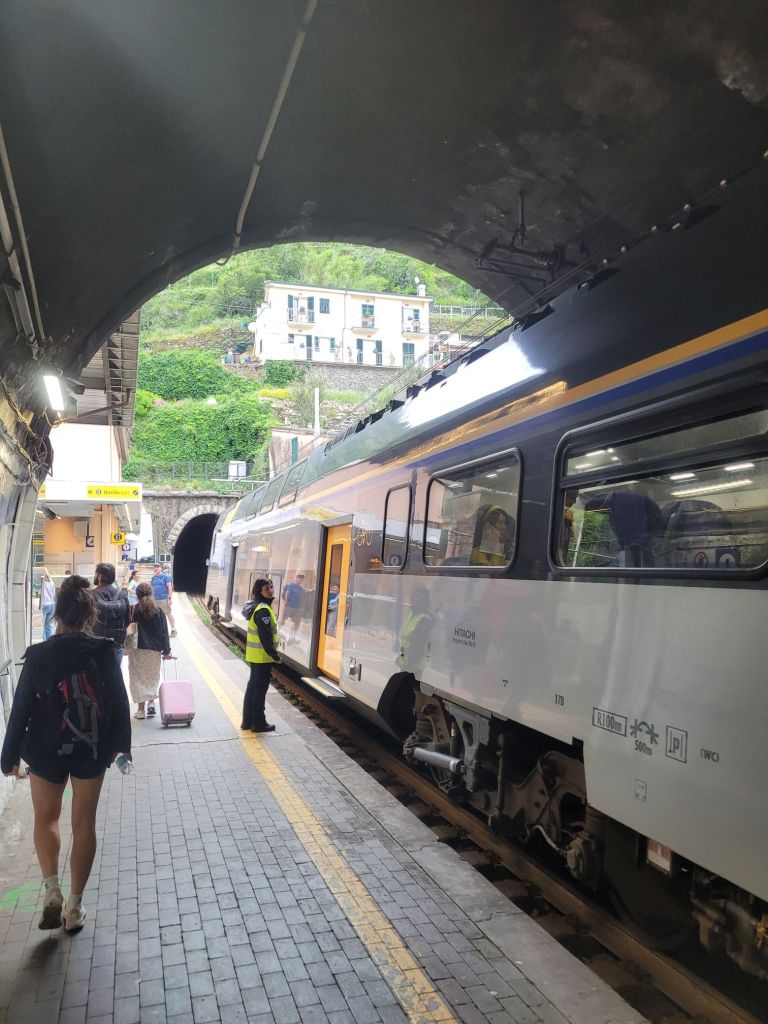
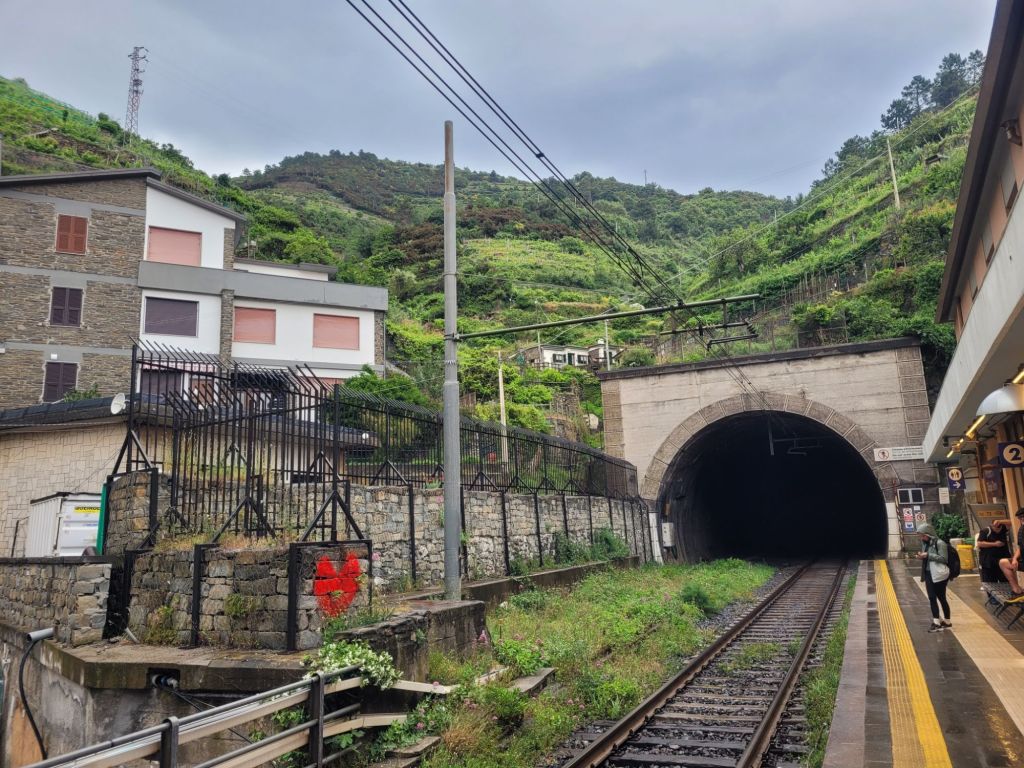
And then it was on to Vernazza, where the platform is so small that most of it was in the tunnel.
Vernazza was very pretty, with a rocky harbour and a grotto-like church right on the water rather than perched above the town.
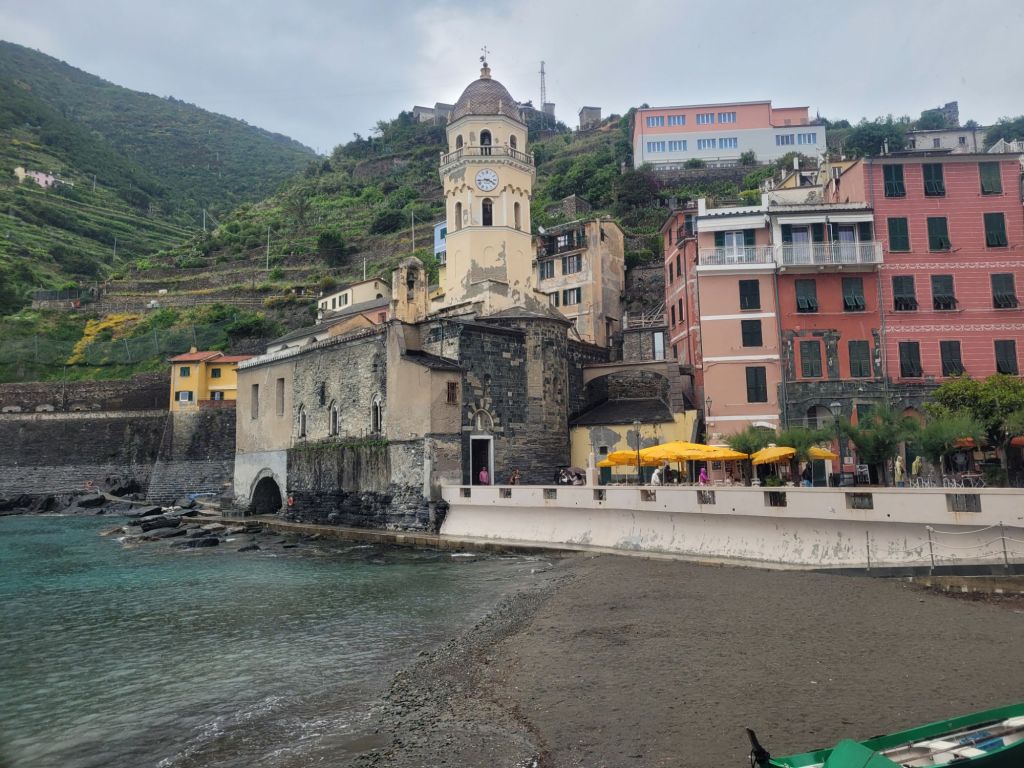
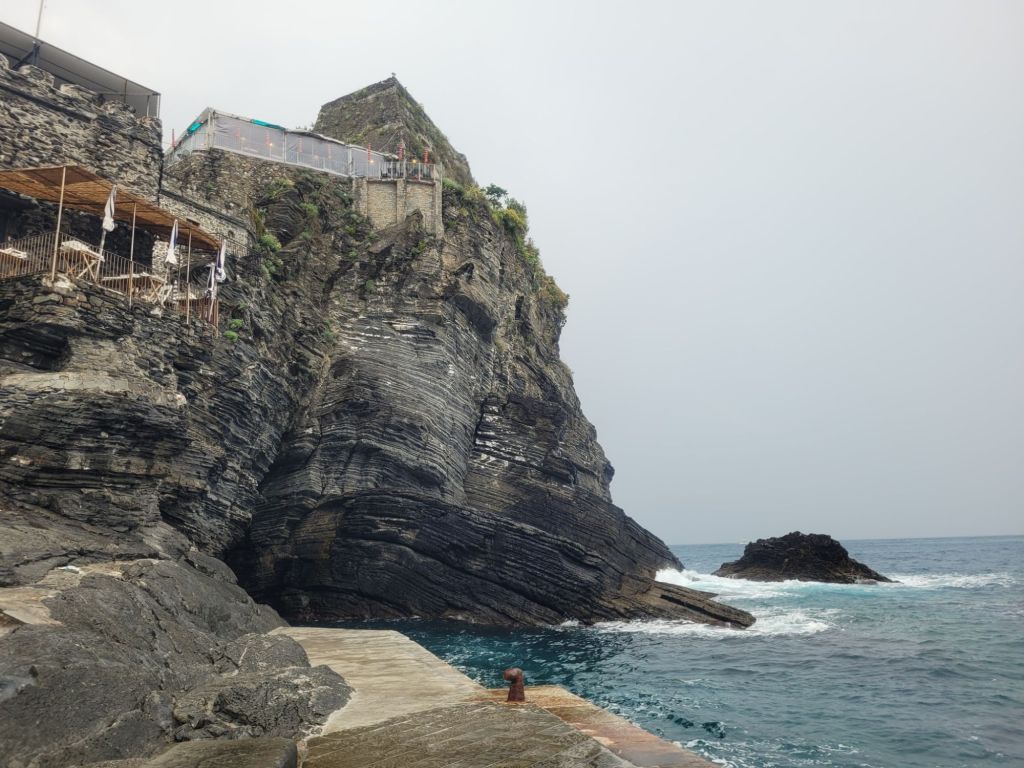
It was raining heavily and every covered area (including the church) was rammed with wet people.
We returned to tranquil Moneglia and bought a bottle of wine.
Several things stuck out. Firstly the sheer weight of people traipsing through the villages. It was May, school term time and poor weather: where did they all come from?
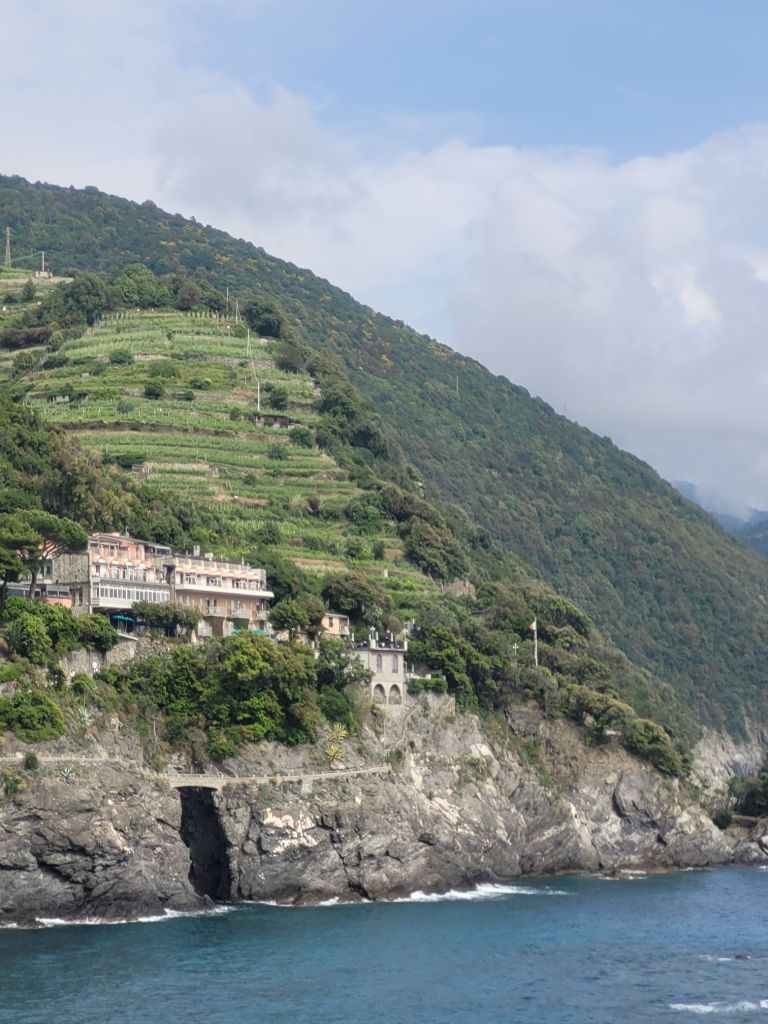
Secondly the grape vines everywhere, tumbling down terraces to the sea, climbing up terraces behind the villages. Just everywhere.

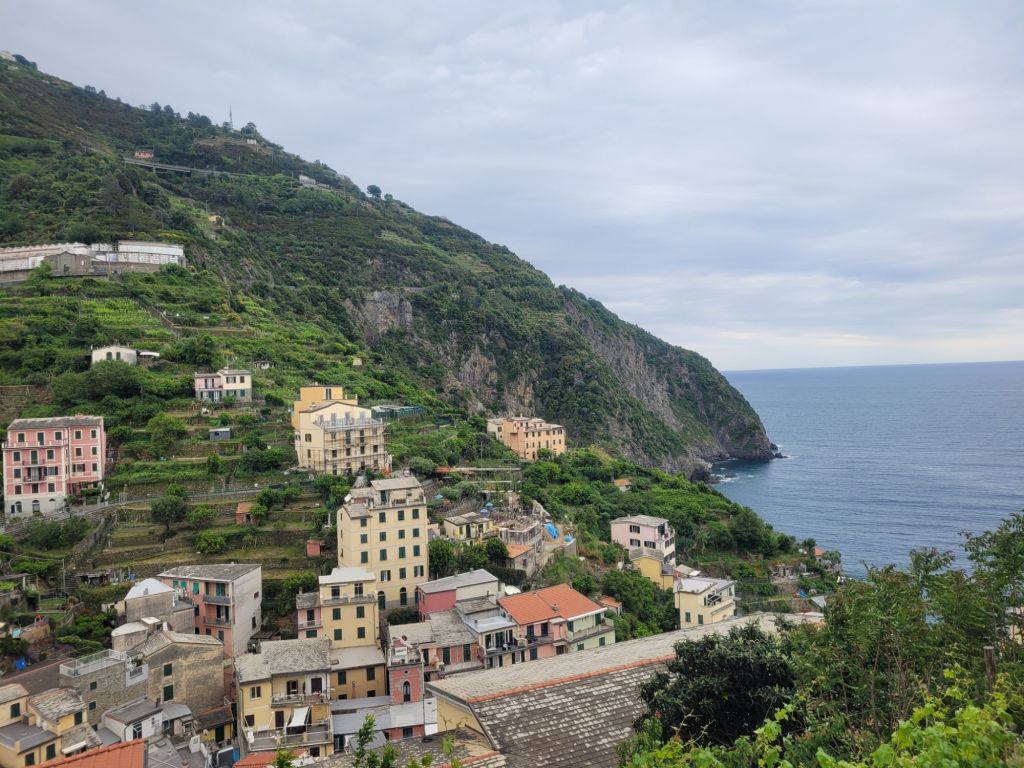

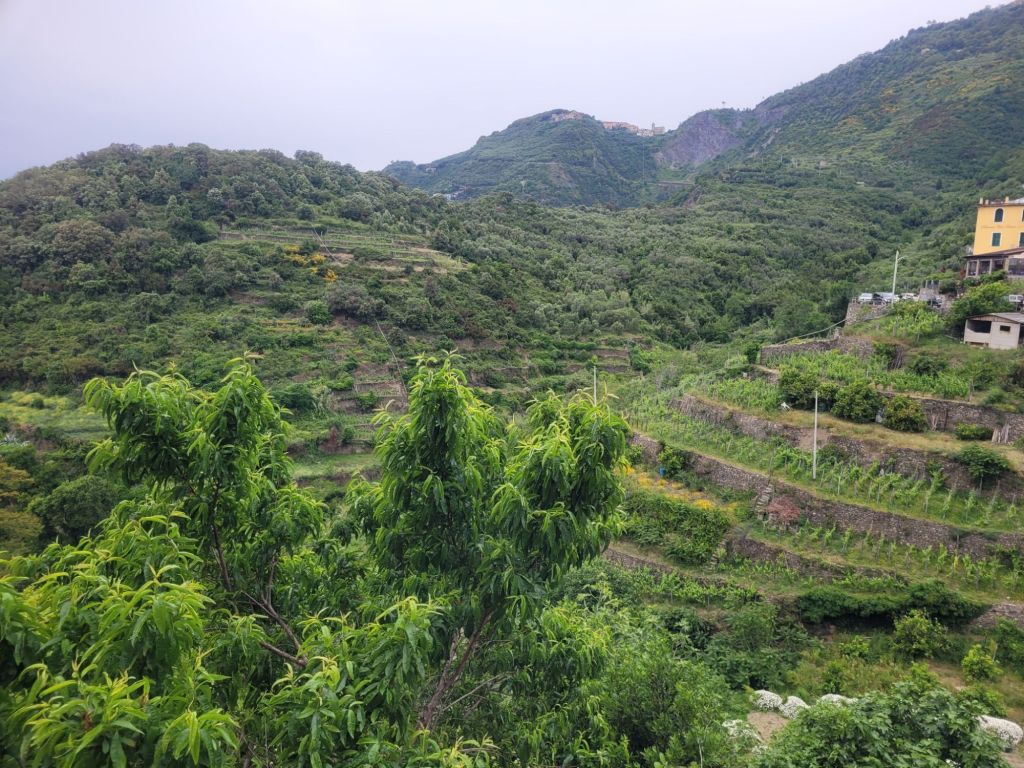
It was interesting, we were glad we had visited, we were very glad we only took a day.
While we might return to the national park to look at some of the inland villages, we are unlikely to return to the coastal villages.
 Retired? What now?