We love Southwest Spain – both the coast and the mountains – and one of its many advantages is finding warmer weather into November.
The start of this trip was no different to many others of ours in this area: a flight to Seville, picking up a car, driving to Carmona and spending our first night in the Parador there. The next morning we set off south to the coast. It was sunny and warm – just what we ordered.

Sanlucar lies (almost) on the Gualdalquivir river and (almost) where the river meets the Atlantic. I say ‘almost’ because the coastline has moved considerably in the past 500 years – what was once beach is now a busy road – and the ‘true mouth’ of the river is said to be opposite the town of Chipiona, about ten kilometers south west of Sanlucar.
Sanlucar grew to an important port partly due to Magellan, who set sail from Seville (upriver) and took on his final provisions in Sanlucar before setting out to circumnavigate the globe. So Sanlucar was Magellan’s final port on the Spanish mainland.
(Of course, he did stop off in the Canaries – Tenerife to be precise – and they also make a great deal of it.).
There are several references to Magellan’s voyage through the town, focusing especially on his little known Spanish (or Basque?) crew member, Elcano, who returned from the voyage with 17 crew on the Victoria (out of 260-ish), Magellan having died in the Phillipines.
More important is the production of Mazanilla, which only comes from Sanlucar de Barrameda. Like sherry, Manzanilla is made using the Solero tecnique, but it isn’t quite the same as sherry from Jerez, which is 30 kilometers inland. This was repeated several times on our bodega tour. I think I grasp the difference (after repeated questioning) but lack confidence in my understanding – and to those who produce Manzanilla the differences are profound and significant.
Another claim to fame is its proximity to the Doñana National Park, which is just across the river. And it was the gastronomic capital of Spain in 2022.
So while we didn’t have the highest of expectations, we felt there would be enough to entertain us for a few days, and we would be by the sea.
What a pleasant surprise!
The outskirts of the town were fairly standard, but the centre was buzzy and, while not outstanding in its architectural beauty, pretty enough. Of course, it was helped by the sunshine. It was easy to walk around: the car stayed firmly in the hotel car park for the whole stay.
The centre of the new town was very lively – even on a Monday evening.
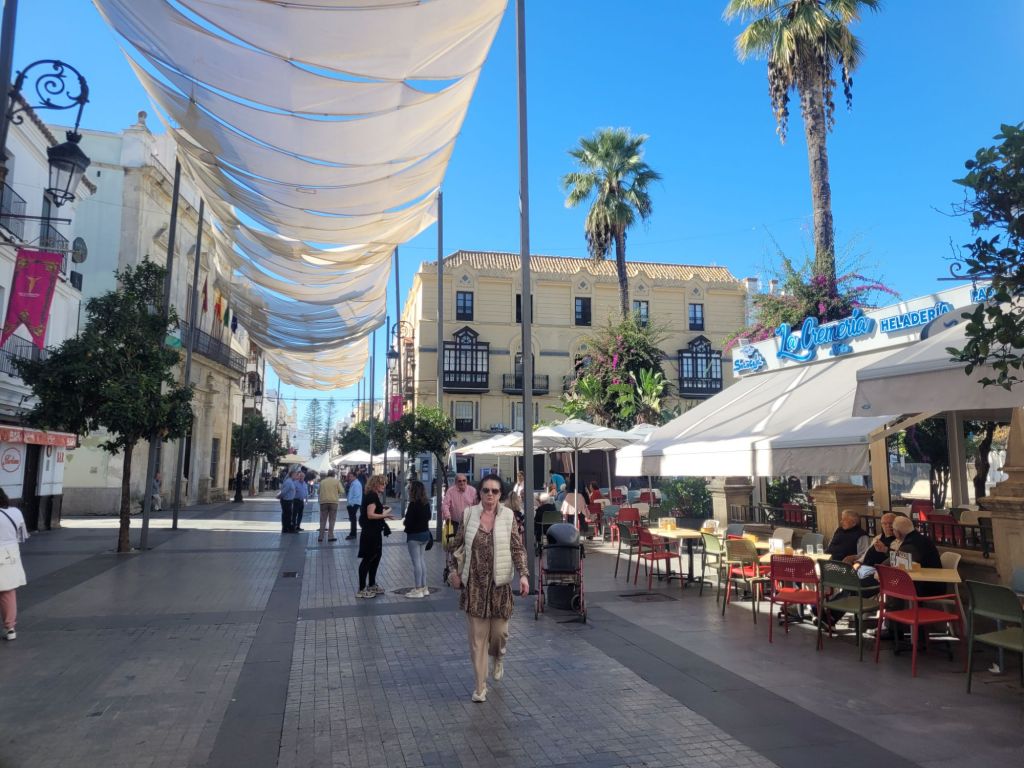

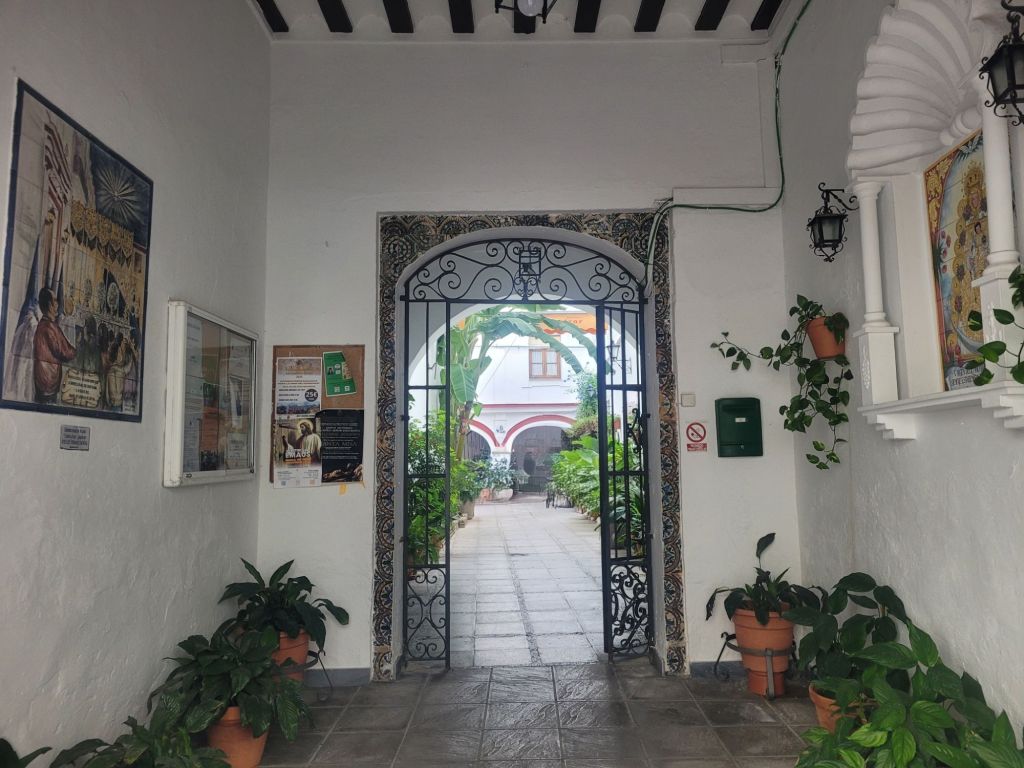
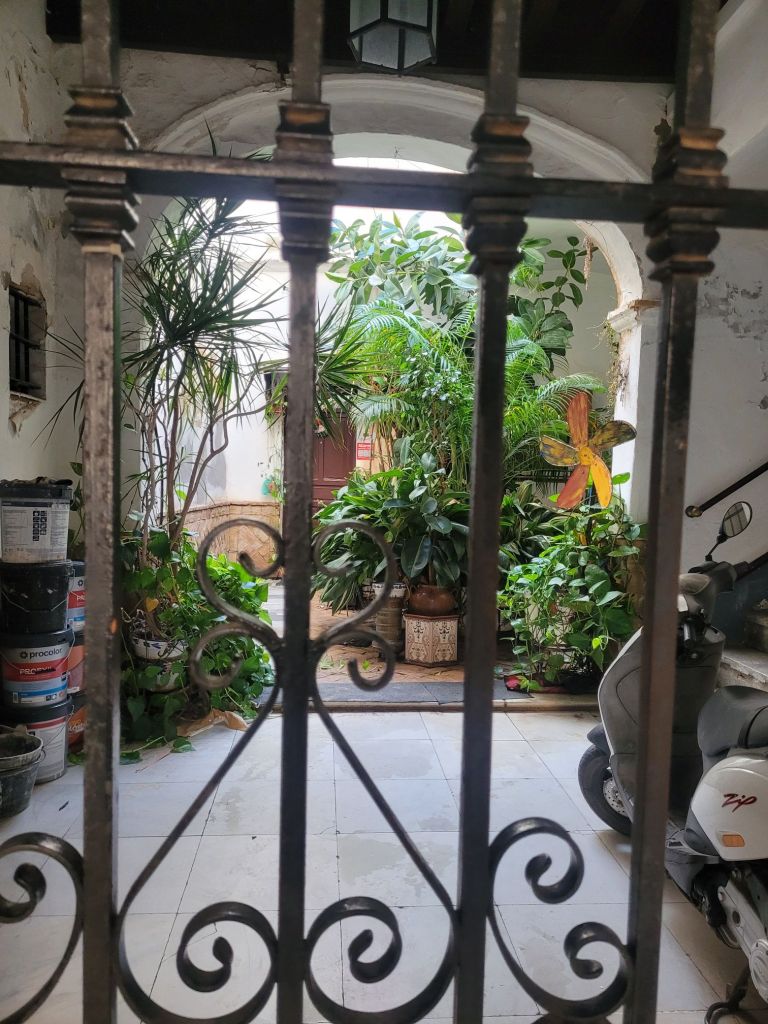
There were the standard white-washed houses with black ironwork around the windows on narrow roads, with glimpses of patios through open doors.

An enormous beach – technically it must be a river beach, but it’s close enough to the Atlantic to have small waves.
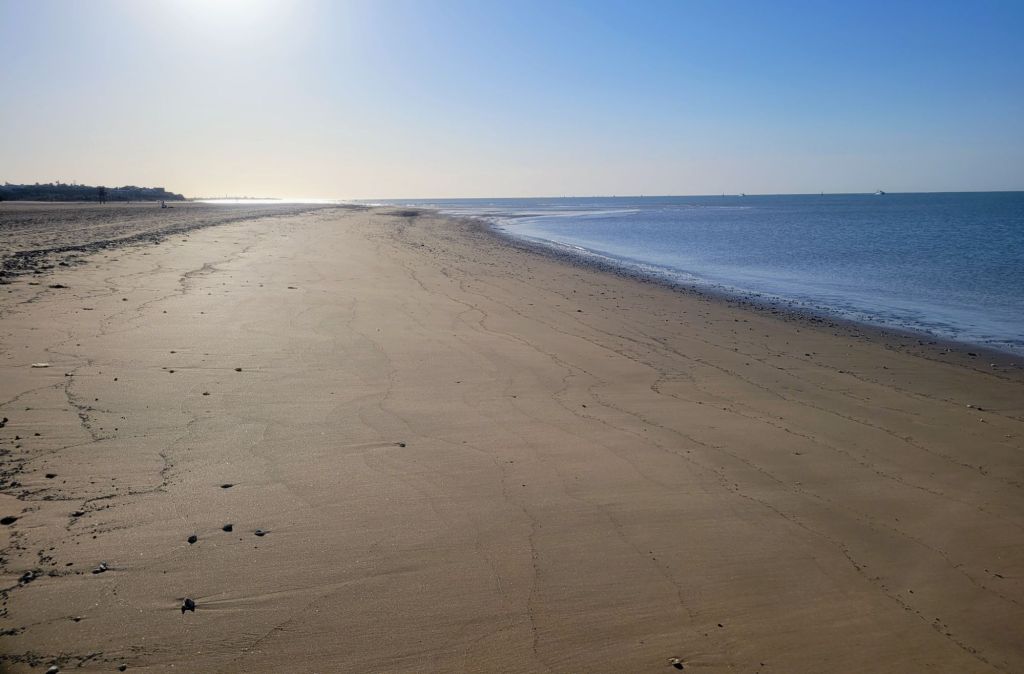
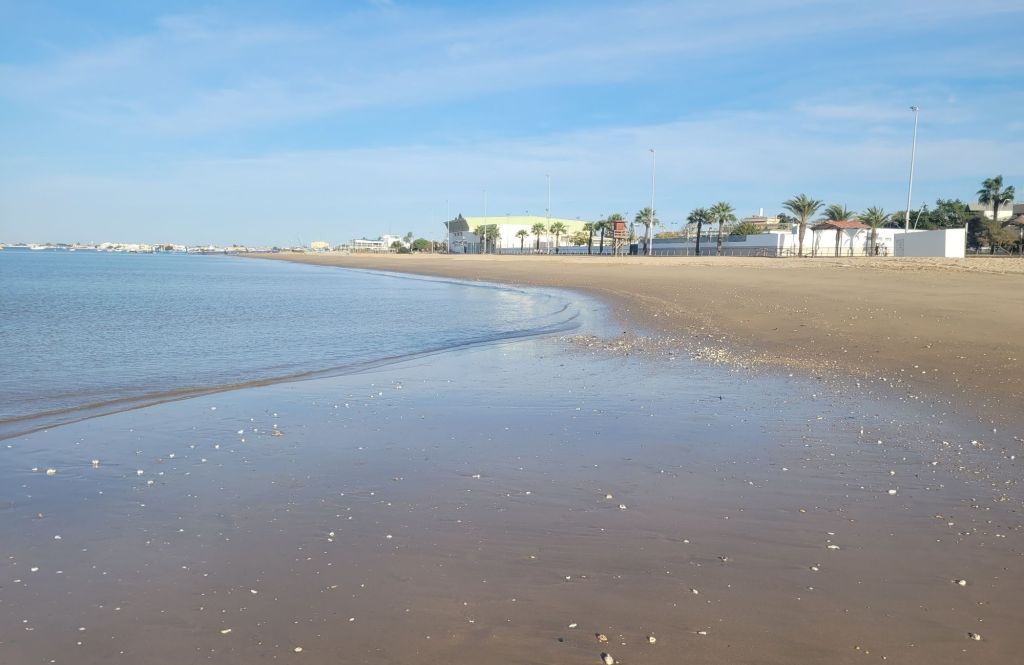
The sand was wonderful – soft, pale, warm: sadly quite littered with cigarette butts, plastic bags, nurdles and other ‘stuff’. There had been a lot of rain the previous week, with flooding in Seville and Huelva, so maybe it washed more rubbish downriver or the drains overflowed. But I doubt it.
Above the town is a castle, surrounded by the ‘old town’. It’s well worth the short climb and the views from the castle are spectacular. Apparently Isabella (of the Reyes Catolicos fame) visited and first saw the sea from an upstair window of the tower of Homenaje.
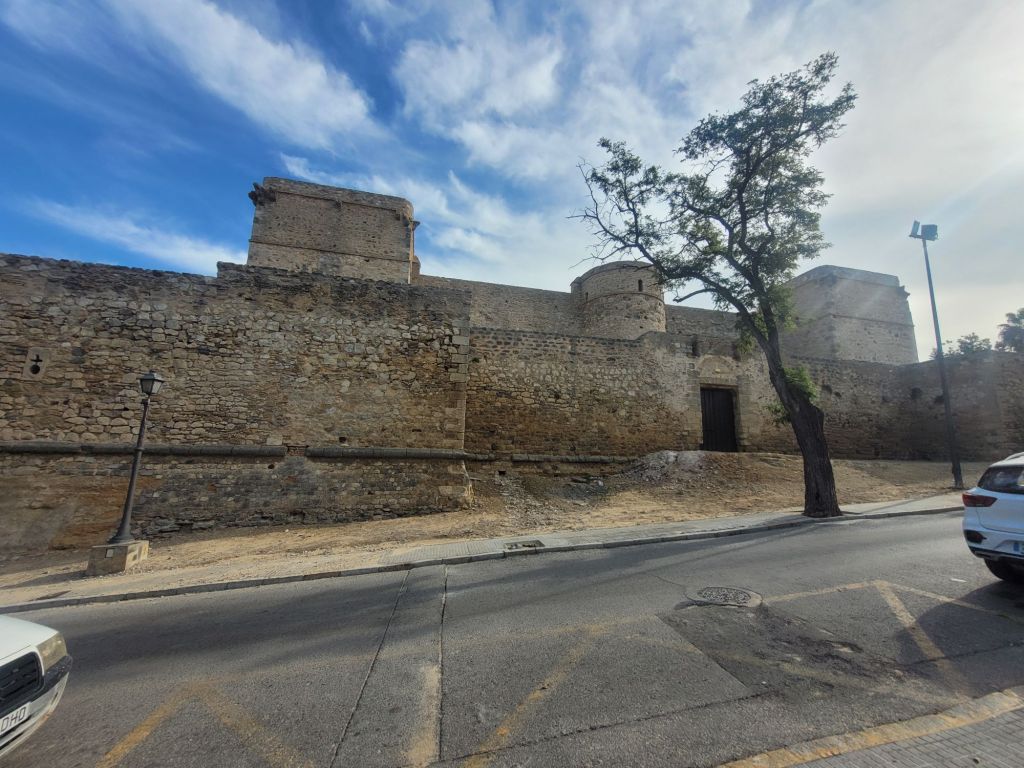
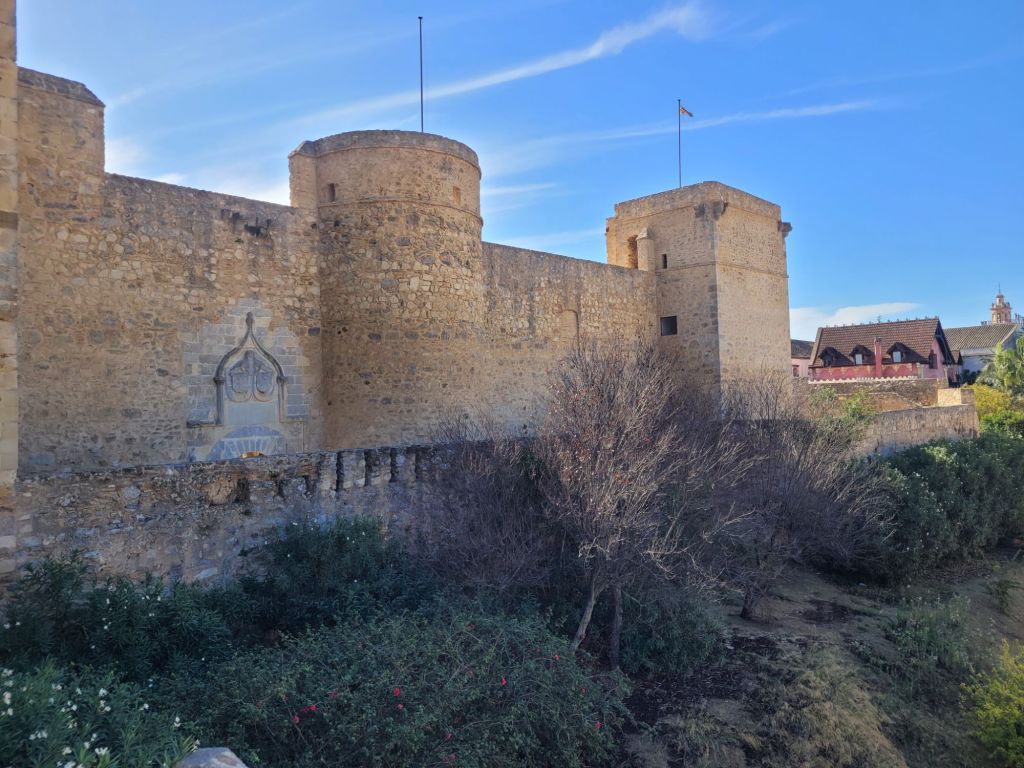
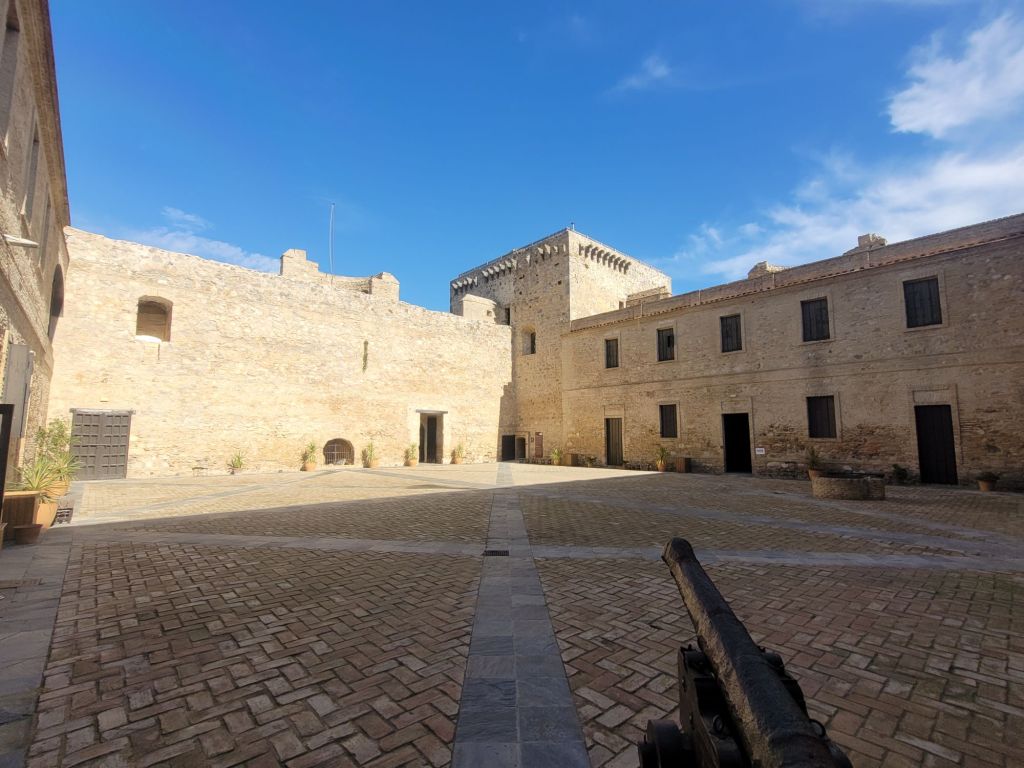

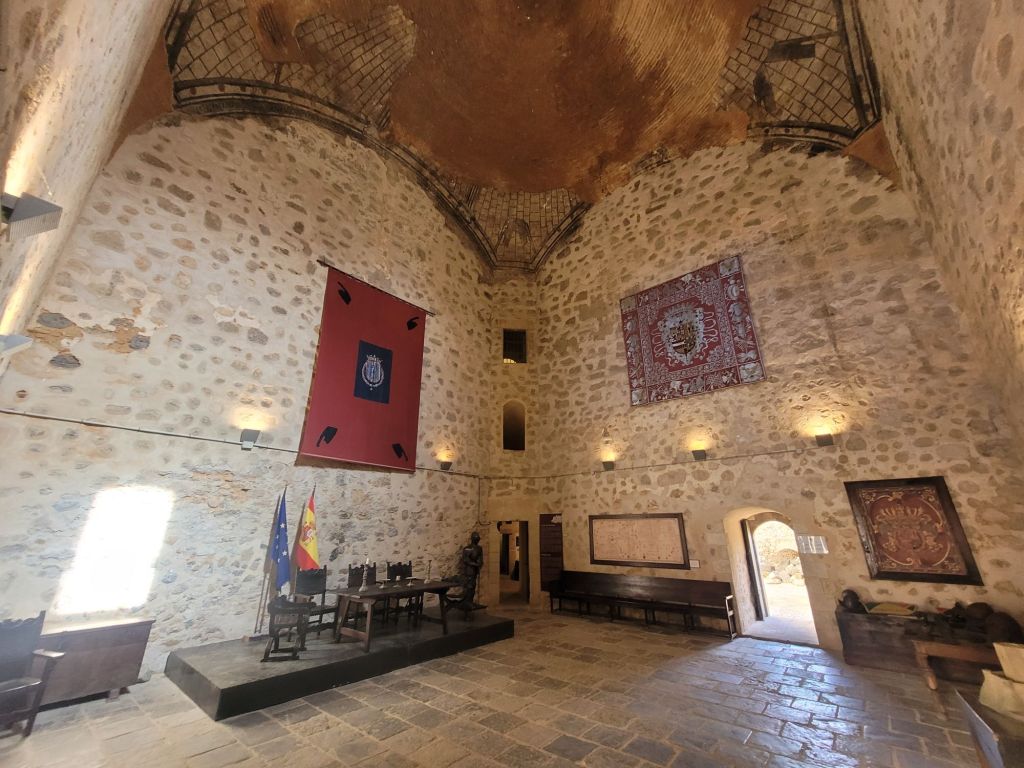
There was a rather weird online guide to the castle which we quickly ditched (low on factual content and high on dubious characterisation). Signage, however, was minimal so perhaps this was a mistake. I did listen long enough to dicover that there was a tunnel between the castle and the more comfortable palace of the then owners – the Medina-Sedonia family.
The tower housed several floors of presentations on Magellan’s voyage, the Armada and Cervantes (who spent some time in Sanlucar de Barrameda). It was quite interesting reading about the Armada from the Spanish perspective – apparently Sir Francis Drake was a ‘Corsair from Holland’.
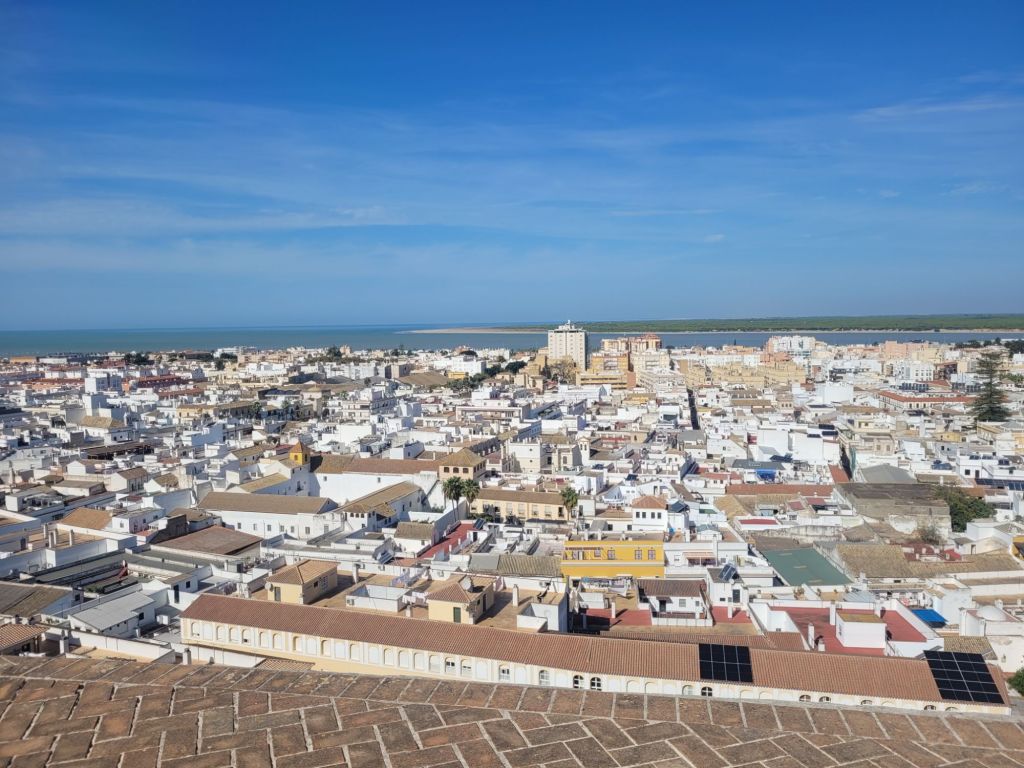
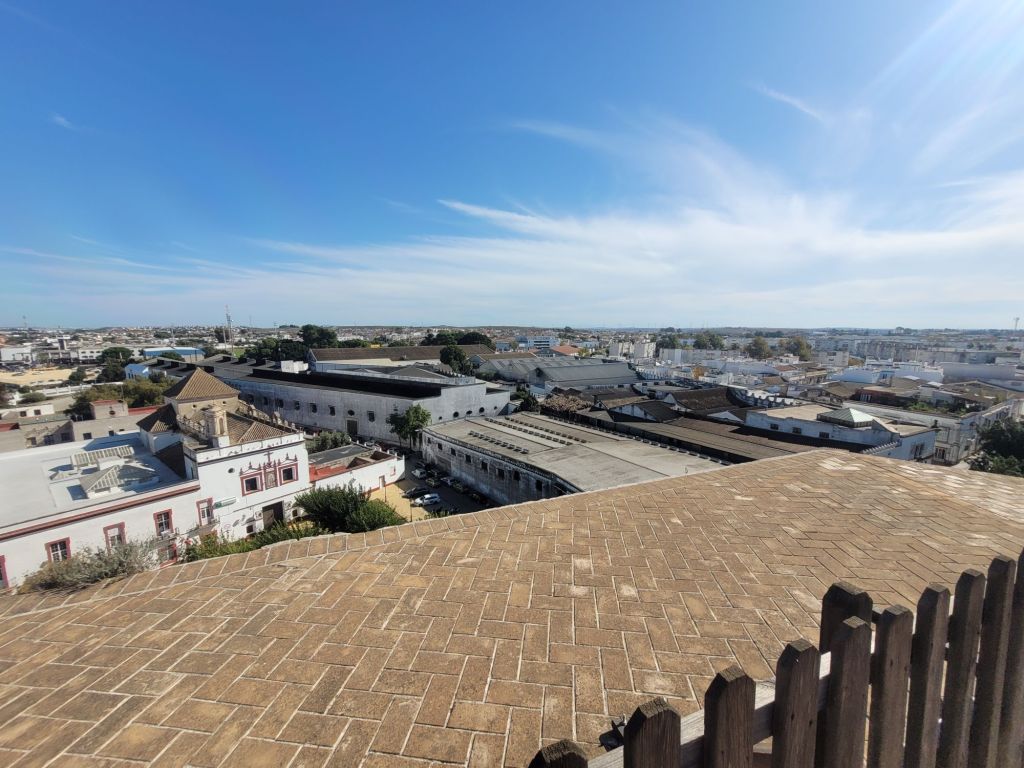
There are many bodegas producting Manzanilla – I think at least 16 – most of them have their main aging area somewhere where they can take advantage of the cooler sea breezes. We visited the Barbadillo bodega and museum, right next to the castle, which was worth the entry fee if only for the buildings and the smells.
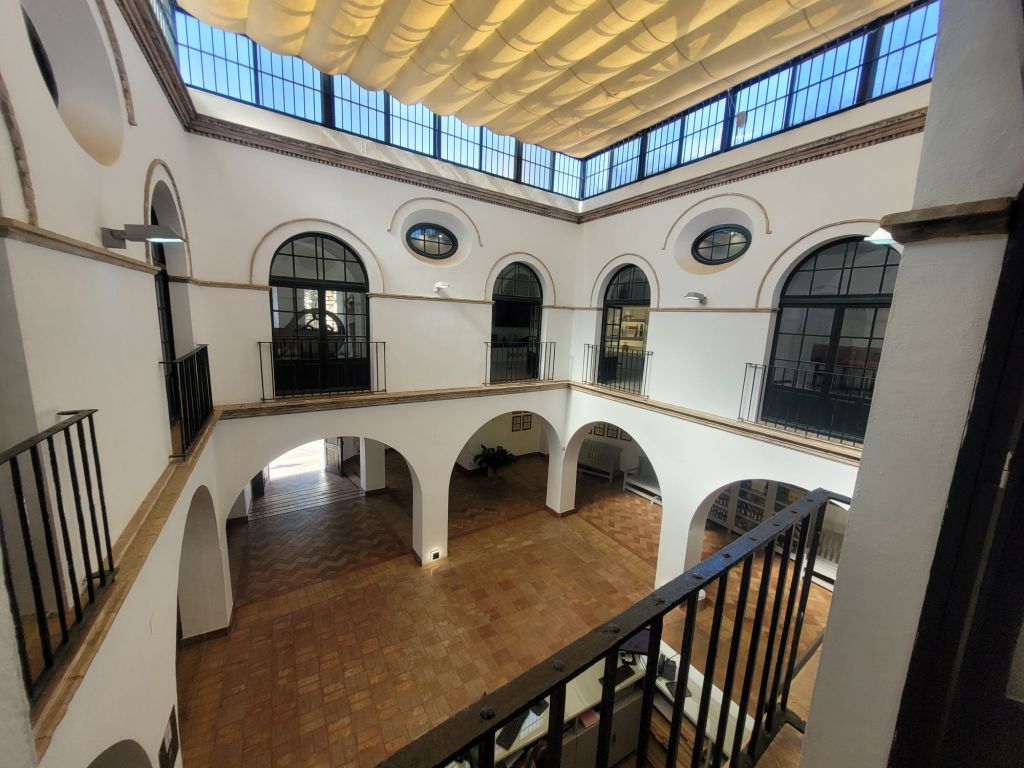


The tasting involved a white wine made of Palomina grapes – the ‘base’ Manzanilla grape variety, grown locally. Then a five year old Manzanilla, an eight year unfiltered ‘Pasado’ – which is the oldest a Manzanilla can get – an oloroso and a cream. It was all delicious. Purchases were made at the extensive shop, which included a few bottles of over 100 year old bottles for a 10000 euro price – needless to say we did not buy one of those.
The top of the town, around the castle, has larger palaces and houses, mostly white but with the odd burst of colour.

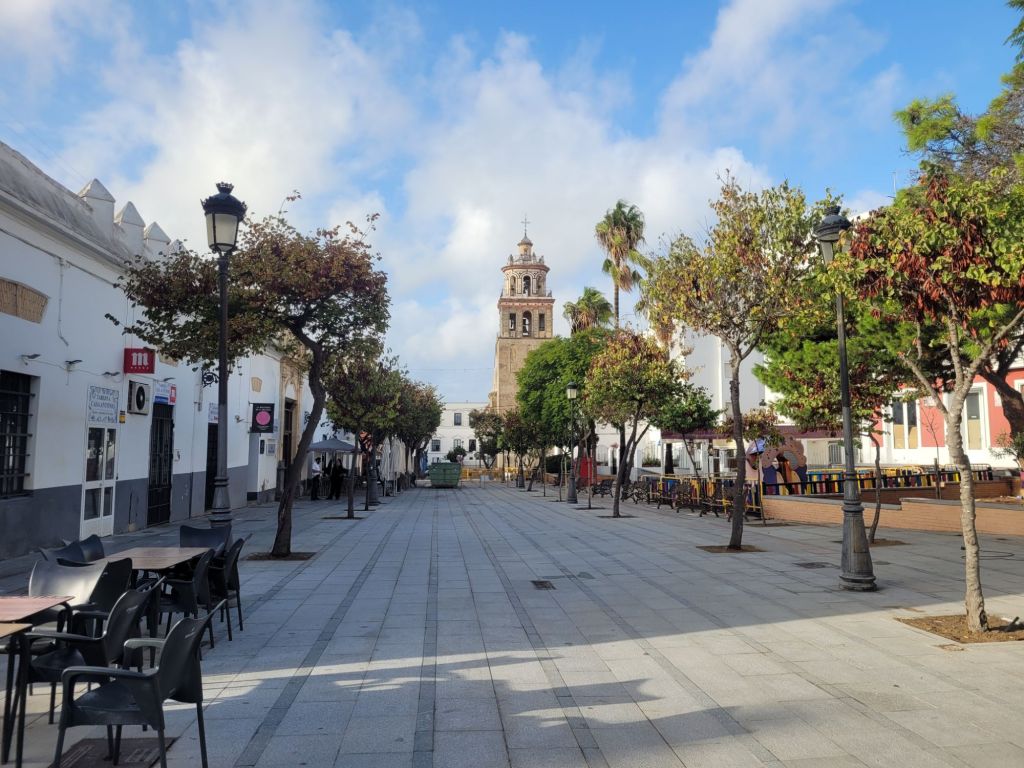
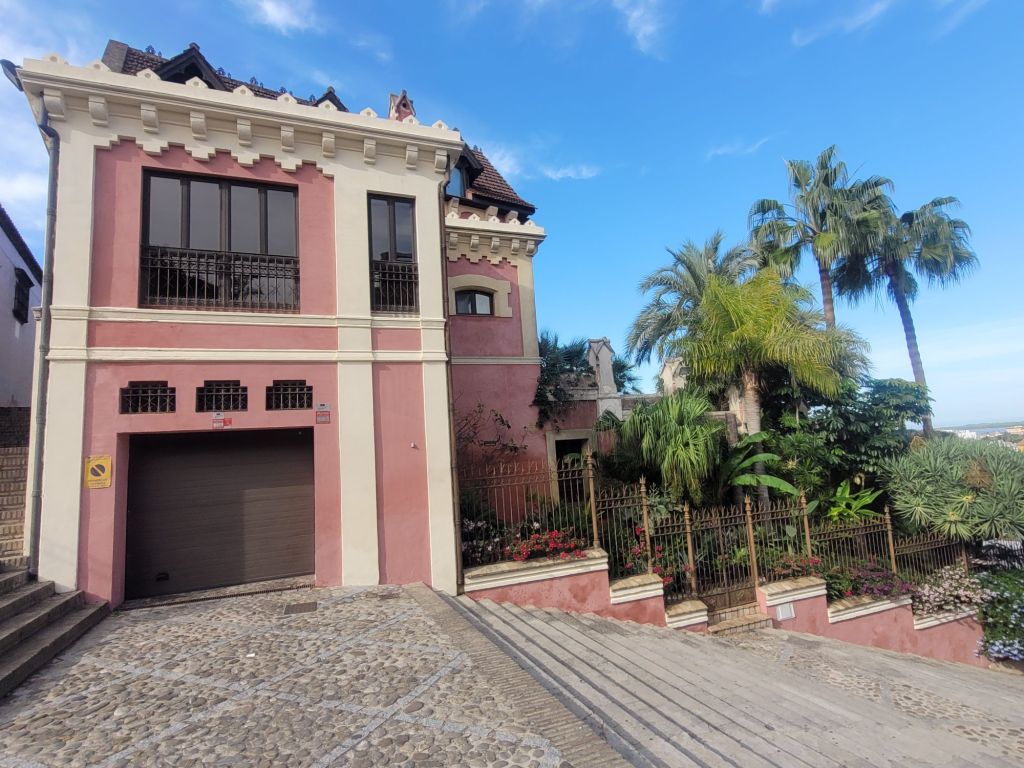
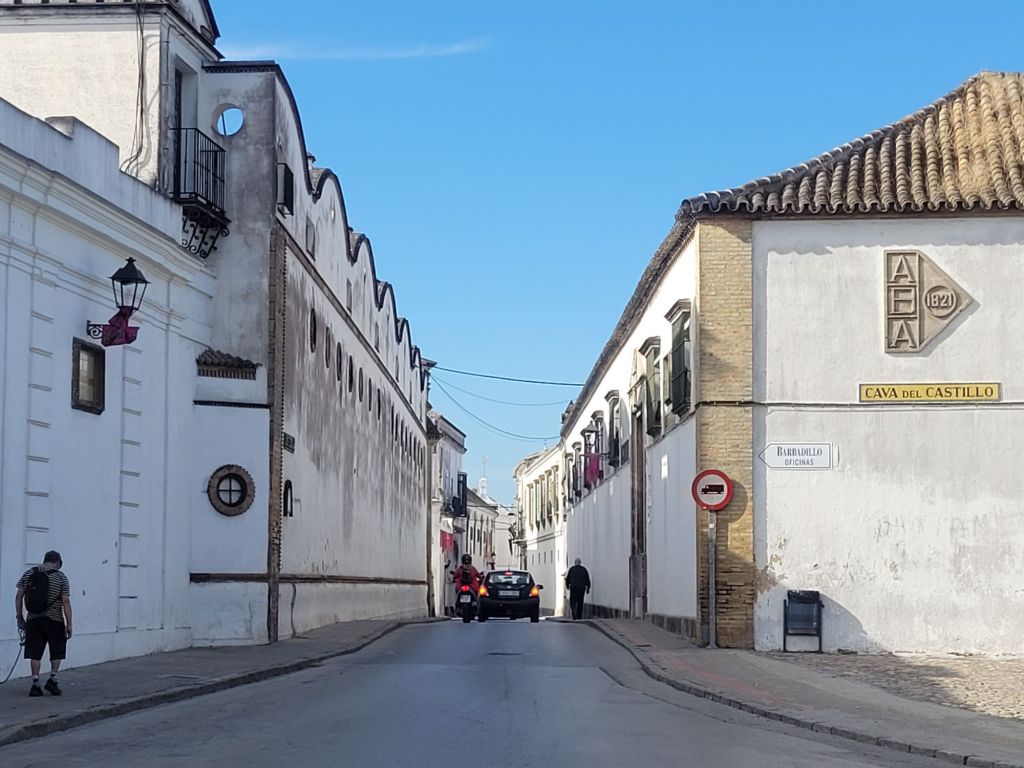
But you are never in any doubt as to the importance of the bodegas.

Another feature of the town is the number of convents and their links to the New World – both directly in terms of setting up a religious establishment or through their archictecture. These links are detailed in the information boards outside each building, alongside the age of the building and the architects.
The other ‘big’ thing to do is visit the Doñana National park, which lies just across the river. It was established in the 1970s and considered to be unique in Europe for comprising four distinct ecosystems: beach, dunes, forest, marsh. The park itself is surrounded by what is called a ‘Natural’ park, which has fewer restrictions and is open to exploitation by local agribusiness (recent water extraction from the aquifers is causing significant concern). Entry to the National park can only be done on an organised tour; there are also a few signposted walks around the two visitor centres.
The tour starts from the Ice Factory, which now houses a small museum and a ticket office for the tours. Each group crosses the river on a ferry, hops on board an all-terrain minibus and you get driven around the various ecosystems with a commentary from the driver.

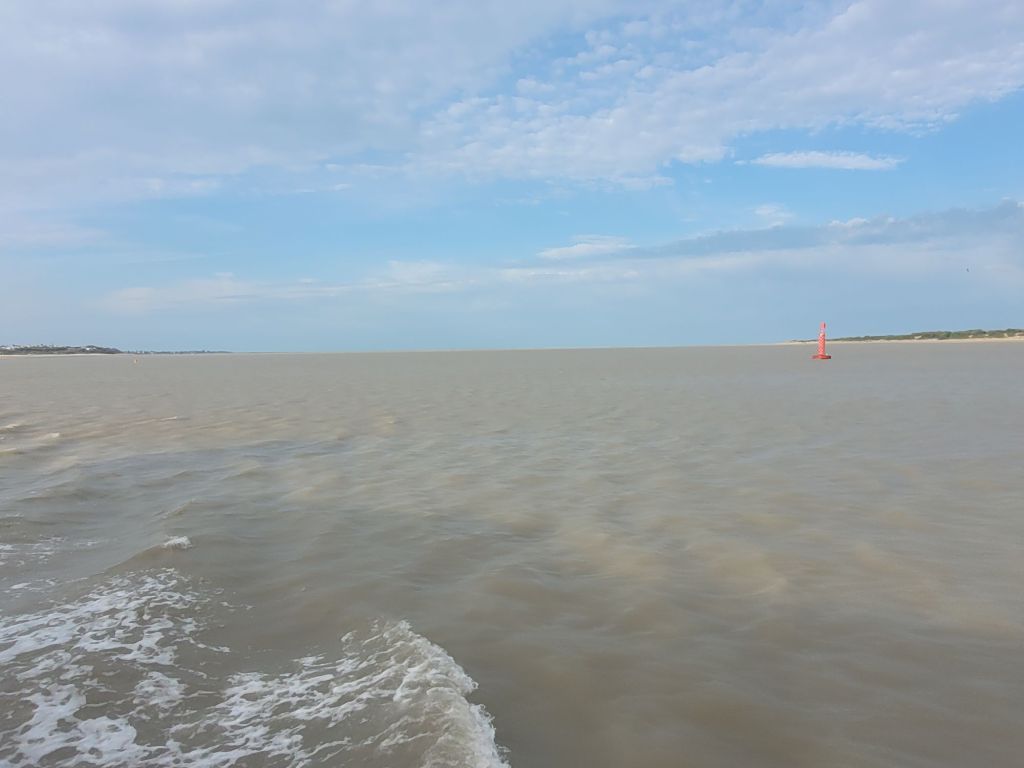
It was hard to take pictures due to the extreme bumpiness, in fact there is a warning about the bumpiness before you buy the tickets and as you board the ferry. As a consequence there are few pictures.
The beach is public, people can walk and ride bicycles along it, but they cannot set foot inside the boundaries of the park. Cockle gatherers (a traditional occupation) can bring their vehicles onto the beach as long as they have the relevant licence. A scattering of mopeds were parked up, each surrounded with buckets, nets, bits of wet suit and men organising themselves to harvest cockles beforr the storm arrived in the afternoon. Sadly the beach is also littered with empty plastic jerry cans, evidence of the drug traffickers that blight this part of the coast. Because of the importance of the beach, it can’t be cleaned with machines, so plastic is collected by hand. Last year they picked up thousands of kilograms of waste plastic washed up onshore. The guide got quite passionate about the problem of ocean plastics.
The dune area constantly shifts, with a type of shrubby tree that is able to ‘move’ with the dune because its roots can survive out of the sand. It’s quite weird to see. We bounced and jounced past a solitary brick tube standing at least five metres high. It had been a well shaft whose top had previously been at floor level – sadly no time scale was given.
The pine trees are not native to this area (at least not in these quantities). They were the result of the ‘owners’ (yes, that pesky Medina-Sidonia family) who planted row upon row of pine trees to: farm for pine nuts, use as wood, and try to stabilize the shifting dunes. Pine trees don’t survive the shifting dunes and eventually become covered over and die.
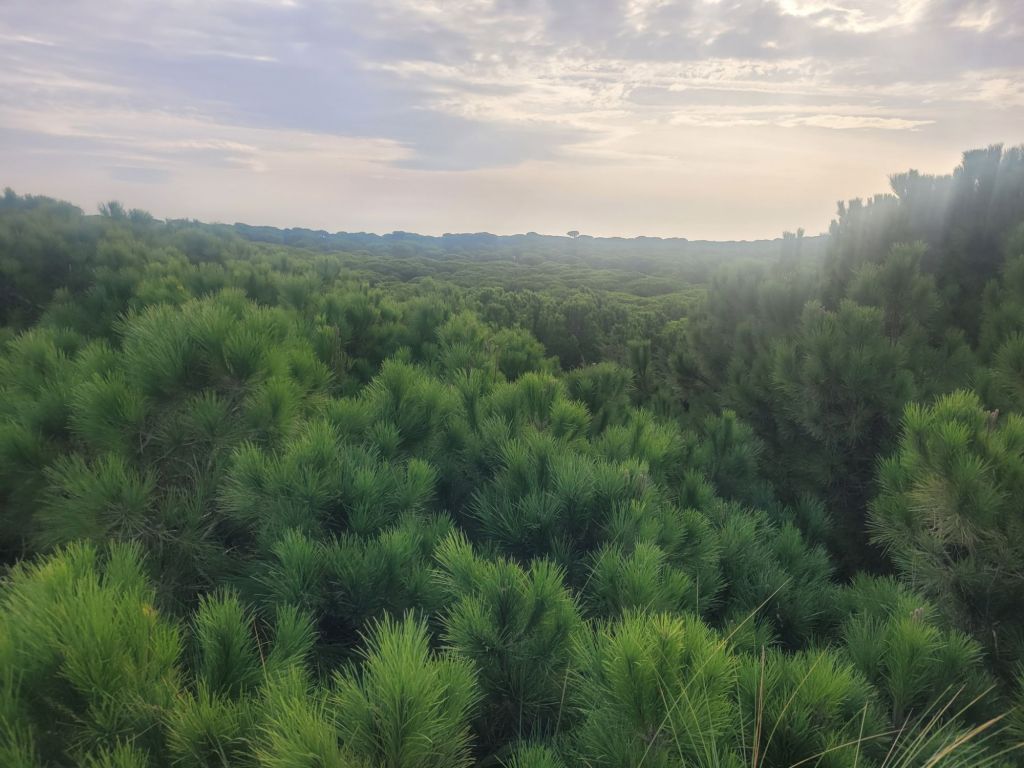
The pine trees are incredibly flammable and if they do go up in flames, their seed pods explode, scattering the seeds everywhere. They remove pines every year, in the hopes of returning the landscape back to a more original setting.
The most fascinating ecosystem is that of the ‘marismas’, which fill up with water in the winter and dry out in the summer. These marshes are visited by migrating birds from Northern Europe and from Africa, so there is a huge variety of species – including flamingoes.
Apparently during the Roman period the largest marisma was open to the river, and navigable (preumably by very shallow boats) but the river silted up the opening and now there is no ingress of water other than by rain.
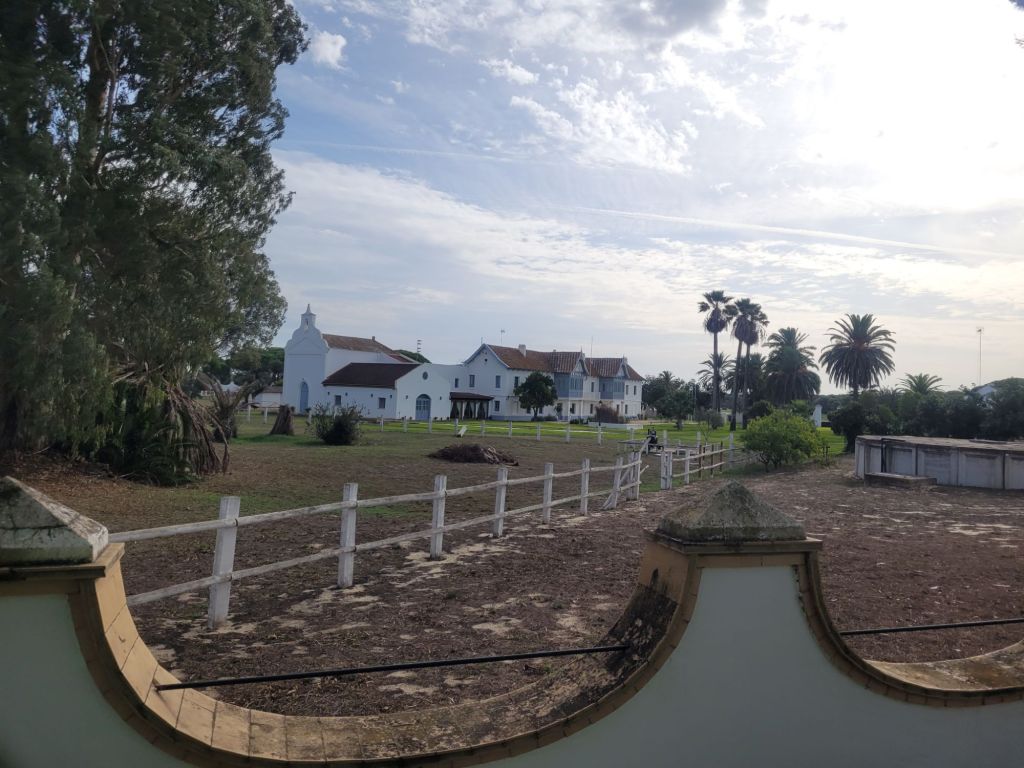
Along the way, the area the park occupies has been expvariously exploited – mostly for wood and pine nuts, but also as a hunting ground. In one section there is a large house built in the 19th century as a retreat for the then owners. Ironically, one of its current functions is to provide an overnight stay for visiting dignitaries. They come to experience ‘Andalucia’ and get to stay in an English style house with a non-native garden. How authentic.
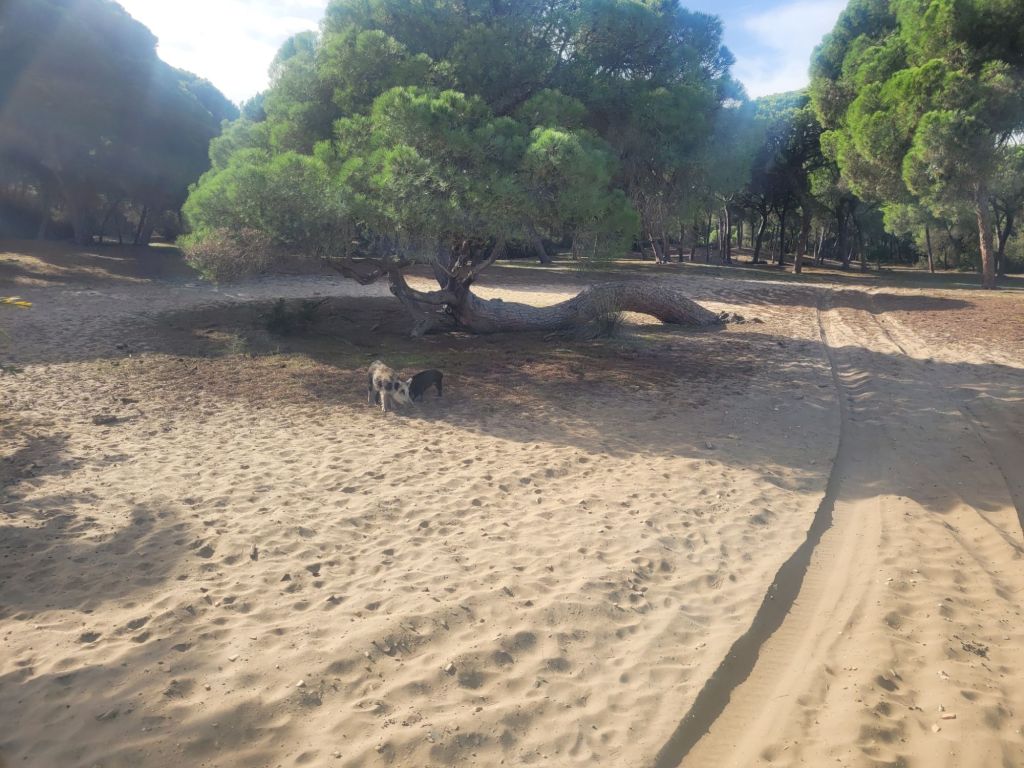
The park provides a safe habitat for lynxes (one of the few areas in Spain where they still exist) and there is a wide variety of other species. We saw two different kinds of deer, some feral ponies and some wild boar. Lynxes would probably require more time and effort than I’m willing to spend.
The visit ends back on the river bank, in a group of thatched houses that were lived in until the last half of the 20th century (with no electricity, no sewage, no running water), remnants of the workers who harvested pine nuts and cork bark, and cut down pine trees for wood.
It was both interesting and sobering: the tour makes no effort to obscure the destructive nature of mankind’s exploitation of the natural world but avoids getting political.
Sanlucar was an interesting place to stay for a few days but unless water sports or beach lounging are an area of particular interest, there isn’t enough to occupy more than a few days. We stayed at the Hotel Barrameda, right in the centre of town on the main square. It was inexpensive (despite having one of the most expensive rooms), comfortable and the staff were extremely friendly and helpful. It is not luxurious, however.
The late sun, however, was most welcome, and provided a good reason to return.
 Retired? What now?