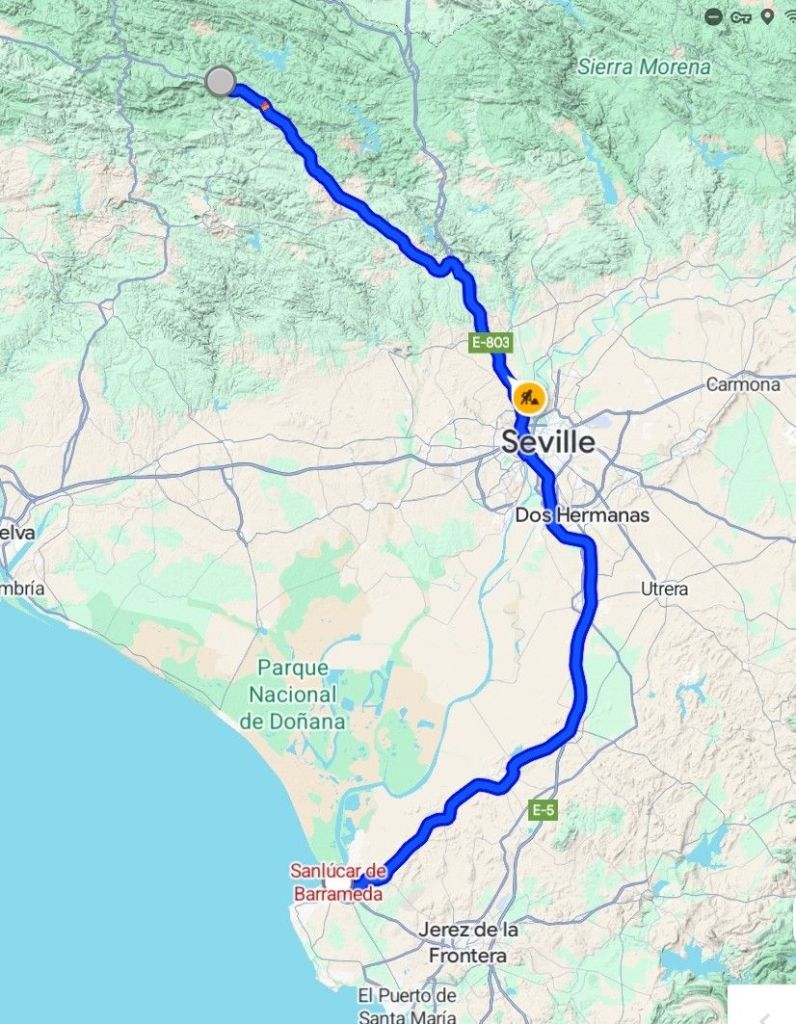
The drive from Sanlucar up to Aracena takes around two and a half hours, and you have to allow for navigating the multi-lane motorways around Seville.
The land around Sanlucar is flat – well, gently rolling at best – mostly empty fields but with the occasional young olive tree plantations and the (very) occasional, small field of grapes (usually close to houses).
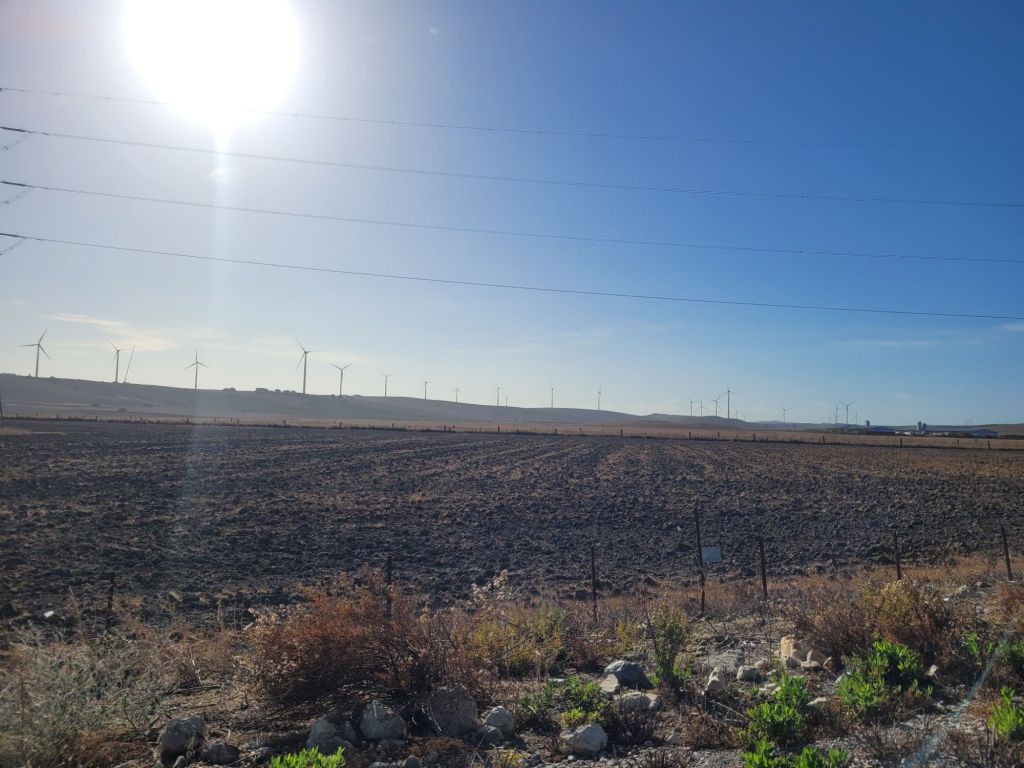
There are a lot of wind turbines and, after navigating Seville and getting onto the correct road heading up into the mountains, there are enormous solar farms.
The climb up into the Picos de Aracena is gradual until, suddenly, there an enormous view across hilly ranks of dehesa.
Aracena was inhabited as far back as the Celts, there were a few Roman settlements – associated with iron mining and smelting – then Visigoths. The Moors established a slightly larger urbanisation on the hilltop (below the castle), and really put Aracena on their map as a proper place, but the big influx came when the Knights Hospitallers expelled the Moors. The castle that dominates the town was built at that time, with the area area then caught up in the argy-bargy between Spain and Portugal.
There is a fair amount to see and do in Aracena, although visiting the national park and sampling pig products feature high on the list. There are many, many walkers – in large groups, in family groups, singletons – and a lot of cyclists. There were also large motorcycling groups, which were, quite frankly, a bit of a pain.
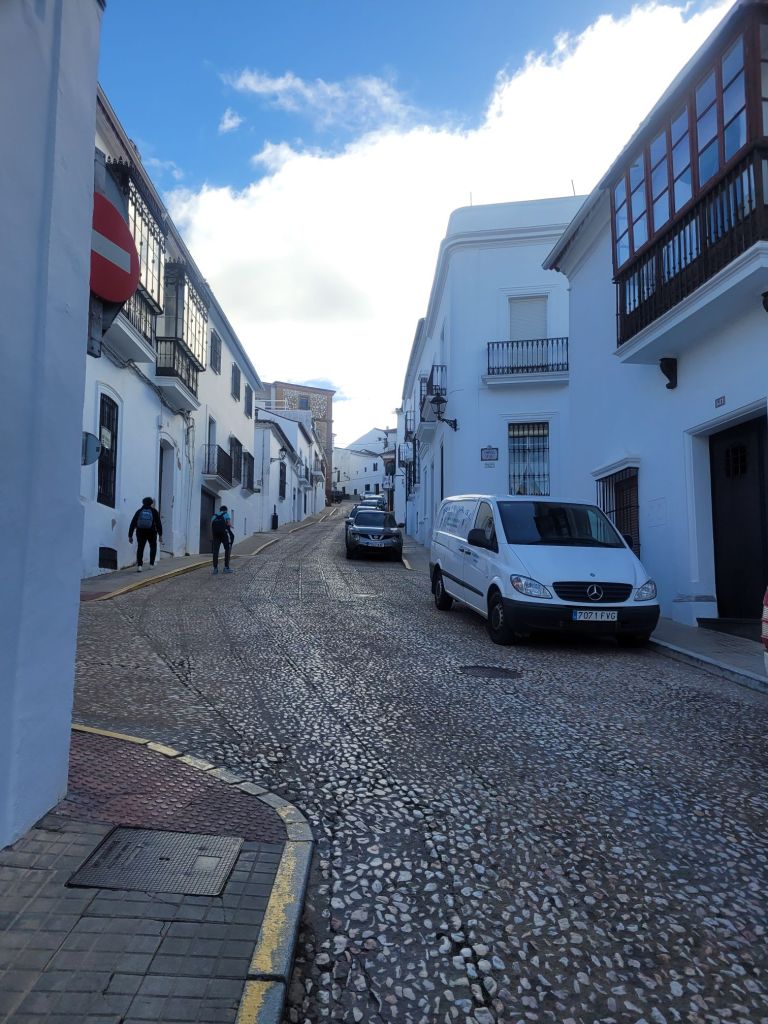
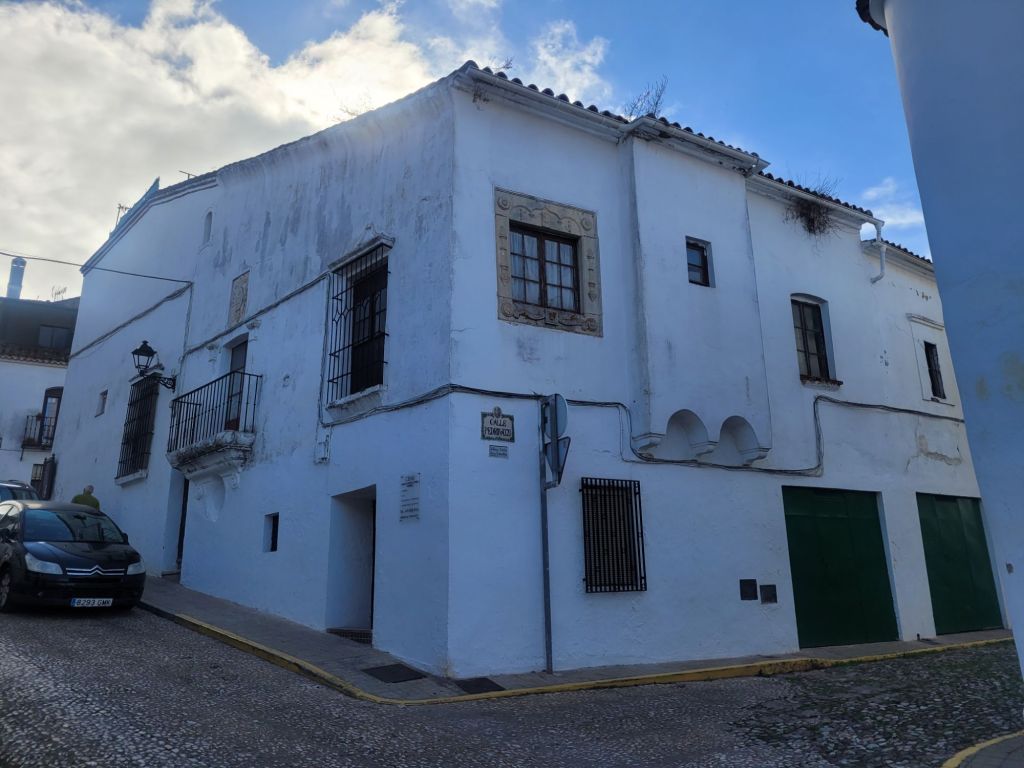
The town is built on a hill, so there is a fair amount of uphill and downhill to navigate (although this does depend on where you stay). The centre of town is cobbled, the houses are whitewashed, there are the standard patios hidden within houses – but it’s just really nicely kept and very pretty.
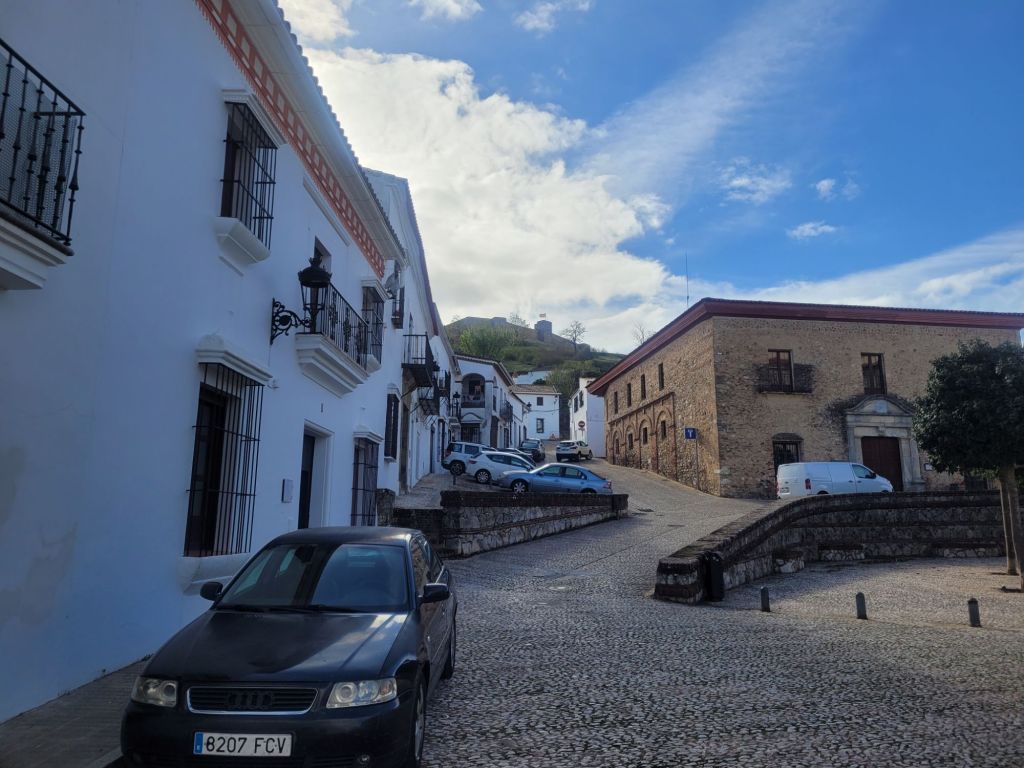
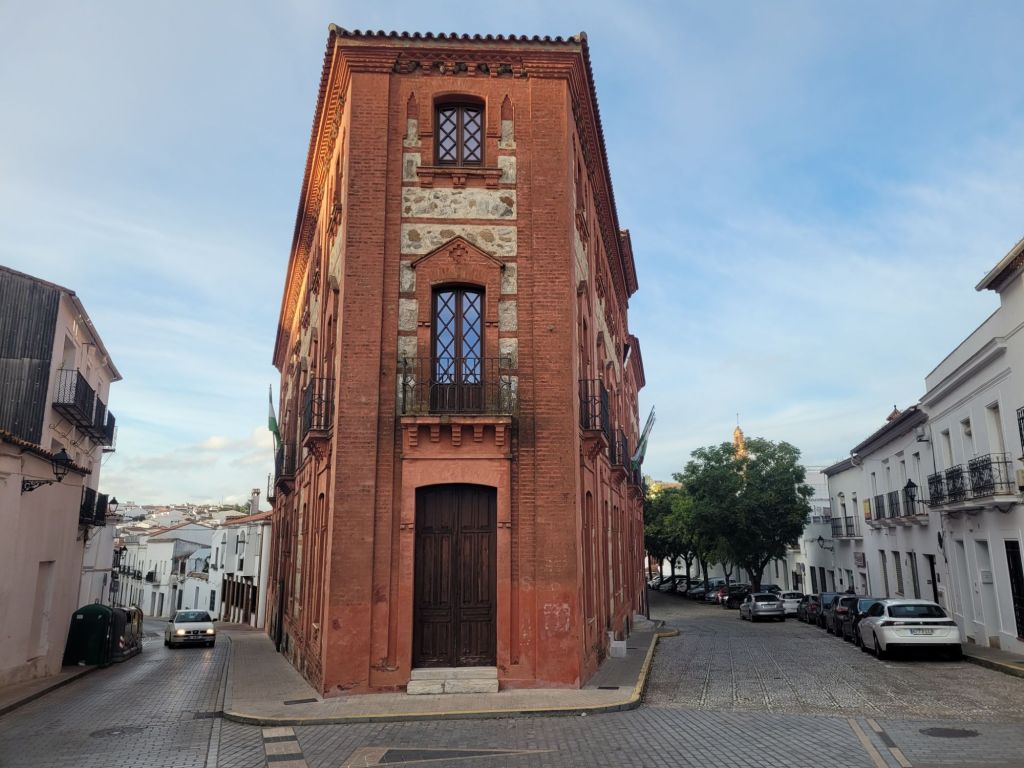
Aracena’s town hall boasts not only colour, but also claims to be the first town hall to fly the flag of Andalucia when it became an autonomous region.
The town is famous not only for its pig products (and there are a lot of those) but also for its wild mushrooms. It has made a real effort to become a centre for small producers, so there are artisanal cheese shops (that offer tours of their farm, goats and all), a wonderful bakery, specific brands of porcine charcuterie, ice cream shops…
The various -‘attractions’ include: a ham museum (although you can purchase products, it is mostly about the production of ham), a castle, a museum of minerals and ‘La Gruta de Maravillas’ – an underground cave system.
The castle is a steep walk up the hill but at least it isn’t too extended a climb. The view is fantastic, the remains are fairly well explained and the entrance fee isn’t outrageous. It is, however, worth buying the combined ticket to all four.
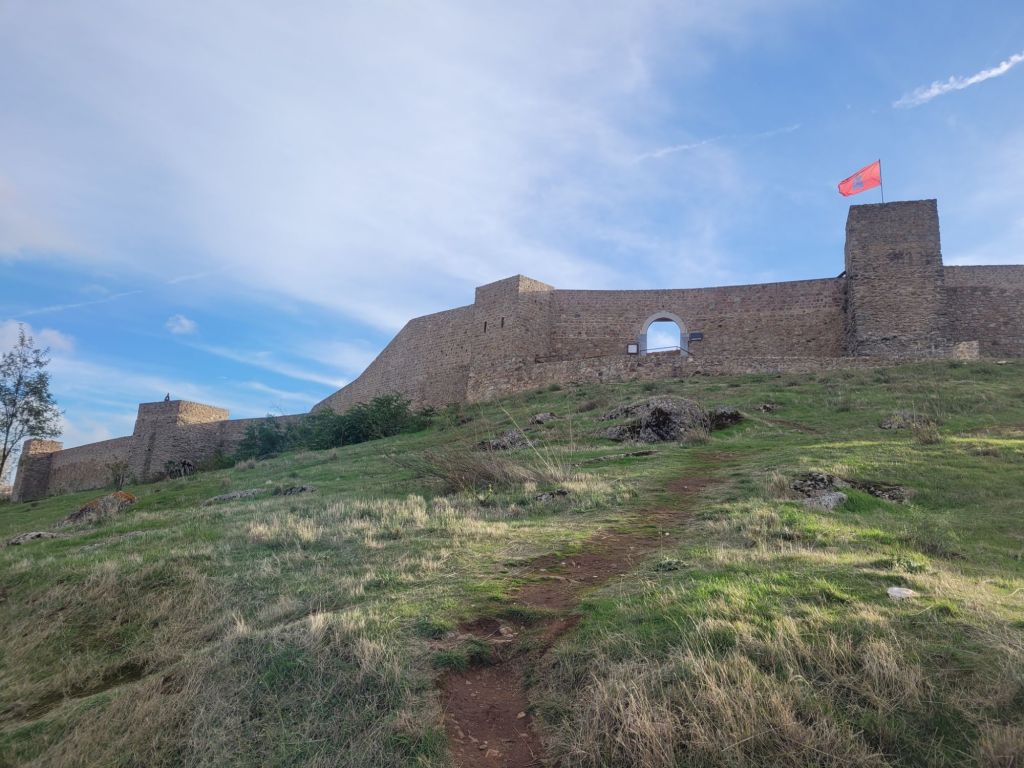
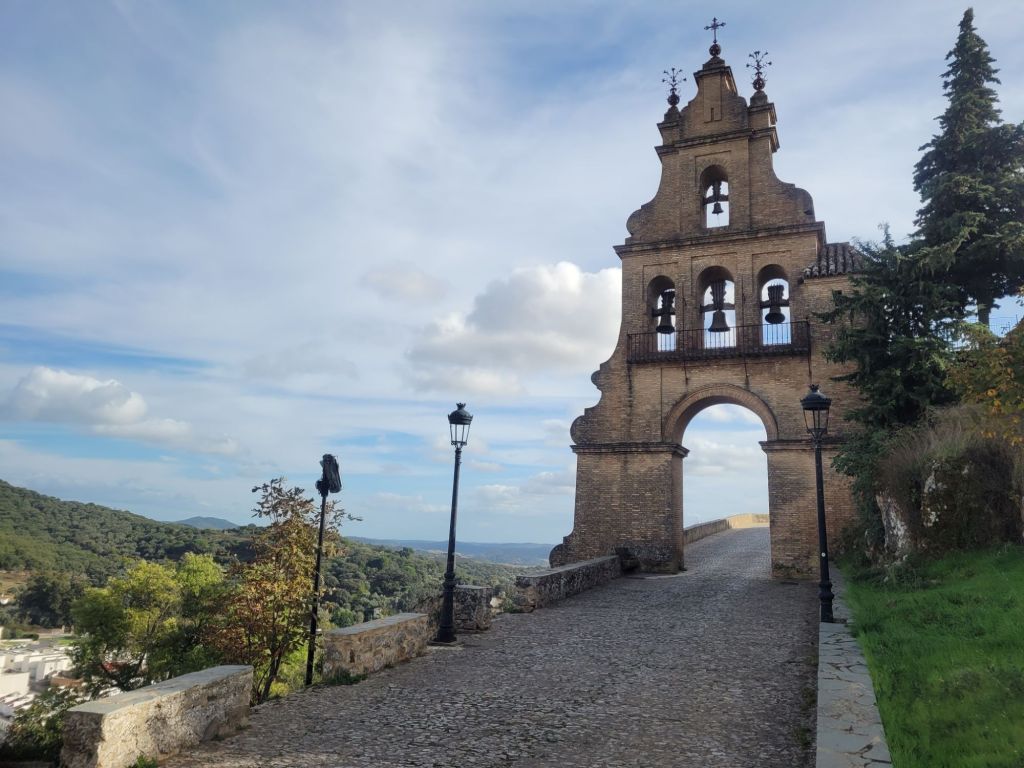
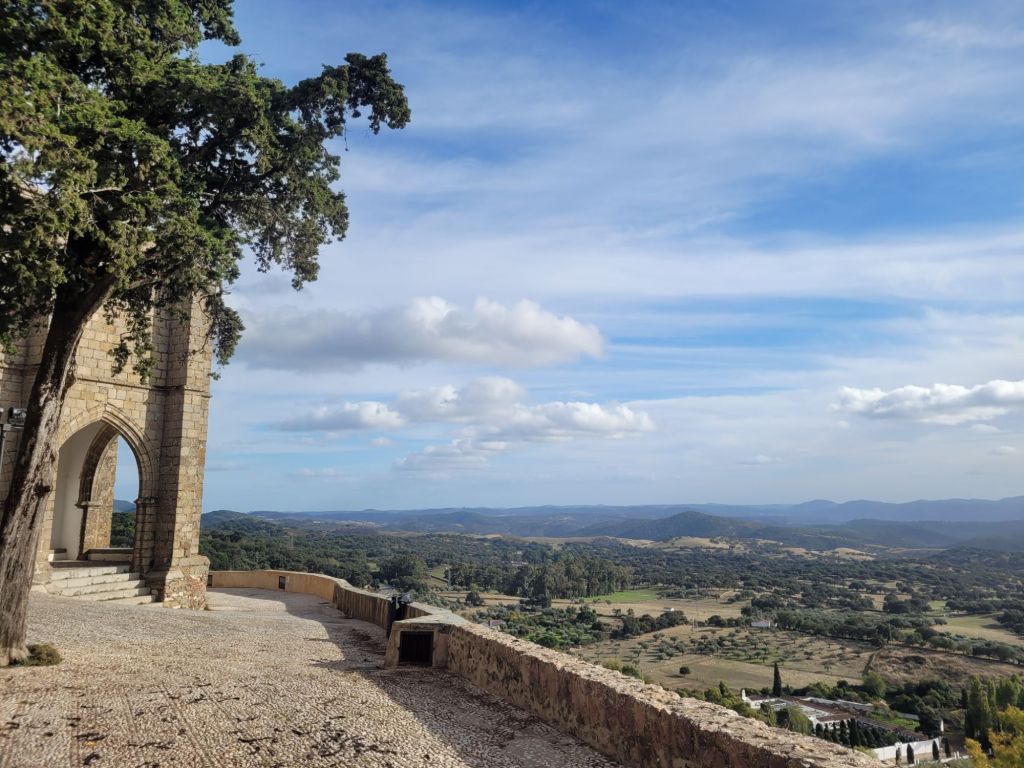
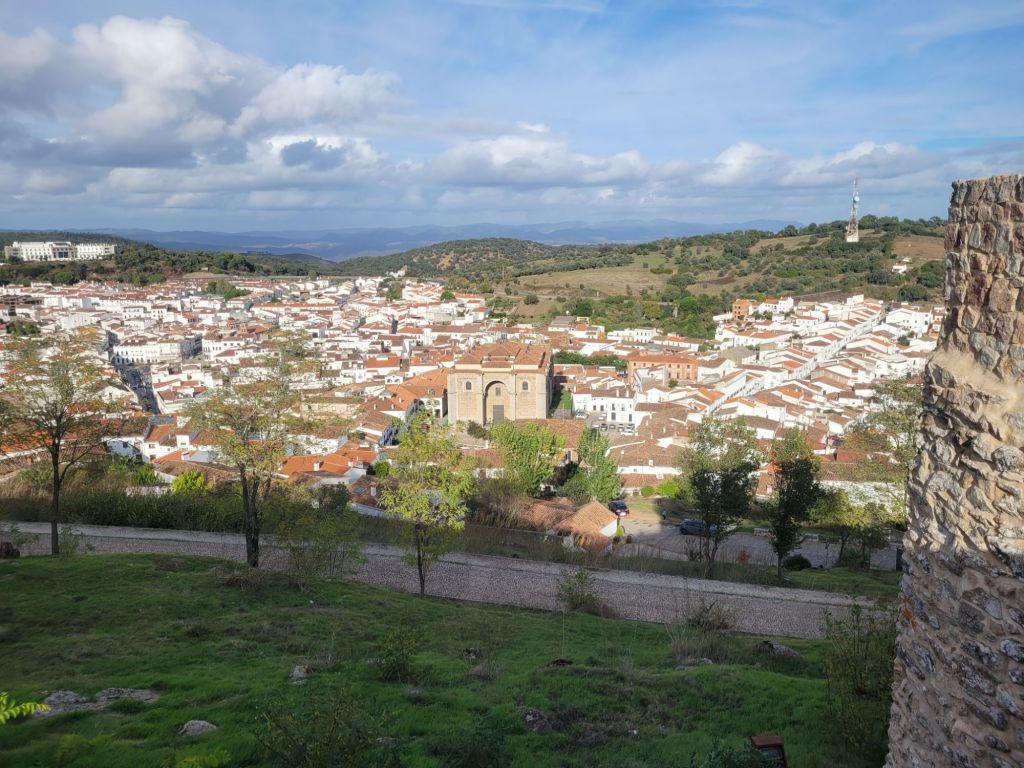
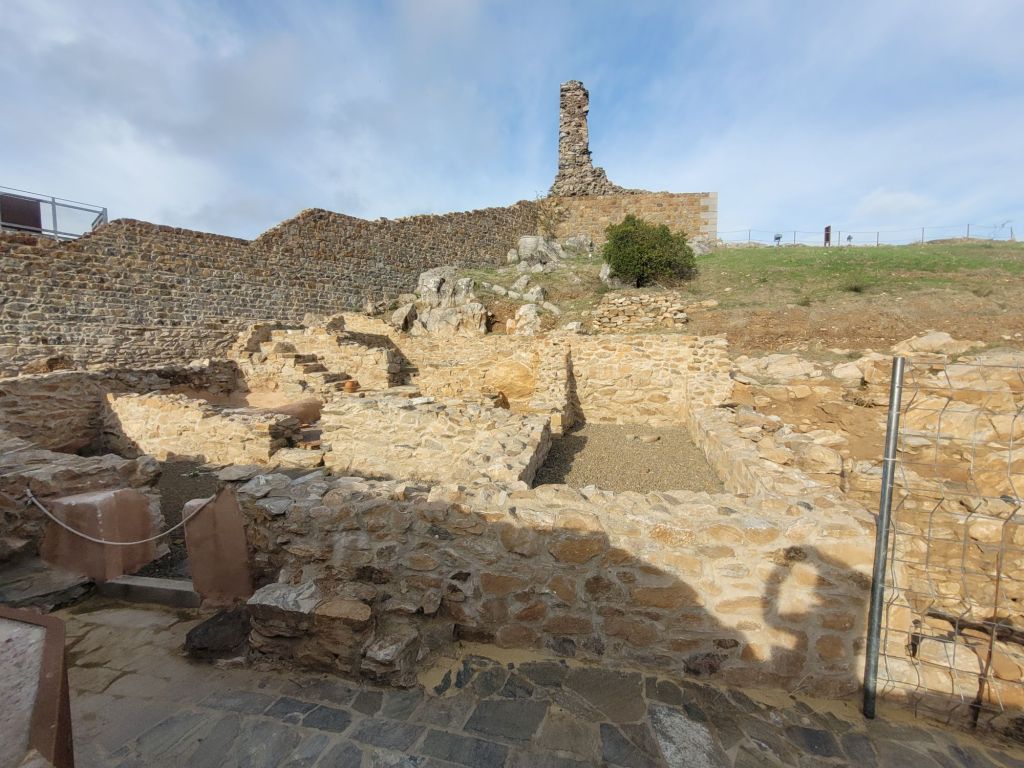
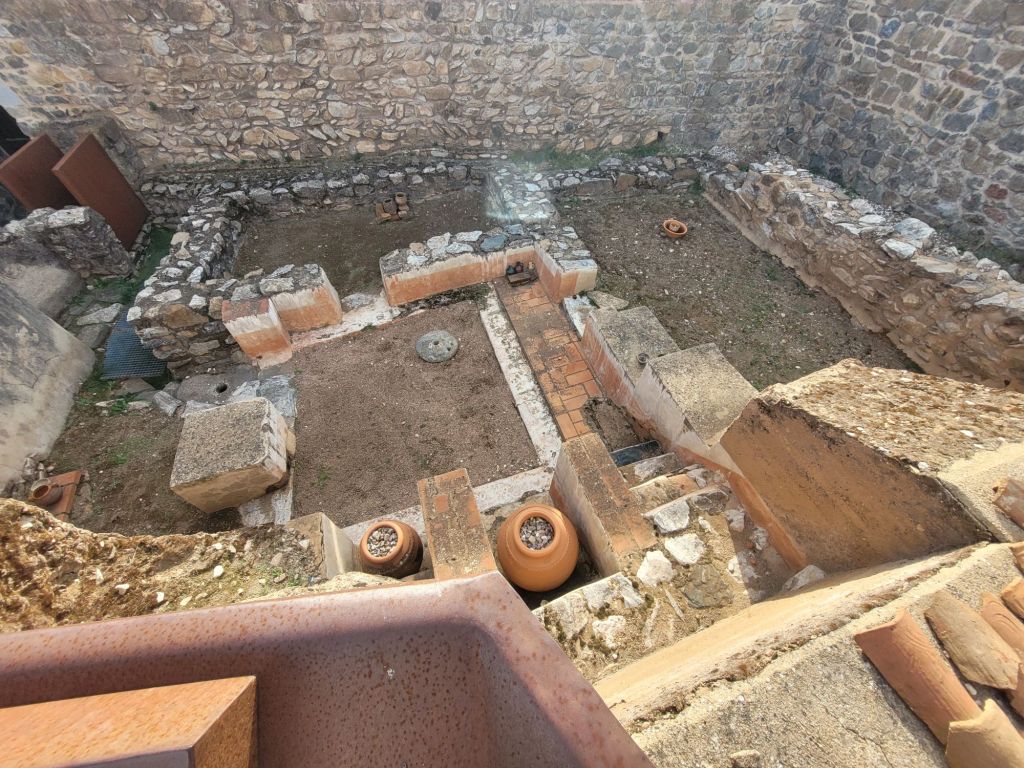
There are some remains of the Moorish settlement but mostly the castle is all wall and little else. An interesting factoid is that it is of Portuguese design.
The mineral museum is just below the castle and consists of one room and a ‘dark room’. We were less than impressed until they took us into the dark room where they explained that all the mineral samples there were fluorescent, with a few phosphorescent samples thrown in. It is, apparently, the largest collection of fluorescent minerals in Spain, the largest dark room in Spain and one of the largest in Europe. It was all a bit ‘meh’ until they turned the lights off and switched on the UV light. and then
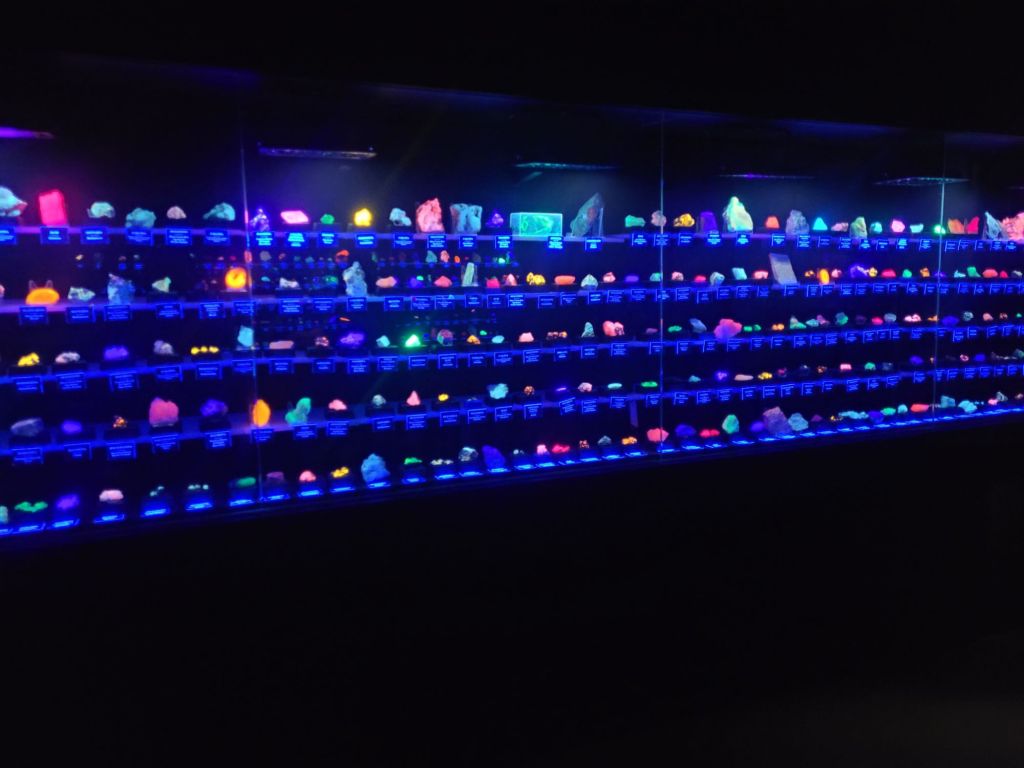
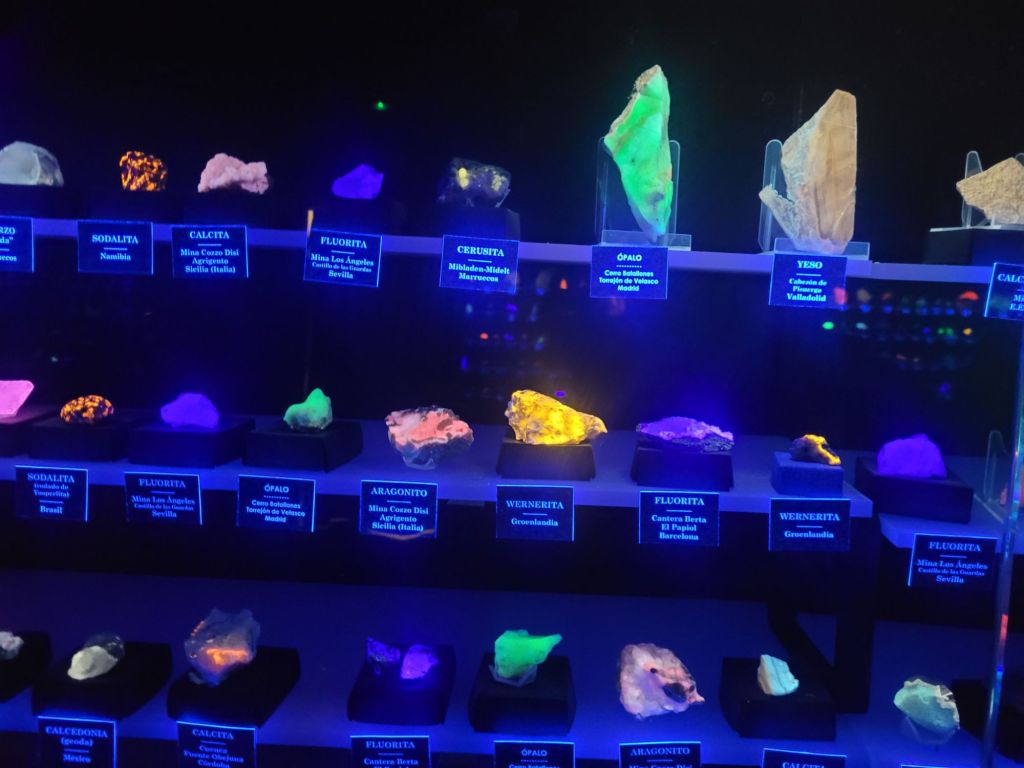
on all four walls.
It certainly takes the breath away and is worth the time spent waiting while peering at the rocks in the main room. Although I have to confess that some of the large agate samples were beautiful.
The grotto (really it’s a cave system) is incredible. No photographs are allowed, there didn’t appear to be any postcards anywhere, and any description would be paltry at best. It isn’t for the less mobile, nor is it for the very tall. You are escorted through, with some explanation, and hustled along so that you can’t spend too much time admiring the various lakes and rock formations. This is for several reasons: most importantly, they have 30 people on each tour, every 15 minutes – there is no time to dawdle: secondly, the only fresh air inlet is from the entrance tunnel (which is also the exit tunnel), the guides are restricted to four tours a day because of the low oxygen levels in the cave; lastly, and this is definitely ‘in my humble opinion’, the guides see so many people and hear the same comments and questions over and over again that I think they are bored witless. Our guide was bordering rude in her sarcasm, told several people that they had asked a question that she gets asked all the time and she would answer it later and moved everyone along at a cracking pace. To be fair they had an accident earlier which required the police, several ambulances and the fire brigade, so maybe she was a bit rattled. But still.
The rock formations are nothing short of extraordinary, with what look like layers of scalloped fans hanging from the ceiling, foamy bubbles at the bottom of several shallow lakes, protruberances (that are decidedly masculine, in the cave called ‘the widows’s delight’) popcorn covered walls, giant conch shells hanging from the ceiling – it went on and on, alongside the standard melting candle columns and crystalline lakes. Because it’s all very enclosed, these seemed all the more impactful. At one point we were 100 metres directly below the castle.
After she told us about the accident that morning, everyone was quite keen to move on, up and out.
Exploring the natural park is a popular activity in the area surrounding Aracena. The tourist office has a few maps; one or two can be walked from Aracena itself, without using a car, but most require a car to get to and from the start point. There are a few circular walks, and some very long trails. All of them are more challenging that their descriptions would suggest.
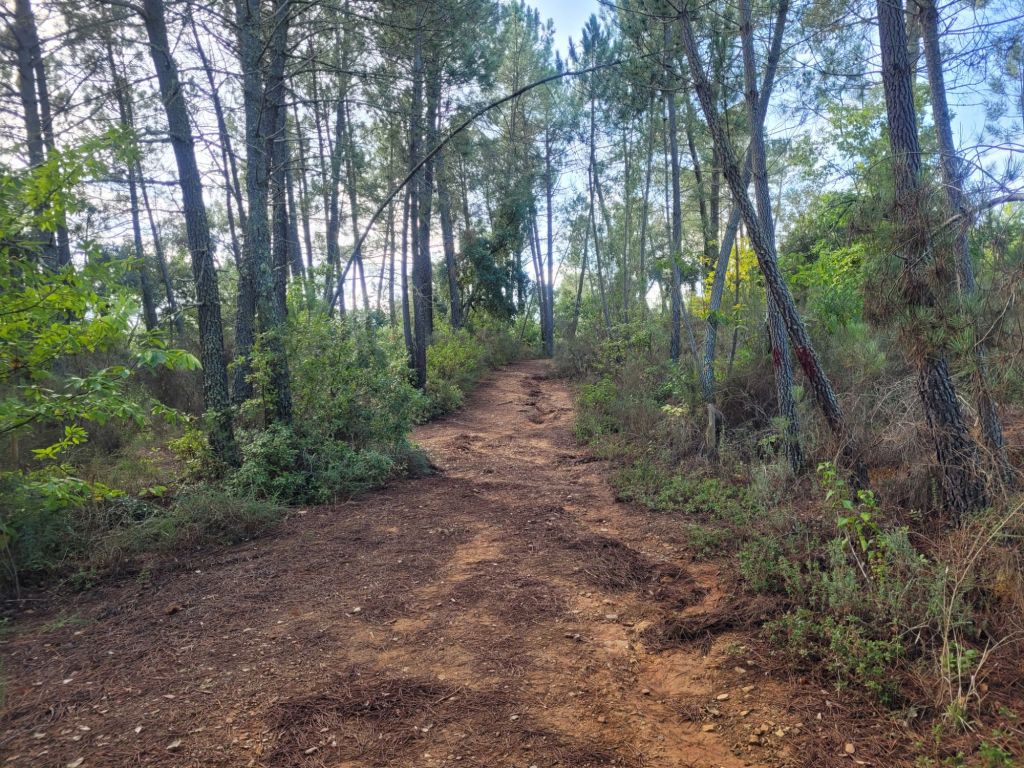
We did what was called an ‘easy’ circular walk of 9.5 kilometers from one village, to another village and back agin. It was lovely, we met lots of people going in either direction (and one off-road motorbike) and the weather was perfect for walking. But it was steeper than expected, the footing was tricky in places and it wasn’t brilliantly marked once we got onto the return journey. That being said, the autumn colours were lovely, the air was incredibly clean and it was, mostly, free from traffic noise. Aside from the off-roader.
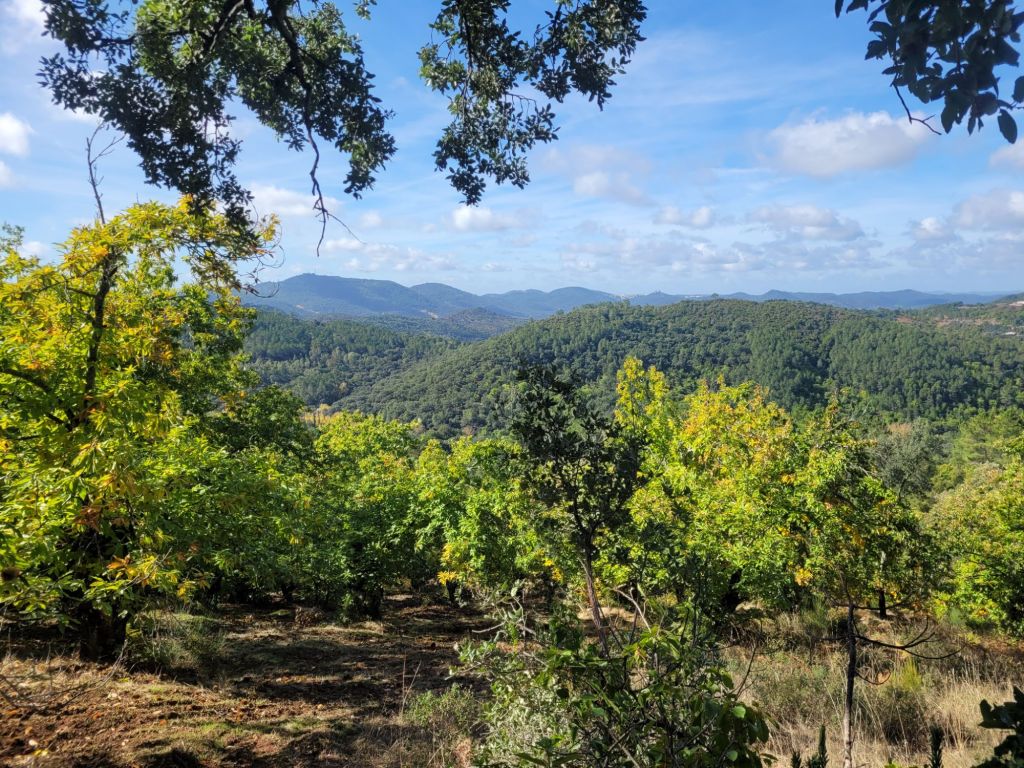
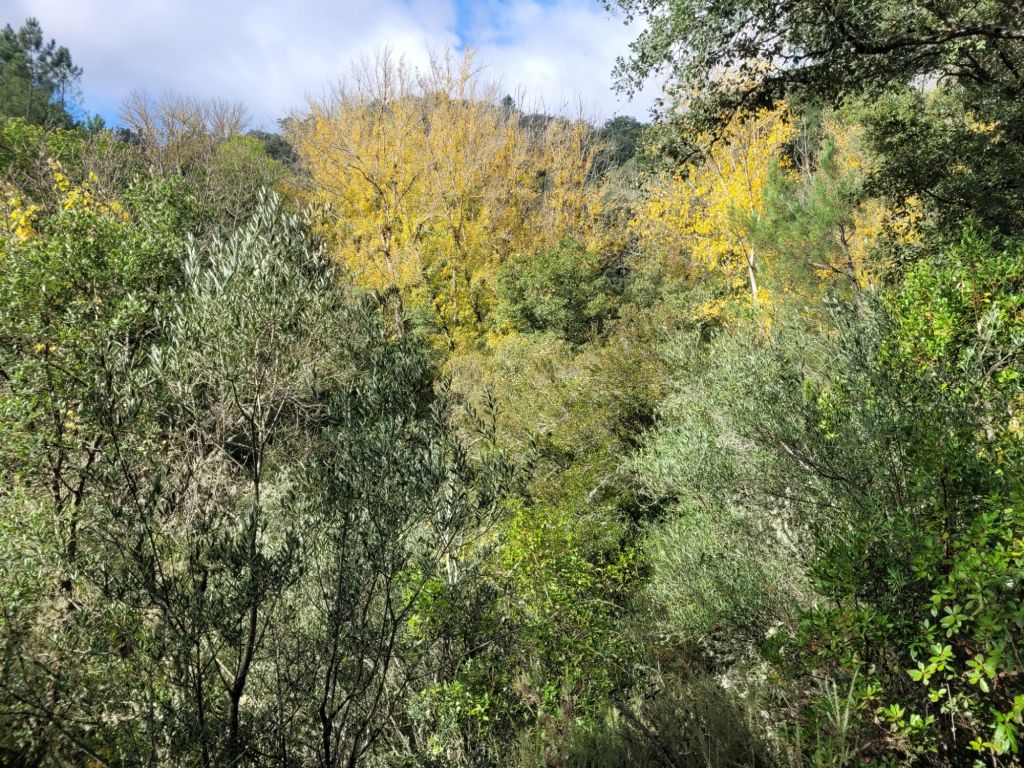
Aracena, the natural park and the villages within it are all worth visiting. A car (or some form of transport) is necessary and an acceptance that most of your diet will be meat based with very few vegetables: the one salad we found – iceberg lettuce, cold tomatoes and a huge blob of tinned tuna – tasted like manna from heaven after all the volume of meat we had consumed previously. It’s also worth mentioning that it’s a place that is very, very Spanish, and possibly (on the basis of a few idle exchanges and a few overheard comments) quite right wing.
We stayed in the Hotel Convento, a refashioned convent, in the older part of town. It’s a short but strenuous walk into town, but the hotel is definitely worth it.
This is an area we will return to.
Possibly after having stocked up with vegetables before we go and doing some fasting when we leave.
 Retired? What now?