It does sound morbid but most of what is known about these people is gleaned from their burial practices.
(Although my understanding, poor as it is, is that this is not unusual.)
Before the Romans became a cohesive power that expanded across the Mediterranean (and elsewhere) the area north of Rome (and up to Bologna) was inhabited by the Etruscans and the area south of Naples was Magna Graecia (ie Greek).
We tend to see the Roman and Greek cultures as the main purveyors of culture and trade in the centuries BCE and in the Mediterranean (well I did, at any rate), yet the Etruscans were a force to be reckoned with, both in terms of culture, trade and political power. They had well established trade routes across Greece and possibly further afield, were skilled metalsmiths, and were influential partners with both the Cartheginians and the early Romans.
Interesting fact: much like the city states of Italy in the Renaissance, the Etruscans developed city states, one of which, Cisra (modern Cerveteri), had its own representation/treasury at Delphi.
We went to two necropoli (plural of necropolis?), both impressive, that represent the change in Etruscan burial practices as they absorbed Greek views on what happens after death.
The older site – Necropoli della Banditaccia – is outside Cerveteri, on a slight ridge of tuffa to the northeast of the town. The earliest tombs here date from the ninth century BCE; the site itself is vast, with thousands of tombs scattered across the ridge and a significant part wasn’t open.
In the earliest period, the Villanova period (ninth to eighth BCE), the dead were cremated and put into urns which were in turn put into stone pots with lids. We saw a lot of these in the archeological museum in Bologna.
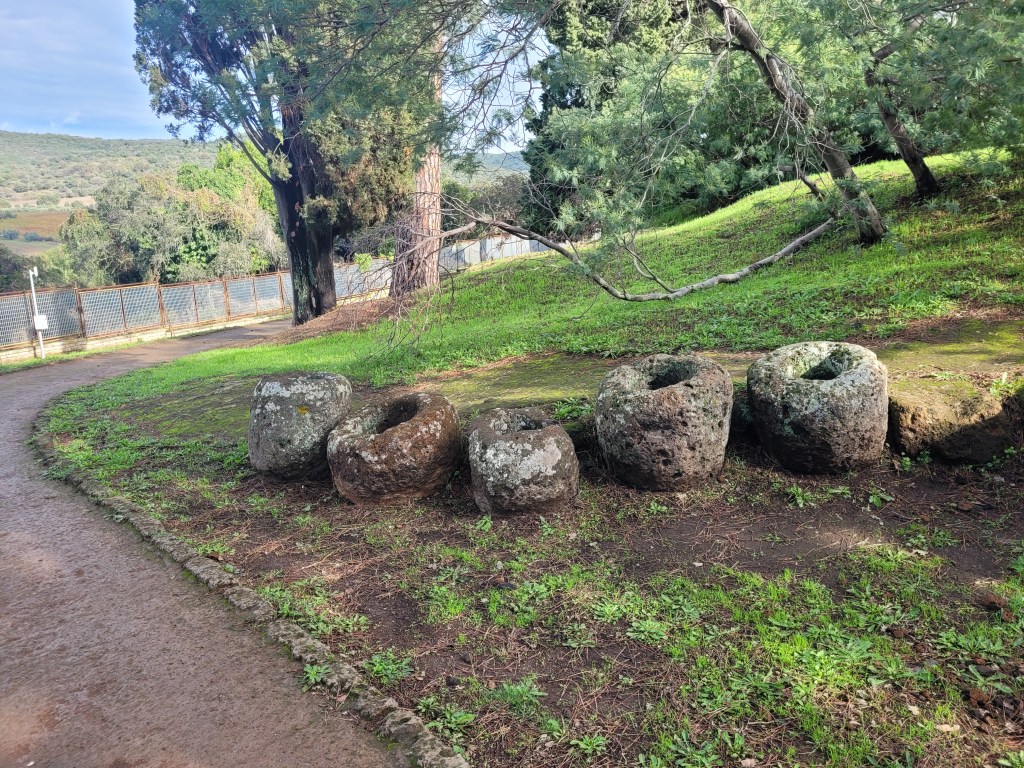
They then started to build trench tombs and eventually ended up in the late 8th C BCE with a stone chamber covered by a mound ( apparently influenced by Near Eastern customs).
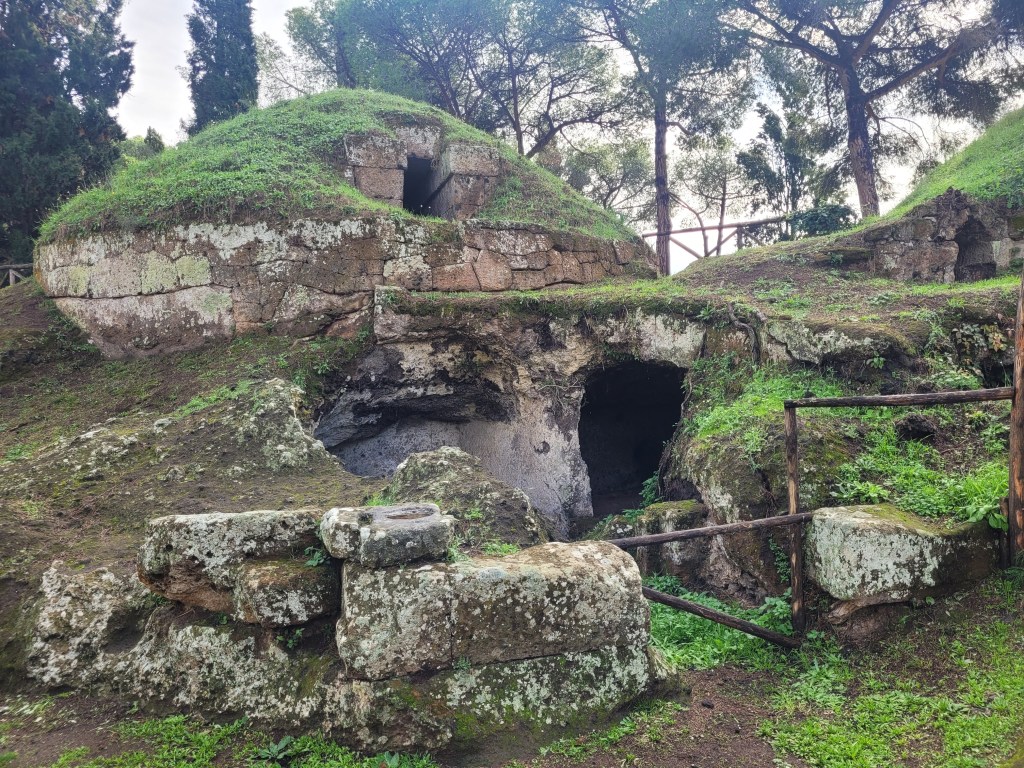
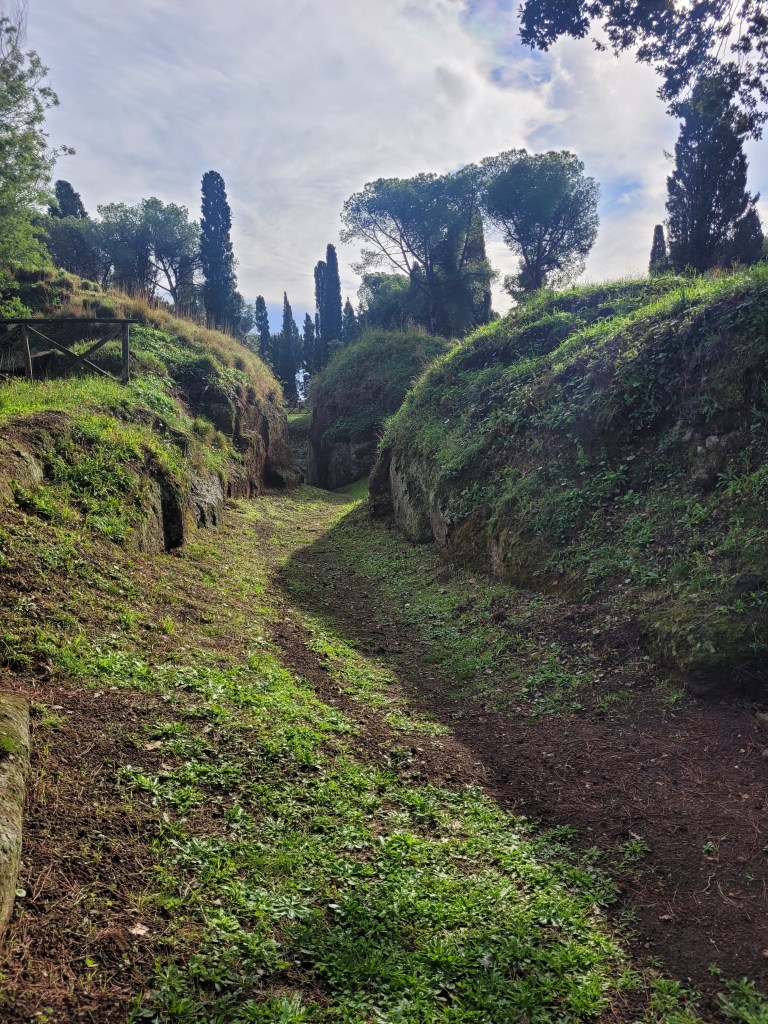
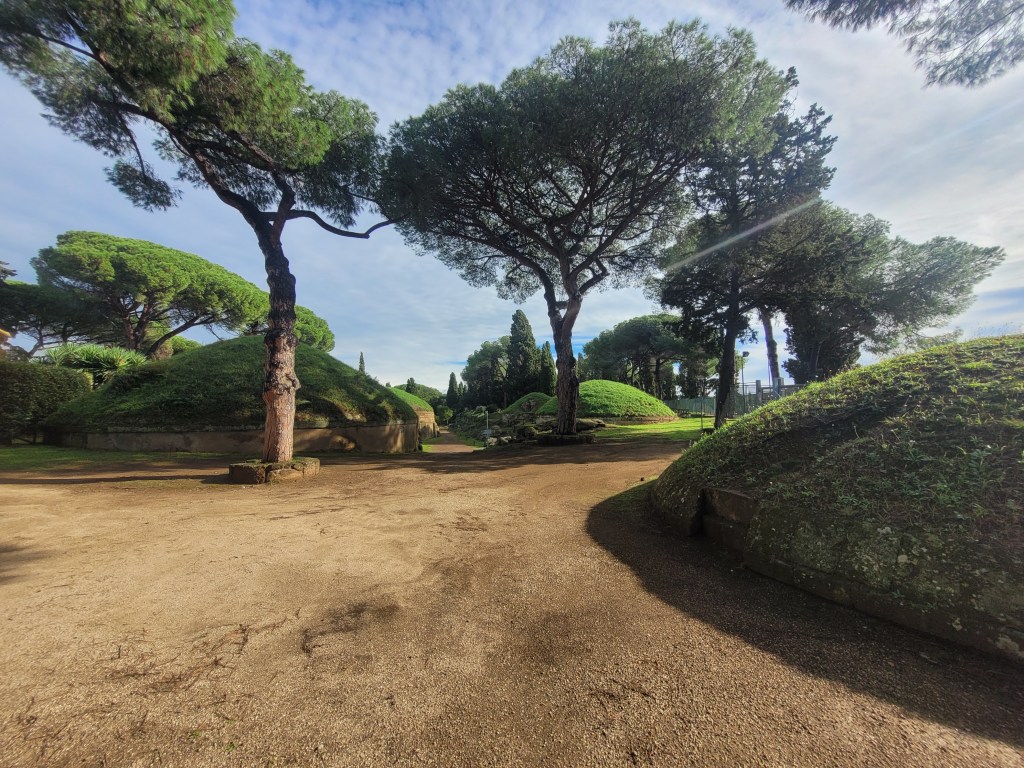
They developed the idea of mounds even further, and ended up with huge man-made mounds, some of which have up to three tombs inside them.
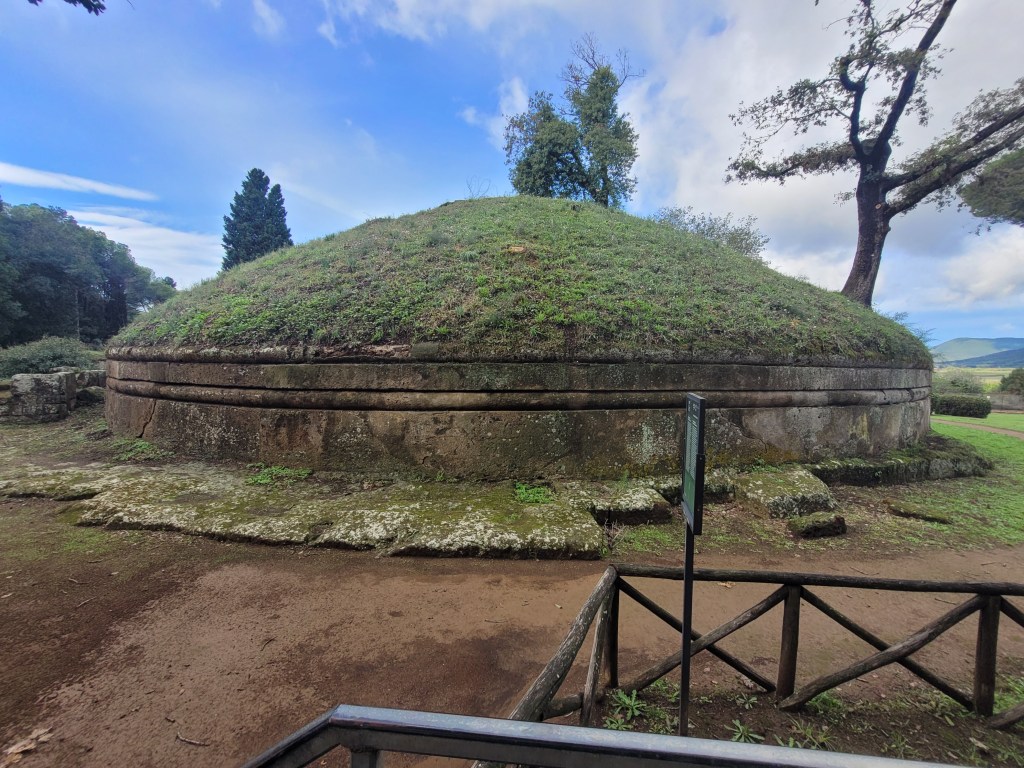
At first, it just seems a jumble of mounds – all a bit higgledy-piggery- but then it seems to get a bit more organised.
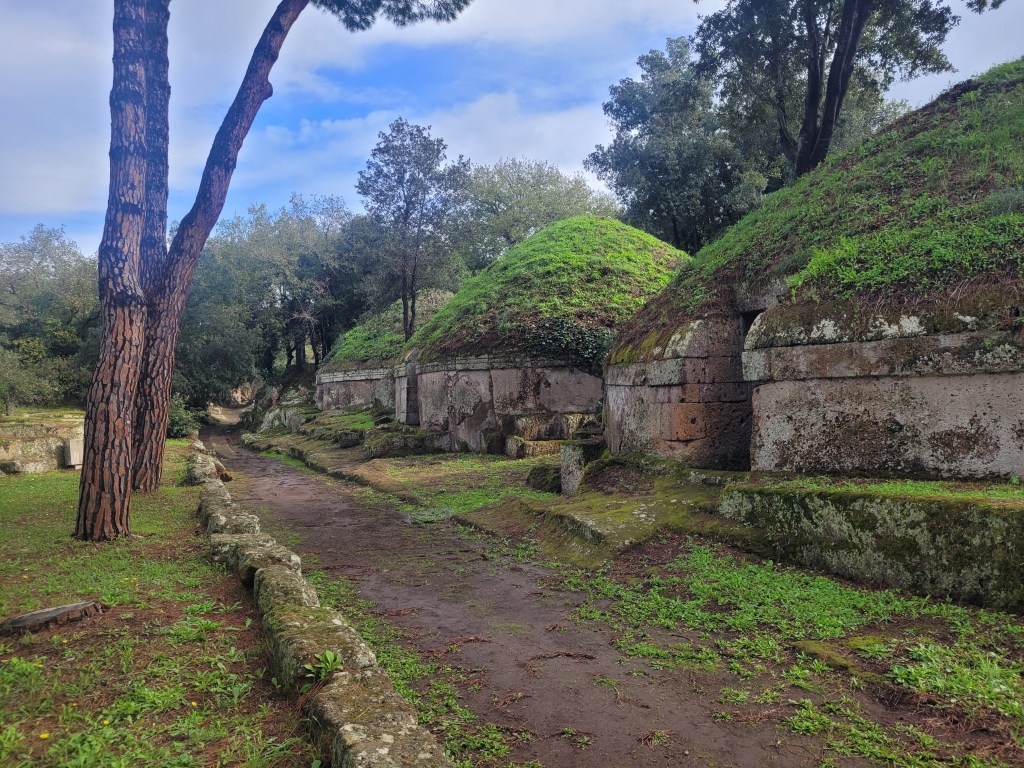
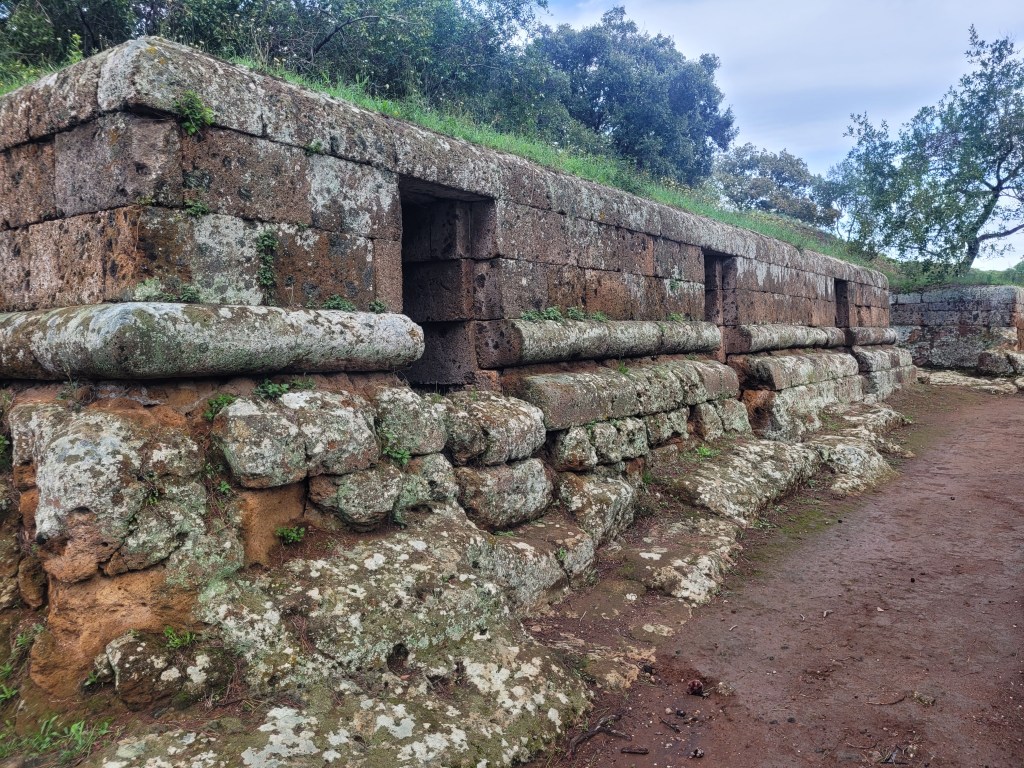
Eventually you get what looks like town planning for the dead, with neat terraces of square tombs.
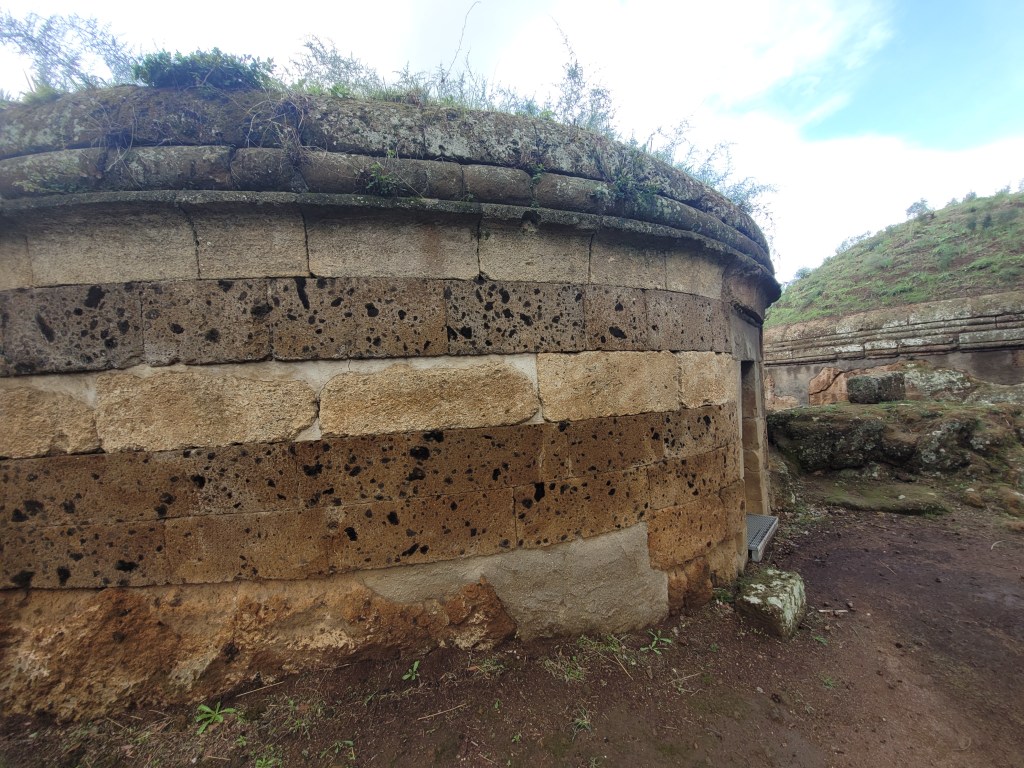
One unusual tomb is built entirely of layers of different coloured blocks.
They appear to start out as single chambered but quite quickly become more complex (and house more bodies, presumably).
Then they start mirror the houses of the time, which is a bit weird. The Tomb of the Little House (6th C BCE) was cut entirely into the tuffa. It has several ‘rooms’, with windows, doors, lintels…
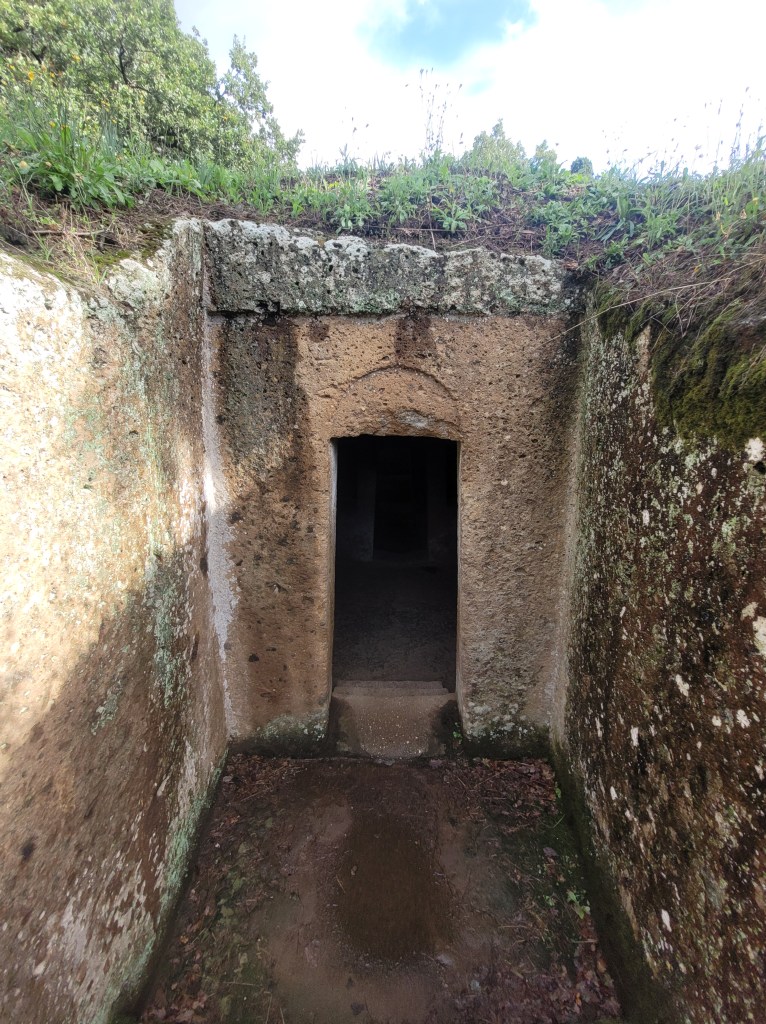
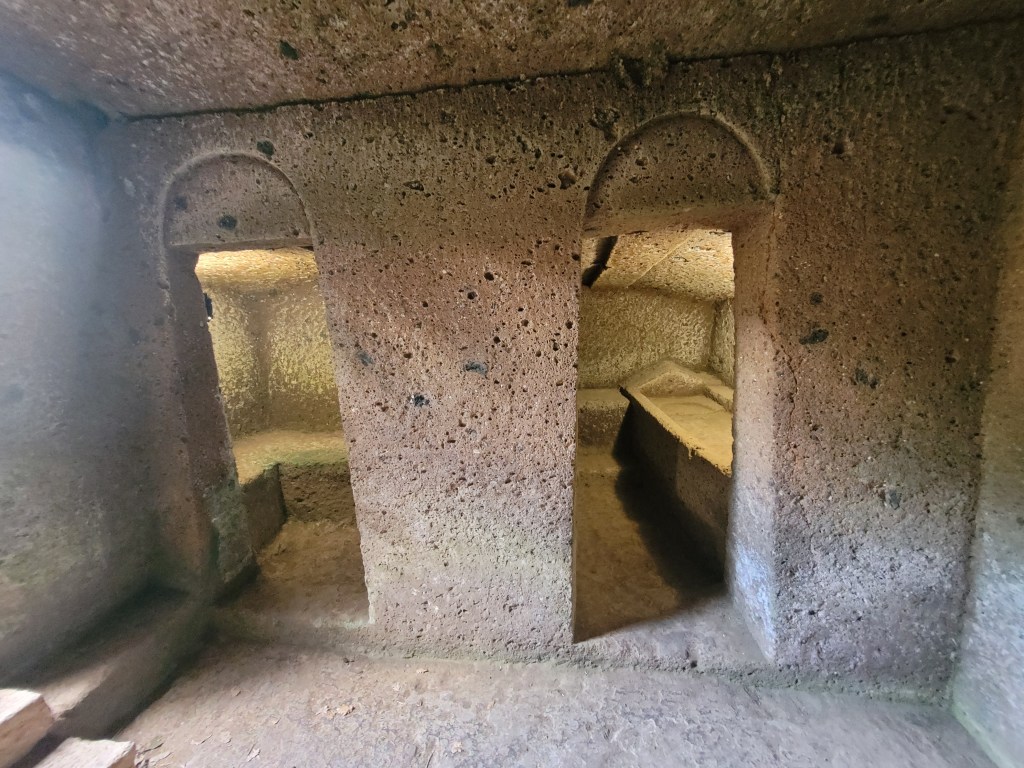
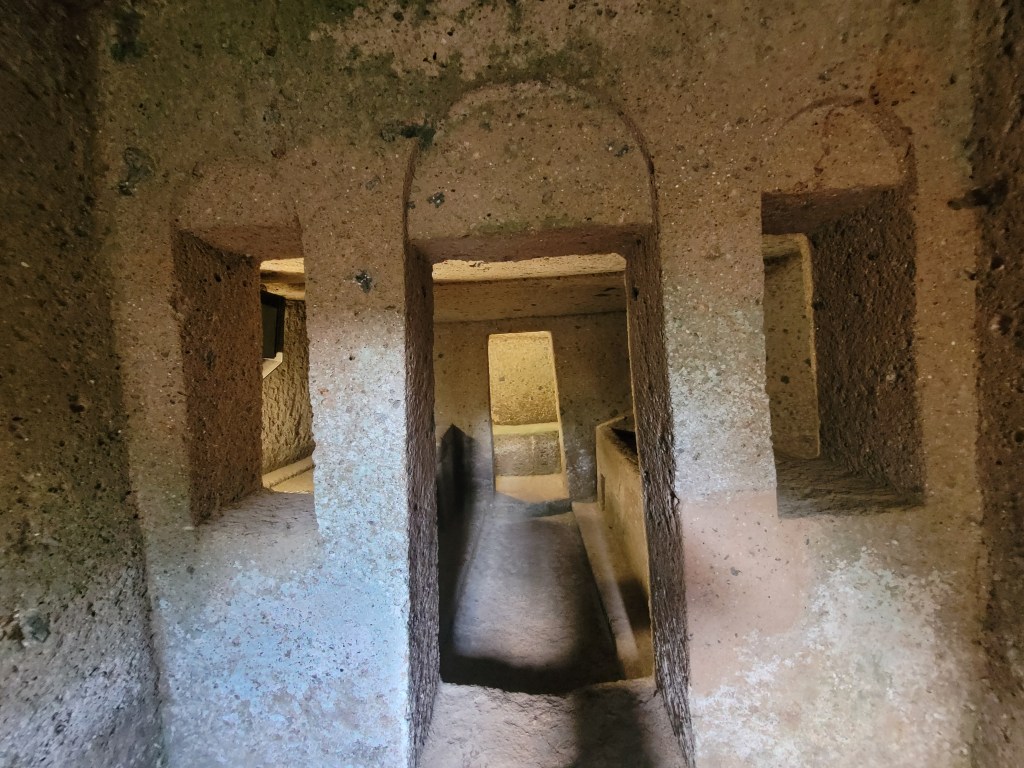
There are tombs (which weren’t open) that had columns and stone furniture. But the tombs were being robbed – one massive tomb from the 7th C had already been robbed by the 6th C – and maybe this is why they moved them underground. This is wild speculation on my part, by the way.
This site is known for its above ground mounds but there is one underground tomb open, dating from the early 4th C BCE. It’s breathtaking, painted, large and a long way down.
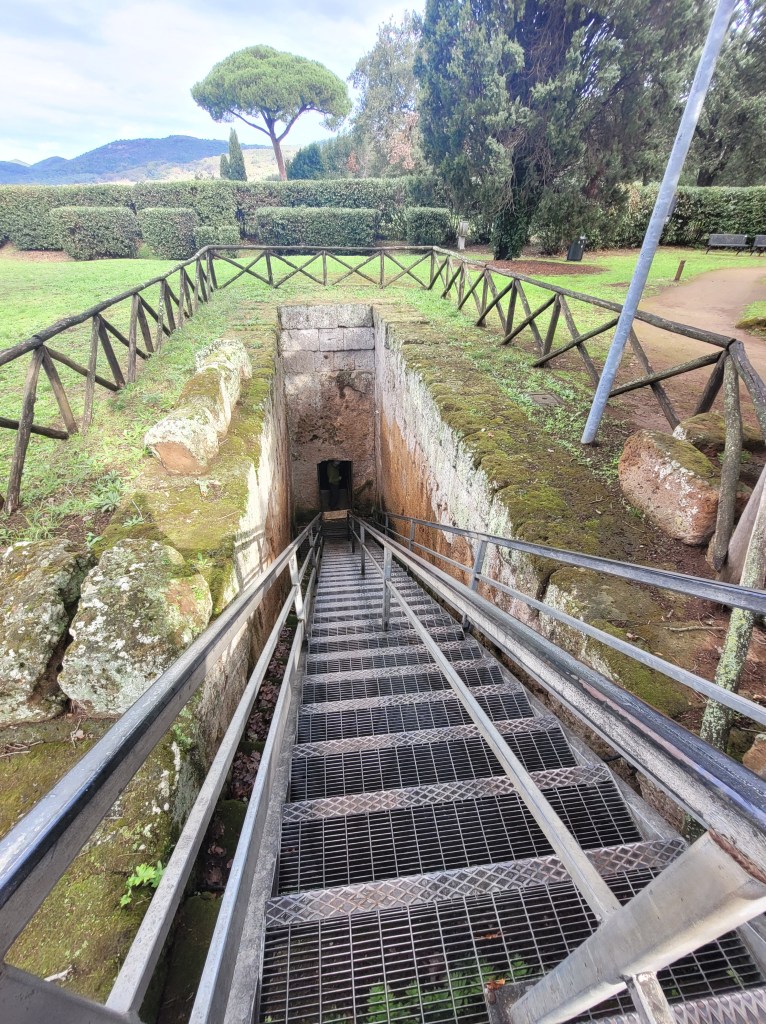
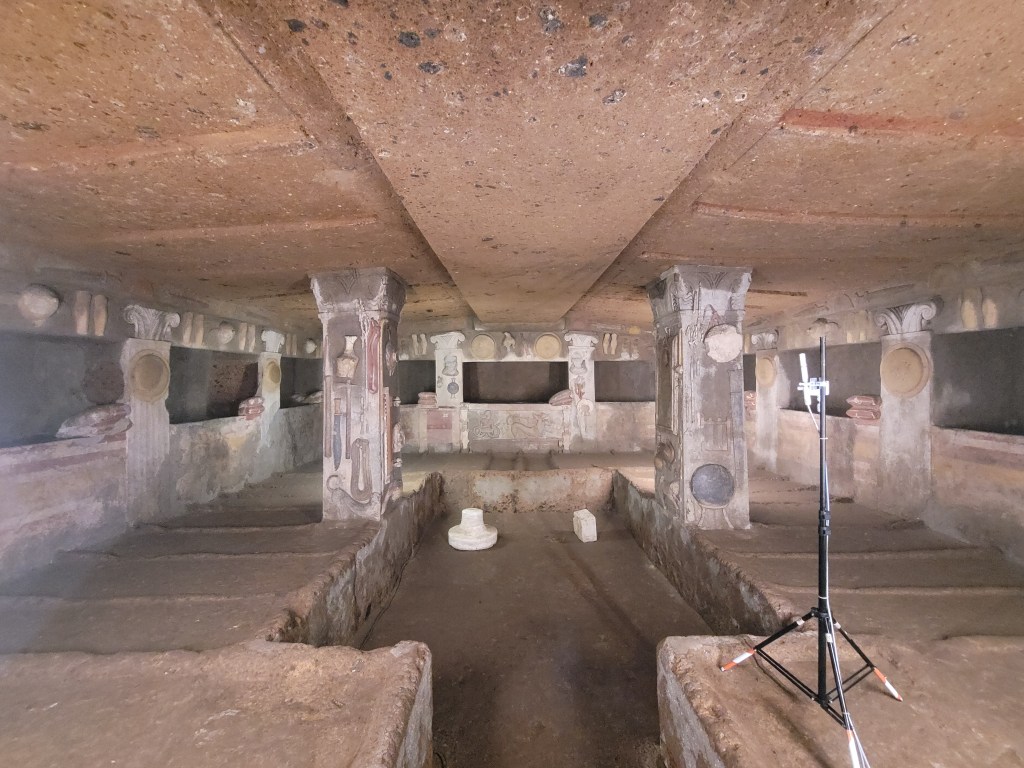
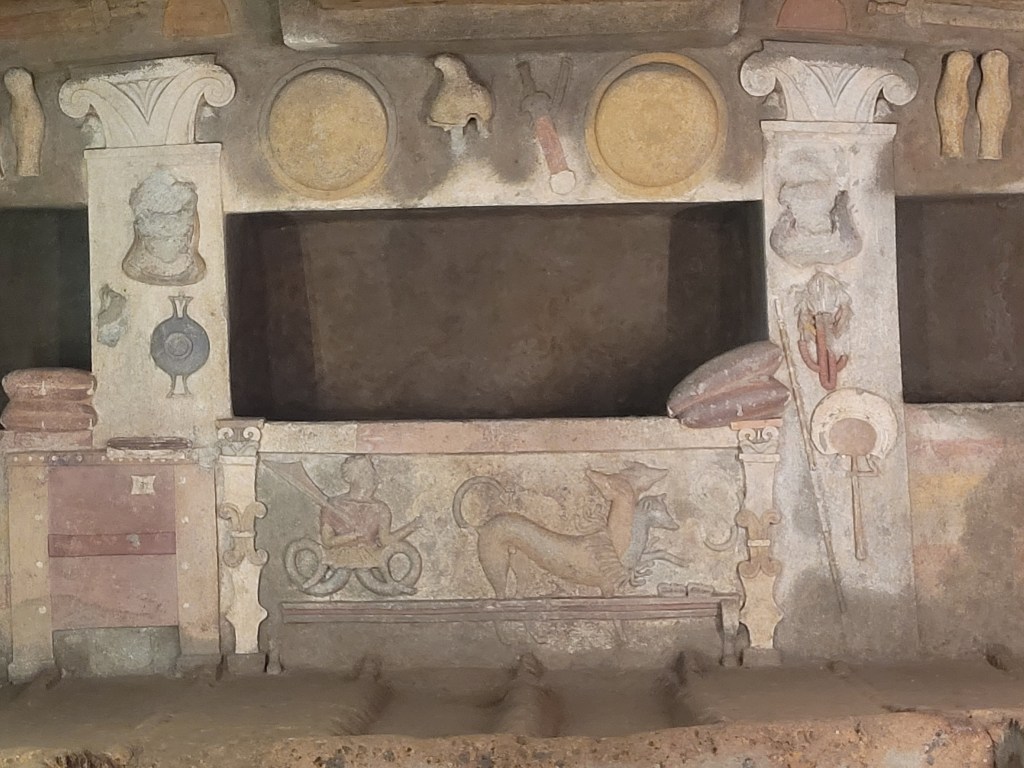
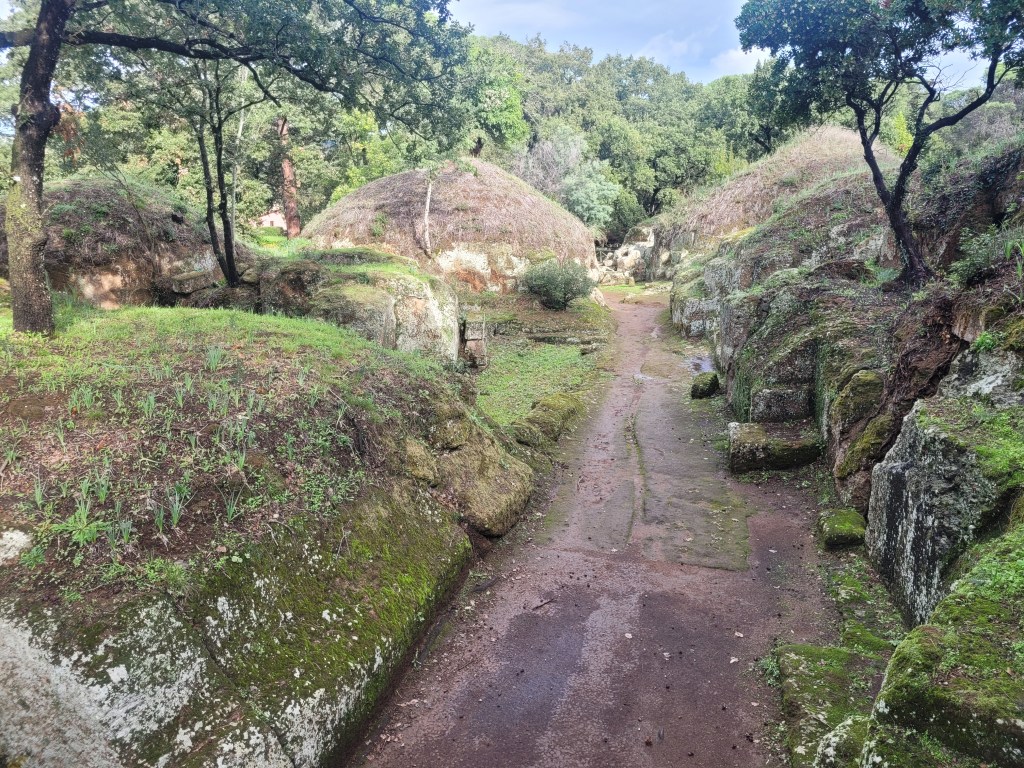
It had rained heavily overnight and petrichor and pine wafted around us as we wandered, in places through a jumble of mounds, trees, stones, elsewhere around quasi-apartment blocks of tombs two stories high with staircases between them.
The Etruscan belief was that after death a person just sort of hung around in their tomb, there was no concept of being ‘somewhere else’. This site reflects that: houses, neighbourhoods ( mansions and hovels) changes in architecture, town planning, streets (one even has wheel ruts). The sheer volume of tombs (size and quantity) made it feel busy, contrasting the silence and stillness.
In contrast, the Necropolis of Monterozzi, near Tarquinia, is a ridge facing the Tyrrhenian coast, studded with painted underground tombs. You can’t go in them, you just observe them from behind a window – in some cases the windows are cleaner, in others dirtier.
They range from the 7th to the 2nd Century BCE and the artwork shows a progression in eschatalogical beliefs clearly influenced by contact with the Greeks. (Eschatology = beliefs about what happens after death, BTW, not the study of poo!)
In early tombs you have decorations from nature andnthings they might need as they hang around their tomb. Later you start to see doors (into the afterlife?), figures that are reminiscent of Charon, demons and previous dead family welcoming their loved one.
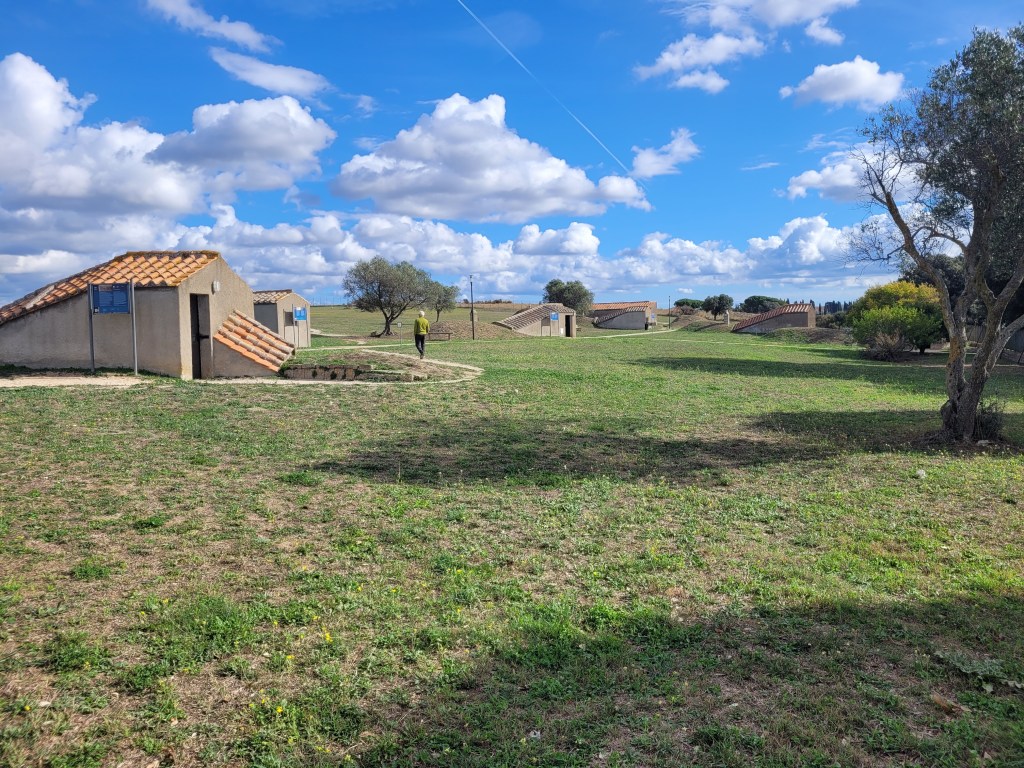
The tombs are reached by stairs, some metal (more recent), some wood and some stone. All are steep and you have to push a button at the bottom to light up the tomb inside.
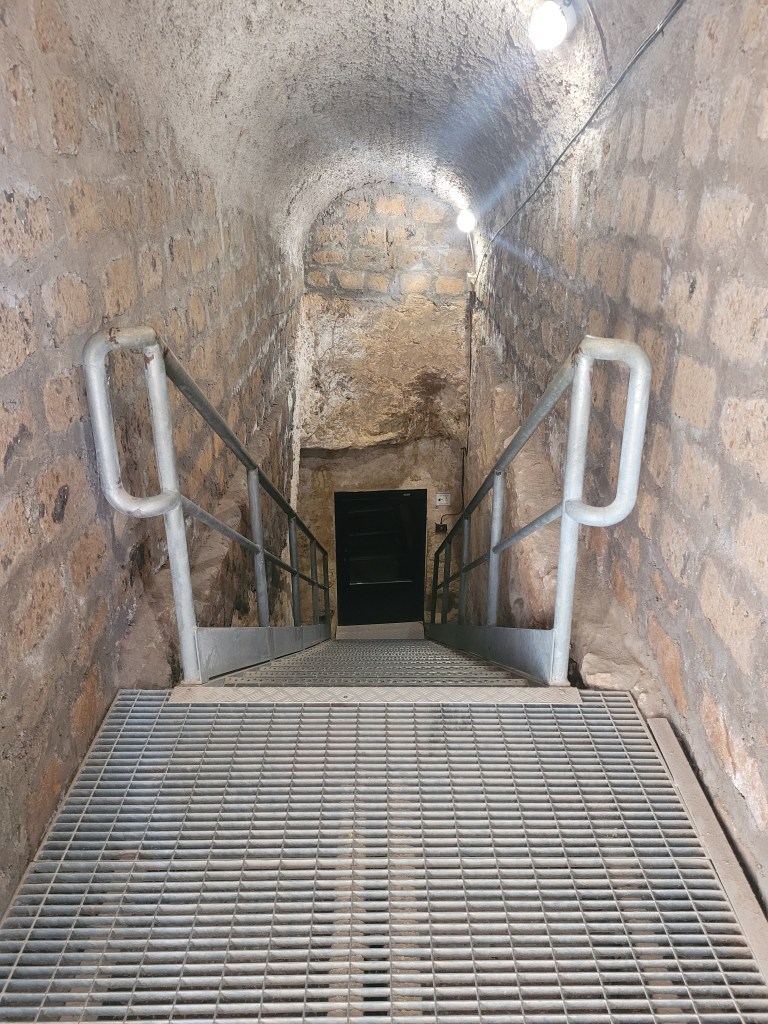
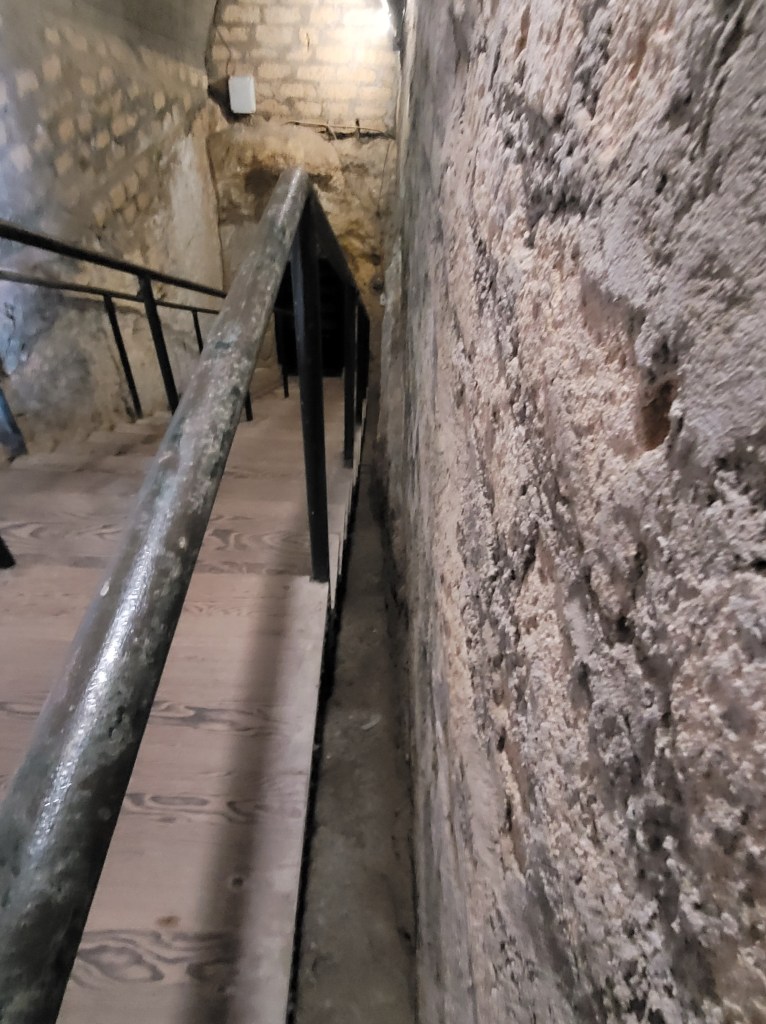
One has been cut into the hillside AND you go down a few steps. I found this one difficult as the heavy door has a lock on the outside (!) and no handle on the inside. Scrabbling around in the dark, trying to work out how to get the door open, was not a high point for me.
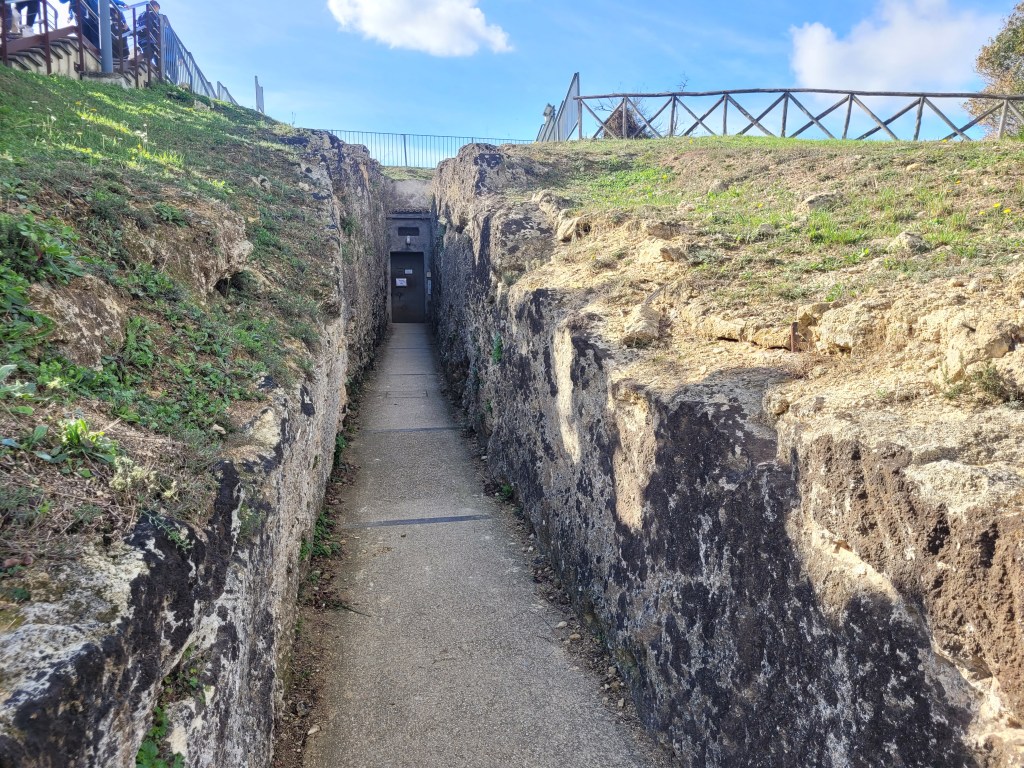
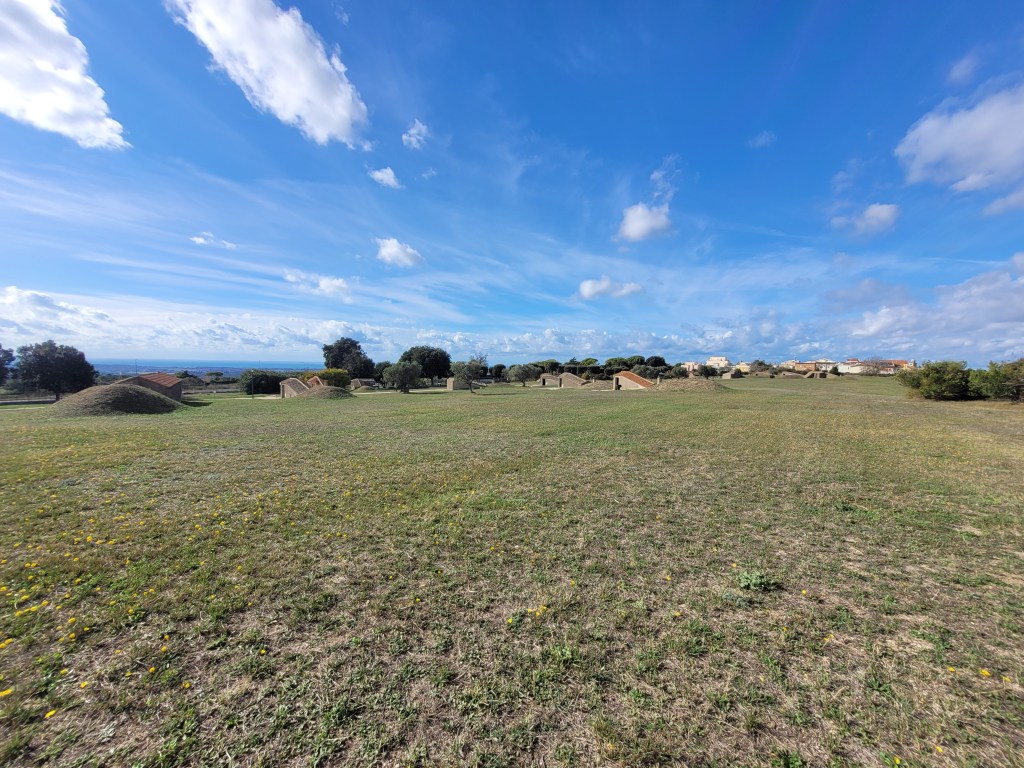
On one side the ridge overlooks the sea, on the other farmland. It’s much more open than the Cerveteri site, possibly because it isn’t so overgrown and everything is underground.
The tombs themselves are interesting but the best experience of them is gained from the exhibit at the museum in Tarquinia. This is possibly because of the way they have to protect them ‘in the field’ (seen through a window) and also how they have aged.
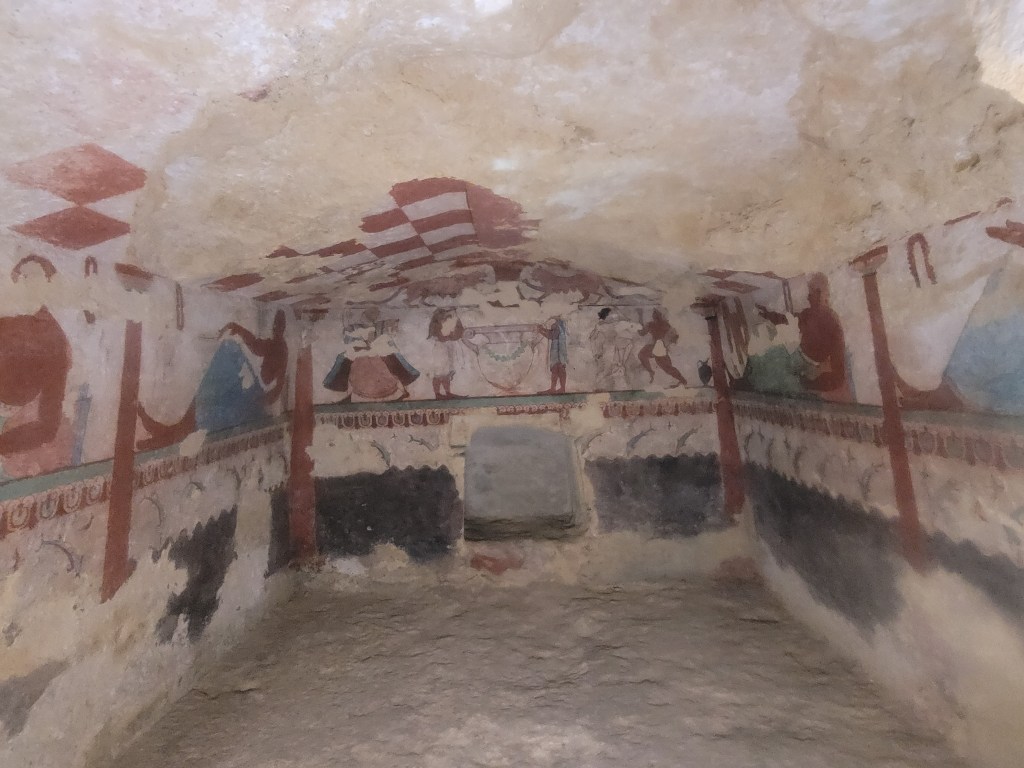
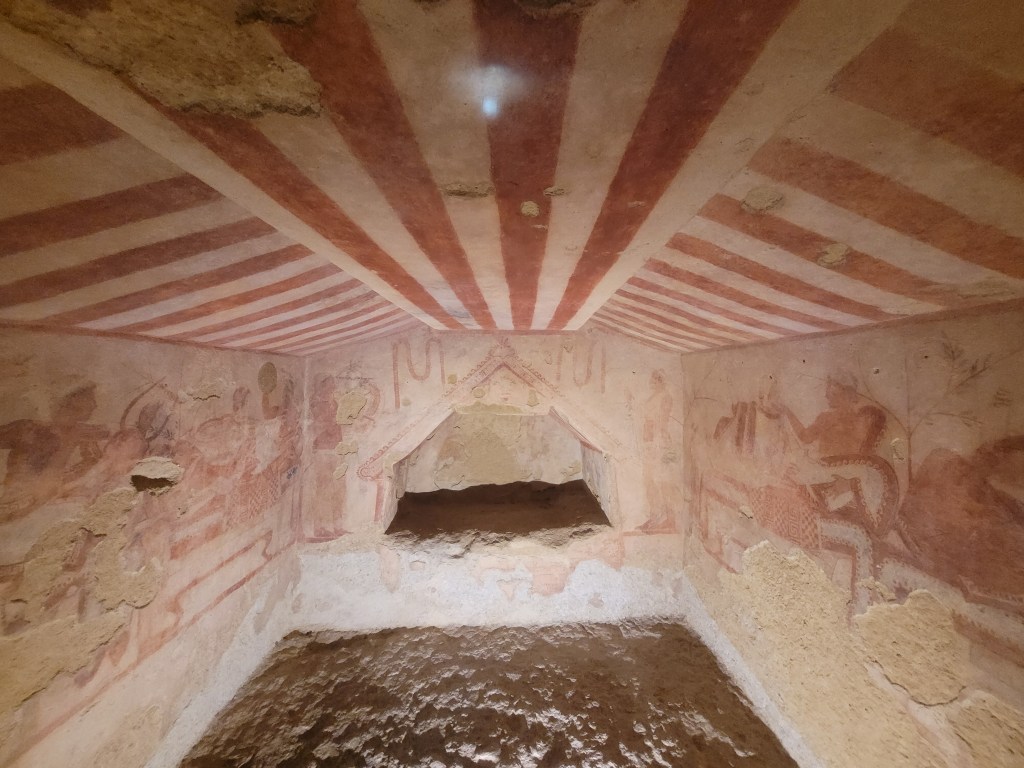
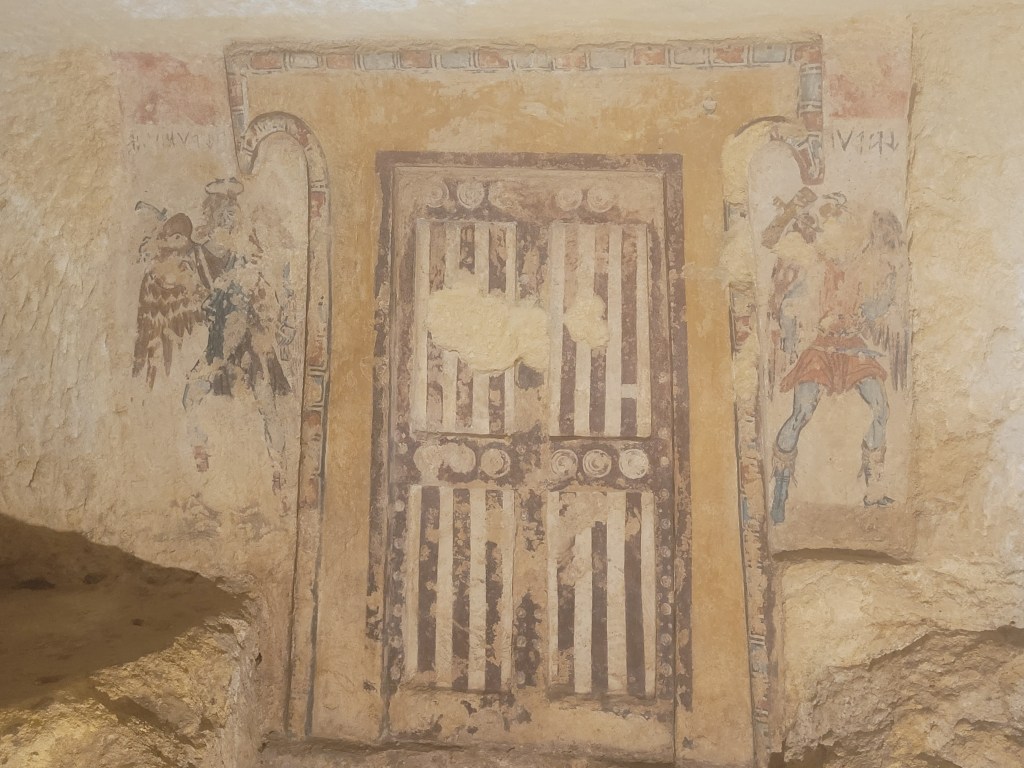
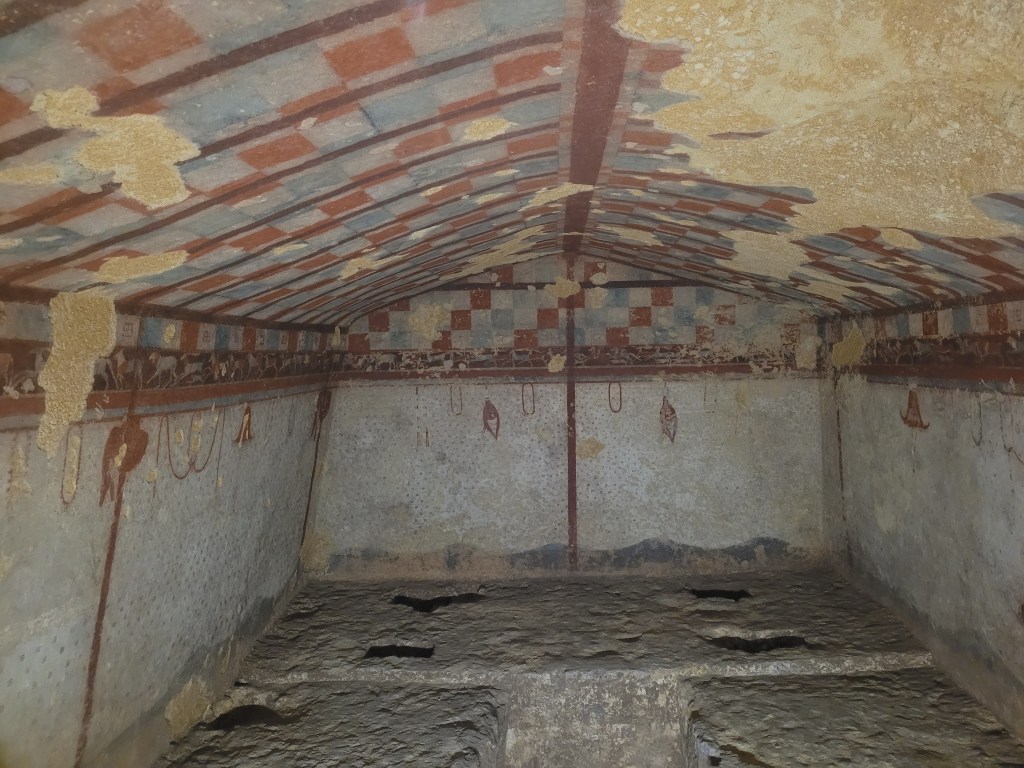
In the late 1950s, several of the tombs were removed (well, the wall paintings were removed) and these are on display in a climate controlled area of the museum. You can’t quite go in, but you can ‘lean’ in. They are fantastic.
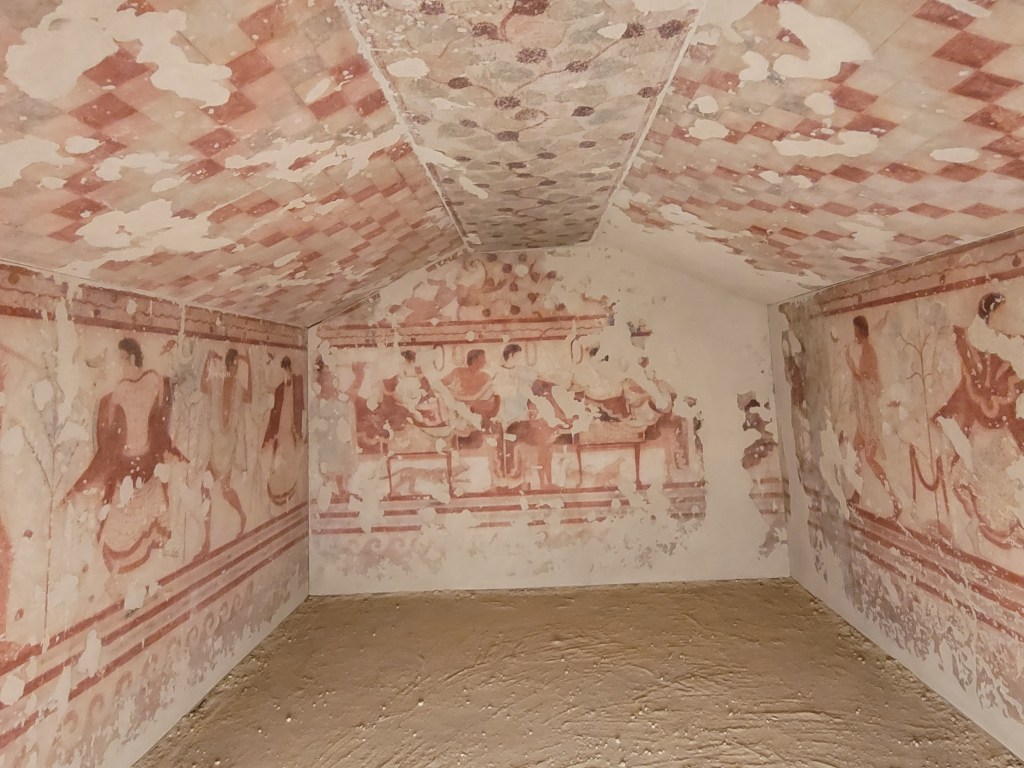
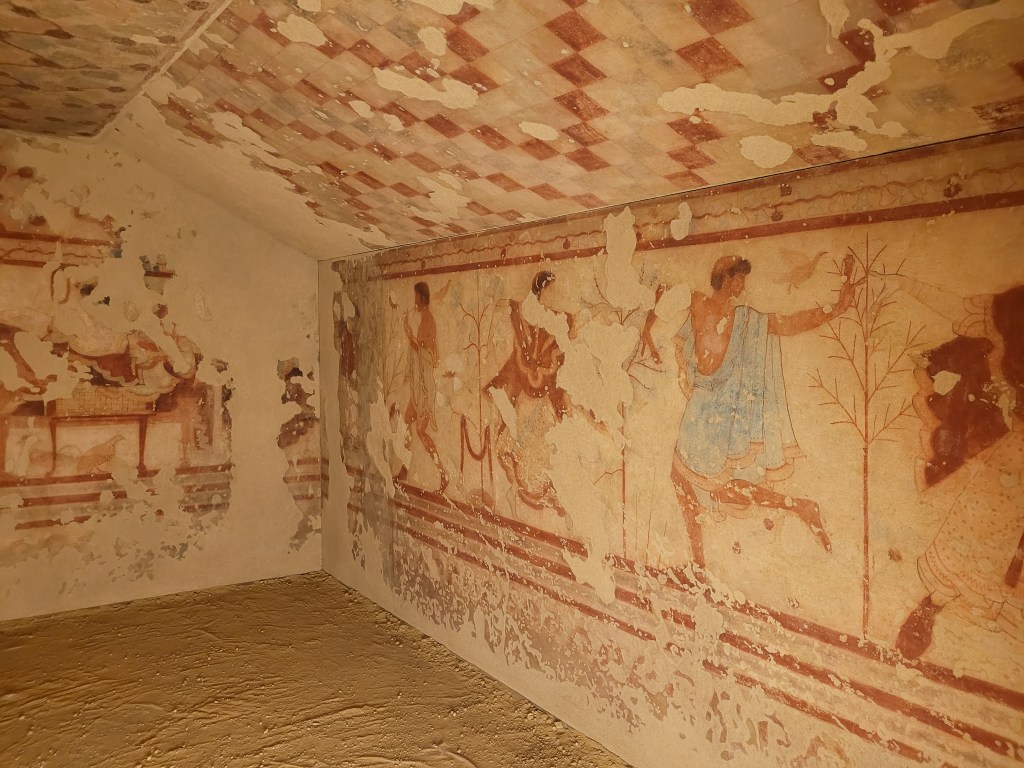
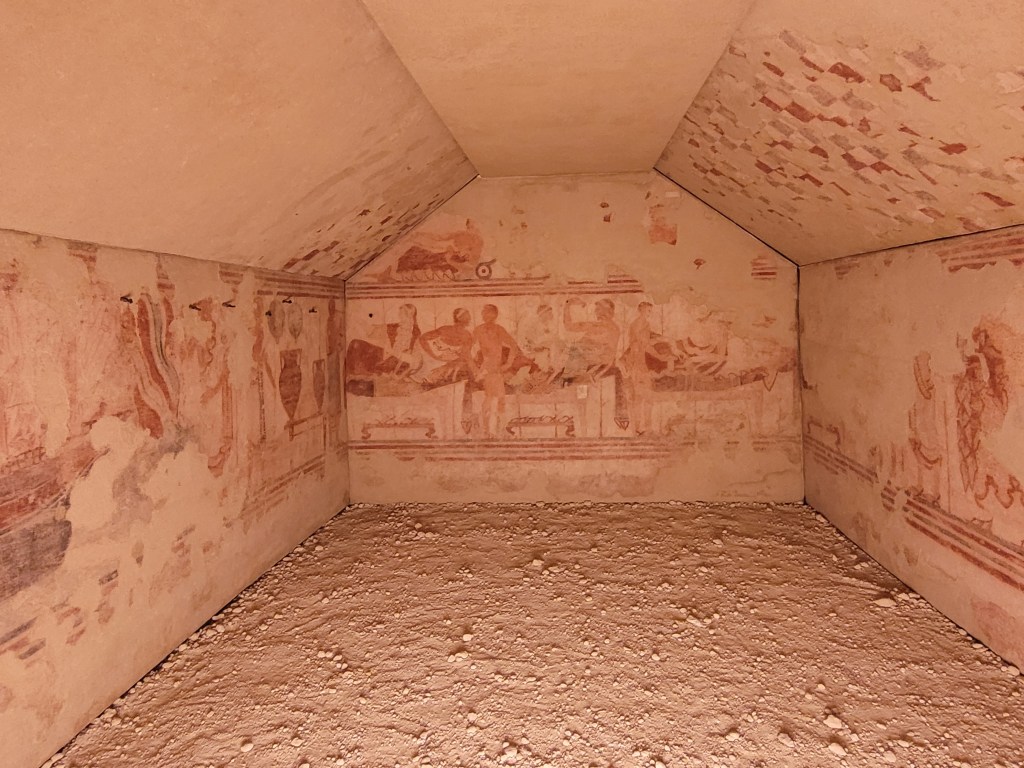
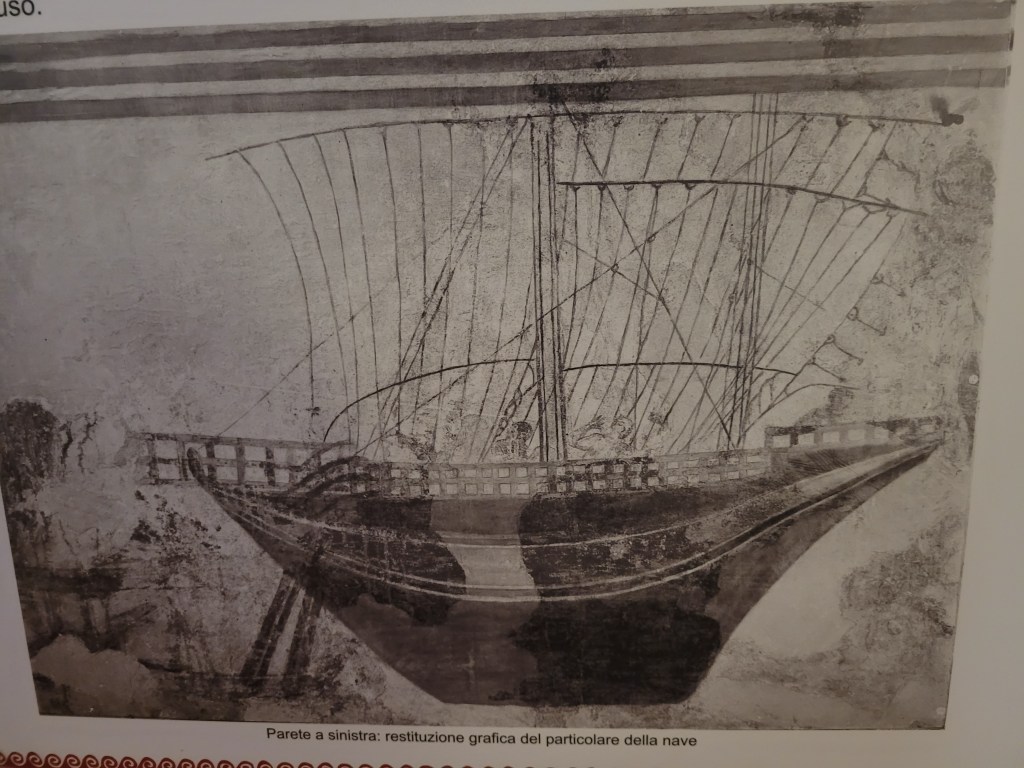
In one tomb there is a faint picture of a boat which reflects the importance of Maritime trade.
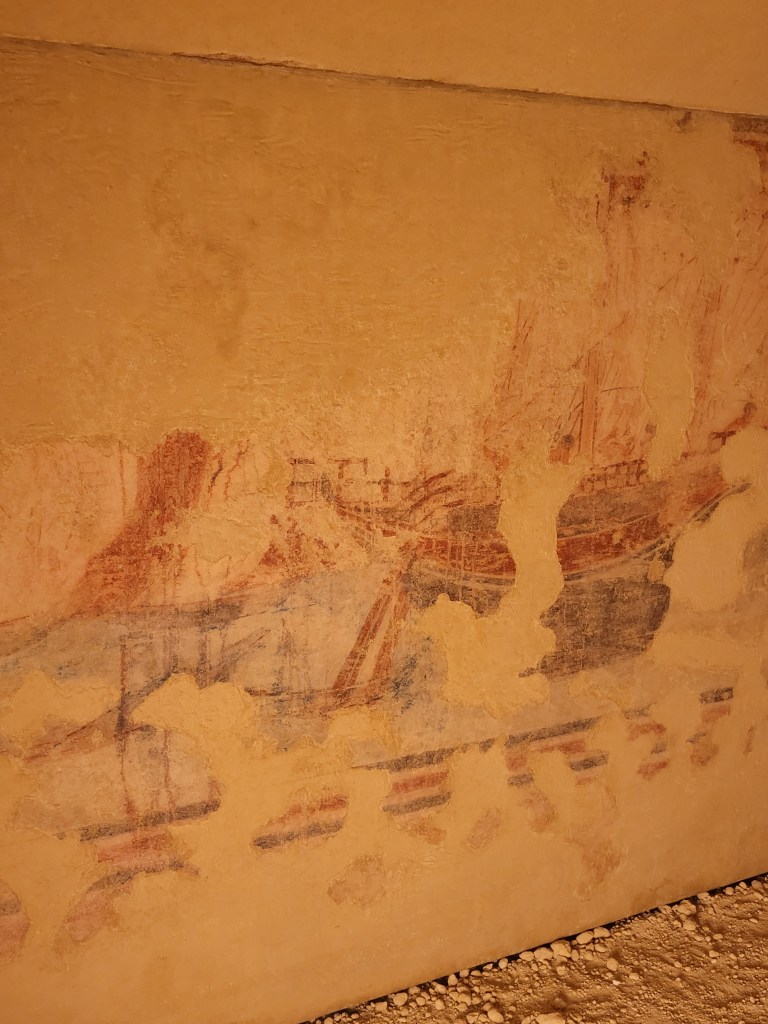
In the other, there is a sequence of ‘games’, like the funeral games held by the Greeks.
The Etruscans were cast into shadow by the extent of Rome’s radiance and the significance of Greece (which was absorbed into Roman culture). However, the impact of the Etruscans can be seen in their maritime support of Catharge, their extensive trade, their treasury at Delphi, their artwork and their contribution to a line of Roman Kings – the Tarquins – in name at least.
‘Fascinating ‘, as Spock would say.
 Retired? What now?
Leave a comment