Viterbo was a stopping town for Via Francigena pilgrims on their way to Rome (or on their way down to Apulia and onwards to the Holy Land).
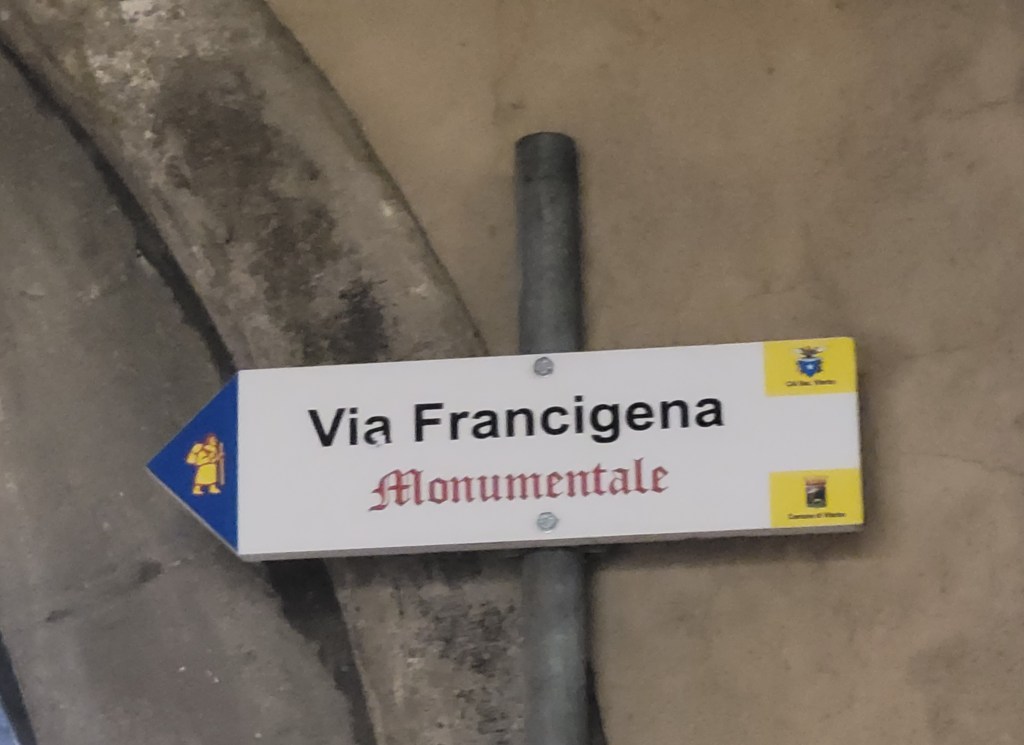
This pilgrim route is the longest in Europe, first recorded in 990 CE by Sigeric, Archbishop of Canterbury, as he travelled to Rome to receive whatever official ‘bits’ he needed to confirm his position as Archbishop.
The town was an Etruscan settlement (but of course!) – the bridge into the square of the Duomo is said to have Etruscan footings.
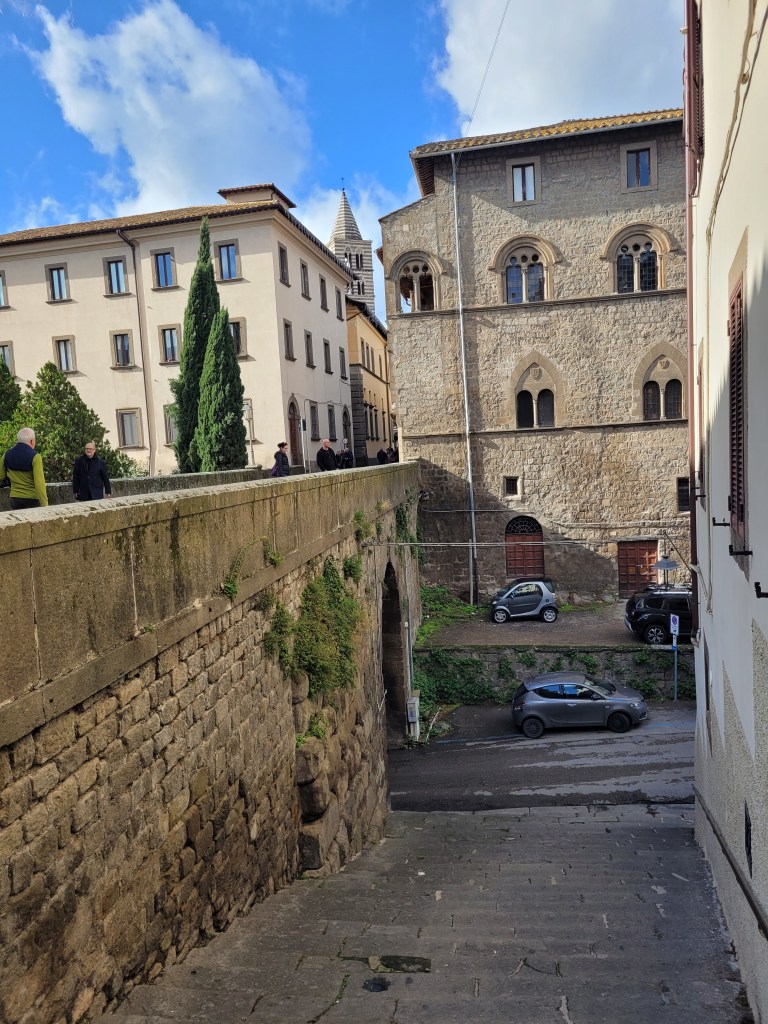
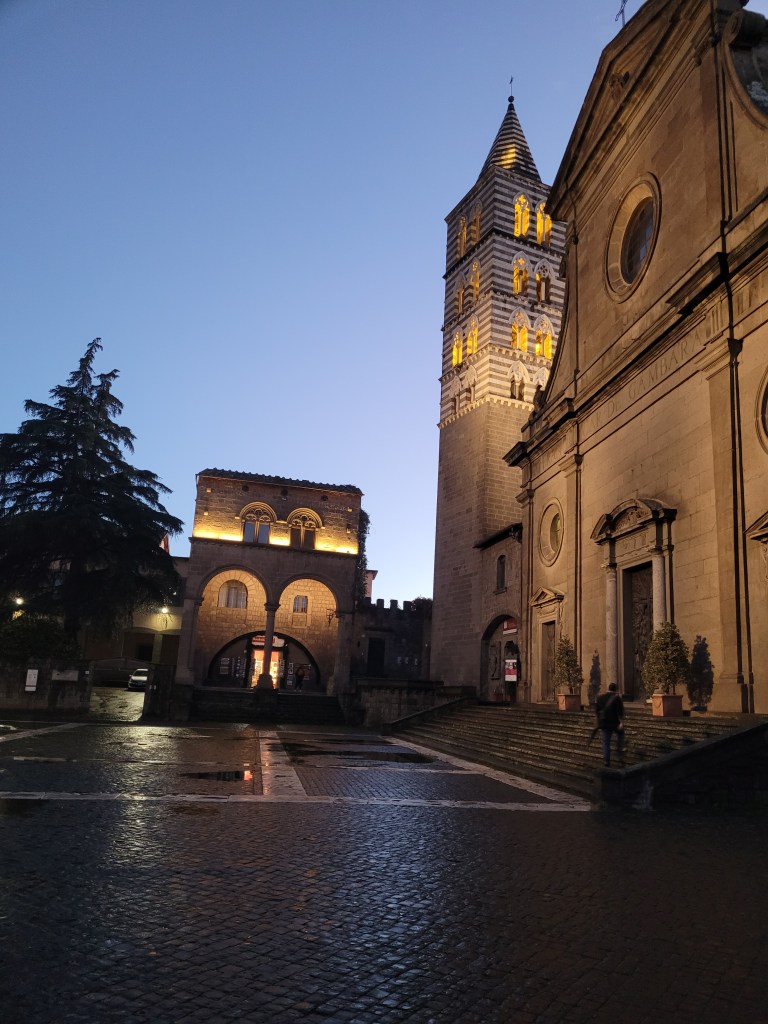
The Duomo is flanked by the Ospedale Grande (which presumably gave shelter to the pilgrims passing through) and is now a museum (we didn’t visit).
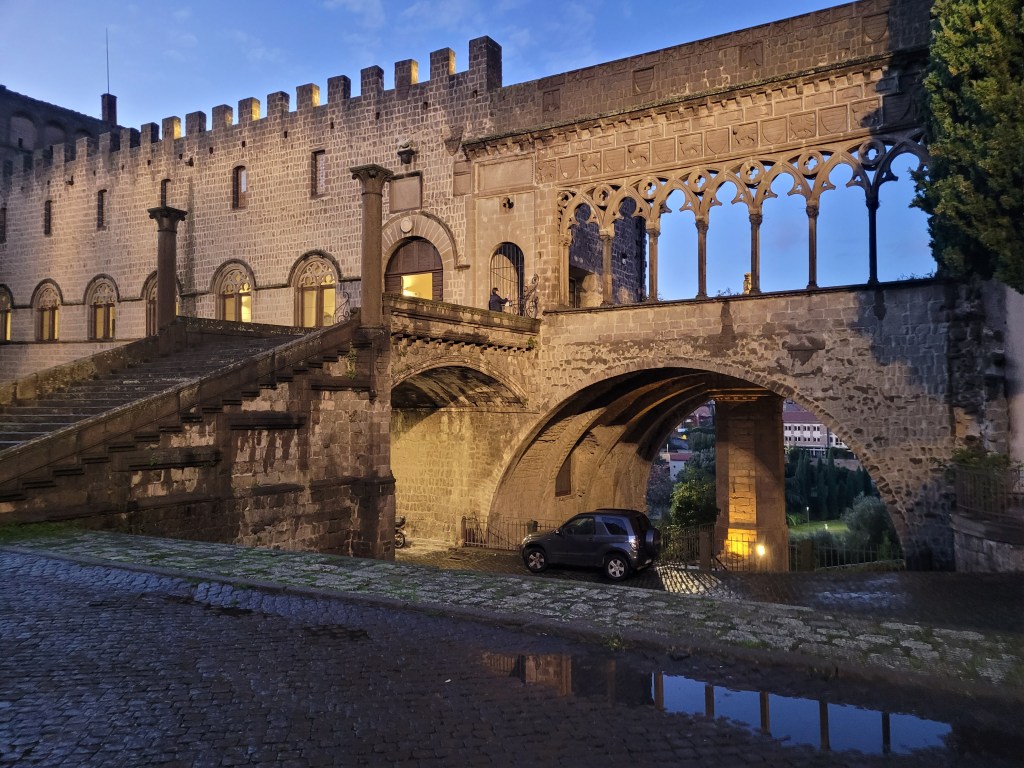
In the 13th century CE, Viterbo was the seat of the popes, so there is an impressive papal Palace in the Piazza del Plebiscito. We didn’t visit that museum either.

We did visit the Etruscan museum in the Rocca Albornoz (which should surprise no-one at this point).
Its collection is interesting, very focused (in one section) on cotidien life and the building is spectacular. Greatly overlooked, we had it to ourselves. Fun fact: at that point where Etruscan and Roman cultures overlapped, Roman women were forbidden to drink wine while Etruscan women not only did drink wine but were seen as hard drinkers. Etruscan women had much more equal lives, which was unusual for the times, and (probably as a consequence of their greater equality) were thought of as lascivious and loose.
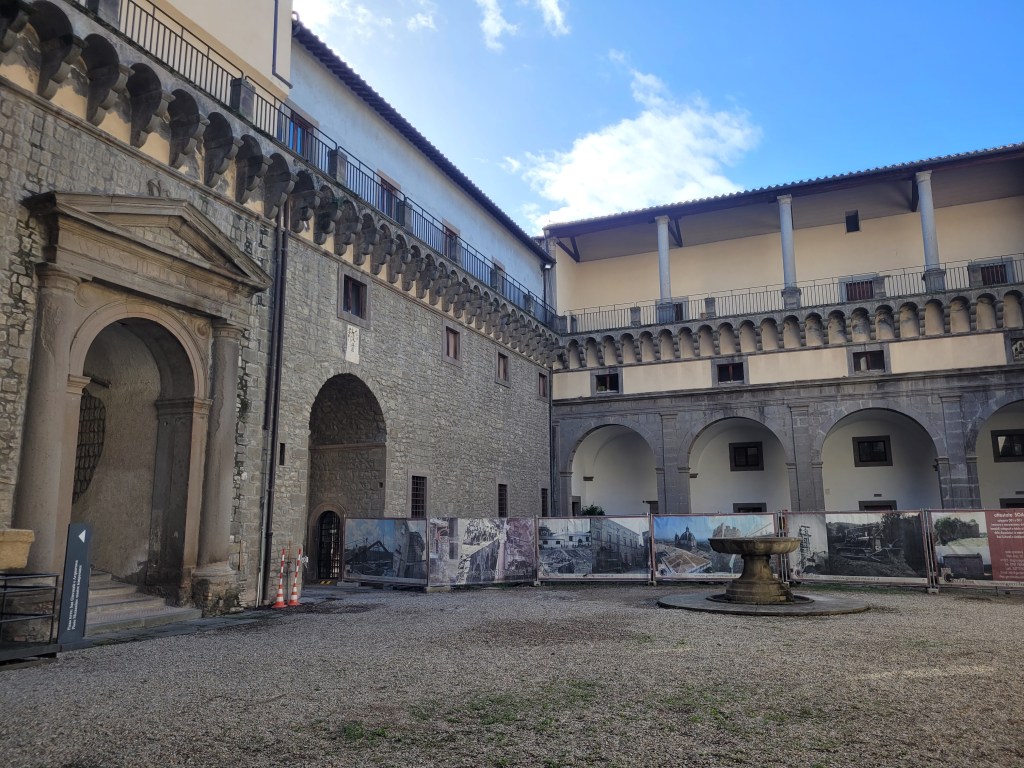
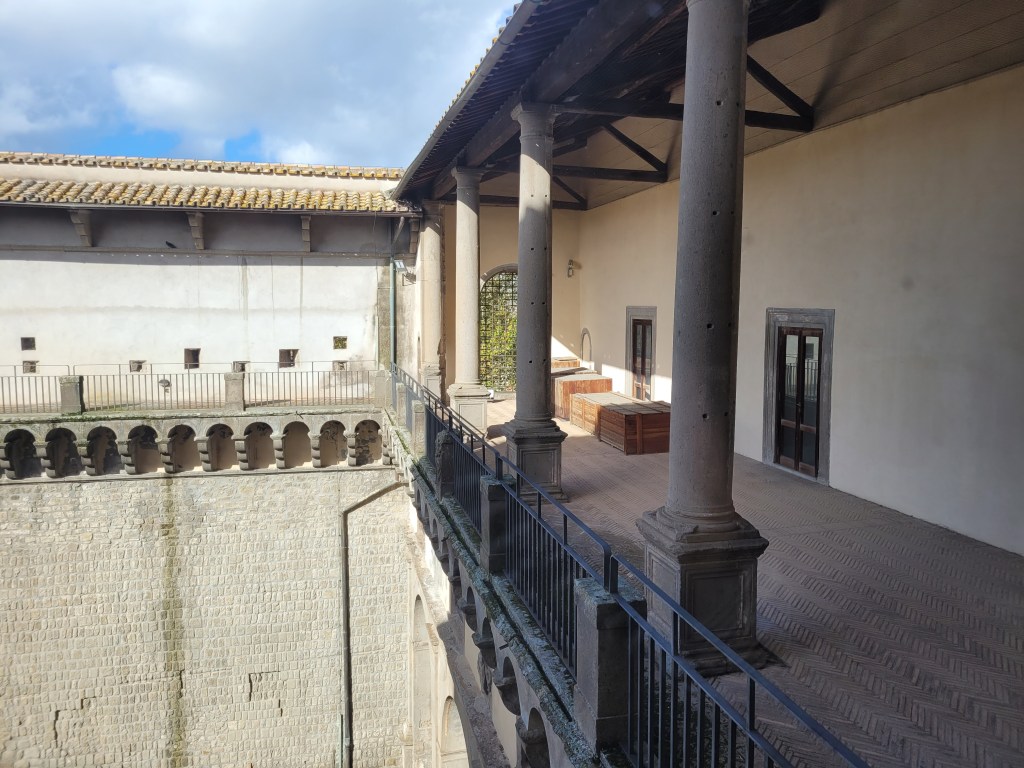

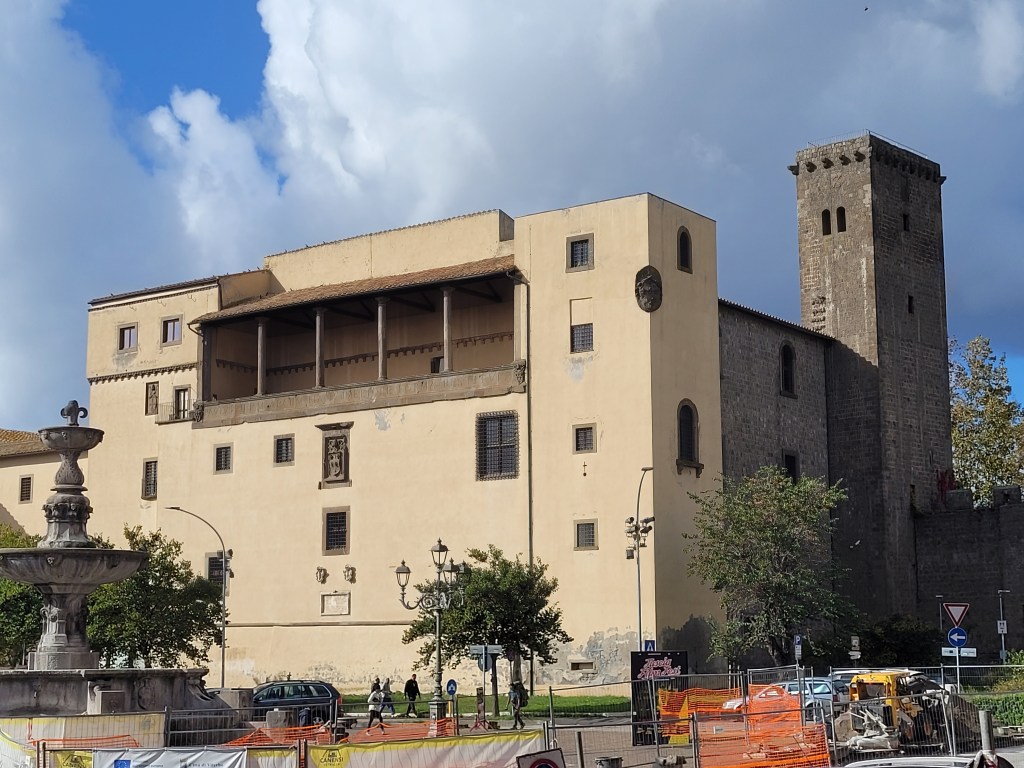
We spent much of our whole day in Viterbo wandering the medieval centre of town. Yes, it is a maze, with apologies for the overuse of that adjective.

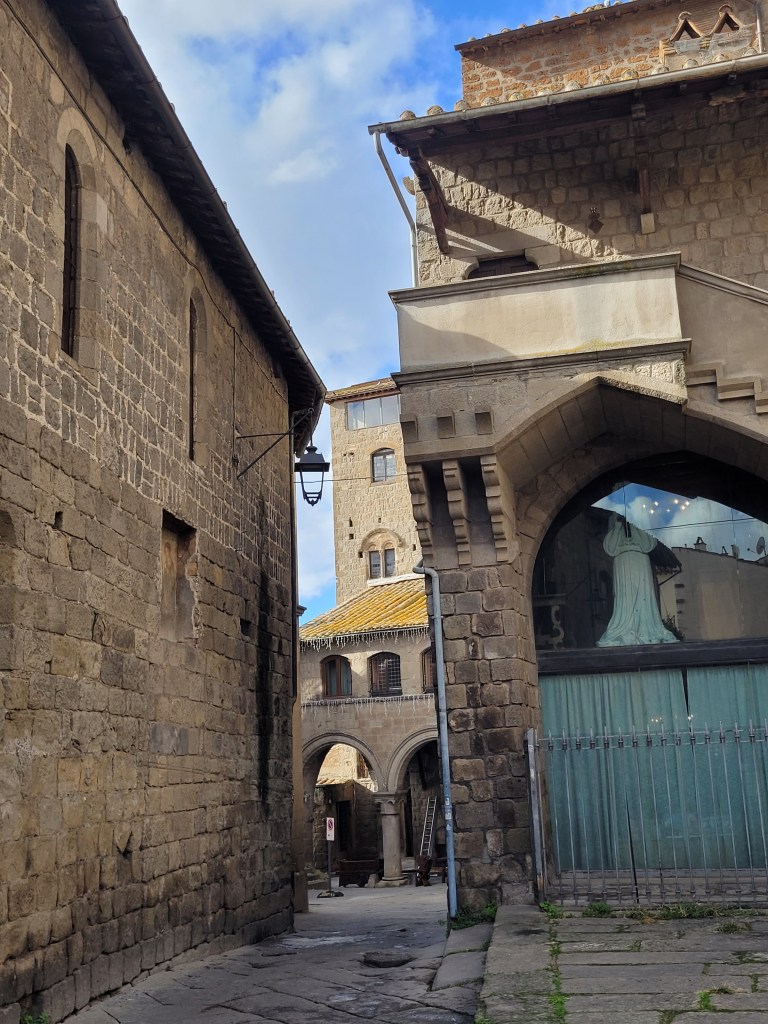

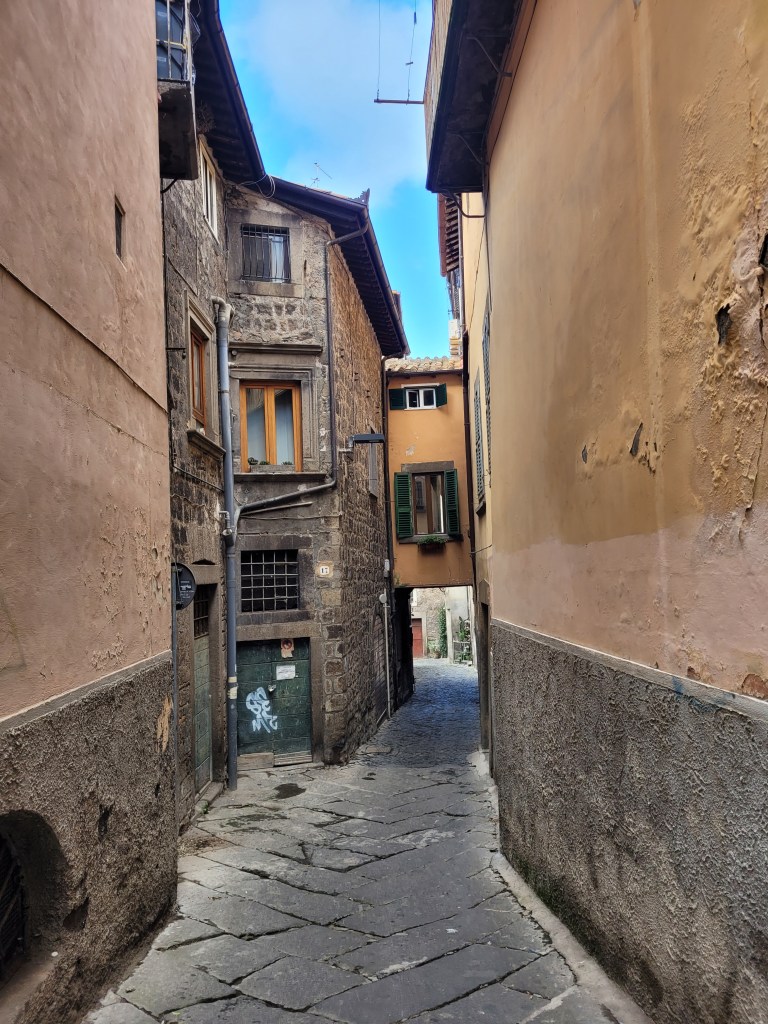

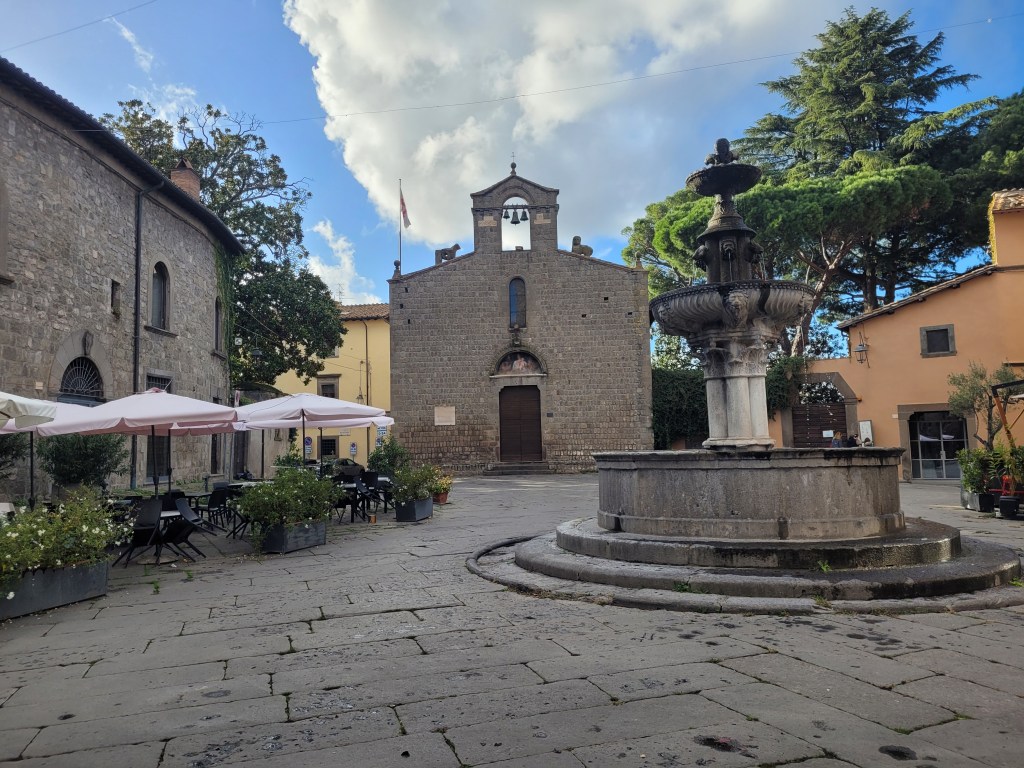

There are unexpected staircases and external pulpits
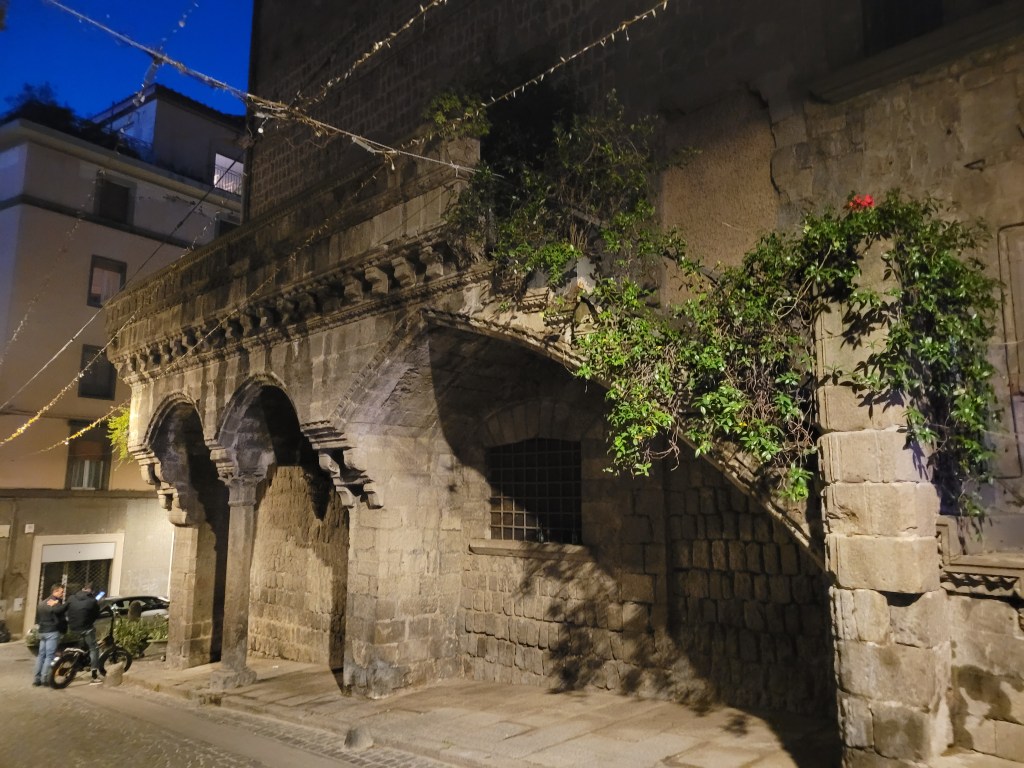

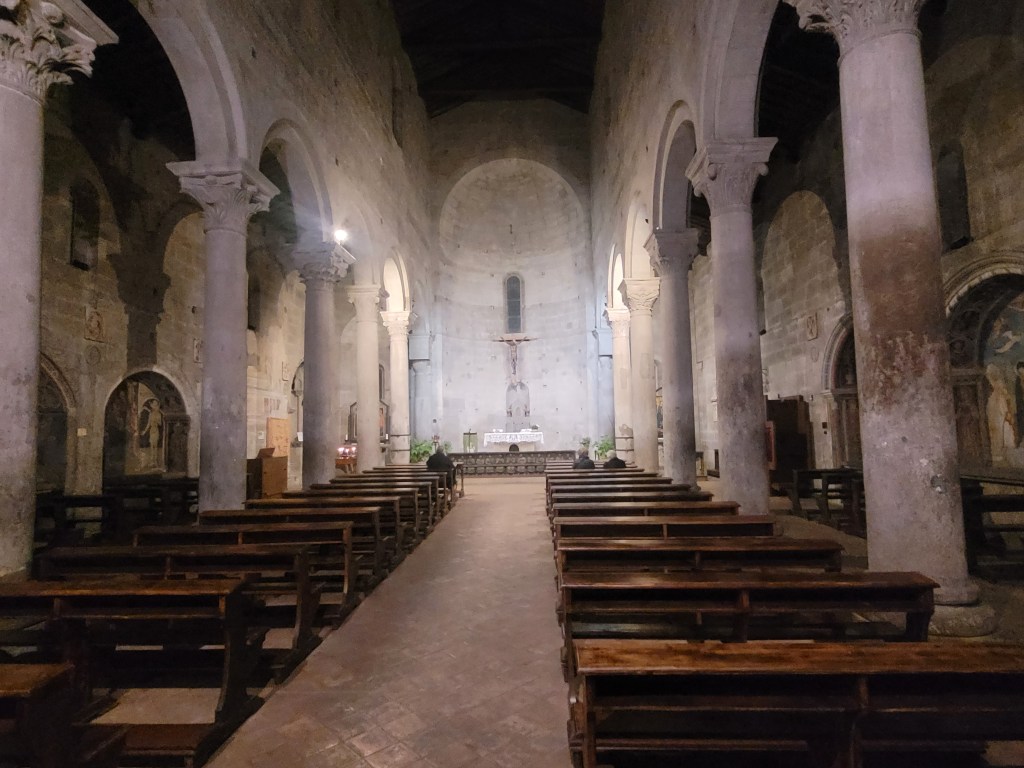
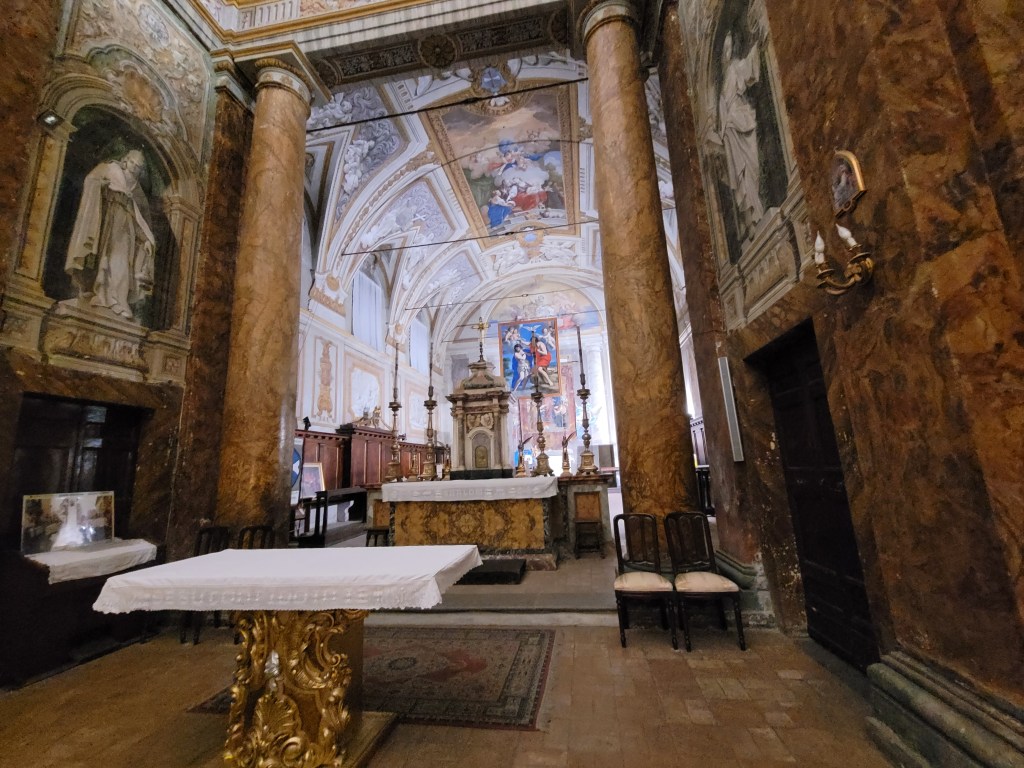
austere church interiors and ornate ones
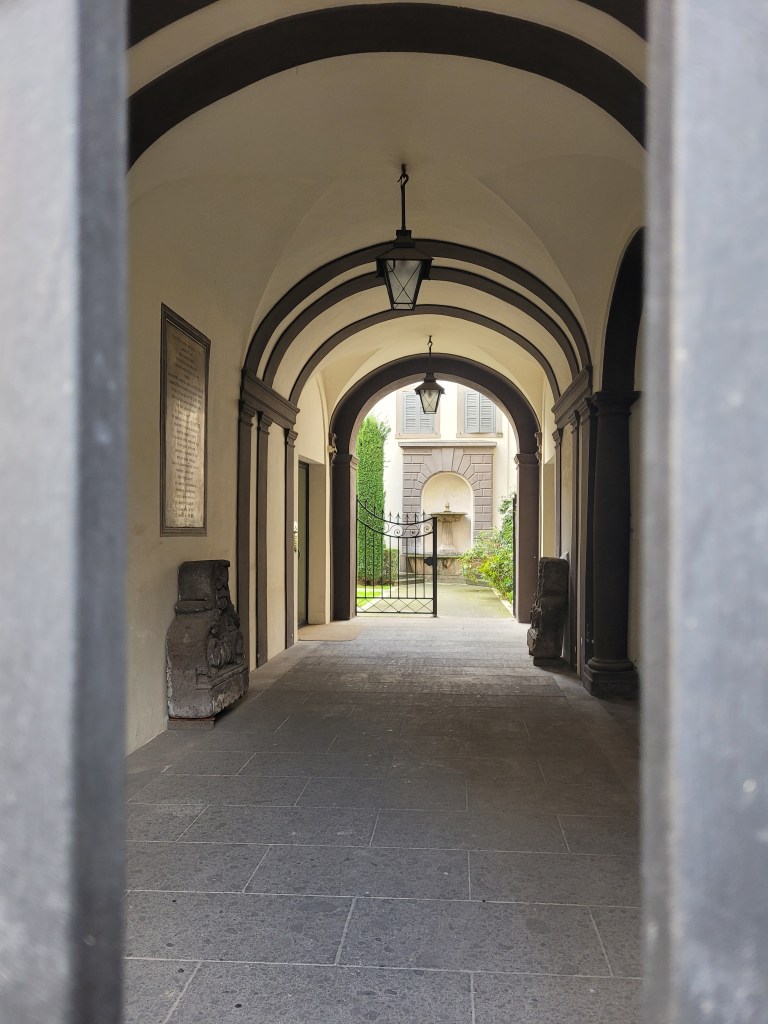
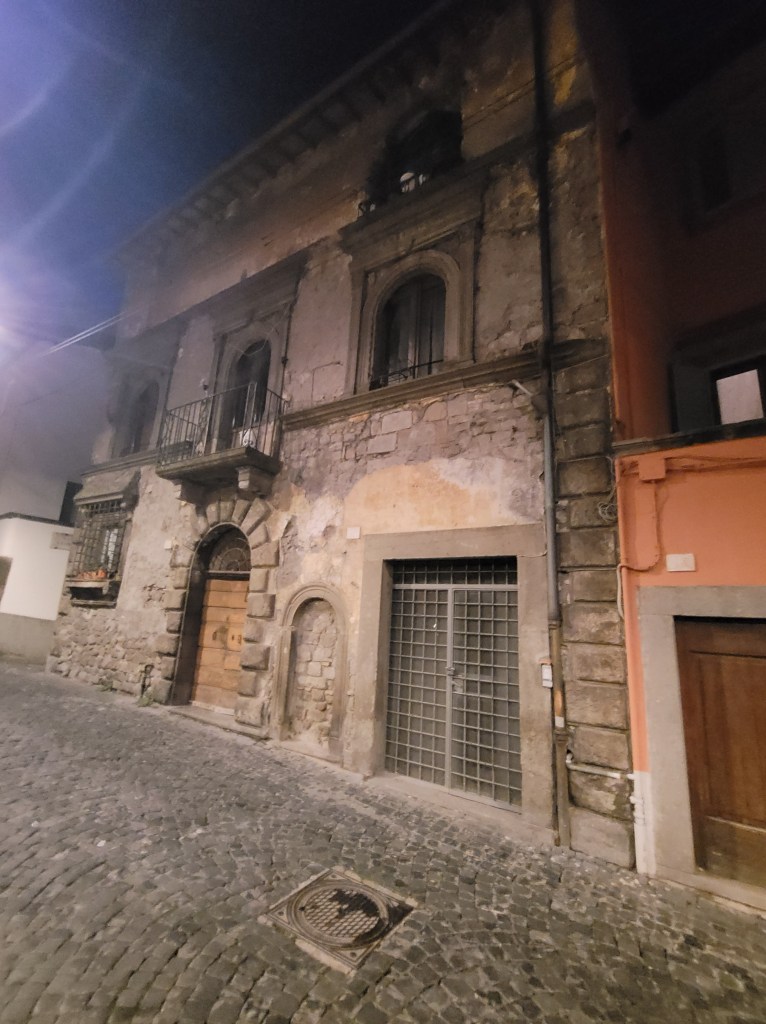
and both expensive-looking renovated blocks of flats and renovation projects.
There are small, unobtrusive entrances into wonderful meat restaurants (no pictures so as to not offend those who don’t enjoy slabs of beef) – with NO pepper grinders- and enormous gates through the medieval walls (I deleted those pictures by accident).
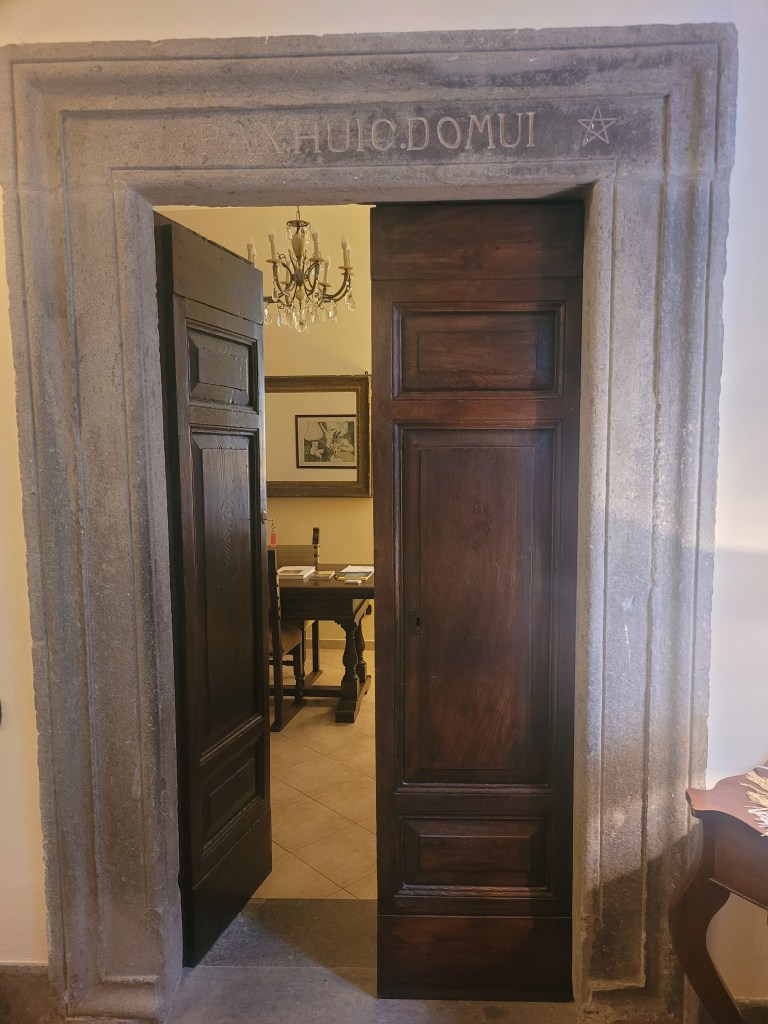
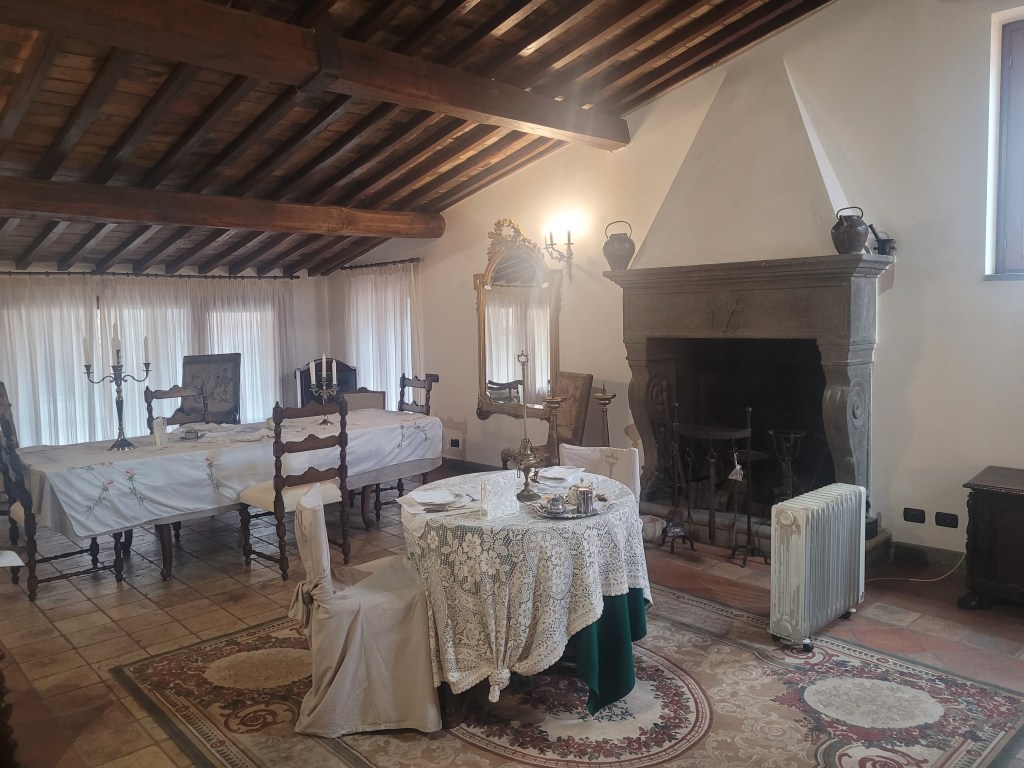
We stayed in a B&B in the medieval part of town. I am not a fan of B&Bs (it’s all just too personal) but the owner was lovely (spoke little to no English but spoke A LOT in Italian, of which I understood about 30%) and the building was interesting.
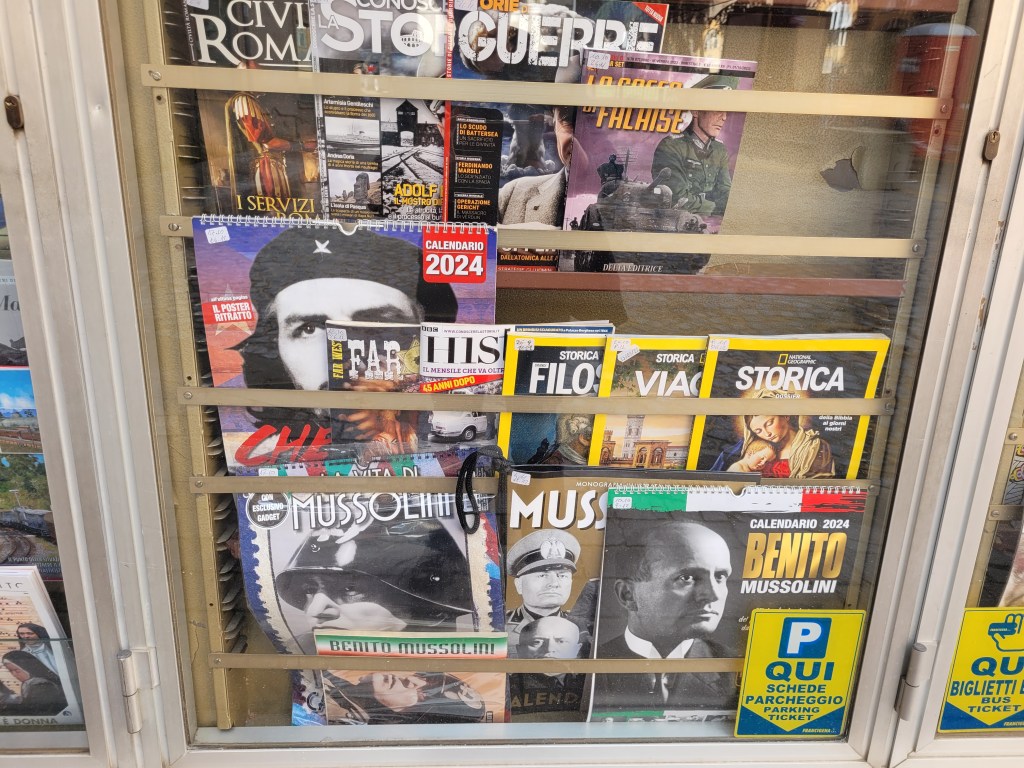
Viterbo is a university town, which gives it a nice vibe; a prosperous town that trades heavily on its history. While it was interesting to visit and very pretty to walk around, unless you use it as a base for other excursions (and there are plenty to be had but you need a car), it’s only worth spending a couple of nights there. We probably would have seen more museums had it not got dark quite so early. I do regret not seeing the Papal Palace but wouldn’t rush back for it. We were taken aback by a display of calendars, which possibly reflected the town’s political leanings:
And so, back to Rome for our final two nights.
 Retired? What now?
Leave a comment