And wind! Lots and lots of wind.
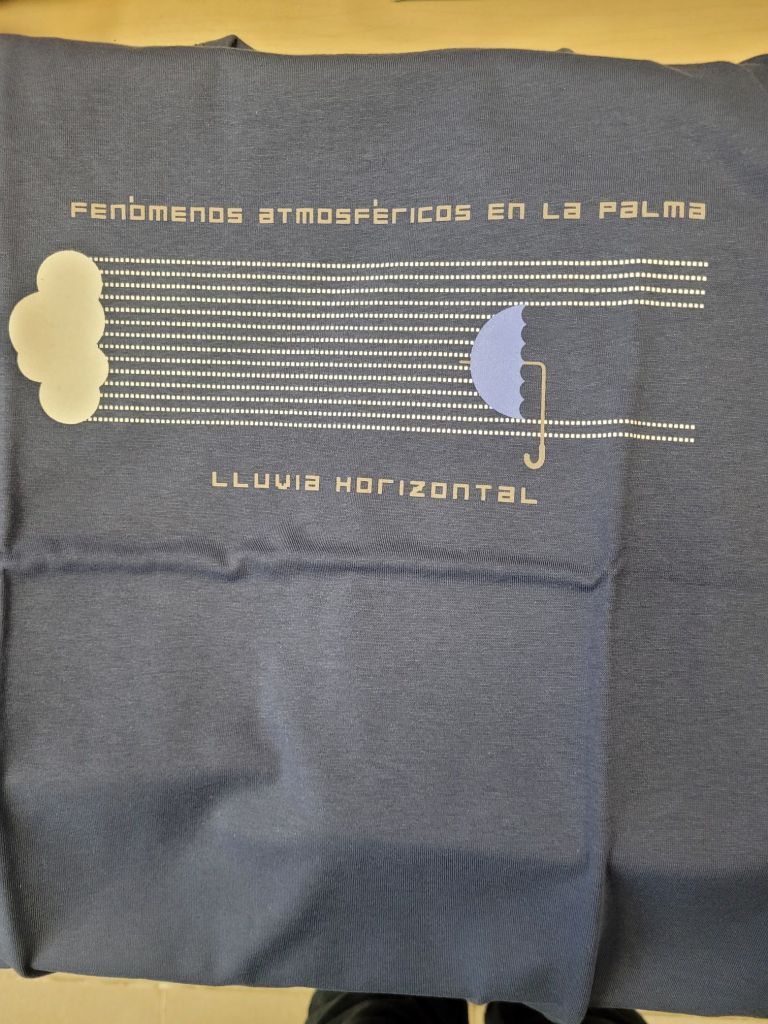
And horizontal rain.
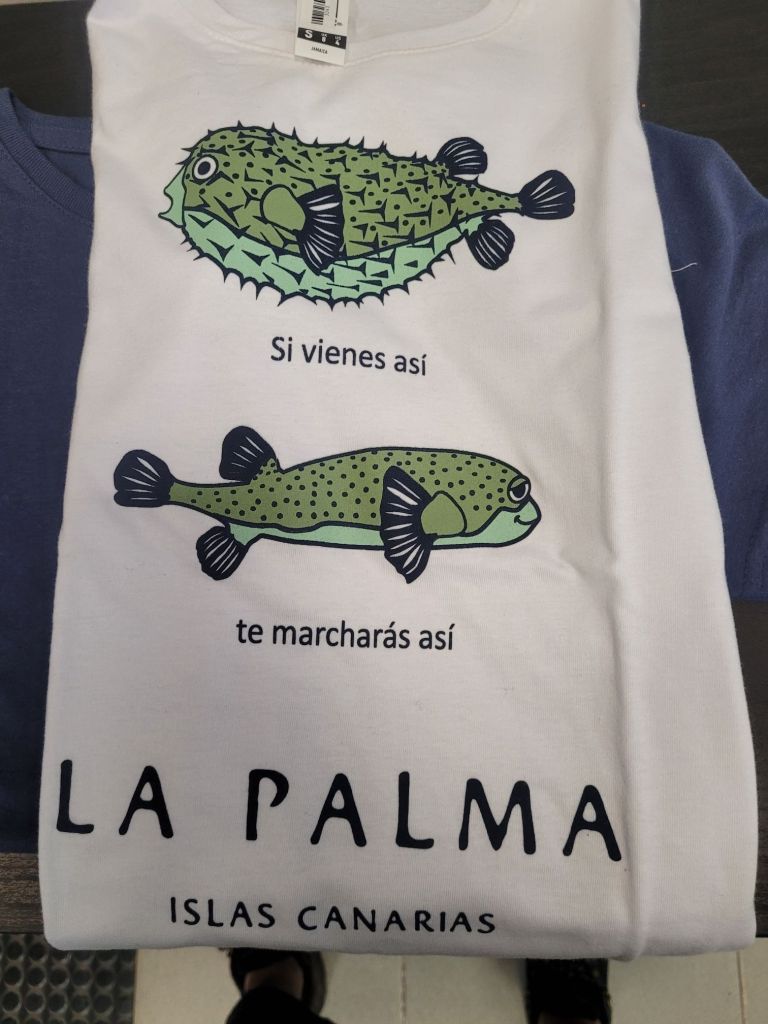
There were two T-shirt graphics that sort of encapsulated the La Palma experience.
La Palma has been interesting mostly for the outdoors (as opposed to museums, archaeology, art etc). The food has been, overall, good, the local wine has been good and the people have been friendly, helpful and welcoming. The guidebooks have been less helpful, on the whole, avoiding mention of the stunning Canary Pine and Laurissilva forests in the North of the island. Or providing information about things being closed when there are high winds (which happens a lot).
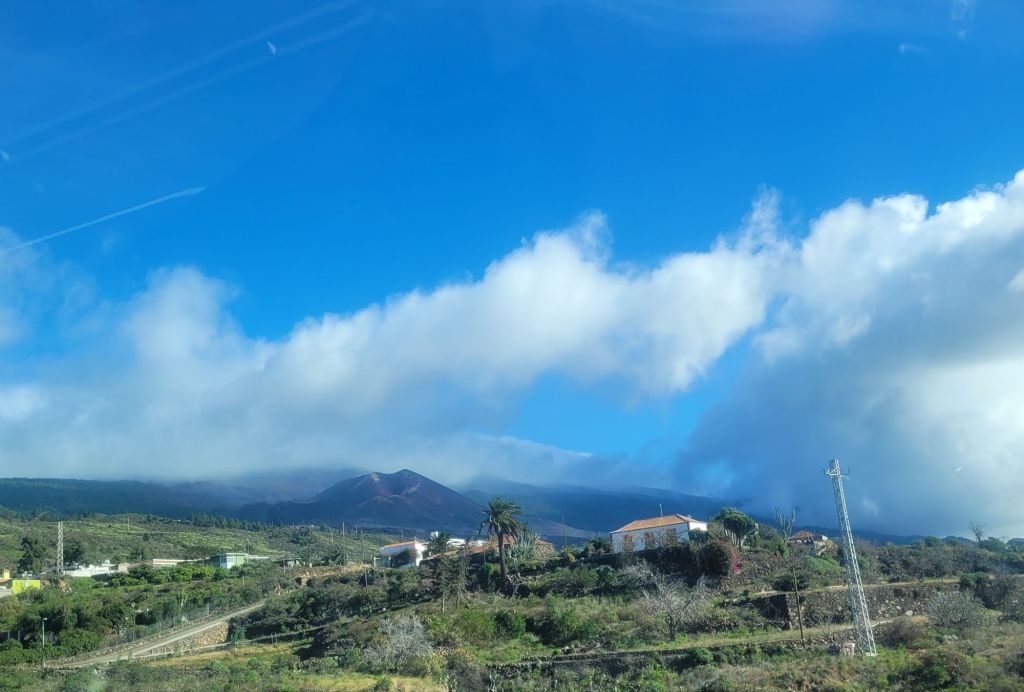
Volcanoes, and their attendant pumice deposits, are significant – there is no getting away from them. The island has made every effort to transform these into positives and working quickly to overcome the fallout from the September 2021 eruption. This is still extremely visible, with a whole section of motorway simply ‘not there’ – even on Google maps!
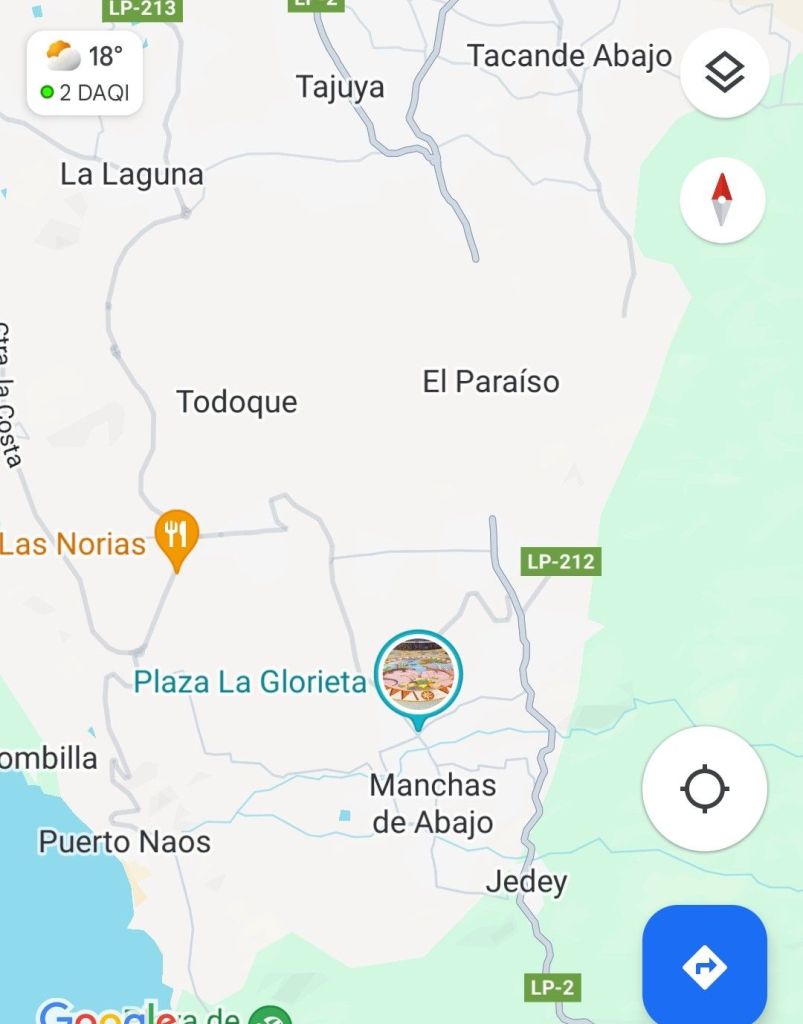
We drove past some of the remnants on a new section of road: a huge black expanse of pumice only relieved by the odd, forlorn, section of banana plantation wall or netting.

Even in the northeast, not as lively in terms of volcano activity, pumice meets sea in a spectacular set of formations that have been transformed into swimming coves and rock pools.
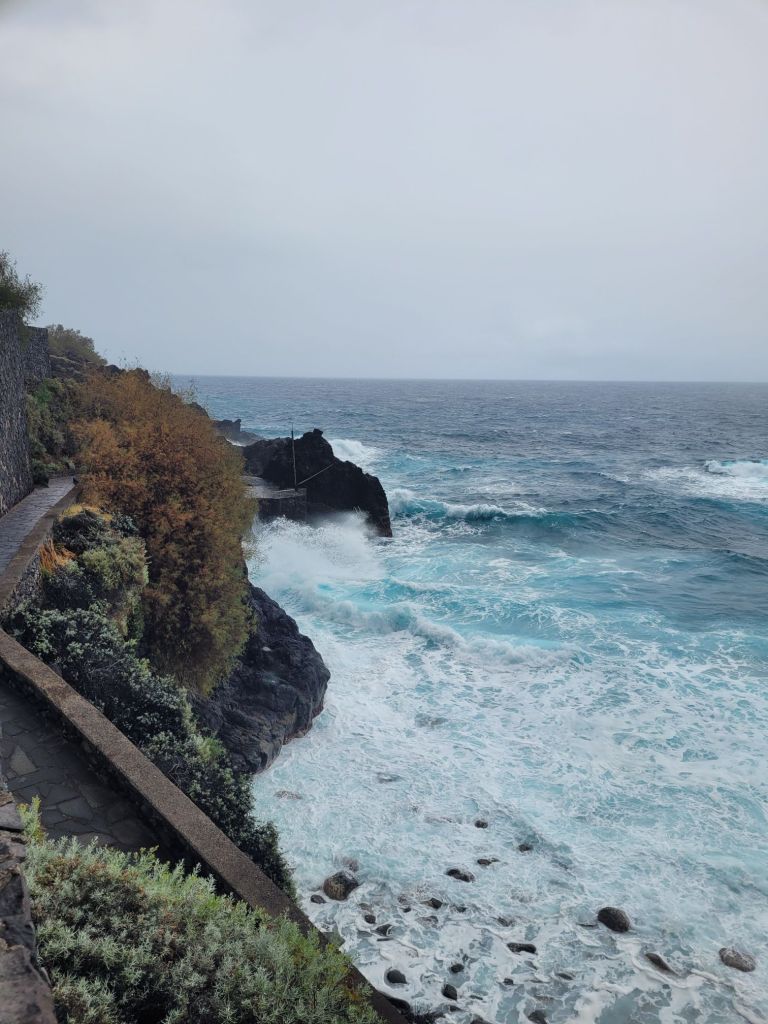
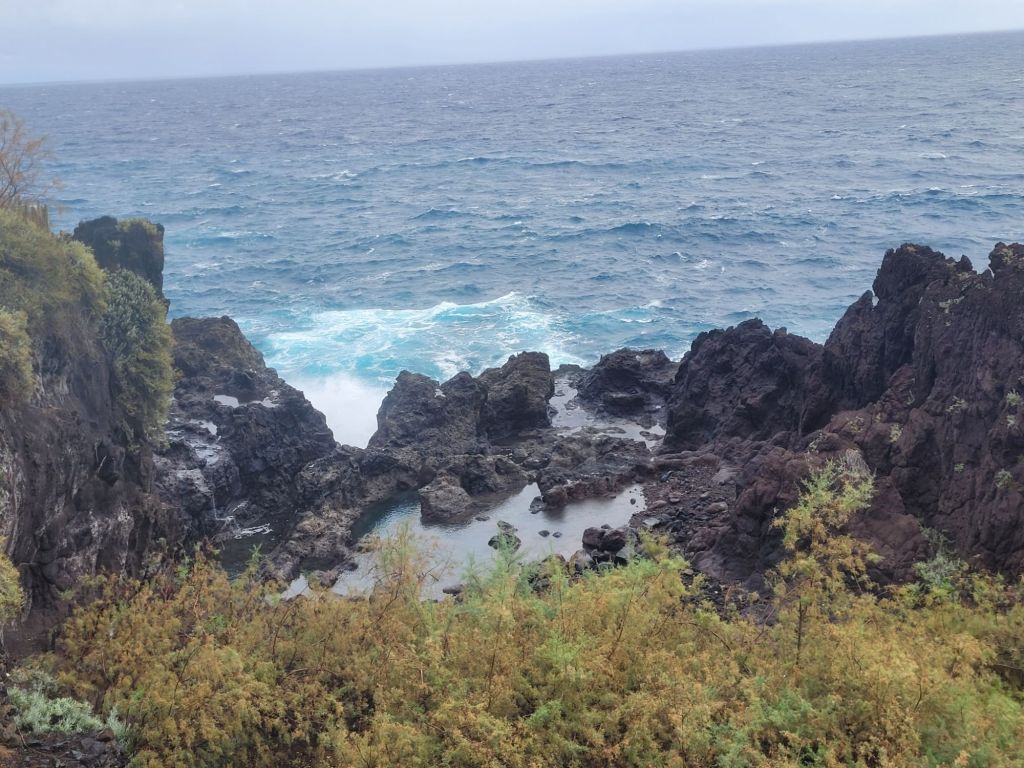

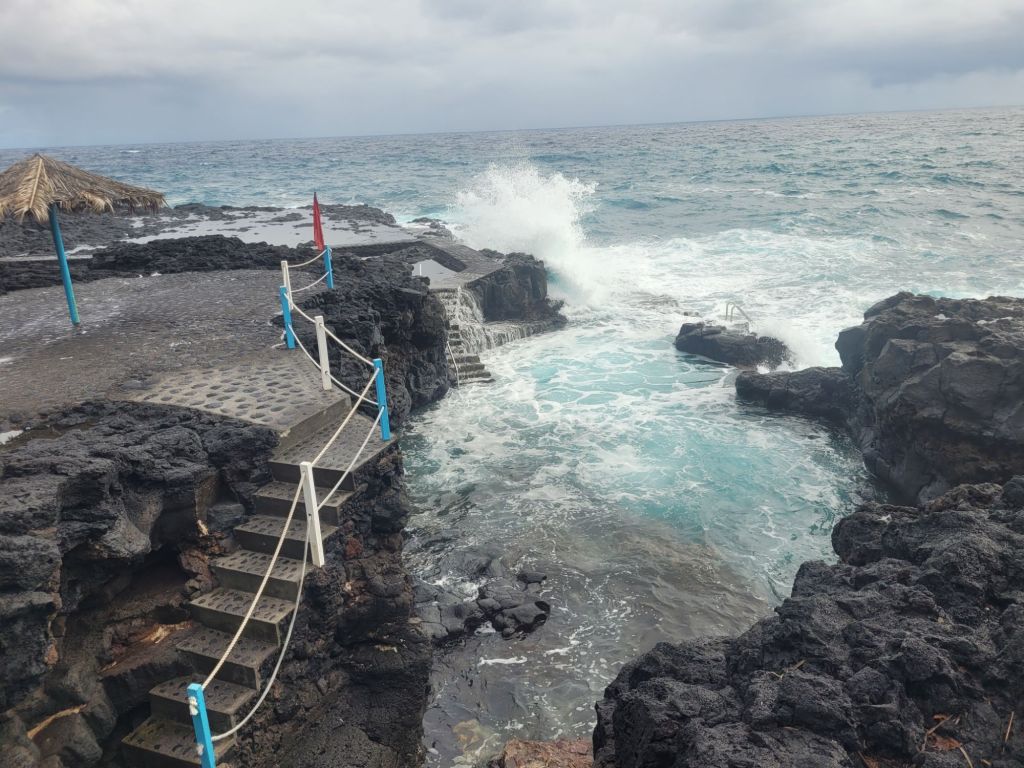
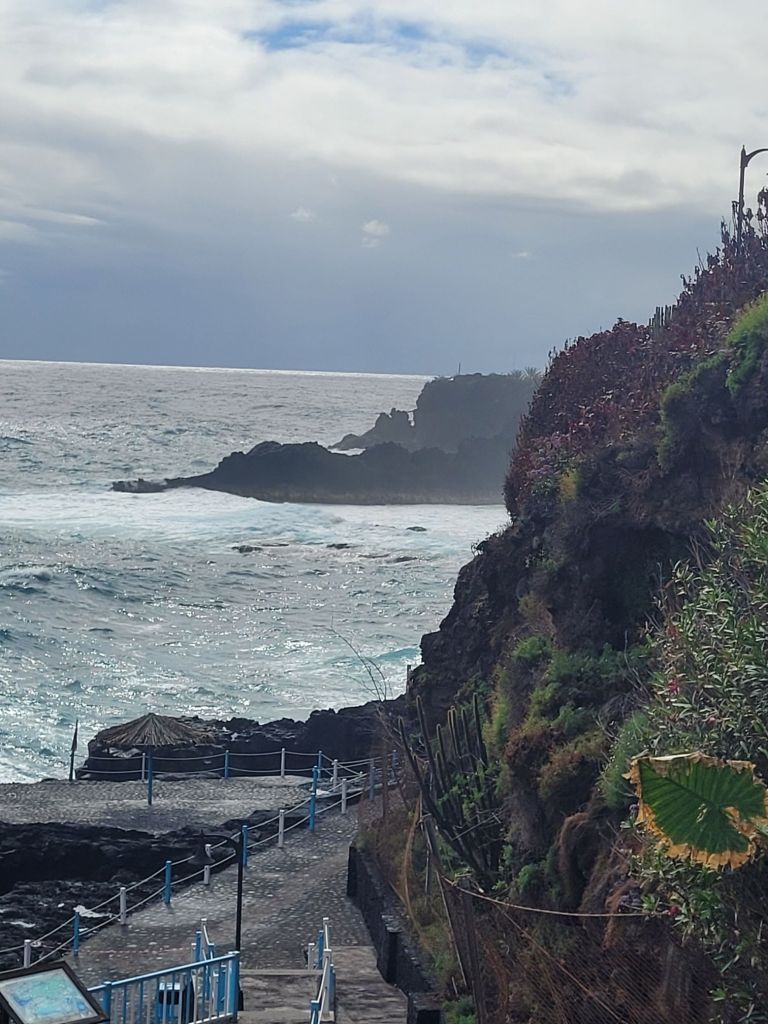

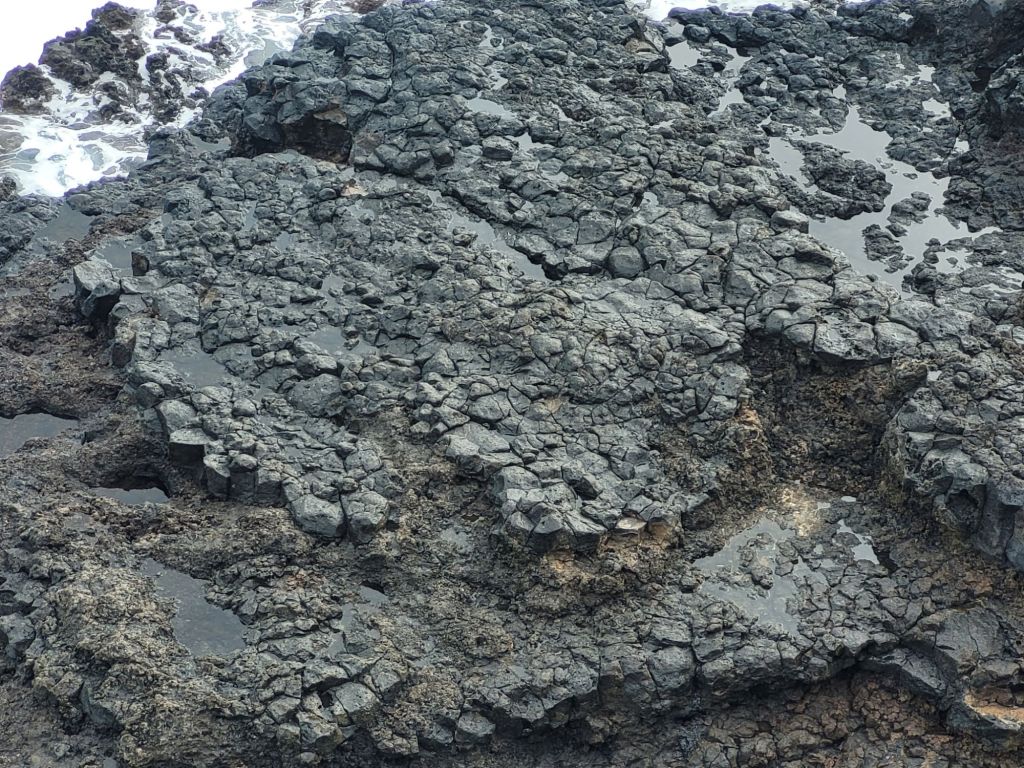
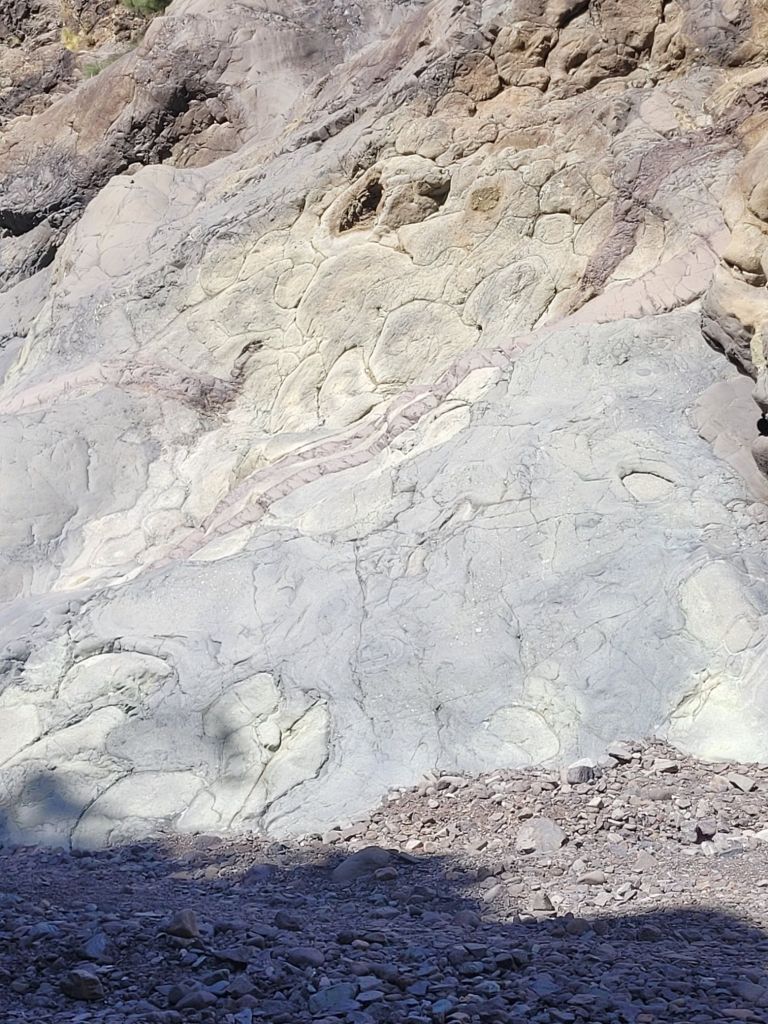
The variety of lava formations is mind boggling – I tried to do a bit of research about how and why the various formations are so different but it got very confusing and I couldn’t remember all the vocabulary. So there’s lots of it! And I don’t know what they all mean.
The national park around Los Tiles (in the northeast mountains) was closed due to the road being washed out (so it isn’t just lava flows that take out sections of road). As an alternative, we chose to drive around the northern coast – not for the faint-hearted, especially in the rain, poor visibility and wind. Thankfully the worst weather (and the worst sections of road) were fairly empty of oncoming traffic, although the steel nets strung up to catch rock fall didn’t imbue us with confidence!
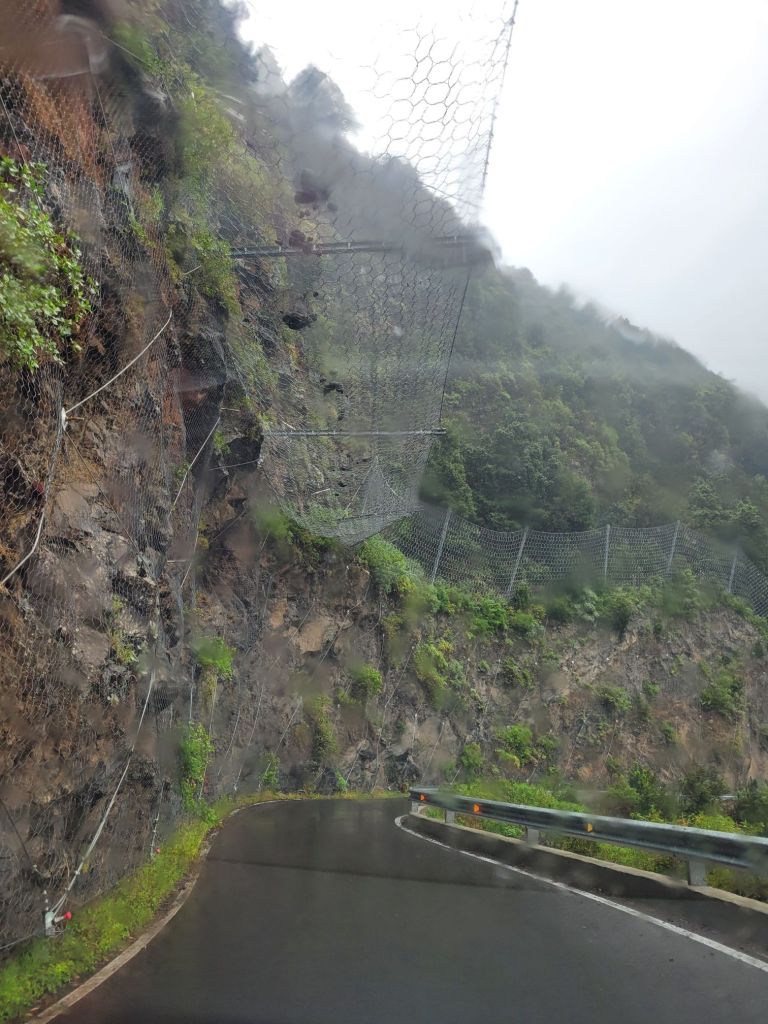
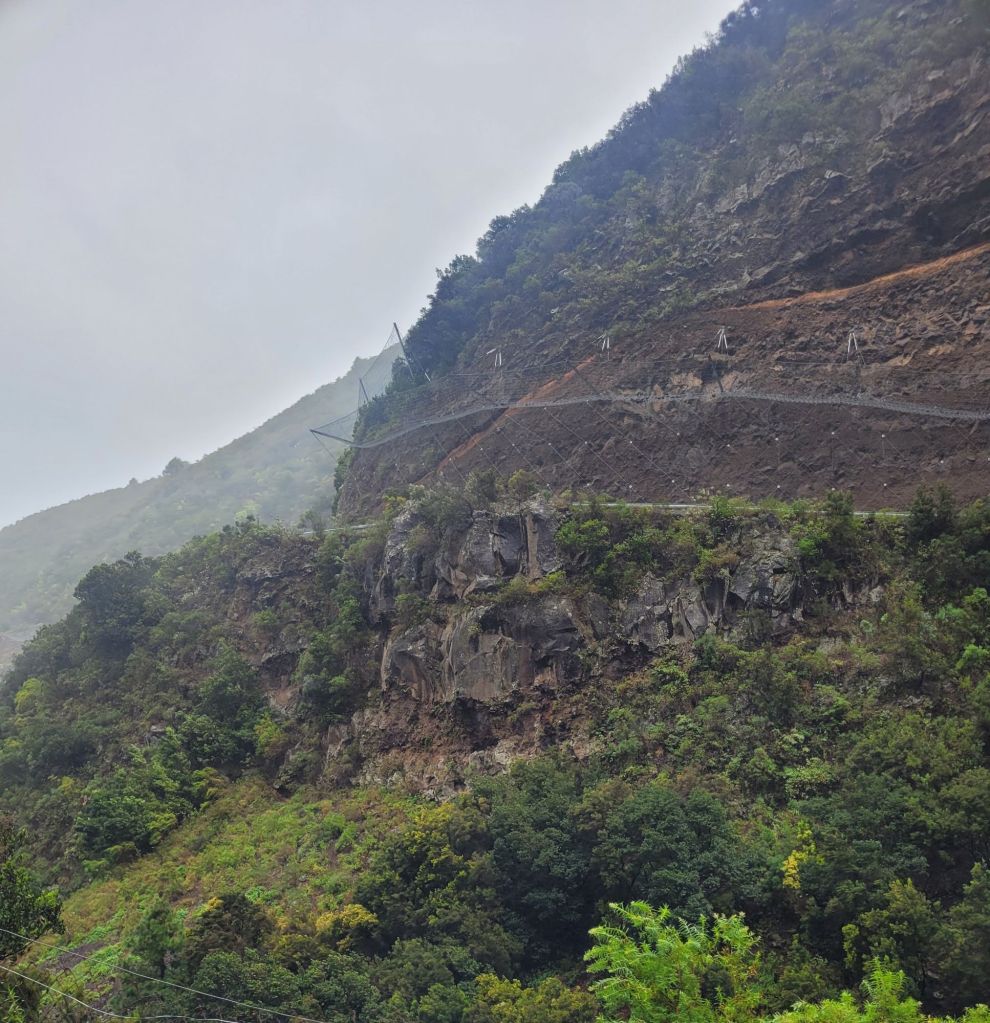
And no, it’s not a dirty lens, it’s just sideways rain (hence the T-shirt design above).
As the road climbed, the temperature dropped quite markedly. From a wet 19C on the coast (it was raining there too), it got down to 13C at the road’s highest.
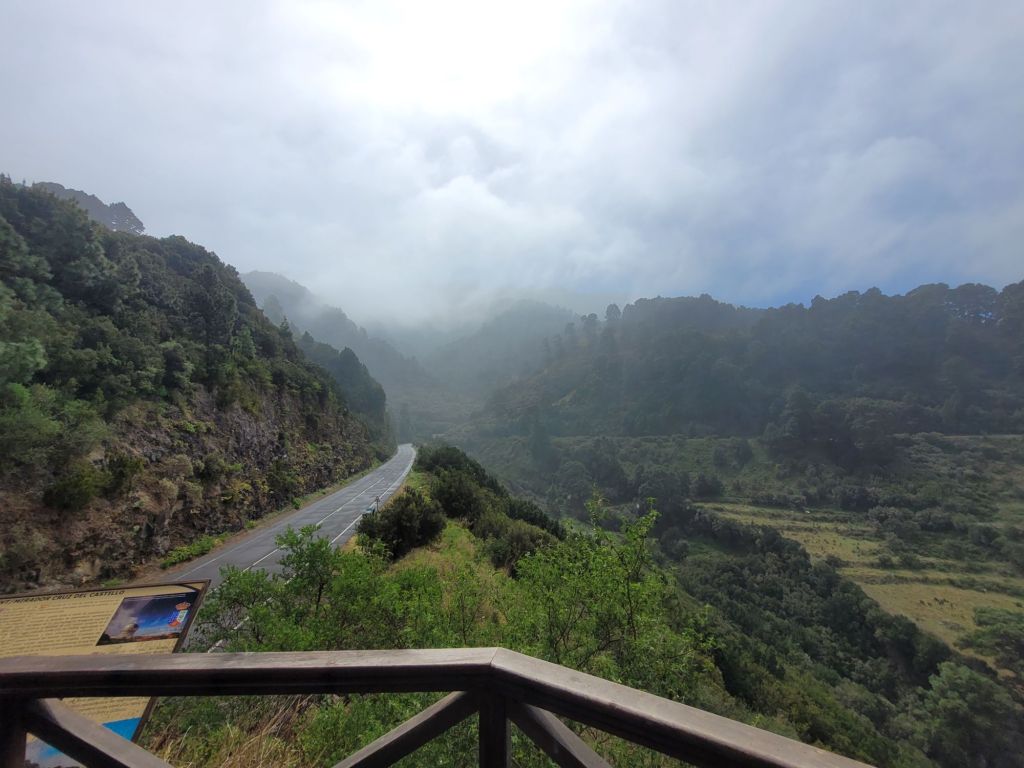
You get into proper Canarian pines,
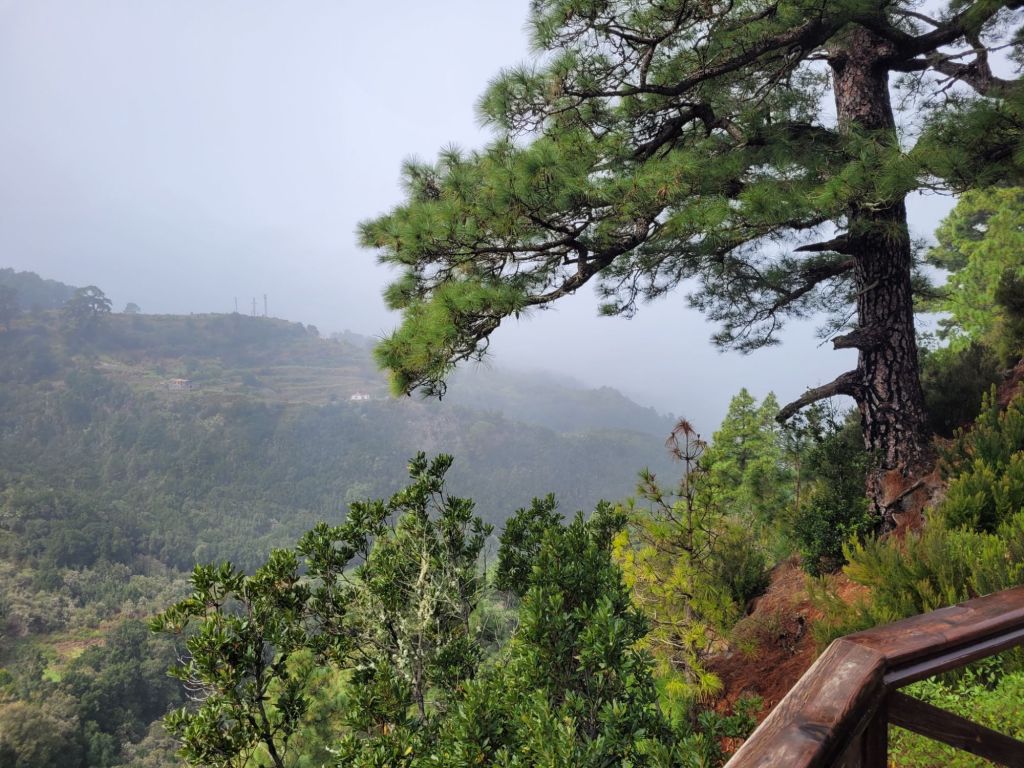
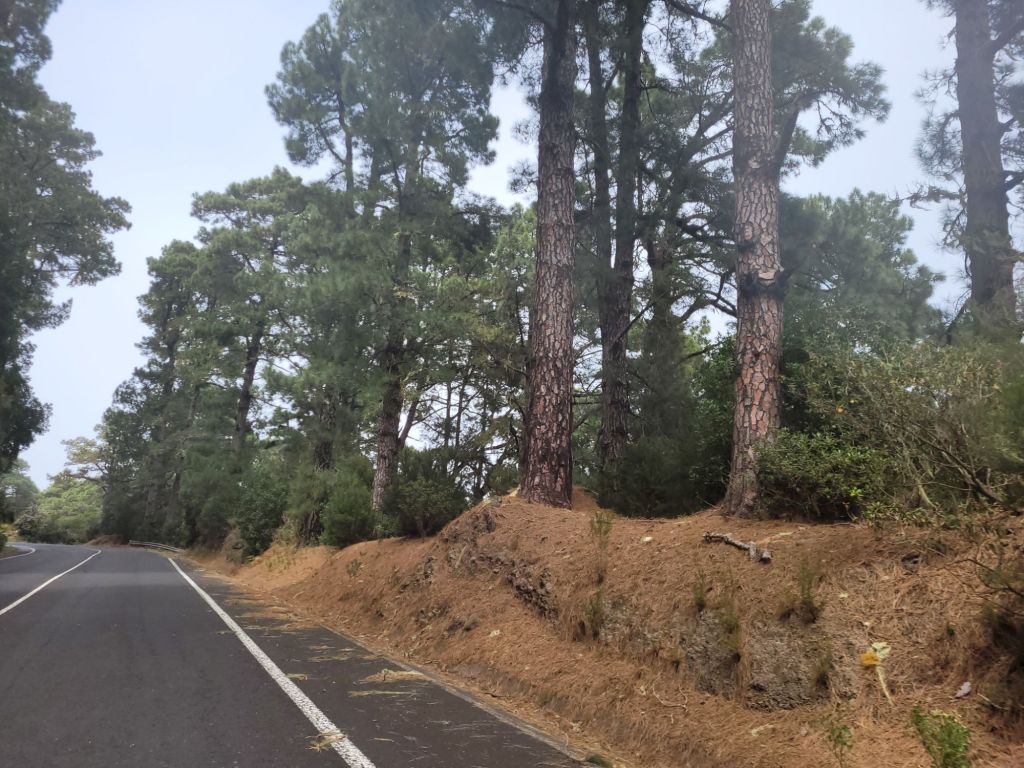
go through a long tunnel, come out the other side, go round a steep bend and the weather system does a complete volte face. All in about five minutes.
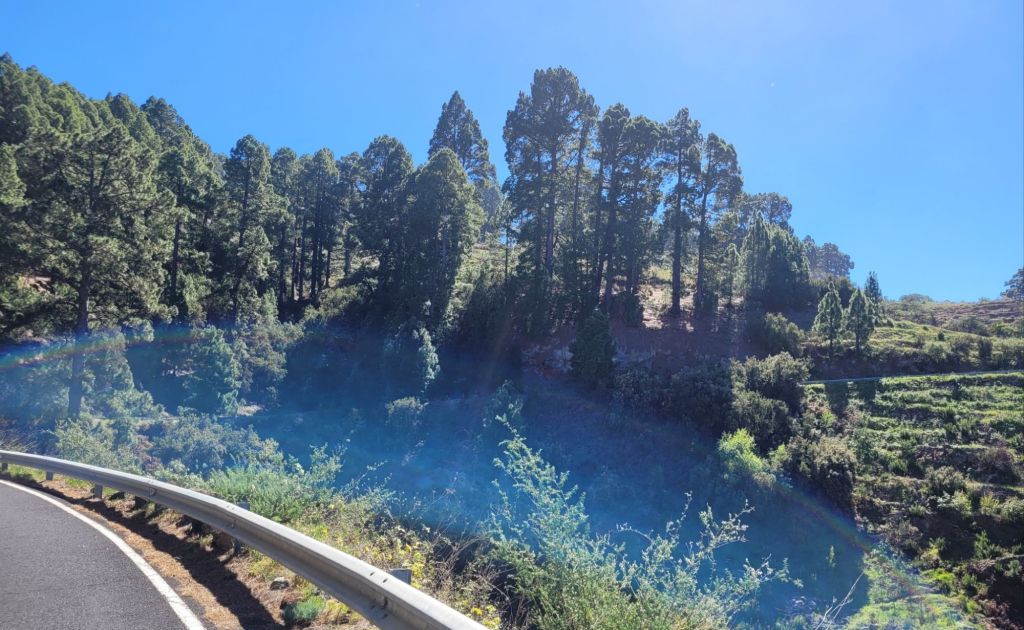
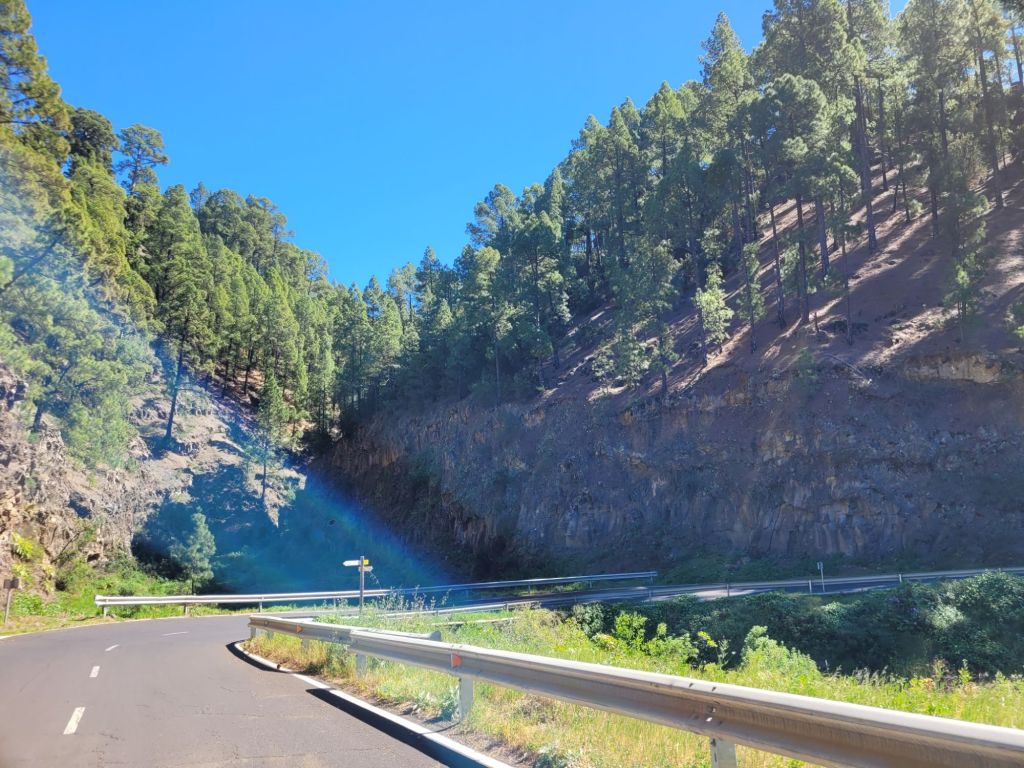
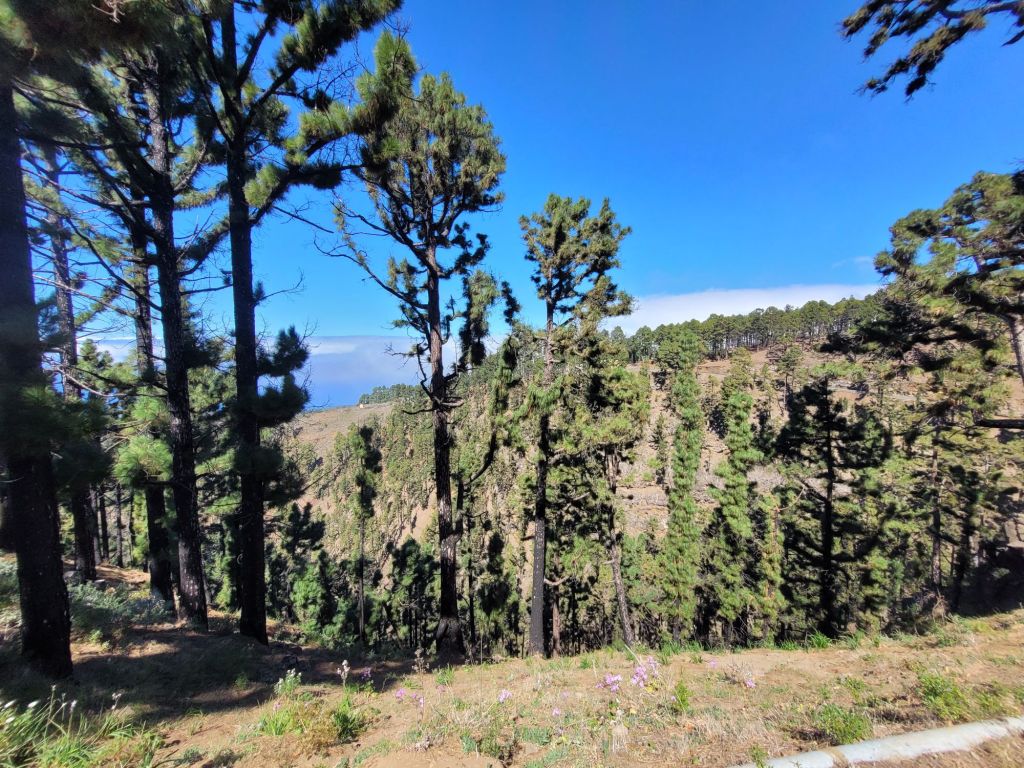
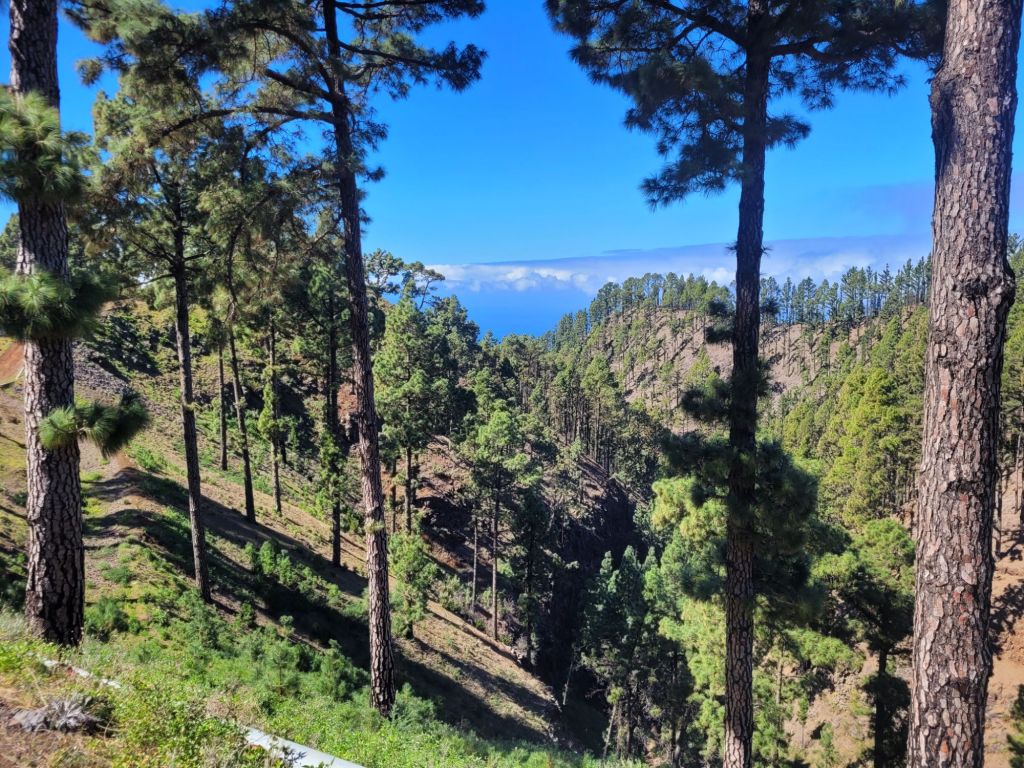
There are vineyards too, although they have cleared forest to plant them, which is a shame.

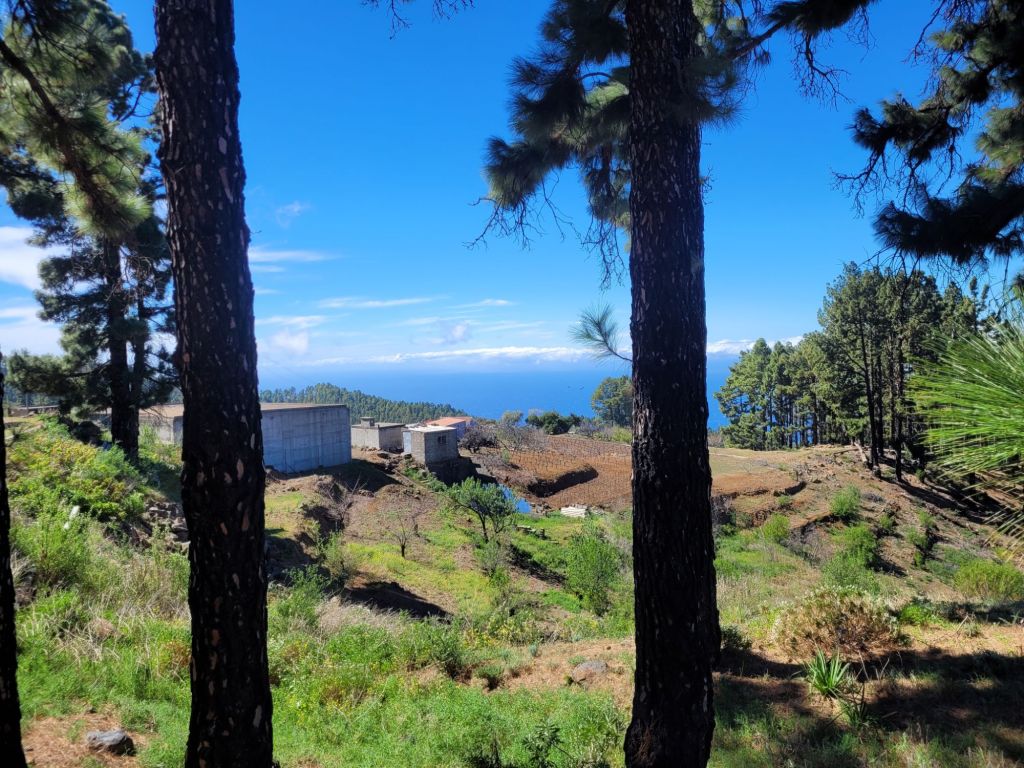
The further west we went, the bluer the sky and the warmer the temperature. By lunch, on the west coast, it was 22C.
Driving back east, towards Santa Cruz, we met the rain again.
I would return to La Palma (not sure about Roger): the geography is fascinating and there are a few things we couldn’t do due to the weather.
There are two astrophysics observatories on the island, one on the north rim of the Caldera de El Taburiente: it stands two and a half kilometres above sea level. While driving along the northern coast, we saw the turnoff but the weather conditions, the steepness of the road and the baldness of the hire car tires decided us against it. The volcano rim walk in the south would also have been interesting and so would the El Tiles national park. There are also the trails through the centre of El Taburiente. Any return would require some serious training (in terms of dealing with uphill walking) prior to leaving!
Although the weather is always an unknown quantity, it’s likely that winter – with its wind and rain – is not the best time to try and visit these places. Maybe March?
But the wind did make for fabulous spray along the rocky coastline. Which was worth seeing.
 Retired? What now?
Leave a comment