Getting to La Gomera requires a ferry journey, or a connecting flight fromTenerife. From La Palma, the ferry goes into Los Cristianos (on Tenerife) and then leaves for La Gomera.
The night before we left La Palma, the heavens opened and rain stair-rodded down most of the night. By morning the sky was blue looking south but more rain threatened (well, it did more than threaten) from the north.
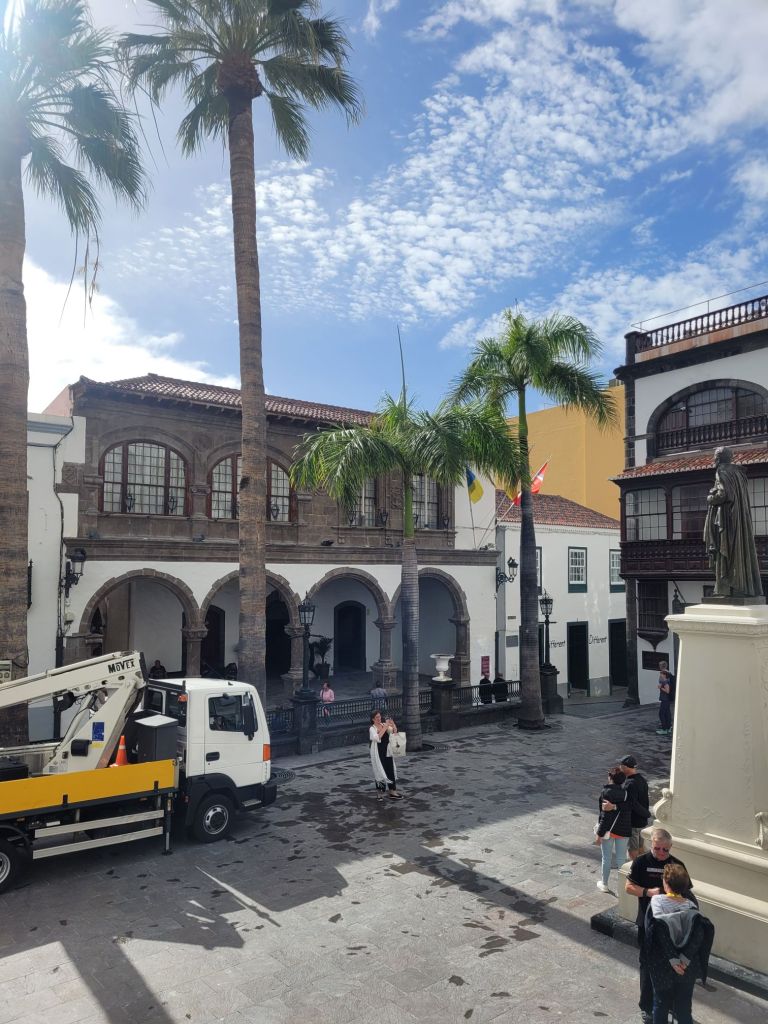
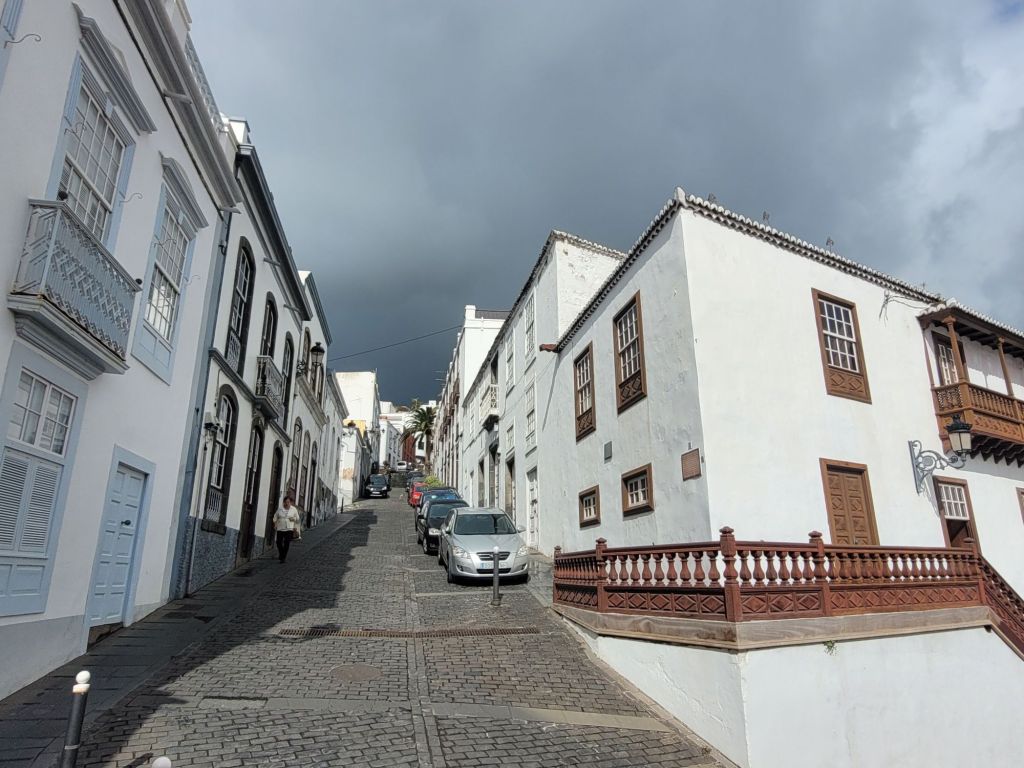
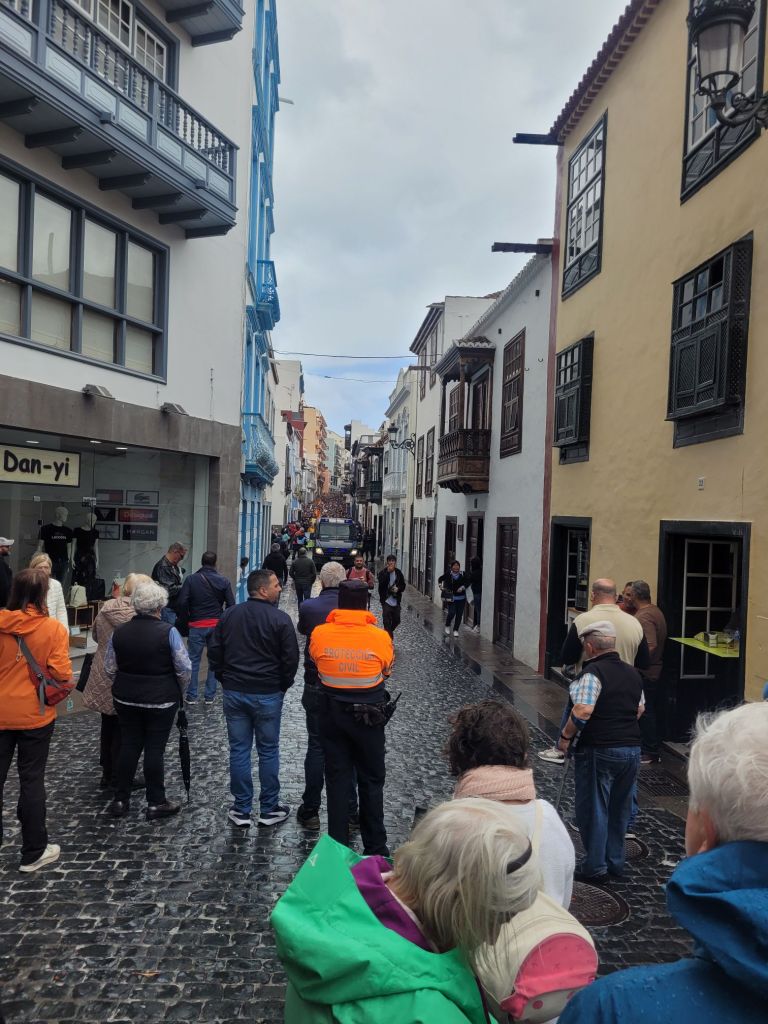
It rained off and on most of the morning, plus we ran into a demonstration by farmers about the privatisation of the water company.
And so, in the gusty, grey afternoon, we left La Palma on a catamaran that seemed strangely energetic even while moored in the sheltered harbour.
And energetic it certainly was.
The trip to Los Cristianos took two and a half hours, then after a 40 minute wait, we left for La Gomera, arriving in San Sebastian at just before nine in the evening. Roger was extremely pleased to be on terra firma – it had been a bumpy ride.
As we walked off the ferry we noticed a (large) figure of an angel (or saint) on a metal pylon on the hillside above the harbour which glowed. In the darkness, it looked like it was hovering above the (tiny) city- and was generally a bit weird.
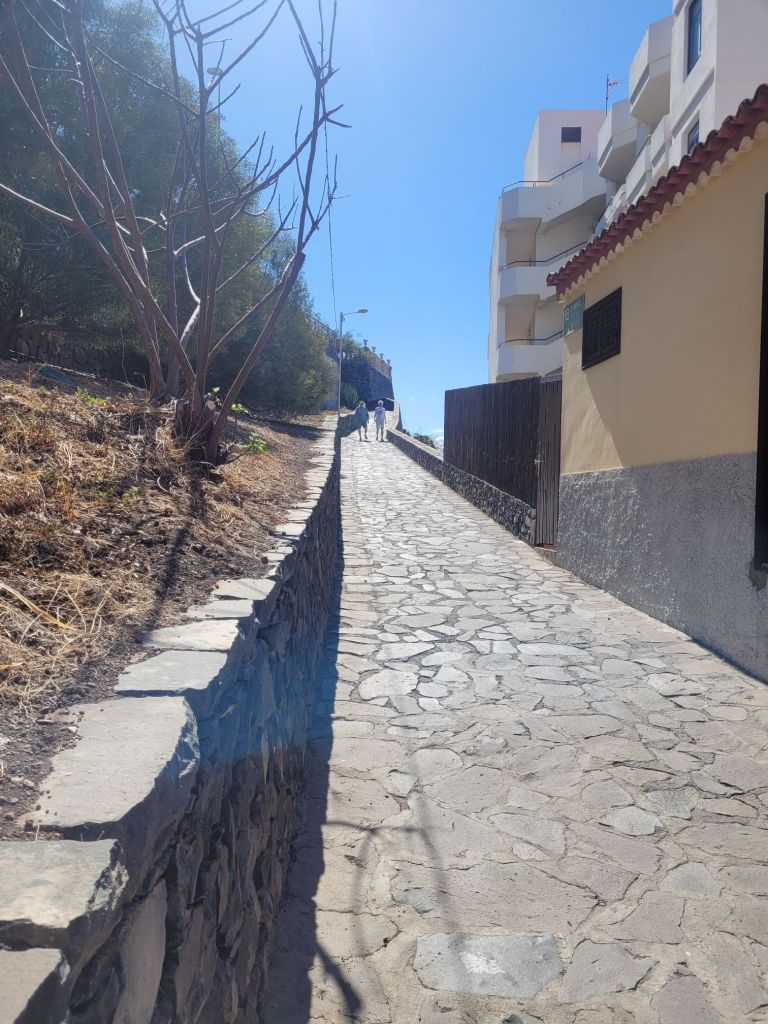
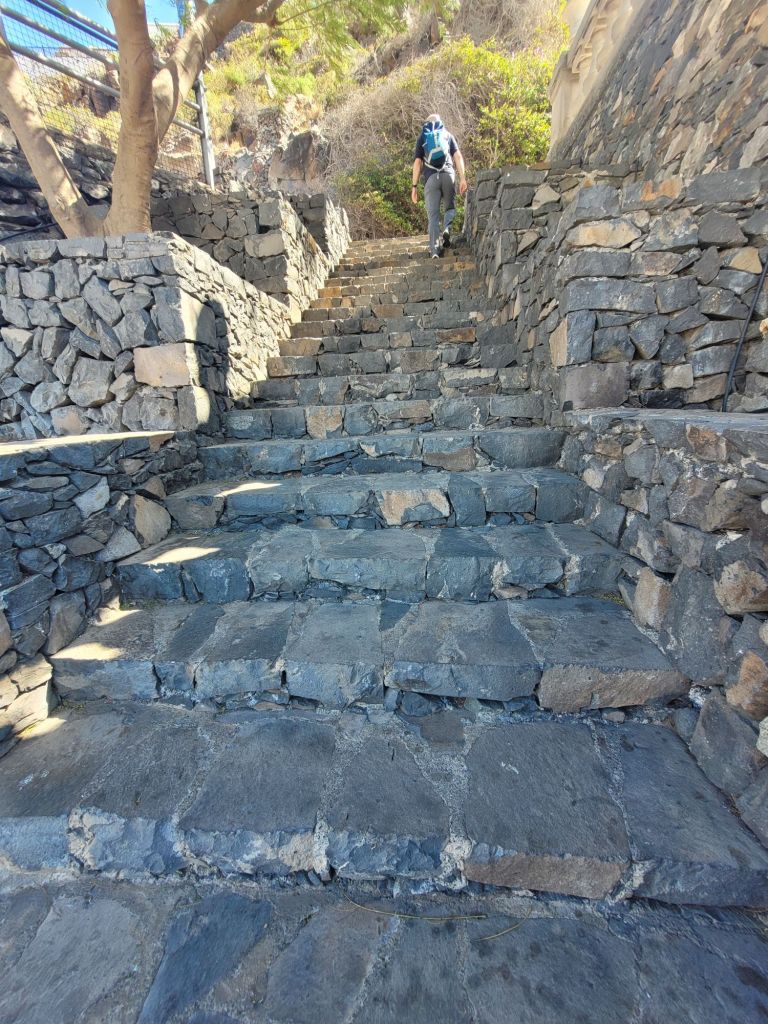
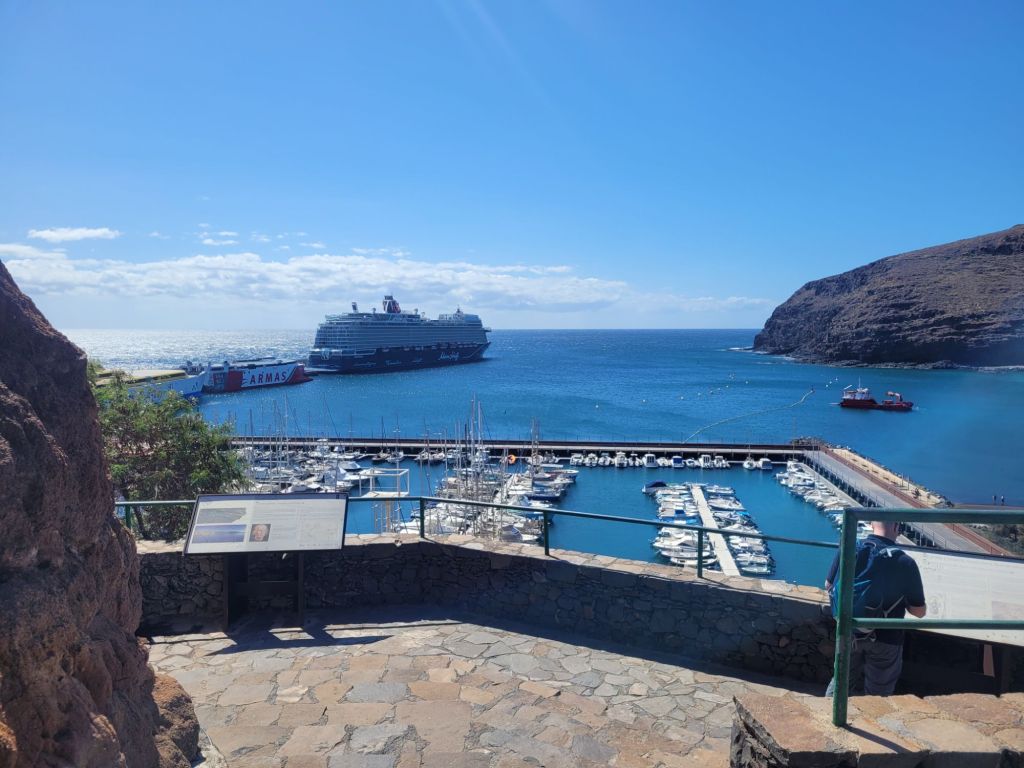
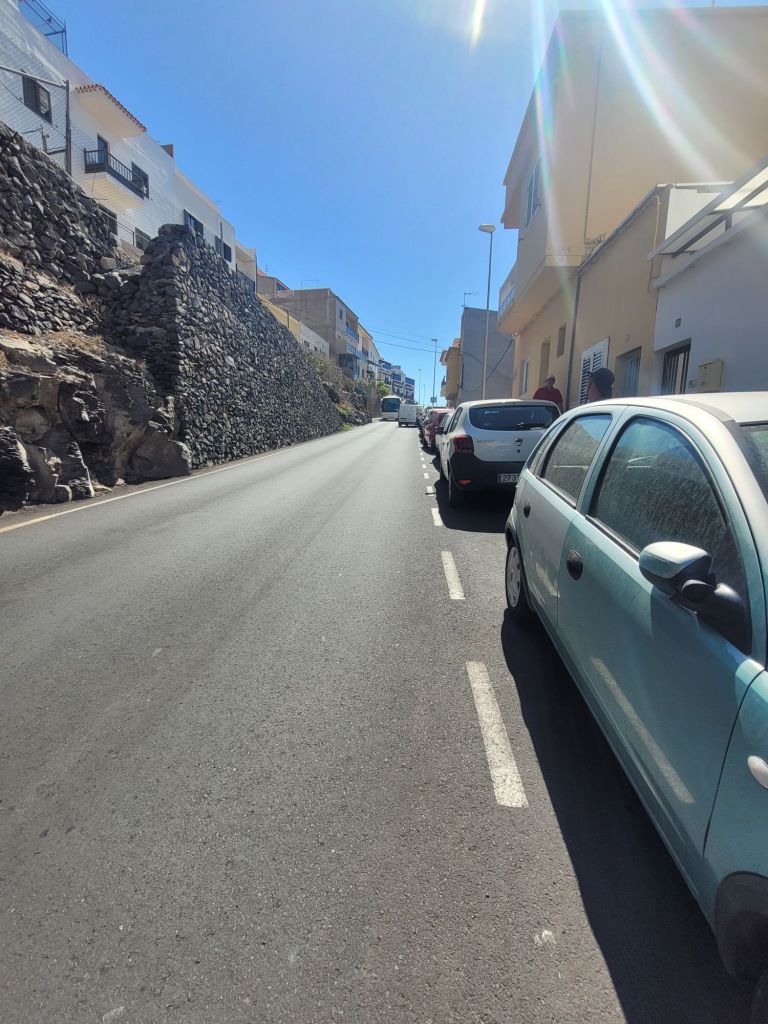
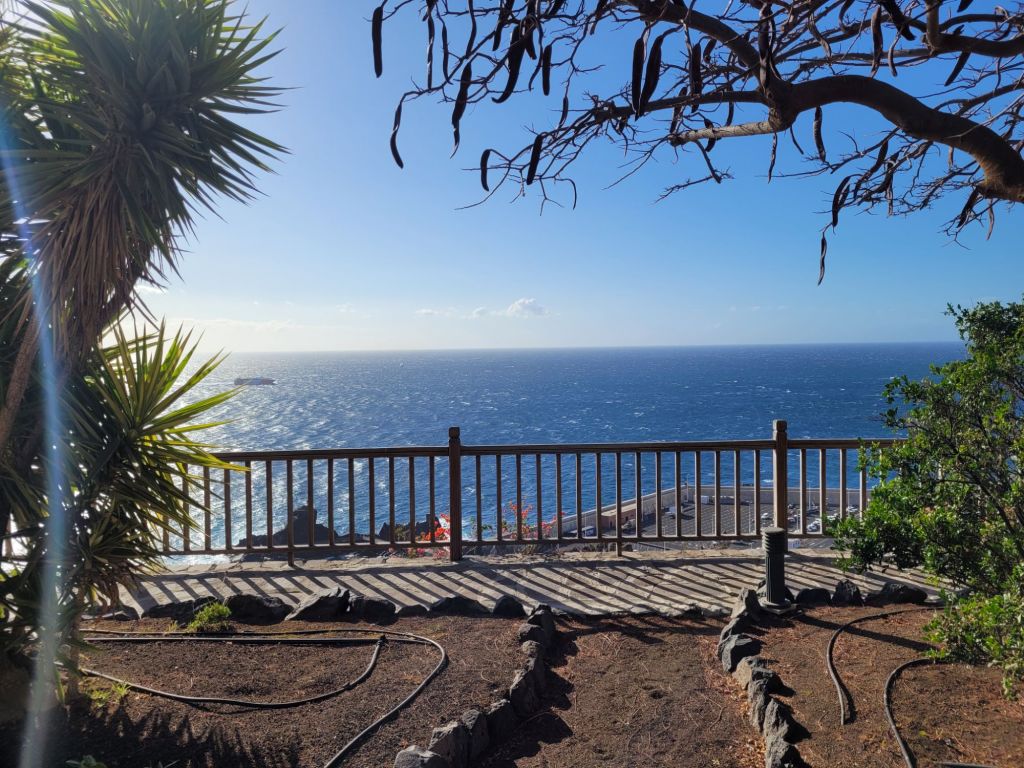
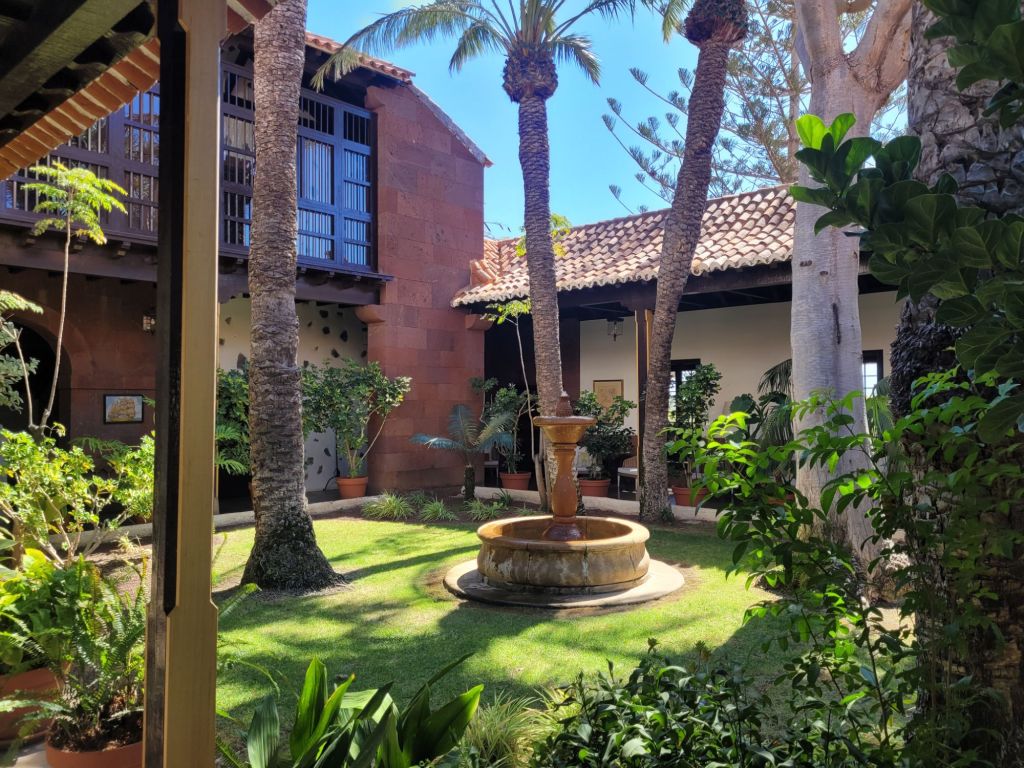
The Parador is above the harbour. It’s a LONG way up if you are dragging luggage. But it is lovely, has great views and although it isn’t old, it’s been modelled on a traditional Canarian house and seems entirely in keeping with its surroundings.
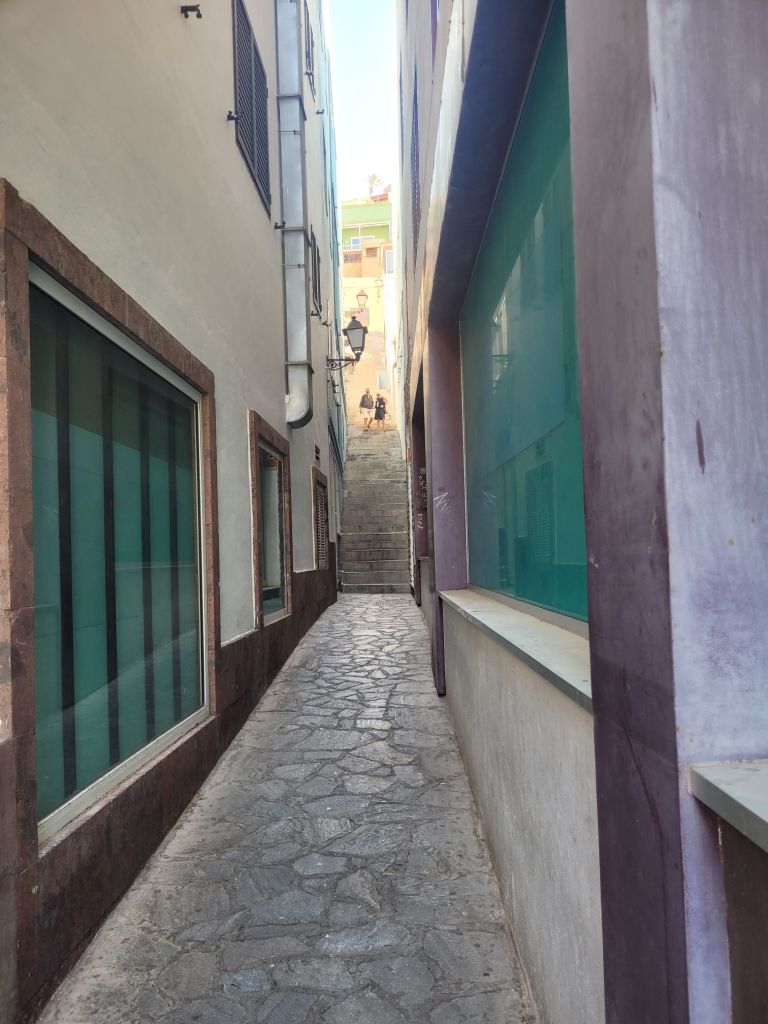
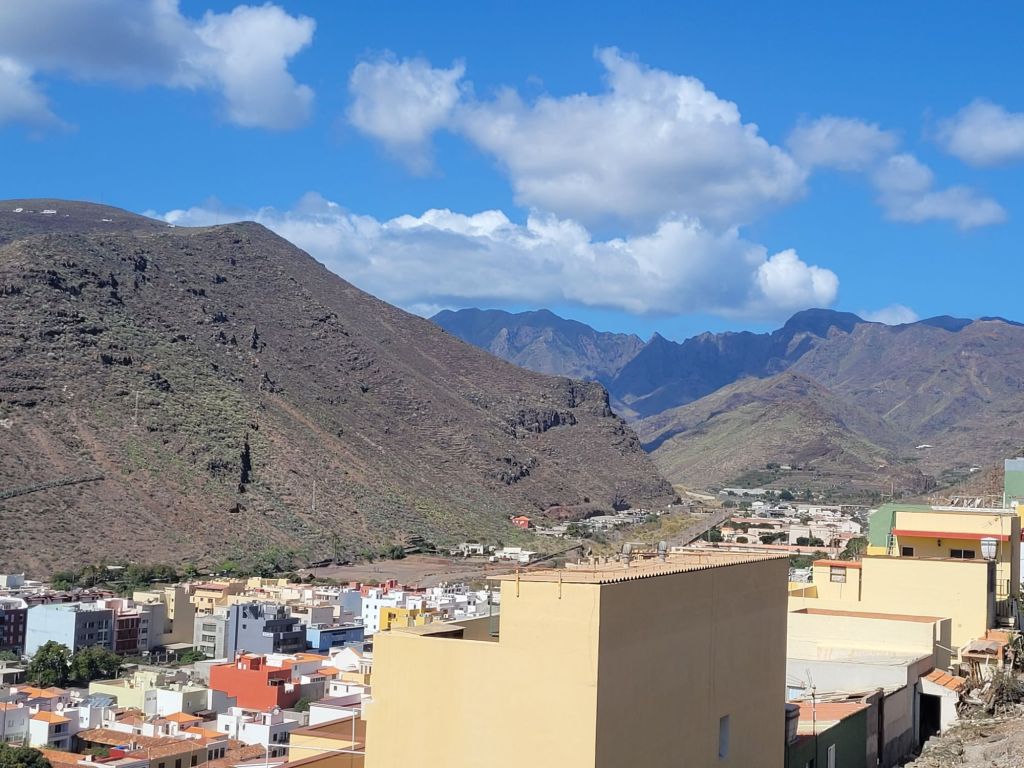
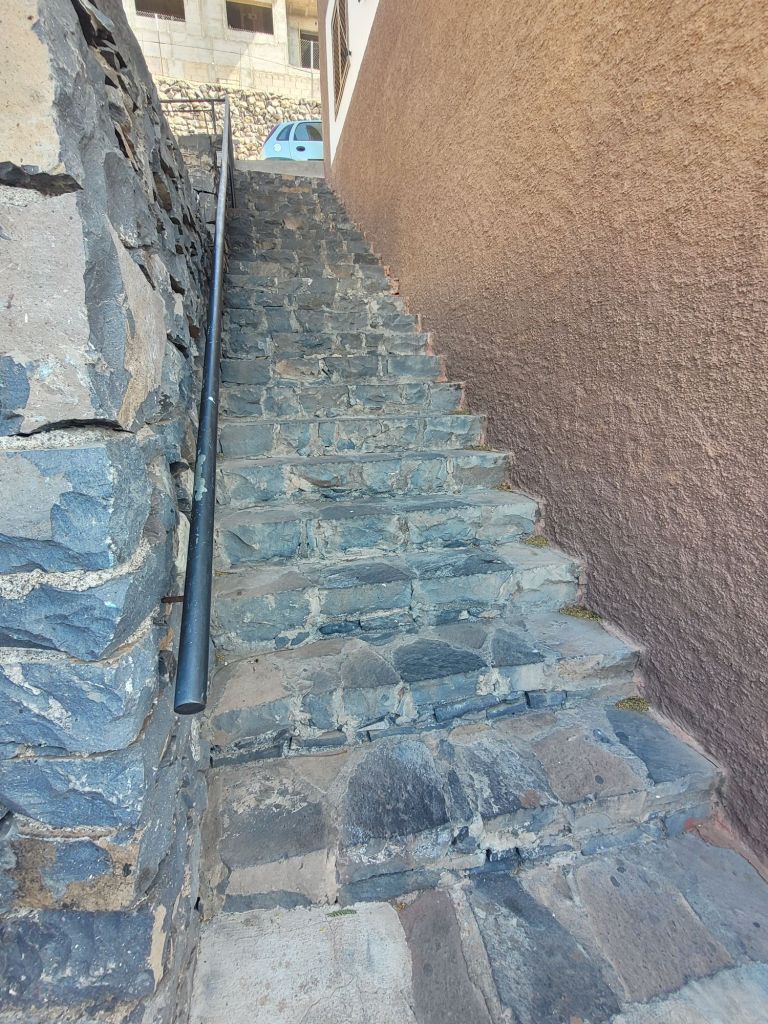
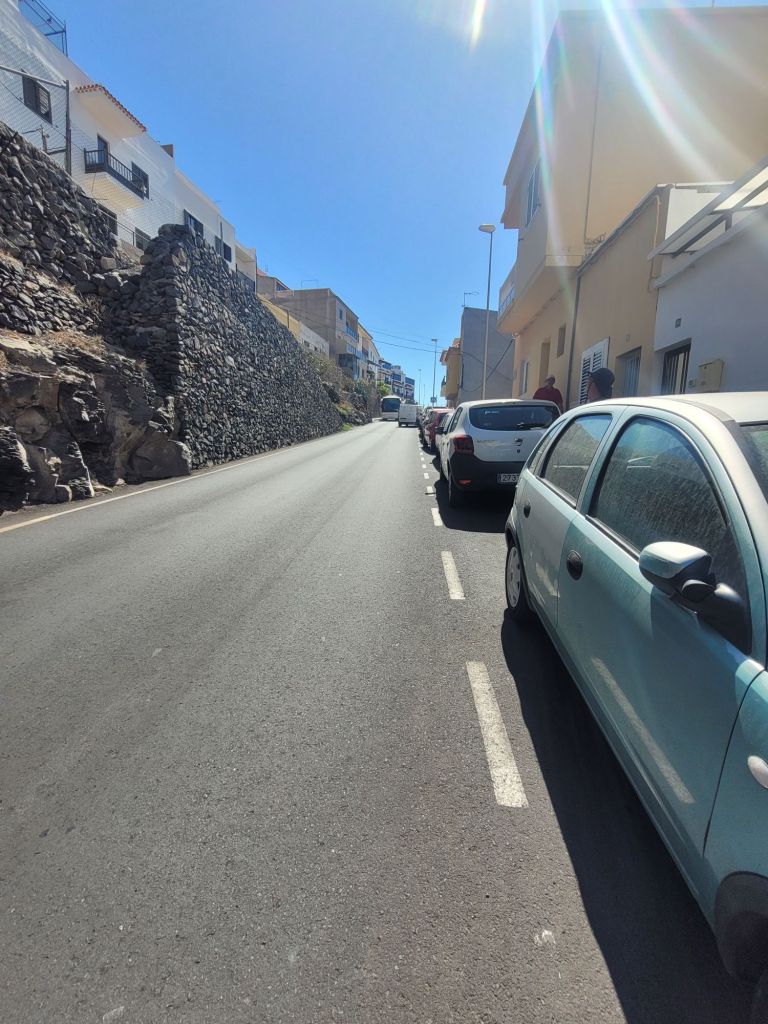
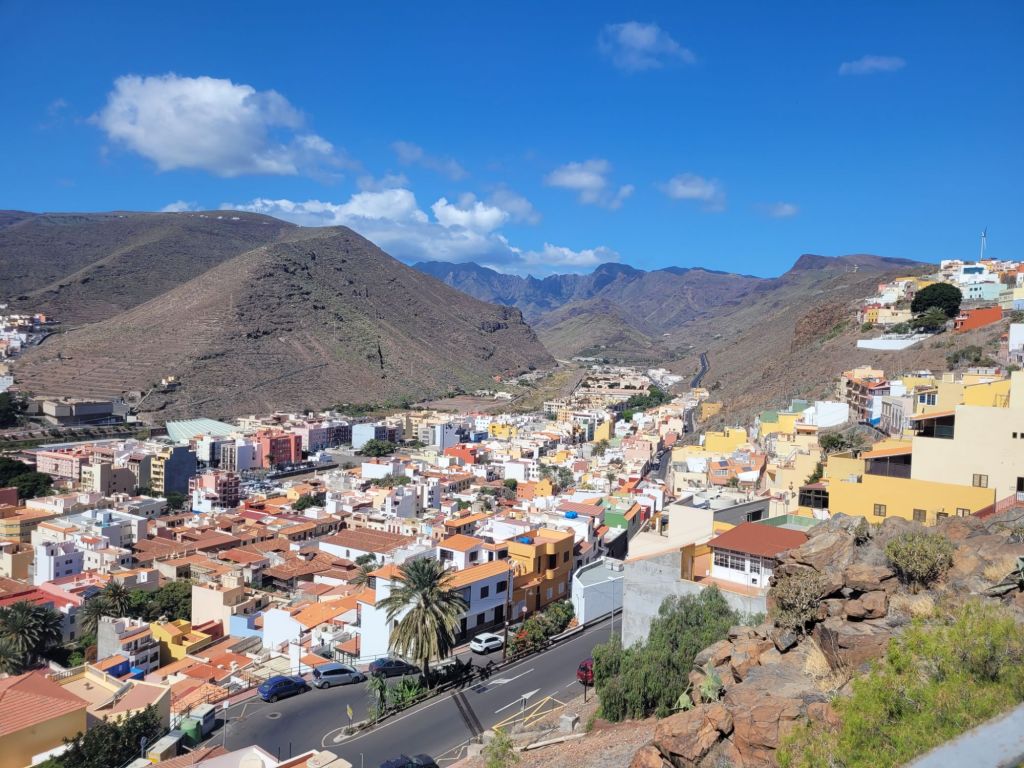
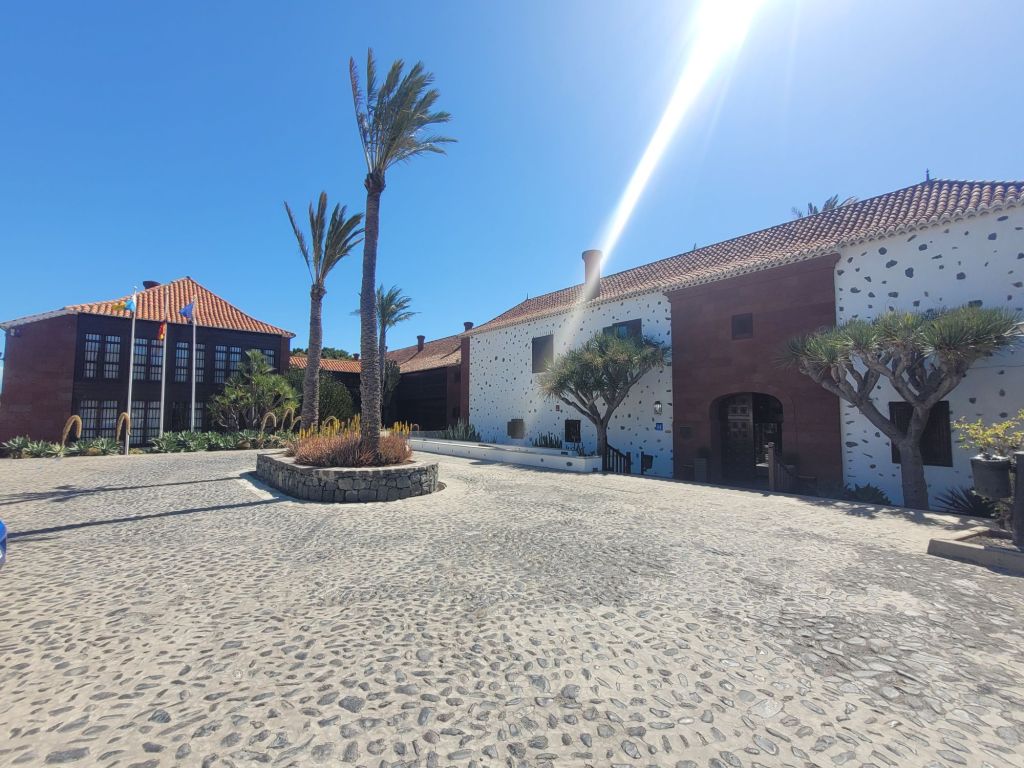
This is a very nice Parador – it’s also one of the more expensive ones. Probably because it doesn’t have an enormous number of rooms and it’s one of the few really nice hotels in San Sebastian.
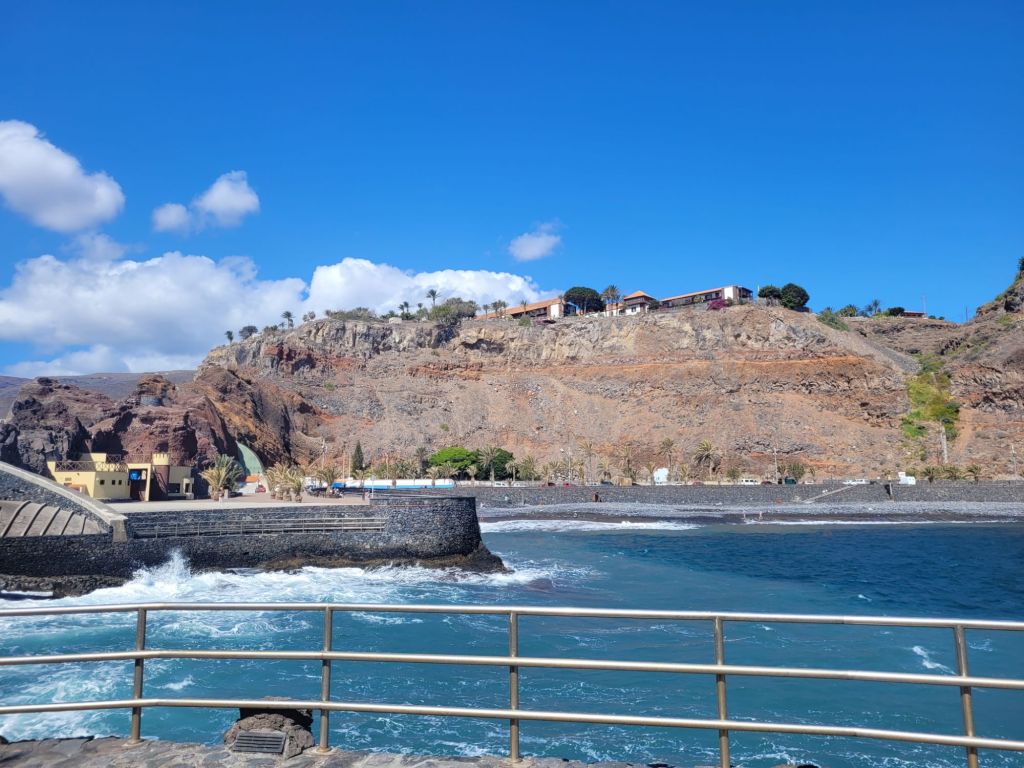
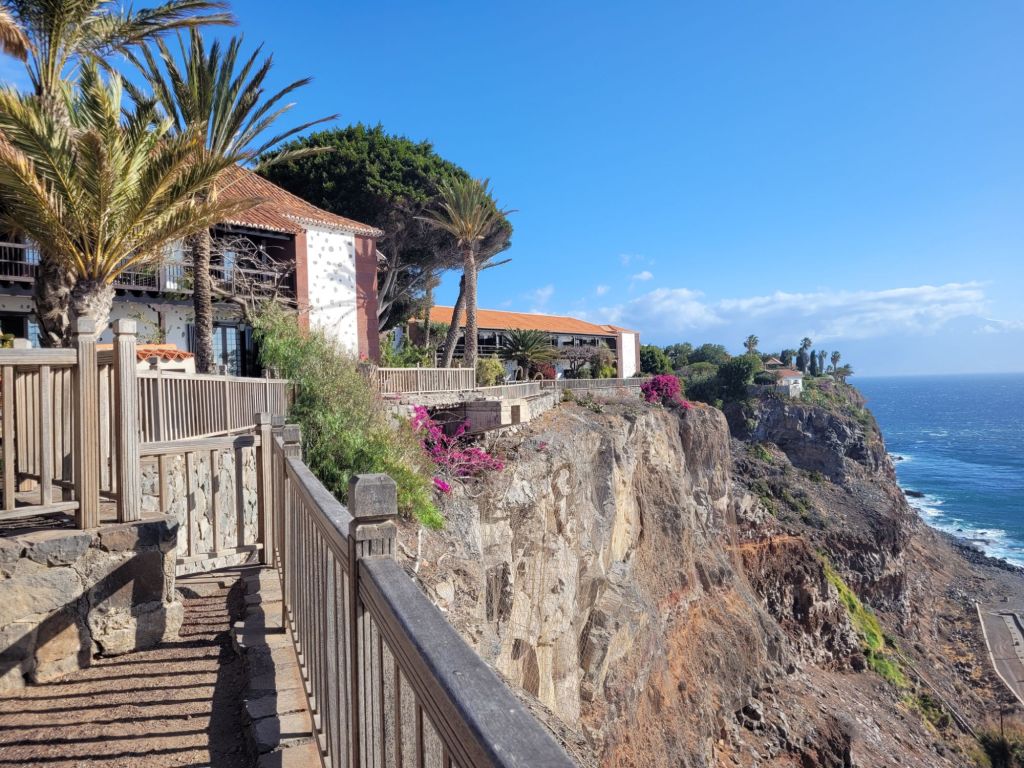
San Sebastian itself is described as ‘pint sized’ in the tourist guides. That’s a bit generous.
It has a main square behind the harbour with a few older houses
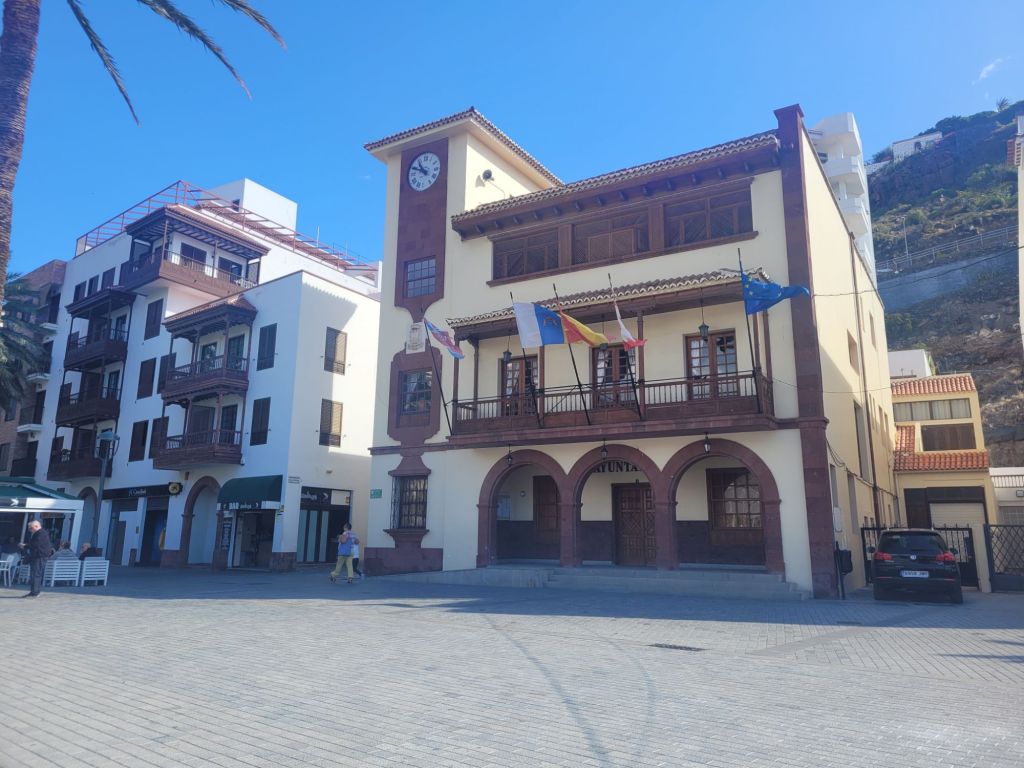
but most of the square is surrounded by new build. The marina was full of large yachts, ferries and a huge German cruise ship.
La Gomera makes much of its connection to Columbus, who apparently spent one whole month here provisioning and preparing for his trans-Atlantic adventure (and then returned a few times in subsequent years). This connection was honoured in the 1968 Mexican Olympics, when the Olympic flame stopped in San Sebastian before heading over to the Americas. The beacon is still by the harbour.
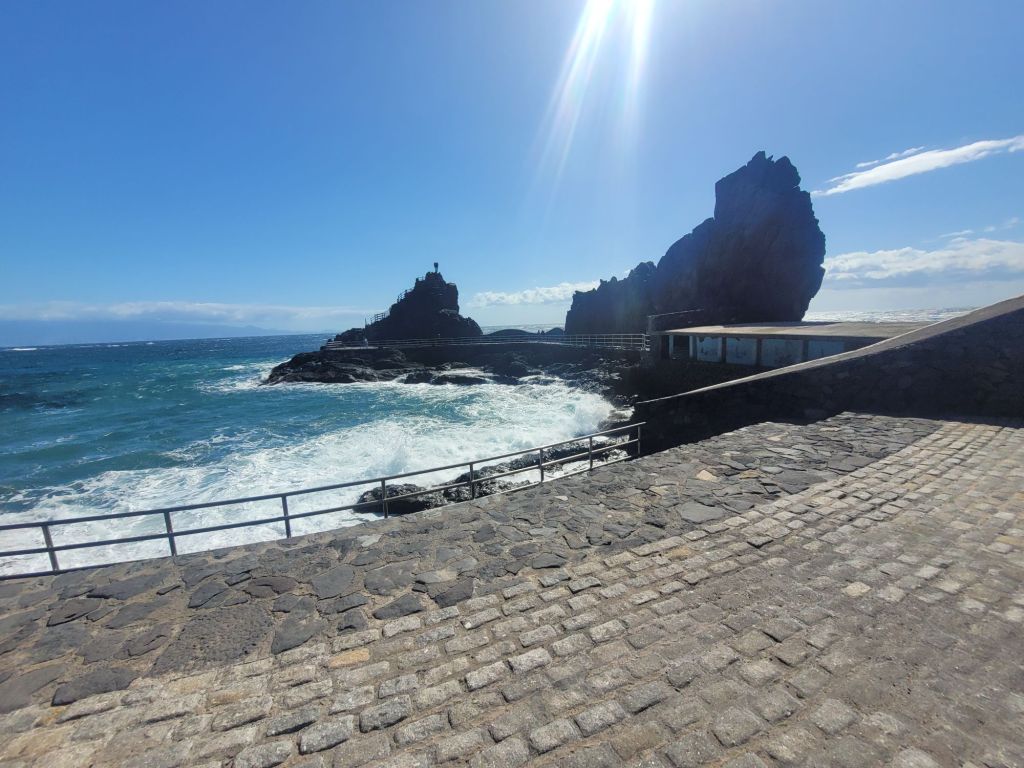
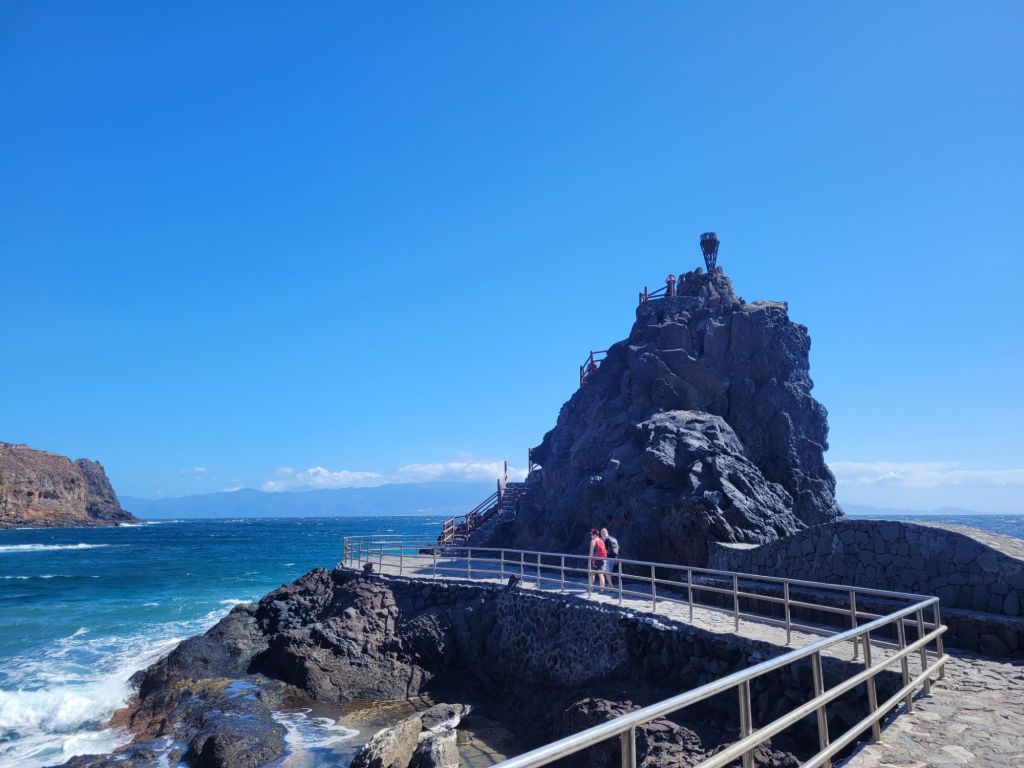
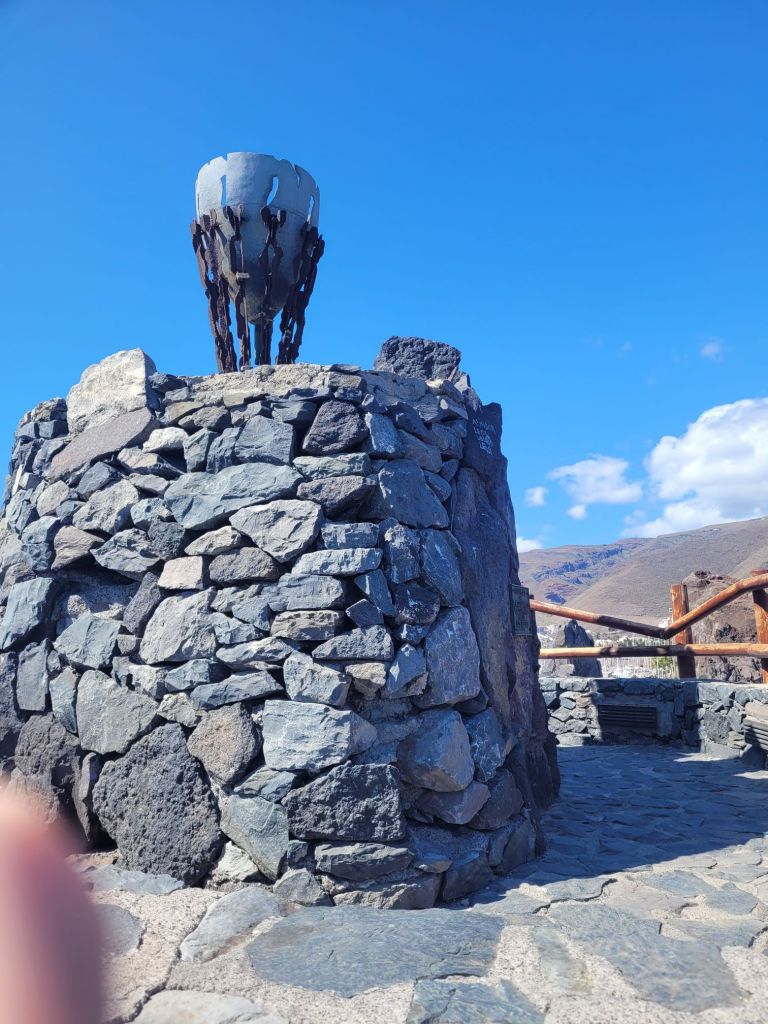
I would argue another claim to fame is its astonishing cathedral.
Unassuming from the outside but a wood-worker’s masterpiece on the inside.
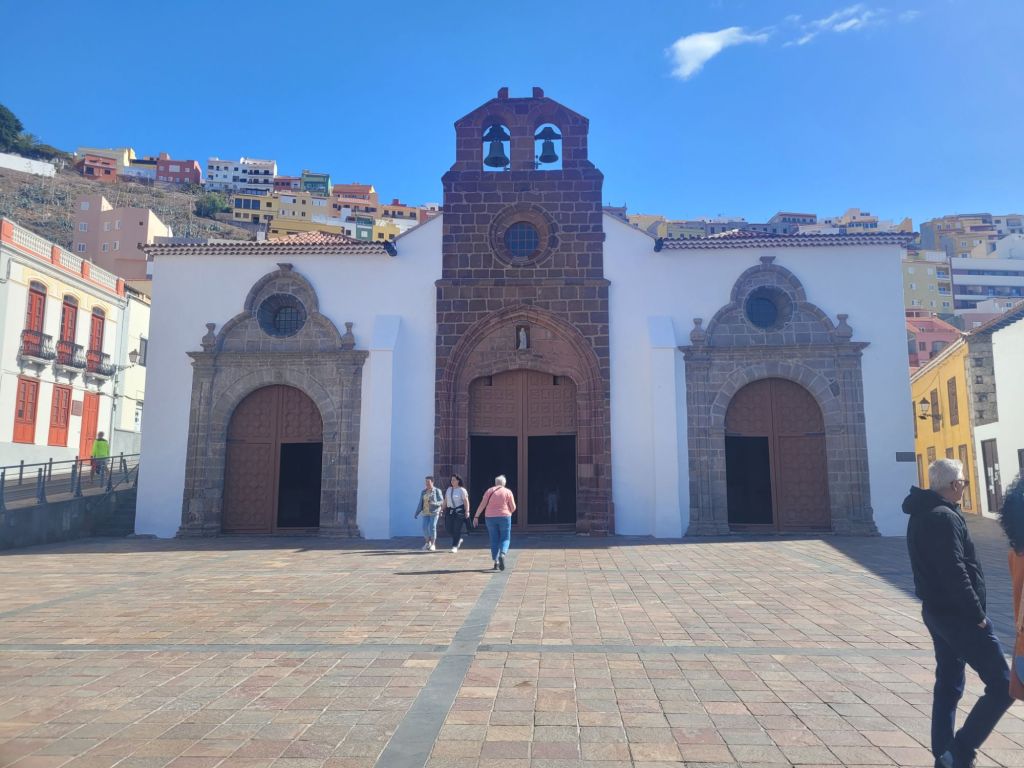
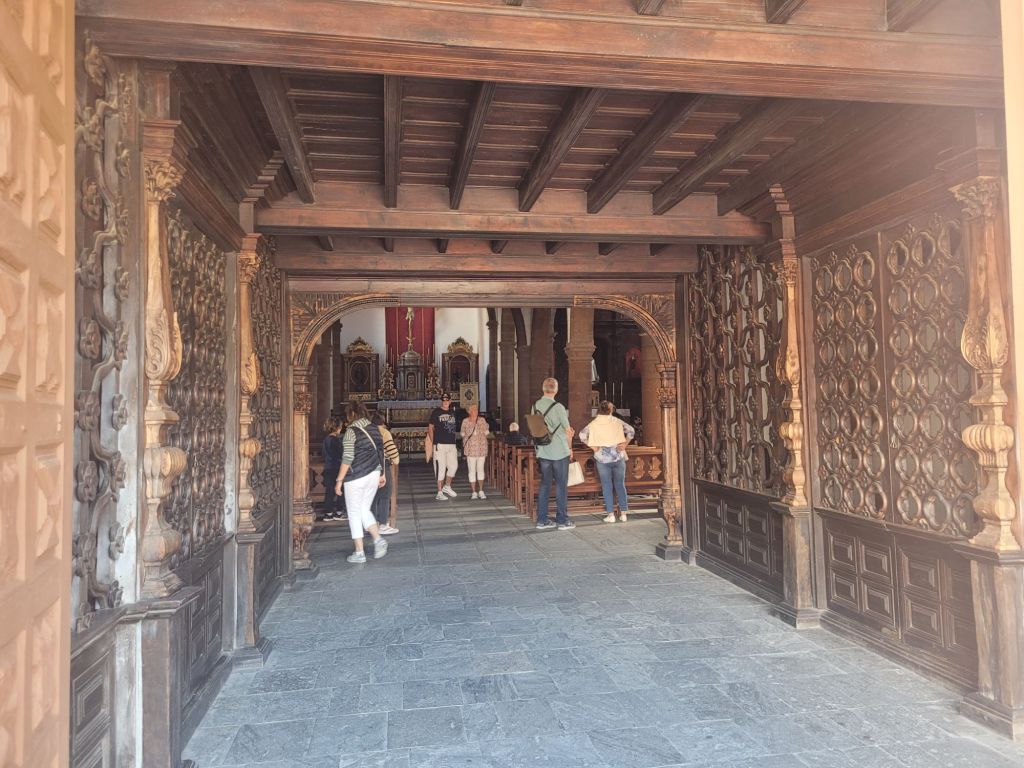
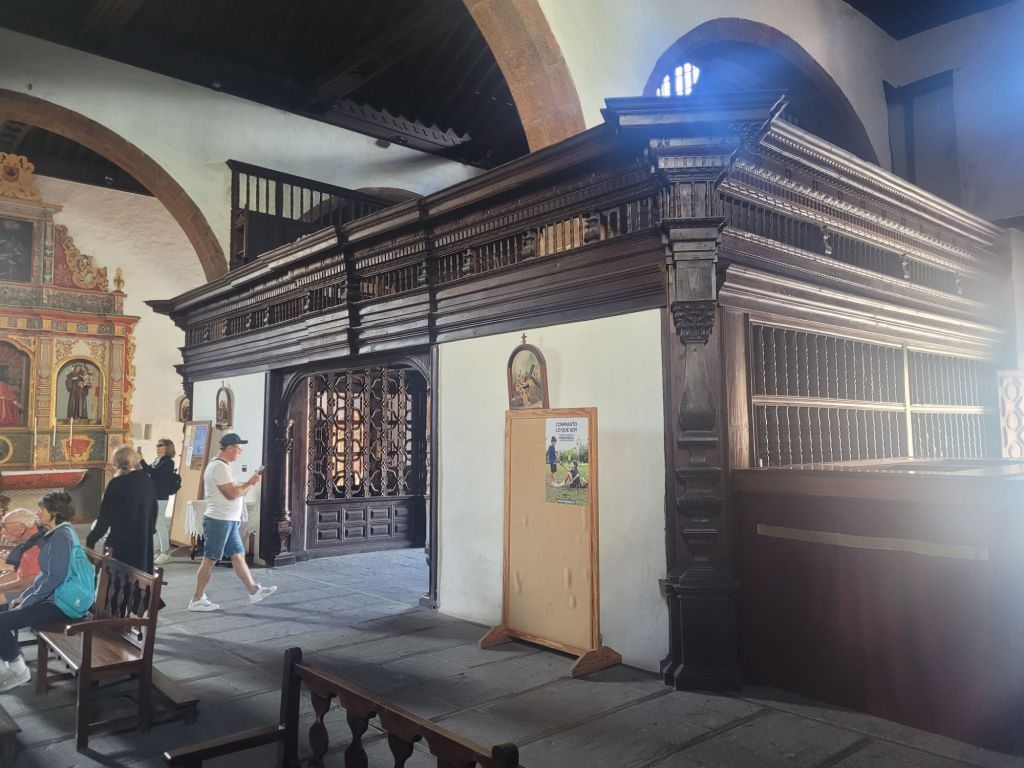
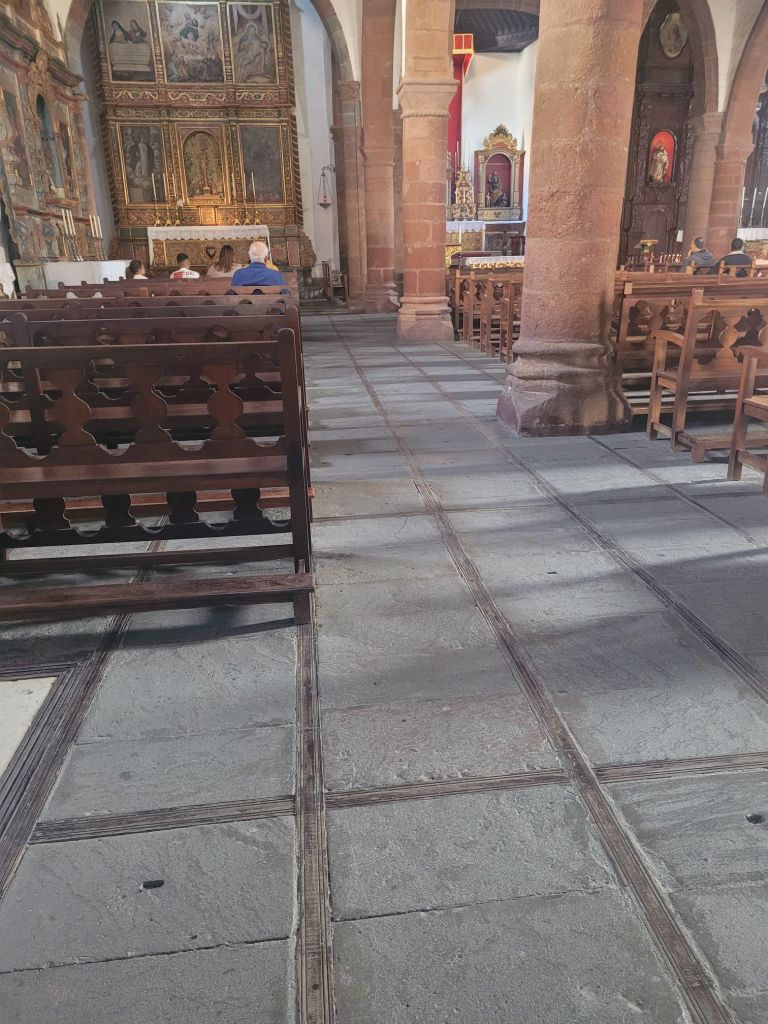
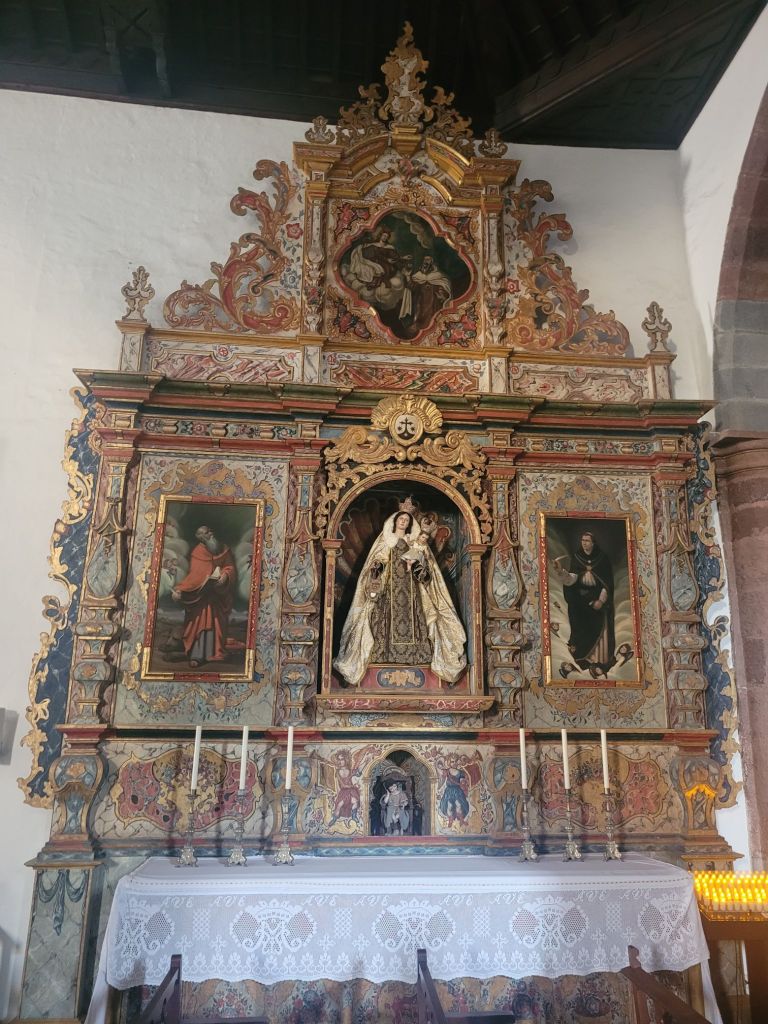
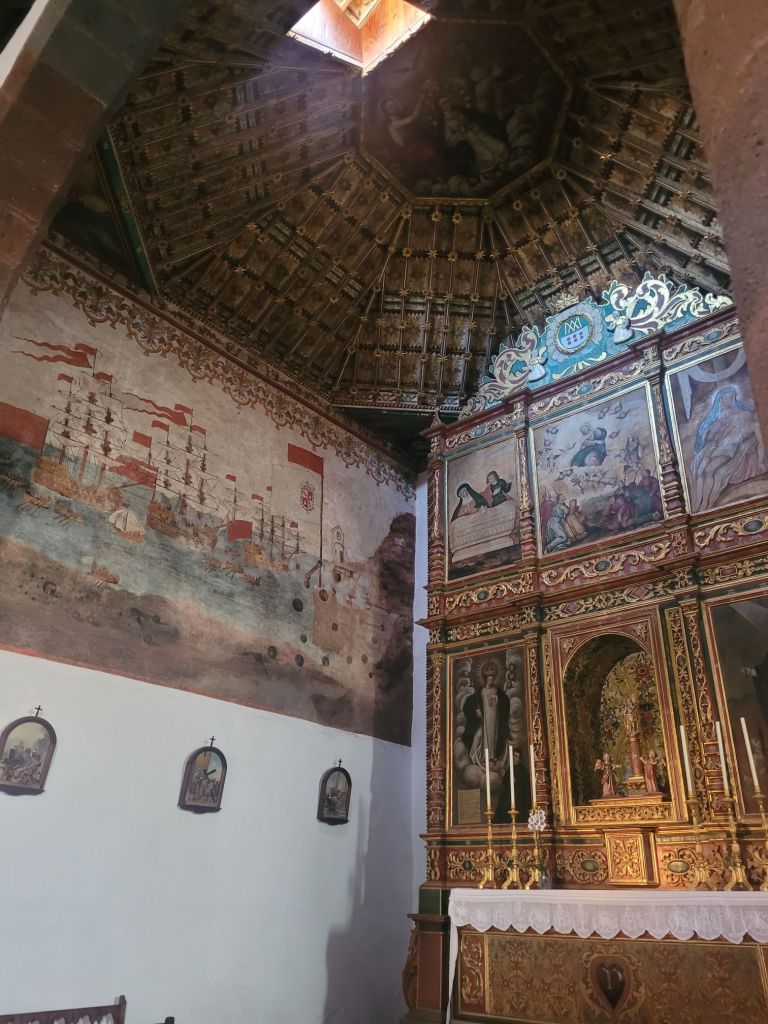
The fresco on the final picture above celebrates one of many victories over various English navies trying to take the island (due to its location as a jumping off point to the Americas). The wealth on show in Santa Cruz de La Palma seems absent here despite the transatlantic connections.
Other than that, there wasn’t much else to say about San Sebastian. There were a lot of fish in the harbour (lots of large ones and lots of different types). The ‘city’ was very busy with people from the cruise ship (which did seem a trifle too large for the size of the place) and the Parador did what Paradores do best – offer comfortable rooms with nice public spaces and a good bar.
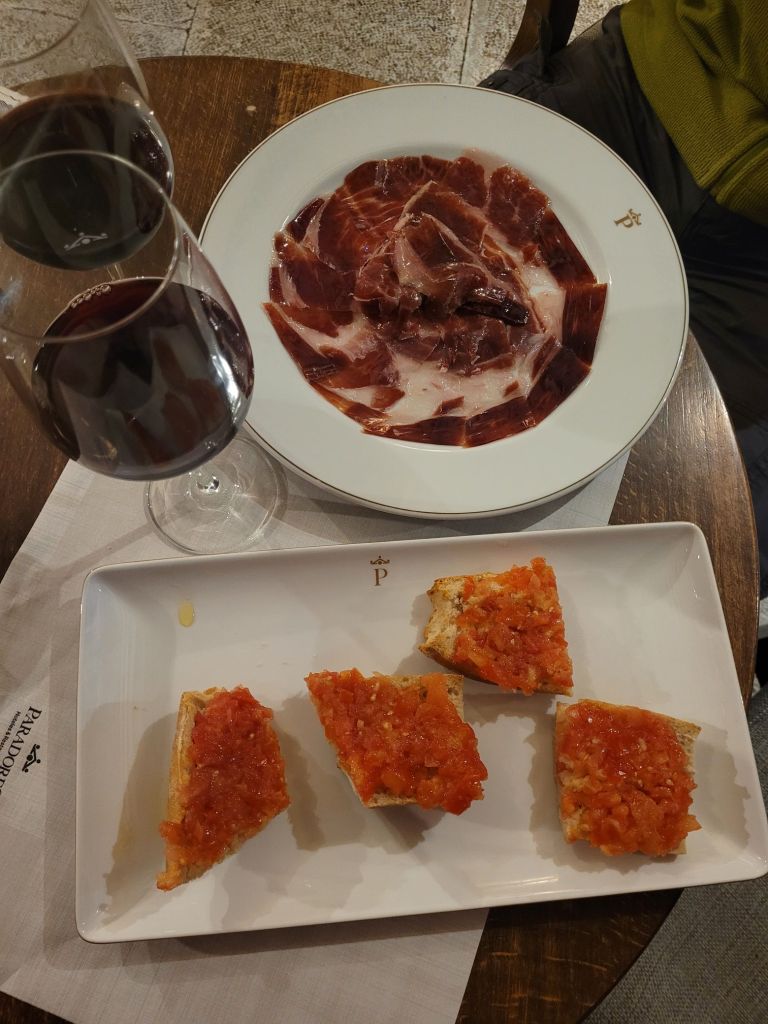
The food wasn’t too shabby either and the jamón came all the way from the mainland. And was delicious.
Into the hinterland next!
 Retired? What now?
Leave a comment